
Cost Overruns and Claims Management in Highway Construction: Lessons from International Project Management and Emerging Methodological Advances


Abstract
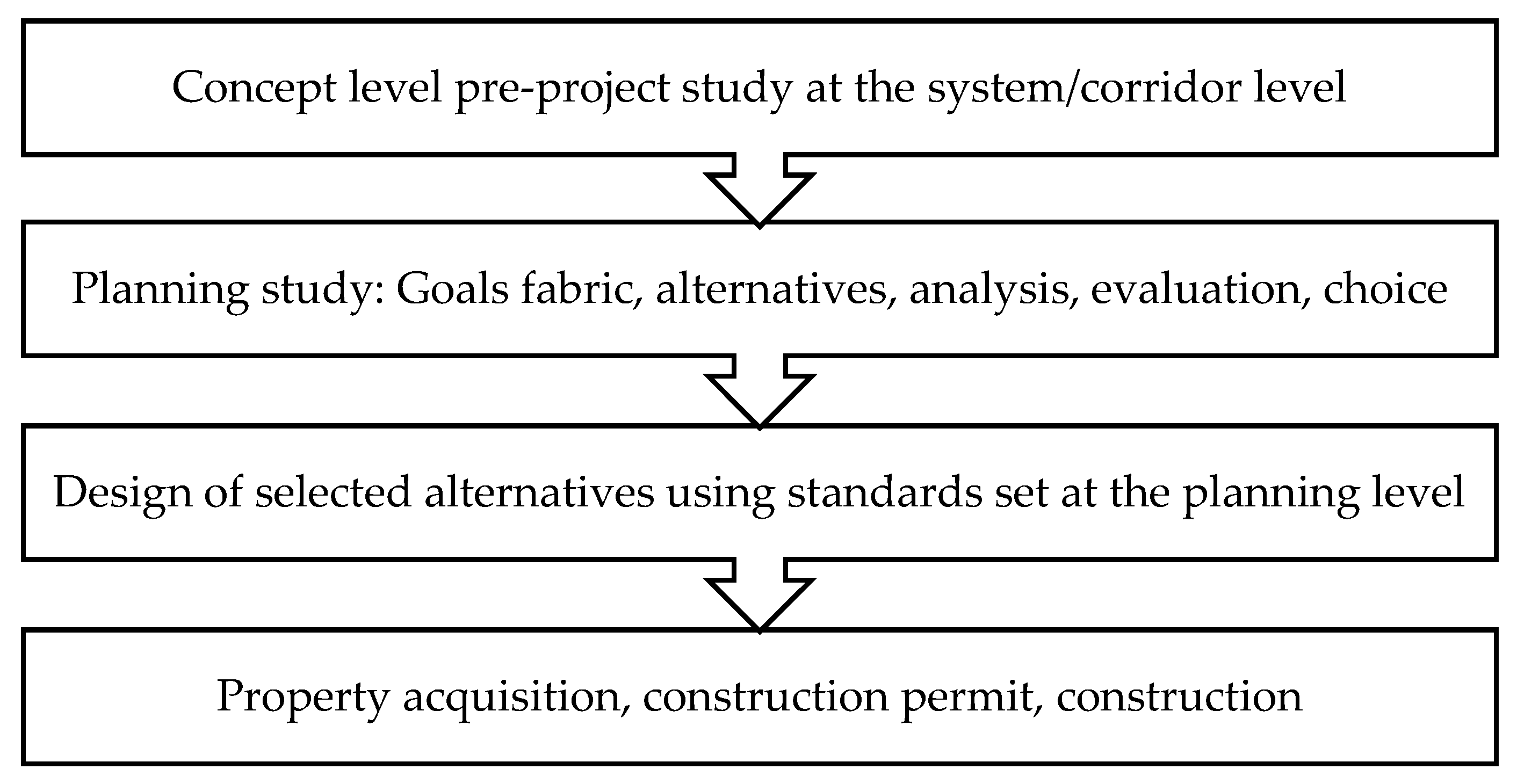
1. The Context of Project Development and Estimating Costs
2. Problem Definition and Research Objectives
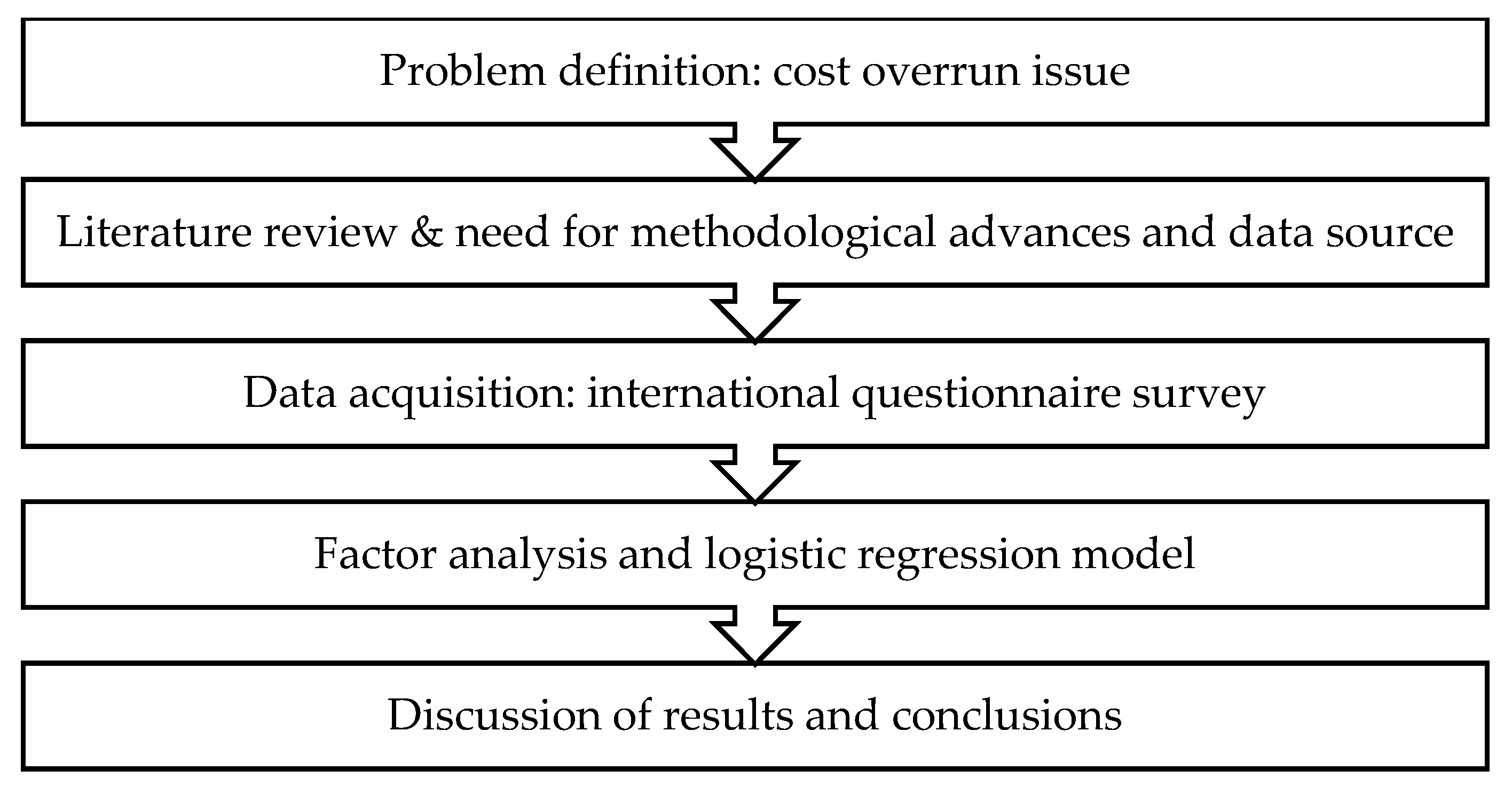
3. Study Organization
3.1. Literature Review
3.1.1. Approaches to Curb Cost Overrun
3.1.2. Studies on Occurrence of Cost Overrun
3.2. Need for Methodological Advances and Data Contributed by Experienced Managers
3.3. International Questionnaire Survey
- Crowd sourcing: Construction industry members (e.g., contractors) in a country or in several countries could be asked to respond to survey questions. This could potentially result in a large database, but the necessary detailed knowledge of respondents cannot be assured.
- Agents of claims and disputes: Although the transcripts provide real life information on causes, the agents are not likely to respond to questions on many potential causes of cost overrun.
- Experienced managers (e.g., executive officers in a provincial/state department of transportation) in selected countries: This option was selected for questionnaire implementation for the reasons that these managers have knowledge and experience, and they are likely to participate for knowledge generation reason [11].
3.4. Cost Overrun Variables
3.5. Identification of Cost Overrun Factors
3.6. Suitability of Survey Data
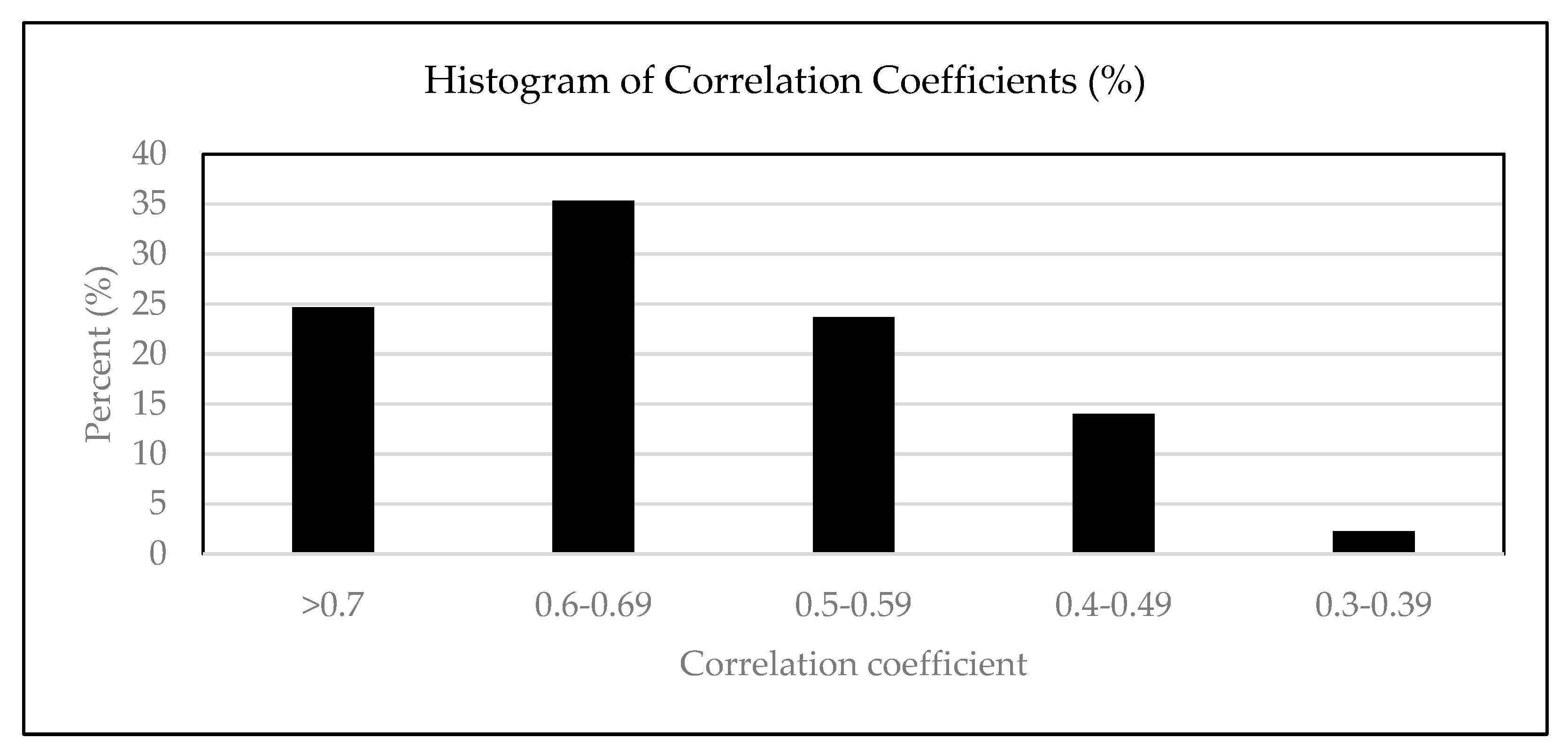
3.7. Filtering Data and Adequacy Tests
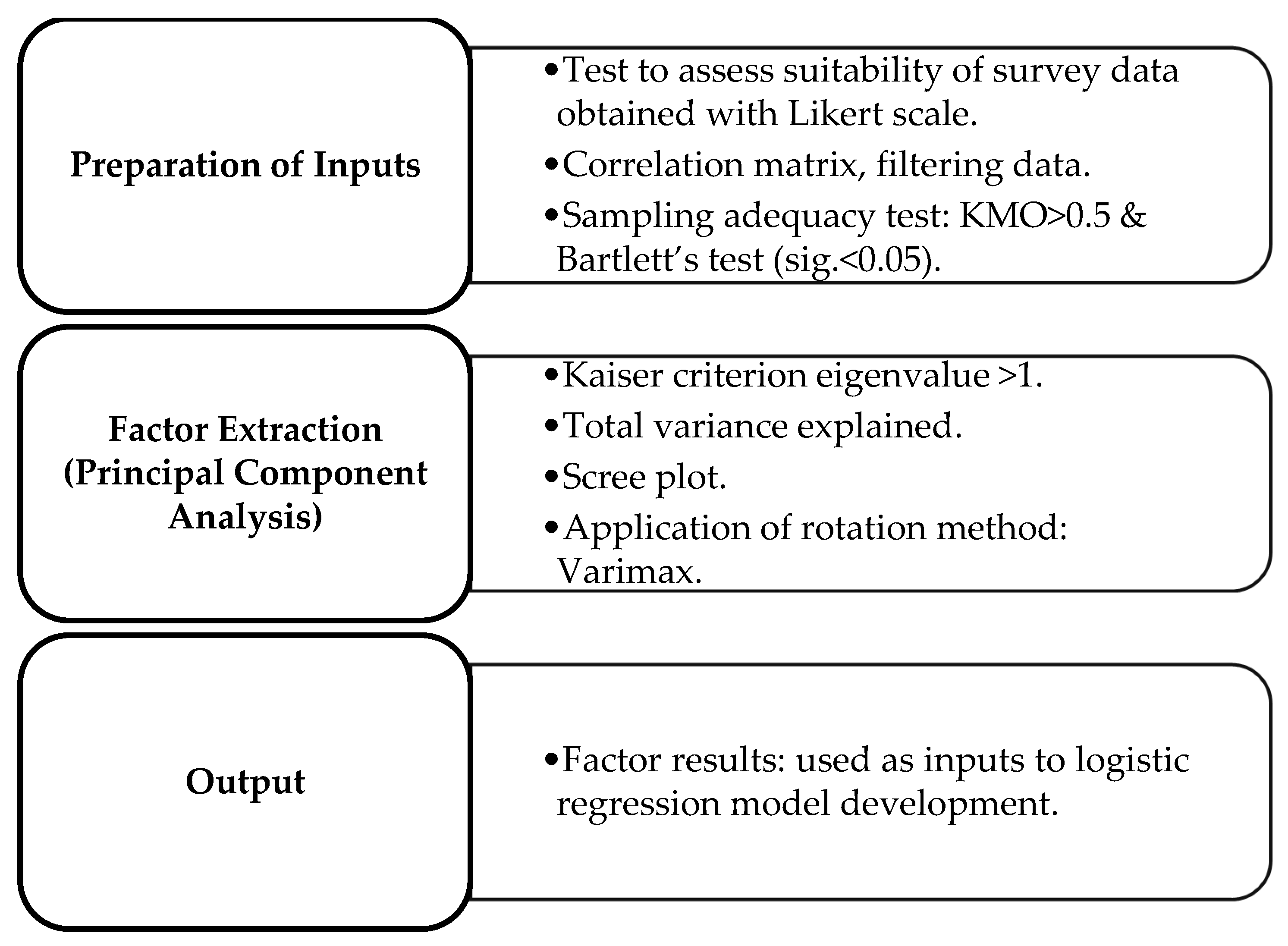
3.8. Factor Extraction
3.9. Interpretation of Factors
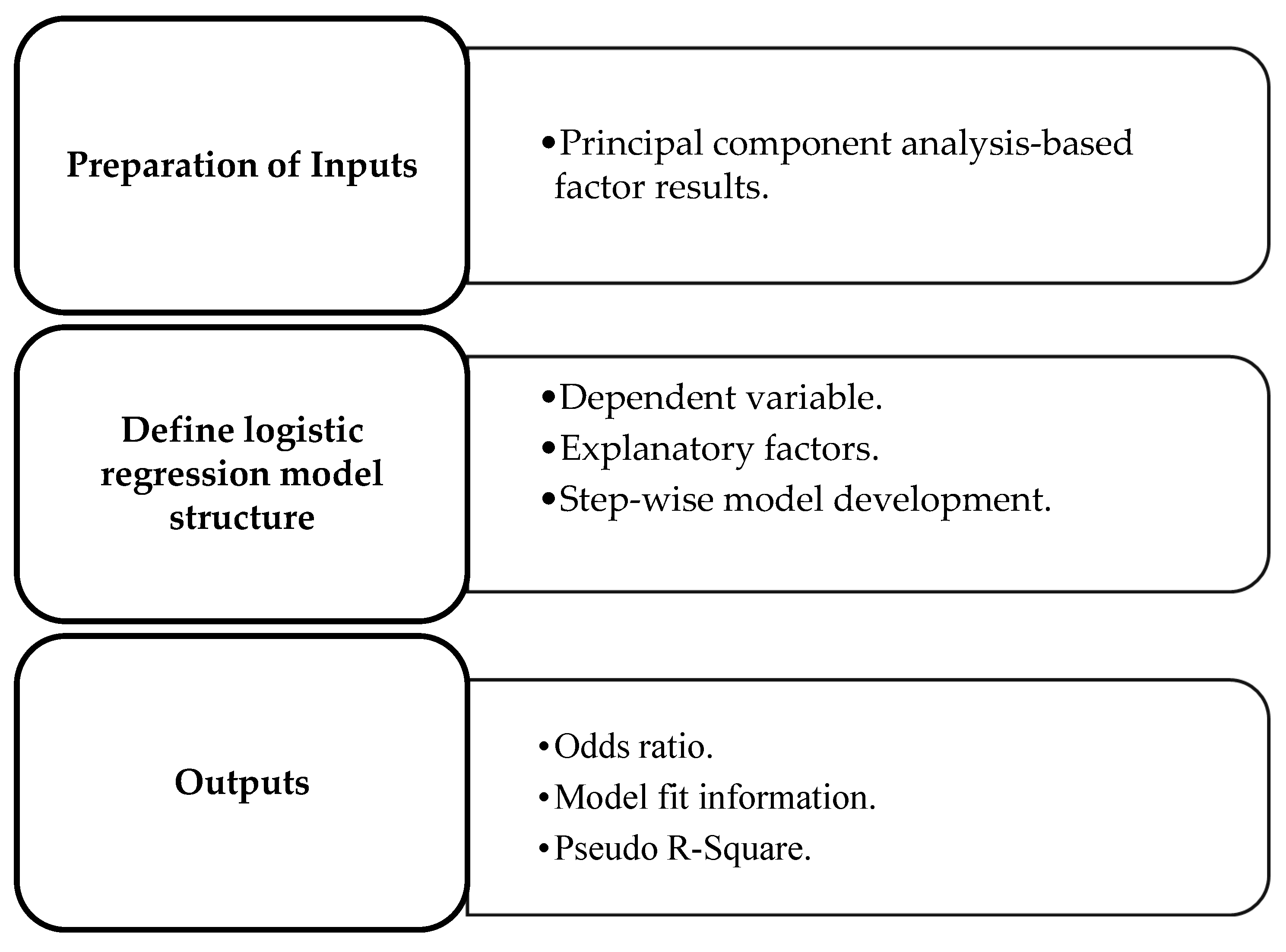
3.10. Probability-Based Logistic Regression Modelling
3.10.1. Methodological Components
3.10.2. Logistic Regression Model Results
4. Discussion: Key Findings, Recommended Interventions
- Several identified causes of cost overrun can be avoided and mitigated at the project planning and design stage prior to construction. Also, project planners and designers can assist in mitigating cost overrun causes that occur while the construction is in progress.
- The stochastic characteristics of many cost overrun causes that are noticeable throughout this paper call for risk analysis to reduce the impact of uncertainties.
- This research calls for improving the entire process of planning, design, risk analysis, and implementation of highway infrastructure projects to avoid and mitigate cost overruns.
5. Conclusions
Author Contributions
Funding
Data Availability Statement
Conflicts of Interest
References
- Ministry of Transportation and Infrastructure of British Columbia. Project Cost Estimating Guidelines; Ministry of Transportation and Infrastructure of British Columbia: Victoria, BC, Canada, 2013. Available online: http://gww.th.gov.bc.ca/gwwpmss/Content/costestimating.asp (accessed on 25 July 2025).
- Russoa, F.; Rindonea, C. Logical Framework Approach in Transportation Planning: The passenger services in the Messina Strait. Transp. Res. Procedia 2023, 69, 855–862. [Google Scholar] [CrossRef]
- Ministry of Transportation and Infrastructure of British Columbia. Project Cost Estimating Guidelines; Revised Report; Ministry of Transportation and Infrastructure of British Columbia: Victoria, BC, Canada, 2020. Available online: https://www2.gov.bc.ca/assets/gov/driving-and-transportation/transportation-infrastructure/planning/guidelines/cost_estimating_guidance.pdf (accessed on 19 January 2026).
- U.S. Department of Transportation (USDOT). Federal Highway Administration—Western Federal Lands Highway Division. Estimating Handbook. December 2025. Available online: https://highways.dot.gov/federal-lands/estimates/wfl-estimating-handbook.pdf (accessed on 19 January 2026).
- Ontario Ministry of Transportation Infrastructure Management Division. Draft Cost Estimating Guide for Designers. Contract Management Office, Contract Award, Estimating Unit. February 2023. Available online: https://tcp.mto.gov.on.ca/sites/default/files/2023-03/Estimating%20Guide%20-%20Final%2028-Feb-2023.pdf (accessed on 19 January 2026).
- National Cooperative Highway Infrastructure Research Program (NCHRP). Contingency Factors to Account for Risk in Early Construction Cost Estimates for Transportation Infrastructure Projects, Report 1025; National Academies of Sciences, Engineering, and Medicine; The National Academies Press: Washington, DC, USA, 2022. [Google Scholar] [CrossRef]
- Belli, P.; Anderson, J.R.; Barhum, J.N.; Dixon, J.A.; Tan, J.-P. Economic Analysis of Investment Operations, Analytical Tools and Practical Applications; WBI Development Studies; World Bank Institute (WBI): Washington, DC, USA, 2001. [Google Scholar]
- National Academies of Sciences, Engineering, and Medicine. Life-Cycle Cost Analysis for Management of Highway Assets; The National Academies Press: Washington, DC, USA, 2016. [Google Scholar] [CrossRef]
- Federal Highway Administration (FHWA). Assessment of Federal Highway Administration Highway Project Cost Estimation Tools; FHWA-HRT-22-075; Federal Highway Administration (FHWA): Washington, DC, USA, 2022.
- Federal Highway Administration (FHWA). Life-Cycle Cost Analysis Primer; Office of Asset Management: Washington, DC, USA, 2022.
- Abdelsayed, M.; Moffat, R. Design on better outcomes, getting to the CRUX of time and cost overruns on capital projects. ReNew Canada, September/October 2023; pp. 28–31. [Google Scholar]
- HKA Global Limited. Forewarned is forearmed. HKA Crux Insight. Sixth Annual Report. A Regional and Sector Analysis of Claims and Disputes Causation. 2023. Available online: https://www.hka.com/ (accessed on 19 January 2026).
- Chitkara, K.K. Construction Project Management: Planning, Scheduling, and Controlling, 2nd ed.; McGraw Hill: Columbus, OH, USA, 2011. [Google Scholar]
- Cantarelli, C.C.; Chorus, C.G.; Cunningham, S.W. Explaining cost overruns of large-scale transportation infrastructure projects using a signalling game. Transp. A Transp. Sci. 2013, 9, 239–258. [Google Scholar] [CrossRef]
- Transport Infrastructure Ireland. Reference Class Forecasting Guidelines for Use in Connection with National Roads Projects; Michael Nolan, CEO; Transport Infrastructure Ireland: Dublin, Ireland, 2009. [Google Scholar]
- Flyvbjerg, B. Curbing optimism bias and strategic misrepresentation in planning: Reference class forecasting in practice. Eur. Plan. Stud. 2008, 16, 3–21. [Google Scholar] [CrossRef]
- Terrill, M. Cost Overruns in Transport Infrastructure; Grattan Institute Report No. 2016-13; Grattan Institute: Melbourne, Australia, 2016. [Google Scholar]
- Park, J.E. Curbing cost overruns in infrastructure investment: Has reference class forecasting delivered its promised success? Eur. J. Transp. Infrastruct. Res. 2021, 21, 120–136. [Google Scholar] [CrossRef]
- Gabel, M.; Sujka, M.; Davis, Z.W.; Keizur, A.E. Performance of Risk-Based Estimating for Capital Projects. Transp. Res. Rec. J. Transp. Res. Board 2021, 2677, 1059–1070. [Google Scholar] [CrossRef]
- Al-Bahar, J.F.; Crandall, K.C. Systematic risk management approach for construction projects. J. Constr. Eng. Manag. 1990, 116, 533–546. [Google Scholar] [CrossRef]
- Akinci, B.; Fischer, M. Factors affecting contractors’ risk of cost overburden. J. Manag. Eng. 1998, 14, 67–76. [Google Scholar] [CrossRef]
- Cantarelli, C.C.; Flyvbjerg, B.; Molin, E.J.E.; van Wee, B. Cost overruns in large-scale transportation infrastructure projects: Explanations and their theoretical embeddedness. Eur. J. Transp. Infrastruct. Res. 2010, 10, 5–18. [Google Scholar] [CrossRef]
- Flyvbjerg, B.; Skamris Holm, M.; Buhl, S.L. What causes cost overrun in transport infrastructure projects. Transp. Rev. 2004, 24, 2011. [Google Scholar] [CrossRef]
- Sharma, S.; Goyal, P.K. Cost overrun factors and project cost risk assessment in construction industry—A state of the art review. Int. J. Civ. Eng. 2014, 3, 139–154. [Google Scholar]
- Ahiaga-Dagbui, D.; Love, P.; Smith, S.; Ackerman, F. Toward a systematic view to cost overrun causation in infrastructure projects: A review and implications for research. Proj. Manag. J. 2017, 48, 88–98. [Google Scholar] [CrossRef]
- Herrera, R.F.; Sánchez, O.; Castañeda, K.; Porras, H. Cost Overrun Causative Factors in Road Infrastructure Projects: A Frequency and Importance Analysis. Appl. Sci. 2020, 10, 5506. [Google Scholar] [CrossRef]
- Ahmadi, I.A. Towards methodological adventure in cost overrun research: Linking process and product. Int. J. Constr. Manag. 2023, 23, 528–541. [Google Scholar] [CrossRef]
- Berechman, J.; Chen, L. Incorporating Risk of Cost Overruns into Transportation Capital Projects Decision-Making. J. Transp. Econ. Policy 2011, 45, 83–104. [Google Scholar]
- Bordat, C.; McCullouch, B.G.; Labi, S.; Sinha, C. An Analysis of Cost Overruns and Time Delays of INDOT Projects; Joint Transportation Research Program; Purdue University: West Lafayette, IN, USA; Indiana Department of Transportation and Federal Highway Administration: Indianapolis, IN, USA, 2004. [Google Scholar]
- Daundkar, S.T.; Thakur, S.; Awad, S. Analysis of Construction Project Cost Overrun by Statistical Method. Int. J. Res. Appl. Sci. Eng. Technol. (IJRASET) 2022, 10, 5200–5207. [Google Scholar] [CrossRef]
- Sohu, S.; Halid, A.; Nagapan, S.; Fattah, A.; Latif, I.; Ullah, K. Causative factors of cost overrun in highway projects of Sindh province of Pakistan. In GCoMSE2017 IOP Conference Series: Materials Science and Engineering; IOP Publishing: Bristol, UK, 2017; Volume 271, p. 012036. [Google Scholar] [CrossRef]
- Kurniawan, D.; Mairizal, M.; Sam, A.M.; Abd Majid, M.Z. Critical Risk Factor Affecting Cost Overrun in Highway Project of West Sumatera. In ICONCEES-2021, IOP Conference Series: Earth and Environmental Science; IOP Publishing: Bristol, UK, 2022; Volume 1022, p. 012013. [Google Scholar] [CrossRef]
- Creedy, G.D. Risk Factors Leading to Cost Overrun in Delivery of Highway Construction Projects. Ph.D. Thesis, Queensland University of Technology, Brisbane, Australia, 2006. [Google Scholar]
- Creedy, G.D.; Skitmore, M.; Wong, J.K.W. Evaluation of risk factors leading to cost overruns in the delivery of highway projects. J. Constr. Eng. Manag. 2010, 136, 528–537. [Google Scholar] [CrossRef]
- Trost, S.M.; Oberlender, G.D. Predicting the accuracy of early cost estimates using factor analysis and multivariate regression. J. Constr. Eng. Manag. 2003, 129, 198–204. [Google Scholar] [CrossRef]
- Field, A. Discovering Statistics Using SPSS, 3rd ed.; Sage Publications Ltd.: London, UK, 2009. [Google Scholar] [CrossRef]
- Hair, J.F.; Black, W.C.; Babin, B.J.; Anderson, R.E.; Tatham, R.L. Multivariate Data Analysis, 5th ed.; Prentice-Hall: Upper Saddle River, NJ, USA, 1998; Volume 5, pp. 207–219. [Google Scholar]
- Blaikie, N. Analyzing Quantitative Data from Description to Explanation; Sage: London, UK, 2003. [Google Scholar] [CrossRef]
- Syed, S.I.; Khan, A.M. Factor Analysis for the Study of Determinants of Public Transit Ridership. J. Public Transp. 2001, 3, 1–17. [Google Scholar] [CrossRef]
- Trudelle, R.C. Using Multiple and Logistic Regression to Estimate the Median Will-Cost and Probability of Cost and Schedule Overrun for Program Managers. Master’s Thesis, Air Force Institute of Technology, Dayton, OH, USA, 2017. Available online: https://scholar.afit.edu/etd/784 (accessed on 19 January 2026).
- White, E.D.; Sipple, V.P.; Greiner, M.A. Using logistic and multiple regression to estimate engineering cost risk. J. Cost Anal. Manag. 2004, 6, 67–79. [Google Scholar] [CrossRef]
- Gilbert, N. Researching Social Life, 3rd ed.; Sage Publications Ltd.: London, UK, 2008. [Google Scholar]
- Sekaran, U.; Bougie, R. Research methods for business: A skill building approach. Long Range Plan. 2003, 26, 136. [Google Scholar] [CrossRef]
- Bryman, A. Research Methods and Organization Studies: Contemporary Social Research; Uwin Hyman Ltd.: New York, NY, USA, 1989. [Google Scholar]
- Cronbach, L.J. Coefficient alpha and the internal structure of tests. Psychometrika 1951, 16, 297–334. [Google Scholar] [CrossRef]
- Tabachnick, B.G.; Fidell, L.S. Using Multivariate Statistics; Pearson Allyn and Bacon: Boston, MA, USA, 2007. [Google Scholar] [CrossRef]
- Kaiser, H.F. An index of factorial simplicity. Psychometrika 1974, 39, 31–36. [Google Scholar] [CrossRef]
- Mason, R.L.; Gunst, R.F.; Hess, J.L. Statistical Design and Analysis of Experiments: With Applications to Engineering and Science, 2nd ed.; Wiley on-line: Hoboken, NJ, USA, 2003. [Google Scholar]
- Kim, J.-O.; Mueller, C. Introduction to Factor Analysis; Sage Publications, Inc.: London, UK, 2011. [Google Scholar] [CrossRef]
- Jolliffe, I.T.; Cadima, J. Principal component analysis: A review and recent developments. Philos. Trans. R. Soc. A Math. Phys. Eng. Sci. 2016, 374, 20150202. [Google Scholar] [CrossRef]
- Costello, A.B.; Osborne, J.W. Best Practices in Exploratory Factor Analysis: Four recommendations for getting the most from your analysis. Pract. Assess. Res. Eval. 2011, 10, 1–7. [Google Scholar] [CrossRef]
- Bangdiwala, S.I. Regression: Binary logistic. Int. J. Inj. Control Saf. Promot. 2018, 25, 336–338. [Google Scholar] [CrossRef] [PubMed]
- Hahs-Vaughn, D.L.; Lomax, R.G. An Introduction to Statistical Concepts; Routledge: New York, NY, USA, 2013. [Google Scholar] [CrossRef]
- Smith, T.J.; McKenna, C.M. A comparison of logistic regression pseudo R2 indices. Mult. Linear Regres. Viewp. 2013, 39, 17–26. [Google Scholar]
- Stevens, J.P. Applied Multivariate Statistics for The Social Sciences; CRC Press: Boca Raton, FL, USA, 2012. [Google Scholar] [CrossRef]
- Campbell, M.J. Statistics at Square Two: Understanding Modern Statistical Applications in Medicine; BMJ Books: London, UK, 2008. [Google Scholar] [CrossRef]



| Variable Classification, Number, and Description |
|---|
POLICY
|
| Test | Values |
|---|---|
| Kaiser–Meyer–Olkin Measure of Sampling Adequacy | 0.816 |
| 2189.718 465 0.00 |
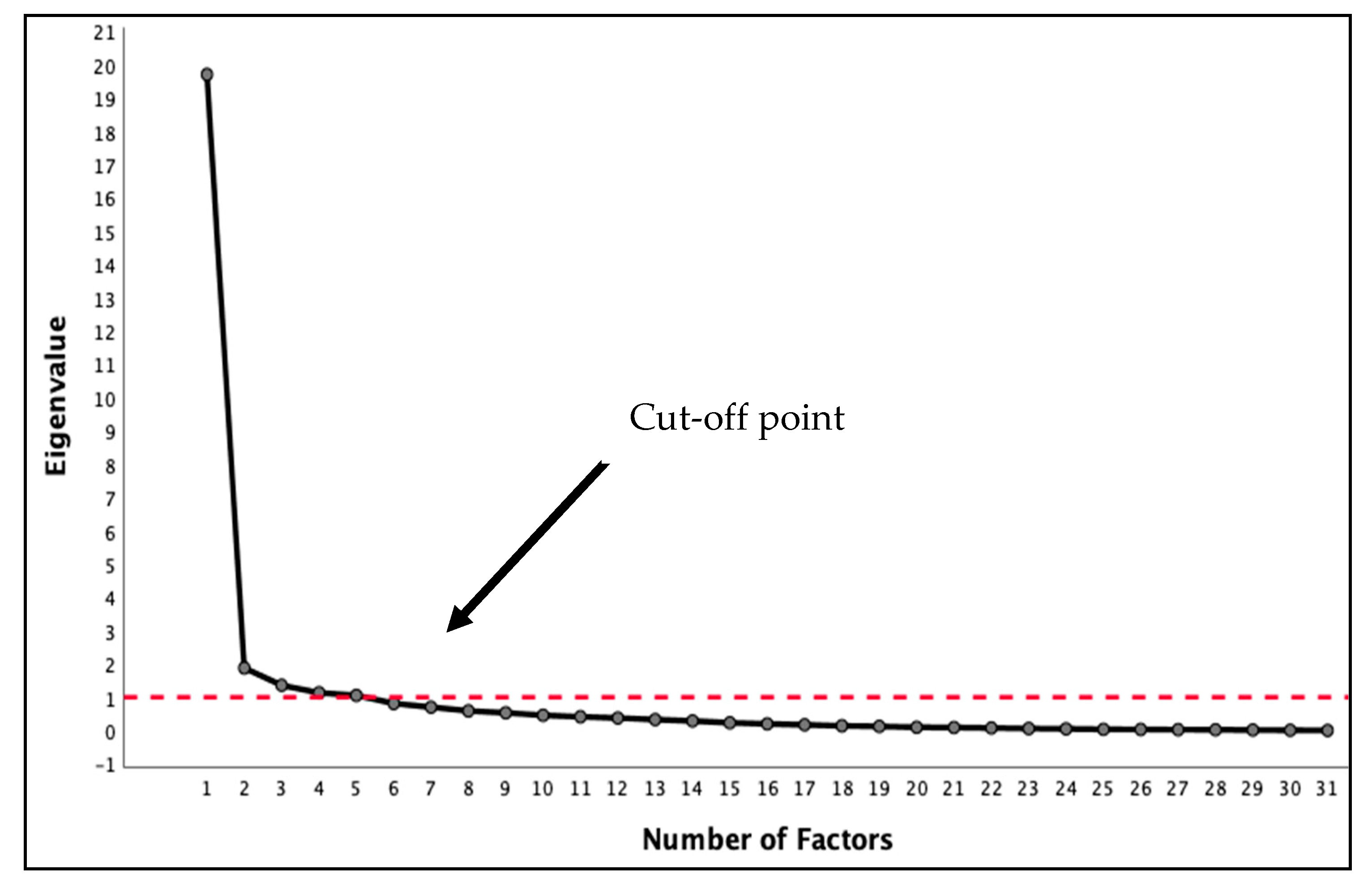
| Factor | Initial Eigenvalue (IEV) | IEV % of Variance | IEV Cumulative % | Following Rotation % of Variance | Following Rotation Cumulative % |
|---|---|---|---|---|---|
| 1 | 19.70 | 63.55 | 63.55 | 18.64 | 18.64 |
| 2 | 1.88 | 6.06 | 69.61 | 18.02 | 36.66 |
| 3 | 1.36 | 4.38 | 73.99 | 15.10 | 51.76 |
| 4 | 1.13 | 3.65 | 77.64 | 14.77 | 66.53 |
| 5 | 1.06 | 3.40 | 81.04 * | 14.51 | 81.04 * |
| 81.04 | 81.04 * |
| Variable | Original Variable Descriptions | Factor Loading |
|---|---|---|
| V3 | Change in regulations | 0.776 |
| V17 | Replacing unsatisfactory subcontractors from site by hiring new subcontractors | 0.740 |
| V38 | Economic and financial factors | 0.735 |
| V1 | Changes in government funding policies | 0.651 |
| V16 | Unnecessary practices, specifications and procedures | 0.634 |
| V42 | Bankruptcy of subcontractors and vendors during construction work | 0.579 |
| V14 | Delays in sending important documents to construction site (e.g., drawings, design changes) | 0.564 |
| V40 | Shortage of contingency and management reserve funds | 0.546 |
| Variance explained 18.64% |
| Factors and Variables | Original Variable Descriptions | Factor Loading | Variance Explained |
|---|---|---|---|
| Factor 2 | 18.02% | ||
| V4 | Complexity of the project (e.g., project size, project type, scope of work) | 0.837 | |
| V15 | Type of construction contract (e.g., unit price contract) | 0.785 | |
| V53 | Inexperienced project managers, estimators and planners | 0.748 | |
| V5 | Design changes during construction work | 0.683 | |
| V8 | Design errors that represent insufficient deliverables | 0.656 | |
| V9 | Changes by owner on the completion date of the project | 0.547 | |
| V13 | Acceleration to maintain schedule | 0.521 | |
| V31 | Delays and approval of shop drawings and installation procedures | 0.514 | |
| Factor 3 | 15.10% | ||
| V21 | Accidents due to poor site safety | 0.799 | |
| V52 | Quality assurance and quality control | 0.738 | |
| V6 | Re-work due to the construction errors | 0.515 | |
| V19 | Poor site management | 0.507 | |
| Factor 4 | 14.77% | ||
| V36 | Absence of a detailed estimate plan | 0.688 | |
| V46 | Overly high expectations | 0.659 | |
| V32 | Building Permit to the construction contractor | 0.603 | |
| V18 | Delay by subcontractor | 0.577 | |
| V39 | Inappropriate and inadequate procurement (e.g., payment terms, pricing) | 0.572 | |
| V2 | Deal termination due to changes in law, government policy or protocols | 0.570 | |
| V34 | Lack of expertise in setting the budget | 0.555 | |
| Cumulative variance explained | 47.89% |
| Variable | Original Variable Descriptions | Factor Loading |
|---|---|---|
| V41 | Unaddressed overtime work or multiple shifts that was not included in the base estimate | 0.700 |
| V26 | Construction variations due to equipment selection | 0.666 |
| V28 | Shortage of skilled labour | 0.623 |
| V24 | Late delivery of materials and equipment at the construction site | 0.599 |
| Variance explained 14.51% |
| Factor | % of Variance | Comment on Constituent Variables |
|---|---|---|
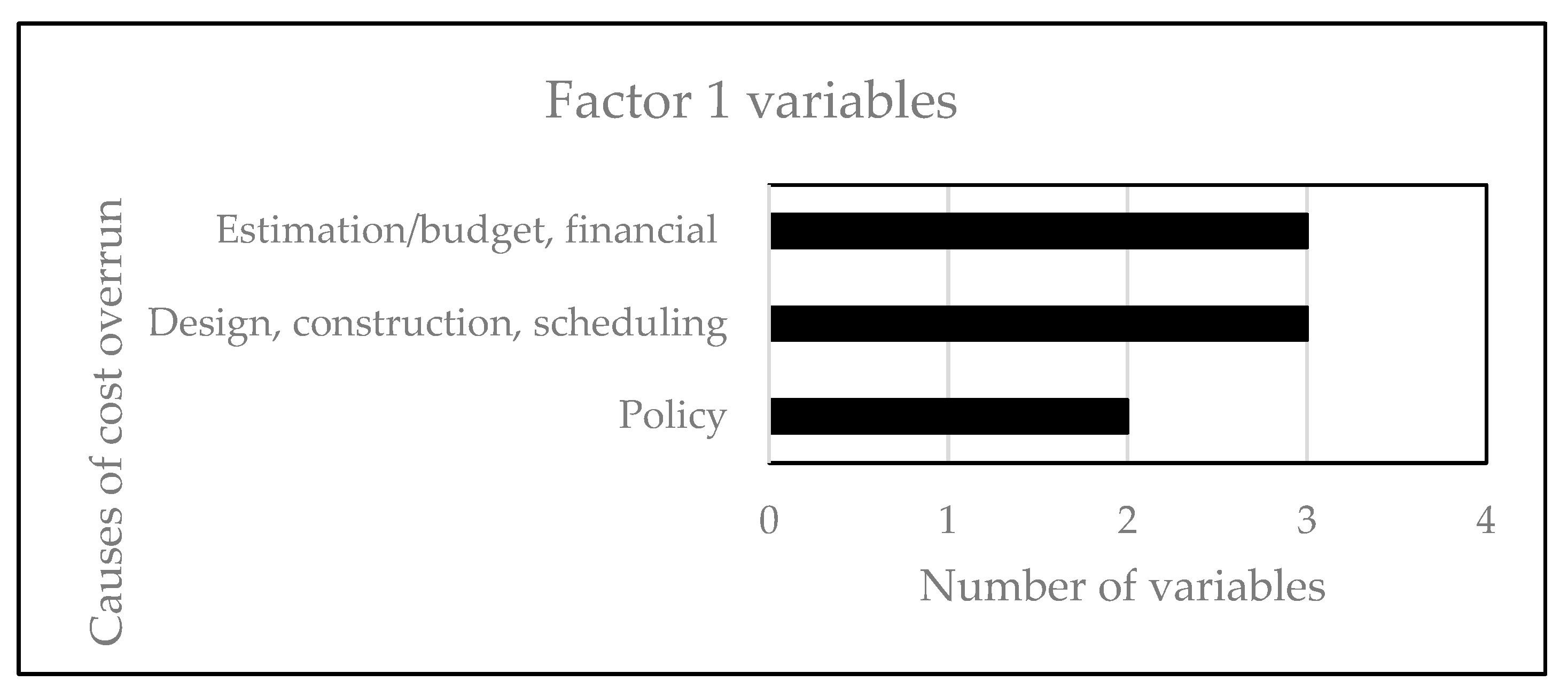
| Factor 1 (8 variables) | 18.64 | Most issues belong to estimation/budget, finances, design (delays in sending drawings to site, unnecessary practices). Policy and regulatory issues are also noted. See Table 4 and Figure 6. Table 1 shows variable classification and description. |
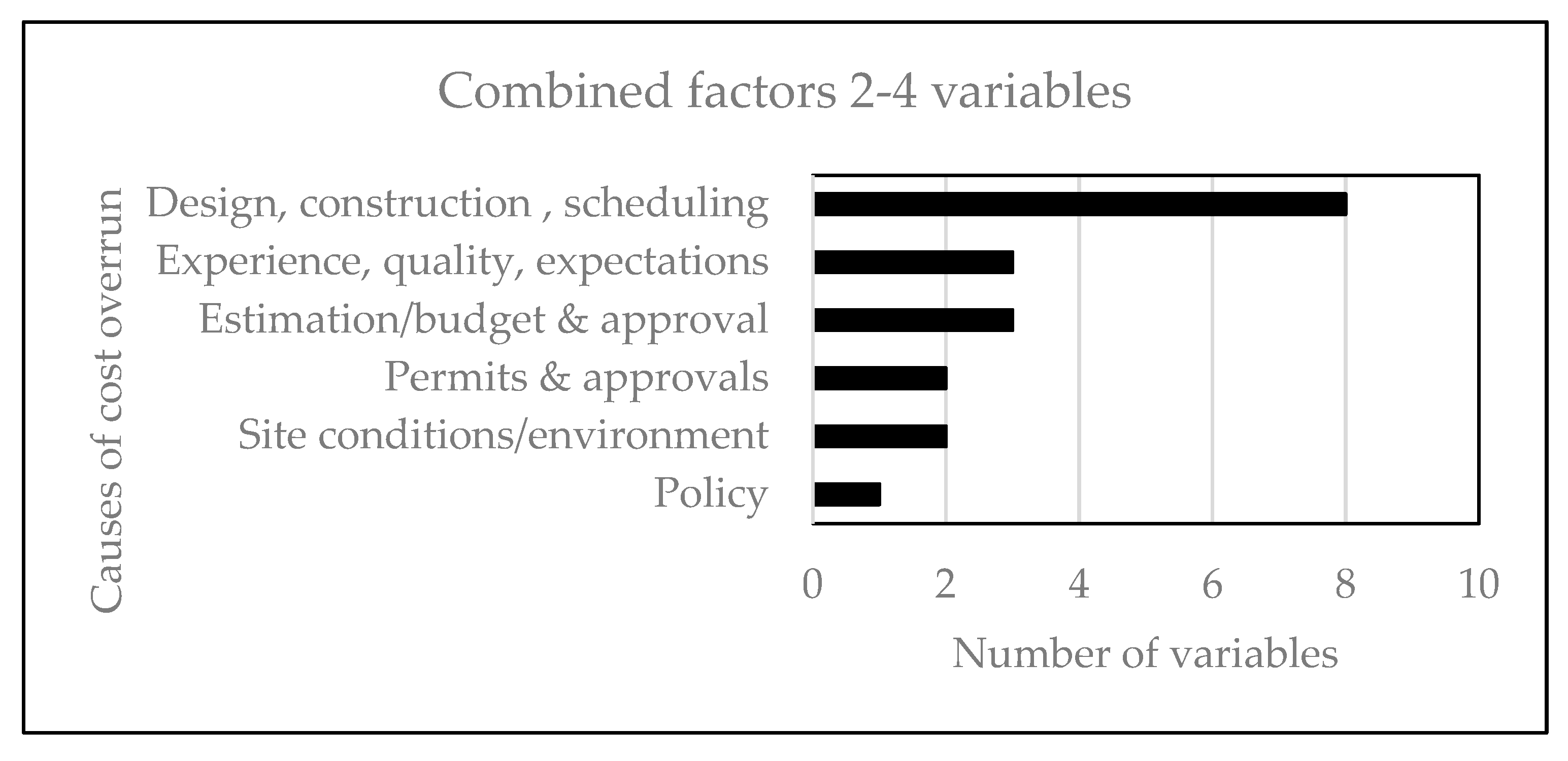
| Combined Factor (based on Factor 2 + Factor 3 + Factor 4) (19 variables) | 47.89 | Most variables are classified as issues with planning, design, construction, scheduling, estimation/budget, finances, inexperience, quality, expectations, permits and approvals, site management, approvals. See Table 5 and Figure 7. Table 1 shows variable classification and description. |
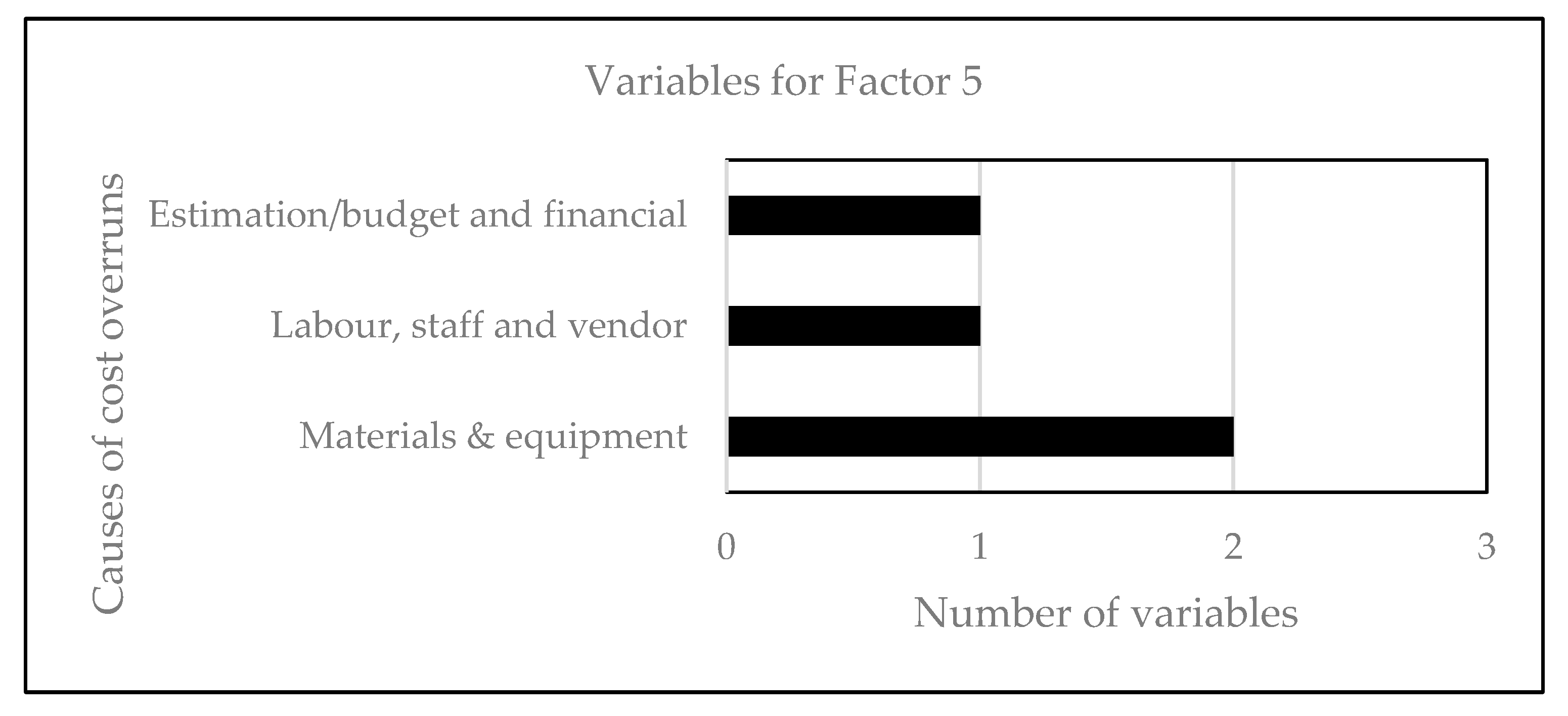
| Factor 5 (4 variables) | 14.51 | Most variables relate to issues with materials and equipment. Also, there are variables on estimation/budget, financial, shortage of skilled labour. See Table 6 and Figure 8. Table 1 shows variable classification and description. |
| Model Statistics | Result |
|---|---|
| Factor 1 odds ratio | 0.895 |
| Model Fit Information | |
| −2 log-likelihood (−2LL) | 72.391 |
| Model chi-square | 0.155 |
| Sig. | 0.693 |
| Pseudo R-Square | |
| Cox & Snell R-Square | 0.003 |
| Nagelkerke R-Square | 0.004 |
| Model Statistics | Result |
|---|---|
| Factor 1 odds ratio | 0.848 |
| Combined Factor (combination of Factors 2–4) odds ratio | 13.626 |
| Model Fit Information | |
| −2 log-likelihood (−2LL) | 53.664 |
| Model chi-square | 18.882 |
| Sig. | 0.000 |
| Pseudo R-Square | |
| Cox & Snell R-Square | 0.300 |
| Nagelkerke R-Square | 0.402 |
| Model Statistics | Result |
|---|---|
| Odds Ratio | |
| Factor 1 | 0.854 |
| Combined Factor (combination of Factors 2–4) | 16.305 |
| Factor 5 | 0.715 |
| Model Fit Information | |
| −2 log-likelihood (−2LL) | 52.674 |
| Model chi-square | 19.872 |
| Significance. | 0.000 |
| Pseudo R-Square | |
| Cox & Snell R-Square | 0.313 |
| Nagelkerke R-Square | 0.419 |
Disclaimer/Publisher’s Note: The statements, opinions and data contained in all publications are solely those of the individual author(s) and contributor(s) and not of MDPI and/or the editor(s). MDPI and/or the editor(s) disclaim responsibility for any injury to people or property resulting from any ideas, methods, instructions or products referred to in the content. |
© 2026 by the authors. Licensee MDPI, Basel, Switzerland. This article is an open access article distributed under the terms and conditions of the Creative Commons Attribution (CC BY) license.
Share and Cite
Alfasi, B.A.; Khan, A.M. Cost Overruns and Claims Management in Highway Construction: Lessons from International Project Management and Emerging Methodological Advances. CivilEng 2026, 7, 12. https://doi.org/10.3390/civileng7010012
Alfasi BA, Khan AM. Cost Overruns and Claims Management in Highway Construction: Lessons from International Project Management and Emerging Methodological Advances. CivilEng. 2026; 7(1):12. https://doi.org/10.3390/civileng7010012
Chicago/Turabian StyleAlfasi, Baraa A., and Ata M. Khan. 2026. "Cost Overruns and Claims Management in Highway Construction: Lessons from International Project Management and Emerging Methodological Advances" CivilEng 7, no. 1: 12. https://doi.org/10.3390/civileng7010012
APA StyleAlfasi, B. A., & Khan, A. M. (2026). Cost Overruns and Claims Management in Highway Construction: Lessons from International Project Management and Emerging Methodological Advances. CivilEng, 7(1), 12. https://doi.org/10.3390/civileng7010012