Article

Incidental Carcinomas and Lesions with Uncertain Malignant Potential (B3) Discovered During Symmetrization Mammoplasty in Breast Cancer Patients—Retrospective Single-Center Experience


1
Department of Plastic, Reconstructive, and Burn Surgery, “Victor Babes” University of Medicine and Pharmacy, Eftimie Murgu Square No. 2, 300041 Timisoara, Romania
2
Clinic of Plastic and Reconstructive Surgery, “Pius Branzeu” Emergency County Hospital, Liviu Rebreanu Blvd. No. 156, 300723 Timisoara, Romania
3
Center for Advanced Research in Cardiovascular Pathology and Hemostaseology, “Victor Babes” University of Medicine and Pharmacy, Eftimie Murgu Square No. 2, 300041 Timisoara, Romania
4
Department of Emergency Surgery, “Victor Babes” University of Medicine and Pharmacy, Eftimie Murgu Square No. 2, 300041 Timisoara, Romania
5
Department of Morphopathology, “Victor Babes” University of Medicine and Pharmacy, Eftimie Murgu Square 2, 300041 Timisoara, Romania
6
ANAPATMOL Research Center, “Victor Babes” University of Medicine and Pharmacy, Eftimie Murgu Square No. 2, 300041 Timisoara, Romania
7
Doctoral School, “Victor Babes” University of Medicine and Pharmacy, Eftimie Murgu Square No. 2, 300041 Timisoara, Romania
8
Department of Clinical Skills, “Victor Babes” University of Medicine and Pharmacy, Eftimie Murgu Square No. 2, 300041 Timisoara, Romania
9
Department of Oncology, ONCOHELP Hospital, Ciprian Porumbescu Street No. 59, 300239 Timisoara, Romania
10
ONCOMED Outpatient Unit, Department of Oncology, Ciprian Porumbescu Street No. 59, 300239 Timisoara, Romania
*
Author to whom correspondence should be addressed.
Surgeries 2026, 7(1), 10; https://doi.org/10.3390/surgeries7010010

Submission received: 25 October 2025 / Revised: 14 December 2025 / Accepted: 29 December 2025 / Published: 4 January 2026

Abstract

Although occult breast carcinomas and lesions with uncertain malignant potential are rare, their incidental discovery during symmetrizing mammoplasty can significantly alter the treatment approaches and cancer staging. In the context of oncoplastic surgery, the systematic evaluation of the contralateral breast is a clinical priority that has been underexplored in Eastern Europe. Background/Objectives: This study aimed to assess the incidence and histological characteristics of incidental carcinomas and B 3 lesions detected during contralateral symmetry mammoplasty in patients with breast cancer. Methods: This retrospective study was conducted at the Plastic and Reconstructive Surgery Clinic of the “Pius Brînzeu” County Emergency Clinical Hospital in Timisoara, Romania, over six years (2018–2024), and included 180 of 256 patients who underwent contralateral breast symmetrization. Results: Among the 180 patients, 21 (11.66%) had incidental findings: eight (4.44%) had contralateral carcinomas, and 13 (7.22%) had B3 lesions. The histopathological types identified were invasive ductal carcinoma NST (one case), ductal carcinoma in situ (one case), invasive lobular carcinoma (five cases), and mucinous/papillary carcinoma (one case). Compared to the reported international range of 2–10%, our observed incidence of 11.66% reflects the unique aspects of our patient cohort and the thoroughness of our histological analyses. Conclusions: Detection of contralateral carcinomas and B3 lesions during symmetry mammoplasties underscores the importance of a multidisciplinary approach, comprehensive bilateral screening, and detailed histopathological examination of specimens.

1. Introduction

The early detection of breast cancer has led to a significant increase in the number of conservative surgical procedures. This trend reflects not only improvements in diagnosis but also a shift in patient preferences, with more patients choosing symmetry procedures to enhance their aesthetic appearance and improve their quality of life. However, despite careful radiological screening, there remains a chance of incidental discovery of carcinomas in the contralateral breast [1].
Occult breast carcinomas (OBCs), which account for 0.3–1% of all breast cancers [2,3,4,5], are characterized by axillary lymph node metastases without an obvious primary tumor in the breast, both clinically and by conventional imaging methods such as mammography, ultrasound, or MRI [6,7,8,9]. By contrast, the discovery of incidental breast carcinomas and B3 lesions (atypical ductal hyperplasia (ADH), atypical lobular hyperplasia (ALH), classic lobular carcinoma in situ (cLCIS), flat epithelial atypia (FEA), radial scar (RS), and intraductal papilloma (IDP)) during symmetry-enhancing surgery for breast cancer presents a different and more complex set of challenges. These findings necessitate a thorough reassessment of local and systemic treatment strategies [10].
Given these considerations, a multidisciplinary approach that integrates surgery, radiotherapy, medical oncology, and advanced imaging is essential for optimizing therapeutic outcomes [3,4].
International literature reports an incidence of 0.3–1.5% for these lesions, particularly in centers specializing in oncoplastic surgery [1,11]. However, the lack of specialized data published in Romania and Eastern Europe means that local experiences are important for adapting to national protocols.
This study aimed to investigate the incidence and histopathological profile of incidental carcinomas and lesions with uncertain malignant potential (classified as B3) in tissue samples obtained through contralateral symmetrization mammoplasty in patients with breast cancer. This study aims to contribute meaningfully to the understanding of the oncological risk of apparently healthy contralateral breast tissue in the context of post-mastectomy reconstruction or breast-conserving surgery. Since symmetry mammoplasty is often seen as a purely cosmetic procedure, the discovery of unexpected lesions with oncological significance could have important implications for treatment strategies and for postoperative monitoring. By conducting this analysis, we hope to enhance the surgical and oncological management of patients with breast cancer, highlighting the importance of an integrated approach that considers both reconstructive and oncological factors.

2. Materials and Methods

Our retrospective study analyzed patients treated between January 2018 and December 2024 at the Plastic and Reconstructive Surgery Clinic of Pius Brînzeu County Emergency Clinical Hospital in Timișoara, in collaboration with a multidisciplinary team. Ethical approval for the retrospective use of previously collected patient data was obtained from the Ethics Committee of Pius Brînzeu County Emergency Clinical Hospital in Timișoara (564/03.09.2025).
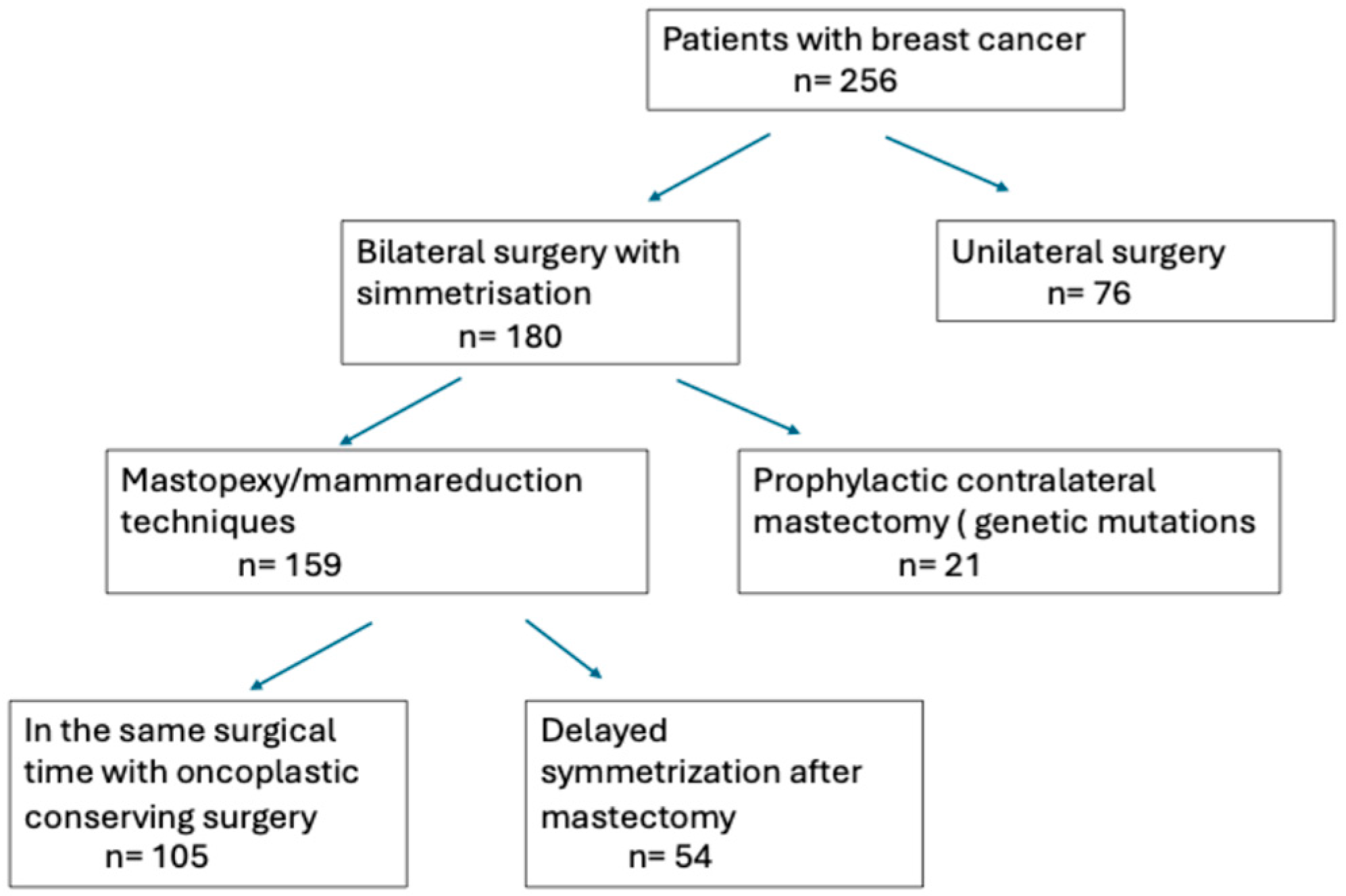
Our cohort consisted of 256 patients treated for malignant breast tumors, of whom 180 (70.31%, CI 66.90–73.44%) underwent bilateral surgery with symmetry, and 76 (29.7%, CI 24.43–35.52%) underwent unilateral surgery. The inclusion criteria were as follows: confirmed diagnosis of breast cancer (via TRU-CUT, vacuum-assisted, or excisional biopsy), concurrent or delayed contralateral symmetrization mammoplasty, and complete clinical and pathological data. The diagnostic protocol included imaging evaluations (mammography, ultrasound, and MRI). BRCA1/2 testing with extended panel testing in patients aged < 50 years or with a family history. A multidisciplinary committee made the therapeutic decisions.

2.1. Surgical Procedure

Contralateral breast procedures were performed either during the same operation as the primary breast cancer surgery or at a later stage. Of the 180 patients, 159 underwent contralateral symmetrization using breast reduction techniques, and 105 underwent symmetrization simultaneously with breast-conserving surgery. Another 54 patients underwent symmetrization after their first mastectomy. This timing depends on the need for additional therapy and cancer treatment planning. The contralateral breast was symmetrized based on the presence and location of BI-RADS category 2 or 3 lesions. When such lesions were identified on imaging, they were surgically excised, and breast reconstruction was performed using the remaining tissue. For breasts without imaging-detected lesions, we opted for the same breast reduction technique used in conservative oncoplastic surgery. The remaining 21 patients underwent contralateral prophylactic mastectomy upon request, either simultaneously with the initial surgery or later after completing oncological treatment; all were carriers of BRCA1 or BRCA2 mutations.

2.2. Morphological Assessment

Following the outline of the surgical procedures, we have detailed the morphological assessment approach to underscore the comprehensive diagnostic strategy employed in our study. For histopathological diagnosis, biopsy, segmentectomy, or mastectomy specimens were processed according to standard procedures, including fixation in 10% neutral-buffered formalin, paraffin embedding, and routine hematoxylin–eosin staining. For IHC investigation, where appropriate, additional sections were cut from the paraffin blocks at a thickness of 3–4 μm, placed on SuperFrost Ultra Plus slides, and stained immunohistochemically (IHC) using a Leica Bond-Max staining machine (Leica Biosystems, Newcastle, UK) with the Bond Polymer Refine Detection kit (DS9800) (Leica Biosystems, Newcastle, UK) and diaminobenzidine chromogen, according to the manufacturer’s standard protocol. Finally, the slides were counterstained with hematoxylin and mounted with Entellan (Merck, Darmstadt, Germany).
The symmetrization specimen was inked if oriented, and any visible or palpable lesion identified during gross examination was sampled (the entire lesion was submitted if it measured < 2 cm). In breasts with no abnormalities on imaging or gross inspection, a minimum of one block per 50 g of tissue was submitted (at least four blocks for specimens < 200 g and between 6 and 12 blocks for specimens weighing 200–1000 g). In patients with a diagnosis of invasive lobular carcinoma in the contralateral breast, an additional 5–10 blocks were submitted from the reduction specimen, depending on the specimen size.

2.3. Data Analysis

Demographic, clinical, surgical, and histopathological data were collected from the observation sheets. The findings were compared with data published in international specialized literature. The proportions used in this analysis were accompanied by 95% confidence intervals calculated using the Wilson method to ensure a robust estimation given the size of our sample.

3. Results

Among the 256 patients, 180 (70.31%) underwent surgery on both breasts. This was done either simultaneously or later to make them look even. The other 76 (29.69%) underwent surgery on only one breast. The reasons for not treating the contralateral breast were severe comorbidities (n = 19) or patient refusal (n = 57).
The patients’ ages ranged from 26 to 80 years (mean: 54 years), with a slight predominance of perimenopausal (the period shortly before menopause, characterized by irregular menstrual cycles and hormonal changes) and postmenopausal (absence of menstrual periods for at least 12 consecutive months) women (n = 116).
The average body mass index (BMI) was 31, confirming obesity as a risk factor for breast cancer. Eighty-four (46.67%, CI 39.51–53.90%) patients had comorbidities, such as hypertension, diabetes mellitus, obesity, and heart disease, and 72 (40%, CI 33.11–47.30%) were active smokers.
Mandatory preoperative imaging included standard ultrasonography and mammography. Preoperative breast MRI was performed based on the following a priori criteria: (1) premenopausal and postmenopausal patients diagnosed with invasive lobular carcinoma (ILC); (2) women with dense breasts; (3) carriers of pathogenic genetic mutations; (4) cases with extensive microcalcifications visible on mammography; and (5) architectural distortions lacking corresponding ultrasound findings.
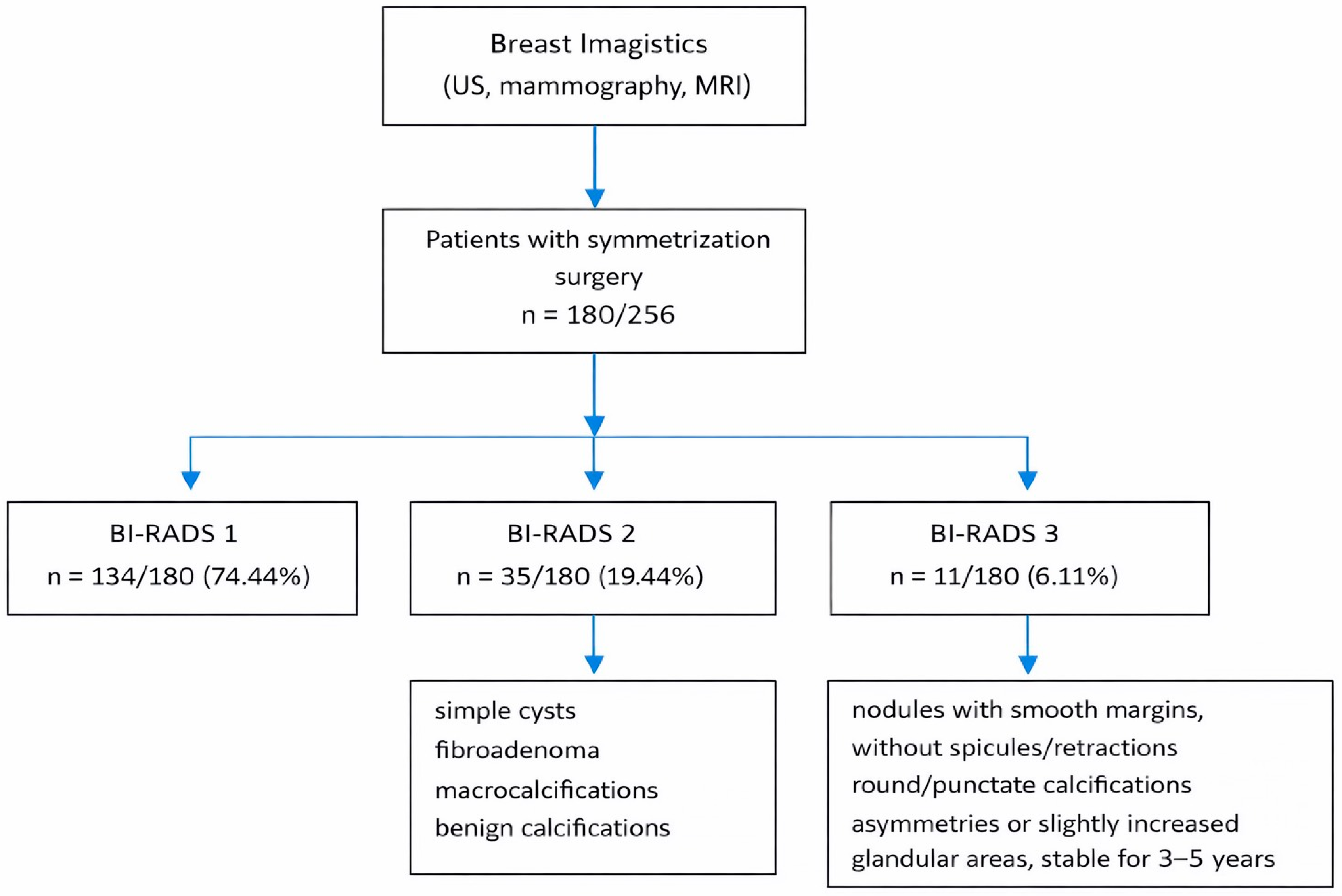
In 35/180 cases (19.44%, CI 14.32–25.84%), imaging of the contralateral breast revealed BI-RADS 2 lesions with characteristics typical of benign findings. In 11/180 cases (6.11%, CI 3.44–10.61%), BI-RADS 3 lesions did not require biopsy, as the lesions remained stable over time (2–5 years).
In the remaining 134/180 patients (74.44%, CI 67.62–80.21%), no imaging changes were observed in the contralateral breast (BI-RADS 1) (Figure 1).
The main types of initial breast cancer diagnoses were invasive ductal carcinoma NST (75%), invasive lobular carcinoma (19%), and other types (mucinous, papillary, and metaplastic) (6%). The molecular subtypes of primary cancer included Luminal A (38%), Luminal B HER2-negative (17%), Luminal B HER2-positive (14%), HER2-enriched (10%), and TNBC (triple-negative breast cancer) (21%).
Overall, 112/180 patients (62.22%, CI 54.98–68.98%) received neoadjuvant treatment (chemotherapy, hormonotherapy, anti-HER2 therapy, and immunotherapy), with an interval between diagnosis and surgery of 16–24 weeks.
Of the 180 patients who underwent bilateral surgery with symmetrization, 105 (58.33%, CI 50.97–65.27%) underwent conservative surgery with symmetrization using breast reduction techniques. Additionally, 54 patients (30%, CI 23.76–37.03%) underwent mastectomy with delayed symmetrization using breast-reduction techniques after completing oncological treatment (Figure 2).
In our approach to conservative oncoplastic surgery, we customized symmetrization techniques to specifically address the types of lesions that were already present (Table 1).
Symmetrization techniques aim to replicate breast reconstruction methods used for breasts with cancer, ensuring similar healing dynamics over time. The amount of resected tissue ranged from 170 to 785 g.
Patients aged < 50 years with a family history or multiple neoplasms underwent genetic testing, primarily for BRCA1/2, TP53, PTEN, PALB2, CDH1, STK11, and CHEK2, as well as an extended panel. Germline mutations in BRCA1 and BRCA2 were identified in 21 patients (11.66%, CI 7.76–17.18%) (Figure 1). At the patients’ request, contralateral prophylactic mastectomy was performed during the same surgery or delayed, followed by breast reconstruction (prepectoral or subpectoral, with implants or autologous tissue). It is important to note that in Romania, prophylactic mastectomy is not approved in the public healthcare system, except for patients with BRCA1 and BRCA2 mutations.
Of the 180 patients who underwent symmetry procedures, 21 (11.66%) were found to have incidental contralateral carcinomas or lesions with uncertain malignant potential. Specifically, eight cases of contralateral carcinomas (4.44%, CI 2.27–8.52%) and 13 cases of lesions with uncertain malignant potential (classified as B3) were identified, accounting for 7.22% (CI 4.27–11.96%) of all patients. Of the 21 cases with pathological findings, 17 (80.95%, CI 60.00–92.30%) were discovered after breast reduction surgery and four (19.05%, CI 7.63–40.06%) after prophylactic mastectomy. In nine cases, preoperative imaging did not reveal any lesions (B-RADS 1 classification). In the remaining 12 cases, the imaging findings were assessed as benign (BI-RADS 2–3), including fibroadenomas, simple cysts, and intramammary lymph nodes. As no suspicion of malignancy was present, biopsy was not indicated, and patients were followed up with routine annual imaging only.
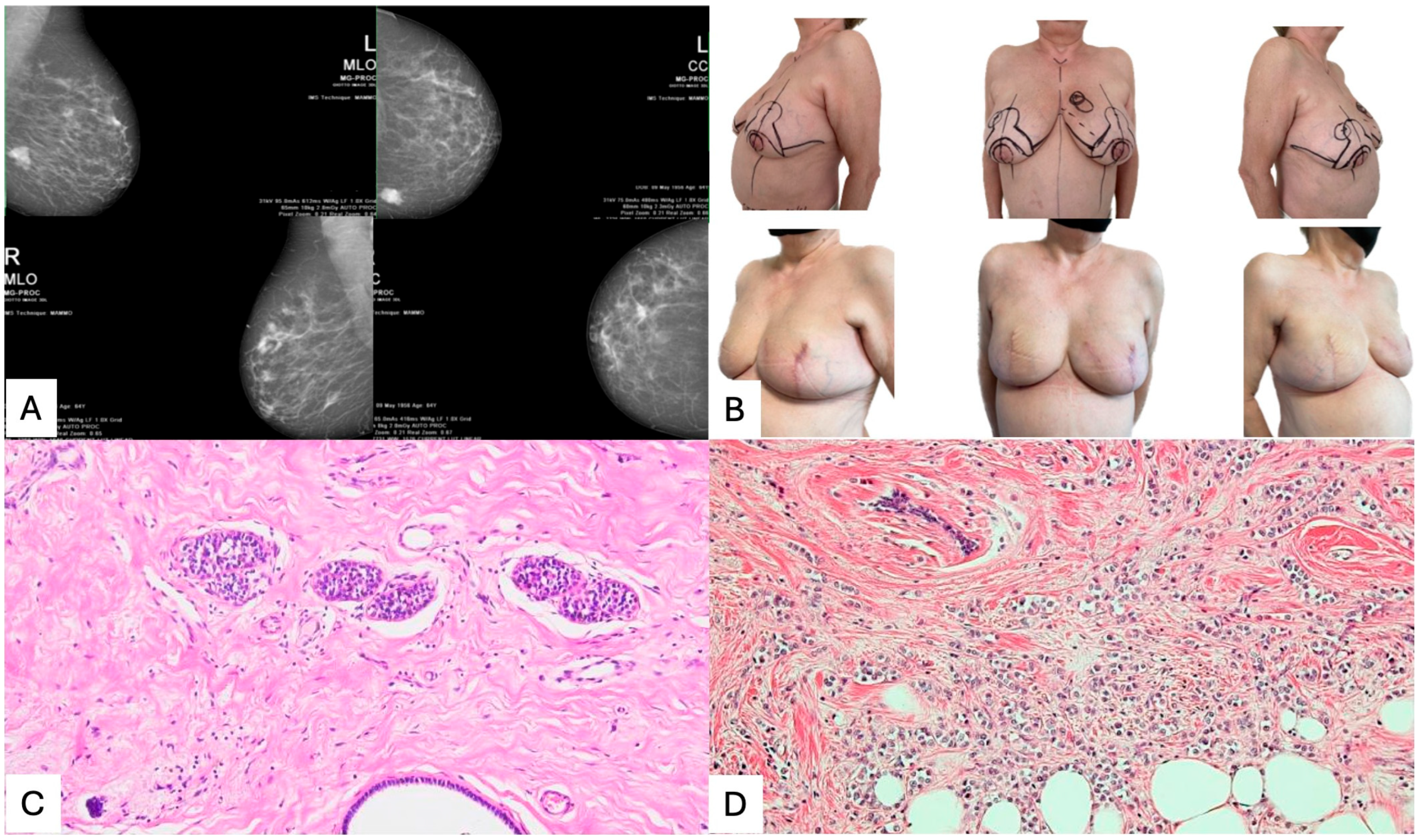
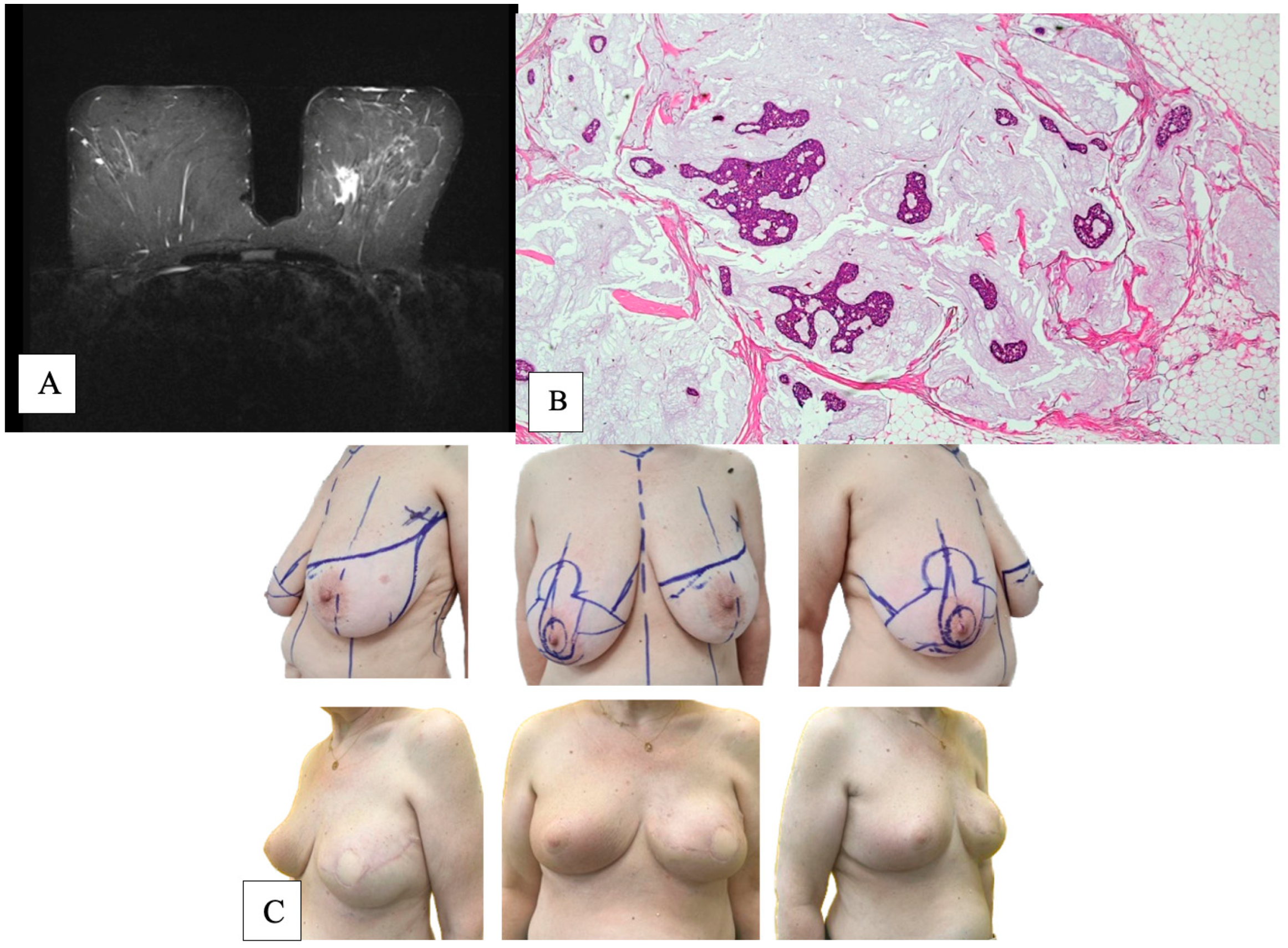
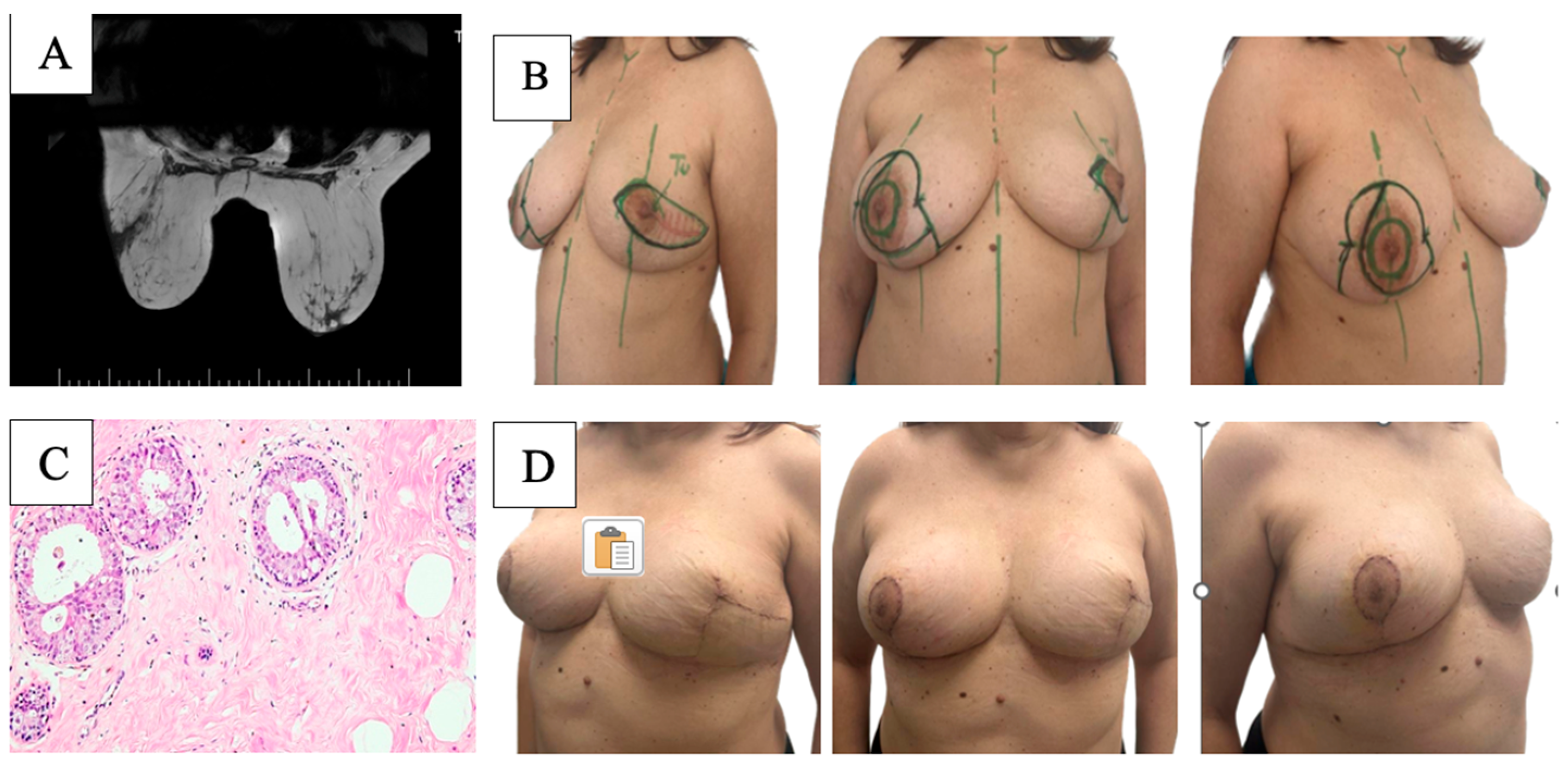
The primary tumor of the 21 patients with breast cancer was IDC (invasive ductal carcinoma) +/− DCIS (ductal carcinoma in situ) in 15 cases and ILC in six cases. The predominant molecular subtypes were Luminal B (HER2 negative—8 cases, HER2 positive—5 cases), Luminal A (6 cases), and TNBC with BRCA (2 cases). The histological types identified in the symmetrized breast were invasive ductal carcinoma (one case), invasive lobular carcinoma (five cases) (Figure 3), mucinous carcinoma (one case) (Figure 4), ductal carcinoma in situ (one case) (Figure 5), classic lobular carcinoma in situ (four cases), atypical ductal hyperplasia (five cases), and atypical lobular hyperplasia (four cases) (Table S1).
Subsequent treatment involved reoperation with modified radical mastectomy in two patients and contralateral axillary lymph node dissection. For axillary surgery, we preferred axillary sampling (3/21 cases) or axillary dissection (4/21 cases), especially in cases where mammoreduction techniques were used for symmetry, which involved extensive incisions, tissue undermining, and tissue relocation. No axillary procedures were performed on B3 lesions. Sentinel lymph node biopsy (SLNB) was performed simultaneously with symmetrization surgery in six patients, among whom only one patient had a positive sentinel lymph node (Table S1).
Adjuvant cancer treatment included radiotherapy with a total dose of 50 Gy, divided into 25 fractions over 5 weeks, 5 days per week (for patients treated before 2020) or hypofractionated 42.5 Gy, delivered in 16 fractions over 21 days. It was combined sequentially with oncological therapy tailored to each case based on the final histopathological results of the resection specimens from both breasts and bilateral axillary status.
Patients received systemic treatment according to their molecular subtype. Luminal A patients received neoadjuvant and adjuvant hormonotherapy, Luminal B patients received neoadjuvant chemotherapy and adjuvant hormonotherapy, patients with TNBC BRCA mutation received neoadjuvant chemotherapy with immunotherapy (pembrolizumab) and adjuvant immunotherapy with pembrolizumab and PARP inhibitors (olaparib), and Luminal Her2-positive patients received neoadjuvant chemotherapy with dual anti-Her2 blocade treatment with trastuzumab + pertuzumab and adjuvant hormonotherapy and anti-yeHer 2 treatment (with dual Her2 blocade—trastuzumab + pertuzumab in case of pathological complete response or trastuzumab etamsine (T-DM1) in case of non-pathological complete response). The neoadjuvant chemotherapy schedule involved the sequential administration of anthracyclines and taxans, along with the administration of aromatase inhibitors for hormonotherapy.

4. Discussion

4.1. Imaging Considerations and BI-RADS 1–2 Malignant Findings

Despite systematic preoperative imaging, including mammography, ultrasound, and MRI, nine patients in our cohort had BI-RADS 1–2 findings but were ultimately diagnosed with contralateral breast carcinoma or B3 lesions. These cases represent one of the most clinically relevant findings of the present study and underline the intrinsic limitations of conventional imaging in oncologic patients.
Imaging detection is particularly challenging in invasive lobular carcinoma, which frequently presents with diffuse infiltration, architectural distortion, or nonspecific findings, potentially doubling the rate of occult contralateral lesions [4]. This was confirmed in our cohort, in which five of the eight incidental carcinomas were ILC. Although breast MRI is known to improve sensitivity in ILC and dense breasts [9,12], small foci of invasive carcinoma, lobular neoplasia, or DCIS may remain radiologically occult even on MRI, emphasizing the complementary role of surgical excision and histopathological examination during contralateral symmetrization.

4.2. Pathological Findings and Histopathological Processing

The overall detection rate of significant incidental findings in our study (11.66%) exceeded the 2–10% reported in most published series [1,11,13]. This finding may be partly explained by the oncologic background of our patient population, as all patients had a known unilateral breast cancer, in contrast to studies that included patients who underwent aesthetic surgery alone.
Another major contributing factor is the rigorous histopathological processing protocol used at our institution. All symmetrization specimens were oriented, carefully labeled, serially sectioned, and extensively sampled, including the peripheral and retrotissue. As previously reported, limited sampling, lack of specimen orientation, and fragmented submission of symmetrization tissue may result in underdiagnosis of occult carcinoma and B3 lesions, potentially explaining the lower detection rates in other studies [14].

4.3. B3 Lesions and Risk of Upgrade

Lesions classified as B3 pose diagnostic and therapeutic challenges. Several recent studies have demonstrated significant rates of upgrade to carcinoma following surgical excision, particularly in the presence of atypia, suspicious imaging features, or concurrent invasive cancer [15,16,17,18].
D’Archi et al. (2024) reported a substantial discrepancy between preoperative biopsy and final pathology in B3 lesions, emphasizing the importance of histologic subtype and imaging appearance in determining upgrade risk [15]. Similarly, radiomics-based predictive models proposed by Liao et al. (2024) suggest that advanced imaging analysis may improve patient selection for excision versus surveillance [16]. In patients with concurrent invasive cancer, the risk of upgrading contralateral B3 lesions appears to be influenced by lesion size, distance from the primary tumor, and laterality [17].
These findings are highly relevant to our cohort, in which contralateral B3 lesions were incidentally identified during symmetrization procedures and should be regarded as markers of increased cancer risk rather than incidental benign findings.

4.4. Surgical Implications and Axillary Management

The incidental diagnosis of contralateral breast carcinoma during symmetrization has important surgical and oncologic implications. In our study, we had only 2 cases in which the oncology board decided on breast reinterventions with mastectomy (cases diagnosed with ILC).
In 2006, Schrenk P. et al. published a study in which sentinel lymph node analysis was performed during contralateral breast symmetrization surgery, and out of 169 patients, 5 were found to have occult invasive carcinomas, and 4 had DCIS. Of the 159 sentinel lymph nodes, one node was found incidentally [19].
At our center, we did not have a clear protocol regarding the performance of sentinel lymph node biopsy on the symmetrized breast during the same surgical procedure. Therefore, following discussions with the patients, sentinel lymph node biopsy was performed in only six cases. Surprisingly, we identified one case in which the sentinel lymph node was positive (Table S1). Axillary management after symmetrization surgery was guided by standard oncologic criteria and multidisciplinary tumor board recommendations and was performed only in patients with invasive contralateral carcinoma based on tumor size, histologic subtype, and staging.
For axillary surgery, we preferred axillary sampling (3/21 cases) or axillary dissection (4/21 cases), especially in cases where mammoreduction techniques for symmetry were used, involving extensive incisions and tissue relocation. No axillary procedures were performed in cases of in situ carcinoma or B3 lesions. Accurate labeling of symmetrization specimens (laterality and quadrant) is essential to allow appropriate reintervention when required.

4.5. Risk Factors and Patient Selection Bias

The mean age of our cohort was 54 years, with a predominantly postmenopausal population, potentially contributing to the higher incidence observed.
The histological and molecular profiles of primary tumors represent additional risk factors for occult contralateral disease. Invasive lobular carcinoma and ductal carcinoma in situ are associated with a higher likelihood of synchronous or metachronous contralateral lesions [12,20,21,22,23]. From a molecular perspective, hormone receptor-positive tumors (ER+) are generally associated with a more favorable prognosis, whereas triple-negative breast cancer carries a higher risk of aggressive behavior and poorer outcomes than other subtypes. Luminal B and ER+/HER2+ subtypes show an increased propensity for distant metastases, particularly to the bone, which has important implications for staging and treatment planning [24]. Selection bias must also be acknowledged, as our institution functions as a tertiary referral center for complex oncologic and oncoplastic cases, with a higher prevalence of lobular histology and high-risk features than the general breast cancer population.

4.6. Practical Implications and Recommendations

Based on our findings, several practical recommendations can be made.
For radiologists, patients with unilateral breast cancer, especially those with ILC, dense breasts, DCIS, or genetic risk factors, should undergo a thorough bilateral imaging assessment with a low threshold for MRI [9,12].
For surgeons performing contralateral symmetrization, it is essential to consider the location of the described lesions, irrespective of whether the BI-RADS indicates suspicion. The specimens should be systematically oriented, labeled, and submitted for comprehensive histopathological examination.
For pathologists, standardized processing protocols with extensive sampling should be adopted to minimize the underdiagnosis of occult carcinomas and B3 lesions [14,23].

5. Conclusions

The detection of a significant rate of occult contralateral carcinomas and B3 lesions during symmetrization mammoplasties underscores the need to reconsider this procedure as having diagnostic value, not exclusively for reconstructive purposes. Based on our findings, we recommend systematic and extensive histopathological processing of all symmetrization mammaplasty specimens using standardized sectioning and complete sampling, especially in patients with known risk factors or lobular histological types of the primary tumor. The integration of bilateral MRI should be considered in the preoperative evaluation of patients at increased risk, with dense breasts, invasive lobular carcinoma, or associated lobular neoplasia, as it has the potential to identify synchronous lesions that are undetected by conventional methods. In this context, MRI may contribute to better patient selection for contralateral symmetrization and optimization of surgical timing. In addition, the incidental discovery of malignant or potentially malignant lesions of uncertain significance has a direct impact on staging, adjuvant therapeutic decisions, and further surgical strategies, including the need for reinterventions or changes to the reconstructive plan. Therefore, contralateral symmetrization mammaplasty should be planned within a multidisciplinary framework involving oncologic surgeons, plastic surgeons, radiologists, and pathologists to ensure personalized and safe management of patients with breast cancer.
In conclusion, the literature confirms that diagnosing invasive cancers and lesions with uncertain malignant potential in the symmetrized breast is a complex process, in which early detection relies on advanced imaging and comprehensive histopathological evaluations. Incorporating clinical, anatomopathological, and molecular factors into modern predictive models (such as nomograms and AI algorithms) can enhance risk stratification and treatment personalization in patients with BC. In our group, the discovery of contralateral cancers and precancerous lesions during symmetrization surgery underscores the importance of this multidisciplinary approach, with direct implications for prognosis and the patient’s quality of life.

Supplementary Materials

The following supporting information can be downloaded at: https://www.mdpi.com/article/10.3390/surgeries7010010/s1, Table S1: Patients with incidental contralateral carcinomas and B3 lesions on symmetrisation: IDC—invasive ductal carcinoma, DCIS—ductal carcinoma in situ, ILC—invasive lobular carcinoma, cLCIS—classic lobular carcinoma in situ, ADH—atypical ductal hyperplasia, ALH—atypical lobular hyperplasia, HER2—human epidermal growth factor receptor 2, BRCA—breast cancer gene, CHEK2—Checkpoint kinase 2, US—ultrasonography, MRI-magnetic resonance imaging, SLN—sentinel lymph node.

Author Contributions

Conceptualization, D.G. and T.H.; methodology, D.G. and A.D.; software, D.P.; validation, D.G., H.C., and C.O.; formal analysis, M.I.G.; investigation, I.C.-G. and D.P.; resources, D.P.; data curation, F.S.; writing—original draft preparation, T.H., D.G., and C.O.; writing—review and editing, D.G. and T.H.; visualization, I.C.-G., M.I.G., and F.S.; supervision, D.G.; project administration, C.O.; All authors have read and agreed to the published version of the manuscript.

Funding

This research was funded by Victor Babes University of Medicine and Pharmacy, Timișoara.

Institutional Review Board Statement

The study was conducted in accordance with the Declaration of Helsinki and approved by the Institutional Review Board of Pius Brînzeu County Emergency Clinical Hospital in Timișoara (protocol code nr. 564/3 September 2025).

Informed Consent Statement

Informed consent was obtained from all subjects involved in the study. Written informed consent was obtained from the patients for the publication of this report. This project was conducted as a retrospective analysis of clinical data (2018 and 2024). The ethics committee approval issued in 2025 authorized the retrospective use of existing data and did not involve prospective recruitment or additional patient interventions.

Data Availability Statement

The original contributions of this study are included in this article. Further inquiries can be directed to the corresponding author.

Conflicts of Interest

The authors declare no conflicts of interest.

Abbreviations

The following abbreviations are used in this manuscript:
BI-RADSBreast Imaging-Reporting and Data System
IHCIHC
BMIBody Mass Index
TNBCTriple-Negative Breast Cancer
DCISDuctal Carcinoma in Situ
IDCInvasive Ductal Carcinoma
ILCInvasive Lobular Carcinoma
HEHematoxylin–Eozin
NOSNot Otherwise Specified
NSTNo Special Type
BCBreast Cancer
AIArtificial Intelligence
EREstrogen Receptor
cLCISClassic Lobular Carcinoma in Situ
FEAFlat epithelial atypia
ADHAtypical Ductal Hyperplasia
LNLobular Neoplasia
ALHAtypical Lobular Hyperplasia
IDPIntraductal Papilloma
RSRadial Scar
CSLsComplex Sclerosing Lesions
OBCsOccult Breast Carcinomas
BRCABreast Cancer Gene
HER2Human Epidermal Growth Factor Receptor 2
CHEK2Checkpoint Kinase 2
USUltrasonography
MRIMagnetic Resonance Imaging
TP53Tumor Protein P53
PALB2Partner and Localizer of BRCA2
PTENPhosphatase and Tensin Homolog Gene
CDH1Cadherin 1
STK11Serine/Threonine Kinase 11
SNLBSentinel Lymph Node Biopsy
T-DM1Trastuzumab Emtansine

References

  1. Kuijlaars, Z.M.A.; Hillberg, N.S.; Kooreman, L.; Severens Rijvers, C.A.H.; Qiu, S.S. Breast Cancer in the Tissue of the Contralateral Breast Reduction. Cancers 2024, 16, 497. [Google Scholar] [CrossRef]
  2. Trabulsi, N.; Almaghrabi, S.; Bamakhrama, B.; Fadel, Z.; Shabkah, A.; Farsi, A.; Awan, B. Diagnosis, investigation, and treatment of occult breast cancer: A case report and systematic review of the literature. Curr. Probl. Cancer Case Rep. 2024, 14, 100296. [Google Scholar] [CrossRef]
  3. Ofri, A.; Moore, K. Occult breast cancer: Where are we at? Breast 2020, 54, 211–215. [Google Scholar] [CrossRef] [PubMed]
  4. Lopez, J.K.; Bassett, L.W. Invasive lobular carcinoma of the breast: Spectrum of mammographic, US, and MR imaging findings. RadioGraphics 2009, 29, 165–176. [Google Scholar] [CrossRef] [PubMed]
  5. Slezak, S.; Bluebond-Langner, R. Occult carcinoma in 866 reduction mammaplasties: Preserving the choice of lumpectomy. Plast. Reconstr. Surg. 2011, 127, 525–530. [Google Scholar] [CrossRef] [PubMed]
  6. Camarneiro, R.; Ferreira, Á.; Barros, M.; e Melo, M.B. Occult breast cancer presenting as axillary lymphadenopathy—Case Report. Int. J. Surg. Case Rep. 2022, 99, 107677. [Google Scholar] [CrossRef]
  7. Mansel, R.E.; Fallowfield, L.; Kissin, M.; Goyal, A.; Newcombe, R.G.; Dixon, J.M.; Yiangou, C.; Horgan, K.; Bundred, N.; Monypenny, I.; et al. Randomized multicenter trial of sentinel node biopsy versus standard axillary treatment in operable breast cancer: The ALMANAC Trial. J. Natl. Cancer Inst. 2006, 98, 599–609. [Google Scholar] [CrossRef] [PubMed]
  8. Iwuagwu, O.C.; Drew, P.J. Reduction mammoplasty specimens and occult breast carcinomas. Eur. J. Surg. Oncol. 2005, 31, 806. [Google Scholar] [CrossRef]
  9. Mann, R.M.; Kuhl, C.K.; Kinkel, K.; Boetes, C. Breast MRI: Guidelines from the European Society of Breast Imaging. Eur. Radiol. 2008, 18, 1307–1318. [Google Scholar] [CrossRef]
  10. Rubio, I.T.; Wyld, L.; Marotti, L.; Athanasiou, A.; Regitnig, P.; Catanuto, G.; Schoones, J.W.; Zambon, M.; Camps, J.; Santini, D.; et al. European guidelines for the diagnosis, treatment and follow-up of breast lesions with uncertain malignant potential (B3 lesions) developed jointly by EUSOMA, EUSOBI, ESP (BWG) and ESSO. Eur. J. Surg. Oncol. 2024, 50, 107292. [Google Scholar] [CrossRef]
  11. Sorin, T.; Fyad, J.; Delay, E.; Rouanet, P.; Rimareix, F.; Houpeau, J.; Classe, J.; Garrido, I.; De Lara, C.T.; Dauplat, J.; et al. Occult cancer in specimens of reduction mammaplasty aimed at symmetrization. A multicentric study of 2718 patients. Breast 2015, 24, 272–277. [Google Scholar] [CrossRef] [PubMed]
  12. Sitges, C.; Mann, R.M. Breast MRI to Screen Women with Extremely Dense Breasts. J. Magn. Reson. Imaging 2025, 62, 58–72. [Google Scholar] [CrossRef] [PubMed] [PubMed Central]
  13. Jackson, K.M.; Millen, J.-C.; Orozco, J.I.J.; Stern, S.L.; Fancher, C.E.; Grumley, J.G. A look at the other side: High risk lesions and occult contralateral malignancy in symmetry procedures of patients undergoing oncoplastic breast-conserving surgery. Ann. Surg. Oncol. 2023, 30, 6159–6166. [Google Scholar] [CrossRef] [PubMed]
  14. Demirdover, C.; Geyik, A.; Vayvada, H.; Menderes, A. Is Histological Evaluation of Reduction Mammaplasty Specimens Worthwhile? Aesthetic Surg. J. 2019, 39, NP178–NP184. [Google Scholar] [CrossRef] [PubMed]
  15. D’Archi, S.; Carnassale, B.; Accetta, C.; Belli, P.; De Lauretis, F.; Di Guglielmo, E.; Di Leone, A.; Franco, A.; Gambaro, E.; Magno, S.; et al. Assessing Malignant Risk in B3 Breast Lesions: Clinical Insights and Implications. J. Clin. Med. 2025, 14, 70. [Google Scholar] [CrossRef]
  16. Liao, T.; Yang, Y.; Lin, X.; Ouyang, R.; Deng, Y.; Ma, J. High-risk breast lesions: A combined intratumoral and peritumoral radiomics nomogram model to predict pathologic upgrade and reduce unnecessary surgical excision. Front. Oncol. 2024, 14, 1479565. [Google Scholar] [CrossRef]
  17. Le, J.; O’Keefe, T.J.; Khan, S.; Grossi, S.M.; Choi, H.Y.; Ojeda-Fournier, H.; Armani, A.; Wallace, A.M.; Blair, S.L. Distance of Biopsy-Confirmed High-Risk Breast Lesion from Concurrently Identified Breast Malignancy Associated with Risk of Carcinoma at the High-Risk Lesion Site. Cancers 2024, 16, 2268. [Google Scholar] [CrossRef]
  18. D’Archi, S.; Carnassale, B.; Sanchez, A.M.; Accetta, C.; Belli, P.; De Lauretis, F.; Di Guglielmo, E.; Di Leone, A.; Franco, A.; Magno, S.; et al. Navigating the Uncertainty of B3 Breast Lesions: Diagnostic Challenges and Evolving Management Strategies. J. Pers. Med. 2025, 15, 36. [Google Scholar] [CrossRef]
  19. Schrenk, P.; Wölfl, S.; Bogner, S.; Huemer, G.M.; Wayand, W. Symmetrization reduction mammaplasty combined with sentinel node biopsy in patients operated for contralateral breast cancer. J. Surg. Oncol. 2006, 94, 9–15. [Google Scholar] [CrossRef]
  20. Brown, K.A. Metabolic pathways in obesity-related breast cancer. Nat. Rev. Endocrinol. 2021, 17, 350–363. [Google Scholar] [CrossRef]
  21. Picon-Ruiz, M.; Morata-Tarifa, C.; Valle-Goffin, J.J.; Friedman, E.R.; Slingerland, J.M. Obesity and adverse breast cancer risk and outcome: Mechanistic insights and strategies for intervention. CA Cancer J. Clin. 2017, 67, 378–397. [Google Scholar] [CrossRef] [PubMed]
  22. Reeves, G.K.; Pirie, K.; Beral, V.; Green, J.; Spencer, E.; Bull, D.; Million Women Study Collaboration. Cancer incidence and mortality in relation to body mass index in the Million Women Study: Cohort study. BMJ 2007, 335, 1134. [Google Scholar] [CrossRef] [PubMed]
  23. Danikas, D.; Theodorou, S.J.; Kokkalis, G.; Vasiou, K.; Kyriakopoulou, K. Mammographic findings following reduction mammoplasty. Aesthetic Plast. Surg. 2001, 25, 283–285. [Google Scholar] [CrossRef] [PubMed]
  24. Qu, J.; Li, C.; Liu, M.; Wang, Y.; Feng, Z.; Li, J.; Wang, W.; Wu, F.; Zhang, S.; Zhao, X. Prognostic Models Using Machine Learning Algorithms and Treatment Outcomes of Occult Breast Cancer Patients. J. Clin. Med. 2023, 12, 3097. [Google Scholar] [CrossRef] [PubMed]
Figure 1. Diagrammatic representation of BI-RADS lesions found in breast imaging.
Surgeries 07 00010 g001
Figure 2. Flow of contralateral breast procedures in patients undergoing breast cancer surgery.
Surgeries 07 00010 g002
Figure 3. 64 y.o., IDC, UIQ of the left breast, Luminal B associated with DCIS: (A) Mammography revealed a hyperdense, opaque mass measuring 30 × 16.5 mm on the UIQ of the left breast (BI-RADS 5) and a few benign calcifications on the UOQ of the right breast (BI-RADS 2). (B) Conservative oncoplastic surgery with axillary lymph node dissection of the left breast and right breast symmetrization, followed by radical mastectomy and immediate reconstruction with implant: preoperative and 9-month postoperative appearance. The patient received adjuvant chemotherapy and bilateral radiotherapy, both of which were well-tolerated. The patient also underwent adjuvant hormone therapy with 1 mg/day anastrozole, was enrolled in a follow-up program, and remained free of disease. (C) Lobular neoplasia in situ (atypical lobular hyperplasia), showing discrete proliferation of small discohesive and monomorphic epithelial cells with round-to-oval nuclei, fine chromatin, and inconspicuous nucleoli. The proliferating cells were E-cadherin-negative. H&E staining, ×100; (D) invasive lobular carcinoma showing cords, single-file arrangements, and isolated monomorphic discohesive cells with moderately pleomorphic nuclei and low mitotic activity. H&E stain, ×100.
Surgeries 07 00010 g003
Figure 4. 55 y.o. Poland syndrome, IDC + DCIS UIQ, left breast, Luminal B HER2 positive, CHECK2 mutation: (A) MRI image after neoadjuvant chemotherapy: partial response in the left breast (from 32 × 28 × 20 mm to 12 × 11 × 9 mm) and in the right breast, two benign lesions in LOQ BI-RADS 3. (B) Pure mucinous carcinoma of the breast, composed of nests of tumor cells floating in pools of extracellular mucin. HE ×40. (C) Left breast mastectomy, left SNL, immediate breast reconstruction using the latissimus dorsi muscle, 380 cc Mentor breast implant; right breast mammoreduction symmetrization: preoperative and post-treatment appearance after bilateral radiotherapy.
Surgeries 07 00010 g004
Figure 5. 57 y.o., IDC UOQ with positive margins, left breast, luminal A-likeYe: (A) MRI: The right breast appeared normal, with no obvious pathological changes either natively or post-contrast. (B) Preoperative markings for re-excision and contralateral symmetrization. (C) DCIS: ducts with stratified atypical cells showing polarization toward the lumenal spaces; the lumina have a punched-out, rounded appearance. HE ×200. (D) At 6 months postoperatively. Postoperatively, the patient received adjuvant hormone therapy and bilateral radiotherapy.
Surgeries 07 00010 g005
Table 1. Distribution of contralateral breast symmetrization surgery techniques by type.
Symmetrization TechniquesNo Cases (%)
Dermoglandular flaps based on the inferior pedicle51 (28.33)
Dermoglandular flaps based on the superomedial pedicle64 (35.55)
Dermoglandular flaps based on the superolateral pedicle10 (5.55)
Dermoglandular flaps based on the superior pedicle34 (18.88)
Disclaimer/Publisher’s Note: The statements, opinions and data contained in all publications are solely those of the individual author(s) and contributor(s) and not of MDPI and/or the editor(s). MDPI and/or the editor(s) disclaim responsibility for any injury to people or property resulting from any ideas, methods, instructions or products referred to in the content.