Case Report

Endoscopic Management of an Inflammatory Lesion Suspected of Being a Brown Tumor of the Frontal Process of the Maxilla—Case Report


by
Tomasz Marecik
*,
Michał Gontarz
*,
Krzysztof Gąsiorowski
,
Jakub Bargiel
and
Grażyna Wyszyńska-Pawelec
Department of Cranio-Maxillofacial Surgery, Jagiellonian University Medical College, 30-688 Cracow, Poland
*
Authors to whom correspondence should be addressed.
Surgeries 2025, 6(4), 107; https://doi.org/10.3390/surgeries6040107
Submission received: 18 October 2025 / Revised: 21 November 2025 / Accepted: 30 November 2025 / Published: 2 December 2025

Abstract

The study reports a diagnostic challenge involving an inflammatory lesion mimicking a brown tumor. A 23-year-old male patient was referred for treatment of a cystic lesion in the left frontal process of the maxilla and ethmoid region. The leading symptoms were hemoptysis and chronic sinus inflammation. Endoscopic surgery was performed under general anesthesia, including curettage and drainage of the lesion into the middle nasal meatus. Histopathological examination revealed chronic inflammatory and fibrotic changes with hemosiderin deposits and CD68(+) histiocytes, findings that could suggest a brown tumor. However, subsequent laboratory investigations excluded this diagnosis. Postoperative healing was uneventful, with complete resolution of symptoms. This report highlights the importance of distinguishing inflammatory from metabolic bone lesions in the paranasal sinuses and underscores the critical role of histopathological evaluation in differentiating true neoplasms from inflammatory pseudotumors.

1. Introduction

Cystic or granulomatous lesions of the paranasal sinuses and the frontal process of the maxilla may result from various etiologies, ranging from chronic inflammation to metabolic or neoplastic bone remodeling [1,2,3,4,5]. Among these, lesions that mimic a brown tumor (tumor brunneus) pose a diagnostic challenge. Brown tumors are non-neoplastic bone lesions associated with hyperparathyroidism [6,7]. Histologically, they are characterized by fibroblast proliferation, numerous osteoclast-like giant cells, and abundant hemosiderin deposits [6,7]. However, similar imaging or histological findings can occur in chronic inflammatory or post-traumatic bone lesions [8,9,10]. Similar cases have been described in the literature, demonstrating diagnostic overlap between inflammatory pseudotumors and metabolic bone lesions, like cholesteatoma or giant cell tumor mimicking brown tumors [11,12]. These reports highlight the need for careful differential diagnosis, integrating radiology, histopathology, and laboratory findings.
The purpose of this paper is to describe a young patient with an inflammatory lesion of the frontal process of the maxilla, treated endoscopically, suspected of being a brown tumor.

2. Case Report

2.1. Clinical Data

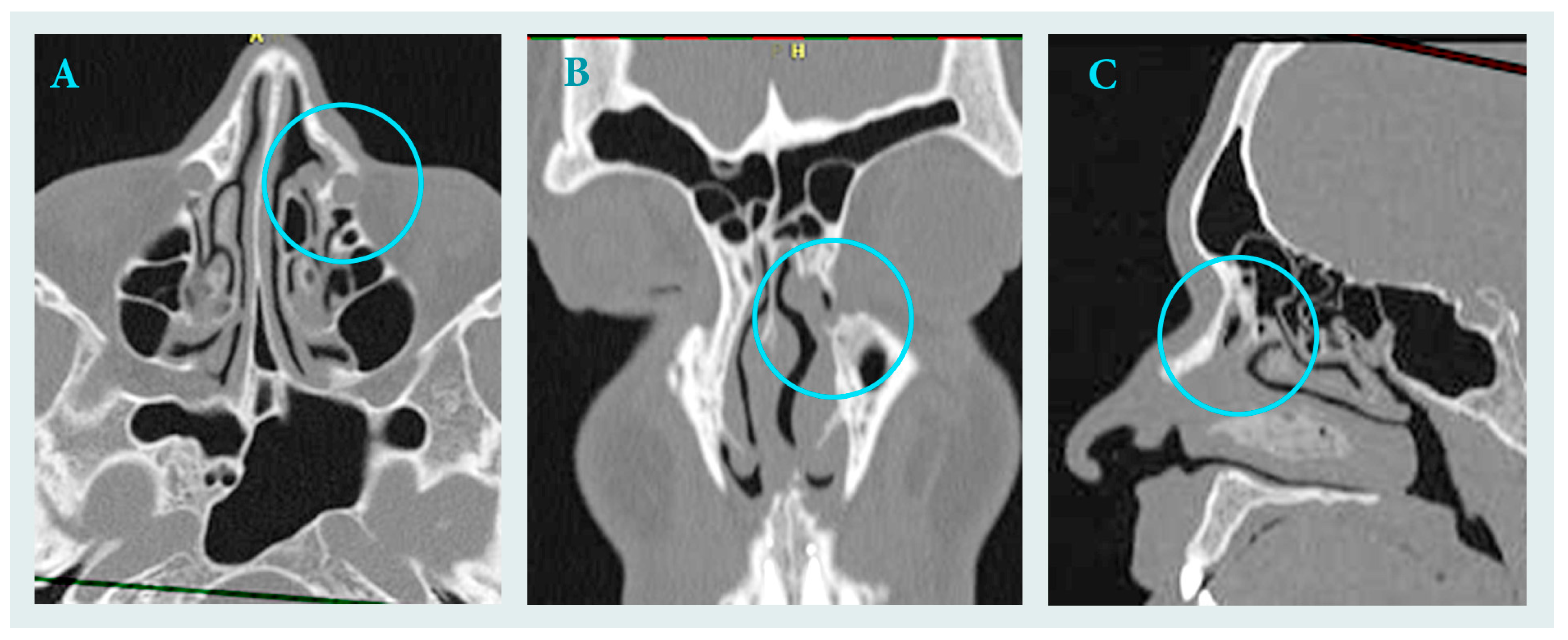
A 23-year-old male was referred on January 2023 for evaluation of a cystic tumor in the left ethmoid and frontal process of the maxilla. The patient had experienced hemoptysis for two months. Computed tomography (CT) demonstrated a cystic lesion within the left frontal process of the maxilla measuring approximately 1.0 cm × 1.2 cm × 1.5 cm (Figure 1). Medical history included epilepsy and generalized anxiety disorder.

2.2. Surgical Treatment

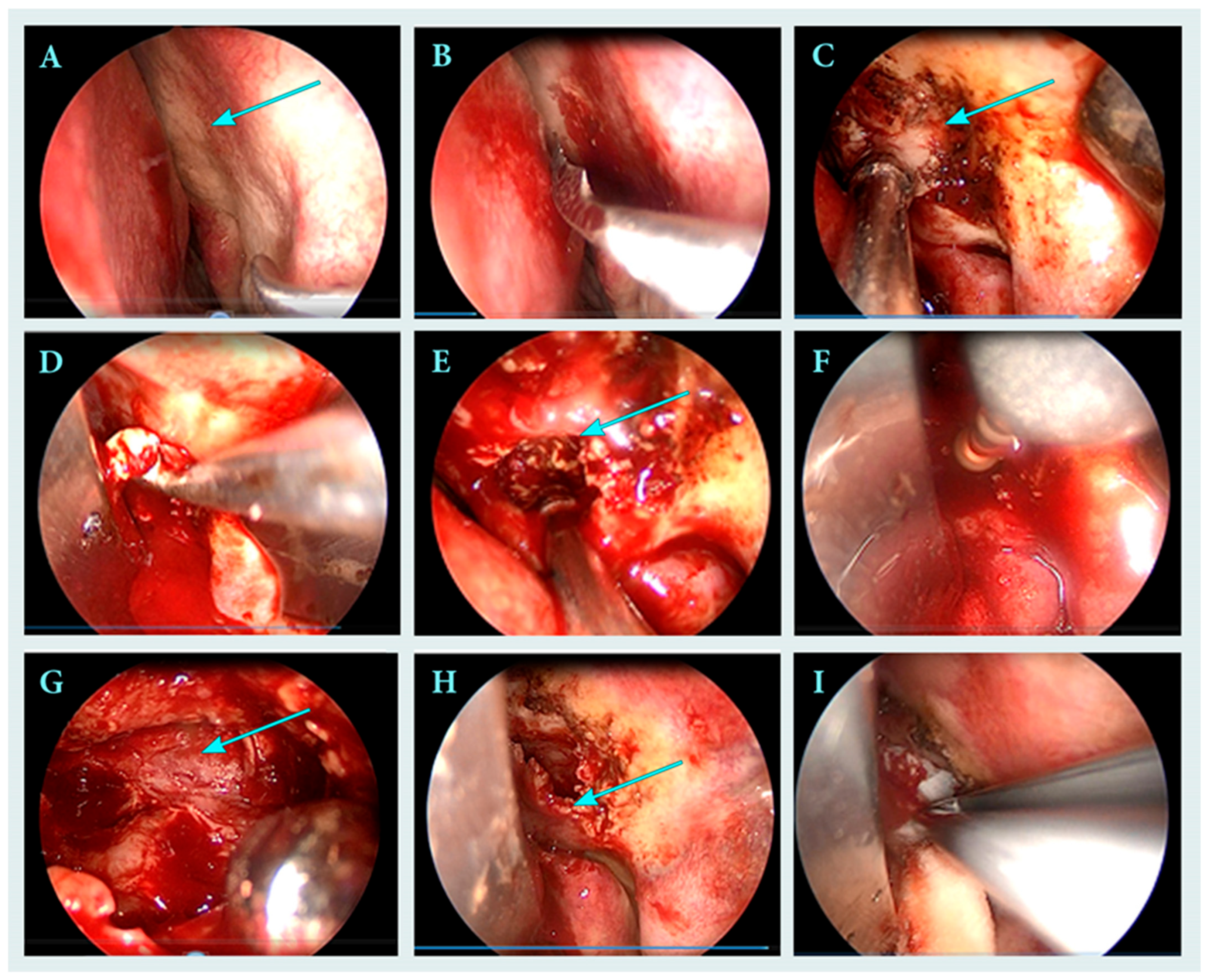
Surgery was performed on 21 January 2023, under general anesthesia. Using an endoscopic approach, a mucoperiosteal flap was elevated to expose the lateral nasal wall anterior and superior to the attachment of the middle turbinate. The cystic wall was removed with a bone curette, and friable white-yellow masses were evacuated from the cavity. The bony edges were refined with a burr, and the cavity was opened into the middle nasal meatus. Spongostan was placed in the nasal cavity. The specimen was sent for histopathological and microbiological analysis (Figure 2).

2.3. Histopathology

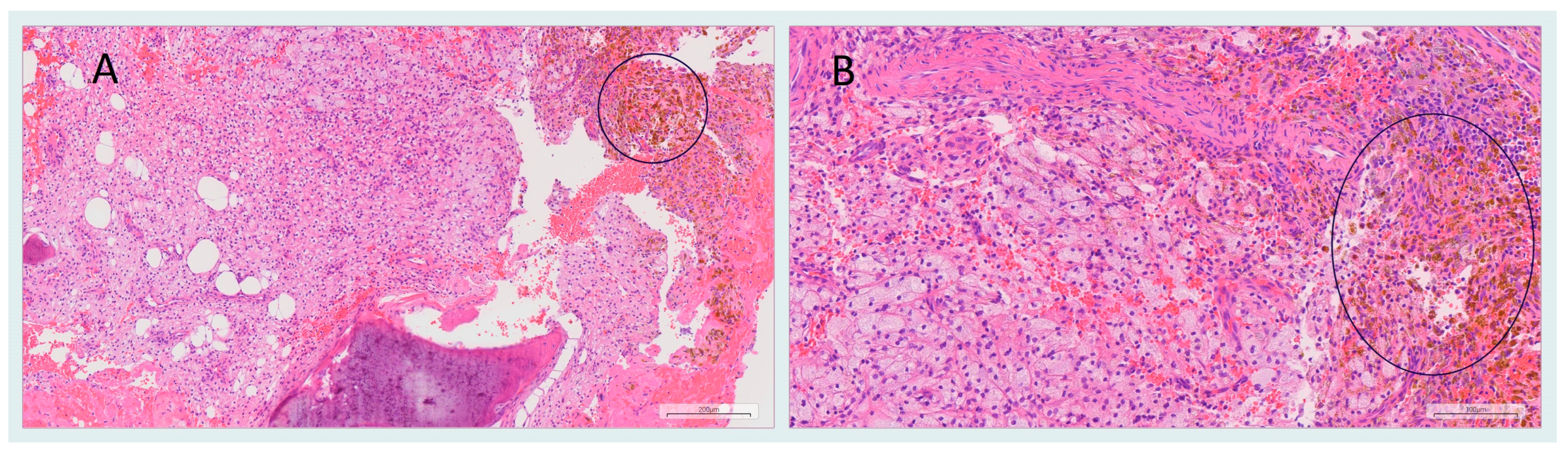
Microscopy revealed several fragments of fibrous connective tissue containing brown pigment deposits (hemosiderin) and clusters of foamy histiocytes CD68(+), with nonspecific granulation tissue and fragments of respiratory mucosa. Bone trabeculae were thinned and separated by fibrous tissue bands. Immunohistochemical stains for PAX8 and CD10 were negative in clear cells and positive in the stroma (Figure 3). Chronic inflammatory and fibrotic changes with hemosiderin deposits, without evidence of neoplastic process. The absence of both multinucleated giant-cell proliferation and osteolytic destruction suggests that a brown tumor is unlikely, and that a benign inflammatory etiology is more probable. However, the lesion required differentiation from a brown tumor.

2.4. Follow up

Culture grew Staphylococcus aureus (MSSA, MLSI+), sensitive to isoxazolyl penicillins, cephalosporins (except ceftazidime), carbapenems, aminoglycosides, and tigecycline. Targeted antibiotic therapy with cloxacillin was administered.
Laboratory investigations in, otherwise healthy male revealed normal parameters of calcium-phosphate and parathyroid function. The serum calcium level was within the physiological range (2.3 mmol/L), with normal serum phosphate concentration (1.0 mmol/L). Intact parathyroid hormone (PTH) levels were measured at 42 pg/mL, consistent with normal endocrine regulation. Alkaline phosphatase (ALP) activity was 92 U/L, indicating normal bone turnover. Renal function tests showed a serum creatinine level of 0.9 mg/dL and normal urea levels. The 25-hydroxyvitamin D concentration was adequate (46 ng/mL). A 24-h urinary calcium excretion of approximately 200 mg/24 h was also within the reference range. These findings excluded metabolic bone disease and effectively ruled out hyperparathyroidism and its skeletal manifestations, including a brown tumor.
The postoperative course in 18 months follow up on Cone Beam Computed Tomography (CBCT) and during endoscopic evaluation was uneventful (Figure 4). Follow-up endoscopy showed good healing and patent drainage pathways. No recurrence of inflammation or tumor was observed.

3. Discussion

Chronic inflammatory or fibrotic bone lesions of the paranasal sinuses may closely resemble metabolic or neoplastic entities such as brown tumors, making their differentiation a diagnostic challenge. Brown tumors are non-neoplastic, osteolytic lesions that occur secondary to hyperparathyroidism and reflect excessive osteoclastic activity with fibroblastic proliferation and hemosiderin deposition [6]. In contrast, inflammatory pseudotumors are benign, reactive lesions characterized by a mixed inflammatory infiltrate and fibroblastic proliferation, as well as an absence of destructive osteoclastic activity. Also, inflammatory pseudotumors or hemosiderotic granulomas are localized inflammatory processes associated with chronic infection, trauma, or local vascular instability [10,13]. The current case represents a rare example of an inflammatory lesion of the frontal process of the maxilla that histologically and radiologically mimicked a brown tumor, yet lacked metabolic abnormalities and demonstrated benign healing after endoscopic management.
The patient’s normal serum calcium, phosphate, magnesium, vitamin D3, and PTH levels excluded hyperparathyroidism as an underlying cause, which is pathognomonic for brown tumors [14]. This biochemical context is crucial since the pathogenesis of brown tumors is directly linked to hyperparathyroid bone resorption. When PTH levels rise, osteoclastic bone activity intensifies, leading to microfractures, hemosiderin accumulation, and the proliferation of multinucleated giant cells. These features, however, were absent in this case, confirming the non-metabolic, inflammatory origin of the lesion [14,15].
Histopathological examination revealed fibroconnective tissue with hemosiderin deposits and CD68(+) histiocytes, but without multinucleated giant cells or osteolytic destruction typical of a brown tumor. This pattern indicates a chronic inflammatory process with hemosiderin-laden macrophages resulting from microhemorrhages rather than a systemic metabolic imbalance. The lack of PAX8 and CD10 immunoreactivity further supported the non-neoplastic nature of the lesion.
Inflammatory bone remodeling can mimic brown tumor pathology due to overlapping features of fibrosis, bone resorption, and pigment deposition. Chronic sinusitis, trauma, or vascular compromise can cause local hemorrhage and subsequent iron deposition as hemosiderin. Macrophages CD68(+) phagocytose the iron, triggering fibroblast activation and fibrosis. This local reparative response may produce radiological and histological images similar to metabolic lesions but with distinct etiological mechanisms [8,10]. Hemosiderotic inflammatory lesions of the paranasal sinuses are exceptionally uncommon, with only isolated cases described in the literature [10,13]. These pseudotumor-like masses typically result from prolonged inflammation and hemorrhage rather than from systemic disorders, similar to the present case. Their recognition is important because they may be misdiagnosed as brown tumors, ossifying fibromas, or even malignancies, leading to unnecessary overtreatment [10,13].
Recent studies have highlighted the critical role of the sinonasal microenvironment, including pH and the local microbiome, in maintaining mucosal homeostasis and influencing inflammatory processes. Morawska-Kochman et al. demonstrated that variations in mucosal pH significantly affect bacterial colonization patterns, modulating the balance between commensal and pathogenic flora [16]. Furthermore, Morawska-Kochman et al. confirmed the presence of bacterial microcolonies on the maxillary sinus ciliary epithelium even in healthy individuals, suggesting that a stable microbiota plays a key role in mucosal resilience [17]. In the present case, the culture of Staphylococcus aureus (MSSA) from the lesion indicates bacterial participation in the inflammatory cascade. Changes to the local sinus microenvironment, such as impaired drainage, shifts in mucosal pH, and biofilm formation, contribute to persistent inflammation, recurrent microbleeding, and subsequent deposition of hemosiderin. This aligns with the concept of the paranasal sinus as a dynamic ecological niche, where disruption of mucociliary clearance and microbiota equilibrium can induce chronic inflammation and bone remodeling [18].
CT and CBCT remain the most important imaging tools for evaluating paranasal bone lesions. In this case, CBCT revealed a well-defined cystic lesion with cortical thinning and remodeling, yet without destructive osteolysis. This pattern favored a benign inflammatory origin. CT and CBCT is also essential for preoperative mapping of anatomical variations, including the presence bony septa, which may complicate surgical access or drainage [19]. The detailed classification of these septa and their correlation with dental structures and sinus morphology are vital for surgical planning in endoscopic and maxillofacial procedures [19]. On CT/CBCT brown tumors typically present as radiolucent, expansile, osteolytic lesions with cortical breach and irregular bone resorption [5,6]. The absence of such features, combined with normal biochemical parameters, supports an inflammatory rather than metabolic condition.
Endoscopic sinus surgery offers an ideal balance of diagnostic accuracy and therapeutic efficacy. This minimally invasive approach enables direct visualization and precise removal of the lesion, as well as restoration of physiological sinus drainage [8,20]. Endoscopic management enables complete excision and histological assessment with reduced tissue trauma, making it a favorable alternative to external approach surgeries. The procedure performed in this case, curettage and drainage of the lesion into the middle nasal meatus, resulted in complete recovery, with no recurrence during follow-up. The endoscopic approach also minimizes morbidity compared to external access techniques and facilitates postoperative monitoring through office-based endoscopy. Postoperative antibiotic therapy targeting MSSA further ensured eradication of infection and promoted uneventful healing. The success of this approach underscores the importance of integrating microbiological analysis and targeted therapy in the management of sinonasal inflammatory pseudotumors.
The definitive diagnosis of an inflammatory pseudotumor rests on histopathological evaluation. Typical findings include fibrous stroma, infiltration of lymphocytes and plasma cells, hemosiderin deposits, and histiocytic proliferation. Unlike brown tumors, inflammatory pseudotumors lack organized multinucleated giant cells and systemic metabolic alterations. In this case, CD68(+) staining confirmed macrophage activation, while negative PAX8/CD10 ruled out neoplastic or endocrine origins. These results reinforce that chronic inflammatory bone lesions can simulate neoplastic pathology both radiologically and microscopically [10].

4. Conclusions

Chronic inflammatory bone lesions with hemosiderin deposits in the paranasal sinuses are rare, but can mimic metabolic bone diseases such as the brown tumor. Laboratory correlation with PTH, calcium and phosphate levels is essential for differential diagnosis in such cases.

Author Contributions

Conceptualization, T.M. and M.G.; methodology, T.M. and M.G.; software, K.G., J.B. and G.W.-P.; validation, J.B. and G.W.-P.; formal analysis, M.G. and T.M.; investigation, T.M. and M.G.; resources, T.M. and J.B.; data curation, T.M., K.G. and M.G.; writing—original draft preparation, T.M. and M.G., writing—review and editing, M.G., T.M. and G.W.-P.; visualization, T.M., J.B. and K.G.; supervision, G.W.-P.; project administration, T.M. and M.G. All authors have read and agreed to the published version of the manuscript.

Funding

This research received no external funding.

Institutional Review Board Statement

This study was approved by the Institutional Review Board of Jagiellonian University (No 188.0043.1.503.2024 on 14 January 2025).

Informed Consent Statement

Informed consent was obtained from all individual participants included in the study.

Data Availability Statement

The data were obtained from patients operated on the Cranio-Maxillo-Facial Surgery Department of Jagiellonian University, Cracow, Poland, and cannot be shared in accordance with the General Data Protection Regulation (EU) 2016/679.

Conflicts of Interest

The authors declare no conflicts of interest.

Abbreviations

The following abbreviations are used in this manuscript:
CTComputed Tomography
CBCTCone Beam Computed Tomography
PTHParathyroid hormone
ALPAlkaline phosphatase

References

  1. Fokkens, W.J.; Lund, V.J.; Hopkins, C.; Hellings, P.W.; Kern, R.; Reitsma, S.; Toppila-Salmi, S.; Bernal-Sprekelsen, M.; Mullol, J.; Alobid, I.; et al. European Position Paper on Rhinosinusitis and Nasal Polyps 2020. Rhinology 2020, 58 (Suppl. S29), 1–464. [Google Scholar] [CrossRef] [PubMed]
  2. Psillas, G.; Papaioannou, D.; Petsali, S.; Dimas, G.G.; Constantinidis, J. Odontogenic maxillary sinusitis: A comprehensive review. J. Dent. Sci. 2021, 16, 474–481. [Google Scholar] [CrossRef] [PubMed]
  3. Gontarz, M.; Wyszyńska-Pawelec, G.; Zapała, J.; Gałązka, K.; Tomaszewska, R.; Lazar, A. IgG4-related disease in the head and neck region: Report of two cases and review of the literature. Pol. J. Pathol. 2016, 67, 370–375. [Google Scholar] [CrossRef] [PubMed]
  4. Lin, J.; Wang, C.; Wang, X.; Chen, F.; Zhang, W.; Sun, H.; Yan, F.; Pan, Y.; Zhu, D.; Yang, Q.; et al. Expert consensus on odontogenic maxillary sinusitis multi-disciplinary treatment. Int. J. Oral Sci. 2024, 16, 11. [Google Scholar] [CrossRef] [PubMed]
  5. Lis, E.; Gontarz, M.; Marecik, T.; Wyszyńska-Pawelec, G.; Bargiel, J. Residual cyst mimicking an aggressive neoplasm—A life-threatening condition. Oral 2024, 4, 354–361. [Google Scholar] [CrossRef]
  6. Fedhila, M.; Belkacem Chebil, R.; Marmouch, H.; Terchalla, S.; Ayachi, S.; Oueslati, Y.; Oualha, L.; Douki, N.; Khochtali, H. Brown tumors of the jaws: A retrospective study. Clin. Med. Insights Endocrinol. Diabetes 2023, 16, 11795514231210143. [Google Scholar] [CrossRef] [PubMed]
  7. Nelke, K.; Łuczak, K.; Janeczek, M.; Plichta, M.; Małyszek, A.; Tarnowska, M.; Kuropka, P.; Dobrzyński, M. The occurrence of mandible brown tumor mimicking central giant cell granuloma in a case suspicious of primary hyperparathyroidism—Troublesome diagnostic dilemmas. Diagnostics 2025, 15, 2038. [Google Scholar] [CrossRef] [PubMed]
  8. Guimarães, L.M.; Valeriano, A.T.; Rebelo Pontes, H.A.; Gomez, R.S.; Gomes, C.C. Manifestations of hyperparathyroidism in the jaws: Concepts, mechanisms, and clinical aspects. Oral Surg. Oral Med. Oral Pathol. Oral Radiol. 2022, 133, 547–555. [Google Scholar] [CrossRef] [PubMed]
  9. Bignami, M.; Volpi, L.; Karligkiotis, A.; De Bernardi, F.; Pistochini, A.; AlQahtani, A.; Meloni, F.; Verillaud, B.; Herman, P.; Castelnuovo, P. Endoscopic endonasal resection of respiratory epithelial adenomatoid hamartomas of the sinonasal tract. Int. Forum Allergy Rhinol. 2014, 4, 961–965. [Google Scholar] [CrossRef] [PubMed]
  10. Constantino, G.d.T.; Sasaki, F.; Tavares, R.A.; Voegels, R.L.; Butugan, O. Inflammatory pseudotumors of the paranasal sinuses. Braz. J. Otorhinolaryngol. 2008, 74, 297–302. [Google Scholar] [CrossRef] [PubMed]
  11. Zhang, L.; Niu, X.; Zhang, K.; He, T.; Sun, Y. Potential Otogenic Complications Caused by Cholesteatoma of the Contralateral Ear in Patients with Otogenic Abscess Secondary to Middle Ear Cholesteatoma of One Ear: A Case Report. World J. Clin. Cases 2022, 10, 10220–10227. [Google Scholar] [CrossRef] [PubMed]
  12. Huang, Q.; Wu, X.; Xia, Q.; Xie, Z.; Xiao, H.; Sun, Y.; Jia, Y.; Yao, D.; Guang, X.; Cheng, H. Diffuse-Type Tenosynovial Giant Cell Tumor Invading the Temporal Bone: Three Cases. Ear Nose Throat J. 2025, 104, NP450–NP455. [Google Scholar] [CrossRef] [PubMed]
  13. Sasindran, V.; Ravikumar, A.; Senthil, K.; Somu, L. Inflammatory pseudotumours of the paranasal sinuses. Indian J. Otolaryngol. Head Neck Surg. 2007, 59, 267–269. [Google Scholar] [CrossRef] [PubMed]
  14. Chiliti, B.A.; Martin, R.M.; Santos-Silva, A.R.; Matuck, B.F.; Machado, G.G.; Rocha, A.C. Brown tumor of hyperparathyroidism in the maxillofacial region: A retrospective study with 19 patients. Oral Surg. Oral Med. Oral Pathol. Oral Radiol. 2025; online ahead of print. [Google Scholar] [CrossRef] [PubMed]
  15. WHO Classification of Tumours Editorial Board. Head and Neck Tumours, 5th ed.; WHO Classification of Tumours Series; International Agency for Research on Cancer: Lyon, France, 2022; Volume 9. [Google Scholar]
  16. Morawska-Kochman, M.; Jermakow, K.; Nelke, K.; Zub, K.; Pawlak, W.; Dudek, K.; Bochnia, M. The pH value as a factor modifying bacterial colonization of sinonasal mucosa in healthy persons. Ann. Otol. Rhinol. Laryngol. 2019, 128, 819–828. [Google Scholar] [CrossRef] [PubMed]
  17. Morawska-Kochman, M.; Marycz, K.; Jermakow, K.; Nelke, K.; Pawlak, W.; Bochnia, M. The presence of bacterial microcolonies on the maxillary sinus ciliary epithelium in healthy young individuals. PLoS ONE 2017, 12, e0176776. [Google Scholar] [CrossRef] [PubMed]
  18. Brook, I. Microbiology of sinusitis. Proc. Am. Thorac. Soc. 2011, 8, 90–100. [Google Scholar] [CrossRef] [PubMed]
  19. Nelke, K.; Diakowska, D.; Morawska-Kochman, M.; Janeczek, M.; Pasicka, E.; Łukaszewski, M.; Żak, K.; Nienartowicz, J.; Dobrzyński, M. The CBCT retrospective study on Underwood septa and their related factors in maxillary sinuses—A proposal of classification. J. Pers. Med. 2023, 13, 1258. [Google Scholar] [CrossRef] [PubMed]
  20. Kasemsiri, P.; Prevedello, D.M.; Otto, B.A.; Old, M.; Ditzel Filho, L.; Kassam, A.B.; Carrau, R.L. Endoscopic endonasal technique: Treatment of paranasal and anterior skull base malignancies. Braz. J. Otorhinolaryngol. 2013, 79, 760–779. [Google Scholar] [CrossRef] [PubMed]
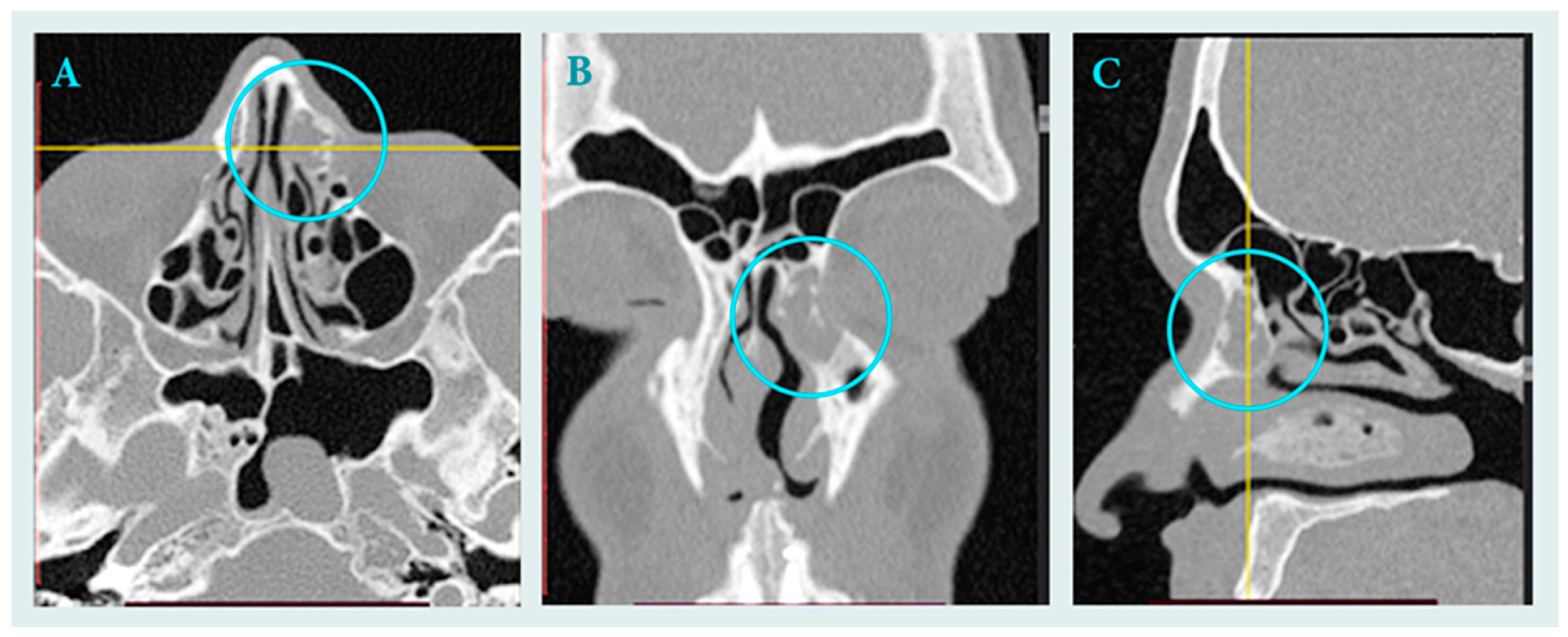
Figure 1. CT before surgery shows (blue circle) a cystic lesion in the left frontal process of the maxilla with cortical remodeling. (A) Axial view; (B) Coronal view; (C) Sagittal view.
Surgeries 06 00107 g001
Figure 2. Intraoperative stages: (A) endoscopic view of the nasal cavity—a bulging in the projection of the tumor, anterior to the attachment of the middle nasal turbinate (arrow); (B) Incision of the mucosa with the creation of a mucoperiosteal flap; (C) bone bulging in the projection of the tumor (arrow); (D) removal of the bony lamina using a sinus curette (E) a defect filled with friable, anaplastic, yellow masses (arrow); (F) smoothing of the defect margins using a diamond burr; (G) visible periosteum of the outer maxillary plate (arrow)—full-thickness bone defect; (H) inversion of the mucoperiosteal flap into the defect (arrow); (I) application of Spongostan to support the mucoperiosteal flap.
Surgeries 06 00107 g002
Figure 3. Histological slides showing chronic inflammatory and fibrotic changes with hemosiderin deposits (black circles), without evidence of neoplastic process: (A) HE staining, Magnification × 10; (B) HE staining. Magnification × 20.
Surgeries 06 00107 g003
Figure 4. CBCT performed 12 months after surgery shows a postoperative bone cavity communicating with the middle nasal meatus, with no evidence of tumor recurrence (blue circle). (A) Axial view; (B) Coronal view; (C) Sagittal view.
Surgeries 06 00107 g004
Disclaimer/Publisher’s Note: The statements, opinions and data contained in all publications are solely those of the individual author(s) and contributor(s) and not of MDPI and/or the editor(s). MDPI and/or the editor(s) disclaim responsibility for any injury to people or property resulting from any ideas, methods, instructions or products referred to in the content.