

Operationalizing the Mind–Body Connection: Interoception via the Autonomic Nervous System

Abstract
1. Introduction
1.1. Traditional Interoception Measures
1.2. Neuroscience of Traditional Methods
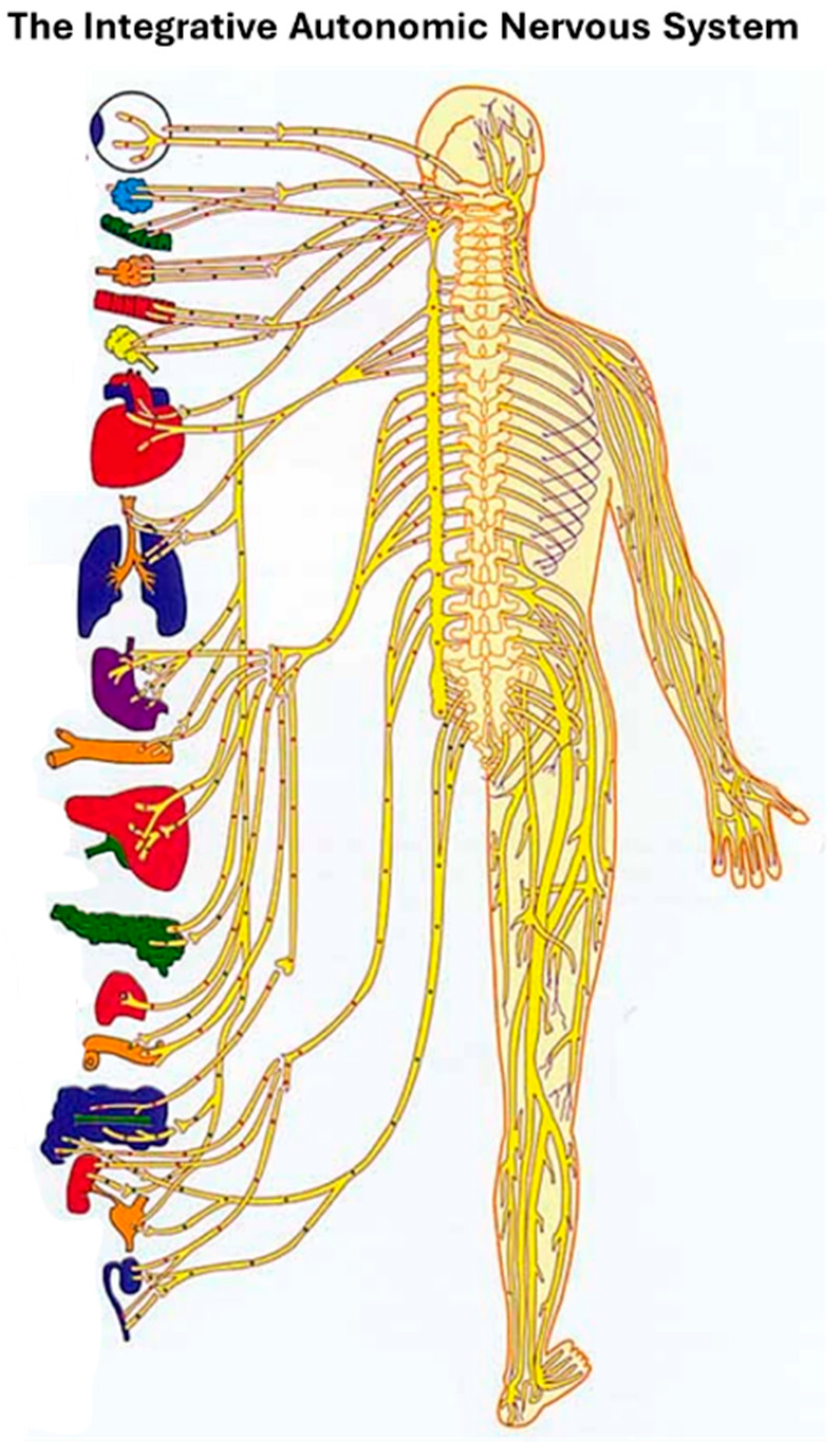
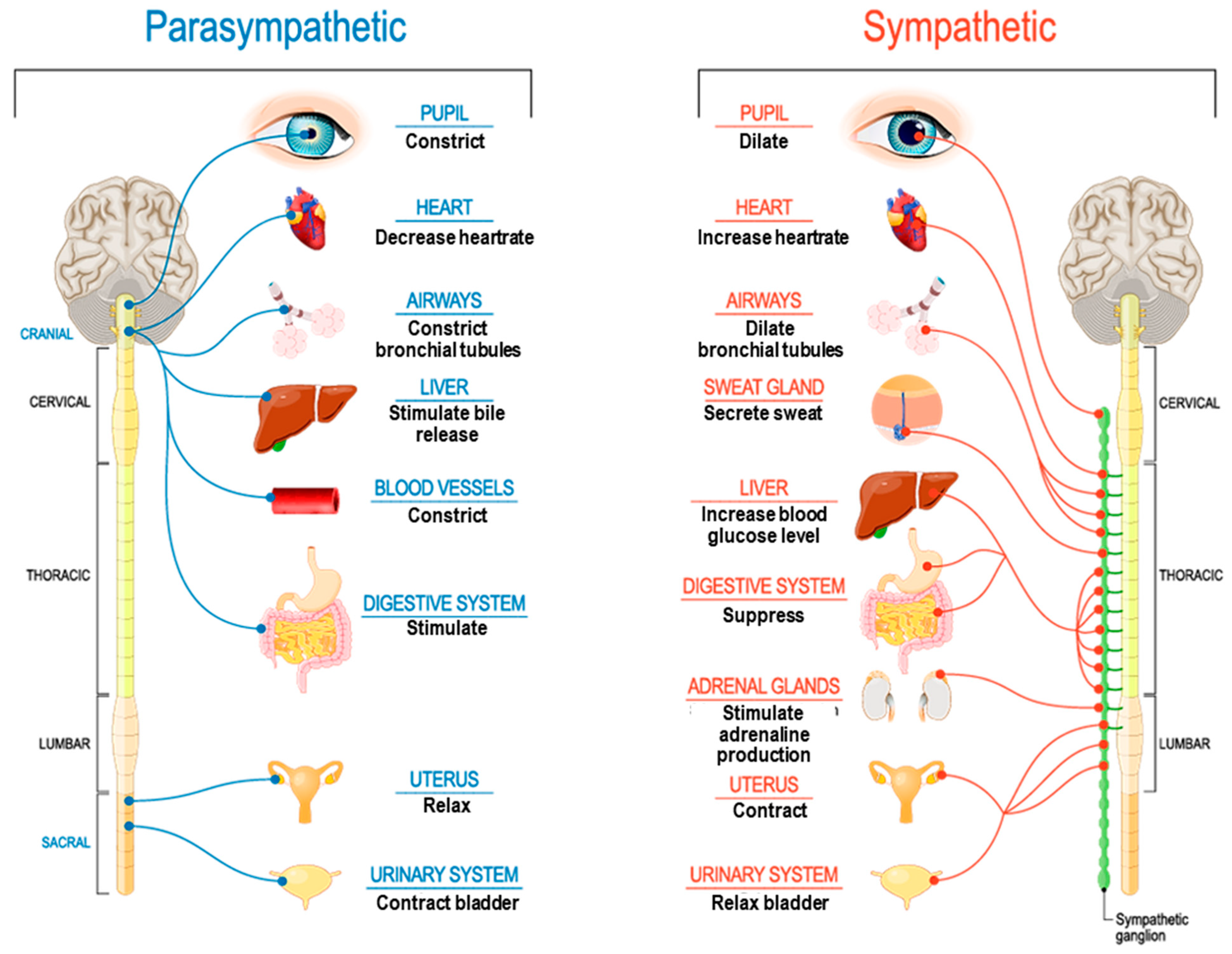
1.3. Putting the Body Back Together
2. Materials and Methods
2.1. Participants
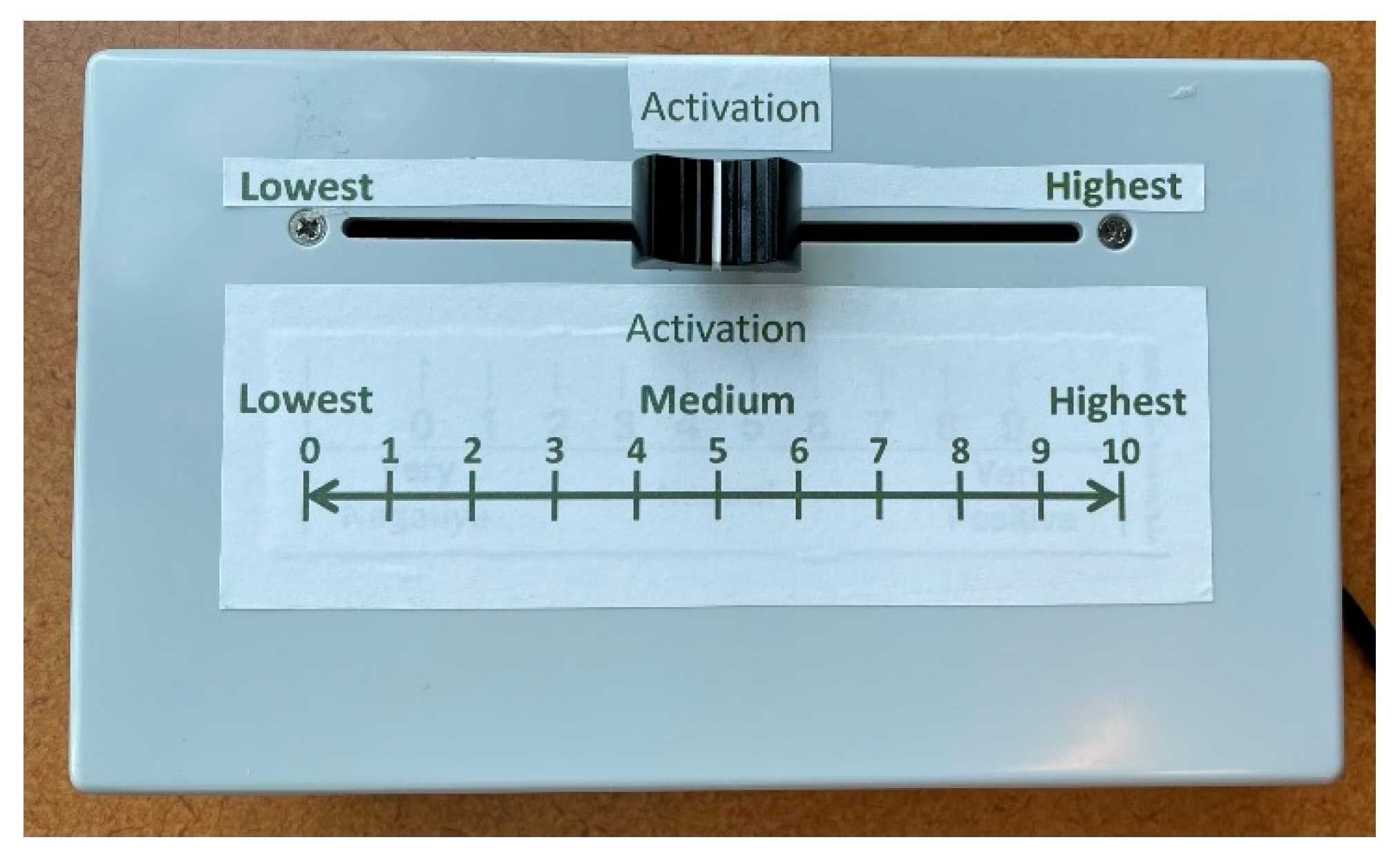
2.2. Apparatus
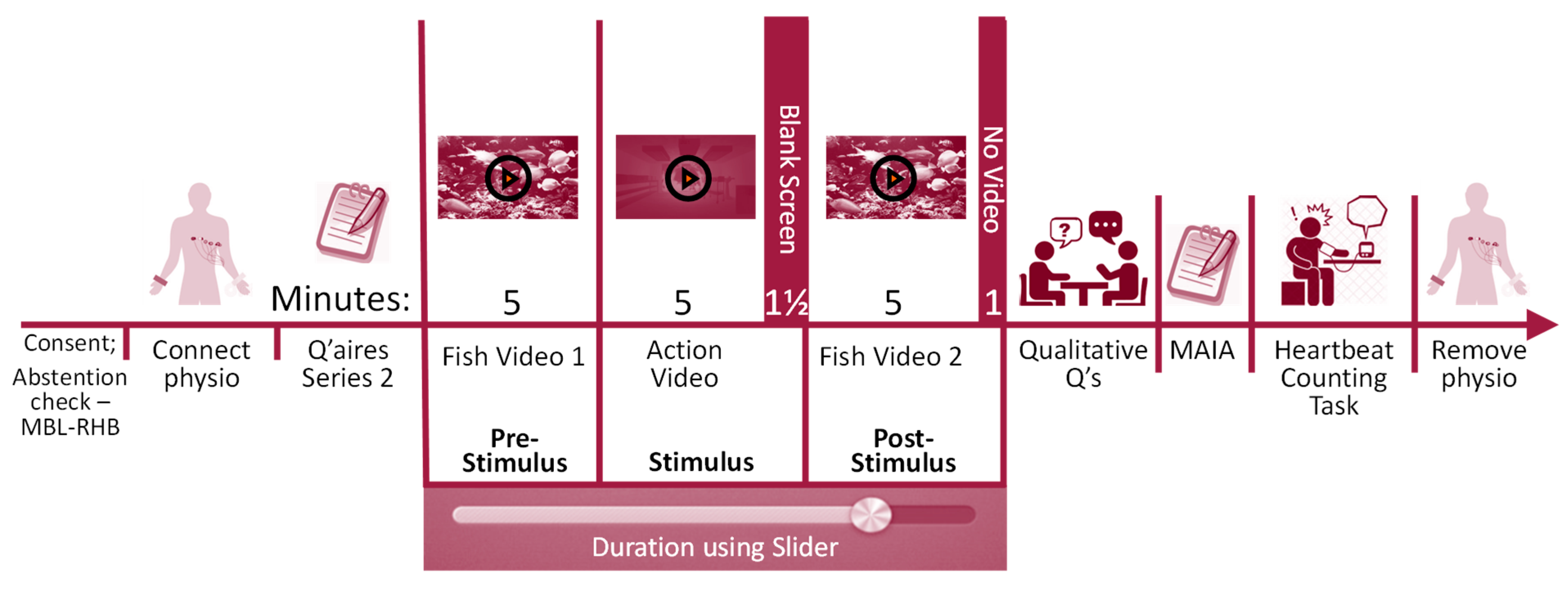
2.3. Procedure
2.4. Data Reduction and Analysis
3. Results
3.1. Aggregate Correlation Analysis
3.2. Heartbeat Counting Task
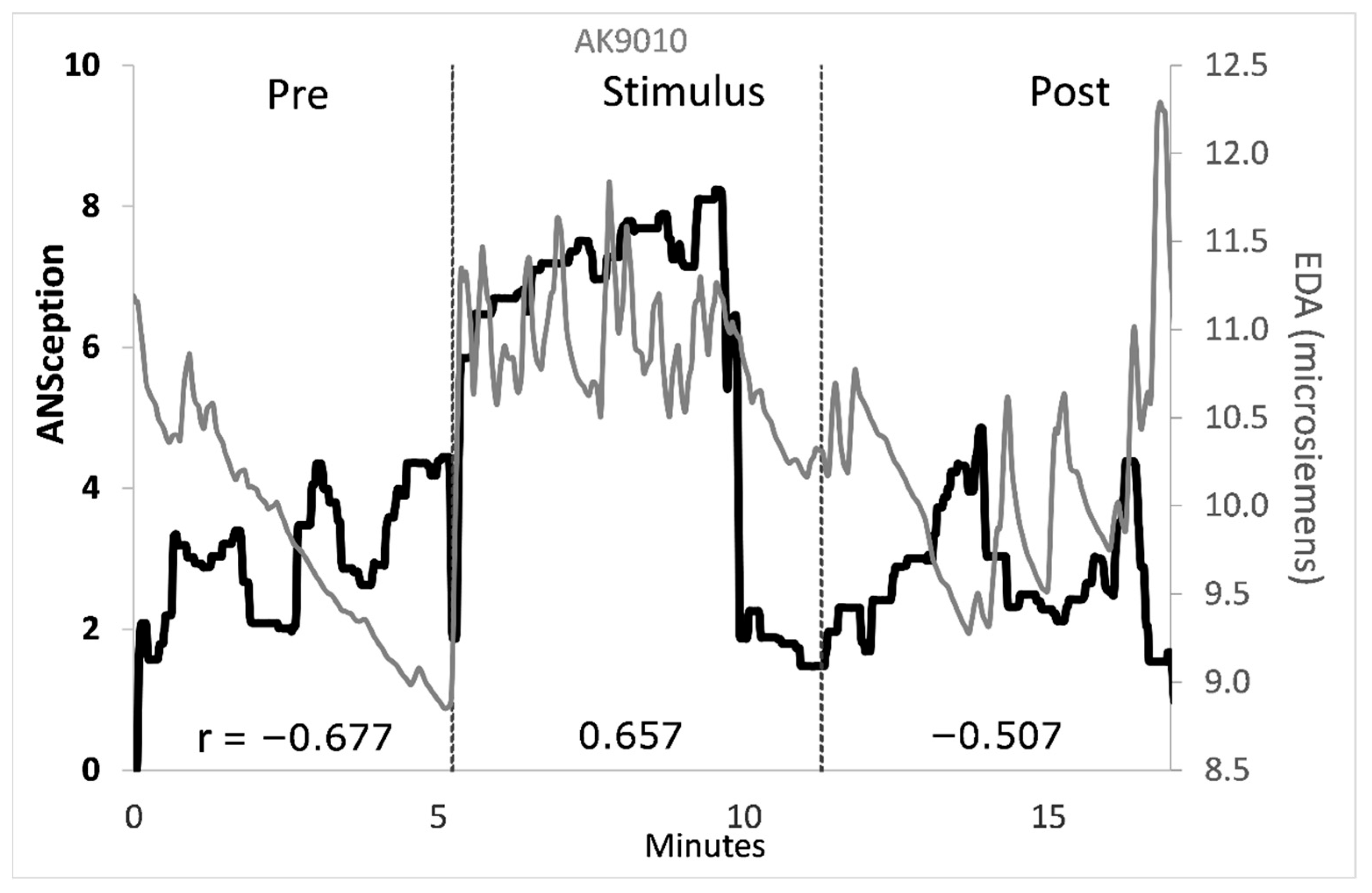
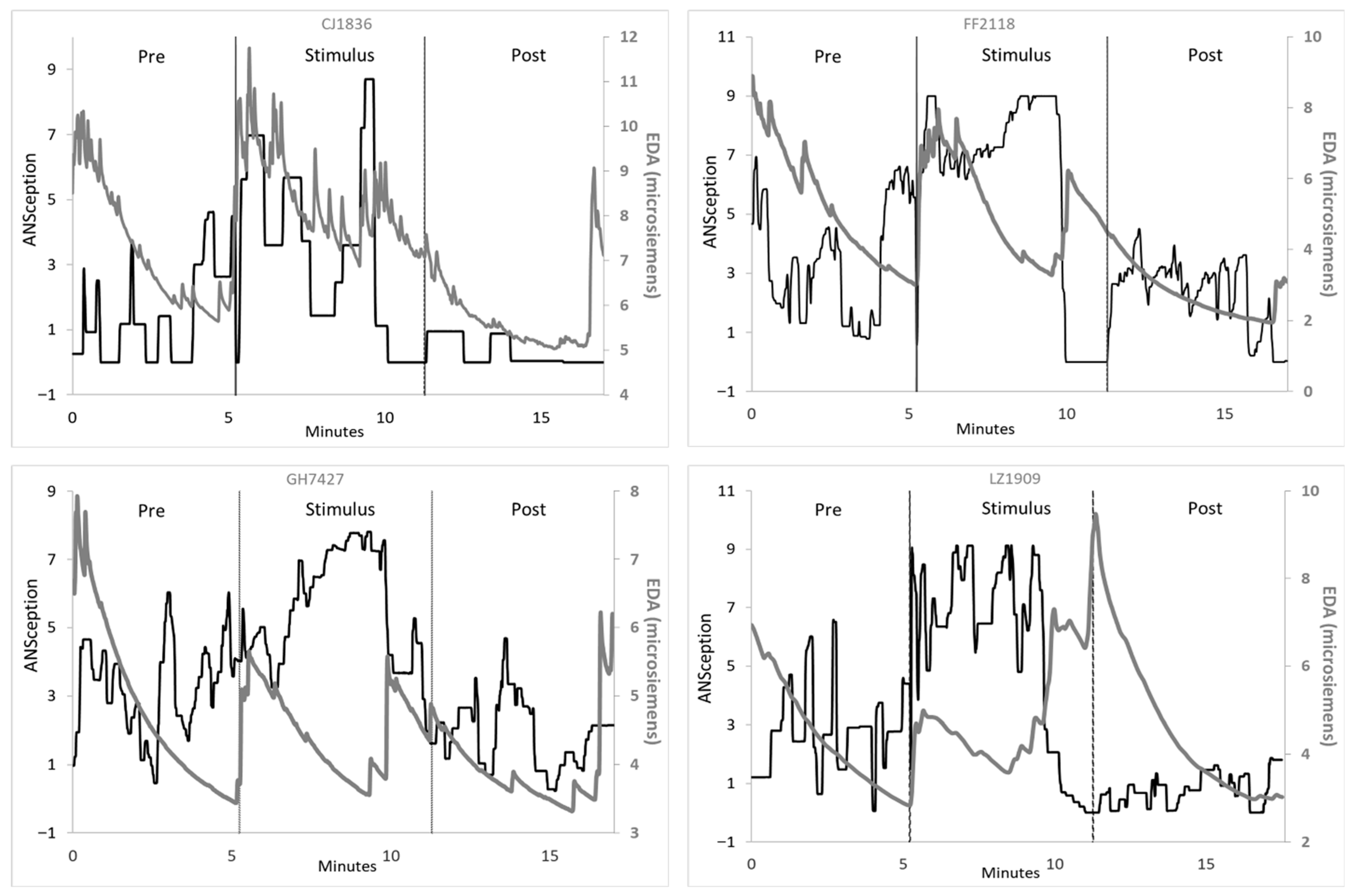
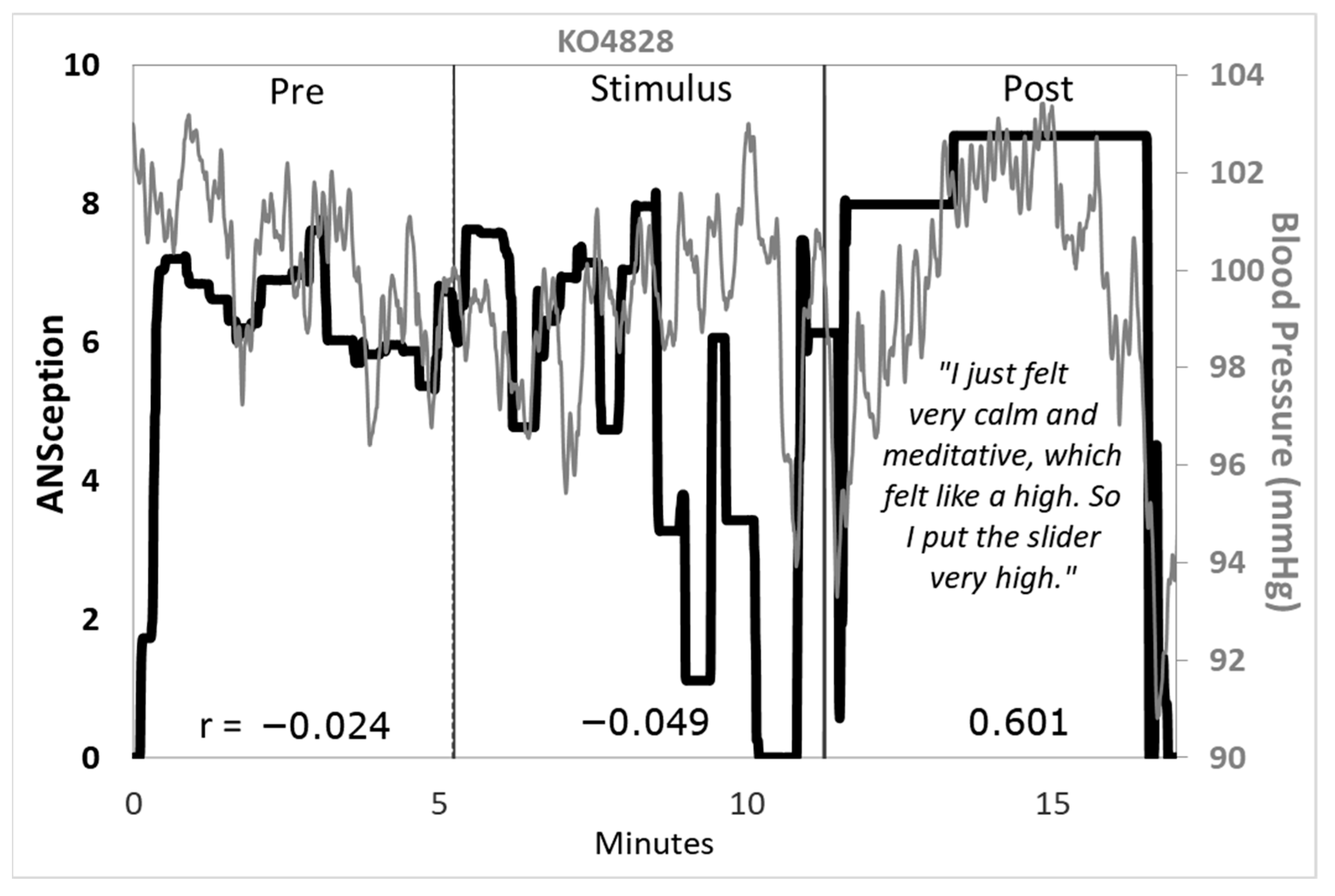
3.3. Correlation Analysis by Participant
3.4. Qualitative Feedback
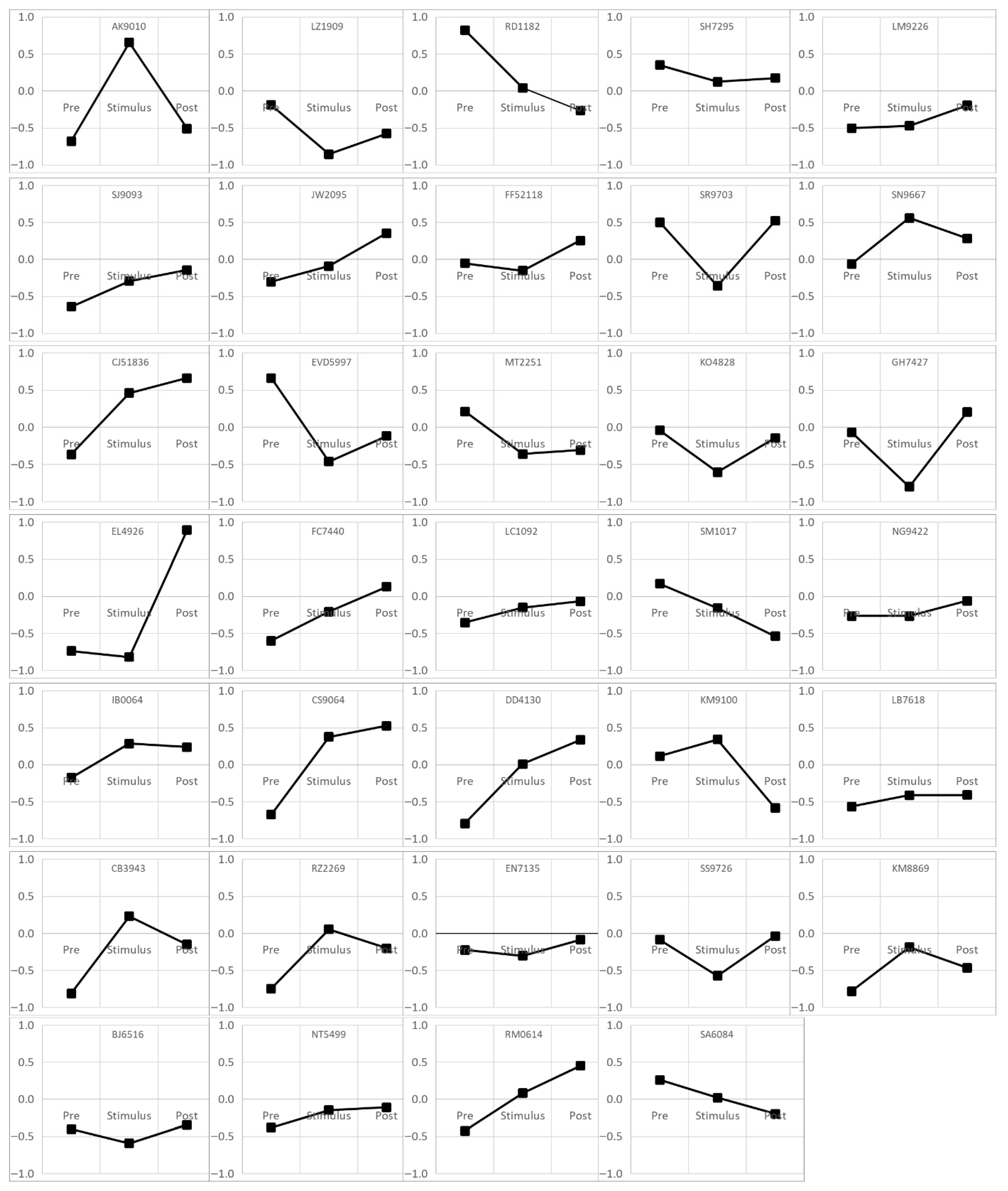
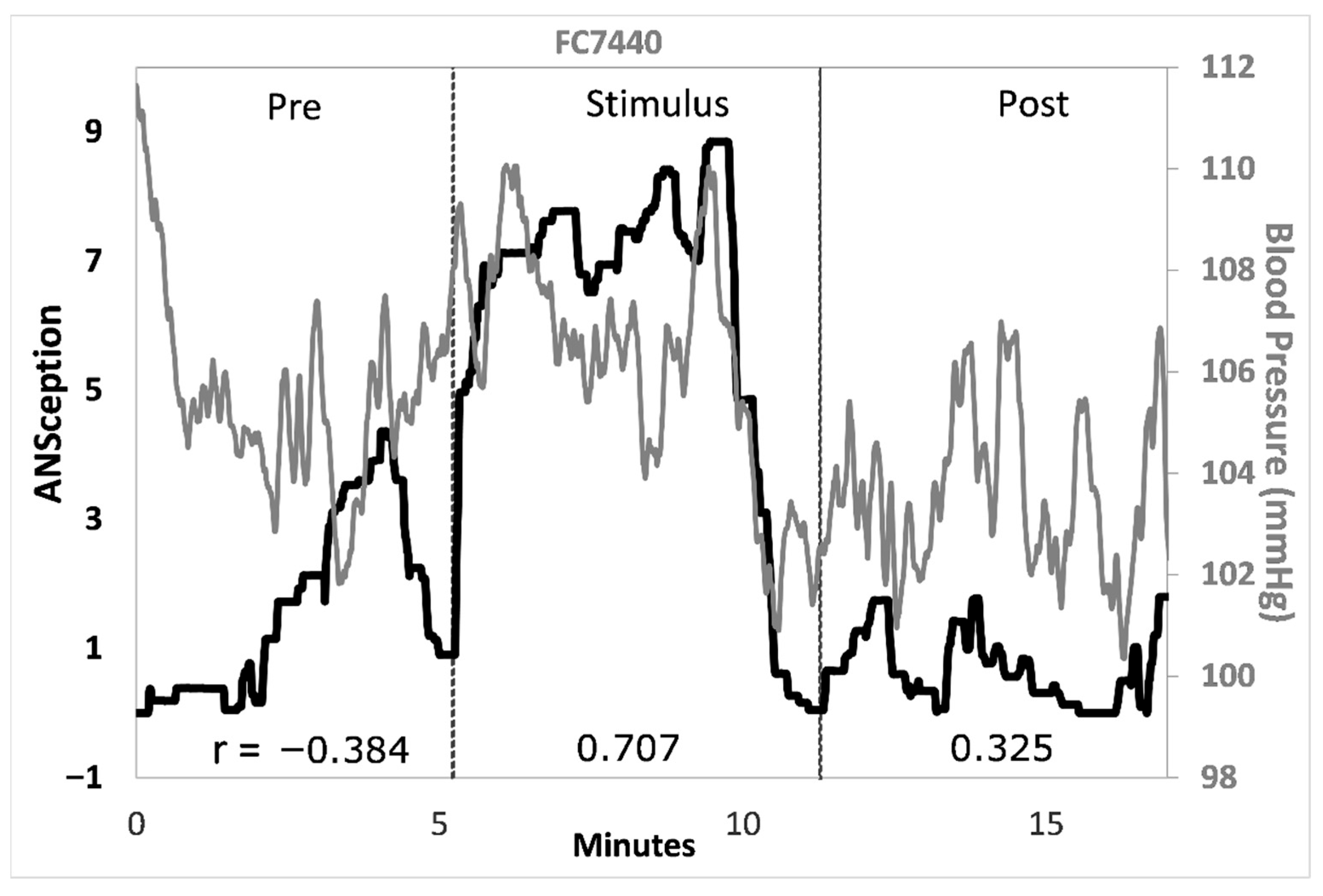
3.5. Time Series Analysis
3.6. Mixed Method Analysis
4. Discussion
4.1. Limitations
4.2. Future Directions
5. Conclusions
Supplementary Materials
Author Contributions
Funding
Institutional Review Board Statement
Informed Consent Statement
Data Availability Statement
Conflicts of Interest
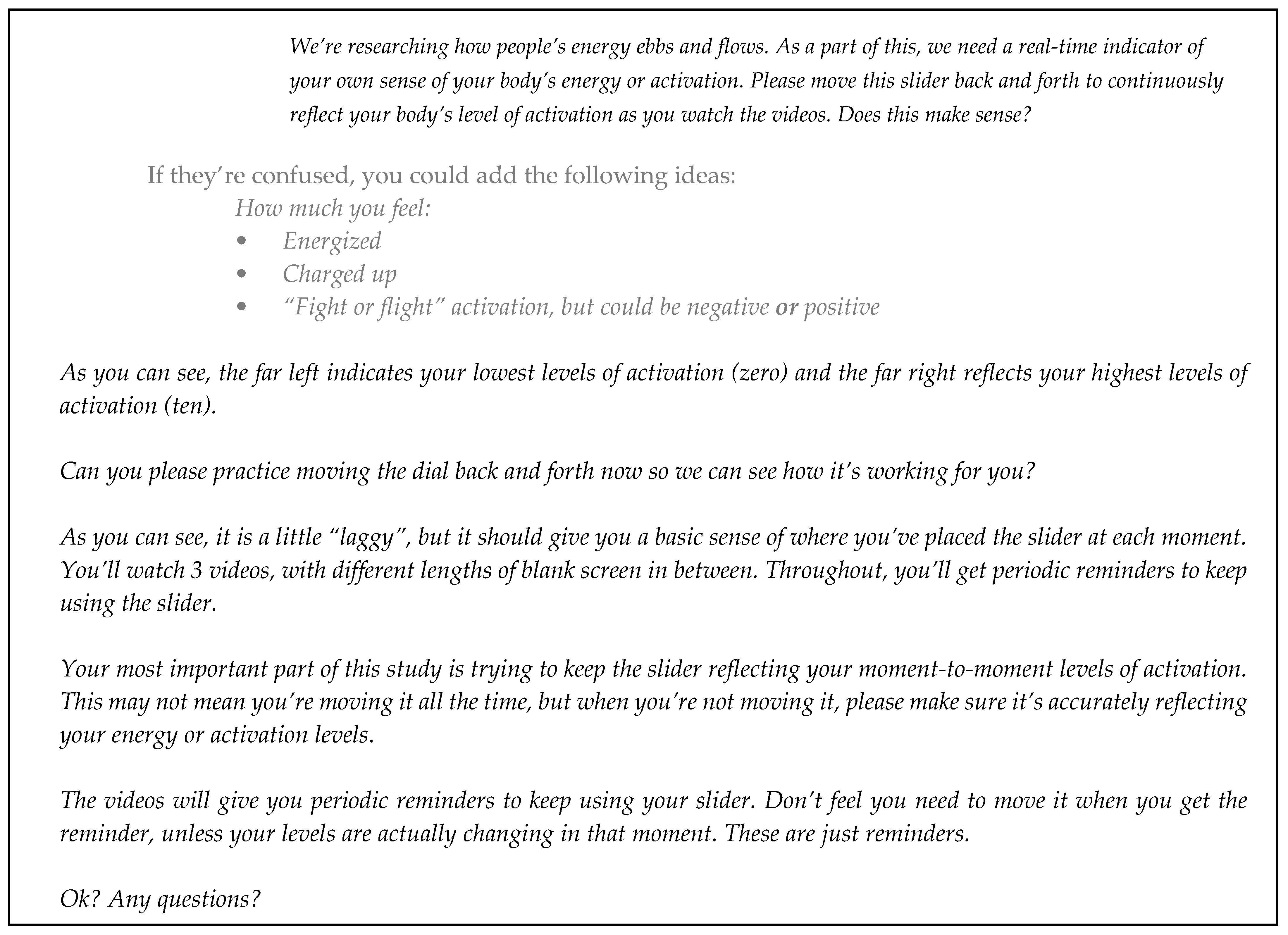
Appendix A. ANSception Slider and Script


Appendix B. Stimulus Videos
References
- Craig, A.D. The sentient self. Brain Struct. Funct. 2010, 214, 563–577. [Google Scholar] [CrossRef] [PubMed]
- Damasio, A.R. The somatic marker hypothesis and the possible functions of the prefrontal cortex. Philos. Trans. R. Soc. Lond. Ser. B Biol. Sci. 1996, 351, 1413–1420. [Google Scholar] [CrossRef] [PubMed]
- Edwards, D.J.; Pinna, T. A systematic review of associations between interoception, vagal tone, and emotional regulation: Potential applications for mental health, wellbeing, psychological flexibility, and chronic conditions. Front. Psychol. 2020, 11, 1792. [Google Scholar] [CrossRef]
- Fukushima, H.; Terasawa, Y.; Umeda, S. Association between interoception and empathy: Evidence from heartbeat-evoked brain potential. Int. J. Psychophysiol. 2011, 79, 259–265. [Google Scholar] [CrossRef]
- Zamariola, G.; Frost, N.; Van Oost, A.; Corneille, O.; Luminet, O. Relationship between interoception and emotion regulation: New evidence from mixed methods. J. Affect. Disord. 2019, 246, 480–485. [Google Scholar] [CrossRef]
- Brewer, R.; Murphy, J.; Bird, G. Atypical interoception as a common risk factor for psychopathology: A review. Neurosci. Biobehav. Rev. 2021, 130, 470–508. [Google Scholar] [CrossRef]
- Hielscher, E.; Zopf, R. Interoceptive abnormalities and suicidality: A systematic review. Behav. Ther. 2021, 52, 1035–1054. [Google Scholar] [CrossRef]
- Jenkinson, P.M.; Taylor, L.; Laws, K.R. Self-reported interoceptive deficits in eating disorders: A meta-analysis of studies using the eating disorder inventory. J. Psychosom. Res. 2018, 110, 38–45. [Google Scholar] [CrossRef]
- Mul, C.L.; Stagg, S.D.; Herbelin, B.; Aspell, J.E. The feeling of me feeling for you: Interoception, alexithymia and empathy in autism. J. Autism Dev. Disord. 2018, 48, 2953–2967. [Google Scholar] [CrossRef] [PubMed]
- Singer, J.; Damasio, A. The physiology of interoception and its adaptive role in consciousness. Philos. Trans. R. Soc. Lond. Ser. B Biol. Sci. 2025, 380, 20240305. [Google Scholar] [CrossRef]
- Desmedt, O.; Luminet, O.; Walentynowicz, M.; Corneille, O. The new measures of interoceptive accuracy: A systematic review and assessment. Neurosci. Biobehav. Rev. 2023, 153, 105388. [Google Scholar] [CrossRef]
- Murphy, J. Interoception: Where do we go from here? Q. J. Exp. Psychol. 2024, 77, 223–229. [Google Scholar] [CrossRef]
- Schoeller, F.A.; Zhang, B.; Garcia, T.; Reggente, N. There is no such thing as interoception. Front. Psychol. 2025, 16, 1488415. [Google Scholar] [CrossRef]
- Berntson, G.G.; Gianaros, P.J.; Tsakiris, M. Interoception and the autonomic nervous system: Bottom-up meets top-down. In The Interoceptive Mind: From Homeostasis to Awareness; Oxford University Press: Oxford, UK, 2019. [Google Scholar] [CrossRef]
- Engelen, T.; Solcà, M.; Tallon-Baudry, C. Interoceptive rhythms in the brain. Nat. Neurosci. 2023, 26, 1670–1684. [Google Scholar] [CrossRef]
- Garfinkel, S.N.; Schulz, A.; Tsakiris, M. Addressing the need for new interoceptive methods. Biol. Psychol. 2022, 170, 108322. [Google Scholar] [CrossRef]
- Khalsa, S.S.; Adolphs, R.; Cameron, O.G.; Critchley, H.D.; Davenport, P.W.; Feinstein, J.S.; Feusner, J.D.; Garfinkel, S.N.; Lane, R.D.; Mehling, W.E.; et al. Interoception and mental health: A roadmap. Biol. Psychiatry Cogn. Neurosci. Neuroimaging 2018, 3, 501–513. [Google Scholar] [CrossRef] [PubMed]
- Quigley, K.S.; Kanoski, S.; Grill, W.M.; Barrett, L.F.; Tsakiris, M. Functions of interoception: From energy regulation to experience of the self. Trends Neurosci. 2021, 44, 29–38. [Google Scholar] [CrossRef]
- Todd, J. Interoception. In Yoga as Embodied Mindfulness: Integrating Research and Practice; Springer Nature: Cham, Switzerland, 2025; pp. 89–109. [Google Scholar] [CrossRef]
- Dale, A.; Anderson, D. Information variables in voluntary control and classical conditioning of heart rate: Field dependence and heart-rate perception. Percept. Mot. Ski. 1978, 47, 79–85. [Google Scholar] [CrossRef] [PubMed]
- Schandry, R. Heart beat perception and emotional experience. Psychophysiology 1981, 18, 483–488. [Google Scholar] [CrossRef] [PubMed]
- Whitehead, W.E.; Drescher, V.M.; Heiman, P.; Blackwell, B. Relation of heart rate control to heartbeat perception. Biofeedback Self-Regul. 1977, 2, 371–392. [Google Scholar] [CrossRef]
- Ring, C.; Brener, J.; Knapp, K.; Mailloux, J. Effects of heartbeat feedback on beliefs about heart rate and heartbeat counting: A cautionary tale about interoceptive awareness. Biol. Psychol. 2015, 104, 193–198. [Google Scholar] [CrossRef]
- Brener, J.; Ring, C. Towards a psychophysics of interoceptive processes: The measurement of heartbeat detection. Philos. Trans. R. Soc. B Biol. Sci. 2016, 371, 20160015. [Google Scholar] [CrossRef]
- Brener, J.; Liu, X.; Ring, C. A method of constant stimuli for examining heartbeat detection: Comparison with the Brener-Kluvitse and Whitehead methods. Psychophysiology 1993, 30, 657–665. [Google Scholar] [CrossRef]
- Hickman, L.; Seyedsalehi, A.; Cook, J.L.; Bird, G.; Murphy, J. The relationship between heartbeat counting and heartbeat discrimination: A meta-analysis. Biol. Psychol. 2020, 156, 107949. [Google Scholar] [CrossRef]
- Körmendi, J.; Ferentzi, E.; Petzke, T.; Gál, V.; Köteles, F. Do we need to accurately perceive our heartbeats? Cardioceptive accuracy and sensibility are independent from indicators of negative affectivity, body awareness, body image dissatisfaction, and alexithymia. PLoS ONE 2023, 18, e0287898. [Google Scholar] [CrossRef]
- Van Den Houte, M.; Vlemincx, E.; Franssen, M.; Van Diest, I.; Van Oudenhove, L.; Luminet, O. The respiratory occlusion discrimination task: A new paradigm to measure respiratory interoceptive accuracy. Psychophysiology 2021, 58, e13760. [Google Scholar] [CrossRef]
- Garfinkel, S.N.; Manassei, M.F.; Hamilton-Fletcher, G.; In den Bosch, Y.; Critchley, H.D.; Engels, M. Interoceptive dimensions across cardiac and respiratory axes. Philos. Trans. R. Soc. B Biol. Sci. 2016, 371, 20160014. [Google Scholar] [CrossRef]
- Harver, A.; Katkin, E.S.; Bloch, E. Signal-detection outcomes on heartbeat and respiratory resistance detection tasks in male and female subjects. Psychophysiology 1993, 30, 223–230. [Google Scholar] [CrossRef] [PubMed]
- Zaman, J.; Weltens, N.; Ly, H.G.; Struyf, D.; Vlaeyen, J.W.; Van den Bergh, O.; Wiech, K.; Van Oudenhove, L.; Van Diest, I. Influence of interoceptive fear learning on visceral perception. Psychosom. Med. 2016, 78, 248–258. [Google Scholar] [CrossRef] [PubMed]
- Whitehead, W.E.; Drescher, V.M. Perception of gastric contractions and self-control of gastric motility. Psychophysiology 1980, 17, 552–558. [Google Scholar] [CrossRef] [PubMed]
- Hölzl, R.; Erasmus, L.P.; Möltner, A. Detection, discrimination and sensation of visceral stimuli. Biol. Psychol. 1996, 42, 199–214. [Google Scholar] [CrossRef]
- Berntson, G.G.; Khalsa, S.S. Neural circuits of interoception. Trends Neurosci. 2021, 44, 17–28. [Google Scholar] [CrossRef]
- Chen, W.G.; Schloesser, D.; Arensdorf, A.M.; Simmons, J.M.; Cui, C.; Valentino, R.; Gnadt, J.W.; Nielsen, L.; Hillaire-Clarke, C.S.; Spruance, V.; et al. The emerging science of interoception: Sensing, integrating, interpreting, and regulating signals within the self. Trends Neurosci. 2021, 44, 3–16. [Google Scholar] [CrossRef] [PubMed]
- Craig, A.D. Interoception: The sense of the physiological condition of the body. Curr. Opin. Neurobiol. 2003, 13, 500–505. [Google Scholar] [CrossRef]
- Craig, A.D. Significance of the insula for the evolution of human awareness of feelings from the body. Ann. N. Y. Acad. Sci. 2011, 1225, 72–82. [Google Scholar] [CrossRef] [PubMed]
- Hassanpour, M.S.; Simmons, W.K.; Feinstein, J.S.; Luo, Q.; Lapidus, R.C.; Bodurka, J.; Paulus, M.P.; Khalsa, S.S. The insular cortex dynamically maps changes in cardiorespiratory interoception. Neuropsychopharmacology 2018, 43, 426–434. [Google Scholar] [CrossRef] [PubMed]
- Huang, T.X.; Wang, S.; Ran, C. Interoceptive processing in the nucleus of the solitary tract. Curr. Opin. Neurobiol. 2025, 93, 103021. [Google Scholar] [CrossRef]
- Wang, R.L.; Chang, R.B. The coding logic of interoception. Annu. Rev. Physiol. 2024, 86, 301–327. [Google Scholar] [CrossRef]
- Kandiah, J.W.; Blumberger, D.M.; Rabkin, S.W. The fundamental basis of palpitations: A neurocardiology approach. Curr. Cardiol. Rev. 2022, 18, 27–34. [Google Scholar] [CrossRef]
- Khalsa, S.S.; Rudrauf, D.; Feinstein, J.S.; Tranel, D. The pathways of interoceptive awareness. Nat. Neurosci. 2009, 12, 1494–1496. [Google Scholar] [CrossRef]
- Nair, J.; Streeter, K.A.; Turner, S.M.; Sunshine, M.D.; Bolser, D.C.; Fox, E.J.; Davenport, P.W.; Fuller, D.D. Anatomy and physiology of phrenic afferent neurons. J. Neurophysiol. 2017, 118, 2975–2990. [Google Scholar] [CrossRef]
- Aziz, Q.; Thompson, D.G.; Ng, V.W.K.; Hamdy, S.; Sarkar, S.; Brammer, M.J.; Bullmore, E.T.; Hobson, A.; Tracey, I.; Gregory, L.; et al. Cortical processing of human somatic and visceral sensation. J. Neurosci. 2000, 20, 2657–2663. [Google Scholar] [CrossRef]
- Wang, X.; Wu, Q.; Egan, L.; Gu, X.; Liu, P.; Gu, H.; Yang, Y.; Luo, J.; Wu, Y.; Gao, Z.; et al. Anterior insular cortex plays a critical role in interoceptive attention. eLife 2019, 8, e42265. [Google Scholar] [CrossRef]
- Derbyshire, S.W. A systematic review of neuroimaging data during visceral stimulation. Am. J. Gastroenterol. 2003, 98, 12–20. [Google Scholar] [CrossRef]
- Feldman, M.J.; Bliss-Moreau, E.; Lindquist, K.A. The neurobiology of interoception and affect. Trends Cogn. Sci. 2024, 28, 643–661. [Google Scholar] [CrossRef] [PubMed]
- Grant, S.; Kim, K.; Friedman, B.H. How long is long enough? Controlling for acute caffeine intake in cardiovascular research. Brain Sci. 2023, 13, 224. [Google Scholar] [CrossRef]
- Piferi, R.L.; Kline, K.A.; Younger, J.; Lawler, K.A. An alternative approach for achieving cardiovascular baseline: Viewing an aquatic video. Int. J. Psychophysiol. 2000, 37, 207–217. [Google Scholar] [CrossRef]
- Garfinkel, S.N.; Seth, A.K.; Barrett, A.B.; Suzuki, K.; Critchley, H.D. Knowing your own heart: Distinguishing interoceptive accuracy from interoceptive awareness. Biol. Psychol. 2015, 104, 65–74. [Google Scholar] [CrossRef]
- Greengrass, P. (Director) The Bourne Ultimatum; Film; Universal Pictures: Universal City, CA, USA, 2007. [Google Scholar]
- Sherwood, A.; Allen, M.T.; Fahrenberg, J.; Kelsey, R.M.; Lovallo, W.R.; Van Doornen, L.J. Methodological Guidelines for Impedance Cardiography. Psychophysiology 1990, 27, 1–23. [Google Scholar] [CrossRef] [PubMed]
- Lozano, D.L.; Norman, G.; Knox, D.; Wood, B.L.; Miller, B.D.; Emery, C.F.; Berntson, G.G. Where to B in dZ/dt. Psychophysiology 2007, 44, 113–119. [Google Scholar] [CrossRef] [PubMed]
- Hart, N.; McGowan, J.; Minati, L.; Critchley, H.D. Emotional regulation and bodily sensation: Interoceptive awareness is intact in borderline personality disorder. J. Pers. Disord. 2013, 27, 506–518. [Google Scholar] [CrossRef]
- Nackley, B.; Valenza, G.; Barbieri, R.; Friedman, B.H. Comparing a cardiac sympathetic activity index with pre-ejection period in time series. Biol. Psychol. 2025, 197, 109021. [Google Scholar] [CrossRef]
- Berntson, G.G.; Cacioppo, J.T. Integrative physiology: Homeostasis, allostasis and the orchestration of systemic physiology. In Handbook of Psychophysiology; Cambridge University Press: Cambridge, UK, 2007; Volume 3, pp. 433–452. [Google Scholar] [CrossRef]
- McEwen, B.S. Interacting mediators of allostasis and allostatic load: Towards an understanding of resilience in aging. Metabolism 2003, 52, 10–16. [Google Scholar] [CrossRef]
- Sterling, P. Allostasis: A model of predictive regulation. Physiol. Behav. 2012, 106, 5–15. [Google Scholar] [CrossRef]
- Strigo, I.A.; Craig, A.D. Interoception, homeostatic emotions and sympathovagal balance. Philos. Trans. R. Soc. B Biol. Sci. 2016, 371, 20160010. [Google Scholar] [CrossRef]
- Thayer, J.F.; Sternberg, E. Beyond heart rate variability: Vagal regulation of allostatic systems. Ann. N. Y. Acad. Sci. 2006, 1088, 361–372. [Google Scholar] [CrossRef]
- Carvalho, G.B.; Damasio, A. Interoception and the origin of feelings: A new synthesis. BioEssays 2021, 43, 2000261. [Google Scholar] [CrossRef] [PubMed]
- Craig, A.D. Interoception and emotion: A neuroanatomical perspective. Handb. Emot. 2008, 3, 272–288. [Google Scholar]
- Critchley, H.D.; Garfinkel, S.N. Interoception and emotion. Curr. Opin. Psychol. 2017, 17, 7–14. [Google Scholar] [CrossRef] [PubMed]
- Valenza, G.; Citi, L.; Saul, J.P.; Barbieri, R. Measures of sympathetic and parasympathetic autonomic outflow from heartbeat dynamics. J. Appl. Physiol. 2018, 125, 19–39. [Google Scholar] [CrossRef] [PubMed]
- Tashjian, S.M.; Fedrigo, V.; Molapour, T.; Mobbs, D.; Camerer, C.F. Physiological Responses to a Haunted-House Threat Experience: Distinct Tonic and Phasic Effects. Psychol. Sci. 2022, 33, 236–248. [Google Scholar] [CrossRef] [PubMed]
- Ackerknecht, E.H. The history of the discovery of the vegatative (autonomic) nervous system. Med. Hist. 1974, 18, 1–8. [Google Scholar] [CrossRef]
- Suksasilp, C.; Garfinkel, S.N. Towards a comprehensive assessment of interoception in a multi-dimensional framework. Biol. Psychol. 2022, 168, 108262. [Google Scholar] [CrossRef] [PubMed]
- Gnall, K.E.; Sinnott, S.M.; Laumann, L.E.; Park, C.L.; David, A.; Emrich, M. Changes in interoception in mind-body therapies for chronic pain: A systematic review and meta-analysis. Int. J. Behav. Med. 2024, 31, 833–847. [Google Scholar] [CrossRef] [PubMed]




| ANSception Correlations with Physiological Measures | |||
|---|---|---|---|
| Mean | St. Dev. | p | |
| EDA | 0.03 | 0.31 | 0.87 |
| PEP | 0.1 | 0.26 | 0.58 |
| BP | 0.06 | 0.32 | 0.72 |
| HR | 0.01 | 0.23 | 0.96 |
| Correlations: ANSception Accuracy vs. HCT Accuracy with Physiological Measures | ||
|---|---|---|
| Mean | p | |
| EDA | 0.07 | 0.69 |
| PEP | 0.36 | 0.04 * |
| BP | 0.03 | 0.89 |
| HR | 0.15 | 0.4 |
| Were there any specific physical and mental strategies you used to keep track of your body activation? | |
| AK9010 | EL4926 |
| See how I was breathing | I was feeling my finger pulse a lot and my breathing as well. |
| LZ1909 | LC1092 |
| I would tense up or feel my eyes were getting wider (pupils dilating), I felt more activation. | I could feel my breathing slightly different, I felt more at rest at some points. |
| RD1182 | FF52118 |
| Yawns would cause me to slide it down. If there was fast music or something funny, I would think “I’m into this”, so I would slide it up. | Not generally. I like to think that I can typically tell when my heart rate increases, so it was based off of that and my breathing. |
| NG9422 | IB0064 |
| I was keeping in check with my breathing, I was checking if my palms were sweaty, or if my hands were getting cold. | No, just considering when I was most stressed or excited. There was a lot of stress, excitement, fear. |
| LM9226 | SH7295 |
| I tried to think how into it I was and if it was making me tired or not. | Twitching, heartbeat in my chest, tightness in my chest. |
| SJ9093 | SM1017 |
| I tried thinking about it, but then I think that I started overthinking, so maybe it was higher because I thought about it. Without thinking, I might have been more accurate. | Focusing on breathing and if something took me off guard, especially with action film. When something took me off-guard, it caused a stronger reaction, as they were more captivating, or at a faster pace. |
| JW2095 | CS9064 |
| When I was breathing, the pushing of my chest against the band allowed me to feel my own heart rate. The rate I was breathing. My mental state at the time. | I just sort of focused on how I breathed at certain instances, or whether or not my heart was beating faster, and if it was the same as when I started. |
| FC7440 | DD4130 |
| I just made sure I was focusing on the screen and not looking at slider. | Keeping track of my heartbeat. |
| SN9667 | MT2251 |
| Just looking at my breathing and the thoughts I was having. Some of the videos made me think back to an incident that I had. So I felt it a little, but then I tried to take my mind off of it. The very first time saw the fish swimming around—reminded of snorkeling accident. | I moved the slider up when they first started fighting, but then moved it back down because it wasn’t catching me off guard anymore. I would move the slider up every time something new happened, but the move it back down when it got old. |
| SR9703 | LB7618 |
| If I felt a feeling within my body, I tried to express that with my hand, but it was hard to track and indicate at the same time. | Keeping track of times I tensed up or held my breath for a second or felt my heart going faster |
| CJ51836 | CB3943 |
| I tried staying mindful about my heart rate and my breathing. | No |
| EVD5997 | RZ2269 |
| Yes, once my thoughts started to stress me out, I realized my breathing was more short paced, so I took a deep breath and calmed myself down. | I was just monitoring my breath. When I was concentrating on my breathing more, that’s how I knew it was going up a little bit. |
| KM9100 | BJ6516 |
| Trying to maintain the same breathing rhythm so that I could track my heart rate. So I was using my heart rate and how much attention I was paying to certain parts of the video. | I focused on my breathing. And how focused I felt like I was on the video. Some parts I was more focused on than others. The action video I was more focused on. |
| KM8869 | SS9726 |
| The thing that said “keep using your slider”. It was easier on the action one because I was a little more awake compared to the fish one which was more calming and put me to sleep a little bit. The music and the sounds from the action video made me feel more awake compared to just the sounds of the water and fish. | During the fish videos, I was focusing on my breath because I was getting really sleepy. During the Jason Bourne video, I was trying to monitor how engaged I was with the scene, and the anticipatory factor. |
| GH7427 | KO4828 |
| No, I just kept doing it. I noticed that when I first saw the ocean video, my heart rose a lot and I felt really intrigued. Then when it went from the first to second video, it rose a lot. For the second fish video I was less activated. I was thinking of the activation, so I was more conscious of my body while I was watching the videos. I felt really tense with second (action) video. For the second ocean video, there was less activation than the first time—I almost felt bored because I had seen it before. | I gauged how calm I felt. I felt times of calmness during the fish scenes vs. the dark screen, which was worse than the action. I watch “Game of Thrones”, so any action I’m used to. During the fish scene, I just felt very calm and meditative during the second fish scene, which felt like a high, it was very peaceful, pleasant, happy, so I put the slider very high. |
| SA6084 | EN7135 |
| How calm I’m feeling. | No |
| NT5499 | RM0614 |
| If I noticed that I started to get a little nervous, I felt my heartbeat more, I knew my fight or flight was kicking in and I moved the slider | Not really—during the first fish video with the big ocean background —I’m kind of scared of oceans—I moved slider when my attention was grabbed. |
Disclaimer/Publisher’s Note: The statements, opinions and data contained in all publications are solely those of the individual author(s) and contributor(s) and not of MDPI and/or the editor(s). MDPI and/or the editor(s) disclaim responsibility for any injury to people or property resulting from any ideas, methods, instructions or products referred to in the content. |
© 2026 by the authors. Licensee MDPI, Basel, Switzerland. This article is an open access article distributed under the terms and conditions of the Creative Commons Attribution (CC BY) license.
Share and Cite
Nackley, B.; Friedman, B.H. Operationalizing the Mind–Body Connection: Interoception via the Autonomic Nervous System. NeuroSci 2026, 7, 25. https://doi.org/10.3390/neurosci7010025
Nackley B, Friedman BH. Operationalizing the Mind–Body Connection: Interoception via the Autonomic Nervous System. NeuroSci. 2026; 7(1):25. https://doi.org/10.3390/neurosci7010025
Chicago/Turabian StyleNackley, Brittany, and Bruce H. Friedman. 2026. "Operationalizing the Mind–Body Connection: Interoception via the Autonomic Nervous System" NeuroSci 7, no. 1: 25. https://doi.org/10.3390/neurosci7010025
APA StyleNackley, B., & Friedman, B. H. (2026). Operationalizing the Mind–Body Connection: Interoception via the Autonomic Nervous System. NeuroSci, 7(1), 25. https://doi.org/10.3390/neurosci7010025