An Investigation of the Effect of Exercise on Sleep Disturbances and Fatigue Symptoms in Patients Diagnosed with Primary Brain Tumors: A Systematic Review

 ,
,
Abstract
1. Introduction
2. Materials and Methods
2.1. Study Design
2.2. Sources of Information and Search Strategy
2.3. Eligibility Criteria
2.4. Article Selection Process
2.5. Evaluation of the Methodological Quality of Studies
2.6. Evidence Quality
2.7. Data Extraction
2.8. Data Synthesis
3. Results
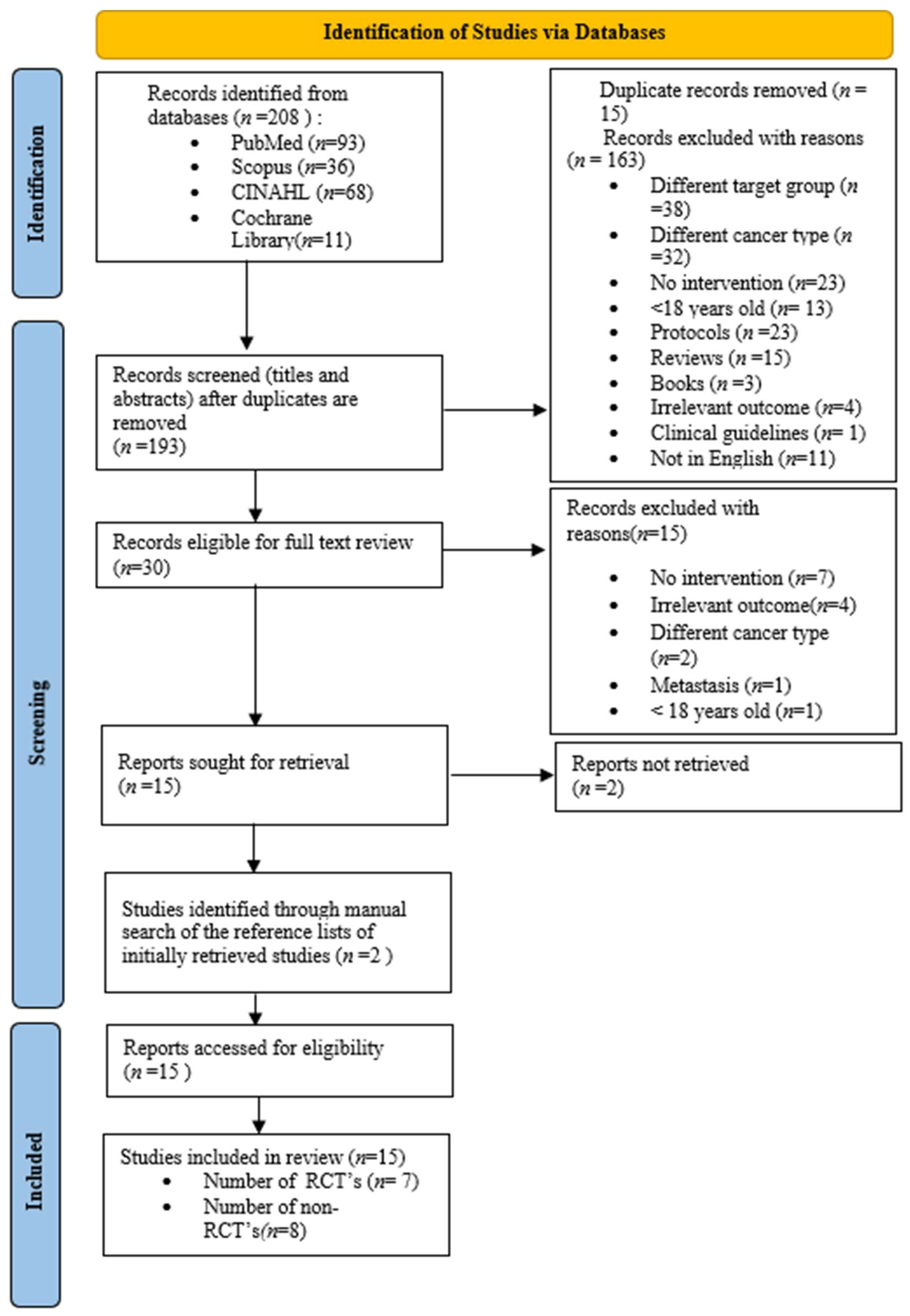
3.1. Article Selection
3.2. Methodological Quality of the Studies
3.3. Study Characteristics
3.3.1. Randomized Controlled Trials
3.3.2. Non-Randomized Controlled Trials
3.4. Results of Randomized Clinical Trials
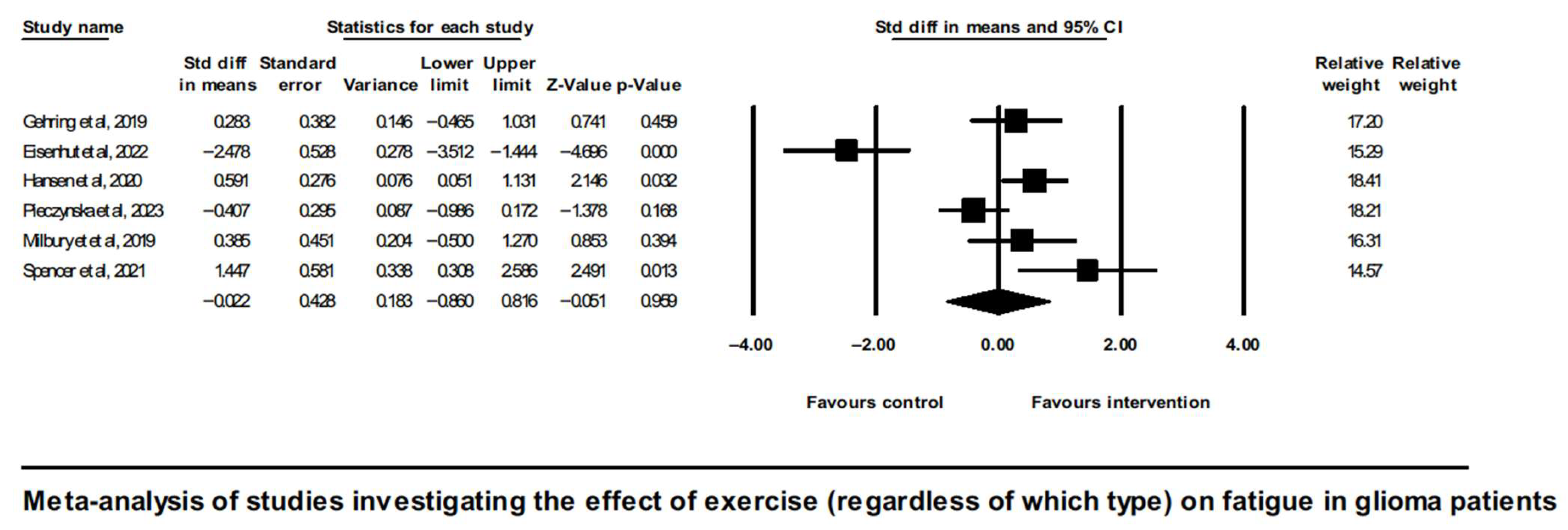
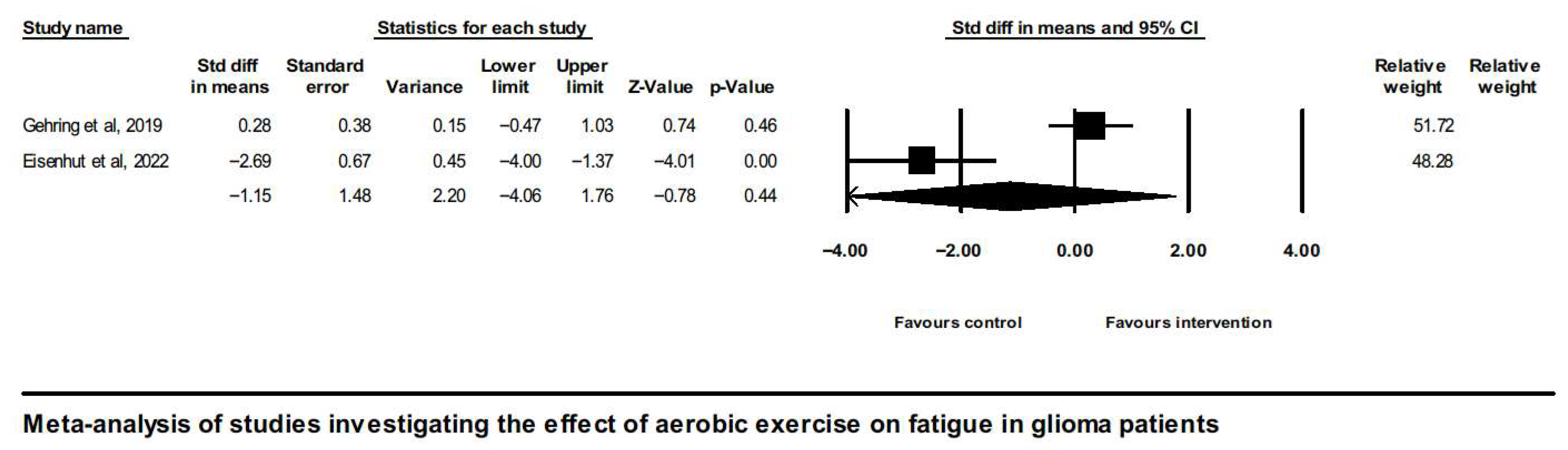
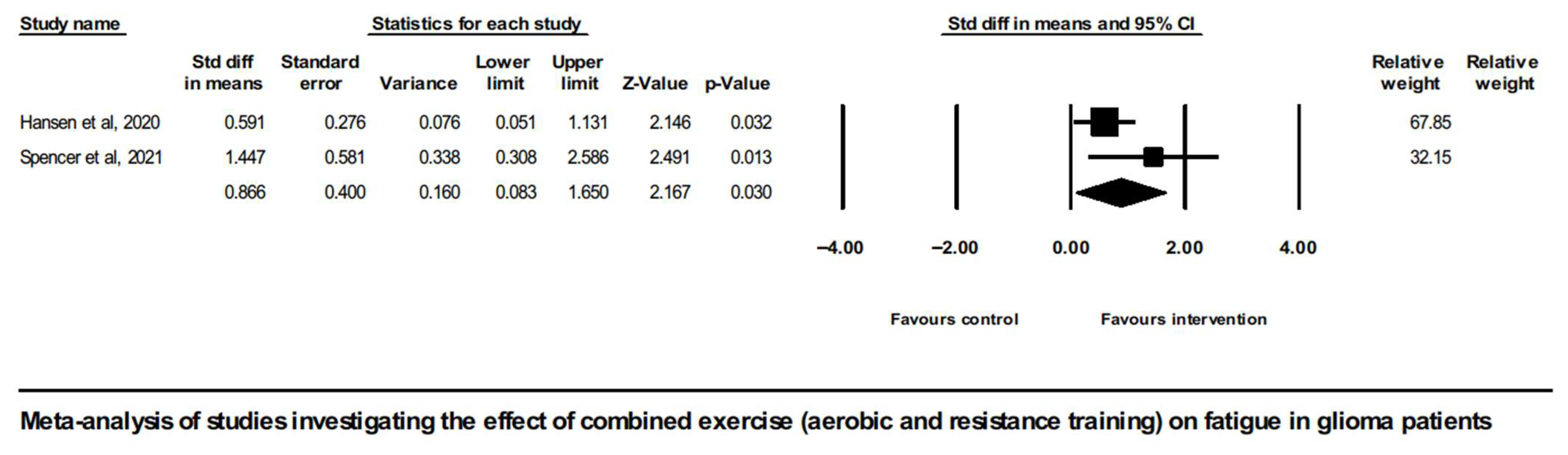
3.4.1. Outcomes for Cancer-Related Fatigue
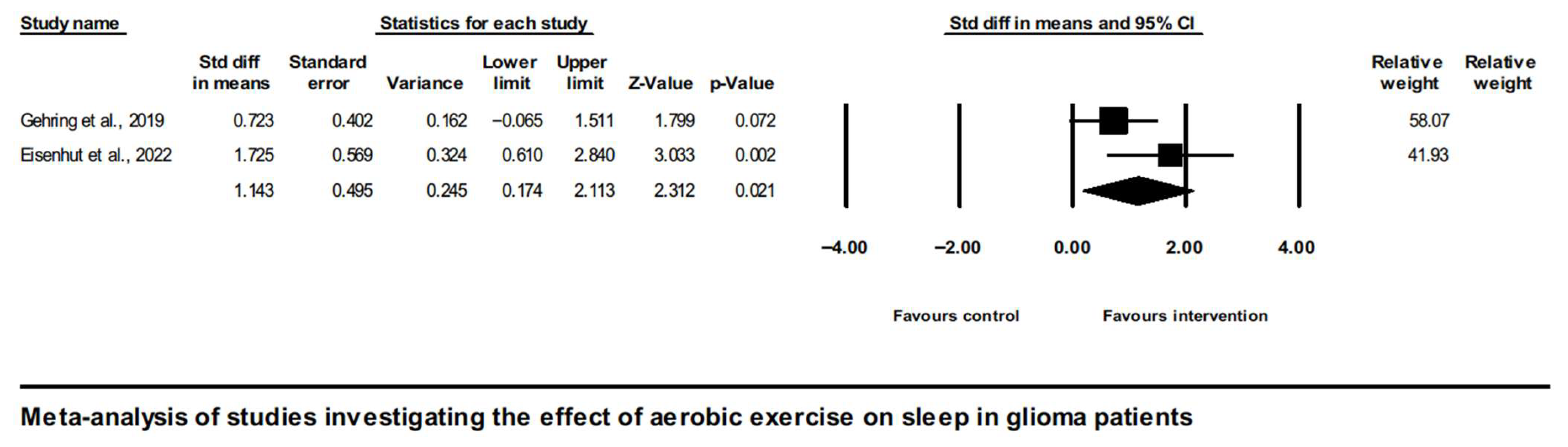
3.4.2. Results for Sleep Parameters
3.5. Results of Non-Randomized Clinical Trials
3.5.1. Results for Cancer-Related Fatigue
3.5.2. Outcomes for Sleep Parameters
4. Discussion
Strengths, Limitations, and Future Recommendations
5. Conclusions
Supplementary Materials
Author Contributions
Funding
Data Availability Statement
Conflicts of Interest
Abbreviations
| CNS | Central Nervous System |
| QOL | Quality Of Life |
| CE | Combined Exercise |
| WHO | World Health Organization |
| QOS | Quality Of Sleep |
| CRF | Cancer Related Fatigue |
| PQSI | Pittsburgh Sleep Quality Index |
| ISI | Insomnia Severity Index |
| PRISMA | Preferred Reporting Items for Systematic Reviews and Meta-Analyses Checklist |
| PROSPERO | International Prospective Register of Systematic Reviews |
| RCT | Randomized Control Trial |
| Non-RCT | Non Randomized Control Trial |
| PICO | Patient/Problem, Intervention or Treatment, Comparative Intervention, Outcomes |
| PEDRO | Physiotherapy Evidence Database |
| JBI | Joanna Briggs Institute |
| GRADE SMD | Grading of Recommendations, Assessment, Development and Evaluation Standardized Mean Difference |
| SOL | Sleep Onset Latency |
References
- Bray, F.; Laversanne, M.; Sung, H.; Ferlay, J.; Siegel, R.L.; Soerjomataram, I.; Jemal, A. Global cancer statistics 2022: GLOBOCAN estimates of incidence and mortality worldwide for 36 cancers in 185 countries. CA Cancer J. Clin. 2024, 74, 229–263. [Google Scholar] [CrossRef]
- Legler, J.M.; Ries, L.A.G.; Smith, M.A.; Warren, J.L.; Heineman, E.F.; Kaplan, R.S.; Linet, M.S. Brain and other central nervous system cancers: Recent trends in incidence and mortality. J. Natl. Cancer Inst. 1999, 91, 1382–1390. [Google Scholar] [CrossRef]
- Ostrom, Q.T.; Bauchet, L.; Davis, F.G.; Deltour, I.; Fisher, J.L.; Langer, C.E.; Pekmezci, M.; Schwartzbaum, J.A.; Turner, M.C.; Walsh, K.M.; et al. The Epidemiology of Glioma in Adults: A “State of the Science” Review. Neuro-Oncology 2014, 16, 896–913. [Google Scholar] [CrossRef]
- Chen, B.; Chen, C.; Zhang, Y.; Xu, J. Recent incidence trend of elderly patients with glioblastoma in the United States, 2000–2017. BMC Cancer 2021, 21, 54. [Google Scholar] [CrossRef] [PubMed]
- Gritsch, S.; Batchelor, T.T.; Gonzalez Castro, L.N. Diagnostic, therapeutic, and prognostic implications of the 2021 World Health Organization classification of tumors of the central nervous system. Cancer 2022, 128, 47–58. [Google Scholar] [CrossRef] [PubMed]
- Rong, L.; Li, N.; Zhang, Z. Emerging therapies for glioblastoma: Current state and future directions. J. Exp. Clin. Cancer Res. 2022, 41, 142. [Google Scholar] [CrossRef] [PubMed]
- Ostrom, Q.T.; Patil, N.; Cioffi, G.; Waite, K.; Kruchko, C.; Barnholtz-Sloan, J.S. CBTRUS statistical report: Primary brain and other central nervous system tumors diagnosed in the United States in 2013–2017. Neuro-Oncology 2020, 22, iv1–iv96. [Google Scholar] [CrossRef]
- Louis, D.N.; Perry, A.; Wesseling, P.; Brat, D.J.; Cree, I.A.; Figarella-Branger, D.; Hawkins, C.; Ng, H.K.; Pfister, S.M.; Reifenberger, G.; et al. The 2021 WHO classification of tumors of the central nervous system: A summary. Neuro-Oncology 2021, 23, 1231–1251. [Google Scholar] [CrossRef]
- Ostrom, Q.T.; Gittleman, H.; Liao, P.; Vecchione-Koval, T.; Wolinsky, Y.; Kruchko, C.; Barnholtz-Sloan, J.S. CBTRUS statistical report: Primary brain and other central nervous system tumors diagnosed in the United States in 2010–2014. Neuro-Oncology 2017, 19, v1–v88. [Google Scholar] [CrossRef]
- Louis, D.N.; Perry, A.; Reifenberger, G.; Von Deimling, A.; Figarella-Branger, D.; Cavenee, W.K.; Ohgaki, H.; Wiestler, O.D.; Kleihues, P.; Ellison, D.W. The 2016 World Health Organization classification of tumors of the central nervous system: A summary. Acta Neuropathol. 2016, 131, 803–820. [Google Scholar] [CrossRef]
- Harter, P.N.; Braun, Y.; Plate, K.H. Classification of meningiomas—Advances and controversies. Chin. Clin. Oncol. 2017, 6, S2. [Google Scholar] [CrossRef] [PubMed]
- Daly, A.F.; Beckers, A. The epidemiology of pituitary adenomas. Endocrinol. Metab. Clin. N. Am. 2020, 49, 347–355. [Google Scholar] [CrossRef] [PubMed]
- Nelson, K.L.; Davis, J.E.; Corbett, C.F. Sleep quality: An evolutionary concept analysis. Nurs. Forum 2022, 57, 144–151. [Google Scholar] [CrossRef] [PubMed]
- Palesh, O.G.; Roscoe, J.A.; Mustian, K.M.; Roth, T.; Savard, J.; Ancoli-Israel, S.; Heckler, C.; Purnell, J.Q.; Janelsins, M.C.; Morrow, G.R. Prevalence, demographics, and psychological associations of sleep disruption in patients with cancer. J. Clin. Oncol. 2010, 28, 292–298. [Google Scholar] [CrossRef]
- Savard, J.; Ivers, H.; Villa, J.; Caplette-Gingras, A.; Morin, C.M. Natural course of insomnia comorbid with cancer: An 18-month longitudinal study. J. Clin. Oncol. 2011, 29, 3580–3586. [Google Scholar] [CrossRef]
- Willis, K.D.; Ravyts, S.G.; Lanoye, A.; Loughan, A.R. Sleep disturbance in primary brain tumor: Prevalence, risk factors, and patient preferences. Support. Care Cancer 2022, 30, 741–748. [Google Scholar] [CrossRef]
- Jeon, M.S.; Dhillon, H.M.; Koh, E.S.; Nowak, A.K.; Hovey, E.; Descallar, J.; Miller, L.; Marshall, N.S.; Agar, M.R. Exploring sleep disturbance among adults with primary or secondary malignant brain tumors and their caregivers. Neurooncol. Pract. 2021, 8, 48–59. [Google Scholar] [CrossRef]
- Lin, P.C.; Chen, P.Y.; Wei, K.C.; Lin, J.H.; Lin, M.R.; Wang, H.C.; Chiu, H.Y. Sleep disturbance in adults with untreated primary brain tumors: Prevalence and impact on quality of life. Sleep Biol. Rhythm. 2023, 21, 201–209. [Google Scholar] [CrossRef]
- Richardson, A. Fatigue in cancer patients: A review of the literature. Eur. J. Cancer Care 1995, 4, 20–32. [Google Scholar] [CrossRef]
- Bray, F.; Laversanne, M.; Weiderpass, E.; Soerjomataram, I. The ever-increasing importance of cancer as a leading cause of premature death worldwide. Cancer 2021, 127, 3029–3030. [Google Scholar] [CrossRef]
- Ma, Y.; He, B.; Jiang, M.; Yang, Y.; Wang, C.; Huang, C.; Han, L. Prevalence and risk factors of cancer-related fatigue: A systematic review and meta-analysis. Int. J. Nurs. Stud. 2020, 111, 103707. [Google Scholar] [CrossRef] [PubMed]
- Wu, G.; Chen, Y.; Chen, C.; Liu, J.; Wu, Q.; Zhang, Y.; Chen, R.; Xiao, J.; Su, Y.; Shi, H.; et al. Role and mechanisms of exercise therapy in enhancing drug treatment for glioma: A review. Front. Immunol. 2025, 16, 1576283. [Google Scholar] [CrossRef] [PubMed]
- Patel, J.G.; Bhise, A.R. Effect of Aerobic Exercise on Cancer-Related Fatigue. Indian J. Palliat. Care 2017, 23, 355–361. [Google Scholar] [CrossRef] [PubMed]
- Saraiva, P.S.D.S.; Boing, L.; Fausto, D.Y.; Garcia Lima, A.; Bellani Lyra, V.; da Silveira, J.; de Azevedo Guimarães, A.C. Effects of Mat Pilates on Quality of Life, Fatigue and Body Image in Head and Neck Cancer Survivors: A Randomized Clinical Trial. Disabil. Rehabil. 2025, 47, 1553–1560. [Google Scholar] [CrossRef]
- Mustian, K.M.; Alfano, C.M.; Heckler, C.; Kleckner, A.S.; Kleckner, I.R.; Leach, C.R.; Mohr, D.; Palesh, O.G.; Peppone, L.J.; Piper, B.F.; et al. Comparison of pharmaceutical, psychological, and exercise treatments for cancer-related fatigue: A meta-analysis. JAMA Oncol. 2017, 3, 961–968. [Google Scholar] [CrossRef]
- Mavropalias, G.; Cormie, P.; Peddle-McIntyre, C.J.; Galvão, D.A.; Taaffe, D.R.; Schofield, C.; Ray, S.; Zissiadis, Y.; Newton, R.U. The effects of home-based exercise therapy for breast cancer-related fatigue induced by radical radiotherapy. Breast Cancer 2023, 30, 139–150. [Google Scholar] [CrossRef]
- Langlais, C.S.; Chen, Y.H.; Van Blarigan, E.L.; Chan, J.M.; Ryan, C.J.; Zhang, L.; Borno, H.T.; Newton, R.U.; Luke, A.; Bang, A.S.; et al. Quality of Life for Men with Metastatic Castrate-Resistant Prostate Cancer Participating in an Aerobic and Resistance Exercise Pilot Intervention. Urol. Oncol. Semin. Orig. Investig. 2023, 41, 146.e1–146.e11. [Google Scholar] [CrossRef]
- Li, C.Q.; Wang, Y.C.; Shen, S.Q.; Zhang, Y.L.; Zhao, J.Q.; Zou, W.B.; Ge, R.L. Effects of exercise by type and duration on quality of life in patients with digestive system cancers: A systematic review and network meta-analysis. J. Sport Health Sci. 2023, 12, 491–500. [Google Scholar] [CrossRef]
- Cramer, H.; Lauche, R.; Klose, P.; Lange, S.; Langhorst, J.; Dobos, G.J. Yoga for improving health-related quality of life, mental health and cancer-related symptoms in women diagnosed with breast cancer. Cochrane Database Syst. Rev. 2017, 2017, CD010802. [Google Scholar] [CrossRef]
- Day, J.; Yust-Katz, S.; Cachia, D.; Wefel, J.; Tremont Lukats, I.W.; Bulbeck, H.; Rooney, A.G. Interventions for the Management of Fatigue in Adults with a Primary Brain Tumour. Cochrane Database Syst. Rev. 2022, 9, CD011376. [Google Scholar] [CrossRef]
- Fang, Y.Y.; Hung, C.T.; Chan, J.C.; Huang, S.M.; Lee, Y.H. Meta-analysis: Exercise intervention for sleep problems in cancer patients. Eur. J. Cancer Care 2019, 28, e13131. [Google Scholar] [CrossRef] [PubMed]
- Maric, D.; Ficarra, S.; Di Bartolo, L.; Rossi, C.; Asimakopoulou, Z.; Vantarakis, A.; Carbonell-Baeza, A.; Jiménez-Pavón, D.; Gomes, B.; Tavares, P.; et al. Effects of resistance training on sleep quality and disorders among individuals diagnosed with cancer: A systematic review and meta-analysis. Cancer Med. 2024, 13, e7179. [Google Scholar] [CrossRef] [PubMed]
- Buffart, L.M.; Kalter, J.; Sweegers, M.G.; Courneya, K.S.; Newton, R.U.; Aaronson, N.K.; Jacobsen, P.B.; May, A.M.; Galvão, D.A.; Chinapaw, M.J.; et al. Effects and moderators of exercise on quality of life and physical function in patients with cancer: An individual patient data meta-analysis of 34 RCTs. Cancer Treat. Rev. 2017, 52, 91–104. [Google Scholar] [CrossRef] [PubMed]
- Armstrong, T.S.; Shade, M.Y.; Breton, G.; Gilbert, M.R.; Mahajan, A.; Scheurer, M.E.; Vera, E.; Berger, A.M. Sleep-wake disturbance in patients with brain tumors. Neuro-Oncology 2017, 19, 323–335. [Google Scholar] [CrossRef]
- Loughan, A.R.; Lanoye, A.; Aslanzadeh, F.J.; Villanueva, A.A.L.; Boutte, R.; Husain, M.; Braun, S. Fear of cancer recurrence and death anxiety: Unaddressed concerns for adult neuro-oncology patients. J. Clin. Psychol. Med. Settings 2021, 28, 16–30. [Google Scholar] [CrossRef]
- Brownlow, J.A.; Miller, K.E.; Gehrman, P.R. Insomnia and cognitive performance. Sleep Med. Clin. 2019, 15, 71–76. [Google Scholar] [CrossRef]
- Page, M.J.; Moher, D.; Bossuyt, P.M.; Boutron, I.; Hoffmann, T.C.; Mulrow, C.D.; Shamseer, L.; Tetzlaff, J.M.; Akl, E.A.; Brennan, S.E.; et al. PRISMA 2020 explanation and elaboration: Updated guidance and exemplars for reporting systematic reviews. BMJ 2021, 372, n160. [Google Scholar] [CrossRef]
- Amir-Behghadami, M.; Janati, A. Population, Intervention, Comparison, Outcomes and Study (PICOS) design as a framework to formulate eligibility criteria in systematic reviews. Emerg. Med. J. 2020, 37, 387. [Google Scholar] [CrossRef]
- De Morton, N.A. The PEDro scale is a valid measure of the methodological quality of clinical trials: A demographic study. Aust. J. Physiother. 2009, 55, 129–133. [Google Scholar] [CrossRef]
- Barker, T.H.; Habibi, N.; Aromataris, E.; Stone, J.C.; Leonardi-Bee, J.; Sears, K.; Hasanoff, S.; Klugar, M.; Tufanaru, C.; Moola, S.; et al. The revised JBI critical appraisal tool for the assessment of risk of bias for quasi-experimental studies. JBI Evid. Synth. 2024, 22, 378–388. [Google Scholar] [CrossRef]
- Munn, Z.; Barker, T.H.; Moola, S.; Tufanaru, C.; Stern, C.; McArthur, A.; Stephenson, M.; Aromataris, E. Methodological Quality of Case Series Studies: An Introduction to the JBI Critical Appraisal Tool. JBI Evid. Synth. 2020, 18, 2127–2133. [Google Scholar] [CrossRef]
- Balshem, H.; Helfand, M.; Schünemann, H.J.; Oxman, A.D.; Kunz, R.; Brozek, J.; Vist, G.E.; Falck-Ytter, Y.; Meerpohl, J.; Norris, S.; et al. GRADE guidelines: 3. Rating the quality of evidence. J. Clin. Epidemiol. 2011, 64, 401–406. [Google Scholar] [CrossRef] [PubMed]
- Eisenhut, L.; Sadeghi-Bahmani, D.; Gerber, M.; Saemann, A.; Staub, L.; Brand, S.; Cordier, D. Effects of two types of exercise training on psychological well-being, sleep and physical fitness in patients with high-grade glioma (WHO III and IV). J. Psychiatr. Res. 2022, 151, 354–364. [Google Scholar] [CrossRef] [PubMed]
- McKenzie, J.E.; Veroniki, A.A. A brief note on the random-effects meta-analysis model and its relationship to other models. J. Clin. Epidemiol. 2024, 174, 111492. [Google Scholar] [CrossRef] [PubMed]
- Gehring, K.; Stuiver, M.M.; Visser, E.; Kloek, C.; van den Bent, M.; Hanse, M.; Tijssen, C.; Rutten, G.J.; Taphoorn, M.J.; Aaronson, N.K.; et al. A pilot randomized controlled trial of exercise to improve cognitive performance in patients with stable glioma: A proof of concept. Neuro-Oncology 2020, 22, 103–115. [Google Scholar] [CrossRef]
- Hansen, A.; Pedersen, C.B.; Jarden, J.O.; Beier, D.; Minet, L.R.; Søgaard, K. Effectiveness of physical therapy–and occupational therapy–based rehabilitation in people who have glioma and are undergoing active anticancer treatment: Single-blind, randomized controlled trial. Phys. Ther. 2020, 100, 564–574. [Google Scholar] [CrossRef]
- Dülger, E.; Mut, M.; Erbas, T.; Sahiner, L.; Vardar Yağlı, N.; Bilgin, S. Effects of combined aerobic-strength training and yoga on quality of life and related parameters in women with pituitary adenoma after surgery: A randomized crossover study. Eur. J. Endocrinol. 2022, 186, 667–675. [Google Scholar] [CrossRef]
- Milbury, K.; Li, J.; Weathers, S.P.; Mallaiah, S.; Armstrong, T.; Li, Y.; Bruera, E.; Cohen, L. Pilot randomized, controlled trial of a dyadic yoga program for glioma patients undergoing radiotherapy and their family caregivers. Neurooncol. Pract. 2019, 6, 311–320. [Google Scholar] [CrossRef]
- Pieczyńska, A.; Zasadzka, E.; Pilarska, A.; Procyk, D.; Adamska, K.; Hojan, K. Rehabilitation exercises supported by monitor-augmented reality for patients with high-grade glioma undergoing radiotherapy: Results of a randomized clinical trial. J. Clin. Med. 2023, 12, 6838. [Google Scholar] [CrossRef]
- Jakkula, S.K.; Mangavelli, S.G.; Reddy, V.; Samal, A.; Reddy, K.S. Efficacy of pilates based group therapy on fatigue and quality of life in brain tumor survivors–A randomized control trial. IAIM 2019, 6, 74–81. [Google Scholar]
- Spencer, J. Exercise intervention: A pilot study to assess the feasibility and impact on cancer-related fatigue and quality of life among patients with high-grade glioma. Clin. J. Oncol. Nurs. 2021, 25, 194–200. [Google Scholar] [CrossRef]
- Milbury, K.; Mallaiah, S.; Mahajan, A.; Armstrong, T.; Weathers, S.P.; Moss, K.E.; Goktepe, N.; Spelman, A.; Cohen, L. Yoga program for high-grade glioma patients undergoing radiotherapy and their family caregivers. Integr. Cancer Ther. 2018, 17, 332–336. [Google Scholar] [CrossRef]
- Levin, G.T.; Greenwood, K.M.; Singh, F.; Tsoi, D.; Newton, R.U. Exercise improves physical function and mental health of brain cancer survivors: Two exploratory case studies. Integr. Cancer Ther. 2016, 15, 190–196. [Google Scholar] [CrossRef] [PubMed]
- Colledge, F.; Brand, S.; Pühse, U.; Holsboer-Trachsler, E.; Zimmerer, S.; Schleith, R.; Gerber, M. A twelve-week moderate exercise programme improved symptoms of depression, insomnia, and verbal learning in post-aneurysmal subarachnoid haemorrhage patients: A comparison with meningioma patients and healthy controls. Neuropsychobiology 2018, 76, 59–71. [Google Scholar] [CrossRef] [PubMed]
- Capozzi, L.C.; Boldt, K.R.; Easaw, J.; Bultz, B.; Culos-Reed, S.N. Evaluating a 12-week exercise program for brain cancer patients. Psycho-Oncology 2016, 25, 354–358. [Google Scholar] [CrossRef] [PubMed]
- Nowak, A.K.; Newton, R.U.; Cruickshank, T.; Cormie, P.; Halkett, G.K.; Tsoi, D.; Galvão, D.A. A feasibility, safety, and efficacy evaluation of supervised aerobic and resistance exercise for patients with glioblastoma undertaking adjuvant chemoradiotherapy. Neurooncol. Pract. 2023, 10, 261–270. [Google Scholar] [CrossRef]
- Sandler, C.X.; Gildea, G.C.; Spence, R.R.; Jones, T.L.; Eliadis, P.; Walker, D.; Donaghue, A.; Bettington, C.; Keller, J.; Pickersgill, D.; et al. The safety, feasibility, and efficacy of an 18-week exercise intervention for adults with primary brain cancer–the BRACE study. Disabil. Rehabil. 2024, 46, 2317–2326. [Google Scholar] [CrossRef]
- Miklja, Z.; Gabel, N.; Altshuler, D.; Wang, L.; Hervey-Jumper, S.L.; Smith, S. Exercise improves health-related quality of life sleep and fatigue domains in adult high-and low-grade glioma patients. Support. Care Cancer 2022, 30, 1493–1500. [Google Scholar] [CrossRef]
- Sandler, C.X.; Matsuyama, M.; Jones, T.L.; Bashford, J.; Langbecker, D.; Hayes, S.C. Physical activity and exercise in adults diagnosed with primary brain cancer: A systematic review. J. Neurooncol. 2021, 153, 1–14. [Google Scholar] [CrossRef]
- Xie, L.; Wang, F. Physical activity and glioblastoma: A paradigm shift in neuro-oncology therapy. Front. Oncol. 2025, 15, 1638060. [Google Scholar] [CrossRef]
- Cormie, P.; Nowak, A.K.; Chambers, S.K.; Galvão, D.A.; Newton, R.U. The potential role of exercise in neuro-oncology. Front. Oncol. 2015, 5, 85. [Google Scholar] [CrossRef] [PubMed]
- Chennaoui, M.; Arnal, P.J.; Sauvet, F.; Léger, D. Sleep and exercise: A reciprocal issue? Sleep Med. Rev. 2015, 20, 59–72. [Google Scholar] [CrossRef] [PubMed]
- Gururaj, R.; Samuel, S.R.; Kumar, K.V.; Nagaraja, R.; Keogh, J.W.L. Effect of exercise-based interventions on sleep and circadian rhythm in cancer survivors—A systematic review and meta-analysis. PeerJ 2024, 12, e17053. [Google Scholar] [CrossRef] [PubMed]
- Bower, J.E. Cancer-related fatigue—Mechanisms, risk factors, and treatments. Nat. Rev. Clin. Oncol. 2014, 11, 597–609. [Google Scholar] [CrossRef]
- Pedersen, B.K.; Febbraio, M.A. Muscle as an endocrine organ: Focus on muscle-derived interleukin-6. Physiol. Rev. 2008, 88, 1379–1406. [Google Scholar] [CrossRef]
- Davis, M.P.; Walsh, D. Mechanisms of fatigue. J. Support. Oncol. 2010, 8, 164–174. [Google Scholar]
- Cramp, F.; Byron-Daniel, J. Exercise for the management of cancer-related fatigue in adults. Cochrane Database Syst. Rev. 2012, 2021, CD006145. [Google Scholar] [CrossRef]
- Juvet, L.K.; Thune, I.; Elvsaas, I.Ø.; Fors, E.A.; Lundgren, S.; Bertheussen, G.; Leivseth, G.; Oldervoll, L.M. The effect of exercise on fatigue and physical functioning in breast cancer patients during and after treatment and at 6 months follow-up: A meta-analysis. Breast 2017, 33, 166–177. [Google Scholar] [CrossRef]
- Singh, B.; Hayes, S.C.; Spence, R.R.; Steele, M.L.; Millet, G.Y.; Gergele, L. Exercise and colorectal cancer: A systematic review and meta-analysis of exercise safety, feasibility and effectiveness. Int. J. Behav. Nutr. Phys. Act. 2020, 17, 122. [Google Scholar] [CrossRef]
- Dong, B.; Qi, Y.; Lin, L.; Liu, T.; Wang, S.; Zhang, Y.; Yuan, Y.; Cheng, H.; Chen, Q.; Fang, Q.; et al. Which exercise approaches work for relieving cancer-related fatigue? A network meta-analysis. J. Orthop. Sports Phys. Ther. 2023, 53, 343–352. [Google Scholar] [CrossRef]
- Medeiros Torres, D.; Jorge Koifman, R.; da Silva Santos, S. Impact on fatigue of different types of physical exercise during adjuvant chemotherapy and radiotherapy in breast cancer: Systematic review and meta-analysis. Support. Care Cancer 2022, 30, 4651–4662. [Google Scholar] [CrossRef] [PubMed]
- Montaño-Rojas, L.S.; Romero-Pérez, E.M.; Medina-Pérez, C.; Reguera-García, M.M.; de Paz, J.A. Resistance training in breast cancer survivors: A systematic review of exercise programs. Int. J. Environ. Res. Public Health 2020, 17, 6511. [Google Scholar] [CrossRef] [PubMed]
- Boing, L.; de Bem Fretta, T.; Lynch, B.M.; Dias, M.; da Rosa, L.M.; Baptista, F.; Bergmann, A.; Fausto, D.Y.; Martins, J.B.B.; de Azevedo Guimarães, A.C. Mat Pilates and belly dance: Effects on patient-reported outcomes among breast cancer survivors receiving hormone therapy and adherence to exercise. Complement. Ther. Clin. Pract. 2023, 50, 101683. [Google Scholar] [CrossRef] [PubMed]
- Hou, L.; Wang, J.; Mao, M.; Zhang, Z.; Liu, D.; Gao, S.; Liang, K.; Lu, L. Effect of yoga on cancer-related fatigue in patients with breast cancer: A systematic review and meta-analysis. Medicine 2024, 103, e36468. [Google Scholar] [CrossRef]
- Ma, X.; Li, S.N.; Chan, D.N.S. Effects of yoga on cancer-related fatigue, psychological distress, and quality of life among patients with cancer undergoing chemotherapy and/or radiotherapy: A systematic review and meta-analysis. Cancer Nurs. 2025, 48, 200–212. [Google Scholar] [CrossRef]
- Zhu, J.; Chen, X.; Zhen, X.; Zheng, H.; Chen, H.; Chen, H.; Liao, H.; Zhu, J.; Wang, C.; Zheng, Z.; et al. Meta-analysis of effects of yoga exercise intervention on sleep quality in breast cancer patients. Front. Oncol. 2023, 13, 1146433. [Google Scholar] [CrossRef]
- Su, Z.; Zhang, L.; Lian, X.; Guan, M. Virtual Reality–Based Exercise Rehabilitation in Cancer-Related Dysfunctions: Scoping Review. J. Med. Internet Res. 2024, 26, e49312. [Google Scholar] [CrossRef]
- Song, Q.; Zhu, Y.K.; Liu, H.; Liu, X.; Jiang, Z.D.; Wang, Y.J.; Xue, L.Y.; Yang, S.Y.; Liu, X.F. Different exercise interventions on quality of sleep in breast cancer survivors—A network meta-analysis of randomized controlled trials. Front. Oncol. 2025, 15, 1419613. [Google Scholar] [CrossRef]
- Nakano, J.; Hashizume, K.; Fukushima, T.; Ueno, K.; Matsuura, E.; Ikio, Y.; Ishii, S.; Morishita, S.; Tanaka, K.; Kusuba, Y. Effects of aerobic and resistance exercises on physical symptoms in cancer patients: A meta-analysis. Integr. Cancer Ther. 2018, 17, 1048–1058. [Google Scholar] [CrossRef]
- Ancoli-Israel, S.; Cole, R.; Alessi, C.; Chambers, M.; Moorcroft, W.; Pollak, C.P. The role of actigraphy in the study of sleep and circadian rhythms. Sleep 2003, 26, 342–392. [Google Scholar] [CrossRef]
- Marino, M.; Li, Y.; Rueschman, M.N.; Winkelman, J.W.; Ellenbogen, J.M.; Solet, J.M.; Dulin, H.; Berkman, L.F.; Buxton, O.M. Measuring sleep: Accuracy, sensitivity, and specificity of wrist actigraphy compared to polysomnography. Sleep 2013, 36, 1747–1755. [Google Scholar] [CrossRef]
- Rooney, A.G.; Hewins, W.; Walker, A.; Mackinnon, M.; Withington, L.; Robson, S.; Torrens, C.; Hopcroft, L.E.M.; Clark, A.; Anderson, G.; et al. Lifestyle coaching is feasible in fatigued brain tumor patients: A phase I/feasibility, multi-center, mixed-methods randomized controlled trial. Neuro-Oncology Pract. 2022, 10, 249–260. [Google Scholar] [CrossRef]



| Source | Study Subjects | Sample Size (N) | Mean Age | Sex (% Males) | Intervention | Parameters | Comparison | Outcome | Results |
|---|---|---|---|---|---|---|---|---|---|
| Eisenhut et al., 2022 [43] | Patient glioma Grade III and IV All patients underwent postoperative treatment: CT and/or RT | N = 29 ETG = 10 STG = 11 ACG = 8 | ETG = 49.1 (±13.14) STG = 54.6 (±13.45) ACG = 53.0 (±10.78) | Not mentioned | ETG: ergometric bicycle or treadmill STG: structured and standardized workout to strengthen all major muscle groups such as weightlifting and resistance exercises with appropriated devices | Frequency: 2x/week Intensity: Borg RPE scale 11–14 (aerobic endurance) Intensity: Borg RPE scale 11–15 (resistance) Session Time: 35–45 min (aerobic) 30–45 (resistance Duration: 6 weeks ETG Mode: Frequency: 2x/week Session Time: 35–45 min Intensity: Borg RPE scale 11–14 Duration: 6 weeks | 2x/week in supervised groups, 30–45 min per session, for 6 consecutive weeks | Insomnia (ISI), fatigue (FSS) | Fatigue increased in STG and ACG but decreased in ETG; insomnia scores decreased in ETG and ACG but increased in STG |
| Gehrin et al., 2019 [45] | Patients with astrocytoma, oligodendroglioma, and oligoastrocytoma Grade II and III | N = 32 (IG = 21, CG = 11) | IG: 49.2 (±8.9), CG: 48.0 (±11.9) | IG: 9 (43%), CG: 5 (45%) | Home-based aerobic exercise, remotely supervised | Frequency: 3x/week Session Time: 20–40 min Intensity: 60–85% HRmax Duration: 6 months | Leaflet with general lifestyle advice to maintain physical activity | Fatigue (MFI), sleep quality, (PSQI) | Moderate effect size of improvement in IG for sleep and fatigue |
| Hansen et al., 2020 [46] | Patients with glioma: Grade II-IV Treatments included: surgery, RT, and CT; surgery and CT; surgery and RT; other | N = 64 (IG = 32, CG = 32) | IG = 56.1 (±11.6), CG = 52.1 (±13.4) | IG = 26 (81%), CG = 18 (56%) | Supervised aerobic training and resistance training, plus 15 min of individualized physiotherapy | Frequency: 3x/week Session Time: 90 min Intensity: Aerobic 75% HRmax Resistance 70–75% Duration: 6 weeks | Standard rehabilitation care | Fatigue, insomnia, and sleepiness (EORTC QLQ-C30 and BN20) | IG had significantly reduced symptoms of fatigue but non-significant improvement in sleepiness |
| Dülger et al., 2022 [47] | Women with pituitary adenoma: prolactin-secreting adenoma, growth hormone-secreting adenoma, plurihormonal adenoma, follicle-stimulating hormone-secreting adenoma, and adrenocorticotropic hormone-secreting adenoma | G1 = 5, G2 = 5 | G1 = 52.0 (±13.5), G2 = 41.8 (±14.0) | 100% female | Aerobic exercise Resistance training Yoga | Frequency: 3x/week Session Time: 30 min (aerobic and resistance)/60 min (yoga) Intensity: Aerobic 50–70% HRmax Resistance 70–75% Duration: 6 weeks | Group 1: Aerobic + resistance training for first 6 weeks, 2 week washout period, yoga for the next 6 weeks Group 2: Yoga first, 2-week washout, aerobic + resistance training second | Fatigue (FSS), sleep quality (PQSI) | After the yoga program, FACT-Br improved; decreases in FSS. After aerobic and resistance training, no significant decrease in FSS |
| Milbury et al., 2019 [48] | 20 patient–caregiver dyads; patients with glioma: Grade II–IV; and all had undergone surgery and were receiving CT | N = 20 dyads | Patients: IG = 47.91 (±14.66) CG = 44.73 (± 12.23) Caregivers: IG = 52.36 (±16.00), CG = 48.27 (±11.88) | Patients: IG = 5 (50%), CG = 5 (50%) Caregivers: IG = 3 (30%), CG = 4 (40%) | Dyadic yoga during the RT | Frequency: 2–3 supervised sessions/week Session Time: 45 min/session Duration: 6 weeks | Standard care | Fatigue (BFI) | Clinically marginal but favorable fatigue outcomes for IG patients |
| Pieczyńska et al., 2023 [49] | Patients with Grade III and IV gliomas | N = 47 | IG = 45.59 (±11.15), CG = 60 (±13.55) | IG = 14 (82.35%), CG = 9 (56.25%) | Moderate-intensity exercise using the Neuroforma system, under supervision | Frequency: 5x/week Session Time: 60 min x session Intensity: HRmax = 70%. Duration: 1 month | Regular daily activities | Fatigue (FACIT-F) | No significant changes over time in either group Levels: CG: The level of fatigue was similar at all three time points (baseline, after RT, and after 3 months) IG: Perceived fatigue increased but not significantly |
| Jakkula et al., 2019 [50] | Brain tumor survivors who had completed surgery, RT, and CT with or without ongoing hormone therapy | N = 30 (IG = 15, CG = 15) | 18–65 | Total = 21 (70%), IG = 13 (86.7%), and CG = 8 (53.3%) | Pilates | Frequency: 3x/week Session Time: 60 min Duration: 12 weeks | Conventional therapy 12 weeks | Fatigue (BFI), QoL (EORTC QLQ-C30) | IG: Statistically significant improvement in fatigue; CG: Also improved but less significantly |
| Source | Study Design | Study Subjects | Sample Size (N) | Mean Age | Sex (% Males) | Intervention | Parameters | Outcome | Results |
|---|---|---|---|---|---|---|---|---|---|
| Spencer et al., 2021 [51] | Feasibility Pilot Study | Patients with High-Grade Glioma Undergoing CT and RT | Ν = 17 IG = 7 CG = 8 EG = 2 | IG: 51.4 (± 17.2) CG: 57.6 (± 18.4) EG: 67 (± 1.4) | IG = 6, CG = 3, and EG = 1 | IG and EG completed aerobic and strength training | IG supervised/EG unsupervised (strength training): Frequency: 2x/week Session Time: 50 min Duration: 10 weeks Unsupervised IG and EG: Session Time: 150 min/week aerobic training Duration: 10 weeks | Fatigue (VAS-F) (EORTC QLQ-C30) | Fatigue levels: reduction in the IG, increase in the EG and CG; EORTC QLQ-C30, fatigue levels: reduction in the IG, increase in the EG and in the CG |
| Milbury et al., 2018 [52] | Pilot Study | Patients with High-Grade Glioma (Grade IV) Undergoing RT | N = 10 Patients = 5 Caregivers = 5 | Patients = 51.94 (± 20.20) Caregivers = 58.16 (± 10.15) | Patients = 1 (20) Caregivers = 2 (40) | Dyadic yoga intervention | Frequency: 2–3x/week Session Time: 60 min Duration: 5–6 week | Fatigue (BFI) sleep quality (PSQI) | Reduction in sleep disturbance |
| Levin et al., 2015 [53] | Case Study | Patient 1, Anaplastic Oligodendroglioma, Grade III Patient 2, Glioblastoma Multiforme | Ν = 2 | Patient 1 = 58 Patient 2 = 61 | Ν = 2 female patients | Aerobic exercise and resistance + home-based aerobic activities | Frequency: 2x/week Session Time: 20 min aerobic exercise and 40 min. of resistance training Intensity: moderate-to-vigorous Duration: 12 weeks | Sleep quality (PSQI) | Little change for sleep quality,; both participants consistently reported scores above 5 (=poor sleep quality) |
| Colledge et al., 2017 [54] | Exploratory Study | Patients with Meningioma, Survivors of Aneurysmal Subarachnoid Hemorrhage, and Healthy Controls; No RT | Ν = 48 G. aSAH = 15. G.M = 16 G.C = 17 | G.M:59.3, (15.7) G. aSAH: 57.3 (8.9) G.C: 57.5, (12.4) | G. aSAH = 4 (27%) G.M = 8 (50%) G.C = 6 (35%) | Aerobic exercise: 1 supervised and 2–4 sessions unsupervised x week | Frequency: 3–5x/week Session Time: 30–40 min Intensity: Weeks 1–4: 55–65% of HRmax, Weeks 5–8: 65–75% of HRmax, Weeks 9–12: 75–85% of HRmax Duration: 12 weeks | Subjective sleep quality (ISI, FEPS II), objective sleep (overnight EEG) | Insomnia scores decreased across all groups and were consistently lower at all time points in the G.C.; G.M descriptively exhibited the shortest SOL compared to the other groups |
| Capozzi et al., 2015 [55] | Feasibility study | Patients with Oligodendroglioma, Glioblastoma, Astrocytoma, Oligoastrocytoma, Ependymoma, and Glioma; Grade II–IV; Treatment Status: Surgical Intervention, Surgery and RT, Surgery and CT, and Surgery, RT, and CT | Ν = 24 n = 14 completed the program n = 10 did not complete | Completers = 52.6 (±9.8) Non-completers = 51.6 (±14.6) | Completers = 9 (90.0%) Non-completers = 8 (80.0%) | Supervised aerobic and resistance training | Frequency: 3x/week Session Time: 3x [7–10 min, moderate-intensity aerobic exercise, 3 resistance exercises, 3–5 min, of moderate-intensity aerobic exercise Intensity: Duration: 12 weeks | Fatigue, daytime sleepiness (ESAS) | Reductions in fatigue and sleepiness |
| Nowak et al., 2023 [56] | Exploratory Study | Patients with Grade IV Glioma (Glioblastoma) Undergoing Concurrent CT-RT Participated in the Study | Ν = 17 | Ν = 17, IG: 55.82 (±8.90) Ν = 13, and Non-exercise/withdrew: 47.61 (±14.10) | Ν = 5 (70.6%) | Supervised aerobic and resistance training | Frequency: 2x/week Session Time: 1 h Intensity: Aerobic training at ~60–85% of HRmax, 20–30 min., Resistance training at 60–85% of 1-repetition maximum Duration: 6 weeks | Fatigue (FACIT-F), sleep quality (PSQI) | No statistically significant changes in fatigue and sleep quality |
| Sandler et al., 2024 [57] | Feasibility study | Patients with Primary Brain Tumors: Glioblastoma, Astrocytoma, Oligodendroglioma, and Hemangiopericytoma Grade II-IV | Ν = 12 | Μ.A = 51 (19) | Ν = 7 (58%) | Individualized aerobic and resistance training | Frequency: 2–3x/week Session Time: 10–60 min Intensity: Moderate Duration: 18 weeks | Fatigue (FACIT-F) | Improvements in FACIT-F score |
| Miklja et al., 2022 [58] | Observational Study | Patients Diagnosed with Glioma, High-Grade Glioma (Grade III and IV), and Low-Grade Glioma (Grade II) | N = 38 | L.E.G = 53.6 H.E.G = 49 | L.E.G = 5 (13.2%) H.E.G = 18 (47.4%) | Validated telephone-based survey | HRQOL | Significant improvements in fatigue and sleep disturbances for H.E.G. |
| Author | Eligibility Criteria | Random Allocation | Concealed Allocation | Baseline Comparability | Blind Participants | Blind Therapists | Adequate Follow-Up | Blind Assessors | Intention to Treat Analysis | Between-Group Comparisons | Point Estimates and Variability | Score * |
|---|---|---|---|---|---|---|---|---|---|---|---|---|
| Gehring et al. (2019) [45] | + | + | − | + | − | − | − | + | − | + | + | 5/10 |
| Hansen et al. (2020) [46] | + | + | + | − | − | − | + | + | + | + | + | 7/10 |
| Dügler et al. (2022) [47] | + | + | − | + | − | − | − | + | − | + | + | 5/10 |
| Milbury et al. (2019) [48] | + | + | + | + | − | − | − | + | + | + | + | 6/10 |
| Pieczyńska et al. (2023) [49] | + | + | − | + | − | − | − | − | − | + | + | 4/10 |
| Jakkula et al. (2019) [50] | + | + | − | − | − | − | − | + | + | + | + | 5/10 |
| Eisenhut et al. (2022) [43] | + | + | + | + | − | − | + | + | + | + | + | 8/10 |
| Author | 1 | 2 | 3 | 4 | 5 | 6 | 7 | 8 | 9 | Score |
|---|---|---|---|---|---|---|---|---|---|---|
| Spencer et al. 2021 [51] | Y | N | N | Y | Y | Y | Y | N | Y | 6/9 |
| Milbury et al. 2018 [52] | Y | N | Y | Y | N | N | Y | N | Y | 5/9 |
| Collegde et al. 2017 [54] | Y | N | Y | Y | N | Y | Y | N | Y | 6/9 |
| Cappozi et al. 2015 [55] | Y | Y | Y | N | Y | N | Y | U | N | 5/9 |
| Nowak et al. 2023 [56] | Y | Y | Y | N | N | N | Y | Y | Y | 6/9 |
| Sandler et al. 2024 [57] | Y | Y | Y | N | Y | Y | Y | U | Y | 7/9 |
Disclaimer/Publisher’s Note: The statements, opinions and data contained in all publications are solely those of the individual author(s) and contributor(s) and not of MDPI and/or the editor(s). MDPI and/or the editor(s) disclaim responsibility for any injury to people or property resulting from any ideas, methods, instructions or products referred to in the content. |
© 2026 by the authors. Licensee MDPI, Basel, Switzerland. This article is an open access article distributed under the terms and conditions of the Creative Commons Attribution (CC BY) license.
Share and Cite
Ntalagianni, E.; Katsouli, E.; Christakou, A.; Chytas, D.; Lochner, P.; Lyros, E. An Investigation of the Effect of Exercise on Sleep Disturbances and Fatigue Symptoms in Patients Diagnosed with Primary Brain Tumors: A Systematic Review. NeuroSci 2026, 7, 14. https://doi.org/10.3390/neurosci7010014
Ntalagianni E, Katsouli E, Christakou A, Chytas D, Lochner P, Lyros E. An Investigation of the Effect of Exercise on Sleep Disturbances and Fatigue Symptoms in Patients Diagnosed with Primary Brain Tumors: A Systematic Review. NeuroSci. 2026; 7(1):14. https://doi.org/10.3390/neurosci7010014
Chicago/Turabian StyleNtalagianni, Eleftheria, Eleni Katsouli, Anna Christakou, Dimitrios Chytas, Piergiorgio Lochner, and Epameinondas Lyros. 2026. "An Investigation of the Effect of Exercise on Sleep Disturbances and Fatigue Symptoms in Patients Diagnosed with Primary Brain Tumors: A Systematic Review" NeuroSci 7, no. 1: 14. https://doi.org/10.3390/neurosci7010014
APA StyleNtalagianni, E., Katsouli, E., Christakou, A., Chytas, D., Lochner, P., & Lyros, E. (2026). An Investigation of the Effect of Exercise on Sleep Disturbances and Fatigue Symptoms in Patients Diagnosed with Primary Brain Tumors: A Systematic Review. NeuroSci, 7(1), 14. https://doi.org/10.3390/neurosci7010014