1. Introduction
It is now well established that, in the central nervous system, representational maps of the motor and primary somatosensory cortices exhibit substantial plasticity, with their spatial extent modifiable through training. Although the mechanisms underlying such dynamic change remain incompletely understood, those are very likely influenced by several factors related to the somatic experience accompanying repeated movements. These include the modality of the sensory input received, the degree of convergence of different inputs onto individual neurons, the internal cortico-cortical circuits that interconnect movement-coordinated neurons across cytoarchitectonic areas, and training-induced modifications of synaptic transmission within those networks [
1]. Collectively, these processes result in a more efficient recruitment of the motor network. As will be briefly reviewed below, extensive knowledge on those mechanism has been gathered from electrophysiological and tract tracing studies in monkeys, and more recently from neuroimaging studies in humans—albeit the latter ones with the inherent limitation of imaging resolution. Yet, even if physiological properties of that plasticity and their structural connectivity in both species were fully characterized, the temporal dynamic events and functional connectivity that unfold during information flow between the motor and somatosensory areas throughout training have not been systematically investigated. This study aims to systematically characterize the functional connectivity linking the primary motor and somatosensory cortices during a two-hand training paradigm in which participants sequentially tap their fingers against the thumb, alternatively engaging the right and left hemispheres while undergoing fMRI scanning.
Each of the four primary somatosensory cytoarchitectonic areas—Areas 3a, 3b, 1 and 2—[
2,
3,
4,
5,
6] contains an independent, systematic representation of peripheral receptors, with the lower extremities represented dorsomedially and upper extremities ventrolaterally. In monkeys, the somatotopic maps of Areas 3b and 1 are the most precise and detailed [
7,
8,
9,
10,
11]. Lesion and electrode tract-tracing studies in monkeys [
12,
13] and high-resolution Cerebral Blood Volume fMRI [
14] have shown that the modal specificity and receptive field properties of Areas 3a, 3b, 1, and 2 are supported through two parallel pathways. The first involves thalamo-cortical connections targeting mainly granular layers: Area 3a receives inputs primarily from muscle stretch receptors, Area 3b from rapidly and slowly adapting cutaneous receptors, Area 1 from rapidly adapting cutaneous receptors, and Area 2 from deep pressure receptors. The second pathway consists in convergent cortico-cortical projections amongst pyramidal layers, whereby neurons from Area 3a and 3b project to Areas 1 and 2, enabling the latter two to integrate information from different receptors. Across successive stages of sensory processing, neuronal response properties become progressively more complex and the receptive fields increase in size, reflecting integration of inputs. Neurons in Area 3a respond mainly to joint manipulation or other types of deep stimuli, whereas those in Area 3b respond mainly to simple punctual cutaneous stimuli. In contrast, neurons in Areas 1 and 2 can be motion-, direction-, or orientation-sensitive. Receptive fields in Areas 3a and 3b are small -typically limited to one or two finger phalanges-, while those in Areas 1 and 2 are considerably larger, often encompassing one or several adjacent fingers [
15,
16,
17,
18,
19,
20].
The early descriptions of the somatotopy of the human primary somatosensory cortex (SI) depicts the tactile representation of the body surface along the postcentral gyrus, with the digits arranged from D5 (little finger) to D1 (thumb) in medial-to-lateral sequence [
21,
22]. Numerous subsequent studies have confirmed this arrangement using functional magnetic resonance imaging (fMRI) during tactile or electrical stimulation of the distal phalanxes [
23,
24,
25,
26]. High-resolution 3T fMRI studies have further resolved the representations of all phalanges and digit bases of all fingers in SI [
27]. Using 7T fMRI and a travelling wave paradigm, Ref. [
28] has mapped the internal somatotopic representation of the index, middle, and ring fingers in human S1 with high spatial resolution and robust BOLD contrast. Their results revealed multiple map reversals at the tip and base that correspond to the borders between Brodmann Areas 3a, 3b, 1, and 2. Maps exhibit consistent plasticity, with their spatial extent modifiable through training, that has been well documented. A recent 7T fMRI study in humans by Spencer et al. [
29] demonstrated that digit representations of Area 3b remain quite stable and that training-induced changes primarily involve interactions between pairs of neighbouring fingers. In contrast, Areas 4 and 2 exhibit stronger and more wide spread interactions, including those between non-adjacent fingers and coordinated changes involving triplets and quadruplets. Area 4, the primary motor cortex (M1), has traditionally been viewed as an executive locus for simple voluntary movements, sending commands to individual muscles [
30]. However, data from animal studies and human neuroimaging studies suggest that M1 generates more complex commands related to the conception and organization of actions rather than individual muscle activation [
31,
32,
33,
34,
35]. Based on PET findings, Ref. [
36] further proposed that human M1 contributes to preparation of movements, particularly for reaching, and to motor learning. Studies using fMRI [
37] and single-pulse trans-cranial magnetic stimulation [
38] have shown that motor learning of movement sequences induces changes in M1 representations of hand muscles. A recent fMRI study demonstrated that the planning of finger movements activates regions in Area 4 and SI, with peak activity patterns that closely match those elicited during actual movement execution [
39]. 7T Spin-echo BOLD fMRI has defined spatial specificity in the human motor cortex during finger movement tasks [
40] very well. More recently, spontaneous activity in human motor cortex has been shown to form fine-scale, patterned representations associated with behaviors frequently performed in daily life [
41]. Everyday motor planning and behavior then depend on the continuous interplay between complex motor control and precisely timed somatosensory feedback. Although many anatomical studies have demonstrated dense cortico-cortical connections between M1 and SI, the functional mechanisms by which somatosensory signals functionally interact with the motor Area to guide natural hand movements remain largely unknown.
Learning and motor plasticity are thought to depend in part on intracortical interactions between motor and somatosensory maps. Direct and reciprocal connections have been well documented in rodents [
42,
43,
44,
45,
46], cats [
47,
48,
49,
50], and macaques [
13]. Using anterograde and retrograde tracers, Ref. [
13] mapped projections between Areas 1, 2, 3 (S1), 4 (M1), and 5 in the forelimb representation of monkeys. They reported that Area 3b is not connected to Areas 3a or 4, but projects to Areas 1 and 2; that Area 1 is reciprocally connected with Areas 3a and 3b; and that Area 2 is reciprocally connected with areas 4 and 3a. Although few additional track-tracing studies have been conducted since then in monkeys, recent functional works has begun to explore the dynamic interactions between SI and M1 during hand movements. Using high-density multi-electrode arrays, Ref. [
51] recorded single unit activity and local field potentials from rostral and caudal portions of M1 and Areas 3a and 2 during grasping. Their findings showed that M1 and SI sites with similar receptive or projection field were more likely to be functionally coupled, suggesting that such connections support and facilitate the synergistic coordination of movement with sensation. Large-scale analyses with Human Connectome Project data have further characterized this circuits [
52,
53,
54]. By using diffusion tractography, these studies quantified structural connections across cortical regions; functional connectivity was assessed through correlations in resting state BOLD signals; and effective connectivity was estimated using the Hopf model to infer the strength and direction of the causal connectivity of causal interactions. These analyses revealed strong effective and functional connectivity between M1 and SI, particularly between Areas 3a and 3b towards Areas 1 and 2. More recently, a study investigating motor learning examined whole brain functional connectivity with motor cortex during implicit and explicit manual task learning, finding strong interactions between M1 and SI [
55]. Despite all these advances, functional connectivity within SI and between M1 and SI during execution of single motor task, like tapping during fMRI, has not yet systematically been assessed.
Functional connectivity between fMRI voxel-time series is usually inferred by quantifying the associations between every pair of time series. Bivariate methods offer fine-grain voxel-level resolution, but often also introduce spurious indirect connections, whereas while multivariate methods operate at a coarse regional scale and therefore miss voxel-level details [
56]. Techniques such as Granger Causality (GC) and Large-Scale Granger Causality overcome these limitations estimating direct information flow at the voxel level in a multivariate network, avoiding undetermined and overly complex model spaces. These analytical tools have been successfully used to characterize dynamic networks in which functionally related fields interact [
56], and to determine directional influences in reciprocal cortico-cortical connections, for example, between frontal and parietal regions during resting state [
57]. Granger Causality (GC) has been extensively applied to investigate motor networks. For instance, it has been found that during self-paced finger tapping, activity changes in the premotor cortex are predicted by earlier fluctuations in M1 and are modulated by the supplementary motor area and the anterior precuneus [
58]. Other studies have reported strong GC links between voxels of the left motor cortex and the supplementary motor area [
59], and between M1 and the cerebellum during right-hand tapping [
60]. EEG studies found distinct cortical network for Gamma Synchronization in voluntary hand movement tasks suggesting that SIM1 modulated the activity of interconnected cortical areas through Gamma Synchronization, while subcortical structures modulated the motor network dynamically, and specifically for the studied hand movement [
61]. Multimodal studies combining fMRI, fNIRS, and EEG further show bi-directional effective connectivity within a broad cortico-cortical sensorimotor network involving several areas (premotor cortex, supplementary motor area, and dorsolateral prefrontal cortex) during finger movement tasks, with consistent GC findings across modalities [
62]. GC predictions of activity have also been used to compare the functional connectivity during motor imagery in stroke patients, providing insight into disrupted motor networks and their potential for rehabilitation [
63,
64].
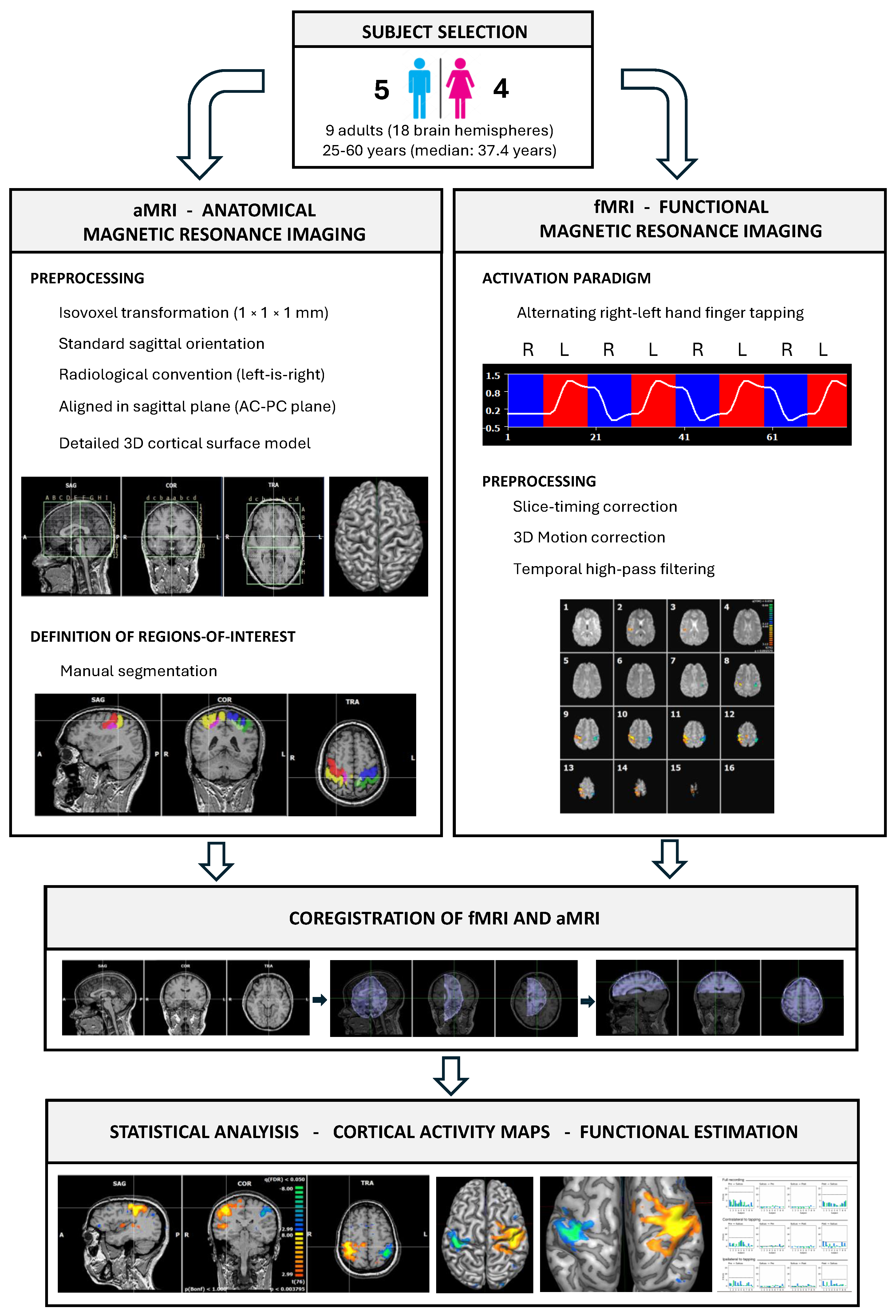
Our aim here was to investigate the fMRI functional connectivity between the primary motor cortex (Area 4 in the precentral gyrus and anterior lip of the central sulcus), the region at the fundus of the central sulcus (Area 3a of SI), and the areas included in the posterior lip of the central sulcus and in the postcentral gyrus (Areas 3b, 1, and 2 of SI) during a complex finger sequence tapping task in humans [
65]. In order to retain the micro-scale information at the level of individual voxels, we here employ a recently proposed causality metric, called Information Gain Imbalance [
66]; the results are further compared with classical causality measures, including Granger Causality [
67] and time-delayed Mutual Information. These techniques have been applied to a data set of fMRI recordings obtained from healthy volunteers, recorded in a clinical setting and while performing the aforementioned task (see
Section 2.1 and
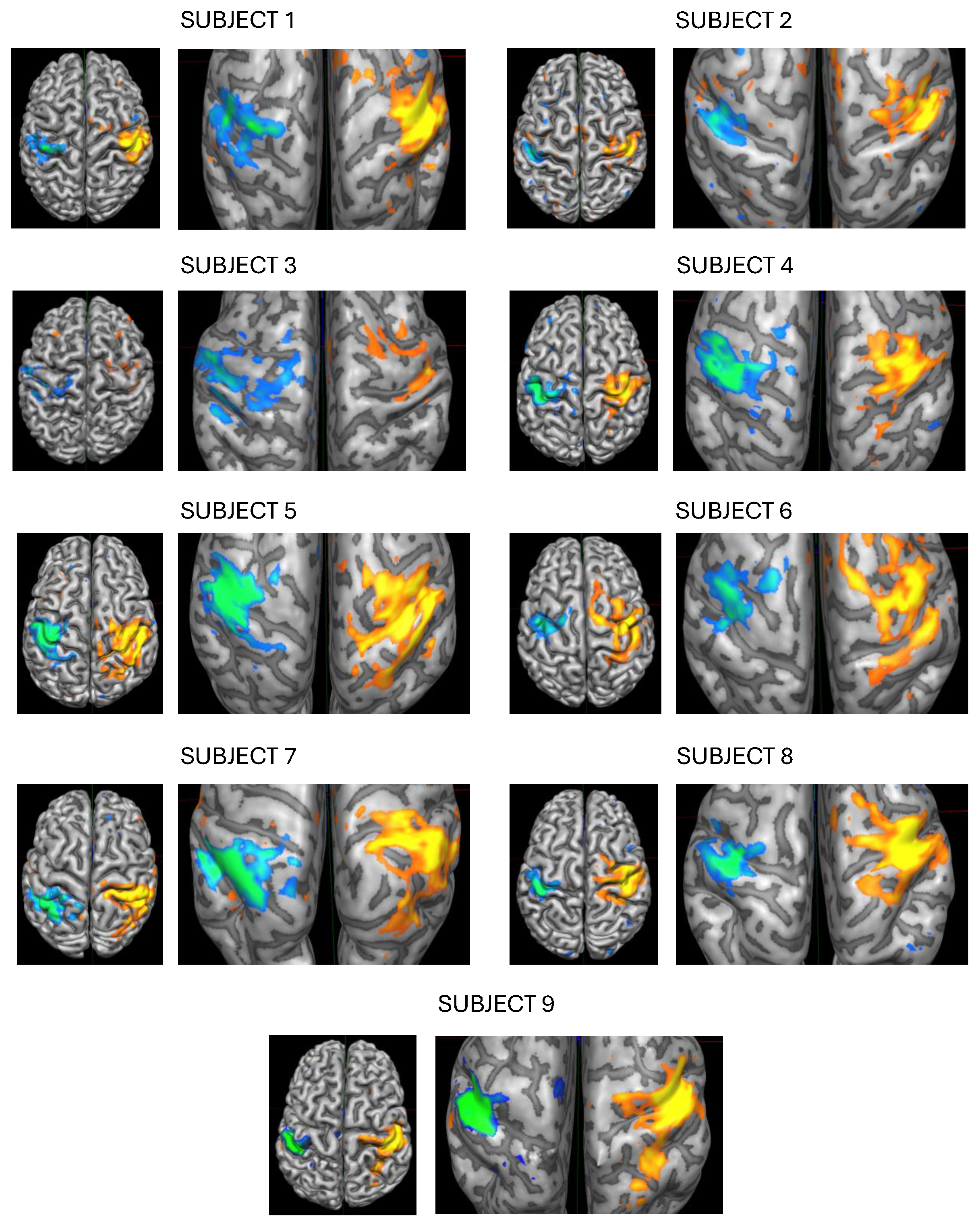
Figure 1 for details). The results, reported in
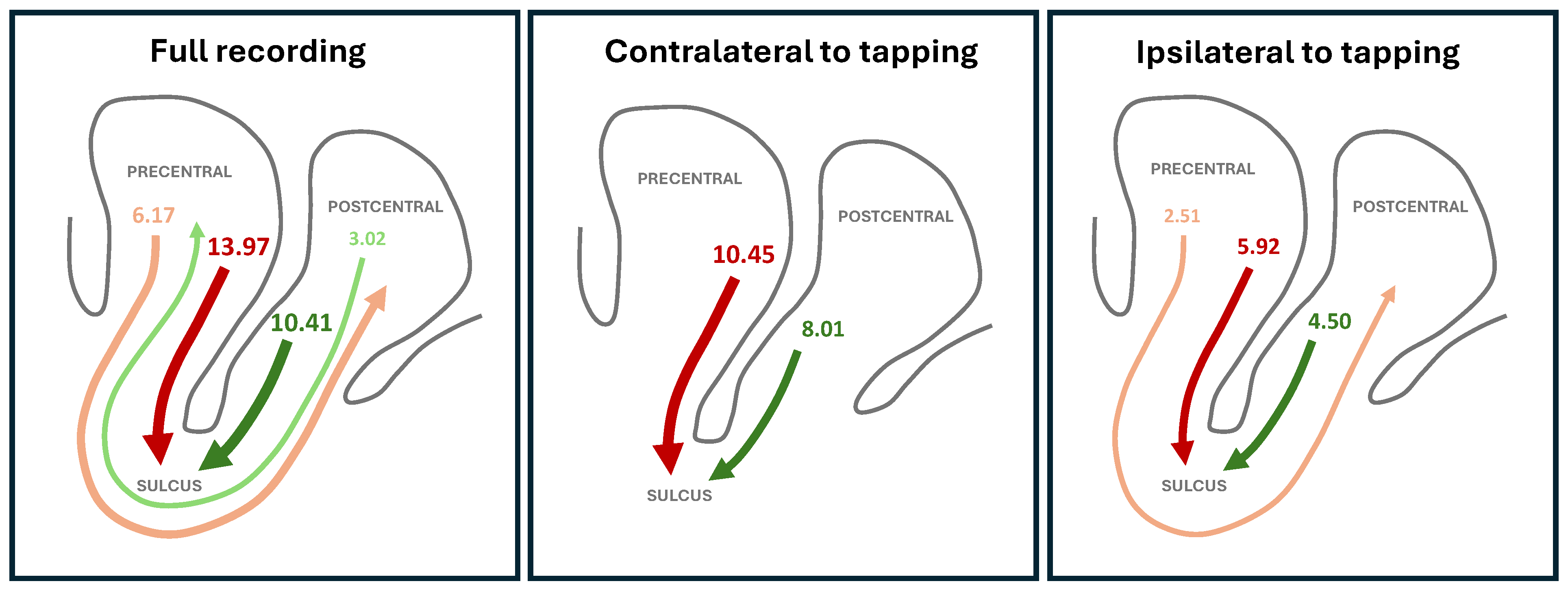
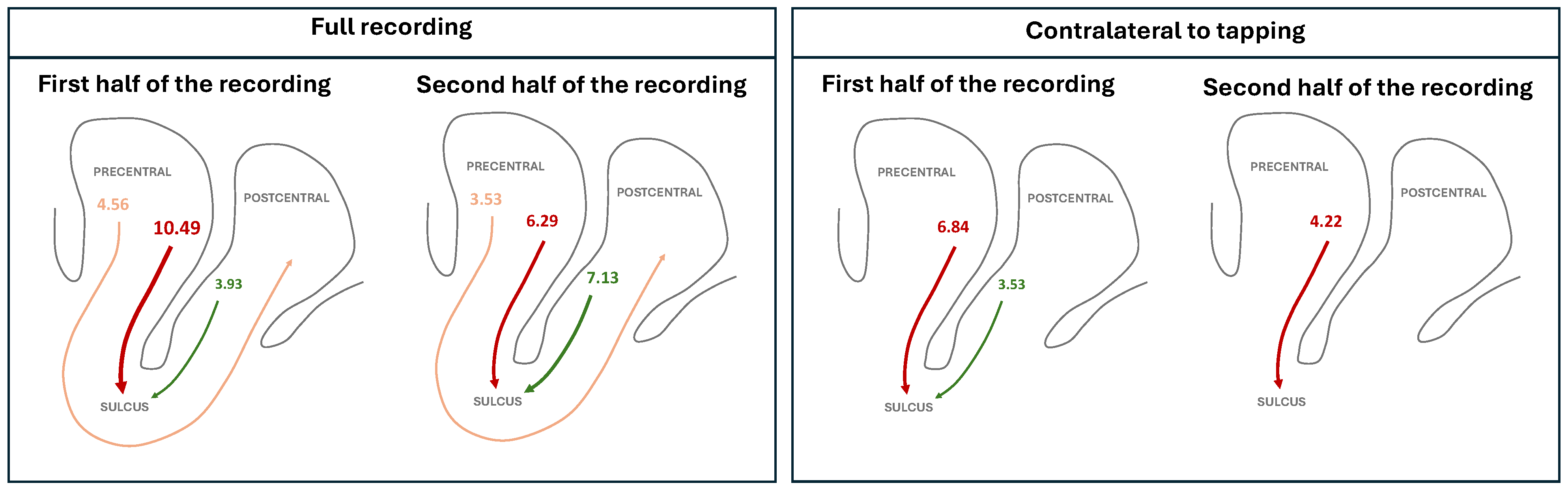
Section 3, indicate a strong information flow from the precentral and postcentral gyri to the sulcus, albeit with an intensity evolving in time. Specifically, the postcentral gyrus increasingly transfers information to Area 3a of the fundus of the central sulcus over time, suggesting a role for this region during periods of non task engagement. However, during active tapping, information flow bypasses the sulcus in favor of a more direct and faster postcentral to precentral pathway. As will be discussed below, these findings support the role of M1, Area 3a, and SI areas in the dynamic network involved in fast learning processing, while Area 3a of the sulcus may contribute to maintaining representational plasticity during complex sequential tapping tasks.
4. Discussion and Conclusions
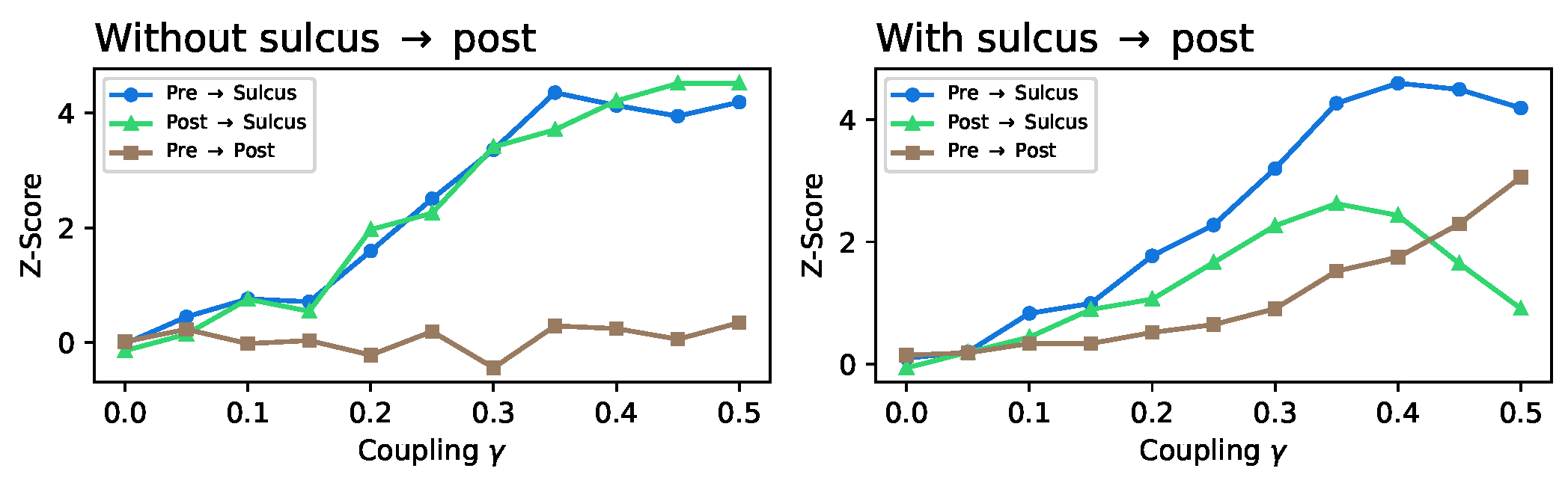
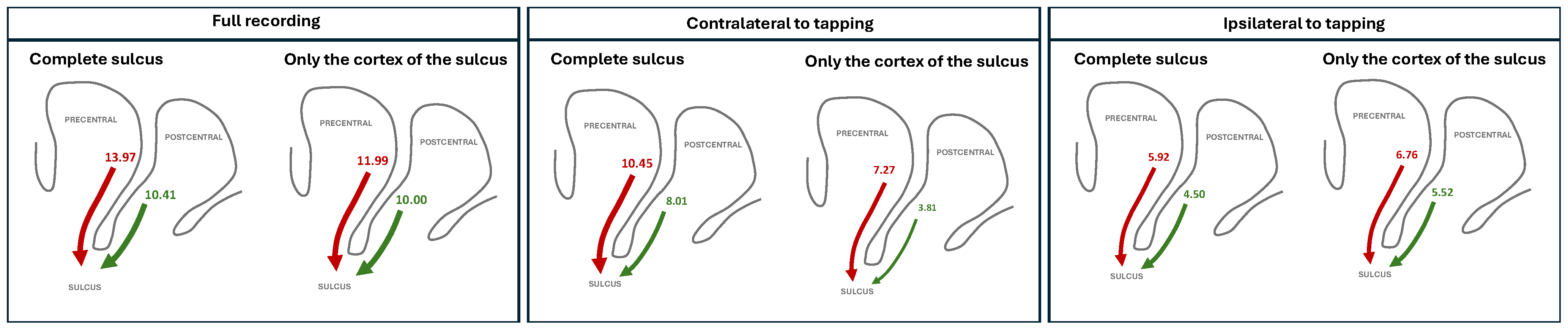
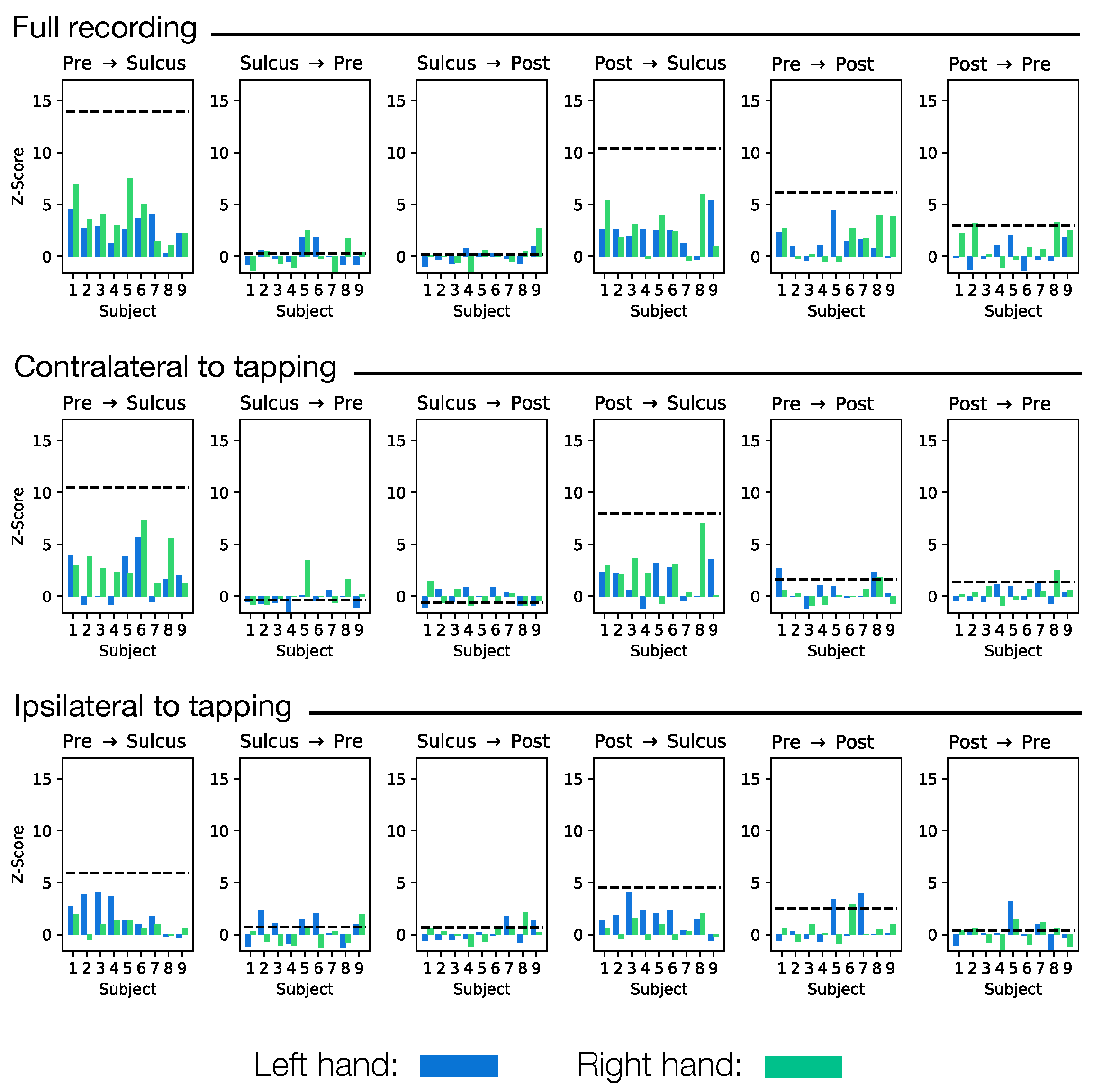
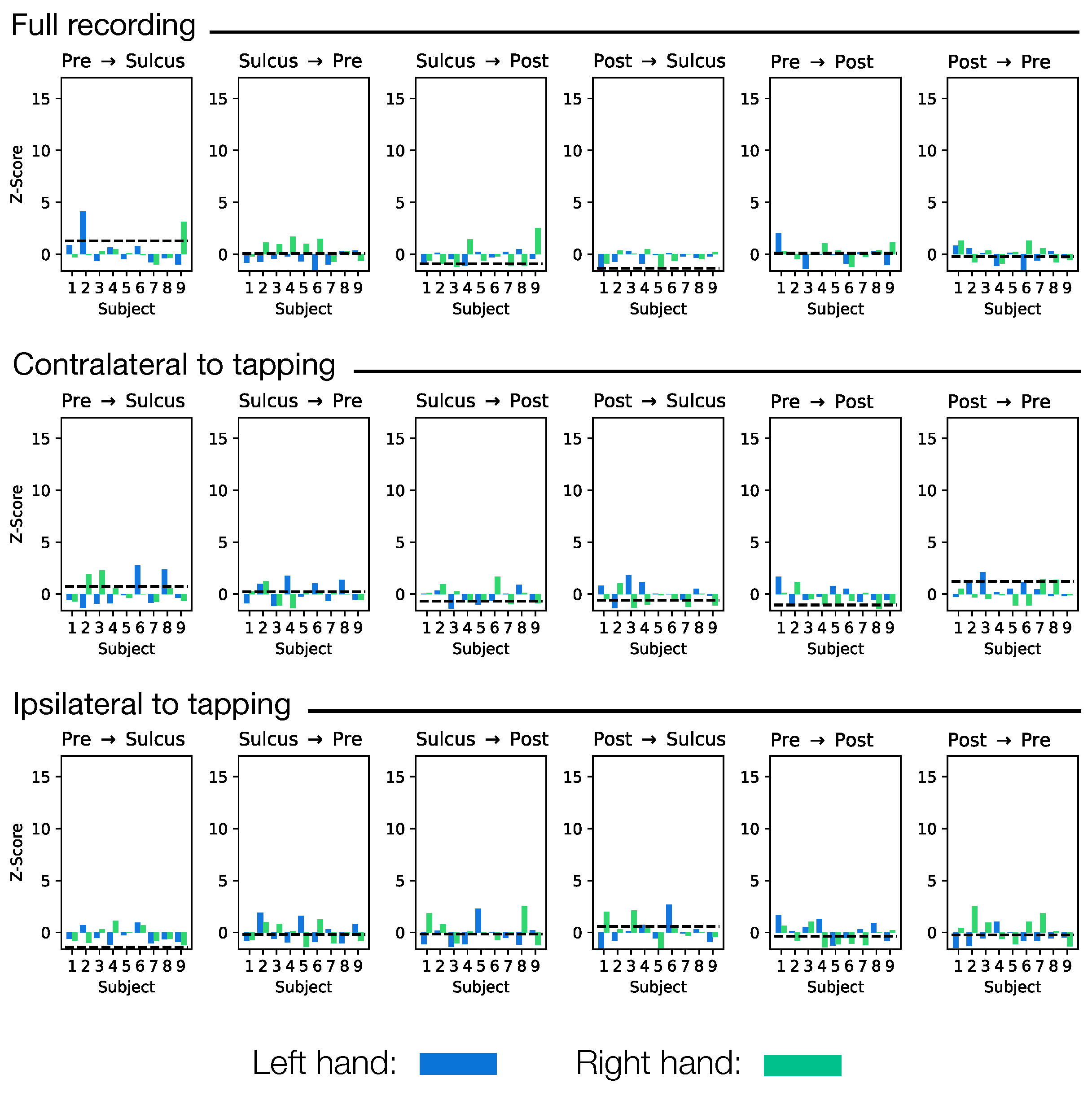
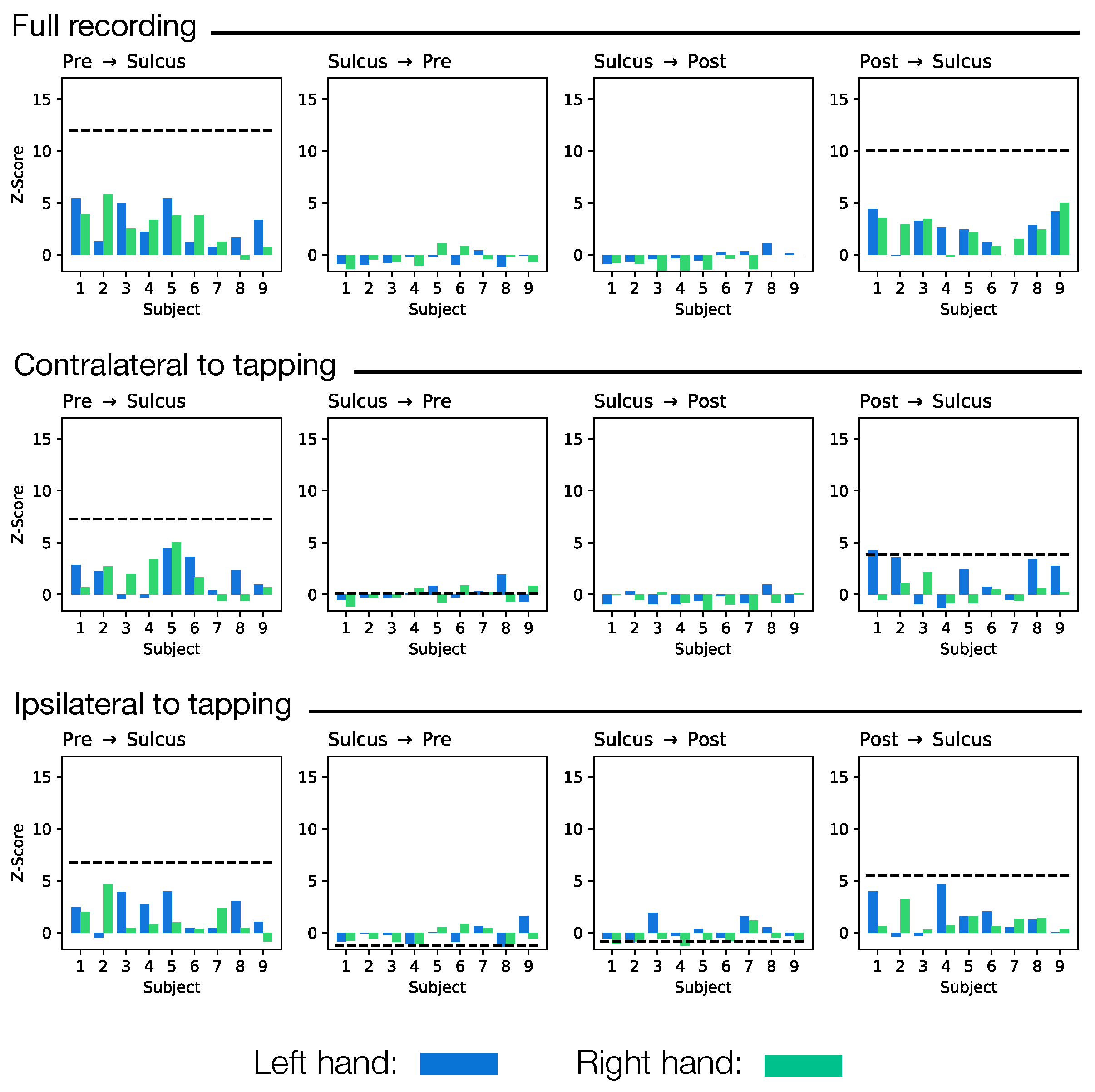
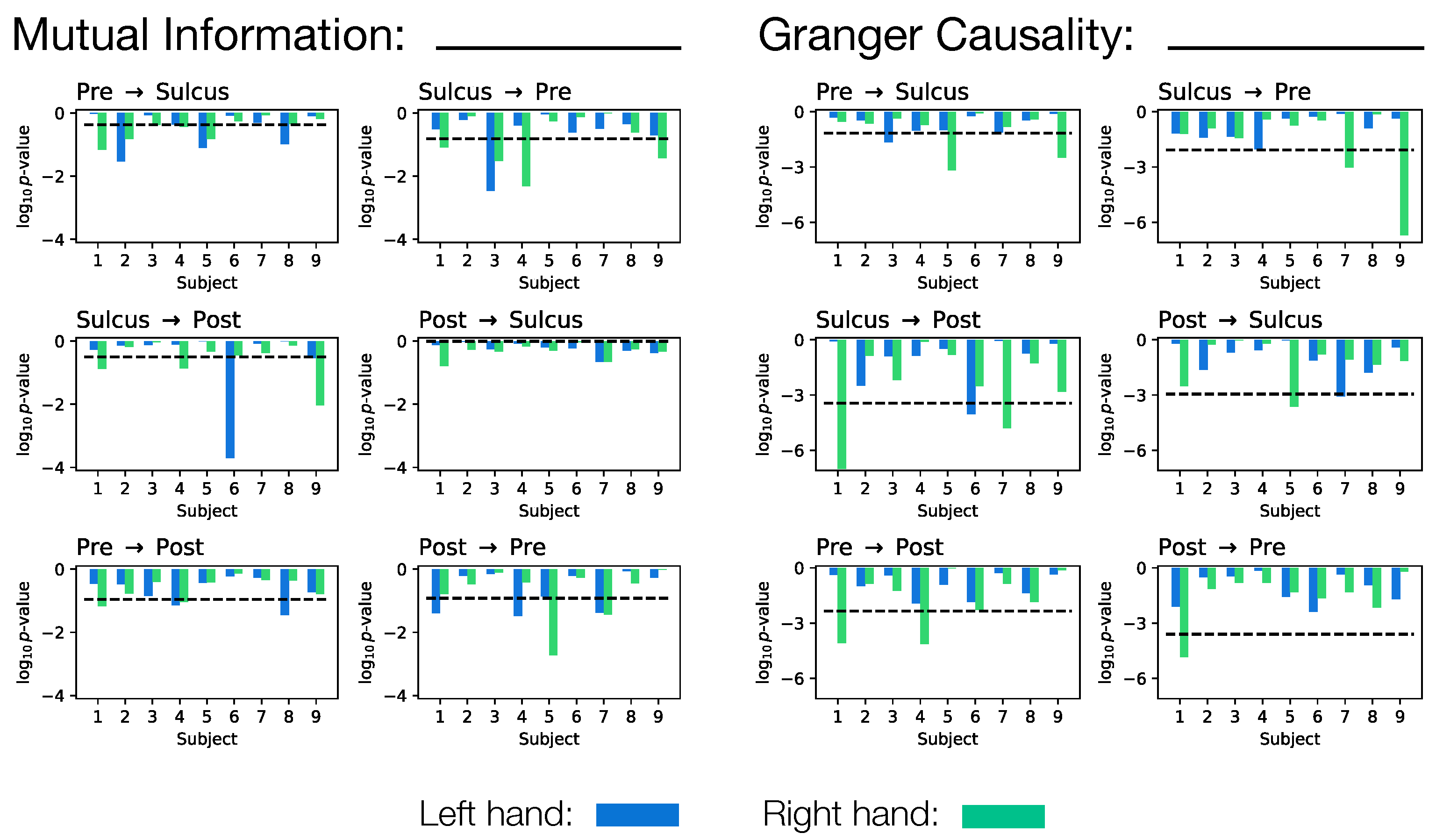
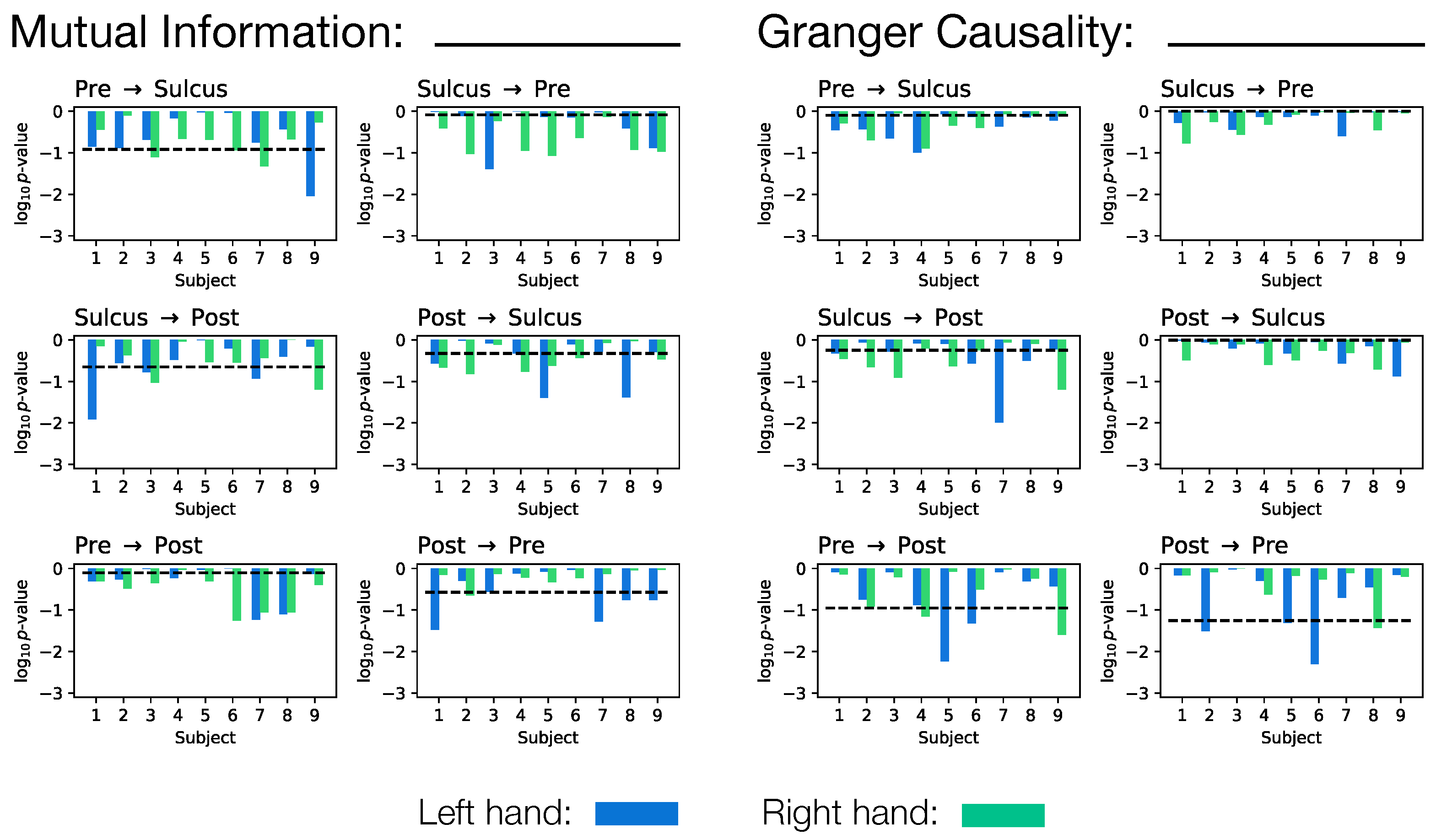
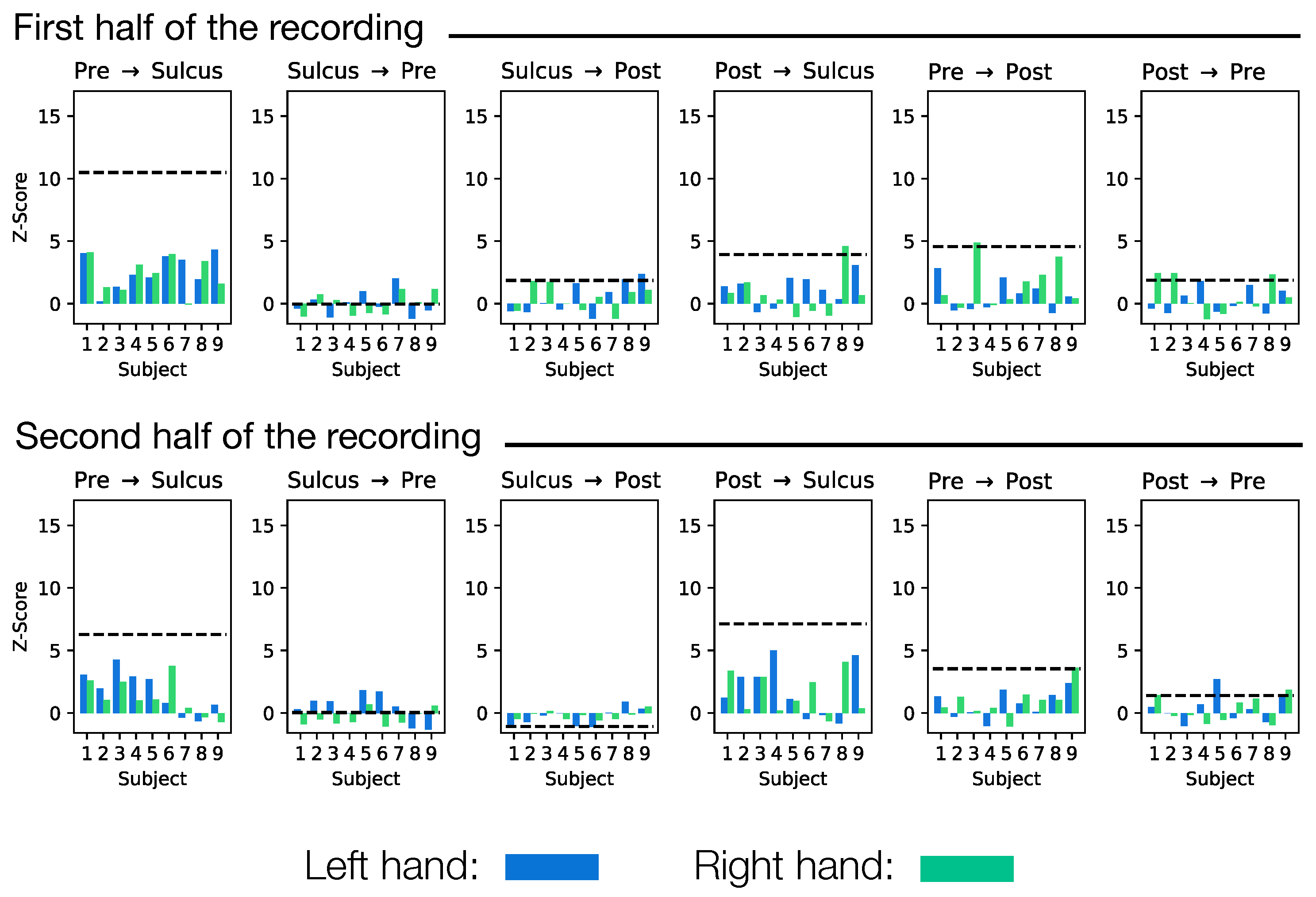
This paper is to our knowledge the first attempt to elucidate the propagation of functional information between M1 of the precentral gyrus; Area 3a of the fundus of the central sulcus; and SI Areas 3b, 1, and 2 of the postcentral gyrus, which should sustain the primary substrate for planning, learning, and plasticity of tapping movements. We approached this question using the Information Imbalance Gain (IIG) causality test, which assesses the information present in the activity of fMRI voxel series in one region, in terms of their capacity for predicting the future activity in a second one. Overall IIG found an intense propagation of information from the precentral and postcentral regions towards the sulcus within the corresponding hemispheres, both during the tapping task of the contralateral hand and during periods in which that hand was at rest but the ipsilateral hand was tapping. This pattern applied for both hands, although it was less pronounced for the non dominant one. Additionally, a weaker but statistically significant reciprocal flow of information was detected between the precentral and postcentral regions. In contrast, the Mutual Information algorithm completely failed to identify any statistically significant relationship between precentral, postcentral, and sulcus regions. Granger Causality produced results broadly similar to those of IIG for the tapping-only time series, although with a low statistical significance. This discrepancy is likely due to the limited number of time series used here, which, as discussed before, constrains the performance of MI and GC algorithms.
It is not to be assumed that the relationships found here between areas rely on direct cortico-cortical connections. The last track tracing study existing in monkey [
13] defined non-existing cortical connections between Area 3a in the sulcus towards or from Area 4 in the precentral region, and neither between Areas 3a and 3b in the postcentral region. However, it defined a strong connection between Areas 4 and 2 (and not between Areas 4 and 3b and 1), and between Areas 1 and 2 with 3a. Studies of effective connectivity in resting state [
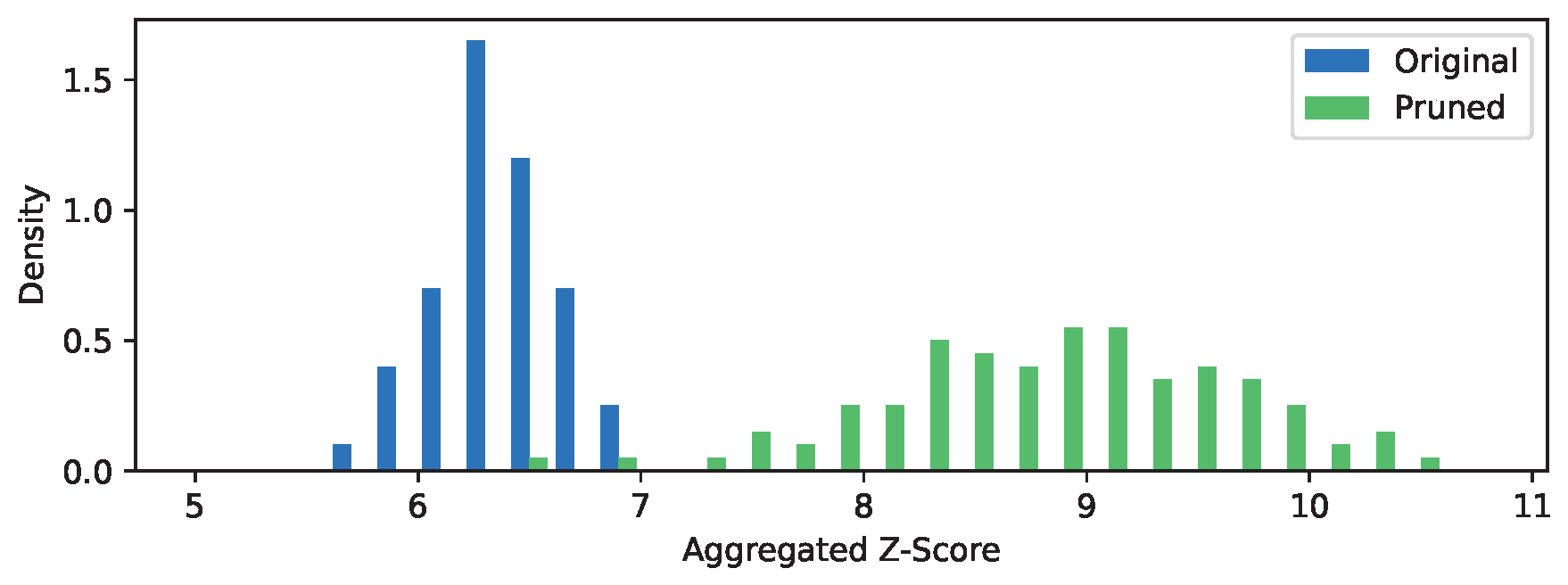
52] found strong effective values of functional connectivity between all areas of M1 and SI, specially between Areas 3a and 3b towards Areas 1 and 2. Interestingly, they did not find strong connectivity from area 4 to Area 3a either. What we have described contradicts both studies, in that we find propagation from precentral Area 4 to Area 3a in the fundus of the sulcus, but supports them in the propagation from other SI areas towards Area 3a. In the first set of experiments of our study, we included in the voxel series of the sulcus a small portion of underlying white matter-activated voxels just underneath the fundus gray matter. In that white matter region, the sulcus could be conveying arched U connecting fibers from the postcentral gyrus to Area 4 and vice versa, which could lead to BOLD fMRI activity interpreted as activity towards the sulcus. In a second set of experiments, we discarded those white matter fMRI voxels and included in the IIG algorithm only those activated voxels located in the grey matter of the sulcus. This has produced quite similar results in terms of the flow of information from precentral regions towards the sulcus, and significant but weaker propagation between postcentral regions and the sulcus. Our interpretation is that the precentral and postcentral regions are directing information towards the sulcus Area 3a and also between them, both during the ipsilateral and contralateral tasks. In general, IIG causality results must not directly be interpreted as a proof for structural connectivity. On the one hand, the IIG metric (and more generally, any functional metric) describes information flows, which can happen directly (i.e., supported by fibers), or indirectly across other regions. On the other hand, differentiating between these two alternatives is a challenging task due to the fact that real neuronal transmission between areas takes place much faster than the resolution of the fMRI recordings. As discussed in
Section 3.1 and
Appendix D, we cannot define whether the propagation of activity between pre- and postcentral regions is performed with direct connections or via sulcus, because of the temporal resolution of the time series. However, we can define that these pre- and postcentral gyri are exchanging information during the tapping tasks, and that the activity in the precentral and postcentral regions seems to be mediated by the sulcus, given their strong causality connection with this region. This raises the question of the role of Area 3a in the transmission during the task, since the causality connection in the other direction, i.e, sulcus towards pre- and postcentral gyri, is either very weak, or, as discussed previously, is so fast that is not seen by the algorithm.
Another interesting finding is the persistence of this flow of activity between the pre- and postcentral regions and the sulcus while the hemisphere is not directly involved in the task, but the task is being performed by the ipsilateral hand. This is coherent with the meta-analysis by Witt et al. [
73], which generated Activation Likelihood Estimate maps of the main effects of all finger tapping task variations, and found robust concordance in bilateral sensorimotor cortices while performing a right handed multifinger tapping task. A second explanation could rely on the imagery of the next expected movement of the resting hand. In relation to this, recent fMRI results [
39] have evidenced that the planning of the finger movement activates zones in Area 4 and in SI with peaks of activity that correlate those that are produced during real training. Also, Chen et al. [
63] have reported during motor imagery forward and backward effective Granger Causality connectivity between the supplementary motor area and the contralateral primary and secondary somatosensory cortex (SI), and the primary motor cortex (M1). Attentional effects have also been demonstrated for SI. Braun et al. demonstrated that the hand representation within the SI is not statically fixed but is dynamically modulated by top-down mechanisms to support task requirements, which concedes a greater capacity for modulation of the functional cortical organization [
91].
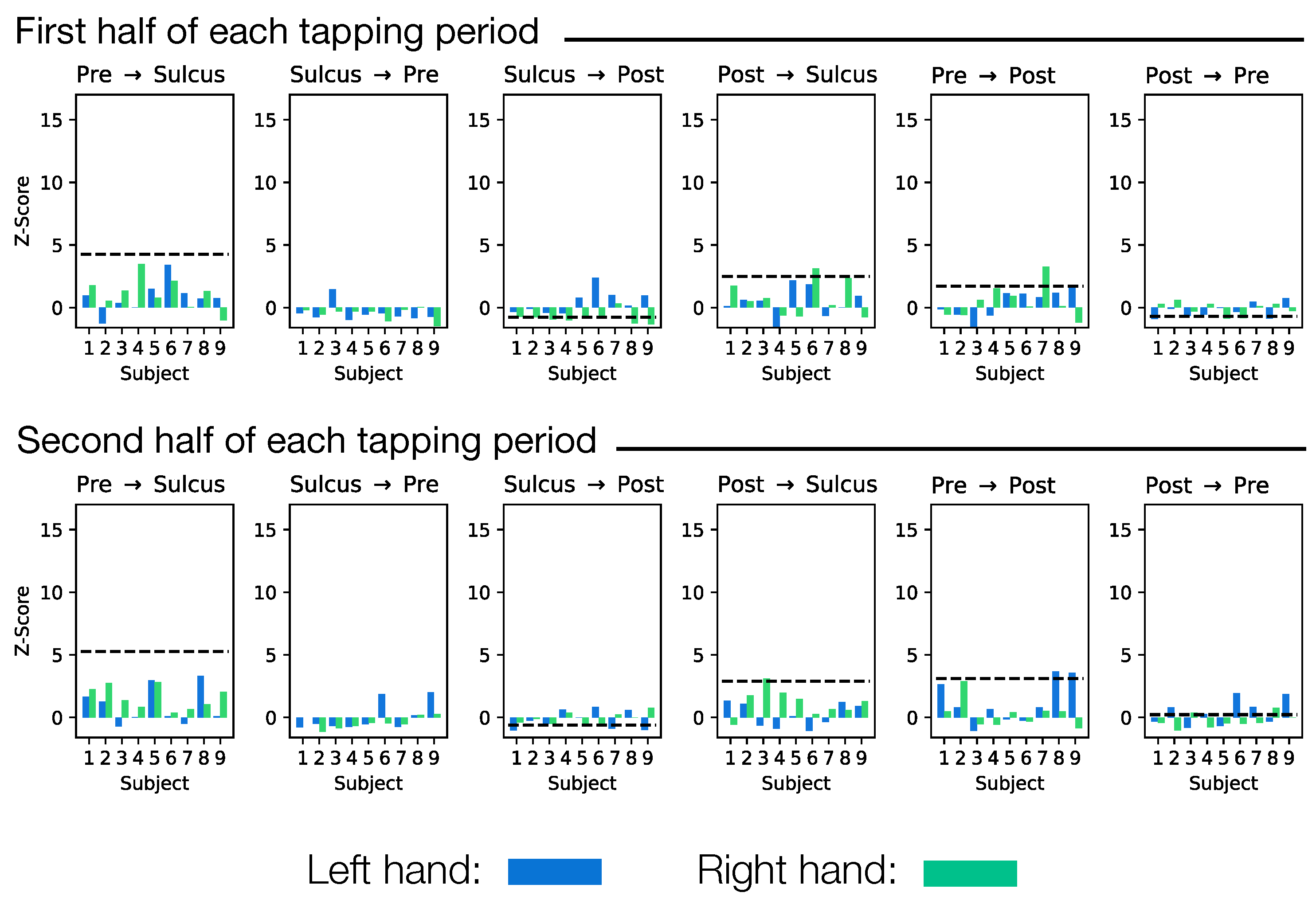
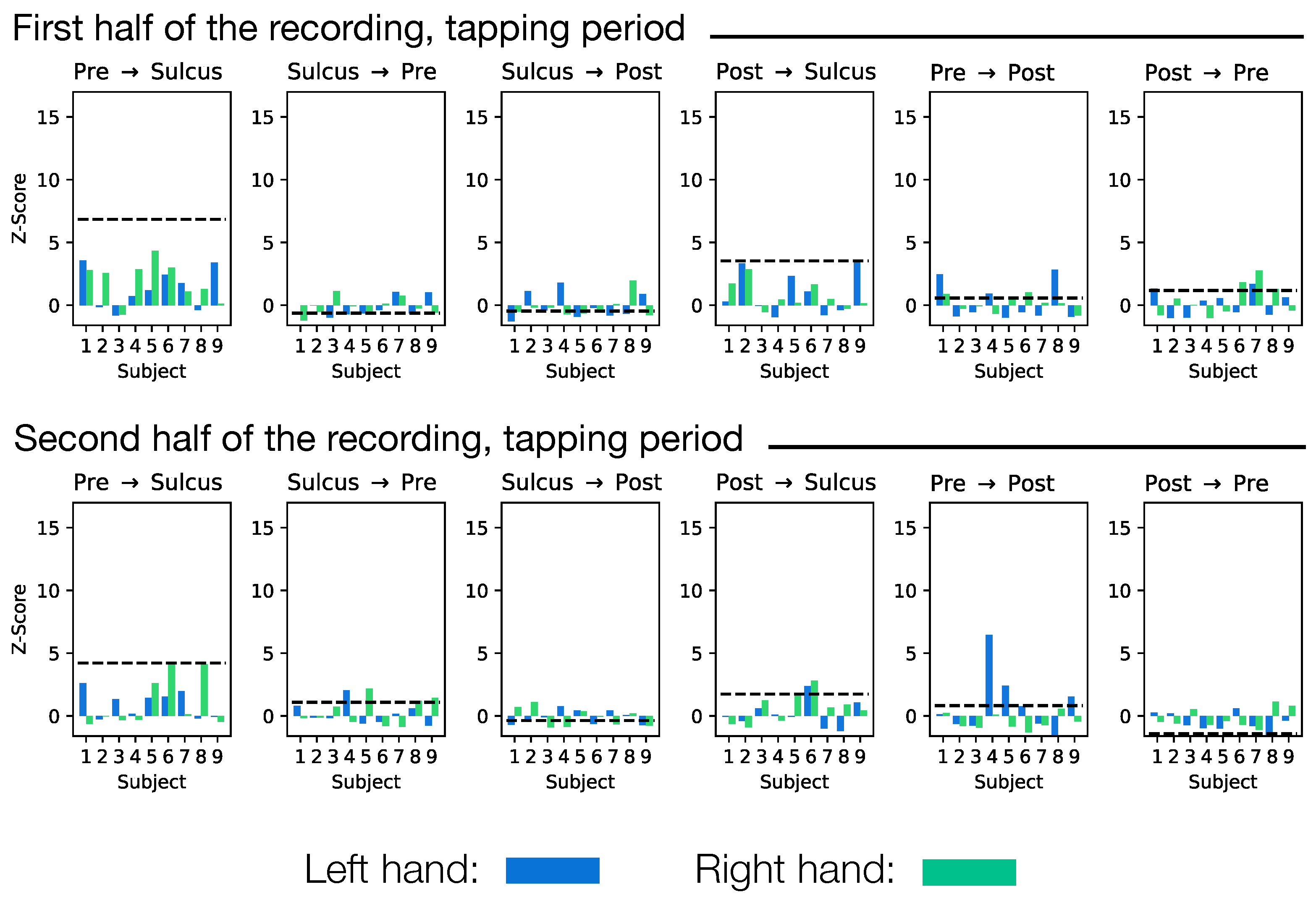
It is further worth highlighting the changes that occur during the whole time of task execution in terms of the flow of activation between regions. As described in
Section 3.3, the connection from the postcentral gyrus to the sulcus is strengthened during the recording session, but only during the periods of time in which the hemisphere is not directly involved in the tapping; the opposite happens during the tapping. This suggests that the postcentral gyrus progressively shares more information to the sulcus throughout the duration of the recording session, but also that the latter is more and more bypassed, in favor of a direct and fast connection postcentral → precentral, when the tapping is executed. In other words, while the expectation and planning of performing the tapping results in more information transmitted to the sulcus, the neural circuits learn to use a more direct route postcentral → precentral when the task is actually carried out.
These observations reinforce the idea that enhanced training on motor tasks has an effect on the level of activation observed in the primary sensorimotor cortex raised by functional neuroimaging studies [
92,
93,
94,
95]. Those works have demonstrated an initial decrease in primary sensorimotor cortical activation contralateral to the moving hand during motor skill acquisition, followed by an enlargement in activation in this same region during the course of motor training, which has been shown to be sustained for up to four weeks post-training. Motor skill acquisition has been suggested to occur in two discrete stages: the first being a fast learning, initial, within-session improvement phase, and the second being a slow learning phase, consisting of delayed, incremental gains in performance during continued practice [
93]. Those observations are based on measurements of quantitative activity. Our results go further and demonstrate changes in the direction of flow of information that are happening during the fast, within-session first stage of movement learning. This is consistent with the rising idea that the primary sensorimotor cortex is not only an executive locus for simple voluntary movements [
96], but instead participates in the processing of complex sequential tapping tasks [
33,
36,
97,
98,
99,
100,
101] and in the processing of bimanual movements [
102].
In macaque, Area 3a contains a complete representation of deep receptors of the contralateral body, with a topographic organization less precise as that of area 3b. Most individual body parts are represented in more than one cortical territory. The receptive fields for neurons are large, and the forelimb, hand, and digit representations have a large cortical magnification factor [
103]. Studies on cortical connections of electrophysiologically defined locations in Area 3a were described in the marmoset monkey [
104], reporting that Area 3a has much denser connections with motor and posterior parietal areas of the neocortex than with somatosensory areas. The forelimb representation in Area 3a has very broad, topographically mismatched connections with the forelimb representation in other fields and other body part representations (such as the face representation), while the foot representation has topographically matched connections mainly with the foot representation in other cortical areas. This suggested that, at least in primates, Area 3a appears to be involved in integrating somatic and vestibular inputs with the motor system, maintaining posture and forelimb position, and regulating velocity of limb movement. Finally, studies of plasticity in motor and somatosensory cortex of adult mammals using a variety of different manipulations [
105,
106,
107,
108,
109,
110,
111] demonstrate that the cortical zone of reorganization was greater in Area 3a than in Area 3b in the same animal, thus reflecting use-dependent processes for that individual. We cannot infer such representational changes in Area 3a of humans during learning, but the steady and increased flow of activity towards the region of the sulcus might be reflecting a supporting role for that kind of integration processes between M1 and SI. This role could be related to the fact that learning the movement requires the amplification of the somatotopic representations, including that necessary to combine movement of several fingers, which is a property that is present in Areas 4 and 3a. It is possible that Area 3a is then contributing to the maintenance of representational plasticity, as a sort of connection hub. Our results additionally indicate that, during the tapping task, rostral regions to the precentral sulcus are activated—see
Figure A1. According to Ruland et al. [
112], these regions likely correspond to areas 6d1, 6d2, and 6v3 of the premotor cortex, which have been functionally associated with arm and hand movements, and object and temporal prediction. Considering their associative and structural connectivity, it remains plausible that these areas constitute a higher-level hub relative to the somatomotor network described here. Although the analysis of functional connectivity between these premotor regions and M1 and SI was beyond the scope of the present study, it represents an interesting direction for future research.
As a final point, it is important to highlight some limitations of the present study: First of all, the sample size is limited, and a larger cohort would be desirable to minimize potential biases [
113,
114]. This limitation was partly compensated by the use of a Z-Score aggregation procedure, which enhances robustness by combining individual subject-level effects into a standardised metric, reducing variability and increasing sensitivity to true activations across participants. Still, future studies incorporating a larger sample would further strengthen the generalizability of our findings. Secondly, the age of participants ranged from 25 to 60 years, with eight individuals younger than 47 and only one aged 60. This heterogeneity might have introduced some variability related to age-dependent plasticity or cerebral vascularization. We, nevertheless, made a special effort to recruit volunteers with highly homogeneous cognitive and sociocultural profiles, as all the participants were medical doctors working at the same hospital. This homogeneity helps minimising confounding factors related to education, professional expertise, and cultural background, therefore reducing potential biases in task performance and neural activation patterns.



 ,
,