Article

Meta-Analysis of Exercise Effects on Cognition in Persons with Parkinson’s Disease

by
Syed O. Ahmad
1,2,*,
Dana Stiles
3,
Kaylee Brown
1,
Leah Dillon
1 and
Eliza Shroba
1
1
Department of Occupational Science and Occupational Therapy, Neuroscience Core Faculty, Saint Louis University, St. Louis, MO 63103, USA
2
Virginia Gore NeuroOccupation Lab, Inc., St. Louis, MO 63017, USA
3
Office of Institutional Research, Saint Louis University, St. Louis, MO 63103, USA
*
Author to whom correspondence should be addressed.
NeuroSci 2025, 6(2), 46; https://doi.org/10.3390/neurosci6020046

Submission received: 20 February 2025 / Revised: 1 May 2025 / Accepted: 6 May 2025 / Published: 23 May 2025
(This article belongs to the Special Issue Parkinson's Disease Research: Current Insights and Future Directions)

Abstract

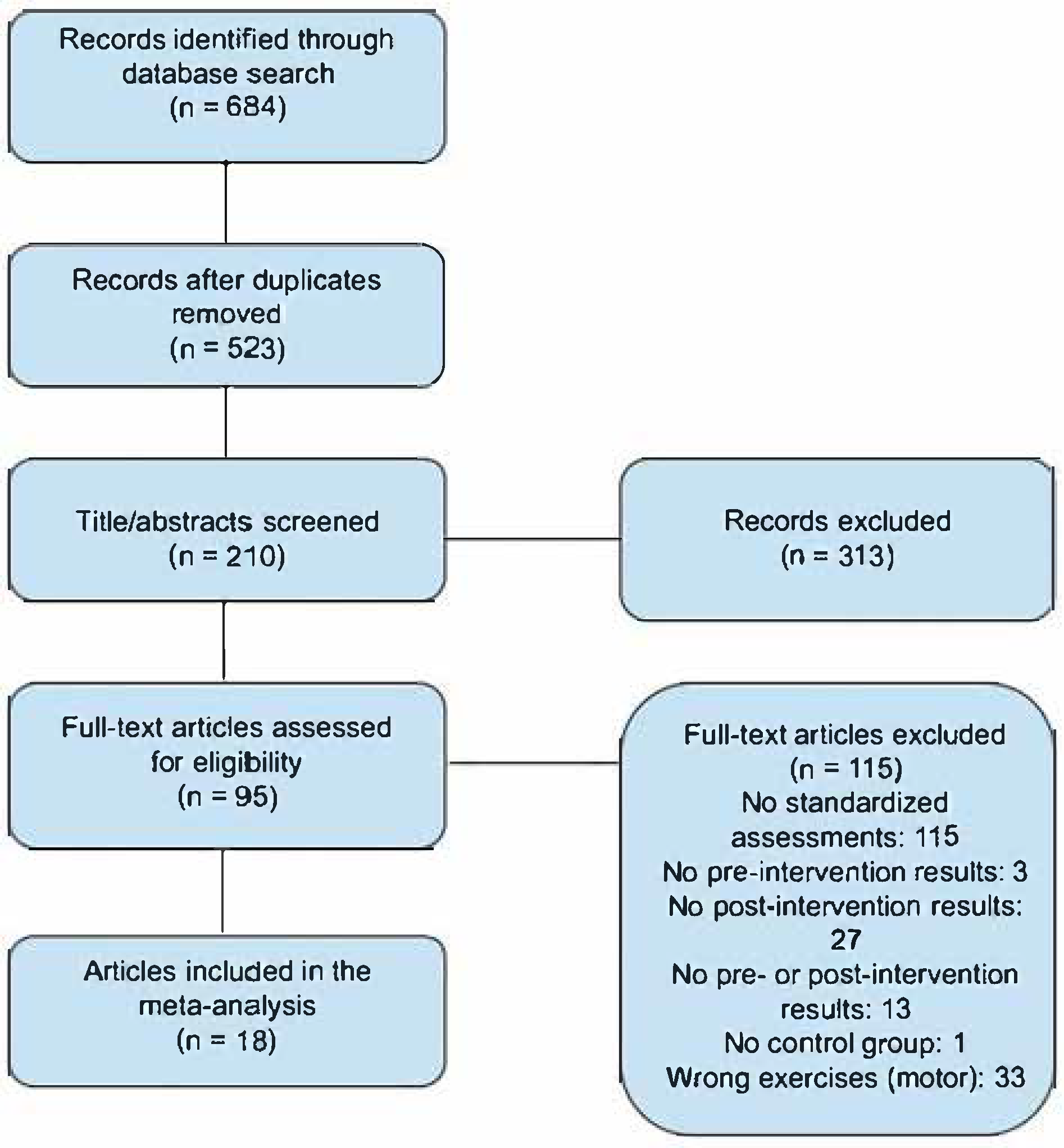
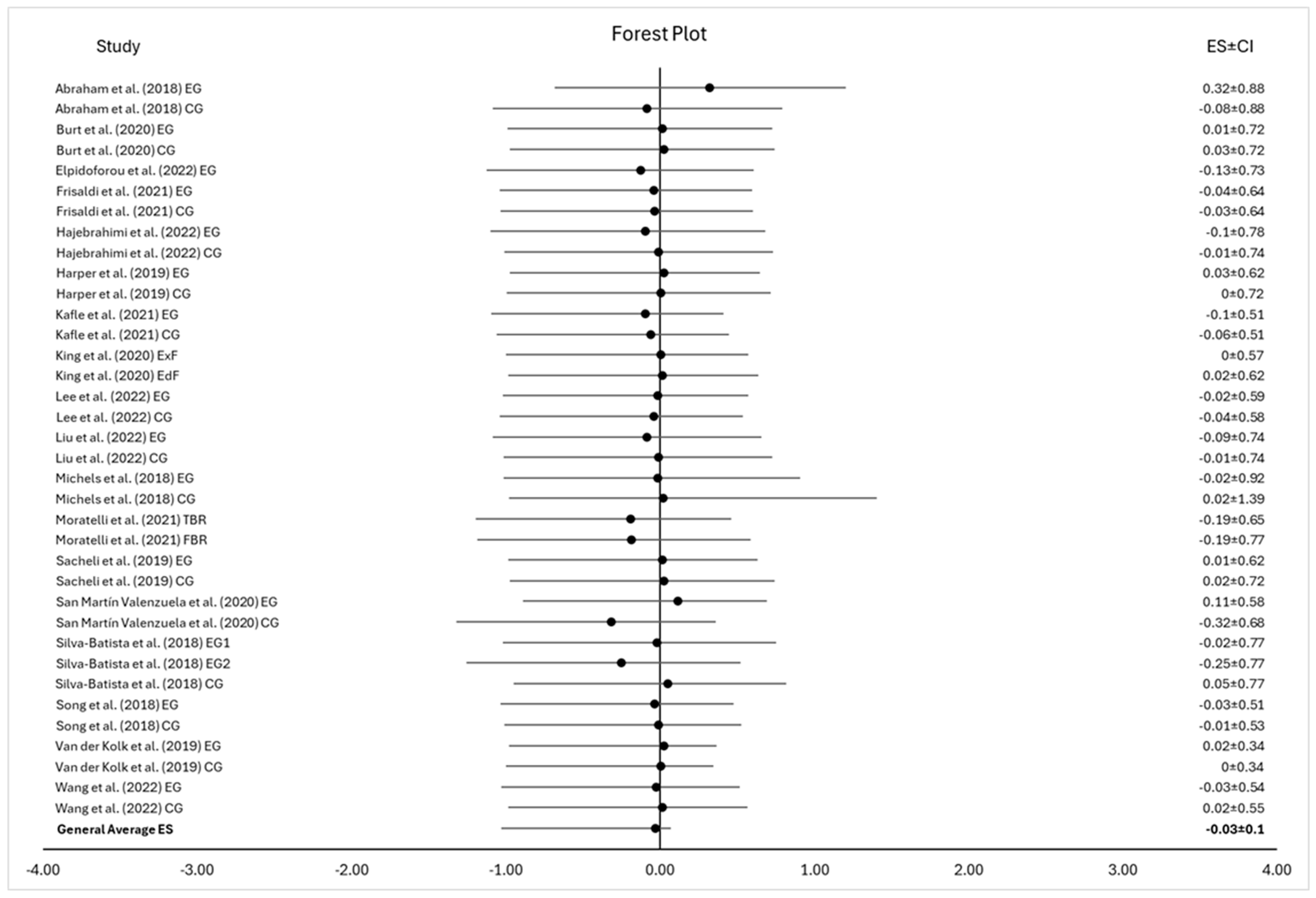
Background: Parkinson’s disease (PD) is a debilitating neurodegenerative disorder affecting millions of people worldwide. PD results in motor and cognitive dysfunction. While there is no proven cure for PD, it is widely agreed that aerobic exercises and occupations can help slow the progression of the disease and keep some motor-related symptoms from developing. The most effective forms of exercise to slow the progression of motor symptoms in Parkinson’s disease have also been studied. Research Question: This research article aims to compare the differences in outcomes of exercise on cognitive outcomes in Parkinson’s Disease, as evaluated by meta-analysis. Methods: Key terms were Parkinson’s Disease and exercise terms. These search terms were then entered to electronic databases—Ovid MEDLINE, SCOPUS, and CINAHL—from March 2018 to May 2023. An ancestral bibliography was also performed. Results: Two reviewers screened the title and abstract records (n = 528) found in the initial search. Our review identified 18 studies which met inclusion criteria for meta-analysis. The meta-analysis found an effect of exercise on cognition of patients with PD (d = −0.03) which was not significant (CI95% of −0.13 < µ < 0.08; p > 0.05, as the CI includes zero). Additionally, the homogeneity analysis was not significant (Q (17) = 2.83; p > 0.05).
Keywords: occupational therapy; executive functioning; functional cognition; Parkinson’s disease; Alzheimer’s disease; meta-analysis; synthesis research occupational therapy; executive functioning; functional cognition; Parkinson’s disease; Alzheimer’s disease; meta-analysis; synthesis research