Article

Ball Milling Modification of Titanite Powders for Enhancing the Thermal Stability of Polypropylene Separators for Lithium-Ion Batteries

by
Mirza Mariela Ruiz-Ramirez
1,
Balter Trujillo-Navarrete
1,*,
Rosa María Félix-Navarro
1,
Jassiel Rolando Rodríguez-Barreras
2,
Luis Pérez-Cabrera
3,
Arturo Zizumbo-López
1 and
Juan José Hinostroza-Mojarro
1
1
Centro de Graduados e Investigación en Química, Instituto Tecnológico de Tijuana, Tecnológico Nacional de México, Blvd. Alberto Limón Padilla s/n. Col. Otay Tecnológico, Tijuana 22510, Baja California, Mexico
2
Departamento de Electrónica y Telecomunicaciones, Centro de Investigación Científica y de Educación Superior de Ensenada (CISECE), Carr. Tijuana-Ensenada 3918, Zona Playitas, Ensenada 22860, Baja California, Mexico
3
Centro de Nanociencias y Nanotecnología, Universidad Nacional Autónoma de México (UNAM), Carr. Tijuana-Ensenada, Ensenada 22860, Baja California, Mexico
*
Author to whom correspondence should be addressed.
Sustain. Chem. 2026, 7(1), 14; https://doi.org/10.3390/suschem7010014
Submission received: 18 January 2026 / Revised: 19 February 2026 / Accepted: 24 February 2026 / Published: 3 March 2026

Abstract

This study presents the synthesis and ball-milling modification of titanite (CaTiSiO5) powders to enhance the thermal stability and performance of polypropylene (PP) separators for lithium-ion batteries (LIBs). CaTiSiO5 was synthesized using a ceramic route, and the experimental design varied the milling cycles and sphere sizes. Characterization techniques, including scanning electron microscopy, X-ray diffraction, Fourier-transform infra-red spectroscopy, surface area analysis, thermal analysis, and electrochemical tests, confirmed the production of high-purity monoclinic CaTiSiO5. Ball milling effectively reduced the particle and crystallite sizes while increasing the specific surface area, total pore volume, double-layer capacitance, and ionic conductivity, while also reducing the cell resistance. Coating PP separators with the modified CaTiSiO5 significantly improved their thermal stability and enhanced their electrochemical properties, including the electron transfer rate and Coulombic efficiency. These findings demonstrate the potential of ball-milled CaTiSiO5 as a valuable material for developing safer and more efficient LIBs.

Graphical Abstract

1. Introduction

LIBs are integral to modern technology and are widely valued for their high working voltage, compact size, low weight, high energy density, low discharge rate, and extended cycle life. A crucial component in LIBs is the separator, which prevents direct physical contact between the anode and cathode while facilitating the transfer of ions during the charge and discharge cycles [1,2]. However, commercial separators, which are primarily composed of PP, exhibit poor compatibility with liquid electrolytes and low thermal stability at elevated temperatures [3,4,5]. This thermal instability can lead to internal short-circuiting, overheating, and ultimately, battery failure, including thermal runaway [4,6,7]. Consequently, enhancing the thermal stability of LIB separators is important to improve battery safety and performance [8,9,10].
Conventional polyolefin membranes (e.g., PE/PP) exhibit significant thermal limitations, undergoing substantial shrinkage and melting at elevated temperatures. This can lead to internal short circuits and thermal runaway [11,12]. Although ceramic-coated polyolefins offer an improvement, showing minimal shrinkage at 150 °C and enhanced operational stability up to ≈170 °C [13], they still rely on a low-melting polyolefin core, limiting their ultimate safety margin [14]. In contrast, high-temperature polymers, such as polyimide (PI) and polyacrylonitrile (PAN), along with inorganic or fiber-based composites (e.g., PTFE nanofiber with Al2O3 and GO-based membranes), demonstrate far superior performance, with dimensional stability maintained at 200–300 °C, no low-temperature melting, and high flame retardancy [15,16,17,18]. These advanced separators also support higher ionic conductivities, up to ≈ 2.8 mS·cm−1, facilitating better rate capability and cycle life, which is critical for applications involving fast charging, high power, or extreme environments [15,17,18,19]. Therefore, moving beyond polyolefin-based systems to engineered polymers and inorganic separators is essential for enhancing the thermal safety and electrochemical performance of next-generation lithium-ion batteries. Compared to alternative battery systems such as aqueous zinc-air batteries, which offer advantages in cost and safety but suffer from lower energy density and limited cycle life [20], LIBs remain the dominant choice for portable electronics and electric vehicles due to their superior energy density and mature manufacturing infrastructure.
CaTiSiO5, also known as sphene, is a nesosilicate mineral recognized for its inherent thermal stability and promising applications in energy storage [21,22]. Its properties make it a suitable candidate for inclusion in LIB components, particularly in separators. Although various synthesis methods for CaTiSiO5 are well documented [23,24,25,26], and ceramic particle coatings have been explored to improve the thermal stability of separators, a significant research gap exists regarding the specific impact of mechanical modification techniques, such as ball milling, on CaTiSiO5 for this application [27,28,29]. Although ball milling is an economical and efficient method for producing nanostructured materials and reducing the particle size, its comprehensive effect on the physicochemical and electrochemical properties of CaTiSiO5 and how these changes translate into improved thermal stability and overall performance when integrated into PP separators for LIBs has not been thoroughly investigated yet. This study aims to address this gap by systematically exploring the ball-milling modification of CaTiSiO5 powders and evaluating their efficacy as a functional coating to enhance the thermal stability and efficiency of PP separators (PPSs) in LIBs.

2. Materials and Methods

To investigate the potential of ball-milled CaTiSiO5 in enhancing the thermal stability of PPS, we systematically approached the synthesis, modification, and characterization as follows:

2.1. Materials

All reagents were used as received without further purification: silicon oxide (SiO2, 99.9%), titanium dioxide (TiO2 anatase phase, 99.8%), ethanol (CH3CH2OH, 95%), methanol (CH3OH, 99%), sodium sulfate (Na2SO4, 98%), hydrochloric acid (HCl, 37%), Nafion® 117 solution (5%), N-methyl-2-pyrrolidone (NMP, 98%), and lithium hexafluorophosphate (LiPF6) solution (in ethylene carbonate and diethyl carbonate 50/50 v/v), which were supplied by Sigma-Aldrich (St. Louis, MO, USA). In addition, calcium carbonate (CaCO3, 99%) and potassium ferricyanide (K3Fe(CN)6, 100%) were supplied by Productos Químicos Monterrey (St. Louis, MO, USA) and J. T. BakerTM (Ciudad de México, Mexico), respectively. Polyvinylidene fluoride (PVDF, Kynar HSV 900), polypropylene separators (Celgard® 2500 membrane, 25.0 µm thickness, Celgard, LLC, Charlotte, NC, USA), lithium iron phosphate (LiFePO4, 99.9%), lithium foil (0.25 mm thickness, 99.9%), and structured carbon black powder (Super P® Li, Imerys, Brussels, Belgium) were obtained from Arkema (Colombe, France), MSE Supplies (Tucson, AZ, USA), and TIMCAL (Bodio, Switzerland), respectively. High-purity N2 (g) was obtained from Grupo INFRA® (Naucalpan de Juárez, Estado de México, Mexico).

2.2. CaTiSiO5 Synthesis and Ball Milling

CaTiSiO5 was synthesized via a traditional ceramic route. Stoichiometric amounts of SiO2, CaCO3, and TiO2 (0.7:1.25:1 w/w) were dispersed in CH3CH2OH at 25.0 °C under constant magnetic stirring for 0.25 h to achieve a homogeneous mixture, noting that ethanol acts as a dispersing medium rather than a solvent due to the limited solubility of the oxides. The mixture was then dried at 80.0 °C for 24 h in a convection oven. The dried material was ground, transferred to a crucible, and calcined in a muffle furnace at 1300 °C for 4 h. The synthesized CaTiSiO5 was then ball-milled using a planetary ball mill with ZrO2 spheres. An experimental design was employed to investigate the effect of two factors on crystallite size reduction: the number of half-hour cycles (1–3 cycles) and the size of the Zr spheres (i.e., 8, 10, and 11.5 mm), with a ball-to-powder ratio (BPR) of 10:1, and milling at 1200 rpm in triplicate to ensure statistical reliability. We labeled the CaTiSiO5 samples as unmilled (S0) and milled (from S1 to S5). The specific milling parameters for each sample are summarized in Table S1 (Supplementary Materials).

2.3. Characterization

2.3.1. Physicochemical Characterization

Several techniques were used to characterize the CaTiSiO5 powders. The morphology was characterized using scanning electron microscopy (SEM, Tescan®, Vega, Brno, Czech Republic) in the high-resolution scan mode at 15 kV. The crystalline phases and crystallite sizes (DV) were analyzed by X-ray diffraction (XRD, Bruker®, D8 Advance da Vinci, Bruker AXS GmbH, Karlsruhe, Germany) using a Bragg-Brentano optical configuration with Cu Kα radiation (λ = 1.5406 Å). The instrumental broadening was corrected using a silicon standard. The peak intensities were collected from 10 to 90 of 2θ (°), with a step size of 0.01°. The composition and active modes were identified using Fourier-transform infrared spectroscopy (FTIR, Thermo Scientific Nicolet 6700 FT-IR spectrometer, Madison, WI, USA) in the range of 1400 to 400 cm−1. The specific Surface Area (SSA), pore size (dP), and total pore volume (VP) were determined using a surface analyzer (Micromeritics® TriStar™ II 3020, Micromeritics Instrument Corporation, Norcross, GA, USA) with high-purity N2 at 77 K by applying Brunauer-Emmett–Teller (BET) theory.

2.3.2. Electrochemical Characterization

Electrochemical experiments were conducted using a potentiostat/galvanostat (Biologic VMP-300, Bio-Logic Science Instruments, Seyssinet-Pariset, France) with a three-electrode cell configuration: vitreous carbon (0.07 cm2 active area) modified with a catalytic ink of CaTiSiO5 powder dispersed in a Nafion®/methanol solution (0.009:1 v/v) as the working electrode (WE), a platinum spiral as the counter electrode, and a saturated calomel electrode (SCE) or Ag/AgCl (3.0 M KCl) as the reference electrode. The electrochemical behavior was investigated using cyclic voltammetry (CV) in 20 mM K3Fe(CN)6 in 0.1 M HCl, with a potential window from −0.50 to 1.10 V vs. SCE at a scan rate of 100 mVs−1. In addition, the double-layer capacitance was studied in 1.0 M Na2SO4, with a potential window from −0.2 to 0.6 V vs. Ag/AgCl, varying the scan rate from 1 to 100 mVs−1.

2.4. Lithium-Ion Battery Evaluation

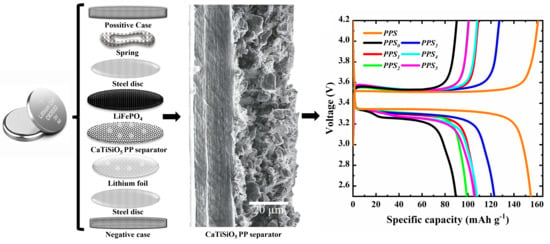
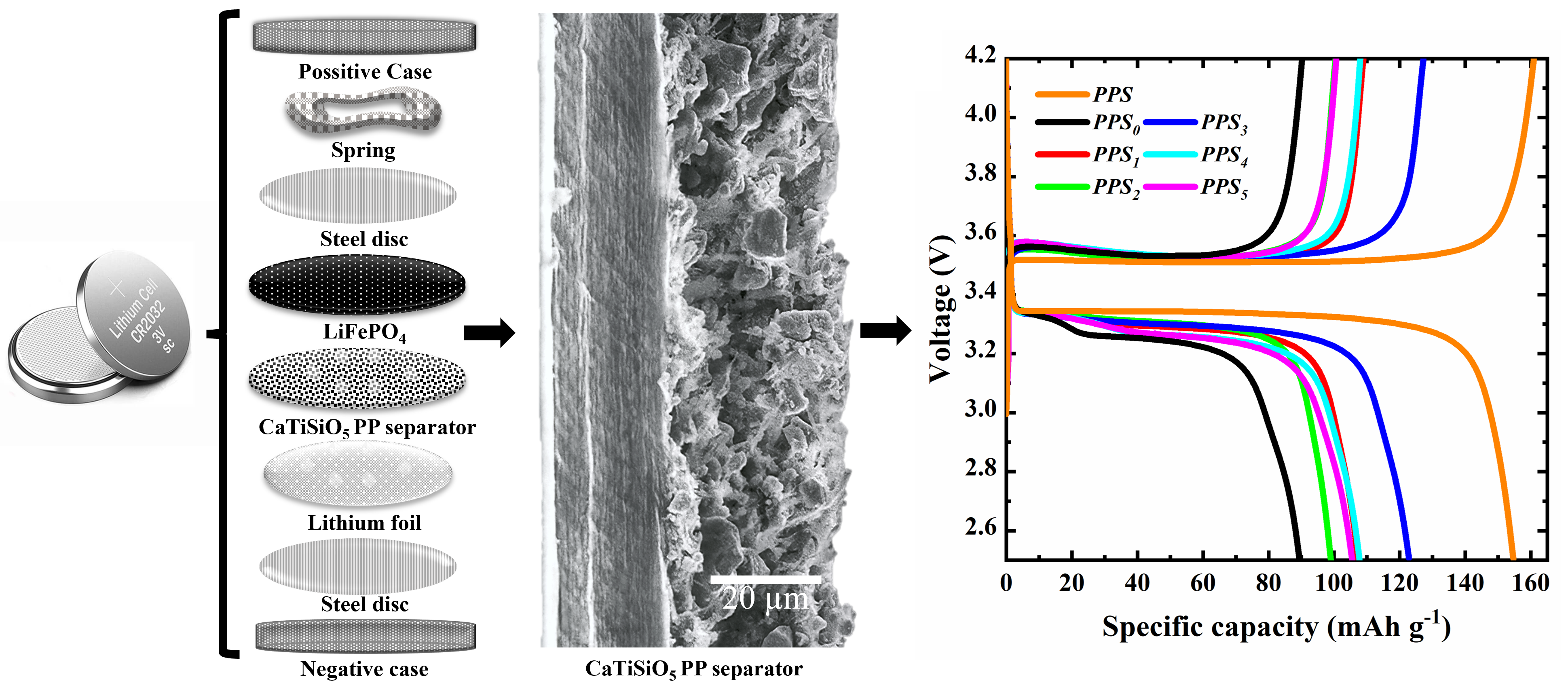
All synthesized CaTiSiO5 powders for each treatment were evaluated as modified PP separators for CR 2032 lithium-ion button cell batteries. The milled materials were mixed with a PVDF binder and NMP (1:4:1 w/w/w) to form a coating ink, which was deposited on the PP separators using blade coating, resulting in a 15 µm thick layer. Lithium foil served as the anode, and a blend of LiFePO4, Super P® Li, and PVDF binder (8:1:1 w/w/w) was used as the cathode. Finally, the half-cells were assembled in an argon-filled glove box (O2 and H2O < 0.5 PPM).
The thermal behavior was assessed using thermogravimetric analysis (TGA) with non-isothermal measurements from 15 to 600 °C, using an analyzer (TA Instrument® Q500, Waters Corporation, New Castle, DE, USA) with N2 as the carrier gas (40 mL/min) and a heating rate of 20 °C min−1. Differential scanning calorimetry (DSC) analysis was performed from 0 to 190 °C with a step of 5 °C min−1 under Ar conditions using an analyzer (TA Instruments, Q2000, Waters Corporation, New Castle, DE, USA). Samples (~4 mg) were deposited on an aluminum sample holder and sealed hermetically. The crystallinity (xc) was calculated using the equation: xc = (ΔHm/(1 − φHm0)·100, where ΔHm is the nanocomposite melting enthalpy, φ is the weight percentage of the nanocomposite, and ΔHm0 is the melting enthalpy of crystalline PP (204 J g−1) [30,31]. Here, xc represents the degree of crystallinity of the composite separator. Thermal shrinkage was tested by placing separators between the glass and a heating plate at temperatures ranging from 25 °C to 300 °C. Dimensional changes were measured using the following equation [32]: Thermal shrinkage (%) = (AiAf)/Ai × 100, where Ai and Af are the initial and final areas, respectively.
The contact angle was determined using the sessile drop method with H2O as the testing liquid to assess changes in surface wettability. Additional electrolyte uptake tests were performed using 1 M LiPF6 in EC:DEC (1:1 v/v) to evaluate wettability under battery-relevant conditions [33]. Electrochemical impedance spectroscopy (EIS) was used to measure the resistance over a frequency range of 0.01 Hz to 1.0 MHz, with an amplitude of 100 mV. The ionic conductivity (σ) was calculated using the following equation: σ = 1/Rb·A, where l is the separator thickness, Rb is the material resistance, and A is the electrode area [34]. Galvanostatic charge–discharge cycling was performed using a battery testing system (Biologic BCS-805 battery cycler, Bio-Logic Science Instruments, Seyssinet-Pariset, France) in the voltage range from 4.2 to 2.5 V.

3. Results

3.1. Physicochemical Parameters

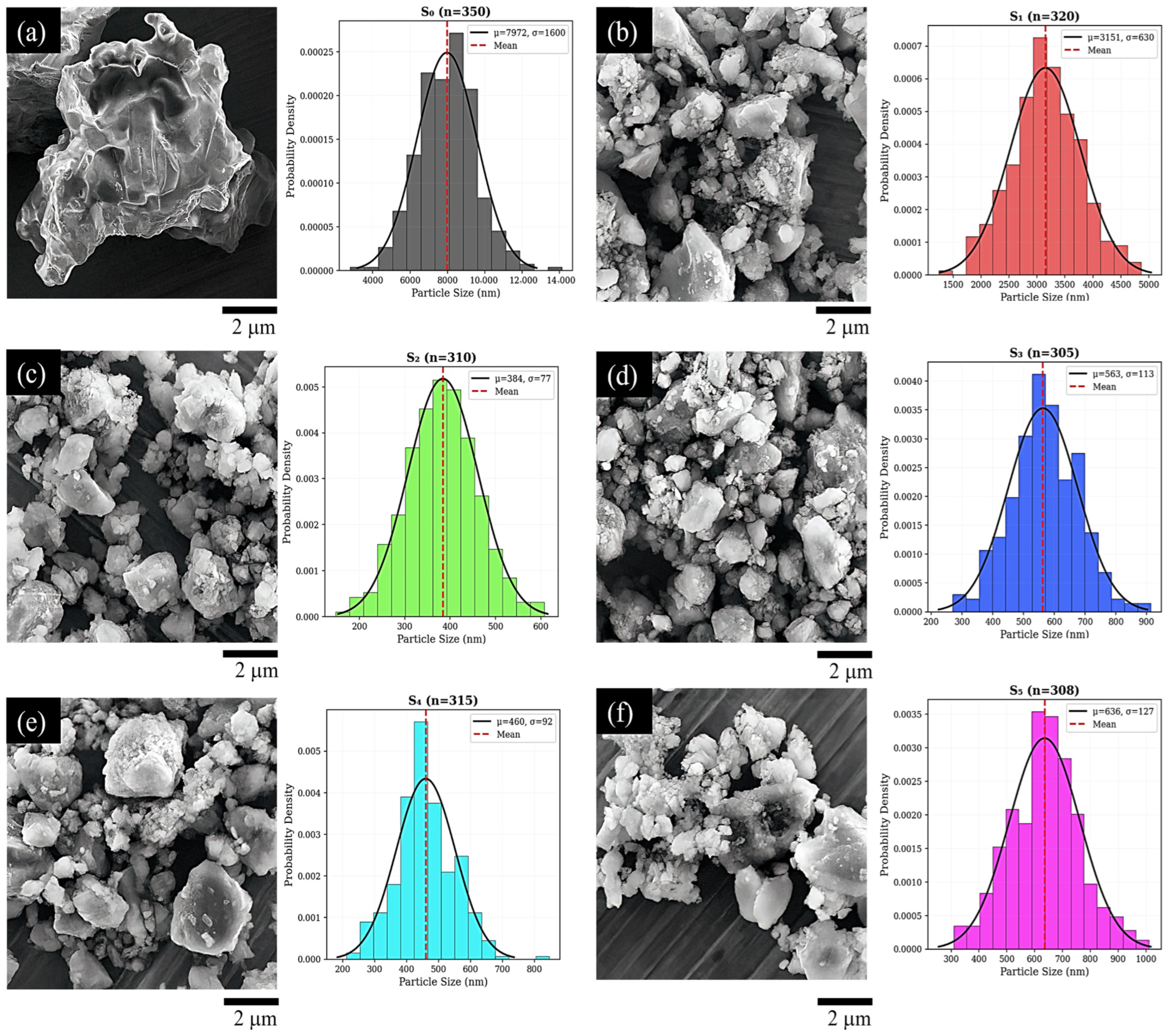
Table 1 lists the physicochemical parameters of the analyzed CaTiSiO5 powders. Figure 1 shows the particle micrographs, where S0 exhibited irregular, strongly sintered agglomerates with an average particle diameter (DP) of 7.97 ± 0.16 µm (n > 300 particles). Ball milling effectively fragmented these agglomerates, reducing DP to below 1.0 µm for most milled samples (Figure 1b–f). However, prolonged milling (S3) led to the formation of aggregates, indicating an optimum milling time (Figure 1d), consistent with behavior reported in previous ball-milling studies [29]. The corresponding particle-size distributions, obtained by digital image processing, evolved from a broad, multimodal profile in S0 to narrower, sub-micrometer-centered distributions with increasing milling time, with a slight reversal in S3 due to reaggregation. A detailed statistical analysis of these distributions—including normalized histograms, cumulative functions, and box plots—is provided in Figure S1 (Supplementary Material). This reduction in particle size was associated with increased surface area and improved electrochemical properties, as discussed below.
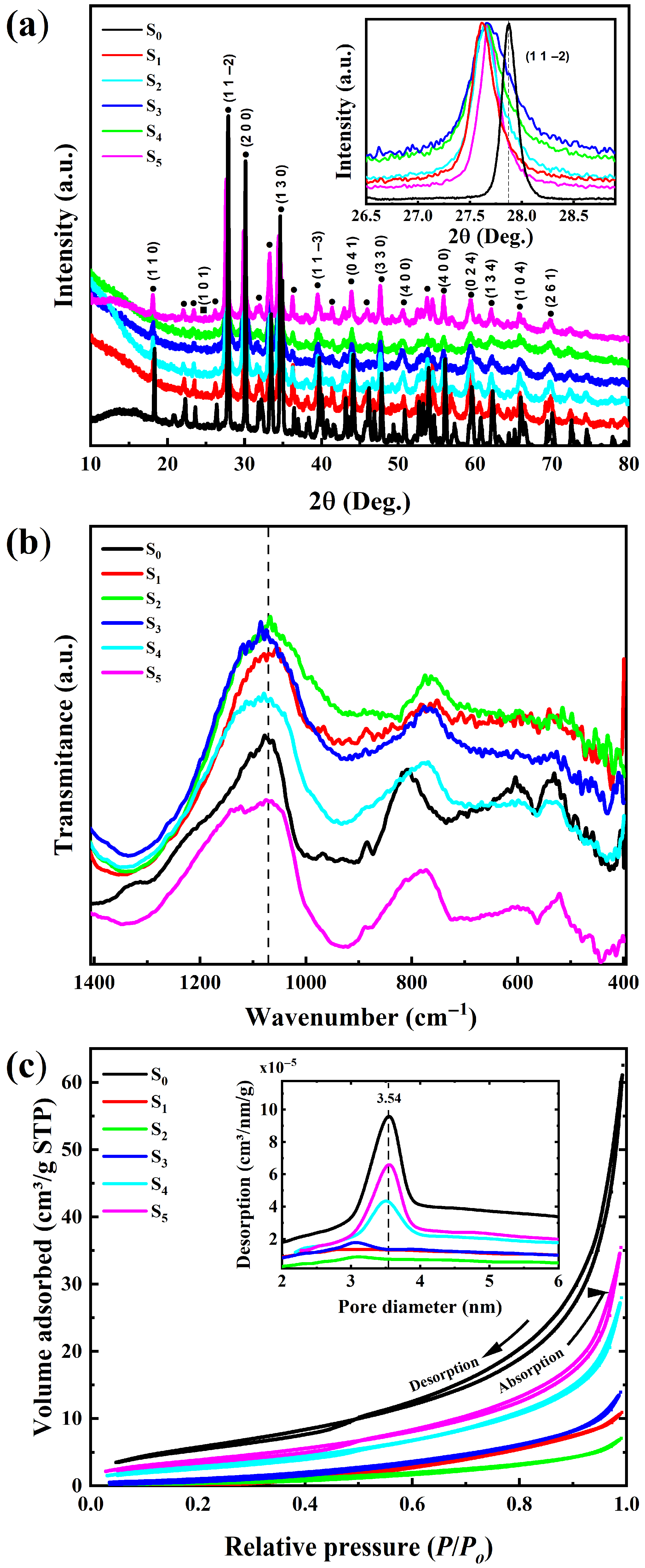
Figure 2a shows the XRD patterns, where the indexation confirmed the presence of monoclinic CaTiSiO5 (space group C2/c, ICSD159342) with only traces of anatase-phase TiO2 (space group I41/amd, JCPDS 00-21-1272), in contrast to the reported CaTiSiO5 syntheses with SiO2 and CaTiO3 traces [35,36,37]. The inset in Figure 2a shows the normalized highest-intensity peak (1 1 −2), which was used to calculate the DV values using the Scherrer equation [38]. The ball milling process significantly decreased DV by up to 50%, identifying two cycles and 10 mm of Zr spheres as the optimal values (ANOVA, α = 0.05, p ≤ 0.05, Tukey’s range test). Figure 2b shows the FTIR spectra, which display the characteristic bands of CaTiSiO5 [39]: bending vibrational modes of Si-O- M (where M = Si or Al) between 400 and 500 cm−1 [40]; Si-O bending at 562 cm−1; and SiO4 stretching modes near 870 cm−1 [21,41]. Peak broadening observed in milled samples is attributed to reduced crystallite size and introduced lattice strain from mechanical milling. Figure 2c shows the N2 adsorption–desorption isotherms, revealing that all samples were mesoporous, showing type-IV isotherms with H1 hysteresis loops according to the International Union of Pure and Applied Chemistry (IUPAC) [42]. Specific samples (S0, S4, and S5) showed particularly high SSA and VP values (insert in Figure 2c), which were associated with a reduction in DV due to ball milling.

3.2. Electrochemical Parameters

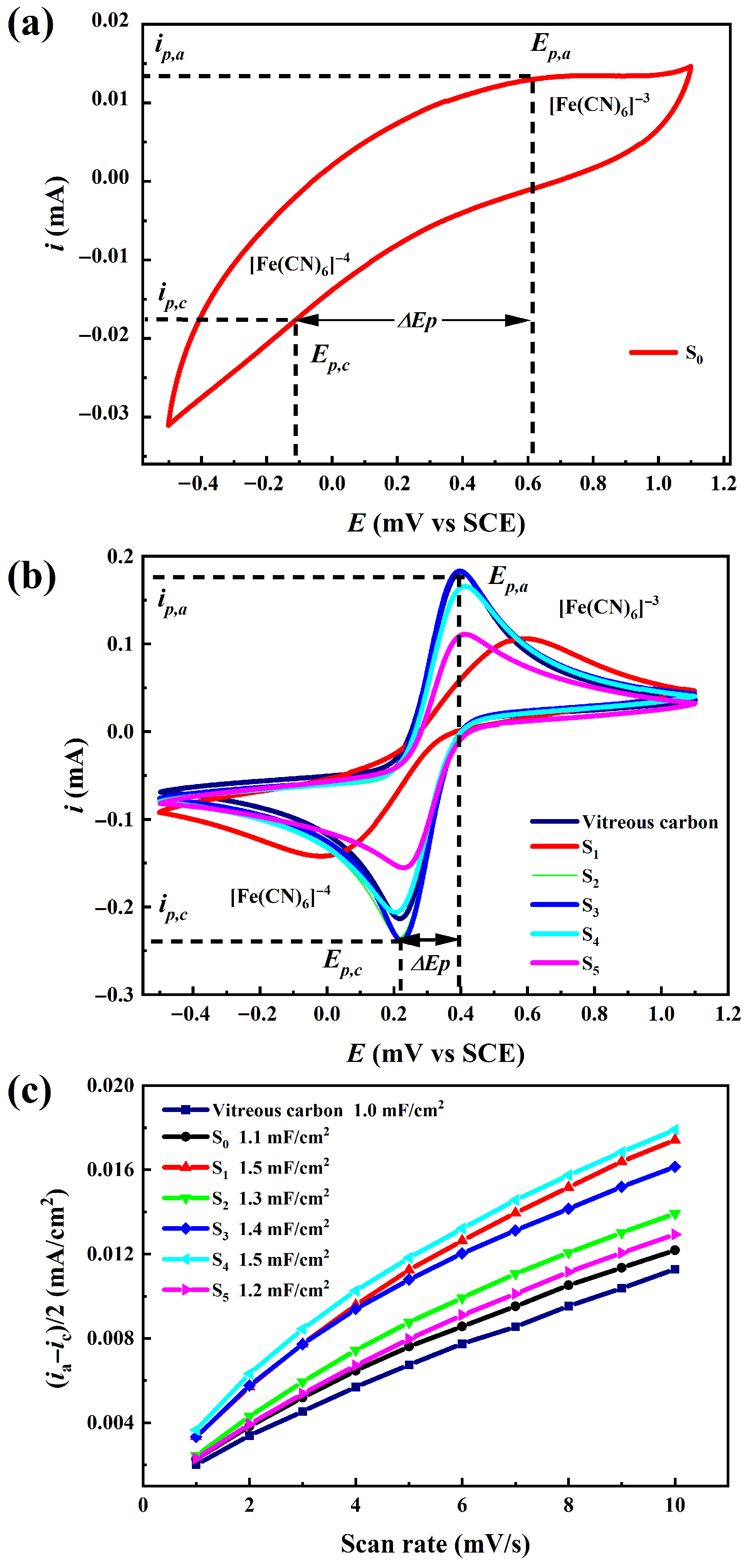
Figure 3 shows the electrochemical behavior of the catalytic ink of CaTiSiO5 powder, and Table 1 lists the electrochemical parameters of CaTiSiO5 powders. The CV curve for the S0 electrode is shown in Figure 3a. Compared to the bare vitreous carbon electrode (Ref WE), the S0 electrode showed decreased anodic and cathodic peak currents (Figure 3b), suggesting that CaTiSiO5 hinders diffusion to the electrode surface and obstructs electron transfer. In contrast, S1–S5 showed improved current signals and a characteristic “duck” shape, indicating a more reversible redox system [43]. The potential difference (ΔEp) was lower for S1–S5 than for S0, implying a faster electron transfer rate [44]. In addition, the electrochemical surface area was compared using double-layer capacitance measurements. The slope, which corresponds to Cdl, was higher for S1–S5 than for the Ref WE (Figure 3c). This result indicates the contribution of the highly active surface area of the CaTiSiO5 modified WE [45]. The improved capacitance is directly linked to the increased surface area from ball milling. Figure S2 shows all the curves of the electrochemical double-layer capacitance, confirming the trend of increased active area with milling.

3.3. Performance in LIBs

We also examined the thermal stability, EIS, ionic conductivity, and charge and discharge profiles of the CaTiSiO5 powder coating ink deposited on the surface of standard PP separators (PPSs) and evaluated their performance in CR 2032 lithium-ion button cell batteries. The mechanical and thermal properties of the coated separators are summarized in Table 2, while the electrochemical performance parameters are listed in Table 3.

3.3.1. Thermal Stability

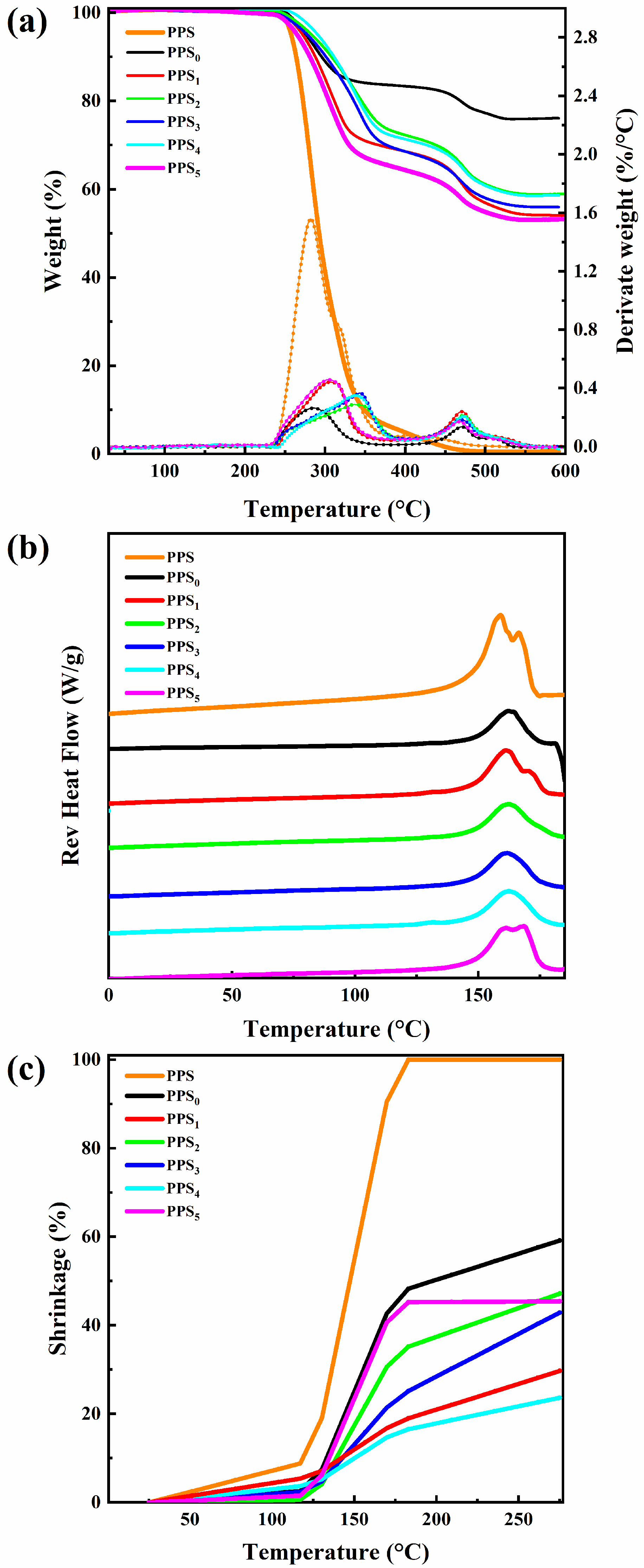
The modified CaTiSiO5 PP separators (PPS1–PPS5) exhibited a delayed degradation process compared to PPS, as observed via TGA. For example, PPS4 exhibited the lowest thermal shrinkage: <5% at 150 °C and 24% at 275 °C, demonstrating superior resistance to thermal shrinkage compared with PPS0 and PPS. We also analyzed the thermal degradation behavior, where the initial drop in the first weight loss at 250 °C observed in the TGA curves was associated with PPS (Figure 4a). PPS0 exhibited a delayed degradation process compared to PPS. The second weight loss at 450 °C, attributed to PVDF [46], was observed exclusively for PPS1–PPS5. The difference in residue was 50% between the standard and coated separator.
Furthermore, DSC analysis revealed two peaks, α and β phases, in the first PP heating curve. The higher-temperature peak in the β-phase results from the recrystallization of β to β’ [47]. The particle size influenced the DSC peaks of the PPS composites, with macroparticles showing both peaks and nanoparticles displaying only the α-phase. The melting point temperature (Tm), peak melting temperature (TP), and xc values of all separators were evaluated. PPS1–PPS5 exhibited better thermal stability than PPS, even when compared to findings in the existing literature, such as PE (135 °C) [4], PP/PE/PP (130/160 °C) [48], P(VDF-TrFE) (152 °C) [49], PAN@PBS-0.3 (110 °C) [50], PF/AL-PE (141 °C) [51], and PE/AlOOHNPs (150 °C) [52] separators. Table 4 compares the thermal performance of our best-performing separator (PPS4) with other ceramic-coated separators from the literature. In contrast, no endothermic melting peak was observed for pure CaTiSiO5 in this temperature range (Figure 4b), as its melting point lies above its decomposition temperature. Figure 4c shows the heat resistance evaluation, where PPS began to shrink at 125 °C, adopting an elliptical shape, melted at 175 °C, lost its original shape and became transparent at 275 °C, and finally decomposed and displayed a reddish hue. This visual evaluation demonstrates the superior dimensional stability of the coated separators.
When incorporated into PPS, nearly double improvements were observed in the Young’s modulus (ε), elongation at break, and tensile strength (τ) compared to S0 (Figure S3). This indicates a change in the behavior of the separators from soft and strong to hard and strong. Figure S4 shows the thermal shrinkage of the separators. It can be noticed that PPS exhibited significant dimensional instability, with a shrinkage of 9.6% after exposure to temperatures above 125 °C. Following this, a rapid increase in shrinkage was observed near 175 °C, which corresponds to the melting point identified through the DSC test.

3.3.2. Contact Angle

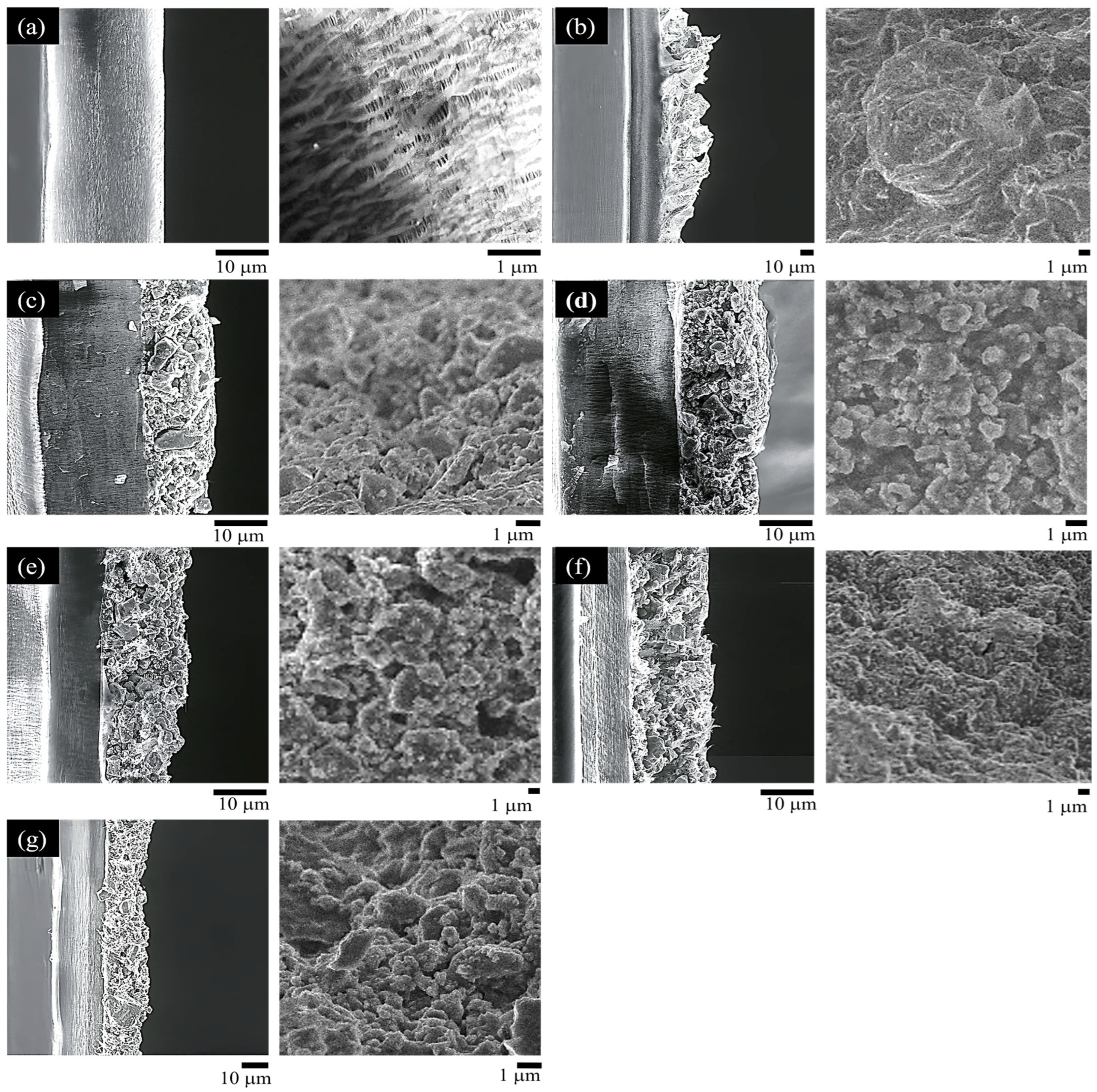
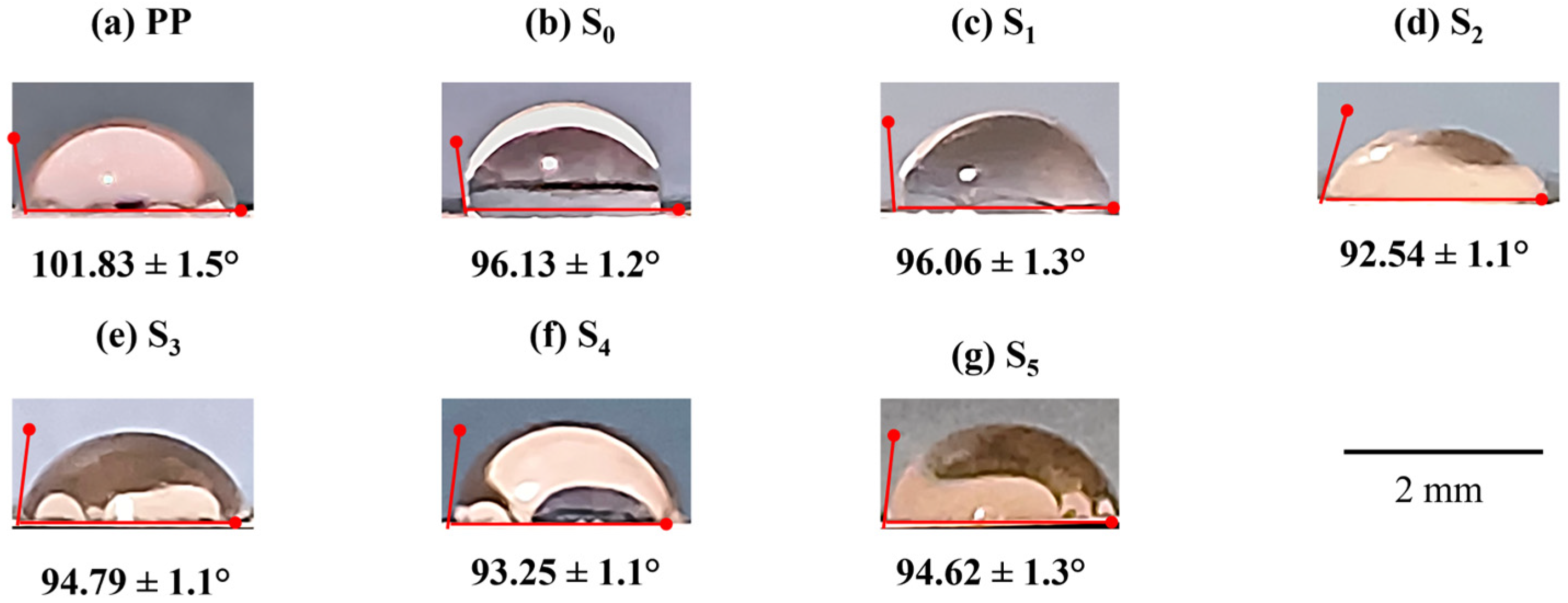
Figure 5 shows cross-sectional micrographs of the separators, while quantitative contact angle measurements are presented in Figure 6. The PPS had uniform and typically elliptical pores created using a uniaxial stretching technique, with a thickness of 25 µm (Figure 5a) [54]. The CaTiSiO5 coating ink was homogeneously distributed on the PPS surface, where the film thickness had an average diameter of ~15 µm, as shown in the cross-section (Figure 5b–f). Low-magnification SEM images confirm the uniformity of the coating. The uncoated PPS exhibited a contact angle of 101.83° (Figure 6a), confirming its hydrophobic nature. In contrast, all CaTiSiO5-coated separators showed significantly reduced contact angles below 97° (Figure 6b–g), with PPS2 showing the lowest value at 92.54°. This reduction of approximately 8–9° indicates improved wettability (increased hydrophilicity), which is attributed to the exposure of polar Si-O bonds on the CaTiSiO5 coating surface and the increased surface area from ball milling. The enhanced wettability facilitates better electrolyte absorption and more uniform ion flow distribution within the separator structure, contributing to the improved electrochemical performance observed in subsequent tests.

3.3.3. Ionic Conductivity and Charge/Discharge Profile

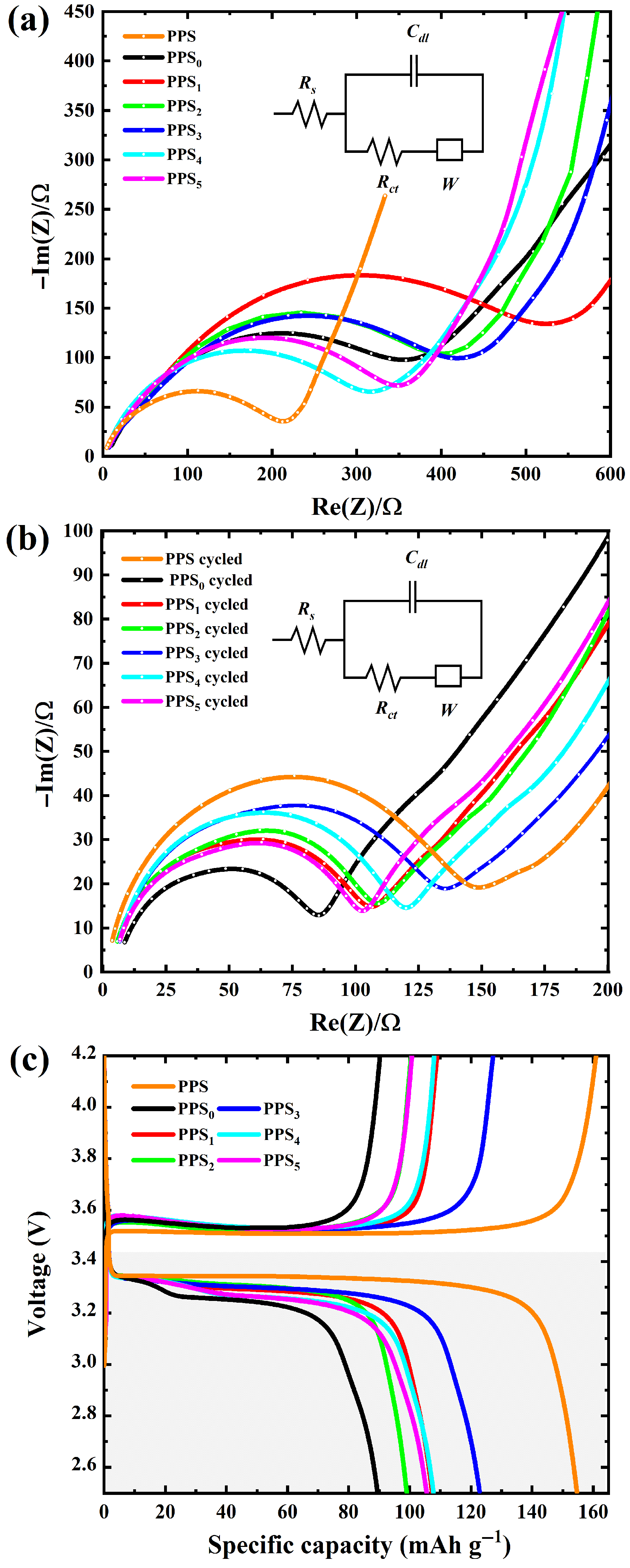
Figure 7a,b show the Nyquist plots obtained by EIS for the LIBs before and after cycling using the separators, respectively. Along with the equivalent fitted circuit model, Rct represents the resistance to charge transfer between the solution and electrode surface. PPS0–PPS5 exhibited lower resistance compared to PPS, which can be attributed to the CaTiSiO5 coating ink layer. The milling process enhanced the separator properties; for example, PPS4 exhibited lower resistance than PPS0. PPS1–PPS5 exhibited higher σ than both PPS and PPS0. This lower resistance in milled samples is attributed to better ion transport pathways and reduced interfacial resistance. Also, the σ measurements revealed that PPS1–PPS5 outperformed both PPS and PPS0. Figure 7c shows the charge and discharge profiles of the separators obtained during the third cycle. Most milled samples (PPS1, PPS2, PPS3, PPS5) exhibit higher specific discharge capacity than the unmilled composite (PPS0) and the uncoated separator (PPS), confirming the beneficial effect of CaTiSiO5 nanoparticle coatings. PPS4 shows a marginally lower capacity in this early cycle, which is attributed to minor variations in cathode mass loading (±0.2 mg) and a slightly slower electrolyte wetting due to its higher specific surface area and porosity. Importantly, this initial difference is overcome after a few activation cycles, and PPS4 displays the lowest charge-transfer resistance (113.7 Ω) and the highest Coulombic efficiency (99.8%) after cycling, indicating superior long-term stability. Therefore, PPS4 is considered the optimal sample based on a balanced combination of thermal, mechanical and electrochemical properties. PPS1–PPS5 achieved a Coulombic efficiency of 99.1%, which is considered desirable for stable cycle performance, surpassing the 96.1% of PPS. Among all samples, PPS4 showed the best balance of high ionic conductivity, low resistance, and superior Coulombic efficiency, attributed to its optimal particle size and surface area.
In summary, ball milling significantly reduced the particle and crystal sizes of CaTiSiO5, leading to a substantial increase in SSA, dP, and Vp. S0 had a DP value of 7.97 ± 0.16 µm, which was reduced to less than 1.0 µm for S0–S5 samples. This reduction in size and increase in surface area are critical, as they provide more sites for ion adsorption and facilitate faster diffusion of electrolyte ions into the electrode. Coating PPS with milled CaTiSiO5 significantly improved its thermal stability, delaying the degradation process compared to uncoated PPS. This enhanced thermal resistance is crucial for preventing internal short-circuiting and thermal runaway in LIBs at elevated temperatures [55]. PPS0–PPS5 also maintained structural integrity at high temperatures, allowing efficient electrolyte absorption and uniform ion flow.
Likewise, PPS1–PPS5 demonstrated better resistance and superior ionic conductivity than PPS and PPS0. This improvement was attributed to the enhanced ion channels and reduced transport barriers created by the nanoparticles [45,56]. Specifically, the CaTiSiO5 milling process led to a decrease in resistance, with S4 exhibiting lower resistance than S0, which is linked to its higher specific surface area, facilitating better ion adsorption [57]. Similarly, the lower hydrophobicity enhanced the wettability owing to the stronger interaction between the more polar Si-O bonds present in CaTiSiO5 and the polar organic solvents, resulting in better electrolyte absorption and uniform ion flow distribution within the separator.
After cycling, the resistance of all the modified materials decreased further compared to that of PPS, indicating an improved surface area and charge transfer [58]. The ball-milling process resulted in a faster electron transfer rate in the milled CaTiSiO5, as indicated by the lower potential differences for PPS1–PPS5 compared to that for PPS0. This improved electron transfer, coupled with the increased specific surface area, contributed to the enhanced electrochemical performance. The milling process also increased the specific capacitance of CaTiSiO5 compared to S0, highlighting the improved electrochemical properties of the nanoparticles compared to those of the pristine microparticles.
PPS0–PPS5 achieved a high Coulombic efficiency of 99%, which is desirable for stable cycling performance in LIBs, and surpassed the 96% of PPS. This high efficiency, combined with improved thermal stability and electrochemical properties, suggests safer and more efficient operation of LIBs. The integration of ball-milled CaTiSiO5 into PP separators offers a promising approach for developing advanced LIBs. The combined benefits of enhanced thermal stability, improved ionic conductivity, reduced resistance, wettability, and high Coulombic efficiency directly translate into safer, more reliable, and higher-performing battery systems. These findings highlight the potential of modified CaTiSiO5, synthesized using the ball-milling process, as a valuable material for improving the performance and safety of electrochemical systems, particularly in energy-storage applications.
The selection of CaTiSiO5 presents a novel, multifunctional alternative to traditional ceramic coatings [59,60], offering potential advantages owing to its unique silicate-based structure. The results demonstrate that ball-milled titanite significantly enhances the thermal stability of polypropylene separators, delaying degradation and reducing shrinkage to 24% at 275 °C, while also improving mechanical properties and ionic conductivity owing to increased surface area and porosity from particle size reduction. Furthermore, its polar Si-O bonds enhance the electrolyte wettability, reduce the contact angle, and facilitate uniform ion flow. However, its path to commercialization requires more research to prove its performance advantage over the established cost-effective ceramic systems.

4. Conclusions

This study examined the impact of the milling process on the physicochemical and electrochemical properties of CaTiSiO5. The ball milling-induced physicochemical alterations in CaTiSiO5 were fundamental to the observed enhancements in the electrochemical performance of PPS. Ball milling of CaTiSiO5 markedly enhanced the performance of LIB separators. This mechanical modification resulted in reduced particle and crystal sizes, thereby increasing the specific surface area and the pore volume. These physicochemical transformations contribute to improved thermal stability, delayed degradation, and prevention of thermal runaway reactions. Electrochemically, the modified separators exhibited reduced resistance, enhanced ionic conductivity, and accelerated electron-transfer rates. Consequently, LIBs incorporating these separators exhibit high Coulombic efficiency, which contributes to a safe, reliable, and efficient solution for advanced energy storage applications. The optimal performance was achieved with sample PPS4 (2 milling cycles, 10 mm balls), demonstrating the critical role of controlled particle size reduction in developing high-performance ceramic-coated separators.

Supplementary Materials

The following supporting information can be downloaded at: https://www.mdpi.com/article/10.3390/suschem7010014/s1, Table S1: Experimental conditions for ball milling modification of CaTiSiO5 powders; Figure S1: (a) Normalized probability density histograms. Sample S0 shows a broad size distribution corresponding to large agglomerates (8 ± 1.6 μm). S1 and S2 demonstrate effective fragmentation, S3 exhibits reaggregation, while S4 and S5 achieve narrower distributions in the sub-micrometer range. (b) Cumulative distribution functions (CDF) illustrating the progressive shift toward smaller sizes. (c) Box plot with individual data points, confirming the systematic reduction in particle size and dispersion with milling time, except for the slight reversal in S3 due to over-milling; Figure S2: The curves for electrochemical double-layer capacitance of a catalytic ink of CaTiSiO5 powder like working electrode: (a) bare electrode, (b) S0, (c) S1, (d) S2, (e) S3, (f) S4, (g) S5 on vitreous carbon, obtained by varying the scan rate from 1 to 100 mV−1 in 1.0 M Na2SO4; Figure S3: Stress–strain curve of modified CaTiSiO5 PP separators: Improvements in Young’s modulus (E), elongation at break, and tensile strength (τ) when CaTiSiO5 was incorporated into polypropylene separators, indicating a change in the separators’ behavior from soft and strong to hard and strong; Figure S4: The thermal shrinkage of the separators, revealing significant dimensional instability in standard polypropylene separators (PPS), with measurable shrinkage initiating above 125 °C and a rapid increase near 175 °C, corresponding to the melting point identified by Differential Scanning Calorimetry (DSC).

Author Contributions

Conceptualization, B.T.-N. and M.M.R.-R.; methodology, M.M.R.-R., B.T.-N. and R.M.F.-N.; validation, B.T.-N., M.M.R.-R., R.M.F.-N., J.R.R.-B., A.Z.-L. and L.P.-C.; formal analysis, M.M.R.-R. and J.R.R.-B.; investigation, M.M.R.-R., B.T.-N., R.M.F.-N., L.P.-C., J.J.H.-M. and A.Z.-L.; resources, B.T.-N., R.M.F.-N., J.R.R.-B., A.Z.-L. and L.P.-C.; data curation, M.M.R.-R.; writing—original draft preparation, M.M.R.-R. and B.T.-N.; writing—review and editing, M.M.R.-R. and B.T.-N.; visualization, M.M.R.-R.; supervision, B.T.-N.; project administration, B.T.-N.; funding acquisition, B.T.-N. All authors have read and agreed to the published version of the manuscript.

Funding

This research was funded by Tecnologico Nacional de México, grant number 13765.22-P.

Institutional Review Board Statement

Not applicable.

Informed Consent Statement

Not applicable.

Data Availability Statement

The data presented in this study are available in the article and the Supplementary Materials. Further data are available on request from the corresponding author.

Acknowledgments

Technological National of Mexico/I.T. Tijuana (TecNM) for supporting this study. M. M. Ruiz-Ramirez is grateful to SECIHTI for providing a scholarship for her Ph.D. in Engineering (No. 908766).

Conflicts of Interest

The authors declare that they have no affiliations with or involvement in any organization or entity with any financial interest in the subject matter or materials discussed in this manuscript.

Abbreviations

The following abbreviations are used in this manuscript:
BETBrunauer–Emmett–Teller
BPRBall-to-Powder Ratio
CVCyclic Voltammetry
DECDiethyl Carbonate
DSCDifferential Scanning Calorimetry
ECEthylene Carbonate
EISElectrochemical Impedance Spectroscopy
FTIRFourier-Transform Infrared Spectroscopy
GOGraphene Oxide
LIBLithium-Ion Battery
NMPN-Methyl-2-pyrrolidone
PANPolyacrylonitrile
PEPolyethylene
PIPolyimide
PPPolypropylene
PPSPolypropylene Separator
PTFEPolytetrafluoroethylene
PVDFPolyvinylidene Fluoride
SCESaturated Calomel Electrode
SEMScanning Electron Microscopy
SSASpecific Surface Area
TGAThermogravimetric Analysis
WEWorking Electrode
XRDX-Ray Diffraction

References

  1. Nunes-Pereira, J.; Kundu, M.; Gören, A.; Silva, M.M.; Costa, C.M.; Liu, L.; Lanceros-Méndez, S. Optimization of filler type within poly(vinylidene fluoride-co-trifluoroethylene) composite separator membranes for improved lithium-ion battery performance. Compos. Part B Eng. 2016, 96, 94–102. [Google Scholar] [CrossRef]
  2. Zakaria, M.R.; Omar, M.F.; Zainol Abidin, M.S.; Md Akil, H.; Abdullah, M.M.A.B. Recent progress in the three-dimensional structure of graphene-carbon nanotubes hybrid and their supercapacitor and high-performance battery applications. Compos. Part A Appl. Sci. Manuf. 2022, 154, 106756. [Google Scholar] [CrossRef]
  3. Zhang, S.S. A review on the separators of liquid electrolyte Li-ion batteries. J. Power Sources 2007, 164, 351–364. [Google Scholar] [CrossRef]
  4. Lingappan, N.; Lee, W.; Passerini, S.; Pecht, M. A comprehensive review of separator membranes in lithium-ion batteries. Renew. Sustain. Energy Rev. 2023, 187, 113726. [Google Scholar] [CrossRef]
  5. Babiker, D.M.D.; Wan, C.; Mansoor, B.; Usha, Z.R.; Yu, R.; Habumugisha, J.C.; Chen, W.; Chen, X.; Li, L. Superior lithium battery separator with extraordinary electrochemical performance and thermal stability based on hybrid UHMWPE/SiO2 nanocomposites via the scalable biaxial stretching process. Compos. Part B Eng. 2021, 211, 108658. [Google Scholar] [CrossRef]
  6. Shi, J.; Xia, Y.; Yuan, Z.; Hu, H.; Li, X.; Liu, Z. Porous membrane with high curvature, three-dimensional heat-resistance skeleton: A new and practical separator candidate for high safety lithium ion battery. Sci. Rep. 2015, 5, 8255. [Google Scholar] [CrossRef]
  7. Mao, B.; Chen, H.; Cui, Z.; Wu, T.; Wang, Q. Failure mechanism of the lithium ion battery during nail penetration. Int. J. Heat Mass Transf. 2018, 122, 1103–1115. [Google Scholar] [CrossRef]
  8. Li, X.; Liu, K.; Yan, Y.; Yu, J.; Dong, N.; Liu, B.; Tian, G.; Qi, S.; Wu, D. Thermostable and nonflammable polyimide/zirconia compound separator for lithium-ion batteries with superior electrochemical and safe properties. J. Colloid Interface Sci. 2022, 625, 936–945. [Google Scholar] [CrossRef]
  9. Roh, Y.; Jin, D.; Kim, E.; Byun, S.; Lee, Y.-S.; Ryou, M.-H.; Lee, Y.M. Highly improved thermal stability of the ceramic coating layer on the polyethylene separator via chemical crosslinking between ceramic particles and polymeric binders. Chem. Eng. J. 2022, 433, 134501. [Google Scholar] [CrossRef]
  10. Hao, W.; Kong, D.; Xie, J.; Chen, Y.; Ding, J.; Wang, F.; Xu, T. Self-polymerized dopamine nanoparticles modified separators for improving electrochemical performance and enhancing mechanical strength of lithium-ion batteries. Polymers 2020, 12, 648. [Google Scholar] [CrossRef]
  11. Chen, X.; Chen, S.; Lin, Y.; Wu, K.; Lu, S. Multi-functional ceramic-coated separator for lithium-ion batteries safety tolerance improvement. Ceram. Int. 2020, 46, 24689–24697. [Google Scholar] [CrossRef]
  12. Zhao, X.; Zhang, Z.; Yang, S.; Liang, G. Inorganic ceramic fiber separator for electrochemical and safety performance improvement of lithium-ion batteries. Ceram. Int. 2017, 43, 14775–14783. [Google Scholar] [CrossRef]
  13. Jiang, X.; Zhu, X.; Ai, X.; Yang, H.; Cao, Y. Novel Ceramic-Grafted Separator with Highly Thermal Stability for Safe Lithium-Ion Batteries. ACS Appl. Mater. Interfaces 2017, 9, 25970–25975. [Google Scholar] [CrossRef]
  14. Liu, H.; Xu, J.; Guo, B.; He, X. Effect of Al2O3/SiO2 composite ceramic layers on performance of polypropylene separator for lithium-ion batteries. Ceram. Int. 2014, 40, 14105–14110. [Google Scholar] [CrossRef]
  15. Yu, B.; Chen, X.; Jin, X.; Zhang, X.; Chen, L. Heat-Resistant Lithium-Ion-Battery Separator Using Synchronous Thermal Stabilization/Imidization. ACS Appl. Polym. Mater. 2024, 6, 2464–2473. [Google Scholar] [CrossRef]
  16. Liao, H.; Zhang, H.; Qin, G.; Li, Z.; Li, L.; Hong, H. A macro-porous graphene oxide-based membrane as a separator with enhanced thermal stability for high-safety lithium-ion batteries. RSC Adv. 2017, 7, 22112–22120. [Google Scholar] [CrossRef]
  17. Kim, K.W.; Lee, J.H.; Shin, S.; Kim, I.; Yun, T.G.; Hwang, B.; Choi, S.-J.; Jung, J.-W.; Yoon, K.R. Thermally Stable Al2O3/PTFE Composite Separator for High-Safety Lithium-Ion Batteries. ACS Omega 2025, 10, 39669–39679. [Google Scholar] [CrossRef]
  18. Chen, D.; Wang, X.; Liang, J.; Zhang, Z.; Chen, W. A Novel Electrospinning Polyacrylonitrile Separator with Dip-Coating of Zeolite and Phenoxy Resin for Li-ion Batteries. Membranes 2021, 11, 267. [Google Scholar] [CrossRef] [PubMed]
  19. Chen, Z.; Wang, T.; Yang, X.; Peng, Y.; Zhong, H.; Hu, C. TiO2 Nanorod-Coated Polyethylene Separator with Well-Balanced Performance for Lithium-Ion Batteries. Materials 2023, 16, 2049. [Google Scholar] [CrossRef]
  20. Ahmed, S.; Ali, A.; Asif, M.; Shim, J.; Park, G. Exploring innovative trends and advancements in rechargeable zinc-air batteries. Inorg. Chem. Commun. 2024, 170, 113288. [Google Scholar] [CrossRef]
  21. Maletaškić, J.; Todorović, B.; Gilić, M.; Cincović, M.M.; Yoshida, K.; Gubarevich, A.; Matović, B. Synthesis and characterization of monophase CaO-TiO2-SiO2 (sphene) based glass-ceramics. Sci. Sinter. 2020, 52, 41–52. [Google Scholar] [CrossRef]
  22. Peng, X.; Liu, Z.; Gu, Y.; Zhang, F.; Li, Y. Dielectric properties of (Al3+, Nb5+) co-doped CaTiSiO5 ceramics at elevated temperature. J. Phys. Chem. Solids 2019, 132, 83–88. [Google Scholar] [CrossRef]
  23. Arellano, U.; Chen, L.; Wang, J.A.; Salmones, J.; Limas, R.; Noreña, L.E.; Solís, S.; Lara, V.H. Hydrothermal Synthesis and Photocatalytic Properties of CaTiSiO5 for Hydrogen Production. Chem. Eng. Trans. 2024, 109, 625–630. [Google Scholar] [CrossRef]
  24. Muthuraman, M.; Patil, K.C. Synthesis, properties, sintering and microstructure of sphene, CaTiSiO5: A comparative study of coprecipitation, sol-gel and combustion processes. Mater. Res. Bull. 1998, 33, 655–661. [Google Scholar] [CrossRef]
  25. Khonimkulov, J.; Homidov, F.; Kadyrova, Z. Synthesis methods and temperature effects on titanite microstructure. Univ. Tech. Sci. 2024, 3, 18–21. [Google Scholar]
  26. Elsayed, H.; Sayed, M.; Naga, S.M.; Rebesan, P.; Gardin, C.; Zavan, B.; Colombo, P.; Bernardo, E. Additive manufacturing and direct synthesis of sphene ceramic scaffolds from a silicone resin and reactive fillers. J. Eur. Ceram. Soc. 2022, 42, 286–295. [Google Scholar] [CrossRef]
  27. Phumuen, P.; Kumnorkaew, P.; Srepusharawoot, P.; Klangtakai, P.; Pimanpang, S.; Amornkitbamrung, V. Ball milling modification of perovskite LaNiO3 powders for enhancing electrochemical pseudocapacitor. Surf. Interfaces 2021, 25, 101282. [Google Scholar] [CrossRef]
  28. Rios, J.; Restrepo, A.; Zuleta, A.; Bolívar, F.; Castaño, J.; Correa, E.; Echeverria, F. Effect of ball size on the microstructure and morphology of mg powders processed by high-energy ball milling. Metals 2021, 11, 1621. [Google Scholar] [CrossRef]
  29. Tarani, E.; Stathokostopoulos, D.; Karfaridis, D.; Malletzidou, L.; Sfampa, I.K.; Stergioudi, F.; Maliaris, G.; Michailidis, N.; Chrissafis, K.; Vourlias, G. Effect of ball milling time on the formation and thermal properties of Ag2Se and Cu2Se compounds. J. Therm. Anal. Calorim. 2023, 148, 13065–13081. [Google Scholar] [CrossRef]
  30. López, J.P.; Gironés, J.; Alberto, J.; El Mansouri, N.E.; Llop, M.; Mutjé, P.; Vilaseca, F. Stone-ground wood pulp-reinforced polypropylene composites: Water uptake and thermal properties. BioResources 2012, 7, 5478–5487. [Google Scholar] [CrossRef]
  31. Mokhtari, F.; Spinks, G.M.; Sayyar, S.; Foroughi, J. Dynamic Mechanical and Creep Behaviour of Meltspun PVDF Nanocomposite Fibers. Nanomaterials 2021, 11, 2153. [Google Scholar] [CrossRef]
  32. Cai, H.; Tong, X.; Chen, K.; Shen, Y.; Wu, J.; Xiang, Y.; Wang, Z.; Li, J. Electrospun Polyethylene Terephthalate Nonwoven Reinforced Polypropylene Separator: Scalable Synthesis and Its Lithium Ion Battery Performance. Polymers 2018, 10, 574. [Google Scholar] [CrossRef]
  33. Luo, L.; Gao, Z.; Zheng, Z.; Zhang, J. “Polymer-in-Ceramic” Membrane for Thermally Safe Separator Applications. ACS Omega 2022, 7, 35727–35734. [Google Scholar] [CrossRef]
  34. Tan, F.; An, H.; Li, N.; Du, J.; Peng, Z. A study on Li0.33La0.55TiO3 solid electrolyte with high ionic conductivity and its application in flexible all-solid-state batteries. Nanoscale 2021, 13, 11518–11524. [Google Scholar] [CrossRef]
  35. Vaselnia, S.Y.; Khajeh Aminian, M.; Motahari, H. Fe-doped titanite pigment: Synthesis, DFT/TDDFT calculations by Lanczos and Bethe-Salpeter equation methods and comparison of computational and experimental color properties. J. Phys. Chem. Solids 2020, 138, 109244. [Google Scholar] [CrossRef]
  36. Li, Y.; Zhang, T.; Ding, H.; Sun, S.; Ao, W.; Zhang, J.; Zhang, H. Synthesis of sphene by TiO2 combined with CaCO3 and SiO2 in solid phase and its application as ceramic opacifier. Chem. Phys. 2023, 575, 112076. [Google Scholar] [CrossRef]
  37. Modhave, D.; Saraf, I.; Karn, A.; Paudel, A. Understanding Concomitant Physical and Chemical Transformations of Simvastatin During Dry Ball Milling. AAPS PharmSciTech 2020, 21, 152. [Google Scholar] [CrossRef] [PubMed]
  38. Yerpude, A.N.; Pawade, V.B.; Dhoble, S.J.; Koao, L. Chapter 3—Lanthanide-doped BaCa2Al8O115 phosphors. In Lanthanide-Doped Aluminate Phosphors; Woodhead Publishing: Cambridge, UK, 2023; pp. 57–80. [Google Scholar] [CrossRef]
  39. Sun, Y.; Wang, H.; Zhang, M.; Zhao, W. Effect of leaching solutions on chemical durability of a natural metamict titanite. J. Nucl. Sci. Technol. 2020, 57, 792–799. [Google Scholar] [CrossRef]
  40. Chen, S.K.; Liu, H.S.; Wu, C.S. Quantitative Analysis of Sphene (CaTiOSiO4) and Wollastonite (CaSiO3) Crystallizations in Annealed Ceramic Frits by FT-IR Absorption Spectroscopy. Appl. Spectrosc. 1993, 47, 965–972. [Google Scholar] [CrossRef]
  41. Pantić, J.; Urbanovich, V.; Poharc-Logar, V.; Jokić, B.; Stojmenović, M.; Kremenović, A.; Matović, B. Synthesis and characterization of high-pressure and high-temperature sphene (CaTiSiO5). Phys. Chem. Miner. 2014, 41, 775–782. [Google Scholar] [CrossRef]
  42. Bardestani, R.; Patience, G.S.; Kaliaguine, S. Experimental methods in chemical engineering: Specific surface area and pore size distribution measurements—BET, BJH, and DFT. Can. J. Chem. Eng. 2019, 97, 2781–2791. [Google Scholar] [CrossRef]
  43. Peto-Gutiérrez, C.; Vázquez-Victorio, G.; Hautefeuille, M. Characterization of Benchtop-Fabricated Arrays of Nanowrinkled Surface Electrodes as a Nitric Oxide Electrochemical Sensor. Biosensors 2023, 13, 794. [Google Scholar] [CrossRef] [PubMed]
  44. Ashwini, R.; Mohanta, Z.; Punith Kumar, M.K.; Santosh, M.S.; Srivastava, C. Enhanced heterogeneous electron transfer kinetics in Graphene Oxide produced from mechanically milled Graphite. Carbon Trends 2021, 5, 100095. [Google Scholar] [CrossRef]
  45. Zhou, H.; Yu, F.; Sun, J.; He, R.; Chen, S.; Chu, C.-W.; Ren, Z. Highly active catalyst derived from a 3D foam of Fe(PO3)2/Ni2P for extremely efficient water oxidation. Proc. Natl. Acad. Sci. USA 2017, 114, 5607–5611. [Google Scholar] [CrossRef]
  46. de Jesus Silva, A.J.; Contreras, M.M.; Nascimento, C.R.; da Costa, M.F. Kinetics of thermal degradation and lifetime study of poly(vinylidene fluoride) (PVDF) subjected to bioethanol fuel accelerated aging. Heliyon 2020, 6, e04573. [Google Scholar] [CrossRef]
  47. Krajenta, J.; Pawlak, A. Crystallization of the β-Form of Polypropylene from the Melt with Reduced Entanglement of Macromolecules. Polymers 2024, 16, 1710. [Google Scholar] [CrossRef] [PubMed]
  48. Shi, C.; Zhang, P.; Huang, S.; He, X.; Yang, P.; Wu, D.; Sun, D.; Zhao, J. Functional separator consisted of polyimide nonwoven fabrics and polyethylene coating layer for lithium-ion batteries. J. Power Sources 2015, 298, 158–165. [Google Scholar] [CrossRef]
  49. Bicy, K.; Suriyakumar, S.; Anu Paul, P.; Anu, A.S.; Kalarikkal, N.; Stephen, A.M.; Geethamma, V.G.; Rouxel, D.; Thomas, S. Highly lithium ion conductive, Al2O3 decorated electrospun P(VDF-TrFE) membranes for lithium ion battery separators. New J. Chem. 2018, 42, 19505–19520. [Google Scholar] [CrossRef]
  50. Wei, Z.; Gu, J.; Zhang, F.; Pan, Z.; Zhao, Y. Core-Shell Structured Nanofibers for Lithium Ion Battery Separator with Wide Shutdown Temperature Window and Stable Electrochemical Performance. ACS Appl. Polym. Mater. 2020, 2, 1989–1996. [Google Scholar] [CrossRef]
  51. Li, D.; Qin, D.; Nie, F.; Wen, L.; Xue, L. Enhancement of electrochemical performance of lithium-ion battery by single-ion conducting polymer addition in ceramic-coated separator. J. Mater. Sci. 2018, 53, 11038–11049. [Google Scholar] [CrossRef]
  52. Wang, Y.; Wang, Q.; Wei, X.; Song, Z.; Lan, Y.; Luo, W.; Yin, C.; Yue, Z.; Zhou, L.; Li, X. A novel three-dimensional boehmite nanowhiskers network-coated polyethylene separator for lithium-ion batteries. Ceram. Int. 2021, 47, 10153–10162. [Google Scholar] [CrossRef]
  53. Ko, I.; Ha, S.; Shin, W.H.; Choi, J.; Mun, S.C.; Choi, Y.; Won, J.H. Clay-Mineral-Coated Separators for Lithium-Ion Batteries: Exploring the Relationships between Clay Mineral Morphology and Separator Performance. Adv. Sci. 2025, 12, 2510779. [Google Scholar] [CrossRef]
  54. Zhang, J.; Kong, Q.; Liu, Z.; Pang, S.; Yue, L.; Yao, J.; Wang, X.; Cui, G. A highly safe and inflame retarding aramid lithium ion battery separator by a papermaking process. Solid State Ion. 2013, 245–246, 49–55. [Google Scholar] [CrossRef]
  55. Yin, S.; Liu, J.; Cong, B. Review of Thermal Runaway Monitoring, Warning and Protection Technologies for Lithium-Ion Batteries. Processes 2023, 11, 2345. [Google Scholar] [CrossRef]
  56. Zhang, Y.; Meng, Z.; Wang, Y. Sr Doped Amorphous LLTO as Solid Electrolyte Material. J. Electrochem. Soc. 2020, 167, 080516. [Google Scholar] [CrossRef]
  57. Chakrabarty, N.; Chakraborty, A.K.; Kumar, H. Nickel-Hydroxide-Nanohexagon-Based High-Performance Electrodes for Supercapacitors: A Systematic Investigation on the Influence of Six Different Carbon Nanostructures. J. Phys. Chem. C 2019, 123, 29104–29115. [Google Scholar] [CrossRef]
  58. Surampudi, S.; Shen, D.H.; Huang, C.K.; Narayanan, S.R.; Attia, A.; Halpert, G.; Peled, E. Effect of cycling on the lithium/electrolyte interface in organic electrolytes. J. Power Sources 1993, 43, 21–26. [Google Scholar] [CrossRef]
  59. Kim, U.; Roh, Y.; Choi, S.; Lee, Y.-S.; Ryou, S.-Y.; Lee, Y.M. Ultra-thin ceramic coated separator for high energy density lithium-ion battery: In-depth analysis on Al2O3 nano particles penetration into the structure pore. J. Ind. Eng. Chem. 2023, 126, 137–144. [Google Scholar] [CrossRef]
  60. Yuan, B.; Liu, J.; Dong, L.; Chen, D.; Zhong, S.; Liang, Y.; Liu, Y.; Ji, Y.; Wu, X.; Kong, Q.; et al. A Single-Layer Composite Separator with 3D-Reinforced Microstructure for Practical High-Temperature Lithium Ion Batteries. Small 2022, 18, 2104664. [Google Scholar] [CrossRef]
Figure 1. Morphological and particle size evolution of CaTiSiO5 powders during ball milling. (a) SEM image of unmilled sample S0 showing sintered agglomerates. (bf) SEM images illustrating progressive particle size reduction in milled samples S1–S5: (b) S1 and (c) S2 exhibit effective fragmentation, (d) S3 displays reaggregation due to prolonged milling, and (e,f) S4 and S5 achieve optimal sub-micrometer sizes. Detailed particle size distributions are provided in Figure S1 (Supplementary Material). Dotted vertical lines indicate mean particle sizes as reported in Table 1.
Suschem 07 00014 g001
Figure 2. Structural and textural characterization of CaTiSiO5: (a) XRD patterns confirming monoclinic CaTiSiO5 phase (•) with traces of anatase TiO2 (▪). Inset shows normalized (1 1 −2) peak used for DV calculation via Scherrer equation; (b) FTIR spectra showing characteristic CaTiSiO5 bands, with peak broadening in milled samples due to crystallite size reduction; (c) N2 adsorption–desorption isotherms (77 K) showing mesoporous behavior (type-IV, H1 hysteresis loops). Inset shows pore volume distribution.
Suschem 07 00014 g002
Figure 3. Electrochemical behavior of CaTiSiO5 catalytic inks: (a) CV curve for S0 showing limited electron transfer. (b) Enhanced anodic and cathodic current signals for S1–S5, indicating a more reversible redox system. (c) Double-layer capacitance measurements showing higher electrochemically active surface area for milled samples. Dotted lines represent linear fits for Cdl calculation.
Suschem 07 00014 g003
Figure 4. Thermal behavior of CaTiSiO5-modified PP separators: (a) TGA curves showing delayed degradation for PPS1–PPS5 compared to uncoated PPS; (b) DSC curves revealing improved thermal stability for coated separators, with melting temperatures (Tm) and peaks (Tp1, Tp2) indicated; (c) Visual heat resistance evaluation at selected temperatures (125, 175, 275 °C) showing progressive shrinkage, melting, and decomposition of uncoated separator, while coated ones maintain structural integrity.
Suschem 07 00014 g004
Figure 5. Cross-sectional SEM micrographs of separator thickness: (a) Uncoated PPS showing uniform elliptical pores with 25 µm thickness; (bg) CaTiSiO5-coated separators (PPS0–PPS5) with homogeneous coating distribution (~15 µm additional thickness).
Suschem 07 00014 g005
Figure 6. Contact angle measurements demonstrating improved wettability of CaTiSiO5-coated PP separators. Water droplet profiles show contact angles for: (a) Uncoated PPS, (b) PPS0, (c) PPS1, (d) PPS2, (e) PPS3, (f) PPS4, and (g) PPS5.
Suschem 07 00014 g006
Figure 7. Electrochemical analysis of LIB cells with modified separators: (a,b) Nyquist plots from EIS for fresh and cycled cells, respectively, showing lower resistance for PPS1–PPS5. Inset equivalent circuit illustrates resistance components. (c) Charge/discharge profiles (3rd cycle). PPS1, PPS2, PPS3 and PPS5 show higher specific capacity than PPS0 and uncoated PPS. PPS4 exhibits a slightly lower initial capacity, but achieves the highest Coulombic efficiency (99.8%) and the lowest charge-transfer resistance after cycling, confirming its optimal balance of properties. Grey: Differentiate between charge/discharge.
Suschem 07 00014 g007
Table 1. Physicochemical and electrochemical parameters of CaTiSiO5 powders.
SampleS0S1S2S3S4S5Ref WE
Milling Sequence-2 cycles2, 2 cycles2, 2, 2 cycles1, 2 cycles3, 2 cycles-
DP (µm)7.97 ± 0.163.15 ± 0.100.38 ± 0.010.56 ± 0.020.46 ± 0.010.64 ± 0.02-
Crystallinity (%)84.7 ± 2.559.8 ± 1.847.6 ± 1.447.0 ± 1.457.3 ± 1.754.8 ± 1.6-
DV (nm)38.27 ± 1.136.13 ± 1.022.59 ± 0.719.71 ± 0.630.55 ± 0.930.85 ± 0.9-
SSA (m2g−1)2.31 ± 0.73.3 ± 0.12.5 ± 0.14.5 ± 0.111.4 ± 0.314.6 ± 0.4-
dP (nm)5.8 ± 0.27.7 ± 0.29.1 ± 0.39.0 ± 0.310.5 ± 0.311.2 ± 0.3-
VP (cm3g−1)0.038 ± 0.0010.010 ± 0.00030.006 ± 0.00020.011 ± 0.00030.021 ± 0.00060.024 ± 0.0007-
Ep (mV)400.2 ± 12605.7 ± 18182.0 ± 5.5174.6 ± 5.2205.2 ± 6.2184.1 ± 5.5182.2 ± 5.5
ip,a (µA)12.7 ± 0.4118.6 ± 3.6230.3 ± 6.9136.3 ± 4.1211.7 ± 6.4147.8 ± 4.4217.8 ± 6.5
Cdl (mFcm−2)1.1 ± 0.031.5 ± 0.041.3 ± 0.041.4 ± 0.041.5 ± 0.041.2 ± 0.041.0 ± 0.03
Note: All values represent the average of three independent measurements ± standard deviation. Bare vitreous carbon working electrode (Ref WE).
Table 2. Mechanical and thermal characterization of CaTiSiO5-modified PP separators.
SamplePPS0PPS1PPS2PPS3PPS4PPS5PPS
(Uncoated)
ε (MPa)167 ± 2276 ± 1318 ± 14244 ± 17262 ± 42245 ± 40286 ± 3
τ (%) *8 ± 314 ± 616 ± 415 ± 120 ± 614 ± 541 ± 8
Tensile Strength (MPa)4 ± 0.28 ± 0.110 ± 0.27.28 ± 0.39 ± 0.38.26 ± 0.211 ± 0.2
TGA
Residue (%)
75.91 ± 2.354.39 ± 1.659.15 ± 1.855.97 ± 1.758.61 ± 1.853.24 ± 1.60.61 ± 0.02
Tm (°C)155.97 ± 0.5154.78 ± 0.5155.98 ± 0.5155.7 ± 0.5156.07 ± 0.5155.92 ± 0.5151.16 ± 0.5
Tp1 (°C)-161.15 ± 0.5---161.29 ± 0.5158.99 ± 0.5
Tp2 (°C)162.23 ± 0.5172.28 ± 0.5162.33 ± 0.5161.8 ± 0.5162.4 ± 0.5168.54 ± 0.5166.92 ± 0.5
xc (%)57.24 ± 1.739.58 ± 1.239.8 ± 1.234.07 ± 1.036.25 ± 1.143.24 ± 1.327.83 ± 0.8
* Note: ε = Young’s modulus; τ = elongation at break; Residue = mass percentage remaining after TGA analysis at 600 °C; Tm = melting temperature; Tp1 and Tp2 = melting peak temperatures corresponding to α and β phases of PP; xc = degree of crystallinity calculated by DSC. Values presented as average ± standard deviation (n = 3).
Table 3. Electrochemical evaluation in CR2032 coin cells of CaTiSiO5-modified PP separators.
SamplePPS0PPS1PPS2PPS3PPS4PPS5PPS
Total thickness (µm) *41.0 ± 0.839.0 ± 0.840.0 ± 0.841.3 ± 0.839.9 ± 0.841.3 ± 0.825.0 ± 0.5
Rct (Ω)—Fresh cell339.7 ± 10.2538.7 ± 16.2387.1 ± 11.6392.0 ± 11.8313.5 ± 9.4331.2 ± 9.9332.5 ± 10.0
Rct (Ω)—Cycled cell75.1 ± 2.3102.7 ± 3.1103.6 ± 3.1124.8 ± 3.7113.7 ± 3.493.9 ± 2.8229.5 ± 6.9
σ (S cm−1) × 10−43.57 ± 0.114.94 ± 0.155.61 ± 0.175.10 ± 0.154.84 ± 0.155.15 ± 0.154.95 ± 0.15
Coulombic efficiency (%)99.13 ± 0.598.48 ± 0.598.52 ± 0.596.55 ± 0.599.80 ± 0.595.40 ± 0.596.08 ± 0.5
* Note: Reported thickness includes PP substrate (25 µm) plus CaTiSiO5 coating (~15 µm). Rct = charge transfer resistance obtained from EIS; σ = ionic conductivity calculated from EIS. All resistance values have been adjusted for separator thickness. Values presented as average ± standard deviation (n = 3).
Table 4. Comparison of thermal and electrochemical performance of the PPS4 separator with other ceramic coating systems reported in the literature.
Coating
Material
Separator SupportThermal
Stability (Max Without Failure)
Thermal Shrinkage at 150 °C (%)Ionic
Conductivity (mS cm−1)
Coulombic Efficiency (%)Reference
CaTiSiO5
(this work)
PP (Celgard® 2500)275 °C (24% shrinkage)<5%0.4899.80-
Al2O3PP/PE/PP170 °C<10%0.4598.0[13]
SiO2/Al2O3 compositePP165 °C<15%0.3897.2[14]
Al2O3/PTFEPP200 °C<3%0.6899.1[17]
Clay
mineral
PP180 °C<8%0.4298.5[53]
GO (graphene oxide)PP300 °C<2%0.7299.3[16]
Note: Values for CaTiSiO5 correspond to the optimal PPS4 sample. The comparison demonstrates that ball-milled CaTiSiO5 coating offers a competitive balance of thermal stability, ionic conductivity, and Coulombic efficiency.
Disclaimer/Publisher’s Note: The statements, opinions and data contained in all publications are solely those of the individual author(s) and contributor(s) and not of MDPI and/or the editor(s). MDPI and/or the editor(s) disclaim responsibility for any injury to people or property resulting from any ideas, methods, instructions or products referred to in the content.