Article

Digital Footprint and Firm Performance: Evidence from Organic and Paid Traffic

1
International Laboratory for Finance and Financial Markets, Faculty of Economics, People’s Friendship University of Russia (RUDN University), Moscow 117198, Russia
2
Belgrade Banking Academy, 11070 Belgrade, Serbia
3
Business School, National Research Tomsk Polytechnic University, Lenina Avenue, 30, Tomsk 634050, Russia
4
School of Computer Science & Robotics, National Research Tomsk Polytechnic University, Lenina Avenue, 30, Tomsk 634050, Russia
5
School of Economics and Finance, University of the Witwatersrand, 1 Jan Smuts Avenue, Braamfontein, Johannesburg 2000, South Africa
*
Author to whom correspondence should be addressed.
World 2026, 7(1), 11; https://doi.org/10.3390/world7010011
Submission received: 8 December 2025 / Revised: 8 January 2026 / Accepted: 12 January 2026 / Published: 15 January 2026

Abstract

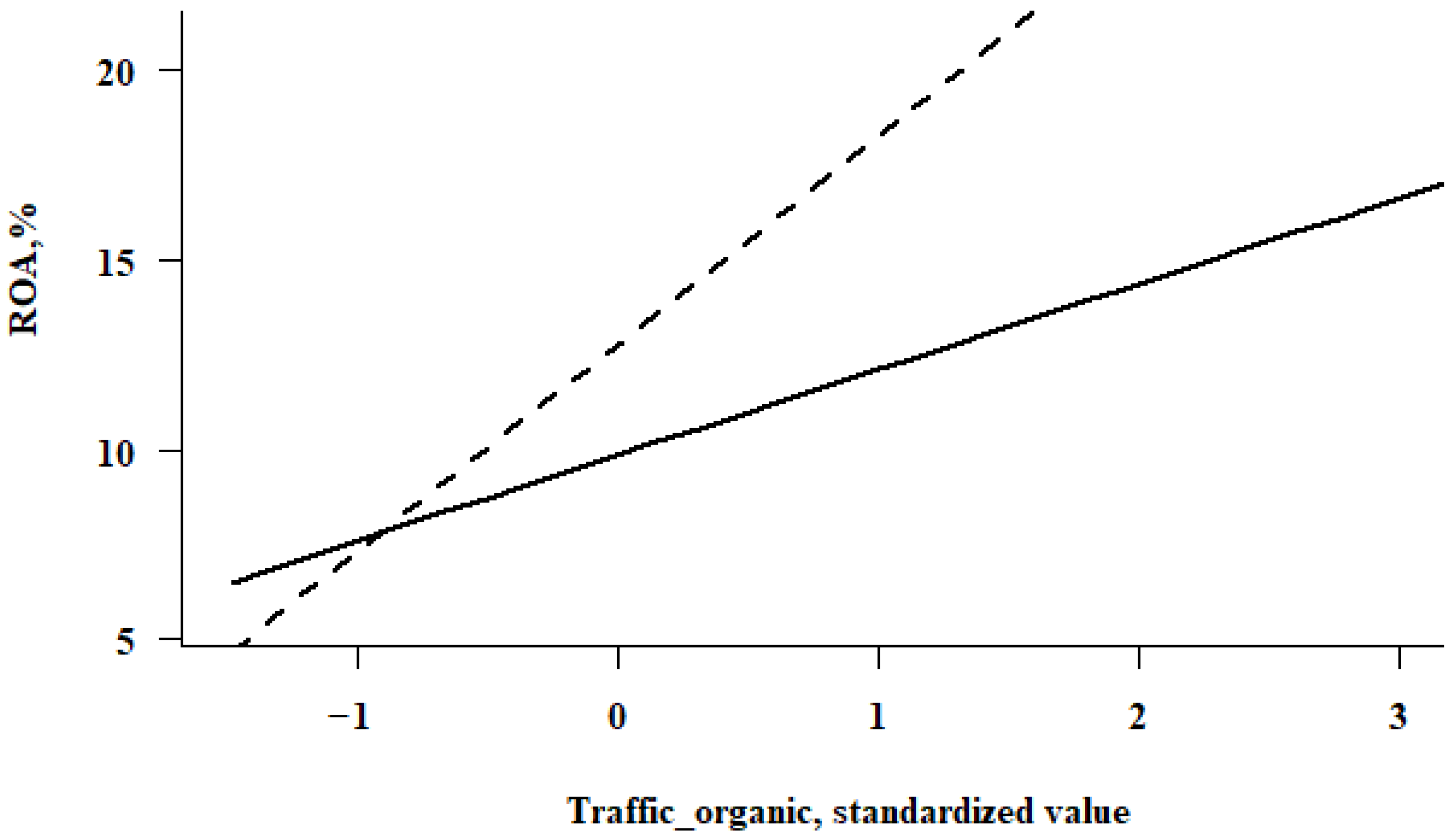
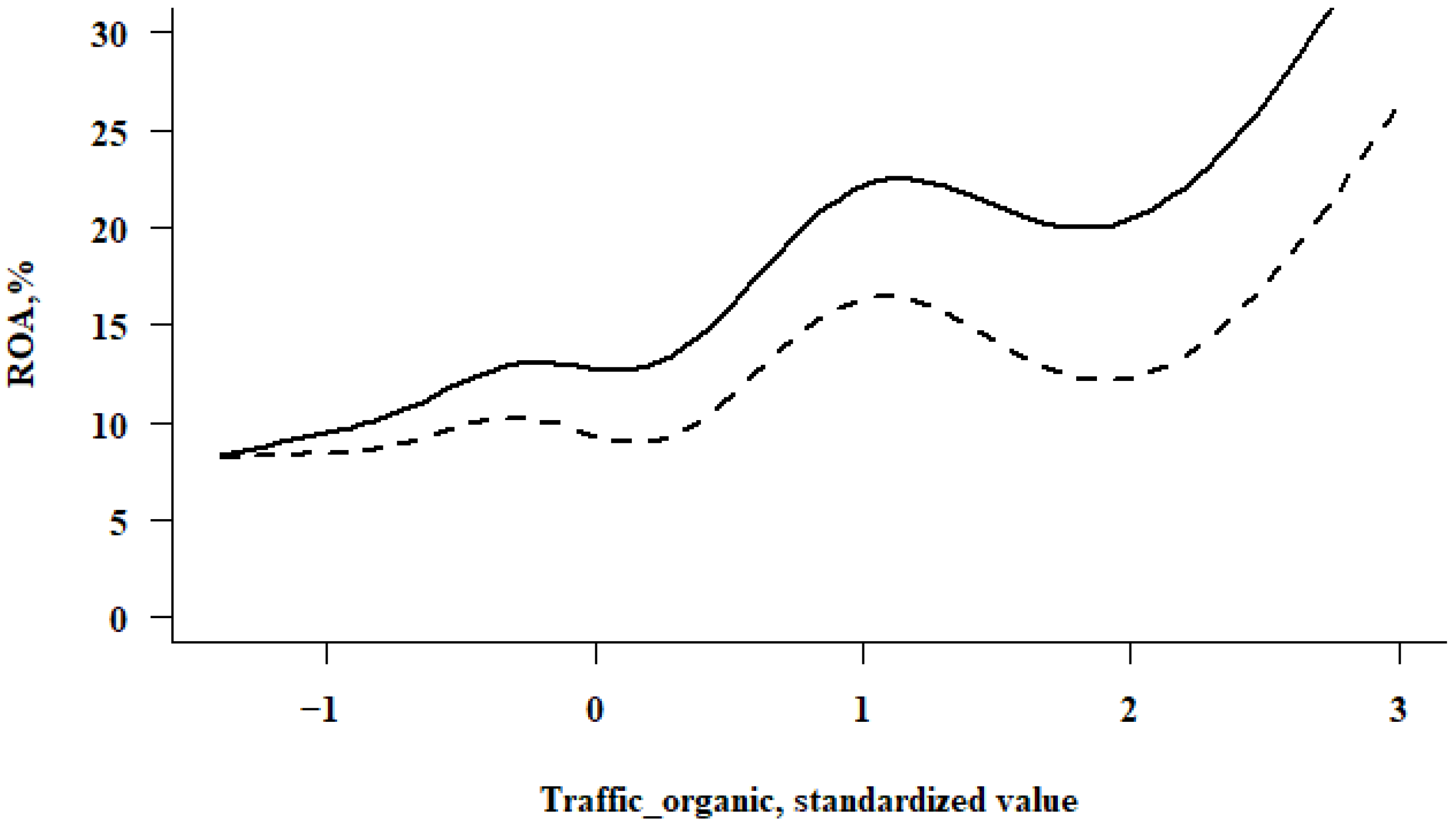
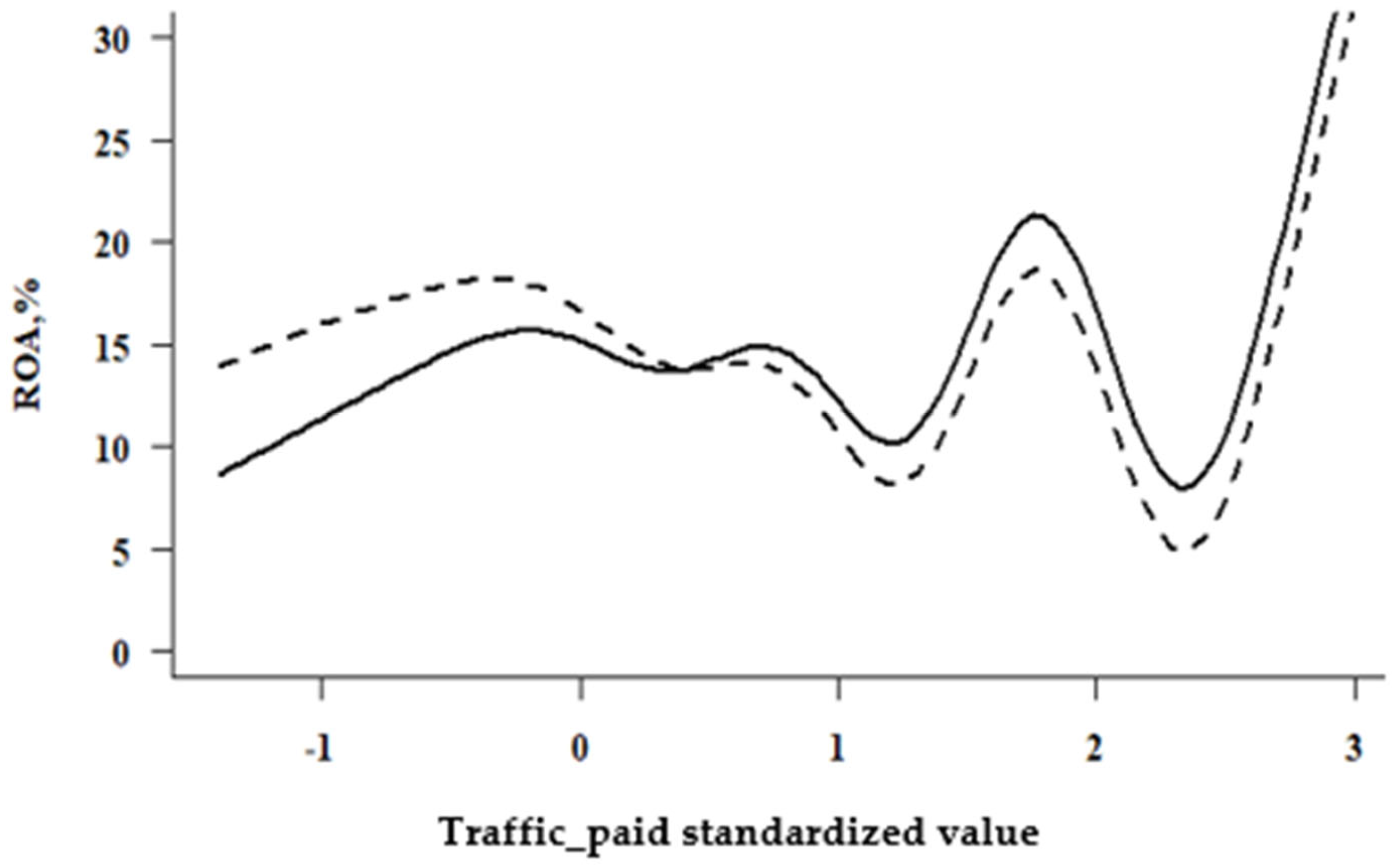
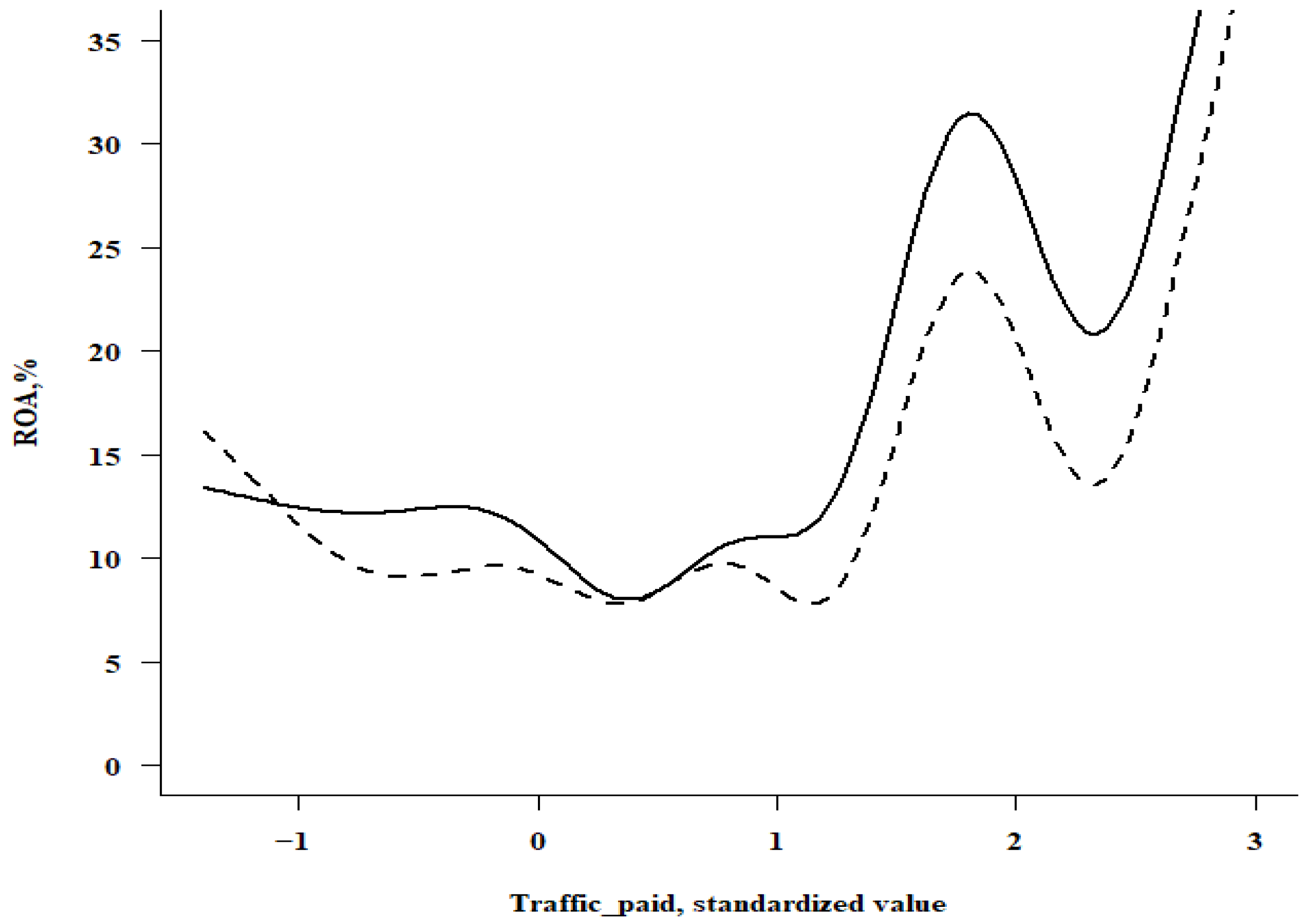
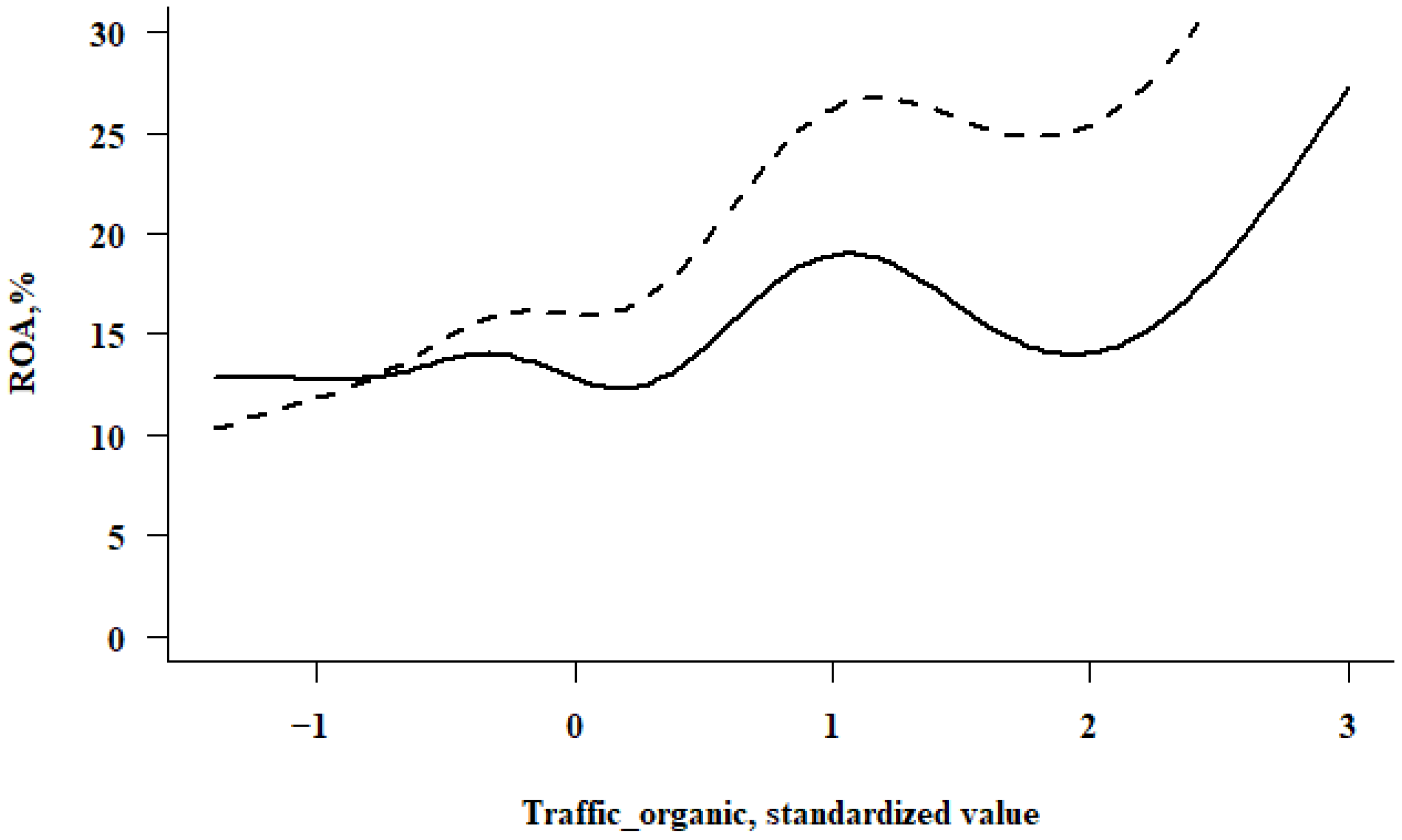
This study examines the influence of a firm’s digital footprint (organic and paid traffic) on its performance, assessing a sample of 151 Russian firms between 2017 and 2020. It shows a curvilinear association between a firm’s digital footprints (organic and paid) and its performance that varies across industries, moderated by the firm’s size and age. The study finds that organic and paid traffic have a diverse impact on firm performance. The impact of paid traffic is more complex and critical to understand. To gain full benefits from a digital footprint, firms need to innovate and utilize their resources strategically. The study findings are highly useful for other emerging markets that operate under a highly regulated, fragmented, and restricted environment.
Keywords: resource-based view; dynamic capabilities; institutional theory; website traffic; nonlinearity; emerging markets; regression; generalized additive model resource-based view; dynamic capabilities; institutional theory; website traffic; nonlinearity; emerging markets; regression; generalized additive model