Article

Characteristics of Electric Scooter-Related Maxillofacial Trauma, from 2017 to 2024: A Retrospective Study


by
Luis Miguel Gonzalez-Perez
1,*,
Johan Wideberg
2 and
Carlos Alvarez-Delgado
3
1
Department of Oral and Maxillofacial Surgery, Virgen del Rocio University Hospital, University of Seville, 41013 Seville, Spain
2
Department of Engineering and Materials and Transport Science, Higher Technical School of Engineering, University of Seville, 41092 Seville, Spain
3
Department of Clinical Documentation, Virgen del Rocio University Hospital, 41013 Seville, Spain
*
Author to whom correspondence should be addressed.
Osteology 2026, 6(3), 13; https://doi.org/10.3390/osteology6030013
Submission received: 3 April 2026 / Revised: 17 May 2026 / Accepted: 3 July 2026 / Published: 9 July 2026

Abstract

Background/Objectives: The aims of this study were to investigate maxillofacial trauma resulting from electric scooter accidents and to identify risk factors associated with the location of injuries. Methods: An 8-year retrospective cohort study was conducted involving all patients presenting with electric scooter-related maxillofacial fractures at a tertiary care center from 2017 to 2024. Data recorded for each patient included gender, age, date and cause of injury, contributing factors, type of facial fractures, other injuries, helmet use, and length of hospital stay. Results: Maxillofacial fractures were diagnosed in 138 patients (18.5% of e-scooter accident presentations). The study included 93 male and 45 female patients (ratio 2:1), with a mean age of 25.8 ± 7.75 years (range 14–45 years). Patients aged 20–29 years formed the largest group (51%). Most patients (89%) sustained a single facial fracture, and the most affected facial area was the lower third, with 80 cases (58%), followed by the middle third (36%). The remaining patients were represented by a combination of the various facial thirds, with thirds I-II being the most representative (12%). The most recurrent patterns were multifocal mandibular fractures (55%), followed by fractures of the orbito-malar-zygomatic complex (33%). Dental injuries were also frequent and were recorded in 40 patients (29% of all cases). Concomitant injuries outside the facial region were documented in 32 patients (23%), among which orthopedic limb injuries were most common (44% of patients with concomitant injuries). Contributing factors were identifiable in 102 patients (74%). Self-reported helmet use was low, with 63% of patients reporting never wearing a helmet, and 27% reporting inconsistent or occasional use. Conclusions: Accidents involving personal mobility vehicles have become a primary cause of emergency room admissions in recent years. Although electric-scooter-related maxillofacial fractures are a new phenomenon, an awareness of their frequency, contributing factors, and anatomical distribution is important for emergency and trauma teams who assess these patients first. Early recognition and timely management are crucial because missed diagnoses or delayed treatment can lead to permanent facial deformities and functional disability. These findings can inform targeted public health strategies and injury-prevention programs. In the future, helmet designs should be modified to improve maxillofacial protection in scooter-related injuries.

1. Introduction

Personal mobility vehicles (PMVs) are single-occupant, electrically powered, lightweight vehicles designed for personal transportation, with speeds typically below 25 km/h. The most widely used PMV is the electric scooter (e-scooter). The rapid rise in e-scooter popularity has significantly impacted urban mobility. Low cost, convenience, and wide availability—particularly via app-based rental services—combined with the perception of environmentally friendly transport, are among the main factors driving interest in and use of e-scooters. They play an important role in large cities due to their use for short-distance travel and avoidance of peak traffic congestion [1,2,3].
As the number of e-scooter users has increased, the incidence of related accidents has also risen. Since 2012, the number of accidents has continued to rise [4]. In the early years, the increase was gradual; however, since 2021, the number of cases has doubled each year [5,6]. Injured individuals are most commonly riders, who fall after striking poor infrastructure or colliding with another vehicle. Characterizing injury patterns and documenting crash circumstances are therefore important. The maxillofacial region is particularly vulnerable to injury in e-scooter accidents [4,5,6,7].
The aims of this study were to characterize the most common maxillofacial injuries resulting from e-scooter accidents and identify risk factors associated with injury location OK and severity.

2. Materials and Methods

2.1. Standard Protocol Approvals

This protocol received formal approval from the Institutional Research and Clinical Ethics Committee (Internal Code: IRB 0975-N-21) and adhered to the ethical principles for medical research involving human subjects, as outlined in the Declaration of Helsinki.

2.2. Study Design and Subjects

This single-center retrospective cohort study analyzed the medical records of patients with acute maxillofacial fractures sustained in e-scooter-related accidents who were treated at the Department of Oral and Maxillofacial Surgery between January 2017 and December 2024. Inclusion criteria were (1) a history of maxillofacial trauma after an e-scooter accident and (2) imaging evidence of a facial bone fracture. Patients of any gender aged between 14 and 65 years at the time of injury were considered eligible. Collected variables included age, sex, date of injury, crash mechanism (collision vs. fall, including specific circumstances), presumed contributing factors, the type and location of facial fractures, injuries in other body regions, length of hospital stay, and helmet use. The study cohort was composed of patients who required major surgical intervention for fracture stabilization, performed under general anesthesia. Exclusion criteria were incomplete records and minor superficial injuries (abrasions or contusions) without any facial fracture. Potential contributing factors were recorded when available (as reported by emergency services) or inferred from the crash circumstances: poorly maintained traffic infrastructure, excessive speed, alcohol use while riding, riding with headphones/earbuds on, non-use of a helmet, and e-scooter malfunction or absence of safety features. Data confidentiality was strictly maintained throughout the study.

2.3. Statistical Analysis

Statistical procedures were executed to evaluate the dataset. Data analysis was performed using IBM SPSS Statistics (version 25, IBM Corp., Armonk, NY, USA). For all analyses, a p-value ≤ 0.05 was established as the threshold for statistical significance.

3. Results

During the 8-year study period, 742 patients were evaluated for e-scooter-related accidents, and facial fractures were diagnosed in 138 patients (18.5% of all e-scooter accident presentations). The overall mean age was 25.8 ± 7.75 years (range 14–45 years). The study cohort included 93 male patients (mean age: 26.5 ± 7) and 45 female patients (mean age: 24.35 ± 5.5) (p = 0.052), with a male:female ratio of 2:1. By age group, young adults were most frequently affected by e-scooter-related accidents. Patients aged 20–29 years formed the largest group (71 patients, 51%), followed by those aged 30–39 years (31 patients, 22.5%) (Figure 1).
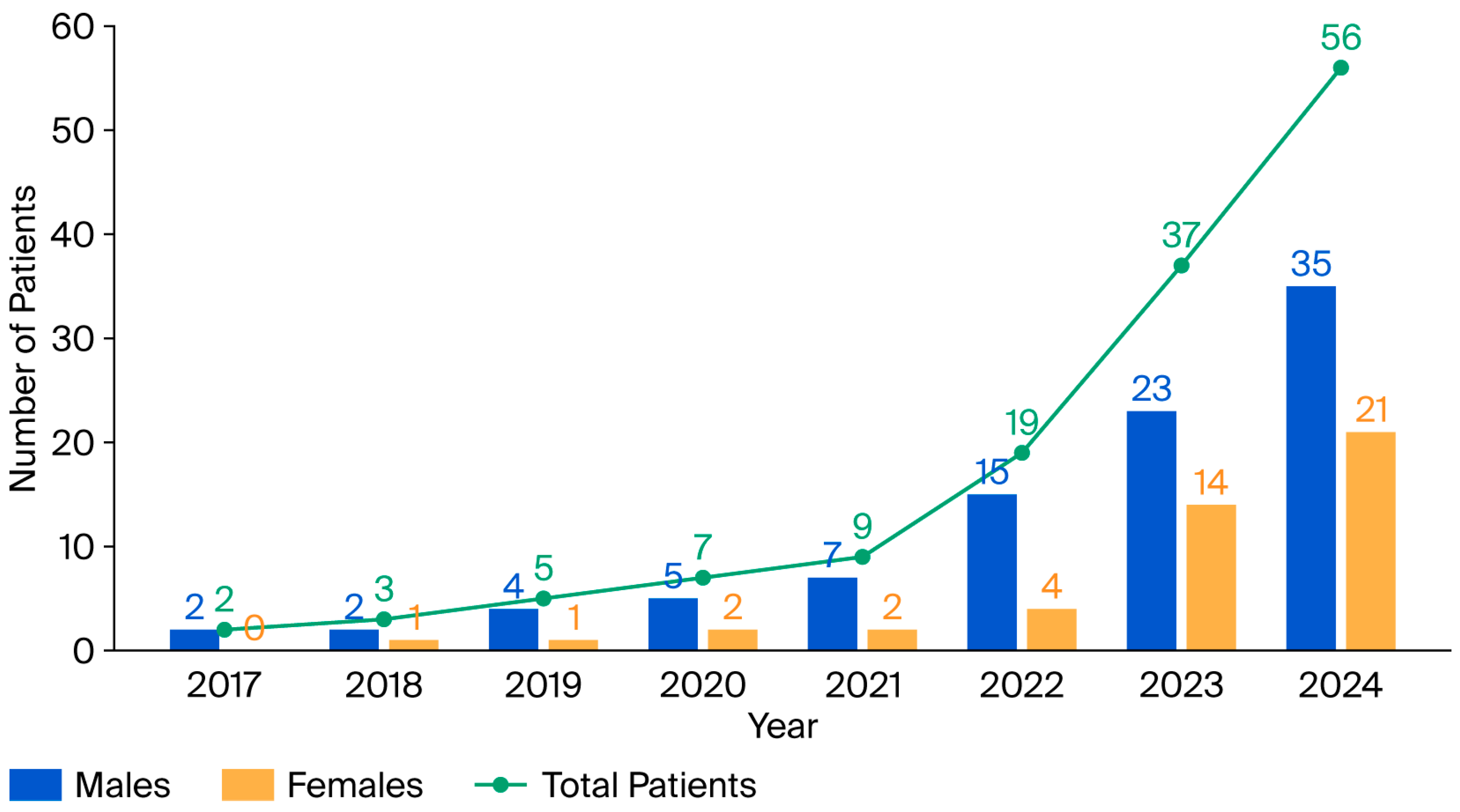
Since 2017, the number of e-scooter-related accidents has been steadily increasing each year. In the early years, such an increase was gradual, but since 2021, the number of cases has doubled annually. The number of patients admitted each year with e-scooter-related facial fractures is summarized in Figure 2.
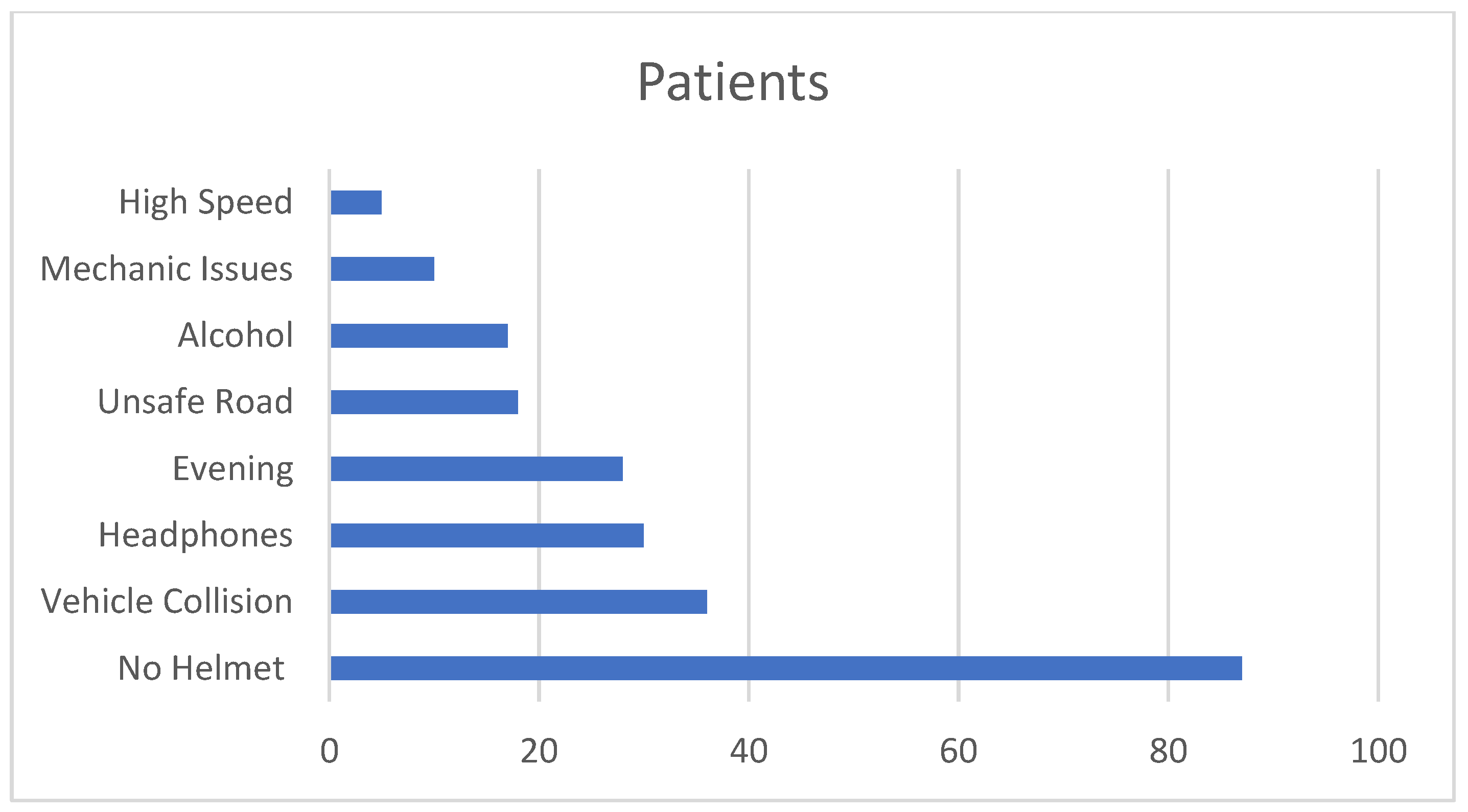
There was no significant difference in incidence across different months of the year or between different days of the week. Contributing factors were identifiable in 102 patients (74%), and some patients had multiple contributing factors. Self-reported helmet use was low, with 63% of patients reporting never wearing a helmet and 27% reporting inconsistent or occasional use. By contrast, 10% of patients reported always wearing a helmet while riding. The main contributing factors were as follows: no helmet use (87 patients, 63%); involvement of another motor vehicle (36 patients, 26%); riding with headphones/earbuds on (30 patients, 22%); riding during the early evening (dusk) (28 patients, 20%); unsafe road conditions (e.g., rain, roadworks) (19 patients, 14%); alcohol and/or illicit drug use (18 patients, 13%); mechanical failure of the e-scooter (10 patients, 7%); and competitive or high-speed riding (5 patients, 3%). Table 1 and Figure 3 illustrate the primary contributing factors and the corresponding number of affected patients by each.
Most patients (89%) sustained a single facial fracture, while 11% sustained multiple facial fractures. The most affected facial area was the lower third in 80 cases (58%), followed by the middle third in 55 cases (40%). The remaining patients presented with injuries in a combination of the various thirds, with thirds I-II being the most representative and occurring exclusively in male patients (17 patients, 12%). The most recurrent patterns were multifocal mandibular fractures (76 patients, 55%), followed by fractures of the orbito-malar-zygomatic complex (45 patients, 33%). The distribution of the main fracture types was as follows: mandible (80 patients, 58%), orbito-zygomatic-maxillary complex (45 patients, 33%), nasal (10 patients, 7%), and frontal (2%), as shown in Table 2. The mandibular condylar area was the most frequently fractured site in 62 cases, totaling 77.5% of patients with mandibular fractures. Dental injuries were also frequent and were recorded in 40 patients. The most common dental injuries were tooth fracture (59% of dental injuries), followed by avulsion (27%) and tooth luxation (14%). In 63% of cases with dental injuries, the upper anterior teeth were involved.
Concomitant injuries outside the facial region were documented in 32 patients (23%). Among these, orthopedic limb injuries were the most common in 21 cases, totaling 65% of patients with concomitant injuries. Traumatic brain injuries (e.g., intracranial injury or concussion) were noted in 11 patients (34%) and were associated with a longer hospital stay (mean 28 ± 5 days). Most patients did not require prolonged hospitalization. Among patients with isolated facial fractures, the main hospital stay was 4 ± 1.4 days, including preoperative stay. None of the patients with a concomitant cranial injury were wearing a helmet at the time of the e-scooter crash.

4. Discussion

The private use of e-scooters began around 2012, and their uptake accelerated with the emergence of digital platforms and app-based shared mobility. The system was subsequently introduced in large Spanish cities, including Seville in August 2019, with the entry of multiple platforms [3,4,5]. Overall, the incidence of motor-vehicle-related trauma has declined in many settings because of improved safety measures such as seatbelts and airbags [8]. In contrast, injuries associated with emerging micromobility modes, particularly e-scooters, have increased as their use has expanded. This trend has also been observed in Seville since the introduction of shared e-scooter services in 2019. Seville is a flat city in southern Spain with a mild climate for most of the year, which is a favorable condition for micromobility. However, the growing incidence of e-scooter-related injuries cannot be explained solely by rider behavior; it also reflects broader shortcomings in infrastructure planning and implementation [6,7,8].
One important factor is the design and layout of scooter-lane infrastructure, which often shares space with bicycle lanes and creates points of conflict with both motorized traffic and pedestrians [3,4]. In our city, some of these lanes intersect with roads that have limited visibility for drivers, increasing the risk of collisions between e-scooter riders and motor vehicles. This is clinically relevant because, in our cohort, the most severe facial fractures were associated with crashes involving other motor vehicles. These findings suggest that infrastructure design may influence not only the frequency of crashes but also the severity of injuries.
A second contributing factor is that the early rollout of shared e-scooter services appears to have outpaced both public education and regulatory preparedness [3]. Shared e-scooter companies began operating in our city in August 2019 without comprehensive municipal regulation [4]. The City Council later launched an official pilot program in July 2021, selecting two operators to deploy 2000 vehicles with designated parking points. Nevertheless, the service was discontinued in July 2025 due to persistent accident rates and regulatory noncompliance. Although the per-minute street rental model has been withdrawn, private rental and guided-tour services remain available, and private e-scooters continue to be authorized in Spain under increasingly restrictive local conditions. This sequence of events highlights the importance of infrastructure planning, regulations, and rider education on how to use e-scooters, rather than allowing the large-scale deployment of micromobility services [4].
E-scooter-related trauma has become an increasingly important cause of maxillofacial injury. Regional differences in injury rates likely reflect variations in exposure, riding habits, rider demographics, and reporting practices. Importantly, official road-traffic statistics may underestimate the true burden of e-scooter-related injuries because single-vehicle falls are often not reported to the police. Hospital-based data, therefore, provide an important complementary perspective on the epidemiology of e-scooter injuries [9]. Similarly, Uluk et al. showed that combining police and hospital records yields a more complete picture of e-scooter incidents than using either data source alone [10].
The demographic profile of our patients is consistent with previous studies [6,9,11], with young adult males comprising most cases. Based on our results, there is insufficient evidence to conclude that age systematically differs by sex in our study, although a borderline trend towards significance was observed (p = 0.052). Riders in their teens, twenties, and thirties are more likely to use e-scooters frequently and may also exhibit greater risk-taking behavior. However, simply classifying a crash as involving a motor vehicle does not fully explain its cause. Some events may be related to rider error, such as distraction, excessive speed, or one-handed riding. By contrast, others may be attributable to driver behavior or contextual risk factors such as intoxication, phone use, or riding in groups.
Our method of fracture distribution differs somewhat from those used in other European series. Salzano et al., in a multicentric Italian study conducted in 10 maxillofacial departments between 2020 and 2023, found that the middle third of the face was the region most affected by e-scooter-related crashes (45.5%), followed by the lower third of the face (39.3%) [11]. In contrast, in our series, the lower third was the most affected facial region, accounting for 80 injury cases (58%), followed by the middle third in 55 patients (40%). The remaining cases involved combinations of facial thirds, most commonly lower-middle involvement in 17 patients (12%). Kowalczewka et al., studying a Polish cohort, reported mandibular fractures in 37.5% of patients and orbit zygomatic fractures in 20%, which is more comparable to our own observations [12].
Therefore, consistent with prior reports, we found that the mandible was the most frequently fractured facial bone in e-scooter accidents. In our cohort, mandibular fractures represented 58% of all fractures. This pattern is biomechanically plausible. Falls from an e-scooter often result in direct impact to the chin, one of the most exposed and prominent parts of the face, which transmits force to the mandibular condyles. The relative structural vulnerability of the condylar neck may explain why this region is frequently involved. Clinically, condylar fractures may present with preauricular pain, swelling, limited mouth opening, and malocclusion. For this reason, our management protocol emphasizes careful assessment of mouth opening, lateral excursions, and occlusion to reduce the risk of missed condylar injuries during the initial evaluation. Secondly, orbito-zygomatic-maxillary complex fractures accounted for 33% of maxillofacial trauma in our study cohort, which were also significantly more complex than those observed in conventional accidents, a trend consistent with the current literature, which highlights that the lack of facial protection and sudden deceleration mechanisms predominantly expose the face to high-energy impacts [3,6,12,13,14].
Dental trauma was also frequent. In our series, dental injuries were recorded in 19 patients, with tooth fracture being the most common lesion, followed by avulsion and luxation. The upper anterior teeth were most often involved. These findings align with previous reports and further support the substantial impact of e-scooter crashes on the lower and anterior facial regions [15,16].
Facial fractures in e-scooter riders are often accompanied by injuries outside the maxillofacial region, emphasizing the need for multidisciplinary trauma assessment. In our cohort, 23% of patients sustained concomitant injuries beyond the face, most commonly orthopedic trauma to the upper or lower limbs. These findings support the use of structured trauma protocols and appropriate imaging when assessing e-scooter-related injuries, including computed tomography when indicated, rather than focusing solely on obvious facial injuries [17,18]. Traumatic brain injury, including intracranial injury or concussion, was identified in 11 patients and was associated with longer hospital stays. Notably, none of these patients had been wearing a helmet at the time of the crash.
Helmet use remains one of the most effective strategies for reducing injury severity in e-scooter crashes. Previous studies suggest that helmets may prevent 65% to 88% of serious head injuries [1,19,20,21]. In our series, however, helmet use was very low, with 63% of patients reporting never wearing a helmet and 27% reporting occasional or inconsistent use. By contrast, only 10% reported always wearing one. Importantly, none of the patients who sustained traumatic brain injury had been wearing a helmet. These findings reinforce the protective value of helmets. However, the absence of helmet use should not be interpreted as the cause of the crash itself, but rather as a determinant of injury severity once a crash occurs. At the same time, current helmet designs have important limitations in relation to maxillofacial trauma. Standard e-scooter helmets are primarily designed to protect the cranium and upper face, leaving the lower face, especially the jaw and chin, relatively exposed [4,5,6,7,18]. This limitation is highly relevant in light of our findings, since the lower third of the face was the most frequently affected region, and mandibular fractures were especially common. Thus, although helmets appear effective in reducing traumatic brain injury, they do not adequately address the facial injury pattern that characterizes many e-scooter crashes.
International evidence suggests that regulatory approaches to helmet use have shown mixed results. Stassen et al. reported that helmeted riders sustain significantly fewer maxillofacial injuries than non-helmeted riders, although helmet use does not clearly reduce the total number of e-scooter crashes [22]. In Copenhagen, a mandatory helmet law monitored through computer-vision analysis was associated with a significant increase in helmet use [23]. By contrast, in Oxfordshire, the effect of helmet-related interventions appeared more limited [24]. These differences suggest that legislation and public health campaigns may vary in effectiveness depending on enforcement, public uptake, and local riding culture. In Spain, until recently, helmet use in urban areas was mandatory only for riders below 16 years of age, whereas for adults it remained recommended rather than compulsory. Our findings support stronger promotion of helmet use across all age groups and suggest that stricter legislation may help reduce both head injuries and maxillofacial trauma.
However, improved compliance alone may not be sufficient. The mismatch between current helmet design and observed injury patterns indicates a need for innovation in protective equipment. Future helmet systems should provide greater facial coverage and improved absorption upon impact, particularly in the mandibular and maxillary regions. Several approaches appear promising. These include helmets with extended lower-face protection, modular facial shields, and smart systems that adapt protection to impact conditions. Inflatable “airbag” helmets also represent an important area of development and may offer advantages over traditional rigid designs in selected e-scooter scenarios [4].
Technological innovation beyond protective equipment may also contribute to safer riding environments. Anagnostopoulos et al. described systems in which traffic signals detect approaching users through smartphone communication and adapt signal timing accordingly [25]. Vehicle-to-vehicle and vehicle-to-rider communication systems are also being explored as a means of warning drivers and riders of each other’s presence before a collision occurs [4]. Such approaches may be particularly useful in urban settings where poor visibility and frequent infrastructure conflict points increase the risk of crashes.
Rotational protection has become a significant aspect of modern helmet design as oblique impacts generate rotational head motion closely linked to brain injury mechanisms. Recent studies, such as those by Bonin et al. and Han et al., have identified that the MIPS (multi-directional impact protection system) is one of the most widely studied commercial systems for mitigating such motion. Similarly, experimental studies have reported lower rotational kinematics in helmets equipped with the MIPS than in comparable non-MIPS configurations under oblique impact conditions [26,27]. Recent research has also used WG11 oblique impact test conditions for model validation and helmet assessment [26]. However, helmet performance varies substantially across models and design solutions, indicating that protection depends on the overall helmet design rather than on a single technology alone [28,29]. This issue is particularly relevant in e-scooter crashes, where experimental studies have shown that bicycle helmets can markedly reduce linear head acceleration and some rotational injury metrics, and the risk of severe head and neck injury may still remain high [30]. These findings support the use of helmets specifically designed and evaluated for oblique-impact protection.
More broadly, our findings reflect how changes in urban transport are reshaping injury patterns. Bicycle-related maxillofacial trauma has been studied extensively, but the increasing use of electric scooters has introduced additional and partly distinct patterns of craniofacial injury. Comparative studies between bicycle- and e-scooter-related trauma would be valuable to identify whether prevention strategies should be mode-specific [15,16].
This study has several limitations. First, it was conducted at a single tertiary referral hospital. As a major regional center, our institution is likely to receive a higher proportion of severe craniofacial trauma, which may limit generalizability to less severe cases of e-scooter injury in the community. Second, minor injuries may have been underestimated because some patients were treated elsewhere and not referred for specialist evaluation or did not seek care. Third, certain fractures, particularly nondisplaced mandibular condyle fractures, may be missed initially when symptoms are mild. Furthermore, the limitations inherent to the retrospective nature of this study must be acknowledged, particularly regarding incomplete data in medical records. Such missing information is especially pertinent in the context of transfer hospitals lacking maxillofacial departments. Additionally, certain relevant cases may have been omitted due to inconsistencies in the clinical documentation concerning maxillofacial trauma and specific injury dates. To address these challenges, future strategies aimed at reducing the proportion of missing data should focus on standardizing data collection and integrating it with Emergency Medical Service reports and trauma registries. Finally, our sample size of 138 patients over 8 years reflects the relative infrequency of severe e-scooter-related maxillofacial trauma at the population level, even though it constitutes a clinically meaningful series of injuries. The inclusion of the COVID-19 pandemic period may also have affected temporal patterns, as mobility restrictions were associated with a marked reduction in trauma presentations during parts of 2020 [13]; by contrast, other authors have reported relative increases in e-scooter-related facial trauma during later pandemic years [14].
In summary, electric-scooter-related maxillofacial trauma appears to result from a combination of behavioral, infrastructural, and technological factors. The coexistence of suboptimal urban infrastructure and limited facial protection offered by current helmets creates a compounded safety risk for riders [3,4,8]. Effective prevention will require a multifaceted response that includes better infrastructure design, regulatory frameworks introduced before service deployment, rider education, stronger helmet policies, and advances in helmet technology specifically aimed at protecting the lower face. International regulatory experiences and emerging safety technologies are useful models for reducing the burden of electric-scooter-related maxillofacial injury in the future.

5. Conclusions

Injuries associated with the use of electric scooters are a recent phenomenon that mainly affect the maxillofacial region due to the dynamic nature of the trauma. Our series reflects the increasing frequency of maxillofacial trauma resulting from accidents involving electric scooters at the population level. Mandibular fractures were the most frequently recorded injury, with condylar fractures predominating, and the second most frequent location in our cohort was the orbito-zygomatic complex. Although scooter-related maxillofacial fractures are relatively common, awareness of their frequency, contributing factors, and anatomical distribution is important for emergency and trauma teams who are the first to assess these patients. Early recognition and timely management are crucial because missed diagnoses or delayed treatment can lead to permanent facial deformity and functional impairment. Key contributing factors in our series included a lack of helmet use, involvement of other motor vehicles, distraction (e.g., headphone use), and riding during the early evening. These findings can inform targeted public health strategies and injury prevention programs.

Author Contributions

Conceptualization, L.M.G.-P. and J.W.; methodology, L.M.G.-P. and J.W.; software, L.M.G.-P., J.W. and C.A.-D.; validation, L.M.G.-P. and J.W.; formal analysis, L.M.G.-P., J.W. and C.A.-D.; investigation, L.M.G.-P. and J.W.; resources, L.M.G.-P., J.W. and C.A.-D.; data curation, L.M.G.-P., J.W. and C.A.-D.; writing—original draft preparation, L.M.G.-P. and J.W.; writing—review and editing, L.M.G.-P., J.W. and C.A.-D.; visualization, L.M.G.-P. and J.W.; supervision, L.M.G.-P., J.W. and C.A.-D.; project administration, L.M.G.-P. and J.W.; funding acquisition, L.M.G.-P. and J.W. All authors have read and agreed to the published version of the manuscript.

Funding

This research received no external funding.

Institutional Review Board Statement

The study was conducted in accordance with the Declaration of Helsinki and approved by the Ethics Committee of University Hospital, Seville, Spain (IRB 0975-N-21, approved by 27 July 2021).

Informed Consent Statement

Informed consent was obtained from all subjects involved in the study.

Data Availability Statement

The data presented in this study are available upon reasonable request by contacting the corresponding author.

Acknowledgments

We would like to thank all the participants who contributed to the study.

Conflicts of Interest

The authors do not have any potential financial conflicts of interest related to this manuscript.

References

  1. Namiri, N.K.; Lui, H.; Tangney, T.; Allen, I.E.; Cohen, A.J.; Breyer, B.N. Electric scooter injuries and hospital admissions in the United States, 2014–2018. JAMA Surg. 2020, 155, 357–359. [Google Scholar] [CrossRef] [PubMed]
  2. Farley, K.X.; Aizpuru, M.; Wilson, J.M.; Daly, C.A.; Xerogeanes, J.; Gottschalk, M.B.; Wagner, E.R. Estimated incidence of electric scooter injuries in the US from 2014 to 2019. JAMA Netw. Open 2020, 3, e2014500. [Google Scholar] [CrossRef] [PubMed]
  3. Louro, J.; Silva-De Las Salas, A.; Varon, A.J. A trauma e-scooter epidemic. Anesth. Analg. 2023, 136, 957–959. [Google Scholar] [CrossRef] [PubMed]
  4. Sobrino, N.; Gonzalez, J.N.; Vassallo, J.M.; Baeza, M.A. Regulation of shared electric kick scooters in urban areas: Key drivers from expert stakeholders. Transp. Policy 2023, 134, 1–18. [Google Scholar] [CrossRef]
  5. Trivedi, B.; Kesterke, M.J.; Bhattacharjee, R.; Weber, W.; Mynar, K.; Reddy, L.V. Craniofacial Injuries Seen with the Introduction of Bicycle-Share Electric Scooters in an Urban Setting. J. Oral Maxillofac. Surg. 2019, 77, 2292–2297. [Google Scholar] [CrossRef] [PubMed]
  6. Moftakhar, T.; Wanzel, M.; Vojcsik, A.; Kralinger, F.; Mousavi, M.; Hajdu, S.; Aldrian, S.; Starlinger, J. Incidence and severity of electric scooter related injuries after introduction of an urban rental programme in Vienna: A retrospective multicentre study. Arch. Orthop. Trauma Surg. 2021, 141, 1207–1213. [Google Scholar] [CrossRef] [PubMed]
  7. Wüster, J.; Voβ, J.; Koerdt, S.; Beck-Broichsitter, B.; Kreutzer, K.; Märdian, S.; Lindner, T.; Heiland, M.; Doll, C. Impact of the rising number of rentable e-scooter accidents on emergency care in Berlin 6 Months After the Introduction: A maxillofacial perspective. Craniomaxillofac. Trauma Reconstr. 2021, 14, 43–48. [Google Scholar] [CrossRef] [PubMed]
  8. Wang, K.; Li, Z. Global, regional, and national burdens of road injuries from 1990 to 2021: Findings from the 2021 Global Burden of Disease Study. Injury 2025, 56, 112221. [Google Scholar] [CrossRef] [PubMed]
  9. Shichman, I.; Shaked, O.; Factor, S.; Weiss-Meilik, A.; Khoury, A. Emergency department electric scooter injuries after the introduction of shared e-scooter services: A retrospective review of 3331 cases. World J. Emerg. Med. 2022, 13, 5–10. [Google Scholar] [CrossRef] [PubMed]
  10. Uluk, D.; Lindner, T.; Dahne, M.; Bickelmayer, J.W.; Beyer, K.; Slagman, A.; Jahn, F.; Willy, C.; Mockel, M.; Gerlach, U.A. E-scooter incidents in Berlin: An evaluation of risk factors and injury patterns. Emerg. Med. J. 2022, 39, 295–300. [Google Scholar] [CrossRef] [PubMed]
  11. Salzano, G.; Maffia, F.; Vaira, L.A.; Fusco, R.; Albanese, M.; Crimi, S.; Cucurullo, M.; Maglitto, F.; Maugeri, C.; Petrocelli, M.; et al. The Impact of Standing Electric Scooters on Maxillofacial Fractures: An Italian Multi-Centric Epidemiological Study. J. Clin. Med. 2024, 13, 5195. [Google Scholar] [CrossRef] [PubMed]
  12. Kowalczewska, J.; Rzepczyk, S.; Okła, M.; Nijakowski, K.; Słowik, Ł.; Makuch, A.; Hryniewicz, O.; Krasnoborska, J.; Zaba, C.; Osmola, K. Characteristics of E-Scooter-Related Maxillofacial Injuries over 2019–2022—Retrospective Study from Poznan, Poland. J. Clin. Med. 2023, 12, 3690. [Google Scholar] [CrossRef] [PubMed]
  13. Infante-Cossio, P.; Fernandez-Mayoralas, M.; Gonzalez-Perez, L.M.; Martinez-de-Fuentes, R.; Rollon-Mayordomo, A.; Torres-Carranza, E. Impact of the coronavirus pandemic on maxillofacial trauma: A retrospective study in southern Spain. Med. Oral Patol. Oral Cir. Bucal 2022, 27, 223–229. [Google Scholar] [CrossRef] [PubMed]
  14. Piccolino, P.; Buonaccorsi, S.; Cerulli, G.; Corbetta, C.; Pitino, F.; Tedaldi, M.; Marini Balestra, F.M.; Vetrano, S. E-Scooter-Related Maxillofacial Fractures: A New Emerging Epidemic During the COVID-19 Period in the Province of Rome, Lazio, Italy: A Monocentric Study Review of 843 Patients Compared with the Pre-COVID-19 Two-Year Period. J. Craniofac. Surg. 2024, 35, 510–514. [Google Scholar] [CrossRef] [PubMed]
  15. Dudde, F.; Revend, L.; Revend, D.; Schuck, O.; Giese, M. Facial trauma in e-scooter vs. bicycle accidents: A retrospective comparative analysis in a metropolitan setting. Dent. Traumatol. 2025, 41, 641–648. [Google Scholar] [CrossRef] [PubMed]
  16. Aydin, A.; Schunk, J.; Giese, M.; Schuck, O.; Dudde, F. Comparison of Dentoalveolar Trauma Patterns Between E-Scooter and Bicycle Accidents in a German Urban Area: A Retrospective Study. Dent. J. 2025, 13, 409. [Google Scholar] [CrossRef] [PubMed]
  17. Choron, R.L.; Sakran, J.V. The integration of electric scooters: Useful technology or public health problem? Am. J. Public Health 2019, 109, 555–556. [Google Scholar] [CrossRef] [PubMed]
  18. Gan-El, E.; Djomo, W.N.; Ciobanu, A.M.P.; Kaufman, L.; Djiélé, F.N.; Ulrix, M.; Kreps, B.; Plumacker, A.; Malinverni, S.; Bartiaux, M.; et al. Risk assessment, consequences, and epidemiology of electric scooter accidents admitted to an emergency department: A prospective observational study. Eur. J. Trauma Emerg. Surg. 2022, 48, 4847–4855. [Google Scholar] [CrossRef] [PubMed]
  19. Fisher, N.D.; Nwakoby, E.; Hernandez, H.; McLaurin, T.M. Electric scooter injuries: Incidence and injury patterns at a level I trauma center. Chin. J. Traumatol. 2023, 26, 334–338. [Google Scholar] [CrossRef] [PubMed]
  20. Cirillo, B.; Tarallo, M.; Duranti, G.; Sapienza, P.; Cicerchia, P.M.; Simonelli, L.; Cirocchi, R.; Matteucci, M.; Mingoli, A.; Brachini, G. Electric Scooter Trauma in Rome: A Three-Year Analysis from a Tertiary Care Hospital. J. Clin. Med. 2025, 14, 3615. [Google Scholar] [CrossRef] [PubMed]
  21. Bauer, F.; Riley, J.D.; Lewandowski, K.; Najafi, K.; Markowski, H.; Kepros, J. Traumatic injuries associated with standing motorized scooters. JAMA Netw. Open 2020, 3, e201925. [Google Scholar] [CrossRef] [PubMed]
  22. Stassen, H.S.; Atalik, T.; Haagsma, J.A.; Wolvius, E.B.; Verdonschot, R.J.C.G.; Rozeboom, A.V.J. Effect of helmet use on maxillofacial injuries due to bicycle and scooter accidents: A systematic literature review and meta-analysis. Int. J. Oral Maxillofac. Surg. 2024, 53, 28–35. [Google Scholar] [CrossRef] [PubMed]
  23. Siebert, F.W.; Riils, C.; Janstrup, K.H.; Lin, H.; Hüttel, F.B. Computer vision-based helmet use registration for e-scooter riders: The impact of the mandatory helmet law in Copenhagen. J. Saf. Res. 2023, 87, 257–265. [Google Scholar] [CrossRef] [PubMed]
  24. Dhar, P.; Jones, J. Electric scooter-related oral and maxillofacial injuries in Oxfordshire. Br. J. Oral Maxillofac. Surg. 2024, 62, 826–830. [Google Scholar] [CrossRef] [PubMed]
  25. Anagnostopoulos, T.; Ferreira, D.; Samodelkin, A.; Ahmed, M.; Kostakos, V. Cyclist-aware traffic lights through distributed smartphone sensing. Pervasive Mob. Comput. 2016, 31, 22–36. [Google Scholar] [CrossRef]
  26. Bonin, S.J.; DeMarco, A.L.; Siegmund, G.P. The Effect of MIPS, Headform Condition, and Impact Orientation on Headform Kinematics Across a Range of Impact Speeds During Oblique Bicycle Helmet Impacts. Ann. Biomed. Eng. 2022, 50, 860–870. [Google Scholar] [CrossRef] [PubMed]
  27. Han, Y.; Yang, H.; Wu, H.; Pan, D.; Wang, B.Y. Quantitative analysis of the protective performance of bicycle helmet with multi-direction impact protection system in oblique impact tests. Chin. J. Traumatol. 2024, 27, 226–234. [Google Scholar] [CrossRef] [PubMed]
  28. Bland, M.L.; McNally, C.; Rowson, S. Differences in Impact Performance of Bicycle Helmets During Oblique Impacts. J. Biomech. Eng. 2018, 140, 091005. [Google Scholar] [CrossRef] [PubMed]
  29. Bottlang, M.; Rouhier, A.; Tsai, S.; Gregoire, J.; Madey, S.M. Impact Performance Comparison of Advanced Bicycle Helmets with Dedicated Rotation-Damping Systems. Ann. Biomed. Eng. 2020, 48, 68–78. [Google Scholar] [CrossRef] [PubMed]
  30. Bailly, N.; Schäuble, A.; Guesneau, M.; Wei, W.; Petit, Y. Assessing bicycle helmet protection for head and neck in E-scooter falls. Traffic Inj. Prev. 2025, 26, 866–873. [Google Scholar] [CrossRef] [PubMed]
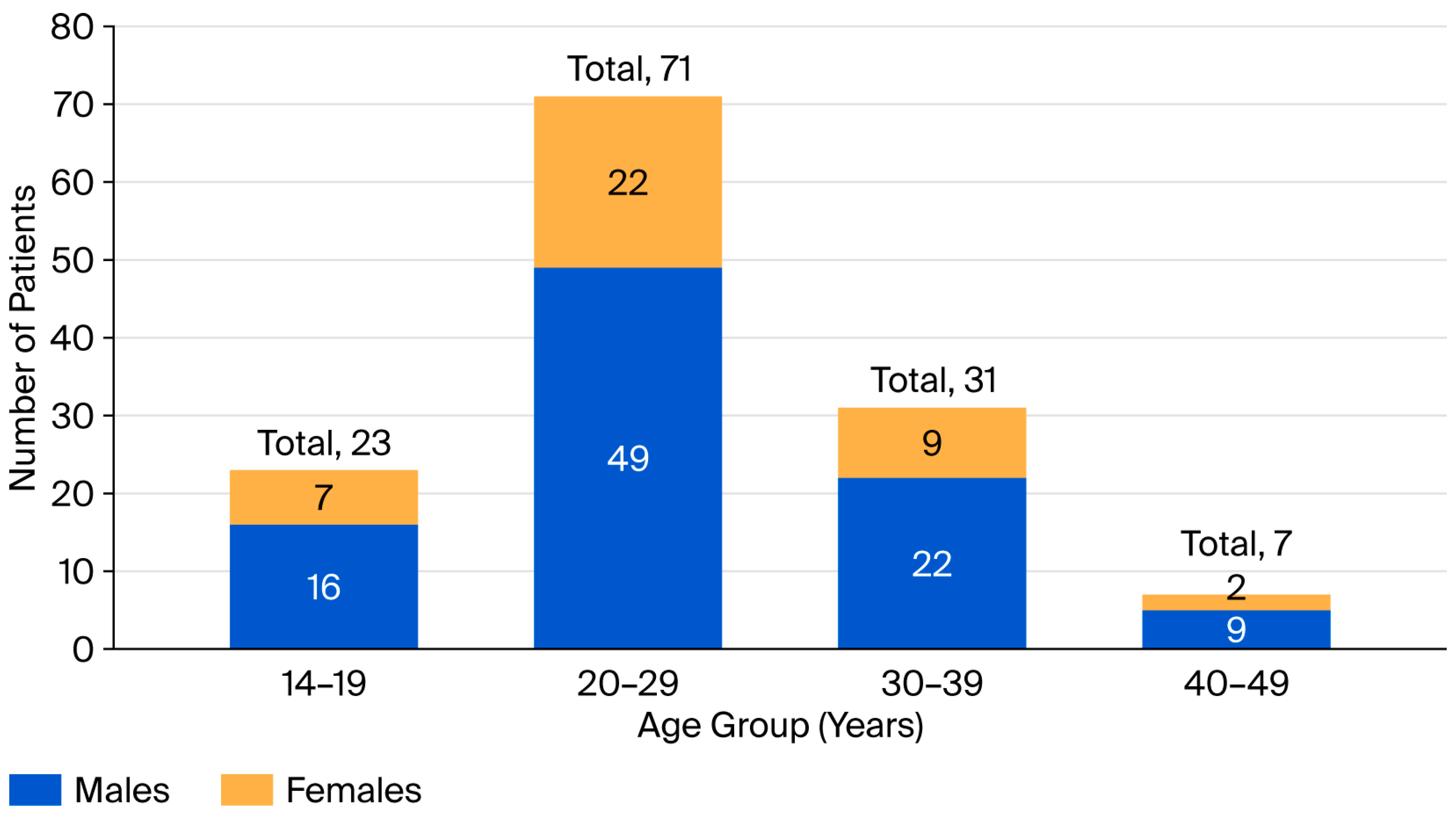
Figure 1. Gender/age group distribution of patients with e-scooter-related maxillofacial fractures.
Osteology 06 00013 g001
Figure 2. Annual distribution of e-scooter-related facial fractures by gender from 2017 to 2024.
Osteology 06 00013 g002
Figure 3. Main contributing factors in our series. Understanding these factors is crucial for promoting safe riding practices and reducing the likelihood of e-scooter accidents and maxillofacial trauma.
Osteology 06 00013 g003
Table 1. Contributing factors and Helmet Use Habit.
CategorySpecific Factor/HabitPatients (n)Percentage (%)
Helmet Use HabitsNever8763%
Inconsistent/Occasional3727%
Always1410%
Risk & EnvironmentNo helmet use at crash8763%
Another vehicle involved3626%
Riding with headphones/earbuds3022%
Early evening (dusk) riding2820%
Unsafe road conditions1914%
Alcohol and/or drug use1813%
Mechanical failure of e-scooter107%
Competitive/High-speed riding53%
Percentages for contributing factors do not equal 100% because patients could present multiple concurrent factors (n = 102 patients with identifiable factors).
Table 2. Anatomical distribution and specific fracture patterns.
Injury FeatureAnatomical Location or
Fracture Type
Patients (n)Percentage (%)
Fracture multiplicitySingle facial fracture12389%
Multiple facial fracture1511%
Facial third locationLower third8058%
Middle third5540%
Combination (thirds I–II)1712%
Main fracture typesMandible8058%
Orbito-zygomatic-
maxillary complex
4533%
Nasoethmoidal107%
Frontal32%
Specific patternsMandibular condylar area *6277.5%
Multifocal mandibular fractures7655%
* Percentage calculated over the total number of mandibular fractures.
Disclaimer/Publisher’s Note: The statements, opinions and data contained in all publications are solely those of the individual author(s) and contributor(s) and not of MDPI and/or the editor(s). MDPI and/or the editor(s) disclaim responsibility for any injury to people or property resulting from any ideas, methods, instructions or products referred to in the content.