

Quasi-RVE Contact Modeling of Rough Flange–Gasket Interfaces for Micro-Leakage Channel Geometry Characterization





Abstract
1. Introduction
2. Rough-Surface Generation and Quasi-RVE Selection
2.1. Numerical Generation of Rough Surfaces
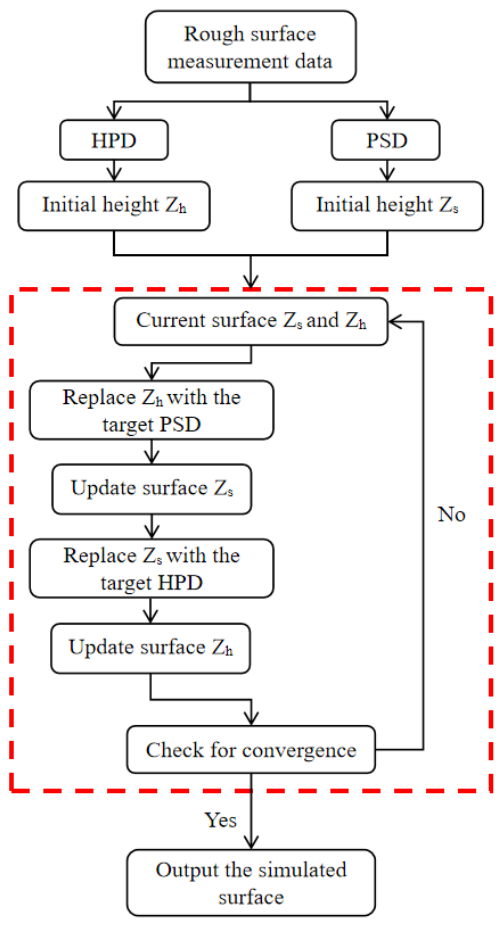
2.1.1. Rough-Surface Reconstruction Based on Prescribed HPD and PSD
- Update the PSD of : By retaining the phase information of the current and replacing the amplitude, a rough surface with the specified PSD is generated. The calculation formula is [23]:
- 2.
- Update the HPD of : To ensure the new conforms to the given HPD, the points of are sequentially replaced with the corresponding height values of in descending order of height values, thereby generating that satisfies the HPD.
2.1.2. W-M Fractal Function Method
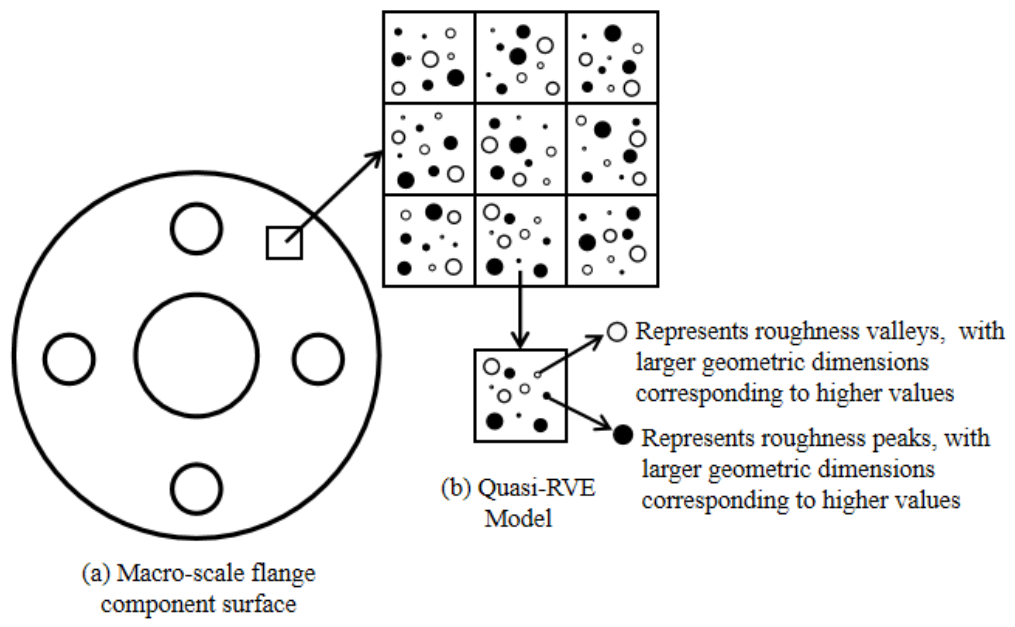
2.2. Quasi-Representative Volume Element Selection
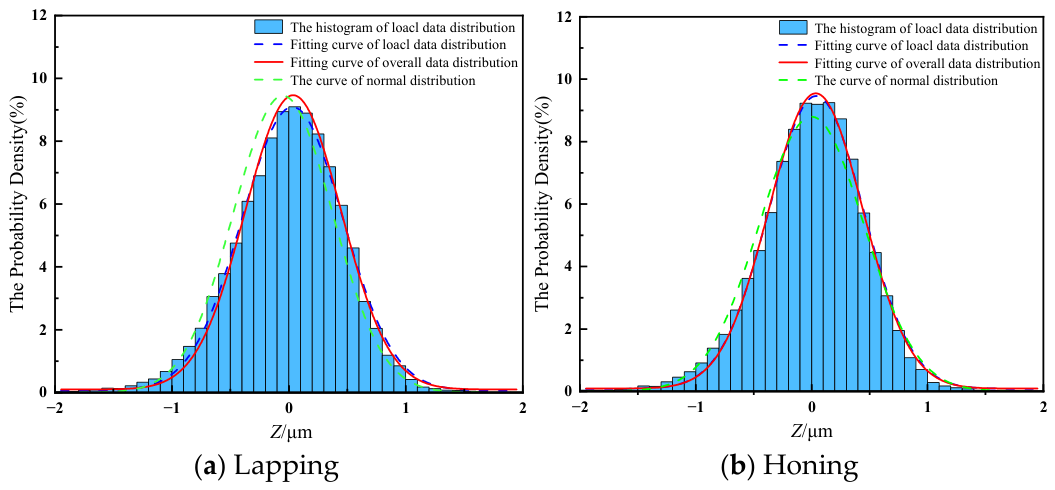
2.2.1. Quasi-RVE Selection from the Surface Data in Reference [23]
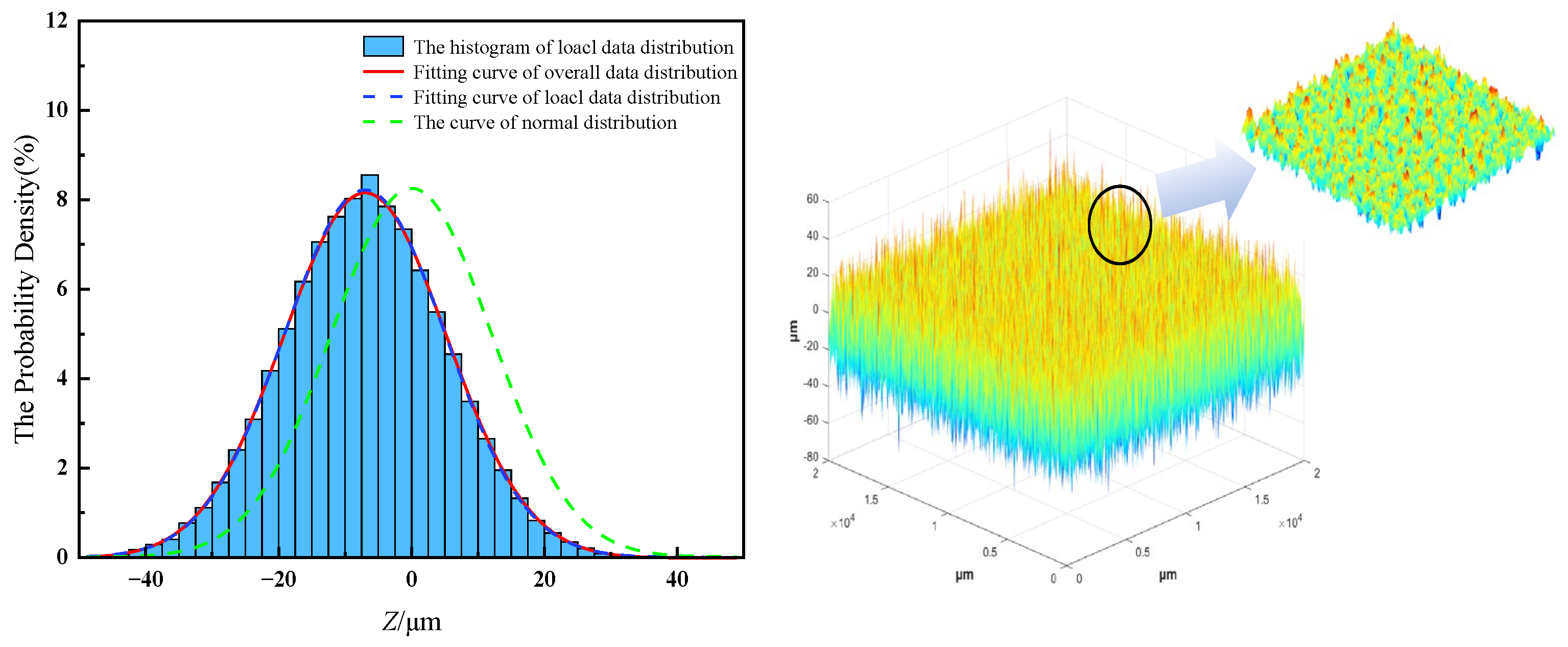
2.2.2. Quasi-RVE Selection from the Surface Data in Reference [34]
3. Implementation of Quasi-Periodic Boundary Conditions and Development of Contact Models
3.1. Quasi-Periodic Boundary Conditions and Implementation for Quasi-RVE Models
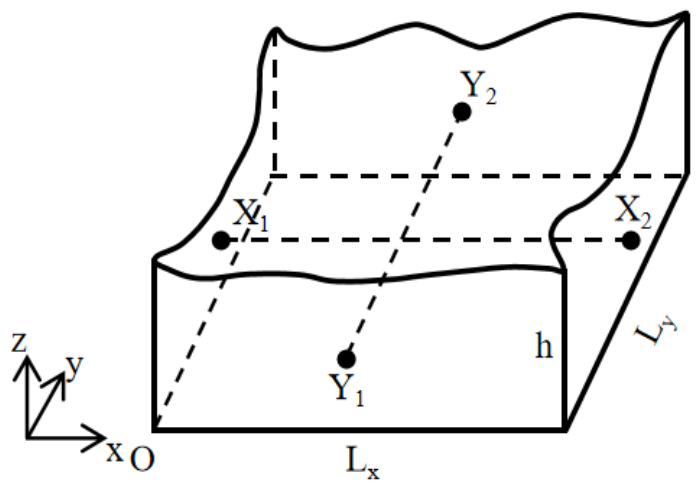
3.1.1. Conventional Periodic Boundary Conditions
3.1.2. Proposed Quasi-Periodic Boundary Conditions
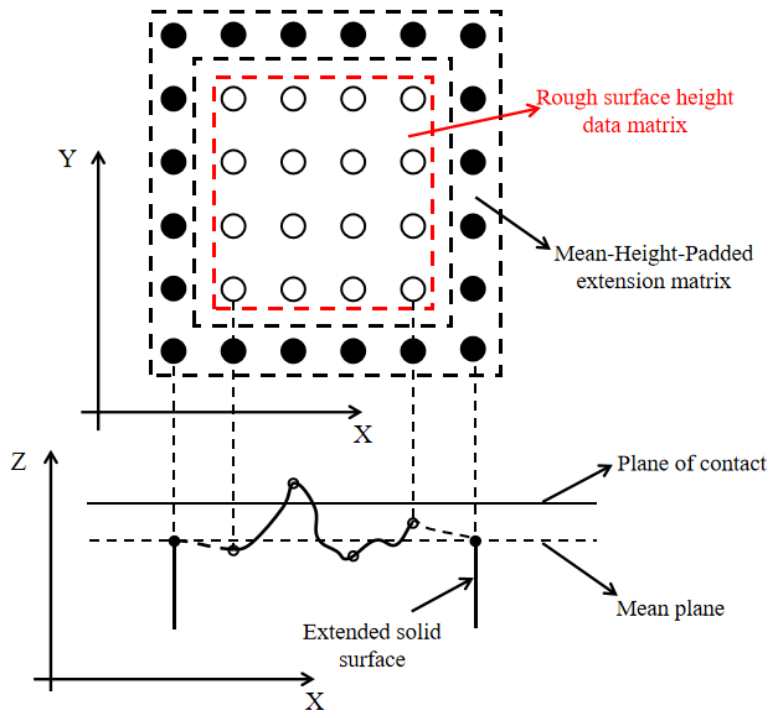
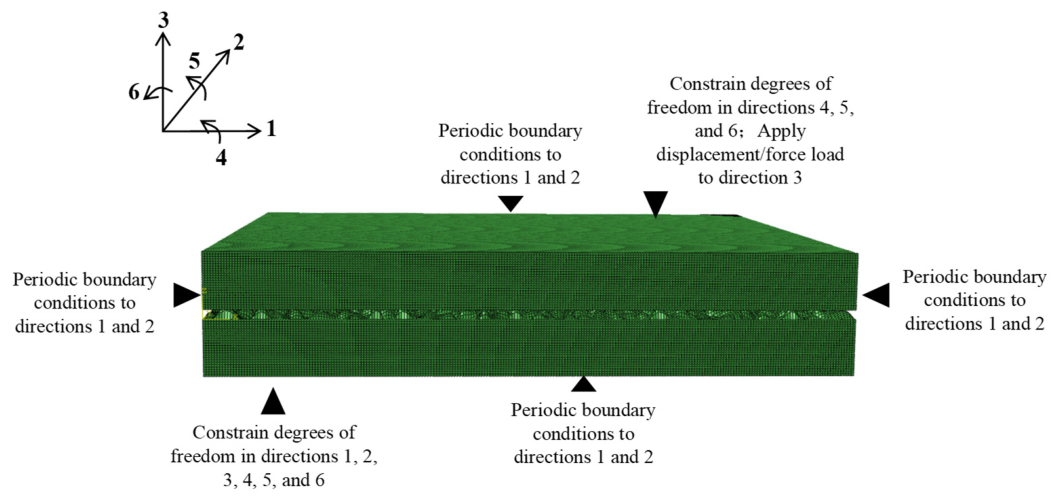
3.2. Implementation of Quasi-Periodic Boundary Conditions for Quasi-Rve
4. Quasi-RVE Contact Model
4.1. Comparison with Reference [23]
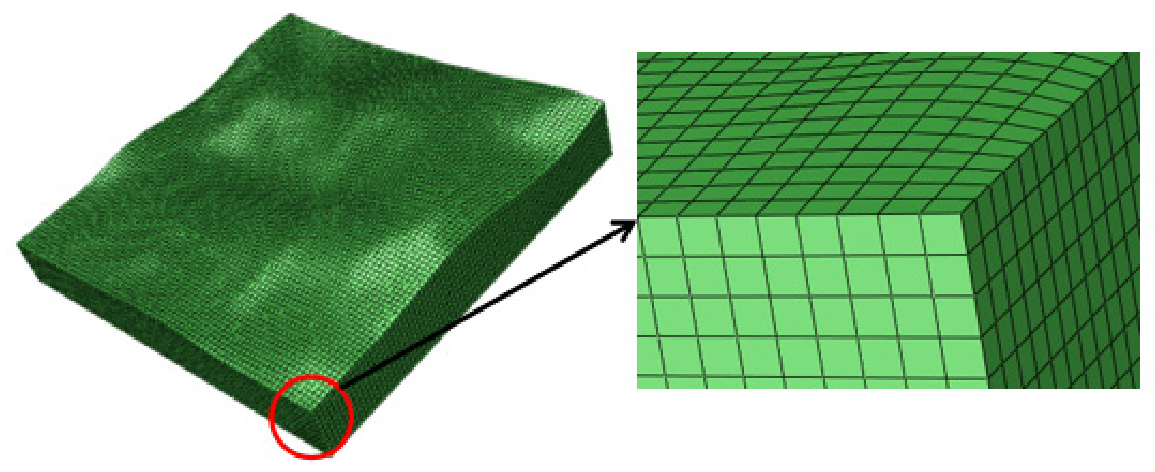
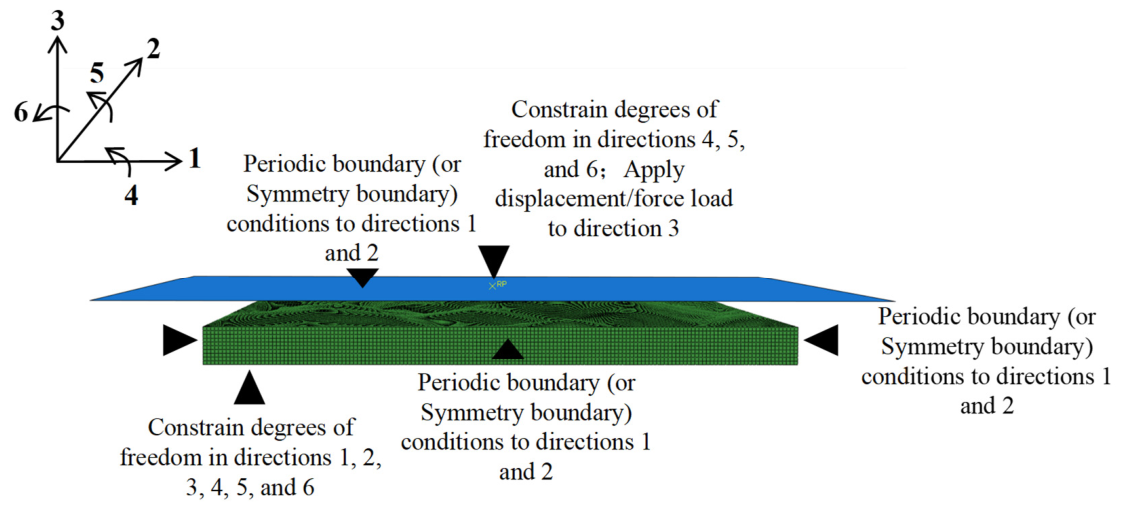
4.1.1. Contact Model for the Lapping and Honing Surfaces
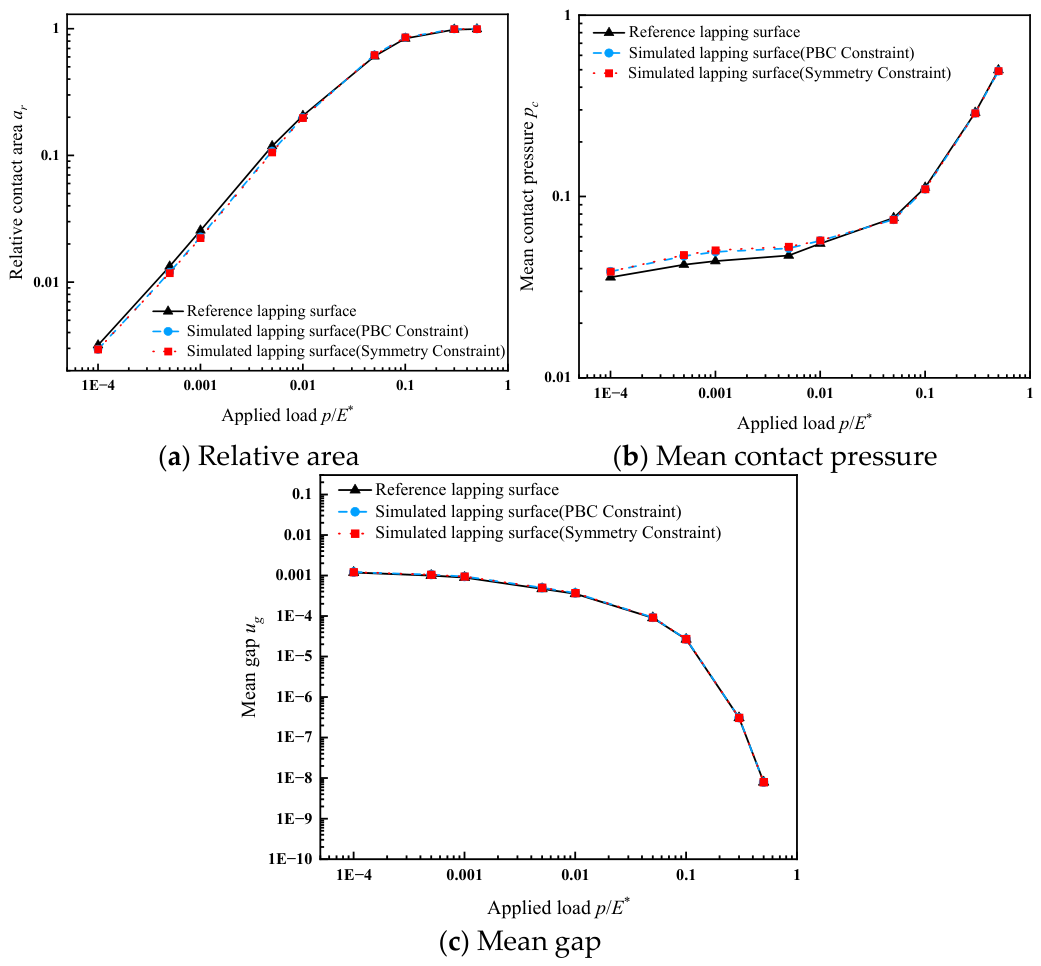
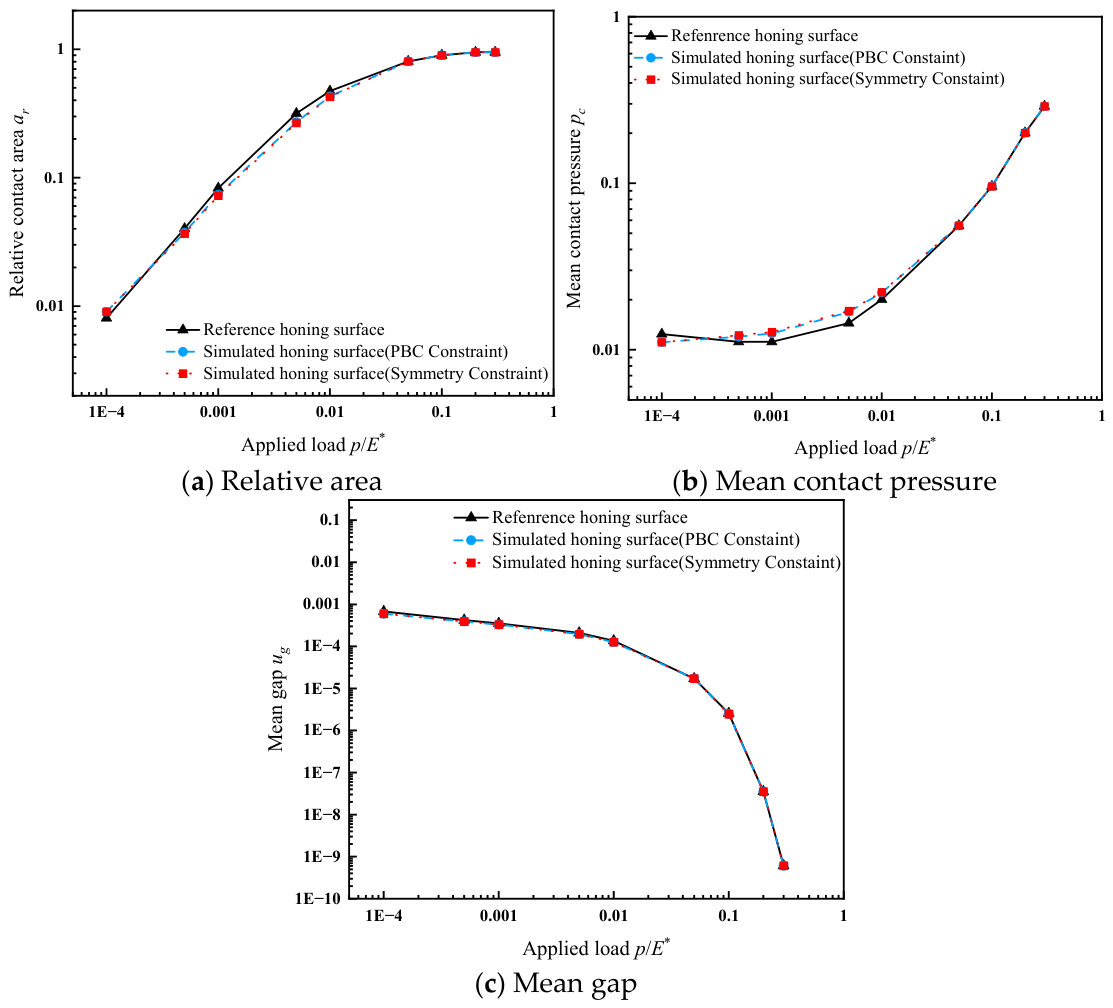
4.1.2. Results and Discussion for the Lapping and Honing Surfaces
4.2. Comparison with Reference [34]
4.2.1. Contact Model for the Sanding and Shot-Blasting Surfaces
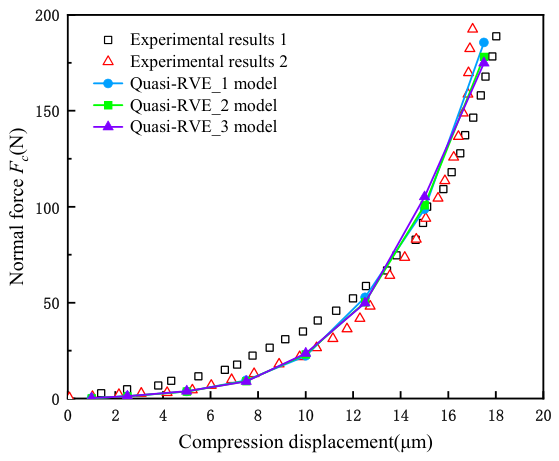
4.2.2. Results and Discussion for the Sanding and Shot-Blasting Surfaces
5. Flange-Gasket Rough Sealing Interface Contact
5.1. Contact Model for the Flange–Gasket Rough Sealing Interface
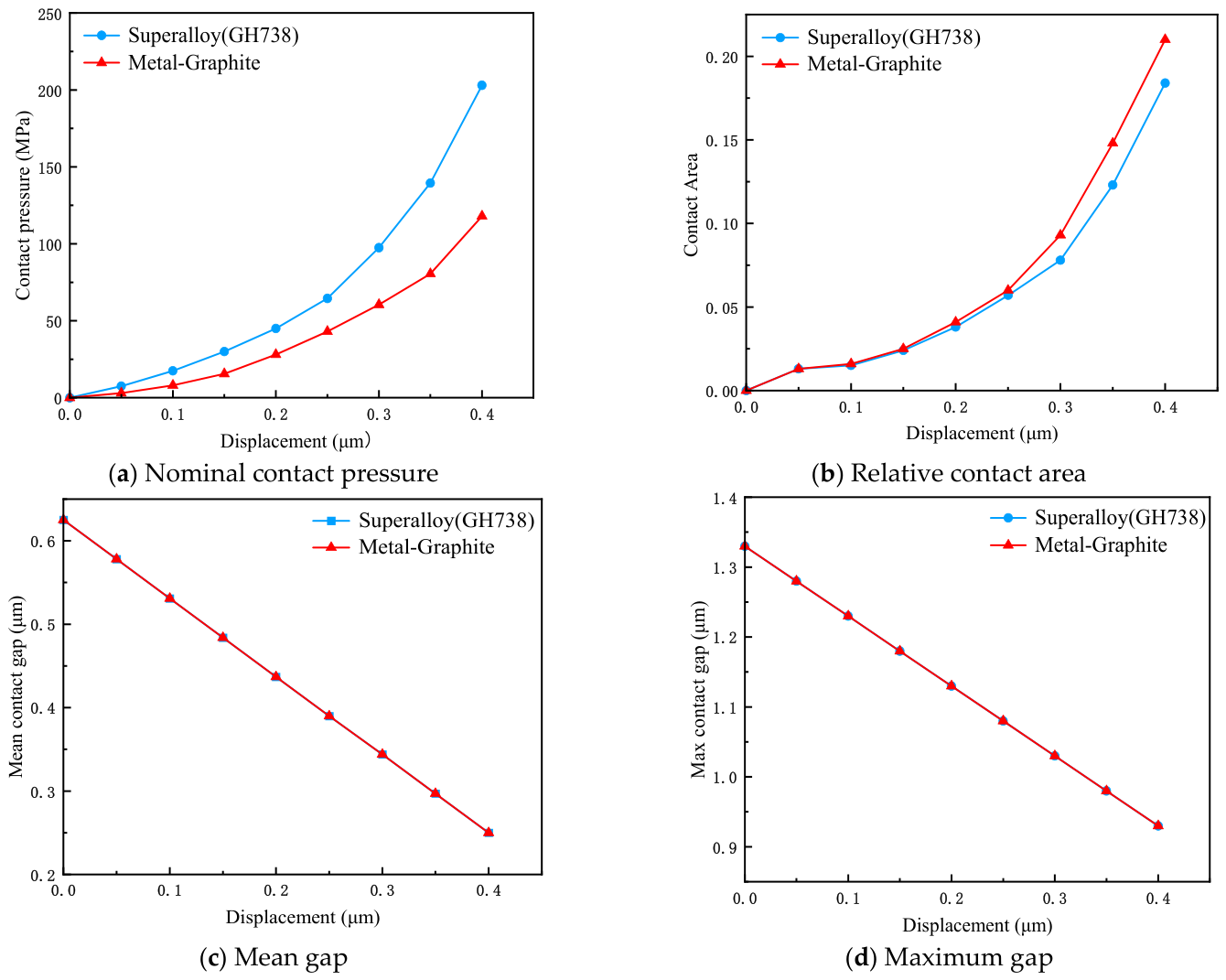
5.2. Normal Displacement Analysis
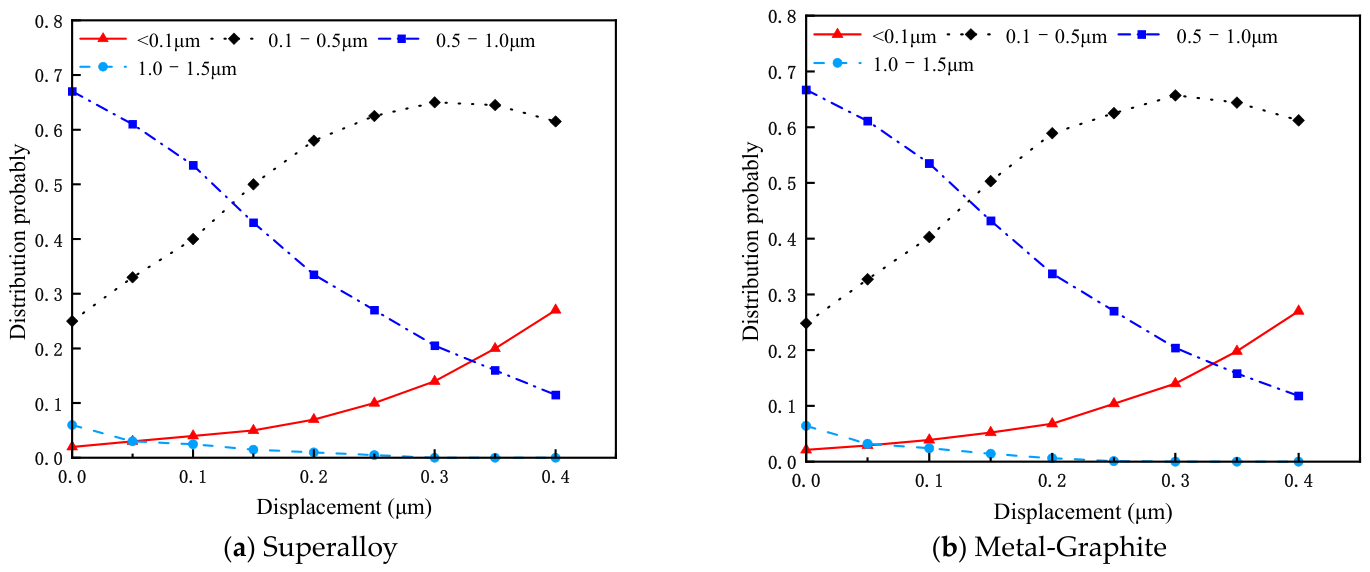
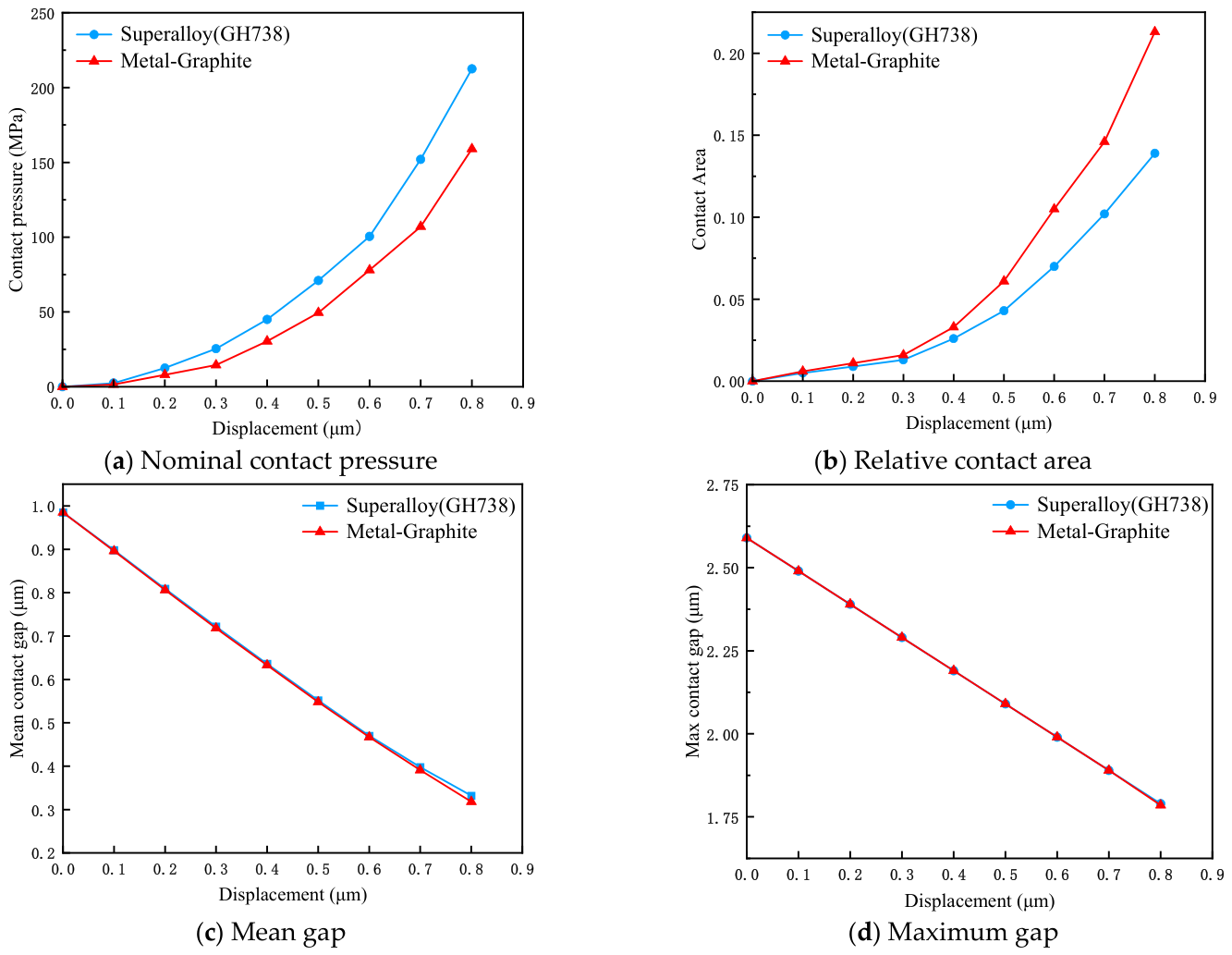
5.2.1. Ra = 0.2 μm Flange Under Normal Displacement Loading
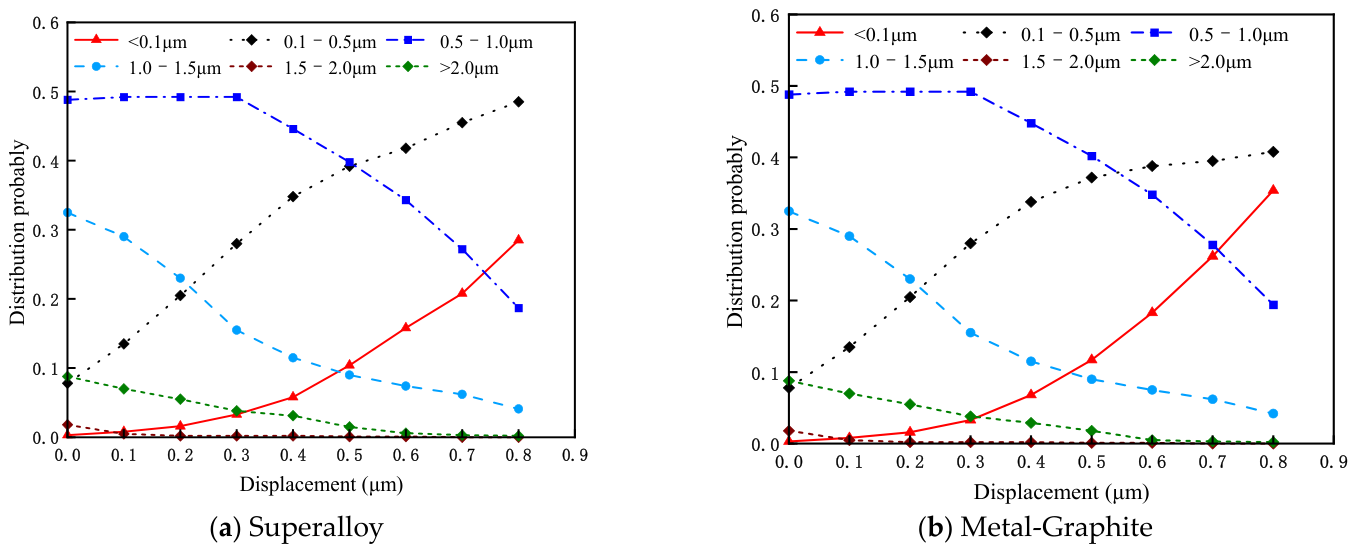
5.2.2. Ra = 0.4 μm Flange Under Normal Displacement Loading
5.3. Nominal Pressure Analysis
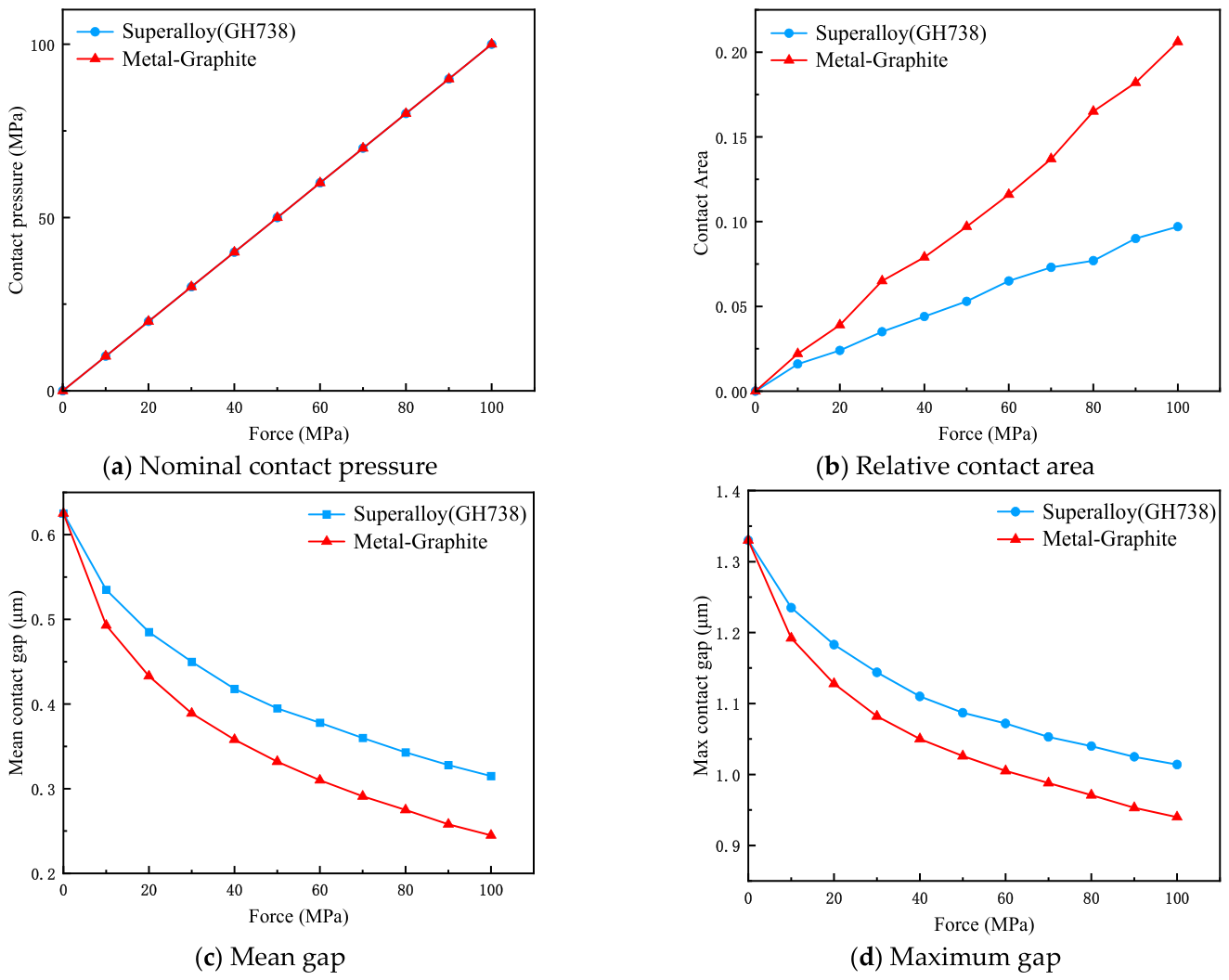
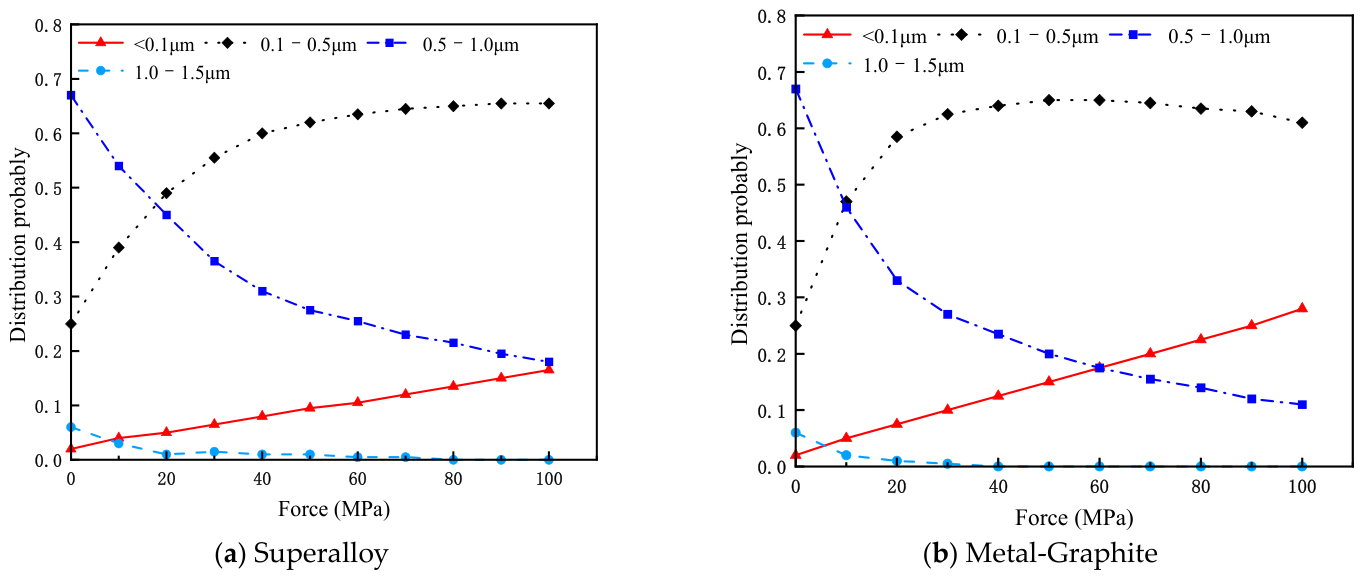
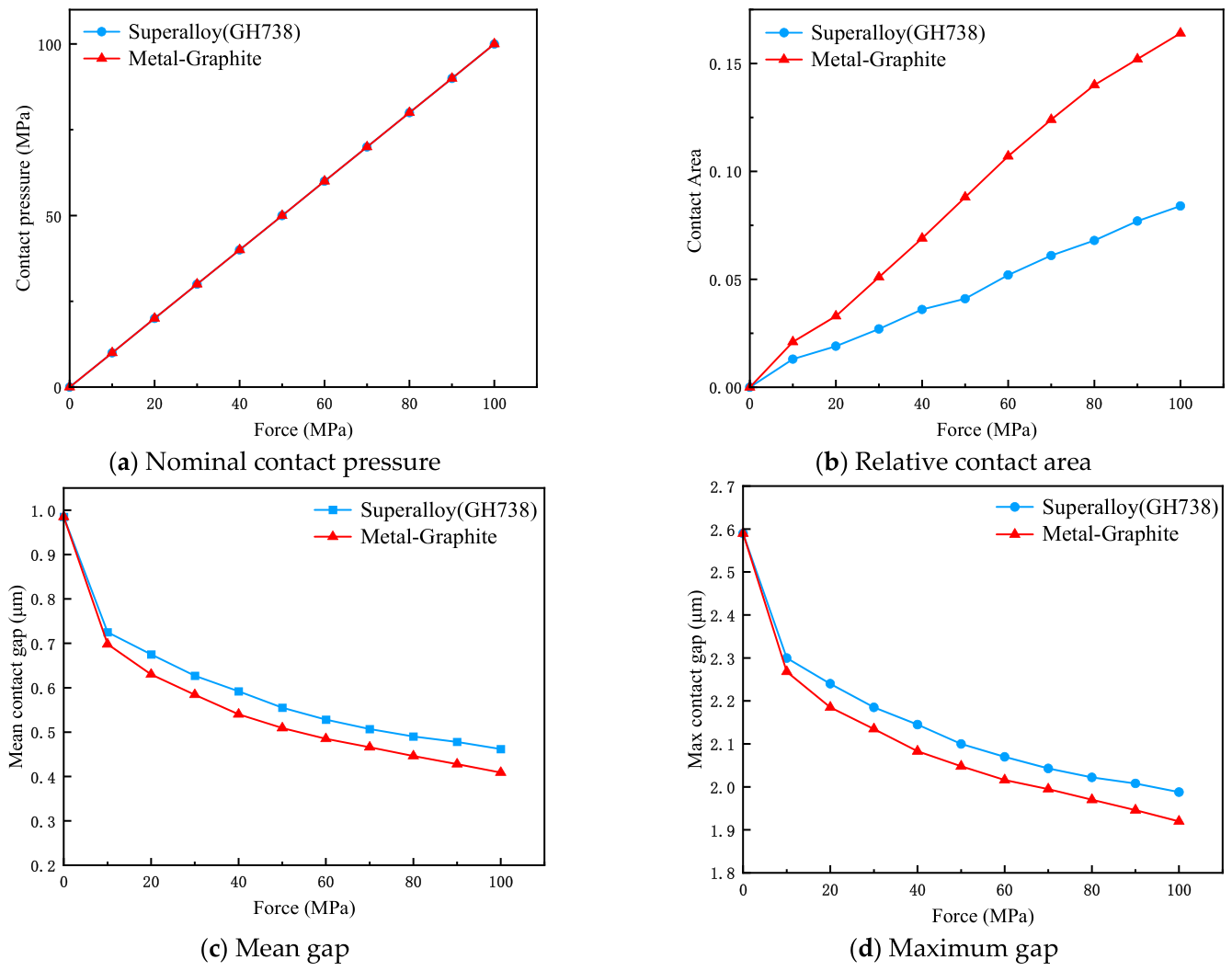
5.3.1. Ra = 0.2 μm Flange Under Nominal Pressure Loading
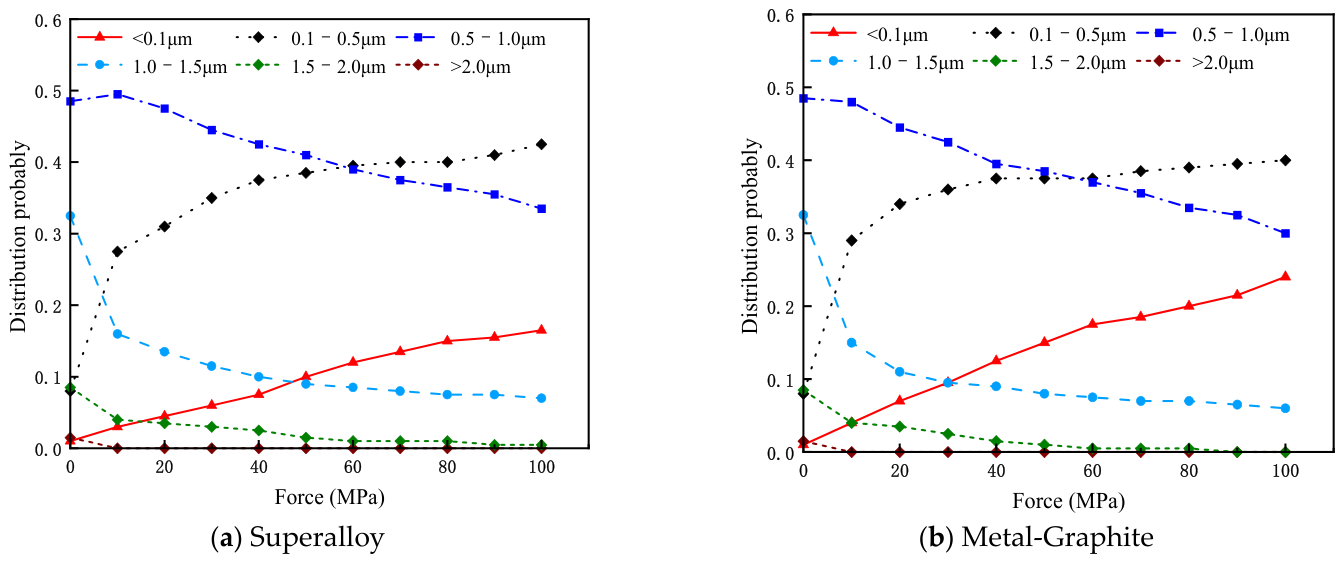
5.3.2. Ra = 0.4 μm Flange Under Nominal Pressure Loading
6. Conclusions
Author Contributions
Funding
Data Availability Statement
Acknowledgments
Conflicts of Interest
References
- Wu, X.; Mou, L.; Jia, W.; Sun, Y.; Liu, H.; Li, C. A machine-learning method to accurately recognize the leakage pressure-drop signals in trunk natural gas pipelines. Process Saf. Environ. Prot. 2023, 179, 847–863. [Google Scholar] [CrossRef]
- Tai, J.L.; Sultan, M.T.H.; Łukaszewicz, A.; Siemiątkowski, Z.; Skorulski, G.; Shahar, F.S. Preventing catastrophic failures: A review of applying acoustic emission testing in multi-bolted flanges. Metals 2025, 15, 438. [Google Scholar] [CrossRef]
- Xie, J.; Wang, W.; Xu, C.; Fu, M.; Huang, W. Two-step feature extraction of acoustic emission signals for leakage detection of valves in gas pipelines. Int. J. Press. Vessel. Pip. 2024, 212, 105364. [Google Scholar] [CrossRef]
- Diao, X.; Chi, Z.; Jiang, J.; Mebarki, A.; Ni, L.; Wang, Z.; Hao, Y. Leak detection and location of flanged pipes: An integrated approach of principle component analysis and guided wave mode. Saf. Sci. 2020, 129, 104809. [Google Scholar] [CrossRef]
- Lee, J.C.; Choi, Y.R.; Cho, J.W. Pipe leakage detection using ultrasonic acoustic signals. Sens. Actuators A Phys. 2023, 349, 114061. [Google Scholar] [CrossRef]
- Lee, J.; Kim, Y.; Rehman, A.; Kim, I.; Lee, J.; Yun, H. Development of an AI-based image/ultrasonic convergence camera system for accurate gas leak detection in petrochemical plants. Heliyon 2024, 10, e28905. [Google Scholar] [CrossRef]
- Allsop, T.; Neal, R. A review: Application and implementation of optic fibre sensors for gas detection. Sensors 2021, 21, 6755. [Google Scholar] [CrossRef]
- Gao, B.; Liu, J.; Zhang, A.; Dong, J. A Leakage Rate Prediction Model for Flange Connections Based on the Relative Deformation of Gaskets. J. Press. Vessel Technol. 2025, 147, 041702. [Google Scholar] [CrossRef]
- Bakolas, V. Numerical generation of arbitrarily oriented non-Gaussian three-dimensional rough surfaces. Wear 2003, 254, 546–554. [Google Scholar] [CrossRef]
- Wang, Y.; Liu, Y.; Zhang, G.; Wang, Y. A simulation method for non-Gaussian rough surfaces using fast Fourier transform and translation process theory. J. Tribol. 2018, 140, 021403. [Google Scholar] [CrossRef]
- Wang, Y.; Azam, A.; Wilson, M.C.; Neville, A.; Morina, A. A comparative study for selecting and using simulation methods of Gaussian random surfaces. Tribol. Int. 2022, 166, 107347. [Google Scholar] [CrossRef]
- Minet, C.; Brunetiere, N.; Tournerie, B.; Fribourg, D. Analysis and modeling of the topography of mechanical seal faces. Tribol. Trans. 2010, 53, 799–815. [Google Scholar] [CrossRef]
- Pérez-Ràfols, F.; Almqvist, A. Generating randomly rough surfaces with given height probability distribution and power spectrum. Tribol. Int. 2019, 131, 591–604. [Google Scholar] [CrossRef]
- Mo, S.; Wang, L.; Hu, Q. Research on the micro-vibration mechanism of the planetary gear train based on fractal theory. J. Vib. Control 2025, 31, 2395–2408. [Google Scholar] [CrossRef]
- Yu, X.; Sun, Y.; Liu, S.; Wu, S. Fractal-based dynamic response of a pair of spur gears considering microscopic surface morphology. Int. J. Mech. Syst. Dyn. 2021, 1, 194–206. [Google Scholar] [CrossRef]
- Xiao, H.; Sun, Y. On the normal contact stiffness and contact resonance frequency of rough surface contact based on asperity micro-contact statistical models. Eur. J. Mech.-A/Solids 2019, 75, 450–460. [Google Scholar] [CrossRef]
- Liao, J.; Zhang, J.; Feng, P.; Yu, D.; Wu, Z. Identification of contact stiffness of shrink-fit tool-holder joint based on fractal theory. Int. J. Adv. Manuf. Technol. 2017, 90, 2173–2184. [Google Scholar] [CrossRef]
- Ding, W.; Dai, C.; Yu, T.; Xu, J.; Fu, Y. Grinding performance of textured monolayer CBN wheels: Undeformed chip thickness nonuniformity modeling and ground surface topography prediction. Int. J. Mach. Tools Manuf. 2017, 122, 66–80. [Google Scholar] [CrossRef]
- Cai, Z.; Chen, D.; Lu, S. Reconstruction of a fractal rough surface. Phys. D Nonlinear Phenom. 2006, 213, 25–30. [Google Scholar] [CrossRef]
- Zhang, Y.; Luo, Y.; Wang, J.F.; Li, Z. Research on the fractal of surface topography of grinding. Int. J. Mach. Tools Manuf. 2001, 41, 2045–2049. [Google Scholar] [CrossRef]
- Tomov, M.; Kuzinovski, M.; Cichosz, P. Development of mathematical models for surface roughness parameter prediction in turning depending on the process condition. Int. J. Mech. Sci. 2016, 113, 120–132. [Google Scholar] [CrossRef]
- Reizer, R. Simulation of 3D Gaussian surface topography. Wear 2011, 271, 539–543. [Google Scholar] [CrossRef]
- Wang, Y.; Liu, Y. Preparation of measured engineering surfaces for modeling tribological systems, part I: Characterization and reconstruction. Tribol. Int. 2024, 199, 110026. [Google Scholar] [CrossRef]
- Sayles, R.S. Basic principles of rough surface contact analysis using numerical methods. Tribol. Int. 1996, 29, 639–650. [Google Scholar] [CrossRef]
- Brizmer, V.; Kligerman, Y.; Etsion, I. Elastic–plastic spherical contact under combined normal and tangential loading in full stick. Tribol. Lett. 2007, 25, 61–70. [Google Scholar] [CrossRef]
- Wang, S.; Yuan, W.; Liang, X.; Wang, G. A new analytical model for the flattening of Gaussian rough surfaces. Eur. J. Mech.-A/Solids 2022, 94, 104578. [Google Scholar] [CrossRef]
- Li, F.; Xu, L.; Dong, S.; Wang, D.; Dong, X.; Pan, B.; Liu, Q. Multi-scale contact characteristics and leakage prediction of flange seal based on fractal geometry. Nucl. Eng. Des. 2025, 432, 113835. [Google Scholar] [CrossRef]
- Mu, X.; Sun, W.; Liu, C.; Wang, Y.; Yuan, B.; Sun, Q. Study on rough surfaces: A novel method for high-precision simulation and interface contact performances analysis. Precis. Eng. 2022, 73, 11–22. [Google Scholar] [CrossRef]
- Gao, C.; Proudhon, H.; Liu, M. Three-dimensional finite element analysis of shallow indentation of rough strain-hardening surface. Friction 2019, 7, 587–602. [Google Scholar] [CrossRef]
- Bonari, J.; Paggi, M.; Dini, D. A new finite element paradigm to solve contact problems with roughness. Int. J. Solids Struct. 2022, 253, 111643. [Google Scholar] [CrossRef]
- Yan, W.; Komvopoulos, K. Contact analysis of elastic-plastic fractal surfaces. J. Appl. Phys. 1998, 84, 3617–3624. [Google Scholar] [CrossRef]
- Gadelmawla, E.S.; Koura, M.M.; Maksoud, T.M.; Elewa, I.M.; Soliman, H.H. Roughness parameters. J. Mater. Process. Technol. 2002, 123, 133–145. [Google Scholar] [CrossRef]
- Macek, W.; Nejad, R.M.; Zhu, S.P.; Trembacz, J.; Branco, R.; Costa, J.D.; Fereira, J.A.M.; Capela, C. Effect of bending-torsion on fracture and fatigue life for 18Ni300 steel specimens produced by SLM. Mech. Mater. 2023, 178, 104576. [Google Scholar] [CrossRef]
- Shen, F.; Li, Y.H.; Ke, L.L. A novel fractal contact model based on size distribution law. Int. J. Mech. Sci. 2023, 249, 108255. [Google Scholar] [CrossRef]
- Xia, Z.; Zhang, Y.; Ellyin, F. A unified periodical boundary conditions for representative volume elements of composites and applications. Int. J. Solids Struct. 2003, 40, 1907–1921. [Google Scholar] [CrossRef]
- Li, D.M.; Kong, L.H.; Qian, Y.C. On compacting pattern control of finite-size 2D soft periodic structures through combined loading. Eng. Struct. 2022, 266, 114574. [Google Scholar] [CrossRef]
- Li, Q.; Yang, X.X. Numerical Simulation for Mechanical Behavior of Carbon Black Filled Rubber Composites Based on Plane Stress Model. Adv. Mater. Res. 2012, 476, 2543–2547. [Google Scholar] [CrossRef]
- Tyrus, J.M.; Gosz, M.; DeSantiago, E. A local finite element implementation for imposing periodic boundary conditions on composite micromechanical models. Int. J. Solids Struct. 2007, 44, 2972–2989. [Google Scholar] [CrossRef]
- Kucharski, S.; Starzynski, G. Study of contact of rough surfaces: Modeling and experiment. Wear 2014, 311, 167–179. [Google Scholar] [CrossRef]
- Zhu, Z.H.; Wei, X.J. Application of ABAQUS software in solution of Hertz’s contact problem. Machinery 2009, 36, 11–13. [Google Scholar]
- Li, W.; Yang, H.; Deng, C.; Li, S. Research on leakage prediction of metal sealing ring based on statistical characteristics. Fluid Mach. 2025, 53, 95. (In Chinese) [Google Scholar]
- Lin, F.; Xu, G.; Huang, X.; Hao, H.; Yang, D.; Zhang, Y.; Yu, W. A new effective numerical method for leakage rate prediction of the metal gasket sealing assembly. In Proceedings of the International Conference on Nuclear Engineering (ICONE); ASME: New York, NY, USA, 2017. [Google Scholar]
- Lorenz, B.; Persson, B.N.J. Interfacial separation between elastic solids with randomly rough surfaces: Comparison of experiment with theory. J. Phys. Condens. Matter 2009, 21, 015003. [Google Scholar] [CrossRef]
- Joe, J.; Wang, A.; Barber, J.R. Load–displacement relation and gap distribution between rough surfaces: Partial differential equations approach. J. Mech. Phys. Solids 2023, 180, 105397. [Google Scholar] [CrossRef]



| Scope | Area Size (μm) | Ra (μm) | Rq (μm) | Sk | Ku | Vv (μm3/μm2) | Vvc (μm3/μm2) | Vvv (μm3/μm2) | Processing Mode |
|---|---|---|---|---|---|---|---|---|---|
| Overall | 1024 × 1024 | 0.321 | 0.424 | −0.422 | 4.051 | 0.561 | 0.500 | 0.061 | Lapping |
| Overall | 1024 × 1024 | 0.251 | 0.337 | −1.109 | 4.973 | 0.358 | 0.297 | 0.061 | Honing |
| Scope | Area Size (μm) | Ra (μm) | Rq (μm) | Sk | Ku | Vv (μm3/μm2) | Vvc (μm3/μm2) | Vvv (μm3/μm2) | Processing Mode |
|---|---|---|---|---|---|---|---|---|---|
| Quasi-RVE | 40 × 40 | 0.350 | 0.453 | −0.460 | 4.826 | 0.604 | 0.546 | 0.057 | Lapping |
| Quasi-RVE | 50 × 50 | 0.333 | 0.441 | −0.440 | 4.226 | 0.587 | 0.526 | 0.060 | Lapping |
| Quasi-RVE | 60 × 60 | 0.325 | 0.431 | −0.433 | 3.962 | 0.566 | 0.506 | 0.061 | Lapping |
| Quasi-RVE | 70 × 70 | 0.325 | 0.427 | −0.434 | 4.035 | 0.564 | 0.502 | 0.062 | Lapping |
| Quasi-RVE | 80 × 80 | 0.326 | 0.430 | −0.430 | 3.962 | 0.568 | 0.506 | 0.061 | Lapping |
| Quasi-RVE | 40 × 40 | 0.244 | 0.323 | −1.155 | 4.759 | 0.389 | 0.325 | 0.064 | Honing |
| Quasi-RVE | 50 × 50 | 0.253 | 0.350 | −1.137 | 4.827 | 0.372 | 0.310 | 0.057 | Honing |
| Quasi-RVE | 60 × 60 | 0.252 | 0.346 | −1.128 | 4.880 | 0.353 | 0.292 | 0.062 | Honing |
| Quasi-RVE | 70 × 70 | 0.250 | 0.350 | −1.130 | 4.899 | 0.363 | 0.302 | 0.061 | Honing |
| Quasi-RVE | 80 × 80 | 0.252 | 0.347 | −1.128 | 4.879 | 0.364 | 0.301 | 0.062 | Honing |
| Scope | Area Size (μm) | Ra (μm) | Rq (μm) | Sk | Ku | Vv (μm3/μm2) | Vvc (μm3/μm2) | Vvv (μm3/μm2) | Processing Mode |
|---|---|---|---|---|---|---|---|---|---|
| Overall | 20,000 × 20,000 | 9.688 | 18.117 | −0.019 | 2.963 | 24.067 | 22.049 | 2.0170 | sanding and shot-blasting |
| Scope | Area Size (μm) | Ra (μm) | Rq (μm) | Sk | Ku | Vv (μm3/μm2) | Vvc (μm3/μm2) | Vvv (μm3/μm2) | Processing Mode |
|---|---|---|---|---|---|---|---|---|---|
| Quasi-RVE | 2500 × 2500 | 9.855 | 19.218 | −0.031 | 3.826 | 25.146 | 22.950 | 2.195 | sanding and shot-blasting |
| Quasi-RVE | 3125 × 3125 | 9.786 | 18.651 | −0.027 | 3.356 | 22.939 | 20.989 | 1.950 | sanding and shot-blasting |
| Quasi-RVE | 3750 × 3750 | 9.757 | 18.223 | −0.019 | 2.986 | 24.478 | 22.483 | 1.995 | sanding and shot-blasting |
| Quasi-RVE | 4375 × 4375 | 9.761 | 18.428 | −0.019 | 3.005 | 24.411 | 22.354 | 2.057 | sanding and shot-blasting |
| Quasi-RVE | 5000 × 5000 | 9.695 | 18.347 | −0.019 | 2.990 | 23.741 | 21.763 | 1.977 | sanding and shot-blasting |
| Scope | Area Size (μm) | Ra (μm) | Rq (μm) | Sk | Ku | Vv (μm3/μm2) | Vvc (μm3/μm2) | Vvv (μm3/μm2) | Processing Mode |
|---|---|---|---|---|---|---|---|---|---|
| Quasi-RVE_1 | 3750 × 3750 | 9.833 | 18.222 | −0.020 | 2.986 | 23.760 | 21.729 | 2.031 | sanding and shot-blasting |
| Quasi-RVE_2 | 3750 × 3750 | 9.872 | 18.034 | −0.019 | 2.941 | 24.411 | 22.354 | 2.057 | sanding and shot-blasting |
| Quasi-RVE_3 | 3750 × 3750 | 9.514 | 18.489 | −0.020 | 3.028 | 24.135 | 22.159 | 1.975 | sanding and shot-blasting |
| Structure | Material | Elastic Modulus [MPa] | Poisson’s Ratio | Yield Strength [MPa] | Constitutive Model |
|---|---|---|---|---|---|
| Flange | Superalloy (GH3044) | 210,000 | 0.292 | 685 | Elastic–perfectly plastic |
| Gasket | Superalloy (GH738) | 221,500 | 0.315 | 969 | Elastic–perfectly plastic |
| Gasket | Metal-Graphite | 207,000 | 0.28 | 200 | Elastic–perfectly plastic |
Disclaimer/Publisher’s Note: The statements, opinions and data contained in all publications are solely those of the individual author(s) and contributor(s) and not of MDPI and/or the editor(s). MDPI and/or the editor(s) disclaim responsibility for any injury to people or property resulting from any ideas, methods, instructions or products referred to in the content. |
© 2026 by the authors. Licensee MDPI, Basel, Switzerland. This article is an open access article distributed under the terms and conditions of the Creative Commons Attribution (CC BY) license.
Share and Cite
Li, D.M.; Zhong, Z.-Y.; Yang, L.; Yuan, B.-H.; Zhang, Y. Quasi-RVE Contact Modeling of Rough Flange–Gasket Interfaces for Micro-Leakage Channel Geometry Characterization. Modelling 2026, 7, 111. https://doi.org/10.3390/modelling7030111
Li DM, Zhong Z-Y, Yang L, Yuan B-H, Zhang Y. Quasi-RVE Contact Modeling of Rough Flange–Gasket Interfaces for Micro-Leakage Channel Geometry Characterization. Modelling. 2026; 7(3):111. https://doi.org/10.3390/modelling7030111
Chicago/Turabian StyleLi, D. M., Zhi-Yan Zhong, Liu Yang, Bi-He Yuan, and Ying Zhang. 2026. "Quasi-RVE Contact Modeling of Rough Flange–Gasket Interfaces for Micro-Leakage Channel Geometry Characterization" Modelling 7, no. 3: 111. https://doi.org/10.3390/modelling7030111
APA StyleLi, D. M., Zhong, Z.-Y., Yang, L., Yuan, B.-H., & Zhang, Y. (2026). Quasi-RVE Contact Modeling of Rough Flange–Gasket Interfaces for Micro-Leakage Channel Geometry Characterization. Modelling, 7(3), 111. https://doi.org/10.3390/modelling7030111