
Article

Epitope Specificity of HLA Class I Alloantibodies in Indian Renal Transplant Patients: A Single-Center Study


by
Vikash Chandra Mishra
*,
Dinesh Chandra
,
Ritu Sharma
,
Diksha Dhuliya
and
Vimarsh Raina
Department of Molecular Genetics and Transplant Immunology, Chimera Transplant Research Foundation, New Delhi 110049, India
*
Author to whom correspondence should be addressed.
Transplantology 2025, 6(4), 34; https://doi.org/10.3390/transplantology6040034
Submission received: 7 October 2025 / Revised: 31 October 2025 / Accepted: 6 November 2025 / Published: 11 November 2025
(This article belongs to the Section Solid Organ Transplantation)

Abstract

Background/Objectives: Epitope-based matching has emerged as a refined approach for assessing donor–recipient compatibility in renal transplantation. However, limited data are available on HLA Class I epitope distribution among Indian patients, particularly from northern India, where substantial allelic diversity is known to influence immunological risk. Methods: This retrospective analysis evaluated HLA Class I single-antigen bead (SAB) antibody data from 218 consecutive renal-transplant candidates who tested positive for anti-HLA antibodies between July 2018 and September 2024. HLA Class I epitopes were identified and analyzed using MATCH IT Antibody Software (Immucor, version 1.5.0). Demographic variables and sensitization history (previous transplant, transfusion, pregnancy) were reviewed. Results: A total of 504 distinct epitopes were identified, with 65GK and 163LG emerging as the most frequent motifs. The predominance of these epitopes mirrors the high prevalence of alleles such as HLA-A*24 and HLA-B*35 reported in North-Indian populations. The data suggest a strong influence of regional allele architecture on the immunogenic epitope landscape. Conclusions: This study provides the first baseline characterization of HLA Class I epitope distribution among northern-Indian renal-transplant candidates. The findings emphasize the need for establishing population-specific HLA epitope databases and highlight the potential of epitope-based matching to enhance donor selection and minimize immunological risk in Indian transplantation programs.

1. Introduction

Human Leukocyte Antigen (HLA) mismatching between recipient and donor can trigger the development of de novo donor-specific antibodies (DSA), ultimately resulting in poorer clinical outcomes and reduced graft survival [1]. Hence, HLA matching remains a cornerstone immunological strategy for determining organ compatibility in transplant recipients. Recent advancements in tissue typing and the development of sophisticated computer software have led to the introduction of the concept of eplets. Eplets are clusters of polymorphic amino acids located on the surface of HLA molecules. These eplets are considered functional epitopes, as they contain amino acids that can be recognized by anti-HLA antibodies, representing a specific segment of the larger amino acid structure of an HLA epitope. This approach provides a more detailed understanding of the antigen- antibody interaction [2,3,4]. HLA matching at the epitope or eplets level is now increasingly recognized as a refined method for evaluating immunologic compatibility and risk stratification in transplantation [1,3,5,6]. HLA epitopes are specialized regions of HLA molecules that interact with antibodies or the paratopes of T-cell receptors (TCRs) [2,4]. HLA epitopes exhibit two key characteristics; antigenicity, i.e., their reactivity with antibody, and immunogenicity, i.e., their ability of inducing an antibody response. In both cases, the definition of an HLA epitope relies on the context of its corresponding eplets within the structural epitope. These principles are crucial for understanding antibody-defined HLA epitopes and have significant clinical implications in HLA antibody analysis and the evaluation of mismatch acceptability and permissibility for transplant recipients [7]. In HLA antibody analysis using single-antigen bead (SAB), each detected antibody binds not to the entire HLA molecule but to a specific structural motif- known as an epitope. An epitope, typically defined by one or more amino-acid residues (eplets), may be shared across multiple alleles, leading to apparent cross-reactivity. Identification of shared epitopes helps distinguish true alloantibody targets from assay artefacts. Epitope-level interpretation refines antibody characterization, assists in immunologic risk stratification, and supports precise donor selection by focusing on the molecular determinants of antigenicity [6,8,9]. Limited information exists regarding the prevalence of epitopes or eplets across different population groups yet understanding this is crucial to provide candidates from diverse ethnic backgrounds with equitable opportunities for a well-matched organ [8]. Given the limited information available regarding common epitope occurrence in the Indian population, this study seeks to identify and analyze epitope relevant to class HLA Class I in Indian renal transplant patients, thereby contributing to the existing global epitope database and supporting improved donor selection strategies. Although the concept of HLA epitope analysis has been extensively explored in Western and East-Asian cohorts, region-specific data from India remain scarce [5]. Recent advances in molecular epitope-matching and population-based eplet analysis have underscored the clinical relevance of such approaches [4,6,10]. Building on this framework, the present study provides the first systematic evaluation of HLA Class I epitope distribution among Indian renal-transplant recipients, establishing an essential regional baseline for donor–recipient matching at the epitope level.

2. Materials and Methods

2.1. Study Design and Participants

A retrospective analysis was conducted on data from 218 consecutive renal transplant patients who tested positive for SAB class I assays between July 2018 and September 2024. Among them, 129 (59.17%) were males, and the remaining 89 (40.83%) were females. Among these, 79 (36.2%) had undergone previous transplantation, 79 (36.2%) had a transfusion history, and 29 (13.3%) had a history of pregnancy. The participants were primarily from Northern states of India. Written informed consent was obtained from all participants included in the study for sample collection and laboratory testing. They were assured that their names and photos would not be published and that all standard procedures for protecting their identities would be strictly followed.

2.2. Sample Collection and Processing

Approximately 3–4 mL of blood was collected in plain red-top vacutainer vials (without anticoagulant) for serum preparation. Samples were allowed to clot briefly at room temperature, then centrifuged at 3500× g for 5 min to separate the serum, which was subsequently processed for SAB testing.

2.3. Antibody Detection

Detection and characterization of anti-HLA Class I antibodies were processed using the LIFECODES LSA™ Class I kit (Cat. No. 265100), Immucor, Inc., GA, USA) in accordance with the manufacturer’s instructions. Processing was performed on the Luminex® 200 platform (Luminex Corporation, Austin, TX, USA) utilizing ×MAP technology. The assay targeted class I antigens (HLA-A, HLA-B, and HLA-C), and antibody specificity, strength, and epitope types were analyzed using MATCH IT antibody software (Immucor GTI Diagnostics, Inc., Waukesha, WI, USA, version1.5.0). The cut-off value for a positive antibody was a mean fluorescence intensity (MFI) of ≥1000. All assays were performed in a designated histocompatibility and immunogenetics laboratory accredited under (ISO 15189:2012, Available at: https://www.iso.org/standard/56115.html, accessed on 1 October 2025) by the National Accreditation Board for Testing and Calibration Laboratories (NABL), located in New Delhi, North India.

2.4. Epitope Analysis

For all antibodies exceeding the threshold, epitope assignment was automatically generated by the MATCH IT antibody software based on known amino acid configurations shared among reactive HLAs. These assigned epitopes represent the predicted molecular sites of antibody binding, allowing cross-comparison of shared eplets across different Class I alleles. The occurrence of each epitope was recorded for subsequent analysis

2.5. Data Compilation and Categorization

The epitope information generated from MATCH IT antibody software was compiled for all 218 samples. Each epitope was tabulated along with its associated HLA locus (A, B, C) and its occurrence within the study cohort. Sex wise distribution was also analyzed. A total of 504 distinct epitope occurrences were identified. Table 1 summarizes the complete epitope dataset.

3. Results

3.1. Overall Epitope Distribution

Analysis of SAB Class I antibody data from 218 renal-transplant recipients revealed 504 total epitope occurrences, representing 137 distinct epitopes distributed across HLA-A, -B, and -C loci as presented in Table 1. Among these, 237 epitope events were detected in females and 267 in males, indicating a comparable overall prevalence between the two groups. The most frequently identified epitopes were 65GK (n = 21), 163LG (n = 18), 127K (n = 17), 71TD (n = 14), 144QL (n = 12), 66IF (n = 11), 76ESI (n = 11), and 56R (n = 11). 11). Epitope nomenclature (e.g., 65GK, 163LG) denotes specific amino-acid positions and residues that constitute the reactive motif on the HLA molecule. The number refers to the starting amino-acid position on the HLA heavy chain, while the accompanying letters represent the residues that form the functional epitope recognized by alloantibodies. For example, 65GK corresponds to a glycine–lysine motif beginning at residue 65, and 163LG denotes a leucine–glycine motif beginning at residue 163. These high-frequency epitopes were predominantly associated with HLA-A and HLA-B loci as shown in Figure 1.

3.2. Locus-Wise Distribution

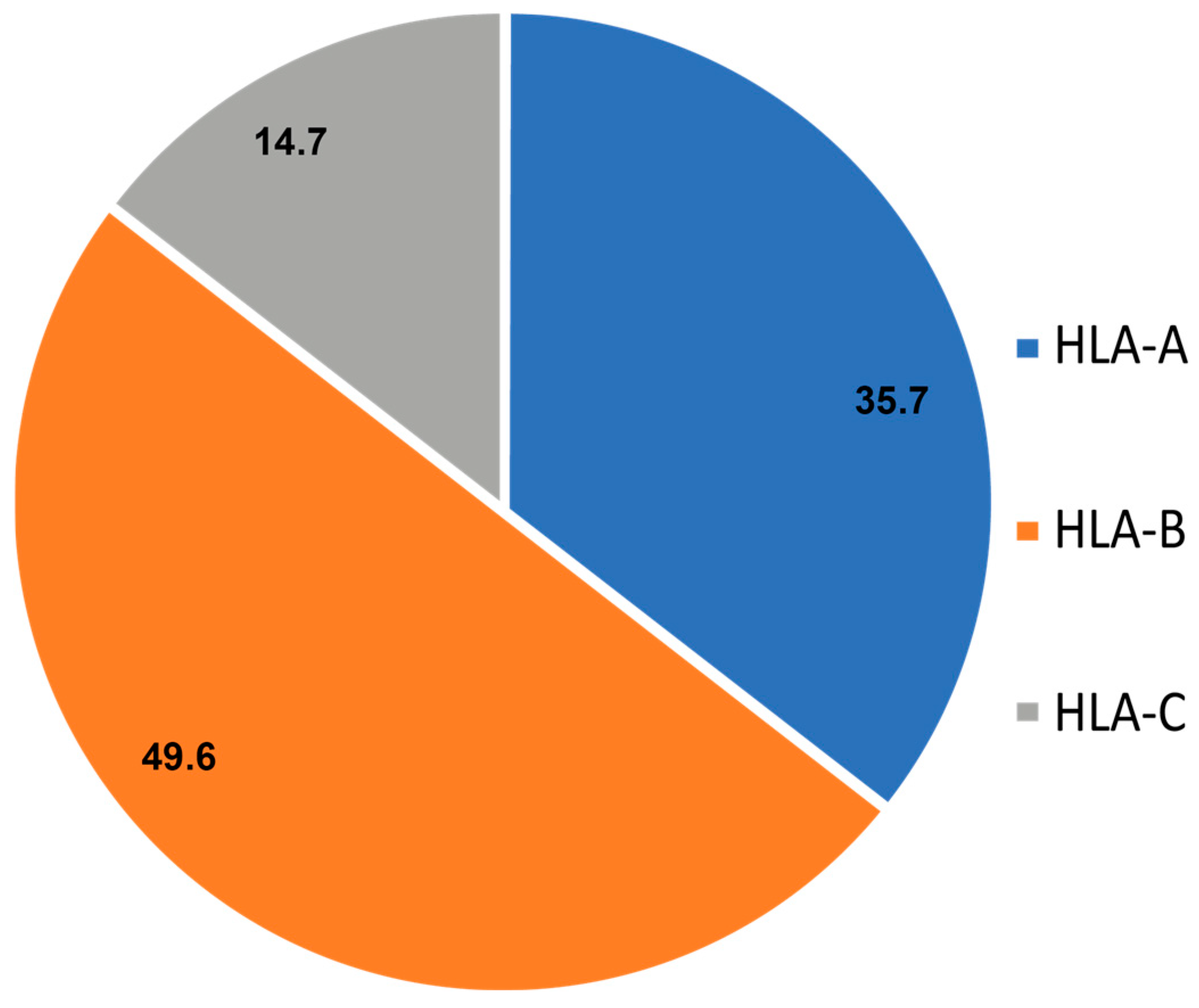
Locus-specific analysis revealed that HLA-B locus contributed the highest proportion of identified epitopes (49.6%), followed by HLA-A (35.7%) and HLA-C (14.7%) as shown in Figure 2. Numerous epitopes such as 62GE, 163EW, and 77S were detected across multiple loci (A/B/C), demonstrating the presence of shared or public epitopes responsible for cross-reactive antibody patterns.

3.3. Sex-Wise Comparison

Among the most prevalent epitopes, 127K was observed in 17 cases (12 females, 5 males), 56R in 11 cases (9 males, 2 females), and 65GK in 21 cases (16 males, 5 females). While some epitopes showed noticeable sex-related frequency differences, no epitope was exclusive to either sex, and the overall spectrum of immunogenic epitopes was broadly comparable between males and females.

4. Discussion

The primary objective of this study was to estimate the prevalence of epitopes in patients requiring renal transplantation. The analysis identified a wide spectrum of Class I HLA epitopes among Indian renal-transplant patients, dominated by recurrent motifs shared among HLA-A and -B molecules. The predominance of conserved public epitopes such as 65GK and 163LG underscores their likely contribution to cross-reactive donor-specific antibody formation in this population. This investigation is one of the first such studies conducted in India, addressing a significant gap in the existing literature from the region. Epitope analysis and matching have become critical in the field of renal transplantation. With continuous advancements in the identification and mapping of functional HLA epitopes or eplets, epitope matching is increasingly indispensable for assessing immunological risk between donors and recipients [4]. However, additional clinical data and a deeper understanding of the variations in methods for determining epitope compatibility are necessary before this approach can be widely implemented in clinical practice [3]. Recent global analyses have highlighted both conserved and population-specific trends in HLA epitope distribution. Oguz et al. examined the spectrum of Class I eplets in the Turkish population and reported several shared (public) motifs contributing to cross-reactive antibody responses [4]. Likewise, Mangiola et al. showed that the most frequent HLA Class I eplets occur at comparable rates across diverse ethnic groups, suggesting partial global conservation of immunogenic motifs [10]. In this context, our findings provide complementary data from the Indian population, positioning the observed epitope frequencies within a broader international framework and emphasizing the importance of developing population-specific epitope databases to support equitable donor-matching strategies.
Marked regional heterogeneity of HLA alleles has been well documented across northern India. Population-based analyses have shown that HLA-A*01 (25.4%), A*02 (24.8%), B*35 (20.5%), and C*07 (28.1%) are among the most prevalent alleles in this region [11]. More recent large-cohort genotyping further confirmed this diversity, reporting high frequencies of HLA-A*11 (16.4%), A*24 (14.4%), B*35 (14.2%), and C*07 (26.0%) [12,13]. These findings demonstrate significant inter-state and intra-regional variability in HLA distribution, reflecting the genetic heterogeneity of northern India. Such differences underscore the importance of establishing region-specific epitope databases to ensure accurate donor–recipient matching and equitable organ allocation across the country.
HLA-A*24:02 and HLA-A*24:03 have been reported as the most frequent anti-HLA antibodies in renal transplant patients in North India [14,15]. In this study, the 65GK epitope was found to be the most prevalent in the studied population, which is associated with HLA-A*24:02 and HLA-A*24:03. These findings align with previous publications from the region. Similarly, HLA-B*15:12 has been reported as a more prevalent anti-HLA antibody and the 163LG epitope was identified as corresponding to HLA-B*15:12 [10]. Regional allele heterogeneity likely influences the distribution of immunogenic epitopes. For example, the high frequency of HLA-A*24:02 and HLA-B*15:12 in northern India-alleles corresponding to epitopes 65GK and 163LG-supports the relationship between local allele architecture and dominant epitope patterns. These high-frequency epitopes were mainly associated with the HLA-A and HLA-B loci, suggesting that these regions play a major role in antibody responses and are important for transplant immunogenicity, potentially guiding donor–recipient matching and risk assessment. In the studied population, several other epitopes were identified, including 9Y (n = 1), 77S (n = 1), 99Y (n = 1), 116Y (n = 1), 156WA (n = 5), and 163EW (n = 5). Although these cases were not statistically significant, all these epitopes shared HLA-A, HLA-B, and HLA-C alleles and may play a critical role in donor selection on the basis of epitope matching. Additionally, gender-related differences in epitope prevalence suggest that sex may influence alloimmune responses. For example, 127K was more frequent in females, whereas 56R and 65GK were more common in males. Although no epitope was exclusive to either sex, these patterns may reflect the influence of prior sensitization events, such as pregnancies or transfusions, on antibody formation. Overall, despite these sex-specific trends, the general spectrum of immunogenic epitopes was similar between males and females, indicating that while gender can modulate specific responses, it does not drastically alter the overall immunogenic landscape in this population.
At present, HLA Matchmaker is a widely used tool for predicting epitope compatibility; however, it is not the only available method. Another promising approach is the Predicted Indirectly Recognizable HLA Epitopes (PIRCHE) score, which explains the recognition of HLA polymorphisms corresponding to epitopes by recipient CD4+ T cells [4,16,17]. Both HLA Matchmaker and PIRCHE represent advanced computational algorithms designed to predict the epitopes present in HLA molecules. However, these tools cannot definitively determine whether the predicted epitopes are antigenic (capable of binding to antibodies) or immunogenic (capable of inducing antibody production through antigen–antibody interactions) [7].
This study provides foundational data on the prevalence of immunogenic HLA Class I epitopes among Indian renal transplant recipients. The identification of common epitopes can support the development of population specific eplet-matching algorithms and improve donor–recipient compatibility assessment beyond conventional antigen-level matching.
Future research should expand this approach to include Class II epitopes and incorporate prospective correlation with clinical outcomes, such as graft survival and the occurrence of donor-specific antibodies. Additionally, integration of next generation sequencing (NGS) based HLA typing with epitope-level antibody mapping could further refine transplant immunogenicity prediction models. Establishing a national epitope database for Indian transplant candidates may ultimately enhance equitable organ allocation and personalized immunological risk assessment.

5. Conclusions

This study highlights the importance of HLA epitope analysis in renal transplantation, emphasizing its role in assessing immunological risk and optimizing donor–recipient compatibility for improved donor selection and, ultimately, better transplant outcomes.

6. Limitation

Despite its valuable insights, this study is subject to certain limitations. It is retrospective and single-center in nature and focuses exclusively on HLA Class I epitopes without incorporating Class II analysis. Clinical correlations with graft outcomes were not evaluated. Although the cohort offers important baseline information, the sample size may not fully represent the allelic diversity of the broader Indian population. Future multi-center prospective studies integrating both Class I and II epitopes and correlating them with clinical outcomes are warranted to validate and expand these findings.

Author Contributions

V.C.M.: Conceptualization, Investigation, Writing—original draft, Writing—review & editing, D.C.: Data collection and statistical analysis, R.S.: Data Validation, Writing—review & editing, D.D.: Writing—review & editing, V.R.: Conceptualization. All authors have read and agreed to the published version of the manuscript.

Funding

This research received no external funding.

Institutional Review Board Statement

Deidentified, anonymized data from the participants were used to ensure complete confidentiality. This study was approved by the institutional review board (CH/001/2025, 18 January 2025) and conducted in accordance with the guidelines of the Declaration of Helsinki.

Informed Consent Statement

Informed consent was obtained from all participants involved in the study. Participants understand that the names and initials would not be published, and all standard protocols will be followed to conceal their identity.

Data Availability Statement

The original contributions presented in this study are included in the article. Further inquiries can be directed to the corresponding authors.

Acknowledgments

We are grateful to our laboratory colleagues for their kind support.

Conflicts of Interest

The authors declare no conflicts of interest.

Abbreviations

The following abbreviations are used in this manuscript:
DSADonor-Specific Antibodies
HLAHuman Leukocyte Antigen
MFIMean Fluorescence Intensity
NGSNext Generation Sequencing
SABSingle Antigen Bead
TCRsT-cell Receptors

References

  1. Renaldo, A.; Roa-Bautista, A.; González-López, E.; López-Hoyos, M.; San Segundo, D. Epitope-Level matching-a review of the novel concept of eplets in transplant histocompatibility. Transplantology 2021, 2, 336–347. [Google Scholar] [CrossRef]
  2. Yip, V.L.; Marson, A.G.; Jorgensen, A.L.; Pirmohamed, M.; Alfirevic, A.H.L.A. HLA genotype and carbamazepine—induced cutaneous adverse drug reactions: A systematic review. Clin. Pharmacol. Ther. 2012, 92, 757–765. [Google Scholar] [CrossRef] [PubMed]
  3. Larkins, N.G.; Wong, G.; Taverniti, A.; Lim, W.H. Epitope matching in kidney transplantation: Recent advances and current limitations. Curr. Opin. Organ Transplant. 2019, 24, 370–377. [Google Scholar] [CrossRef] [PubMed]
  4. Oguz, F.S.; Oguz, S.R.; Ogret, Y.; Karadeniz, T.S.; Ciftci, H.S.; Karatas, S.; Kivanc, D.; Aydin, F. Distribution of HLA epitope frequencies in Turkish population. Turk. J. Biochem. 2022, 47, 289–295. [Google Scholar] [CrossRef]
  5. Rodey, G.E.; Neylan, J.F.; Whelchel, J.D.; Revels, K.W.; Bray, R.A. Epitope specificity of HLA class I alloantibodies I. Frequency analysis of antibodies to private versus public specificities in potential transplant recipients. Hum. Immunol. 1994, 39, 272–280. [Google Scholar] [CrossRef] [PubMed]
  6. Tambur, A.R.; Das, R. Can we use eplets (or molecular) mismatch load analysis to improve organ allocation? The hope and the hype. Transplantation 2023, 107, 605–615. [Google Scholar] [CrossRef] [PubMed]
  7. Duquesnoy, R.J. HLA epitope based matching for transplantation. Transpl. Immunol. 2014, 31, 1–6. [Google Scholar] [CrossRef] [PubMed]
  8. Duquesnoy, R.J. Reflections on HLA epitope-based matching for transplantation. Front. Immunol. 2016, 7, 469. [Google Scholar] [CrossRef] [PubMed]
  9. El-Awar, N. HLA epitopes–Empirically defined as conformational amino acids sequences of the HLA antigen and are likely to be part of the binding sites of anti-HLA antibodies. Hum. Immunol. 2022, 83, 204–218. [Google Scholar] [CrossRef] [PubMed]
  10. Mangiola, M.; Ellison, M.; Marrari, M.; Xu, Q.; Mankowski, M.; Sese, D.; Lonze, B.E.; Montgomery, R.A.; Zeevi, A. HLA EPLET Frequencies Are Similar in Six Population Groups and Are Expressed by the Most Common HLA Alleles. HLA 2024, 104, e70000. [Google Scholar] [CrossRef] [PubMed]
  11. Yadav, B.; Prasad, N.; Kushwaha, R.S.; Patel, M.; Bhadauria, D.S.; Kaul, A. Prevalence of Human Leukocyte Antigen Alleles Polymorphism in North Indian Population. Indian J. Nephrol. 2025, 35, 536. [Google Scholar] [CrossRef] [PubMed]
  12. Mishra, V.C.; Chandra, D.; Raina, A.; Sharma, R.; Raina, V. Diversity of HLA Class I and II Genes in the North Indian Population. GenoMed Connect 2024, 1, 1–10. [Google Scholar] [CrossRef]
  13. Kumar, M.; Chakroborty, S.; Raina, V.; Kandpal, U.; Kumar, M. Analysis of distribution of HLA class I antigens in population from six north Indian states. Apollo Med. 2007, 4, 29–31. [Google Scholar] [CrossRef]
  14. Mishra, V.C.; Chandra, D.; Singh, P.; Deshpande, T.; Dorwal, P.; Raina, V. Prevalence and specificity of anti-HLA antibodies in Indian patients–single-centre data! ISBT Sci. Ser. 2019, 14, 374–378. [Google Scholar] [CrossRef]
  15. Chauhan, R.; Tiwari, A.K.; Rajvanshi, C.; Mehra, S.; Saini, A.; Aggarwal, G.; Bansal, S.B.; Kher, V.; Nandi, S.P. Prevalence of clinically significant anti-HLA antibodies in renal transplant patients: Single-center report from North India. Indian J. Nephrol. 2021, 31, 240–244. [Google Scholar] [CrossRef] [PubMed]
  16. Mishra, V.C.; Raina, V. Enhancing Precision of the Single-antigen Bead (SAB) Assay: Considerations and Challenges. J. Clin. Transl. Pathol. 2024, 4, 12–17. [Google Scholar] [CrossRef]
  17. Mishra, V.C.; Chandra, D.; Raina, V. Histocompatibility Testing: A Fundamental Aspect of Renal Transplant Workup. Transplantology 2024, 5, 85–97. [Google Scholar] [CrossRef]
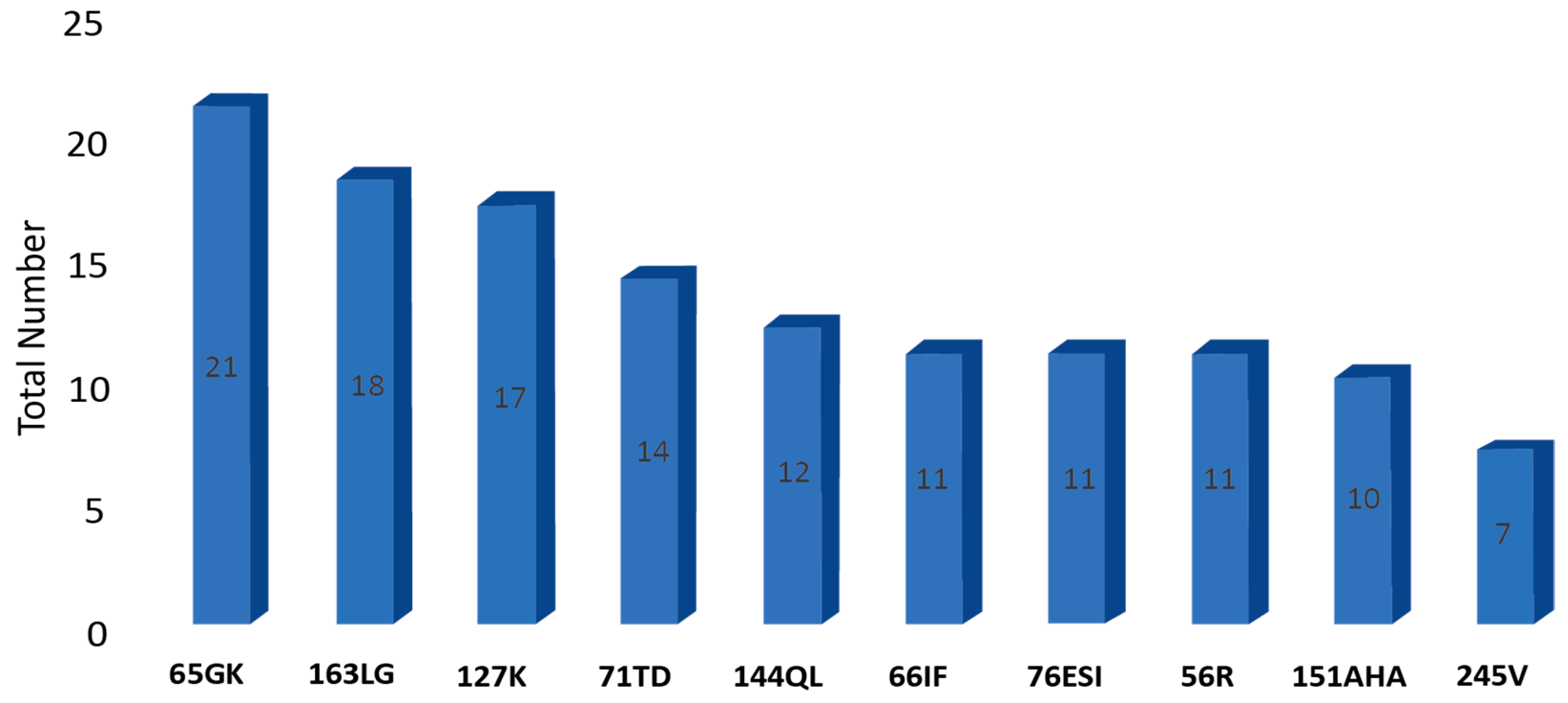
Figure 1. Illustrates the top ten most frequent HLA Class I epitopes identified in the studied cohort (N = 218).
Transplantology 06 00034 g001
Figure 2. Locus-wise distribution of HLA Class I epitopes in the studied cohort (N = 218).
Transplantology 06 00034 g002
Table 1. Representing the epitopes identified among the studied population (N = 218).
S. NoEpitopeAssociated HLA LocusTotal NumberFEMALES (N = 89)MALES
(N = 129)
19DBC211
29FAC110
39TA101
49YABC101
511AVBC101
612MB312
714WC101
816SC211
919KA523
1024TB211
1130GB642
1232LB110
1341TB211
1443RA633
1544KMA725
1644RMAB202
1744RMAB211
1844RMEA211
1944RTB642
2045EEB202
2156RA1129
2262EEA110
2362GEAB963
2462GKA523
2562GRNAB532
2662LQA945
2762QEA321
2862RNAB211
2962RRAB642
3063NIB110
3165GKA21516
3265QIAB990
3365RAAB303
3465RNAAB220
3566IB330
3666ICB110
3766IFB1156
3866ISB110
3966IYB110
4066KAA110
4166NMAB101
4266NVA202
4369AAB101
4469RAC101
4569TNTB202
4670IAQB321
4771ATDB431
4871QSA211
4971SAB422
5071TDB1477
5171TNB220
5271TTSB110
5373ANC101
5473ASC110
5573IDA734
5676ANTA101
5776EDB211
5876ESIA1174
5976ESNB422
6076ETAB110
6176VRNBC110
6277SABC110
6380IAB541
6482LRAB844
6590DAC220
6691RC110
6795VA101
6897NB1165
6997SB110
7097VB734
7199YABC101
72103M 211
73105SA202
74107WA202
75109FAB202
76113HDBC101
77113HNB211
78114HAB220
79114QA110
80114RA110
81116LBC110
82116YABC101
83127KA17125
84131SB321
85138KC202
86138MIA110
87144KA202
88144KRA110
89144QLB1239
90144TKHA1046
91145HTA202
92145RTA734
93147LBC202
94149TAHA110
95150AAHA110
96150AHA413
97151AHAA1064
98151AHVA321
99151ARVAB101
100151HA110
101152RAC101
102152RRA413
103152TC101
104152VAB101
105152WA101
106156DABC330
107156QAAC101
108156WAABC505
109158TB532
110161DA413
111162GLSB1028
112163EWABC523
113163LBC413
114163LGB18414
115163LS/GB1046
116163LWBC862
117163RGA413
118163RWA202
119166DGA624
120170RHAB440
121173KC523
122177DKB532
123177DTB220
124177KTC202
125180EB330
126184AA101
127184RC101
128193AVA211
129193LVC101
130193PIAB211
131193PLC422
132199VB422
133211TC211
134245TAB211
135245VA743
136253QAC220
137275ELA101
Total504237267
Disclaimer/Publisher’s Note: The statements, opinions and data contained in all publications are solely those of the individual author(s) and contributor(s) and not of MDPI and/or the editor(s). MDPI and/or the editor(s) disclaim responsibility for any injury to people or property resulting from any ideas, methods, instructions or products referred to in the content.