


Abstract
Background: In cardiology, vasoregulation is one of the most important targets of pharmacotherapy. SOMNOtouch™-NIBP (SOMNOmedics AG, Randersacker, Germany) is a cuffless device designed for continuous, non-invasive blood pressure measurements, and it appears to be ready for use in infants and children with congenital heart disease. For infants, minor methodological modifications are required due to their small body size. Methods: Using this device, we demonstrate fluctuations in diastolic blood pressure in three patients: an infant with hypoplastic left heart syndrome after Norwood stage 1 and 2 operations; an infant with Tetralogy of Fallot with heart failure due to pulmonary overcirculation after an aorto-pulmonary shunt implantation; and a 13-year-old girl with chronic cyanosis due to a congenitally corrected transposition of the great arteries (ccTGA) with a ventricular septal defect and pulmonary stenosis. The measurement procedures are completely non-invasive and feasible in an outpatient setting. Results: The results demonstrate strong correlations between blood pressure and oxygen saturation levels as well as heart rate variability. We discuss our results in relation to current concepts of hypoxic pulmonary/systemic vasoconstriction and hypoxemia-related pathways. Conclusions: The cuffless device for continuous, non-invasive blood pressure measurement seems to be useful for infants with and without congenital heart defects who receive pharmacotherapies that modulate vasoregulation. These patients should also be non-invasively monitored for safety reasons and for a better understanding of their pathophysiology.
1. Introduction
In cardiology, vasoregulation is one of the most important targets of pharmacotherapy. Vasodilators are primarily used to reduce the afterload of the left and right ventricles, thereby improving hemodynamics and ventricular function.
However, according to a systematic review and meta-analysis, the evidence supporting the use of vasodilators for long-term survival or significant improvements in overall outcomes is limited. While vasodilators can help to relieve symptoms such as shortness of breath and improve some short-term outcomes, large-scale trials have not established that they significantly reduce all-cause mortality or hospital stay lengths.
Vasodilators, particularly pulmonary vasodilators, play a crucial role in managing pulmonary hypertension, which is a critical complication of congenital heart disease in children. Evidence suggests that these medications can improve outcomes, particularly in patients with increased pulmonary vascular resistance. However, definitive evidence relating to congenital heart disease-related pulmonary hypertension is still emerging.
However, a recent analysis of data from children with congenital heart disease demonstrates that polygenetic risk scores for higher diastolic blood pressure (DBP) are associated with a lower risk of in-hospital mortality in this patient group [1].
One of the most overlooked side effects in cardiology is that vasodilators, which widen blood vessels, can increase the pressure in capillaries. This increased pressure can force fluid out of the capillaries and into the surrounding tissues, causing edema. This side effect is critical in patients who have undergone the Fontan procedure and have an elevated central venous pressure, which is the driving force for pulmonary circulation in univentricular hearts [2].
Hypoxia is one of the most prominent conditions responsible for inducing pulmonary vasoconstriction as part of a response known as hypoxic pulmonary vasoconstriction (HPV), which was first described in 1946 by von Euler and Liljestrand. Furthermore, the hypoxic burden in patients with obstructive sleep apnea is related to arterial hypertension in both adults [3] and children [4], which correlates with cardiovascular outcomes. Key unanswered questions are how a decrease in oxygen partial pressure is detected and how the vascular response is regulated [5].
While the basics of vasoregulation have been investigated in series circuits, and biventricular hearts are well understood, the same cannot be said for parallel circuits and univentricular hearts. Nevertheless, this is of great importance for the pharmacotherapy of patients with congenital heart disease. It is estimated that approximately 50% of fatalities resulting from congenital heart disease occur in infancy. It is important to note that such children usually succumb to heart failure and/or pulmonary hypertension [6,7].
In this paper, we present preliminary observational data suggesting that the non-invasive, pulse-transit-time-based determination of blood pressure (BP) with the SOMNOtouch™ NIBP device (SOMNOmedics AG, Randersacker, Germany) may help to explore vasoregulatory responses in cyanotic congenital heart disease. DBP is directly related to total peripheral resistance: a higher total peripheral resistance generally leads to higher DBP, as it increases the resistance to the blood flow.
2. Materials and Methods
2.1. Device
The SOMNOtouch™ NIBP (SOMNOmedics AG, Randersacker, Germany) is a cuffless device designed for continuous, non-invasive BP measurements. Due to the specific characteristics of the infants in this study, several adaptations were necessary—particularly the use of the toe instead of the finger for photoplethysmography. The measurement system consists of a toe/finger photoplethysmograph, including an oxygen saturation measurement, as well as a three-lead ECG. All of these elements are connected to a control unit. A screen displays the ECG and pulse transit time, and the BP estimation is determined via the beat-to-beat pulse transit time, which is calculated using the interval between the R-wave of the ECG and the corresponding pulse wave detected at the peripheral site using photoplethysmography. The pulse wave velocity is calculated as the quotient of the travel distance and PTT. Systolic blood pressure (SBP) and diastolic blood pressure (DBP) are calculated based on the relationship between a cuff-based BP calibration measurement and the pulse wave velocity. An increase in BP leads to an increase in arterial wall tension and stiffness. Consequently, a higher pulse wave velocity leads to a reduction in the pulse transit time. A non-linear model describing this relationship based on experimental data has been published [8]. A single initial cuff-based BP measurement is used to calibrate the device. The device then uses this to derive beat-to-beat BP values that correspond to changes in the pulse transit time. This algorithm is patented (11/364 174 US 2006/0217616 A1, 7374542), and the SOMNOtouch™ NIBP device was validated according to the ESH-IP 2010 protocol [9].
2.2. Calibration Protocol
The calibration of the pulse transit time was performed immediately after turning on the device. The patient’s BP was simultaneously measured using the cuff-based method at the contralateral upper arm or leg in infants under resting conditions (Welch Allyn Connex Spot Monitor 700-ms3™, New York, NY, USA). These cuff-derived BP values were used to calibrate the pulse transit time-based measurement.
2.3. Data Handling
Once the measurements were complete, the data were downloaded onto a PC. The measurements were analyzed using the corresponding DOMINOlight™ (SOMNOmedics AG, Randersacker, Germany)software, version 1.5.0.15. The analysis data were exported to Excel at a rate of 1 Hz. Correlation analyses were performed using the corresponding tools in Excel.
2.4. Case 1
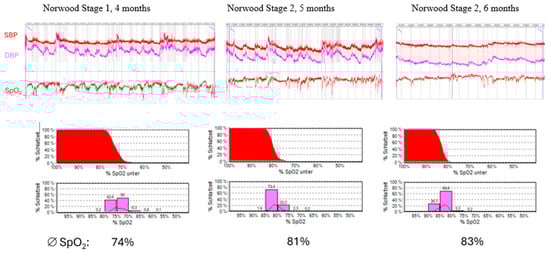
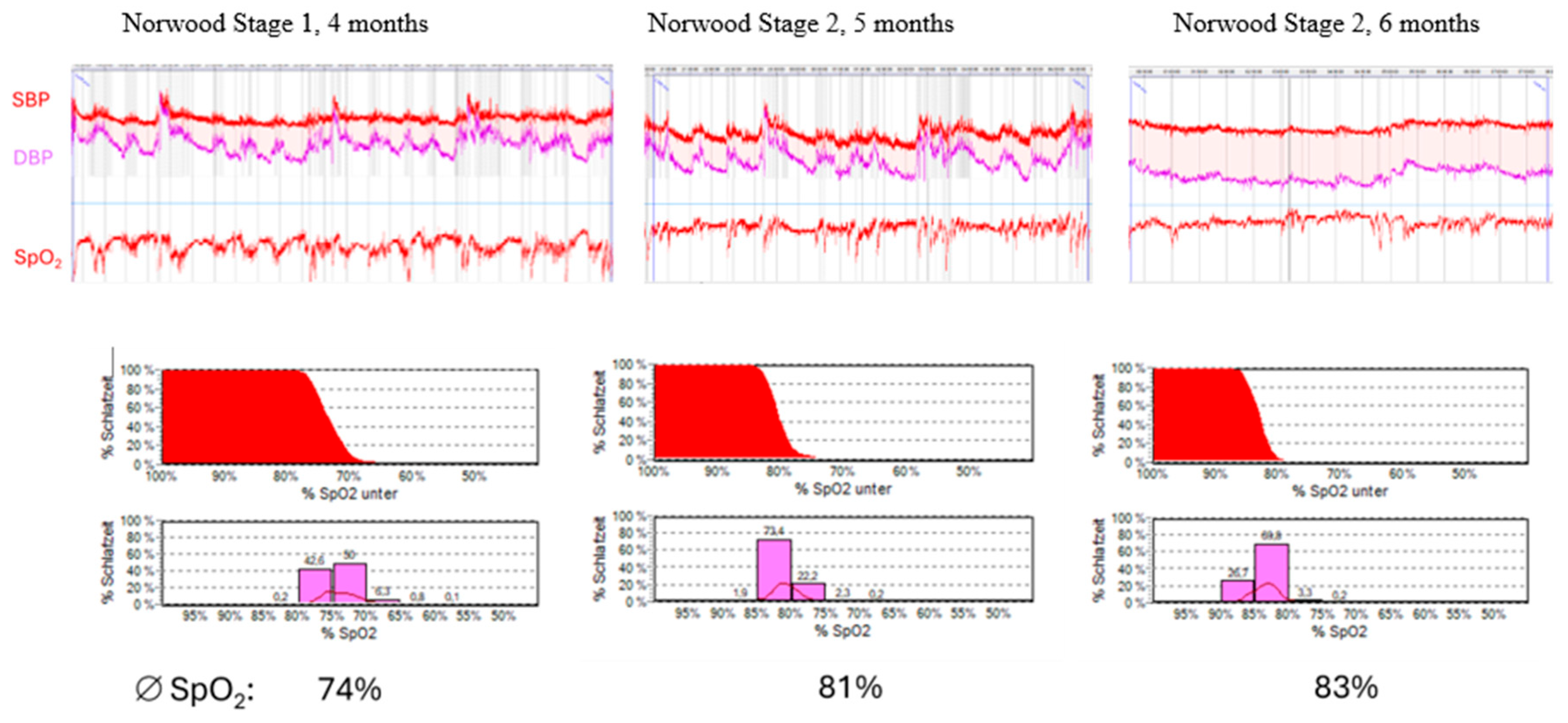
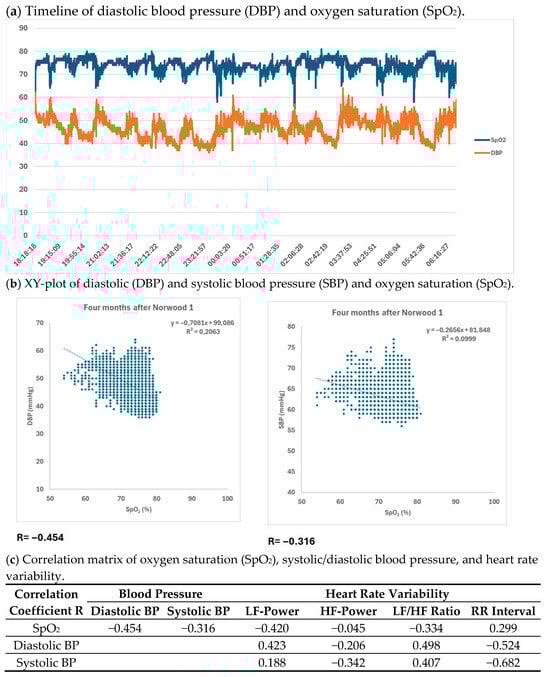
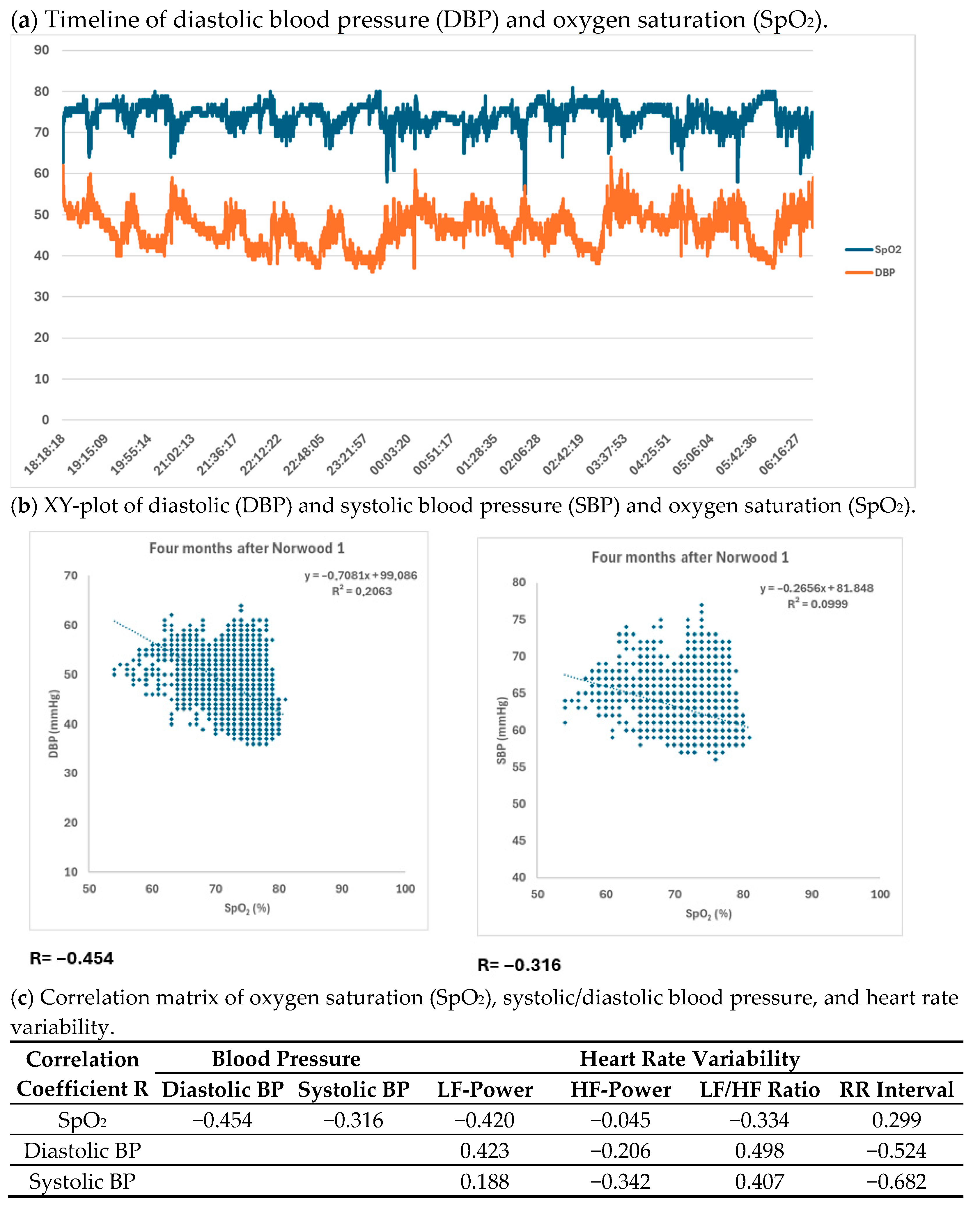
We present the case of a hypotrophic male neonate born at 40 weeks gestation with a birthweight of 2600 g who underwent a Norwood 1 operation for hypoplastic left heart syndrome on his fifth day of life. Postoperatively, he received captopril (1.1 mg/kg/d) and metoprolol (2.1 mg/kg/d) and was discharged from the hospital three weeks later. Due to the stenosis of a 3.5 mm Blalock Taussig Shunt, he had a low mean oxygen saturation of 72.3% without heart failure (Figure 1) and underwent a Norwood 2 operation at 5 months old. Postoperatively, and while still receiving metoprolol therapy, the mean saturation increased to 79.9%, reaching 82% six weeks after surgery (Figure 1). The oxygen saturation improved after the stage 2 operation, and the DBP and SBP fluctuation ceased. We identified strong correlations between oxygen saturation levels, SBP (R= −0.316), and DBP (R= −0.454, Figure 2). Despite the low oxygen saturation levels, the patient’s body mass index increased from the third percentile at birth to the fiftieth percentile at six months of age, indicating normal neurodevelopment.
Figure 1.
Night-time SOMNOtouch™ NIBP data of the systolic (red) and diastolic (pink) blood pressures and oxygen saturation (red) in an infant with hypoplastic left heart syndrome (case 1) after Norwood stage 1 and 2 operations. Cumulative oxygen saturation levels are given in the second and third lines. The oxygen saturation improves after the stage 2 operation, and the fluctuation of the diastolic and systolic blood pressure ceases. The pink line represents the distribution of the oxygen saturations, measured with 24 h.
Figure 2.
Correlation analysis of oxygen saturation and SBP and DBP after Norwood stage 1 operation in the 4-month-old infant with hypoplastic left heart syndrome (Case 1). (a) Timeline of DBP and oxygen saturation (SpO2). (b) XY-plot of DBP, SBP, and oxygen saturation (SpO2). (c) Correlation matrix of oxygen saturation (SpO2), SBP/DBP, and heart rate variability.
2.5. Case 2
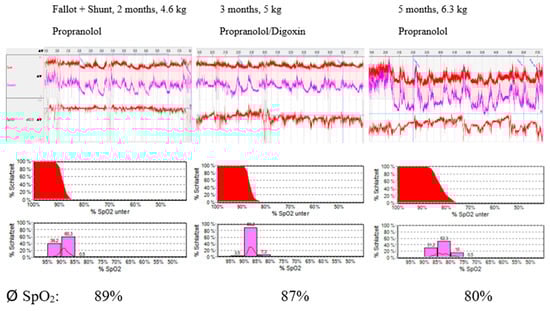
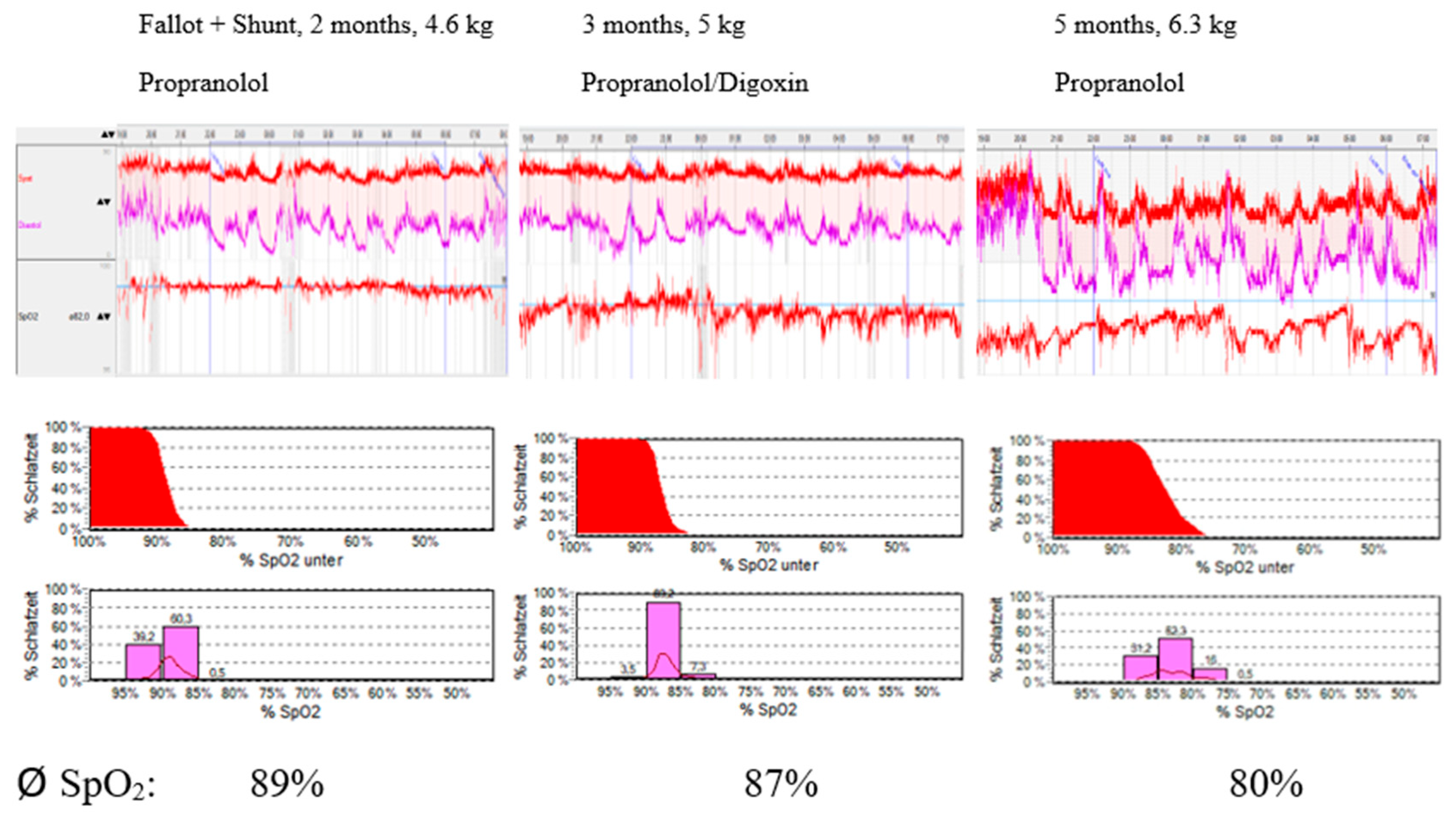
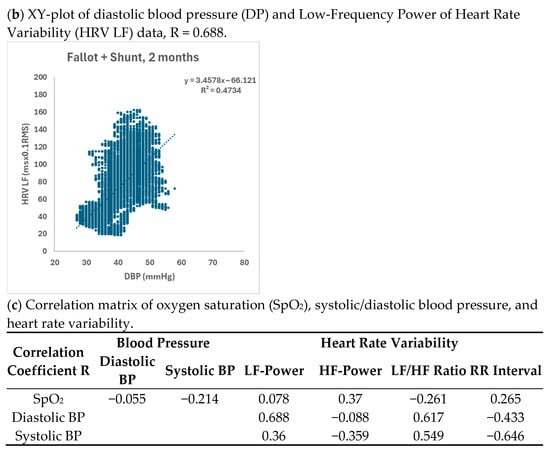
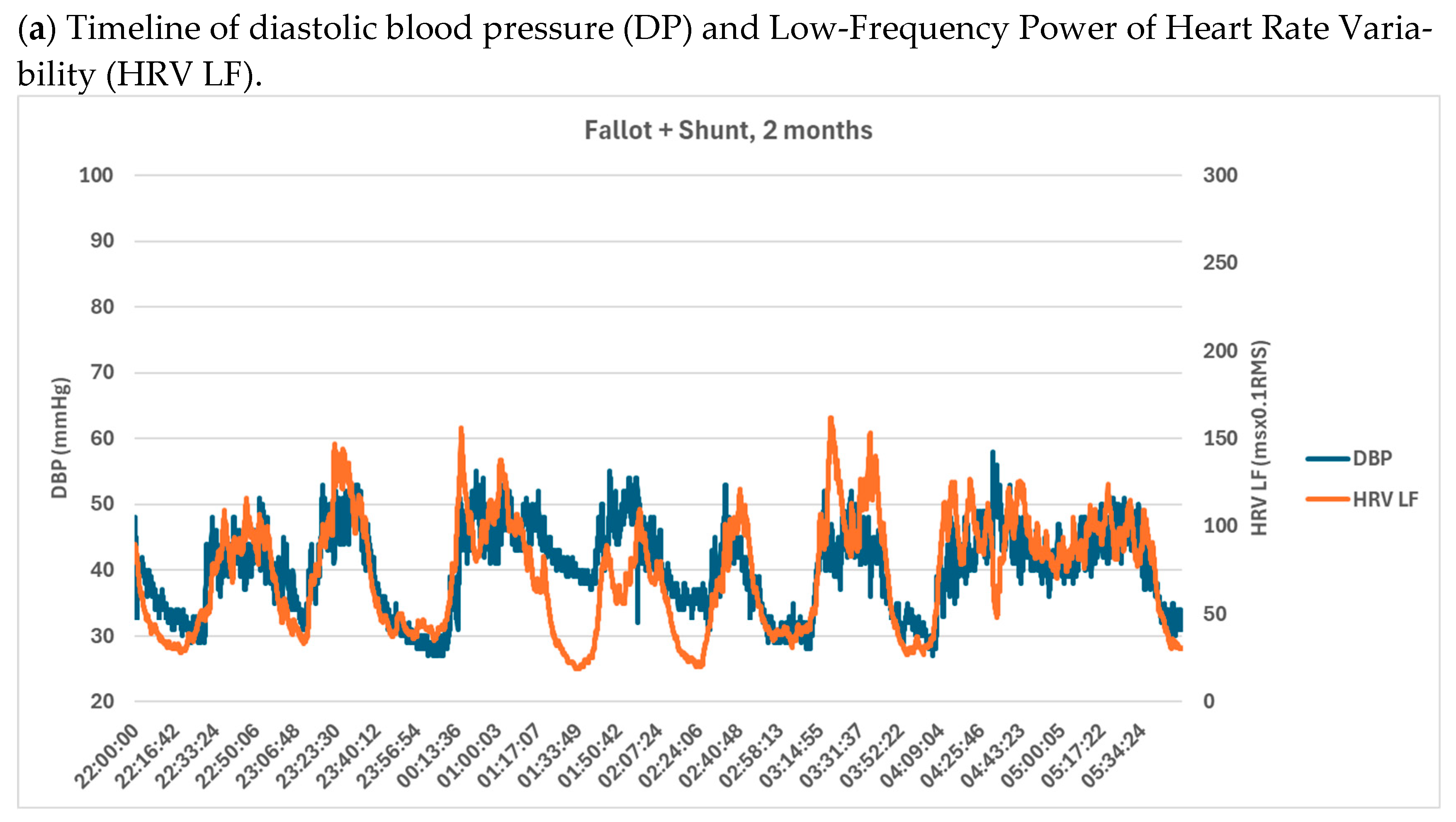
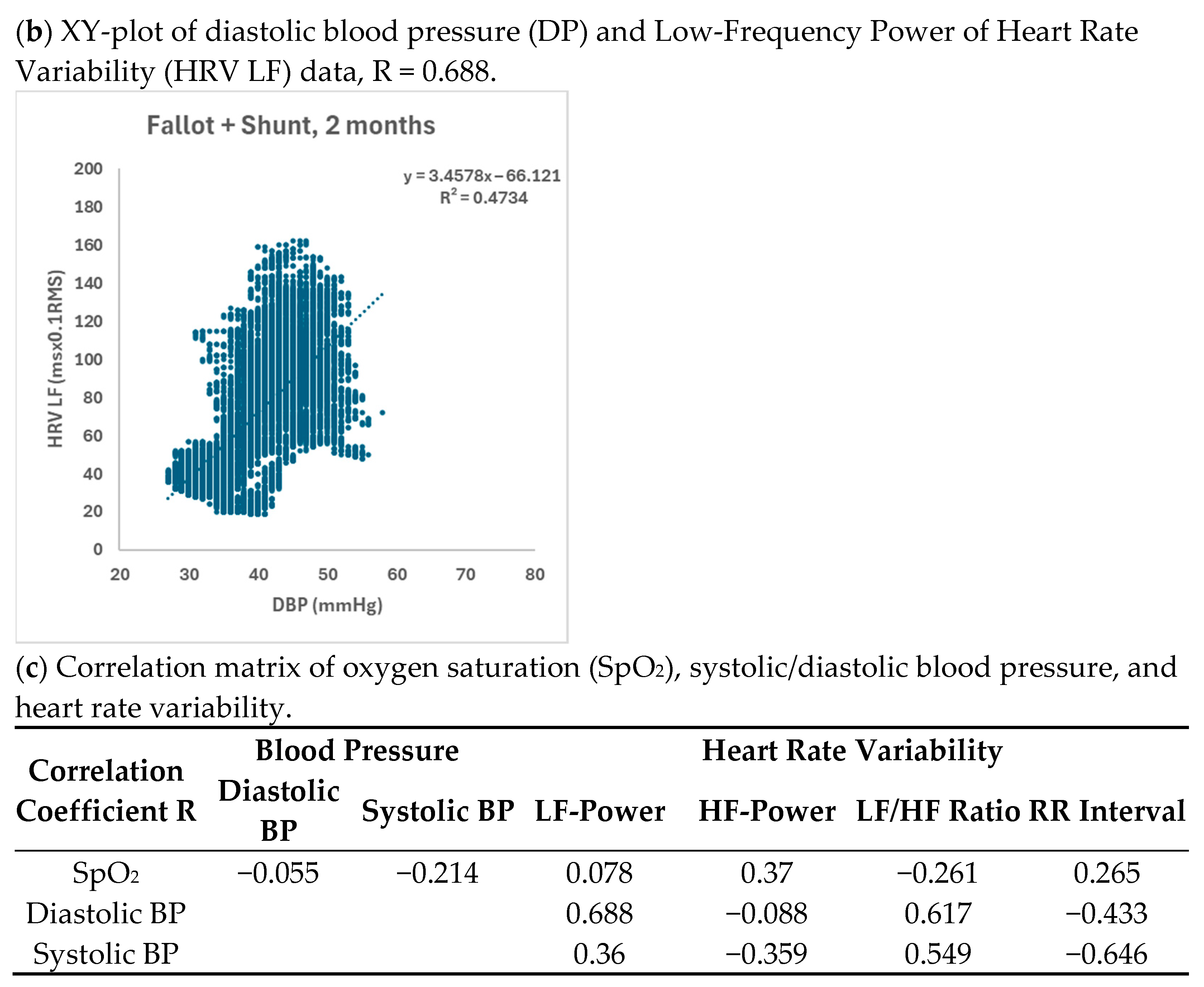
A male patient was born with Tetralogy of Fallot. Despite propranolol therapy, he developed hypoxic spells and was treated with a 3.5 mm Blalock Taussig Shunt. To address heart failure due to pulmonary overcirculation, he was prescribed frusemide and metoprolol. Despite this therapy, he continued to suffer from heart failure, with an NT-BNP value of 1890 pg/mL. We successfully introduced digoxin to induce right ventricular outflow tract obstruction, and the saturation decreased (Figure 3), and heart failure improved. While the oxygen saturation levels decreased in the growing infant, DBP and SBP fluctuations increased. We found strong correlations between BP and RR intervals as well as heart rate variability (Figure 4).
Figure 3.
Night-time SOMNOtouch™ NIBP data of systolic (red) and diastolic (pink) blood pressure and oxygen saturation (red) in an infant with Tetralogy of Fallot with heart failure due to pulmonary overcirculation after Blalock Taussig Shunt implantation (case 2). Cumulative oxygen saturation levels are presented in the second and third lines. While oxygen saturation decreases in the growing infant, the fluctuation of diastolic and systolic blood pressures increases. The pink line represents the distribution of the oxygen saturations, measured with 24 h.
Figure 4.
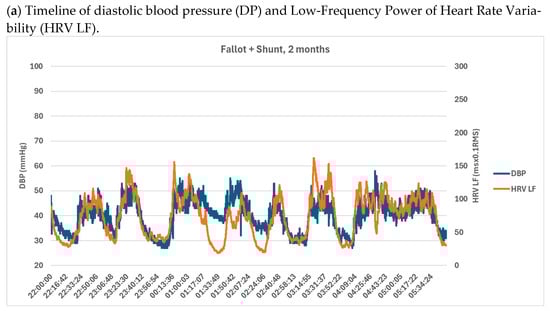
Correlation of heart rate variabilities, blood pressures, and oxygen saturation in the infant with Tetralogy of Fallot with heart failure due to pulmonary overcirculation after Blalock Taussig Shunt implantation (case 2).
2.6. Case 3
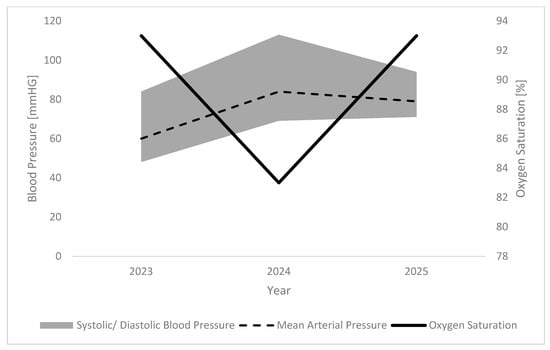
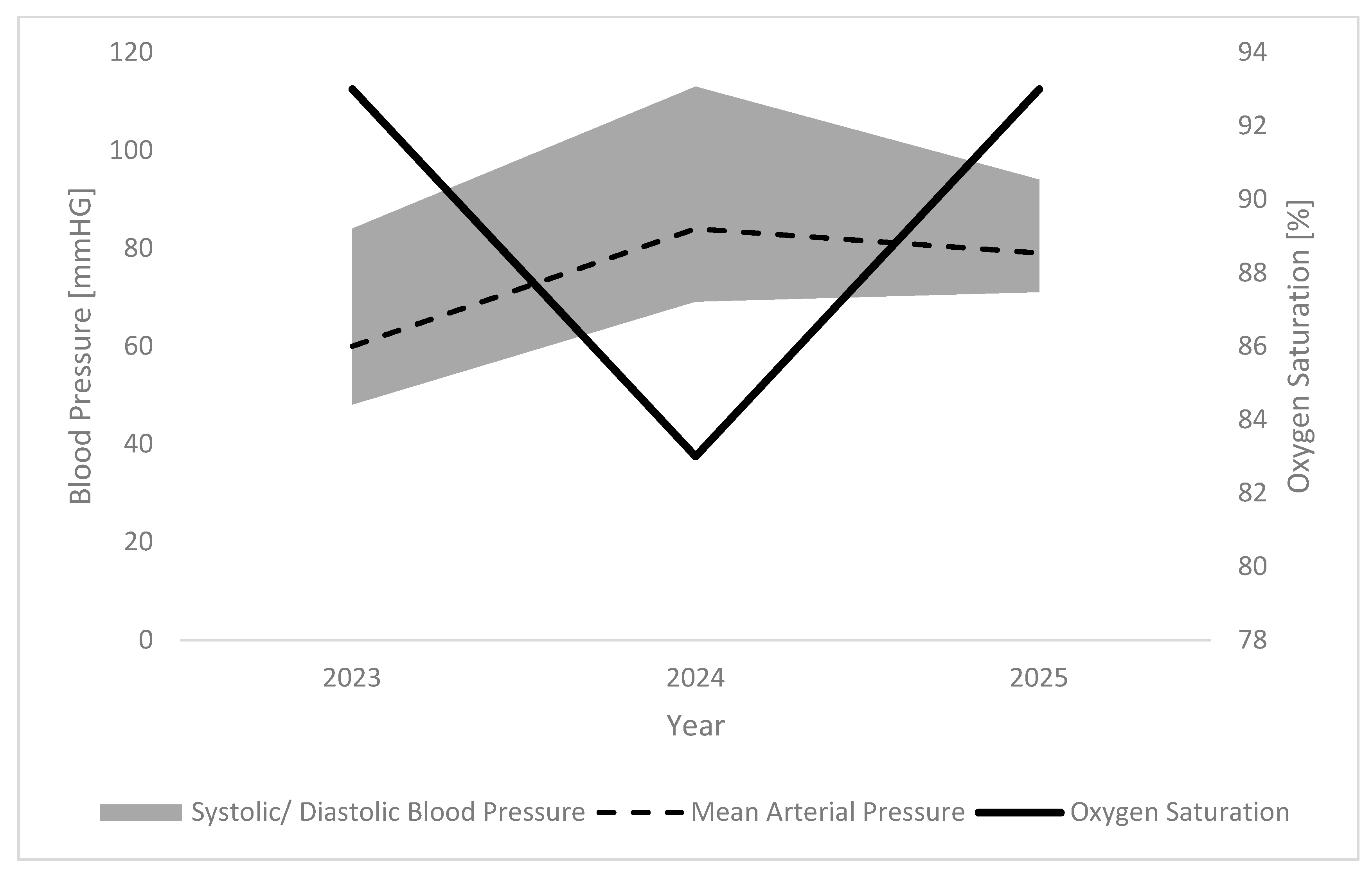
To assess the impact of chronic cyanosis on vasoregulation, we present a three-year follow-up observation (11–14 years of life) of a girl with congenital corrected transposition of the great arteries (ccTGA) with a ventricular septal defect, pulmonary stenosis, and Kartagener Syndrome. She experienced more severe cyanosis after a respiratory infection in 2024. While oxygen saturation decreased in 2024, mean 24 h BP increased (Figure 5).
Figure 5.
Mean twenty-four-hour data of SBP, DBP, and oxygen saturation in a three-year follow-up of a girl with chronic cyanosis due to a congenitally corrected transposition of the great arteries (ccTGA, 11–14 years of life) with ventricular septal defect, pulmonary stenosis, and Kartagener Syndrome, with more severe cyanosis after a respiratory infection in 2024 (Case 3).
3. Results
Beat-to-beat measurements of BP and oxygen saturation enable us to reveal the impact of hypoxia on vasoregulation in patients with cyanotic heart defects. The Norwood 1 patient had the lowest mean saturation of 74% and demonstrated the high impact of oxygen saturation on DBP (R = −0.454) and SBP (R = −0.316). Following the Norwood 2 operation, this patient’s oxygen saturation increased from 74% to 81% and 83% after three weeks and six weeks, respectively, with a smaller impact of hypoxia on BP and vasoregulation (Figure 1).
The infant with the Tetralogy of Fallot and pulmonary overcirculation following the 3.5 mm Blalock Taussig Shunt implantation demonstrated a high mean oxygen saturation of 88.7%, with smaller BP fluctuations that increased with further cyanosis during the growth of the infant (Figure 3). To improve the heart failure treatment, digoxin was introduced to induce a right ventricular outflow tract obstruction. The patient’s heart failure improved, with oxygen saturation levels > 90%, decreasing from 39.2% to 3.5%. We found strong correlations between the BP, RR interval, and heart rate variability.
The three-year follow-up observation (11–14 years of life) of a girl with a congenitally corrected transposition of the great arteries (ccTGA), with ventricular septal defect, pulmonary stenosis, and Kartagener Syndrome, who experienced more severe cyanosis following a respiratory infection in 2024, demonstrates the midterm effect of cyanosis on BP (Figure 5). This patient also experienced a reversible increase in BP in 2024 due to lower oxygen saturation levels.
4. Discussion
We present our approach for measuring BP regulation in infants and children with cyanotic heart defects, using pulse wave velocity with the SOMNOtouch™ NIBP device (Randersacker, Germany). Importantly, at night the measured values are minimally disturbed by motion artifacts, and the device delivers plausible results comparable to the Boppli™ device in an outpatient setting. Boppli™ is a cuffless continuous blood pressure monitoring unit, and studies on its use have recently been published [10]. A limitation of our method is that absolute BP values may vary due to limitations related to the cuff-based calibration. However, precise absolute values are not essential for assessing blood pressure regulation, as this relies primarily on relative changes and dynamic patterns. The benefit of the cuffless method is that short-term blood pressure changes cannot be detected using standard methods (e.g., cuffs) due to their discontinuous nature. Due to this study’s outpatient setting, we were not able to assess accuracy in comparison to invasively measured blood pressures. Current methods used to measure hemodynamics and vasoregulation in infants with heart disease are only possible with sedated infants [11].
A feasibility study in adults undergoing hemodialysis recently showed an inverse association between the pulse arrival time and blood pressure changes, demonstrating significant correlations [12]. The pulse wave analysis is an important parameter for evaluating and monitoring arterial hypertension and cardiovascular diseases [13] but appears to be underestimated in children [14]. However, a non-invasive and continuous blood pressure monitoring system in neonatal intensive care is highly desirable [15].
In this study, patients’ heart rate and SBP are stable at first glance, while their DBP demonstrates significant fluctuations, which are probably due to the regulation of the total peripheral resistance, which is correlated directly to DBP. We could not observe such DBP fluctuations in infants without cyanosis. Hypoxia, indicated by low oxygen saturation values, appears to be an important regulator of vascular tone in infants (Cases 1 and 2) and children (Case 3), with significant cyanosis due to congenital heart defects, leading to an increase in DBP (Figure 2a,b). However, pharmacological therapy, age, and postoperative status are major uncontrolled confounders in this observational study. We avoided indicating statistics from many time series for only three patients.
Our data reflect the established association of the hypoxic burden in patients with obstructive sleep apnea and arterial hypertension in adults [3] and children [4], which is related to cardiovascular outcomes. The current pathophysiological explanation for this relationship is that hypoxia induces endothelial dysfunction, dysautonomia, oxidative stress, and systemic inflammation. Hypoxemia-induced dysautonomia can be measured by heart rate variability, which is significantly reduced in patients with obstructive sleep apnea [16], as demonstrated both in adults and children [4]. If heart rate variability was determined by the DOMINOlight™ software, we were able to demonstrate the association between DBP and heart rate variability in the infants with Tetralogy of Fallot (Figure 4a,b).
Hypoxia-induced hypertension may be related to hypoxic pulmonary vasoconstriction, which has been intensively investigated in patients with pulmonary hypertension [17]. Except for thromboxane A2, which has a very short half-life time of about 30 s, all other vasoconstrictors discussed are vasoconstrictors in the pulmonary and systemic circulation. Under conditions of chronic hypoxia, the generalized vasoconstriction of the pulmonary and systemic vasculature, as well as hypoxia-induced vascular remodeling, leads to an increased afterload of the left and right ventricles. Although the principle of hypoxic pulmonary vasoconstriction was recognized decades ago, its exact pathway still remains unclear [17]. The hypoxia-inducible factor (HIF) is an important regulator of oxygen homeostasis [18] and is considered an important transcription factor for regulating oxygen changes in a hypoxic environment. HIFs can regulate the expression of various hypoxia-related target genes and play a role in acute and chronic hypoxic pulmonary vascular reactions [19].
In neonates with congenital heart defects, one study has demonstrated that hypoxemia-related pathways are activated in the myocardium. The myocardial expression of hypoxia-inducible factor-1α mRNA relates to a worse postoperative outcome [20]. Another study indicates that high percentages of HIF-1α (100%), vascular endothelial growth factor (VEGF, 89.5%), inducible nitric oxide synthase (iNOS, 78.9%), and endothelin-1 (84.2%) expression were observed in autopsy cases of congenital heart defects [21].
Numerous investigations have suggested that the pulmonary vascular endothelium produces endothelin-1, a 21-amino-acid vasoactive polypeptide with strong vasoconstrictor effects, which promotes the growth of smooth vascular muscle cells. Infants with univentricular hearts have higher levels of endothelin-1 perioperatively, which correlate with increased post-Norwood stage 2 hypoxemia [22]. A failure to suppress endothelin-1 may be a modifiable risk factor for intolerance to univentricular heart palliation [23].
Our observations produced by measuring vasoregulation via pulse wave velocity with the SOMNOtouch™ NIBP (Randersacker, Germany) present new opportunities to investigate these vasoconstrictors under real-life conditions, without endangering infants by using measuring catheters or sedation. Most importantly, we can analyze the impact of pharmacotherapies in infants with congenital heart defects. If vasodilators, like the endothelin antagonists or sildenafil, are not investigated through prospective randomized trials, we have an opportunity to prove this therapeutic concept through real-life vasoregulation measurements.
To overcome the limitations of the afterload reduction associated with vasodilators, over the past 30 years, beta-blockers have been used for the pharmacotherapy of infants with severe heart failure caused by left-to-right shunts [24]. Furthermore, volume depletion with loop diuretics is prevented by introducing propranolol. Our concept has been confirmed by a significant deactivation of the renin–angiotensin–aldosterone system and a reduction in clinical heart failure, as measured by the Ross Score in a prospective randomized trial [25]. Although both infants in this report are treated with a beta-blocker, DBP fluctuations are not suppressed (Figure 1 and Figure 3). However, we found strong correlations between BP and heart rate variability, which highlight the impact of the autonomic nervous system on vasoregulation in infants, albeit to a lesser extent in the 13-year-old girl with the congenitally corrected transposition of the great arteries (Case 3).
We are interested in the link between the β-adrenergic receptor and responses to hypoxia. It has been hypothesized that the β-adrenergic receptor mediates hypoxia sensing and is necessary for HIF-1α accumulation [26]. Treatment with carvedilol has been shown to reverse the abnormal regulation of HIF-1 α and VEGF in a failing ventricular myocardium.
5. Conclusions
This cuffless device for continuous, non-invasive BP measurements seems to be useful for infants and children with congenital heart defects receiving pharmacotherapies that modulate vasoregulation. These patients should be non-invasively monitored for safety reasons as well as to improve our understanding of their pathophysiology. Our initial observations suggest an association between oxygen saturation, DBP, and heart rate variability in these infants with cyanotic congenital heart disease, but this must be confirmed in a prospective trial involving more children.
Author Contributions
Conceptualization, R.B.; methodology, R.B. and E.H.; software, E.H.; validation, R.B. and E.H.; investigation, R.B.; resources, R.B.; data curation, R.B.; writing—original draft preparation, R.B.; writing—review and editing, E.H.; visualization, R.B. and E.H. All authors have read and agreed to the published version of the manuscript.
Funding
This research received no external funding.
Institutional Review Board Statement
Ethical review and approval were waived for this study as Holter ECG Monitoring is part of the clinical routine in patients with congenital heart disease.
Informed Consent Statement
Informed consent was obtained from all subjects involved in this study.
Data Availability Statement
The data are available on request and are anonymized by the authors.
Conflicts of Interest
E.H. is an employee of SOMNOmedics AG. R.B. declares no conflicts of interest.
Abbreviations
The following abbreviations are used in this manuscript:
| ccTGA | congenital corrected transposition of the great arteries |
| HPV | hypoxic pulmonary vasoconstriction |
| HIF | hypoxia-inducible factor |
| DPB | diastolic blood pressure |
| SBP | systolic blood pressure |
| BP | blood pressure |
| PTT | pulse transit time |
| VEGF | vascular endothelial growth factor |
References
- Breeyear, J.H.; Keaton, J.M.; Torstenson, E.S.; Smith, A.H.; Klarin, D.; Damrauer, S.M.; Natarajan, P.; Van Driest, S.L.; Weiner, J.G.; Kannankeril, P.J.; et al. Diastolic Blood Pressure Alleles Improve Congenital Heart Defect Repair Outcomes. Circ. Res. 2022, 130, 1030–1037. [Google Scholar] [CrossRef] [Scilit] [PubMed]
- Buchhorn, R.; Bartmus, D.; Buhre, W.; Bursch, J. Pathogenetic mechanisms of venous congestion after the Fontan procedure. Cardiol. Young 2001, 11, 161–168. [Google Scholar] [CrossRef] [Scilit] [PubMed]
- Ahmed, A.M.; Nur, S.M.; Xiaochen, Y. Association between obstructive sleep apnea and resistant hypertension: Systematic review and meta-analysis. Front. Med. 2023, 10, 1200952. [Google Scholar] [CrossRef] [Scilit] [PubMed]
- Bokov, P.; Dudoignon, B.; Delclaux, C. Hypoxic burden as a cause of cardiovascular morbidity in childhood obstructive sleep apnea. Pediatr. Res. 2025, 1–6. [Google Scholar] [CrossRef] [Scilit]
- Waypa, G.B.; Schumacker, P.T. Hypoxia-induced changes in pulmonary and systemic vascular resistance: Where is the O2 sensor? Respir. Physiol. Neurobiol. 2010, 174, 201–211. [Google Scholar] [CrossRef] [Scilit]
- Abdul-Khaliq, H.; Gomes, D.; Meyer, S.; von Kries, R.; Wagenpfeil, S.; Pfeifer, J.; Poryo, M. Trends of mortality rate in patients with congenital heart defects in Germany-analysis of nationwide data of the Federal Statistical Office of Germany. Clin. Res. Cardiol. Off. J. Ger. Card. Soc. 2024, 113, 750–760. [Google Scholar] [CrossRef] [Scilit]
- Forestieri, N.E.; Olshan, A.F.; Oster, M.E.; Ailes, E.C.; Fundora, M.P.; Fisher, S.C.; Shumate, C.; Romitti, P.A.; Rebecca, F.L.; Nembhard, W.N.; et al. Survival of Children with Critical Congenital Heart Defects in the National Birth Defects Prevention Study. Birth Defects Res. 2024, 116, e2394. [Google Scholar] [CrossRef] [Scilit]
- Gesche, H.; Grosskurth, D.; Küchler, G.; Patzak, A. Continuous blood pressure measurement by using the pulse transit time: Comparison to a cuff-based method. Eur. J. Appl. Physiol. 2012, 112, 309–315. [Google Scholar] [CrossRef] [Scilit]
- Bilo, G.; Zorzi, C.; Ochoa Munera, J.E.; Torlasco, C.; Giuli, V.; Parati, G. Validation of the Somnotouch-NIBP noninvasive continuous blood pressure monitor according to the European Society of Hypertension International Protocol revision 2010. Blood Press Monit. 2015, 20, 291–294. [Google Scholar] [CrossRef] [Scilit]
- Hunter, R.B.; Saruwatari, M.S.; Bliss, N.D.; Kim, S.; Turcu, R.; Krbec, B.A.; Yusuf, K.; Rao, A.; Quan, X.; Soghier, L. Accuracy and Safety of a Continuous Noninvasive Blood Pressure Monitor in Neonates. Neonatology 2025, 122, 595–605. [Google Scholar] [CrossRef] [Scilit]
- Aronsson, A.; Sigurdsson, T.S.; Lindberg, L. The effect of oxygen on hemodynamic variables in neonates with single ventricle after the Norwood procedure. medRxiv 2025. [Google Scholar] [CrossRef] [Scilit]
- Wunderle, M.; Bachler, M.; Stadler, D.; Hametner, B.; Orter, S.; Küchle, C.; Krenn, S.; Heemann, U.; Wassertheurer, S.; Schmaderer, C.; et al. Continuous measurement of pulse arrival time for identification of blood pressure changes in patients undergoing hemodialysis-a feasibility study. Clin. Kidney J. 2025, 18, sfaf255. [Google Scholar] [CrossRef] [Scilit] [PubMed]
- Pielmus, A.G.; Mühlstef, J.; Bresch, E.; Glos, M.; Jungen, C.; Mieke, S.; Orglmeister, R.; Schulze, A.; Stender, B.; Voigt, V.; et al. Surrogate based continuous noninvasive blood pressure measurement. Biomed. Tech. 2021, 66, 231–245. [Google Scholar] [CrossRef] [Scilit] [PubMed]
- Claessens, P.J.; Peeters, R.; Claessens, L.; Claessens, C.; Claessens, J.; Claessens, P.M. Pulse wave analysis measurements: Important, underestimated and undervalued parameters in cardiovascular health problems. Front. Cardiovasc. Med. 2023, 10, 1266258. [Google Scholar] [CrossRef] [Scilit]
- Baker, S.; Yogavijayan, T.; Kandasamy, Y. Towards Non-Invasive and Continuous Blood Pressure Monitoring in Neonatal Intensive Care Using Artificial Intelligence: A Narrative Review. Healthcare 2023, 11, 3107. [Google Scholar] [CrossRef] [Scilit]
- Dissanayake, H.U.; Bin, Y.S.; Ucak, S.; de Chazal, P.; Sutherland, K.; Cistulli, P.A. Association between autonomic function and obstructive sleep apnea: A systematic review. Sleep Med. Rev. 2021, 57, 101470. [Google Scholar] [CrossRef] [Scilit]
- Sommer, N.; Dietrich, A.; Schermuly, R.T.; Ghofrani, H.A.; Gudermann, T.; Schulz, R.; Seeger, W.; Grimminger, F.; Weissmann, N. Regulation of hypoxic pulmonary vasoconstriction: Basic mechanisms. Eur. Respir. J. 2008, 32, 1639–1651. [Google Scholar] [CrossRef] [Scilit]
- Pullamsetti, S.S.; Mamazhakypov, A.; Weissmann, N.; Seeger, W.; Savai, R. Hypoxia-inducible factor signaling in pulmonary hypertension. J. Clin. Investig. 2020, 130, 5638–5651. [Google Scholar] [CrossRef] [Scilit]
- Wan, J.J.; Yi, J.; Wang, F.Y.; Zhang, C.; Dai, A.G. Expression and regulation of HIF-1a in hypoxic pulmonary hypertension: Focus on pathological mechanism and Pharmacological Treatment. Int. J. Med. Sci. 2024, 21, 45–60. [Google Scholar] [CrossRef] [Scilit]
- Farhat, N.; Vazquez-Jimenez, J.; Heying, R.; Seghaye, M.C. Myocardial mRNA expression of interleukin-6 and hypoxia inducible factor-1α in neonates with congenital cardiac defects. Mol. Cell. Pediatr. 2024, 11, 14. [Google Scholar] [CrossRef] [Scilit]
- Yin, H.L.; Luo, C.W.; Dai, Z.K.; Shaw, K.P.; Chai, C.Y.; Wu, C.C. Hypoxia-inducible factor-1α, vascular endothelial growth factor, inducible nitric oxide synthase, and endothelin-1 expression correlates with angiogenesis in congenital heart disease. Kaohsiung J. Med. Sci. 2016, 32, 348–355. [Google Scholar] [CrossRef] [Scilit]
- Frank, B.S.; Khailova, L.; Silveira, L.; Mitchell, M.B.; Morgan, G.J.; DiMaria, M.V.; Davidson, J.A. Increased Circulating Endothelin 1 Is Associated with Postoperative Hypoxemia in Infants with Single-Ventricle Heart Disease Undergoing Superior Cavopulmonary Anastomosis. J. Am. Heart Assoc. 2022, 11, e024007. [Google Scholar] [CrossRef] [Scilit]
- Frank, B.S.; Niemiec, S.; Khailova, L.; Mancuso, C.A.; Mitchell, M.B.; Morgan, G.J.; Twite, M.; DiMaria, M.V.; Sucharov, C.C.; Davidson, J.A. Increased Endothelin-1 Is Associated with Morbidity in Single Ventricle Heart Disease in Children Undergoing Fontan Palliation. JACC Adv. 2025, 4, 101672. [Google Scholar] [CrossRef] [Scilit]
- Buchhorn, R.; Bartmus, D.; Siekmeyer, W.; Hulpke-Wette, M.; Schulz, R.; Bursch, J. Beta-blocker therapy of severe congestive heart failure in infants with left to right shunts. Am. J. Cardiol. 1998, 81, 1366–1368. [Google Scholar] [CrossRef] [Scilit]
- Buchhorn, R.; Hulpke-Wette, M.; Hilgers, R.; Bartmus, D.; Wessel, A.; Bursch, J. Propranolol treatment of congestive heart failure in infants with congenital heart disease: The CHF-PRO-INFANT Trial. Congestive heart failure in infants treated with propanol. Int. J. Cardiol. 2001, 79, 167–173. [Google Scholar] [CrossRef] [Scilit]
- Cheong, H.I.; Asosingh, K.; Stephens, O.R.; Queisser, K.A.; Xu, W.; Willard, B.; Hu, B.; Dermawan, J.K.T.; Stark, G.R.; Naga Prasad, S.V.; et al. Hypoxia sensing through β-adrenergic receptors. JCI Insight 2016, 1, e90240. [Google Scholar] [CrossRef] [Scilit]
Disclaimer/Publisher’s Note: The statements, opinions and data contained in all publications are solely those of the individual author(s) and contributor(s) and not of MDPI and/or the editor(s). MDPI and/or the editor(s) disclaim responsibility for any injury to people or property resulting from any ideas, methods, instructions or products referred to in the content. |
© 2025 by the authors. Licensee MDPI, Basel, Switzerland. This article is an open access article distributed under the terms and conditions of the Creative Commons Attribution (CC BY) license (https://creativecommons.org/licenses/by/4.0/).