Article

Extra-Virgin Olive Oil as a Natural Photosensitizer in Photodynamic Therapy Against MDR Candida spp.: In Vitro Study


1
Oral Biotechnology Laboratory, Department of Surgical Science, University of Cagliari, 09127 Cagliari, Italy
2
Unit of Dentistry and Dental Hygiene, ASL, 74100 Taranto, Italy
3
Unit of Dental Hygiene, Section of Dentistry, Department of Clinical, Surgical, Diagnostic and Pediatric Sciences, University of Pavia, 27100 Pavia, Italy
4
Surgical, Medical and Dental Department, University of Modena and Reggio Emilia, 41121 Modena, Italy
5
Unit of Orthodontics and Pediatric Dentistry, Section of Dentistry, Department of Clinical, Surgical, Diagnostic and Pediatric Sciences, University of Pavia, 27100 Pavia, Italy
*
Authors to whom correspondence should be addressed.
Optics 2026, 7(1), 10; https://doi.org/10.3390/opt7010010
Submission received: 28 November 2025 / Revised: 12 January 2026 / Accepted: 16 January 2026 / Published: 26 January 2026

Abstract

The growing prevalence of multidrug-resistant (MDR) Candida spp. necessitates the development of new antifungal strategies. Photodynamic therapy (PDT), already widely used in the treatment of various oral infections, is based on the synergistic interaction of three key elements: a photosensitizer capable of selectively binding to microbial cells, a light source with the appropriate wavelength, and the presence of molecular oxygen. This interaction results in the production of singlet oxygen and reactive oxygen species, responsible for the selective destruction of microorganisms. In recent years, numerous natural compounds have been explored as potential photosensitizers. Olive oil, a cornerstone of the Mediterranean diet, was recently recognized by the U.S. Food and Drug Administration as a medicinal substance thanks to its soothing, immunomodulatory, and antimicrobial properties, which have also been documented in regard to oral administration. Materials and Methods: The aim of this in vitro study was to evaluate the efficacy of activated olive oil as a novel photosensitizer in PDT against Candida species. Oral MDR clinical isolates of C. albicans, C. krusei, and C. glabrata were analyzed using the Kirby–Bauer method according to EUCAST protocols. Six different experimental conditions were considered for each strain: (i) 100 μL of extra-virgin olive oil (EVOO); (ii) 100 μL of EVOO pre-activated with 3% H2O2 (EVOO-H); (iii) 100 μL of EVOO irradiated for 5 min with polarized light (480–3400 nm, 25 W); (iv) 100 μL of EVOO-H subjected to the same polarized light; (v) 100 μL of EVOO irradiated for 5 min with a 660 nm diode laser (100 mW); and (vi) 100 μL of EVOO-H irradiated with the same laser. All plates were incubated at 37 °C for 48 h. Results: The results showed a variable response among the different Candida species. C. glabrata showed sensitivity to all experimental conditions, with a 50% increase in the diameter of the inhibition zone in the presence of polarized light. C. krusei showed no sensitivity under any of the conditions tested. C. albicans showed antifungal activity exclusively when EVOO-H was activated by light. In particular, activation of EVOO and EVOO-H with polarized light resulted in the largest inhibition zones. Conclusions: In conclusion, olive oil, both alone and pre-activated with hydrogen peroxide, can be considered an effective photosensitizer against drug-resistant Candida spp., especially when combined with polarized light.

1. Introduction

Extra-Virgin Olive Oil (EVOO) is obtained from the first mechanical pressing of olives (once they have reached perfect ripeness and color) through a process known as cold extraction, in which the temperature must never exceed 28 °C to preserve all of the oil’s characteristics, properties, polyphenols, and aromas. The therapeutic and beneficial virtues of olive oil have been known for centuries: as early as 400 B.C., Hippocrates described it as “the best medicine,” and in Homer’s works, it is repeatedly referred to as “liquid gold.” The culture of using olive oil in massage was particularly appreciated by the Romans, who placed great importance on it in general skin care; they called olive oil treatments “beauty baths.” Ancient populations believed in the medicinal value of olive oil, using it to treat wounds and burns; due to its emollient properties, it was also applied as a moisturizing and soothing lotion. Furthermore, it was considered effective in treating numerous conditions, including intestinal disorders [1]. Extra-virgin olive oil is one of the key foods in the Mediterranean diet (MedDiet) and represents one of the main factors contributing to its well-established benefits for human health. The Mediterranean diet is recognized as one of the most important dietary patterns for global public health. Adherence to the MedDiet is inversely associated with obesity; in fact, daily consumption of foods included in the MedDiet promotes greater weight loss and reduces the risk of developing chronic diseases such as cardiovascular disease and some types of cancer. This dietary pattern has also been shown to improve overall health, promoting healthier and longer-lived aging [2,3,4,5]. The Food and Drug Administration (FDA), the stringent regulatory body that oversees food and pharmaceutical products in the United States, has promoted extra-virgin olive oil from a health food to a drug. EVOO is now considered crucial in the prevention of cardiovascular disease, age-related cognitive decline, and type II diabetes mellitus [6,7,8,9]. The health-promoting properties of EVOO are largely attributed to its high concentration of monounsaturated fatty acids and a variety of phenolic compounds. The mechanisms through which EVOO exerts its beneficial effects on cardiovascular and metabolic health are numerous and include hypolipidemic and hypoglycemic actions, as well as anti-inflammatory and antioxidant effects mediated by the diverse array of polyphenols through cyclooxygenase inhibition [10,11,12,13,14]. In addition to its extremely high fatty acid content, EVOO contains several compounds that can positively influence health by performing important biological functions, referred to as bioactive compounds. Many of these bioactive molecules are responsible for the organoleptic characteristics, such as bitterness and pungency, which must be in the right balance. Their concentration depends on various factors, including the olive cultivar; the stage of ripeness of the fruit; the soil and climatic conditions; environmental conditions such as altitude, cultivation practices, and irrigation; extraction parameters such as temperature, the addition of water, and the extraction system used; and storage conditions (the absence of oxygen and light). For these reasons and for the numerous other factors that come into play, EVOOs can differ substantially from each other, assuming very different characteristics [15]. Extra-virgin olive oil (EVOO) is composed of 55–80% oleic acid, 8–14% saturated fatty acids, 4–20% polyunsaturated fatty acids, and 1–2% terpenes and polyphenols, compounds of medical, pharmacological, and therapeutic importance [15].
The compounds in EVOO, present in small concentrations, include more than 230 different substances that distinguish it from other liquid fats. Some of these substances impart an aromatic profile such as scents and flavors, while others act as powerful antioxidants capable of protecting the oil from aging, rancidity, and molecular alterations to the EVOO’s structure. However, the most important and determining aspect of these substances is their contribution to the oil’s nutraceutical properties [16]. A key aspect that confers nutraceutical properties to EVOO, a health claim validated by the European Food Safety Authority (EFSA), is related to the polyphenols in the oil. Based on scientifically validated evidence, the EFSA certified in May 2012 that “polyphenols in extra-virgin olive oil contribute to the protection of blood lipids from oxidative stress,” confirming that EVOO, an essential lipid component of the Mediterranean diet, can be considered a functional food with nutraceutical properties. The characteristic phenolic compounds of extra-virgin olive oil (EVOO) include phenolic alcohols such as hydroxytyrosol and tyrosol as well as their secoiridoid derivatives (oleuropein aglycone, oleuropein, and oleocanthal). The EFSA-approved health claim applies only to extra-virgin olive oils containing at least 5 mg of hydroxytyrosol and its derivatives per 20 g of oil. Consequently, high-phenolic-content EVOO is defined as having at least 250 mg of polyphenols per kg of oil according to standard and recognized criteria [15,17,18].
Apulian extra-virgin olive oils are known for their high content of polyphenol components, with the Coratina cultivar exceeding 600 mg/kg [19].
In vitro studies demonstrate that EVOO phenolic compounds regulate oxygen-dependent enzymatic pathways. In particular, hydroxytyrosol (HT) and oleuropein (OE) show strong enzyme regulatory activity and act as potent free-radical scavengers and antioxidants, conferring biochemical importance due to their function as a reservoir of biologically active substances [10,20,21]. Numerous scientific studies have demonstrated that EVOO polyphenols, thanks to their antioxidant properties, can neutralize the effects of multiple and varied pollutants and protect DNA from harmful genetic mutations, including those that cause some cells to transform into cancer cells. Further mechanisms beyond antioxidant activity may be linked to the specific phenolic profiles of some EVOOs. There is a great deal of scientific evidence suggesting that the aforementioned molecules contained in EVOO interact with proteins involved in DNA damage response pathways, improving their functionality and showing greater chemoprotective effects [21,22]. EVOO exhibits an anti-inflammatory action similar to that of ibuprofen and other NSAIDs, with a potent analgesic effect attributed to the oleocanthal molecule. Although structurally different, both molecules inhibit cyclooxygenase, an enzyme involved in pain and tissue inflammation [23]. Oleuropein, another phenolic molecule, has important and highly prebiotic properties, as some bacterial strains of Lactobacillus and Bifidobacterium can use oleuropein as a carbon source. These bacterial genera contribute to protecting the intestinal barrier through the production of short-chain fatty acids [24,25,26,27]. It has been shown that EVOO polyphenols can diffuse into gastric juice, remain stable for several hours in an acidic environment, and exert a bactericidal effect against eight different strains of Helicobacter pylori at very low concentrations (1.3 µg/mL) [28]. These studies support and highlight the potential use of EVOO as a chemo-preventive agent for gastric ulcers and/or gastric cancer [29]. New pharmacological approaches and directions dedicated to aging and chronic degenerative diseases are increasingly focusing on drugs or natural compounds able to activate anti-aging pathways and inhibit or decrease the activity of pro-aging pathways [30,31,32]. In chronic immune-mediated inflammatory diseases such as rheumatoid arthritis, inflammatory bowel disease, multiple sclerosis, systemic lupus erythematosus, and psoriasis, EVOO has shown important beneficial effects thanks to the presence of oleic acid, which has demonstrated antioxidant, anti-inflammatory, and immunomodulatory properties [33,34]. Carriello et al. have shown that intake of a single portion of 50 mL of extra-virgin olive oil from the “Coratina” cultivar in the morning on an empty stomach promotes the expression of microRNAs with anti-inflammatory and antitumor activity while simultaneously inhibiting the expression of microRNAs associated with insulin resistance [35]. Extra-virgin olive oil is rich in oleic acid, a molecule capable of regulating cell proliferation. Oleic acid is also produced endogenously, and the SCD1 enzyme in the intestinal epithelium is its main regulator. Carriello et al. have shown that in the absence of dietary oleic acid and with reduced endogenous production of SCD1, inflammation develops first, followed by the onset of intestinal tumors. Conversely, when oleic acid is supplied through the diet, normal intestinal physiology is restored, inflammation decreases, and protection against tumor formation is achieved [36]. Due to its very high polyphenol content (>600 mg/kg), Coratina extra-virgin olive oil has also been applied in oral medicine [37,38,39].

2. Materials and Methods

This in vitro study was conducted using a triplicate Kirby–Bauer test, performed in accordance with EUCAST protocols, with the aim of evaluating the effectiveness of EVOO alone or photoactivated against MDR Candida spp.

2.1. Candida Strains

In this study, three different oral clinical isolates of MDR Candida spp. were used: C. albicans CA97, C. glabrata CA96, and C. krusei CA95 (OBL Laboratory Collection, Cagliari, Italy). For example, the C. albicans strain CA97 was found to be resistant to three different azoles (fluconazole, voriconazole, and ketoconazole), primarily due to a mutation in the ERG11 gene [13]. All strains were plated on Sabouraud dextrose agar for 48 h at 35 °C (Microbiol, Uta, Cagliari, Italy). Colonies were identified using the API ID32C system (bioMérieux, St. Louis, MO, USA) and stored at −20 °C in skimmed milk (Oxoid, Basingstoke, UK) at a concentration of 1 × 10⁸ CFU/mL.
For all antimicrobial procedures performed on each Candida species, an inoculum of 1 × 10⁷ CFU/mL was used for the Kirby–Bauer assay, and 1 × 10⁵ CFU/mL was used for the growth curve assay in liquid medium. Kirby–Bauer experiments were carried out in 90 mm Petri dishes containing 15 mL of Sabouraud agar (Microbiol, Uta, Cagliari, Italy).

2.2. EVOO Photosensitizer and VIS Spectra

The Extra-Virgin Olive Oil (EVOO) used was from the Coratina cultivar, produced in Apulia, Italy. In some experimental groups, 3% hydrogen peroxide was used to activate the EVOO and was then removed. The goal was to initiate the production of reactive oxygen species (ROS) and increase oxygen bioavailability.
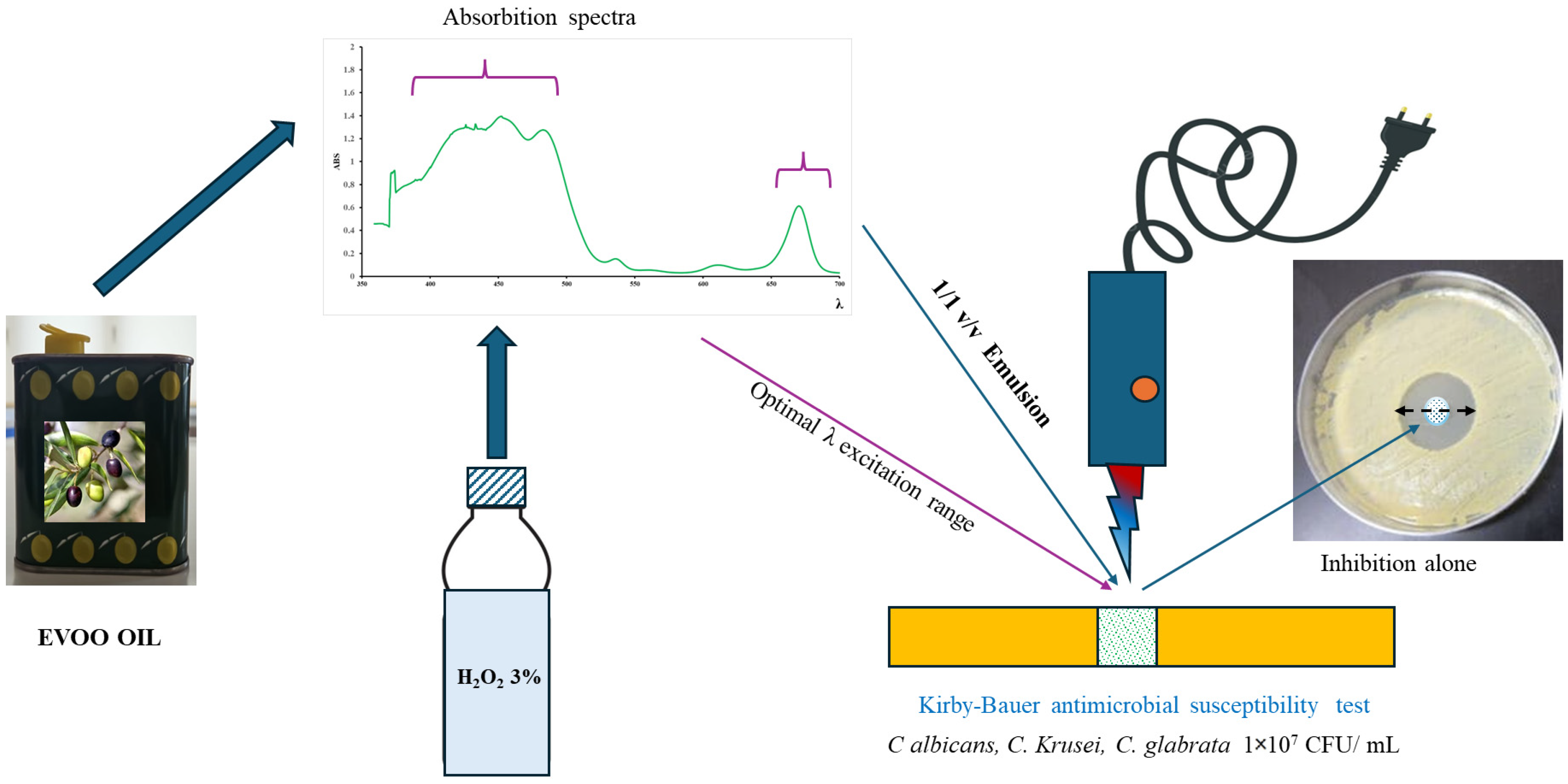
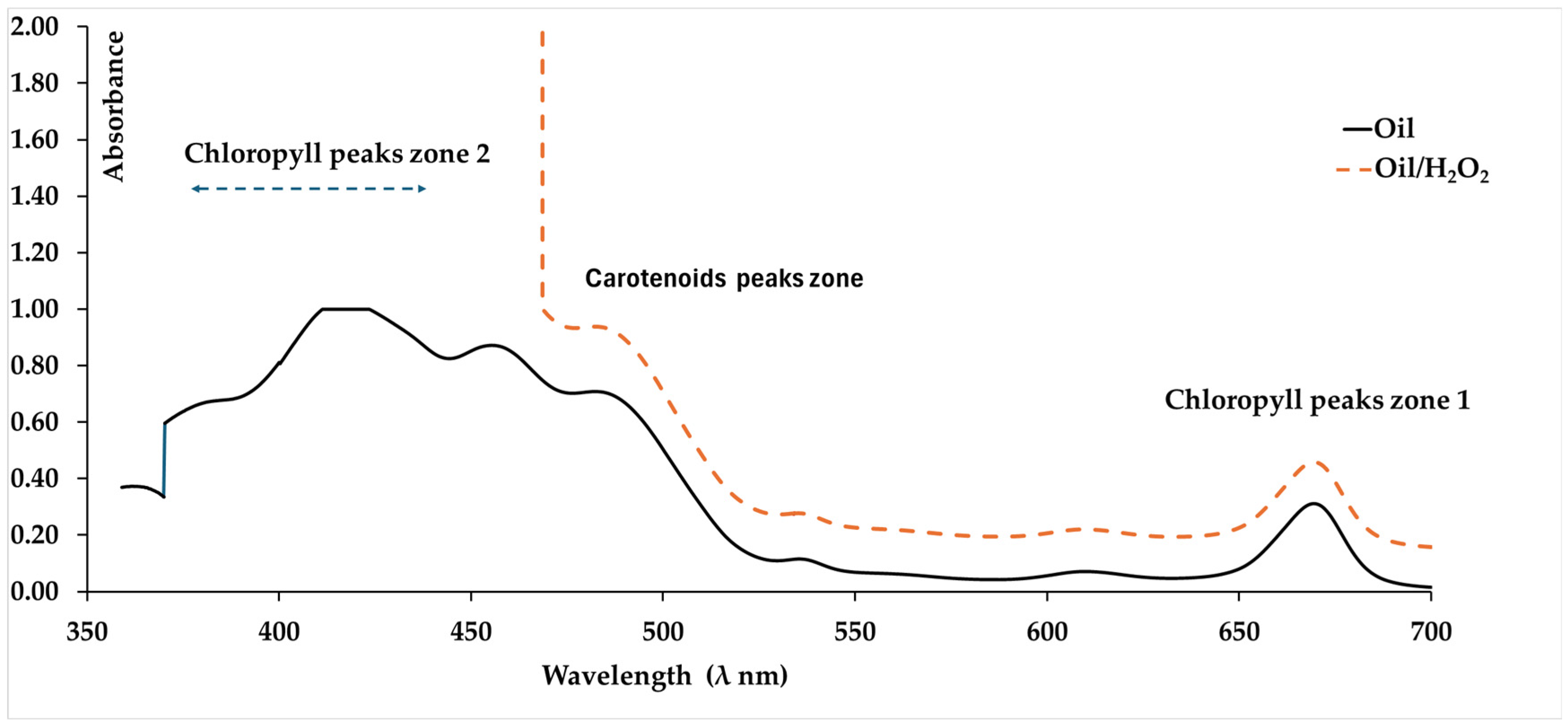
To achieve an improved pattern of visible light absorption, a series of UV spectra were conducted using extra-virgin olive oil (EVOO) and Vaselina oil (Marco Viti Farmaceutica Spa, Milano, Italy), both with and without the addition of hydrogen peroxide. In practice, the pure oils and their 1:1 (v/v) emulsion with 3% hydrogen peroxide were measured using a UV-visible spectrophotometer (JASCO V–600 Bio, JASCO Europe, Cremella, Italy). The λ detection range was 350–700 nm using glass cuvettes with an optical path length of 10 × 10 mm (Hellma Analytics, Munich, Germany), following the manufacturer’s instructions, Figure 1.
Lights used to perform Photodynamic Therapy:
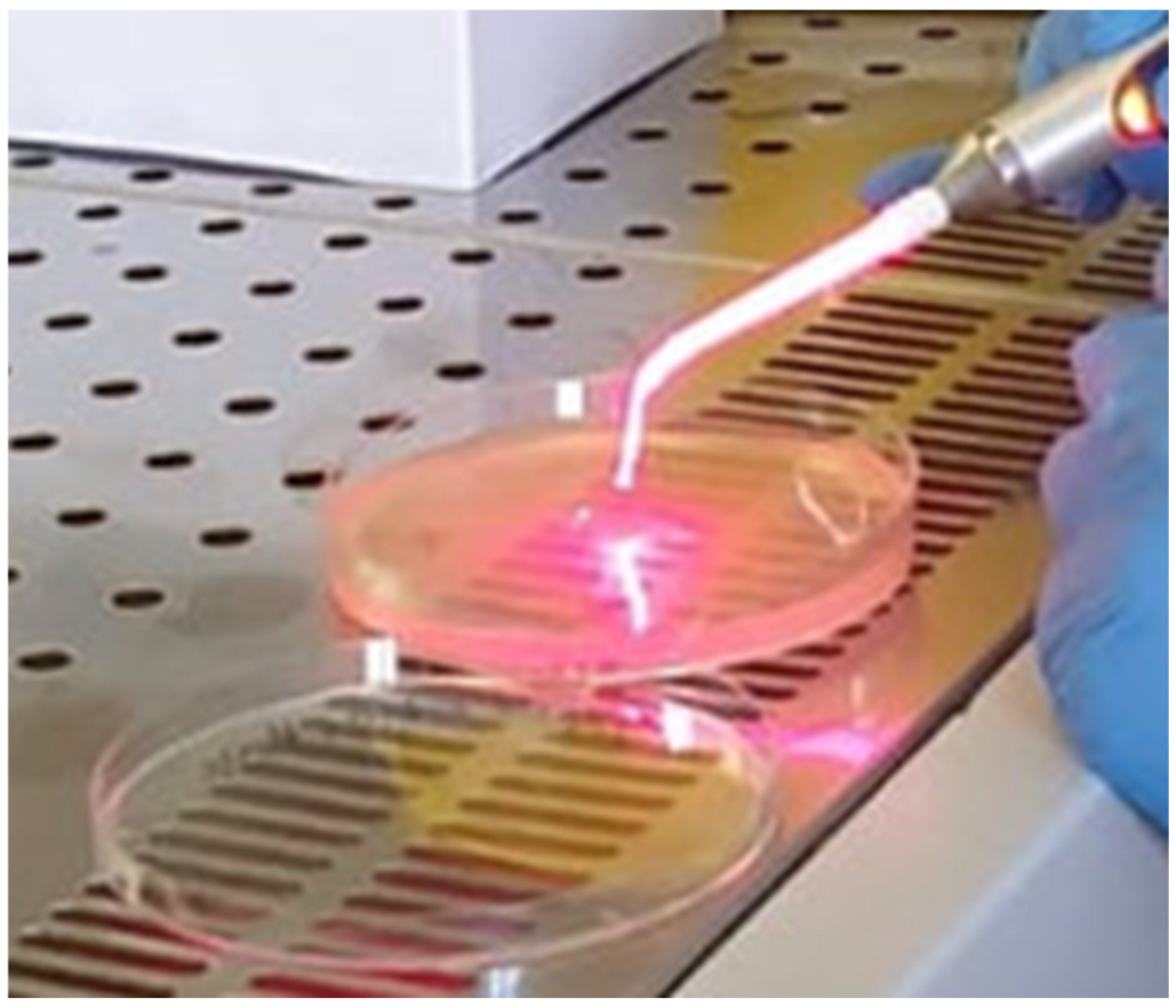
For this triplicate in vitro study two type of light, commercially available, are used: polarized light with wavelength comprised between 380–3400 nm, power density of 40 mW/cm2; energy density = 2.4 J/cm (Bioptron, Zepter, Neuchâtel, Switzerland) and Diode laser 660 nm, 100 mWatt of power (Helbo System, Bredent, Senden, Germany), power density of 60 mW/cm2, fluence of 3.6 J/cm2. The mode is continuous; it is not possible to change this parameter on the device. The tips used are 2D with a 1 cm2 diameter spot, as specified by the manufacturer.
Irradiation of the lights used was performed using devices at 5 cm from the contaminated Petri dishes.
Experimental groups of the in vitro study
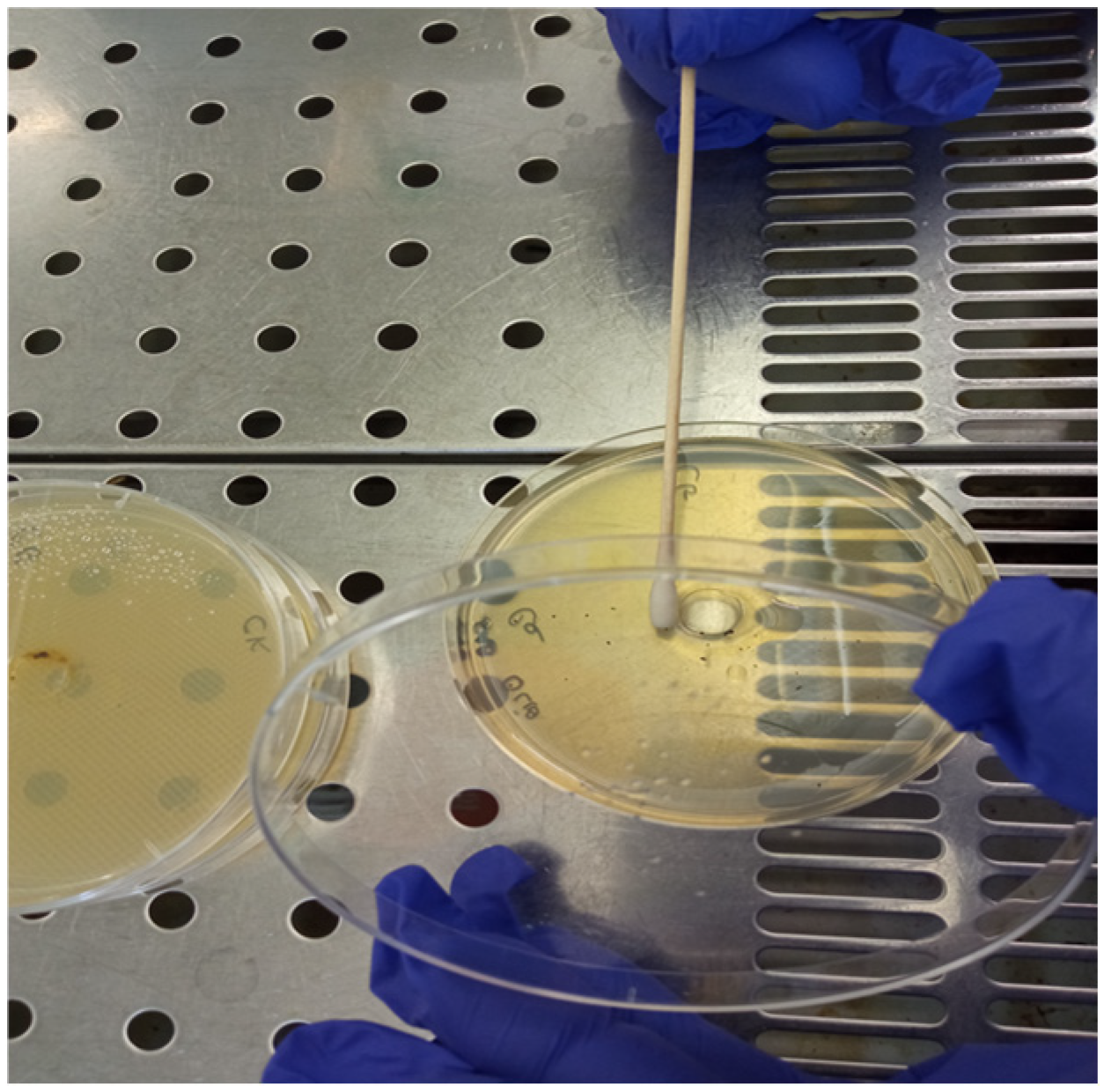
For antimicrobial profile assessment, each Petri dish was inoculated with 1 × 10⁷ CFU of the previously described Candida spp., using a sterile cotton swab spread from the center of the plate to the periphery, as shown in Figure 2.
For each strain, six different combinations were evaluated:
(i)
100 μL EVOO;
(ii)
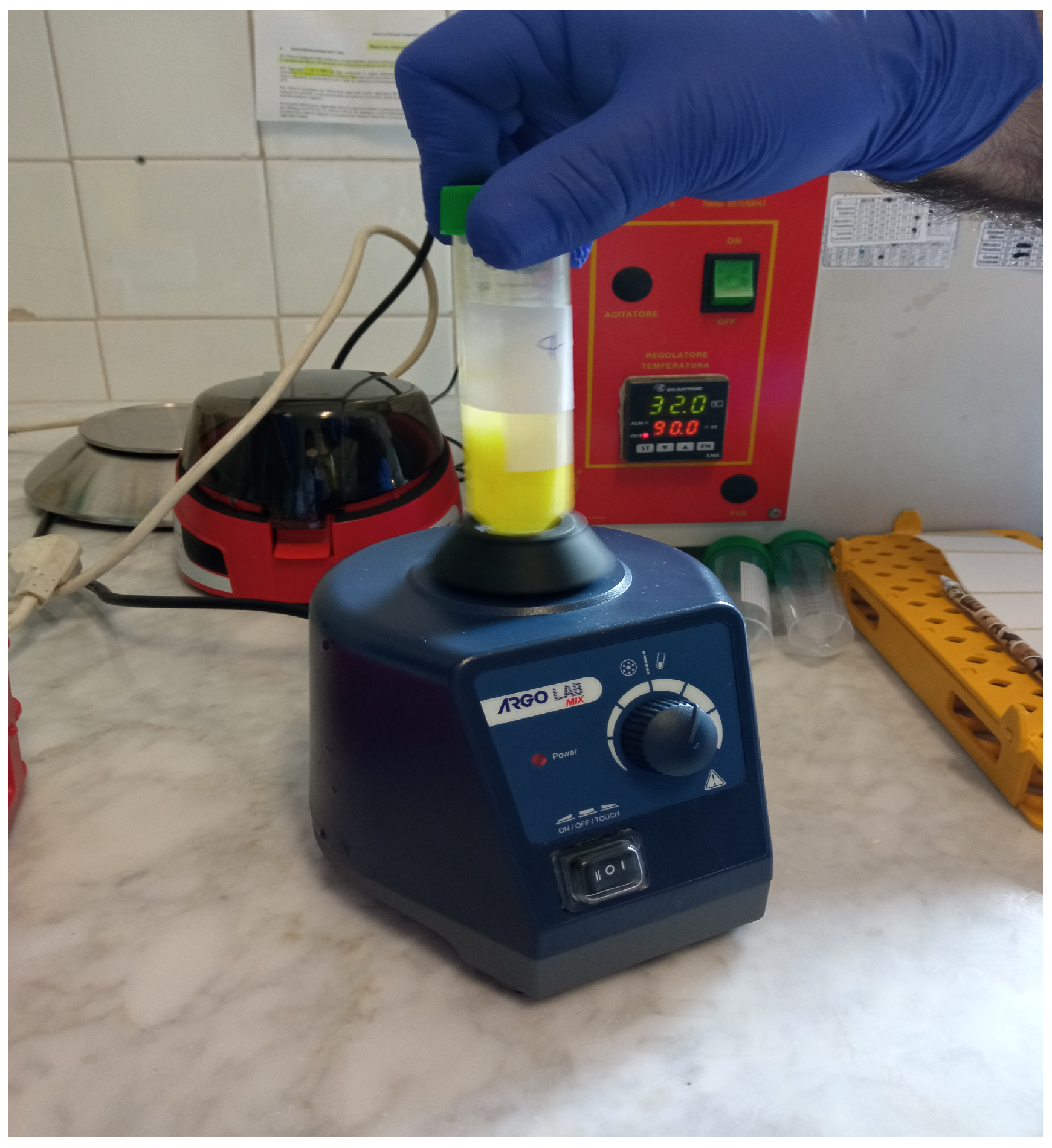
100 μL EVOO previously activated with 3% H2O2, mixed in a 1:1 ratio using a vortex, followed by reconstitution of the oil phase, referred to as “EVOO-H”;
(iii)
100 μL EVOO plus 5 min of polarized light irradiation (380–3400 nm, 25 W);
(iv)
100 μL EVOO-H irradiated with the same polarized light;
(v)
100 μL EVOO plus 5 min of 660 nm diode laser irradiation (100 mW);
(vi)
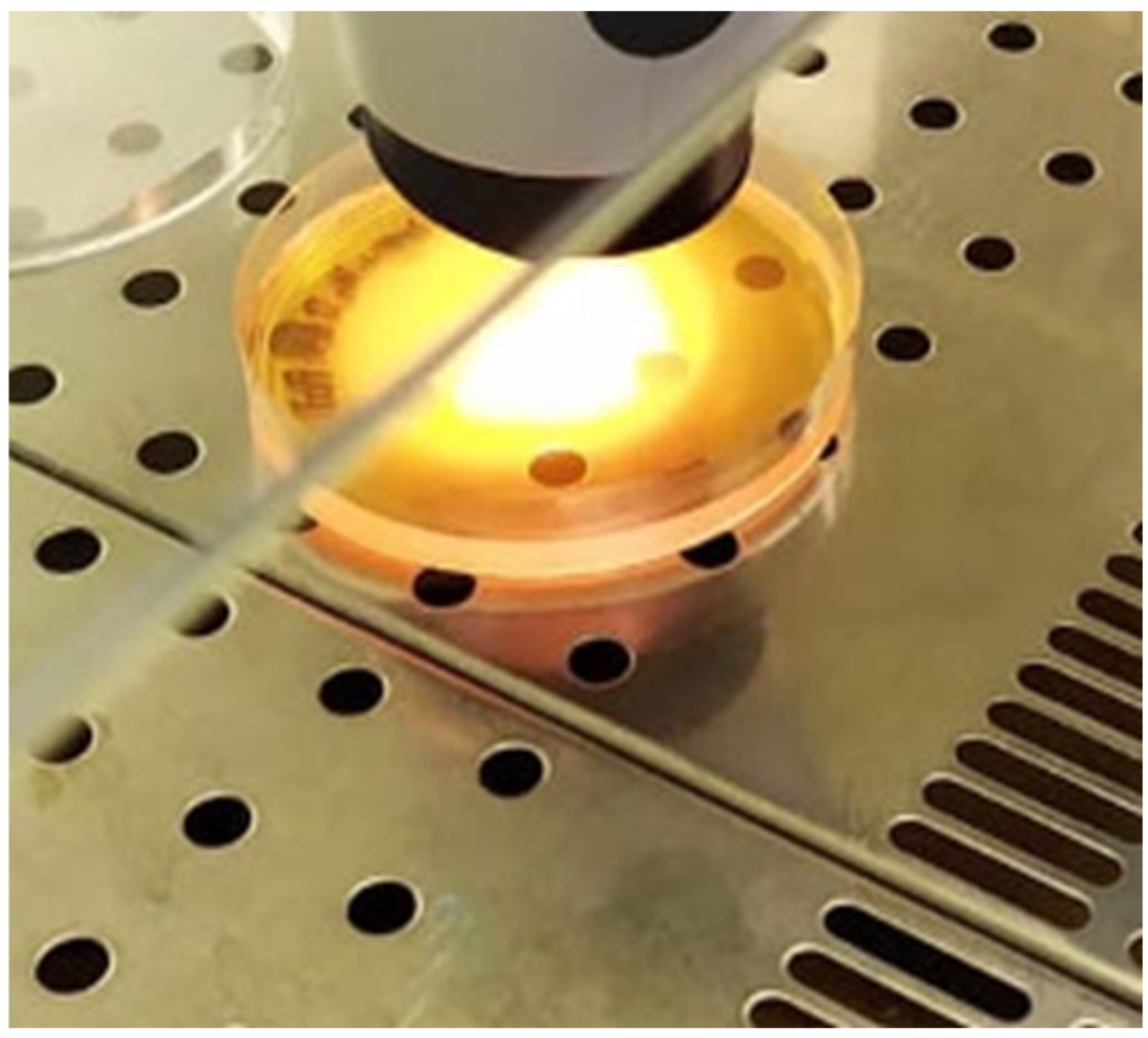
100 μL EVOO-H plus 5 min of 660 nm diode laser irradiation (100 mW), as shown in Figure 3, Figure 4 and Figure 5.
After irradiation, the plates were incubated at 37 °C for 48 h. The inhibition zones (in mm) were then measured for each plate and for each Candida strain tested. The mean inhibition values for each strain in each experimental group were used as the final outcome measures. These values were interpreted as an expression of the antifungal effect of EVOO, either alone or photoactivated.

2.3. Statistical Analysis

All experiments were performed in triplicate. The results were expressed as mean value °æ standard deviation. Statistically significant differences among samples were determined using the exact fisher test to substantiate a significant difference between the means of two specific groups. The statistical analysis was performed by using social science statistic software (version 2025, https://www.socscistatistics.com/, accessed on 14 January 2026). The minimum level of significance chosen was p < 0.05.

3. Results

3.1. Behaviour of EVOO Oil and Its H2O2 Emulsion in Visible Light Spectra

As previously described, a series of spectra in the visible-light spectrum were conducted. Figure 6 illustrates the absorption range obtained with H2O2 alone and when mixed in a 1:1 ratio with extra-virgin olive oil (EVOO). The addition of H2O2 resulted in an elevated absorbance reading (ABS > 2) in the λ range 470–350 nm; this phenomenon was not observed in emulsions using vaseline oil (Vaselina oil Marco Viti Farmaceutica Spa, Milano, Italy). Therefore, the elevated absorbance could not account for the physical parameters of the oil emulsification processes. This phenomenon may be attributed to the specific physicochemical properties of the EVOO-hydrogen peroxide emulsion. Furthermore, in every instance, the use of a PDT lamp that varied across all visible wavelengths was considered optimal, Figure 6.

3.2. Antimycotic Activity

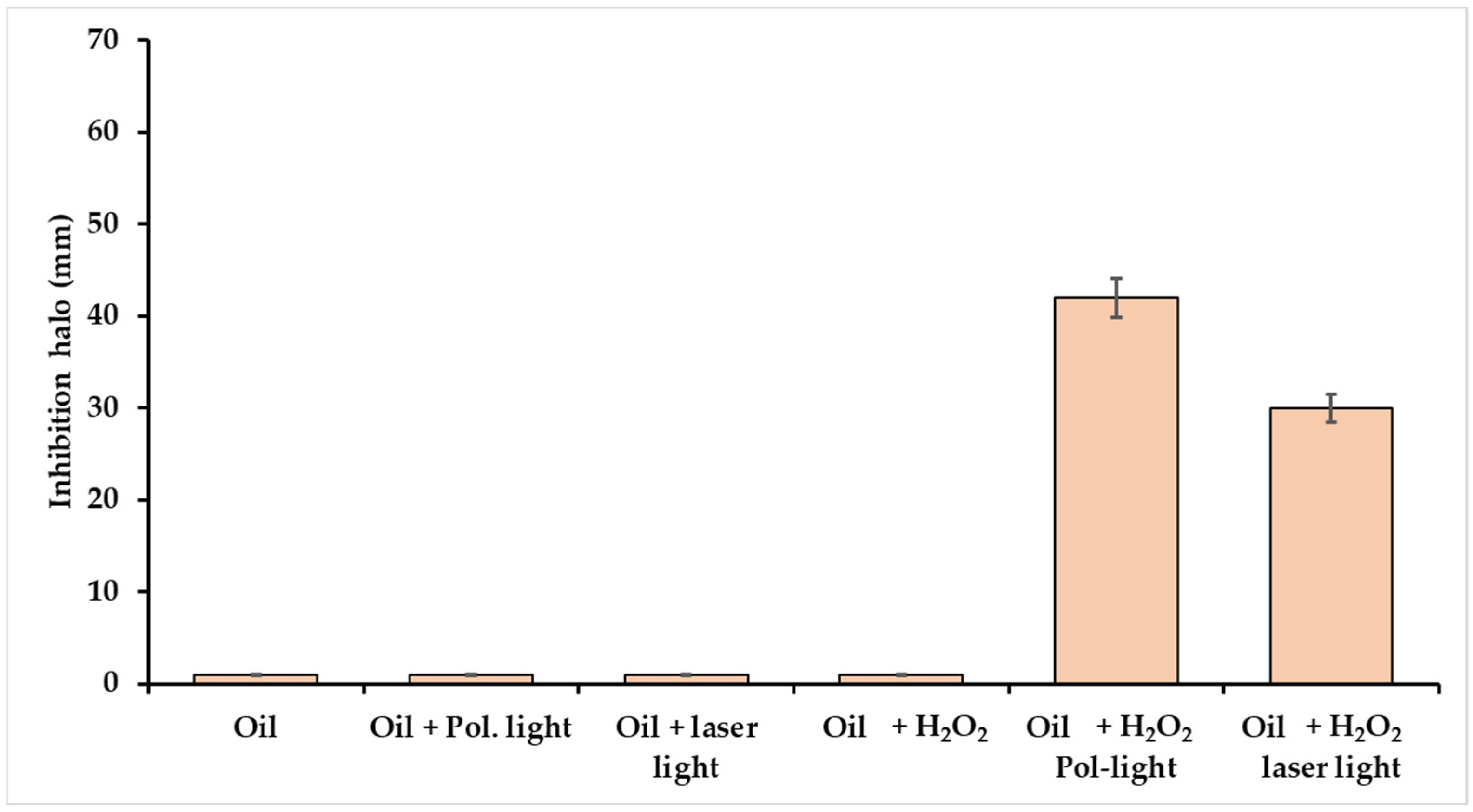
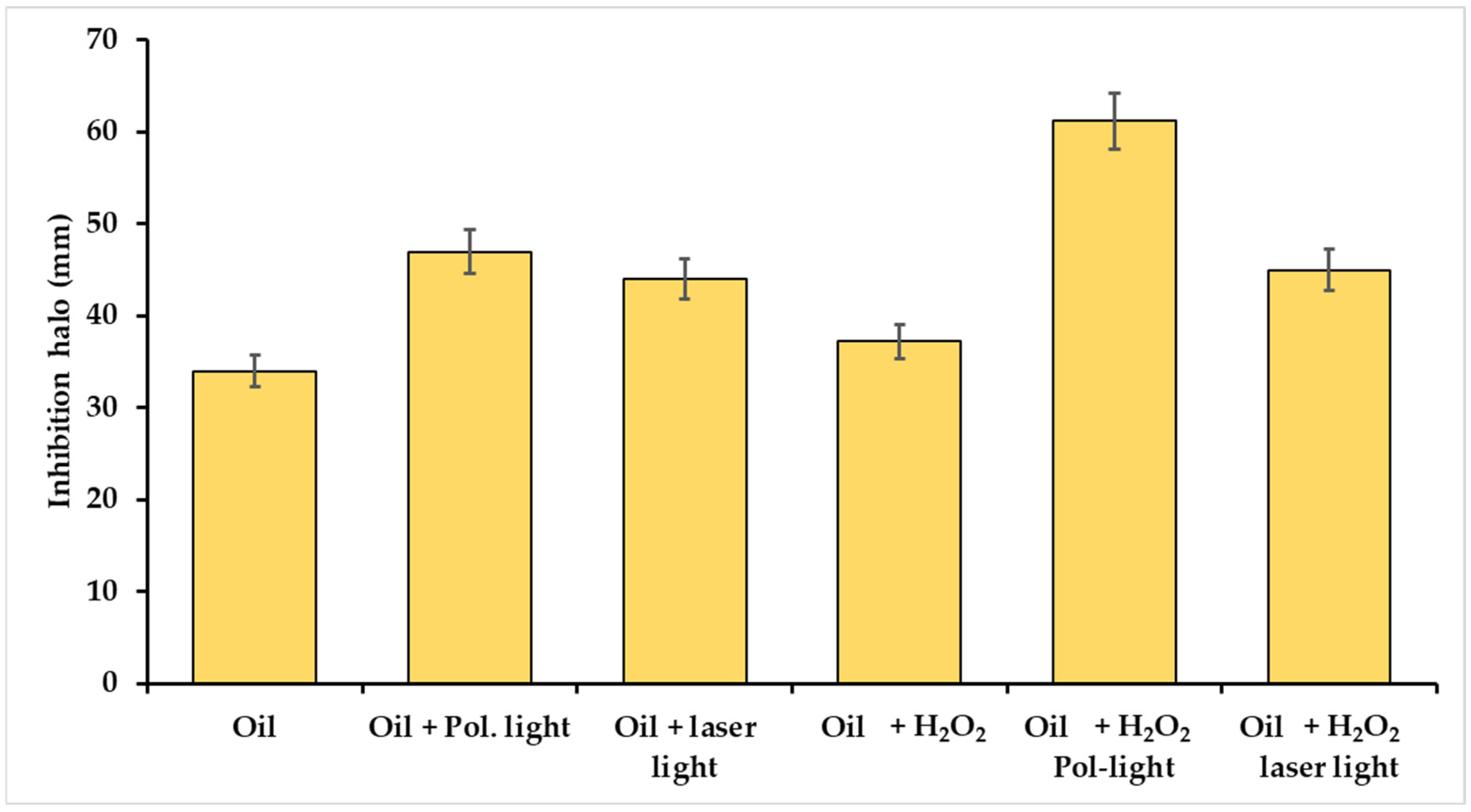
The clinical isolates of Candida spp. showed different behaviours across the experimental groups. C. krusei was insensitive to all tested conditions. Candida albicans was inhibited only when EVOO-H was light-activated, showing an inhibition halo of 42 mm with polarized light (group iv) and 30 mm when activated by the 660 nm laser (group vi). These data are summarized in Figure 6. Candida glabrata was sensitive to all combinations, with a 50% increase in inhibition when polarized light was used. The inhibition halo values were as follows: EVOO alone, 32 mm (group i); EVOO + polarized light, 45 mm (group iii); EVOO + laser light, 42 mm (group v); EVOO-H alone, 35 mm (group ii); EVOO-H + polarized light, 62 mm (group iv); and EVOO-H + laser light, 45 mm (group vi), as shown in Figure 7 and Figure 8.

4. Discussion

The results of our study demonstrate the antimicrobial activity of EVOO against MDR Candida glabrata, even without photodynamic activation, and against MDR Candida albicans when photoactivated and combined with H2O2 as a catalyst. The inhibition zones exceeded 40 mm, indicating strong antifungal efficacy. Scientific studies that have evaluated natural photosensitizers (PSs) against Candida spp. are mainly in vitro and very few have addressed their activity against MDR species. Among these, curcumin-based PSs, including commercial products enriched with H2O2, have shown promising fungistatic activity against C. albicans, particularly when photoactivated with polarized light (380–3400 nm), which was the more effective light source among those used in our study [39,40,41,42,43,44,45]. However, the study design differed substantially, making direct comparison difficult.
Another study tested a lactoferrin-based solution activated by light sources of different wavelengths (300–400 nm) and demonstrated excellent activity against several MDR Candida spp. using a study design almost identical to ours (triplicate Kirby–Bauer test against MDR C. albicans, C. glabrata, and C. krusei) [42]. In that case, however, although photoactivated lactoferrin was also effective against C. krusei, the presence of hydrogen peroxide in the formulation may have contributed to the notable therapeutic effect [42]. In our experiment, EVOO was mixed with H2O2 using a vortex, but the aqueous phase was subsequently removed. The natural PS proposed in this study could therefore be considered truly ingestible. In the current experiment we did not find any activity against Candida krusei, while the activity against C. albicans and C. glabrata is interesting, using commercially available illumination systems, already validated for use in the oral area and easy to use.
It is interesting to note that the inhibition values obtained against MDR C. glabrata with EVOO vortexed with H2O2 (EVOO-H) were lower than those produced by photoactivating pure EVOO (not vortexed with H2O2) using polarized or laser light. This suggests that photoactivation is more effective than the catalytic effect of H2O2 alone.
Furthermore, in the lactoferrin-based study mentioned above, inhibition zones did not exceed 40 mm for any combination (lactoferrin alone or photoactivated; lactoferrin + H2O2 alone or photoactivated). In contrast, EVOO in our study produced inhibition zones greater than 40 mm in groups (iii), (iv), (v), and (vi).
The polarized light device used in this work has previously demonstrated significant bio-stimulatory and anti-inflammatory effects, even in oral applications [46,47]. Because this device can also be used at home, it could allow the development of a home-based PDT protocol in which EVOO is applied or ingested by the patient and subsequently illuminated with polarized light. This approach could assist in the preventive and therapeutic management of Candida spp. infections in immunocompromised patients who may have limited access to dental care.
The 660 nm diode laser used in our study is a low-power light source commonly employed in PDT, particularly for methylene blue irradiation, as documented in the scientific literature [48,49]. Both light-emitting devices used in this work are easy to operate and require no specific training for clinicians.
The specific immunomodulatory effects of EVOO polyphenols particularly oleocanthal described previously, along with its antimicrobial activity against non-fungal microbes that coexist with Candida spp., may contribute in vivo to faster healing, in addition to providing soothing and hydrating effects [12,26,30,33].
The clinical relevance of these preliminary findings, which require confirmation through clinical trials, lies in the strong antifungal activity observed especially against MDR C. glabrata (active even without photoactivation) and against MDR C. albicans when photoactivated. These two species are primarily responsible for fungal infections under dentures, a condition affecting up to 75% of denture wearers [50,51]. Refractory oral infections caused by MDR Candida spp. may progress to severe systemic candidiasis, which can be fatal [52]. Additionally, chronic oral fungal infections have been associated with the development of neurodegenerative diseases such as Alzheimer’s and Parkinson’s disease, both of which have increased exponentially in recent decades [53,54,55]. Therefore, controlling infections resistant to conventional antifungal therapy is essential not only for oral health but also for systemic disease prevention.
In conclusion, the use of EVOO applied directly to the oral mucosa either alone or photoactivated may represent a valuable strategy for the prevention or treatment of infections caused by MDR Candida spp. The use of EVOO as a rinse or retained oral application has already been successfully reported in the literature [56] and could become a feasible home-based practice for patient groups at risk for oral and systemic fungal infections.

5. Conclusions

C. glabrata was sensitive to all EVOO-PDT combinations, showing a 50% increase in inhibition halos when polarized light was used. C. krusei was insensitive under all conditions. C. albicans was inhibited only when EVOO-H was light-activated. Both the EVOO and EVOO-H groups activated with polarized light produced the largest inhibition halos. Olive oil, either alone or activated with H2O2, may therefore be considered a highly effective photosensitizer against drug-resistant Candida spp. when illuminated with polarized light. Clinical evaluations are essential to validate these preliminary findings.

Author Contributions

Conceptualization, C.C. and A.S. (Antonia Sinesi); methodology, C.C. and S.F.; software, A.C.; validation, C.C., A.S. (Antonia Sinesi) and A.B.; formal analysis, C.C.; investigation, C.C., S.F. and G.O.; resources, G.O.; data curation, C.C. and S.F.; writing—original draft preparation, C.C. and A.S. (Antonia Sinesi); writing—review and editing, A.B. and A.S. (Andrea Scribante); visualization, A.C.; supervision, A.B. and A.S. (Andrea Scribante); project administration, A.S. (Antonia Sinesi); funding acquisition, G.O. All authors have read and agreed to the published version of the manuscript.

Funding

This research received no external funding.

Institutional Review Board Statement

Not applicable.

Informed Consent Statement

Not applicable.

Data Availability Statement

The original contributions presented in this study are included in the article. Further inquiries can be directed to the corresponding authors.

Acknowledgments

The authors have reviewed and edited the output and take full responsibility for the content of this publication. This in vitro study was carried out as a small part of the first author’s PhD thesis project in Innovation Sciences and Technologies, XXXVI cycle, with the title “Photodynamic therapy against multidrug-resistant oral strains of Candida spp.”.

Conflicts of Interest

The authors declare no conflicts of interest.

References

  1. Foscolou, A.; Critselis, E.; Panagiotakos, D. Olive oil consumption and human health: A narrative review. Maturitas 2018, 118, 60–66. [Google Scholar] [CrossRef]
  2. Ussia, S.; Ritorto, G.; Mollace, R.; Serra, M.; Tavernese, A.; Altomare, C.; Muscoli, C.; Fini, M.; Barillà, F.; Indolfi, C.; et al. Exploring the benefits of extra virgin olive oil on cardiovascular health enhancement and disease prevention: A systematic review. Nutrients 2025, 17, 1843. [Google Scholar] [CrossRef] [PubMed]
  3. Delgado-Lista, J.; Perez-Martinez, P.; Garcia-Rios, A.; Alcala-Diaz, J.F.; Perez-Caballero, A.I.; Gomez-Delgado, F.; Fuentes, F.; Quintana-Navarro, G.; Lopez-Segura, F.; Ortiz-Morales, A.M.; et al. CORonary Diet Intervention with Olive oil and cardiovascular PREVention study (the CORDIOPREV study): Rationale, methods, and baseline characteristics: A clinical trial comparing the efficacy of a Mediterranean diet rich in olive oil versus a low-fat diet on cardiovascular disease in coronary patients. Am. Heart J. 2016, 177, 42–50. [Google Scholar] [CrossRef] [PubMed] [PubMed Central]
  4. Sarapis, K.; George, E.S.; Marx, W.; Mayr, H.L.; Willcox, J.; Esmaili, T.; Powell, K.L.; Folasire, O.S.; Lohning, A.E.; Garg, M.; et al. Extra virgin olive oil high in polyphenols improves antioxidant status in adults: A double-blind, randomized, controlled, cross-over study (OLIVAUS). Eur. J. Nutr. 2022, 61, 1073–1086. [Google Scholar] [PubMed]
  5. Martín-Peláez, S.; Covas, M.I.; Fitó, M.; Kušar, A.; Pravst, I. Health effects of olive oil polyphenols: Recent advances and possibilities for the use of health claims. Mol. Nutr. Food Res. 2013, 57, 760–771. [Google Scholar] [CrossRef] [PubMed]
  6. Liva, K.; Panagiotopoulos, A.A.; Foscolou, A.; Amerikanou, C.; Vitali, A.; Zioulis, S.; Argyri, K.; Panoutsopoulos, G.I.; Kaliora, A.C.; Gioxari, A. High polyphenol extra virgin olive oil and metabolically unhealthy obesity: A scoping review of preclinical data and clinical trials. Clin. Pract. 2025, 15, 54. [Google Scholar] [CrossRef]
  7. Alkhatib, A.; Tsang, C.; Tuomilehto, J. Olive oil nutraceuticals in the prevention and management of diabetes: From molecules to lifestyle. Int. J. Mol. Sci. 2018, 19, 2024. [Google Scholar] [CrossRef]
  8. Piroddi, M.; Albini, A.; Fabiani, R.; Giovannelli, L.; Luceri, C.; Natella, F.; Rosignoli, P.; Rossi, T.; Taticchi, A.; Servili, M.; et al. Nutrigenomics of extra-virgin olive oil: A review. Biofactors 2017, 43, 17–41. [Google Scholar] [CrossRef]
  9. Du, Y.; Zhou, H. Effect of olive oil consumption on diabetes risk: A dose-response meta-analysis. J. Health Popul. Nutr. 2025, 44, 135. [Google Scholar] [CrossRef] [PubMed] [PubMed Central]
  10. Bucciantini, M.; Leri, M.; Nardiello, P.; Casamenti, F.; Stefani, M. Olive Polyphenols: Antioxidant and Anti-Inflammatory Properties. Antioxidants 2021, 10, 1044. [Google Scholar] [CrossRef] [PubMed] [PubMed Central]
  11. Yubero-Serrano, E.M.; Lopez-Moreno, J.; Gomez-Delgado, F.; Lopez-Miranda, J. Extra virgin olive oil: More than a healthy fat. Eur. J. Clin. Nutr. 2019, 72, 8–17. [Google Scholar] [CrossRef]
  12. Visioli, F.; Caruso, D.; Grande, S.; Bosisio, R.; Villa, M.; Galli, G.; Sirtori, C.; Galli, C. Virgin Olive Oil Study (VOLOS): Vasoprotective potential of extra virgin olive oil in mildly dyslipidemic patients. Eur. J. Nutr. 2005, 44, 121–127. [Google Scholar] [CrossRef]
  13. Donat-Vargas, C.; Sandoval-Insausti, H.; Peñalvo, J.L.; Moreno Iribas, M.C.; Amiano, P.; Bes-Rastrollo, M.; Molina-Montes, E.; Moreno-Franco, B.; Agudo, A.; Mayo, C.L.; et al. Olive oil consumption is associated with a lower risk of cardiovascular disease and stroke. Clin. Nutr. 2022, 41, 122–130. [Google Scholar] [CrossRef]
  14. Santa-María, C.; López-Enríquez, S.; Montserrat-de la Paz, S.; Geniz, I.; Reyes-Quiroz, M.E.; Moreno, M.; Palomares, F.; Sobrino, F.; Alba, G. Update on Anti-Inflammatory Molecular Mechanisms Induced by Oleic Acid. Nutrients 2023, 15, 224. [Google Scholar] [CrossRef] [PubMed] [PubMed Central]
  15. De Santis, S.; Clodoveo, M.L.; Corbo, F. Correlation between chemical characterization and biological activity: An urgent need for human studies using extra virgin olive oil. Antioxidants 2022, 11, 258. [Google Scholar] [CrossRef] [PubMed]
  16. Mancebo-Campos, V.; Salvador, M.D.; Fregapane, G. EFSA health claims-based virgin olive oil shelf-life. Antioxidants 2023, 12, 1563. [Google Scholar] [CrossRef] [PubMed]
  17. Jiménez-Sánchez, A.; Martínez-Ortega, A.J.; Remón-Ruiz, P.J.; Piñar-Gutiérrez, A.; Pereira-Cunill, J.L.; García-Luna, P.P. Therapeutic properties and use of extra virgin olive oil in clinical nutrition: A narrative review and literature update. Nutrients 2022, 14, 1440. [Google Scholar] [CrossRef] [PubMed]
  18. López-Huertas, E.; Lozano-Sánchez, J.; Segura-Carretero, A. Olive oil varieties and ripening stages containing the antioxidants hydroxytyrosol and derivatives in compliance with EFSA health claim. Food Chem. 2021, 342, 128291. [Google Scholar] [CrossRef]
  19. Del Coco, L.; De Pascali, S.A.; Fanizzi, F.P. 1H NMR Spectroscopy and Multivariate Analysis of Monovarietal EVOOs as a Tool for Modulating Coratina-Based Blends. Foods 2014, 3, 238–249. [Google Scholar] [CrossRef] [PubMed] [PubMed Central]
  20. Salvesi, C.; Coman, M.M.; Tomás-Barberán, F.A.; Fiorini, D.; Silvi, S. In vitro study of potential prebiotic properties of monovarietal extra virgin olive oils. Int. J. Food Sci. Nutr. 2024, 75, 45–57. [Google Scholar] [CrossRef] [PubMed]
  21. Musolino, V.; Macrì, R.; Cardamone, A.; Serra, M.; Coppoletta, A.R.; Tucci, L.; Maiuolo, J.; Lupia, C.; Scarano, F.; Carresi, C.; et al. Nocellara del Belice (Olea europaea L. cultivar): Leaf extract concentrated in phenolic compounds and its anti-inflammatory and radical scavenging activity. Plants 2023, 12, 27. [Google Scholar] [CrossRef] [PubMed]
  22. Rezaie, M.; Jalalvand, A.R. Ultrasensitive biosensing of thiram based on detection of the DNA damage induced by thiram: Application to investigation of protective effects of extra virgin olive oil against DNA damage. Toxicon 2023, 225, 107066. [Google Scholar] [CrossRef] [PubMed]
  23. Beauchamp, G.K.; Keast, R.S.; Morel, D.; Lin, J.; Pika, J.; Han, Q.; Lee, C.H.; Smith, A.B.; Breslin, P.A. Ibuprofen-like activity in extra-virgin olive oil. Nature 2005, 437, 45–46. [Google Scholar] [CrossRef]
  24. Aponte, M.; Ungaro, F.; d’Angelo, I.; De Caro, C.; Russo, R.; Blaiotta, G.; Dal Piaz, F.; Calignano, A.; Miro, A. Improving in vivo conversion of oleuropein into hydroxytyrosol by oral granules containing probiotic Lactobacillus plantarum 299v and an Olea europaea standardized extract. Int. J. Pharm. 2018, 543, 73–82. [Google Scholar] [CrossRef] [PubMed]
  25. Lauwers, S.; Weyns, A.S.; Breynaert, A.; Van Rillaer, T.; Van Huynegem, V.; Fransen, E.; Bittremieux, W.; Lebeer, S.; Tuenter, E.; Hermans, N. Comparison of In Vitro Biotransformation of Olive Polyphenols Between Healthy Young and Elderly. Metabolites 2025, 15, 26. [Google Scholar] [CrossRef] [PubMed] [PubMed Central]
  26. Magra, T.; Soultos, N.; Dovas, C.; Papavergou, E.; Lazou, T.; Apostolakos, I.; Dimitreli, G.; Ambrosiadis, I. Dry Fermented Sausages with Total Replacement of Fat by Extra Virgin Olive Oil Emulsion and Indigenous Lactic Acid Bacteria. Food Technol. Biotechnol. 2021, 59, 267–281. [Google Scholar] [CrossRef]
  27. D’Archivio, M.; Santangelo, C.; Silenzi, A.; Scazzocchio, B.; Varì, R.; Masella, R. Dietary EVOO polyphenols and gut microbiota interaction: Are there any sex/gender influences? Antioxidants 2022, 11, 1744. [Google Scholar] [CrossRef] [PubMed]
  28. Arismendi Sosa, A.C.; Mariani, M.L.; Vega, A.E.; Penissi, A.B. Extra virgin olive oil inhibits Helicobacter pylori growth in vitro and the development of mice gastric mucosa lesions in vivo. Front. Microbiol. 2022, 13, 961597. [Google Scholar] [CrossRef]
  29. Villar-Taibo, R.; Vidal-Casariego, A.; Santamaría-Nieto, A.; Cantón-Blanco, A.; Crujeiras, A.B.; Lugo Rodríguez, G.; Rodríguez-Carnero, G.; Pita Gutiérrez, F.; Fernández Pombo, A.; Díaz-López, E.; et al. Efficacy of a new immunonutrition formula with extra virgin olive oil in the reduction of complications in surgeries of upper digestive tract tumors. Front. Nutr. 2024, 11, 1384145. [Google Scholar] [CrossRef] [PubMed] [PubMed Central]
  30. Menendez, J.A.; Joven, J.; Aragonès, G.; Barrajón-Catalán, E.; Beltrán-Debón, R.; Borrás-Linares, I.; Camps, J.; Corominas-Faja, B.; Cufí, S.; Fernández-Arroyo, S.; et al. Xenohormetic and anti-aging activity of secoiridoid polyphenols present in extra virgin olive oil: A new family of gerosuppressant agents. Cell Cycle 2013, 12, 555–578. [Google Scholar] [CrossRef] [PubMed] [PubMed Central]
  31. Román, G.C.; Jackson, R.E.; Reis, J.; Román, A.N.; Toledo, J.B.; Toledo, E. Extra-virgin olive oil for potential prevention of Alzheimer disease. Rev. Neurol. 2019, 175, 705–723. [Google Scholar] [CrossRef]
  32. Kaddoumi, A.; Denney, T.S., Jr.; Deshpande, G.; Robinson, J.L.; Beyers, R.J.; Redden, T.D.; Praticò, D.; Kyriakides, T.C.; Lu, B.; Kirby, A.N.; et al. Extra-virgin olive oil enhances the blood–brain barrier function in mild cognitive impairment: A randomized controlled trial. Nutrients 2022, 14, 5102. [Google Scholar] [CrossRef]
  33. Conde, C.; Escribano, B.M.; Luque, E.; Aguilar-Luque, M.; Feijóo, M.; Ochoa, J.J.; LaTorre, M.; Giraldo, A.I.; Lillo, R.; Agüera, E.; et al. The protective effect of extra-virgin olive oil in the experimental model of multiple sclerosis in the rat. Nutr. Neurosci. 2020, 23, 37–48. [Google Scholar] [CrossRef] [PubMed]
  34. Rosillo, M.A.; Sánchez-Hidalgo, M.; Sánchez-Fidalgo, S.; Aparicio-Soto, M.; Villegas, I.; Alarcón-de-la-Lastra, C. Dietary extra-virgin olive oil prevents inflammatory response and cartilage matrix degradation in murine collagen-induced arthritis. Eur. J. Nutr. 2016, 55, 315–325. [Google Scholar] [CrossRef] [PubMed]
  35. De Santis, S.; Cariello, M.; Piccinin, E.; Sabbà, C.; Moschetta, A. Extra virgin olive oil: Lessons from nutrigenomics. Nutrients 2019, 11, 2085. [Google Scholar] [CrossRef]
  36. Cariello, M.; Contursi, A.; Gadaleta, R.M.; Piccinin, E.; De Santis, S.; Piglionica, M.; Spaziante, A.F.; Sabbà, C.; Villani, G.; Moschetta, A. Extra-virgin olive oil from Apulian cultivars and intestinal inflammation. Nutrients 2020, 12, 1084. [Google Scholar] [CrossRef]
  37. Valasingam, S.K.; Kanikaram, P.L.; Vadla, A.; Reddy, S.N.P.; Nagasamudram, L.; Kuravadi, R.V. Effect of Oil Pulling Using Extra Virgin Olive Oil on Plaque and Gingivitis Scores and Caries Activity Evaluated by Ora Test in Pediatric Dental Patients: An In Vivo Study. Int. J. Clin. Pediatr. Dent. 2025, 18, 666–670. [Google Scholar] [CrossRef] [PubMed] [PubMed Central]
  38. Sinesi, A.; Casu, C.; Cefola, S.; Damato, R.; Orrù, G. Use of extra virgin olive oil in the treatment of traumatic ulcers: A case report. J. Biomed. Pract. 2020, 4, 19–25. [Google Scholar] [CrossRef]
  39. Lin, Y.; Ding, J.; He, Y.; Zhang, M.; Zhang, J.; Zhong, H.; Liu, Q.; He, J. Photodynamic therapy for oral candidiasis in human clinical trials: An evidence-based analysis. Photodiagn. Photodyn. Ther. 2025, 54, 104729. [Google Scholar] [CrossRef]
  40. Popiel-Kopaczyk, A.; Kręcicki, T.S.; Kozieł, R. Photodynamic therapy: Basics and new directions for clinical applications. Polim. Med. 2025, 55, 145–151. [Google Scholar] [CrossRef] [PubMed]
  41. Casu, C.; Orrù, G. Potential of photodynamic therapy in the management of infectious oral diseases. World J. Exp. Med. 2024, 14, 84284. [Google Scholar] [CrossRef]
  42. Casu, C.; Butera, A.; Piga, A.; Scribante, A.; Fais, S.; Orrù, G. Lactoferrin solution as a new natural photosensitizer in photodynamic therapy against oral Candida spp. Multidrug-Resistant Isolates: A Preliminary In Vitro Study. Microorganisms 2025, 13, 1255. [Google Scholar] [CrossRef]
  43. Pappas, P.G.; Kauffman, C.A.; Andes, D.R.; Clancy, C.J.; Marr, K.A.; Ostrosky-Zeichner, L.; Reboli, A.C.; Schuster, M.G.; Vazquez, J.A.; Walsh, T.J.; et al. Clinical Practice Guideline for the Management of Candidiasis: 2016 Update by the Infectious Diseases Society of America. Clin. Infect. Dis. 2016, 62, e1–e50. [Google Scholar] [CrossRef]
  44. Hirai, T.; Nashi, M. Pharmacological management of oral and esophageal candidiasis: A clinical pharmacotherapy perspective. J. Clin. Med. 2025, 14, 7537. [Google Scholar] [CrossRef]
  45. Casu, C.; Orrù, G.; Scano, A. Curcumin/H2O2 photodynamically activated: An antimicrobial time-response assessment against an MDR strain of Candida albicans. Eur. Rev. Med. Pharmacol. Sci. 2022, 26, 8841–8851. [Google Scholar] [CrossRef]
  46. Petruzzi, M.; Nardi, G.M.; Cocco, F.; Della Vella, F.; Grassi, R.; Grassi, F.R. Polarized polychromatic noncoherent light (bioptron light) as adjunctive treatment in chronic oral mucosal pain: A pilot study. Photobiomodul. Photomed. Laser Surg. 2019, 37, 227–232. [Google Scholar] [CrossRef] [PubMed]
  47. Aragona, S.E.; Grassi, F.R.; Nardi, G.; Lotti, J.; Mereghetti, G.; Canavesi, E.; Equizi, E.; Puccio, A.M.; Lotti, T. Photobiomodulation with polarized light in the treatment of cutaneous and mucosal ulcerative lesions. J. Biol. Regul. Homeost. Agents 2017, 31, 213–218. [Google Scholar] [PubMed]
  48. Goujani, S.M.; Koopaie, M.; Safarian, F.H.; Hakimiha, N.; Younespour, S. Comparative analysis of combined methylene blue photodynamic therapy and doxorubicin treatment of oral squamous cell carcinoma cell line: In vitro study on apoptosis. Photodiagn. Photodyn. Ther. 2025, 51, 104457. [Google Scholar] [CrossRef]
  49. Khalil, M.; Hamadah, O. Association of photodynamic therapy and photobiomodulation as a promising treatment of herpes labialis: A systematic review. Photobiomodul. Photomed. Laser Surg. 2022, 40, 299–307. [Google Scholar] [CrossRef]
  50. Abuhajar, E.; Ali, K.; Zulfiqar, G.; Al Ansari, K.; Raja, H.Z.; Bishti, S.; Anweigi, L. Management of chronic atrophic candidiasis (denture stomatitis)—A narrative review. Int. J. Environ. Res. Public Health 2023, 20, 3029. [Google Scholar] [CrossRef] [PubMed]
  51. Qiu, J.; Roza, M.P.; Colli, K.G.; Dalben, Y.R.; Maifrede, S.B.; Valiatti, T.B.; Novo, V.M.; Cayô, R.; Grão-Velloso, T.R.; Gonçalves, S.S. Candida-associated denture stomatitis: Clinical, epidemiological, and microbiological features. Braz. J. Microbiol. 2023, 54, 841–848. [Google Scholar] [CrossRef]
  52. De Bels, D.; Maillart, E.; Van Bambeke, F.; Redant, S.; Honoré, P.M. Existing and emerging therapies for the treatment of invasive candidiasis and candidemia. Expert Opin. Emerg. Drugs 2022, 27, 405–416. [Google Scholar] [CrossRef] [PubMed]
  53. Phuna, Z.X.; Madhavan, P. A closer look at the mycobiome in Alzheimer’s disease: Fungal species, pathogenesis and transmission. Eur. J. Neurosci. 2022, 55, 1291–1321. [Google Scholar] [CrossRef] [PubMed]
  54. Chaple-Gil, A.M.; Santiesteban-Velázquez, M.; Urbizo Vélez, J.J. Association between oral microbiota dysbiosis and the risk of dementia: A Systematic Review. Dent. J. 2025, 13, 227. [Google Scholar] [CrossRef] [PubMed]
  55. Sanches, M.D.; Mimura, L.A.N.; Oliveira, L.R.C.; Ishikawa, L.L.W.; Garces, H.G.; Bagagli, E.; Sartori, A.; Kurokawa, C.S.; Fraga-Silva, T.F.C. Differential behavior of non-albicans Candida species in the central nervous system of immunocompetent and immunosuppressed mice. Front. Microbiol. 2019, 9, 2968. [Google Scholar] [CrossRef]
  56. Zumbo, G.; Corridore, D.; Sciscione, S.; Stamegna, C.; Guerra, F.; Polimeni, A.; Vozza, I. Oil pulling and polyphenols: Treatment of gingivitis patients with ‘Itri extra-virgin olive oil’. J. Clin. Med. 2023, 12, 5256. [Google Scholar] [CrossRef]
Figure 1. Flow chart. Operational workflow indicating the different work steps (max light absorption frequency assessment, PDT irradiation, and antimicrobial profile).
Optics 07 00010 g001
Figure 2. Detail of the infection of Petri dishes by using MDR Candida spp.
Optics 07 00010 g002
Figure 3. EVOO vortexed with 3% of Hydrogen Peroxide as a catalyst of ROS production.
Optics 07 00010 g003
Figure 4. Activation of EVOO with Polarized Light.
Optics 07 00010 g004
Figure 5. Activation of EVOO with laser light at 660 nm.
Optics 07 00010 g005
Figure 6. The graph illustrates the visible absorption spectra of pure EVOO oil and its emulsion with a 1/1 hydrogen peroxide.
Optics 07 00010 g006
Figure 7. Inhibition halo expressed in millimetres of C. albicans MDR in the different treatments of EVOO groups. In y-axis values of mm of absence of fungal growth calculated from the wells. It is possible to note values of 42 and 30 mm for groups Oil + H2O2 + Polarized light and Oil + H2O2 + Laser Light, respectively.
Optics 07 00010 g007
Figure 8. Inhibition halo expressed in millimetres on C. glabrata MDR in the different treatments in EVOO groups. In y-axis values of mm of absence of fungal growth calculated from the wells. It is possible to note that values of inhibition halo greater of 30 mm are present in all groups.
Optics 07 00010 g008
Disclaimer/Publisher’s Note: The statements, opinions and data contained in all publications are solely those of the individual author(s) and contributor(s) and not of MDPI and/or the editor(s). MDPI and/or the editor(s) disclaim responsibility for any injury to people or property resulting from any ideas, methods, instructions or products referred to in the content.