


Abstract
This research introduces a quantum machine learning (QML) approach for predicting heart disease (HD). The method combines preprocessing of data with quantum feature map (QFM) and quantum classification techniques. In the method, clinical data of HD are preprocessed, and then features are optimized using principal component analysis (PCA). After that, the resulting features are encoded into quantum states with five different QFM methods, namely angle encoding (AE), amplitude encoding (AmE), basis encoding (BE), Pauli encoding (PE), and ZZ feature map (ZZFM). Finally, four quantum classifiers, such as quantum support vector machine (QSVM), quantum k-nearest neighbor (QKNN), quantum random forest (QRF), and variational quantum circuit (VQC), are evaluated to predict the HD from the encoded states. Experimental results show that QSVM with AE achieved the best performance, with an overall accuracy of 90.26%, specificity of 83.42%, sensitivity of 92.16%, precision of 88.89%, F1-score of 89.68%, and kappa value of 0.7608. These results are superior to those from classical state-of-the-art methods. This research finding suggests QML methods can capture complex nonlinear relationships in clinical data effectively and thus improve diagnostic reliability.
1. Introduction
This section presents a general overview of the study by outlining the background, reviewing related works, identifying the research gaps, and summarizing the main contributions of this research.
1.1. Background and Motivation
Cardiovascular diseases (CVDs) are among the leading causes of mortality worldwide and encompass disorders of the heart and blood vessels, among which heart disease (HD) is one of the most prevalent conditions and is associated with high morbidity and substantial healthcare costs [1]. Early and accurate prediction of HD is important to alert for timely medical intervention and a personalized treatment plan. Machine learning (ML) methods like support vector machines (SVMs), random forest (RF), k-nearest neighbor (KNN), etc., are now established as efficient techniques for diverse disease diagnosis, including HD. However, classical ML algorithms mainly involve statistical learning and deterministic feature spaces, which may encounter difficulties in modeling intricate, nonlinear, high-dimensional correlations among biomedical features [2,3].
Quantum machine learning (QML) can be an effective solution in this regard. In classical systems, information is handled in a very fixed way using bits that are either 0 or 1. Quantum computing works with qubits, which are not restricted to a single state and can represent more than one possibility at the same time. Hence, information does not have to be processed step by step in a strictly linear manner. There is also a strong linkage between variables, where the behavior of one is connected to others, which makes it easier to reflect complex relationships. This kind of representation becomes useful when the data are large and involve many interacting factors. Thus, relying only on classical methods may not always be sufficient, which is why extending these ideas toward ML is now being explored. QML is emerging as a next-generation computational framework that blends quantum mechanics into data-driven modeling. By using quantum phenomena such as superposition, entanglement, and interference, QML has the theoretical capability to explore richer representational spaces and model complex feature interactions beyond classical boundaries. Although QML is still in its developmental stage, it is rapidly attaining attention as quantum hardware and hybrid quantum–classical algorithms continue to advance. The growing field of quantum algorithms and urgent demand for more powerful predictive tools in healthcare make QML a promising upcoming direction for medical data analytics. Investigating QML-based approaches for heart disease prediction is therefore both timely and strategically important, potentially paving the way for more expressive, efficient, and future-ready clinical decision support systems [4].
1.2. Related Works
This section reviews existing works related to this research to identify the scope of the current research paradigms and isolate gaps that motivate this study.
Sahoo et al. [5] used a dataset that holds 13 important attributes and applied multiple classical ML algorithms like SVM, Naïve Bayes (NB), logistic regression (LR), decision tree (DT), and KNN, and from these, SVM gained the highest accuracy (85.2%) to predict HD. Huang et al. [6] reported a comparison of four ML methods, namely RF, SVM, NB and LR, on an HD dataset consisting of 13 features. The RF performed best, with 88% accuracy in that study. Newaz et al. [7] established a strong decision system by utilizing clinical HD data. Their method utilized ensemble-based RF classifiers using Chi-Square and recursive feature elimination (RFE) for feature selection (FS). By indicating the potential for clinical translation in HD, their study achieved a G-mean of 76.83% and a sensitivity of 80.21%. Awan et al. [8] introduced a model, which was based on multi-layer perceptron (MLP), and it was designed for 30-day heart failure readmission prediction, taking into account the class imbalance. The area under the curve (AUC) of this model was 0.62, which outperforms traditional models, including weighted RF, DT, LR, and SVM. Mamun et al. [9] applied diverse ML techniques, including LR, DT, SVM, extreme gradient boosting (XGBoost), light gradient boosting machine (LightGBM), RF, and bagging on the UCI HD dataset that includes 299 patients. Their method reached 85% accuracy and 93% AUC with LightGBM for the diagnosis of HD. Lorenzoni et al. [10] analyzed the performance of eight ML models for forecasting hospitalization of patients with heart failure. In their analysis, they found that the generalized linear model net (GLMN) provided the best accuracy of 81.2% for predicting hospitalization of HD patients. To detect heart disease, Pati et al. [11] used an integrated UCI heart disease dataset (1190 instances), where preprocessing involved missing-value imputation and normalization, while feature optimization was performed through sequential feature selection (SFS) and then ML and DL models were evaluated. The best model achieved the highest overall performance of 97.06% accuracy in their study. Verdone et al. [12] proposed a hybrid quantum neural network (HQNN) by combining it with a classical autoencoder for dimensionality reduction for HD classification. The model was evaluated on an HD dataset that holds 303 samples and 13 attributes. Their proposed HQNN achieved 90.98% accuracy and an F1-score of 91.38%, and these outcomes outperformed several comparable classical and quantum baselines. Banday et al. [13] proposed a quantum-assisted hybrid ensemble learning system for coronary HD diagnosis using a large dataset of 20,000 records with 14 attributes collected from a local pathology lab in India. They achieved the best performance, with 99.96% accuracy, 99.95% precision, 99.97% recall, and a 99.96% F1-score. Table 1 presents a comprehensive summary of the existing studies reviewed in this section.
Table 1.
Overview of existing methods.
1.3. Research Gap
Even though ML methods already show strong performance, some important issues still remain in HD prediction. Most existing studies depend on traditional feature engineering and classical classifiers, which are not very effective in capturing complex relationships in small medical datasets. Another challenge is that classical models often struggle when features become high-dimensional, which can lead to overfitting or weak generalization [14,15]. Research on HD prediction using quantum approaches is still limited and mainly focuses on comparing algorithms rather than exploring quantum-enhanced learning frameworks. There is also very little work on hybrid quantum–classical systems that combine different quantum feature encoding strategies with quantum models. Because of this, there is still no unified study that evaluates multiple quantum feature encoding methods within hybrid quantum ML classifiers for HD prediction. To address this gap, it is necessary to investigate quantum feature map (QFM) schemes such as angle encoding (AE), amplitude encoding (AmE), basis encoding (BE), Pauli encoding (PE), and ZZ feature map (ZZFM) in a consistent framework. In addition, different quantum classifiers have not been systematically compared on real HD data, including quantum support vector machine (QSVM), quantum k-nearest neighbor (QKNN), quantum random forest (QRF), and variational quantum circuit (VQC). Therefore, this research proposes a QML pipeline that integrates several QFM methods with these quantum classifiers. The main goal is to examine whether quantum-based representations can improve prediction accuracy and feature separation compared to classical ML approaches in HD prediction.
1.4. Prime Contribution
The main contributions of this research include:
- Evaluating the efficiency of five feature map techniques, such as AE, AmE, BE, PE, and ZZFM, for transforming real-world clinical HD data into quantum states.
- Analyzing the performance of four QML models, namely QSVM, QKNN, QRF, and VQC, for predicting HD.
- Providing groundwork for deploying QML-oriented HD diagnosis on near-term quantum hardware by designing shallow and computationally manageable quantum circuits.
2. Materials and Methods
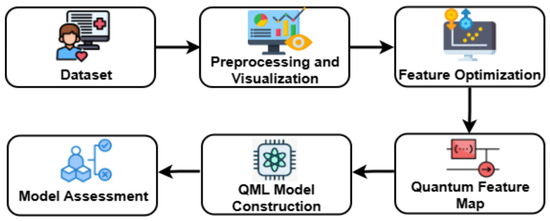
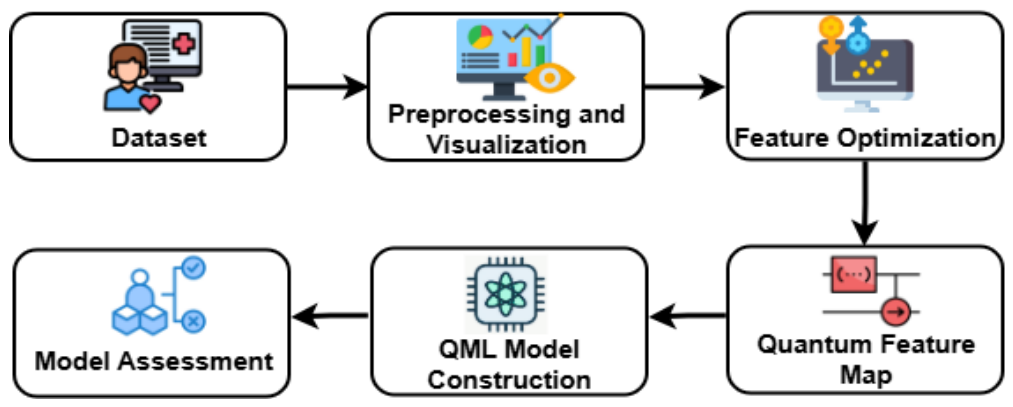
Figure 1 outlines the complete process of this research, and Section 2.1, Section 2.2, Section 2.3, Section 2.4, Section 2.5, Section 2.6 provide a detailed description of each stage in the proposed workflow.
Figure 1.
Workflow of the proposed research.
2.1. Dataset
The dataset employed in this research is generated by Fedesoriano (2021) [16]. This database is formed by using 5 independent databases. The dataset has records of 918 unique patients and contains 11 clinical and physiological features along with one target. The target column named HeartDisease holds values 1 and 0 (1 means with heart disease, while 0 means a normal condition). The other features are named as age, sex, ChestPainType, RestingBP, cholesterol, FastingBS, RestingECG, MaxHR, ExerciseAngina, Oldpeak, and ST_Slope. Details, meaning, and value types of these features are presented in Table 2.
Table 2.
Description of the dataset features.
2.2. Preprocessing and Visualization
Before model building, the HD dataset is carefully reviewed and preprocessed to ensure accuracy and consistency. In the initial preprocessing stage, data cleaning is performed by removing duplicate records and checking for missing or inconsistent values, which ensures reliable model training. Since the dataset contains both categorical and numerical features, the categorical attributes (text value) are converted into numbers using label encoding (LE) [17]. This transformation allows the data to be compatible with QML models that expect number values from inputs.
Following preprocessing, this study utilizes various visualization methods to investigate the distribution and relation of features. The visualization techniques used are histograms with density plots [18], violin plots [19], and a correlation heatmap [20]. These graphical analyses assist in recognizing trends in the data, identifying outliers, and looking for correlations among clinical factors.
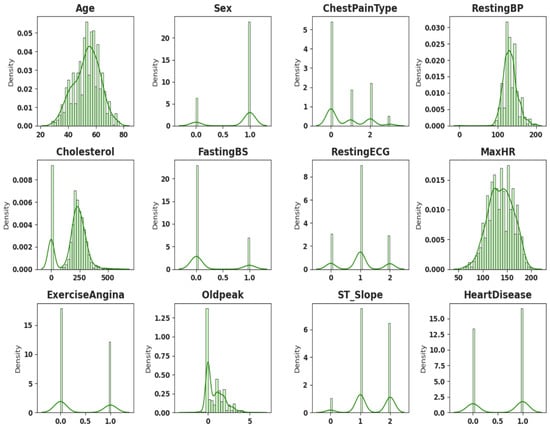
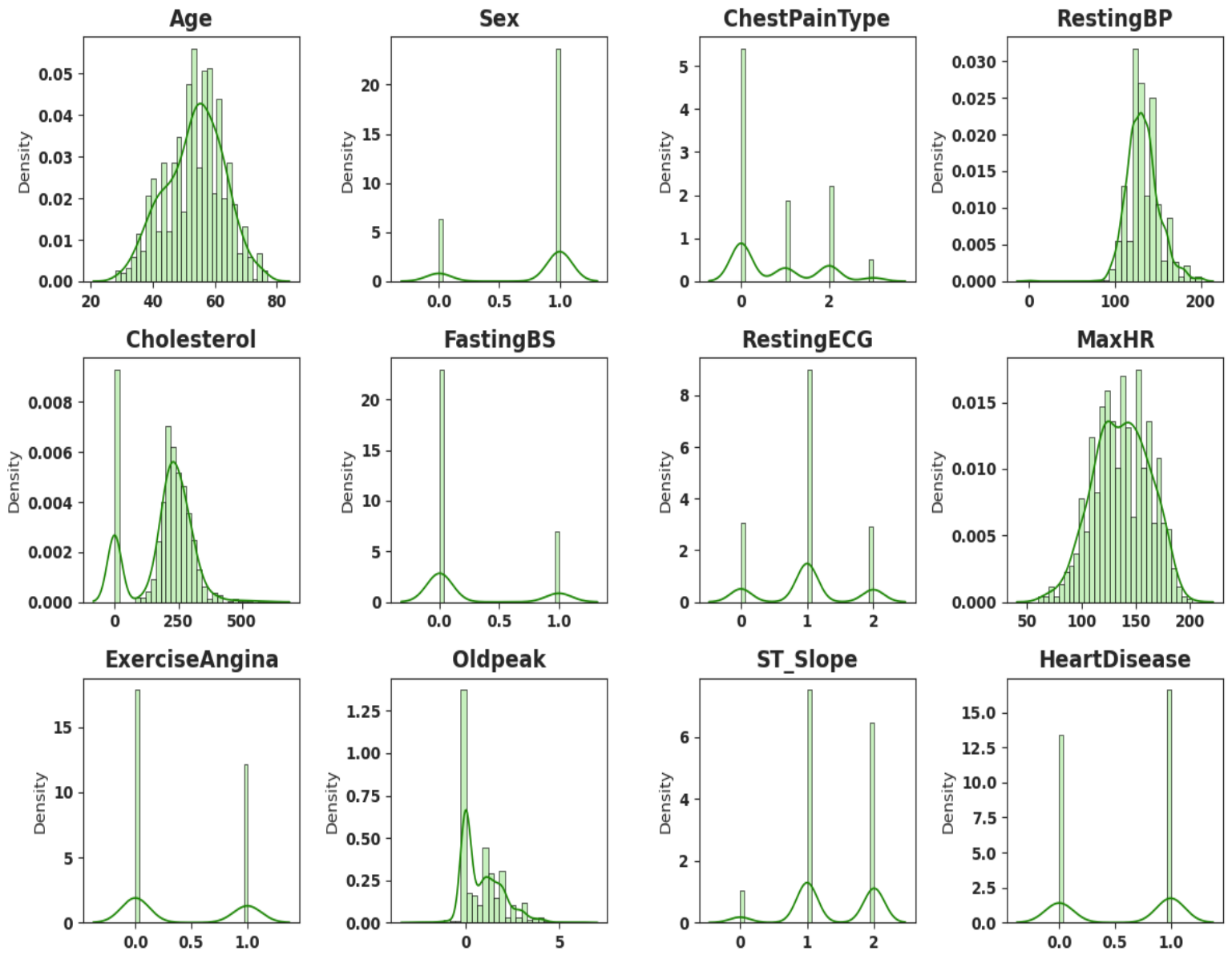
Figure 2 shows the histogram and density estimation plots of diverse features. This figure describes at a glance the frequency distribution and the probability density of the features. As shown in Figure 2, age is of nearly normal distribution, with most patients aged between 40 and 65 years, that is, middle-aged people are primarily represented in our data. RestingBP and MaxHR likewise show close-to-normal distributions, with peaks around 130 mmHg and 140–160 bpm, respectively. They indicate moderately high levels of blood pressure for most participants, as well as heart rate. On the other hand, cholesterol and Oldpeak demonstrate right-skewed distributions, indicating a lower percentage of patients with high cholesterol or ST-depression values. The encoded categorical features, such as sex, FastingBS, ExerciseAngina, ChestPainType and ST_Slope all exhibit discrete peaks (as expected) due to the binary or ordinal nature of these variables. ExerciseAngina and sex are slightly imbalanced, with a slight tendency towards male sex and exercise-induced angina.
Figure 2.
Histogram and density plots of the dataset.
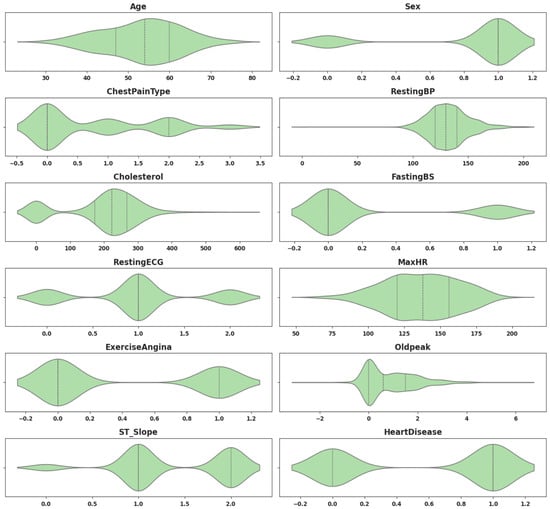
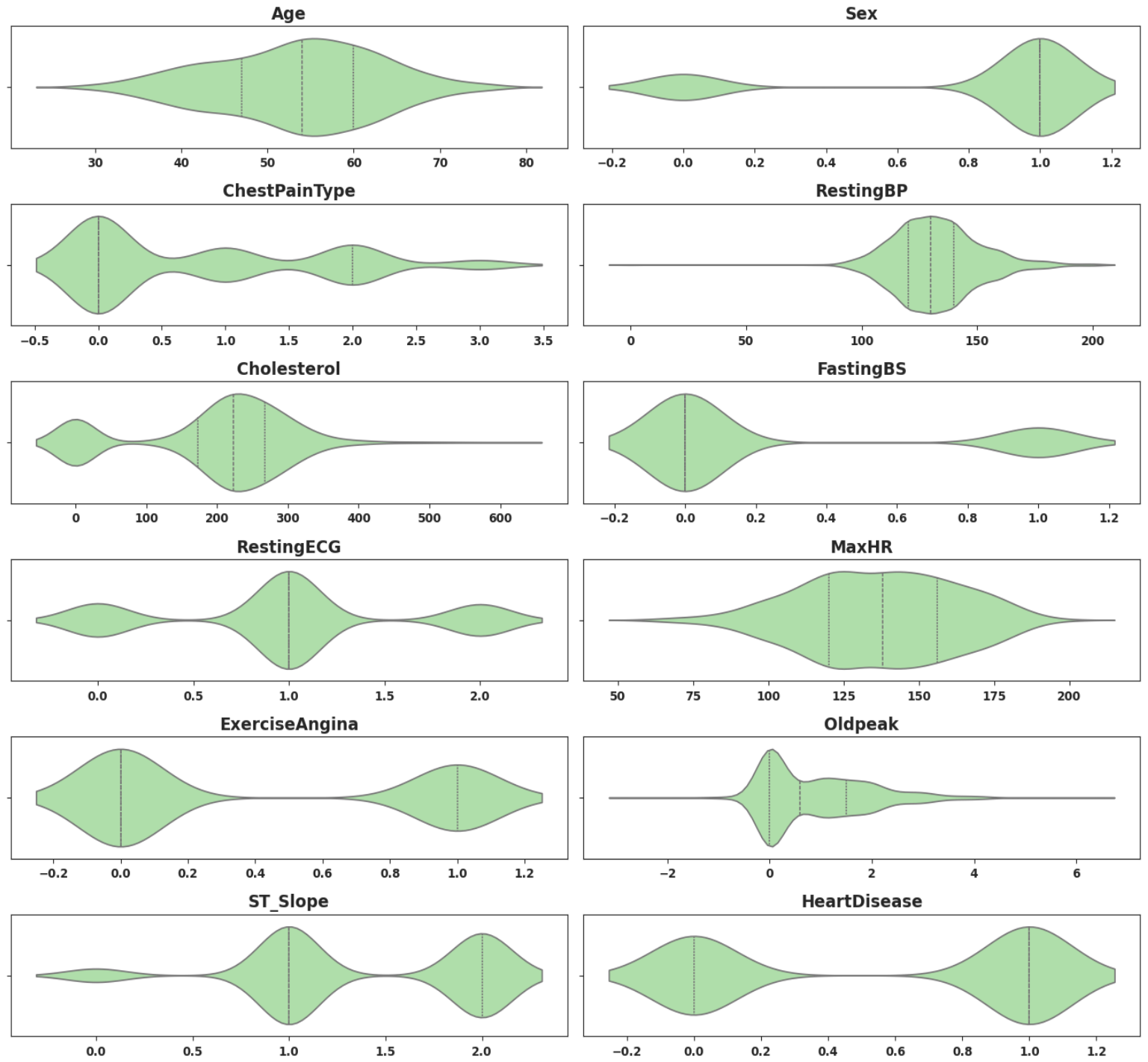
Figure 3 shows the violin plot of our HD dataset. A violin plot is a powerful visualization that integrates a box plot with a kernel density estimate. Each “violin” shows a reflexive, horizontally rotated density plot for one variable; the width at any point encodes the data density (wider is more points), and interior marks give summary statistics (the line is the median, and the edges of the shape are quartiles). The violin plot adds supplementary summary statistics, density estimates (including anomalies in the distribution), and a scatter plot of data points to the salient features across variables in a comparison, thus providing more information about shapes and central tendencies. Drawing on the HD variables, these violins have numerous evident patterns. Age has a high concentration around the 50s, and some moderate dispersal into the 60–70+ group. Sex is heavily imbalanced in one direction, which reflects the prevalence of male sex in many cardiovascular cohorts. ChestPainType, RestingECG, and ST_Slope are multimodal and represent the structure of their encoded categorical levels. RestingBP is centered at 120–150 mmHg, with relatively little spread, whereas MaxHR is bell-shaped and centered around 140–160 bpm, in agreement with exercise late-replications. FastingBS is mainly 0 (≤120 mg/dL), with fewer values in the tail of class 1. Oldpeak has a pervasive right skew, with many low near-zero values and a long positive tail, emphasizing a subpopulation with extreme ischemic response. Cholesterol has a peak at ~200–260 mg/dL with a broad tail; there is a small mass near zero where such data might be placeholders or outliers that would warrant further looking into. However, these zero cholesterol values are automatically handled by the data scaling process in PCA during feature optimization (discussed in the next section). This ensures stable input standardization across all feature maps, particularly effective for amplitude encoding. Exercise angina is biased in the direction of “no,” although a non-negligible proportion states that they have symptoms.
Figure 3.
Violin plot of the dataset.
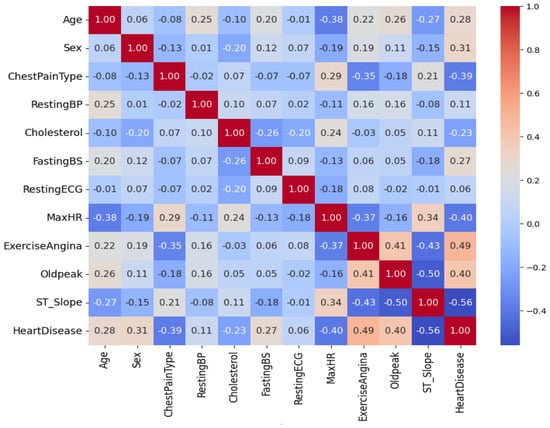
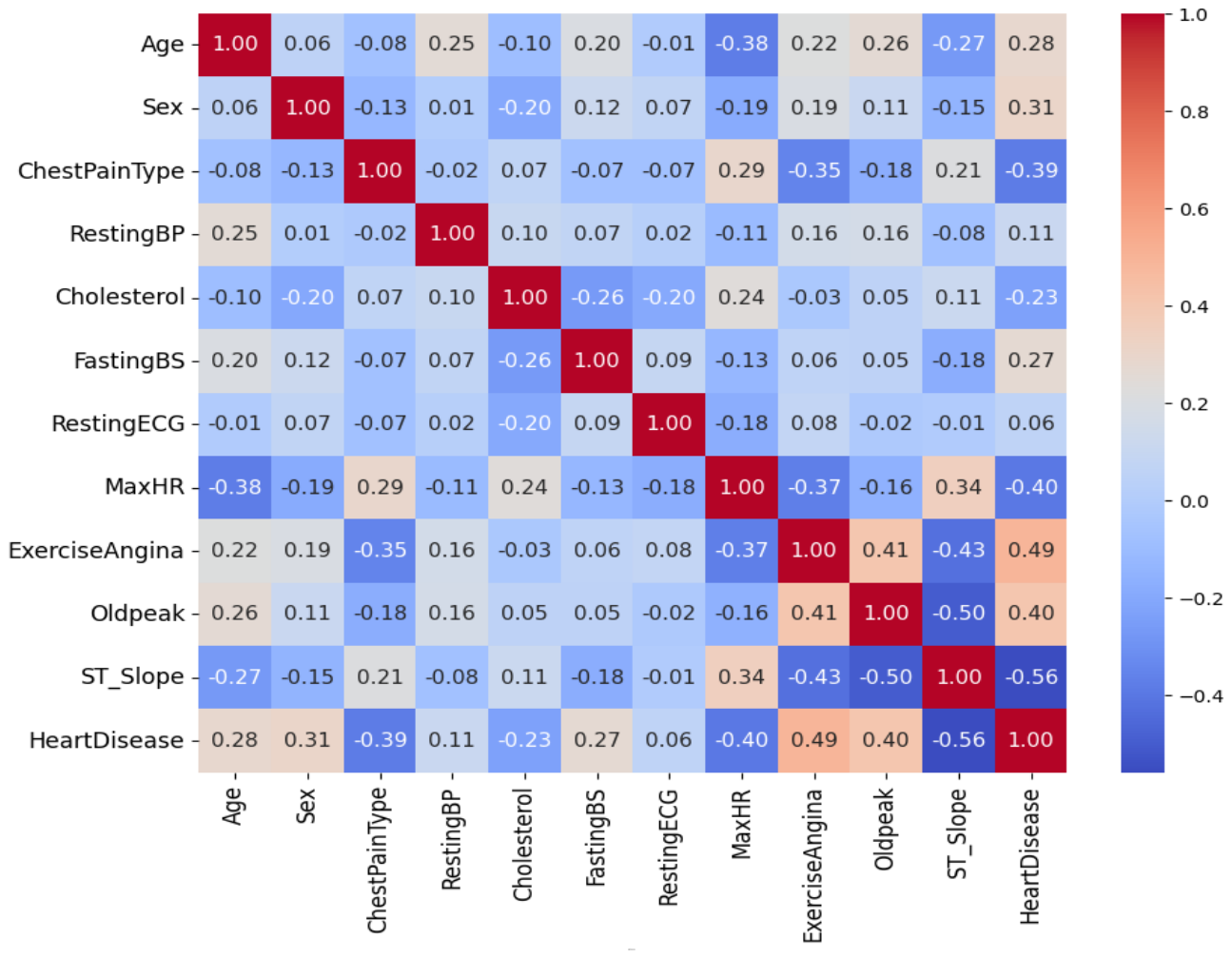
Figure 4 illustrates the correlation heatmap of the dataset. The heatmap visually displays the Pearson correlation coefficients of all attributes in the dataset. The correlation values between −1 and +1 represent direct correlations (positive values) or inverse correlations (negative values). From the heatmap, we can see that HeartDisease is negatively correlated with MaxHR (−0.40), ST_Slope (−0.56), and ChestPainType (−0.39), which indicates that patients of lower maximum heart rate, downsloping ST segment, and asymptomatic chest pain are more likely to suffer from HD. On the contrary, we found positive correlations between HeartDisease and sex (0.31), ExerciseAngina (0.49), Oldpeak (0.40), and age (0.28), indicating that older males who have exercise-induced angina and higher ST-depression values are more likely to suffer from heart disease. The fact that independent factors correlated quite weakly with one another (e.g., between ST_Slope and Oldpeak (−0.50) and between ExerciseAngina and ST_Slope (−0.43)) also suggests interrelations among exercise-induced cardiac parameters. All the remaining features have a weak to no impact, as shown by the low value of their correlation with acceptance for the model.
Figure 4.
Correlation heatmap of the dataset.
2.3. Feature Optimization
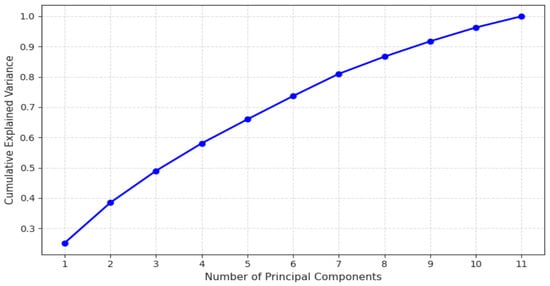
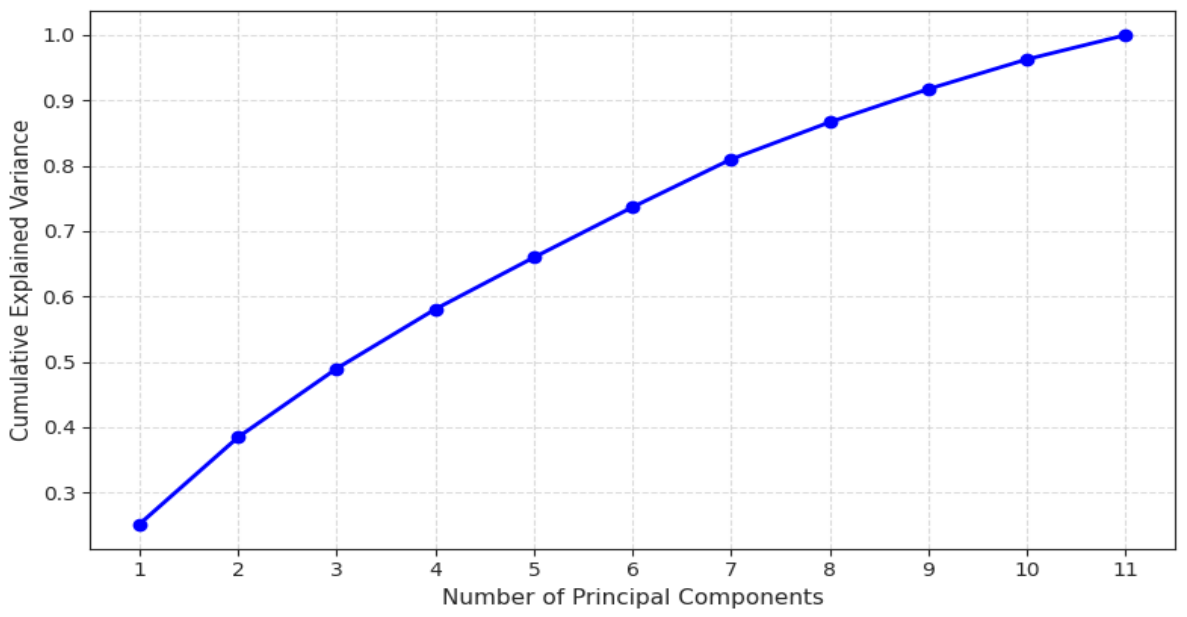
Feature optimization is used to increase the QML model’s accuracy and reduce the process time of quantum techniques. An important aspect of this step is handling irregular or extreme values in the dataset, as such values can distort feature distributions and negatively impact model performance. This research uses principal component analysis (PCA) as a feature optimizer. PCA is utilized because it reduces high-dimensional data into fewer uncorrelated components while preserving most of the variance. This simplifies models, and removes noise and multicollinearity. PCA normalizes the features at the beginning. It converts the original correlated variables into a new set of orthogonal principal components that maximize data variance [21,22]. The cumulative explained variance curve in Figure 5 demonstrates how much variance is captured as more components are included in our HD dataset. From the curve of this figure, the first 9 principal components collectively explain approximately 90% of the total variance, indicating that they preserve the essential structure of the data while removing redundant information. These nine components are therefore selected for use in the subsequent quantum feature maps and QML models.
Figure 5.
Principal components vs. variance graph of the features of the HD dataset.
2.4. Quantum Feature Map (QFM)
A QFM is a quantum circuit that encodes classical data into a high-dimensional quantum state using parameterized quantum gates. This mapping enables quantum models to capture complex patterns that may be hard for classical kernels [23]. Five QFM techniques are analyzed in this research, namely AE, AmE, PE, BE, and ZZFM.
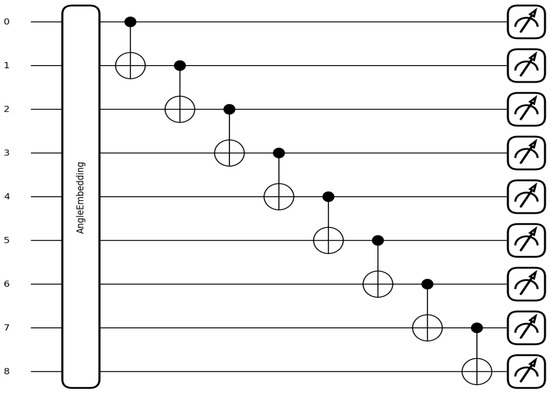
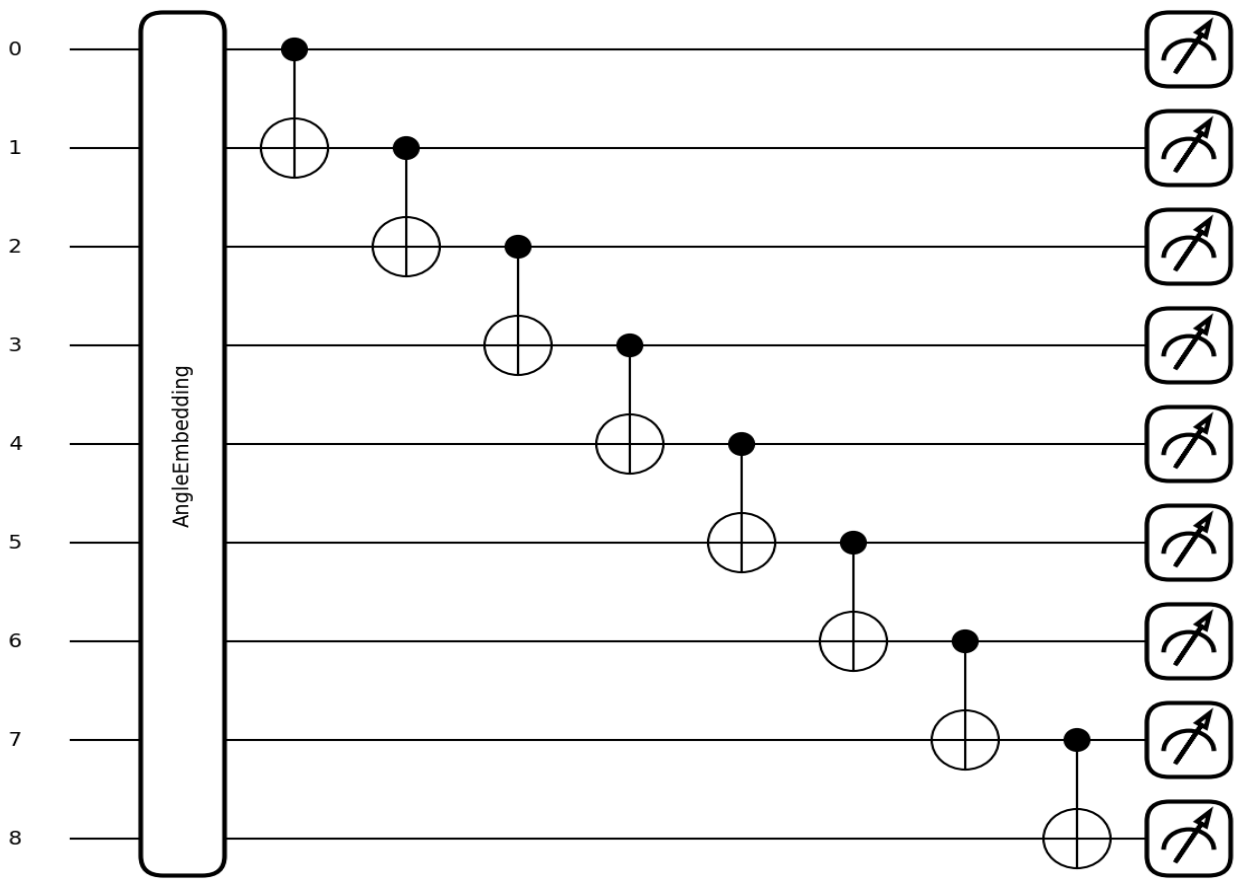
The AE QFM embeds a real-valued feature vector by mapping each component to a local single quantum bit (qubit) rotation, most commonly the Ry gate, on its corresponding qubit, such that n = d qubits are required [24]. d is the dimension of the classical feature vector, and n is the number of qubits used in the quantum circuit. This procedure yields a smooth, trigonometric embedding in which feature magnitudes are expressed as rotation angles. A scaling function s(.) is employed to map raw feature values into a numerically stable angular range, typically [−π, π] or [0, π]. The resulting circuit is shallow, with a gate complexity of O(n), rendering it both hardware-efficient and differentiable. To further enrich correlations among qubits without altering the fundamental encoding definition, a lightweight entangling layer may be appended. Figure 6 illustrates the AE circuit implementing this encoding scheme. The term “AngleEmbedding” in the figure represents the full form of AE, and the equation for the AE ( for classical input feature vector x is defined as follows:
Figure 6.
The QFM technique AE circuit diagram of this research.
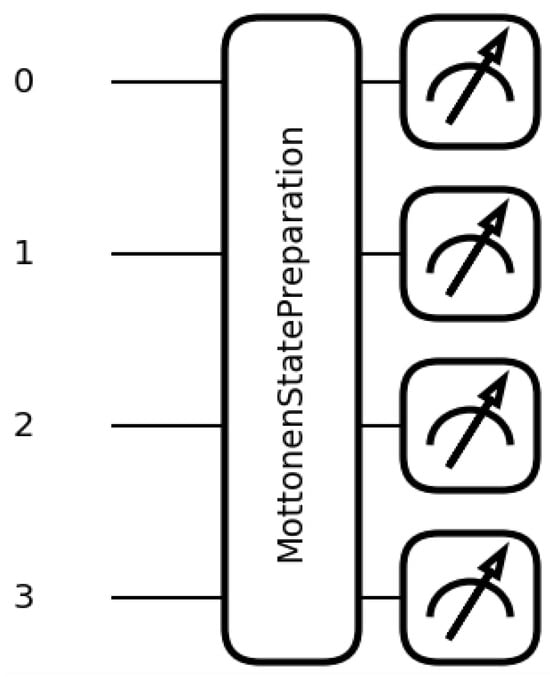
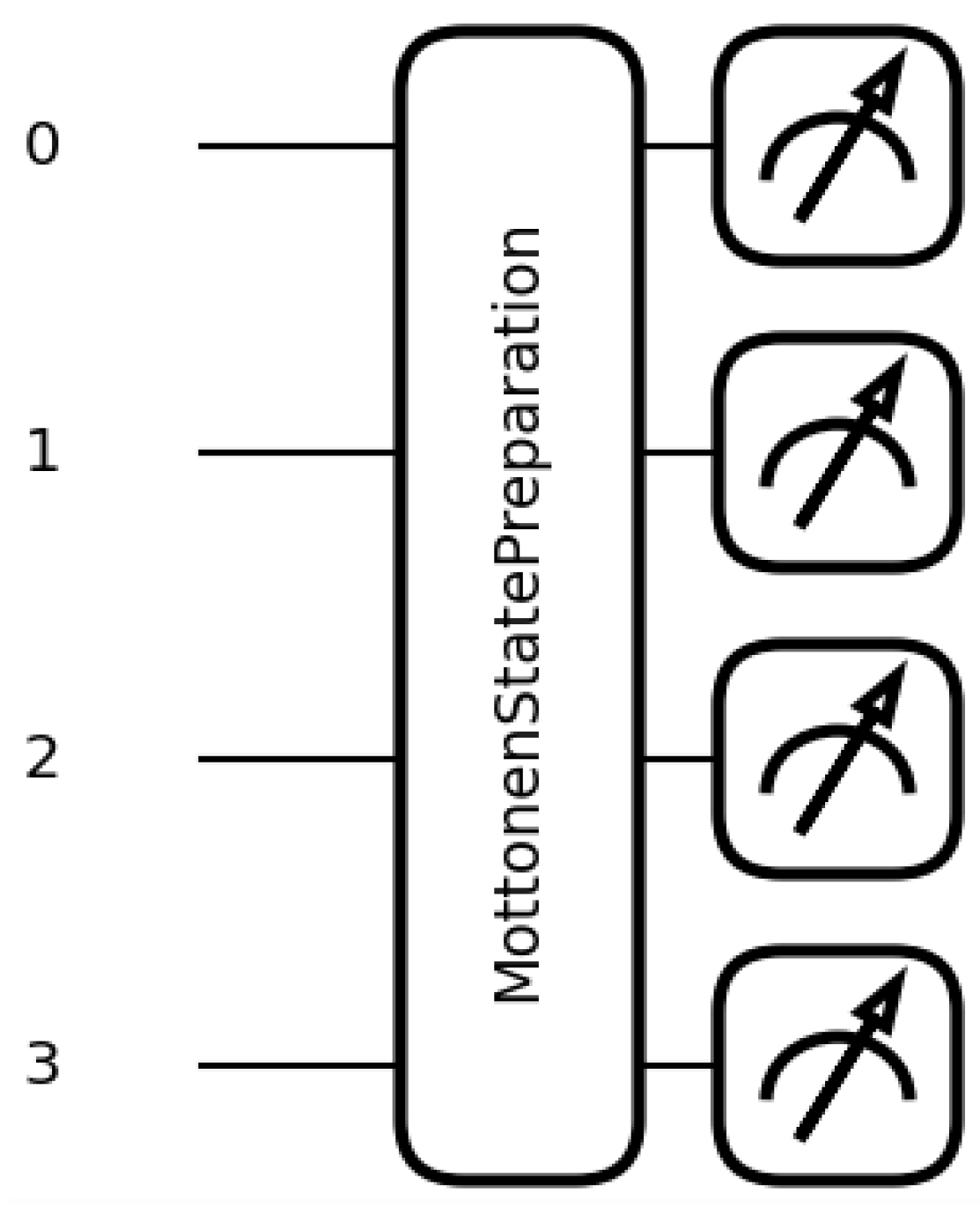
The AmE QFM method directly loads the feature vector into the quantum state amplitudes, using the minimal number of qubits [25]. After padding or truncating the input vector x to a length of and normalizing, a state-preparation unitary transforms into the desired amplitude vector. This encoding allows many features to be compressed into a few qubits, offering high expressivity per qubit. Nevertheless, generic state preparation scales with the dimension of the state and can be costly on current quantum hardware. In simulation, however, state preparation is straightforward, making AmE widely used in software-based experiments. Figure 7 shows the circuit diagram for the AmE implementation used in this research. The block titled “MottonenStatePreparation” in this figure represents the quantum state preparation unitary used to encode the normalized classical feature vector into quantum amplitudes for amplitude encoding. Thus, the equation for AmE () is defined by the following:
Figure 7.
The QFM technique AmE circuit diagram of this research.
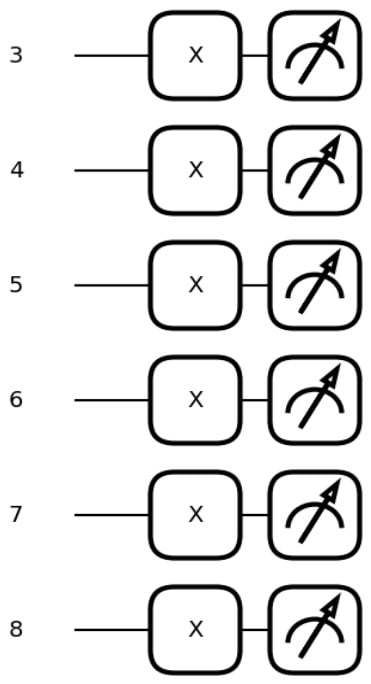
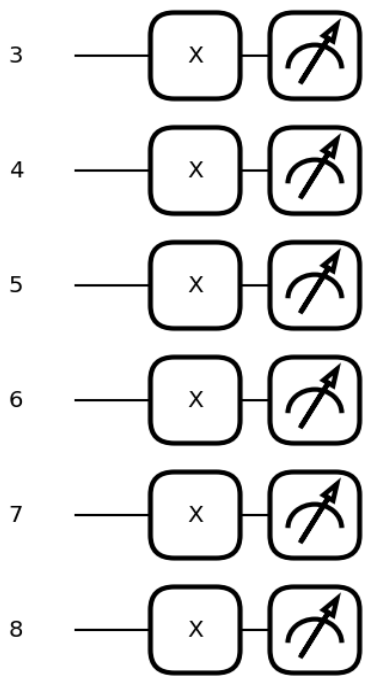
The BE QFM represents a binary feature vector directly as a computational basis state [26]. For a real-valued input vector of 9 features, the vector is first binarized (e.g., if xi, otherwise ) and then an gate is applied to the qubit if preparing the 9-qubit bitstring . As illustrated in Figure 8, this encoding maps samples to the vertices of a 9-dimensional hypercube, making it natural for categorical or thresholded data. The implementation is straightforward, requiring only X gates. The equation of BE ( is defined as follows:
Figure 8.
The QFM technique BE circuit diagram of this research.
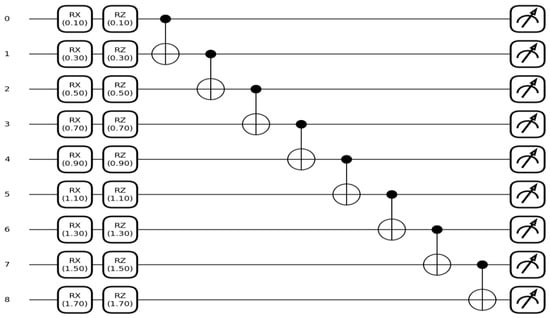
As illustrated in Figure 9, the PE scheme consists of consecutive single-qubit rotations implemented by Pauli operators to embed each feature, and usually takes an rotation followed by an rotation (or inverse operations) with scaling factors [27]. This approach produces a richer trigonometric embedding than single-axis rotations while maintaining a shallow circuit depth. A light entangling layer can be appended to capture simple cross-feature correlations. The equation for the PE ( encoding is as follows:
Figure 9.
The QFM technique PE circuit diagram of this research.
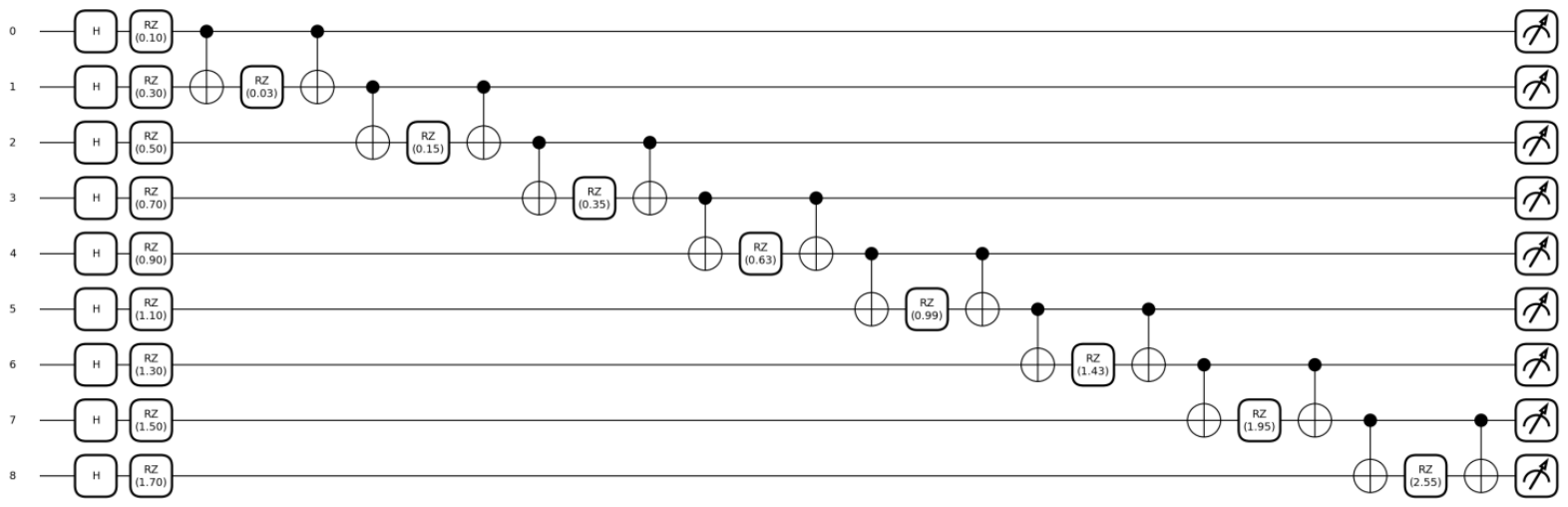
The ZZFM encodes both linear and pairwise feature interactions through an Ising-type phase unitary generated by and operators, typically following a Hadamard layer that creates superposition. As illustrated in Figure 10, the circuit implements and the equation are defined by the following:
which directly embeds the product term into the quantum phase and is particularly well-suited for quantum kernel-based learning methods, corresponding to a second-order feature expansion. The ZZFM is commonly decomposed into CNOT-Rz-CNOT gate blocks and can be stacked in shallow repetitions to enhance expressivity without significantly increasing circuit depth [28].
Figure 10.
The QFM technique ZZFM circuit diagram of this research.
2.5. QML Model Construction
In this paper, we build several QML models to see how well quantum methods can predict HD. The algorithms we use are QSVM, QKNN, QRF, and VQC. Each model uses quantum ideas like superposition, entanglement, and quantum feature mapping to try to improve accuracy and make the predictions more reliable. We also test these models with different QFM schemes to check how changes in the quantum model design can affect accuracy, robustness, and how easy it is to understand the results for medical diagnosis.
The QSVM employs the same process as the classical SVM framework, but the kernel it utilizes is computed from quantum states prepared by a chosen feature map [29]. Each input sample is mapped to a normalized quantum state and the kernel (K) between two inputs is given by the inner product (or fidelity) between their corresponding states. The classical SVM is then trained in the dual formulation using this quantum kernel, while the prediction stage follows the standard SVM decision function f(x) evaluated with
The QKNN algorithm extends the classical KNN approach by employing quantum-derived similarity measures [30]. Each data sample is encoded as a quantum state . Pairwise similarities are evaluated as fidelities between these states. For a test sample , the similarity scores are computed as against all training states. The algorithm then finds the closest neighbors and labels new data with a majority vote of those closest examples, optionally weighted by the similarity scores . It is interesting to observe that the classical decision rule of KNN is not changed and that quantum similarity estimation takes place in features.
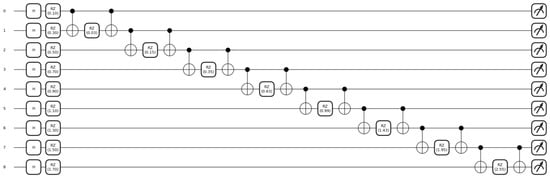
The QRF constructs a bagging ensemble of shallow variational “trees,” each trained on a bootstrap sample and a randomly selected feature subspace [31]. As illustrated in Figure 11, each quantum tree produces a signed prediction derived from the expectation value of its readout operator, and the overall forest output is obtained through majority voting or by taking the sign of the averaged predictions. This framework closely resembles the schema of a classical RF, but instead of each decision tree, we use a shallow quantum circuit, which allows us to have at our disposal quantum expressiveness in an ensemble learning context.
Figure 11.
Circuit diagram of QRF used in this research.
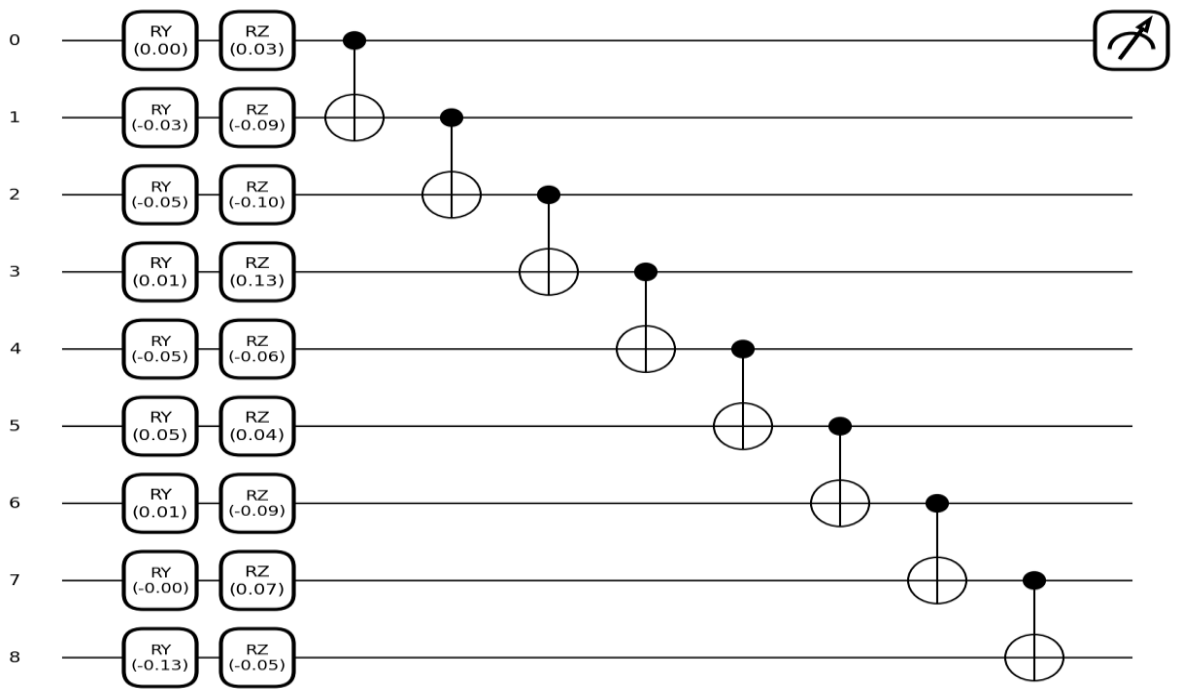
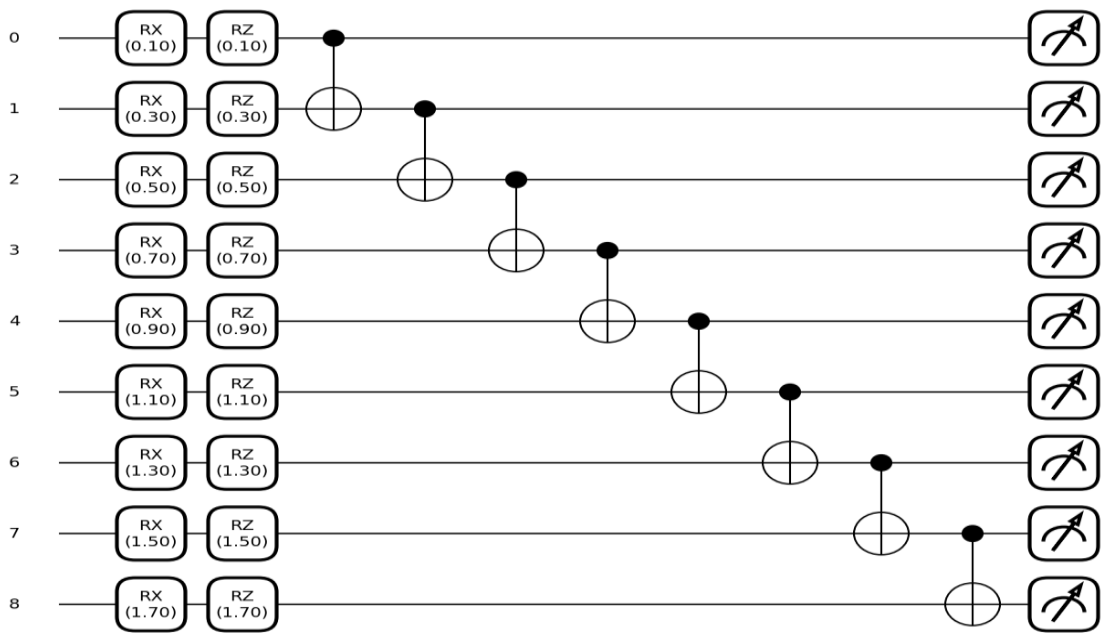
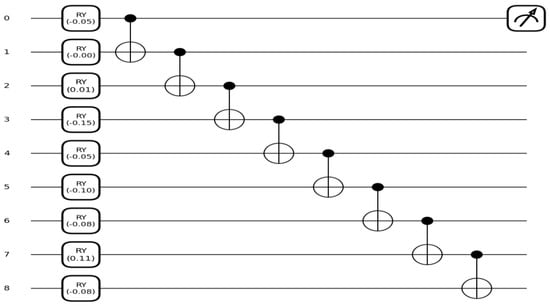
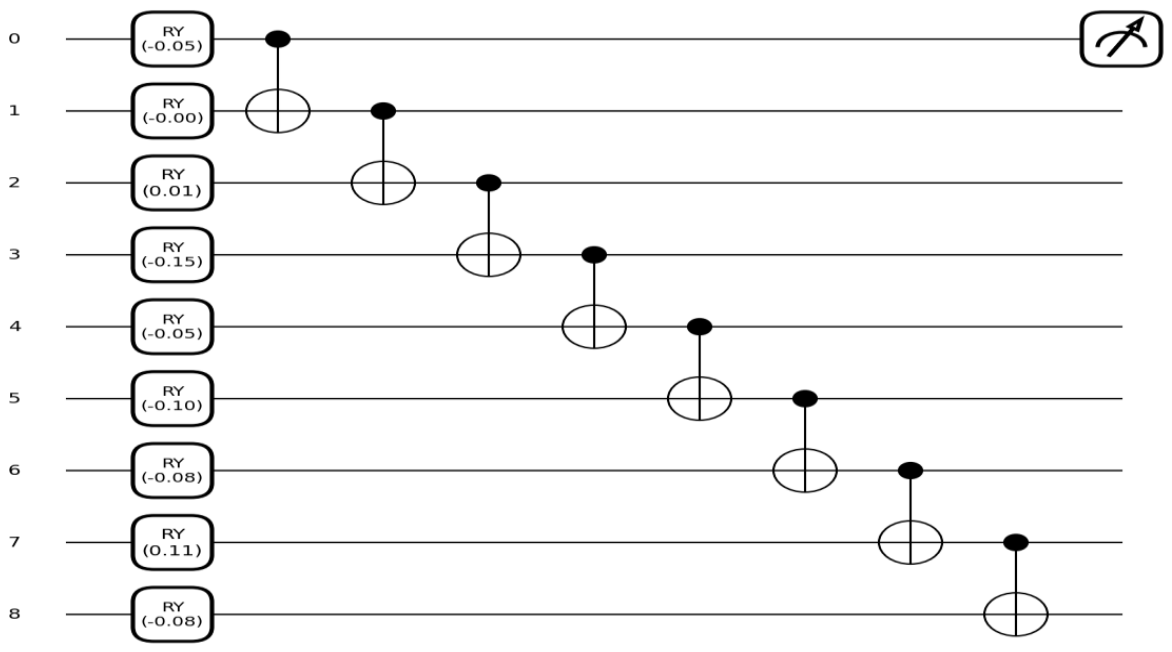
Figure 12 depicts the VQC model used in this research. It has a single variational layer on 9 qubits. Parameterized single-qubit rotations are performed on every single qubit, which is characterized by and with the corresponding rotation [32]. These local rotations initialize the quantum state with tunable parameters . A chain of CNOT gates implementing a linear entangling linkage between coherence on qubit 0 and the coherence on all other qubits from 1 to 8 via the ancilla is applied after single-qubit rotations. This delicate entangling layer boosts expressivity by imposing correlations between qubits without a large overhead in circuit depth. The circuit ends with a measurement on the first qubit (qubit 0) and its expectation value is used for downstream purposes such as classification. This architecture optimally interpolates between hardware efficiency and expressive power, so that it is both capable of running on near-term quantum devices while still allowing for learning in high-dimensional quantum feature spaces.
2.6. Model Assessment
All experiments in this research were evaluated using a 5-fold cross-validation method. In each fold, a ratio of 80:20 was used. Unless otherwise stated, the reported results correspond to simulation-based execution rather than direct deployment on noisy intermediate-scale quantum (NISQ) hardware. For the evaluation of model performance, the normalized confusion matrix (NCM), accuracy, specificity, sensitivity, precision, F1-score, area under the curve (AUC) of the receiver operating characteristic (ROC), and Cohen’s kappa [33] are examined.
Figure 12.
Circuit diagram of VQC used in this research.
2.6.1. Qubit Configuration, Computing Model, and Circuit Topology
This research uses 9 qubits across all experiments. After applying PCA, 9 principal components are selected, and these are mapped to 9 qubits in most encoding strategies. For quantum computing, this study follows a gate-based (circuit-based) approach. All feature maps and classifiers are implemented as parameterized quantum circuits. For the circuit topology and entanglement structure, the research uses linear entanglement patterns. This type of topology is simple, but still effective enough to capture pairwise feature relationships. However, the choice of topology can influence how information propagates through the circuit. For example, linear entanglement may limit the ability to capture more complex or long-range feature interactions, while more densely connected topologies could increase expressiveness at the cost of higher circuit depth. In this study, a shallow and structured topology is intentionally used to maintain a balance between model expressiveness, stability, and computational efficiency.
2.6.2. Quantum Execution Setting and Hardware Considerations
All quantum experiments in this study are conducted in a simulation-based environment rather than on a physical quantum processing unit. Accordingly, the reported results reflect algorithmic behavior under controlled simulator conditions. The qubit counts discussed in this work refer to logical qubits required by the encoding schemes and do not represent hardware-mapped physical qubits.
Because the circuits are not transpiled to a specific backend, physical qubit allocation, coupling map constraints, routing overhead, calibration variability, gate noise, and readout error were not explicitly incorporated into the benchmarking pipeline. From a practical perspective, AE, PE, and BE yield comparatively shallow circuits, whereas generic amplitude state preparation can be costlier, and ZZFM introduces additional entangling gate demands. Therefore, hardware efficiency is interpreted here as a qualitative consideration rather than as a backend measured result.
3. Results and Discussion
Table 3 presents the efficiency of the QML models for HD prediction using feature encoding AE. This table shows that QSVM achieved the best stability and highest accuracy of 0.9026 with AE, including a ROC-AUC value of 0.9300, which is superior to other quantum models. It also shows good sensitivity (0.9216) and specificity (0.8342), with a robust balance of detecting both heart disease and non-heart disease cases. The QKNN and QRF models also worked well, but QSVM is the steadiest and most consistent among them all.
Table 3.
Performance of QML models using QFM AE.
Table 4 presents the performance of QML techniques with the AmE feature map. This table shows that the performance of the QKNN model using the AmE scheme is significantly enhanced and obtained an accuracy of 0.8098 and an AUC of 0.8924 under the ROC curve. This shows that amplitude-based quantum state representations support good distance-based discrimination. QSVM is overall equal to QKNN. Other models, including QRF and VQC, have intermediate accuracy and precision.
Table 4.
Performance of QML models using QFM AmE.
Table 5 demonstrates the performance of QML models by using ZZFM. This table shows that the accuracy of the QSVM with the ZZFM is about 0.8641, and the AUC of the ROC curve is 0.9139. This also confirms that QSVM has surpassed its competitors using ZZFM. The QRF model received similar performances and stable specificity, which suggests that there are advantages to entangled feature transformation for ensemble-based quantum learners.
Table 5.
Performance of QML models using QFM ZZFM.
Table 6 presents the efficiency of PE for different methods. Pauli-based encoding has balanced performance over all models. Performance of the QSVM and QKNN models produced the best accuracies of approximately 0.86 and 0.82. These results indicate PE encodings have the capability to model inter-feature correlations for HD prediction and can be used in hybrid clinical systems that are both comprehensible and robust.
Table 6.
Performance of QML models using QFM PE.
The data in Table 7 are obtained by BE. This table shows that using the BE method, the VQC model achieved excellent results, with a sensitivity of 0.8333 and precision of 0.9043, demonstrating its applicability for clinical applications requiring consistently high recall (i.e., reduced false negatives). The total accuracy of VQC is 0.8587 for BE.
Table 7.
Performance of QML models using QFM BE.
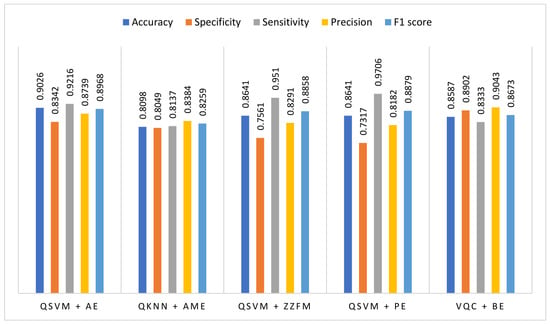
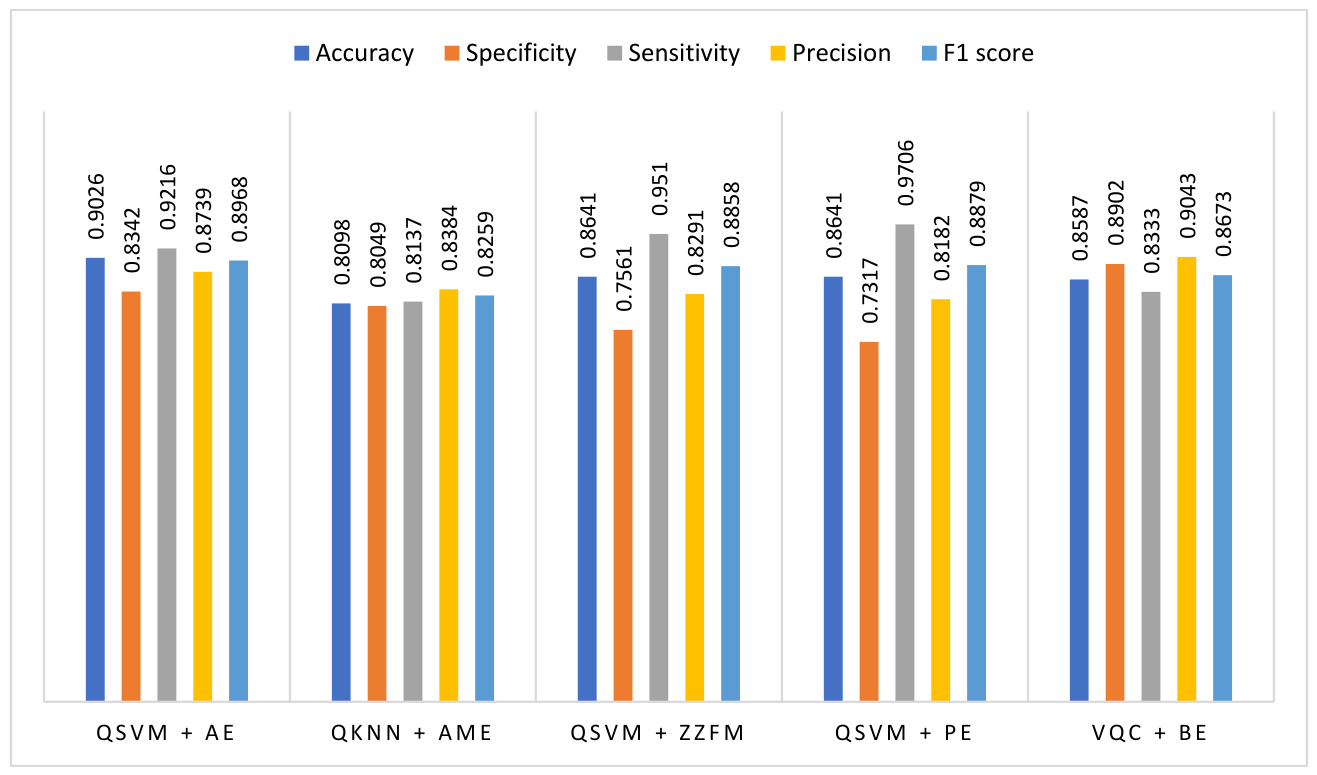
The overall comparison of the best-performing models across all encoding schemes is presented in Figure 13. From the results, it is observed that QSVM with AE consistently achieved better performance than the other configurations in almost all evaluation metrics. This suggests that angle-based quantum feature embedding helps the model separate the patients with HD and those without the disease more effectively.
Figure 13.
Comparison of best model performances across encoding schemes.
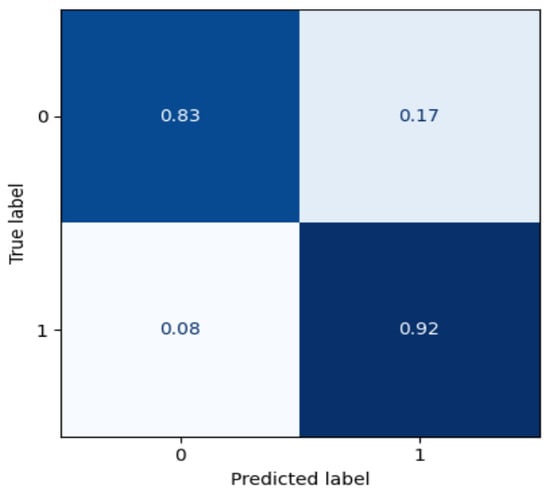
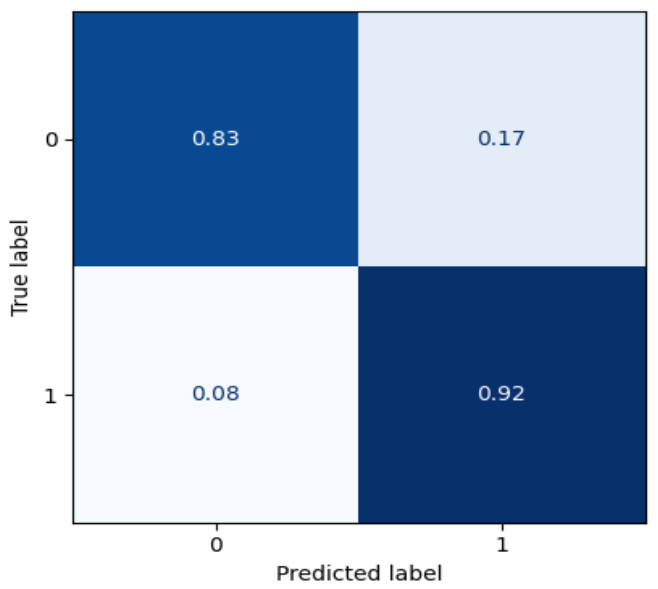
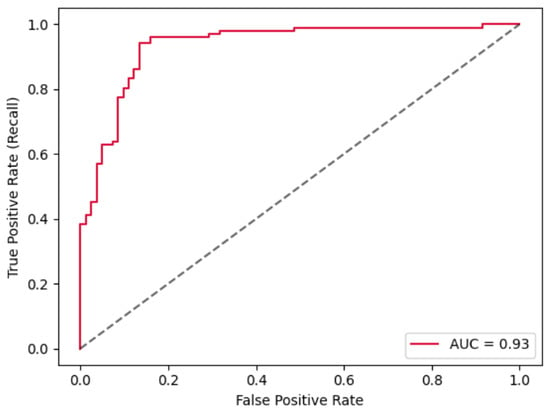
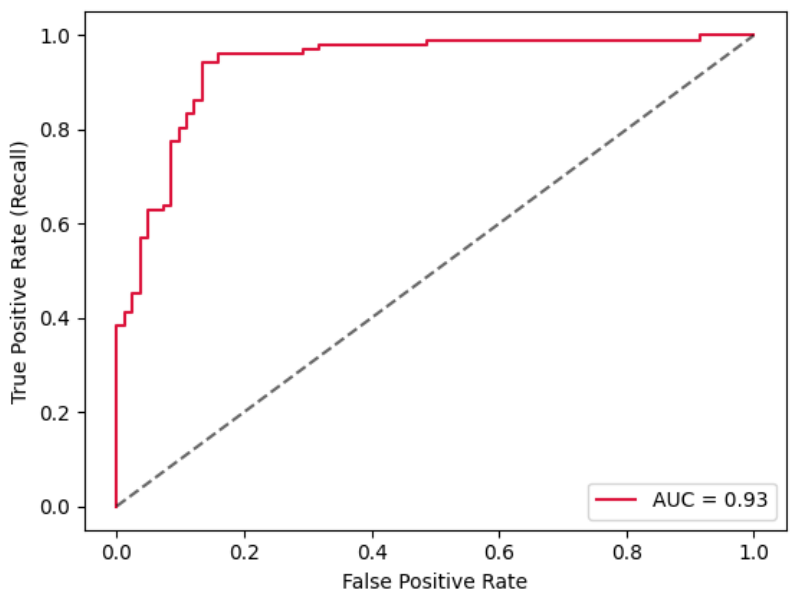
The NCM of the overall best-performing model, QSVM with AE, is shown in Figure 14, and the corresponding ROC curve is presented in Figure 15. In Figure 14, class 0 indicates patients without HD, and class 1 indicates patients with HD. It can be seen that most samples are correctly classified by the model. About 83% of the non-HD cases are predicted correctly, while 92% of the HD cases are identified correctly. Only a small portion of the samples are misclassified. This shows that the QML model is especially effective in detecting HD patients. The ROC curve in Figure 15 also supports this result. The curve remains close to the upper-left region, which indicates good classification performance. The AUC value of 0.93 suggests that the model can clearly distinguish between HD and non-HD cases.
Figure 14.
NCM of QSVM with AE.
Figure 15.
ROC curve of QSVM with AE.
Table 8 shows the outcome across fold-wise for the ultimate QSVM model using AE. The results indicate stable performance within the folds, having an average accuracy of 0.9026, specificity of 0.8342, sensitivity of 0.9216, precision of 0.8739, F1-score of 0.8968, a kappa value of 0.7608, and an AUC equal to 0.93.
Table 8.
Fold-wise performance of best-performing model (QSVM + AE).
Table 9 shows the comparison between existing studies and the proposed research for HD prediction. It can be noticed that several earlier works reported high accuracy values, such as 96.4%, 97.06% and even 99.96%. However, most of these studies did not use cross-validation and also did not test multiple QE schemes. Some of them also used only classical methods or limited quantum simulation settings, which makes the comparison less comprehensive. The extremely high accuracy reported in some prior works, such as Banday et al. [13], is likely influenced by the use of hybrid models where classical components dominate the learning process. In many cases, results are obtained from a specific train–test split that may favor the model but does not fully reflect performance across diverse data distributions. Additionally, the absence of cross-validation, quantum noise, and hardware-related constraints can lead to overly optimistic results. As a result, these findings may not generalize well in more realistic or varied settings. In contrast, the proposed research achieves 90.26% accuracy while applying cross-validation and experimenting with multiple QE schemes. The model is also evaluated with full quantum simulation support, which provides a more complete and reliable evaluation. Although a few previous methods show higher accuracy, they lack proper validation and broader quantum analysis. Therefore, the ultimate model in this research can be considered more balanced and practically reliable for HD prediction using QML.
Table 9.
Comparison among existing approaches and the proposed research.
However, all results in this study are obtained using a quantum simulation environment, not from execution on real quantum hardware. Therefore, the qubits considered here are logical qubits defined by the encoding schemes, while physical qubits, which are subject to hardware-specific topology and connectivity constraints, are not explicitly modeled. In practical devices, limited qubit connectivity, gate decomposition, and noise-aware transpilation can significantly alter circuit depth and performance. These hardware constraints, along with calibration errors and qubit decoherence, are not captured in our current pipeline. Yet, the relatively shallow circuit structures observed in AE, PE, and BE suggest that the proposed approach has potential for future deployment on near-term quantum devices with constrained topologies.
In addition to predictive performance, the computational cost of different QFMs is an important factor, especially when considering practical deployment. In this study, all experiments are conducted using a quantum simulator, so the reported costs reflect relative computational complexity rather than exact hardware energy consumption. However, these estimates still provide useful insight into how different encoding strategies behave in terms of circuit depth, gate operations, and simulation time. To make this comparison clearer, we analyze each QFM based on four factors in Table 10. These factors are the circuit depth, approximate gate complexity, state preparation complexity, and relative power consumption. Power consumption provides a relative qualitative estimate since simulator-based experiments do not directly measure physical energy usage. In addition to the factors in Table 10, we also observed clear differences in the training time of QFMs during the experiments. Models using AE, BE, and PE generally require shorter training time due to their shallow circuit structures, especially when paired with QSVM and QKNN. In contrast, AmE-based models show noticeably higher training time because of complex state preparation, while ZZFM combinations introduce moderate overhead due to additional entangling gates. These observations support our claim that shallow encodings such as AE and BE are more hardware-efficient and better suited for near-term quantum devices.
Table 10.
Computational cost comparison of QFMs under consistent simulation settings.
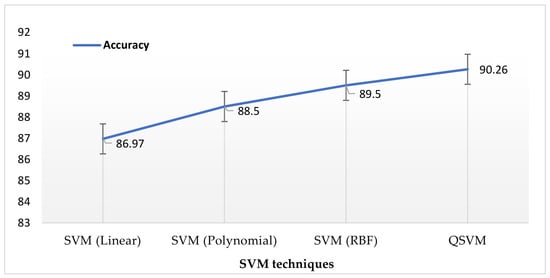
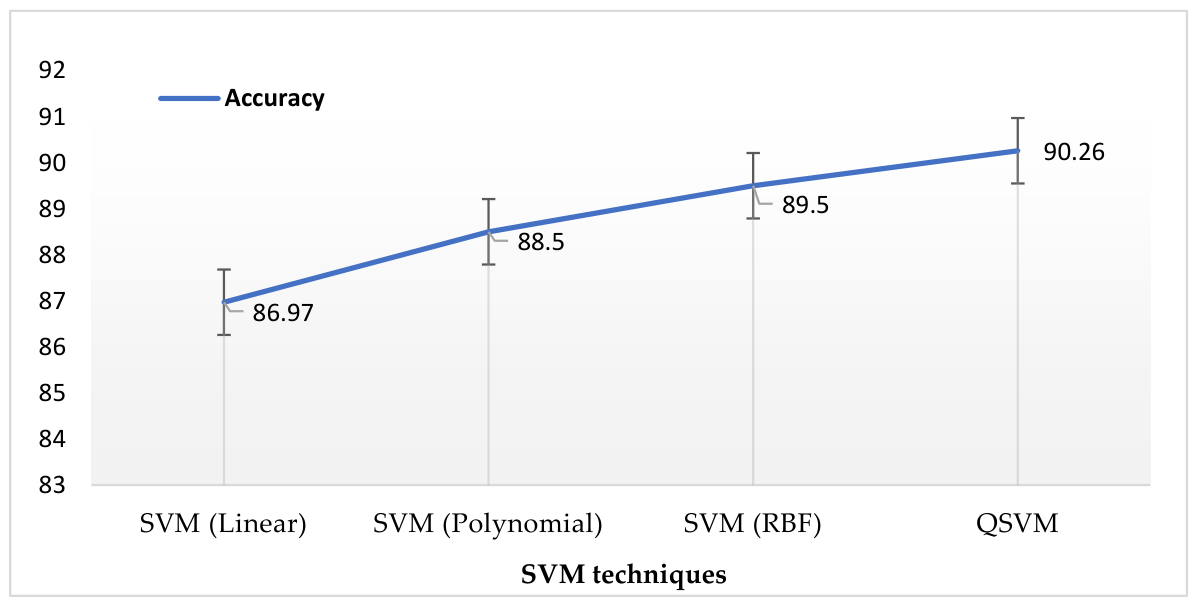
The QSVM is the ultimate performer in this research. To further evaluate the benefit of the quantum kernel, we compare the QSVM with the classical SVM using linear, polynomial, and RBF kernels under the same evaluation setting. Figure 16 presents this comparative analysis of diverse SVMs. Figure 16 presents that with the RBF kernel, the classical SVM attains the highest accuracy of 89.5%, which is still lower than the QSVM with AE, which is 90.26%. This indicates that the quantum feature space provides slightly better class separation than standard classical kernels.
Figure 16.
Performance comparison of classical SVM kernels and QSVM.
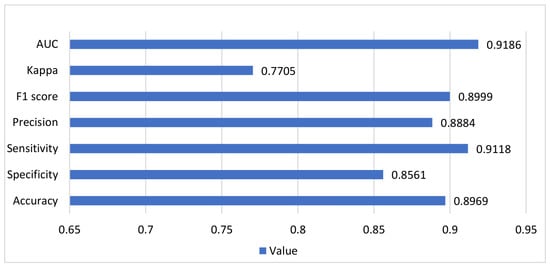
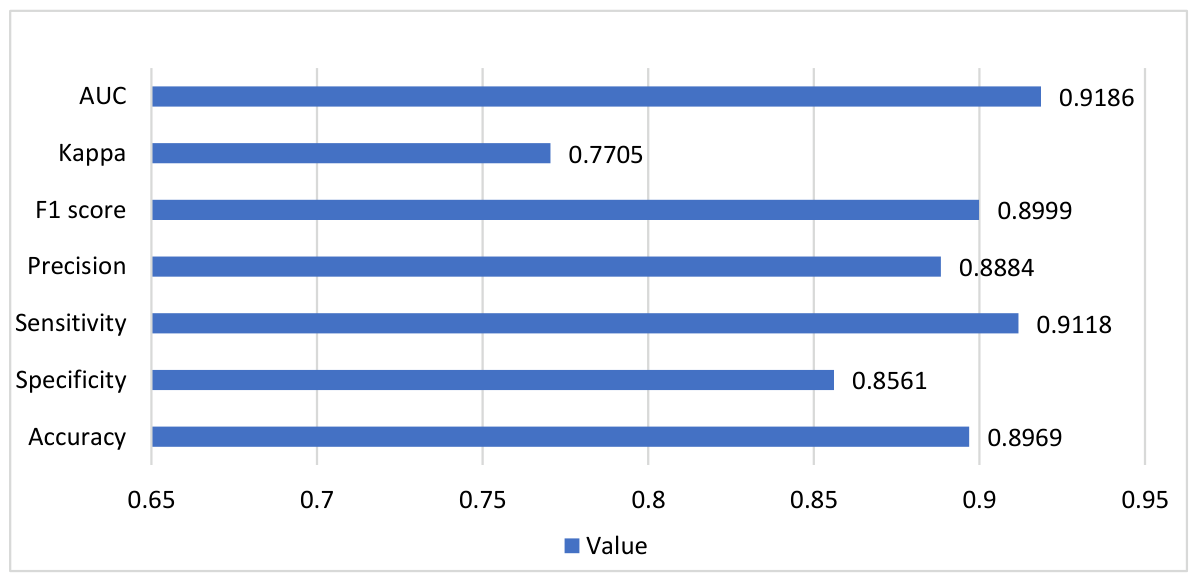
To evaluate the generalization ability of the final QSVM model with AE, we use another real-life heart disease dataset containing features closely related to this study. The dataset, available from source [34], consists of 1000 patient records with 15 features, including age, gender, cholesterol, blood pressure, heart rate, and others, along with a binary decision class indicating the presence or absence of heart disease. The performance is presented in Figure 17, which shows that the QSVM model demonstrates strong performance on this dataset, achieving an accuracy of 0.8969 and an AUC of 0.9186.
Figure 17.
Assessment of QSVM + AE performance on an external heart disease dataset.
4. Conclusions
In this study, we investigate different QFMs and QML methods to predict HD. We use QFMs like AE, AmE, BE, PE, and ZZFM to encode the clinical data and test them with several quantum classifiers. Out of all of them, AE with QSVM gives the best results, reaching 90.26% accuracy and 0.93 AUC on the ROC curve. The model is fairly easy to interpret, scales well, and performs better than previous studies have reported. However, the findings should not be interpreted as proof of general superiority over classical ML or as a direct claim of clinical readiness. Overall, this study shows that using QML with QFMs can be a useful and practical tool for early HD prediction. These findings give hope that quantum models could really help in clinical decision-making and precision medicine down the line.
5. Study Limitations and Future Research Directions
In the future, we want to try this approach on other diseases, since the current study is limited to a specific dataset and does not fully reflect how the model would perform across different clinical conditions or in real-life QML applications. We also plan to validate the proposed method on noisy quantum hardware, as the present results are based on simulation and do not capture practical issues such as noise, qubit topology, routing overhead, circuit depth, and other backend constraints, which need to be addressed for real-world deployment.
Author Contributions
Conceptualization, M.M.H. and A.M.; methodology, M.M.H. and A.M.; validation, M.H.H.H. and A.M.; formal analysis, M.H.H.H. and A.M.; investigation, A.M. and M.M.H.; resources, M.H.H.H. and A.M.; writing—original draft preparation, M.H.H.H. and M.M.H.; writing—review and editing, A.M. and M.H.H.H.; visualization, M.M.H.; supervision, A.M. All authors have read and agreed to the published version of the manuscript.
Funding
This research received no external funding.
Institutional Review Board Statement
Not applicable.
Informed Consent Statement
Not applicable.
Data Availability Statement
The data presented in this study are openly available in Kaggle at https://www.kaggle.com/fedesoriano/heart-failure-prediction (accessed on 17 May 2026) [17].
Acknowledgments
The authors used AI-based chat assistants to enhance the clarity and linguistic quality of the English in various sections of this manuscript. All authors have reviewed and approved this acknowledgement without any objections.
Conflicts of Interest
The authors declare no conflicts of interest.
References
- Tomasoni, D.; Adamo, M.; Lombardi, C.M.; Metra, M. Highlights in heart failure. ESC Heart Fail. 2019, 6, 1105–1127. [Google Scholar] [CrossRef] [Scilit]
- De Couto, G.; Ouzounian, M.; Liu, P.P. Early detection of myocardial dysfunction and heart failure. Nat. Rev. Cardiol. 2010, 7, 334–344. [Google Scholar] [CrossRef] [Scilit]
- Dangeti, P. Statistics for Machine Learning; Packt Publishing Ltd.: Birmingham, UK, 2017. [Google Scholar]
- Cerezo, M.; Verdon, G.; Huang, H.Y.; Cincio, L.; Coles, P.J. Challenges and opportunities in quantum machine learning. Nat. Comput. Sci. 2022, 2, 567–576. [Google Scholar] [CrossRef] [Scilit] [PubMed]
- Sahoo, P.K.; Jeripothula, P. Heart Failure Prediction Using Machine Learning Techniques. 2020. Available online: https://papers.ssrn.com/sol3/papers.cfm?abstract_id=3759562 (accessed on 17 May 2026).
- Mansur Huang, N.S.; Ibrahim, Z.; Mat Diah, N. Machine learning techniques for early heart failure prediction. Malays. J. Comput. (MJoC) 2021, 6, 872–884. [Google Scholar] [CrossRef] [Scilit]
- Newaz, A.; Ahmed, N.; Haq, F.S. Survival prediction of heart failure patients using machine learning techniques. Inform. Med. Unlocked 2021, 26, 100772. [Google Scholar] [CrossRef] [Scilit]
- Awan, S.E.; Bennamoun, M.; Sohel, F.; Sanfilippo, F.M.; Dwivedi, G. Machine learning-based prediction of heart failure readmission or death: Implications of choosing the right model and the right metrics. ESC Heart Fail. 2019, 6, 428–435. [Google Scholar] [CrossRef] [Scilit]
- Mamun, M.; Farjana, A.; Al Mamun, M.; Ahammed, M.S.; Rahman, M.M. Heart failure survival prediction using machine learning algorithm: Am I safe from heart failure? In 2022 IEEE World AI IoT Congress (AIIoT); IEEE: New York, NY, USA, 2022; pp. 194–200. [Google Scholar]
- Lorenzoni, G.; Sabato, S.S.; Lanera, C.; Bottigliengo, D.; Minto, C.; Ocagli, H.; De Paolis, P.; Gregori, D.; Iliceto, S.; Pisanò, F. Comparison of machine learning techniques for prediction of hospitalization in heart failure patients. J. Clin. Med. 2019, 8, 1298. [Google Scholar] [CrossRef] [Scilit]
- Pati, A.; Addula, S.R.; Panigrahi, A.; Sahu, B.; Nayak, D.S.K.; Dash, M. Artificial intelligence in improving disease diagnosis: A case study of cardiovascular disease prediction. In Artificial Intelligence in Medicine and Healthcare; CRC Press: Boca Raton, FL, USA, 2025; pp. 24–49. [Google Scholar]
- Verdone, A.; Succetti, F.; Ceschini, A.; Rosato, A.; Fioravanti, A.; Panella, M. A hybrid quantum-neural network for heart disease classification. Biomed. Signal Process. Control 2026, 113, 109185. [Google Scholar] [CrossRef] [Scilit]
- Banday, M.; Zafar, S.; Agarwal, P.; Alam, M.A.; Biswas, S.S.; Hussain, I.; Abubeker, K.M. Predictive analysis of heart disease using quantum-assisted machine learning. Discov. Appl. Sci. 2025, 7, 445. [Google Scholar] [CrossRef] [Scilit]
- Rath, M.; Date, H. Quantum data encoding: A comparative analysis of classical-to-quantum mapping techniques and their impact on machine learning accuracy. EPJ Quantum Technol. 2024, 11, 72. [Google Scholar] [CrossRef] [Scilit]
- Schetakis, N.; Aghamalyan, D.; Griffin, P.; Boguslavsky, M. Review of some existing QML frameworks and novel hybrid classical–quantum neural networks realising binary classification for the noisy datasets. Sci. Rep. 2022, 12, 11927. [Google Scholar] [CrossRef] [Scilit] [PubMed]
- Fedesoriano. Heart Failure Prediction Dataset. Kaggle. 2021. Available online: https://www.kaggle.com/fedesoriano/heart-failure-prediction (accessed on 17 May 2026).
- Kumar, M.; Bhardwaj, V. Evaluating Label Encoding and Preprocessing Techniques for Breast Cancer Prediction Using Machine Learning Algorithms. Int. J. Comput. Intell. Syst. 2025, 18, 218. [Google Scholar] [CrossRef] [Scilit]
- Denby, L.; Mallows, C. Variations on the histogram. J. Comput. Graph. Stat. 2009, 18, 21–31. [Google Scholar] [CrossRef] [Scilit]
- Hintze, J.L.; Nelson, R.D. Violin plots: A box plot-density trace synergism. Am. Stat. 1998, 52, 181–184. [Google Scholar] [CrossRef] [Scilit]
- Gu, Z.; Eils, R.; Schlesner, M. Complex heatmaps reveal patterns and correlations in multidimensional genomic data. Bioinformatics 2016, 32, 2847–2849. [Google Scholar] [CrossRef] [Scilit]
- Hossain, M.M.; Munir, A.; Habib, M.A.; Iqbal, M.S.; Hasan, M.M.; Rahman, M.M. Performance analysis of classical and quantum support vector machines for diagnosis of chronic kidney disease. Inform. Health 2025, 2, 179–193. [Google Scholar] [CrossRef] [Scilit]
- Hossain, M.M.; Rahim, M.A.; Bahar, A.N.; Rahman, M.M. Automatic malaria disease detection from blood cell images using the variational quantum circuit. Inform. Med. Unlocked 2021, 26, 100743. [Google Scholar] [CrossRef] [Scilit]
- Hossain, M.M.; Ali, M.S.; Swarna, R.A.; Hasan, M.; Habib, N.; Rahman, M.W.; Azad, M.M.; Rahman, M.M. Analyzing the effect of feature mapping techniques along with the circuit depth in quantum supervised learning by utilizing quantum support vector machine. In 2021 24th International Conference on Computer and Information Technology (ICCIT); IEEE: New York, NY, USA, 2021; pp. 1–5. [Google Scholar]
- Ovalle-Magallanes, E.; Alvarado-Carrillo, D.E.; Avina-Cervantes, J.G.; Cruz-Aceves, I.; Ruiz-Pinales, J. Quantum angle encoding with learnable rotation applied to quantum–classical convolutional neural networks. Appl. Soft Comput. 2023, 141, 110307. [Google Scholar] [CrossRef] [Scilit]
- Mitsuda, N.; Ichimura, T.; Nakaji, K.; Suzuki, Y.; Tanaka, T.; Raymond, R.; Tezuka, H.; Onodera, T.; Yamamoto, N. Approximate complex amplitude encoding algorithm and its application to data classification problems. Phys. Rev. A 2024, 109, 052423. [Google Scholar] [CrossRef] [Scilit]
- Bhabhatsatam, B.; Smanchat, S. Hybrid quantum encoding: Combining amplitude and basis encoding for enhanced data storage and processing in quantum computing. In 2023 20th International Joint Conference on Computer Science and Software Engineering (JCSSE); IEEE: New York, NY, USA, 2023; pp. 512–516. [Google Scholar]
- Riesebos, L.; Fu, X.; Varsamopoulos, S.; Almudever, C.G.; Bertels, K. Pauli frames for quantum computer architectures. In Proceedings of the 54th Annual Design Automation Conference 2017; Association for Computing Machinery: New York, NY, USA, 2017; pp. 1–6. [Google Scholar]
- Singh, N.; Pokhrel, S.R. Modeling quantum machine learning for genomic data analysis. IEEE Trans. Artif. Intell. 2025, 7, 2462–2477. [Google Scholar] [CrossRef] [Scilit]
- Ding, C.; Bao, T.Y.; Huang, H.L. Quantum-inspired support vector machine. IEEE Trans. Neural Netw. Learn. Syst. 2021, 33, 7210–7222. [Google Scholar] [CrossRef] [Scilit]
- Li, J.; Zhang, J.; Zhang, J.; Zhang, S. Quantum KNN classification with K value selection and neighbor selection. IEEE Trans. Comput.-Aided Des. Integr. Circuits Syst. 2023, 43, 1332–1345. [Google Scholar] [CrossRef] [Scilit]
- Khadiev, K.; Safina, L. The quantum version of random forest model for binary classification problem. In Proceedings of the CEUR Workshop Proc, Virtual, 19–20 August 2021; Volume 2842, pp. 30–35. [Google Scholar]
- Cerezo, M.; Arrasmith, A.; Babbush, R.; Benjamin, S.C.; Endo, S.; Fujii, K.; McClean, J.R.; Mitarai, K.; Yuan, X.; Coles, P.J.; et al. Variational quantum algorithms. Nat. Rev. Phys. 2021, 3, 625–644. [Google Scholar] [CrossRef] [Scilit]
- Sathyanarayanan, S.; Tantri, B.R. Confusion matrix-based performance evaluation metrics. Afr. J. Biomed. Res. 2024, 27, 4023–4031. [Google Scholar] [CrossRef] [Scilit]
- Mammadov, R. Heart Disease Prediction [Data Set]. Kaggle. 2022. Available online: https://www.kaggle.com/datasets/rashadrmammadov/heart-disease-prediction (accessed on 17 May 2026).

Disclaimer/Publisher’s Note: The statements, opinions and data contained in all publications are solely those of the individual author(s) and contributor(s) and not of MDPI and/or the editor(s). MDPI and/or the editor(s) disclaim responsibility for any injury to people or property resulting from any ideas, methods, instructions or products referred to in the content. |
© 2026 by the authors. Licensee MDPI, Basel, Switzerland. This article is an open access article distributed under the terms and conditions of the Creative Commons Attribution (CC BY) license.