
Article

Perceptions of Generative Artificial Intelligence Among Biomedical Academics with Career Trajectories in Healthcare: A Mixed Methods Study

by
Ryan M. Chapman
1,2,*,
Carrie E. Chapman
3,
Heather E. Johnson
4 and
David D. Chapman
5
1
Department of Kinesiology, University of Rhode Island, Kingston, RI 02881, USA
2
Department of Electrical, Computer, and Biomedical Engineering, University of Rhode Island, Kingston, RI 02281, USA
3
Department of Education, Minnesota State University Mankato, Mankato, MN 56011, USA
4
Department of Occupational Therapy, St. Catherine University, St. Paul, MN 55105, USA
5
Department of Physical Therapy, St. Catherine University, St. Paul, MN 55105, USA
*
Author to whom correspondence should be addressed.
AI 2026, 7(3), 106; https://doi.org/10.3390/ai7030106
Submission received: 20 January 2026 / Revised: 18 February 2026 / Accepted: 5 March 2026 / Published: 12 March 2026
(This article belongs to the Section Medical & Healthcare AI)

Abstract

Generative Artificial Intelligence (GenAI) has been a viable technology for decades, yet widespread adoption in healthcare and academic settings has remained limited to research. One possible explanation for this is limited understanding about the beliefs around GenAI use amongst faculty and students training in biomedical disciplines that frequently lead to non-physician healthcare careers, including physical therapy (PT), occupational therapy (OT), allied health (AH), and biomedical engineering (BME). Furthermore, no known studies exist assessing differences that may exist across those disciplines. Given the significant number of professionals in those disciplines and the outsized impact they have on the healthcare system, investigating their beliefs around GenAI use is vital before widespread adoption. Accordingly, we investigated the perceptions of GenAI among students and faculty in the aforementioned fields that frequently lead to careers in healthcare. We found that knowledge of GenAI significantly influences comfort with its use completing college coursework including whether respondents believed it contributed to the process of completing that coursework and whether use of GenAI enhances learning. Interestingly, however, there were no statistically significant differences in perceptions of GenAI across disciplines, roles, or institution sizes. Qualitative findings revealed concerns about plagiarism, decline of critical thinking skills, and ethical challenges, while also recognizing GenAI’s potential to enhance learning efficiency and idea generation. Critically, the study results emphasize the need for proper training and guidelines to ensure GenAI is integrated responsibly into healthcare-related education.

1. Introduction

Modern computing has facilitated significant advances solving complex societal problems using advanced algorithms like artificial intelligence (AI). Broadly, AI refers to computational machines that emulate human cognition [1,2], implying these computational machines are capable of learning, recognizing trends humans may not, and subsequently making complex decisions. Within AI, there exists machine learning (ML), which uses algorithms to recognize patterns in large datasets to improve decision making. Deep learning, one ML variety, uses multilayered neural networks, similar to human nervous systems, to discover critical features from raw data. Several approaches exist in deep learning including generative AI or GenAI. GenAI typically leverages human written prompts feeding generative models to create novel text, videos, and/or pictures.
Although GenAI has existed since the 1950s, its popularity has only recently surged due to consistent references to development and use of specific GenAI software (e.g., ChatGPT 5.4). ChatGPT and similar GenAI technology leverage large language models (LLMs) to create novel content. LLMs generate novel text through learning about statistical relationships between large text datasets. Continued software development (e.g., ChatGPT 5.4, DALL-E 3, Gemini 3.1, etc.) has increased adoption globally in many industries, including healthcare and academia. In healthcare, GenAI has improved oncologic [3,4], cardiovascular [5,6], and diabetic retinopathy [7,8] diagnostic accuracy. However, widespread clinical adoption remains limited. Similarly, academia has shown GenAI’s success answering professional school entrance exams [9,10,11], generating novel lesson plans [12], and enhancing learning [13]. However, broader academic GenAI use has remained limited to research. While the reasons are likely multifactorial, a probable contributor to low adoption includes limited understanding of attitudes toward GenAI in biomedical academic disciplines that lead to healthcare careers.
Critically, most work investigating academics’ use of GenAI focuses on generalized statements about potential impact [14,15,16,17] or from disciplines less likely to lead to healthcare professions [18,19]. While some work does exist on pre-health disciplines, it is largely limited to evaluations in training medical students [20,21]. As a result, a significant paucity of data exists regarding the perceptions about GenAI from trainees/faculty in disciplines leading to healthcare careers beyond physician training. Specifically, little is known about perceptions of GenAI in the biomedical sciences of physical therapy (PT), occupational therapy (OT), and allied health (AH) which consist of pre-health profession majors including but not limited to kinesiology, public health, nursing, nutrition, pharmacy, and psychology. Given that a significant proportion of the healthcare workforce are non-physician professionals stemming from these disciplines, this information is critical for appropriate GenAI development/use. For example, there are >350,000 licensed PTs and OTs in the United States, highlighting the significant impact they have on society [22]. It is plausible that individuals in these specialties who are notably averse or inclined to utilize GenAI may markedly alter not only their training experiences, but also their professional techniques and treatments employed on patient populations. Thus, understanding how current students and faculty in those disciplines perceive the use of GenAI in academic settings is vital prior to widespread use. In addition to PT, OT, and AH, biomedical engineering (BME) also has a significant influence on the healthcare system through both product development and individuals that elect clinical training. However, training in BME is markedly different than PT, OT, and AH, often with greater quantitative and technical experiences. As such, understanding both the similarities and differences between these disciplines is critical. Moreover, a dearth of information exists across a variety of school sizes. Accordingly, a deeper exploration is warranted across different school sizes. Finally, while some work exists assessing differences in perspectives between faculty and students [23,24,25,26], limited research has queried those differences in biomedical science disciplines that lead to healthcare careers. Thus, a thorough investigation is needed on perspectives of GenAI in these disciplines across students/faculty and in a variety of school sizes. Accordingly, we conducted a mixed methods study via digital survey of students and faculty at higher education institutions that grant degrees in AH, PT, OT, and/or BME. We hypothesized statistically significant differences would exist between disciplines (AH vs. PT vs. OT vs. BME) and roles (students vs. faculty), but not school size.

2. Materials and Methods

2.1. Survey Collection

This study was IRB-exempted by multiple institutions. In an attempt to capture a wide range of participants across a variety of institution types and expertise, recruitment was conducted digitally via survey dissemination to peer and aspirational institutions of higher education known to grant degrees in PT, OT, AH, and/or BME across the United States. No limitation to recruitment/participation was implemented based on institutional size, geographic location, ranking, type (i.e., private vs. public), or other institutional descriptors. Participation was voluntary and responses were anonymous with participants told at the survey introduction that survey completion implied their consent for anonymous responses to be used for research purposes. Respondents answered questions about school size (<7500, 7500–15,000, >15,000 students), discipline (AH, PT, OT, BME), institution type (private, public), degree (associates, bachelors, masters, doctoral), role (student, faculty), and full-time vs. part-time status. Survey respondents also described demographics (sex, age, race/ethnicity), socioeconomics, and GenAI opinions including Likert scales regarding to what extent respondents:
  • Have heard about GenAI;
  • Were comfortable with GenAI use in college coursework;
  • Believed GenAI contributes to college coursework;
  • Believed GenAI during writing assignments was cheating; and,
  • Believed GenAI enhances learning.
For qualitative analyses, participants answered open-ended prompts:
  • “Describe perceived benefits of GenAI assisting student learning;”
  • “Described perceived challenges of GenAI assisting student learning;”
  • “List GenAI tools you use and how you use them during coursework;”
  • “What are your beliefs about ethics of using GenAI to complete writing?”
These questions were developed by our two qualitative researchers to minimize survey fatigue while also facilitating broad applicability to both faculty and students without limiting interpretation bias.

2.2. Quantitative Analyses

SPSS was used to complete quantitative statistics (SPSS 28.0.1.1, IBM Corporation, Armonk, NY, USA). Counts (sex, age, race/ethnicity, annual income, discipline, role, institution size/type, degree level, part- vs. full-time status) and percentages (sex, role, degree level, institution type within each discipline) were computed. Preliminary Chi-Squared tests with Bonferroni corrections (α = 0.05/20 ≅ 0.0025) were completed assessing the relationship between independent demographic variables (sex, age, race/ethnicity, income) and dependent GenAI survey responses including the extent of GenAI knowledge (none, a little, a lot), comfort with GenAI being used to complete college coursework (1 = very comfortable, 5 = very uncomfortable), the extent to which GenAI contributes to completing college coursework (1 = significantly takes away, 5 = significantly contributes), if using GenAI to write is cheating (1 = strongly disagree, 5 = strongly agree), and if GenAI enhances learning (1 = strongly disagree, 5 = strongly agree). Additional Chi-Squared tests with Bonferroni corrections (α = 0.05/15 ≅ 0.0033) assessed the relationship between our primary independent and dependent variables. Independent variables for these statistical tests included discipline (AH, PT, OT, BME), school size (<7500, 7500–15,000, >15,000 students), role (student, faculty), GenAI knowledge (none, a little, a lot), and comfort with GenAI being used in college coursework (1 = very uncomfortable, 5 = very comfortable). Dependent variables were the extent to which GenAI contributes to completing college coursework (1 = significantly takes away, 5 = significantly contributes), if using GenAI to write is cheating (1 = strongly disagree, 5 = strongly agree), and if GenAI enhances learning (1 = strongly disagree, 5 = strongly agree). To further query if experience level influenced opinions regarding GenAI, we completed additional Chi-Squared tests with Bonferroni corrections (α = 0.05/5 ≅ 0.01) on student-only data assessing the relationships between degree program (associates vs. bachelors vs. masters vs. doctoral) and all GenAI survey dependent variables. Finally, a post hoc Chi-Squared test assessed the connection between GenAI knowledge and comfort with GenAI use in coursework (α = 0.05). A summary of the comparisons completed are located in Table 1.

2.3. Qualitative Analyses

Two researchers conducted initial qualitative analyses independently considering four open-ended survey responses, open coding responses into words, phrases, or sentences representing meaning units [27]. Coding was jointly discussed, yielding joint concepts grouped into themes and prevalent themes selected/reviewed. This was completed once with aggregated responses, and then disaggregated responses based on role, discipline, and school size. Within each category (e.g., role), responses were grouped in variable options (i.e., student vs. faculty) without regard to other variables (e.g., discipline, school size). This was done for role, discipline, and school size.

3. Results

3.1. Participant Demographics/Disciplines and Summary Data

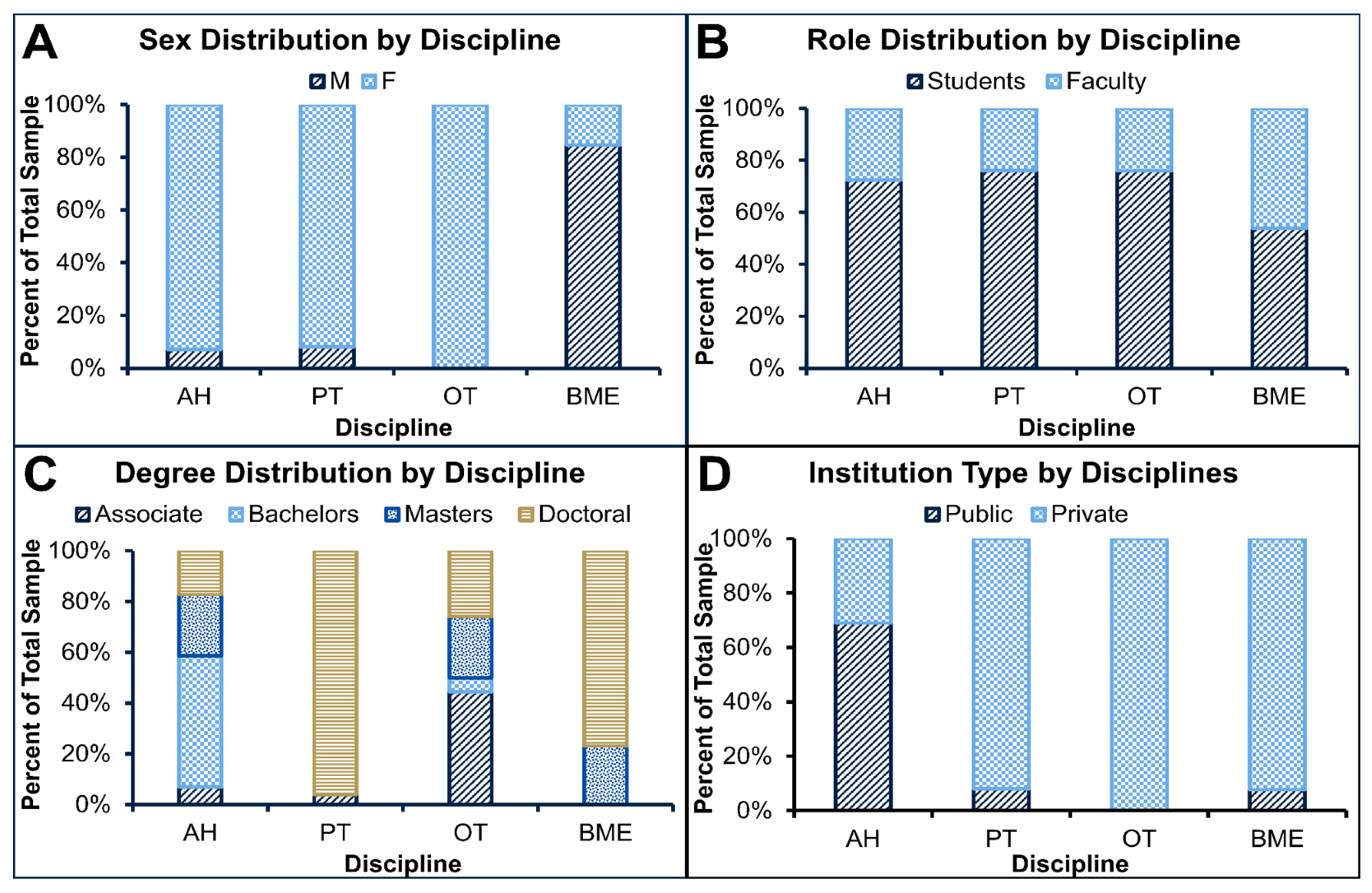
131 unique responses were collected with ten removed for incompleteness. Participant demographics (sex, age, race/ethnicity) and annual income (Table 2) were consistent with national trends. Most respondents were female (Figure 1A, 87.5%), with more women in AH, PT, and OT [28,29,30,31,32]. Most respondents were students (Figure 1B, 72.7%) with slightly more faculty in BME (46.2% vs. 27.6%, 24.0%, 24.2% in AH, PT, OT, respectively). Given that most were students, age and annual income were skewed with 66.9% < 34 years and 57.9% < $38,000 annually.
Participant discipline (Table 3) showed institution type (Figure 1D) was predominantly private for PT (92.0%), OT (100%), and BME (92.3%) but public for AH (69.0%). Degree type (Figure 1C) was well-balanced for AH (6.9% Associates, 51.7% Bachelors, 24.1% Masters, 17.2% Doctoral) and OT (44.4% Associates, 5.6% Bachelors, 24.1% Masters, 25.9% Doctoral) but 96.0% and 76.9% of PT and BME, respectively, were doctoral programs. Approximately 64%, 19%, and 17% were from small, medium, and large institutions, respectively. Nearly all respondents identified as White (~84%).

3.2. Quantitative Results

Preliminary Chi-Squared tests assessing relationships between demography and GenAI survey responses showed no statistically significant relationships between any variables (Table 4). This implies that there were no differences within each demographic variable for all GenAI survey responses. Despite no statistically significant differences, average Cohen’s effect sizes were moderate (wµ = 0.36) with average achieved power of 0.63. Degree program Chi-Squared results are also contained in Table 4 with no statistically significant relationships noted and Cohen’s effect sizes that ranged from 0.15 to 0.46.
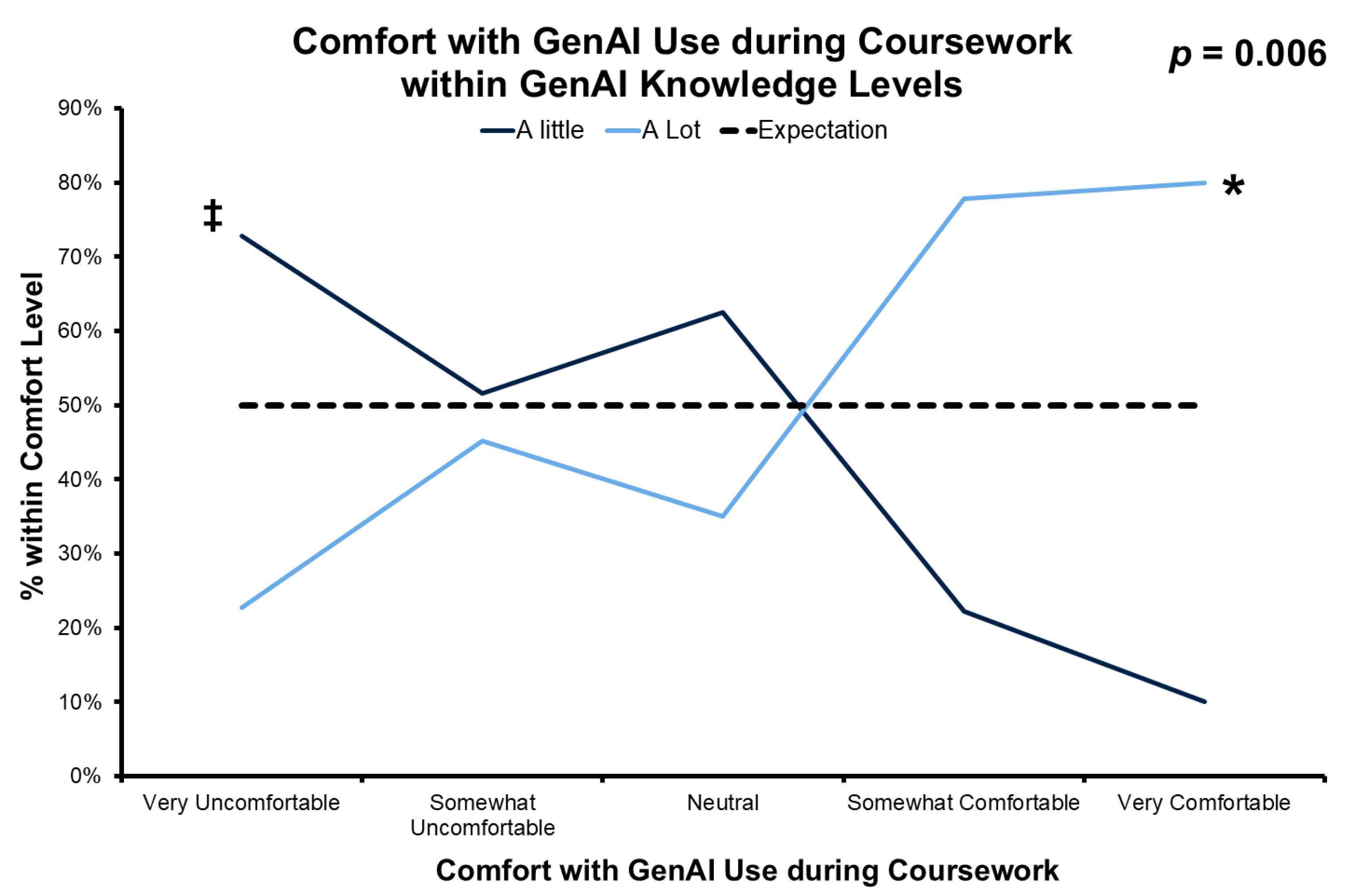
An additional Chi-Squared test found a significant relationship between survey respondents’ GenAI knowledge and comfort with GenAI being used during completion of college coursework (Figure 2; p = 0.006, w = 0.42, achieved power = 0.94). Specifically, 80% who responded they were “Very Comfortable” with GenAI use during completing coursework had significant GenAI knowledge (*) whereas 75% of individuals who were “Very Uncomfortable” with GenAI use during coursework completion had little GenAI knowledge (‡). Cohen’s effect size was 0.42 with achieved power of 0.94.
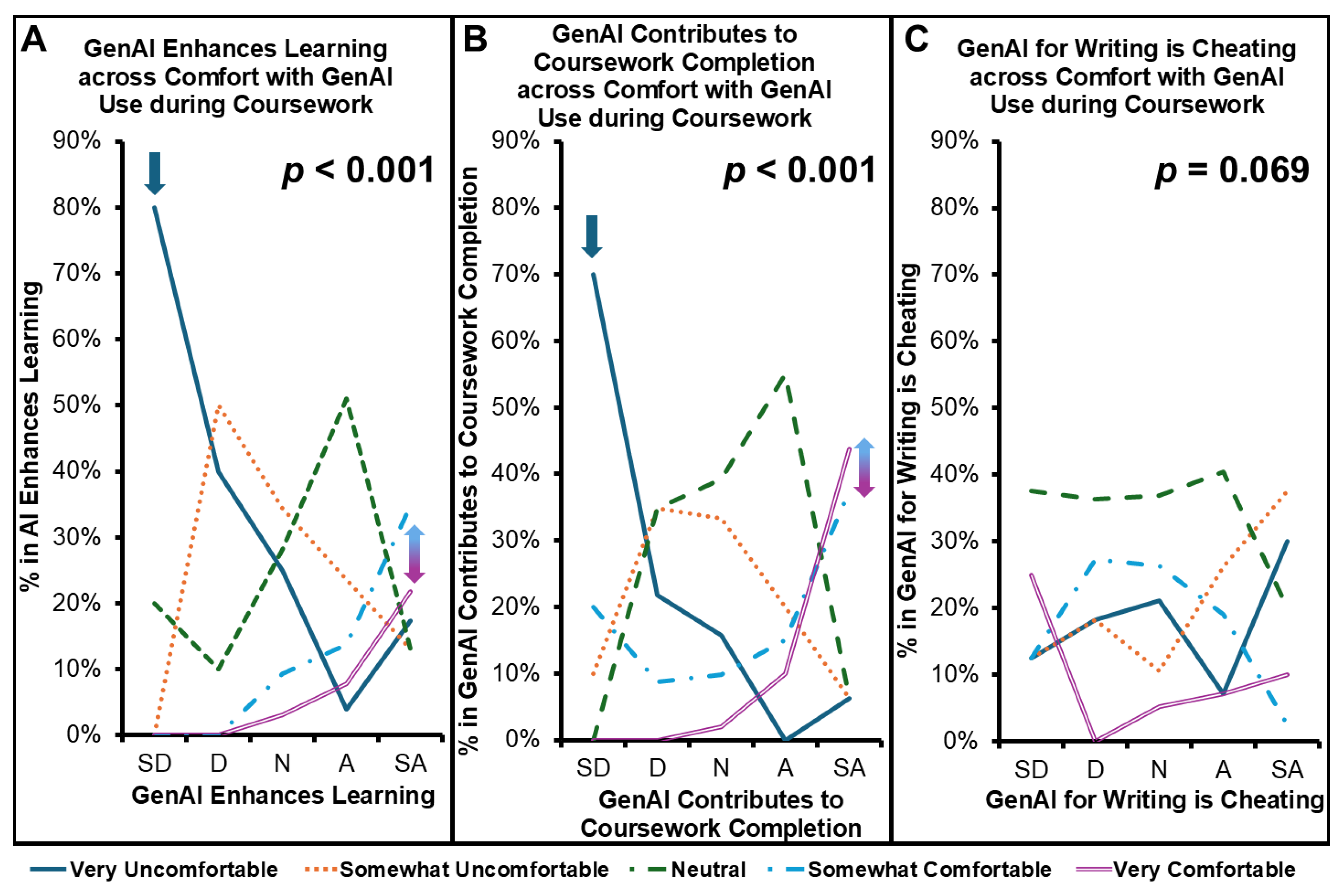
Additional Chi-Squared tests showed that comfort with GenAI use during college coursework was significantly related to beliefs regarding GenAI enhancing learning (Figure 3A; p < 0.001, w = 0.65, achieved power = 0.99). Nearly 80% who “Strongly Disagreed” that GenAI enhances learning were “Very Uncomfortable” with GenAI use during coursework (blue down arrow). Most who “Strongly Agree” that GenAI enhances learning (57%) were “Somewhat Comfortable” or “Very Comfortable” with GenAI use during coursework (light blue/purple double arrow).
Similarly, comfort with GenAI use during coursework was significantly connected with beliefs regarding GenAI contributing to college coursework completion (Figure 3B; p < 0.001, w = 0.78, achieved power = 0.99). Approximately 70% who “Strongly Disagreed” that GenAI enhances learning were “Very Uncomfortable” with GenAI use during coursework (blue down arrow) whereas 81% who “Strongly Agreed” that GenAI contributes to learning were “Somewhat Comfortable” or “Very Comfortable” with GenAI use during coursework (light blue/purple double arrow). No significant connection existed between comfort with GenAI use during coursework and whether GenAI during writing was seen as cheating (Figure 3C; p = 0.069, w = 0.46, achieved power = 0.91).
Finally, Chi-Squared assessments indicated that role, discipline, school size, and GenAI knowledge were not significantly related to survey responses about whether GenAI enhances learning, contributes to completing college coursework, or whether using GenAI during writing is cheating (Table 5). Average Cohen’s effect size across all tests was w = 0.28 with average achieved power = 0.57. Cohen’s effect size and achieved power ranged from 0.19 and 0.33 (Role vs. GenAI Contributes to Completing Coursework) to 0.36 and 0.74 (Discipline vs. GenAI Use on Writing is Cheating).

3.3. Qualitative Results

3.3.1. Comfort with GenAI Use During Coursework and GenAI Knowledge

Due to the statistically significant relationship between comfort with GenAI use during coursework and GenAI knowledge levels, we analyzed qualitative responses in light of comfort with GenAI use during coursework. Specifically, we found that individuals “Very Uncomfortable” with GenAI use during coursework (~20%) had little direct experience using GenAI for learning and coursework. Those who were “Very Uncomfortable” with GenAI use during coursework but did have GenAI experience, viewed benefits as rudimentary (e.g., time saving). These respondents described challenges with GenAI as needing to learn more about use, plagiarism, and learner disengagement. Notable quotes from individuals who were both “Very Uncomfortable” with GenAI use during coursework and had little GenAI knowledge included:
“Lessens time consumed in pre-work.”—AH Faculty
“Students will have little to no…critical thinking.”—PT Student
Alternatively, respondents who were “Very Comfortable” with GenAI use during coursework (n = 9) had more experience leveraging GenAI, describing nuanced and expanded benefits including the ability to provide novel feedback on work created from the GenAI user. These respondents also described nuanced challenges, offering considerations regarding compensation strategies for possible challenges, including the need for additional training across faculty and students prior to widespread use in their academic setting. Selected quotes from respondents who were both “Very Comfortable” with GenAI use during coursework and a lot of GenAI knowledge were:
“It can help generate new ideas,…proofread, and give feedback.”—OT Faculty
“Students and faculty need…more training on how to use GenAI effectively and ethically.”—AH Faculty

3.3.2. Role

Despite no statistically significant quantitative role differences, qualitative themes emerged. Students and faculty perceived GenAI as (1) useful to begin learning, (2) adaptable for expanding teaching/learning resources, and (3) increasing learning efficiency. Students listed additional benefits regarding individualized or “customized” learning experiences. Although not statistically distinguishable from student perspectives, faculty viewed benefits more from a course-based or pedagogical perspective. This included concepts that would increase efficiency and facilitate transitioning more rapidly from foundational knowledge to novel knowledge creation.
“AI…provides personalized learning experiences.”—Student
“Using AI tools lessen the time…in pre-work and allows for initiation of creativity faster.”—Faculty
Again, although there were no statistically significant quantitative differences noted between students and faculty, concerns about GenAI showed some thematic differences between roles. Specifically, students’ concerns focused on GenAI being unregulated and/or incorrect, overreliance decreasing critical thinking, degradation of student-faculty relationships, and plagiarism. Faculty expressed challenges of potential GenAI misuse (i.e., submitting GenAI results as their own) as well as hindering “true” learning, noting instructors need to adjust methodologies to guide appropriate GenAI use. Although we collapsed qualitative analyses across disciplines within roles, BME students described unique qualitative themes, voicing that faculty need to ensure coursework is not compromised and degrading professional relationships. One particularly notable quotation was:
“It causes doubt in relationships…between students and faculty.”—BME Student

3.3.3. Discipline and School Size Were Interrelated

We found no quantitative statistical differences; however, discipline and school size had interrelated themes including in perceived GenAI benefits. Like small/medium school size themes, AH, PT, and BME focused on GenAI being one tool/resource aiding idea generation, editing, and clarification. AH and PT described an additional benefit, both describing increased efficiency and enhancing knowledge. However, OTs uniquely viewed GenAI as a tool for clarifying multiple sources/perspectives as well as providing personalized learning methods. Exemplary quotes included:
“…AI can be a great tool to enhance topics learned in class.”—AH Student
“The best benefit…is…AI saves…time on tasks that are easily generated in an ethical way.”—PT Student
“It helps students identify areas where they need improvement.”—OT Faculty
All four disciplines expressed concerns regarding overreliance on GenAI negatively impacting learning and professional relationships. BME and AH agreed about the onus of responsibility in addressing GenAI challenges, noting faculty need to monitor courses and GenAI tools for best practices. Closely related was OT putting onus on faculty, but also expressed responsibility to all Higher Education, focusing on guiding appropriate use. Interestingly, in response to challenges, PT alone expressed a need to gather more data. Exemplary quotations for several subgroups are included below:
“Students using it to complete assignments is unfair to students who independently complete their own…work and may not receive similar credit. Especially unfair if it impacts admissions process for coveted spots in a graduate program.”—PT Student
“Students currently have little to no training in how to use AI…ethically (i.e., in ways that promote…learning…not replace their original content). Faculty, too, need training in how we can introduce AI…and train them on how to use it in a way that could not be cheating.”—AH Faculty
“The structure of post-secondary academics…needs to change from time based to learning based. AI is not the challenge; the challenge is changing old patterns of people who have been working in academics.”—OT Student
“I don’t think we have enough data…yet to think critically about benefits/challenges/risks that AI could have in…learning. For example, might AI prove beneficial for knowledge-based learning? Might it interfere with the development of critical thinking/reasoning? Much research is needed before we can move beyond myths or personal perceptions (and fears).”—PT Faculty

3.3.4. General Comments on Ethics of GenAI Use

Finally, beliefs about GenAI ethics resulted in faculty viewing GenAI as one additional resource, but not a stand-alone tool. Both faculty and students noted GenAI could be a “slippery slope” leading to plagiarism and that faculty have a duty to develop evidence-based AI-use policies. This included that GenAI: (1) could potentially increase cheating/plagiarism when no “real” independent work is done, (2) is ethical if used as a resource only, and (3) needs improved use guidelines. These views were held broadly, regardless of role, discipline, school size, etc. Several notable quotes included:
“…we have an ethical duty to not jump to premature decisions about students’ use of AI…[and] to hold critical discourse and develop policies based on…data, not personal preferences/fears”—Faculty
“…there is a line that we need to…identify and…not cross to avoid plagiarism using AI. I think it’s important that academic institutions not only push reasons why we CANNOT use AI…[but] to simultaneously focus on and encourage ways that we CAN use AI!”—Student

4. Discussion

The purpose of our study was examining faculty/student perspectives regarding using GenAI in college coursework in biomedical fields that lead to non-physician healthcare careers. Specifically, we wanted to describe how faculty/students in physical therapy, occupational therapy, allied health, and biomedical engineering at small, medium, and large institutions perceive benefits and challenges of using GenAI to complete college coursework. Our sample was similar to previous research in terms of discipline-specific sex representation [28,29,30,31,32], with most respondents being students who are younger and earn less income compared to faculty. Given our sample was well-matched with global discipline estimates, our findings likely have broader validity.
Interestingly, initial assessments evaluating if demography had an impact on any responses to the GenAI survey questions indicated there was no relationship between any demographic variable (sex, age, race/ethnicity, income) and any survey responses. This implies that opinions about and knowledge of GenAI amongst individuals in the noted biomedical science disciplines were similar regardless of self-identified demographic variables. This differs from other studies that have shown some statistical differences between several demographic variables [33,34,35,36]. As such, the findings herein may only apply to the specific disciplines and sample populations captured. However, the strength of these findings may be limited by the relatively small sample size acquired, driving relatively low power (average achieved power of 0.63), and potential increased risk of Type 2 statistical error herein. Larger sample sizes in future investigations would mitigate these concerns.
Beyond demographics, our primary hypothesis was that role and discipline would significantly impact perspectives on GenAI use, but school size would not. We were correct that school size did not impact GenAI use opinions herein. The previous literature indicates there are some differences between larger and smaller institutions [37]. However, those findings may be confounded by smaller institutions being largely private and larger institutions being predominantly public. Thus, our results offer a different perspective on this phenomenon with no quantitative differences noted between small (<7500 students), medium (7500–15,000 student), or large institutions (>15,000 students). Furthermore, a post hoc Chi-Squared assessment with Bonferroni correction (α = 0.05/5 = 0.01) conducted on our survey data did not result in any significant relationship between institution type (private vs. public) and any dependent GenAI survey results (Table 6). Thus, our results do not indicate significant variance across institution size/type within the subfields queried. Although we did not find statistically significant relationships with institutional variables, readers should be cautious extrapolating to other disciplines or institutional variables that may influence a university’s ability to adopt novel technology (e.g., annual budget, etc.).
Although we were correct regarding school size, we guessed incorrectly with regard to role and discipline. While subtle qualitative differences existed between faculty and students and between disciplines, no significant quantitative differences existed regarding opinions on GenAI comparing students versus faculty and comparing PT versus OT versus AH versus BME. This implies that the students/faculty sampled herein, regardless of discipline or school size, shared similar beliefs about GenAI use in college coursework, including that GenAI is a useful tool for improving learning efficiency/personalization, clarifying complex concepts, and generating novel ideas. Alternatively, concerns regarding using GenAI during college coursework included potential for plagiarism, reducing critical thinking, leading to mistrust between faculty/students, and providing incorrect information. Many of these ideas have been echoed in the previous literature including hindering development of specific academic skills [38], loss of critical thinking [39], and potential degradation of relationships between faculty and students [40]. Notably, although we are unable to describe how this distrust may manifest, the previous study highlights this as a “non two-way street” where students are required to disclose their use of GenAI, but faculty are not. Thus, despite no quantitative differences noted in our investigation, qualitative sentiments were well-matched with previous work.
Interestingly though, other investigations have shown some quantitative differences between the perspectives of faculty and students on GenAI use [41]. However, there are likely differences between the aforementioned study (which only surveyed a large public research institution) and the populations queried herein. Still, other studies have shown similar quantitative results to ours highlighting no significant differences between faculty and student perspectives on GenAI use [42]. Additionally, our evaluation of degree level did not show quantitative differences between degree programs, which is in contrast to previously published work that showed doctoral students felt they comprehended GenAI to a greater extent than first year students [43]. However, their work does not describe in what discipline those students were training. Accordingly, there may exist distinct differences between those sampled here in biomedical disciplines that lead to healthcare careers and those previously studied. As such, further investigation with larger sample sizes focusing on more specific research questions than those covered herein is warranted.
Broadly, because GenAI is novel for most users, many respondents indicated needing training and guidance on appropriate GenAI use in higher education. In general, the overwhelming theme was that GenAI is simply another “tool in the toolbox,” not more or less valuable than other resources. Interestingly, one theme likely obvious to individuals within healthcare but maybe not to those outside it was a strong sentiment about GenAI limitations for developing tactile/visual skills necessary for healthcare careers. For example, GenAI cannot aid in developing manual skills needed for edema pitting tests given one needs to physically palpate patients’ extremities. Additionally, GenAI has limited efficacy for gaining visual skills for detecting gait dysfunction in patients with cerebellar disease. As such, GenAI should be viewed as an adjuvant to traditional forms of healthcare education.
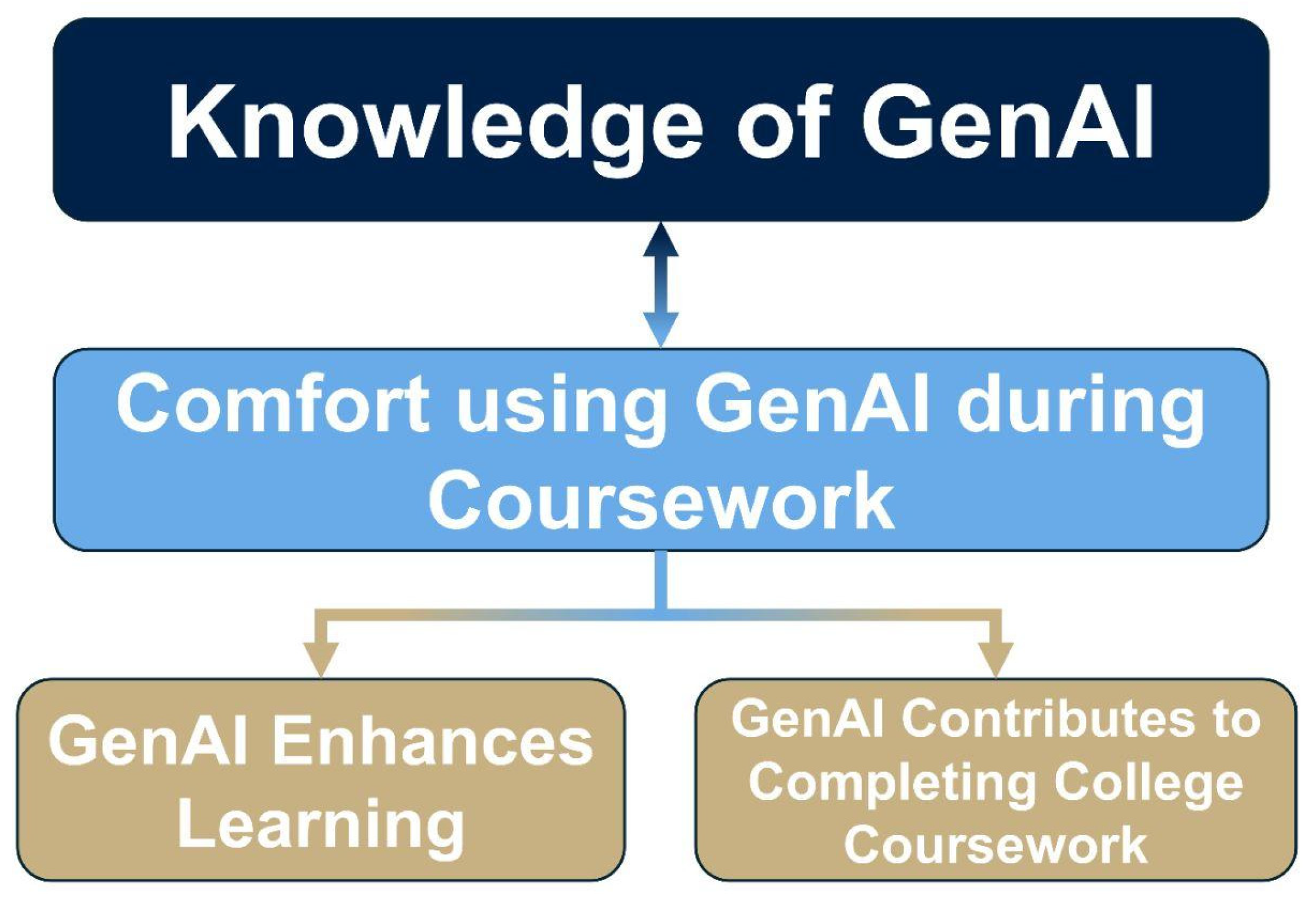
Interestingly, beyond our initial hypotheses we found statistically significant connections between how much respondents have heard about GenAI and their comfort level with GenAI use during college coursework (Figure 2). Specifically, as knowledge about GenAI increased, comfort with its use completing coursework increased. This may imply that experience level with utilization of GenAI may be a significant driving factor of other opinions about GenAI (Figure 4). However, assessing whether this is a causal relationship is not possible with a singular survey response. To further clarify the nature of this relationship, future studies should repeatedly survey the same individuals over longer periods of time to assess any changes in perspectives, knowledge about, or attitudes toward GenAI or complete an interventional study wherein additional training is provided to one group to assess if perspectives, knowledge about, or attitudes toward GenAI change after that intervention.
Despite an inability to indicate a direct causal link, attitudes and perspectives about GenAI may be similar to those regarding trust in the internet in the early 2000s [44] wherein individuals who had more experience with and knowledge about the internet became more comfortable with the its use. However, despite existing since the 1950s, GenAI seems incredibly novel to the public. As such, GenAI likely will experience typical technology adoption cycles including innovators through laggards [45,46,47]. However, it remains unknown what GenAI’s final adoption rate will be in these disciplines. Moreover, we cannot conclude into which technology adoption category our survey respondents resided. Yet, like Helpman and Rangel indicate, it is highly likely respondents who self-ascribed significant knowledge regarding GenAI (and thus high comfort with GenAI use in coursework) observed early benefits including not needing special skills and experiencing significant increases to productivity while utilizing GenAI [48].
Subsequently, we found respondents’ comfort level with GenAI being used to complete college coursework was significantly connected with beliefs on whether GenAI enhances learning and whether GenAI contributes to completing college coursework. This implies that as comfort level with GenAI use during coursework increases, benefits of GenAI use become more apparent, including improving learning processes and enhancing completing college coursework. Further, as a result of the significant influence our respondents’ GenAI knowledge had on comfort level with GenAI use during coursework, by the transitive property (Figure 4) it appears that knowledge of GenAI may be the driving factor behind whether someone believes GenAI has distinct benefits in being used to complete college coursework.
As with all studies, limitations existed herein. First, to reduce the potential for survey fatigue, our survey was a relatively small selection of both quantitative and open-ended questions. The questions selected were those that were likely broadly applicable to both faculty and students, facilitating direct comparison between the two subgroups. However, it was not possible to fully remove perceptual bias that our questions could have induced. For example, regardless of role (i.e., students vs. faculty) some respondents may have believed we were asking about the student perspective. Others may have been responding about their own perspective regardless of how the question was phrased. We were also unable eliminate other survey biases including but not limited to nonresponse bias (i.e., only individuals already interested in GenAI answered), voluntary response bias (i.e., only strong opinions are represented), or social desirability bias (i.e., responding in “desirable” ways). Readers should view the results in light of the survey questions utilized and avoid extrapolation beyond the present findings.
An additional limitation of our study was that our sample was largely homogeneous with respect to race/ethnicity and sex. As such, extrapolation to more diverse samples may be ill-advised. However, our sample was well-matched with national and international reports for these variables, so our findings are likely applicable to these specific disciplines. Additionally, our total sample size was relatively small and the results of our study should be assessed in light of this limitation. For example, while some of our statistical evaluations have estimated power > 0.80 (e.g., Figure 1; Effect Size = 21.6, Power = 0.94), other relationships had lower estimated power (e.g., Table 3; Effect Size Range = 0.18–0.34, Power Range = 0.39–0.73). In future investigations, a larger sample size would clarify the strength or weakness of those relationships. Another limitation with our sampling includes predominantly capturing individuals who were at private institutions (98 vs. 23). Given differences may exist between public and private institutions regarding the utilization of GenAI including resource allocation (i.e., time, money for software access, technology adoption, etc.), pedagogical approaches (e.g., student-to-faculty ratios, access to teaching resource supplements, etc.), and GenAI policy development and deployment, the results herein may not apply to larger samples that include broader portions of public universities. Accordingly, inferences about specific institutions or the broader academic community may be limited. However, we did not find any statistically significant relationships based on institution type. Thus, our results are likely applicable to institution types similar to those captured herein. An additional sampling limitation is that the majority of our survey respondents were students. As such, the results may be largely driven by student’s responses. Interestingly though, given the current national average in the United States for student-to-faculty ratio is approximately 13:1 (~7% faculty versus 93% students) [49]. As such, our sample actually likely oversampled faculty (~27% faculty versus 73% students). Regardless of an imbalance in role contained in our survey results, we did not find any statistically significant differences between students and faculty. However, to ensure a less biased sample, future investigations should endeavor to achieve more parity between student/faculty responses. Interestingly, despite homogeneity with some variables, heterogeneity existed within the allied health category. Notably, due to limited sample size across several AH disciplines (e.g., nursing, kinesiology, nutrition, etc.) we combined those disciplines into the singular AH category. Future studies should investigate if these findings hold across those specific disciplines. Finally, it should be reiterated that all survey responses were self-reported and must be considered subjective in nature. However, given this likely increased response variability, this implies that findings herein are likely robust.
GenAI represents significant progress in accessibility of high-powered computing across a range of healthcare-related academic disciplines. Regardless of role, discipline, or institution, an individual’s knowledge about GenAI was the driving force behind opinions on GenAI use in college coursework in these disciplines; and while most responses indicated the power that GenAI may have, there was also recognition that GenAI is not the “end-all-be-all.” Thus, a distinct need exists for guardrails to prevent misuse and what respondents describe as a “slippery slope” toward plagiarism. In general, GenAI has potential to transform healthcare-related academic disciplines. But like other novel technologies, it requires appropriate training and deeper discussions around appropriate use.

Author Contributions

Conceptualization, R.M.C. and D.D.C.; methodology, R.M.C., C.E.C., H.E.J. and D.D.C.; software, R.M.C.; formal analysis, R.M.C., C.E.C., H.E.J. and D.D.C.; investigation, R.M.C., C.E.C., H.E.J. and D.D.C.; resources, R.M.C. and D.D.C.; data curation, R.M.C., C.E.C., H.E.J. and D.D.C.; writing—original draft preparation, R.M.C., C.E.C., H.E.J. and D.D.C.; writing—review and editing, R.M.C., C.E.C., H.E.J. and D.D.C.; visualization, R.M.C.; supervision, R.M.C. and D.D.C.; project administration, R.M.C. and D.D.C. All authors have read and agreed to the published version of the manuscript.

Funding

This research received no external funding.

Institutional Review Board Statement

Ethical review and approval were exempted for this study due to HHS regulations in 45 CFR Part 46.104 in Category 2, Citation 104 (d) (2).

Informed Consent Statement

Informed consent was obtained from all subjects involved in the study.

Data Availability Statement

Data will be available on a case-by-case request basis and are stored locally by the research team.

Conflicts of Interest

The authors declare no conflicts of interest.

Abbreviations

The following abbreviations are used in this manuscript:
GenAIGenerative Artificial Intelligence
PTPhysical Therapy
OTOccupational Therapy
BMEBiomedical Engineering
AHAllied Health
AIArtificial Intelligence
MLMachine Learning
LLMLarge Language Models

References

  1. Dobrev, D. A Definition of Artificial Intelligence. arXiv 2012, arXiv:1210.1568. [Google Scholar] [CrossRef]
  2. Ng, D.T.K.; Leung, J.K.L.; Chu, K.W.S.; Qiao, M.S. AI Literacy: Definition, Teaching, Evaluation and Ethical Issues. Proc. Assoc. Inf. Sci. Technol. 2021, 58, 504–509. [Google Scholar] [CrossRef]
  3. Dong, D.; Fang, M.-J.; Tang, L.; Shan, X.-H.; Gao, J.-B.; Giganti, F.; Wang, R.-P.; Chen, X.; Wang, X.-X.; Palumbo, D.; et al. Deep Learning Radiomic Nomogram Can Predict the Number of Lymph Node Metastasis in Locally Advanced Gastric Cancer: An International Multicenter Study. Ann. Oncol. 2020, 31, 912–920. [Google Scholar] [CrossRef] [PubMed]
  4. Shao, L.; Yan, Y.; Liu, Z.; Ye, X.; Xia, H.; Zhu, X.; Zhang, Y.; Zhang, Z.; Chen, H.; He, W.; et al. Radiologist-like Artificial Intelligence for Grade Group Prediction of Radical Prostatectomy for Reducing Upgrading and Downgrading from Biopsy. Theranostics 2020, 10, 10200–10212. [Google Scholar] [CrossRef]
  5. Upton, R.; Mumith, A.; Beqiri, A.; Parker, A.; Hawkes, W.; Gao, S.; Porumb, M.; Sarwar, R.; Marques, P.; Markham, D.; et al. Automated Echocardiographic Detection of Severe Coronary Artery Disease Using Artificial Intelligence. JACC Cardiovasc. Imaging 2022, 15, 715–727. [Google Scholar] [CrossRef]
  6. Kusunose, K.; Abe, T.; Haga, A.; Fukuda, D.; Yamada, H.; Harada, M.; Sata, M. A Deep Learning Approach for Assessment of Regional Wall Motion Abnormality From Echocardiographic Images. JACC Cardiovasc. Imaging 2020, 13, 374–381. [Google Scholar] [CrossRef]
  7. Bhuiyan, A.; Govindaiah, A.; Deobhakta, A.; Gupta, M.; Rosen, R.; Saleem, S.; Smith, R.T. Development and Validation of an Automated Diabetic Retinopathy Screening Tool for Primary Care Setting. Diabetes Care 2020, 43, e147–e148. [Google Scholar] [CrossRef]
  8. Heydon, P.; Egan, C.; Bolter, L.; Chambers, R.; Anderson, J.; Aldington, S.; Stratton, I.M.; Scanlon, P.H.; Webster, L.; Mann, S.; et al. Prospective Evaluation of an Artificial Intelligence-Enabled Algorithm for Automated Diabetic Retinopathy Screening of 30 000 Patients. Br. J. Ophthalmol. 2021, 105, 723–728. [Google Scholar] [CrossRef]
  9. Chau, R.C.W.; Thu, K.M.; Yu, O.Y.; Hsung, R.T.-C.; Lo, E.C.M.; Lam, W.Y.H. Performance of Generative Artificial Intelligence in Dental Licensing Examinations. Int. Dent. J. 2024, 74, 616–621. [Google Scholar] [CrossRef]
  10. Sood, A.; Mansoor, N.; Memmi, C.; Lynch, M.; Lynch, J. Generative Pretrained Transformer-4, an Artificial Intelligence Text Predictive Model, Has a High Capability for Passing Novel Written Radiology Exam Questions. Int. J. Comput. Assist. Radiol. Surg. 2024, 19, 645–653. [Google Scholar] [CrossRef]
  11. Isleem, U.N.; Zaidat, B.; Ren, R.; Geng, E.A.; Burapachaisri, A.; Tang, J.E.; Kim, J.S.; Cho, S.K. Can Generative Artificial Intelligence Pass the Orthopaedic Board Examination? J. Orthop. 2024, 53, 27–33. [Google Scholar] [CrossRef] [PubMed]
  12. Jauhiainen, J.S.; Guerra, A.G. Generative AI and ChatGPT in School Children’s Education: Evidence from a School Lesson. Sustainability 2023, 15, 14025. [Google Scholar] [CrossRef]
  13. Salinas-Navarro, D.E.; Vilalta-Perdomo, E.; Michel-Villarreal, R.; Montesinos, L. Using Generative Artificial Intelligence Tools to Explain and Enhance Experiential Learning for Authentic Assessment. Educ. Sci. 2024, 14, 83. [Google Scholar] [CrossRef]
  14. Wu, Y. Integrating Generative AI in Education: How ChatGPT Brings Challenges for Future Learning and Teaching. J. Adv. Res. Educ. 2023, 2, 6–10. [Google Scholar] [CrossRef]
  15. Alier, M.; García-Peñalvo, F.-J.; Camba, J.D. Generative Artificial Intelligence in Education: From Deceptive to Disruptive. Int. J. Interact. Multimedia Artif. Intell. 2024, 8, 5. [Google Scholar] [CrossRef]
  16. Faisal Rashid, S.; Duong-Trung, N.; Pinkwart, N. Generative AI in Education: Technical Foundations, Applications, and Challenges. In Artificial Intelligence for Quality Education; IntechOpen: London, UK, 2024. [Google Scholar]
  17. Xu, R.; Wang, Z. Generative Artificial Intelligence in Healthcare from the Perspective of Digital Media: Applications, Opportunities and Challenges. Heliyon 2024, 10, e32364. [Google Scholar] [CrossRef]
  18. Šedlbauer, J.; Činčera, J.; Slavík, M.; Hartlová, A. Students’ Reflections on Their Experience with ChatGPT. Comput. Assist. Learn. 2024, 40, 1526–1534. [Google Scholar] [CrossRef]
  19. Chan, C.K.Y.; Hu, W. Students’ Voices on Generative AI: Perceptions, Benefits, and Challenges in Higher Education. Int. J. Educ. Technol. High Educ. 2023, 20, 43. [Google Scholar] [CrossRef]
  20. Sauder, M.; Tritsch, T.; Rajput, V.; Schwartz, G.; Shoja, M.M. Exploring Generative Artificial Intelligence-Assisted Medical Education: Assessing Case-Based Learning for Medical Students. Cureus 2024, 16, e51961. [Google Scholar] [CrossRef]
  21. Squalli Houssaini, M.; Aboutajeddine, A.; Toughrai, I.; Ibrahimi, A. Development of a Design Course for Medical Curriculum: Using Design Thinking as an Instructional Design Method Empowered by Constructive Alignment and Generative AI. Think. Ski. Creat. 2024, 52, 101491. [Google Scholar] [CrossRef]
  22. Bureau of Labor Statistics, U.S. Department of Labor. Occupational Outlook Handbook. 2026. Available online: https://www.bls.gov/ooh/ (accessed on 4 March 2026).
  23. Kurdi, G.R.; Alsubait, T.M.; Bati, G.F. Exploring Perspectives: Integration of GenAI in Academia among Faculty and Students in the Kingdom of Saudi Arabia. Arab. J. Sci. Eng. 2025, 1–25. [Google Scholar] [CrossRef]
  24. Guillén-Yparrea, N.; Hernández-Rodríguez, F. Unveiling Generative AI in Higher Education: Insights from Engineering Students and Professors. In Proceedings of the 2024 IEEE Global Engineering Education Conference (EDUCON); IEEE: New York, NY, USA, 2024; pp. 1–5. [Google Scholar]
  25. Adnin, R.; Pandkar, A.; Yao, B.; Wang, D.; Das, M. Examining Student and Teacher Perspectives on Undisclosed Use of Generative AI in Academic Work. In Proceedings of the 2025 CHI Conference on Human Factors in Computing Systems; ACM: New York, NY, USA, 2025; pp. 1–17. [Google Scholar]
  26. Saunders, G.; Bonmati, E.; Klemming, A.; Sev, K.; Specht, D. Exploring Faculty and Student Perspectives on Generative AI: Implications for Classrooms of the Future. Rev. Educ. Stud. 2024, 4, 55–76. [Google Scholar] [CrossRef]
  27. Strauss, A.L.; Corbin, J.M. Basics of Qualitative Research: Techniques and Procedures for Developing Grounded Theory, 2nd ed.; Sage Publications: Thousand Oaks, CA, USA, 1998; ISBN 978-0-585-38332-3. [Google Scholar]
  28. American Physical Therapy Association. A Physical Therapy Profile: Demographics of the Profession, 2021–2022; A Report From the American Physical Therapy Association; APTA: Alexandria, VA, USA, 2023. [Google Scholar]
  29. Karaba Bäckström, M.; Luiz Moura De Castro, A.; Eakman, A.M.; Ikiugu, M.N.; Gribble, N.; Asaba, E.; Kottorp, A.; Falkmer, O.; Eklund, M.; Ness, N.E.; et al. Occupational Therapy Gender Imbalance; Revisiting a Lingering Issue. Scand. J. Occup. Ther. 2023, 30, 1113–1121. [Google Scholar] [CrossRef] [PubMed]
  30. Sarmet, M.; Zeredo, J.L.; Serra, L.S.M.; Da Silva, E.M. Brazil Reflects a Global Gender Disparity in Speech-Language Pathology: A Comparison of Leadership and Representation Within the Profession. Perspect ASHA Spéc. Interes. Groups 2023, 8, 204–216. [Google Scholar] [CrossRef]
  31. Boyd, S.; Hewlett, N. The Gender Imbalance Among Speech and Language Therapists and Students. Int. J. Lang. Commun. Disord. 2001, 36, 167–172. [Google Scholar] [CrossRef]
  32. Cohen, C.C.D.; Deterding, N. Widening the Net: National Estimates of Gender Disparities in Engineering. J. Eng. Educ. 2009, 98, 211–226. [Google Scholar] [CrossRef]
  33. Barrios, M.; Deri, C. The Usage of Generative Artificial Intelligence Accordgin to Sociodemographic Characteristics of Undergraduate Students. J. Sch. Publ. 2025, 56, 440–462. [Google Scholar] [CrossRef]
  34. Stephany, F.; Duszynski, J. Women Worry, Men Adopt: How Gendered Perceptions Shape the Use of Generative AI. arXiv 2026, arXiv:2601.03880. [Google Scholar] [CrossRef]
  35. Ullstein, C.; Hohendanner, M.; Sharma, N.; Ivanov, S.E.; Tsipov, G.; Grossklags, J. Bridging Perspectives for Socially Sustainable AI: What People across 12 Countries Think about GenAI and FPT, and What Policymakers Want to Know Their Opinions On. In Proceedings of the ACM SIGCAS/SIGCHI Conference on Computing and Sustainable Societies; Association for Computing Machinery: New York, NY, USA, 2025; pp. 261–283. [Google Scholar]
  36. Daher, W.; Hussein, A. Higher Education Students’ Perceptions of GenAI Tools for Learning. Information 2024, 15, 416. [Google Scholar] [CrossRef]
  37. Henke, J. Navigating the AI Era: University Communication Strategies and Perspectives on Generative AI Tools. J. Sci. Commun. 2024, 23, A05. [Google Scholar] [CrossRef]
  38. Nelson, A.S.; Santamaria, P.V.; Javens, J.S.; Ricaurte, M. Students’ Perceptions of Generative Artificial Intelligence (GenAI) Use in Academic Writing in English as a Foreign Language. Educ. Sci. 2025, 15, 611. [Google Scholar] [CrossRef]
  39. Lee, H.-P.; Sarkar, A.; Tankelevitch, L.; Drosos, I.; Rintel, S.; Banks, R.; Wilson, N. The Impact of Generative AI on Critical Thinking: Self-Reported Reductions in Cognitive Effort and Confidence Effects From a Survey of Knowledge Workers. In Proceedings of the 2025 CHI Conference on Human Factors in Computing Systems; Association for Computing Machinery: New York, NY, USA, 2025. [Google Scholar]
  40. Luo, J. How Does GenAI Affect Trust in Teacher-Student Relationships? Insights from Students’ Assessment Experiences. Teach. High. Educ. 2024, 30, 991–1006. [Google Scholar]
  41. Barrett, A.; Pack, A. Not Quite Eye to A.I.: Student and Teacher Perspectives on the Use of Generative Artificial Intelligence in the Writing Process. Int. J. Educ. Technol. High. Educ. 2023, 20, 59. [Google Scholar] [CrossRef]
  42. Kim, J.; Klopfer, M.; Grohs, J.R.; Eldardiry, H.; Weichert, J.; Cox, L.A.; Pike, D. Examining Faculty and Student Perceptions of Generative AI in University Courses. Innov. High. Educ. 2025, 50, 1281–1313. [Google Scholar] [CrossRef]
  43. Maxwell, D.; Oyarzun, B.; Kim, S.; Bong, J.Y. Generative AI in Higher Education: Demographic Differences in Student Perceived Readiness, Benefits, and Challenges. TechTrends 2025, 69, 1248–1259. [Google Scholar] [CrossRef]
  44. Dutton, W.H.; Shepherd, A. Trust in the Internet as an Experience Technology. Inf. Commun. Soc. 2006, 9, 433–451. [Google Scholar] [CrossRef]
  45. Savage, R. Diffusion Research Traditions and the Spread of Policy Innovations in a Federal System. Publius J. Fed. 1985, 15, 1–28. [Google Scholar] [CrossRef]
  46. Beal, G.M.; Bohlen, J.M. The Diffusion Process; Agricultural Experiment Station, Iowa State College: Ames, IA, USA, 1956. [Google Scholar] [CrossRef]
  47. Rogers, E.M. Diffusion of Innovations, 5th ed.; Free Press: New York, NY, USA; London, UK; Toronto, ON, Canada; Sydney, Australia, 2003; ISBN 978-0-7432-5823-4. [Google Scholar]
  48. Helpman, E.; Rangel, A. Adjusting to a New Technology: Experience and Training. J. Econ. Growth 1999, 4, 359–383. [Google Scholar] [CrossRef]
  49. National Center for Education Statistics. Characteristics of Postsecondary Faculty. Condition of Education. U.S. Department of Education, Institute of Education Sciences. 2024. Available online: https://nces.ed.gov/programs/coe/indicator/csc (accessed on 17 February 2026).
Figure 1. Descriptive statistics stacked bar plot including distributions by discipline of (A) sex, (B) role, (C) degree type, and (D) institution type.
Ai 07 00106 g001
Figure 2. Chi-Squared test showed a statistically significant relationship (p = 0.006, w = 0.42, achieved power = 0.94) between respondents’ comfort level with GenAI use during completion of college coursework and their experience level or knowledge about GenAI (a little knowledge dark line, a lot of knowledge light line). Asterisk (*) highlights 80% of respondents with a lot of GenAI knowledge that were very comfortable with GenAI use during coursework. Double cross (‡) highlights 75% of respondents with little GenAI knowledge that were very uncomfortable with GenAI use during coursework.
Ai 07 00106 g002
Figure 3. Chi-Squared tests evaluating connections between comfort with GenAI use to complete college course work (very uncomfortable through very comfortable) and whether GenAI (A) enhances learning (p < 0.001, w = 0.65, achieved power = 0.99), (B) contributes to/takes away from completing college coursework (p < 0.001, w = 0.81, achieved power = 0.99), and (C) use during writing assignments is cheating (p = 0.69, w = 0.46, achieved power = 0.91). Significant relationships were noted for (A,B), but not (C). SD = Strongly Disagree, D = Disagree, N = Neutral, A = Agree, SA = Strongly Agree.
Ai 07 00106 g003
Figure 4. Proposed connections with respondents’ knowledge of GenAI driving all other opinions about the use of GenAI during college coursework. Specifically, knowledge of GenAI was directly connected to comfort with GenAI use during college coursework which significantly influenced whether respondents believed GenAI enhances learning and whether they believed GenAI contributed to completing college coursework.
Ai 07 00106 g004
Table 1. Chi-Squared statistical evaluations completed including demographic and primary variables versus all dependent GenAI survey variables.
Χ2 Test
Completed
Independent
Variable
Dependent Variables
GenAI
Knowledge
Comfort
with GenAI
Use in Coursework
GenAI
Contributes
to Coursework
Using GenAI
to Write
is Cheating
GenAI
Enhances
Learning
Demography
vs. Dependent
Survey Results
SexXXXXX
AgeXXXXX
Race/EthnicityXXXXX
IncomeXXXXX
Degree vs.
Dependent Survey Results
DegreeXXXXX
Primary Variables vs. Dependent Survey ResultsDisciplineXXXXX
RoleXXXXX
School SizeXXXXX
Comfort
with GenAI
Use in
Coursework
X XXX
Table 2. Participant demographics and socioeconomics listed as counts.
SexAge (yrs)Race/EthnicityIncome
Female
Male
Prefer not to say
18–24
25–34
35–44
45–54
55–64
>65
White
Black/African American
American Indian or Alaskan Native
Asian
Native Hawaiian or Pacific Islander
Hispanic/Latino
Prefer not to say
Other
$38,000/yr
$38,000–$57,000/yr
>$57,000/yr
Prefer not to say
105
15
1
52
29
15
14
7
4
107
3
0
8
0
5
2
2
70
12
38
1
Table 3. Participant discipline specifications including in what discipline they are specializing, what role at their institution, school size, institution type, degree level, and part-time vs. full-time status.
DisciplineRoleSize (Students)TypeDegreeStatus
Physical Therapy
Occupational Therapy
Biomedical Engineering
Allied Health
Student
Faculty
<7500
7500–15,000
>15,000
Public
Private
Associate
Bachelor
Masters
Doctoral
Full Time
Part Time
25
54
13
29
88
33
78
23
20
23
98
27
18
23
53
99
22
Table 4. Chi-Squared comparisons between demography versus GenAI survey responses yielded no statistically significant relationships (α = 0.0025).
GenAI
Knowledge
Comfort with GenAI
Use in Coursework
GenAI Contributes
to Coursework
Using GenAI
to Write Is
Cheating
GenAI Enhances Learning
Sexp = 0.01, w = 0.33p = 0.76, w = 0.20p = 0.26, w = 0.29p = 0.95, w = 0.15p = 0.91, w = 0.17
Agep = 0.59, w = 0.26p = 0.51, w = 0.40p = 0.72, w = 0.36p = 0.07, w = 0.50p = 0.32, w = 0.43
Race/Ethnicityp = 0.07, w = 0.48p = 0.31, w = 0.57p = 0.74, w = 0.50p = 0.53, w = 0.54p = 0.74, w = 0.62
Incomep = 0.22, w = 0.26p = 0.51, w = 0.30p = 0.96, w = 0.20p = 0.96, w = 0.27p = 0.96, w = 0.40
Degreep = 0.03 w = 0.34p = 0.99, w = 0.15p = 0.36, w = 0.33p = 0.02, w = 0.46p = 0.42, w = 0.32
Table 5. Results of Chi-Squared comparisons between role, discipline, school size, and GenAI knowledge versus dependent variables. No statistically significant findings were noted.
GenAI Enhances
Learning
GenAI Contributes to
Completing Coursework
GenAI Use on
Writing Is Cheating
Rolep = 0.14, w = 0.24p = 0.38, w = 0.19p = 0.21, w = 0.22
Disciplinep = 0.37, w = 0.32p = 0.37, w = 0.33p = 0.22, w = 0.36
School Sizep = 0.29, w = 0.28p = 0.40, w = 0.26p = 0.28, w = 0.28
GenAI Knowledgep = 0.23, w = 0.30p = 0.34, w = 0.27p = 0.18, w = 0.31
Table 6. Chi-Squared comparisons between institution type (private vs. public) versus GenAI survey responses yielded no statistically significant relationships (α = 0.01).
GenAI
Knowledge
Comfort with
GenAI Use in
Coursework
GenAI
Contributes
to Coursework
Using GenAI
to Write Is
Cheating
GenAI
Enhances
Learning
Private vs. Public
Institution
p = 0.03, w = 0.24p = 0.37, w = 0.19p = 0.11, w = 0.25p = 0.06, w = 0.28p = 0.08, w = 0.26
Disclaimer/Publisher’s Note: The statements, opinions and data contained in all publications are solely those of the individual author(s) and contributor(s) and not of MDPI and/or the editor(s). MDPI and/or the editor(s) disclaim responsibility for any injury to people or property resulting from any ideas, methods, instructions or products referred to in the content.