1. Introduction
Coastal vulnerability describes the degree to which coastal systems, communities, and assets are exposed to and susceptible to adverse impacts from marine and climate-related hazards, including shoreline erosion, sea-level rise, storm surges, and extreme coastal events [
1,
2]. Coastal zones constitute dynamic transition environments between land and sea, characterized by high ecological diversity, geomorphological variability, the provision of valuable ecosystem services, and dense human settlement [
3,
4]. An estimated 40% of the global population lives within 100 km of coastal areas, highlighting the critical importance of coastal areas for human settlement, economic activities, and cultural values [
5].
However, coastal zones are increasingly subjected to multiple stresses arising from the convergence of natural processes and intensified human activities, including urban development, deforestation, and environmental pollution. The interaction of these stressors can substantially reduce the capacity of coastal systems to cope with and recover from environmental disturbances [
6]. Accordingly, the IPCC highlights coastal environments as highly vulnerable areas at the forefront of climate-change impacts, especially sea-level rise, which threatens infrastructure, livelihoods, and settlements [
1].
Understanding coastal vulnerability is therefore fundamental for effective coastal management, as it supports the identification of areas at risk and enhances the capacity to manage the challenges associated with living and working in coastal environments. To this end, several analytical tools have been developed, among which the Coastal Vulnerability Index (CVI) has gained widespread recognition. The CVI was introduced as a means to examine the relative susceptibility of coastal zones to various hazards and to support the formulation of appropriate adaptation and mitigation strategies [
7]. This framework generally combines variables including geomorphology, wave exposure, sea-level change rates, and, in certain applications, socio-economic indicators, thereby enabling a comprehensive evaluation of coastal risk [
8]. The CVI approach has been extensively applied, tested, and validated across diverse coastal settings worldwide, demonstrating its usefulness in identifying vulnerable coastal pathways and informing policy agendas aimed at reducing vulnerability and enhancing coastal resilience [
2]. Recent transect-based, multi-decadal analyses have also shown that long-term shoreline behaviour is shaped not only by mean change rates, but also by the asymmetry between erosion and recovery phases and by the way beachface morphology mediates that asymmetry [
9]. This dynamic perspective adds a temporal dimension to static index-based assessments and is particularly relevant for coastal sectors affected by persistent sediment deficits [
10].
At the global scale, coastal vulnerability assessment plays a critical role in efforts to safeguard coastal ecosystems, protect human lives, and maintain economic stability under climate change pressures. Tools such as the CVI facilitate the prioritization of management actions, guide resource allocation, and promote sustainable coastal management by systematically identifying vulnerable areas [
3]. With ongoing sea-level rise and the growing frequency and severity of coastal storms, the need for comprehensive and spatially explicit vulnerability assessments is expected to become even more pronounced. In this context, international cooperation and investment in coastal resilience are essential, as highlighted by the United Nations Sustainable Development Goals, particularly Goal 14, which targets the conservation and sustainable use of marine and coastal resources. Effective management and policymaking grounded in robust vulnerability analysis thus represent a key pathway for addressing future coastal challenges. Accordingly, Al Hoceima Bay represents a relevant Mediterranean case study because it combines shoreline instability, low-lying coastal sectors, river-mouth dynamics, increasing development pressure, and limited data availability, making it suitable for applying a localized GIS-based CVI framework.
Coastal erosion and sea-level rise are increasingly recognized as major drivers of coastal vulnerability, particularly in low-lying and rapidly urbanizing coastal zones [
11]. Their combined effects can intensify shoreline retreat, increase flood exposure, reduce sediment-buffering capacity, and threaten coastal infrastructure, ecosystems, and socio-economic activities [
4,
12]. In response to these challenges, coastal vulnerability assessment methodologies have increasingly shifted toward spatially explicit frameworks that integrate geomorphological, topographic, hydrodynamic, ecological, and shoreline-change indicators within GIS and remote-sensing environments [
13,
14,
15,
16]. Among these approaches, the Coastal Vulnerability Index (CVI) remains widely used because it provides a transparent and practical method for comparing relative vulnerability among coastal sectors, especially where detailed hydrodynamic or probabilistic risk data are limited [
2,
7,
8]. Recent applications further demonstrate that CVI outputs are sensitive to the choice of indicators, shoreline-change datasets, DEM/elevation quality, and local geomorphological conditions, which reinforces the need for site-specific calibration and interpretation [
14,
15,
16,
17].
The Coastal Vulnerability Index (CVI) has become an indispensable tool for evaluating vulnerability in coastal regions. Developed as a comprehensive metric, the CVI integrates multiple factors, such as geomorphology, sea-level rise, storm events, and human activity to provide an integrated understanding of coastal vulnerability. By quantifying these factors, the CVI enables researchers, policymakers, and coastal managers to identify areas most at risk from coastal hazards and to prioritize resources for adaptation and mitigation efforts. Beyond identifying vulnerable regions, the CVI also supports the development of targeted strategies focused on reinforcing resilience and sustainability in coastal communities [
18]. As a widely adopted framework, the CVI continues to serve a major role in guiding coastal management practices worldwide and in supporting long-term coastal resilience under changing environmental conditions [
19].
Previous studies have established a strong foundation for the implementation of the CVI in different coastal contexts. Research in [
2] demonstrated the value of integrating environmental, biophysical, and socio-economic indicators to address coastal risk, while [
20] developed a more detailed CVI approach that incorporates projected climate scenarios to assess future susceptibility. The authors of [
21] applied the CVI to highlight the specific vulnerabilities of small island developing states, whereas [
22] conducted a comprehensive CVI-based assessment along the Indian coastline to identify high-risk areas and inform coastal management. More recently, [
23] combined the CVI with other assessment models to evaluate coastal risk under climate change and sea-level rise scenarios, and [
24] demonstrated its application along the U.S. Gulf Coast with a focus on conservation priorities and infrastructure resilience. In the Mediterranean context, [
25] proposed an innovative approach integrating machine learning techniques to predict coastal vulnerability along the Tangier-Tetouan coast of Morocco using multiple vulnerability predictors. The CVI was initially developed as a relatively simple physical-index approach for comparing the susceptibility of coastal sectors to sea-level rise, erosion, and inundation based on key geomorphological and oceanographic variables. Over time, the methodology has evolved from classical equally weighted physical indicators toward more site-specific and integrated applications that incorporate shoreline dynamics, beach morphology, sediment characteristics, land use, human pressure, and multi-criteria weighting techniques. Recent Mediterranean applications demonstrate this evolution clearly: beach-scale CVI assessments have introduced additional erosion- and dune-related indicators for vulnerable sandy coasts [
26]; geotechnical extensions of the CVI have incorporated soil and sediment properties and validation procedures to improve local-scale erosion assessment [
27]; and integrated CVI approaches have combined physical, environmental, and socio-economic variables to evaluate coastal vulnerability in tourism-dependent Mediterranean shorelines [
28]. These developments support the need for locally adapted CVI frameworks in Mediterranean coastal environments where geomorphology, sediment supply, sea-level rise, and anthropogenic pressure interact.
Recent Mediterranean applications provide important methodological and regional context for the present study. The authors of [
13] applied a CVI along the Apulian coastline and emphasized the role of geomorphology and dune-related parameters in identifying vulnerable coastal sectors. The later Calabria application in [
14] further refined the CVI framework and showed that local-scale vulnerability differentiation is mainly controlled by spatially variable indicators such as shoreline change, slope, beach width, and ecological protection. The authors of [
29] compared different CVI formulations along the Barcelona coastline, demonstrating that vulnerability outputs can vary depending on indicator selection and ranking schemes. More recently, ref. [
15] applied CVI to the Limassol coastline in Cyprus to evaluate risks associated with climate change and human-made activities, while [
16] used an MCDM-based approach for Rachgoun, western Algeria, a North African Mediterranean setting that is geographically and environmentally closer to the present study area. Compared with these studies, the present work contributes a localized GIS-based CVI assessment for Al Hoceima Bay, where shoreline instability, river-mouth influence, low elevation, sediment imbalance, and development pressure interact under data-limited conditions.
Recent CVI-based studies have increasingly combined GIS, remote sensing, shoreline-change metrics, topographic variables, and coastal exposure indicators to support spatial coastal-risk assessment under climate-change and data-limited conditions [
13,
14,
15,
16]. These advances highlight the relevance of transparent, site-specific CVI frameworks for identifying vulnerable coastal sectors, particularly in Mediterranean and North African coastal environments where urban pressure, sediment imbalance, low-lying coastal morphology, and shoreline instability frequently interact [
14,
16,
17]. Collectively, these studies highlight the CVI as a flexible and multifaceted framework for coastal protection and shoreline adaptation planning.
Despite the wide application of the Coastal Vulnerability Index in coastal settings worldwide, its implementation in Mediterranean coastal environments of North Africa remains limited, particularly in data-scarce regions characterized by complex geomorphology and combined natural and anthropogenic pressures. Many previous assessments have relied on generalized indicators or large-scale analyses that may not adequately capture local coastal dynamics and management priorities. In the case of Al Hoceima Bay, a region exposed to shoreline instability, riverine influences, and increasing coastal development, a localized and physically focused vulnerability assessment is still lacking. This study addresses this gap by applying a GIS-based CVI tailored to the specific geological and physical characteristics of Al Hoceima Bay, providing a spatially explicit vulnerability framework to support informed coastal management and climate adaptation planning.
Therefore, this study aims to assess the spatial patterns of coastal vulnerability along Al Hoceima Bay using a GIS-based Coastal Vulnerability Index (CVI). Specifically, the objectives are to (i) integrate key geological and physical indicators, including geomorphology, shoreline erosion/accretion, coastal slope, elevation, natural habitats, relative sea-level rise, significant wave height, and tidal range; (ii) classify the coastline into relative vulnerability categories; (iii) identify the most vulnerable coastal sectors and the dominant factors controlling their vulnerability; and (iv) provide spatial decision-support information for coastal management, land-use planning, and climate-change adaptation in Al Hoceima Bay and comparable Mediterranean coastal environments.
2. Study Area
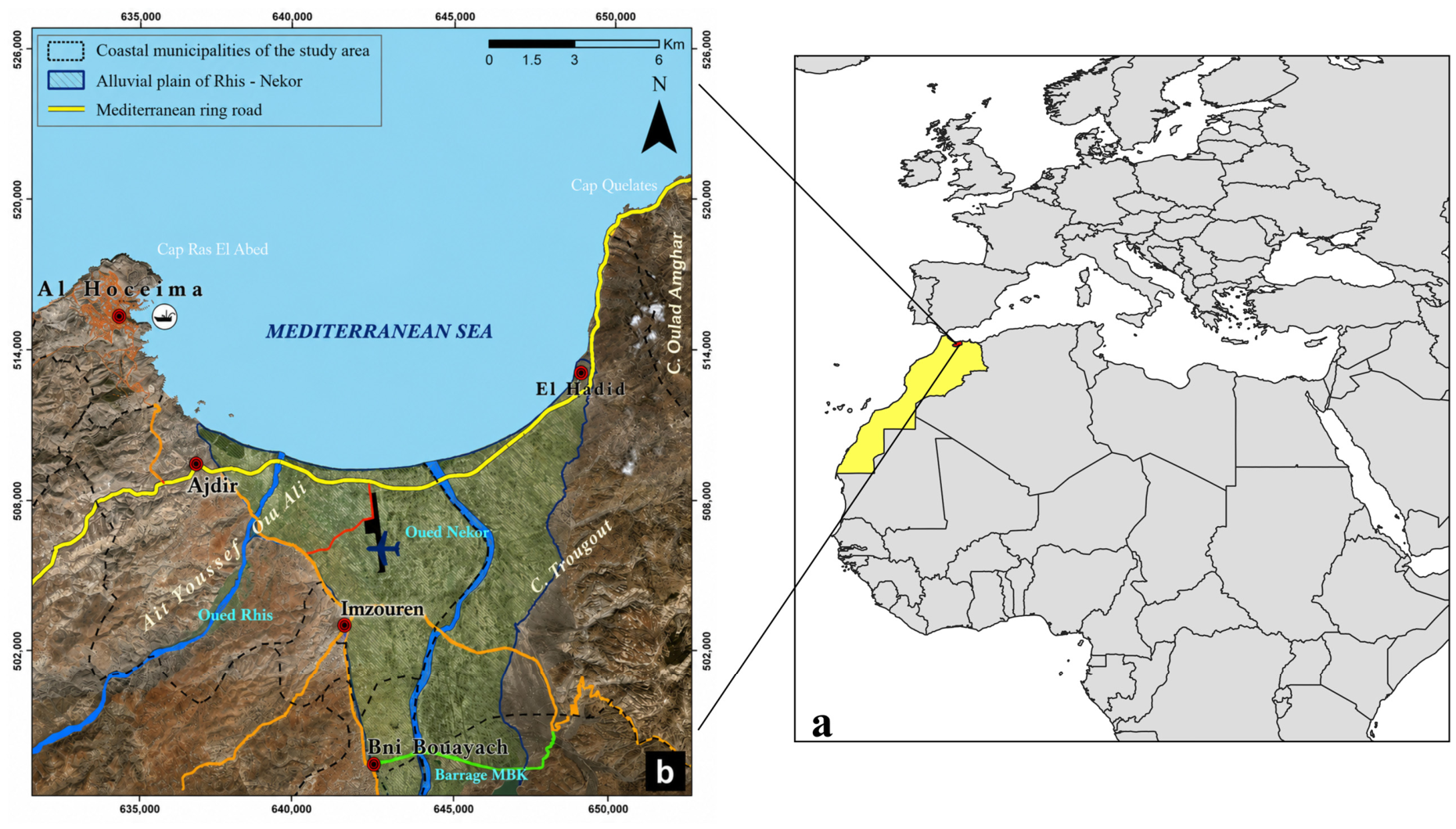
Al Hoceima Bay is situated along the central part of Morocco’s northern Mediterranean coastline. The bay is framed by two major headlands, with Cape Quilates marking the eastern boundary and Cape Maure (Ras Al Abed) defining the western limit. The investigated coastal stretch exceeds 40 km in length and comprises more than 13 km of relatively narrow sandy beaches. However, the CVI assessment in this study focused on the shoreline segment for which complete and consistent datasets were available. The analyzed segment corresponds to the main low-lying sandy and alluvial coastal sector of the bay, whereas the remaining coastal sectors are predominantly cliffed, rocky, and morphologically irregular, making the extraction and comparison of several CVI indicators less consistent at the adopted spatial resolution. This analyzed shoreline segment is approximately 13 km long and was discretized into 424 coastal assessment units, corresponding to an average alongshore spacing of approximately 30 m per unit. This sector also includes one of the largest alluvial floodplains along the Moroccan Mediterranean coast, mainly built by sediment contributions from the Rhis and Nekor rivers. (
Figure 1).
The Moroccan Mediterranean coast, and Al Hoceima Bay in particular, presents a complex coastal setting shaped by the interaction of natural processes and increasing human activities. The bay is exposed to shoreline erosion, sea-level rise, and storm-related pressures, while urban expansion, tourism development, and other economic activities further intensify coastal stress. Moreover, its location within a seismically active region adds further complexity to coastal-risk dynamics. These combined characteristics highlight the need for an integrated coastal vulnerability assessment to support sustainable management and adaptation planning.
The city of Al Hoceima is located along the western margin of the bay. This part of the coastline is characterized by steep cliffs exceeding 100 m in height, locally interrupted by small pocket beaches developed at the base of abrupt rock faces within a carbonate limestone ridge. Geologically, this sector forms part of the Bokoya massif, composed predominantly of Triassic–Liassic carbonate formations and Jurassic sequences overlain by condensed marly Paleogene deposits [
30].
In contrast, the eastern portion of the bay, extending from Laazib to Cape Quilates, exhibits a more rugged and elevated shoreline morphology. This sector is associated with the Ras Tarf and Ketama shale units and displays a markedly irregular coastal configuration. On the western flank of the bay, the coastal terrain gradually transitions into a foothill zone, characterized by the presence of several alluvial cones that extend toward the broader floodplain.
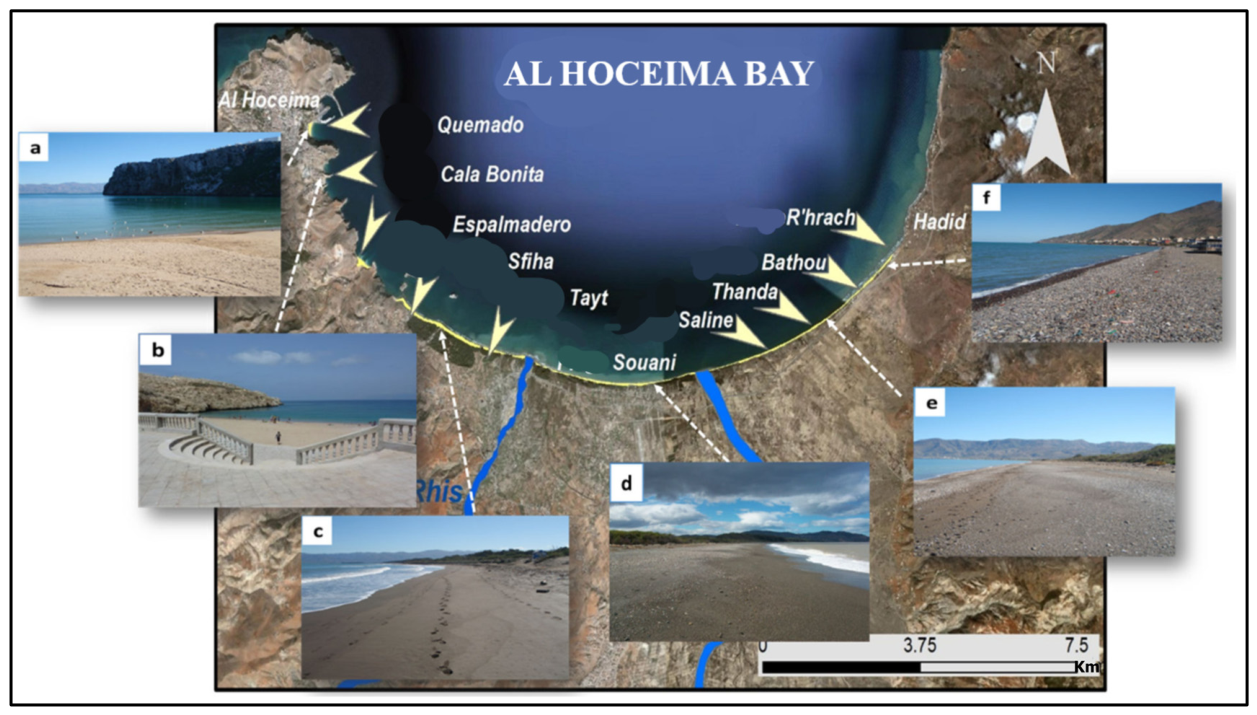
The cliffed coastal sector and the alluvial plain are separated by an approximately 15 km-long stretch of sandy beach. Except for the easternmost beaches, which are mainly composed of small stones and coarse detrital material, most beaches within the bay are dominated by fine sand and silt deposits.
The coastal zone of Al Hoceima Bay contains some of the lowest-lying shoreline sectors along the Moroccan Mediterranean coast, rendering it particularly vulnerable to storm events and sea-level rise (SLR). Moreover, Al Hoceima’s limited capacity for inland urban expansion, imposed by its complex topography, has led to increased development pressure along the coastline and within the floodplains of the Rhis and Nekor rivers. In addition, the coastal zone represents a major tourist destination and constitutes a vital economic asset for the Al Hoceima region. The combination of low coastal elevations, growing human occupation, and high socio-economic value highlights the urgent need for a comprehensive coastal vulnerability assessment in this area.
4. Results and Discussion
4.1. Spatial Distribution of CVI Variables and Vulnerability Classes
GIS tools were employed to process and integrate multi-source coastal datasets. The analyzed shoreline was discretized into 424 coastal assessment units, corresponding to an average alongshore spacing of approximately 30 m, thereby providing sufficient spatial resolution to capture localized variations in coastal vulnerability.
To provide a clearer quantitative interpretation of the input variables, the percentage distribution of each CVI indicator across the vulnerability classes was calculated and summarized in
Table 4. This table shows the relative contribution of each indicator to very low, low, moderate, high, and very high vulnerability conditions along the assessed shoreline segments. Coastal slope and shoreline-change rate exhibited the greatest spatial variability, whereas geomorphology and tidal range were consistently classified as very high vulnerability, and natural habitat and relative sea-level rise were uniformly classified as high vulnerability.
In addition, descriptive statistics were calculated for the final CVI values, including the minimum, maximum, mean, and standard deviation (
Table 5). The CVI values ranged from 40 to 100, with a mean value of 70.88 and a standard deviation of 9.44, indicating moderate spatial variability in coastal vulnerability across Al Hoceima Bay.
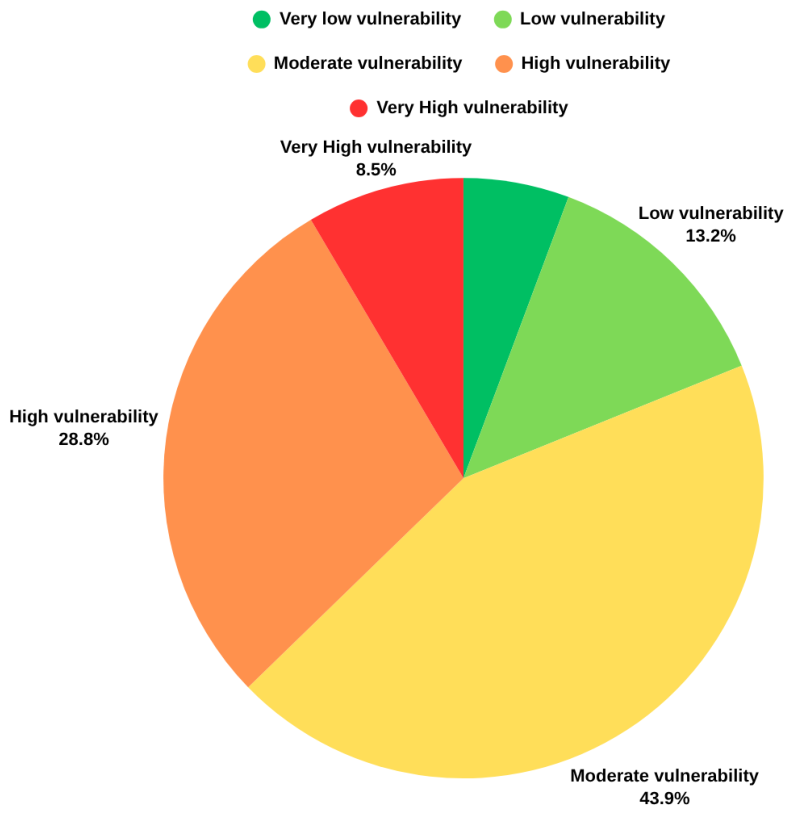
The percentage distribution of the final CVI vulnerability classes is shown in
Figure 4. The results indicate that 37% of the shoreline is classified as high vulnerability, 44% as moderate vulnerability, and 19% as low vulnerability, confirming that most of the assessed coastline falls within moderate-to-high vulnerability categories.
4.2. Shoreline Change and Main Drivers of Vulnerability
The observed vulnerability patterns are controlled by the combined influence of geomorphological, topographic, shoreline-dynamic, and marine-forcing factors. The relative contribution of these factors is discussed below.
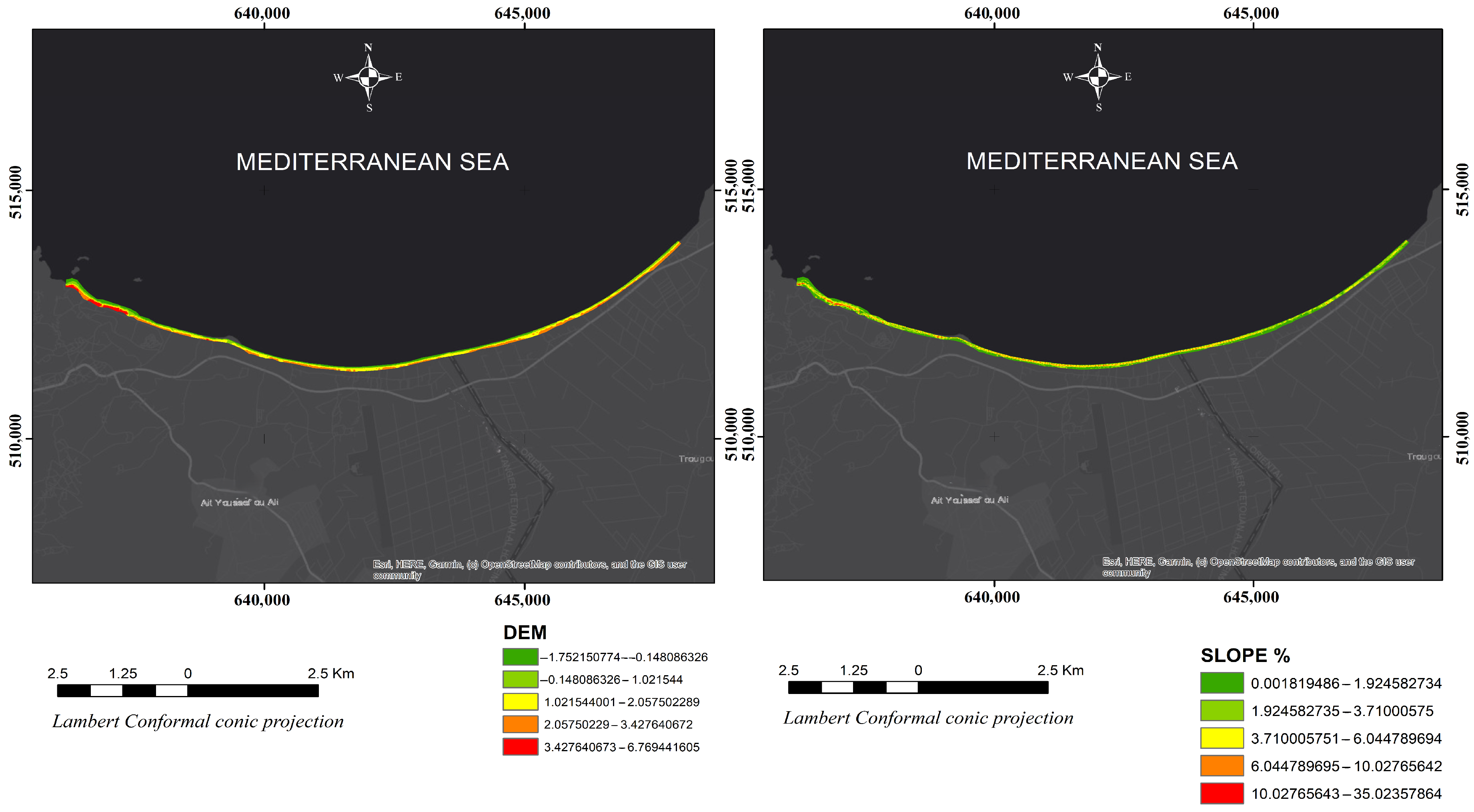
The geomorphological assessment reveals a predominance of moderate to very high vulnerability conditions along most segments of Al Hoceima Bay. Coastal slope values range from 1.24% to 18.67%, with the majority of the coastline characterized by gently sloping profiles that are inherently more susceptible to inundation and shoreline retreat.
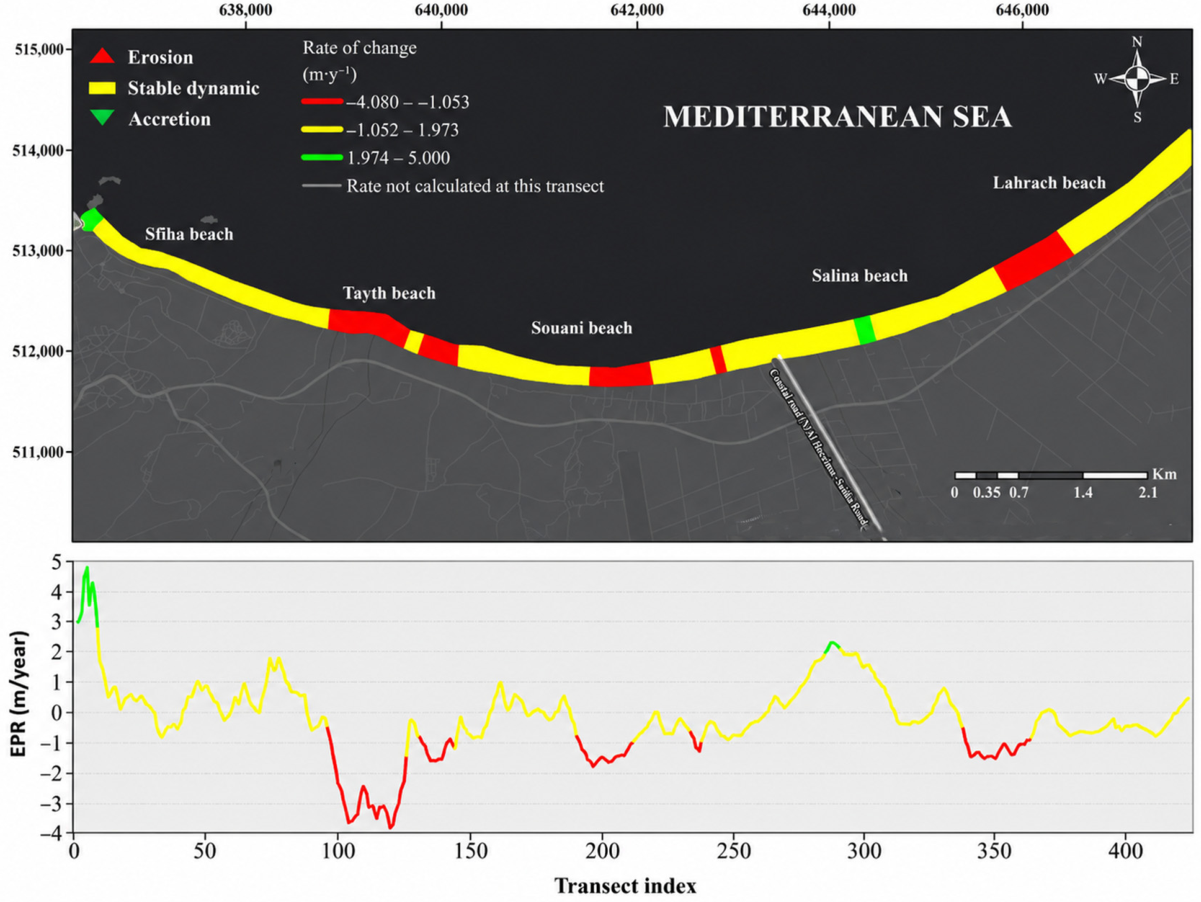
Shoreline dynamics between 1984 and 2022 were quantified using DSAS within the ArcGIS environment, and the resulting spatial pattern is presented in
Figure 5. The figure highlights clear spatial variability in shoreline behavior along Al Hoceima Bay, with erosion concentrated near the mouth of Oued Rhis and localized accretion mainly observed around Sfiha and Salina beaches. These spatial patterns support the classification of shoreline-change rates as a key contributor to the final CVI distribution. Based on End Point Rate (EPR) values, shoreline change was classified into erosion (<−1.052 m·y
−1), stable dynamic conditions (−1.052 to +1.97 m·y
−1), and accretion (>+1.97 m·y
−1). The analysis indicates that 22% of the coastline experienced net erosion over the 38-year period, whereas 74% remained relatively stable and only 4% exhibited accretional behavior. The highest erosion rates were recorded near the mouth of Oued Rhis, reaching approximately −4.08 m·y
−1, highlighting this sector as a critical hotspot of shoreline retreat. In contrast, localized accretion was observed at Sfiha Beach, with maximum rates of approximately +5 m·y
−1. Western sections of Sfiha and Lharch beaches exhibited comparatively stable shoreline positions, showing only minor temporal fluctuations. Accretion zones were mainly concentrated at Salina and Sfiha beaches, while Souani Beach displayed moderate erosion rates averaging −1.00 m·y
−1.
Physical vulnerability parameters show marked spatial contrasts across the study area. Relative sea-level change consistently corresponds to low vulnerability classes, whereas the mean tidal range is classified as very high vulnerability along the entire coastline. Mean significant wave height remains within low vulnerability classes, indicating that wave energy alone is not the dominant driver of spatial vulnerability patterns. Coastal elevation values range from 0.1 m to 2.23 m, placing extensive coastal sections within highly vulnerable elevation thresholds. Natural habitats are consistently classified as high vulnerability, reflecting their limited extent and reduced protective function along the bay. Although eight indicators were included in the CVI formulation, not all variables contributed equally to the spatial differentiation of vulnerability along the shoreline. Relative sea-level change, tidal range, and mean significant wave height were represented by uniform or near-uniform classes across the 424 assessment units because they were derived from regional-scale or single-station datasets. Therefore, these marine forcing indicators influence the overall CVI magnitude but do not explain most of the alongshore spatial variability. The spatial pattern of vulnerability is mainly controlled by the variables that vary along the coastline, particularly geomorphology, coastal slope, coastal elevation, shoreline erosion/accretion rate, and natural habitat condition. This interpretation is consistent with [
14], who showed that local-scale CVI differentiation along the Calabria coast was mainly driven by shoreline erosion/accretion, coastal slope, emerged beach width, dunes, back-beach vegetation, and Posidonia oceanica coverage, whereas wave and tidal variables contributed less to local spatial discrimination.
Recent Mediterranean CVI studies have incorporated Posidonia oceanica coverage as a separate protective variable because seagrass meadows can attenuate wave energy and stabilize sediments [
13,
14]. P. oceanica is reported along the Mediterranean region and has been documented or cited from parts of the Moroccan Mediterranean coast, although available studies also indicate that quantitative and spatially explicit information on Moroccan seagrass meadows remains limited and unevenly documented [
36]. In this study, P. oceanica coverage was not included as a separate CVI variable because no consistent, high-resolution spatial layer was available for the analyzed shoreline segment. Future refinements of the CVI framework should integrate mapped P. oceanica coverage and other nearshore habitat data once reliable spatial datasets become available.
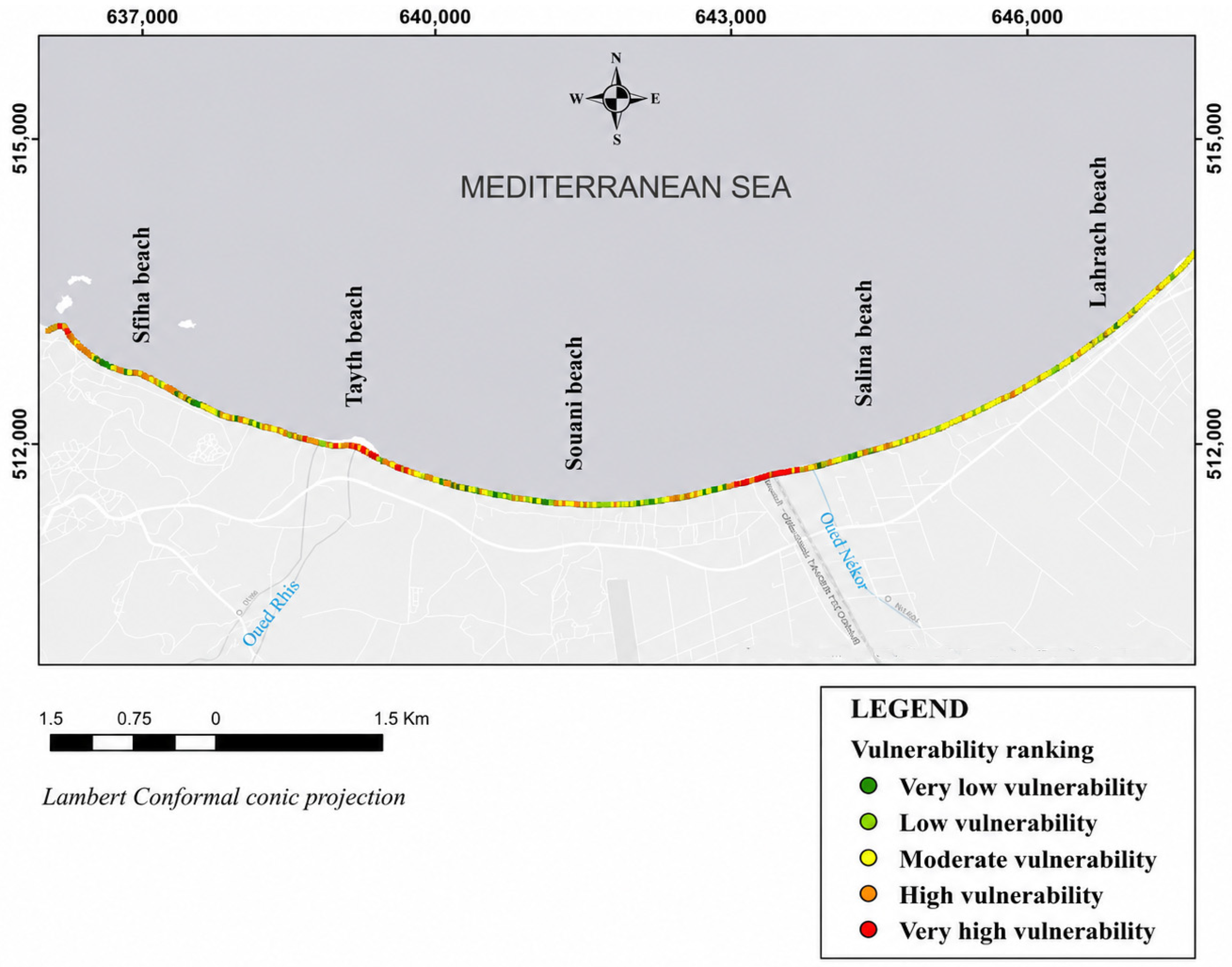
The integrated Coastal Vulnerability Index (CVI) values range between 40 and 100 and were classified into five vulnerability categories (
Figure 6). Colored points in
Figure 6 represent shoreline assessment units classified from very low to very high vulnerability.
Figure 6.
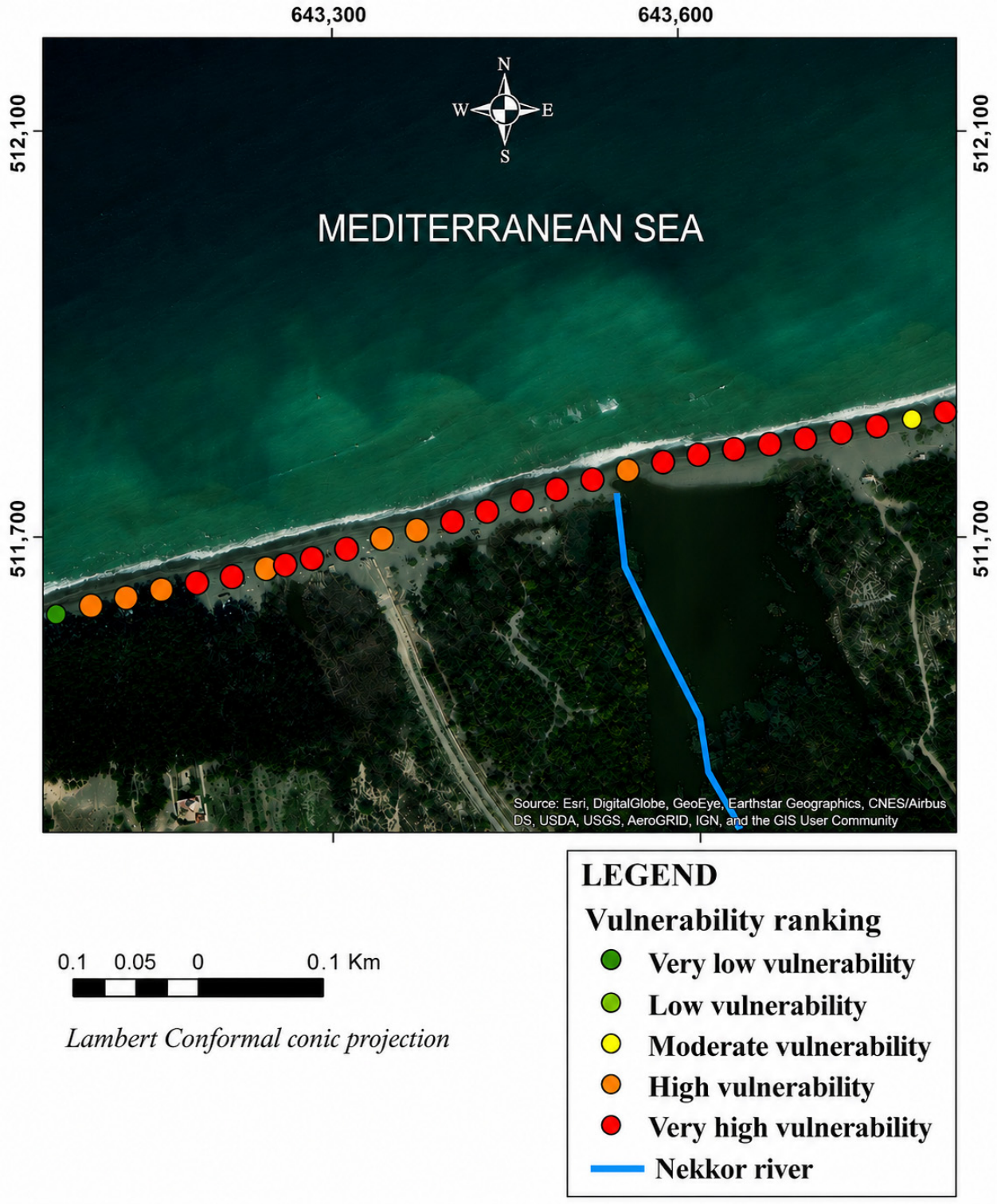
Spatial distribution of the Coastal Vulnerability Index (CVI) classes along the analyzed shoreline of Al Hoceima Bay. Colored points represent the shoreline assessment units classified from very low to very high vulnerability. The resulting spatial distribution indicates that approximately 37% of the coastline (about 5 km) falls within the high vulnerability class, while 44% (approximately 5.5 km) is classified as moderately vulnerable. Low vulnerability conditions are restricted to 19% of the coastline (around 2.5 km). High vulnerability zones are predominantly concentrated along the western sector of Al Hoceima Bay, particularly along the Sfiha coastline and in proximity to the Nekor River mouth (
Figure 7), where low elevation, gentle slopes, and narrow beach widths coincide.
Figure 6.
Spatial distribution of the Coastal Vulnerability Index (CVI) classes along the analyzed shoreline of Al Hoceima Bay. Colored points represent the shoreline assessment units classified from very low to very high vulnerability. The resulting spatial distribution indicates that approximately 37% of the coastline (about 5 km) falls within the high vulnerability class, while 44% (approximately 5.5 km) is classified as moderately vulnerable. Low vulnerability conditions are restricted to 19% of the coastline (around 2.5 km). High vulnerability zones are predominantly concentrated along the western sector of Al Hoceima Bay, particularly along the Sfiha coastline and in proximity to the Nekor River mouth (
Figure 7), where low elevation, gentle slopes, and narrow beach widths coincide.
Figure 7.
High vulnerability in the mouth of the Nekkor River.
Figure 7.
High vulnerability in the mouth of the Nekkor River.
The final CVI values were originally classified into five vulnerability categories: very low, low, moderate, high, and very high. For the simplified summary presented in the Abstract, the very low and low classes were grouped as “low vulnerability,” while the high and very high classes were grouped as “high vulnerability.” To avoid ambiguity, the revised Results section now reports both the five-category CVI classification and the grouped three-class summary. Accordingly, the 424 assessment units correspond to the approximately 13 km shoreline used for CVI computation, while the broader 40 km description refers only to the general geographical setting of Al Hoceima Bay.
The results are broadly consistent with the recent global CVI assessment by [
17], who showed that geomorphology, mean tidal range, and coastal slope are among the dominant contributors to high coastal vulnerability at global and regional scales. Similarly, the high-vulnerability sectors identified in Al Hoceima Bay are mainly associated with unfavorable geomorphological conditions, low coastal elevations, gentle slopes, limited natural protection, and microtidal forcing. However, unlike global-scale CVI assessments, which are designed for broad comparative analysis, the present study provides a higher-resolution local interpretation by integrating site-specific shoreline-change patterns, river-mouth influence, sediment deficit, and anthropogenic pressure. This local-scale approach therefore complements global assessments by identifying priority coastal sectors for management intervention within the Al Hoceima Bay context.
The spatial distribution of coastal vulnerability observed in Al Hoceima Bay reflects the strong influence of geomorphological configuration and sedimentary processes on shoreline stability. Narrow rocky and sandy beaches, particularly along the western sector of the bay, exhibit heightened vulnerability due to their limited capacity to dissipate wave energy. Beach widths ranging between 5 and 40 m substantially reduce the buffering effect against wave attack, thereby intensifying erosion at the toe of carbonate cliffs and along adjacent shoreline segments [
11].
The regressive shoreline trend observed over more than three decades indicates a persistent imbalance in the sediment budget of the bay. Al Hoceima Bay functions as a semi-closed sedimentary cell historically sustained by fluvial inputs from the Nekor and Rhis rivers. The Mohamed Ben Abdelkrim El Khattabi (MBK) dam, commissioned on the Nekor River in 1981, represents a major upstream sediment trap. Previous hydrological assessments reported substantial solid inputs to the reservoir, estimated at approximately 1 Mm
3/year on average, which contributed to a marked reduction in storage capacity from an initial capacity of about 43.3 Mm
3 to nearly 20 Mm
3 [
37]. This indicates that a large volume of sediment that would previously have contributed to downstream sediment transfer is now retained within the reservoir system. Accordingly, the observed erosion near the Nekor River mouth and western bay is interpreted as being consistent with reduced fluvial sediment supply, although direct pre- and post-dam sediment-delivery measurements to the shoreline remain unavailable. Therefore, dam-related sediment retention is treated here as a key contributing mechanism, alongside coastal morphology, wave exposure, low elevation, and anthropogenic pressure, rather than as the sole cause of shoreline retreat. Similar patterns have been reported in other Mediterranean coastal systems where upstream river regulation disrupts natural sediment delivery to the coast.
Although shoreline-change rate was incorporated into the CVI as a single long-term EPR value for each assessment unit, this variable should be interpreted as an indicator of net multi-decadal shoreline tendency rather than as a complete description of erosion–recovery dynamics. Recent transect-based studies have shown that erosion and recovery may be asymmetric, and that sectors with similar long-term retreat rates may differ substantially in their post-event recovery capacity and timescale [
9]. This distinction is important for coastal management because a high-vulnerability classification may reflect either a temporary erosional state or a more persistent condition associated with sediment deficit, limited beach recovery, and repeated exposure to marine forcing. In the present study, the high-vulnerability sectors near Oued Rhis and along the western bay coincide with long-term shoreline regression, low elevation, limited natural protection, and sediment-supply reduction following dam construction. Therefore, these sectors should be interpreted not only as areas of high present vulnerability, but also as priority locations for repeated shoreline monitoring, recovery assessment, and adaptive management. Future work should incorporate higher-frequency shoreline-position time series to evaluate erosion–recovery cycles and distinguish persistent retreat from short-term variability [
10].
The interpretation of the CVI results was expanded to clarify that high-vulnerability zones are mainly controlled by the combined effects of low elevation, gentle coastal slope, limited natural habitat protection, shoreline instability, river-mouth proximity, and increasing human pressure. This interpretation is consistent with recent studies showing that CVI outputs are highly sensitive to shoreline-change metrics, DEM/elevation quality, geomorphological setting, and spatial resolution of the assessment unit [
14,
15,
16,
17,
21].
Anthropogenic pressures further amplify natural vulnerability processes. Increasing tourism, urban expansion, and post-earthquake reconstruction have intensified coastal occupation, often at low elevations and in close proximity to dynamic shoreline zones. Although individual anthropogenic activities may not directly induce abrupt morphological changes, their cumulative interaction with natural coastal processes accelerates shoreline instability and reduces system resilience.
High CVI values identified near the Nekor River mouth and east of Souani are primarily driven by the convergence of low coastal elevations (<1 m), gentle slopes (<4%), proximity to fluvial systems, and degraded natural habitats. These areas are particularly exposed to compound flooding driven by both marine forcing and river discharge during high-energy events. The dominance of geomorphology, tidal range, natural habitat condition, and coastal slope as discriminating factors underscores the importance of locally adapted vulnerability assessments that capture site-specific coastal dynamics rather than relying solely on generalized large-scale indices.
In light of ongoing climate change, the vulnerability patterns highlighted in this study emphasize the urgent need for targeted coastal management strategies in Al Hoceima Bay. Illegal sand extraction from beaches, dunes, and alluvial floodplains, combined with rapid tourism development and urban growth, has weakened natural coastal defenses and increased exposure to coastal hazards. Integrating the CVI framework into coastal planning can support evidence-based decision-making by prioritizing high-risk sectors for intervention, promoting nature-based solutions, and guiding sustainable coastal development under future sea-level rise and storm surge scenarios.
4.3. Coastal Management and Adaptation Implications
The spatial distribution of coastal vulnerability identified in Al Hoceima Bay provides direct and actionable insights for coastal management and climate change adaptation planning. High and moderate vulnerability zones, particularly along the western sector of the bay and near the Nekor River mouth, should be prioritized for targeted intervention due to the convergence of low elevations, gentle slopes, sediment deficit, and intense human pressure. In these areas, conventional hard engineering solutions alone may not offer long-term resilience, highlighting the importance of integrated management approaches that combine structural measures through the implementation of nature-based solutions. For the high-vulnerability sectors identified near the Nekor River mouth, Sfiha coastline, and other low-lying sandy beach areas, Nature-Based Solutions (NBS) should be prioritized as part of an integrated coastal adaptation strategy. Practical interventions may include dune rehabilitation, controlled beach nourishment, restoration of degraded beach systems, protection of remaining natural habitats, and re-establishment of vegetated buffer zones where space allows. These measures can enhance sediment retention, dissipate wave energy, reduce erosion, and improve the natural buffering capacity of the coastline [
38,
39]. In areas where tourism and urban development pressures are high, NBS should be combined with strict regulation of sand extraction, coastal setback zones, land-use control in low-lying areas, and continuous shoreline monitoring. For sectors where natural buffers are already highly degraded, hybrid solutions combining soft engineering measures with limited structural protection may be considered, provided that they do not interrupt sediment transport or increase erosion downdrift. Such site-specific interventions would allow the CVI outputs to be translated into practical management priorities for erosion control, flood-risk reduction, and long-term coastal resilience.
The enhancement and conservation of natural protective features, such as dunes, beach systems, and nearshore habitats, represent a critical adaptation pathway to enhance coastal resilience and reduce exposure to erosion and flooding. In parallel, regulating sand extraction activities and controlling urban expansion in low-lying and dynamically active coastal zones are essential to avoid additional degradation of sediment budgets and natural buffering capacity. The CVI framework developed in this study can act as a decision-support framework for land-use planning, zoning regulations, and the prioritization of adaptation investments under current and future climate scenarios.
Moreover, the GIS-based vulnerability database generated through this assessment offers a flexible and updatable platform that can be integrated into regional coastal monitoring programs. As higher-resolution remote sensing data and hydrodynamic information become available, the framework can be refined to support scenario-based planning for sea-level rise and extreme events. By embedding CVI-based assessments within broader Integrated Coastal Zone Management (ICZM) strategies, decision-makers can enhance proactive risk reduction, promote sustainable coastal development, and strengthen long-term resilience of Mediterranean coastal environments similar to Al Hoceima Bay.




 ,
,