1. Introduction
Ecological restoration is the act of “assisting the recovery of an ecosystem that has been degraded, damaged, or destroyed” [
1]. Extensive damage to ecosystems as a result of anthropogenic activities, coupled with the recognition of benefits afforded to humans by healthy ecosystems, have meant that restoration is increasingly becoming a feature of global and EU policy. The period from 2021 to 2030 has been proclaimed the UN Decade on Ecosystem Restoration, which aims to “prevent, halt and reverse the degradation of ecosystems on every continent and in every ocean” [
2]. Elsewhere, the second target under the Convention on Biological Diversity’s Kunming-Montreal Global Biodiversity Framework is to have 30% of degraded terrestrial, inland water, and coastal and marine ecosystems under restoration measures by 2030 [
3]. In the EU, 2024 saw the passing of the Nature Restoration Regulation, which sets binding targets for the restoration of specific habitats and species as well as an overarching aim of the long-term recovery of the EU’s nature [
4]. Marine and coastal ecosystems are an important aspect of this story, although marine restoration has long been under-funded and under-researched in comparison to terrestrial restoration [
5,
6]. The restoration of these ecosystems is increasingly seen as a key component of nature-based solutions that can help both to mitigate and adapt to the climate crisis [
7,
8,
9,
10,
11]. For example, specific reference is made to the restoration of seagrass beds and sediment bottoms in the Nature Restoration Regulation, due to the benefits they can deliver for climate change mitigation. In addition, much of the EU’s marine environmental legislation, for example, the Marine Strategy Framework Directive, references the need for restoration [
12].
This legislation is particularly relevant to Ireland, one of only three island member states in the EU and with a marine territory seven times the size of the country [
13]. This territory supports economic activity through aquaculture, fisheries, shipping, tourism, recreation, and energy enterprises [
14]. In 2023, the value of the ocean economy was approximately €2.7 billion, with an annual turnover of €6.5 billion [
15]. In addition, there are significant non-market values associated with the marine environment in Ireland [
16]. However, the quality of these environments is highly variable. While 77% of bathing sites had “excellent” water quality in 2023 according to the Bathing Water Quality report, the majority (15) of designated marine or coastal habitat types under the Habitats Directive are rated unfavorable, with eight at favorable status [
17]. As with other EU member states, Ireland is required to meet the requirements of the Nature Restoration Regulation, but progress is thus far slow. Ireland has traditionally had the reputation of a laggard when it comes to meeting EU climate and environmental policy requirements [
18], and just 8.3% of the maritime area has thus far been designated as protected, falling far short of the 30% required by 2030 [
19].
Given this context, public participation and engagement will be necessary to further marine restoration goals. This is required by law—the Aarhus Convention requires public participation in environmental decision-making [
20]—and can also improve the quality of environmental decision-making [
21]. Engaging society in marine conservation and restoration can change negative behaviors and potentially impact restoration outcomes [
22]. In addition, given that marine restoration is likely to be funded in large part by the public purse, support and participation from the public will likely play a role in determining the success of such projects [
23]. For example, public participation has been found to be key in designing conservation measures such as MPAs [
24,
25].
To enable effective participation and engagement, an understanding of what the public know about marine restoration and their attitudes towards it is required. For example, awareness raising and public communication will likely form part of the body of actions that will be needed to meet marine restoration goals [
26]. These actions should be informed by evidence about the knowledge that the general public already have, rather than experts’ intuitions on what people need to know—which can be inaccurate [
27]. However, halfway through the UN Decade on Ecosystem Restoration, little is known about the Irish general public’s attitudes and awareness towards marine restoration. Previous large-scale surveys have investigated attitudes towards the marine environment across Europe in general, e.g., [
28,
29], and in Ireland in particular [
20]. These indicate that the public have an appreciation of the marine environment for a variety of reasons and a reasonably high awareness of the threats facing it.
Levels of agreement with marine spatial planning and the designation of protected areas are lower in Ireland than in other European countries [
20]. This could prove a challenge for implementation of restoration activities, as social acceptability has played a key role in the success of restoration measures, such as protected areas, in other jurisdictions [
30]. However, attitudes to restoration in the European context specifically have only been addressed in one study we are aware of to date [
23]. This paper analyses a sample of Norwegian and Italian populations and finds relatively low awareness of marine restoration but high levels of support towards it—yet this support did not always extend to being willing to pay for said restoration. Additionally, there were significant differences in attitudes towards restoration documented in the Italian and Norwegian samples, indicating that attitudes may be country-specific. It may also be the case that these perceptions differ across regions within one country, with those in coastal areas more likely to be aware of the issues.
This study investigates the Irish public’s awareness of and support for marine restoration actions. This contributes to research on public perceptions of the marine, which can help to improve existing actions in this space and shape future engagement to be more effective [
22]. It aims to provide a baseline of knowledge in the Irish context on the perceptions of marine restoration that may inform communication and awareness raising strategies that have been recommended going forward [
26]. The study draws on information collected from a survey of the Irish general public. Attitudes to marine restoration, awareness of policy instruments and actions, and support for specific actions are addressed. Associations between socio-demographics and levels of awareness are identified through regression techniques. Particular attention is paid to estimating whether there are differences in attitudes between the population who identify as coastal residents and those who do not. Text analysis is used to delve deeper into the general public’s perceptions of marine restoration activities already taking place.
2. Materials and Methods
Data was collected in an online survey with a representative sample of the adult Irish population. The aim of this survey was to estimate the public benefit associated with the restoration of specific marine and coastal ecosystems (seagrasses and saltmarshes) as well as to collect baseline information on the awareness and attitudes of the general public towards the marine environment and restoration of its ecosystems. The survey was designed in collaboration with restoration scientists, who gave specific assistance in the description of the ecosystems and the restoration projects. Prior to collecting the full survey, three focus groups were carried out to test the language used and ensure that all parts of the survey were understandable for the general public.
The survey began by informing respondents on the purpose of the survey and had four subsequent sections. The first section was a series of questions that elicited respondents’ views on the marine environment, and on a specific marine ecosystem—seagrass. These questions were either in binary or Likert formats. The second section was specifically focused on restoration. Respondents were informed that “Restoration means helping an ecosystem that has been damaged, degraded or destroyed to recover through a range of actions. … The EU Nature Restoration Regulation aims to cover at least 20% of the EU’s land and sea areas with nature restoration measures by 2030, and to repair damage done to Europe’s nature by 2050”. Interest in awareness of the regulation stems from the fact that it will likely be a major policy instrument that will drive marine restoration, and understanding whether the public are aware of this policy can inform how it is discussed in the public realm. Respondents were asked to state whether they had heard of the regulation before (yes/no binary response), and then whether they were aware of any marine or coastal restoration activities taking place in Ireland (yes/no binary response). If they stated that they were aware of such activities, they were invited to describe the activity in an open-ended question.
The third section was concentrated on a valuation exercise intended to measure the public benefit of seagrass and saltmarsh restoration. Apart from the usual willingness to pay question, other questions were included that are used to ascertain the level of support for marine restoration actions. Respondents were asked if they would be willing to contribute to their time to volunteer for a seagrass restoration project. In addition, they were informed about a particular method of coastal restoration called managed realignment. This involves creating new coastal habitat—saltmarsh—by allowing previously reclaimed land to be once again inundated with seawater [
31]. The saltmarsh then can contribute to climate change mitigation by sequestering carbon, improving coastal defenses, and providing other services such as habitat for wading and overwintering bird species. Although it is more of a common practice by now in the UK [
32], it has not been frequently implemented in Ireland [
33]. Respondents were asked if they would be in favor of implementing a managed realignment scheme in suitable coastal areas in Ireland. These questions provide some alternative metrics of support for restoration apart from the usual willingness to pay.
In the fourth section, respondents were asked about their relationship to the coast and marine environment, including questions on how frequently they visited the coast, and the type of activities they did there. Finally, socio-demographic information was collected. While some parts of each section are included in this study, the first section and second section are the main interest, while the third and fourth are examined in detail elsewhere.
The binary awareness responses were analyzed using regression analysis. The questions that were of interest were whether respondents had heard of restoration; the EU Nature Restoration Regulation; and managed realignment before. A logit model was used to examine the characteristics associated with awareness of each of these topics. The independent variables in the model included socio-demographics such as age, gender, level of education and employment status; and variables that captured connection to the marine environment—whether the respondent is a coastal resident or not, and whether they have visited the coast in the last year; and level of concern about the marine environment. While similar characteristics may be associated with each of the levels of awareness captured by the dependent variables, there are likely to be differences. For example, awareness of restoration activities in general likely requires a higher level of engagement with the marine and coastal environment that say, awareness of the EU Restoration Regulation. Awareness of the regulation indicates an awareness of the broader policy context—especially as this regulation pertains to terrestrial as well as coastal and marine ecosystems. Finally, managed realignment is quite a niche topic, and awareness of this may reflect quasi-specialized knowledge about the coast.
The open-ended question on restoration activities was analyzed using text analysis. This question can be characterized as a narrow, targeted question. As mentioned, respondents are only directed to this question if they state that they are aware of marine or coastal restoration activities taking place in Ireland. Hence, all respondents do not answer this question, but valuable information can nonetheless be gained.
Prior to undertaking text analysis on these answers, significant pre-processing steps need to be taken. An initial spellcheck was performed on the answers using the spelling and grammar tool in Microsoft Excel. Then, punctuation, excess spaces, numbers, and “stop-words” are removed. Stop words are common words that have no intrinsic meaning by themselves, such as “the” or “and”. The words are then lemmatized, so they all take the common form of the word. (e.g., “protected” becomes “protect”). The package textstem in R is used to perform these tasks. Two text analysis approaches were taken, following Ferrario and Stantcheva [
34]. In the first step, a world cloud is prepared. This is a useful method of visualizing data that enables answers and possible topics to be scanned quickly. The unit of analysis here is an “n-gram”, or a group of
n words. In the word cloud, the size each n-gram is proportional to its frequency.
Topic analysis was used to analyze the open-ended restoration questions. The topics and associated keywords were identified manually, which is appropriate as the answers are shorter here than what is usually analyzed in topic analysis [
34]. This process included careful reading of the answers and using the document-term-matrix to select key words for each topic. Some answers are associated with more than one topic, while others could not be categorized under any topic at all. Graphs are produced that show the frequency of topics overall, and individual word clouds for the most popular topics allow a quick visual inspection of what other topics they most frequently came up with.
Respondents are also asked to rate the health of the marine environment in Ireland. Responses to this question are compared to official data on the health of the marine environment in Ireland to make a qualitative assessment of how well-informed the public are about this.
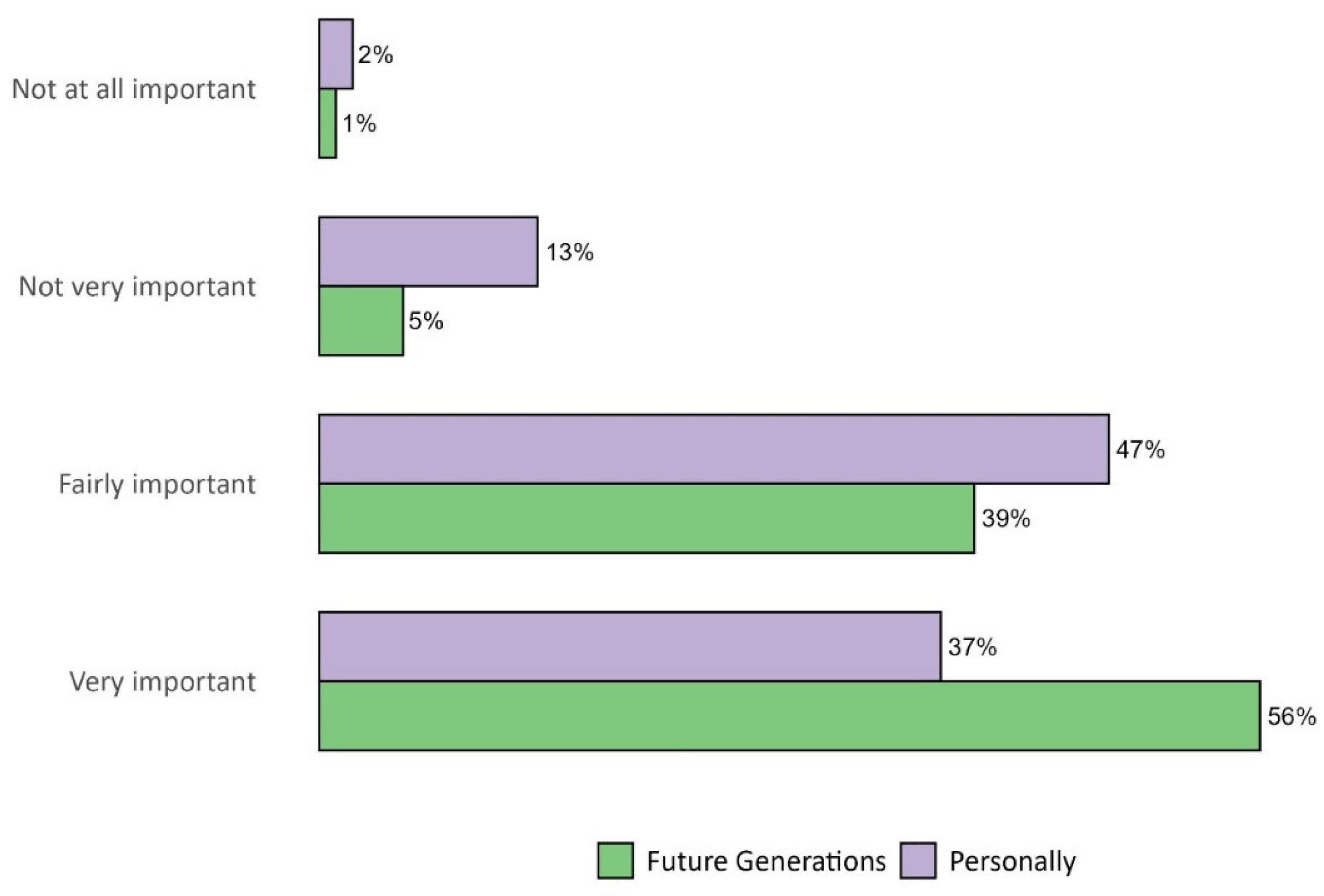
Several survey questions are used to investigate attitudes towards the marine environment and restoration of it among the population. Firstly, respondents are asked to rate how concerned they are about the health of the marine environment in Ireland. Secondly, respondents are asked whether maintaining and enhancing the marine environment is important to them personally, and whether it is important for future generations. Finally, the questions that elicit support for restoration by asking respondents whether they would be willing to volunteer some of their time to support seagrass restoration and whether they would be in favor of a managed realignment plan in their closest coastal area were analyzed. Of particular interest is whether attitudes differ significantly between coastal and non-coastal populations. Coastal resident is a self-defined variable in this dataset, as respondents are asked to state whether they lived in a coastal area, which was given a set definition of “a coastal city, town, village or rural area next to the sea.” Chi-squared tests are used to see whether levels of support differ significantly between coastal and non-coastal populations. Support for restoration is also analyzed by means of a logit model, where the dependent variables indicate willingness to contribute time and support for managed realignment.
3. Results
The total number of observations including the pilot comes to 1197. The demographic characteristics of the survey broadly correspond to the Irish population. The respondents are slightly older, and there are more retirees and less students in this sample than we observe in the population at large; however, population weights are applied in the analysis to take account of this. For the regression analysis pilot responses are not included as they cannot be weighted, but for all other analysis they are. Descriptive statistics of the variables that are included in regression analysis can be found in
Table 1. Approximately 34% of the sample describe themselves as coastal residents and 80% have visited the coast for leisure purposes in the last year.
Overall, approximately 19% of the sample had heard of the EU Nature Restoration Regulation previously, and only approximately 15% were aware of coastal or marine restoration activities taking place in Ireland (see
Table 2).
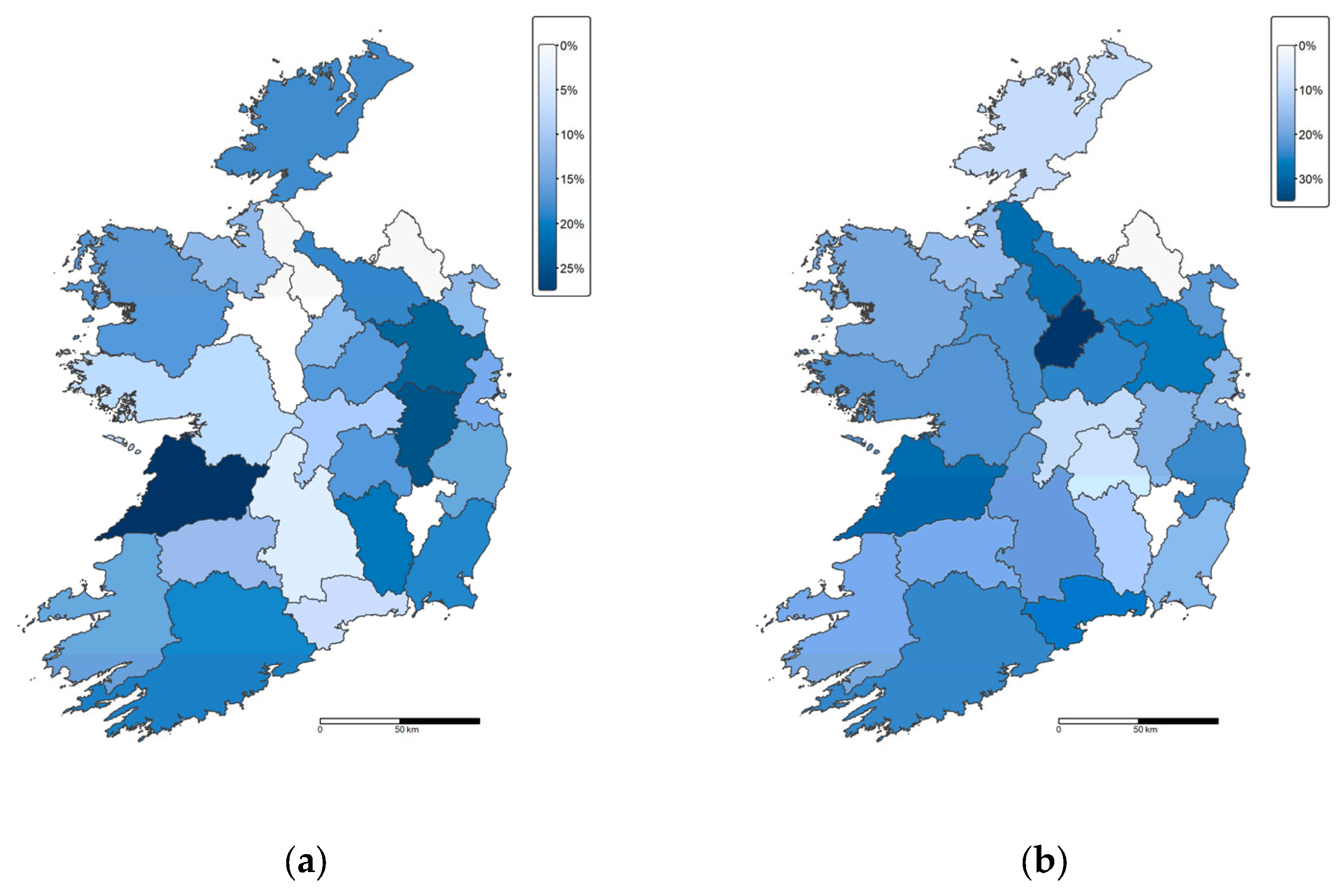
Figure 1 shows proportion of awareness by county for both topics. Clare is the county where the highest proportion of respondents are aware of restoration activities, but this still does not exceed 30%. Slightly more coastal residents than non-coastal residents were aware of restoration activities (19% vs. 13%), this difference was significant at the 5% level (χ
2 (1, 1197) = 7.5996,
p = 0.006). This difference was even more pronounced for people who had visited the coast in the past year, with 17% of those who had stating they were aware of such activities and 7% of those who had not, again a significant difference (χ
2 (1, 1197) = 15.8362,
p < 0.001). In terms of awareness of the regulation, there was no significant difference between coastal and non-coastal residents (χ
2 (1, 1197) = 0.5078,
p = 0.476). Longford is the county with the highest proportion of respondents aware of the regulation, and the proportion does not exceed 40% anywhere.
Table 3 presents the results of the logit models estimating the likelihood of prior awareness of the Nature Restoration Regulation, restoration activity, and managed realignment. Of the socio-demographic variables, only age, gender and education are ever significant. Employment status and income do not have a significant association with awareness. Age is significantly and negatively correlated with the likelihood of being aware of the Nature Restoration Regulation and Managed Realignment, although the size is small. Being male is positively and significantly associated with being aware of the same topics, while having third level education is positively and significantly associated with awareness for all three topics, with the magnitude most pronounced for awareness of the regulation.
As expected, the variable that indicates a connection with the coastal and marine environment—having visited the coast at least once in the previous year—is positively associated with awareness of restoration activities and managed realignment. However, it has no impact on awareness of the regulation. This is not surprising as the EU Nature Restoration Regulation applies to terrestrial ecosystems as well and is not a marine-specific policy. Despite significant differences in the proportion of coastal and non-coastal residents being aware of restoration activities, in the model this variable is not significant. More important for awareness is having visited the coast in the last year, which is positively associated with both awareness of restoration activities and managed realignment. The respondents’ region is essentially insignificant. Being concerned about the marine environment has the highest marginal impact on awareness of the regulation, and it is positive and significant for awareness of all topics.
As mentioned, approximately 15% of respondents stated that they were aware of restoration activities. When those who stated they were aware of restoration activities were asked to be specific in the follow-on question, some were unable or provided answers that indicated they had misunderstood the question. These observations were removed, which left 163 responses to analyze for this section of the survey.
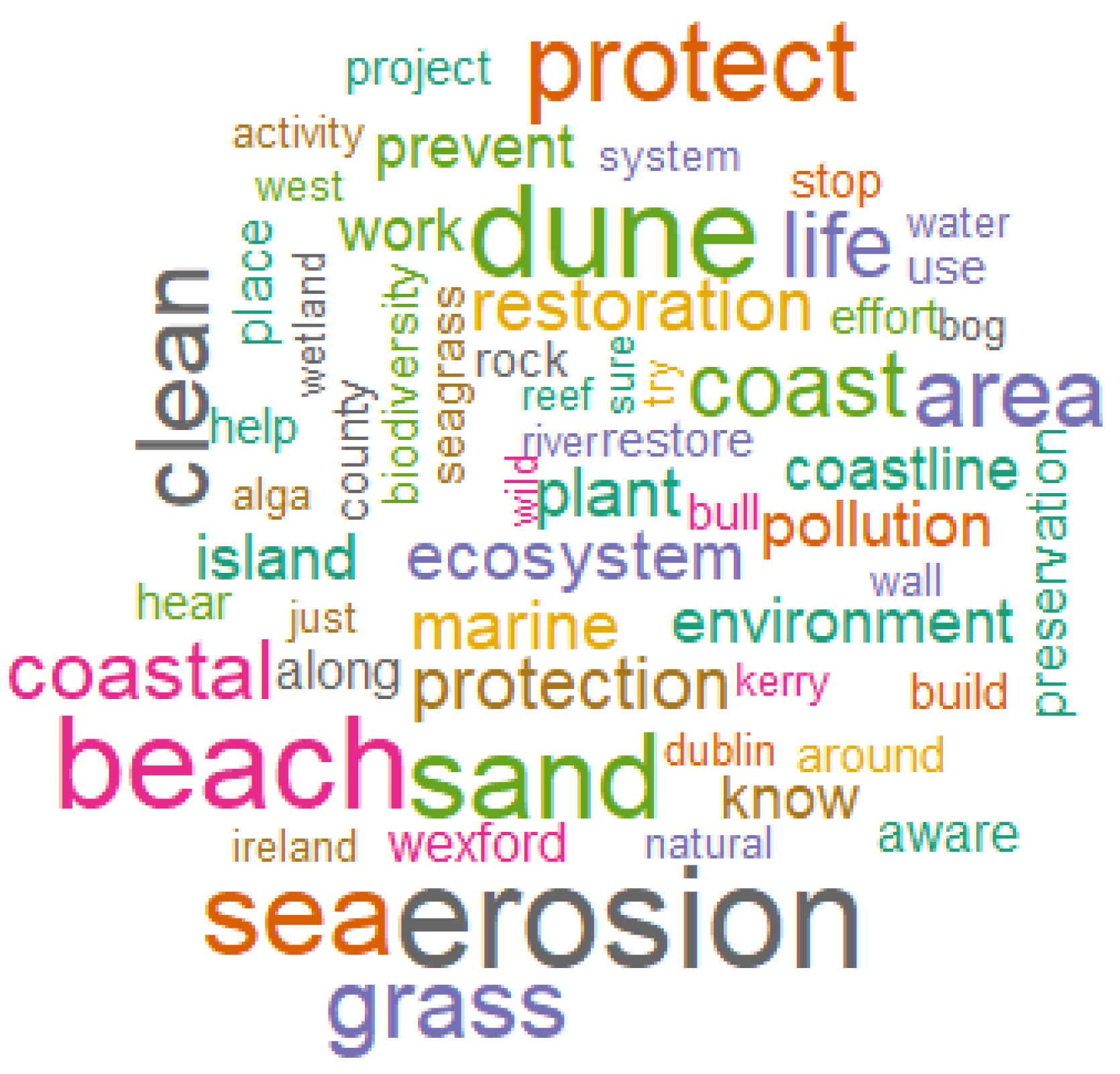
Figure 2 shows a word cloud created from these responses. Visual inspection of the world cloud and of the answers themselves allowed topics to be selected. The selected topics and their keywords are presented in
Table 4. Some are visible in the world cloud already—many responses (
n = 30) mentioned erosion, and other prominent words include sand, dune and beach.
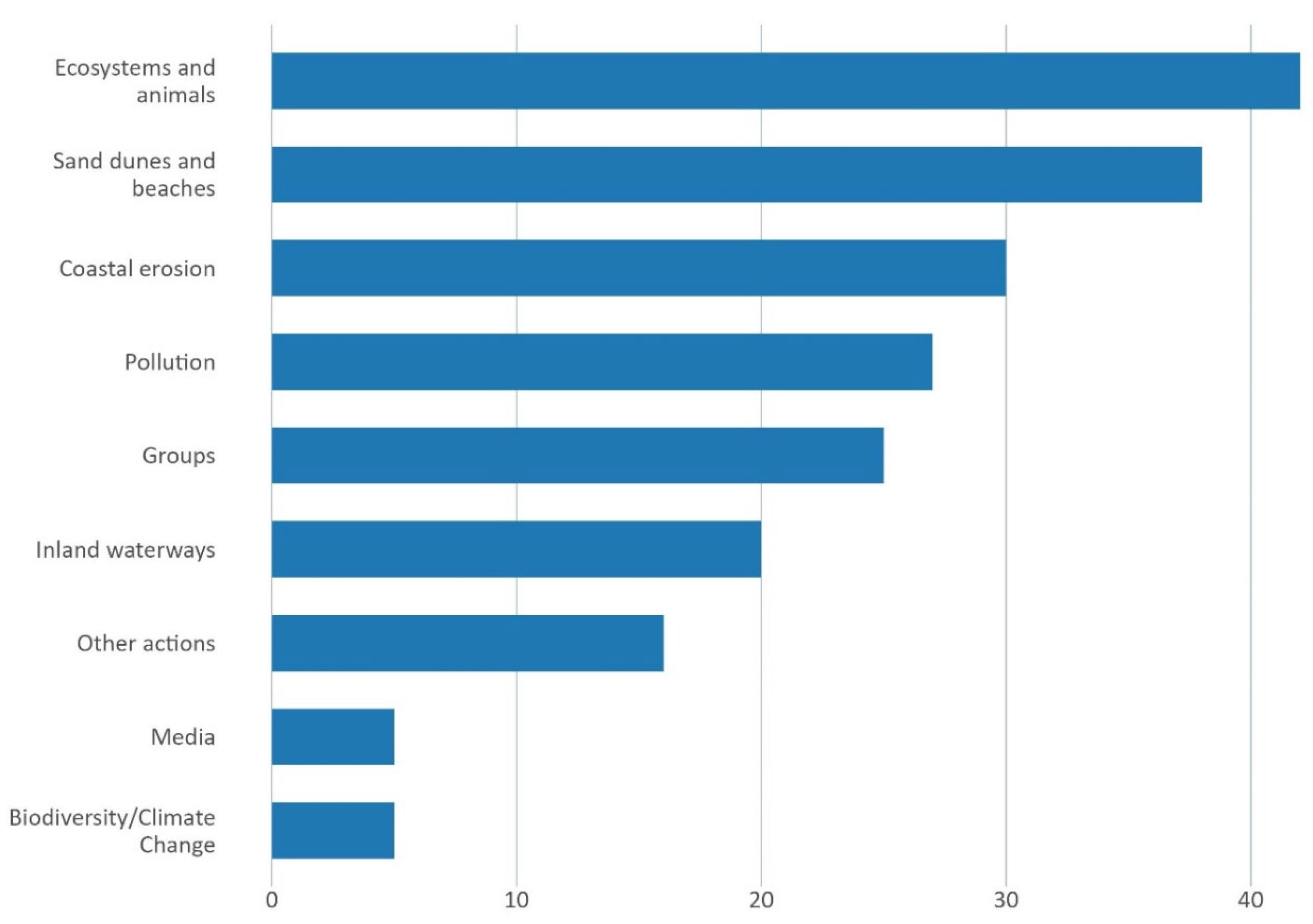
As seen in
Figure 3 the most frequently mentioned topic is the umbrella term of “ecosystems and animals”. This topic was created to encompass the broad variety of specific marine mammals, fish and ecosystems mentioned specifically by respondents, but which did not really fit into any other topic. However, other frequently mentioned topics are much more focused, and to some extent interlinked. Sand dunes were frequently mentioned as either a strategy to prevent erosion, or as something that needed to be protected from erosion. Otherwise, the restoration of sand dunes was mentioned without reference to erosion.
Dunes and beaches were also often mentioned in conjunction with mentions of litter and beach cleaning activities—fitting in with the fourth most mentioned theme, pollution. Pollution includes all mentions of pollution and actions taken to reduce it, e.g., beach cleaning. The topic of coastal erosion often came up in answers that also referred to sand dune restoration, but some answers also mentioned “grey” coastal defenses, such as rock armour, which doesn’t strictly refer to ecosystem restoration. This is reflective of a certain level of confusion in the answers, for example, multiple referred to restoration activities taking place in inland waterways rather than on the coast. The most infrequently mentioned topics included “other actions”—referring to actions other than those covered by the main themes, e.g., funding and education, the media, and biodiversity and climate change.
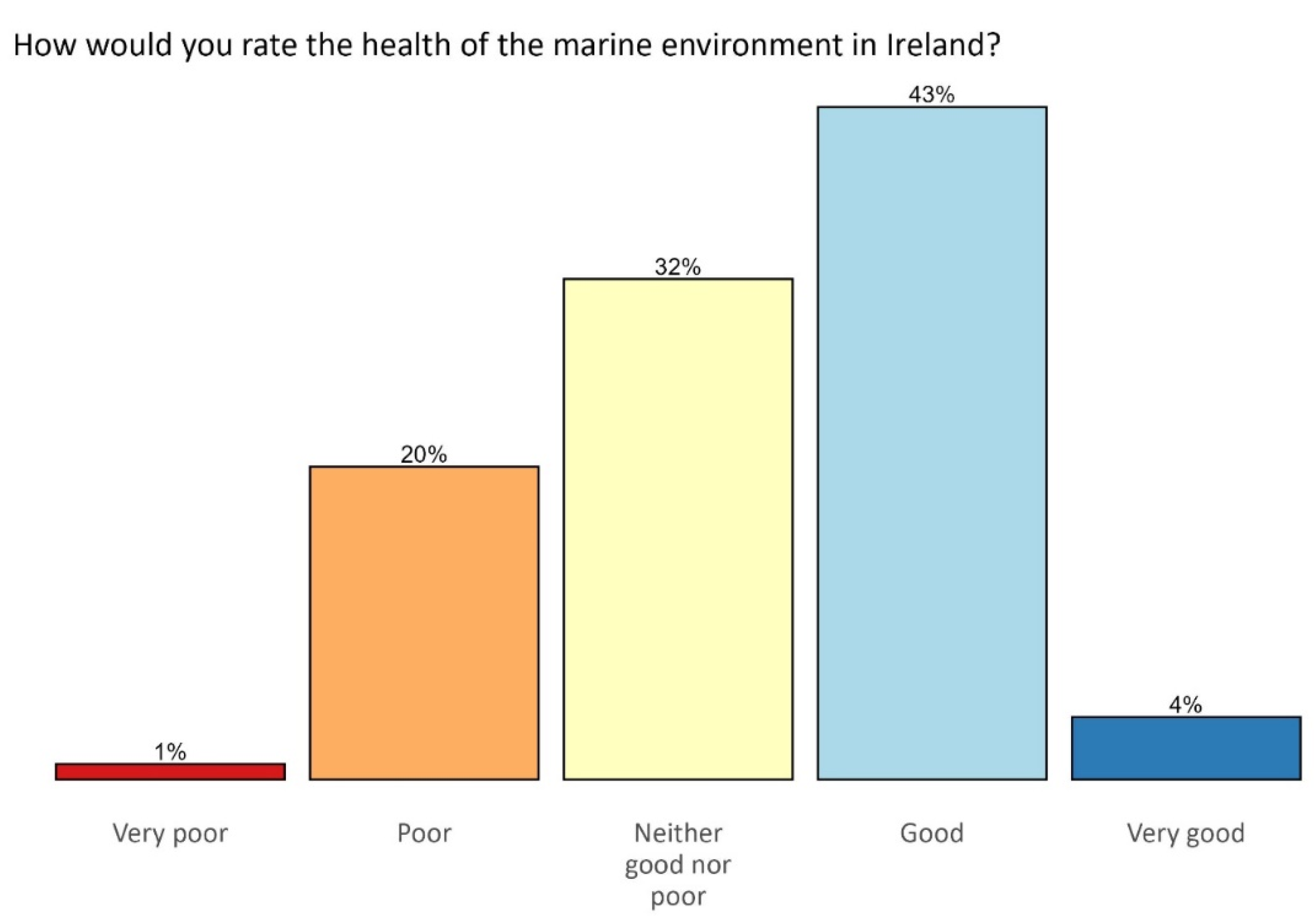
The final approach to assessing awareness was the question on the rating of the marine health in Ireland. The choices of the general public for this question reflect national indicators of the health of the marine environment—mostly good, some bad. Approximately 47% of the respondents rated the health of the marine environment as good or very good, with 21% rating it as poor or very poor (see
Figure 4). The difference in perceptions of marine health between coastal and non-coastal residents was significant at the 5% level—χ
2 (4, 1197) = 10.5855,
p = 0.032. Interestingly, coastal residents appeared to rate the marine environment more favorably than expected. There are various ways of assessing the health of the marine environment. According to the Bathing Water Quality report for 2023, 77% of bathing sites had “excellent” water quality, while 97% at least met the minimum standard. However, indicators from the Habitats Directive show that just 36% of estuarine waters had high or good ecological status in 2022, while 81% of coastal waters did [
17]. In addition, the majority (15) of designated marine or coastal habitat types under the Habitats Directive are rated unfavorable-inadequate or unfavorable-bad, with eight at favorable status. Hence, the opinion of almost one third of the respondents, “neither good nor bad” may most accurately reflect the situation, as although there are areas where performance in terms of marine environment health is good, yet pressure from fishing, nutrient enrichment, and marine litter still exist [
17].
Figure 5 shows the proportion of respondents selecting each answer when asked about the importance of protecting and enhancing the marine environment. A higher proportion believe it is very important for future generations as opposed to for them personally. A higher proportion of coastal residents (43%) than non-coastal residents (35%) indicated that it was very important to them personally to maintain and enhance the marine environment, this difference was statistically significant at the 5% level—χ
2 (3, 1197) = 9.81,
p = 0.02. This pattern was similar for those stating that it was very important for future generations, with 62% of coastal residents and 53% of non-coastal residents selecting this option—a statistically significant difference at even the 1% level—χ
2 (3, 1197) = 11.71,
p = 0.008. However, both coastal and non-coastal residents appeared to have similar levels of concern for the marine environment, with similar proportions selecting each option χ
2 (4, 1197) = 7.33,
p = 0.119.
In terms of active support for marine restoration, respondents are asked whether they would be willing to volunteer time to help with a seagrass restoration project. Overall, less than half of the respondents stated they would be willing to volunteer time (approximately 47%). A higher proportion of coastal residents indicated they would be willing to volunteer (approximately 51%) above non-coastal residents (44%). This difference is statistically significant—χ2 (1, 1197) = 4.22, p = 0.04, and not unexpected. Coastal residents would presumably have easier access to coastal sites where restoration takes place, and volunteering would likely entail a lower opportunity cost for them. There was no significant difference in willingness to pay between the two groups. For both coastal and non-coastal residents over 60% of the sample indicated they would pay to restore seagrass—indicating a monetary level of support for restoration. The final question that indicates support for restoration asks respondents whether they would be in favor of a managed realignment scheme taking place in a suitable location in Ireland—they could select yes, no or maybe. There was no significant difference between the coastal respondents selecting each option χ2 (2, 1197) = 1.67, p = 0.432. This is interesting, as such schemes would presumably only impact coastal residents. However, as no specific location was specified, this likely results in less concentrated opposition to such a scheme. Coastal residents in this survey may be in favor as they know or assume that their specific location is not amenable to such a scheme.
Table 5 shows the estimates from logit models estimating the correlates of being willing to support seagrass restoration though volunteering time, and for being supportive of a managed realignment scheme. Overwhelmingly, both models show that for supporting restoration, what matters is the connection to the coast. Being concerned about the marine environment, having visited the coast in the last year, and being aware of the respective marine ecosystems are positive and significant across both models. Conversely, few socio-demographic variables seem to have a noticeable impact on support. Being retired is significantly and negatively associated with being willing to volunteer for seagrass restoration. Having third level education is weakly positively associated with the same. In terms of managed realignment, income and age are positively associated with support, while being employed is negatively correlated.
4. Discussion
This paper explored Irish attitudes to and awareness of marine and coastal restoration through the use of a survey. Several points merit discussion. Firstly, levels of awareness for marine restoration among the general public were found to be quite low. Only 15% of respondents were aware of marine and coastal restoration activities taking place in Ireland. While comprehensive records of ongoing coastal and marine restoration projects are lacking, research indicates that there are over fifty coastal Nature-Based Solution projects in operation—many of which would incorporate elements of restoration [
35]. Dune restoration projects, in particular, are often located at sites that are particularly popular with beachgoers and domestic tourists, e.g., Curracloe Beach in Co. Wexford and Maharees Beach in Co. Kerry. While levels of awareness are low, almost 80% of the survey respondents indicated that they had visited the coast in the last year. It may be the case that some of these respondents have seen restoration projects in action, without realizing that is what they are. For example, only 8% of respondents from Galway indicated they were aware of restoration activities, yet within Galway Bay there are at least four marine/coastal restoration initiatives ongoing, as well as many on the coast. Given the limited evidence on awareness of marine and coastal restoration, it is hard to say whether these levels of awareness are typical. However, they are within the range of estimates reported in [
23], where 32% of Italian respondents and 9% of Norwegian respondents indicated they were aware of marine restoration activities taking place in their respective countries. Better signage in coastal locations where projects are taking place could raise awareness amongst the public as well as educate them on the need for marine ecosystem restoration.
As well as many respondents not being aware of marine restoration activities, not all of the responses of those who indicated they were aware actually referred to projects that could strictly be considered marine or coastal restoration in the open-ended question. As mentioned, some respondents referred to restoration of rivers and lakes rather than marine and coastal ecosystems. Rock armour was also mentioned as a solution to coastal erosion, which is a form of “grey” infrastructure rather than ecosystem restoration [
9]. In addition, many respondents mentioned beach cleaning and plastic pollution on beaches, a reflection of the fact that public awareness of marine litter has been growing [
17]. Beach cleaning may be considered more of a conservation activity rather than active ecological restoration (although it could be considered to be an element of the restoration process [
36]), yet it is encouraging that people notice this problem and activity.
The emphasis on beaches and sand dunes in the answers to the open-ended question is another thing of note. Very few respondents mentioned any activities taking place in the intertidal or subtidal zone. This is of course understandable; these activities are not as visible as restoration projects on beaches, which are often accompanied by some basic signage or warnings to stay out of the area. While the public may become aware of coastal restoration projects through just simply visiting the coast, projects like oyster reef or seagrass restoration may remain out of sight and out of mind. This is supported by the significant correlation between being a coastal visitor and being aware of restoration activities, suggesting that information and knowledge of restoration activities may be coming from firsthand experiences. While some respondents did mention hearing or seeing news of marine restoration in the media, this was a very small number (n = 5).
A further point to note is that less than one-fifth of respondents were aware of the EU Nature Restoration Regulation. It is hard to know whether this compares favorably or not to awareness of other EU-mandated policies, but it does appear low given the amount of coverage this particular piece of legislation received in the media. Having third-level education was significantly and positively correlated with awareness of the regulation, as was being concerned about the marine environment. In fact, being concerned about the marine environment was significantly associated with awareness of policy (the regulation) and restoration activities. It was also, unsurprisingly, strongly correlated with support for specific restoration activities, as was awareness of the ecosystems in question and having visited the coast in the last year.
These combined results indicate that it is often an emotional affinity to the coast and the marine environment—illustrated by feelings of concern for the marine and experiences of visiting it—rather than demographic factors that most frequently determine the level of awareness and support among the general public for marine restoration. This is important information for policymakers intending to invest in awareness raising campaigns, as recommended in [
26] to ensure that restoration is supported by all sections of society. These campaigns should aim to reach a broader section of society rather than those who are already concerned about these issues—who typically will already be more aware.
The level of concern for the marine environment does not differ significantly between coastal and non-coastal residents—indicating that a connection to the marine does not depend on physical proximity. This is in line with the results reported in Europe [
28], which found that demographic factors had a stronger influence on the perception of the marine environment than the distance from the respondent’s residence to the coast. However, in this survey, these groups were found to have slightly different perceptions of the health of the marine environment and the importance of maintaining and enhancing it. This may reflect the recognition that for coastal respondents, the marine environment is likely to have a more direct impact on their welfare—positively through its contribution to the local economy (e.g., through tourism, fisheries), and negatively through possible direct impacts from sea-level rises. For example, protecting the coasts from erosion is much more of a salient concern for coastal communities than inland communities. Both coastal and non-coastal respondents indicate that protecting the marine environment for future generations is more important than for them personally. This is in line with survey results that indicate that a higher proportion of the public believe that future generations will be harmed by climate change as opposed to the present generation [
17].
Interestingly, coastal residents rate the health of the marine environment more favorably than non-coastal residents. It also appears that perceptions of the health of the marine environment have declined since a 2014 study [
20], where only 15% believed the environmental state of marine and coastal waters to be poor or very poor, 17% believed it was neither poor nor good and the remaining 68% believed that it was good or very good. Only 47% of respondents in the present study rate it as good or very good (50% of coastal residents and 45% of non-coastal residents). These ratings indicate perceptions rather than the actual health of the marine environment, and may reflect increased salience of issues reflecting the health of marine environment—such as plastic pollution and, especially since 2014, increasing nutrient intake by coastal waters in Ireland [
17].
This survey provides a baseline of knowledge about the general public’s awareness, perceptions and support for marine and coastal restoration actions. Understanding the current level of knowledge can assist in designing scientific communication, educational tools, and awareness raising campaigns around this topic [
23,
27], all of which will be needed to have the social license to implement what are now legally binding restoration targets under the EU Nature Restoration Regulation [
26]. As highlighted by this research, connection to the marine environment and coast is one of the most significant correlates with awareness and support for restoration actions. It is recommended in light of this study that education and awareness raising initiatives that aim to foster this sense of connection with the marine and coastal environment should be put in place in order to build support for marine restoration. Finally, as pointed out in [
23], building support for marine restoration will only be possible by first understanding the current levels of knowledge in society about this topic. This research provides a base upon which to build this support.