Article

Ecological Condition of the Benthos in Milford Haven Waterway: the Centre of the UK’s Oil and Gas Industry in an Area of High Conservation Value

by
Richard M. Warwick
1,2,
James R. Tweedley
2,3,*,
Michael Camplin
4 and
Blaise Bullimore
5
1
Plymouth Marine Laboratory, Prospect Place, West Hoe, Plymouth PL1 3DH, UK
2
Environmental and Conservation Sciences, Murdoch University, 90 South St., Perth, WA 6150, Australia
3
Centre for Sustainable Aquatic Ecosystems, Harry Butler Institute, Murdoch University, 90 South St., Perth, WA 6150, Australia
4
Natural Resources Wales, Haverfordwest, Pembrokeshire, Plymouth SA61 2BQ, UK
5
Deep Green Seas Marine Environmental Consultancy, Tiers Cross, Haverfordwest, Pembrokeshire, Plymouth SA62 3DG, UK
*
Author to whom correspondence should be addressed.
Submission received: 5 August 2024 / Revised: 15 October 2024 / Accepted: 17 December 2024 / Published: 2 January 2025

Abstract

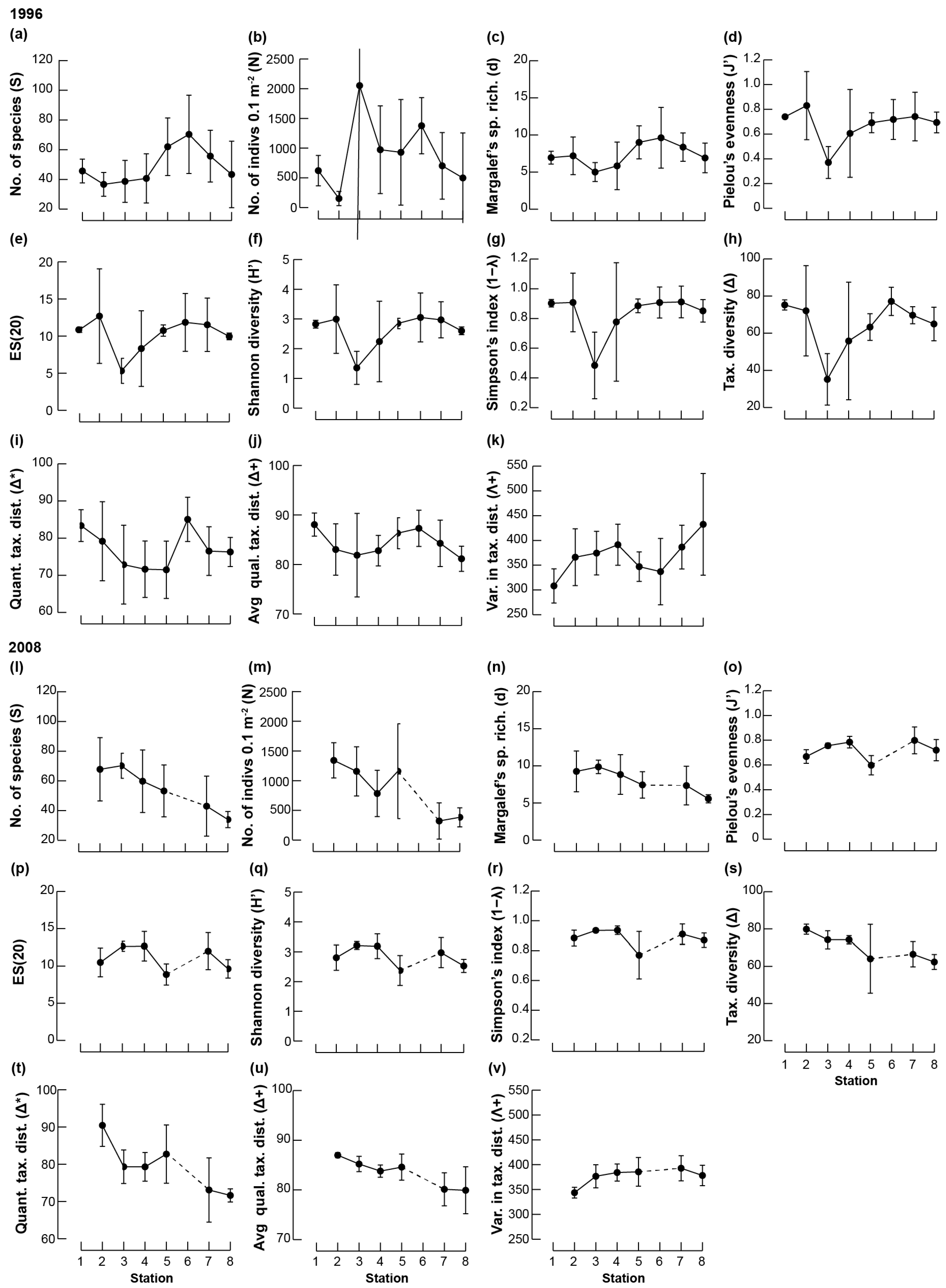
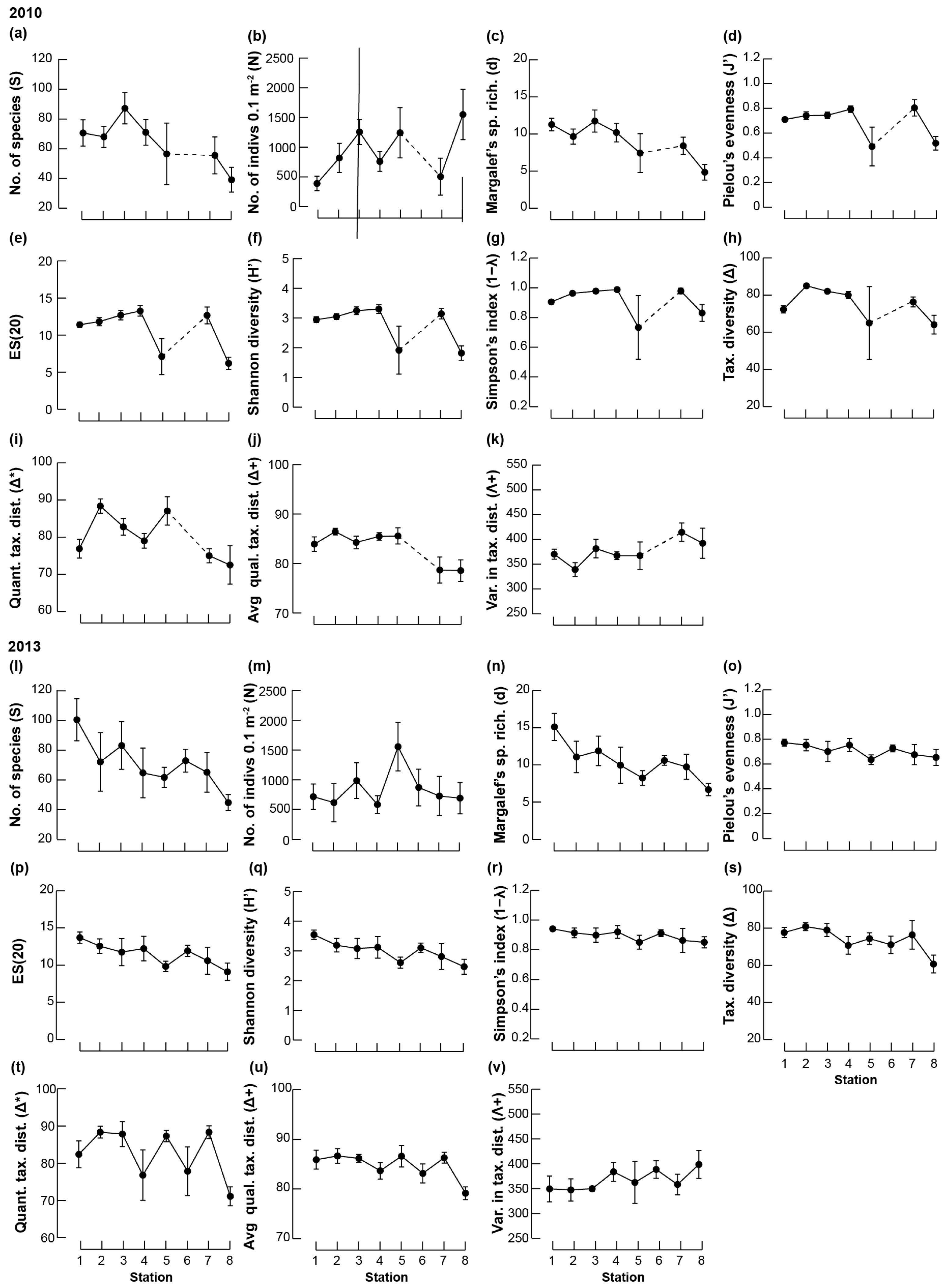
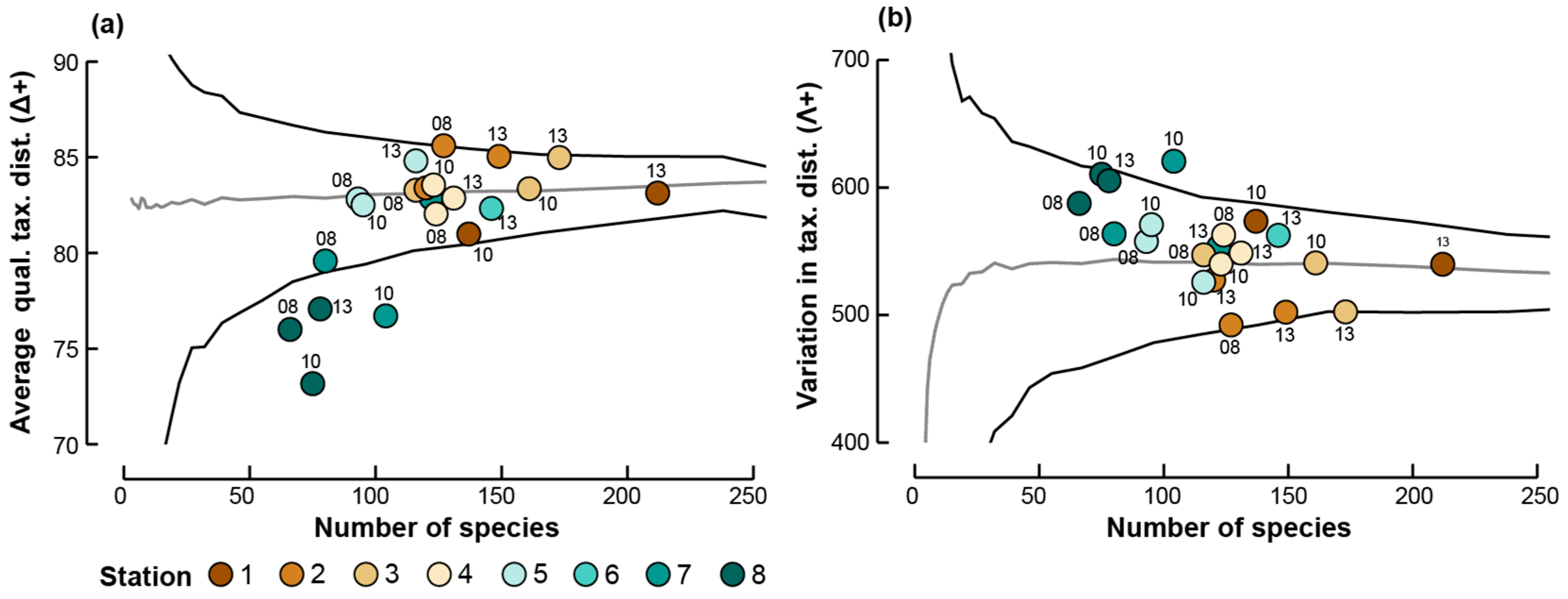
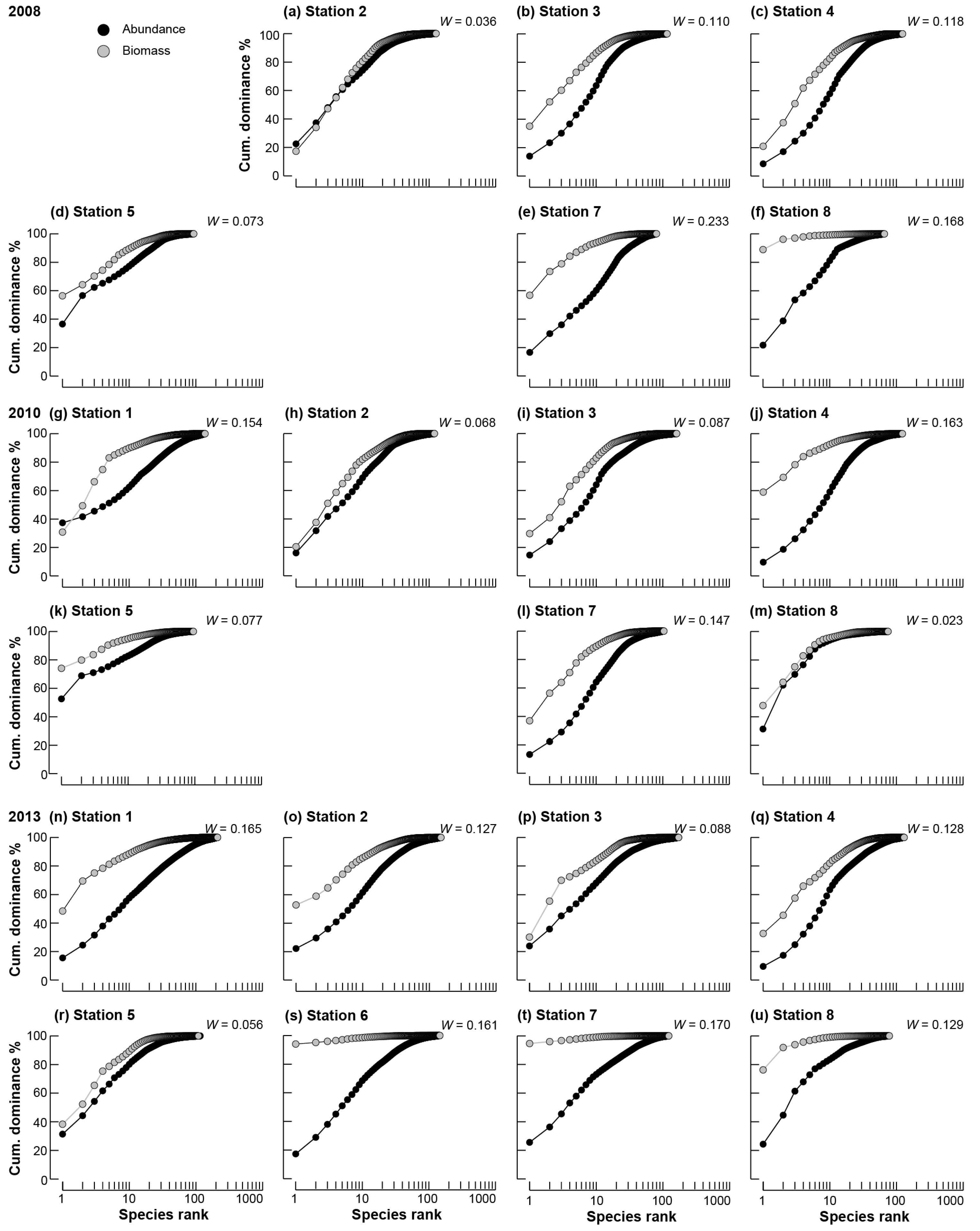
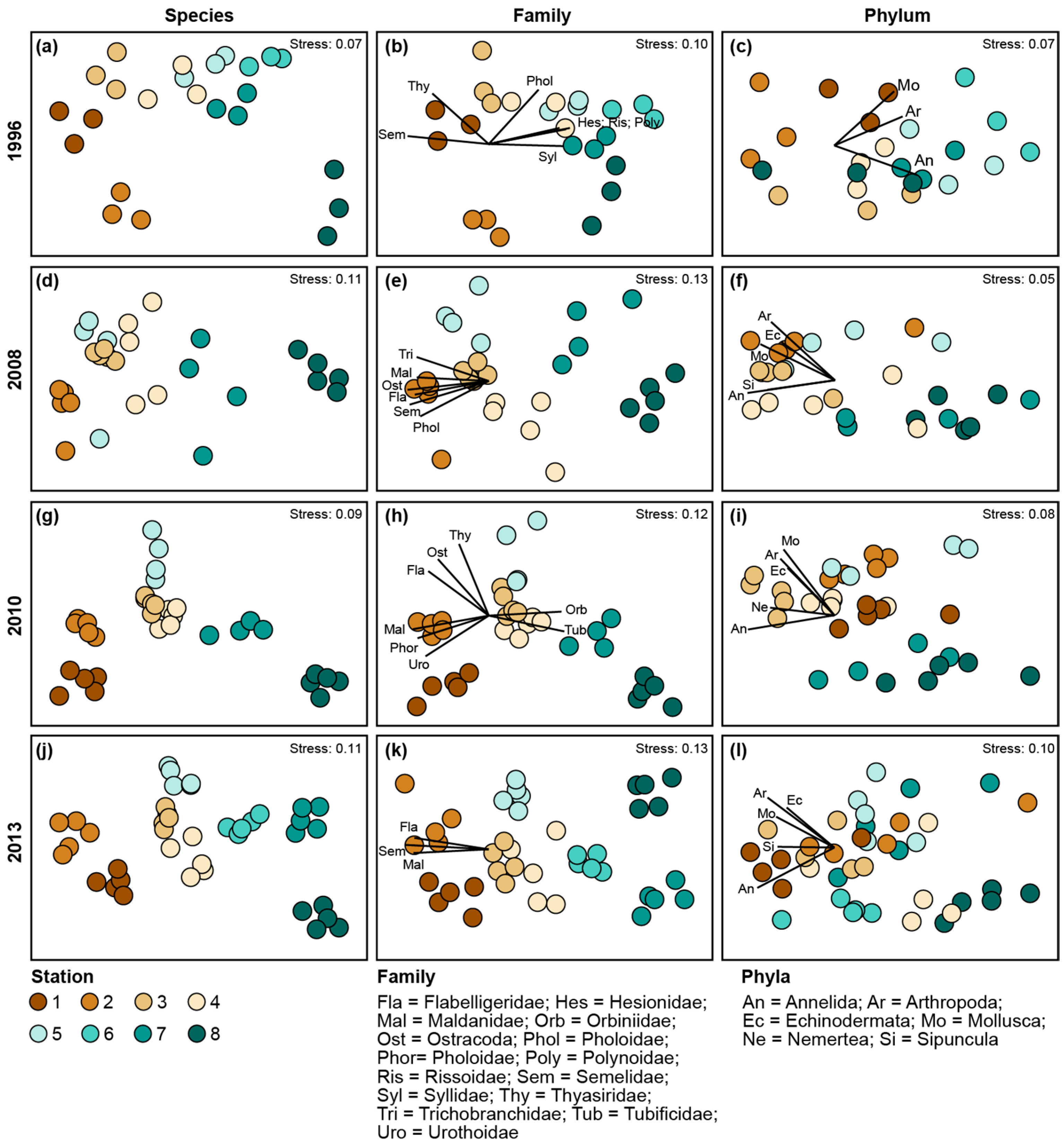
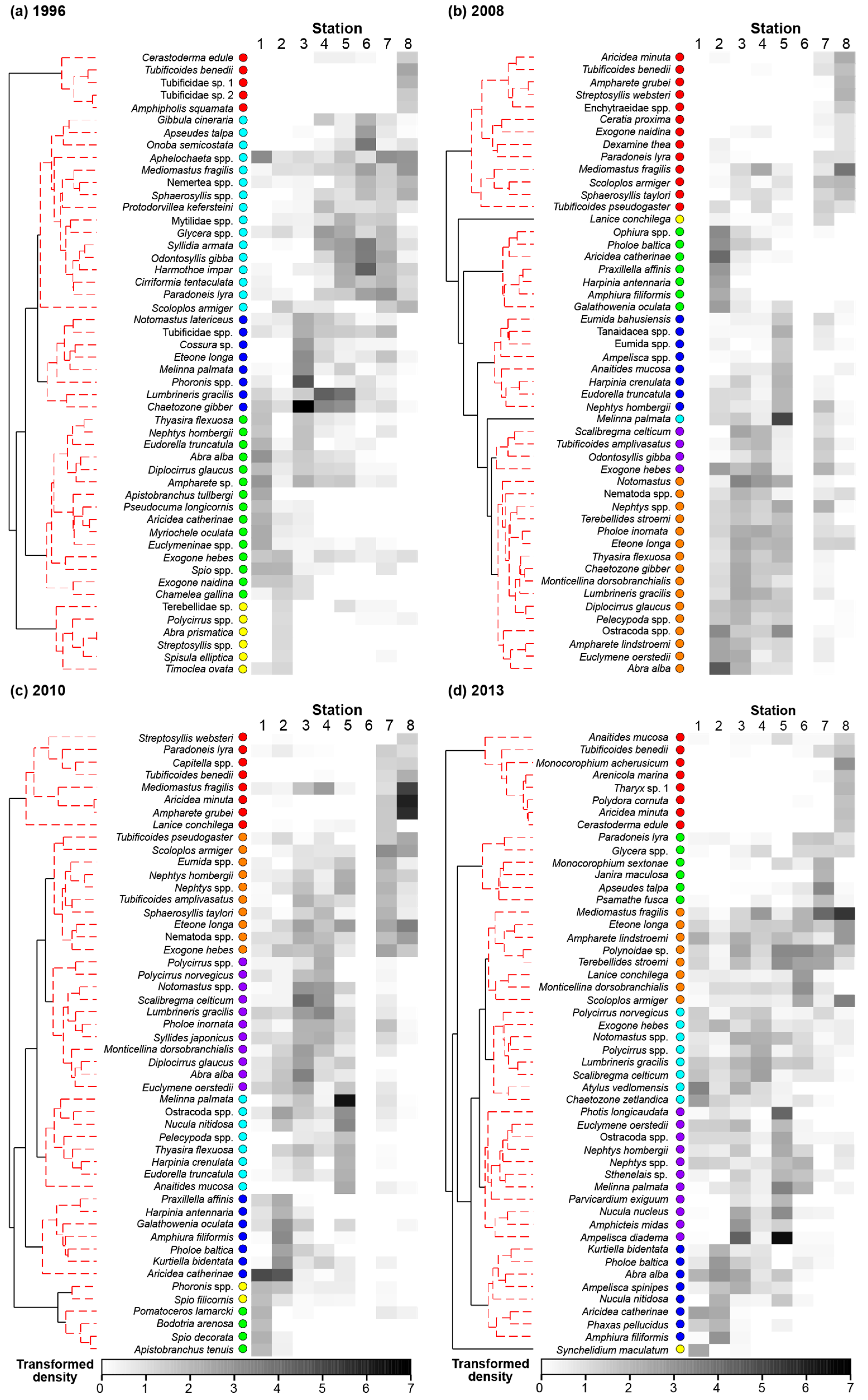
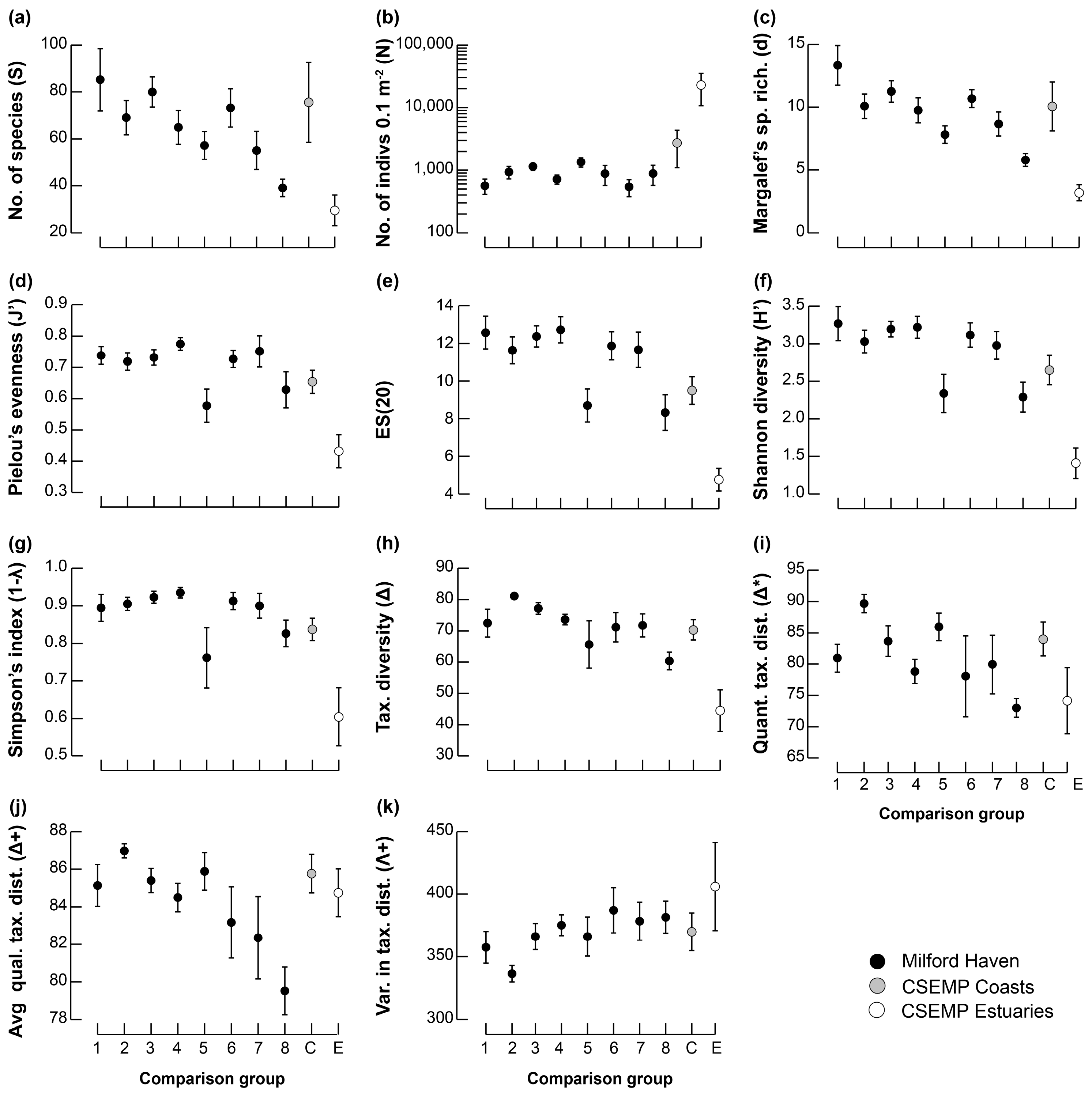
This study determined the environmental condition of the benthos of Milford Haven Waterway, an area that is arguably the most vulnerable in the UK to anthropogenic activities, including the potential effects of a major oil spill in 1996, using historical data on the macrobenthos more than a decade later in 2008, 2010 and 2013. These data show a gradual decline in numerous univariate diversity measures from the outer (marine) to inner (estuarine) stations. Taxonomic distinctness generally falls within the expected range, and most stations have above-average values compared with other monitoring stations around the UK. The W-statistics for Abundance/Biomass Comparison (ABC) plots are usually strongly positive and never negative. There was a sequential change in community composition from the outer to inner stations, which was strongly related to salinity, and, to a lesser extent, sediment granulometry. None of the species regarded as indicators of organic pollution were prominent in the macrobenthic community of Milford Haven Waterway. On this basis, although there are some slight indications of environmental perturbation at particular sites in certain years, it can be concluded that the benthic communities of Milford Haven Waterway are in a healthy state. This study provides a baseline against which the potential effects of any future environmental accidents and/or the increased industrial development can be assessed.
Keywords: biodiversity; community composition; environmental assessment; estuary; macrobenthos; petroleum industry biodiversity; community composition; environmental assessment; estuary; macrobenthos; petroleum industry