Article

Effects of Over-the-Counter Whitening Products on Microhardness, Gloss Retention, and Surface Roughness of Z350 XT Universal Restorative Composite Resin


1
Department of Restorative Dentistry, Collage of Dentistry, King Saud University, Riyadh 11545, Saudi Arabia
2
Collage of Dentistry, King Saud University, Riyadh 11545, Saudi Arabia
3
Department of Periodontics and Community Dentistry, Collage of Dentistry, King Saud University, Riyadh 11545, Saudi Arabia
*
Author to whom correspondence should be addressed.
Prosthesis 2026, 8(1), 12; https://doi.org/10.3390/prosthesis8010012
Submission received: 5 December 2025 / Revised: 15 January 2026 / Accepted: 16 January 2026 / Published: 22 January 2026

Abstract

Objectives: This study investigated the effects of three over-the-counter (OTC) whitening products, whitening pen (WP, Dazzling White Instant Whitening Pen, Dazzling White, Grand Rapids, MI, USA), whitening mouthwash (MW, Colgate Optic White, Colgate-Palmolive, New York, NY, USA), and whitening toothpaste (TP, Crest 3D White, Procter & Gamble, Cincinnati, OH, USA), on the microhardness, gloss retention, and surface roughness of a nanofilled resin composite (Filtek Z350 XT Universal Restorative, 3M ESPE). Methods: Composite resin specimens were prepared and subjected to treatment with WP, MW, or TP. Microhardness, gloss retention, and surface roughness were measured before and after treatment. Data were subjected to statistical analysis, with normality assessed by Shapiro–Wilk testing. Parametric data were summarized as mean ± SD, and differences were evaluated using paired t-tests and one-way ANOVA with a significance level of p ≤ 0. 05. Results: All whitening products significantly altered the tested surface properties. Microhardness decreased in all groups (MD [95% CI]: 2.28 [1.84–2.71] for WP, 5.05 [4.22–5.88] for MW, and 3.09 [2.35–3.83] for TP; p < 0.001), with the greatest reduction observed in the MW group. Gloss retention also declined significantly (MD [95% CI]: 9.52 [6.28–12.76] for WP, 17.97 [14.92–21.01] for MW, and 18.92 [15.64–22.21] for TP; p < 0.001), with TP and MW showing greater loss compared to WP. Surface roughness increased significantly within each group (MD [95% CI]: −0.07 [–0.10 to −0.04] for WP, −0.23 [–0.30 to −0.16] for MW, and −0.25 [–0.38 to −0.13] for TP; p < 0.001), although no significant differences were found among groups in post-treatment values. Conclusions: OTC whitening products adversely affected the optical and mechanical properties of Z350 XT universal composite resin. Whitening MW caused the most pronounced microhardness reduction, while MW and TP induced greater gloss loss than WP. Clinicians should consider the potential impact of whitening products on resin composite restorations when advising patients on their use.

1. Introduction

Resin-based composites are the most widely used restorative materials in modern dentistry due to their esthetic qualities and adhesive properties [1,2]. The surface properties of composite restorations directly influence esthetics, plaque accumulation, and wear resistance, and they are therefore essential for both function and patient satisfaction. However, composite resins are susceptible to surface changes when exposed to oral environmental factors and chemical agents [3,4].
Tooth whitening has become increasingly popular among patients seeking esthetic options. In addition to professional bleaching procedures, numerous over-the-counter (OTC) whitening products are available, including whitening toothpastes, mouthwashes, and pens. These products are convenient, relatively inexpensive, and accessible without professional supervision, which explains their widespread use [5,6]. Their whitening effects and mechanisms vary. Whitening toothpastes often contain abrasives and chemical agents; whitening mouthwashes commonly include low concentrations of hydrogen peroxide; and whitening pens deliver peroxide-based gels directly to the tooth surface [7,8].
Despite their benefits, the active ingredients and application protocols of these products may have adverse effects on restorative materials. The extent of these effects may depend on the type of whitening product, exposure time, and composite formulation, among other factors [9,10]. Given the increasing popularity of OTC whitening products and the limited available evidence regarding their effect on restorative materials, it is clinically relevant to examine how different whitening regimens may alter composite surfaces. Changes in microhardness, gloss, or roughness could compromise esthetic performance, facilitate staining or plaque accumulation, and shorten the longevity of restorations.
The aim of the present study was to evaluate the effect of three different OTC whitening products (whitening pen, whitening mouthwash, and whitening toothpaste) on the surface microhardness, gloss retention, and surface roughness of a universal composite resin.

2. Materials and Methods

2.1. Specimen Preparation

Seventy-two disk-shaped specimens (n = 144 surfaces) were prepared from a nanofilled universal composite resin (Filtek™ Z350 XT Universal Restorative, 3M ESPE, St. Paul, MN, USA). Each specimen measured 2 mm in height and 10 mm in diameter. The specimens were randomly divided into three experimental groups (n = 24 disks per group; 48 surfaces) for subsequent evaluation of microhardness, gloss, and surface roughness. Within each group, the specimens were further subdivided into three subgroups (n = 8 disks; 16 surfaces) according to the OTC whitening products tested. The groups were as follows: Group 1 (WP), whitening pen (Dazzling White Instant Whitening Pen, Dazzling White, Grand Rapids, MI, USA); Group 2 (MW), mouthwash (Colgate Optic White, Colgate-Palmolive, New York City, NY, USA); and Group 3 (TP), toothpaste (Crest 3D White, Procter & Gamble, Cincinnati, OH, USA). Table 1 summarizes details of the materials used in the study. Specimens were prepared using a standardized protocol. A circular mold was positioned on a transparent matrix strip supported by a glass slide and filled with composite resin. The mold was slightly overfilled, and the top was covered with a second matrix strip and glass slide to achieve flat surfaces. Polymerization was performed using a high-intensity LED curing unit (Elipar™ S10, 3M ESPE, St. Paul, MN, USA) for 20 s each on the top and bottom surfaces, as recommended by the manufacturer. After removal from the molds, specimens were stored in distilled water at 37 °C for 24 h in dark containers prior to testing.

2.2. Whitening Protocols

All specimens were dried before application of the whitening treatment and rinsed thoroughly after treatment. Between treatments, specimens were stored in distilled water at 37 °C until further testing.
Group 1 (WP): whitening pen (Dazzling White Instant Whitening Pen, Dazzling White, USA).
The surface of each disk was coated with whitening gel for 15 min, then rinsed with distilled water, according to the manufacturer’s instructions.
Group 2 (MW): mouthwash (Colgate Optic White, Colgate-Palmolive, USA).
Specimens were immersed in 20 mL (approximately four teaspoonfuls) of mouthwash and agitated for at least 30 s, following the manufacturer’s recommendations.
Group 3 (TP): toothpaste (Crest 3D White, Procter & Gamble, USA).
Specimens were subjected to simulated toothbrushing using a brushing simulator (ZM 3, SD Mechatronik GmbH, Feldkirchen-Westerham, Germany). Twelve specimens were mounted simultaneously in the brushing chambers using silicone putty (3M™ Express™ Standard Putty Kit, North Ryde, New South Wales, Australia). Soft, straight-bristled toothbrushes (TARA Toothbrush Company LLC, Dammam, Saudi Arabia) were attached to the simulator slots. A slurry of distilled water and the toothpaste was prepared at a 2:1 weight ratio and applied during brushing. Brushing was conducted with a load of 200 g, a stroke rate of 160 strokes/min, and a 38 mm stroke length. Each specimen received 900 strokes over five minutes, simulating 60 days of brushing based on published estimates that each tooth surface experiences ~5 s of contact per day under a twice-daily brushing regimen [9].

2.3. Microhardness Assessment

Microhardness was measured on the top and bottom surfaces of each specimen both before and after whitening treatment. Three Vickers indentations were made on each surface using a micro-indentation tester (INNOVATEST, Maastricht, The Netherlands) with a pyramidal diamond-shaped indenter. A load of 5 N was applied for 20 s per indentation. The Vickers Hardness Number (VHN) was calculated as the mean of the three readings for each surface.

2.4. Gloss Retention

Surface gloss was assessed before and after whitening treatments using a Novo-Curve gloss meter (Rhopoint Instruments Ltd., Hastings, Sussex, UK). Gloss measurements were performed on the top and bottom surfaces of each specimen, with three readings per surface. The mean value was recorded as the gloss score for each specimen.

2.5. Surface Roughness Assessment

Surface roughness (Ra) was recorded on the top and bottom surfaces of each specimen using a contact profilometer (SJ-401, Mitutoyo, Kawasaki, Japan). Prior to testing, the device was calibrated according to the manufacturer’s instructions. For each surface, three measurements were taken at different locations, and the arithmetic mean Ra value was calculated.

2.6. Scanning Electron Microscopy (SEM)

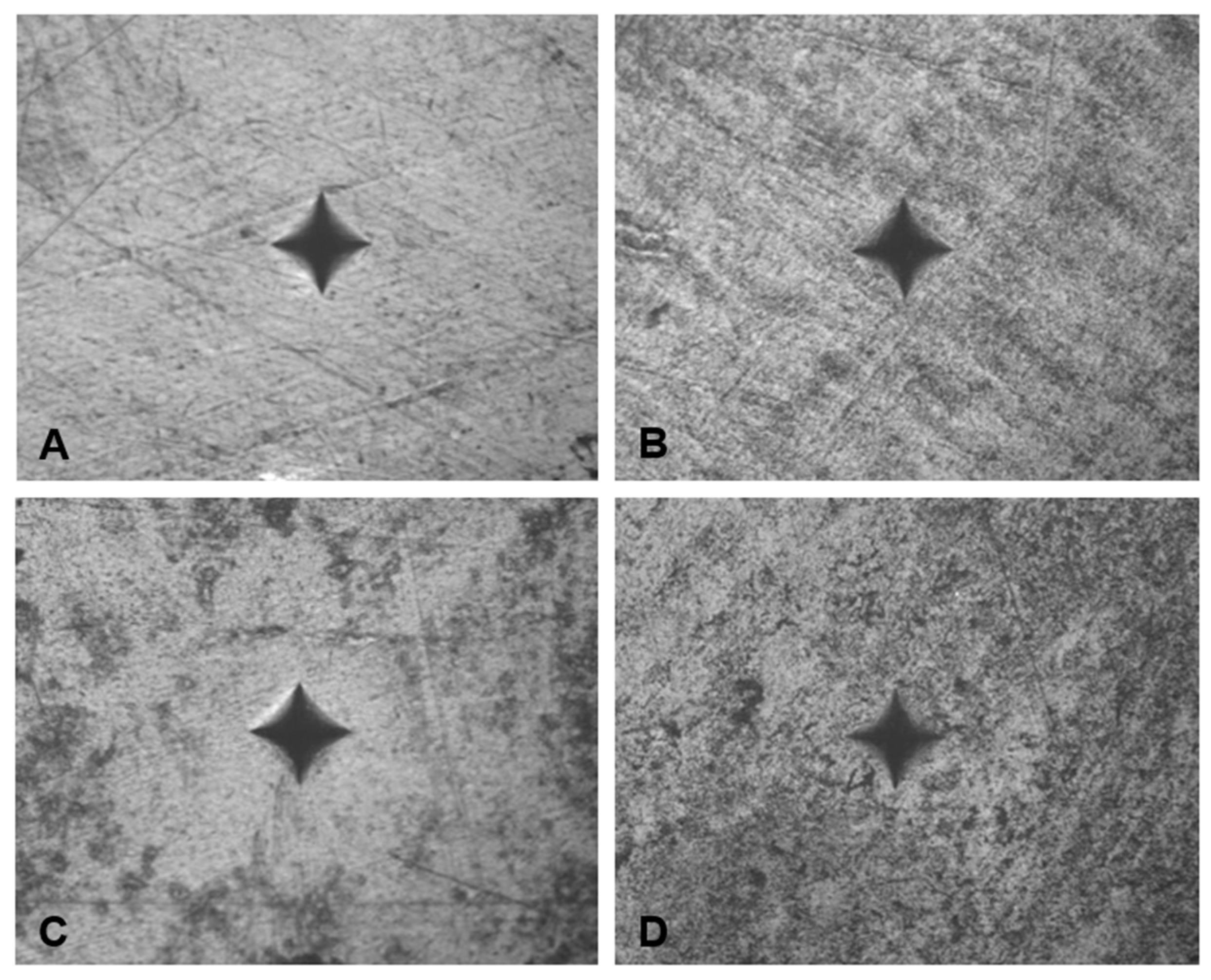
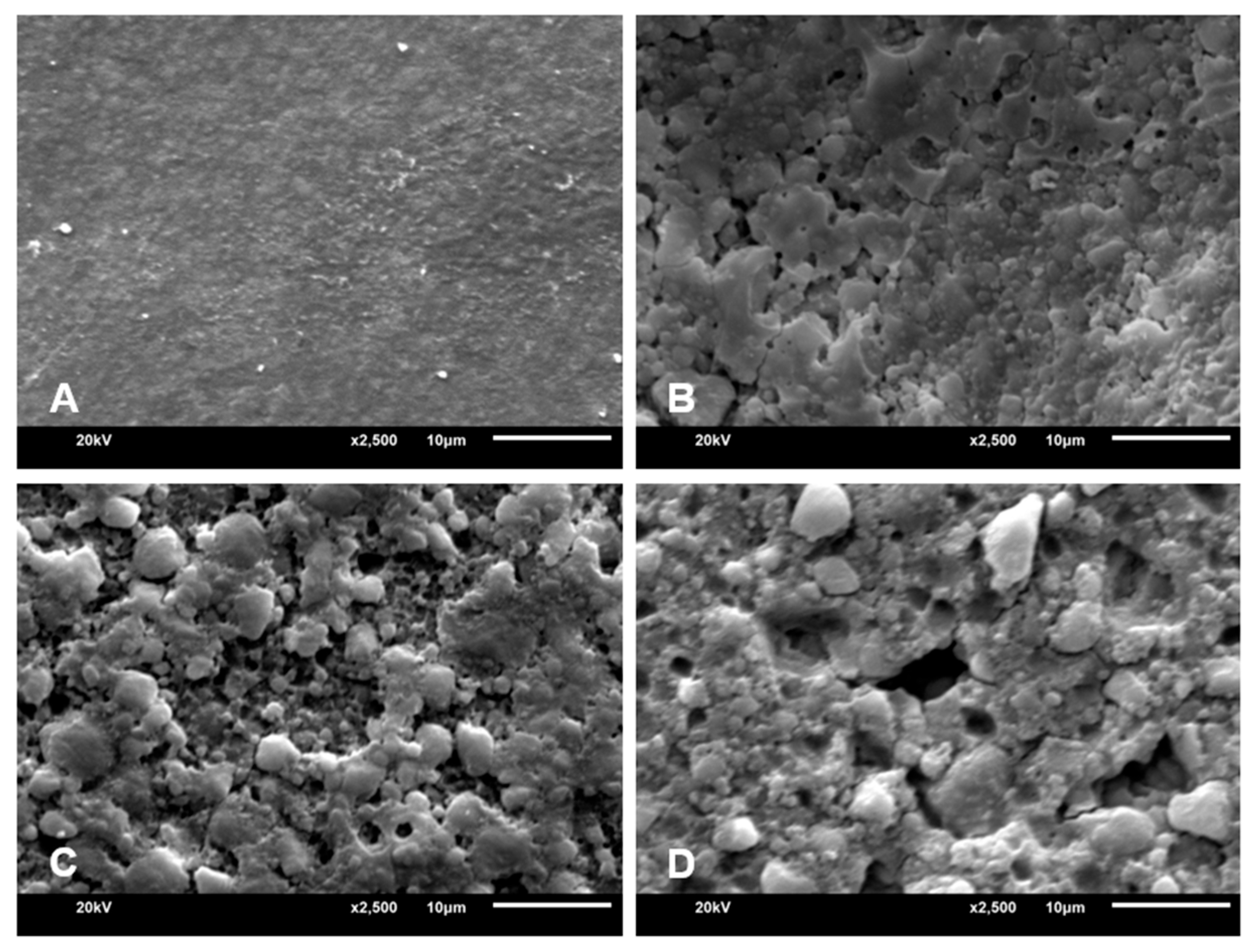
Representative specimens from each group were selected for scanning electron microscopy (SEM) to qualitatively evaluate surface morphology (Figure 1 and Figure 2). Samples were mounted on aluminum stubs and sputter-coated with a 27 nm gold–palladium layer. Imaging was performed using a JEOL 6360LV microscope (JEOL Ltd., Akishima, Tokyo, Japan) operated at an accelerating voltage of 20 kV and a working distance of 12 mm. SEM micrographs were captured at 2500× magnification for comparative surface topography analysis.

2.7. Statistical Analysis

Data analysis was carried out using Microsoft Excel and R Statistical Software (v4.2.2; R Core Team 2022). The statistical null hypothesis (H0) was that there was no statistically significant difference in the mean microhardness, gloss retention, or surface roughness of Z350 XT universal composite resin before and after treatment with over-the-counter whitening products. Continuous data were tested for normal distribution using the Shapiro–Wilk test and visual assessment and hence were described as parametric using mean and standard deviation. Baseline measurements of microhardness, gloss, and surface roughness were performed on all specimens prior to whitening treatments, and statistical analysis confirmed no significant differences between groups, ensuring comparability for subsequent experimental procedures. The difference between before and after treatment samples was calculated as mean difference with 95% confidence interval. A paired t-test was used to assess the significance of the difference. One-way analysis of variance (ANOVA) was applied to test if there was any difference among the three groups in after-treatment measures. The specimen (disk) was considered the independent unit, and multiple readings from the top and bottom surfaces were averaged to generate a single value per specimen for microhardness, gloss retention, and surface roughness. The significance level was set as p-value ≤ 0.05.

3. Results

3.1. Microhardness

Table 2 shows the values of the microhardness assessment in before- and after-treatment samples. All groups showed significant differences between the before and after values (p < 0.001) with the MD (95%CI) being 2.28 (1.84:2.71), 5.05 (4.22:5.88), and 3.09 (2.35:3.83) for WP, MW, and TP groups, respectively.

3.2. Gloss Retention

Table 3 shows the values of the gloss retention assessment in before- and after-treatment samples. The after-treatment evaluation showed a significant difference (p < 0.001), with the group receiving TP showing the highest gloss differences. All groups showed significant differences between before and after values (p < 0.001), with the MD (95%CI) being 9.52 (6.28: 12.76), 17.97 (14.92: 21.01), and 18.92 (15.64: 22.21) for WP, MW, and TP groups, respectively.

3.3. Surface Roughness

Regarding surface roughness assessment, there was no difference in the after-treatment values among the three groups; however, all groups showed significant differences between before and after values (p < 0.001), with the MD (95%CI) being −0.07 (−0.1:−0.04), −0.23 (−0.3:−0.16), and −0.25 (−0.38:−0.13) for WP, MW, and TP groups respectively (Table 4).

4. Discussion

The effectiveness and side effects of OTC whitening products on restorations are highly dependent on both the composite resin material and the specific whitening agent used. Reports indicate that microhybrid composites tend to resist staining and surface changes better than nanohybrid or supra-nanofilled types. Additionally, OTC whitening products can improve the appearance of stained composite resins but rarely restore them to their original color and may increase surface roughness, especially with prolonged use or abrasive formulas [11,12]. The present study investigated the effect of three commonly used OTC whitening products on the surface properties of a universal composite resin (Filtek™ Z350 XT Universal Restorative, 3M ESPE, St. Paul, MN, USA). The results demonstrated significant changes in microhardness, gloss retention, and surface roughness following exposure to the whitening products. The statistical null hypothesis was rejected.
Microhardness of a restorative material is a characteristic used to assess the ability of a material to withstand penetration and deformation, so it directly correlates to the strength and rigidity of the restorative material [13,14]. In the current study, a reduction in microhardness was observed in all groups, consistent with previous reports that peroxide-based agents can degrade resin matrices and soften the polymer network [15,16]. Among the tested products, the whitening mouthwash produced the greatest reduction in hardness, likely due to its prolonged liquid contact, which may facilitate water sorption and plasticization of the resin. This finding aligns with earlier studies showing that bleaching solutions reduce hardness more significantly than short-term application of gels or abrasive pastes [17].
Earlier studies indicated that the combined oxidative action of bleaching agents and the acidic/alcoholic components of mouthwash (e.g., benzyl alcohol), together with sodium fluoride, contribute to resin composite softening and reduced surface hardness [15,16,17,18,19,20]. This two-step process (chemical degradation and matrix destabilization) might explain the significant microhardness loss observed in the mouthwash group.
The results of the current study also showed that the whitening toothpaste significantly decreased the microhardness of the composite. This could be attributed to the effect of the mechanical silica abrasives in the toothpaste [21,22]. Khamverdi et al. [21] emphasized that other factors such as particle size and shape, source, and purity impact agent abrasiveness, which can affect the microhardness. In contrast, Roopa et al. reported that, in their study, composite resin polymer showed no significant difference in microhardness either with conventional or whitening toothpaste [23]. Furthermore, Salama et al. reported that microhardness increased after application of the whitening toothpastes [13]. Differences could be related to the different types of restorative materials and toothpastes used as well as variations in the time and frequency of treatments.
Statistically significant reduction in microhardness was also observed with the whitening pen. Hydrogen peroxide is an active ingredient in whitening pens, which suggests a high potential for oxidation. Peroxides have been reported to induce oxidative cleavage of polymer chains, and thereby unreacted double bonds are expected to be the most vulnerable parts of the polymers [24], which might explain the findings of the current study.
Gloss measurements also declined significantly after whitening treatment, particularly in specimens exposed to the whitening mouthwash and toothpaste groups. Gloss loss has been attributed to microstructural surface degradation, which disrupts light reflection from a smooth surface [25]. The abrasive nature of whitening toothpastes, combined with the mechanical action of brushing, likely contributed to the most pronounced gloss reduction, confirming earlier findings that brushing with abrasive dentifrices accelerates surface wear and loss of luster [26,27]. Alcohol and other materials present in mouthwashes, such as detergents, emulsifiers, and organic acids, cause wear and surface degeneration in dental restorations and therefore can possibly be attributed to the significantly declined surface gloss reported in the present study. Whitening pens had the least reduction on gloss when compared to the mouthwash and toothpaste groups. The low concentration of hydrogen peroxide (6% only) along with shortened contact time may possibly explain these results.
Surface roughness values increased significantly in all groups following whitening treatment. Roughness is clinically relevant as it facilitates plaque accumulation, staining, and secondary caries. The whitening toothpaste group showed the highest Ra values, consistent with its abrasive effect during brushing cycles. SEM images supported the quantitative findings, revealing surface irregularities and micro-voids, specifically in the toothpaste group. These morphological alterations confirm that whitening procedures, especially abrasive ones, compromise the integrity of the composite surface [28,29].
In this study, no significant difference in surface roughness was detected among groups; however, whitening toothpaste caused the greatest increase, followed by the mouthwash and whitening pen. The abrasive silica in toothpaste likely contributed to surface irregularities through filler particle displacement and microcrack formation. The mouthwash and whitening pen also increased surface roughness, likely due to the acidic or alcoholic composition of mouthwash and the oxidative action of hydrogen peroxide in whitening pens, both of which can degrade the resin matrix and weaken the filler–resin interface.
The findings of this study demonstrate that OTC whitening products adversely affect the surface properties of composite restorations. Patients using whitening toothpastes, mouthwashes, or whitening pens may experience reduced gloss, increased roughness, and compromised hardness of their restorations. Clinical practitioners should therefore inform patients about the potential risks of unsupervised whitening, particularly the use of abrasive toothpastes. Nevertheless, while statistically significant differences were observed (p < 0.001), reductions in microhardness and gloss, as well as increases in surface roughness, were generally small, and post-treatment Ra values remained within ranges that may not have meaningfully affected plaque accumulation, esthetic perception, or mechanical performance.
Limitations of this study include the in vitro setting which cannot fully replicate the complex conditions of the oral cavity, such as variations in pH, saliva composition, thermal cycling, and mechanical loading. In addition, only one type of universal composite resin was tested, which limits the generalizability of the findings. Another key limitation of the study is that the whitening protocols differed in exposure intensity, including peroxide dose and mechanical challenge. These differences may have contributed to the observed variability in microhardness, gloss retention, and surface roughness.
Future research should examine a variety of composite formulations, including bulk-fill and nanohybrid resins, to assess material-specific responses to whitening products. Long-term studies with repeated whitening cycles and normalized exposure metrics are needed to simulate real-world use and evaluate cumulative effects on microhardness, gloss, and surface roughness. Clinical trials are essential to validate in vitro findings under oral conditions, while mechanistic studies could guide strategies, such as surface treatments, to preserve the integrity and esthetics of restoration.

5. Conclusions

Exposure to OTC whitening products can affect the surface properties of universal composite resin, leading to decreased microhardness, reduced gloss retention, and increased surface roughness. While these findings indicate a potential risk to the esthetics and function of composite restorations, this study does not assess long-term clinical performance or restoration failure. Clinicians should be aware of these effects and provide guidance to patients using OTC whitening products, emphasizing caution and professional supervision.

Author Contributions

Conceptualization, M.B., S.A. (Sadeem Alkhamees) and R.A.; methodology, M.B., S.A. (Sadeem Alkhamees), S.S. and N.S.; formal analysis, N.A.-M., M.B. and H.B.; investigation, M.B., R.A. and S.S.; writing—original draft preparation, S.A. (Sadeem Alkhamees), R.A., S.A. (Shahad Alsumikhi) and N.S.; writing—review and editing, N.A.-M., H.B., R.A. and S.S. All authors have read and agreed to the published version of the manuscript.

Funding

This research received no external funding.

Institutional Review Board Statement

Not applicable.

Informed Consent Statement

Not applicable.

Data Availability Statement

The dataset is available on request from the authors.

Conflicts of Interest

The authors declare that they have no conflicts of interest.

References

  1. Pratap, B.; Gupta, R.K.; Bhardwaj, B.; Nag, M. Resin based restorative dental materials: Characteristics and future perspectives. Jpn. Dent. Sci. Rev. 2019, 55, 126–138. [Google Scholar] [CrossRef]
  2. de Resende, L.F.M.; Catelan, A.; Baroudi, K.; Palialol, A.R.M.; de Resende, A.M.; Andreucci, A.C.; Zanatta, R.F.; Liporoni, P.C.S. Mechanical properties of experimental composites with different photoinitiator. Eur. J. Dent. 2022, 16, 167–172. [Google Scholar] [CrossRef]
  3. Ferracane, J.L. Resin composite—State of the art. Dent. Mater. 2011, 27, 29–38. [Google Scholar] [CrossRef]
  4. Ferracane, J.L. A historical perspective on dental composite restorative materials. J. Funct. Biomater. 2024, 15, 173. [Google Scholar] [CrossRef] [PubMed]
  5. Pascolutti, M.; de Oliveira, D. A radical-free approach to teeth whitening. Dent. J. 2021, 9, 148. [Google Scholar] [CrossRef] [PubMed]
  6. Basheer, R.R.; Abouelmagd, D.M.; Alnefaie, A.; Baamer, R. Effect of at-home versus over-the-counter bleaching agents on enamel color, roughness, and color stability. Cureus 2023, 15, e39036. [Google Scholar] [CrossRef]
  7. Tadin, A.; Galic, S.; Gavic, L. Assessment of color change, esthetic perception, treatment satisfaction, and side effects following the use of over-the-counter whitening products. Acta Stomatol. Croat. 2023, 57, 300–315. [Google Scholar] [CrossRef]
  8. Grobler, S.R.; Majeed, A.; Moola, M.H. Effect of various tooth-whitening products on enamel microhardness. S. Afr. Dent. J. 2009, 64, 474–479. [Google Scholar]
  9. Goldberg, M.; Grootveld, M.; Lynch, E. Undesirable and adverse effects of tooth-whitening products: A review. Clin. Oral. Investig. 2010, 14, 1–10. [Google Scholar] [CrossRef] [PubMed]
  10. Ghavamnasiri, M.; Abedini, S.; Mehdizadeh Tazangi, A. Effect of different time periods of vital bleaching on flexural strength of the bovine enamel and dentin complex. J. Contemp. Dent. Pract. 2007, 8, 21–28. [Google Scholar] [CrossRef]
  11. Turkistani, A.; Hasanain, F.A. Investigating the impact of whitening toothpastes on bioactive resin-based restorative materials: A comparative analysis. BMC Oral Health 2024, 24, 1527. [Google Scholar] [CrossRef]
  12. Reinhardt, J.W.; Balbierz, M.M.; Schultz, C.M.; Simetich, B.; Beatty, M.W. Effect of tooth-whitening procedures on stained composite resins. Oper. Dent. 2019, 44, 65–75. [Google Scholar] [CrossRef]
  13. Salama, F.; Abdelmegid, F.; Alhomaidhi, L.; Alswayyed, S.; Alfarraj, S. Effect of whitening toothpastes and brushing on microhardness of esthetic restorative materials. J. Clin. Pediatr. Dent. 2020, 44, 296–301. [Google Scholar] [CrossRef]
  14. Hashemikamangar, S.S.; Meymand, M.Z.; Kharazifard, M.J.; Valizadeh, S. Surface microhardness of a self-adhesive composite in comparison with conventional composite resins. Dent. Med. Probl. 2020, 57, 247–253. [Google Scholar] [CrossRef]
  15. Kimyai, S.; Lahij, Y.G.; Daneshpooy, M.; Navimipour, E.J.; Oskoee, P.A. Effect of bleaching with 15% carbamide peroxide on flexural strength of three resin-based restorative materials. Front. Dent. 2020, 17, 27. [Google Scholar] [CrossRef]
  16. Durner, J.; Stojanovic, M.; Urcan, E.; Spahl, W.; Haertel, U.; Hickel, R.; Reichl, F.X. Effect of hydrogen peroxide on the three-dimensional polymer network in composites. Dent. Mater. 2011, 27, 573–580. [Google Scholar] [CrossRef]
  17. de Carvalho, A.C.; de Souza, T.F.; Liporoni, P.C.; Pizi, E.C.; Matuda, L.A.; Catelan, A. Effect of bleaching agents on hardness, surface roughness and color parameters of dental enamel. J. Clin. Exp. Dent. 2020, 12, e670–e675. [Google Scholar] [CrossRef] [PubMed]
  18. Alessa, N. Effects of low pH and alcohol-containing mouthwashes on composite microhardness. An. Sist. Sanit. Navar. 2023, 46, e1049. [Google Scholar] [CrossRef] [PubMed]
  19. Toz Akalin, T.; Genc, G.; Korkmaz Ceyhan, Y.; Ozturk Bozkurt, F. The effect of mouth rinses on the color stability of sonicfill and a nanohybrid composite. J. Istanb. Univ. Fac. Dent. 2016, 50, 17–23. [Google Scholar] [CrossRef] [PubMed]
  20. Cavalcanti, A.N.; Mitsui, F.H.O.; Ambrosano, G.M.B.; Mathias, P.; Marchi, G.M. Effect of different mouthrinses on Knoop hardness of a restorative composite. Am. J. Dent. 2005, 18, 338–340. [Google Scholar]
  21. Khamverdi, Z.; Kasraie, S.; Rezaei-Soufi, L.; Jebeli, S. Comparison of the effects of two whitening toothpastes on microhardness of the enamel and a microhybrid composite resin: An in vitro study. J. Dent. 2010, 7, 139–145. [Google Scholar]
  22. Praveen, J.; Jayasree, S. Comparison of the effects of different toothpastes on the microhardness of a nano hybrid composite resin—An in-vitro study. IOSR J. Dent. Med. Sci. 2017, 16, 6–11. [Google Scholar]
  23. Roopa, K.B.; Basappa, N.; Prabhakar, A.R.; Raju, O.S.; Lamba, G. Effect of whitening dentifrice on micro hardness, colour stability and surface roughness of aesthetic restorative materials. J. Clin. Diagn. Res. 2016, 10, ZC06–ZC11. [Google Scholar] [CrossRef]
  24. Malkondu, H.; Yurdagüven, E.C.; Say, E.C.; Kazazoğlu, M.; Soyman, M. Effect of bleaching on microhardness of esthetic restorative materials. Oper. Dent. 2011, 36, 177–182. [Google Scholar] [CrossRef]
  25. Zovko, R.; Cvitanović, S.; Mabić, M.; Šarac, Z.; Ćorić, A.; Glavina, D.; Goršeta, K. The effect of chemical degradation and polishing on the gloss of composite dental materials. Materials 2023, 16, 3727. [Google Scholar] [CrossRef]
  26. Magalhaes, A.C.; Wiegand, A.; Buzalaf, M.A.R. Use of dentifrices to prevent erosive tooth wear: Harmful or helpful? Braz. Oral Res. 2014, 28, 1–6. [Google Scholar] [CrossRef]
  27. Ferreira, N.M.R.; Lippert, V.F.; Heck, A.B.D.S.; Spohr, A.M.; Kunrath, M.F.; Feldens, C.A.; Kramer, P.F. Surface roughness of composite resins subjected to brushing with whitening toothpastes: An in vitro study. Braz. Oral Res. 2025, 39, e006. [Google Scholar] [CrossRef] [PubMed]
  28. Monteiro, B.; Spohr, A.M. Surface roughness of composite resins after simulated toothbrushing with different dentifrices. J. Int. Oral Health 2015, 7, 1–5. [Google Scholar] [PubMed]
  29. Dos Santos, J.H.; Silva, N.L.; Gomes, M.G.; Paschoal, M.A.; Gomes, I.A. Whitening toothpastes effect on nanoparticle resin composite roughness after a brushing challenge: An in vitro study. J. Clin. Exp. Dent. 2019, 11, e334–e339. [Google Scholar] [CrossRef]
Figure 1. Representative micrographs of Vickers hardness indentations on composite resin surfaces: (A) baseline before treatment, showing a well-defined indentation on a relatively smooth surface; (B) after treatment with whitening pen (WP), showing surface alteration; (C) after treatment with whitening mouthwash (MW), showing more evident surface irregularities around the indentation; and (D) after treatment with whitening toothpaste (TP), showing more evident surface changes surrounding the indentation.
Prosthesis 08 00012 g001
Figure 2. Representative scanning electron microscope (SEM) images (×2500 magnification, scale bar = 10 μm) of composite resin surfaces: (A) baseline before treatment, showing a smooth and homogeneous surface; (B) after treatment with whitening pen (WP), showing surface irregularities; (C) after treatment with whitening mouthwash (MW), showing pronounced surface roughness and porosities; and (D) after treatment with whitening toothpaste (TP), showing surface alterations with irregularities and voids.
Prosthesis 08 00012 g002
Table 1. Materials used in the study.
MaterialsCompositionCompany/Country
Dazzling White Instant Whitening PenPurified water, 6% hydrogen peroxide, denatured alcohol, polyvinyl pyrrolidone, polyethylene glycol, zinc oxide.Dazzling white/USA
Colgate Optic White mouthwashAqua, glycerin, propylene, glycol, sorbitol, tetrapotassium, pyrophosphate, polysorbate 20, tetrasodium pyrophosphate, zinc citrate
Pvm/ma copolymer, aroma, benzyl alcohol, sodium fluoride
sodium saccharin
Colgate-Palmolive/USA
Crest 3D White toothpasteWater, sorbitol, hydrate silica, sodium lauryl sulfate, disodium pyrophosphate, sodium hydroxide, Sodium fluoride 0.243% (0.15% w/v fluoride ion).Procter & Gamble (P&G)/USA
Z350 XT Universal RestorativeBis-GMA (Bisphenol A diglycidyl ether dimethacrylate), UDMA (Urethane Dimethacrylate), Bis-EMA (Ethoxylated Bisphenol A Dimethacrylate), TEGDMA (Triethylene Glycol Dimethacrylate), silica nanoparticles (20 nm), zirconia/silica nanoparticles (4–11 nm), zirconia/silica nanoclusters (0.6–10 µm), 72.5% filler by weight, 55.6% filler by volume.3M ESPE, St Paul/USA
Table 2. Microhardness values among the groups before and after treatment.
Type of OTC
WPMWTP
Before82.80 (0.96)84.36 (0.97)82.49 (1.10)
After80.53 (1.40)79.31 (1.33)79.40 (1.49)
MD (95% CI)2.28 (1.84: 2.71)5.05 (4.22: 5.88)3.09 (2.35: 3.83)
p-value<0.001<0.001<0.001
Data described as mean (standard deviation). OTC: over the counter; WP: whitening pen; MW: mouthwash; TP: toothpaste; MD: mean difference; CI: confidence interval.
Table 3. Gloss retention values among the groups before and after treatment.
Type of OTC
WPMWTP
Before156.35 (5.99)156.96 (5.18)158.31 (4.78)
After146.83 (1.05)139.00 (4.24)139.39 (3.25)
MD (95% CI)9.52 (6.28: 12.76)17.97 (14.92: 21.01)18.92 (15.64: 22.21)
p-value<0.001<0.001<0.001
Data described as mean (standard deviation). OTC: over the counter; WP: whitening pen; MW: mouthwash; TP: toothpaste; MD: mean difference; CI: confidence interval.
Table 4. Surface roughness values among the groups before and after treatment.
Type of OTC
WPMWTP
Before0.29 (0.63)0.22 (0.07)0.27 (0.21)
After0.36 (0.66)0.45 (0.16)0.52 (0.30)
MD (95% CI)−0.07 (−0.1: −0.04)−0.23 (−0.3: −0.16)−0.25 (−0.38: −0.13)
p-value <0.001<0.001<0.001
Data described as mean (standard deviation). OTC: over the counter; WP: whitening pen; MW: mouthwash; TP: toothpaste; MD: mean difference; CI: confidence interval.
Disclaimer/Publisher’s Note: The statements, opinions and data contained in all publications are solely those of the individual author(s) and contributor(s) and not of MDPI and/or the editor(s). MDPI and/or the editor(s) disclaim responsibility for any injury to people or property resulting from any ideas, methods, instructions or products referred to in the content.