Article

Fit Accuracy and Shear Peel Bond Strength of CAD/CAM-Fabricated Versus Conventional Stainless Steel Space Maintainers: In Vitro Comparative Study


by
Marzia Kareem Ahmed
* and
Aras Maruf Rauf
Department of Pedodontics and Community Oral Health, College of Dentistry, University of Sulaimani, Sulaymaniyah 56001, Iraq
*
Author to whom correspondence should be addressed.
Prosthesis 2025, 7(6), 159; https://doi.org/10.3390/prosthesis7060159
Submission received: 5 November 2025 / Revised: 30 November 2025 / Accepted: 1 December 2025 / Published: 3 December 2025
(This article belongs to the Section Prosthodontics)

Abstract

Background/Objectives: The precision and bonding reliability of space maintainers are critical to their clinical success longevity. This study aimed to evaluate and compare the fit accuracy and shear peel bond strength of digitally fabricated space maintainers—cobalt–chromium (Co-Cr) and polyetheretherketone (PEEK)—against conventional space maintainers. Methods: Seventy-eight space maintainer bands were fabricated—milled PEEK, selective laser-melted (SLM; an additive manufacturing technique) Co-Cr, and conventional stainless steel (SS)—and tested. Fit accuracy was evaluated on 39 bands by measuring the root mean square (RMS) deviation from a master model using digital 3D analysis. Shear peel bond strength (SPBS) was tested on another 39 samples using a universal testing machine, and the adhesive remnant index (ARI) was recorded after debonding. Statistical analyses included a Welch ANOVA for fit accuracy and the Kruskal–Wallis test for the SPBS test; the ARI was analyzed using Fisher’s exact test (significance level p < 0.05). Results: Digitally fabricated bands demonstrated significantly higher fit accuracy than the stainless steel bands (mean RMS deviation: Co-Cr = 0.151 mm, PEEK = 0.152 mm, SS = 0.344 mm; p < 0.001). Co-Cr and PEEK demonstrated comparable adaptation. In contrast, bond strength was significantly greater in Co-Cr (1.657 MPa) and SS (1.481 MPa) compared to PEEK (0.393 MPa). ARI distribution varied significantly across the three groups. Conclusions: Both milled PEEK and Co-Cr bands demonstrated excellent adaptation compared with conventional SS bands. However, Co-Cr exhibited reliable bonding performance, yet PEEK may require additional surface treatment or bonding optimization to enhance adhesion.

1. Introduction

The premature loss of primary teeth, mainly due to dental caries, continues to be a major concern in pediatric dentistry. The primary dentition is essential for mastication, speech development, and the maintenance of arch space [1]. Their early loss can disrupt the balance of the dental arch and change the eruption patterns of successor teeth [2,3], frequently leading to malocclusion, which may necessitate intricate orthodontic intervention [4].
Space maintainers are intended to uphold the structural integrity of the dental arch after premature tooth extraction and are typically categorized into three types: fixed unilateral, fixed bilateral, and removable. The band-and-loop design is the most commonly utilized due to its simplicity and reliability [5]. Although such appliances may be placed on either primary or permanent molars, the first permanent molar is most frequently selected as the abutment tooth in routine practice [1]. This distinction is important, as primary teeth differ from permanent teeth in enamel thickness, dentin permeability, and bonding substrate characteristics—factors that can influence adhesive performance and clinical outcomes [6,7,8,9].
Despite their widespread use, conventional space maintainers possess certain limitations. Multiple appointments are frequently necessary, utilizing traditional impression methods that may cause discomfort for children and relying on laboratory processes that extend chairside duration [1]. Failures such as band loosening, cement loss, or solder breakage are common, necessitating repair or replacement and extending the course of treatment [10].
The introduction of digital methods has markedly changed dental appliance fabrication. Computer-aided design and computer-aided manufacturing (CAD/CAM) systems—originally developed for milling [11]—have expanded to include additive manufacturing techniques such as selective laser melting (SLM) and selective laser sintering (SLS) [12]. These technologies enable the production of highly accurate, customized space maintainers; reduce operator-related variability; and increase patient cooperation—qualities particularly advantageous in the pediatric practice [5,13].
The selection of material plays a critical role in the success of space maintainers. Cobalt–chromium (Co-Cr) alloys remain a common choice due to their mechanical strength, durability, and suitability for both conventional and digital manufacturing [14]. More recently, polyetheretherketone (PEEK) has gained attention as a promising alternative. This high-performance polymer demonstrates excellent biocompatibility, resistance to wear and fatigue, and thermal stability. Its radiolucency allows for clear radiographic assessment, while its natural color offers aesthetic benefits for children. However, the chemically inert surface of PEEK poses challenges for adhesion, often requiring surface conditioning to improve bonding with luting cements [15]. Because material stiffness and surface chemistry strongly influence marginal fit and bonding strength, Co-Cr and PEEK are expected to perform differently when used as digitally fabricated space maintainer bands [16].
The long-term stability of space maintainers depends on the precision of their fit and the integrity of the cement interface. Failures usually arise at the junction between the band and the cement or between the cement and the tooth, emphasizing the need for accurate fabrication and strong bonding [17]. Proper marginal adaptation minimizes plaque accumulation and supports periodontal health [18,19].
Despite recent advances in digital workflows and the introduction of materials such as PEEK, comparative data on their clinical and mechanical performance relative to traditional band-and-loop stainless steel (SS) space maintainers are still limited. This in vitro study aims to compare the accuracy and bond strength of digitally fabricated space maintainers with conventional SS space maintainers. The null hypothesis of this study states that there is no significant difference in accuracy or shear bond strength between digitally produced and conventionally fabricated space maintainers.

2. Materials and Methods

2.1. Ethical Approval

All procedures were performed in compliance with relevant laws and institutional guidelines, and the Ethical Research Committee of the Faculty of Dentistry at Sulaimani University granted ethics approval for this experimental in vitro investigation (COD-EC-24-0038, on 16 December 2024), which was performed at the Pedodontics and Community Oral Health department. The study participants received detailed information and approved the donation of their extracted teeth through written consent.

2.2. Study Groups and Sample Size Calculation

The sample size was determined a priori using G*Power software (version 3.1, Heinrich-Heine-Universitat Dusseldorf, Dusseldorf, Germany). A one-way analysis of variance (ANOVA) model with three independent groups was selected, as the primary endpoint for sample size estimation was the SPBS among the three materials. The effect size (f = 0.53) was derived from the mean differences and standard deviations reported in a previously published study [17]. With a significance level (α) of 0.05 and a statistical power of 80%, the minimum required sample size was calculated to be 13 specimens per group (total n = 39 for SPBS testing). An identical group size was applied for the fit accuracy assessment to ensure balanced comparison across materials.
This study comprised three main groups. Group 1 utilized milled PEEK bands, representing a rising material in modern dentistry. Group 2 consisted of additively manufactured Co-Cr bands, while Group 3 (control) included stainless steel bands, which are the primary material used in the fabrication of conventional band-and-loop space maintainers.

2.3. Sample Collection

A total of 70 extracted human third molars were obtained from private dental clinics in Sulaymaniyah, Iraq. Following extraction, the teeth were disinfected in 1% thymol solution and stored in distilled water at room temperature to prevent microbial growth and preserve tissue integrity [20]. Upon visual and microscopic evaluation under a stereomicroscope (Optika, LAB-20, Optica Microscopes, Ponteranica, Bergamo, Italy), 18 teeth that presented with caries, cracks, hypomineralization, or fracture lines were excluded. A total of 52 teeth fulfilled the inclusion criteria: 13 allocated to the fit accuracy test (1 tooth producing 3 casts, totaling 39 samples) and 39 allocated to the shear peel bond strength (SPBS) test (13 per material group). Each group consisted of six maxillary and seven mandibular third molars to ensure balanced anatomical representation across groups. The study design is illustrated in Figure 1.
Third molars were selected due to their availability, ethical practicality, and intact enamel surfaces suitable for standardized in vitro testing. Their greater morphological complexity also provides a more stringent model for assessing marginal adaptation, which may enhance the sensitivity of fit accuracy comparisons across materials.

2.4. Sample Preparation

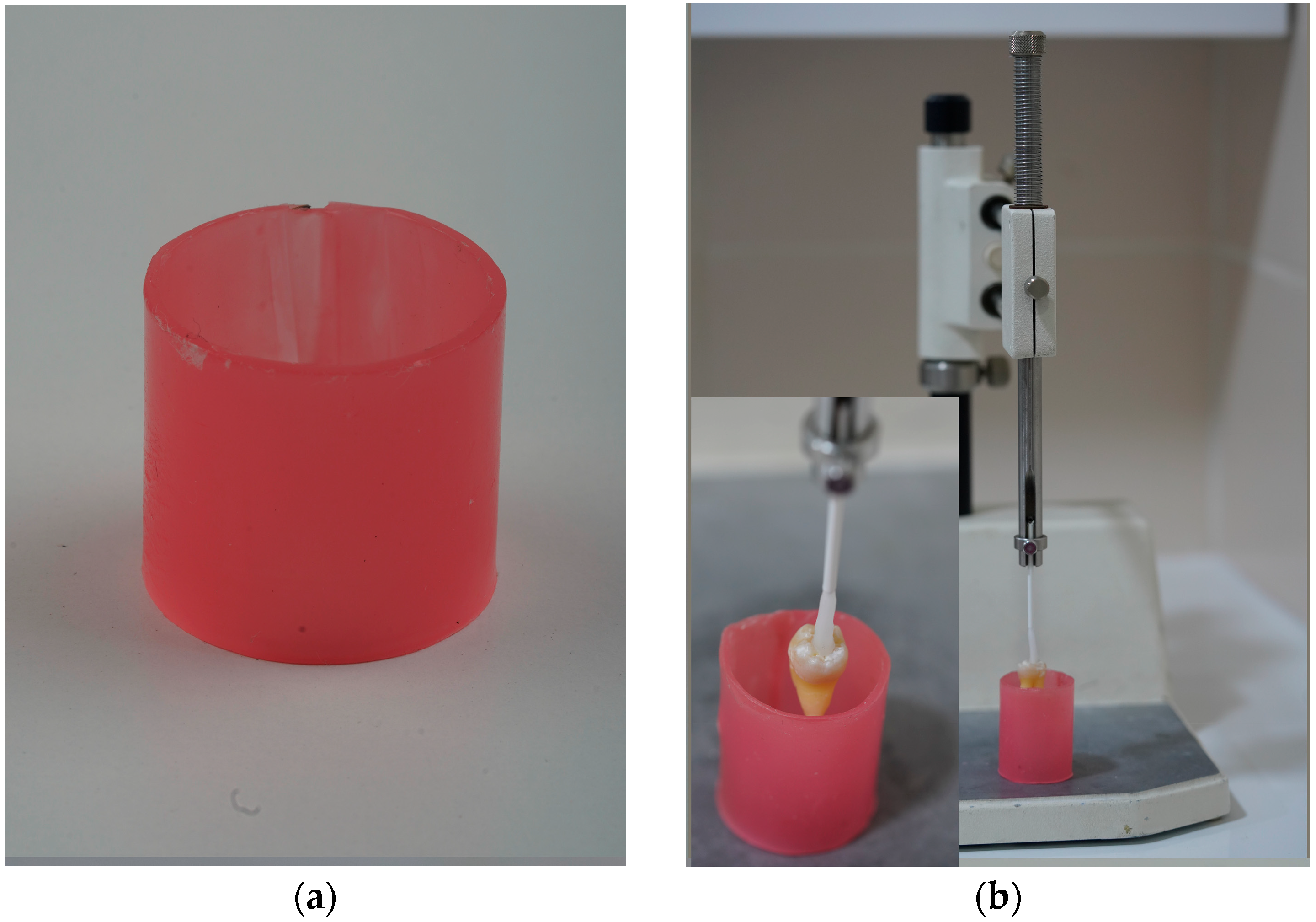
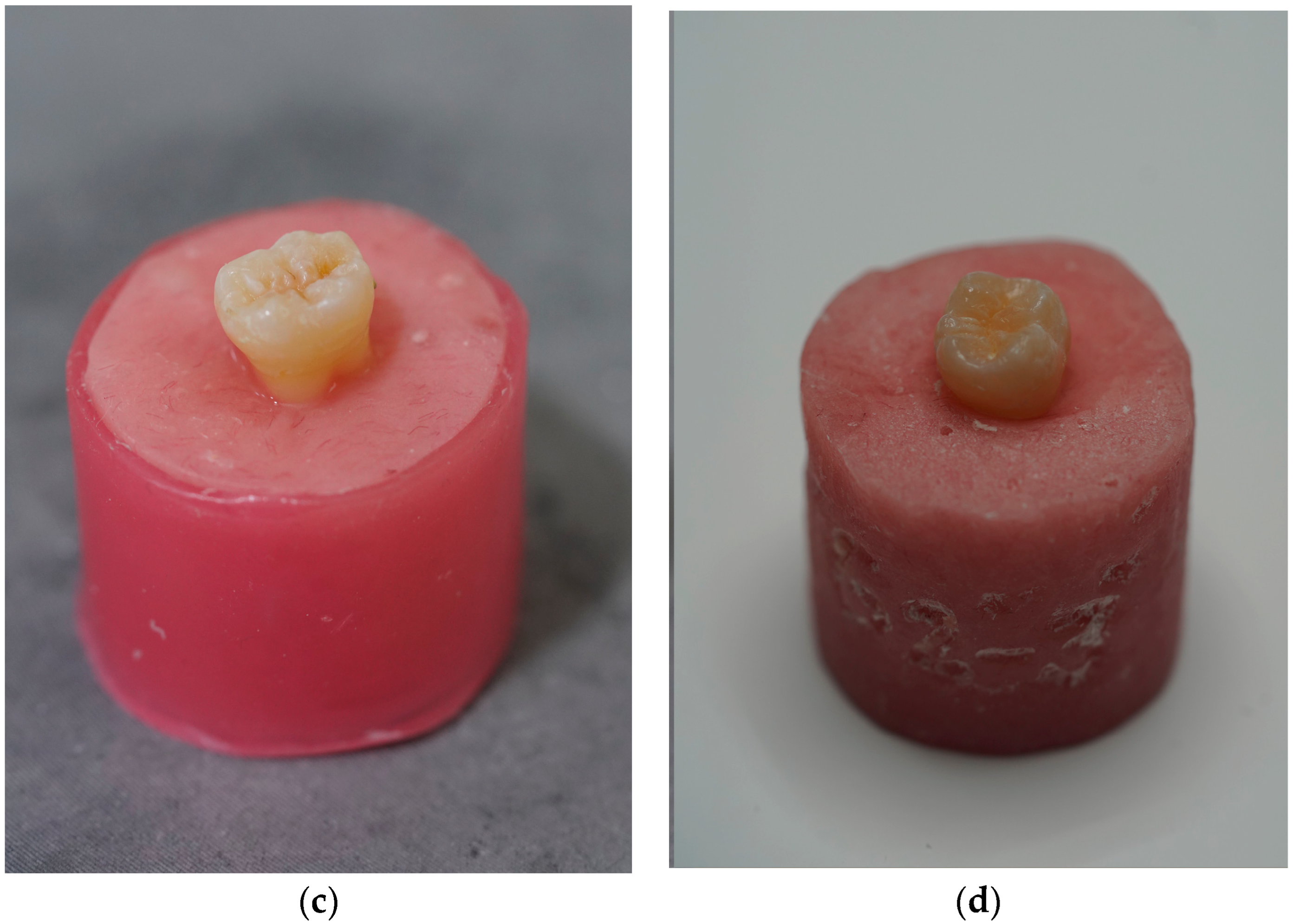
Custom molds were fabricated using modeling wax. A dental surveyor with a veneer positioning stick ensured the vertical alignment of teeth within the molds [21]. The molds were filled with cold-cured acrylic resin (Ivoclar Vivadent AG, Schaan, Liechtenstein), into which the teeth were carefully embedded. The resin was allowed to polymerize completely. Following polymerization, the samples were finished and polished to eliminate surface irregularities and ensure a smooth, uniform surface. All specimens were cleaned with nonfluorinated pumice [17], which was applied for 20 s using a rubber prophylactic cup, rinsed, and stored in distilled water [17]. The steps are shown in Figure 2.
The samples were randomly assigned into four groups: one for fit accuracy and three for shear bond strength. The randomization of samples into groups was performed using computer-generated random numbers (Excel RAND function), and allocation was conducted by an operator not involved in specimen testing. Each specimen was number-coded for identification.

2.5. Band Fabrication and Selection

2.5.1. Digitally Fabricated Space Maintainers

For the digitally fabricated space maintainers, the teeth were digitally scanned using a TRIOS 3 intraoral scanner (3Shape A/S, Copenhagen, Denmark). The digital impressions were exported and saved in Standard Tessellation Language (STL) file format [10]. Each file was labeled according to the corresponding tooth’s identification code for accurate record-keeping.
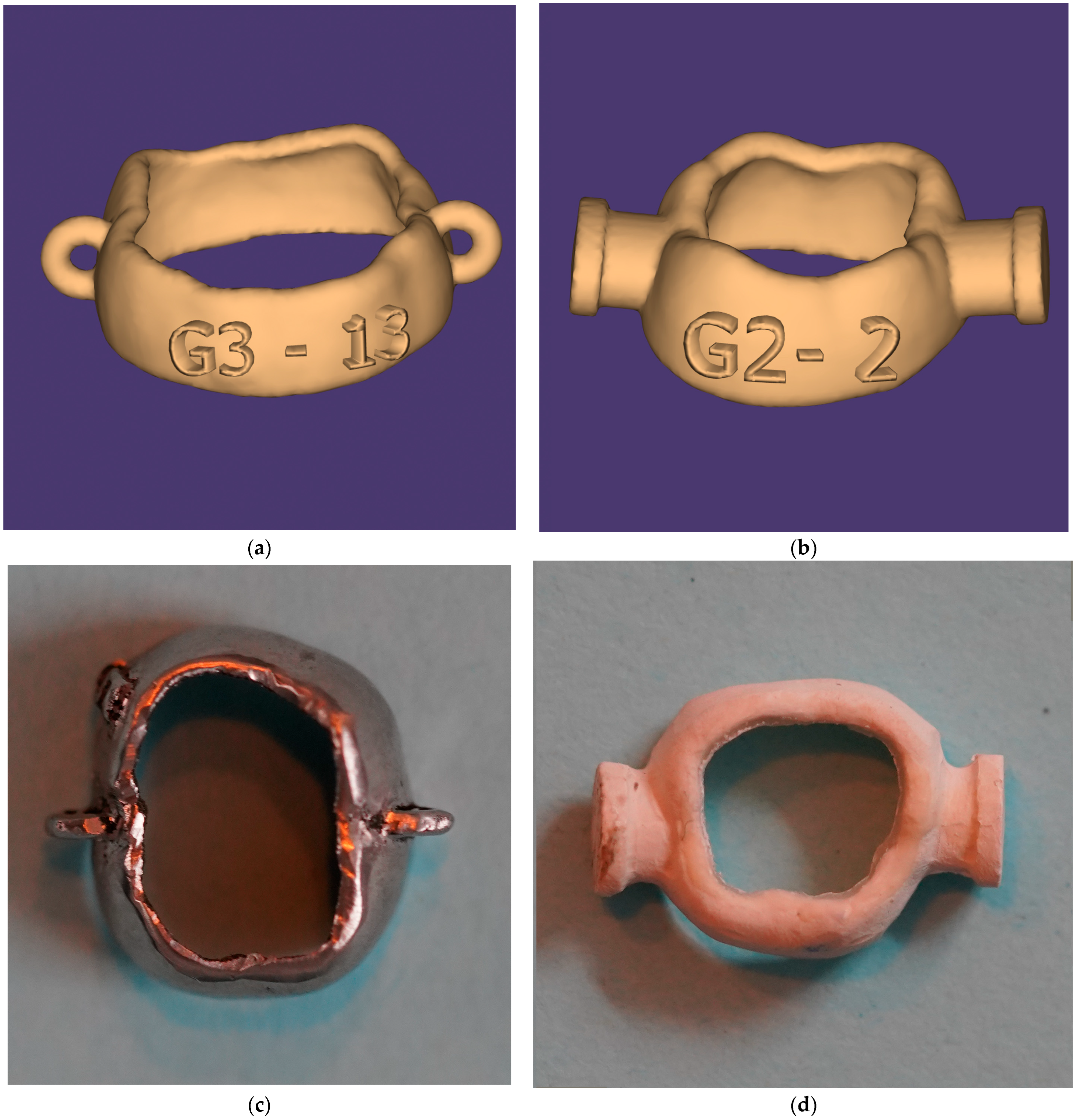
Band design was performed using OnyxCeph3™ software (version 3.2.180, Image Instruments GmbH, Chemnitz, Germany). During the design process, the band thickness was standardized at 0.8 mm, and an offset value of 0.1 mm was applied to create a precise yet passive fit between the band and the tooth surface. Additionally, two auxiliary extensions were designed on the buccal and lingual surfaces of each band to facilitate secure gripping during the SPBS testing procedure [22], as shown in Figure 3. The shape of the auxiliaries of the groups differed according to the properties of the materials; PEEK samples required a stiffer auxiliary. The designs were limited to the band component of the space maintainer, since both evaluations focused solely on the band section. The scans were then sent to a dental laboratory for the fabrication of the bands.

2.5.2. Group 1: Milled PEEK Bands

In this group, digitally designed bands were fabricated from PEEK blocks (DentalDirekt GmbH, Spangenberg, Germany). The milling process was carried out using an M5 Heavy Metal Milling Unit (Zirkonzahn GmbH, South Tyrol, Italy) [23].

2.5.3. Group 2: Additively Manufactured Co-Cr Bands

Additively manufactured Co-Cr bands were fabricated using SLM [24]. Starbond Easy Powder 30 (Schefner GmbH, Mainz, Germany) was employed as the base material. The printing process was performed using the Sisma Mysint100 (Sisma S.p.A., Vicenza, Italy). Post-fabrication, the outer surfaces of both the PEEK and Co-Cr bands were finished and polished to enhance their surface quality and appearance [25].

2.5.4. Group 3: Stainless Steel Bands

Super Snap molar bands (Dentaurum GmbH & Co. KG, Ispringen, Germany) were selected as the SS group based on the mesiodistal crown width measured with a digital caliper (Dentaurum GmbH & Co. KG, Ispringen, Germany). Bands were considered optimally adapted if they were able to be removed with band-removing pliers yet difficult to dislodge manually. All selections were standardized by a single operator to avoid any possible bias [26].

2.6. Fit Accuracy Test

2.6.1. Working Cast Preparation

Thirteen acrylic-mounted molar teeth were used for the fit accuracy evaluation. For each specimen, three impressions were taken using a one-step putty-wash technique with addition silicone (Proclinic Putty Soft Fast Set and Proclinic Light Body Fast Set; Proclinic S.A., Barcelona, Spain) [27]. All impressions were poured immediately with Type IV dental stone (Fujirock EP, GC Corp., Tokyo, Japan). The resulting casts were labeled with unique identification codes to prevent mix-ups. The three casts produced from each tooth were distributed among the three experimental groups so that every group represented the same set of teeth. This approach helped reduce anatomical differences between groups and ensured a fair, standardized comparison of fit accuracy.

2.6.2. Digital Scanning and Reference Models

Each stone cast was scanned with the same intraoral scanner following the manufacturer’s calibration protocol. The scanner has been previously validated for high accuracy in quadrant and sextant scans [28]. The initial scan served as the reference STL file for each specimen.

2.6.3. Band Seating and Secondary Scanning

For evaluation, the inner surface of each band (SS or digitally fabricated bands) was filled with light-body addition silicone (Proclinic S.A., Spain) and carefully seated on the corresponding stone cast. After polymerization, excess material was trimmed with a scalpel. The band was then removed, leaving a thin silicone layer that represented the space between the band and the abutment tooth. Each cast with the silicone layer was rescanned with the same TRIOS 3 intraoral scanner to generate a comparison STL file [10].

2.6.4. Three-Dimensional Superimposition and Accuracy Analysis

The two STL files (reference cast scan and silicone-layer scan) were imported into CloudCompare software (CloudCompare Project, open-source; EDF R&D, Paris, France). The reference cast scan was designated as the baseline model, while the silicone-layer scan was set as the test model.
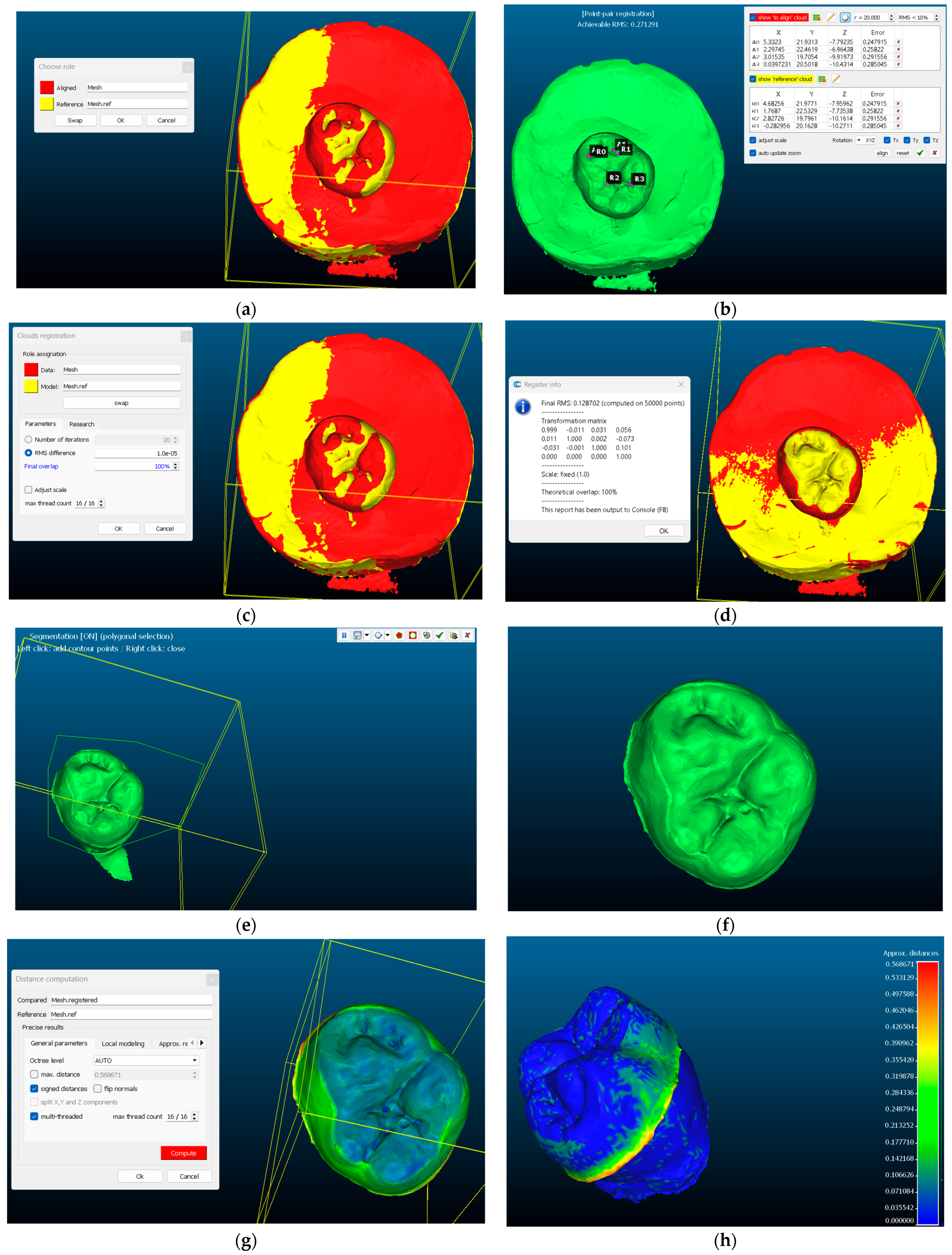
A four-point matching protocol was used for coarse alignment, followed by refinement using the iterative closest point (ICP) algorithm [29,30]; the CloudCompare steps are shown in Figure 4.
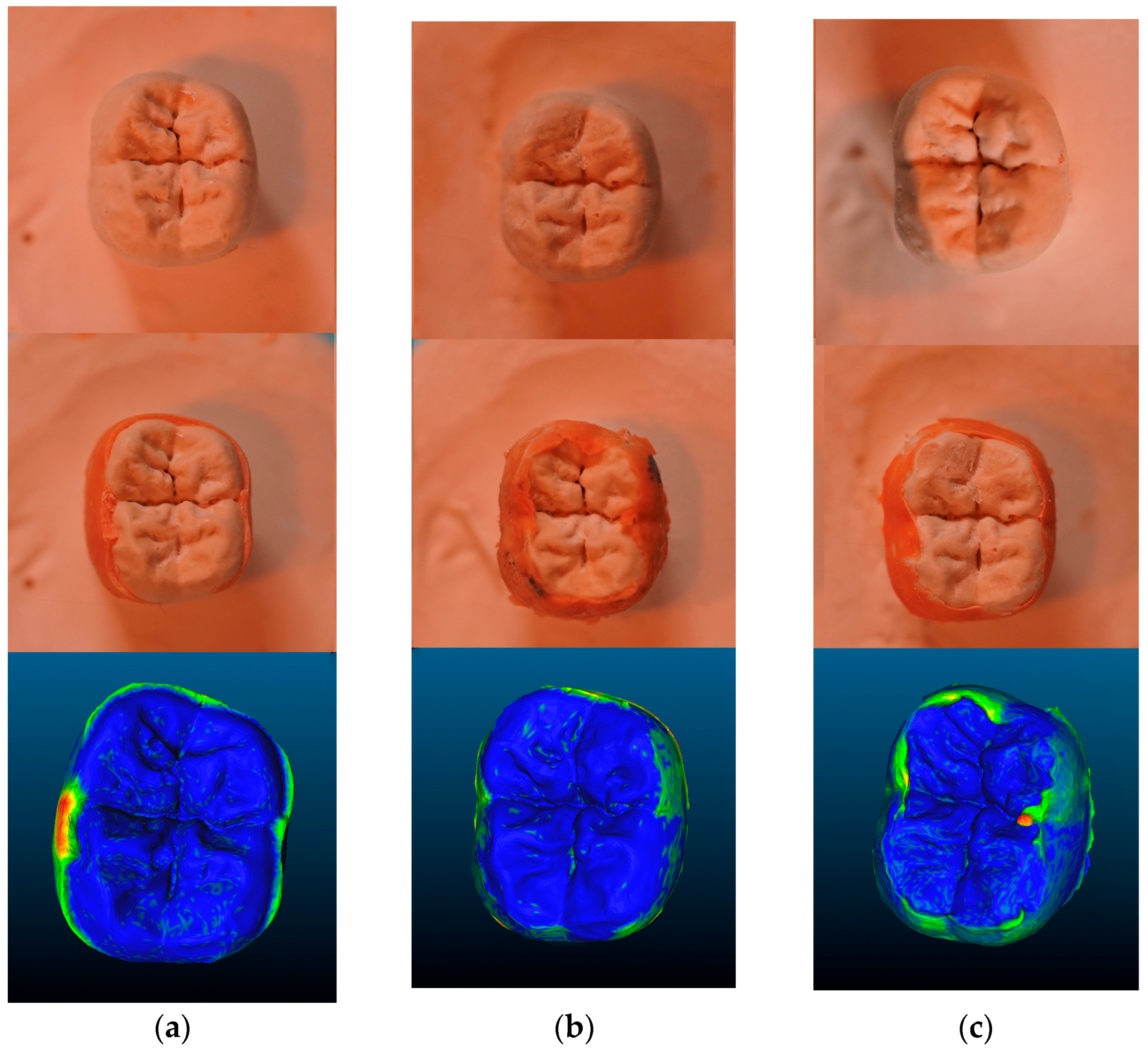
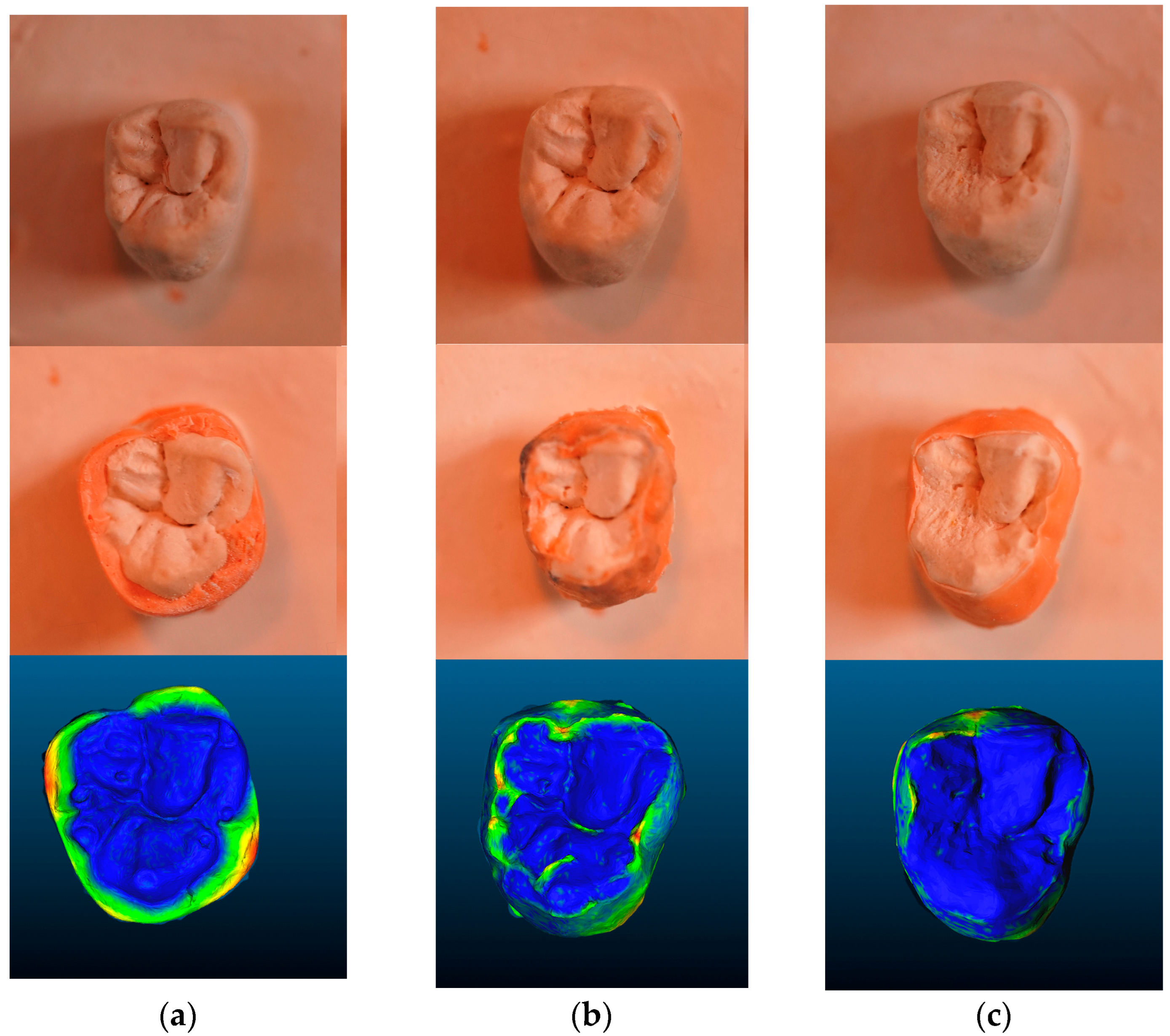
This dual-scan method provided both a qualitative visual assessment and a quantitative numerical measure of fit accuracy for conventional and digitally fabricated bands [10]. The stone casts before and after the placement of the silicone layer, as well as the qualitative 3D deviation map of a mandibular third molar, are shown in Figure 5. An example of an upper third molar band fit is presented in Figure 6 for comparison.
For each specimen, the root mean square (RMS) was calculated directly from the mean deviation and standard deviation values using the following formula:
R M S = m e a n 2 + S D 2
This ensured that RMS values accounted for both central tendency and the dispersion of deviations across the surface, providing a robust numerical indicator of fit accuracy [31].

2.7. Shear Bond Strength Test

The inner surface of the PEEK bands was treated with sandblasting using 110-micrometer aluminum oxide under a pressure of 2 bars for 10 s to increase the surface area for cementation [32]. Then the appliance was cleaned with tap water and dried carefully with oil-free compressed air. PEEK bands were conditioned with Signum Universal Bond I and II (Kulzer GmbH, Hanau, Germany) following manufacturer protocols.
The inner surfaces of the Cr-Co bands, however, were intentionally left in their as-printed state to preserve the already present micro-roughness and maximize mechanical interlocking for bonding [25]. Although quantitative surface roughness measurements for the as-printed Co-Cr surfaces were not available, this decision ensured the preservation of the native SLM micro-roughness rather than altering it through post-processing. Surface treatment protocols differed between materials because each material requires a distinct, material-specific conditioning method for optimal bonding.
RelyX ultimate resin (3M ESPE, St. Paul, MN, USA) cement was used for the cementation of all of the bands. For cementation, the self-etch technique was used; each tooth was dried; then the Scotchbond (3M ESPE, St. Paul, MN, USA) was applied to the tooth surfaces that would be covered by the band, and it was light-cured for 20 s by a light-curing unit (Eighteeth Medical Technology Co., Ltd., Changzhou, China). The cement was placed on the inner surface of the bands, and they were seated on the tooth. Excess of the material was removed; the teeth were mounted atop a loading cell to apply an accurate force of 5 kg, and each surface of the band was light-cured for 2 s. Then the samples were left for 6 min until the cement was completely set. All cementations were performed by a single operator to eliminate inter-operator variability.
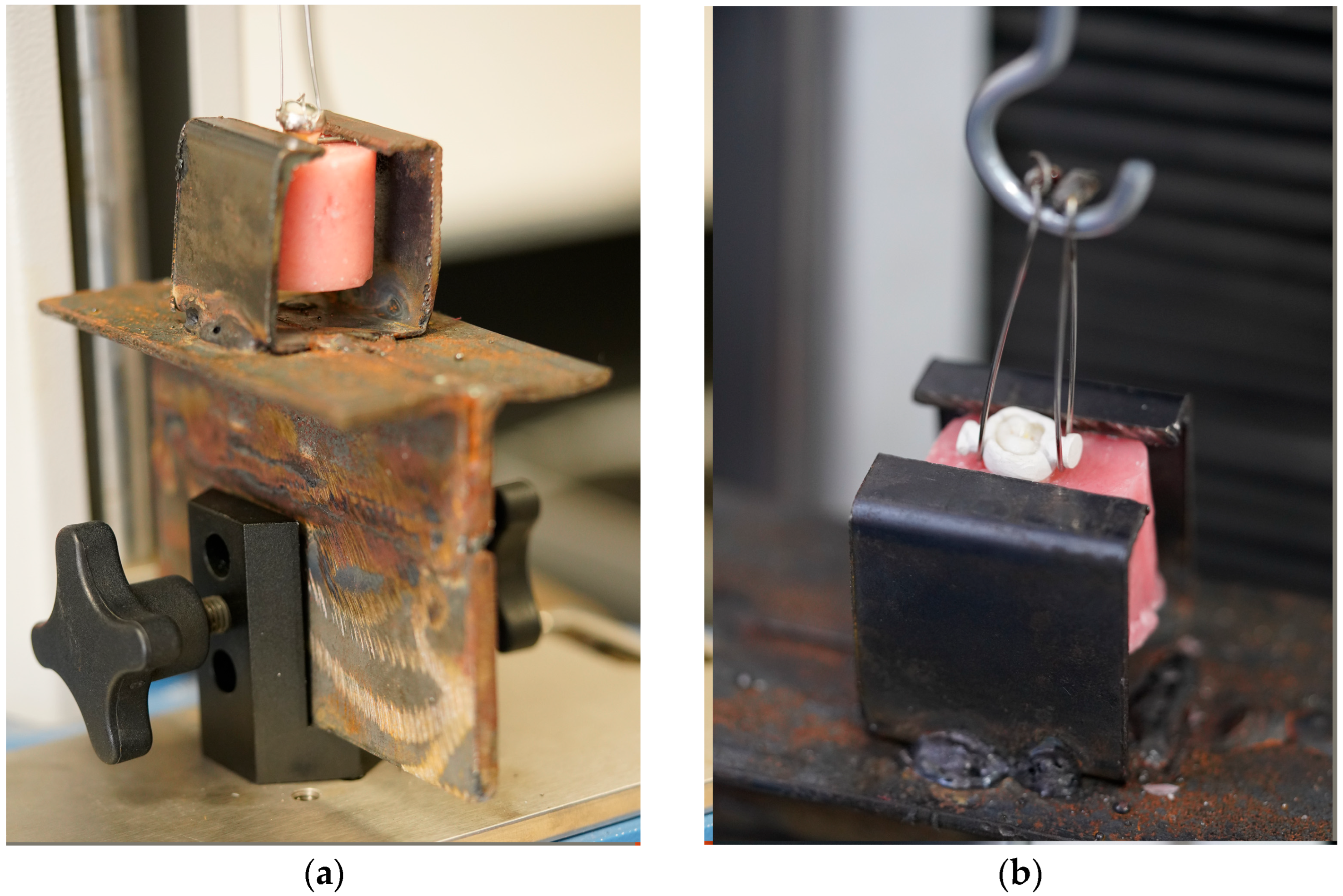
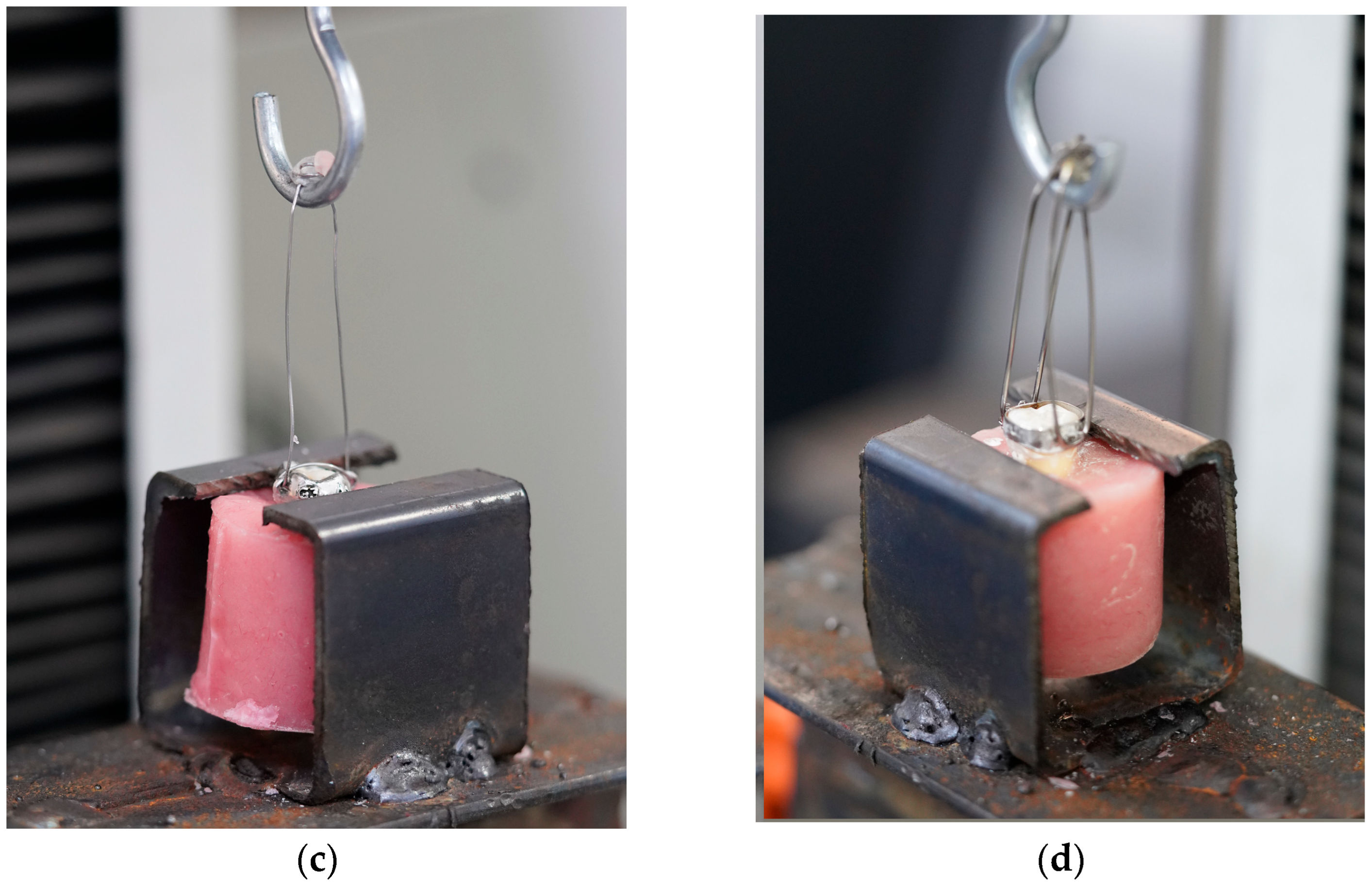
No thermocycling or artificial aging procedures were applied in this study, as the objective was to assess the initial bond strength under controlled baseline conditions. Samples were stored at 37 °C in a humid environment for 24 h [33]. Testing was performed using a universal testing machine (UTM) (Multitest 1-d, Mecmesin Ltd., West Sussex, UK) with a 1 mm/min crosshead speed. The samples were securely fastened to the attachment equipment of the device using a custom-made jig, as seen in Figure 7. The bands were secured to the upper movable crosshead of the UTM using 0.7 mm stainless steel wire [23], and a vertical tensile load was applied to produce a shear-peel force along the band–cement interface. Each sample underwent testing until the band detached from the tooth [22].
Shear bond strength (SPBS, MPa) was calculated as follows:
S h e a r   b o n d   s t r e n g t h   ( M P a ) = F A
where F = failure load in Newton, and A = bonded area in mm2.
Post-debonding, adhesive remnant index (ARI) scores were determined using a stereomicroscope at ×40 magnification:
0 = no cement on tooth surface.
1 = <50% cement coverage.
2 = >50% cement coverage.
3 = full coverage under the band [17,33].
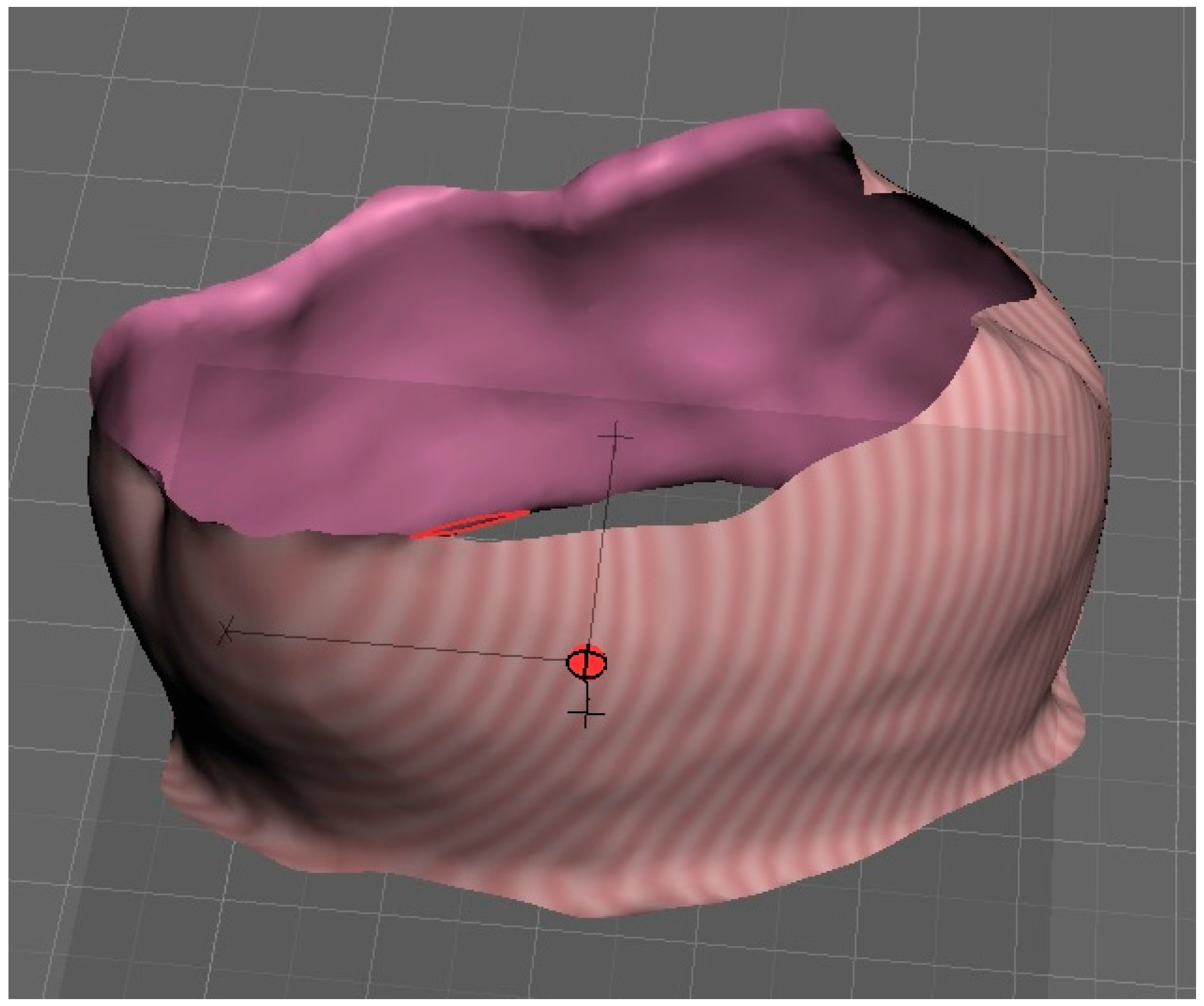
Once the tooth was removed from the attachment equipment, the loop was detached from the band, and the surface area was measured in mm2 [17,33]. For conventional SS bands, length and breadth were recorded using a digital Vernier caliper (Dentaurum GmbH & Co. KG, Ispringen, Germany), and the surface area was calculated geometrically. In contrast, the digitally fabricated bands did not have a uniform shape; therefore, the surface area of their inner surface was determined using Meshmixer software (version 3.5.474, Autodesk, San Rafael, CA, USA), as shown in Figure 8. STL files of the PEEK and Co-Cr bands were imported into the program and inspected to confirm proper orientation. The intaglio surface was then manually isolated using the Select tool. The surface area of this isolated region was then calculated using the Measure function. These values were used to convert the maximum debonding load (N) into SPBS (MPa).

2.8. Statistical Analysis

Data analysis was performed using IBM SPSS Statistics, version 30.0 (IBM Corp., Armonk, NY, USA), with statistical significance set at p < 0.05. Normality was assessed using the Shapiro–Wilk test and homogeneity of variances using Levene’s test. Fit accuracy values were expressed as the mean ± SD. Because the data exhibited unequal variances, the Welch ANOVA was applied, followed by Games–Howell post hoc tests for pairwise comparisons. Non-normal SPBS data were analyzed using the Kruskal–Wallis test, and pairwise comparisons were performed with the Mann–Whitney U test applying Bonferroni correction (p < 0.0167) despite the data being non-normal, as these tests are appropriate for non-parametric data and control for multiple comparisons.
Adhesive remnant index (ARI) scores were compared using Fisher’s exact test, as several expected frequencies were below five. The results are presented as the mean ± SD for parametric data, median (IQR) for non-parametric data, and frequency for categorical variables.
This in vitro study was designed and reported in accordance with the CRIS Guidelines (Checklist for Reporting In-Vitro Studies) to ensure methodological transparency and reproducibility [34].

3. Results

Table 1 summarizes the descriptive statistics for fit accuracy (RMS) and shear peel bond strength (SPBS) across the three materials.

3.1. Fit Accuracy Test

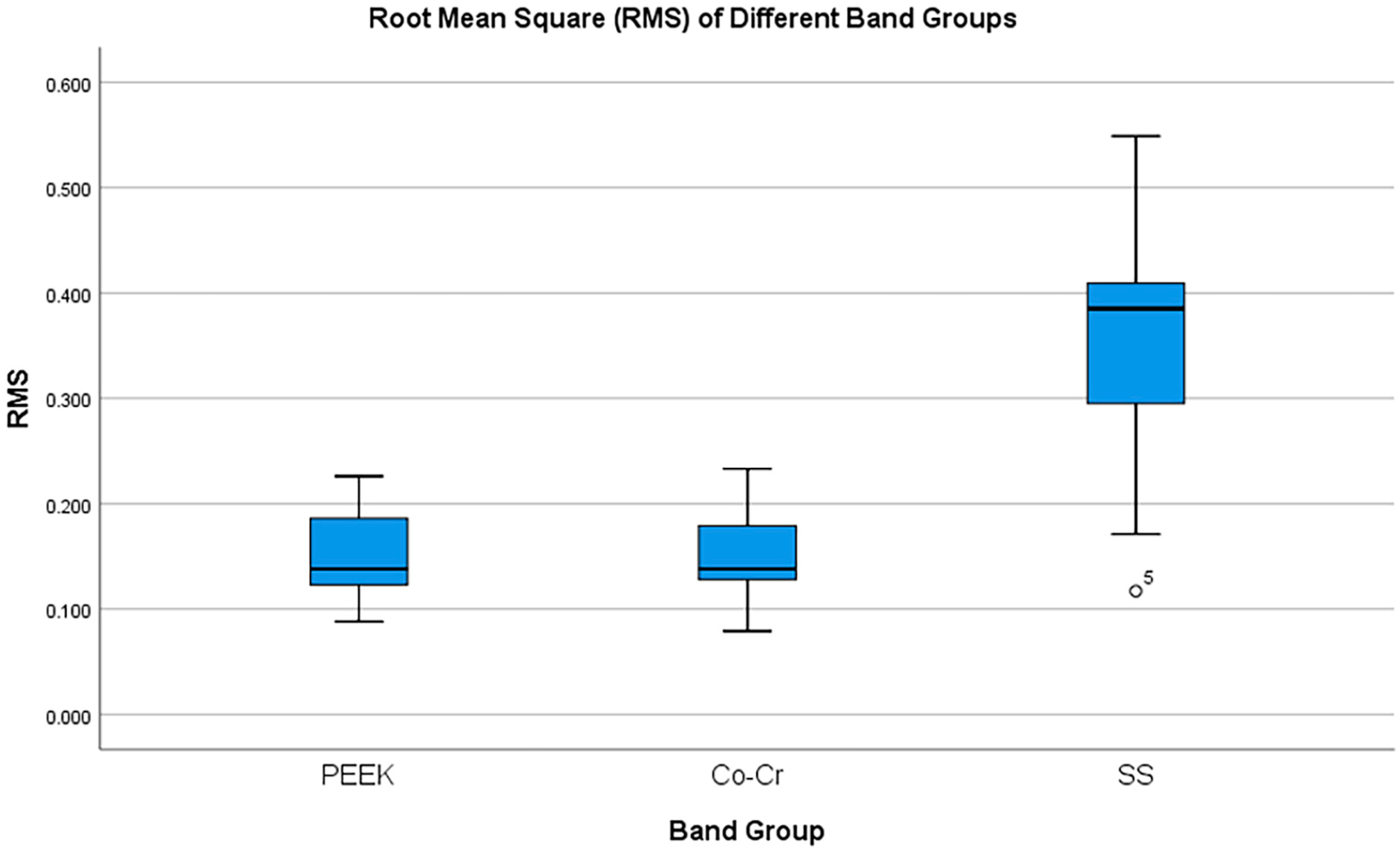
Fit accuracy was evaluated for a total of 39 (n = 13 per group) bands using RMS deviation values. Among the tested materials, SS bands showed the highest mean RMS (M = 0.344; SD = 0.118), indicating the poorest adaptation. In contrast, both Co-Cr (M = 0.151; SD = 0.047) and PEEK (M = 0.152; SD = 0.045) demonstrated nearly identical mean values, as shown in Figure 9, reflecting substantially better fit precision.
Welch’s ANOVA was applied and revealed a significant overall difference among materials (F(2, 22.26) = 15.63, p < 0.001, η2 = 0.58, large effect).
Pairwise effect size estimates using Hedges’ g demonstrated extremely large differences between SS and the two digitally fabricated groups (SS-CoCr: g = 2.09; SS-PEEK: g = 2.09), while Co-Cr and PEEK did not differ (g = 0.02).
Games–Howell post hoc analysis confirmed that the SS group had significantly higher RMS values than both Co-Cr and PEEK (p < 0.001 for each comparison), while no statistically significant difference was observed between the Co-Cr and PEEK groups (p = 0.999).

3.2. SPBS

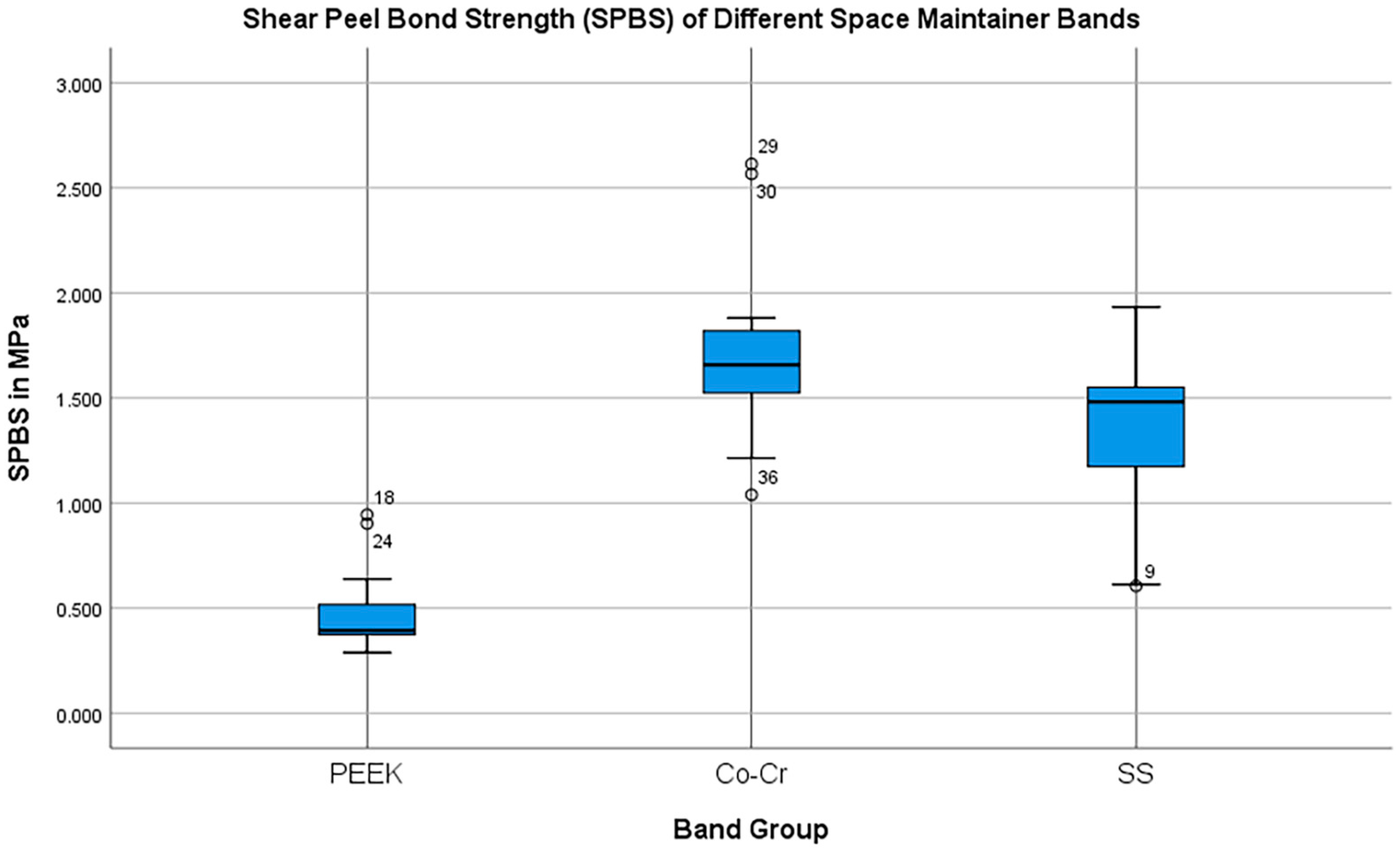
A Kruskal–Wallis test revealed a statistically significant difference in SPBS among the three groups (χ2(2) = 25.57, p < 0.001, ε2 = 0.65, very large effect). Among the tested groups, the Co-Cr band demonstrated the highest bond strength with a median of 1.657 MPa (IQR = 1.330 − 1.657), followed by the stainless steel (SS) band with a median of 1.481 MPa (IQR = 1.109 − 1.730). The PEEK band showed the lowest bond strength values, with a median of 0.393 MPa (IQR = 0.288 − 0.507), as seen in Figure 10.
Pairwise Mann–Whitney U tests were performed with Bonferroni correction to identify where the differences occurred. Both the Co-Cr and SS bands achieved significantly higher bond strength values than PEEK (p < 0.001 for each). However, the difference between the Co-Cr and SS bands did not remain statistically significant after Bonferroni adjustment (p = 0.029 > 0.0167).

3.3. ARI Grade Distribution

ARI distribution varied significantly across materials. Fisher’s exact test showed a strong association between ARI grade and material type (p < 0.001; Cramer’s V = 0.76).
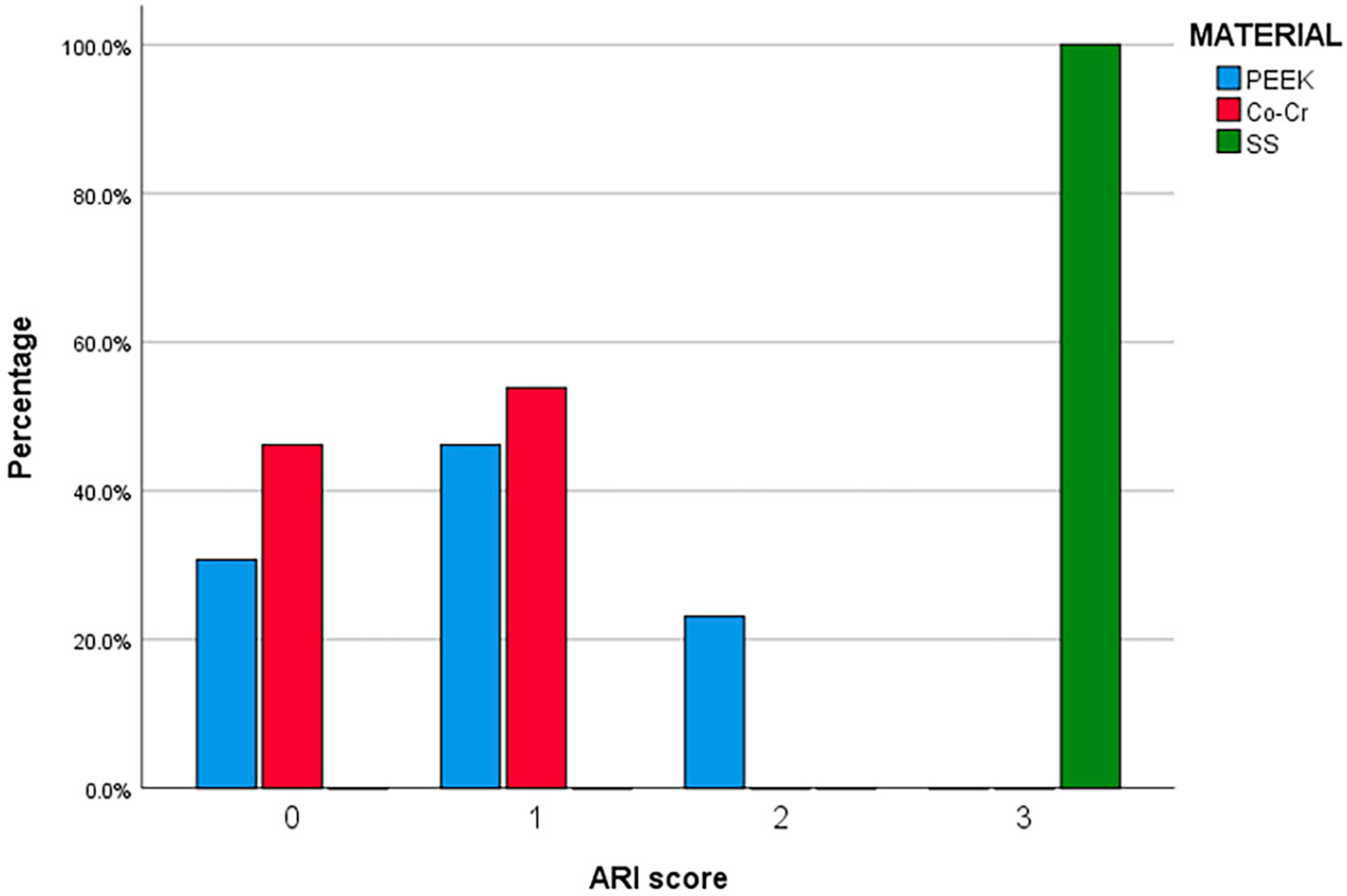
The PEEK group exhibited a broad distribution—ARI 0–2—of specimens in each category. The Co-Cr group predominantly showed lower ARI values, concentrated at ARI 0–1. All SS bands were classified as ARI = 3, with adhesive fully remaining on the enamel surface, as seen in Figure 11.

4. Discussion

Despite the rapid adoption of digital workflows, few studies have evaluated fit accuracy and bonding for space maintainers in the same experiment. By combining RMS analysis with SPBS and ARI grading, our study showed that digital fabrication improves geometric fidelity across materials, whereas bond strength depends strongly on substrate chemistry.

4.1. Fit Accuracy

This study assessed and compared the fit accuracy of conventional SS bands with those fabricated digitally by the SLM of Co-Cr alloys and milling of PEEK. Fit accuracy was evaluated using a dual-scan superimposition technique, with deviations quantified as RMS values, which represent both the mean and the standard deviations. The results revealed that both digitally fabricated groups exhibited significantly lower RMS deviations than SS bands (p < 0.001), indicating markedly better adaptation. No statistically significant difference was found between the SLM Co-Cr and milled PEEK groups (p = 0.999); both demonstrated comparably small and consistent RMS values.
The magnitude of the observed differences was clinically considerable, which is supported by the large effect size (Hedges’ g ≈ 2.09). RMS values of approximately 0.15 mm for PEEK and Co-Cr fall within clinically acceptable ranges, where ≤120 μm is ideal, and up to 200–300 μm is generally acceptable [35,36,37,38]. In contrast, SS bands displayed a mean RMS of 0.344 mm, exceeding commonly accepted thresholds. Larger internal gaps can increase cement layer thickness, generating residual stresses within the cement and reducing long-term stability [39]. Excessive cement thickness has also been associated with greater microleakage at the band–tooth interface, predisposing patients to enamel demineralization near the margins [40]. These results align with the expanding evidence supporting the dimensional accuracy of digitally fabricated dental appliances [31,41,42].
To the best of our knowledge, the study conducted by Tokuc and Yilmaz [10] appears to have included the first original comparison between 3D-printed and conventional band-and-loop space maintainers. The current research followed their dual-scan methodology. While their study reported no significant difference between digital and conventional groups, our study demonstrated a clear improvement in fit accuracy for the digitally fabricated bands. This variation likely stems from methodological differences, including variations in digital workflow, or band design, and post-processing. In addition, Tokuc and Yilmaz used patient casts and fabricated bands for upper and lower first molars, whereas our study employed extracted upper and lower third molars, which have more complex morphology and deeper undercuts. These anatomical factors may have accentuated the precision advantage of digital fabrication.
Although the present measurements were obtained from extracted third molars, which differ anatomically from first permanent molars, the relative relationship between groups is expected to remain consistent. Nonetheless, the direct extrapolation of the absolute RMS values to first-molar clinical scenarios should be made with caution, as variations in crown morphology and cervical contour may influence the magnitude of adaptation.
The close similarity in adaptation between PEEK and Co-Cr observed here is also consistent with the existing literature. Zhen et al. [43] reported that the marginal fit of PEEK frameworks differed from Co-Cr by only 0.05 mm, demonstrating comparable precision between the two materials when fabricated digitally. Our findings parallel this pattern, with mean RMS values of 0.152 mm for PEEK and 0.151 mm for Co-Cr, both well within clinically acceptable limits. Abdullah et al. [44] also demonstrated excellent marginal fit and high fracture resistance in PEEK CAD/CAM temporary crowns, resulting in improved comfort and satisfaction. Negm et al. [45] also reported clinically acceptable adaptation for milled PEEK frameworks.
Barbosa et al. [16] performed an in vitro pilot study that compared milled PEEK with SLM-fabricated Co-Cr frameworks, revealing superior adaptation in the milled PEEK group. Ye et al. [46] found that milled PEEK frameworks exhibited superior fit accuracy compared with conventionally fabricated Co-Cr frameworks, with PEEK showing clinically acceptable gaps at major and minor connectors. Although these findings differ from the present results—where PEEK and Co-Cr demonstrated nearly identical fit accuracy—the variability across studies is likely attributable to differences in equipment calibration, software design, and evaluation protocols [47,48].
The accuracy of the evaluation process also warrants discussion. Diverse methodologies have been employed to assess marginal and internal fit, encompassing 2D cross-sectional analysis and 3D digital techniques [49]. Conventional 2D methods exhibit constraints in sampling and challenges in standardizing section planes [50]. Three-dimensional scanning, however, is more accessible and economical and has demonstrated excellent reproducibility [51,52].
Schlenz et al. [53] conducted a comparison of 2D and 3D silicone-replica analyses in the evaluation of CAD/CAM restorations. Their study integrated cross-sectional 2D imaging with dual-scan 3D models and acquired pre- and post-silicone application, utilizing intraoral scanner data and professional analysis software for alignment. The findings indicated that both methods yielded similar results, thereby validating 3D scanning as an effective technique for fit assessment. This study adhered to this principle by utilizing a dual-scan 3D approach, noted for its simplicity, reproducibility, and capacity to evaluate fit without the need for specialized laboratory equipment [51,53].
In the current research, adaptation was determined by calculating RMS deviations between superimposed scans—with and without the silicone layer. This approach differs slightly from prior studies, as the high variability among extracted teeth and differences in occluso-gingival thickness between conventional and digital bands made it difficult to standardize identical reference points. Therefore, the overall deviation across the surface was analyzed instead of specific point measurements. RMS analysis provides a better representation of total surface congruence than arithmetic mean differences [30]. Lower RMS values correspond to higher adaptation accuracy, and the small RMS found here confirms the close conformity of digitally fabricated bands. To maintain analytical accuracy, areas outside the region of interest were excluded following best-fit alignment [30,54].
A further strength of this work lies in using multiple extracted teeth rather than standardized models. While models offer uniformity, they fail to replicate natural anatomic variability [55]. Using thirteen human molars allowed for assessment across diverse morphologies, improving external validity. Because scan superimposition is sensitive to alignment precision, prior studies have employed reference notches or adjacent teeth [51,53,56,57]; in this study, alignment was based on the occlusal surface of the abutment tooth to achieve the highest accuracy within the clinical zone of interest. The TRIOS intraoral scanner was selected for its proven accuracy—comparable to high-end desktop units [58]—and its capability to capture silicone layers directly.
Overall, the large number of data points analyzed per specimen—between 20,000 and 50,000—greatly exceeds the 50–230 points commonly considered sufficient in the literature. This extensive dataset enhances measurement validity and reliability [31,59]. In addition, 3D deviation color maps enabled the visual interpretation of adaptation quality, combining quantitative precision with intuitive visualization. Collectively, these elements confirm that the dual-scan method provides an accurate, reproducible, and clinically meaningful approach for evaluating band fit accuracy.

4.2. Shear Peel Bond Strength

In this study, noticeable variation in bond strength was found among the materials tested. Co-Cr bands achieved the highest SPBS (1.65 MPa), followed by SS bands (1.45 MPa), whereas PEEK exhibited significantly weaker adhesion (0.39 MPa), which is likely to compromise long-term retention compared with Co-Cr and SS bands. The adhesive remnant index (ARI) differed correspondingly: SS bands recorded ARI = 3, Co-Cr bands were mainly in the 0–1 range, and PEEK bands were distributed between ARI 0 and 2, with no ARI 3 outcomes. The use of dual-cure resin cement was guided by previous evidence demonstrating superior resistance to decementation when compared with conventional or resin-modified glass ionomer cements [17].
Interestingly, the relationship between fit precision and bonding performance did not parallel each other. The digital workflow likely enhanced adaptation accuracy through precise CAD/CAM control and reduced operator variability. Nevertheless, the weaker bonding behavior of PEEK is consistent with its low surface energy and chemical inertness [15]. The sandblasting + Signum Universal Bond protocol was chosen because it is clinically accessible and widely used and does not require hazardous chemicals. Although methods such as plasma treatment, sulfuric acid etching, and tribochemical silica coating (CoJet) may produce stronger adhesion, they require specialized equipment or involve higher clinical complexity [60].
The ARI outcomes also provide clinically meaningful insight. The consistent ARI = 3 in SS bands indicates failure at the metal–cement interface, leaving cement on the enamel, a pattern that protects enamel but demands extra chairside clean-up. Co-Cr bands, showing ARI 0–1, failed closer to the enamel interface, making post-debonding management easier but raising the need for enamel inspection. PEEK’s ARI 0–2 pattern represents intermediate bonding behavior and limited cohesive failures within the adhesive layer.
The present findings align with those of Alabbadi et al. [61], who evaluated the debonding forces of CAD/CAM-fabricated PEEK and fiberglass-reinforced composites compared with metal lingual retainers. Their study showed that PEEK had the lowest debonding force but acceptable fit and durability. Qudeimat and Sasa [62] highlighted how CAD/CAM manufacturing can enhance surface roughness, improving bonding with resin cements and decreasing degradation risk. In their comparison, Co-Cr demonstrated the highest SPBS, followed by the PEEK, PEEK-composite, and LuxaCrown groups. Notably, acid-etched PEEK showed improved resin adhesion [63].
In another study [23], comparing CAD/CAM-fabricated PEEK bands to prefabricated SS bands showed higher peel bond strength for PEEK both before and after cementation. However, SPBS values varied; the SS group in that study showed markedly lower strength than the current study’s SS group, while PEEK values were comparable between studies. Such differences likely arise from variations in the specific SS band type, cement, or bonding protocol. Additionally, other variables could have a significant impact on bond strength such as surface contamination [64] and enamel pretreatment [65], and these factors should also be evaluated in future reports for CAD/CAM-fabricated space maintainers.
Beyond mechanical behavior, aesthetic considerations have become increasingly relevant, as appliance visibility may influence acceptance and compliance. A recent study [43] showed that PEEK space maintainers were perceived as more aesthetically pleasing than metal and were around 5.7 times lighter. Although aesthetics was not an outcome of this study, these properties help explain PEEK’s growing clinical interest and must be balanced against its weaker adhesion.

4.2.1. Clinical Significance

The superior fit accuracy of digital bands suggests potential advantages in reducing microleakage, improving cement stability, and enhancing periodontal health. Co-Cr appears to offer a favorable balance of accuracy and adhesive performance. However, the limited SPBS of PEEK under the tested protocol indicates that current chairside bonding methods may be insufficient. Digital fabrication also introduces higher costs related to scanners, design software, and fabrication equipment; therefore, the decision to implement these workflows should consider both accuracy benefits and financial feasibility.

4.2.2. Limitations

The in vitro design of this study limits its direct clinical applicability. Intraoral factors such as moisture, pH variations, and cyclic stress can influence bonding strength. The use of extracted third molars instead of first molars may have exaggerated the difference between the conventional and digital groups. Only one bonding protocol was used for PEEK, limiting the generalizability of the SPBS findings. Because the bonding characteristics of primary teeth differ considerably from those of permanent teeth, these results should not be extrapolated directly to the primary dentition. Additionally, there is a lack of clinical studies evaluating digitally fabricated PEEK and Co-Cr space maintainers with conventional stainless steel designs. Thus, extensive in vivo studies are necessary to corroborate these findings and evaluate long-term retention, microleakage, and cement durability.

5. Conclusions

Within the limits of this in vitro investigation, both digitally produced groups—milled PEEK and SLM Co-Cr —showed markedly superior fit accuracy compared with SS bands, highlighting the precision achievable through CAD/CAM fabrication. In contrast, Co-Cr and SS bands exhibited greater shear bond strength than PEEK, reflecting inherent material differences in surface energy and bonding potential. Overall, Co-Cr showed good performance in both adaptation and bond strength, although its adhesive behavior did not differ significantly from that of stainless steel. PEEK demonstrated excellent adaptation but reduced bond strength under the tested conditions, indicating that an additional investigation of bonding approaches may be warranted.

Author Contributions

Conceptualization, M.K.A. and A.M.R.; methodology, M.K.A. and A.M.R.; software, M.K.A.; validation, M.K.A. and A.M.R.; formal analysis, M.K.A.; investigation, M.K.A.; resources, M.K.A.; data curation, M.K.A.; writing—original draft preparation, M.K.A.; writing—review and editing, A.M.R.; visualization, M.K.A.; supervision, A.M.R.; project administration, M.K.A. and A.M.R.; funding acquisition, M.K.A. All authors have read and agreed to the published version of the manuscript.

Funding

This research received no external funding.

Institutional Review Board Statement

All procedures were performed in compliance with relevant laws and institutional guidelines, and the Ethical Research Committee of the Faculty of Dentistry at Sulaimani University granted ethics approval for this experimental in vitro investigation (COD-EC-24-0038, ON 16/12/2024), which was performed at the Pedodontics and Community Oral Health department.

Informed Consent Statement

Written informed consent has been obtained from the patient(s) to publish this paper.

Data Availability Statement

The raw data supporting the conclusions of this article will be made available by the authors on request.

Acknowledgments

We sincerely thank all those who offered their support and assistance in bringing this project to completion. We are especially grateful to the academic and technical staff for their valuable guidance and encouragement throughout this work. We also wish to acknowledge the institution for providing the necessary resources and facilities that made this study possible.

Conflicts of Interest

The authors declare no conflicts of interest.

Abbreviations

The following abbreviations are used in this manuscript:
CADComputer-aided design
CAMComputer-aided manufacturing
PEEKPolyetheretherketone
Co-CrCobalt–chromium
SSStainless steel
SPBSShear peel bond strength
RMSRoot mean square
ARIAdhesive remnant index
STLStandard tessellation language
ICPIterative closest point
SDStandard deviation
SLMSelective laser melting

References

  1. Watt, E.; Ahmad, A.; Adamji, R.; Katsimpali, A.; Ashley, P.; Noar, J. Space maintainers in the primary and mixed dentition—A clinical guide. Br. Dent. J. 2018, 225, 293–298. [Google Scholar] [CrossRef] [PubMed]
  2. Khanna, S.; Rao, D.; Panwar, S.; Pawar, B.; Ameen, S. 3D Printed Band and Loop Space Maintainer: A Digital Game Changer in Preventive Orthodontics. J. Clin. Pediatr. Dent. 2021, 45, 147–151. [Google Scholar] [CrossRef]
  3. Tamburrino, F.; Chiocca, A.; Aruanno, B.; Paoli, A.; Lardani, L.; Carli, E.; Derchi, G.; Giuca, M.R.; Razionale, A.V.; Barone, S. A Novel Digitized Method for the Design and Additive Manufacturing of Orthodontic Space Maintainers. Appl. Sci. 2023, 13, 8320. [Google Scholar] [CrossRef]
  4. Illescas, G.C.J.; García, K.G.U.; Picón, M.Y.Y.; Illescas, G.C.J.; García, K.G.U.; Picón, M.Y.Y. Innovation in interceptive orthodontics: Digital space maintainers with CAD/CAM and 3D printing: Bibliographic review. World J. Adv. Res. Rev. 2024, 21, 1415–1427. [Google Scholar] [CrossRef]
  5. Cengiz, A.; Karayilmaz, H. Comparative evaluation of the clinical success of 3D-printed space maintainers and band–loop space maintainers. Int. J. Paediatr. Dent. 2024, 34, 584–592. [Google Scholar] [CrossRef]
  6. Güzel, K.G.U.; Altun, A.C.; Kırzıoğlu, Z. In vitro evaluation of onlay restorations on primary teeth. Int. J. Artif. Organs 2017, 40, 709–713. [Google Scholar] [CrossRef] [PubMed]
  7. Oliveira, M.; Torres, C.; Gomes-Silva, J.; Chinelatti, M.; Menezes, F.; Palma-Dibb, R.; Borsatto, M.C. Microstructure and Mineral Composition of Dental Enamel of Permanent and Deciduous Teeth. Microsc. Res. Technol. 2009, 73, 572–577. [Google Scholar] [CrossRef] [PubMed]
  8. da Silva, C.L.; Cavalheiro, C.P.; Gimenez, T.; Imparato, J.C.P.; Bussadori, S.K.; Lenzi, T.L. Bonding Performance of Universal and Contemporary Adhesives in Primary Teeth: A Systematic Review and Network Meta-Analysis of In Vitro Studies. Pediatr. Dent. 2021, 43, 170–177. [Google Scholar] [PubMed]
  9. Danevitch, N.; Frankenberger, R.; Lücker, S.; Gärtner, U.; Krämer, N. Dentin Bonding Performance of Universal Adhesives in Primary Teeth In Vitro. Materials 2023, 16, 5948. [Google Scholar] [CrossRef]
  10. Tokuc, M.; Yilmaz, H. Comparison of fit accuracy between conventional and CAD/CAM-fabricated band-loop space maintainers. Int. J. Paediatr. Dent. 2022, 32, 764–771. [Google Scholar] [CrossRef] [PubMed]
  11. Rekow, E.D. Dental CAD/CAM systems: A 20-year success story. J. Am. Dent. Assoc. 2006, 137, 5S–6S. [Google Scholar] [CrossRef]
  12. van Noort, R. The future of dental devices is digital. Dent. Mater. 2012, 28, 3–12. [Google Scholar] [CrossRef] [PubMed]
  13. Soni, H.K. Application of CAD-CAM for Fabrication of Metal-Free Band and Loop Space Maintainer. J. Clin. Diagn. Res. 2017, 11, ZD14–ZD16. [Google Scholar] [CrossRef]
  14. Thakur, B.; Bhardwaj, A.; Luke, A.M.; Wahjuningrum, D.A. Effectiveness of traditional band and loop space maintainer vs 3D-printed space maintainer following the loss of primary teeth: A randomized clinical trial. Sci. Rep. 2024, 14, 14081. [Google Scholar] [CrossRef]
  15. Kimura, H.; Morita, K.; Nishio, F.; Abekura, H.; Tsuga, K. Clinical report of six-month follow-up after cementing PEEK crown on molars. Sci. Rep. 2022, 12, 19070. [Google Scholar] [CrossRef] [PubMed]
  16. Barbosa, L.; Figueiral, M.H.; Neves, C.B.; Malheiro, R.; Sampaio-Fernandes, M.A.; Oliveira, S.J.; Sampaio-Fernandes, M.M. Fit Accuracy of Cobalt–Chromium and Polyether Ether Ketone Prosthetic Frameworks Produced Using Digital Techniques: In Vitro Pilot Study. Appl. Sci. 2024, 14, 118. [Google Scholar] [CrossRef]
  17. Kaur, J.; Singh, A.; Sadana, G.; Mehra, M.; Mahajan, M. Evaluation of Shear Peel Bond Strength of Different Adhesive Cements Used for Fixed Space Maintainer Cementation: An In Vitro Study. Int. J. Clin. Pediatr. Dent. 2021, 14, 175–179. [Google Scholar] [CrossRef] [PubMed]
  18. Peñate, L.; Basilio, J.; Roig, M.; Mercadé, M. Comparative study of interim materials for direct fixed dental prostheses and their fabrication with CAD/CAM technique. J. Prosthet. Dent. 2015, 114, 248–253. [Google Scholar] [CrossRef]
  19. Nassary Zadeh, P.; Lümkemann, N.; Eichberger, M.; Stawarczyk, B.; Kollmuss, M. Differences in Radiopacity, Surface Properties, and Plaque Accumulation for CAD/CAM-Fabricated vs Conventionally Processed Polymer-based Temporary Materials. Oper. Dent. 2019, 45, 407–415. [Google Scholar] [CrossRef]
  20. Ranganath, L.; Rajesh, A.; Justin, R.M.; Paranthaman, H.; Varghese, R.P. Effect of Salivary Contamination on the Bond Strength of Total-etch and Self-etch Adhesive Systems: An in vitro Study. J. Contemp. Dent. Pract. 2012, 13, 655–660. [Google Scholar] [CrossRef]
  21. Abdulazeez, M.I.; Majeed, M.A. Fracture Strength of Monolithic Zirconia Crowns with Modified Vertical Preparation: A Comparative In Vitro Study. Eur. J. Dent. 2021, 16, 209–214. [Google Scholar] [CrossRef] [PubMed]
  22. Lee, G.; Vo, J.; Abubakr, N.H. Shear Bond Strength of Different Types of Cement Used for Bonding Band and Loop Space Maintainer. Open J. Stomatol. 2023, 13, 414–421. [Google Scholar] [CrossRef]
  23. Mohamed, O.S.; Karawia, I.; Gaber, A.H.; Hall, M.A. Evaluation of the Shear Peel Bond Strength of the Computer-aided Design/Computer-aided Manufacturing Polyetheretherketone Band for Space Maintainer: An In Vitro Study. Int. J. Clin. Pediatr. Dent. 2025, 18, 75–79. [Google Scholar] [CrossRef] [PubMed]
  24. Abdelhafiz, S.H.; Abdelkader, S.H.; Azer, A. Marginal and internal fit evaluation of metal copings fabricated by selective laser sintering and CAD/CAM milling techniques: In-vitro study. Alex. Dent. J. 2022, 47, 134–139. [Google Scholar] [CrossRef]
  25. Alharbi, N.; Wismeijer, D.; Osman, R. Additive Manufacturing Techniques in Prosthodontics: Where Do We Currently Stand? A Critical Review. Int. J. Prosthodont. 2017, 30, 474–484. [Google Scholar] [CrossRef]
  26. Al-Banaa, L.R. Evaluation of microleakage for three types of light cure orthodontic band cement. J. Oral Biol. Craniofac. Res. 2022, 12, 352–357. [Google Scholar] [CrossRef]
  27. Pande, N.A.; Parkhedkar, R.D. An evaluation of dimensional accuracy of one-step and two-step impression technique using addition silicone impression material: An in vitro study. J. Indian. Prosthodont. Soc. 2013, 13, 254–259. [Google Scholar] [CrossRef] [PubMed]
  28. Alzahrani, S.J.; El-Hammali, H.; Morgano, S.M.; Elkassaby, H. Evaluation of the accuracy of 2 digital intraoral scanners: A 3D analysis study. J. Prosthet. Dent. 2021, 126, 787–792. [Google Scholar] [CrossRef]
  29. Zarauz, C.; Pradíes, G.J.; Chebib, N.; Dönmez, M.B.; Karasan, D.; Sailer, I. Influence of age, training, intraoral scanner, and software version on the scan accuracy of inexperienced operators. J. Prosthodont. 2023, 32, 135–141. [Google Scholar] [CrossRef]
  30. Alharbi, N.; Osman, R.B.; Wismeijer, D. Factors Influencing the Dimensional Accuracy of 3D-Printed Full-Coverage Dental Restorations Using Stereolithography Technology. Int. J. Prosthodont. 2016, 29, 503–510. [Google Scholar] [CrossRef]
  31. Schaefer, O.; Watts, D.C.; Sigusch, B.W.; Kuepper, H.; Guentsch, A. Marginal and internal fit of pressed lithium disilicate partial crowns in vitro: A three-dimensional analysis of accuracy and reproducibility. Dent. Mater. 2012, 28, 320–326. [Google Scholar] [CrossRef] [PubMed]
  32. AboulAzm, N.; Sharaf, A.; Dowidar, K.; AbdelHakim, A. Effectiveness of CAD/CAM peek fabricated space maintainer in children: A randomized controlled clinical trial. Alex. Dent. J. 2023, 48, 203–210. [Google Scholar] [CrossRef]
  33. Cantekin, K.; Delikan, E.; Cetin, S. In vitro bond strength and fatigue stress test evaluation of different adhesive cements used for fixed space maintainer cementation. Eur. J. Dent. 2014, 8, 314–319. [Google Scholar] [CrossRef]
  34. Krithikadatta, J.; Gopikrishna, V.; Datta, M. CRIS Guidelines (Checklist for Reporting In-vitro Studies): A concept note on the need for standardized guidelines for improving quality and transparency in reporting in-vitro studies in experimental dental research. J. Conserv. Dent. 2014, 17, 301–304. [Google Scholar] [CrossRef]
  35. Contrepois, M.; Soenen, A.; Bartala, M.; Laviole, O. Marginal adaptation of ceramic crowns: A systematic review. J. Prosthet. Dent. 2013, 110, 447–454.e10. [Google Scholar] [CrossRef]
  36. Fonseca, J.C.; Henriques, G.E.P.; Sobrinho, L.C.; de Góes, M.F. Stress-relieving and porcelain firing cycle influence on marginal fit of commercially pure titanium and titanium-aluminum-vanadium copings. Dent. Mater. 2003, 19, 686–691. [Google Scholar] [CrossRef]
  37. Rossetti, P.H.O.; do Valle, A.L.; de Carvalho, R.M.; De Goes, M.F.; Pegoraro, L.F. Correlation between margin fit and microleakage in complete crowns cemented with three luting agents. J. Appl. Oral Sci. 2008, 16, 64–69. [Google Scholar] [CrossRef] [PubMed]
  38. Molin, M.K.; Karlsson, S.L. A randomized 5-year clinical evaluation of 3 ceramic inlay systems. Int. J. Prosthodont. 2000, 13, 194–200. [Google Scholar]
  39. Tribst, J.P.M.; dos Santos, A.F.C.; da Cruz Santos, G.; da Silva Leite, L.S.; Lozada, J.C.; Silva-Concílio, L.R.; Baroudi, K.; Amaral, M. Effect of Cement Layer Thickness on the Immediate and Long-Term Bond Strength and Residual Stress between Lithium Disilicate Glass-Ceramic and Human Dentin. Materials 2021, 14, 5153. [Google Scholar] [CrossRef]
  40. Uysal, T.; Ramoglu, S.I.; Ertas, H.; Ulker, M. Microleakage of orthodontic band cement at the cement-enamel and cement-band interfaces. Am. J. Orthod. Dentofac. Orthop. 2010, 137, 534–539. [Google Scholar] [CrossRef] [PubMed]
  41. Guo, H.; Wang, Y.; Zhao, Y.; Liu, H. Computer-aided design of polyetheretherketone for application to removable pediatric space maintainers. BMC Oral. Health. 2020, 20, 201. [Google Scholar] [CrossRef]
  42. Pawar, B.A. Maintenance of space by innovative three-dimensional-printed band and loop space maintainer. J. Indian. Soc. Pedod. Prev. Dent. 2019, 37, 205–208. [Google Scholar] [CrossRef]
  43. Zhen, Z.H.; Xiong, H.C.; Chen, K. Comparative evaluation of esthetic and physical properties of CAD/CAM PEEK oral space maintainers. J. Appl. Biomater. Funct. Mater. 2025, 23, 22808000251345581. [Google Scholar] [CrossRef] [PubMed]
  44. Abdullah, A.O.; Tsitrou, E.A.; Pollington, S. Comparative in vitro evaluation of CAD/CAM vs conventional provisional crowns. J. Appl. Oral Sci. 2016, 24, 258–263. [Google Scholar] [CrossRef]
  45. Negm, E.E.; Aboutaleb, F.A.; Alam-Eldein, A.M. Virtual Evaluation of the Accuracy of Fit and Trueness in Maxillary Poly(etheretherketone) Removable Partial Denture Frameworks Fabricated by Direct and Indirect CAD/CAM Techniques. J. Prosthodont. 2019, 28, 804–810. [Google Scholar] [CrossRef]
  46. Ye, H.; Li, X.; Wang, G.; Kang, J.; Liu, Y.; Sun, Y.; Zhou, Y. A Novel Computer-Aided Design/Computer-Assisted Manufacture Method for One-Piece Removable Partial Denture and Evaluation of Fit. Int. J. Prosthodont. 2018, 31, 149–151. [Google Scholar] [CrossRef]
  47. Arnold, C.; Hey, J.; Schweyen, R.; Setz, J.M. Accuracy of CAD-CAM-fabricated removable partial dentures. J. Prosthet. Dent. 2018, 119, 586–592. [Google Scholar] [CrossRef] [PubMed]
  48. Barraclough, O.; Gray, D.; Ali, Z.; Nattress, B. Modern partial dentures—Part 1: Novel manufacturing techniques. Br. Dent. J. 2021, 230, 651–657. [Google Scholar] [CrossRef] [PubMed]
  49. Boitelle, P.; Mawussi, B.; Tapie, L.; Fromentin, O. A systematic review of CAD/CAM fit restoration evaluations. J. Oral Rehabil. 2014, 41, 853–874. [Google Scholar] [CrossRef] [PubMed]
  50. Anadioti, E.; Aquilino, S.A.; Gratton, D.G.; Holloway, J.A.; Denry, I.; Thomas, G.W.; Qian, F. 3D and 2D marginal fit of pressed and CAD/CAM lithium disilicate crowns made from digital and conventional impressions. J. Prosthodont. 2014, 23, 610–617. [Google Scholar] [CrossRef] [PubMed]
  51. Zimmermann, M.; Valcanaia, A.; Neiva, G.; Mehl, A.; Fasbinder, D. Digital evaluation of the fit of zirconia-reinforced lithium silicate crowns with a new three-dimensional approach. Quintessence Int. 2018, 49, 9–15. [Google Scholar]
  52. Neves, F.D.; Prado, C.J.; Prudente, M.S.; Carneiro, T.A.P.N.; Zancopé, K.; Davi, L.R.; Mendonça, G.; Cooper, L.F.; Soares, C.J. Micro-computed tomography evaluation of marginal fit of lithium disilicate crowns fabricated by using chairside CAD/CAM systems or the heat-pressing technique. J. Prosthet. Dent. 2014, 112, 1134–1140. [Google Scholar] [CrossRef] [PubMed]
  53. Schlenz, M.A.; Vogler, J.A.H.; Schmidt, A.; Rehmann, P.; Wöstmann, B. Chairside measurement of the marginal and internal fit of crowns: A new intraoral scan-based approach. Clin. Oral Investig. 2020, 24, 2459–2468. [Google Scholar] [PubMed]
  54. Persson, A.S.K.; Andersson, M.; Odén, A.; Sandborgh-Englund, G. Computer aided analysis of digitized dental stone replicas by dental CAD/CAM technology. Dent. Mater. 2008, 24, 1123–1130. [Google Scholar] [CrossRef] [PubMed]
  55. Kim, C.M.; Kim, S.R.; Kim, J.H.; Kim, H.Y.; Kim, W.C. Trueness of milled prostheses according to number of ball-end mill burs. J. Prosthet. Dent. 2016, 115, 624–629. [Google Scholar] [CrossRef]
  56. Lee, D.H. Digital approach to assessing the 3-dimensional misfit of fixed dental prostheses. J. Prosthet. Dent. 2016, 116, 836–839. [Google Scholar] [CrossRef]
  57. Mai, H.N.; Lee, K.E.; Lee, K.B.; Jeong, S.M.; Lee, S.J.; Lee, C.H.; Lee, C.-H.; An, S.-Y.; Lee, D.-H. Verification of a computer-aided replica technique for evaluating prosthesis adaptation using statistical agreement analysis. J. Adv. Prosthodont. 2017, 9, 358–363. [Google Scholar] [CrossRef]
  58. Kihara, H.; Hatakeyama, W.; Komine, F.; Takafuji, K.; Takahashi, T.; Yokota, J.; Oriso, K.; Kondo, H. Accuracy and practicality of intraoral scanner in dentistry: A literature review. J. Prosthodont. Res. 2020, 64, 109–113. [Google Scholar] [CrossRef]
  59. Groten, M.; Axmann, D.; Pröbster, L.; Weber, H. Determination of the minimum number of marginal gap measurements required for practical in vitro testing. J. Prosthet. Dent. 2000, 83, 40–49. [Google Scholar] [CrossRef]
  60. Machado, P.S.; Rodrigues, A.C.C.; Chaves, E.T.; Susin, A.H.; Valandro, L.F.; Pereira, G.K.R.; Rippe, M.P. Surface Treatments and Adhesives Used to Increase the Bond Strength Between Polyetheretherketone and Resin-based Dental Materials: A Scoping Review. J. Adhes. Dent. 2022, 24, b2288283. [Google Scholar]
  61. Alabbadi, A.A.; Abdalla, E.M.; Hanafy, S.A.; Yousry, T.N. A comparative study of CAD/CAM fabricated polyether ether ketone and fiber-glass reinforcement composites versus metal lingual retainers under vertical load (an in vitro study). BMC Oral Health 2023, 23, 583. [Google Scholar] [CrossRef] [PubMed]
  62. Qudeimat, M.A.; Sasa, I.S. Clinical success and longevity of band and loop compared to crown and loop space maintainers. Eur. Arch. Paediatr. Dent. 2015, 16, 391–396. [Google Scholar] [CrossRef] [PubMed]
  63. Henriques, B.; Fabris, D.; Mesquita-Guimarães, J.; Sousa, A.C.; Hammes, N.; Souza, J.C.M.; Silva, F.S.; Fredel, M.C. Influence of laser structuring of PEEK, PEEK-GF30 and PEEK-CF30 surfaces on the shear bond strength to a resin cement. J. Mech. Behav. Biomed. Mater. 2018, 84, 225–234. [Google Scholar] [CrossRef] [PubMed]
  64. Cacciafesta, V.; Sfondrini, M.F.; Baluga, L.; Scribante, A.; Klersy, C. Use of a self-etching primer in combination with a resin-modified glass ionomer: Effect of water and saliva contamination on shear bond strength. Am. J. Orthod. Dentofac. Orthop. 2003, 124, 420–426. [Google Scholar] [CrossRef]
  65. AlQhtani, F.A.B.A.; Abdulla, A.M.; Kamran, M.A.; Luddin, N.; Abdelrahim, R.K.; Samran, A.; AlJefri, G.H.; Niazi, F.H. Effect of adding sodium fluoride and nano-hydroxyapatite nanoparticles to the universal adhesive on bond strength and microleakage on caries-affected primary molars. J. Clin. Pediatr. Dent. 2024, 48, 79–85. [Google Scholar]
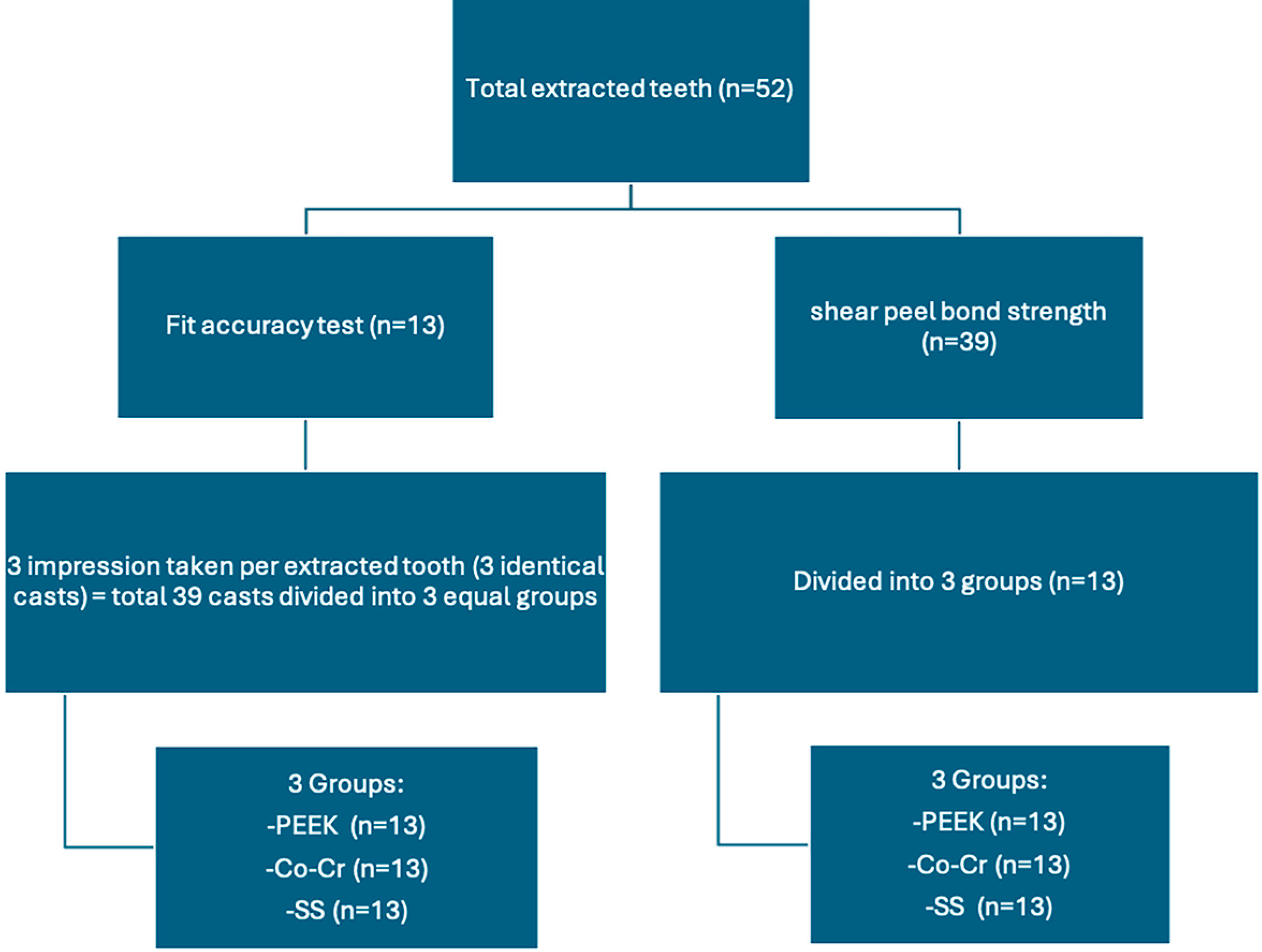
Figure 1. Study design which includes fit accuracy and shear peel bond strength test.
Prosthesis 07 00159 g001
Figure 2. The steps of molding the extracted teeth in acrylic: (a) Custom molds made with modeling wax; (b) a dental surveyor with a veneer positioning stick to ensure the vertical alignment of teeth within the molds. The inset shows a magnified view; (c) the molds filled with cold-cured acrylic resin; (d) finished and polished samples.
Prosthesis 07 00159 g002aProsthesis 07 00159 g002b
Figure 3. Band designs and fabricated bands of cobalt–chromium (Co-Cr) and polyetheretherketone (PEEK): (a) Design of Co-Cr bands. (b) Design of PEEK bands. (c) Selective laser-melted Co-Cr band. (d) Milled PEEK band.
Prosthesis 07 00159 g003
Figure 4. A stepwise workflow of digital 3D fit accuracy analysis using CloudCompare software The color scale represents the degree of deviation, where red indicates the largest deviation and blue represents the least deviation. (a) Importing the two scans of the same sample and assigning the scans to reference (yellow) and aligned (red) Standard Tessellation Language (STL) datasets before alignment; (b) the rough alignment of the meshes using the four-point matching protocol; (c) refinement using the iterative closest point (ICP) algorithm; (d) the completion of the iterative closest point (ICP) registration process showing the final alignment; (e) cropping and isolating the region of interest to remove irrelevant scan areas; (f) the visualization of the accurately aligned datasets for distance computation; (g) setting parameters for 3D distance calculation between the test and reference surfaces; (h) the generation of the color-coded deviation map, where variations in color represent the quantitative discrepancies between the two datasets, illustrating the fit accuracy of the scanned models.
Prosthesis 07 00159 g004
Figure 5. Mandibular third molar band fit analysis using the dual-scan method. Each subpanel displays the stone cast before and after the placement of the silicone layer, together with the qualitative 3D deviation map of the band–tooth interface deviation. The color scale represents the degree of deviation, where red indicates the largest deviation and blue represents the least deviation. (a) PEEK; (b) Co-Cr band; (c) stainless steel band.
Prosthesis 07 00159 g005
Figure 6. Maxillary third molar band fit analysis using the dual-scan method. Each subpanel displays the stone cast before and after the placement of the silicone layer, together with the qualitative 3D deviation map of the band–tooth interface deviation. The color scale represents the degree of deviation, where red indicates the largest deviation and blue represents the least deviation. (a) Polyetheretherketone band; (b) cobalt–chromium band; (c) stainless steel band.
Prosthesis 07 00159 g006
Figure 7. Shear peel bond strength testing setup on universal testing machine. (a) Custom-made jig designed to secure specimen during loading; (b) polyetheretherketone sample; (c) cobalt–chromium sample; and (d) stainless steel sample mounted for testing.
Prosthesis 07 00159 g007aProsthesis 07 00159 g007b
Figure 8. Inner surface of digital band isolated in Meshmixer software for surface area measurement used in shear peel bond strength testing, with the red circle indicating the reference point used for measuring surface area and positional data within the model.
Prosthesis 07 00159 g008
Figure 9. Boxplot visualization of the root mean square (RMS). Stainless steel (SS), cobalt–chromium (Co-Cr), polyetheretherketone (PEEK). Open circles represent mild outliers identified using the 1.5 × IQR criterion.
Prosthesis 07 00159 g009
Figure 10. Boxplot visualization of shear peel bond strength test. Stainless steel (SS), cobalt–chromium (Co-Cr), polyetheretherketone (PEEK), shear bond strength (SPBS). Open circles represent mild outliers identified using the 1.5 × IQR criterion.
Prosthesis 07 00159 g010
Figure 11. Bar chart of adhesive remnant index (ARI) distribution among groups. Adhesive remnant index (ARI) score, stainless steel (SS), cobalt-chromium (Co–Cr), polyetheretherketone (PEEK).
Prosthesis 07 00159 g011
Table 1. Descriptive statistic values for the groups tested for fit accuracy and shear peel bond strength.
Tested PropertiesGroupsMeanSD95% Cl [Lower, Upper]
Fit accuracy (mm)PEEK0.152 a0.045[0.124, 0.179]
Co-Cr0.151 a0.047[0.122, 0.179]
SS0.344 b0.118[0.272, 0.415]
Median (MPa)IQR (25–75%)Min–Max
Shear peel bond strength (MPa)PEEK0.393 b0.288–0.5070.288–0.944
Co-Cr1.657 a1.330–1.6571.039–2.613
SS1.481 a1.109–1.7300.605–1.932
ARI gradingARIPEEKCo-CrSSTotal
03 (23.1%)6 (46.2%)0 (0.0%)9
16 (46.1%)7 (53.8%)0 (0.0%)13
24 (30.8%)0 (0.0%)0 (0.0%)4
30 (0.0%)0 (0.0%)13 (100.0%)13
Total13131339
Stainless steel (SS), cobalt–chromium (Co-Cr), polyetheretherketone (PEEK), adhesive remnant index (ARI). Different superscript letters within same row indicate statistically significant differences between groups (p < 0.05). Identical letters denote no significant difference.
Disclaimer/Publisher’s Note: The statements, opinions and data contained in all publications are solely those of the individual author(s) and contributor(s) and not of MDPI and/or the editor(s). MDPI and/or the editor(s) disclaim responsibility for any injury to people or property resulting from any ideas, methods, instructions or products referred to in the content.