1. Introduction
The metro system constitutes the backbone of urban public transport, characterised by high passenger capacity, rapid end-to-end travel, and strong timetable reliability. As urban areas expand and travel demand becomes increasingly concentrated along specific corridors, numerous metro lines routinely operate at or near capacity limits during peak hours. In megacities such as Beijing and Shanghai, for instance, hourly passenger inflows at key stations can exceed 30,000 during peak periods, resulting in severe platform overcrowding and elevated safety risks. Under such saturated operating conditions, even modest demand increases or minor service disruptions are sufficient to trigger acute crowding phenomena, including long queues outside station entrances, dense platform accumulations, and excessively high train load factors. Such conditions inevitably reduce the level of service perceived by passengers, who are exposed to longer effective travel times, diminished comfort, and higher perceived travel costs. From an operational perspective, overcrowding intensifies dwell-time variability, increases delay propagation, and introduces tangible safety hazards for both passengers and operational staff.
Given that the fundamental cause lies in the spatio-temporal mismatch between passenger demand and available train capacity, unilateral mitigation measures are deemed insufficient. Consequently, the joint implementation of demand-side passenger flow control and supply-side capacity coordination is regarded as essential. Such integrated strategies not only alleviate immediate crowding pressures and safety risks but also enhance the resilience and operational efficiency of metro systems under persistently high demand levels.
Peak-hour metro congestion represents a widespread challenge encountered by urban rail networks globally. In metropolitan areas including Beijing, London, Tokyo, and New York, researchers and transit operators have investigated a variety of strategies to manage excessive passenger demand under constrained train capacity, including passenger flow control, timetable optimisation, and demand-responsive access management. Although these studies address comparable operational challenges, substantial differences are observed in their modelling assumptions, control mechanisms, and optimisation objectives, reflecting diverse methodological approaches to the same underlying problem.
Passenger flow control is widely recognised as the primary demand-management measure. By regulating passenger entry rates according to real-time crowd density, this strategy is employed to alleviate station and platform congestion. In practical applications, passenger flow control typically relies on physical and operational interventions, such as the deployment of temporary barriers, the reorganisation of queuing layouts, the restriction of open fare gates, and time-based metering at station entrances. These measures reduce the rate at which passengers enter the paid area, thereby decelerating passenger accumulation on platforms and preventing the formation of critical crowding conditions during peak periods.
Nevertheless, these benefits are accompanied by notable drawbacks. Restricted entry inevitably prolongs queuing times outside stations, often displacing congestion from platforms to station plazas. This phenomenon not only impairs perceived service quality but also exposes passengers to extended waiting durations, increased discomfort, and potential conflicts with other urban activities. Furthermore, station personnel are generally unable to differentiate passengers according to their intended destinations. In the absence of origin–destination (OD) information at entry points, operators are prevented from tailoring control measures to address specific downstream bottlenecks, which limits the effectiveness of flow management and may result in imbalanced train loading even under strict metering. As a result, gate-based passenger flow control, while necessary for safety assurance, is considered limited in its ability to coordinate network-wide demand with available train capacity.
To address these limitations, a reservation-based entry system was introduced as a pilot initiative in Beijing in 2020. Under this framework, passengers are permitted to reserve a designated entry timeslot for the following day via a mobile application. Passengers with successful reservations are granted access through dedicated priority channels, whereas those without reservations are required to enter via regular queuing channels subject to real-time flow control. This dual-channel arrangement is designed to separate pre-committed reservation demand from walk-up demand, thereby improving the predictability of station crowding.
The reservation-based mechanism is viewed as an emerging form of demand-responsive service design, which has been widely adopted in sectors including ride-hailing, medical appointments, and public venue admissions. Its introduction into metro operations provides a basis for the implementation of more refined and targeted passenger management. During the reservation process, passengers are required to specify both their intended departure times and their OD pairs. This information enables operators to obtain accurate, disaggregated OD demand profiles in advance, thereby enhancing the effectiveness of passenger flow control measures. Accordingly, station operators are able to adjust entry quotas not only according to total passenger volumes but also in response to downstream capacity constraints at critical bottleneck stations. Through the utilisation of reservation data, the adverse impacts traditionally associated with conventional flow control can be mitigated. A more targeted regulation of entry flows is thereby achieved, contributing to reduced queuing times outside stations.
On the supply side, capacity scheduling is predominantly focused on train skip-stop operations. In practice, metro lines are usually operated with headways compressed to minimum feasible limits to maximise available capacity and alleviate peak-hour congestion. Despite such operational arrangements, inherent capacity limitations persist. At major upstream stations, extremely high passenger volumes frequently lead to immediate in-vehicle crowding upon door opening, rapidly exhausting available train capacity. Consequently, passengers at downstream stations may be unable to board even under similarly severe platform congestion.
Since upstream passengers are inevitably prioritised in the boarding sequence, the distribution of crowding becomes increasingly uneven along the line, with downstream stations exposed to heightened safety risks and reduced service accessibility. Motivated by these operational challenges, a skip-stop strategy is incorporated in this study as a supply-side intervention. Through the selective skipping of specified stations, train capacity can be redistributed more equitably across the corridor, alleviating upstream–downstream imbalances and promoting a fairer allocation of capacity while maintaining overall system efficiency. The skip-stop strategy adjusts train stopping patterns to prioritise capacity provision for high-demand segments, aligning supply with the spatial distribution of passenger flows and improving the overall operational performance of the network.
In general, demand-side passenger flow control and supply-side skip-stop operations are closely interrelated and shall be implemented in a coordinated manner. The temporal distribution and volume of passenger station entries are adjusted through passenger flow control, whereby the temporal distribution of travel demand, the destination composition of waiting passengers, and the instantaneous passenger accumulation at each platform are modified. Such variations in demand determine the stations at which train capacity is likely to be reached and further influence the locations where the implementation of skip-stop strategies achieves the highest effectiveness.
The skipping of low-demand stations allows residual capacity to be preserved for downstream high-demand segments, while controlled passenger admission prevents the premature saturation of early-running trains. Conversely, the application of skip-stop patterns reshapes boarding opportunities and available in-vehicle capacity along the line, which in turn affects the queuing dynamics and waiting times at both upstream and downstream platforms. Since these mechanisms operate across multiple spatial locations and time intervals, coordination is required to comply with operational constraints, including platform safety thresholds, minimum headways, and equity among different passenger groups.
A coordinated approach is therefore adopted to match entry quotas and passenger release rates with targeted skip-stop patterns, so that capacity allocation and demand management function in a complementary rather than conflicting manner. Such integration contributes to improved overall system performance while ensuring operational safety and service equity.
In response to the aforementioned challenges, a coordinated optimisation model is established in the present study. Within a dual-channel reservation framework, the proposed model integrates demand-side passenger flow control with supply-side train skip-stop scheduling.
1.1. Literature Review
Recent studies on passenger flow management in urban rail transit have primarily evolved along three methodological directions: (i) demand-side passenger flow control, (ii) coordinated optimization of demand management and train capacity supply, and (iii) reservation-based or pre-booking mechanisms. While these research streams have each achieved notable progress, their methodological separation has resulted in important limitations when addressing peak-hour congestion under highly heterogeneous demand and capacity conditions.
Demand-side passenger flow control has been extensively studied, with existing approaches generally falling into station-based and OD-based control frameworks. Station-based control models regulate passenger entry volumes or entry rates at individual stations without relying on OD information, which makes them operationally feasible in practice. For instance, refs [
1,
2] develop reinforcement learning–based and dynamic programming–based models, respectively, to dynamically adjust entry rates, demonstrating effectiveness in reducing platform overcrowding and improving fairness. However, these models treat passengers as homogeneous flows at the station level and are therefore unable to differentiate downstream capacity constraints or destination-specific congestion effects. As a result, even optimal station-based control strategies may lead to inefficient capacity utilization and imbalanced onboard crowding along the line.
OD-based passenger flow control, in contrast, explicitly regulates the entry or departure times of specific OD pairs (e.g., refs. [
3,
4]). These models provide a more refined matching between passenger demand and train capacity, but they rely on the strong assumption that OD information is observable at station entrances. This assumption significantly limits their practical applicability in most metro systems, where passengers are indistinguishable before entering the paid area. Consequently, existing OD-based control strategies remain largely theoretical and difficult to implement at scale.
Recognizing the interaction between passenger demand and capacity supply, a second stream of research integrates passenger flow control with train scheduling or capacity allocation. Studies such as refs. [
5,
6,
7] jointly optimize train dispatching, headways, or load distribution while regulating passenger inflow. Extensions incorporating robustness and demand uncertainty further enhance operational realism [
8,
9]. Ref. [
10] studied the collaborative optimization of train timetabling and passenger flow control under stochastic demand, and formulated a stochastic mixed-integer programming model with constraints on expected travel time cost. Nevertheless, most of these models assume a unified passenger entry process and do not distinguish between different access channels. As a result, they are unable to capture how structured demand information-if available prior to entry—could fundamentally reshape flow control decisions and capacity allocation strategies.
Within this coordinated optimization literature, skip-stop and short-turn strategies have been proposed as effective supply-side tools to redistribute limited capacity under oversaturated conditions [
11,
12,
13]; Yuan [
14] established a mixed-integer programming model that aims to minimize the unused capacity of trains as well as the total number of passengers waiting on platforms and off-station. The model controls passenger flow density and improves operational efficiency under a specified passenger loading rate. Xue [
15] proposed a joint optimization method for passenger flow control and train timetabling under the short-turning operation pattern to tackle the problems of subway oversaturation and spatiotemporal imbalance of passenger flow during peak hours. They constructed an integer nonlinear programming model, which was solved by combining the tabu search algorithm with CPLEX. Verified on the Beijing Fangshan Line, this method significantly reduces the total passenger waiting time and mitigates congestion. Jia [
16] defined passenger arrival rates as uncertain variables and established an optimization model aiming to minimize the number of stranded passengers, the volume of passengers under flow control and train running time, as well as to maximize the measurement value of train resource utilization efficiency. These studies demonstrate that selectively skipping low-demand stations can alleviate downstream congestion and improve system efficiency. However, skip-stop decisions are typically optimized independently of passenger access mechanisms and are therefore based on aggregate or ex post demand realizations rather than being proactively aligned with entry regulation.
A third, emerging research direction concerns reservation-based or pre-booking mechanisms, which introduce advance demand information into transportation systems. Existing work in this area spans railway operations [
17], road traffic management [
18], and shared mobility services [
19]. These studies consistently show that reservation systems can improve demand predictability and reduce congestion. In the context of metro systems, Ref. [
20] conceptually discuss reservation-based travel organization, while ref. [
4] incorporate reservation decisions into passenger flow control models. However, current studies largely treat reservation as a standalone demand management tool and do not systematically examine its interaction with conventional flow control and train operation strategies.
In summary, existing literature exhibits three key methodological gaps. First, demand-side flow control and supply-side capacity strategies-particularly skip-stop operations-are often optimized in isolation, despite their strong operational interdependence. Second, the majority of models assume a single, homogeneous entry channel and therefore fail to exploit the structural advantages offered by reservation-based access, such as advance OD information and guaranteed entry times. Third, existing reservation-related studies do not fully integrate platform queuing dynamics, onboard capacity constraints, and train stopping patterns within a unified modeling framework.
Motivated by these gaps, this study develops a coordinated optimization framework that explicitly integrates dual-channel passenger entry (regular and reservation-based), station-level flow control, and skip-stop train operations. By embedding reservation decisions into the passenger flow control process and jointly optimizing them with train stopping schemes, the proposed model advances the state of the art in metro congestion management and provides a more realistic and implementable solution for peak-hour operations.
1.2. The Contributions of This Study
Motivated by the methodological gaps identified in the literature, this study develops a coordinated optimization framework that differs conceptually and operationally from existing approaches to metro congestion management. The contributions are articulated at four distinct levels: modeling structure, coordination mechanism, decision-variable design, and application context.
- (1)
At the structural level, a dual-channel passenger entry framework is explicitly formulated, consisting of a regular entry channel and a reservation-based entry channel. In contrast to most existing coordinated passenger flow control and train scheduling studies, which assume a homogeneous entry process without structured advance demand information, the proposed framework incorporates partial observability of origin–destination (OD) demand prior to station entry. This structural modification fundamentally alters the information environment in which passenger flow control decisions are made and enables the endogenous integration of reservation allocation into the optimization process.
- (2)
At the mechanism level, a forward-coordinated interaction between demand-side regulation and supply-side capacity allocation is established. In the majority of prior collaborative optimization studies, skip-stop patterns and flow control measures are coordinated reactively based on realized or aggregated congestion levels under a single-entry assumption. By contrast, the proposed model embeds reservation fulfillment decisions into the passenger admission process and jointly optimizes them with train stop-skipping schemes. Through this integration, advance reservation information proactively guides capacity redistribution across stations, transforming the coordination logic from ex post balancing to anticipatory alignment between demand segmentation and train stopping patterns.
- (3)
At the decision-variable level, reservation fulfillment quantities are introduced as endogenous optimization variables and are jointly constrained with regular entry quotas and train stopping decisions. This formulation extends traditional station-based flow control models, in which entry regulation is typically represented by a single admission variable, and establishes a dual-dimensional demand management structure. The coupling among reservation allocation, platform accumulation dynamics, onboard capacity constraints, and skip-stop feasibility conditions is explicitly characterized within a unified mixed-integer nonlinear programming (MINLP) framework.
- (4)
At the application level, the proposed framework is grounded in a real-world reservation pilot context rather than a purely theoretical assumption of OD observability. By reflecting operational features observed in practical metro reservation schemes, including guaranteed entry channels and differentiated admission control, the model enhances implementability and bridges the gap between theoretical OD-based control models and realistic station-level management practices.
Therefore, the novelty of this study does not lie merely in combining passenger flow control, reservation mechanisms, and skip-stop operations. Instead, it resides in redefining their structural interdependence under a dual-channel entry system and establishing a unified anticipatory coordination framework in which reservation-induced demand segmentation reshapes both entry regulation and train capacity allocation. This integrated formulation advances the state of the art in metro congestion management by providing a conceptually distinct and operationally implementable coordinated optimization paradigm.
2. Problem Description
The study investigates the coordinated optimization problem of passenger flow control and train stopping schedules during peak metro hours, focusing on a passenger flow management strategy that combines regular and reservation-based entry channels.
We investigate a metro line of peak hours as study periods. On the line, Let
represent the set of the stations along a specific direction from station
to
. The reservation stations is known and denoted as X. As illustrated in
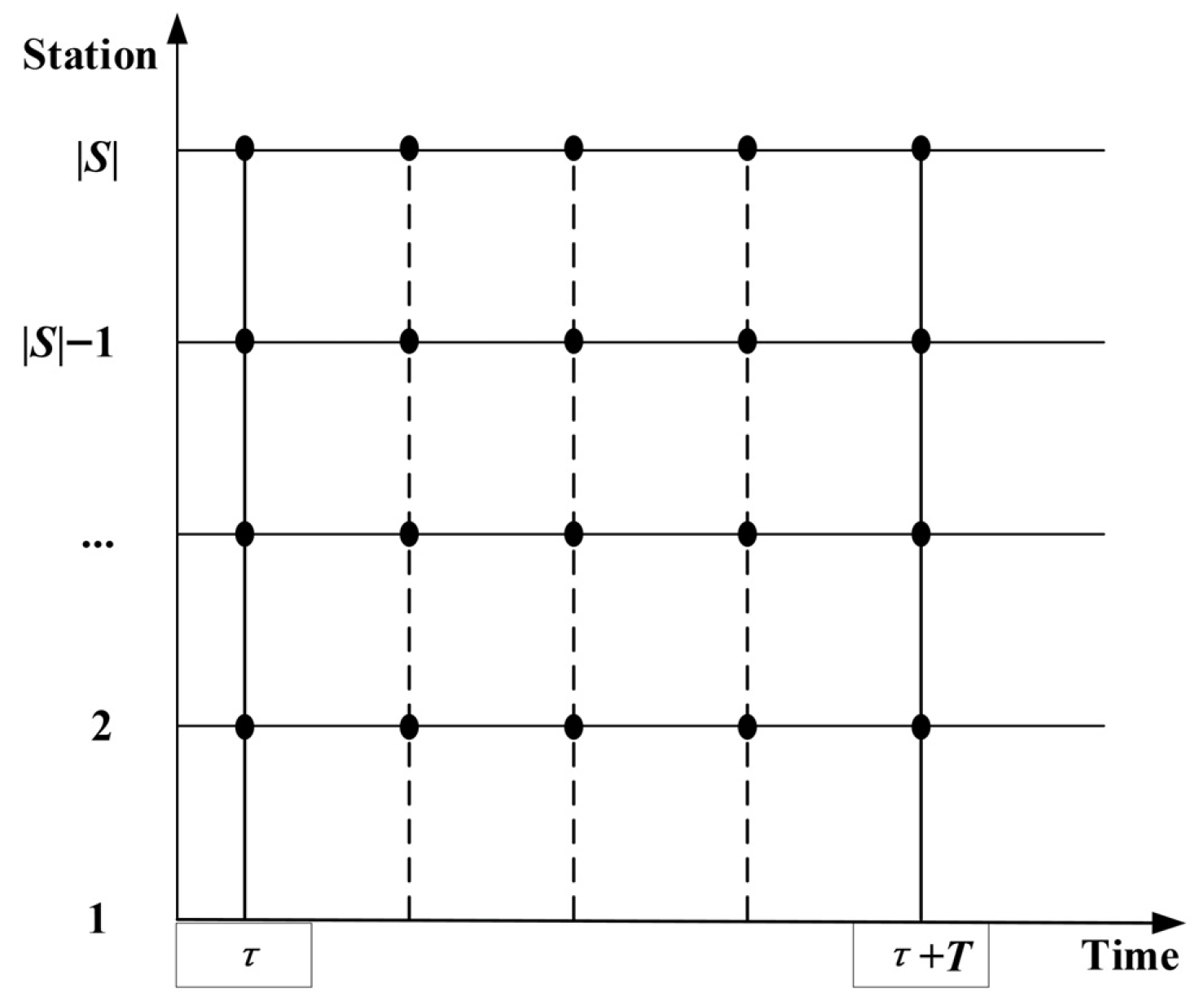
Figure 1, at the beginning and end times
and
of study periods, an all-stop train departs from the first station 1 at time
and
, respectively. Without loss of general, outside the study periods, we assume that trains can maintain the existing service schedule because they can provide adequate capacity, and no passenger flow control is necessary.
In the study periods, we determine the optimal train stop plan yet assumed that the train timetable is fixed (we assume that the number of trains operating during the study is fixed.). The train’s timetable nearly cannot be changed because of the high frequency and low headway in the peak hour though some stops will be skipped by some trains. Let denote the alternative stop schemes, with each scheme corresponding to a specific combination of skipped stations. Due to track layout constraints, overtaking is not allowed, and trains traveling in the same direction must maintain a fixed order.
Considering the arrival and departure time differences of the same train at different stations resulting from running and stopping, a virtual discrete time is introduced to facilitate modeling. Under this representation, the same virtual time corresponds to different actual times across stations, but for any given train, its arrival and departure events at successive stations are mapped to the same virtual time . For each station , the corresponding analysis period is defined over the interval . In the study, entry of passengers and walking times are not considered and can be handled using a unified time difference. Train departure times at each station are assumed to be known and fixed throughout the study.
For the train plan, we assume that the number of trains operating during the study is fixed. Let denote the alternative stop schemes, with each scheme corresponding to a specific combination of skipped stations. In terms of passenger flow management, For reservation station , the passenger demand include two parts: non-reserved passenger demand directly entry from regular channel and the number of passenger using reservation. we define as the non-reserved passenger demand from station to station at time , and as the number of passenger using reservation. Operators will decide the number of successfully reserved passengers, denoted as . Passengers can enter the station via the dedicated reservation channel without delay, while passengers who fail to reserve, as well as non-reserved passengers, enter by the regular channel.
After entering the station and reaching the platform, passengers wait for the next available train and board once the train arrives. The boarding process must account for the dynamic interaction between passenger demand and the remaining capacity of each train, which varies across stations and over time. Since passengers arriving at the platform may belong to multiple OD pairs and experience different waiting durations, their ability to board depends not only on train availability but also on whether the train serves their intended downstream station. To capture this behavior, we define as the number of passengers boarding at station at time and traveling to destination . This formulation enables the model to reflect the evolving passenger accumulation on platforms, the constraints imposed by limited train capacity, and the selective boarding opportunities arising from the train’s stop pattern.
This is subject to the following constraints:
- (1)
The available train capacity is the train capacity minus the number of passengers who disembark at the station, leaving only the passengers still on board.
- (2)
The train departure time and stop scheme determine whether service is available at time . Passengers can only board if the train stops at station at time ; if the train skips station , the number of boarding passengers is zero.
- (3)
The OD distribution of boarding passengers follows the OD ratio principle based on the waiting passengers on the platform.
Hence, the problem is as follows: subject to constraints such as train headways and platform safety capacity, and considering passenger queueing outside the station and waiting on the platform, the objective is to minimize the total travel time of passengers. This is achieved by determining the number of successfully reserved passengers , the entry rate , and the train departure times and stop schemes .
3. Model Formulation
3.1. Assumptions
To facilitate the model formulation, the following assumptions are made.
Assumption 1.
The total passenger demand remains constant, meaning passengers will not switch to other transportation modes due to crowd control measures.
Assumption 2.
During peak hours, passengers tend to prefer direct trains, and transfer behavior is not considered, as severe congestion makes boarding and alighting difficult, reducing the practicality and attractiveness of making transfers.
Assumption 3.
After a train arrives, passengers begin boarding until the train departs. For convenience, boarding is assumed to be an instantaneous action, meaning that all passengers complete boarding at the train’s departure time. The number of boarding passengers is determined by the remaining train capacity and the number of passengers waiting on the platform.
3.2. Notation
The parameters and variables used in the model formulation are summarized in
Table 1. To ensure clarity and reproducibility, all symbols appearing in the equations are explicitly defined in the notation table and are used consistently throughout the manuscript. In particular, the same symbol represents the same physical meaning across different equations, and no distinction in meaning is implied by the use of uppercase or lowercase letters unless explicitly stated.
3.3. Model
The model aims to ensure overall passenger travel efficiency by minimizing the total travel time of passengers, including queueing outside the station, waiting on the platform. In this process, considering the lower service level during queueing outside the station and waiting on the platform, a time penalty weight coefficient is introduced.
The objective function is constructed to minimize the total generalized travel cost experienced by passengers. It consists of multiple cost components, including the queueing time outside the station, the waiting time on the platform, and congestion-related penalties. Each cost component is associated with a corresponding weight coefficient to reflect differences in passenger discomfort and service level.
On the other hand, to ensure fairness among stations along the line, differences in queueing time outside the station and waiting time on the platform between upstream and downstream stations are taken into consideration. Therefore, the model minimizes the variance of station-level waiting times to promote fairness in passenger service.
The passenger flow control decision for station entry involves the reserved quota
for successfully reserved passengers and the number of passengers allowed to enter through the conventional channel
. Constraint (2) ensures that the number of successfully reserved passengers should not exceed the reservation demand.
In Equation (3), the passengers queueing outside the station at time
include both the non-reserved passengers and those whose reservation failed.
Constraint (4) specifies the relationship among passengers queueing outside the station, those remaining stranded from the previous period, and those who are permitted to enter. Constraint (5) determines the number of entering passengers for each OD pair
at time
based on the total admissible passenger volume. The allocation follows the OD distribution of waiting passengers outside the station, including both newly arrived passengers at time
and those stranded at time
. Specifically, entry quotas are assigned in proportion to the number of passengers in each OD pair relative to the total waiting passengers. This rule ensures fair access for passengers with the same OD demand but different arrival times, and avoids unfair situations where some passengers repeatedly give way and cannot board for a long time.
To further characterize the passenger waiting process, passengers board only when the train arrives at the station and stops at both the origin and destination stations of their OD pair; otherwise, they remain waiting on the platform. The boarding process must satisfy the following constraints.
Constraint (6) defines the available train capacity as the total train capacity minus the onboard passengers, where the onboard passengers consist of those who boarded at upstream stations and are traveling to downstream stations. Passengers can board only if train
stops at station
; otherwise, the available capacity is set to zero.
Constraint (7) computes the number of passengers of OD pair
preparing to board train
at station
. Passengers can board only when the train stops at both stations of their OD pair; otherwise, the number of boarding passengers is forced to zero.
In Equation (8), the number of boarding passengers for train
at station
is given by the minimum of the train’s remaining capacity and the number of passengers preparing to board for the corresponding OD pair. The boarding passenger count for OD pair
at time
equals
when
matches the departure time of train
at station
; otherwise, it equals
. The OD distribution of boarding passengers follows the OD proportions of the passengers waiting on the platform.
In Equation (9), the relationship among passengers arriving on the platform, passengers waiting on the platform, and those who board the train is specified.
Constraint (10) ensures that the number of onboard passengers on train
does not exceed the train’s capacity.
In actual operations, to ensure the safety of the metro system and passenger satisfaction, system capacity constraints must often be considered. constraint (11) ensures that the number of passengers gathered at platform
does not exceed the platform’s safety capacity limit.
To ensure a fundamental level of service and passenger travel satisfaction, Constraint (12) stipulates that two consecutive trains, and , operating at station , are prohibited from skipping the station simultaneously.
4. Algorithms
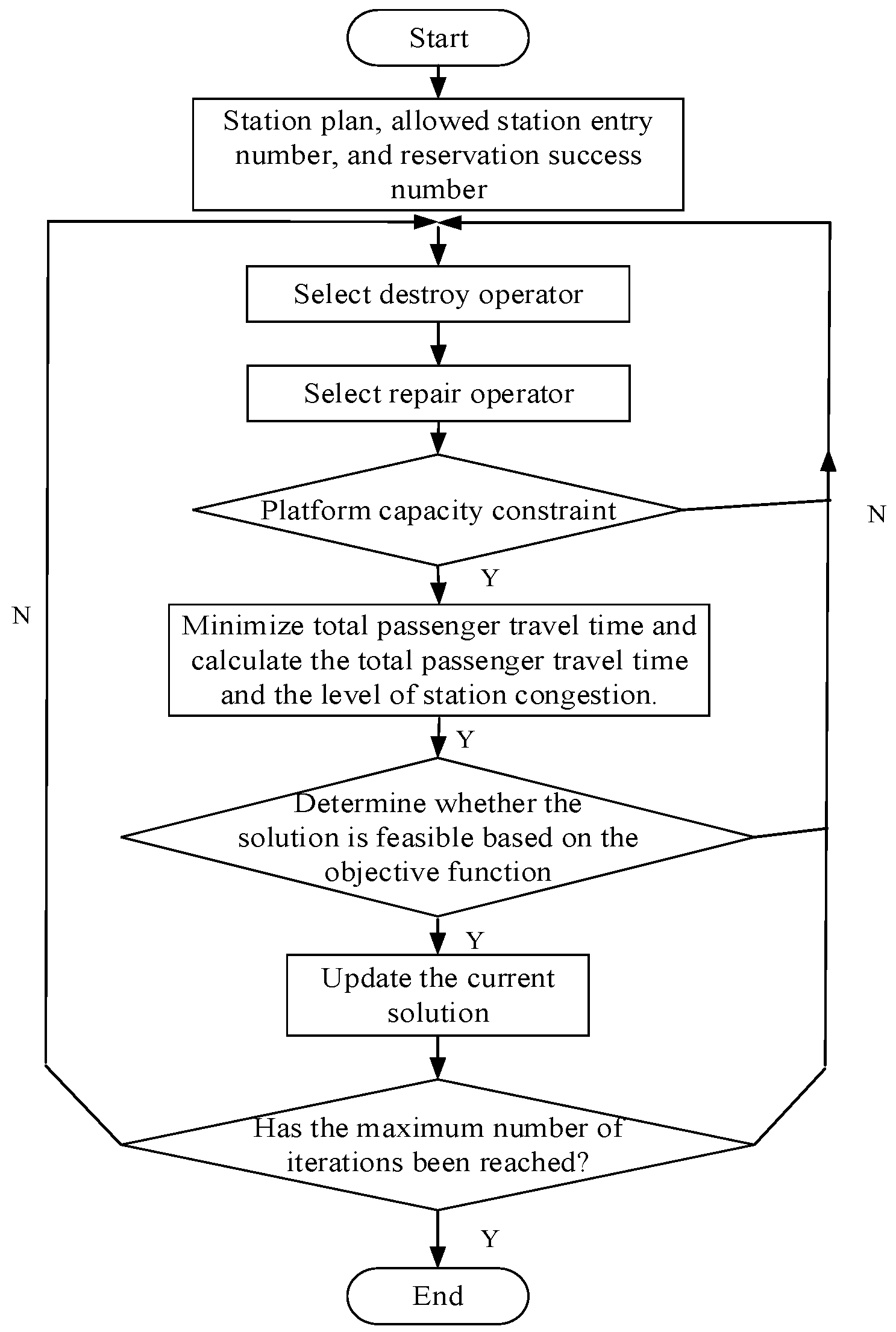
Given the strong coupling and combinatorial optimization characteristics of the collaborative optimization problem for passenger flow control and train scheduling, this study adopts the Adaptive Large Neighborhood Search (ALNS) algorithm for problem solving. Compared with other meta-heuristic algorithms, the ALNS algorithm features higher flexibility and exhibits superior performance in addressing large-scale problems with complex decision correlations and mixed characteristics of multiple variables and integer variables.
ALNS is an efficient heuristic method whose core advantage lies in its ability to integrate multiple destruction operators and repair operators within a single search process, and to autonomously design operators tailored to the specific problem context. The effectiveness of this algorithm stems from the adaptive optimization of search strategies: it dynamically selects the most suitable operators by leveraging solution-related information, thereby enhancing search performance. At the initial stage of the algorithm, weights are assigned to each operator; subsequently, throughout the entire search process, these weights are continuously updated based on the historical performance and usage frequency of the operators.
This section elaborates on the key components of the ALNS algorithm, including the construction of initial solutions, the design of destruction and repair operators tailored to the model characteristics, the adaptive operator selection mechanism, and the algorithm termination criteria.
4.1. Initial Solution Generation
The construction of the initial solution focuses on simultaneously determining feasible values for the core decision variables- (the number of passengers allowed to enter through the regular channel), (the number of successful reservations), and (the train stop-skip pattern). These values must satisfy all model constraints, thereby ensuring that the initial solution is both feasible and sufficiently representative to support subsequent ALNS iterations.
- (i)
Initial solution determination
For the stop pattern , the assignment must satisfy the operational rule that two consecutive trains are not allowed to skip the same station. In addition, the selected skipping pattern must remain within the predefined candidate set. To ensure feasibility at the starting point, the all-stop pattern is adopted as the initial configuration. For the reservation allocation , the reservation quota must satisfy , meaning that at any time period, the total number of successful reservations across all OD pairs cannot exceed the number of passengers requesting reservations. Accordingly, reservation quotas are fully assigned at the designated reservation station so that , while all other stations-lacking reservation channels, are assigned . For the regular-entry release , the upper bound is determined based on the OD-specific entry demand at each time period. Thus, the initial release capacity is set as , representing the full admission of passengers arriving through the regular channel.
- (ii)
Constraint verification and adjustment
The initial solutions of , , and are jointly examined to ensure compliance with all model constraints. If the platform safety capacity constraint is violated, the corresponding values of and are proportionally reduced, with priority given to preserving the release quotas for high-demand OD pairs. If the train capacity constraint is violated, the model reduces across OD pairs or adjusts the stop pattern , ensuring consistency between available capacity and incoming passenger demand. This verification-adjustment process is repeated until all constraints are satisfied. The resulting initial solution establishes a feasible and coordinated configuration of stop patterns, reservation allocations, and regular-channel admissions, providing a stable foundation for subsequent destroy-repair iterations in the ALNS framework.
4.2. Destroy Operators
In the ALNS framework, destroy operators play a critical role by partially removing components of the current solution, thereby creating search space for improved candidate solutions during subsequent repair. To enhance search effectiveness, three destroy operators are designed in accordance with the model’s three decision-variable groups:
Destroy operator for the entry-control scheme. For a randomly selected time period s at station , the allowable entry volume is randomly reset to times its initial allocation, , where follows a uniform distribution. The adjusted entry volume is required to satisfy and , thereby ensuring that the modified entry volume does not exceed the passenger arrival flow or the prescribed flow-control capacity limit.
Destroy operator for the reservation scheme. For a randomly selected set of OD pairs at station , during time period , the reservation fulfillment rate , is reset to times its initial allocation, , where follows a uniform distribution. The adjusted reservation volume is required to satisfy .
Destroy operator for the stop-pattern scheme. In this procedure, a target train is randomly selected, and its original stopping plan is replaced by a randomly chosen plan from a predefined candidate set consisting of 17 alternatives. During the replacement, the stopping set corresponding to the original plan is substituted by the stopping set associated with the new plan . The replacement process is conducted under the strict enforcement of the adjacency constraint, which prohibits consecutive trains from simultaneously skipping stations Constraint , thereby ensuring the feasibility and operational safety of the generated scheme. By inducing controlled random variations in individual train stopping plans, this operator contributes to solution diversification and enhances the exploration capability of subsequent optimization procedures.
These destroy operators jointly perturb the reservation allocation, entry-control decisions, and stopping patterns, enabling the algorithm to escape local optima and explore structurally diverse regions of the solution space.
4.3. Repair Operators
Following the destruction phase, repair operators are applied to reconstruct feasible and high-quality solutions while satisfying all operational constraints. Upon completion of the destruction phase, feasible and high-quality solutions satisfying all operational constraints are reconstructed through repair operators. Based on the structural characteristics of the OD demand, three repair operators are designed as follows:
Repair operator for the entry-control scheme. The allowable inflow at station during peak periods is restored to a level not lower than the historical average demand, thereby ensuring adequate capacity supply at high-demand stations and preventing excessive congestion propagation. Meanwhile, the variation rate of passenger inflow during time period s is smoothed to better reflect realistic entry patterns.
Repair operator for the reservation scheme. This operator adjusts the number of successful reservations when that allocation becomes unrealistically low after destruction. By increasing for OD pairs with persistently high demand, the operator guarantees that reservation opportunities remain aligned with actual passenger needs.
Repair operator for the stop-pattern scheme. To enhance capacity coverage, the operator selects stopping patterns that serve a larger share of high-demand stations and OD flows. Among the feasible patterns, those with broader coverage of heavy-load segments are prioritized, ensuring that the recovered stop pattern improves the match between train capacity and spatiotemporal passenger demand.
4.4. Adaptive Search Strategy
In each iteration, a pair of destruction and repair operators is selected to generate a new solution. This study develops an adaptive search strategy to update the weights of each operator and select the most effective ones. The scores and weights of the operators are automatically adjusted within the range of [0, 1], ensuring that the search always evolves toward better solutions. Initially, the weight and score of each operator are set to
and
, respectively. During each iteration, the weights and scores are dynamically updated according to the performance of the operators. Let
and
denote the score and weight of destroy operator
, respectively. The weight is updated according to:
where
represents the scaling factor that controls the sensitivity of weight adjustment to operator performance. This adaptive updating mechanism allows the algorithm to gradually emphasize operators that contribute to improved solutions while reducing the influence of less effective ones.
4.5. Simulated Annealing-Based Acceptance Criterion and Termination Conditions
At the end of each iteration, the initial solution for the next iteration is selected based on the simulated annealing principle. This acceptance rule allows the algorithm to occasionally admit inferior solutions, enabling controlled exploration of the solution space and preventing premature convergence to local optima. As the search progresses, the probability of accepting inferior solutions decreases gradually, governed by a cooling schedule that continuously reduces the temperature parameter.
The termination criteria are designed to balance computational efficiency with solution quality. The algorithm terminates when either of the following conditions is satisfied: the maximum number of iterations is reached, indicating that the solution space has been sufficiently explored; or the best solution shows no improvement over consecutive iterations, implying that the search has converged to an optimal or near-optimal solution.
The algorithm flowchart is shown in
Figure 2.
5. Case Study
To validate the performance of the proposed model and algorithm, the down direction of Beijing Metro Changping Line (from XSK to XTC) is selected as the research object. A series of numerical experiments are conducted based on the real-world operational scenario of this line.
The solution algorithm is implemented in Python 3.9.7 (64-bit) on a Windows 10 PC (Dell Technologies, Round Rock, TX, USA) equipped with a 9th Gen Intel Core i5-9300H processor (Intel Corporation, Santa Clara, CA, USA) and 8 GB RAM (Samsung Electronics, Suwon, Gyeonggi-do, South Korea). The computational time for the Changping Line model is 117 s, demonstrating the model’s favorable computational efficiency at a certain scale. Furthermore, when simulating the peak-hour scenario of Beijing Metro Line 1-Batong Line, which consists of 38 stations, the computational time is approximately 122 s. Although the computational complexity increases with the expansion of the network scale, the growth rate of computational time is relatively moderate due to the optimized algorithm and data structure. The model also maintains stable performance when handling longer time horizons with increased data volume.
Next, the effectiveness of the model will be validated through numerical results.
5.1. Case Description
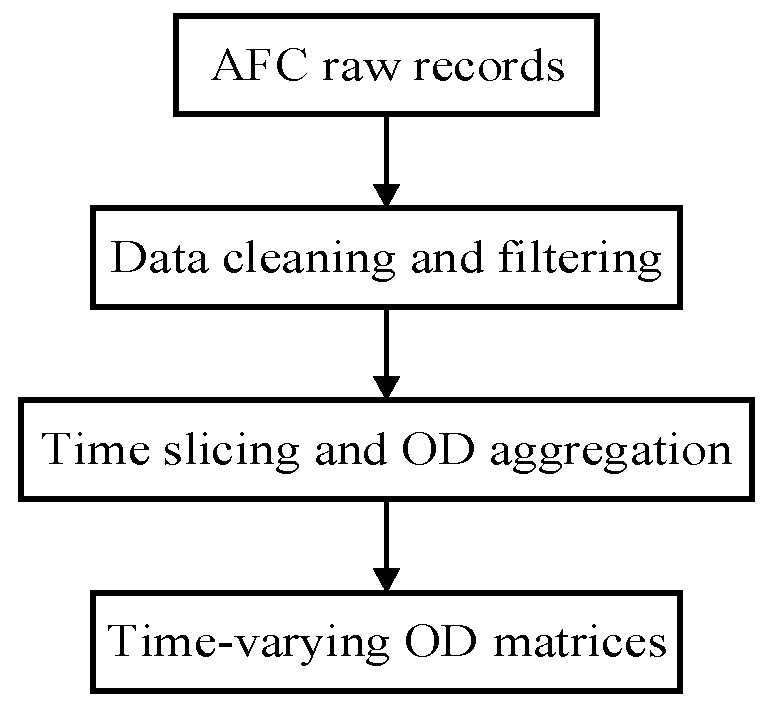
To conduct this case study, two types of data provided by the Beijing metro operator are employed, namely Automated Fare Collection (AFC) transaction logs and train operation records. The AFC data contain anonymized passenger tap-in and tap-out records with station IDs and minute-level timestamps. During the 60-min morning peak period from 8:00 to 9:00, the raw AFC data include more than 40,000 tap-in records, which are further aggregated at 1-min intervals to construct time-dependent passenger OD demand matrices. Train operation records cover official timetables and infrastructure parameters such as inter-station distances and section running times, where the minimum safety headway between successive trains is set to 2 min according to operational regulations. The data preprocessing workflow includes noise cleaning, OD pair mapping from raw tap records, and temporal demand aggregation, as illustrated in
Figure 3.
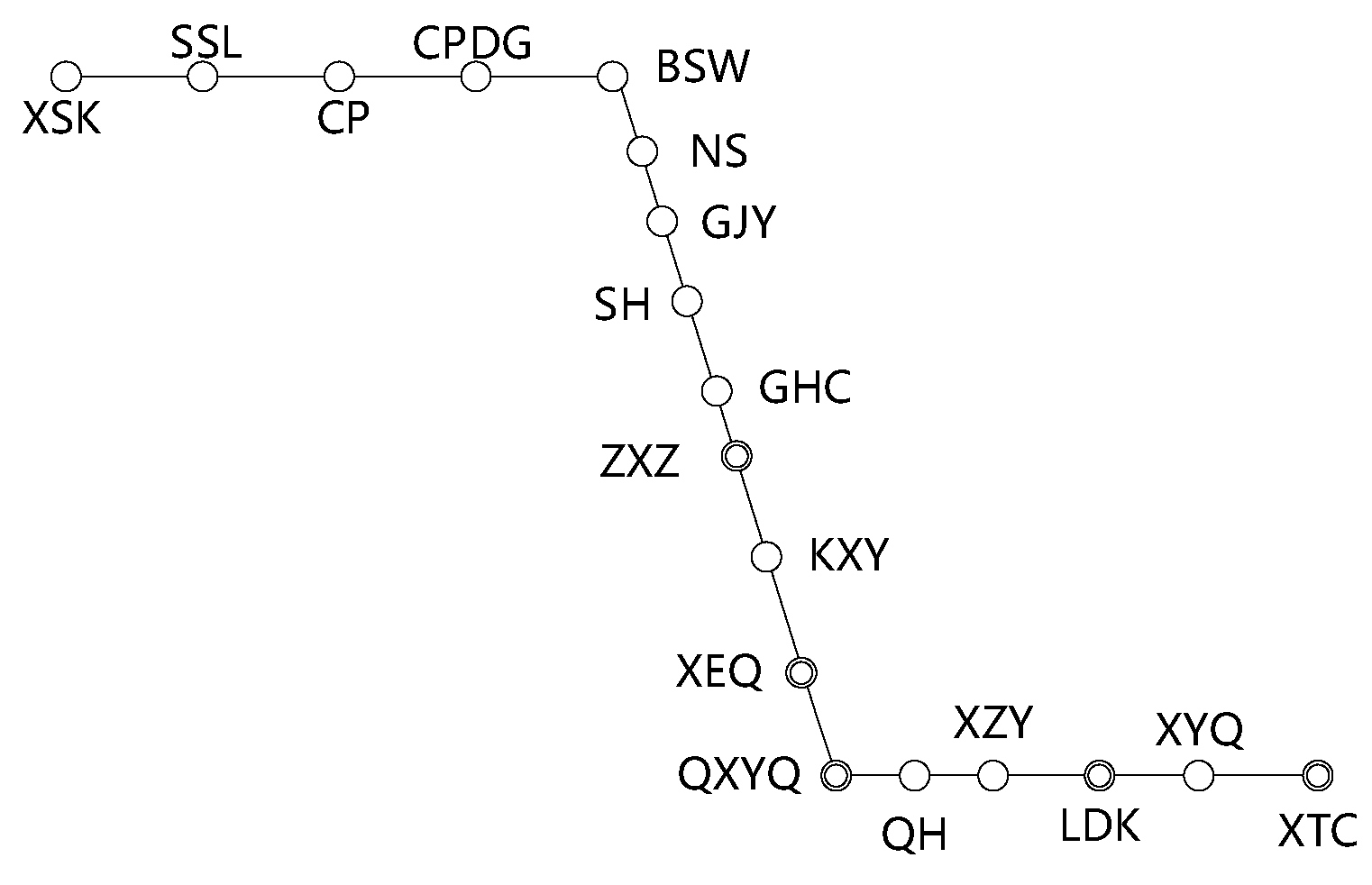
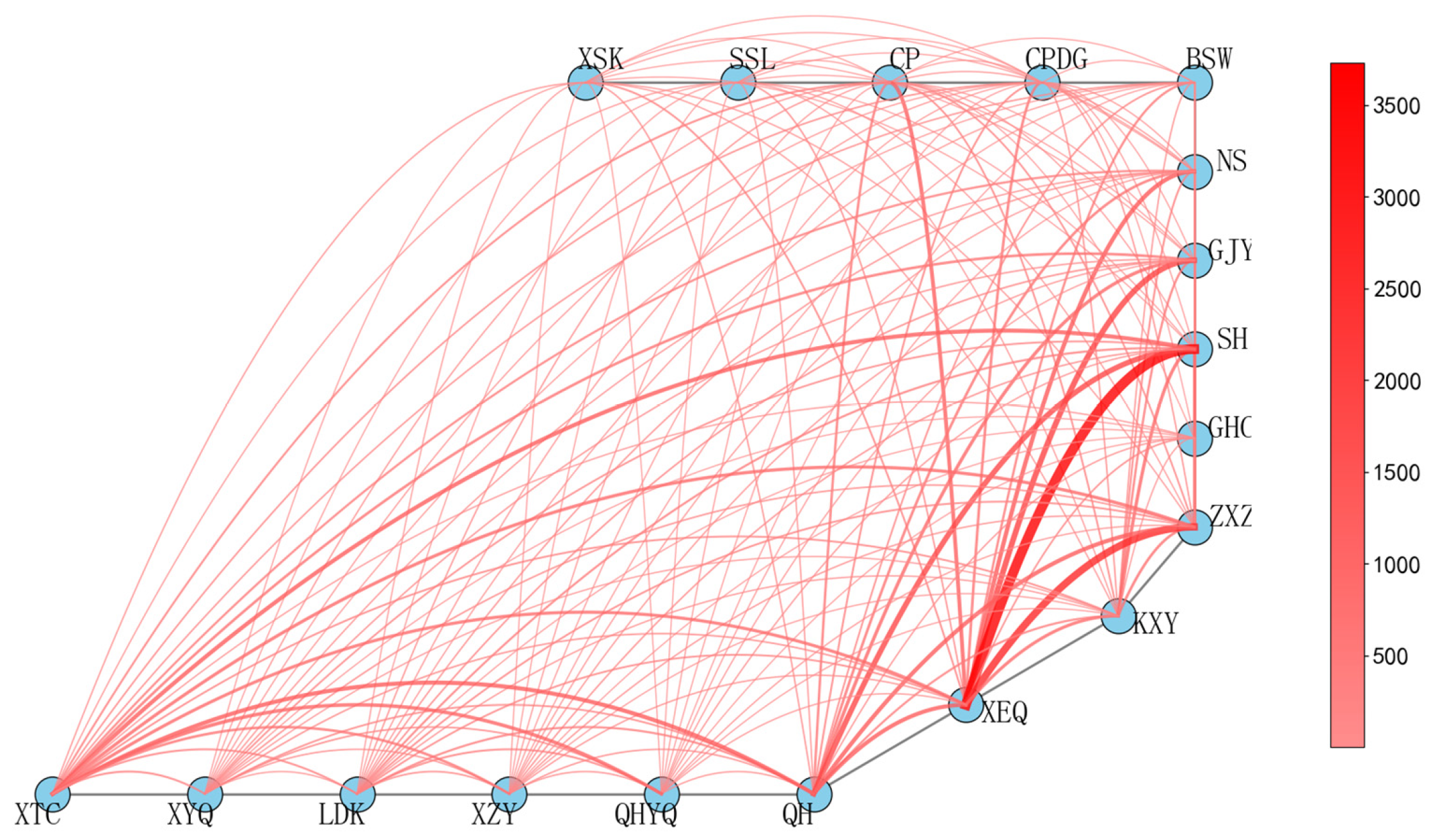
Metro Line CP comprises 18 stations and 17 inter-station blocks, among which SH Station is designated as a reservation station, as illustrated in
Figure 4. At SH Station, passengers with valid reservations are permitted to enter directly via the dedicated reservation channel without queuing, whereas non-reserved passengers and those with unsuccessful reservations are required to queue at the regular entrance. All other stations operate as conventional stations, where passengers may only enter through standard entry channels.
The total study duration is 60 min, with a discrete time interval of 1 min. Passenger arrivals at the origin station are distributed from 8:00 to 9:00. Both passenger reservation periods and the station crowd control scheme are implemented at 1-min intervals.
The OD passenger flow demand throughout the study period is depicted in
Figure 5. With regard to reservation-eligible demand, the proportion of reserved passengers at SH station (the reservation station) is set at 20%, which aligns with the reservation usage rates observed in recent metro reservation pilot programs.
The maximum train passenger capacity threshold is determined according to the designed crush-load capacity provided by the metro operator, so as to maintain consistency with actual operational conditions.
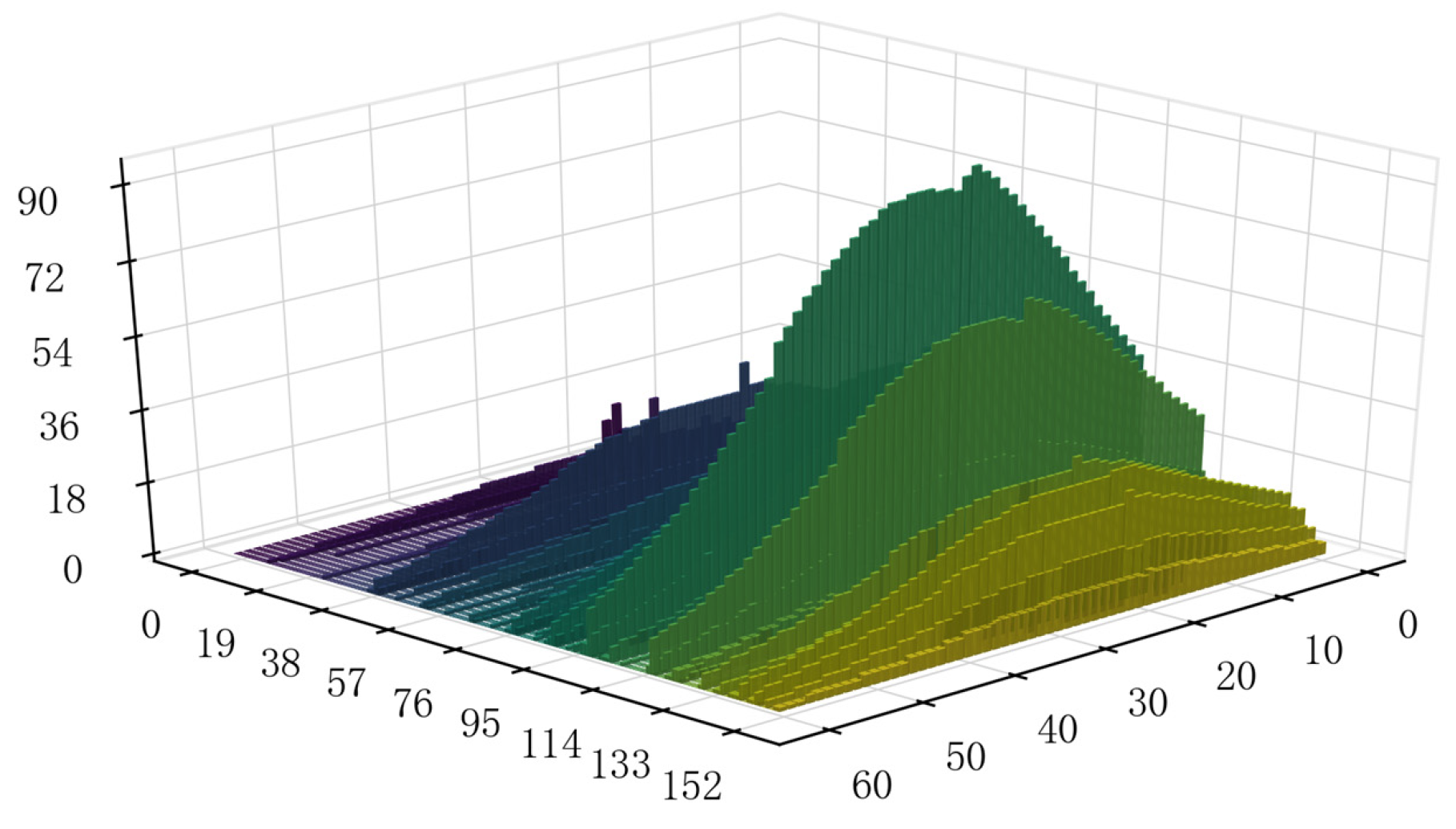
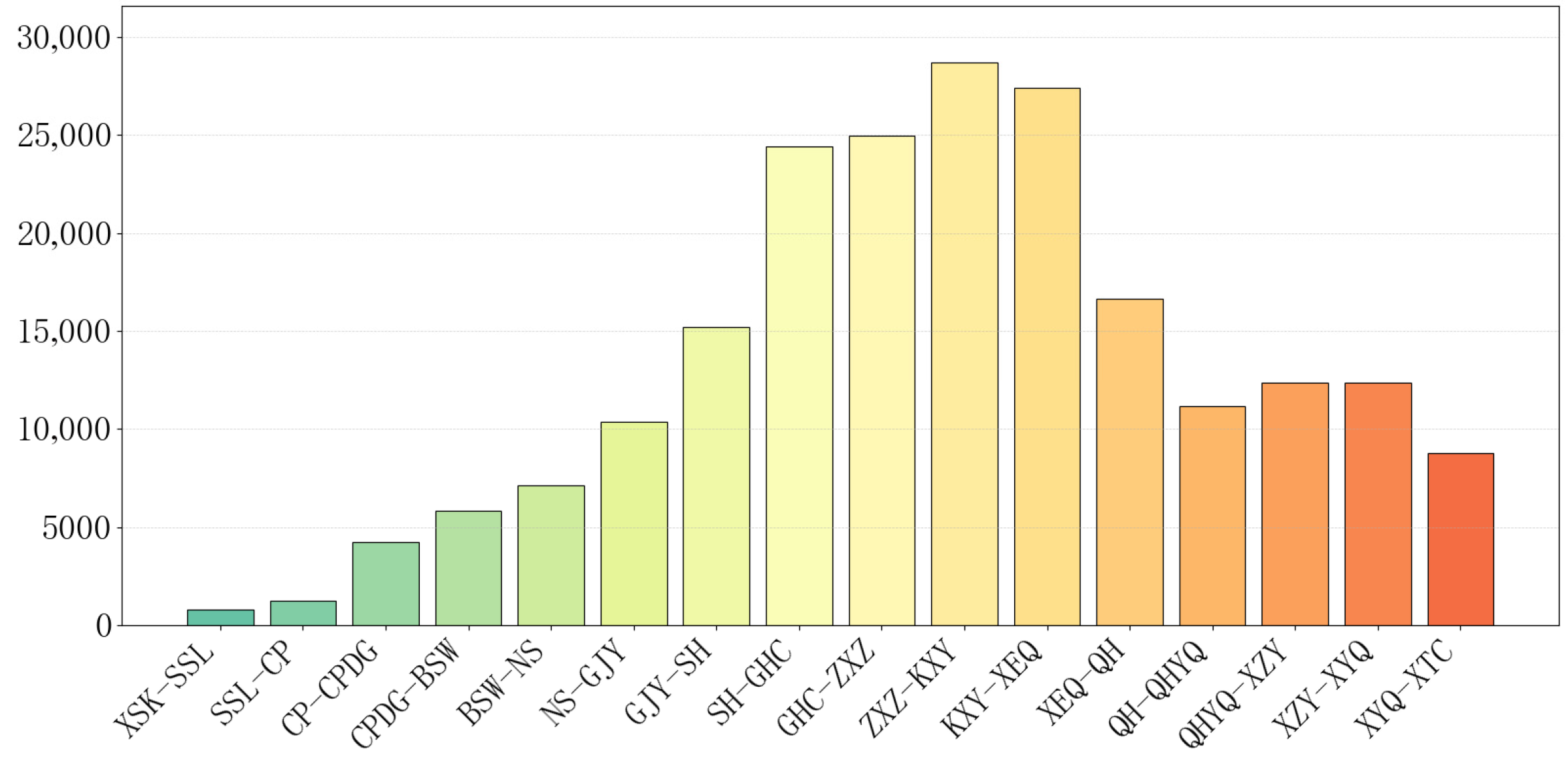
Figure 6 presents the OD passenger demand across the 18 stations of the line, covering a total of 153 OD pairs within the study period. The x-axis denotes the OD index, the y-axis represents the equivalent time, and the z-axis shows the number of passengers. The color in the figure has no special meaning. The “equivalent time” illustrated in the figure refers to the mapped time interval corresponding to each passenger’s departure station within its respective analysis window. Indices 0–152 correspond sequentially to OD pairs ranging from [0, 1] to [16, 17]. For illustration, index 0 (OD [0, 1]) indicates passengers boarding at Station 0 and alighting at Station 1, while index 152 represents passengers traveling from Station 16 to Station 17. The temporal distribution of OD-specific demand reveals a significant concentration of passenger arrivals between equivalent times 20 and 40 min, indicating that the majority of passengers reach their departure stations within this interval. The sectional passenger flow volume is shown in
Figure 7.
A comparison of sectional passenger flow volumes reveals considerable variations in boarding and alighting activities across stations. The majority of passengers board at SH Station and ZXZ Station and alight at KXY Station and XEQ Station, while GHC Station exhibits the lowest boarding and alighting volumes along the entire line. Key parameters employed in the numerical study, including maximum train capacity, total number of train departures, operating headway, and the size of the stop-scheme candidate set, are summarized in
Table 2. The maximum train load is determined based on the rated capacity adjusted by a 120% loading threshold, yielding a maximum capacity of 1728 passengers per train. Running times between adjacent stations are provided in
Table 3.
Based on the no-overtaking principle, with consideration of the minimum safety headway and the predetermined number of train departures, the maximum number of stations that can be skipped by each train is set to two. Through the enumeration of all feasible combinations under this constraint, a total of 17 candidate stop-scheme patterns are generated.
To quantitatively evaluate the effectiveness of the proposed optimization model, a benchmark case is established for comparative analysis. In the benchmark case, passenger flow control is implemented without reservation, following a single-station control rule that only accounts for available train capacity. Under this rule, the number of passengers permitted to enter a station is solely constrained by the remaining capacity of the arriving train, with no capacity reserved by upstream stations for downstream stations. In terms of train operations, all trains in the benchmark case adopt an all-stop service pattern.
Although numerical experiments verify the effectiveness of the model, several practical challenges need to be considered for practicle deployment. The model assumes a 20% reservation rate at SH Station, whose performance depends on passenger acceptance, convenient reservation channels, and reasonable guidance. A low reservation penetration rate would weaken the control effect. In addition, the reservation-based passenger flow control system needs to be compatible with the existing AFC system and ticketing platforms, and may involve hardware modifications such as gate adjustment, which imposes high requirements on system integration and technical coordination. Finally, fairness should be fully considered to avoid disadvantaging passengers without access to smartphones or the internet, and offline reservation channels can be provided to ensure service equity.
5.2. Model Results
To evaluate the optimization effectiveness of different passenger flow control and capacity allocation strategies, five comparative scenarios are designed. Scenario 1 assumes no platform or onboard capacity constraints. Scenario 2 applies a fixed entry limit, with SH Station designated as the controlled station. Scenario 3 introduces a dynamic entry-control strategy. Scenario 4 incorporates coordinated flow control and reservation-based entry management. Scenario 5 further integrates passenger flow control, reservation mechanisms, and skip-stop operations to form a fully coordinated strategy.
Comparative results is presented in
Table 4 across the five scenarios reveal significant differences in performance. Scenario 2 exhibits the longest average waiting time, reaching 6.8 min, along with a slight increase in the variance of station crowding levels. This finding indicates that while a fixed entry limit can restrict passenger flow, its lack of flexibility results in prolonged waiting times and poor crowding distribution. In contrast, Scenario 3 achieves a 47.1% reduction in average waiting time and a 7.9% decrease in station crowding variance compared with Scenario 2. Through dynamic regulation of entry rates, this strategy not only mitigates platform crowding but also effectively controls queues outside stations. Scenario 4 further improves both indicators, reducing the average waiting time to 3.2 min (a 52.9% improvement). However, no significant improvement in crowding variance is observed relative to Scenario 3, suggesting that the reservation mechanism primarily contributes to enhanced entry efficiency and reduced waiting times outside stations. Scenario 5 achieves the most significant improvement in crowding balance, with a 12.5% reduction in station crowding variance and a 44.1% improvement in average waiting time. The results highlight that the integration of skip-stop operations significantly enhances the uniformity of crowding levels and is particularly effective in alleviating onboard congestion, thereby achieving a more balanced improvement in both waiting time and crowding distribution.
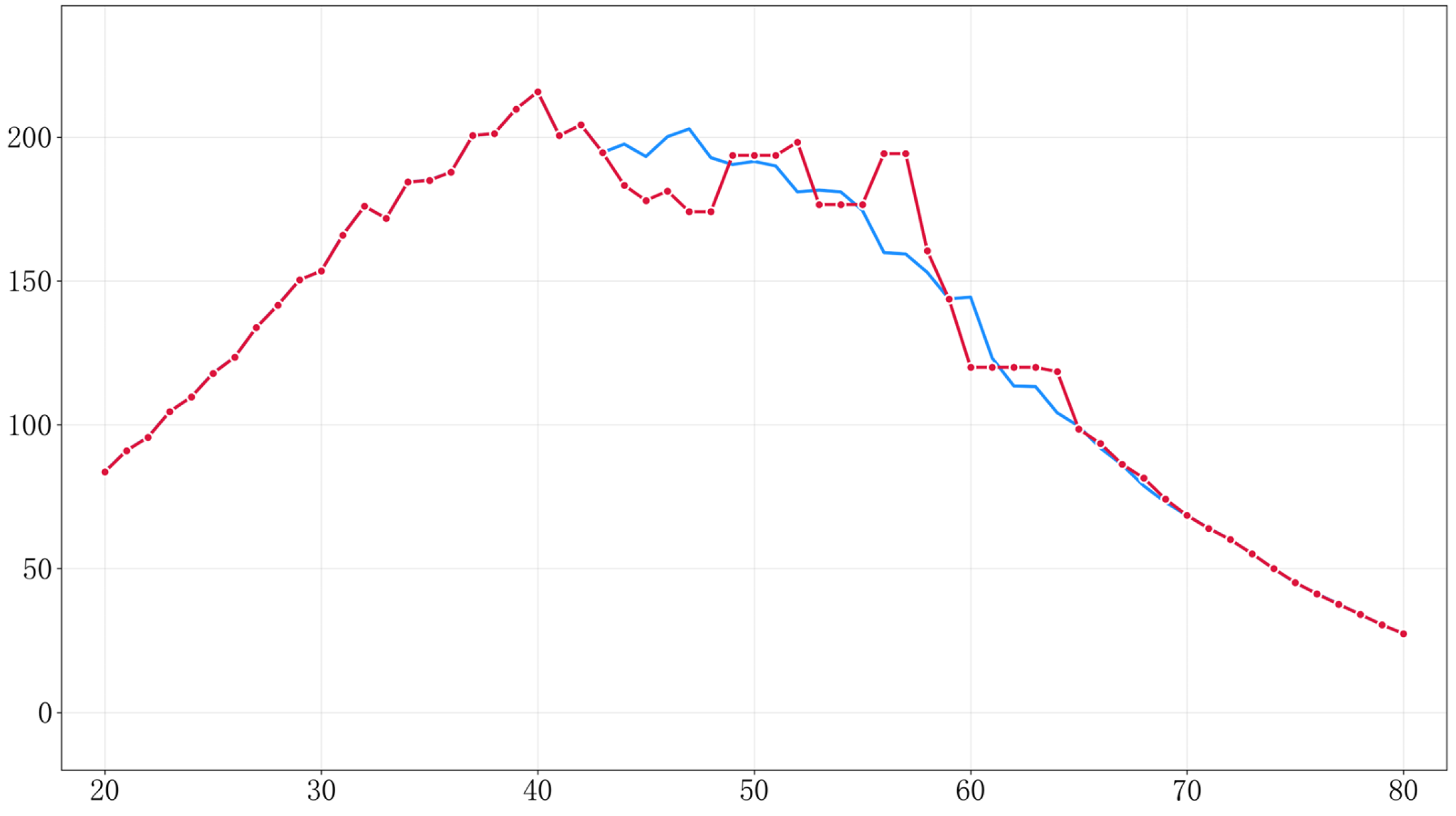
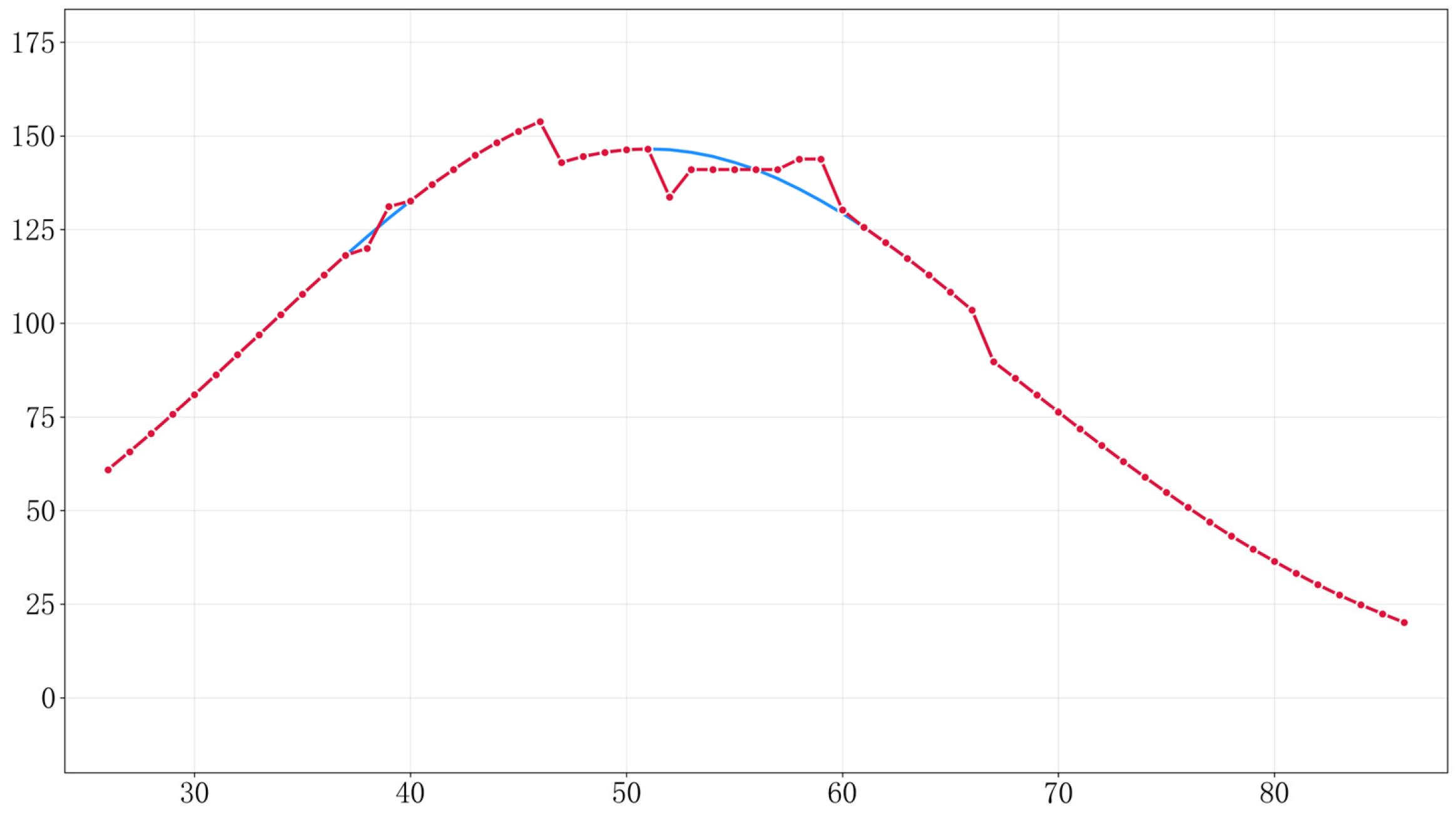
Dynamic entry control reduces peak inflow and smooths temporal variations in station demand, thus effectively preventing platform overcrowding. Taking ZXZ Station and SH Station as examples, Scenario 3 demonstrates that precise adjustment of entry rates substantially lowers the peak value of actual passenger entries, achieving a distinct peak-shaving and load-leveling effect. In the following figures, the blue line represents the passenger inflow before optimization, and the red line represents the passenger inflow after optimization. The figures below illustrate the comparisons between total passenger demand and actual admitted passengers for ZXZ Station and SH Station, respectively. The results are shown in
Figure 8 and
Figure 9.
A comparison between fixed and dynamic entry-control strategies reveals that the dynamic scheme implements differentiated regulations for high-demand stations such as SH Station and ZXZ Station. This approach avoids the inefficiencies associated with fixed control, which either wastes station capacity or fails to provide sufficient train capacity, while ensuring more accurate temporal matching between passenger flow and available train capacity. Consequently, platform crowding is significantly reduced, with an improvement rate of 7.9% achieved.
The reservation mechanism exhibits pronounced spatial and temporal heterogeneity. During peak periods, substantially higher reservation success rates are observed for certain OD pairs. For instance, the core commuter OD pair “SH → XEQ” demonstrates a notably higher success rate than other OD pairs, indicating that the system strategically prioritizes frequent commuter demand during peak hours to guarantee essential travel needs. In contrast, during off-peak periods, differences in reservation success rates across OD pairs diminish considerably, reflecting a greater emphasis on service equity by providing reservation opportunities for all OD groups. Additionally, reservation success rates tend to increase around train departure times (marked by red dashed lines), indicating that the system releases reservation quotas in coordination with departure schedules to enable “reserve-and-board quickly,” thereby maximizing the utilization of train capacity. When the headway is short, these high-success-rate regions become more concentrated around departure times; when the headway is longer, these regions spread out, demonstrating that the system dynamically adjusts the timing of reservation quota releases to match the varying train capacity supply. In the figure, the darker the color, the higher the reservation success rate. The spatiotemporal distribution of reservation success rate at SH Station is shown in
Figure 10.
The skip-stop operation strategy is mainly adopted at stations with relatively low passenger boarding and alighting volumes. Within the research scope, non-all-stop services are arranged to bypass four stations, namely BSW, GJY-SH, SH, and GHC. Among these stations, BSW and GHC present the lowest passenger activity intensity along the line. The implementation of skip-stop at such stations gives rise to a minor increment in waiting time for a small proportion of passengers, while considerable reductions in train travel time can be achieved simultaneously.
In comparison, the GHC-ZXZ-LSY section is characterized by a significant imbalance between boarding demand and alighting demand, with the former considerably exceeding the latter, thereby resulting in a continuous upward trend in train load factors. Under such operational conditions, the deployment of skip-stop schemes at SH and GJY-SH contributes to the mitigation of downstream overcrowding via capacity redistribution. Such an arrangement satisfies the overall line capacity constraints at the expense of travel efficiency for a limited number of passengers.
Accordingly, the proposed strategy is conducive to the improvement of train resource utilization efficiency and exerts a positive effect on the enhancement of the overall operational performance of the rail transit line.
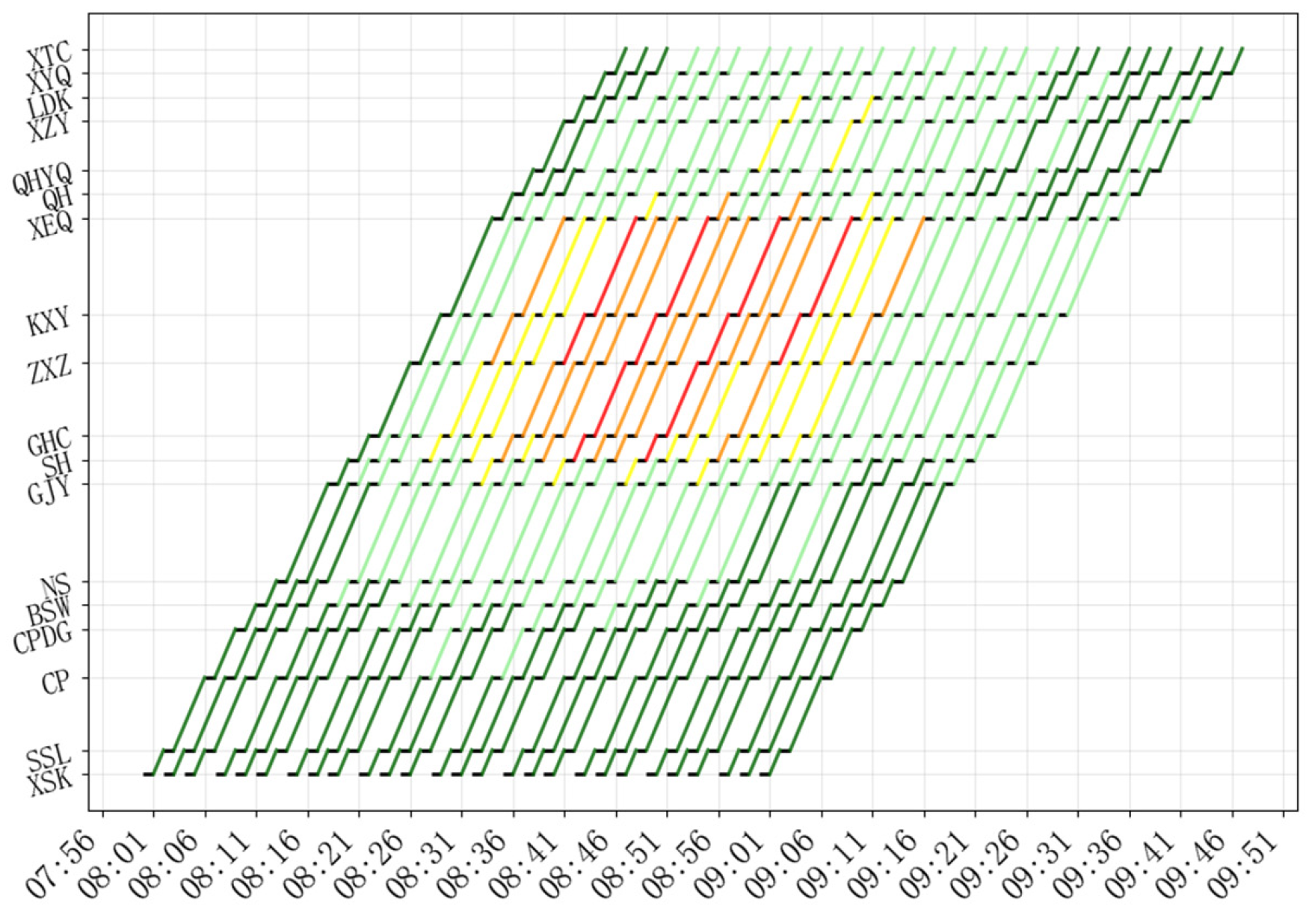
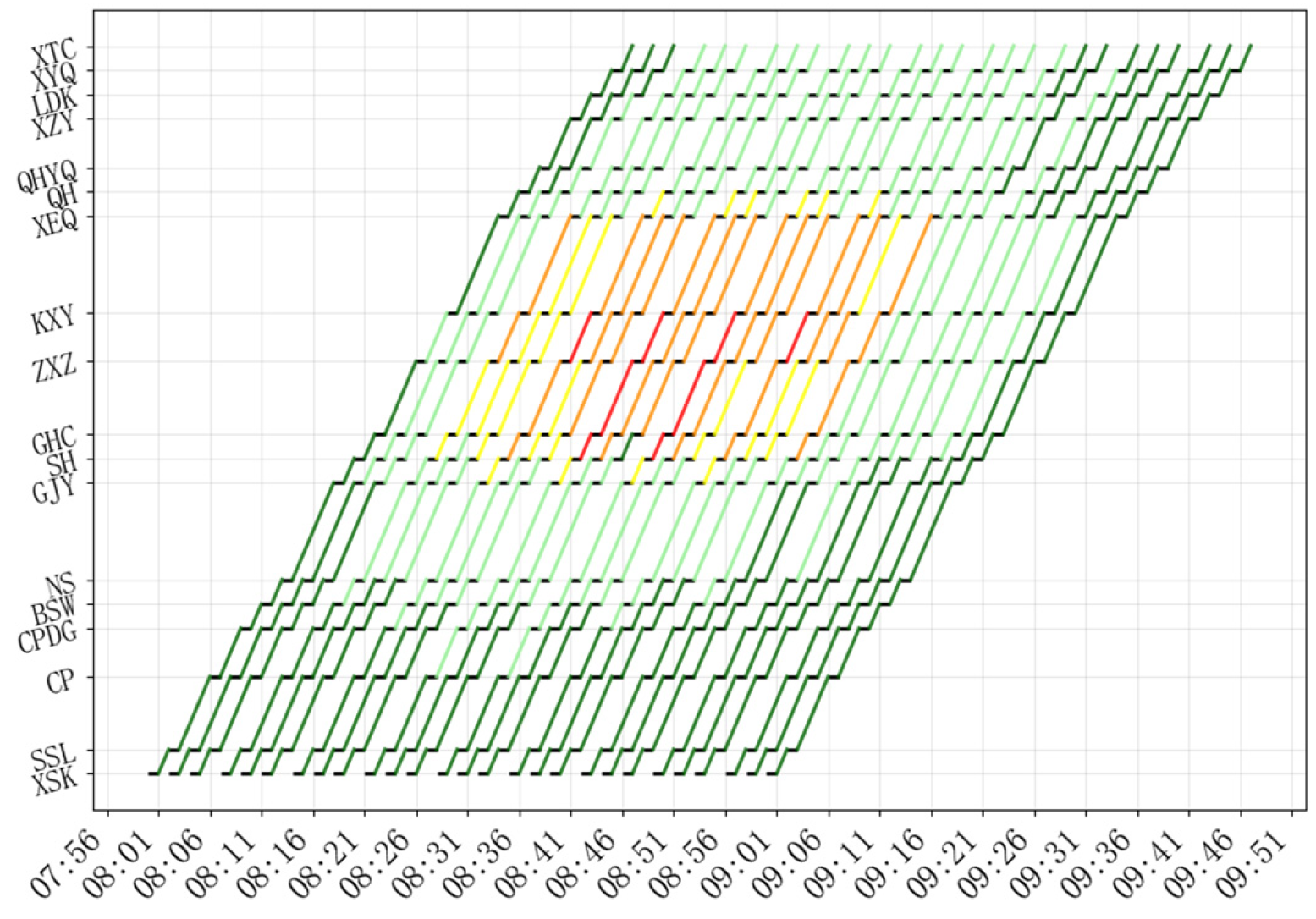
Figure 11 and
Figure 12 illustrate the skip-stop strategy, where dark green represents comfort, light green represents good condition, light yellow represents slightly crowded, orange represents relatively crowded, and red represents very crowded. The skip-stop strategy presents a notable effect in alleviating congestion within high-demand segments. Taking the section from LSY to XEQ as an instance, the average train load factor of this section is observed to decrease significantly following the implementation of skip-stop operations, thereby effectively mitigating overcrowding conditions. The improvement rate of train crowding is determined to reach 12.5%.To assess the robustness of the proposed method, a sensitivity analysis is performed with regard to the reservation participation rate. Specifically, the proportion of passengers adopting the reservation channel is adjusted while other parameters remain unchanged.
In addition, perturbations are introduced to the platform safety capacity to represent different crowd management policies. The platform capacity is scaled by predefined coefficients to investigate its influences on passenger waiting characteristics and operational performance.
Sensitivity analyses are also conducted with respect to the penalty coefficients in the objective function. By adjusting the relative weights assigned to waiting time and operational penalties, the consistency of the performance exhibited by the proposed strategy under diverse preference settings is verified.
The sensitivity analysis reveals that stable performance trends can be maintained by the proposed method across a wide range of parameter configurations. Although absolute performance indicators vary with reservation participation rate, platform capacity, and penalty coefficients, the relative advantages of the coordinated control strategy remain consistent, which demonstrates the satisfactory robustness of the proposed approach.
6. Conclusions
Based on the case study and sensitivity analyses, the proposed approach has been demonstrated to be effective for the studied metro line and operational scenario. While the results are encouraging, further validation across multiple metro lines and under diverse operational environments is identified as an important direction for future research.
The case study conducted on the Beijing Subway Changping Line has verified the effectiveness of the proposed coordinated strategy, which integrates passenger flow control, reservation-based entry management, and skip-stop operations. Compared with single-strategy approaches—whether standalone passenger flow control or operational adjustments—the coordinated scheme achieves the optimal overall improvements in both average passenger waiting time and station crowding balance. Specifically, the average waiting time is reduced by up to 44.1%, and the variance in station crowding levels decreases by 12.5%, indicating that the proposed approach can effectively balance travel efficiency and service equity.
Dynamic entry control mitigates peak-hour passenger flow by adjusting admission rates in real time, thereby preventing platform overcrowding and achieving an improvement rate of 7.9%. The reservation mechanism primarily reduces queuing time outside stations; furthermore, through spatiotemporal differentiation in quota allocation, it ensures prioritized protection for core commuting demand while maintaining service equity during off-peak periods. The skip-stop strategy bypasses low-demand stations to reserve additional capacity for high-demand segments, which significantly alleviates onboard congestion and achieves an improvement rate of 12.5%.
In addition to the benchmark strategies implemented in this study, it is worth noting that more advanced coordinated control and skip-stop strategies have been explored in existing literature. Compared with these approaches, the proposed method is distinguished by its explicit integration of reservation-based demand management and passenger flow control. Although a direct numerical comparison is beyond the scope of this study due to differences in data sources and modeling frameworks, the experimental results demonstrate that the proposed framework achieves performance improvements comparable to those reported in related studies.
The coordinated application of these three strategies compensates for the limitations inherent in any single approach and enables precise alignment between demand-side passenger management and supply-side capacity deployment. This integrated framework provides a practical and effective solution for optimizing metro operational performance during peak hours.
Limitations and Future Research
Despite the promising performance demonstrated in the case study, several limitations should be acknowledged to ensure a balanced and rigorous interpretation of the results.
- (1)
Passenger demand is assumed to be inelastic, and no mode shift behavior is considered under passenger flow control or reservation constraints. In practice, prolonged waiting times or restricted entry may induce certain passengers to adjust departure times or switch to alternative transport modes. The absence of endogenous demand adaptation may therefore lead to a potential overestimation of platform accumulation and onboard congestion levels. The model is developed under a given demand scenario, whereas real-world passenger flows are inherently stochastic and may be significantly influenced by unexpected events or short-term demand surges. The current framework does not incorporate real-time demand forecasting or dynamic adjustment mechanisms. As a result, reservation allocation and passenger flow control decisions are optimized based on predetermined demand inputs. Future research may integrate real-time demand prediction models to enable adaptive adjustment of reservation quotas and entry-control strategies under demand uncertainty.
- (2)
Empirical validation is conducted on a single metro line within a specific operational context. Although realistic operational data are utilized, network-wide interactions and multi-line coupling effects are not explicitly considered. The generalizability of the proposed framework to large-scale metro networks with multiple bottlenecks requires further investigation.
- (3)
The boarding process is modeled as instantaneous at train departure time. Although this assumption simplifies the interaction between passenger accumulation and train dwell time, it neglects the influence of boarding and alighting interference on dwell time variability. Under heavily congested conditions, stochastic dwell time extensions may affect headway stability and effective capacity utilization. Passenger transfer behavior is not explicitly modeled. During peak periods, transfer flows may substantially influence platform crowding patterns and onboard load redistribution. The omission of transfer dynamics limits the applicability of the model in multi-line interchange stations.
Future research may extend the framework by incorporating elastic demand modeling, stochastic dwell time formulations, real-time demand forecasting, multi-line network structures, and transfer passenger dynamics. Such extensions would further enhance the realism, robustness, and practical applicability of coordinated passenger flow control and skip-stop optimization strategies.