1. Introduction
Braking systems—from a general perspective—are key safety subsystems in ground vehicles, as their primary function is to reduce vehicle speed and, ultimately, bring the vehicle to a safe stop [
1]. There are different ways to achieve this braking effect. In internal combustion engine (ICE) vehicles, the most common solution is to dissipate kinetic energy into heat through friction. In contrast, in hybrid electric vehicles (HEVs) and battery electric vehicles (EVs), regenerative braking is employed: electric motors act as generators, converting kinetic energy into electrical energy [
1]. Conventional friction brakes, either disc brakes or drum types, rely on the frictional forces that develop at the interface between a stationary component (i.e., the stator) and a rotating component fixed to the wheel (i.e., the rotor). Referring to a conventional friction braking system, its internal gain is defined as the ratio of the total braking force to the normal clamping force applied by the stator to the rotor [
2]. According to this definition, the internal gain of a standard disc brake with two friction surfaces equals twice the mean friction coefficient on the contact area between the disc and the pads [
1].
In the literature, self-energizing mechanisms have been proposed as an effective way to increase the internal gain of disc brakes. These systems exploit the tangential braking force itself to push the pads further against the disc, resulting in a form of energy recirculation that improves braking efficiency [
3].
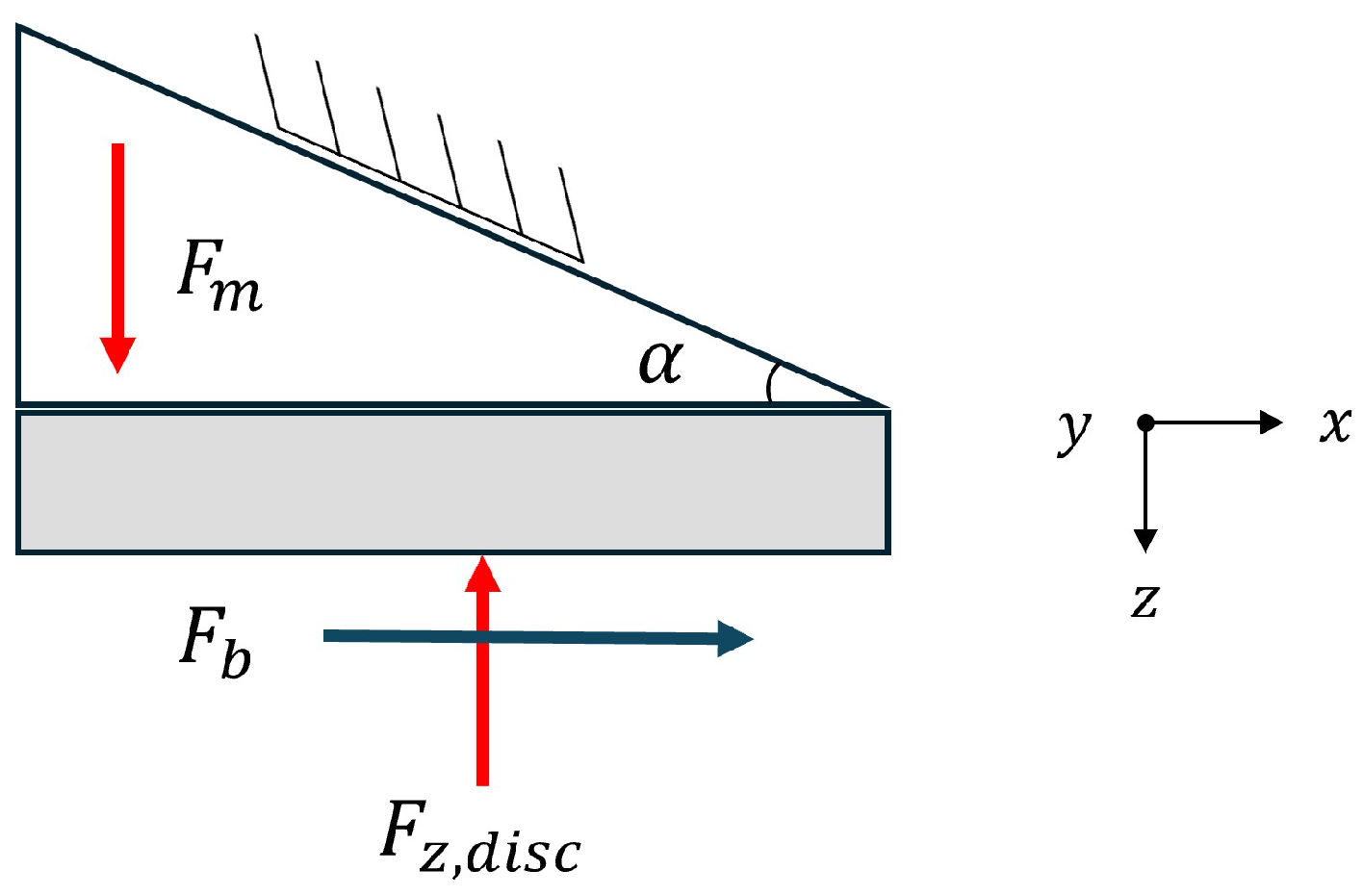
A self-energizing solution currently used in disc brakes involves the use of wedge-shaped pads and calipers, as schematically illustrated in
Figure 1. In standard calipers, the tangential force generated by friction on the pad under braking is transferred to the caliper through a tangential support surface that is orthogonal to the disc plane (i.e.,
, see
Figure 1). By reducing the angle
below
, a self-energizing wedge effect is introduced. This creates an additional axial force component, which adds to the primary actuation force
, resulting in a wedge-amplified braking effect (i.e., amplified caliper).
Several examples of wedge caliper solutions have been presented in the literature for road vehicle applications that feature electric or hydraulic actuation. One of the first models, known as eBrake
®, was developed by the German Aerospace Centre in 2002. It consisted of an electric powered controlled friction brake with self-reinforcement capability [
4]. This self-reinforcing effect was achieved by means of brake linings equipped with a wedge on their backside, resting on an abutment. An electric motor applied the actuation force to the pads along the tangential direction (i.e., parallel to the disc surface). This configuration offered a notable advantage, as the auxiliary force derived from the self-reinforcement effect contributed to building up the normal clamping force. As a result, the electric actuator had to deliver only a minor portion of the total actuation force otherwise required in conventional electric braking systems without the self-reinforcement principle—systems that would otherwise demand large and heavy electric motors. eBrake
® was the first electronic wedge brake (EWB) to be introduced, representing a specialized form of electromechanical brake (EMB) [
5].
Over the years, many authors have investigated the modeling and control of EWBs. In [
6], a mechanical dynamics model and a stability analysis of an EWB are presented. The model includes a description of the disc and pad friction characteristics, enabling investigation of the nonlinear behavior of self-energizing wedge brakes for different combinations of friction coefficient and wedge angle.
In [
7], an EWB model is developed that includes the representation of its permanent magnet electric synchronous motor (PMSM), worm gear/wheel and power screw/nut transmission, caliper, wedge, and a sliding mode control algorithm. The performance of this system is verified both in simulation and experimentally using a prototype EWB tested on a bench setup.
In [
8], an externally adjustable screw-driven EWB with two independently movable wedges is proposed. Its key feature is the ability to vary the contact points between the wedges and the rollers, which alters the effective wedge angle as a function of the wedge displacement under braking. The simulation of a hard braking event clearly highlights the reduced motor torque and energy demand of the externally adjustable EWB compared to conventional and semi-adjustable configurations.
In [
9], a novel EWB is proposed, consisting of a screw-driven inner brake pad with a wedge, a fixed outer brake pad, a fixed caliper, and a hybrid stepper motor. An active disturbance rejection control (ADRC) algorithm is implemented to improve system response and stability. The performance of the proposed system is assessed by numerical simulation.
Comprehensive surveys on electromechanical braking systems, electronic wedge brakes, and their control strategies can be found in [
5,
10].
As an alternative to electric actuators in EWBs, the use of magnetorheological (MR) fluids in wedge brakes is also discussed in the literature. In [
11], a self-energizing, self-powered automotive MR brake-by-wire system is designed, modeled, and tested. The proposed MR brake combines a T-shape, drum-type MR brake with a wedge mechanism. According to the authors, this configuration can deliver high braking torque while consuming less power than EWBs, as it harvests energy during braking through a generator that powers the MR brake.
Lastly, wedge brakes with conventional hydraulic actuation have also been investigated. In [
12,
13], a self-energizing hydraulic wedge disc brake for automotive applications is presented. The model features a single wedge block (equipped with a brake lining) mounted in the floating caliper housing on one side of the disc, and a flat brake pad on the opposite side. The wedge block is actuated by a hydraulic piston, which is aslant with respect to the disc, and rollers are arranged between the wedge and the caliper housing to reduce friction and prevent jamming. The effect of this model on deceleration and actuation power is evaluated against a conventional braking system by simulating a full vehicle model. The results highlight a significant improvement in braking efficiency [
13]. In other words, it can be stated that for the same hydraulic actuation force, the wedge brake generates a higher braking torque, while for the same target torque, the wedge brake requires a lower hydraulic actuation force [
12].
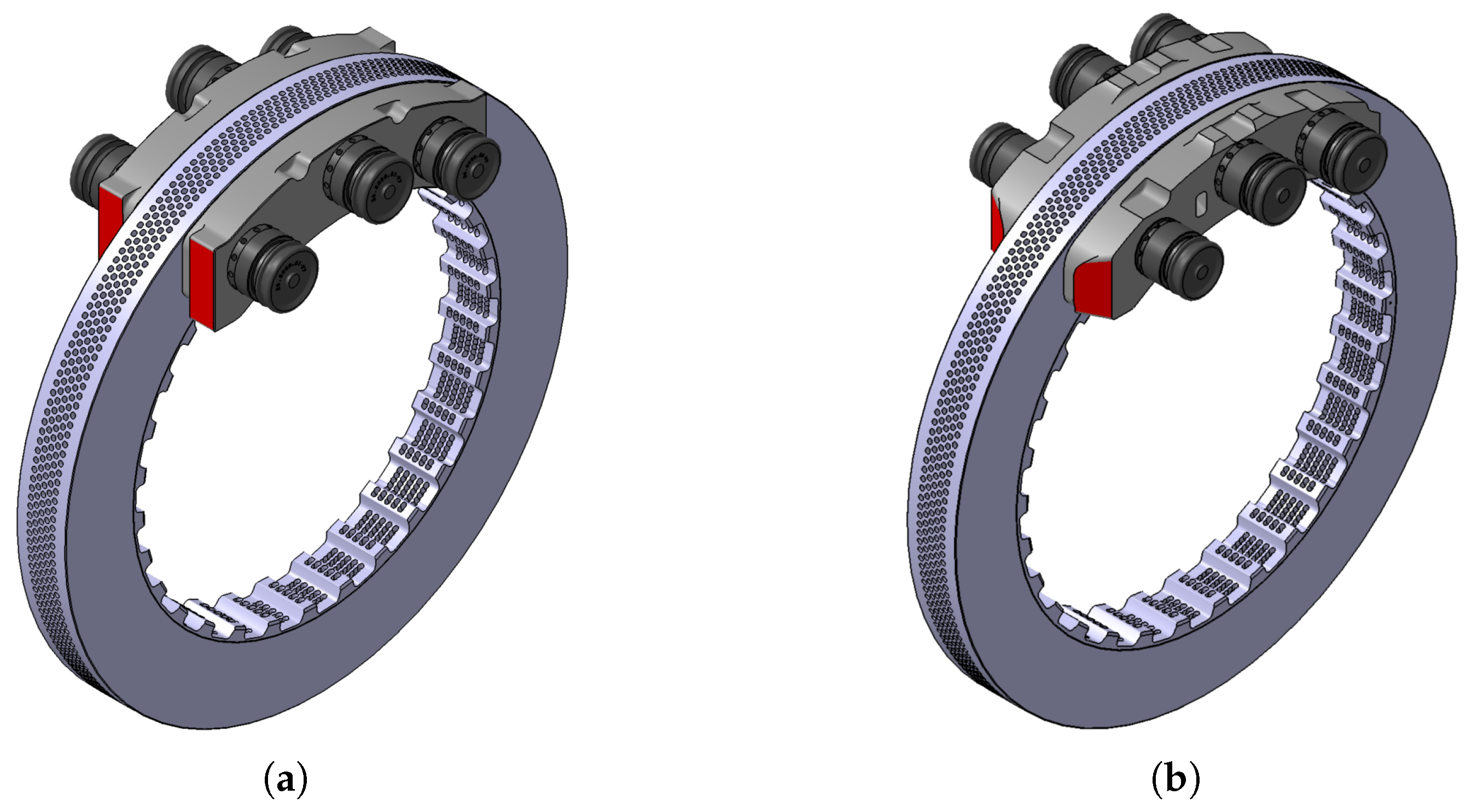
It is on this simple, yet effective principle that the wedge calipers object of this paper are based. In top-level motorsport world championships such as F1 and MotoGP, high-performance hydraulic disc brakes with fixed aluminum calipers are currently employed, coupled with carbon-carbon (C/C) discs and pads. Self-energizing wedge solutions have been introduced in recent years, primarily with the goal of reducing mass. In fact, a properly designed wedge-amplified braking system can achieve the same target braking torque as a standard caliper (i.e.,
, with reference to
Figure 1) at the same hydraulic pressure, while requiring a smaller total piston area facing the brake fluid. This enables the use of either a lower number of pistons or smaller piston diameters, thus reducing the overall weight of the braking system.
No papers were found in the literature with a specific reference to self-energizing hydraulic braking systems in racing and their thermoelastic modeling.
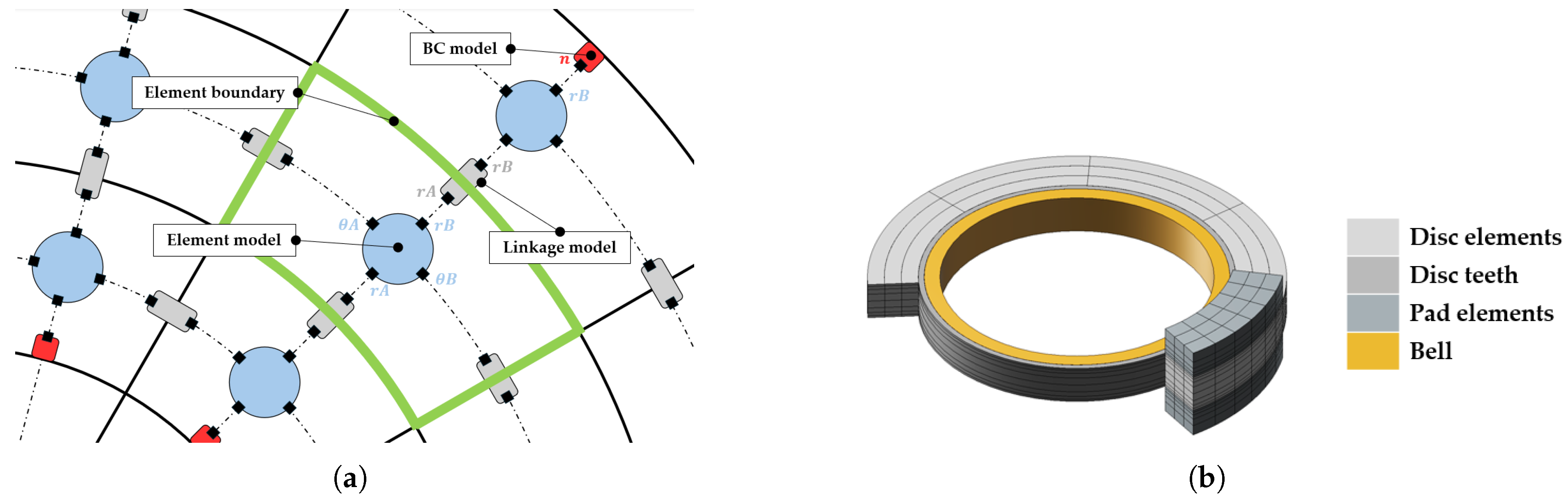
After introducing the wedge amplification principle in braking systems, the goal of this paper is to revise and adapt the previously developed thermoelastic finite volume method (FVM) model—fully described and validated for a standard caliper in [
14,
15]—to extend its applicability to predict the braking performance of self-energizing high-performance C/C brakes, specifically with reference to the current braking systems used in F1. Therefore, the present work is conceived as a continuation of previous studies and directly addresses identified future developments.
To the authors’ knowledge, this is the first work in the literature applying the reduced-order FVM approach—coupled with a local friction coefficient law—to the thermoelastic modeling of high-performance wedge-amplified C/C braking systems, in contrast to earlier automotive EWB/hydraulic wedge studies found in the literature. The key advantage of the proposed model is the reduced computational cost required to simulate a braking maneuver per unit time (about 20
of simulation during braking on an Intel i7 processor–3 GHz, 24
RAM), compared to coupled thermoelastic finite element method (FEM) models of the braking system assembly (20
of simulation, Intel i7 processor–3.6
[
16]). As such, the proposed model is intended to serve as a predictive tool to evaluate the mechanical and thermal performance of existing and new braking systems under different operating conditions, thanks to the possibility of simulating braking torque and temperature profiles over time for individually simulated braking maneuvers or full laps.
The paper is structured as follows. In
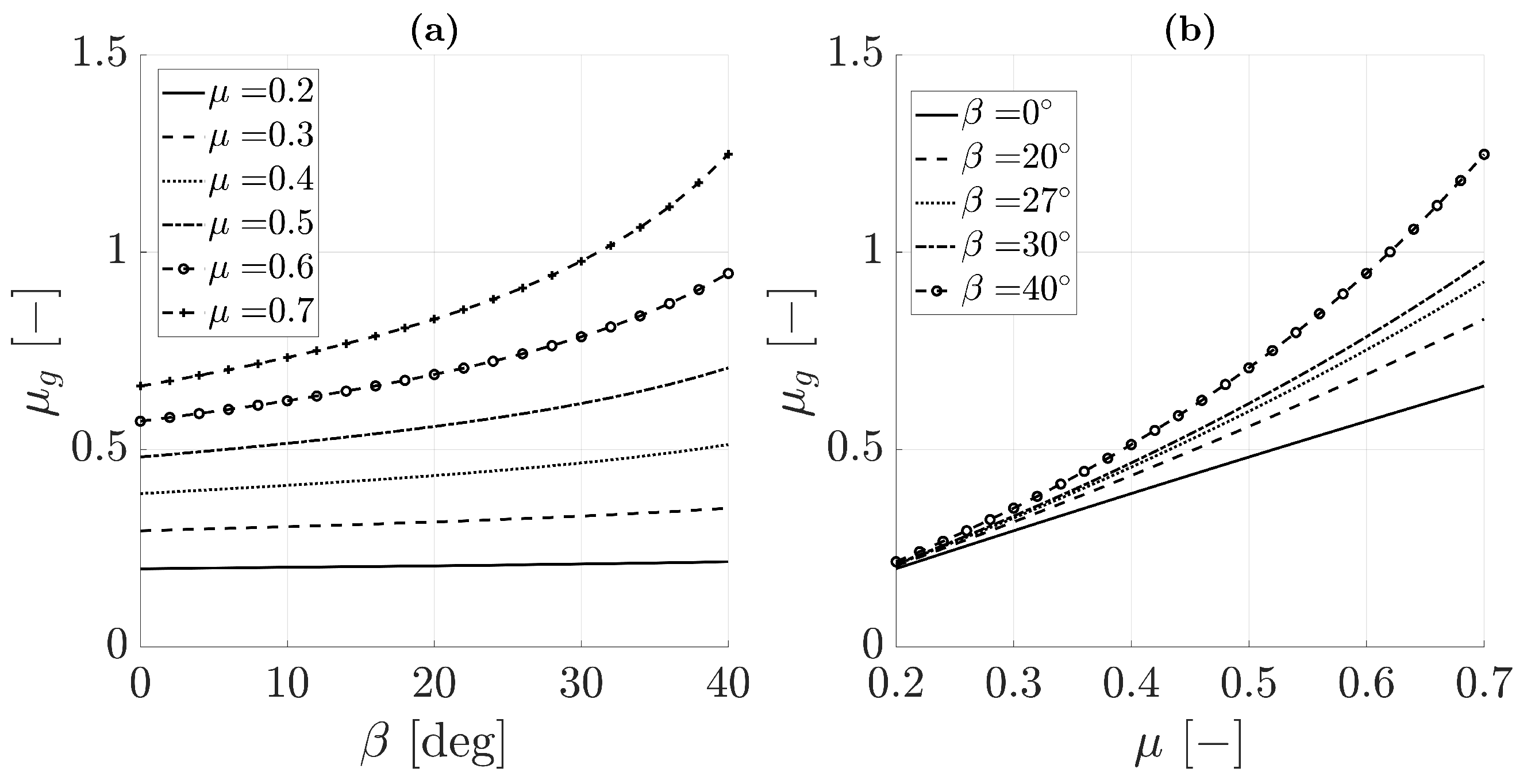
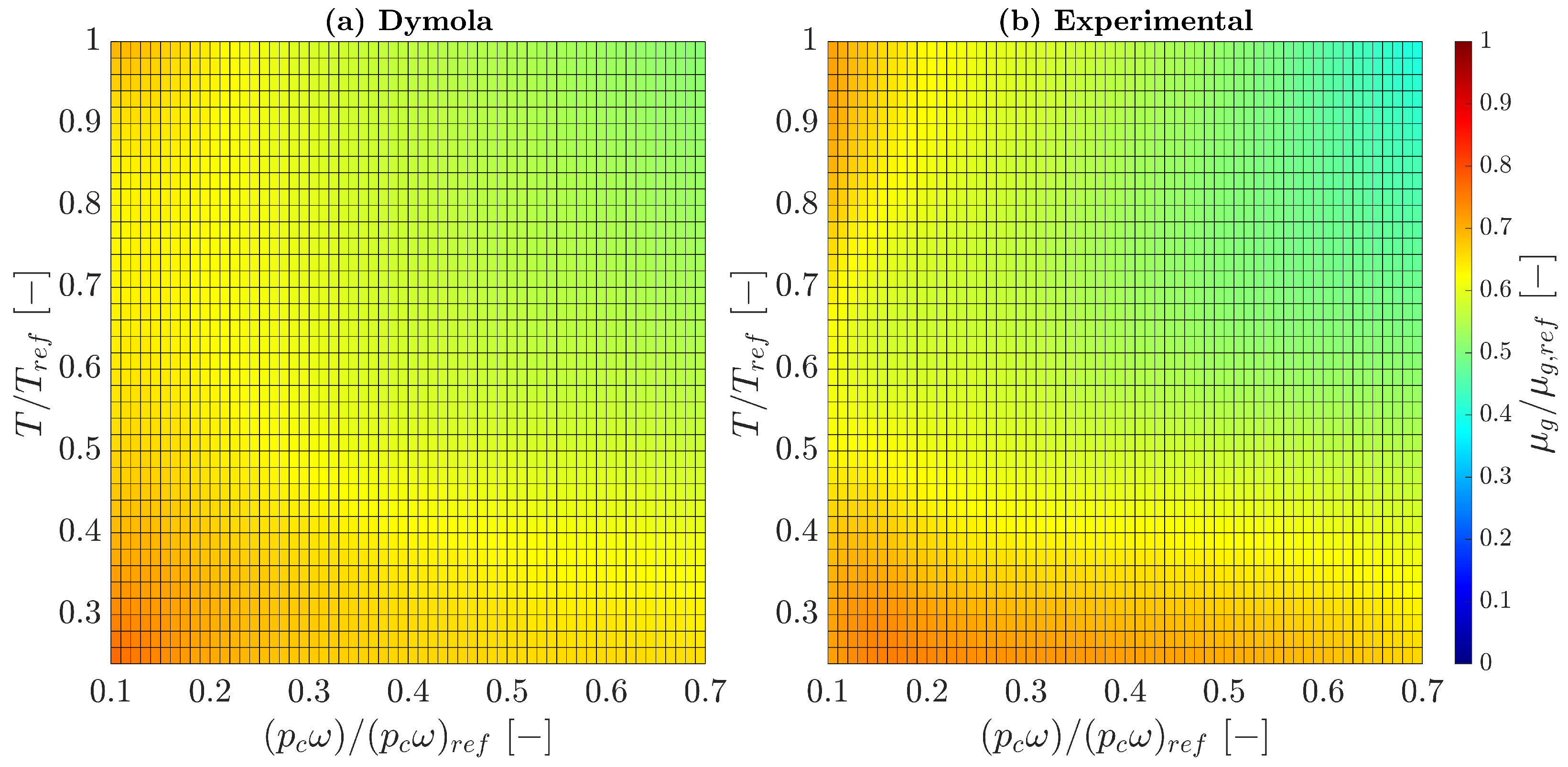
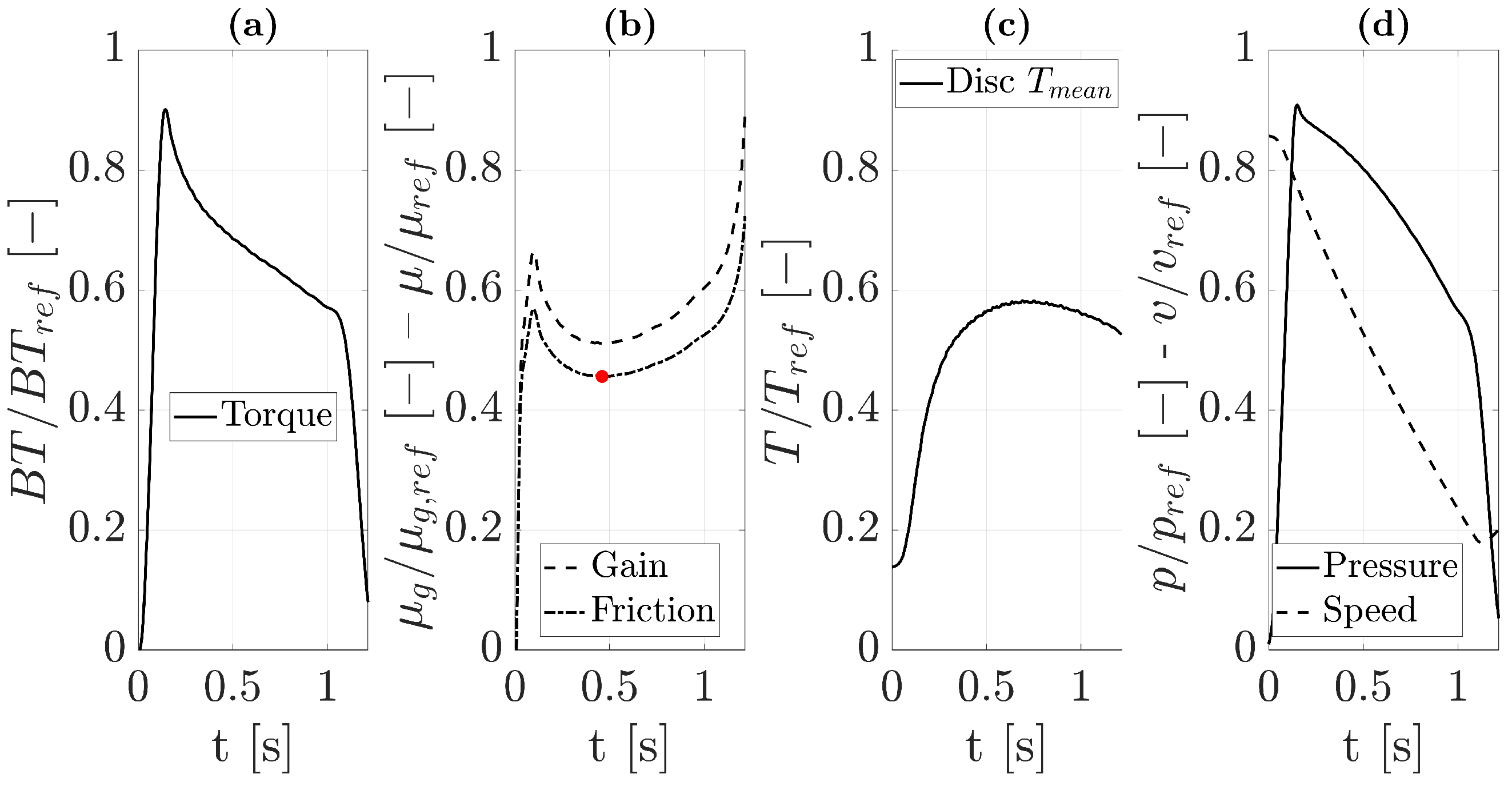
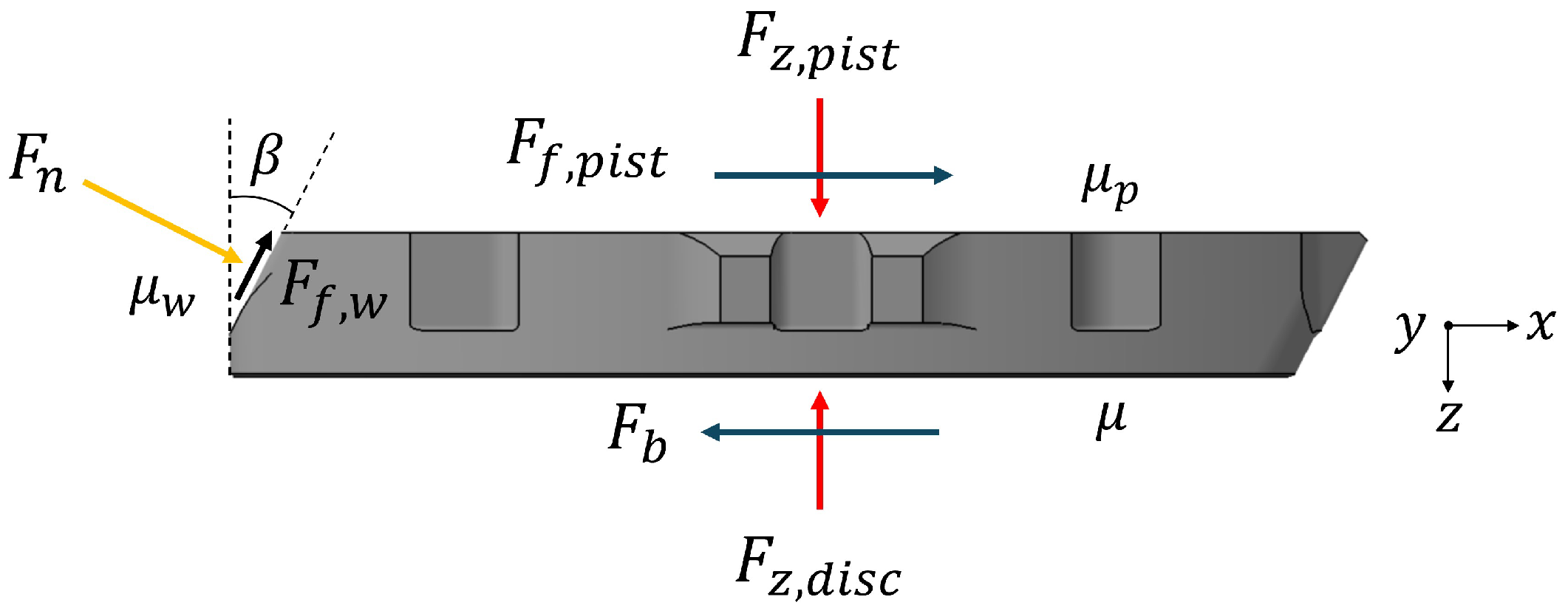
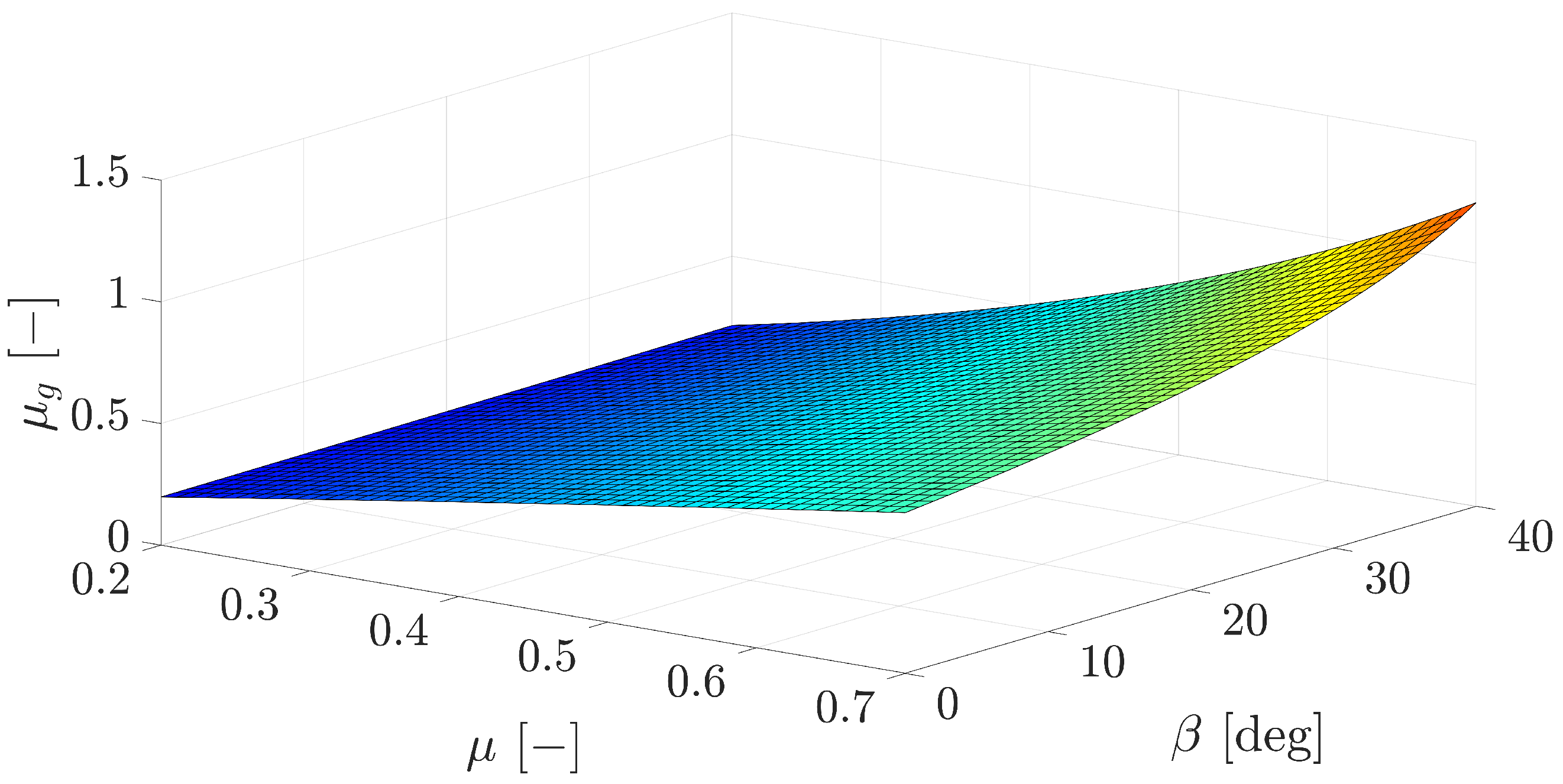
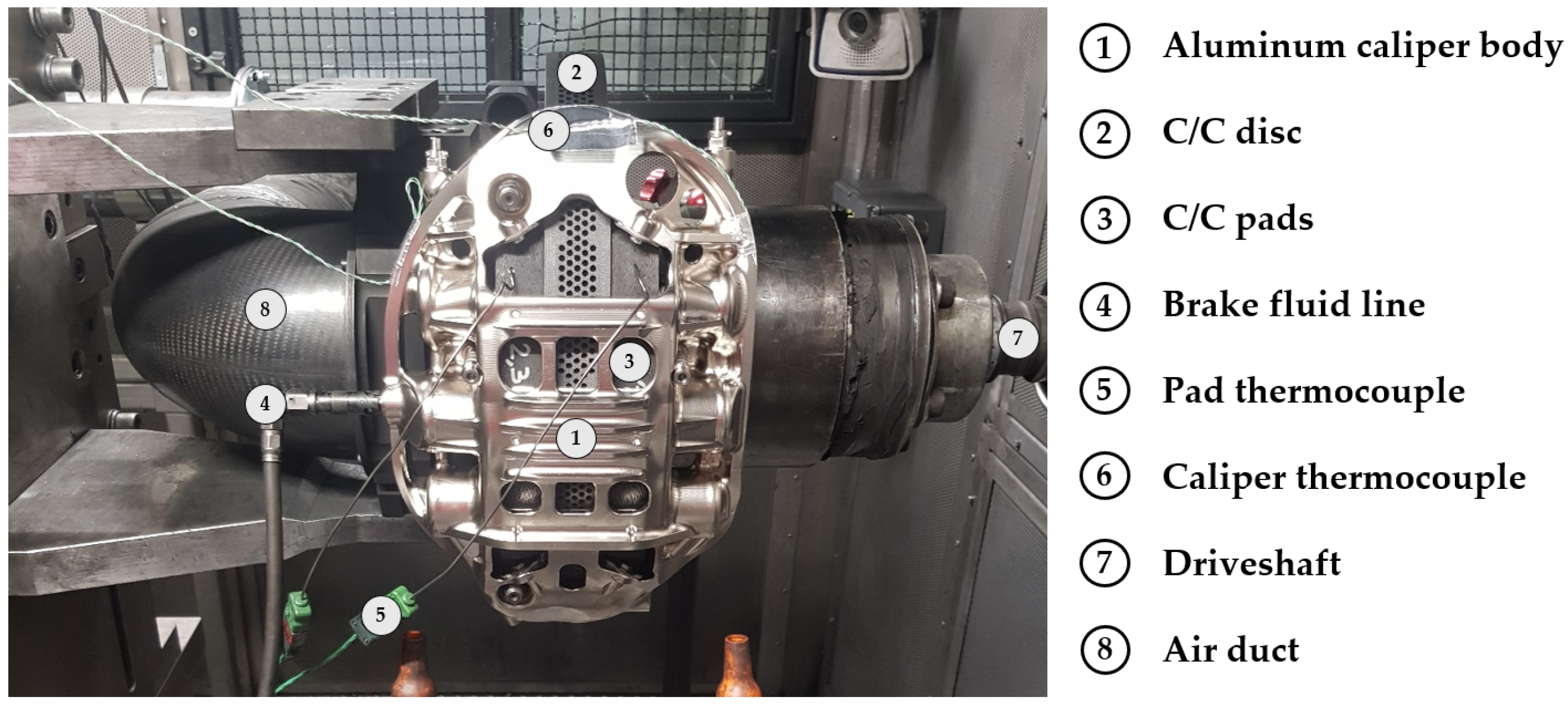
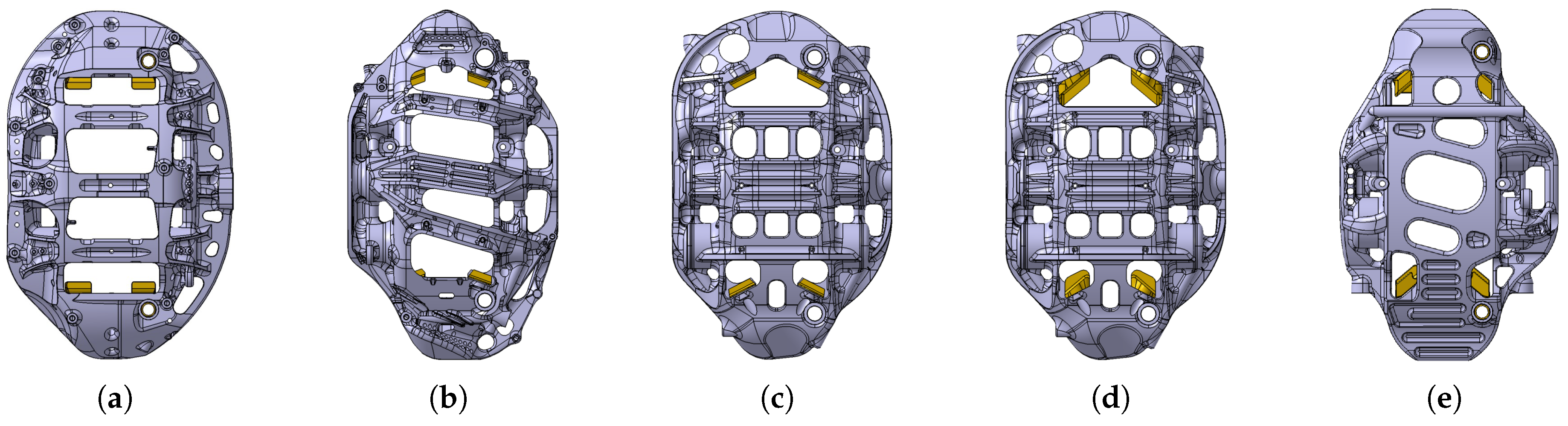
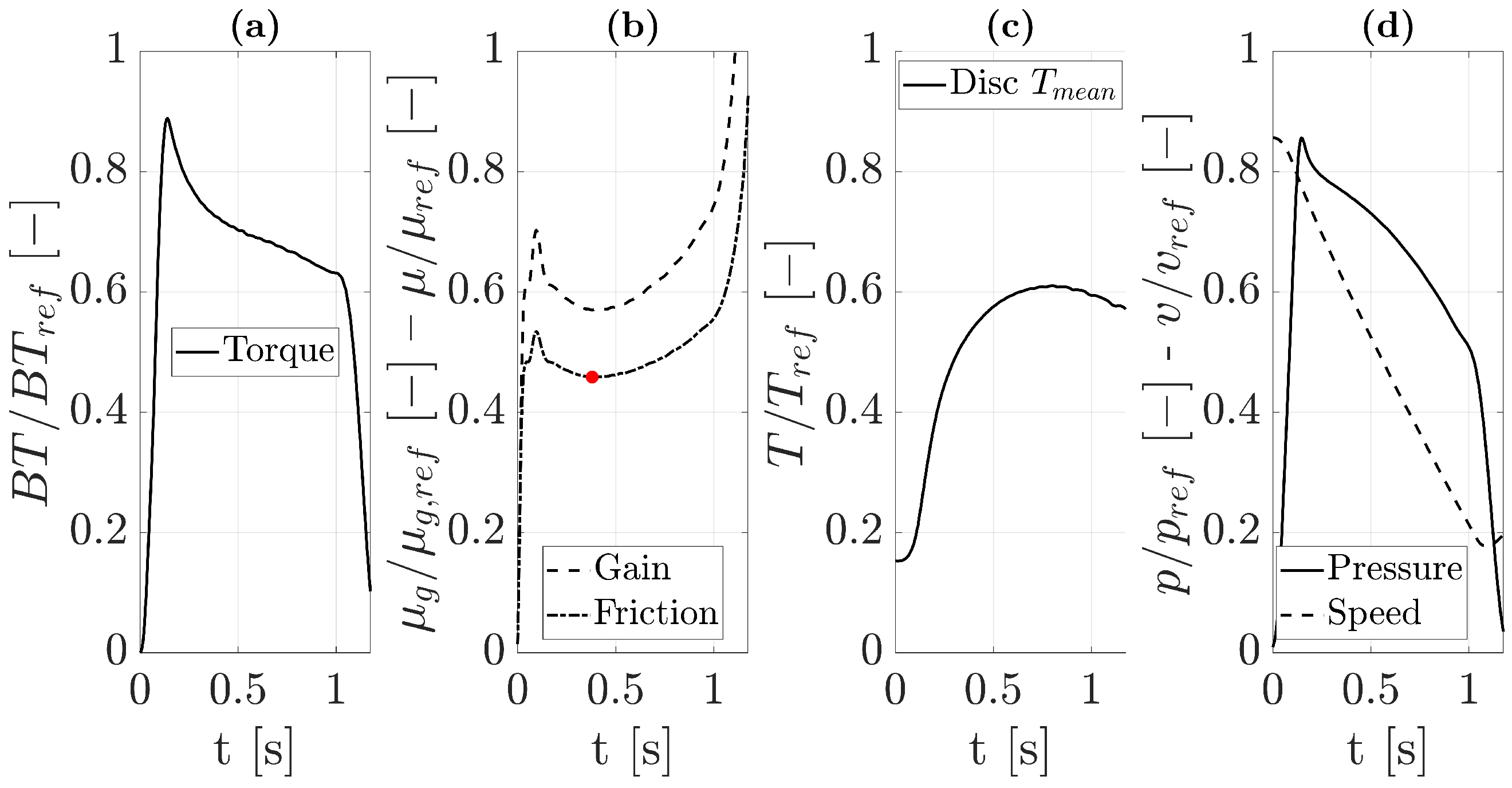
Section 2 the amplified braking systems currently used on F1 cars are introduced and their main features are briefly described. The theoretical gain (also known as the global friction coefficient) is derived analytically for a generic wedge caliper layout with normal hydraulic actuation (i.e., piston forces applied perpendicularly to the disc surface) based on a simplified equilibrium analysis of the pad. The influence of various combinations of the wedge angle and disc-pad friction coefficient is pointed out. Then, the dynamometer used to perform experimental test cycles for the braking systems analyzed in this work is briefly described, along with a summary of the key features of the thermoelastic model developed in Dymola introduced in [
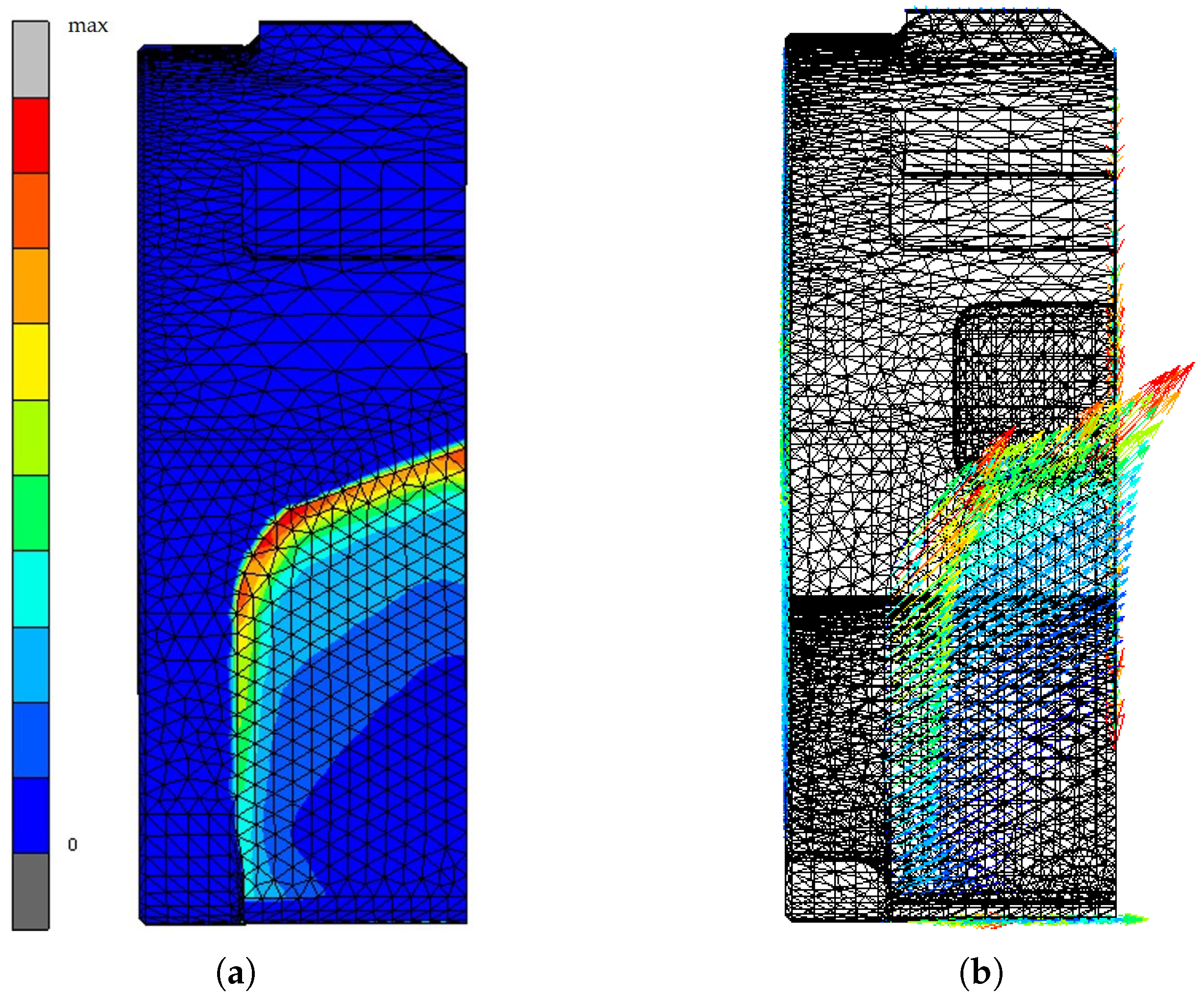
14]. The model is revised by updating the definition of the boundary conditions of the pad in the exit region to correctly account for the self-energizing wedge effect. In
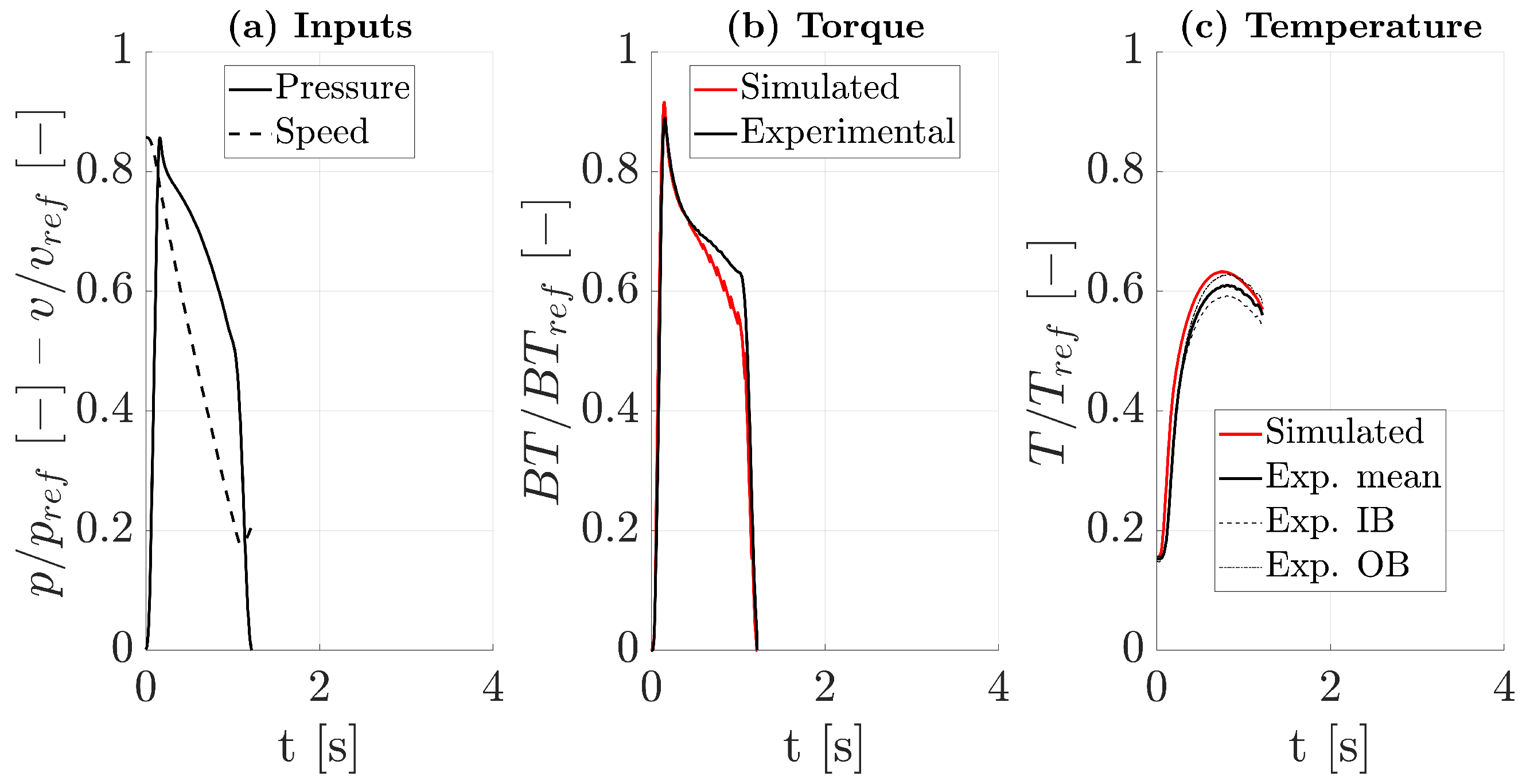
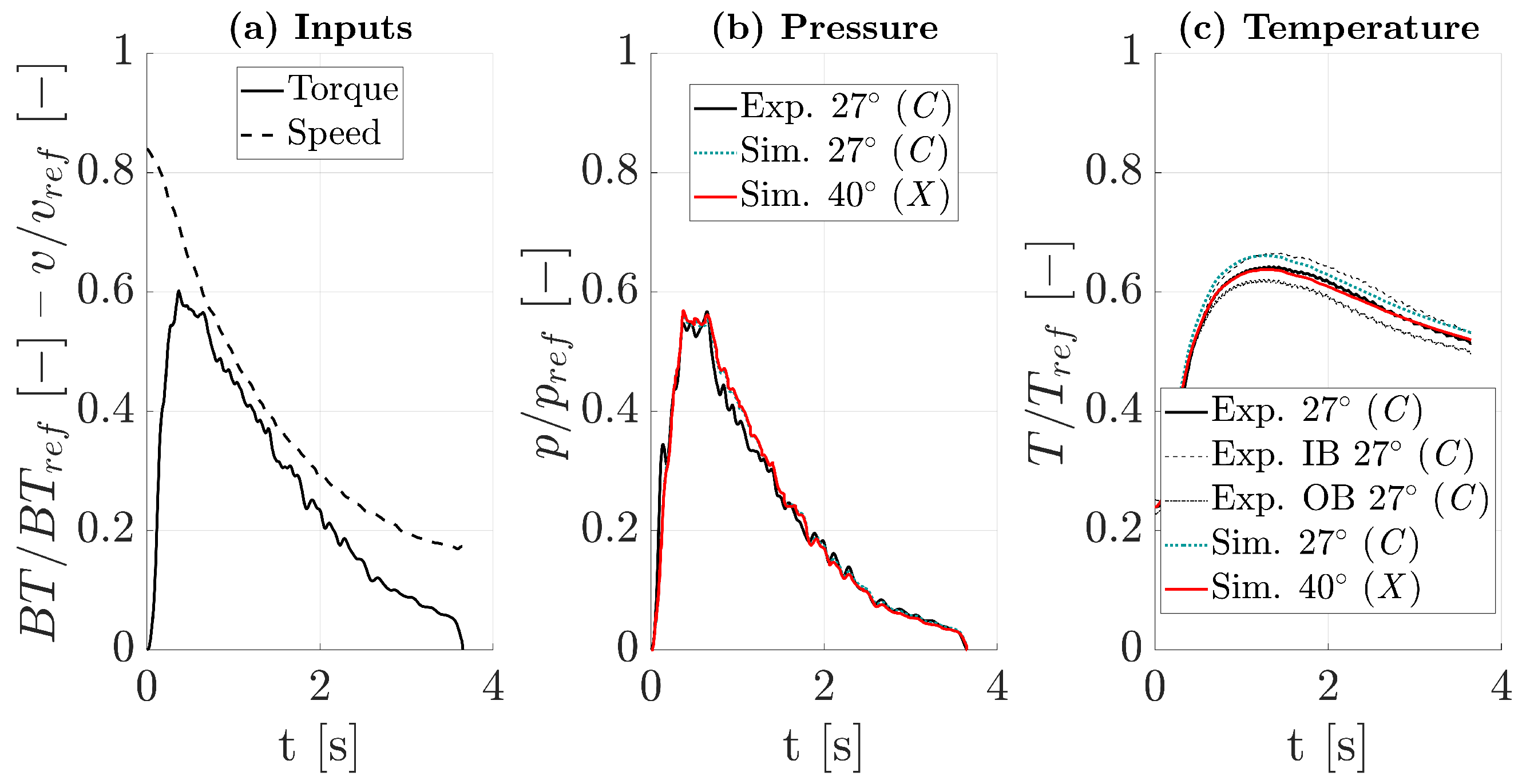
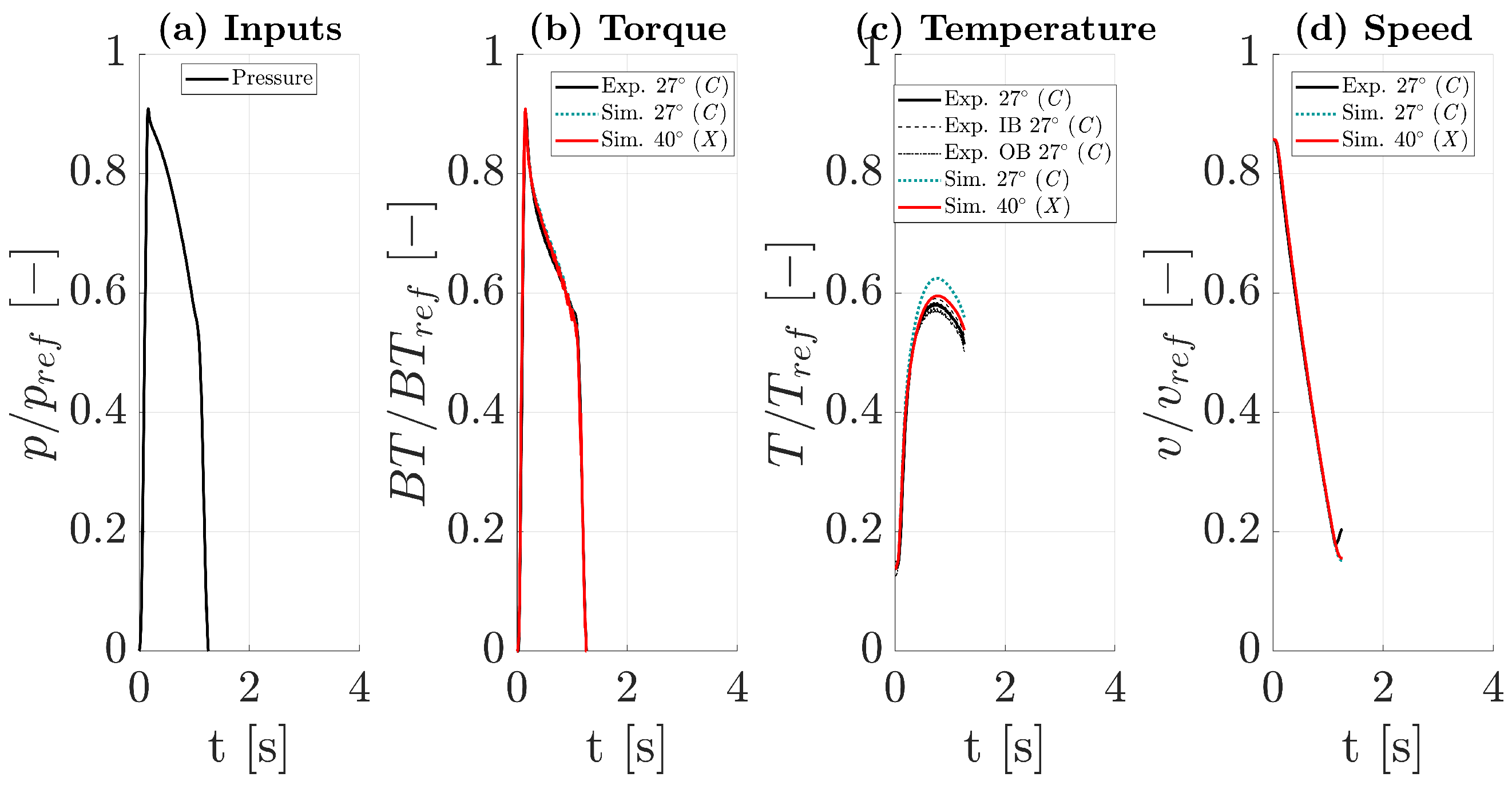
Section 3 the updated model is validated mechanically and thermally—as extensively done in [
15] for a standard front F1 caliper—considering several amplified calipers with different geometric features (i.e., wedge angles and number and size of pistons). Lastly, the thermoelastic model is used as a predictive tool to preliminarily assess the expected brake performance of a new caliper prototype that has not yet been manufactured and tested.
4. Conclusions
This work presents a modeling strategy that aims to predict the performance of wedge-amplified C/C braking systems in high-performance racing applications. A simplified equilibrium model for a wedged brake pad is introduced, from which an analytical expression is derived to describe the nonlinear dependence of the gain coefficient on both the wedge angle and the mean effective friction coefficient.
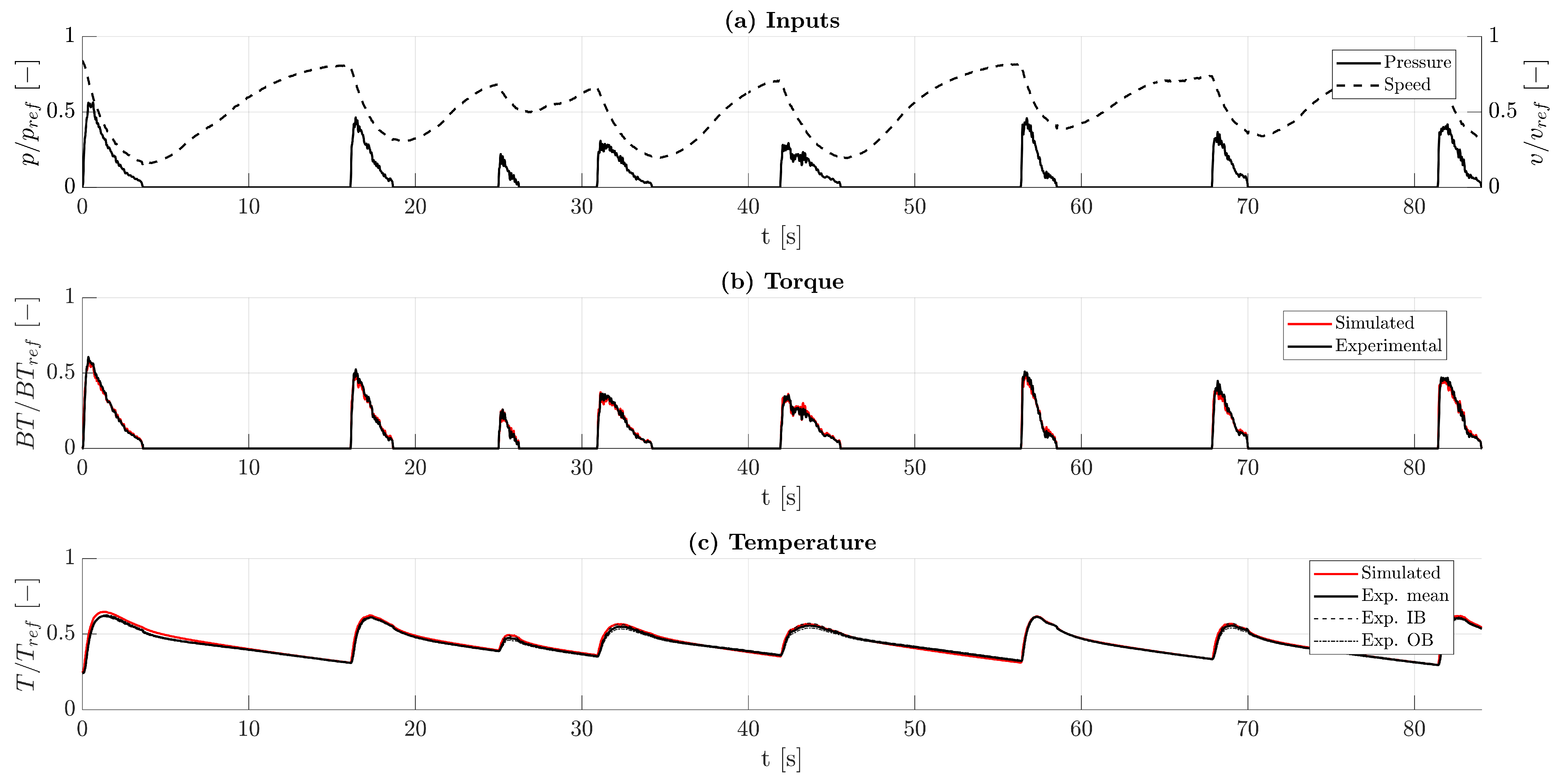
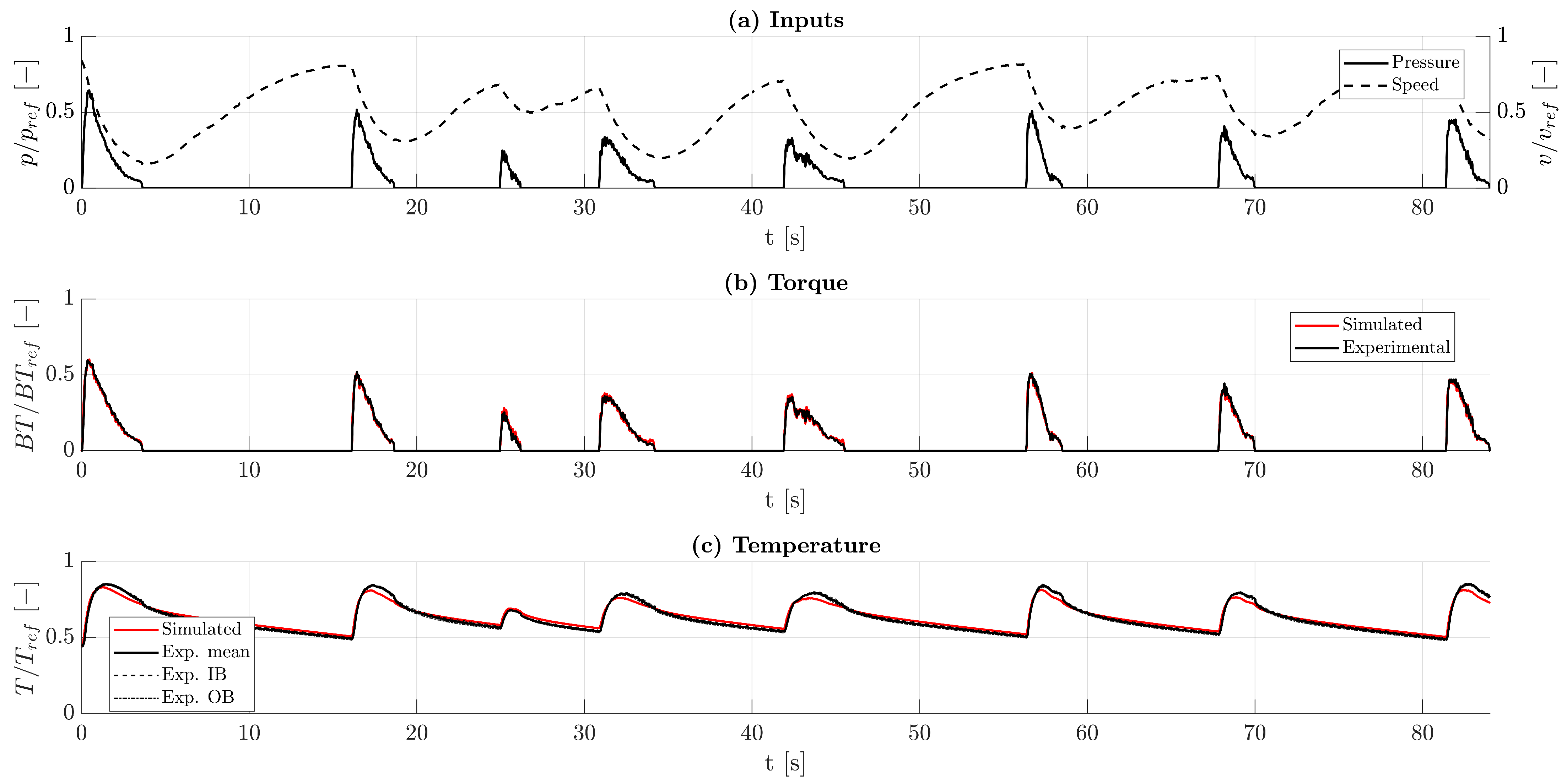
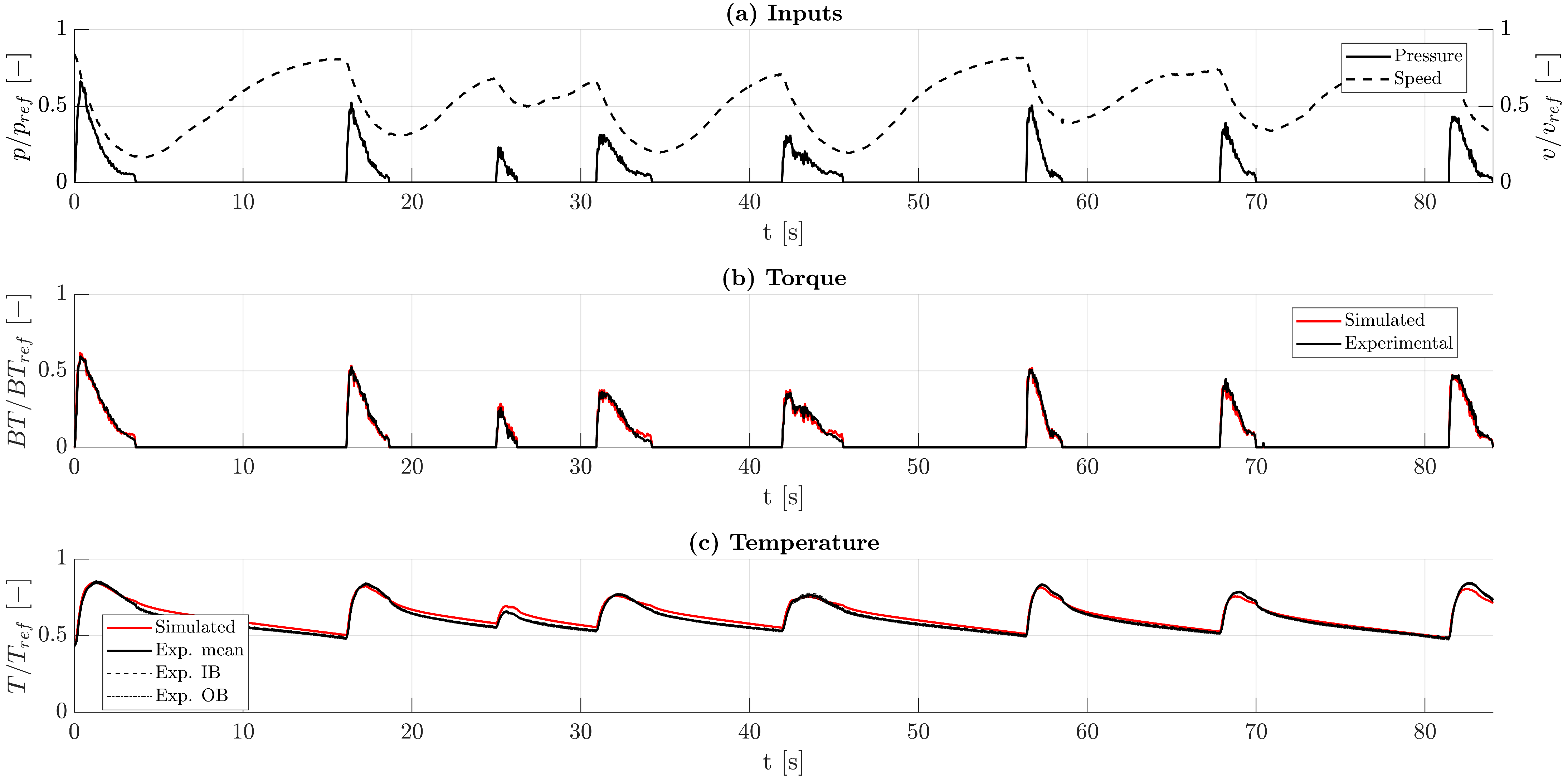
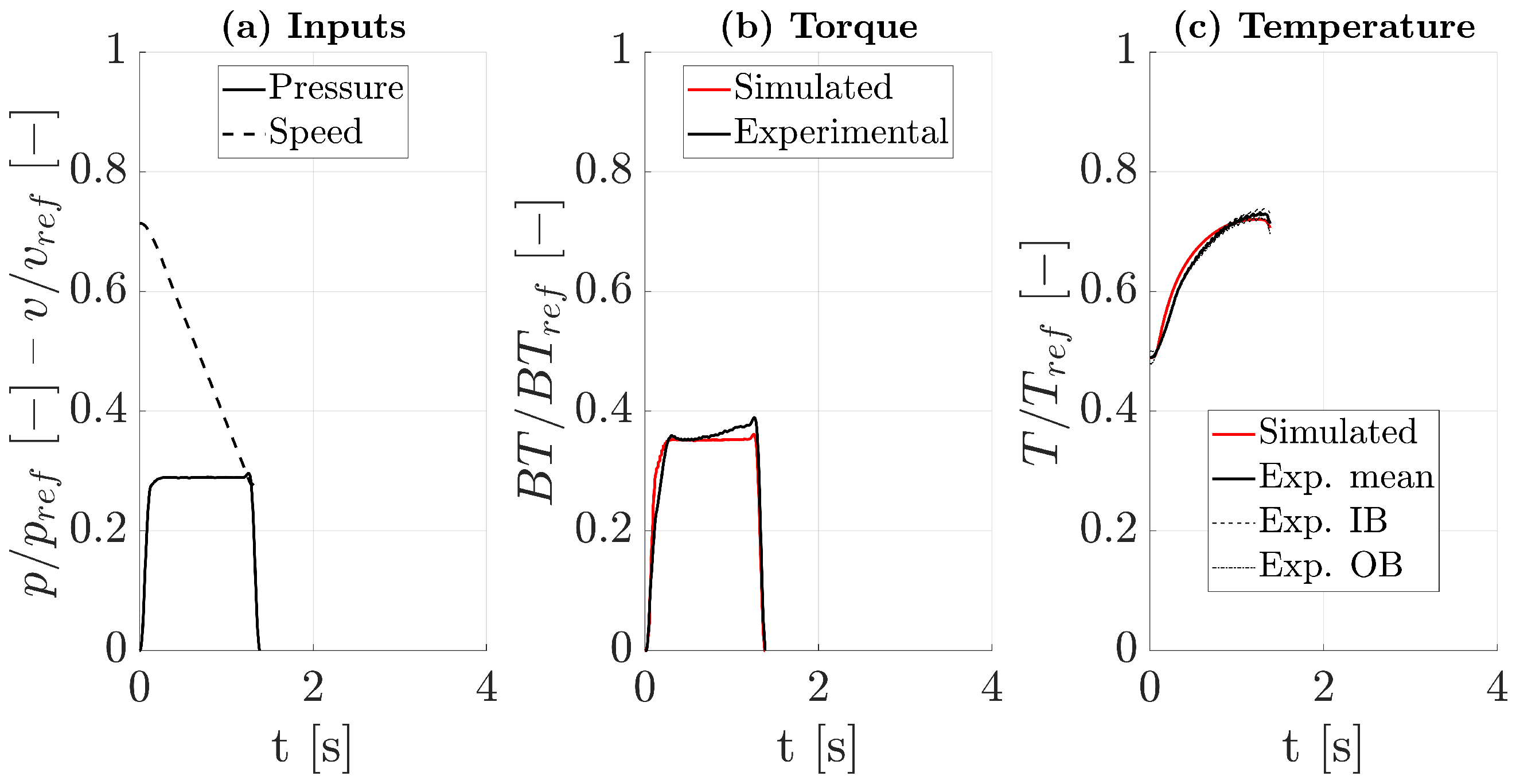
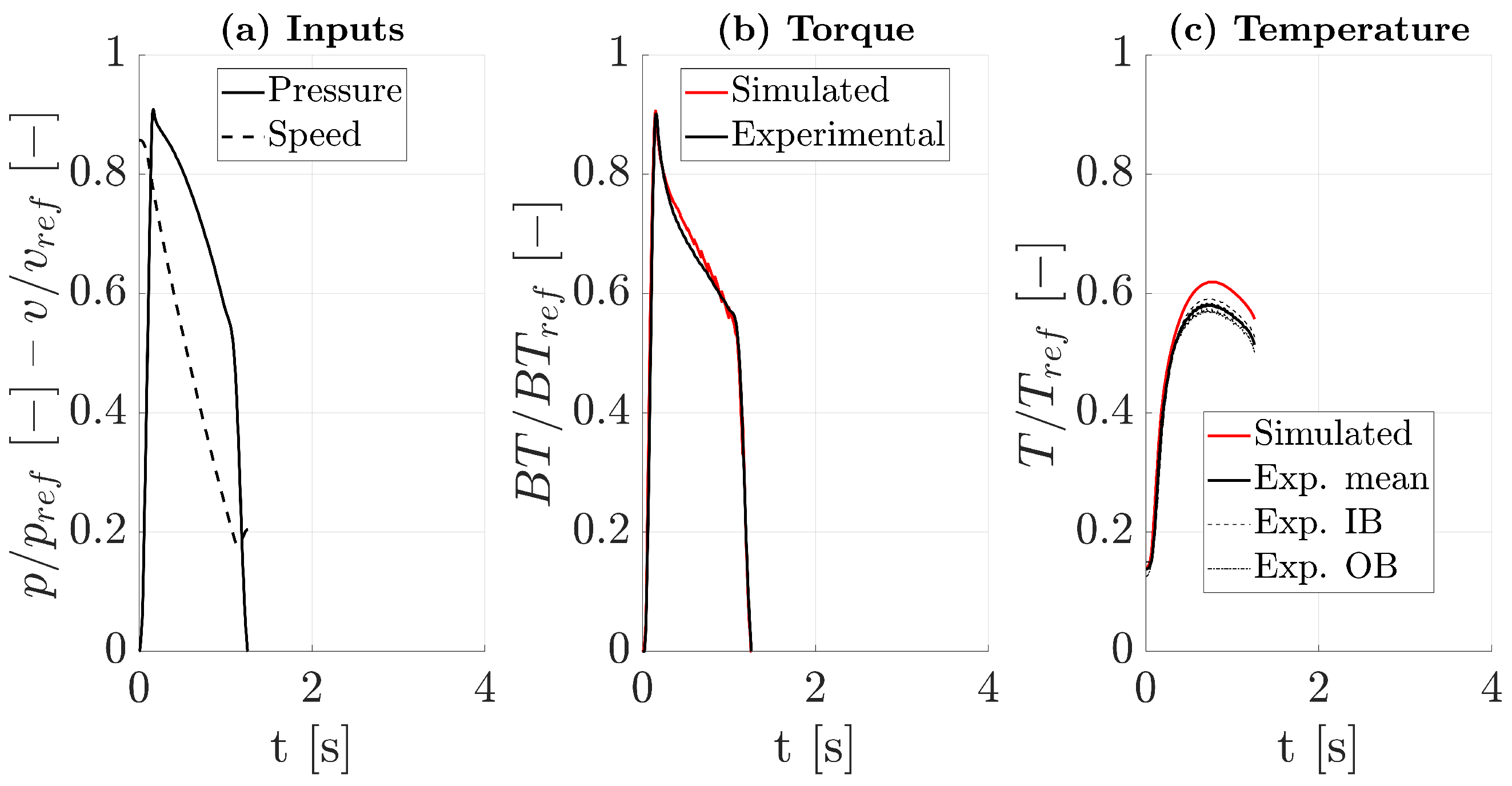
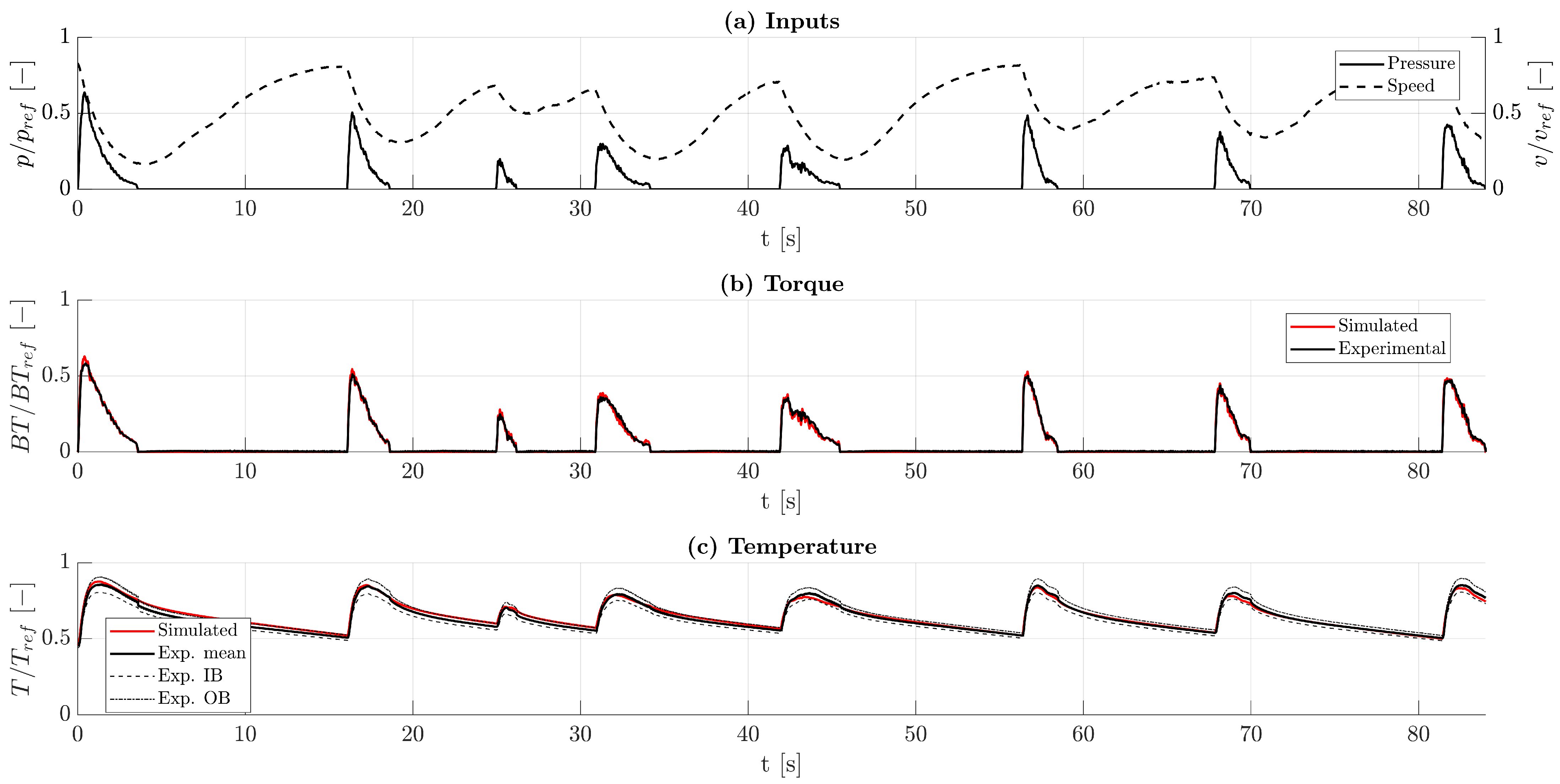
The coupled thermoelastic FVM model built in Dymola is adapted to simulate wedge-amplified calipers. Several simulations of different test cycles performed on a dyno are run, and the predicted braking torque and disc surface temperature are compared against experimental data to evaluate the model accuracy.
The analysis of experimental dyno data of the different braking systems leads to the following key findings.
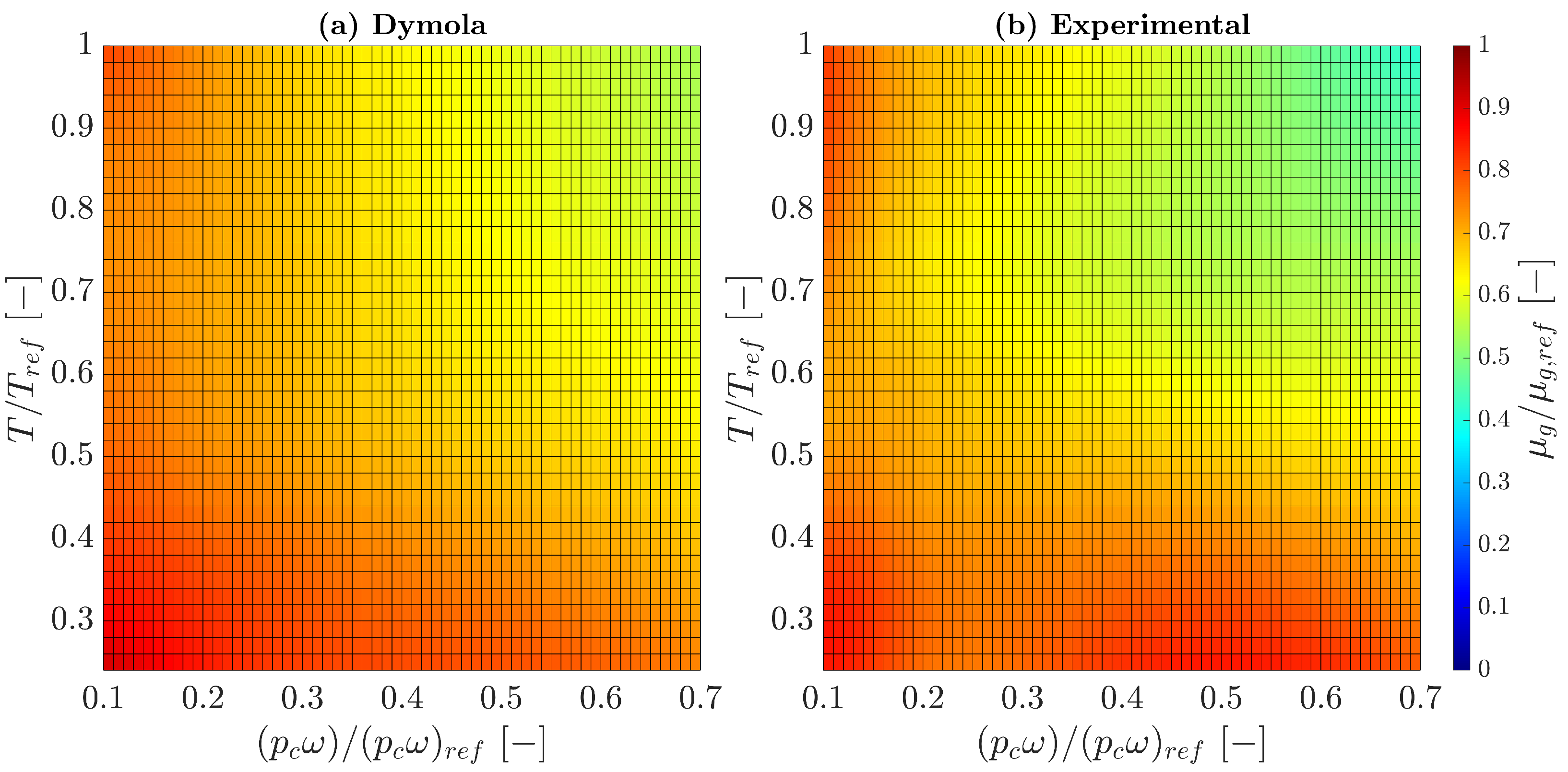
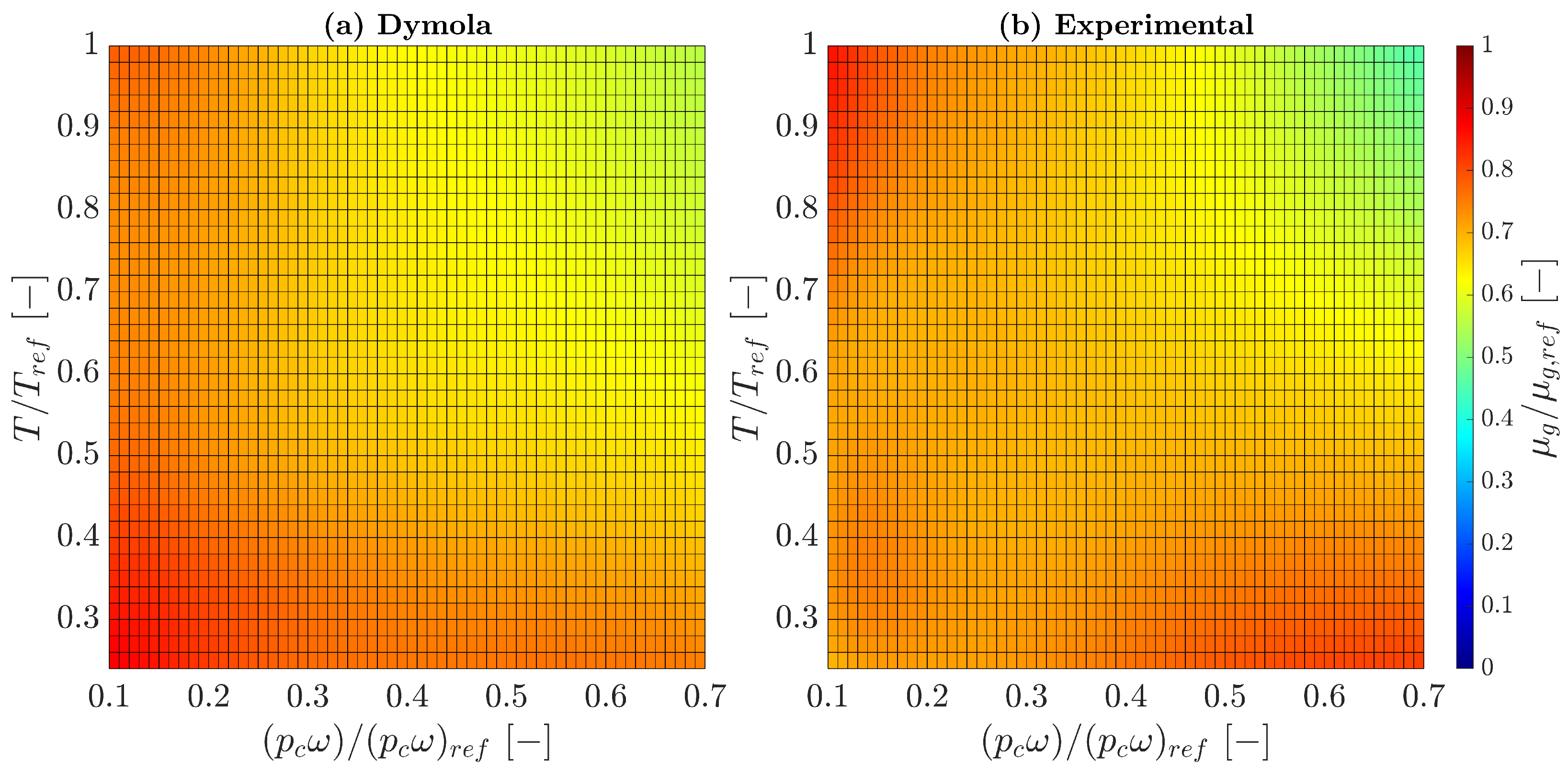
A temperature-induced reduction of friction is observed in Bahrain cycles performed in higher temperature scenarios, in agreement with the findings analyzed in previous work for the non-amplified caliper layout.
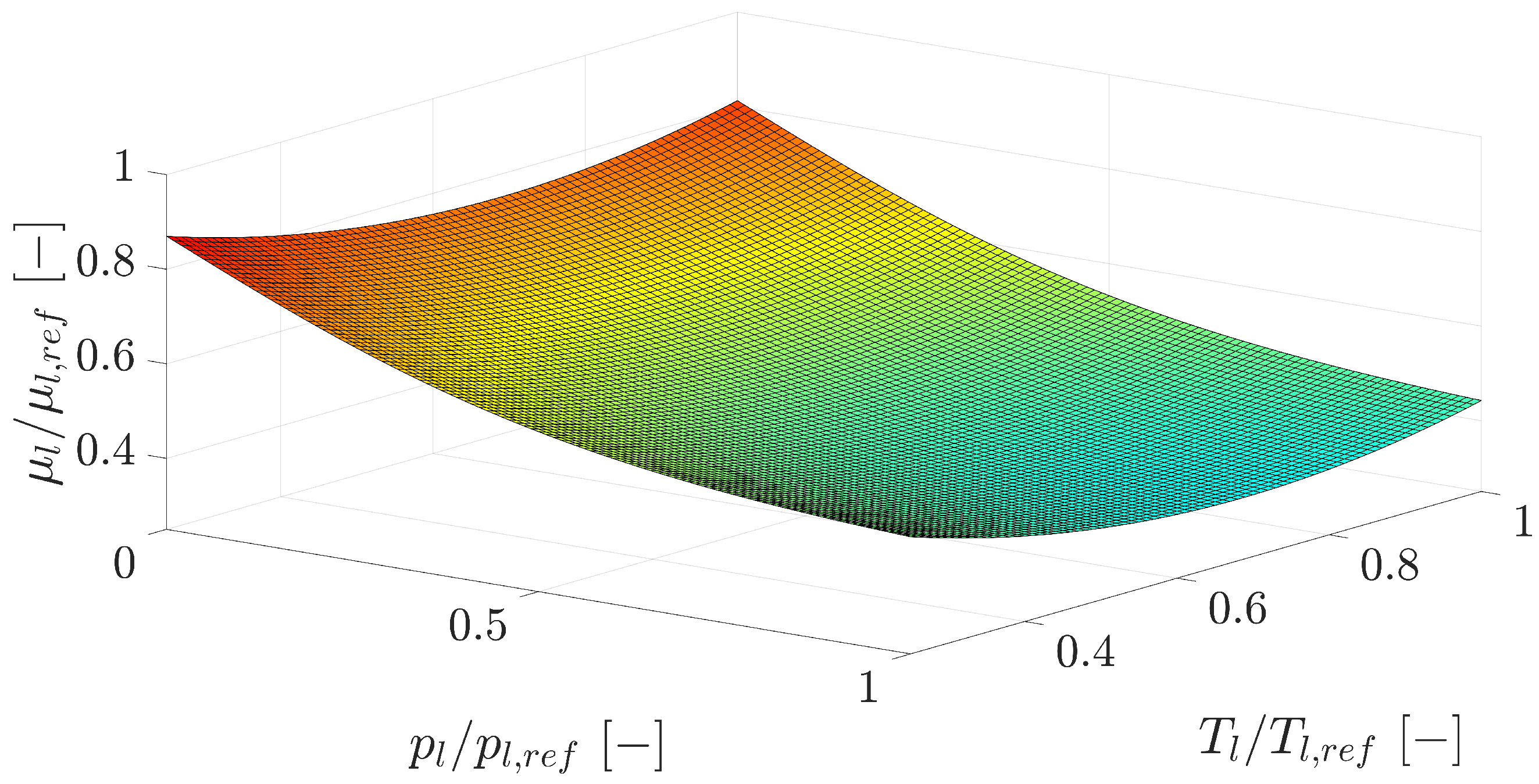
A decrease in the effective friction coefficient with increasing mean effective contact pressure—trend especially pronounced in configurations with high wedge angles and reduced pad contact areas. As a result, in high torque scenarios, higher hydraulic pressures are required than theoretical estimates would suggest, due to the reduction in effective friction compared to standard or low-amplified configurations.
High-amplified configurations are most efficient in low torque scenarios, as they imply working at low mean effective contact pressure and high effective friction.
Overall, the local friction law embedded in the model successfully captures this behavior. The model consistently yields mean rmse indices below 50 for temperature prediction, while the error indices nrmse and npeak for torque prediction remain below for the majority of the configurations tested, never exceeding .
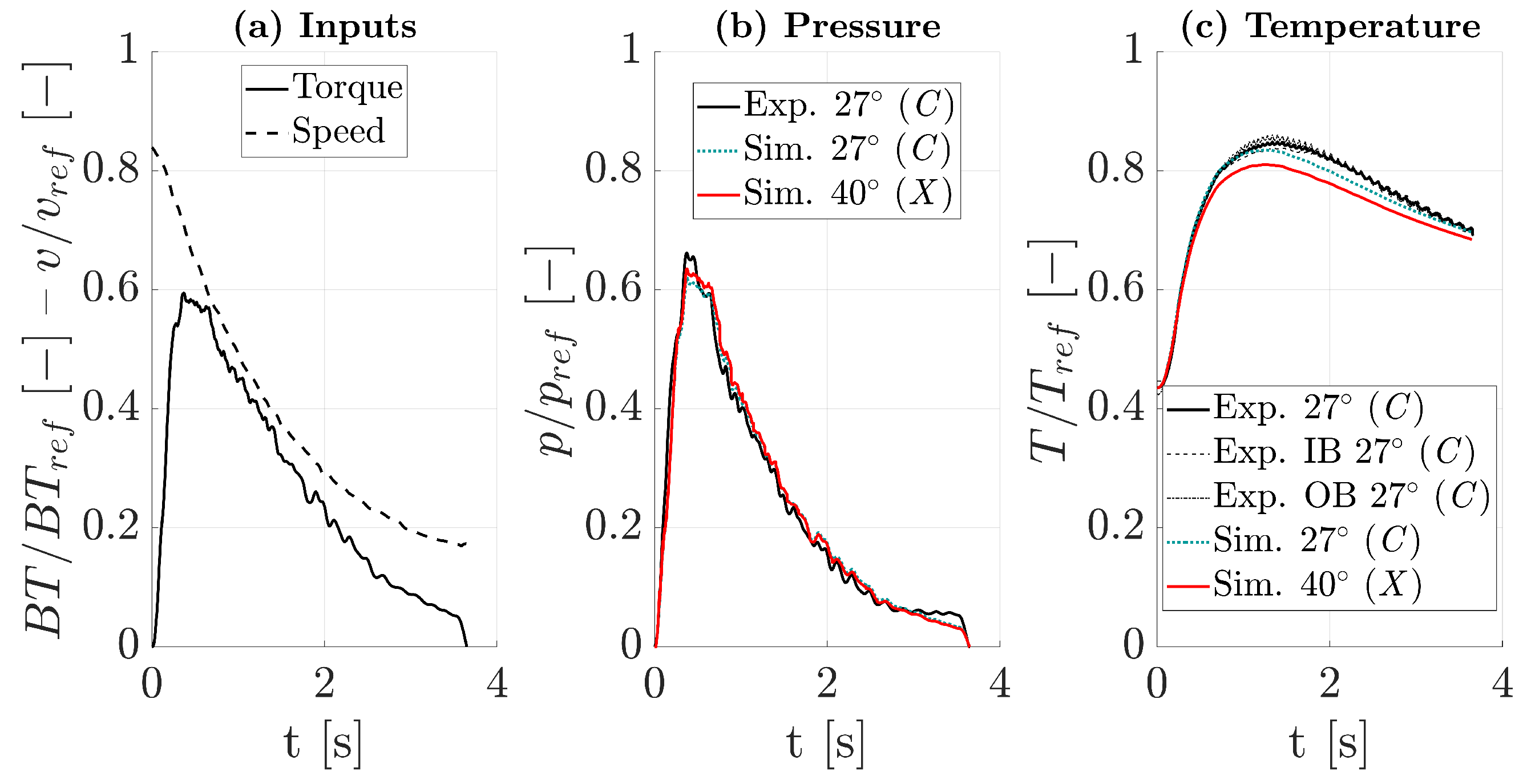
The validated model is applied to predict the performance of a new caliper (caliper X), not yet experimentally tested, designed to deliver the same theoretical braking torque at the same hydraulic pressure as an existing reference braking system (caliper C). The agreement with both the simulated and experimental results of caliper C suggests the capability of the model as a tool to evaluate the braking performance of early-stage designs, based on their geometry, hydraulic layout, and wedge angle.
Future work will focus on refining the model through a dedicated experimental investigation of the local tribological behavior of C/C materials, especially under high contact pressures induced by large wedge angles. Pin-on-disc tribometer testing is expected to improve the characterization of local friction behavior and dynamics, thus possibly further enhancing the predictive capability of the model.



 ,
,