1. Introduction
With the advent of the industrial intelligence era, sectors such as electric vehicles, data centers, and smart grids are experiencing rapidly growing demands for electrical current. Real-time and accurate current measurement has therefore become crucial for both equipment management and operational safety. In smart grids, it serves as the basis for grid state perception, renewable energy integration, and precise operational control [
1]. In data centers, current measurement enables refined energy management, overload prevention, and uninterrupted power delivery [
2].
Electric Vehicles (EVs), as the core of global transportation electrification, continue to expand in market share and technological maturity [
3]. According to the 2024 International Energy Agency (IEA), battery electric vehicles have surpassed 12% of global car sales, with China contributing nearly 70% of total growth. This rapid expansion imposes increasingly stringent requirements on current-sensing technologies—particularly in accuracy, response speed, and environmental robustness—across both onboard subsystems and external charging infrastructure. The reliability of current measurement directly affects overall vehicle performance and safety [
4,
5,
6].
In EVs, current sensing is fundamental across all major electrical domains. The Battery Management System (BMS) relies on accurate current sampling for assessing State of Charge (SOC) and State of Health (SOH), both essential for range estimation and battery lifetime management [
7,
8]. Within high-voltage battery packs, current signals support energy metering, overcurrent protection, and fault diagnosis, requiring sensors to maintain high accuracy and fast response over a wide dynamic range from milliamps to hundreds of amperes [
9]. The electric drive system further depends on precise phase and DC-link current measurement for high-performance vector control, torque regulation, and efficiency optimization [
10].
Additionally, On-Board Chargers (OBCs) and DC/DC converters demand current sensors with excellent linearity and temperature stability to accommodate rapid load fluctuations and varying ambient conditions [
11]. At external fast-charging stations, output currents commonly reach 200–500 A and may exceed 600 A in high-power scenarios, making non-contact, high-precision sensing indispensable for preventing cable overheating, connector arcing, and other safety risks [
12]. In emerging bidirectional Vehicle-to-Grid (V2G) applications, measurement challenges intensify due to alternating power flow, multiple parallel cables, and strong electromagnetic interference, requiring highly robust and accurate current measurement technologies [
13,
14,
15].
Traditional current measurement schemes primarily rely on contact-based sensors such as shunts and current transformers [
16,
17,
18]. Although these technologies are well-established in industrial environments, their inherent limitations—including bulky form factors, intrusive installation requirements, susceptibility to open-circuit risks, and insufficient isolation capability—pose significant challenges in the spatially constrained, electromagnetically complex, and high-safety electrical systems found in electric vehicles and charging infrastructure. Consequently, the development of safe, compact, and non-invasive current measurement technologies has become an urgent need for advancing transportation electrification and intelligent mobility.
Concurrently, the advancement of wireless charging technology presents both new opportunities and challenges for current sensing. In mid- to long-range wireless power transfer (WPT) systems, efficient energy delivery relies critically on precise magnetic field coupling and system resonance, with overall efficiency being a paramount concern [
19]. For electric vehicle applications, coupler designs such as the polarized Double-D (DD) pad have been developed to significantly improve lateral misalignment tolerance and charging zone area, addressing practical installation variances [
20]. Extending this concept to highly mobile platforms like unmanned aerial vehicles (UAVs), recent integrated coupler designs employing multi-coupling compensation topologies demonstrate robust power transfer across full rotational and lateral misalignments [
21]. These WPT systems fundamentally depend on accurate, real-time current monitoring for optimizing power flow, ensuring operational safety, and maintaining high efficiency under dynamic conditions. Therefore, the development of non-contact current sensors with high immunity to conductor misalignment and external magnetic interference is not only vital for conventional wired harnesses but also emerges as a critical enabler for the next generation of intelligent, wireless charging infrastructure across automotive and robotic domains.
Non-contact techniques based on magnetic field sensing have therefore attracted increasing research interest due to their natural galvanic isolation and suitability for high-current, high-voltage environments. Among them, Hall-effect sensors have been widely adopted because of their technological maturity and low cost [
22,
23]. However, performance limitations—such as restricted bandwidth, large temperature drift, and moderate sensitivity—often prevent them from meeting the stringent accuracy and stability requirements demanded in EV power systems. In contrast, Tunneling Magnetoresistance (TMR) technology has emerged as a promising solution in recent years, offering ultra-high sensitivity, superior temperature stability, favorable frequency response, and low power consumption [
24,
25].
Despite these advancements, existing research predominantly focuses on improving single-sensor technologies, whereas systematic investigation of hybrid sensing approaches remains limited. Moreover, practical challenges commonly encountered in real EV and charging environments—such as installation eccentricity arising from cable positioning constraints [
26] and magnetic interference from adjacent conductors in multi-cable bundles or fast-charging stations [
27,
28]—have not been adequately addressed. These issues can significantly degrade measurement accuracy and represent a key barrier to the deployment of high-precision non-contact sensing technologies.
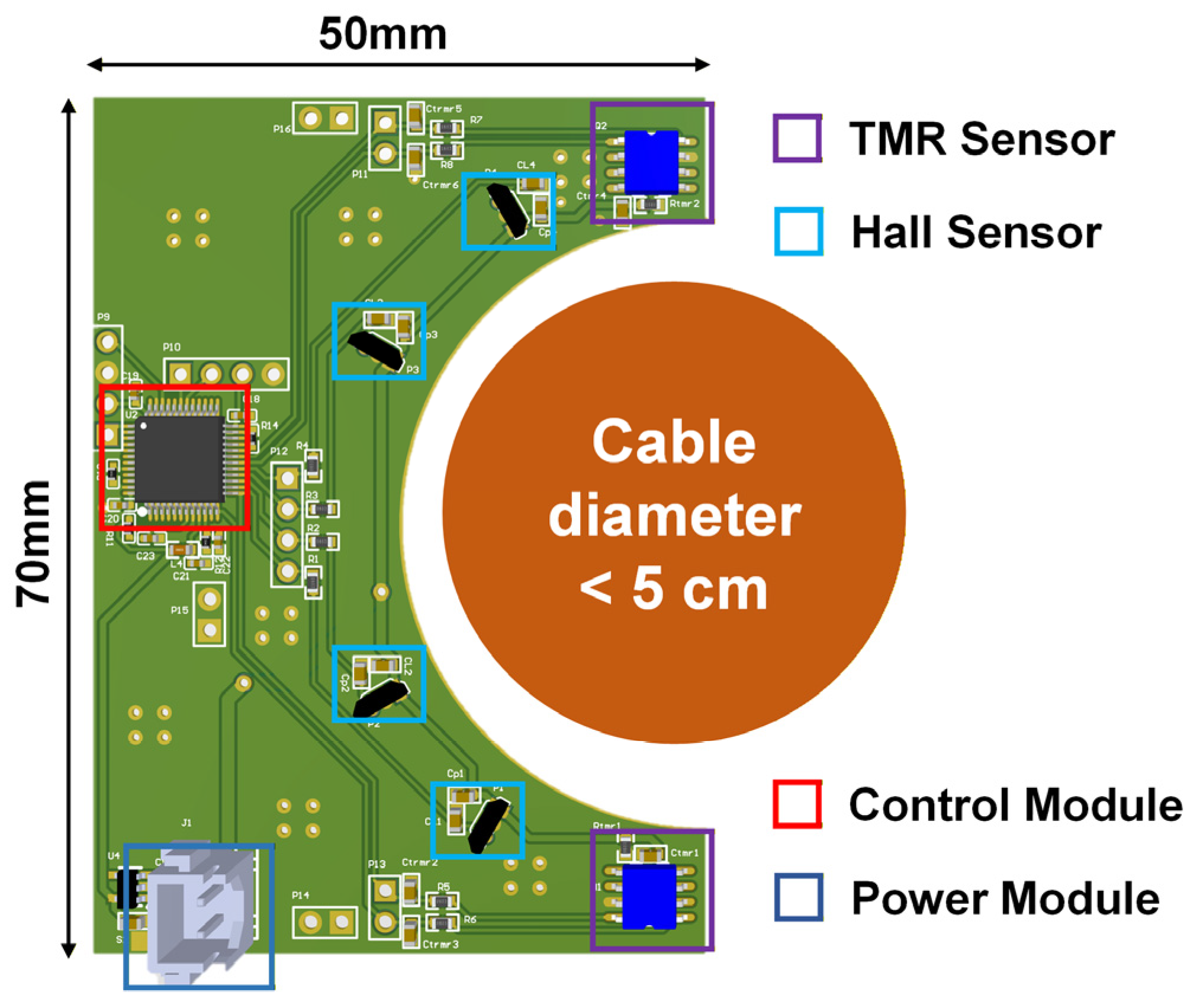
To address these gaps, this paper proposes a non-contact current sensor featuring a semi-circular mechanical structure specifically designed to simplify field installation and facilitate rapid clamping of fixed vehicle or charging cables. The sensor integrates a hybrid array combining Hall-effect and TMR elements, leveraging the wide measurement range of Hall sensors and the high sensitivity and stability of TMR devices. Building upon this architecture, the study focuses on two critical and frequently unavoidable challenges in practical applications: installation eccentricity and interference from adjacent conductors. An eccentricity error compensation algorithm is developed to restore measurement accuracy when the conductor is not ideally centered. Furthermore, a novel equivalent modeling approach based on eccentricity principles is introduced to characterize and suppress interference fields, thereby significantly enhancing anti-interference performance in complex electromagnetic environments.
The remainder of this paper is organized as follows.
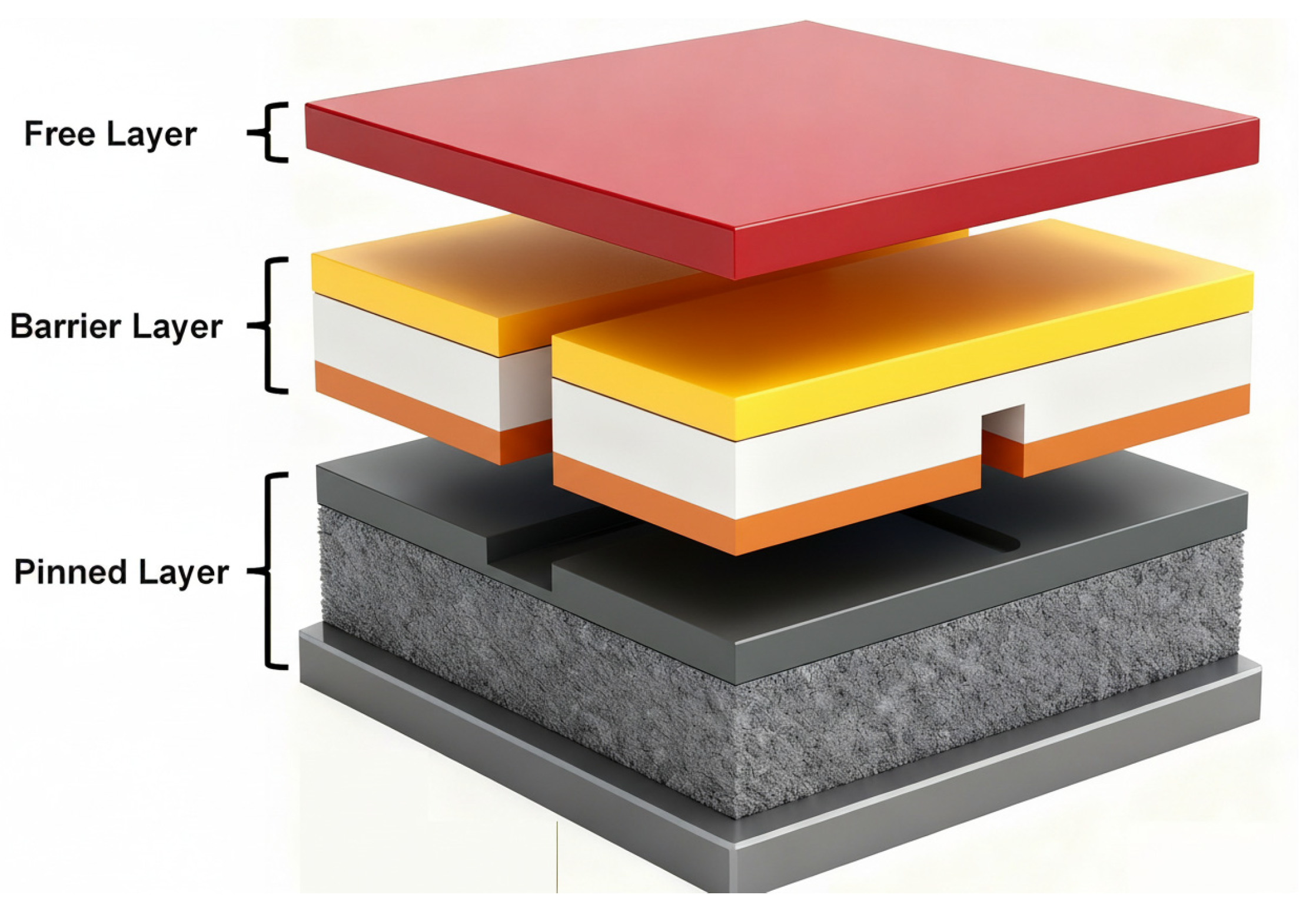
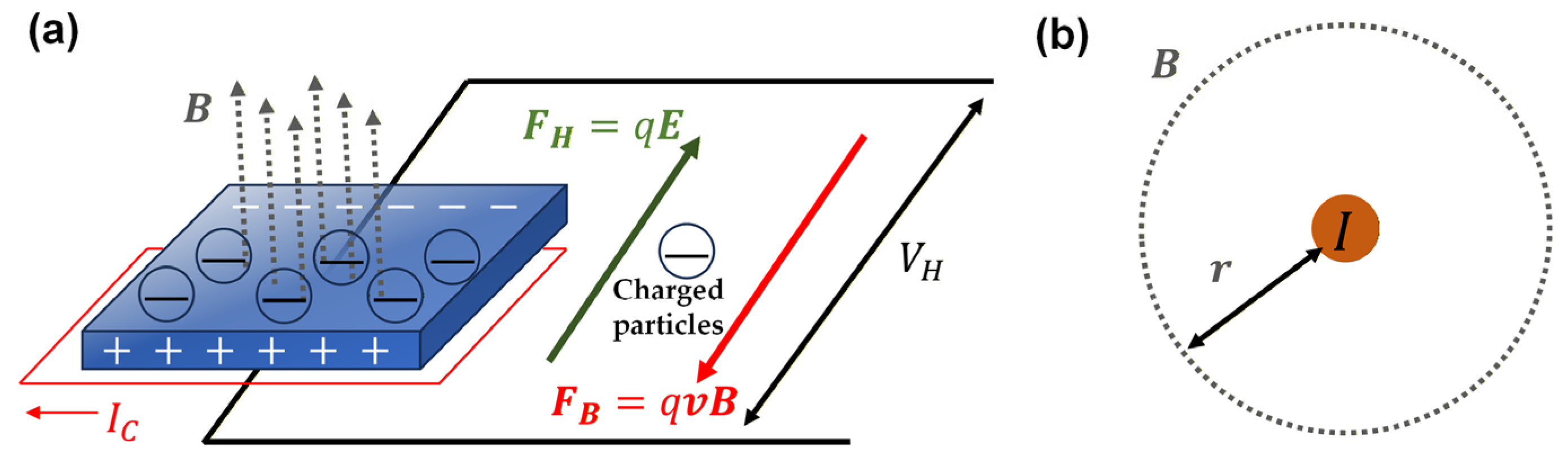
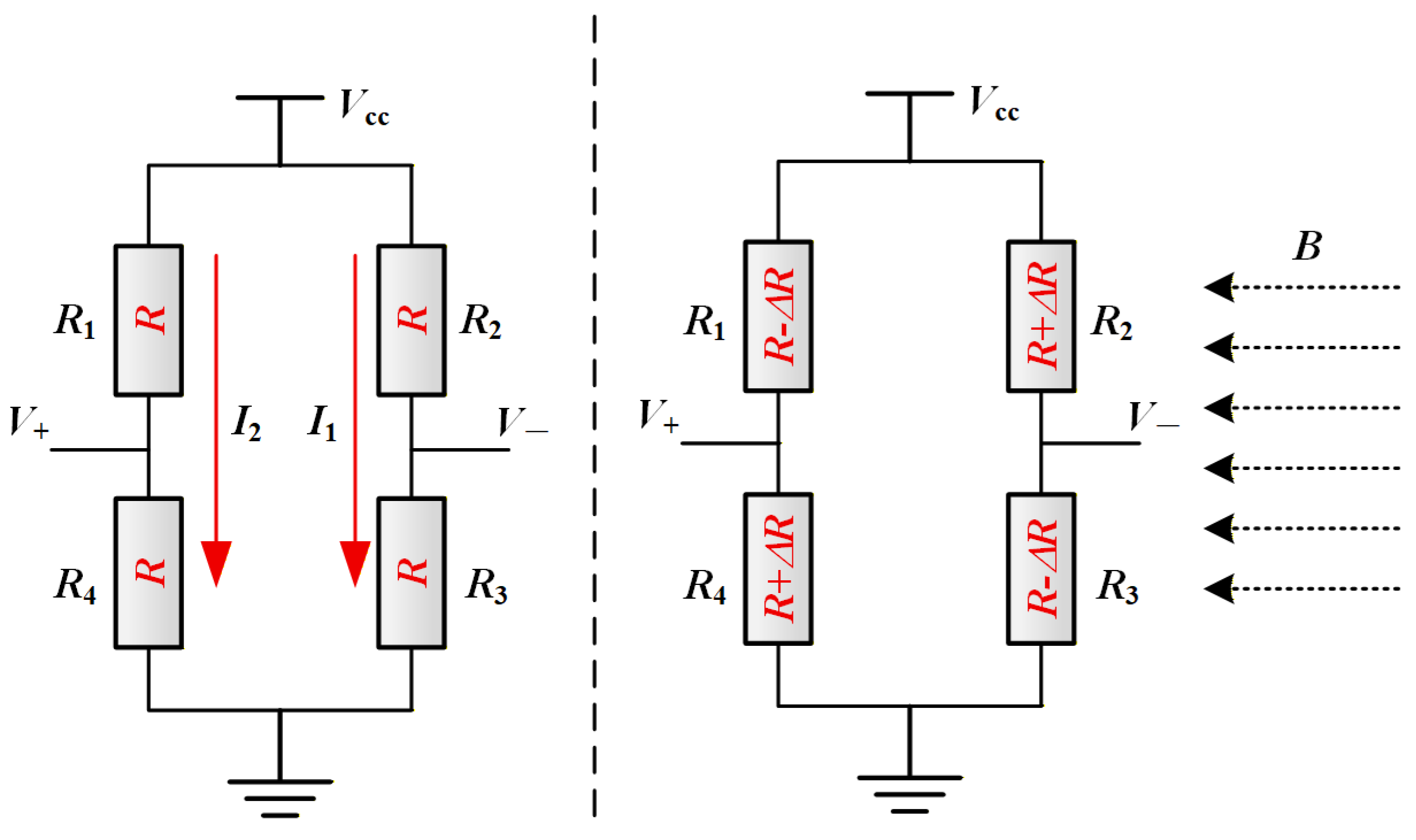
Section 2 presents the operating principles of the Hall and TMR sensors and details the structural design and hardware architecture of the proposed semi-circular sensing array.
Section 3 analyzes measurement deviations caused by conductor eccentricity and introduces a corresponding compensation method. It also develops and validates an equivalent eccentricity-based interference suppression mechanism for adjacent conductors.
Section 4 provides experimental validation under central alignment, eccentric placement, and multi-conductor interference scenarios, demonstrating the accuracy and robustness of the proposed system.
Section 5 summarizes the key findings, discusses current limitations, and outlines directions for future work.
3. Eccentricity Measurement and Immunity Analysis
Magnetic-induction–based non-contact current measurement systems encounter two major challenges in practical applications:
Installation Eccentricity: Due to the inherent openness of the semi-circular array, maintaining an equal distance between each sensing element and the conductor is difficult. Even slight positional deviations lead to asymmetric magnetic-field distributions across the array, thereby introducing non-negligible measurement errors.
Adjacent Interference: In industrial environments where cables are often routed in parallel, neighboring current-carrying conductors generate additional magnetic fields that superimpose with the primary field, significantly distorting the measured signal.
To address these limitations, this section analyzes the physical mechanisms through which eccentricity and adjacent interference degrade measurement accuracy. Based on this analysis, mathematical models and corresponding compensation algorithms are developed to improve sensor performance under non-ideal installation and operational conditions.
3.1. Analysis and Compensation of Measurement Errors Due to Conductor Eccentricity in Circular Arrays
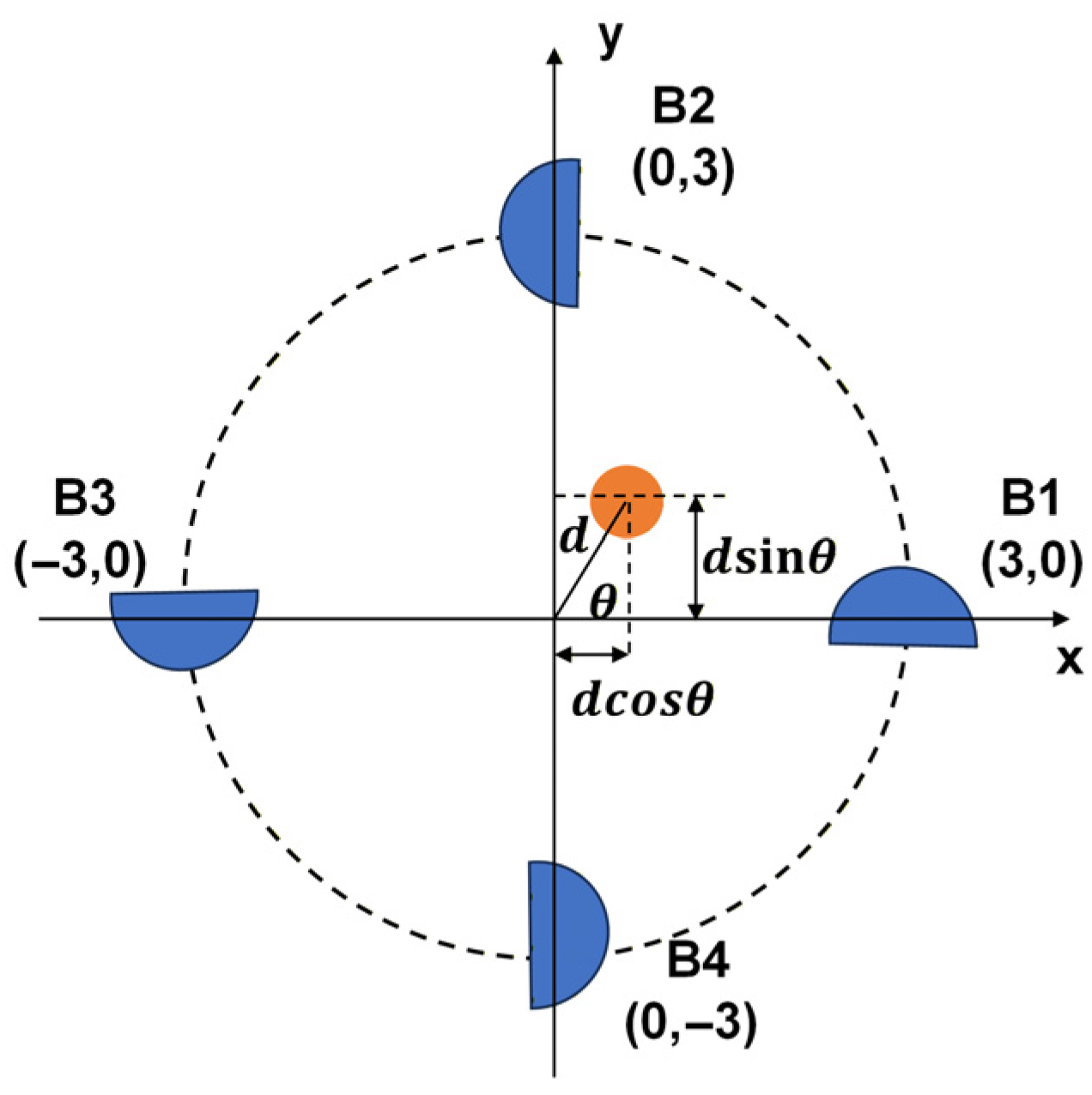
When a current-carrying conductor deviates from the geometric center of the sensor array, the distance between each sensing element and the conductor varies, leading to systematic deviations in the measured magnetic field values. According to Equation (1), the magnetic flux density generated by an infinitely long straight conductor is inversely proportional to the distance from it. For clarity and ease of understanding, the geometric characteristics of a circular sensor array are first considered at this stage, and a coordinate system is established as shown in
Figure 5. Let
denote the radius of the sensor array, with the ideal center of the current-carrying conductor located at the origin
. Due to installation eccentricity, the actual center of the conductor is positioned at
, where
is the eccentricity distance and
is the eccentricity angle. The coordinates of the
-th sensor are denoted as
, satisfying
.
The eccentricity-induced actual distance for the
-th sensor is given by:
The corresponding theoretical magnetic flux density is:
To simplify the analysis, when investigating deviations in either the
or
direction, the other direction can be assumed to be deviation-free. Therefore, we define the normalized magnetic flux density difference in the
-direction as:
Similarly, the normalized magnetic flux density difference for the
-direction is defined as:
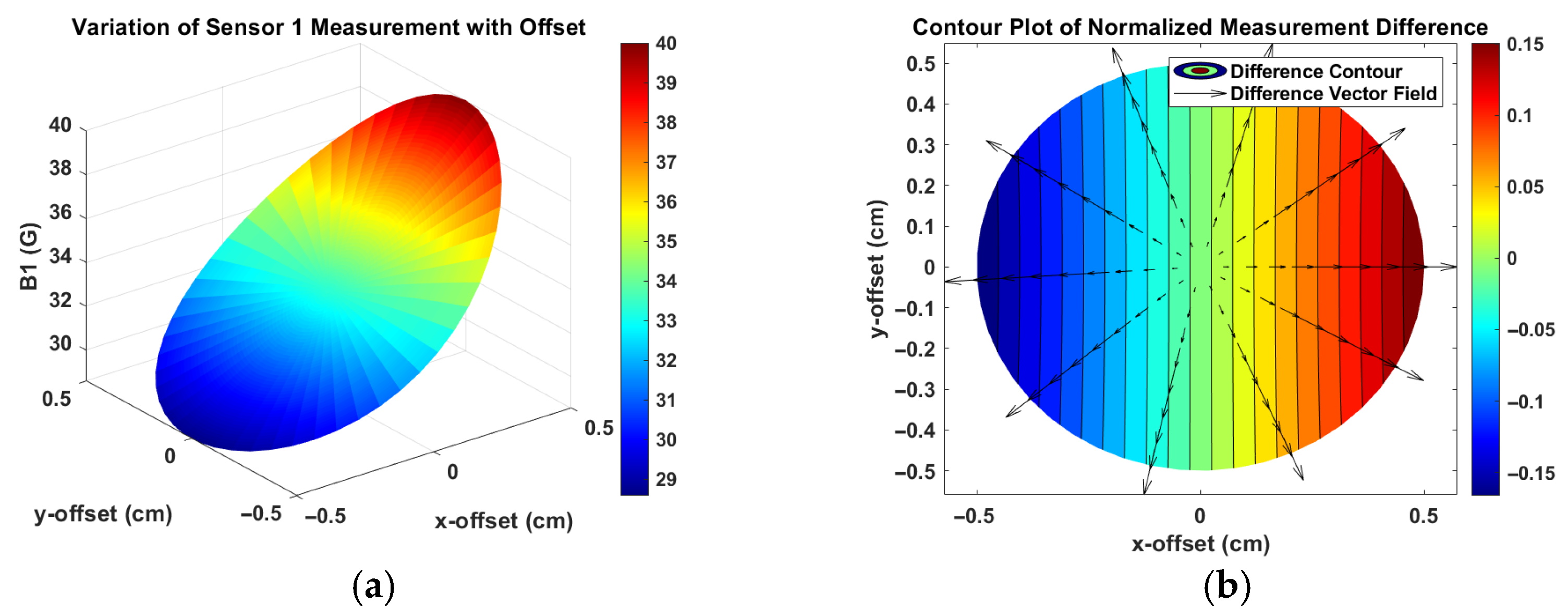
MATLAB simulations were used to establish the numerical relationship between the measured magnetic flux density of any sensor and the eccentricity displacement can be obtained, as shown in
Figure 6. Consequently, by processing the measurements from all sensors and solving the system of equations for the normalized magnetic flux density differences in both the
- and
-directions, the eccentricity displacement of the conductor center in polar coordinates
can be determined. This calculated offset is then incorporated with its sign (positive/negative direction) into the magnetic field model of each sensor, enabling an accurate equivalent reconstruction of the original current value.
3.2. Analysis and Compensation of Interference Source Effects on Measurement Accuracy
In non-contact current measurement systems, especially in confined industrial settings, adjacent current-carrying conductors introduce additional magnetic field components. As a result, sensor readings are affected by both the target current and interference currents, leading to reduced measurement accuracy. Since interference typically originates from a specific direction, sensors at different positions experience different levels of disturbance.
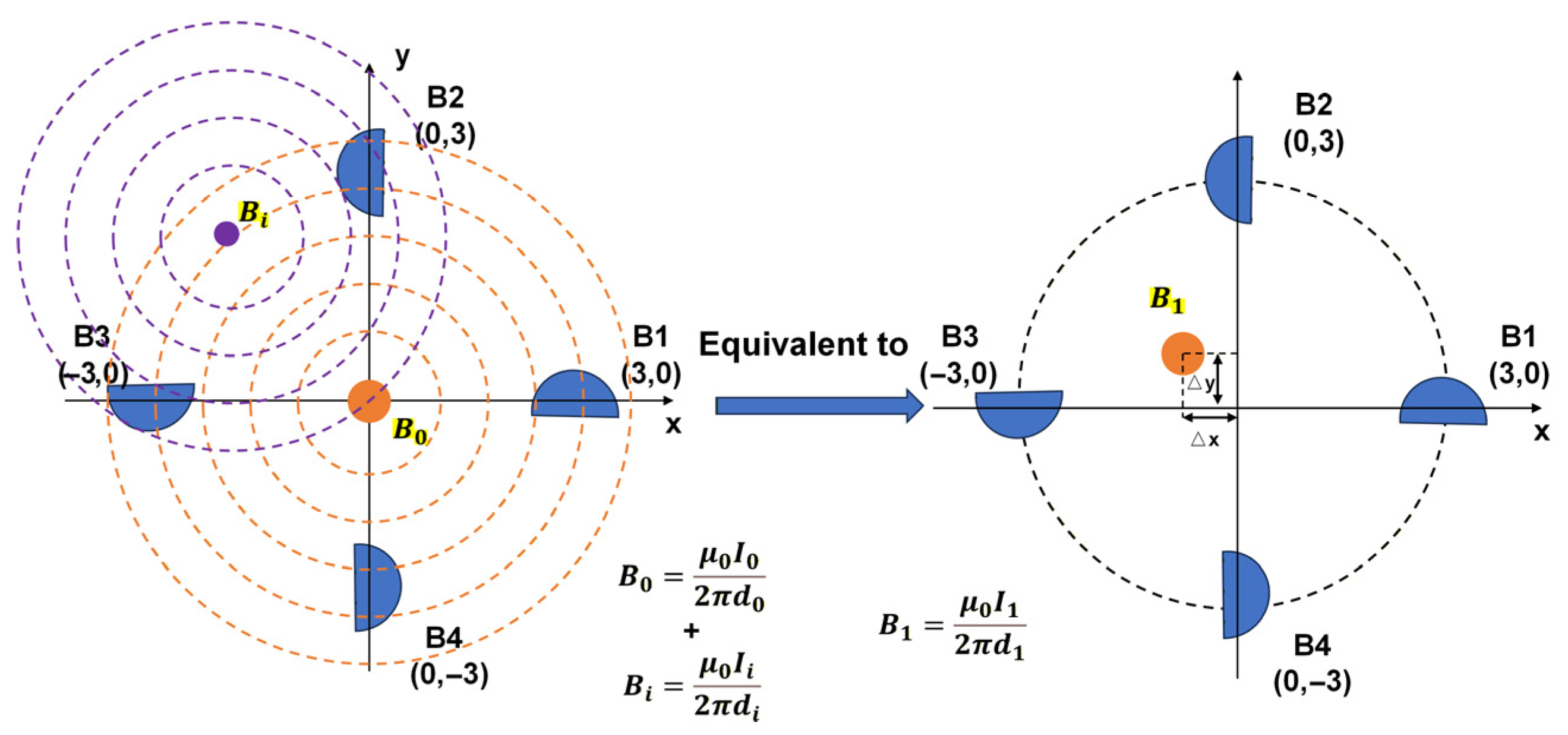
To address this issue, this study introduces a theoretical method based on magnetic field distribution equivalence. This approach converts the magnetic-field superposition caused by a single interference source into an equivalent conductor position offset problem, as illustrated in
Figure 7.
A system comprising a target conductor and a single interference conductor is considered: the target conductor carries current
and is located at the origin of the coordinate system. The interference conductor carries current
and is positioned at location vector
. According to the Biot–Savart law, the total magnetic flux density at the location of the
-th sensor in the array, denoted by position vector
, can be expressed as:
where
denotes the total magnetic flux density at the location of the
-th sensor, generated by both the target and interference conductors.
and
represent the magnetic flux densities produced by the target conductor (carrying current
) and the interference conductor (carrying current
), respectively.
are the coordinates of the i-th sensor, while
and
denote the unit vectors in the x and y directions, respectively. Here, bold symbols denote vector quantities.
The equivalence proposed in this study is based on the following hypothesis: there exists an equivalent position
such that the magnetic field produced by the target conductor at this position optimally approximates the combined magnetic field produced by both the target and interference conductors in the original system, as measured by the sensor. This relationship can be formulated as:
To determine the current in the target conductor, the following optimization problem is formulated:
A quantitative analysis of the model equations enables the determination of the magnetic flux density at the equivalent offset position that minimizes the discrepancy in magnetic field distribution, thereby yielding the current value of the target conductor.
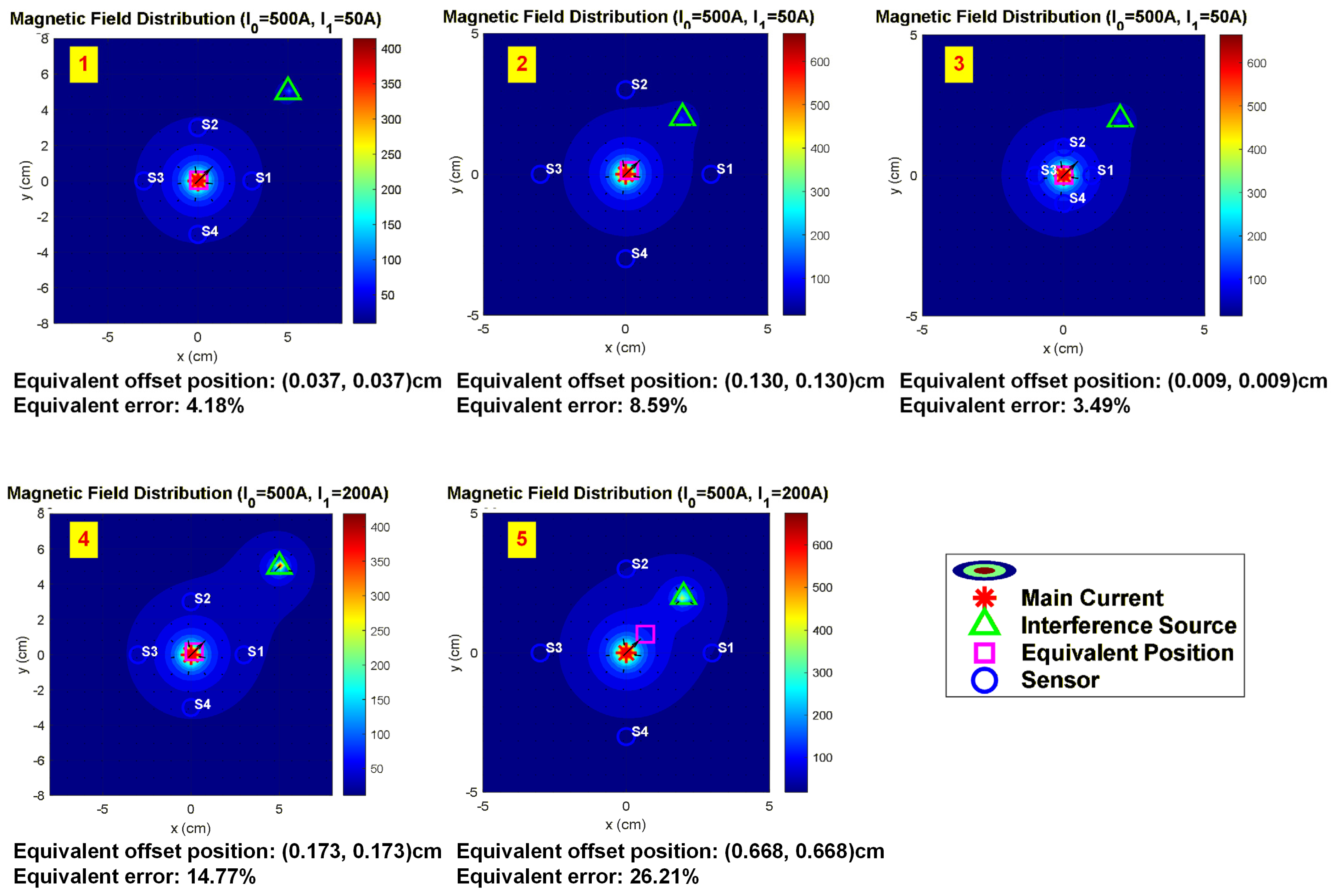
To validate the effectiveness of the equivalent model under interference conditions and define its applicable boundaries, a series of simulation experiments were conducted using MATLAB R2024b. Adopting a controlled variable approach, the influence of key parameters—including interference source intensity (comparing cases 1 vs. 4 or 2 vs. 5), interference source distance (comparing cases 1 vs. 3), and array distance from the primary current (comparing cases 2 vs. 3)—on the error of the equivalent model was systematically investigated. The quantitative results of this analysis are summarized in
Table 2 and
Figure 8.
Error analysis of the equivalent model under different interference conditions reveals the following observations: Under specific low-interference conditions (e.g., comparing Case 1 and Case 2 in
Figure 8), the equivalent model demonstrates excellent compensation performance, with relative errors consistently below 5%, preliminarily validating the method’s applicability in weak interference scenarios. However, when the interference intensity increases while its distance remains constant (e.g., comparing Case 1 and Case 4), the compensation error of the equivalent model exhibits a systematic increasing trend. The error becomes notably significant when the ratio of interference current to target current exceeds 0.2. Similarly, the error increases markedly when the interference source is located closer to the sensor array while maintaining the same intensity (e.g., comparing Case 1 and Case 3).
This simulation phenomenon can be explained by the underlying theoretical mechanism of the equivalent model. It must be explicitly emphasized that the proposed equivalent compensation model mathematically belongs to an approximation method based on the assumption of linear superposition. Its core principle lies in identifying an optimal virtual equivalent conductor position such that the magnetic field generated by this single current source best approximates the actual multi-source magnetic field vector—comprising both the target and interference conductors—at the discrete sensor node locations. When the interference source intensity is limited (i.e., the ratio is small), the disturbance introduced by the interference field to the original magnetic topology is weak, allowing the equivalent position model to capture the combined effect with high accuracy. For the targeted application scenarios (e.g., electric vehicle wiring harnesses), interference is typically constrained to a moderate level (interference-to-target current ratio (k < 0.3) due to inherent system design and wiring spacing requirements. This characteristic aligns perfectly with the operational range of the proposed method, ensuring its reliable utility in the intended use cases.
However, the model possesses inherent theoretical approximation limitations. It is important to distinguish between the physical superposition of magnetic fields, which is linear, and the mathematical approximation error of our single-source equivalent model. When the interference intensity increases significantly (i.e., the ratio becomes larger) or its physical distance decreases, the resultant magnetic field distribution exhibits strongly non-uniform spatial gradients across the sensor array. Under these conditions, the discrepancy between the magnetic field pattern produced by a single equivalent current source and the spatial distribution of the actual multi-source field across the sensor array is dramatically amplified. Specifically, the equivalent model based on a single current source struggles to accurately replicate the high-order spatial gradient variations introduced by a strong, independent interference source. The residual error between the model prediction and the true field increases non-linearly with the interference strength, leading to non-negligible errors. Consequently, the performance degradation of the equivalent compensation method under strong interference conditions is an inherent and predictable outcome within its theoretical framework, which clearly defines its effective boundaries for practical engineering applications.
Based on the error analysis results of the equivalent model, this study proposes the following two improvement strategies from the perspective of hardware design to enhance the interference immunity of the sensor system:
Array Radius Optimization: Appropriately reducing the physical radius of the sensor array can effectively improve the system’s ability to resolve far-field interference. A smaller array size helps minimize the variation in magnetic field measurements between individual sensing units, thereby enhancing the identification accuracy of uniform interference fields.
Sensor Density Optimization: Increasing the distribution density of sensors within the array significantly strengthens the capability to suppress near-field interference. A greater number of sensing units provides richer spatial sampling of the magnetic field, facilitating the accurate identification of local interference field distribution characteristics.
3.3. Analysis and Compensation of Eccentricity Effects on Measurement Accuracy in Semi-Circular Arrays
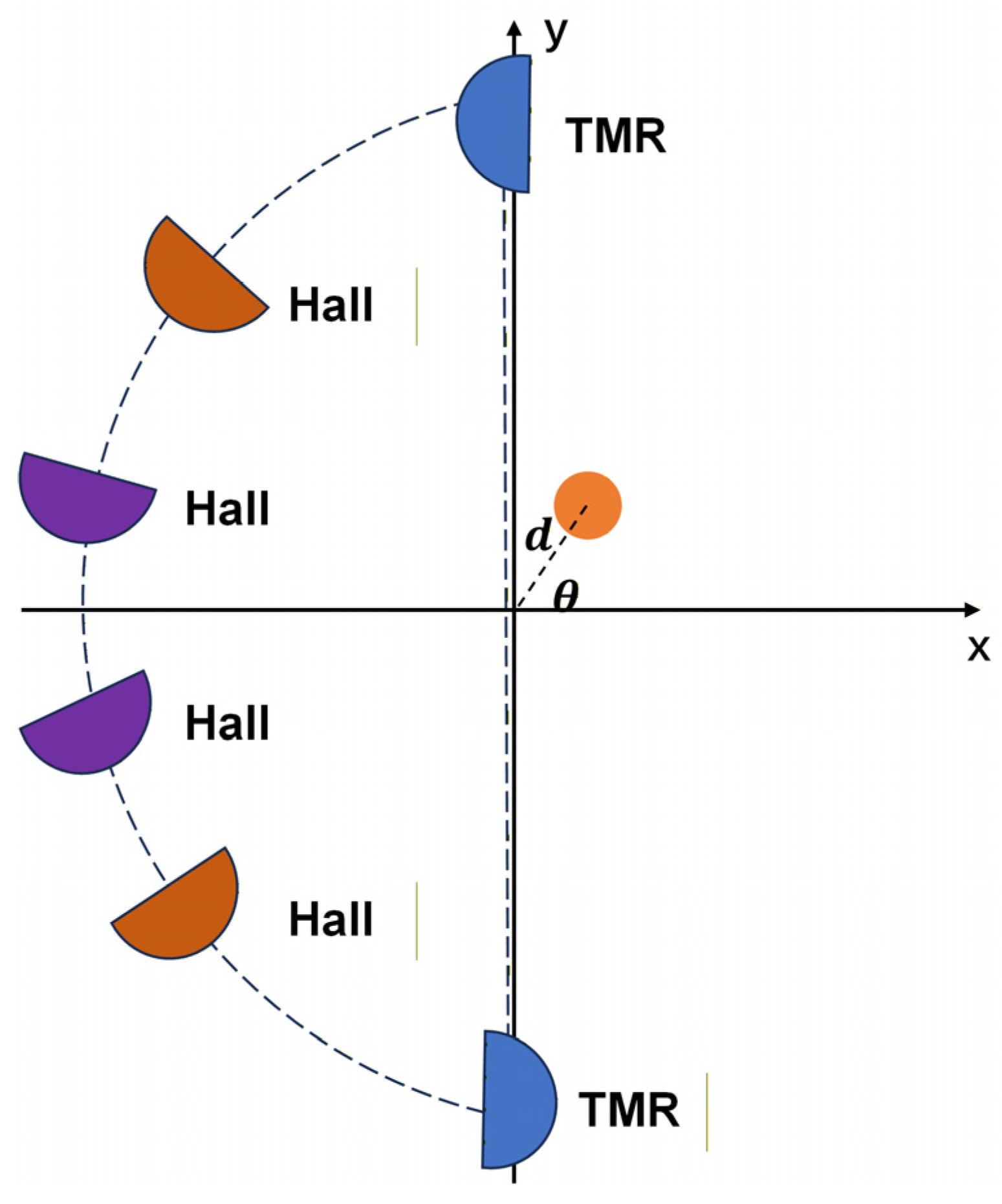
Similarly to the circular array configuration, the semi-circular array is distributed over a 180° arc, requiring only half the number of sensors to perform measurements. Based on the geometric characteristics of the semi-circular array, a coordinate system is established as shown in
Figure 9. Let
denote the array radius, with sensing units equally spaced along the semicircular arc. The ideal position of the current-carrying conductor center is at the origin
. When the conductor center is displaced to
due to eccentricity, the distance from each sensor unit to the conductor changes, consequently affecting the magnetic field measurements.
By analogy with the analysis for a circular array, consider a semi-circular array configured with six sensing units. Due to the varying distances between sensor units along the x- and y-directions, the total normalized magnetic flux density difference in each direction should be defined as a weighted summation of the normalized differences from specific sensor pairs positioned at distinct locations along the respective axis.
Therefore, the normalized magnetic flux density difference in the
-direction is defined as:
where
denotes the number of unique sensor unit pairs with distinct distances along the x-direction, and
represents the corresponding weighting coefficient applied to the normalized magnetic flux density difference in each pair, which can be determined based on the performance characteristics of the sensor units.
Similarly, the normalized magnetic flux density difference in the
-direction is defined as:
where
denotes the number of unique sensor unit pairs with distinct distances along the y-direction, and
represents the weighting coefficient applied to the normalized magnetic flux density difference in each pair.
5. Conclusions
This study addresses the practical requirements of non-contact current measurement technology in industrial and transportation applications by systematically developing and optimizing a semi-circular array sensor. The open semi-circular structure significantly enhances installation convenience, enabling rapid and reliable measurement of high-current cables, which is particularly relevant for electric vehicle (EV) powertrains and intelligent transportation systems where accurate current monitoring is critical for battery management, drive control, and operational safety.
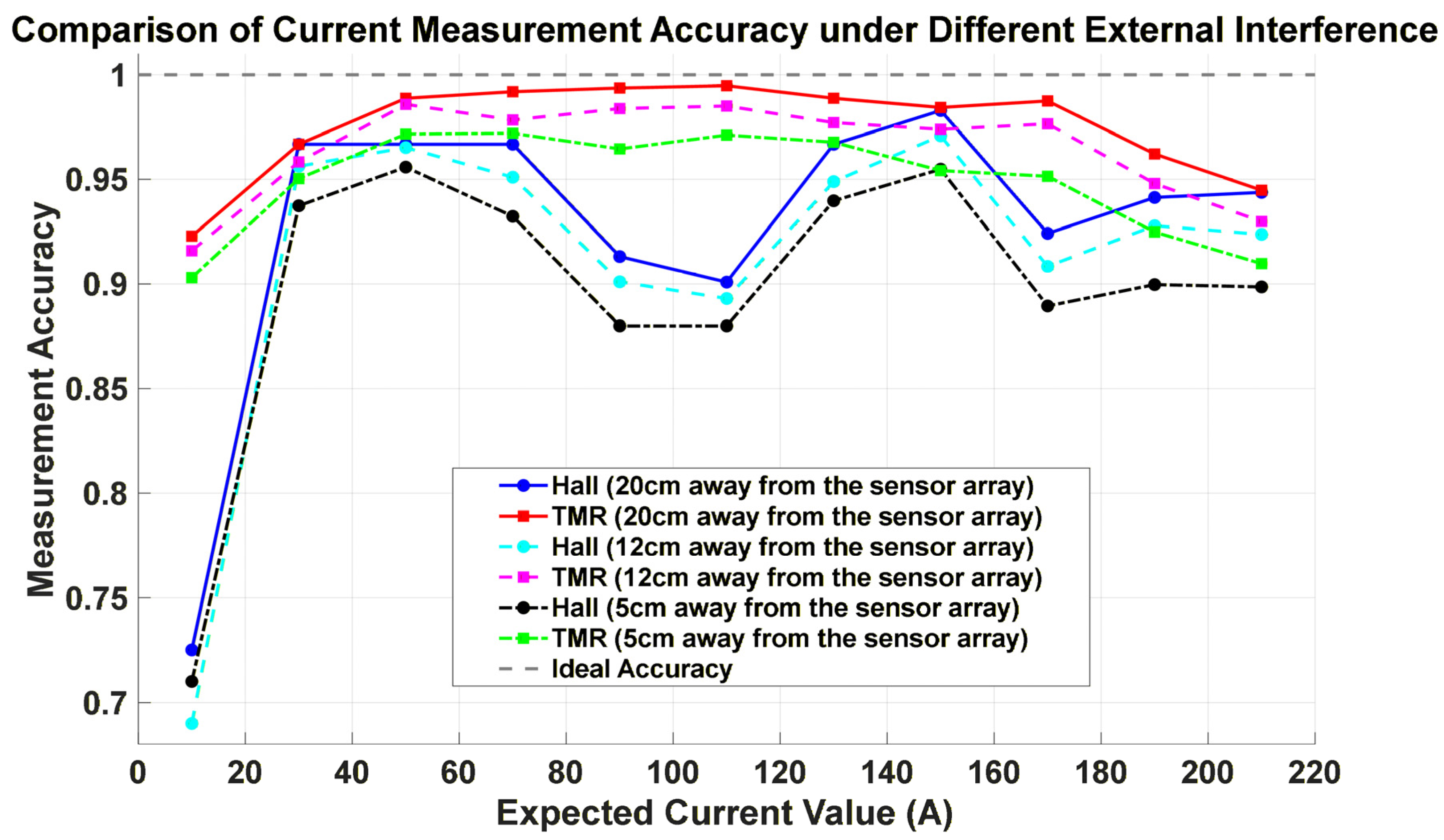
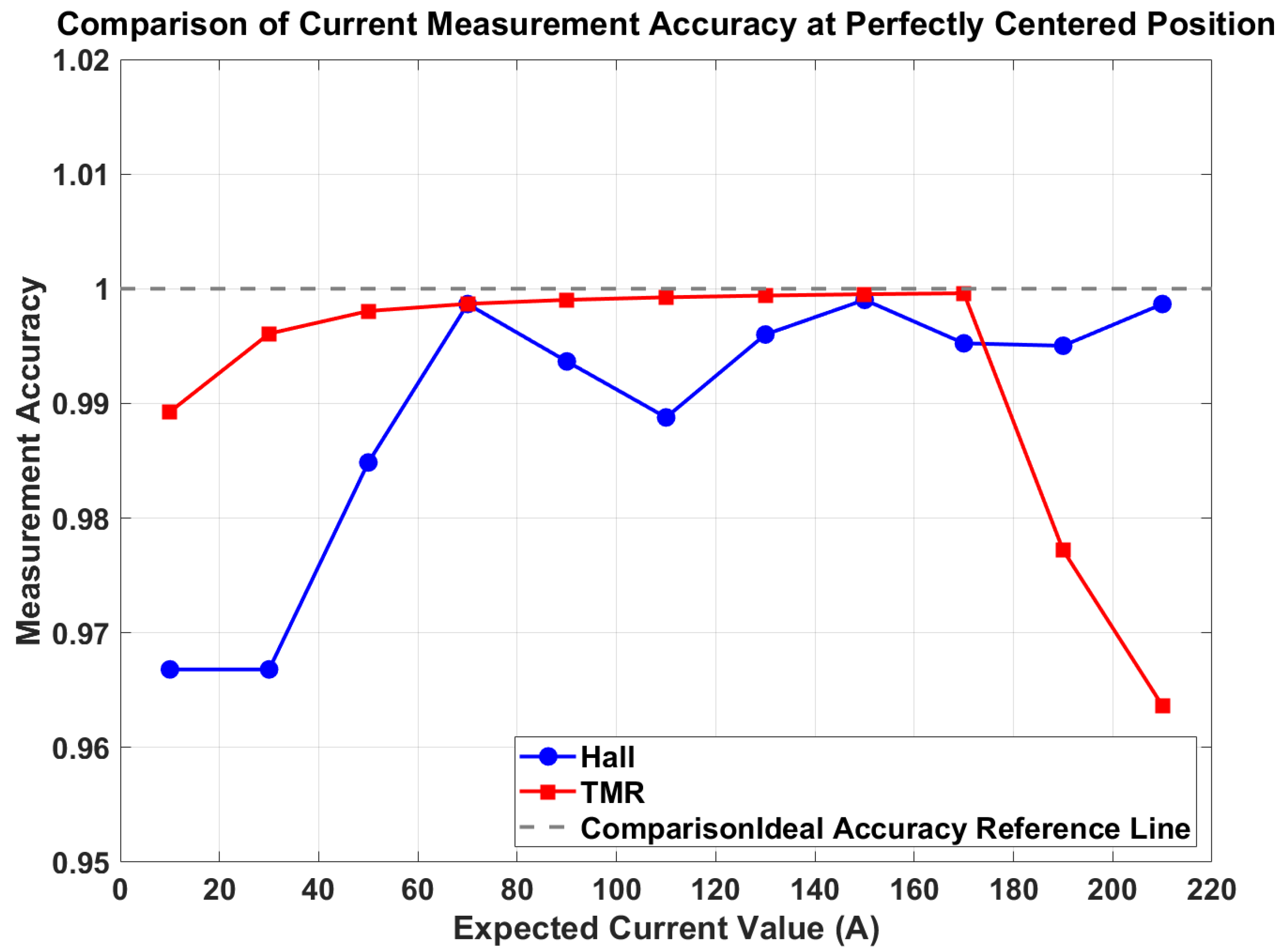
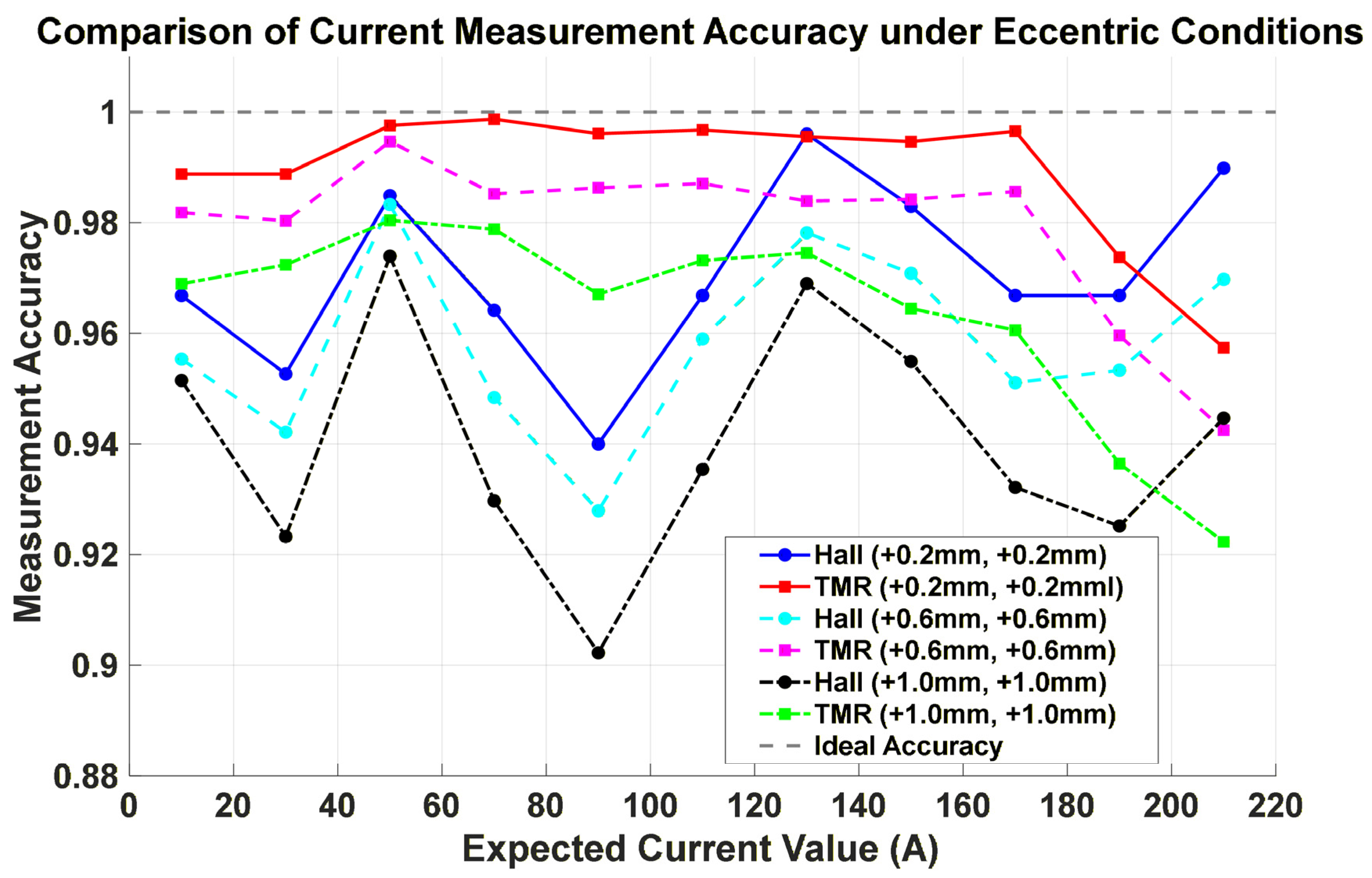
A hybrid sensing scheme combining Hall-effect and TMR sensors was implemented, leveraging the complementary characteristics of wide dynamic range and high sensitivity. Hall sensors provide a wider linear range (±10 Gs), maintaining high accuracy (>99%) above 130 A, but exhibit lower sensitivity at low currents. They are also prone to greater temperature drift. In contrast, TMR sensors offer superior sensitivity and temperature stability, achieving >99% accuracy within 30–170 A. However, their narrower linear range (±5 Gs) leads to saturation and accuracy loss at high currents (e.g., 96.36% at 210 A). Additionally, TMR sensors are subject to inherent magnetic hysteresis, which may affect linearity and repeatability under high or varying fields. The combined use of both technologies effectively balances dynamic range with precision. Under ideal installation conditions, the system achieved an overall measurement accuracy of 99.05%.
To overcome key practical challenges, including conductor eccentricity and interference from adjacent cables, dedicated solutions were developed. An eccentricity error compensation model was established, achieving 97.07% measurement accuracy under offset conditions, while an interference suppression method based on the equivalence principle of magnetic field distribution maintained 94.31% accuracy in the presence of external disturbances.
Comprehensive experimental validation demonstrated that the proposed semi-circular array sensor meets design requirements for measurement accuracy, installation convenience, and environmental adaptability. The data confirm the effectiveness of the hybrid sensor configuration and the practical utility of the eccentricity and interference compensation algorithms. Moreover, the experimental findings provide important insights for future research and optimization, including potential enhancements in sensor density, array geometry, and algorithmic refinement to further improve performance under complex electromagnetic conditions.
Overall, this work provides a robust technical solution and experimental foundation for the application of non-contact current measurement technology in industrial settings, electric vehicles, and intelligent transportation systems, where accurate, reliable, and fast current sensing is essential for system performance, safety, and energy management.
Furthermore, while the proposed interference suppression method was validated under a single-interference-source scenario with a defined separation, future work will focus on its performance in environments with multiple closely spaced conductors, as typically found in automotive cable bundles, to fully assess its practicality for in-vehicle applications.