5.1. Vehicle Positions at the Moment of Collision, the Course of the Incident and Extent of Vehicle Damage
A sketch of the vehicle positions at the moment of collision forms the basis for assessing the behaviour of the vehicles prior to the accident and aids in understanding its mechanics.
A properly made sketch not only facilitates the determination of fault but also helps to comprehend the mechanism of damage occurrence and the displacement of vehicle components. Depending on the relative positioning of the vehicles, it is possible to identify whether the collision was frontal, side-impact, or oblique. The angle and location of the impact allow for an evaluation of how external forces were distributed across the vehicle body structure and how the kinetic energy was dissipated. Furthermore, it is also possible to assess whether controlled deformation zones were activated, whether structural deformations occurred, and how these factors may have influenced passenger safety.
Sketches are used in road incident reconstruction. In many difficult or disputed cases, they serve as the basis for determining the perpetrator of the accident. Moreover, knowledge of the vehicles’ positions at the moment of collision enables the assessment of the collision type. Depending on the impact angle and point of contact, vehicles may come to a stop at the scene, be propelled in different directions, or even overturn or rotate around their own axes. Such phenomena are crucial not only for understanding the course of the accident but also for predicting its consequences. A sketch, combined with the application of principles of dynamics and the conservation of momentum, allows for estimating vehicle speeds, movement directions, and possible post-collision trajectories.
The first stage of the simulations conducted was the assessment of the vehicles’ positions at the moment of collision, their post-crash locations, and the extent of body deformation.
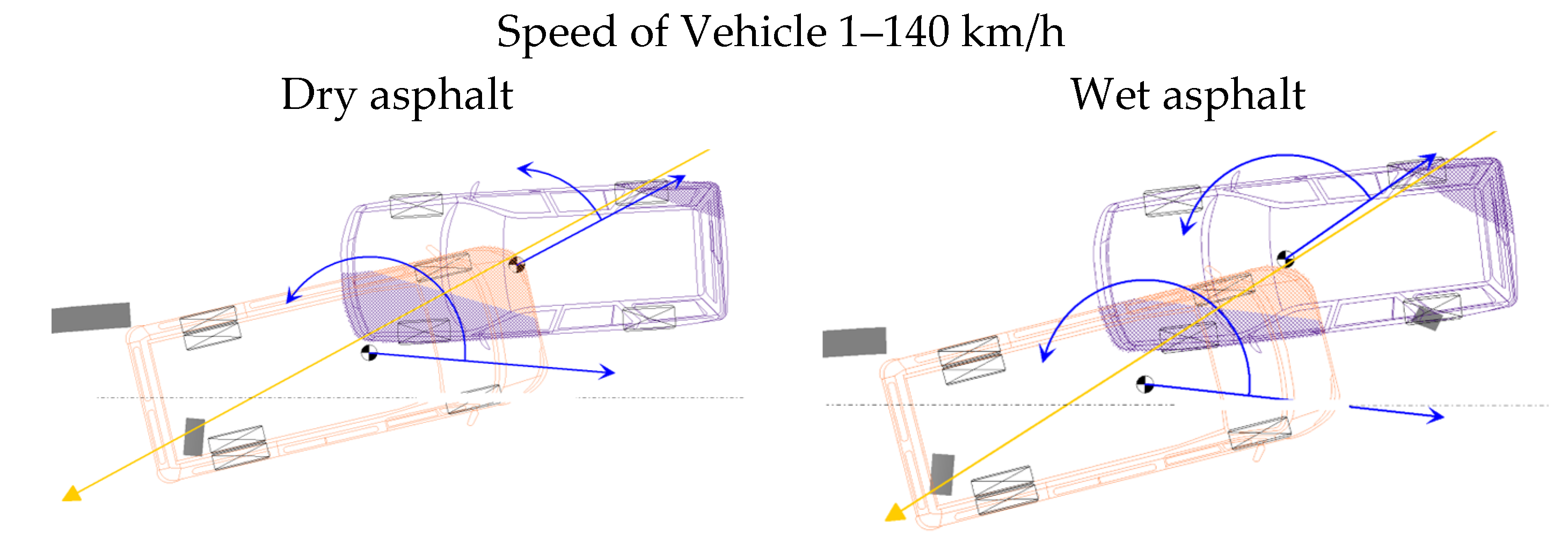
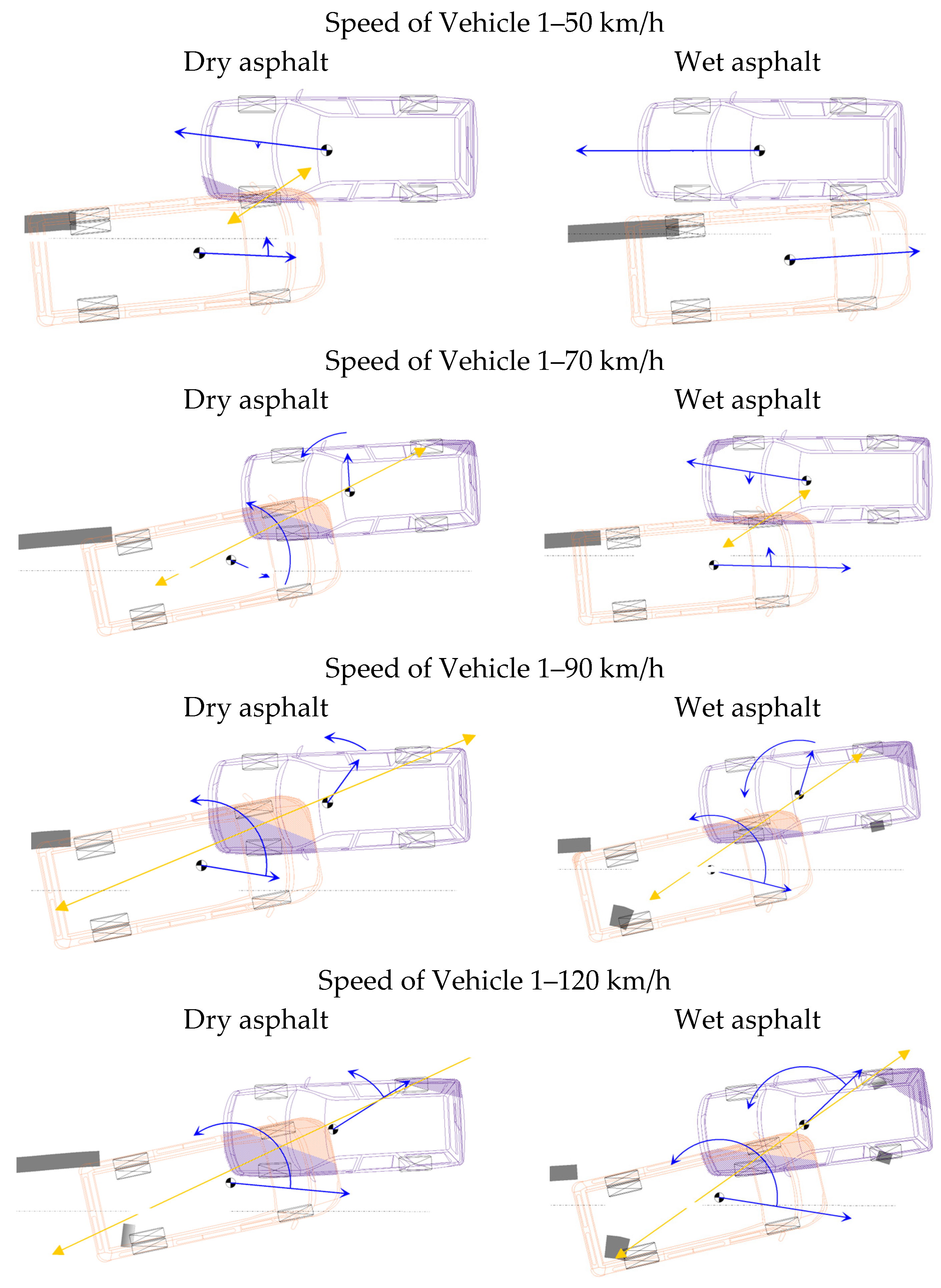
Figure 8 presents the positions of the vehicles at the moment of collision for selected driving speeds of Vehicle 1 and under varying road conditions, assuming that only the drivers were present in the vehicles and that the vehicles were not additionally loaded.
5.1.1. Unladen Vehicles—Dry Asphalt
In the event of tyre damage occurring at Vehicle 1 speed of 50 km/h, the van driver will have approximately 3.14 s to react in order to avoid a collision. This response time appears to be sufficient; however, if—for any reason—the collision cannot be avoided, vehicle impact will occur, and the maximum overlapping volume of the vehicle silhouettes will be 0.24 m3. Following the collision, both vehicles change lanes and continue moving forward. After 5.40 s from the start of the simulation, the delivery van impacts the safety barriers on the same side where the collision occurred. The car subsequently hits the safety barriers at 5.87 s, after which both vehicles are expected to come to a complete stop.
In the scenario where Vehicle 1 travels at 70 km/h on a dry asphalt surface and tyre damage occurs, a collision with the car will take place 2.64 s, and the maximum overlapping volume of the vehicle silhouettes in this case is 0.71 m3. As a result of the impact forces, the car is pushed by the delivery van and hits the safety barrier with the vehicle’s rear section. The vehicle then rebounds and strikes the barriers, this time with the vehicle’s front-right section. Meanwhile, the delivery van rotates by 184° and comes to a stop in the same lane it was originally travelling in. The total simulation time until the vehicles come to a complete stop is 7.05 s.
The final phase of the collision sequence differs significantly from the previously described scenarios when the impact occurs at delivery van speeds of 90 km/h or higher. The time to first contact between the vehicles is 2.20 s at a speed of 90 km/h, 1.88 s at 120 km/h and 1.63 s at 140 km/h. This is therefore a very short reaction time for either driver. The delivery van collides with the car at an angle of approximately 12°, pushing the car into the safety barrier, which is struck with the right-rear section of the car. The maximum overlapping volume of the vehicle silhouettes at the moment of collision is 1.30 m3 for a delivery van speed of 90 km/h, 1.60 m3 at 120 km/h and 1.62 m3 at 140 km/h. The post-impact forces acting on Vehicle 1, along with the resulting moment of force, cause the vehicle to overturn onto its side, and at higher speeds, a rollover may even occur.
5.1.2. Unladen Vehicles—Wet Asphalt
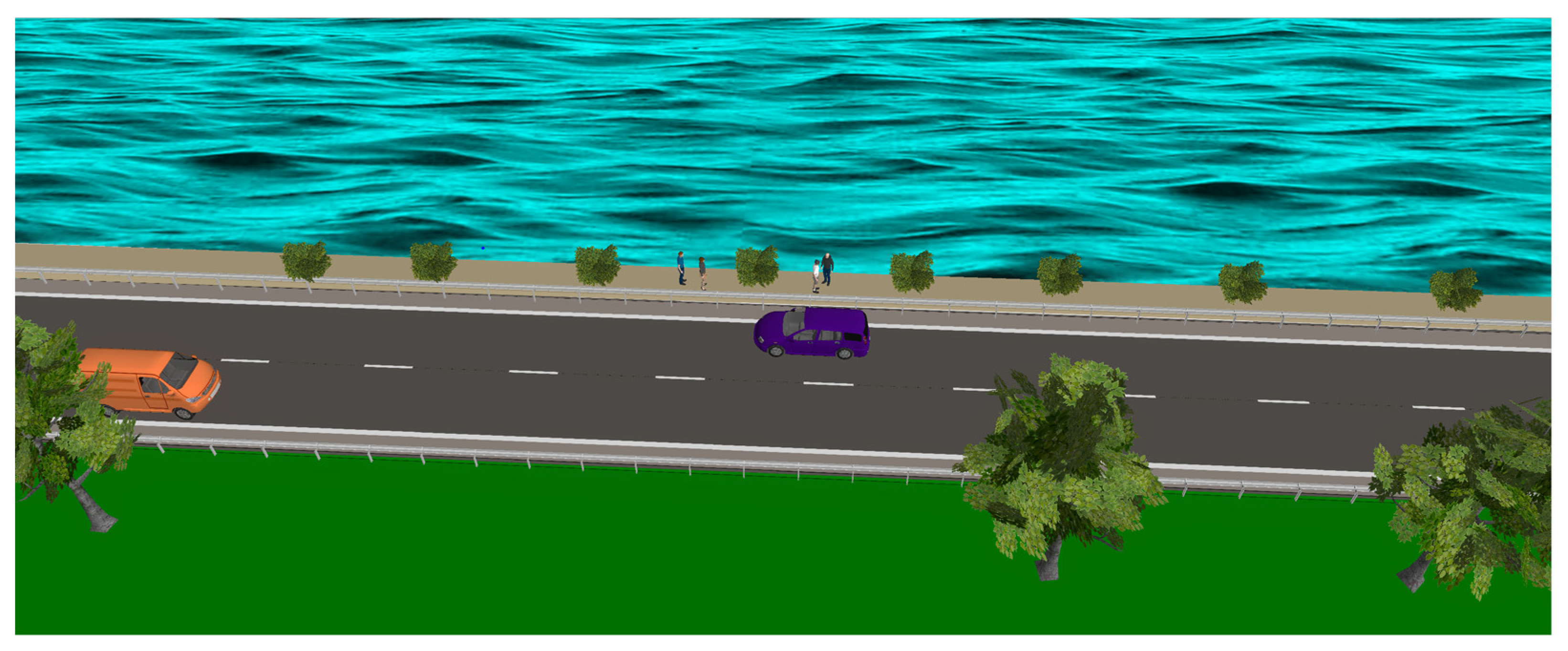
Additionally, simulations were conducted to assess vehicle behaviour under wet asphalt conditions. Since the accident occurred on a roadway surrounded by a lake, the asphalt in this area is very frequently damp, which significantly affects the coefficient of adhesion. The gradual change in roadway surroundings can reduce driver alertness, leading to a failure to adjust driving speed to the prevailing road conditions in a timely manner.
In such conditions, a driving speed of 50 km/h or even 60 km/h is generally considered safe, and drivers are typically able to maintain control of their vehicles regardless of the situation. However, in the analysed case, the scenario unfolds differently, as the driver of Vehicle 1 veers into the oncoming lane, resulting in an impact with the car. According to the simulation results, this contact leads to minor damage, and the car is able to continue the ride. The maximum overlapping volume of the vehicle silhouettes in this scenario is 0.01 m3. The delivery van subsequently collides with the safety barriers at a speed of 29.4 km/h, causing additional damage to the vehicle. As a result of the impact with the safety barrier, the maximum damage volume of Vehicle 1 increases by an additional 0.05 m3.
At a driving speed of 70 km/h, the consequences of the collision become more severe. The delivery van impacts the car at an angle of 5.1°. The collision causes both vehicles to lose stability. The car first hits the safety barrier with the vehicle’s rear-right section, followed by a second impact with the vehicle’s front-right section, which leads to the vehicle shifting across to the oncoming lane at an angle of 254.2°. The vehicle then impacts the safety barrier with the vehicle’s rear-left section and subsequently returns to its original lane, hitting the barrier once again with the vehicle’s front-right section. At this point, the total kinetic energy of the vehicle has been dissipated, and the car comes to a complete stop after 7.40 s from the start of the simulation. Meanwhile, the delivery van continues to move forward and subsequently impacts the safety barrier with the vehicle’s front-left section at an angle of 62.9°. The delivery van rebounds from the barrier and shifts to the oncoming lane, where that vehicle collides with the safety barrier again, this time with the vehicle’s rear-left section at an angle of 121° and a speed of 12 km/h. The vehicle subsequently changes lanes again, ultimately coming to a stop when perpendicular to the direction of travel.
A driving speed of 90 km/h for Vehicle 1 leads to significant vehicle structural damage, although it does not result in the delivery van rollover, as was observed in the case involving dry asphalt conditions. In this scenario, the delivery van impacts the car at an angle of 12.3°. The maximum overlapping volume of the vehicle silhouettes is 0.81 m3. As a result of the impact, the car loses its front-left wheel and the vehicle’s body hits the road surface. Subsequently, the car collides with the safety barrier with the vehicle’s rear-right section at a speed of 4.9 km/h, rebounds, and impacts the delivery van once more. The car decelerates and comes to a stop in its original lane, oriented at an angle of 25.5°. During this time, the delivery van rotates by 105.6° and impacts the safety barrier with the vehicle’s rear-right section at a speed of 30.0 km/h. As a result of this impact, the delivery van hits the same safety barrier once again—this time with the vehicle’s front-left section at an angle of 192.9° and a speed of 18.8 km/h. It subsequently rebounds from the barrier and comes to a stop in its original lane, oriented at an angle of 175.6° relative to the pre-impact direction of travel.
Although a driving speed of 120 km/h is not legally permissible on the type of road analysed in this study, instances of such behaviour do occur, as some drivers tend to disregard speed limits and drive at such a speed. This is mainly due to the fact that drivers are often in a hurry and want to save time, especially when they see a long, straight road section ahead of them. The problem arises when an unexpected event, such as a tyre crack, occurs at such high speeds. Therefore, the simulation included an additional scenario involving a collision with the delivery van travelling at 120 km/h.
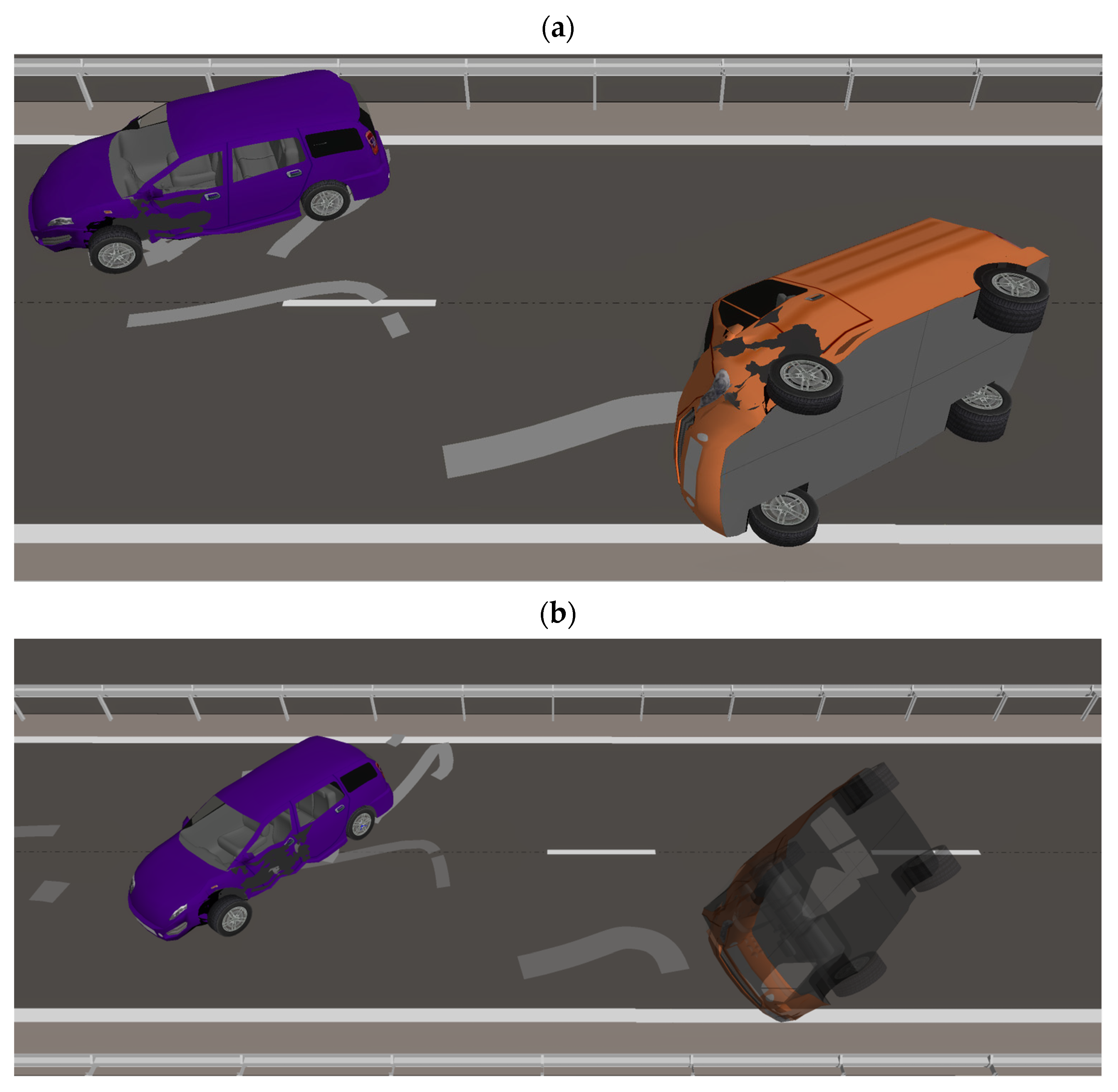
Under these conditions, on wet asphalt, the delivery van collides with the car at an angle of 13.4°, occurring 1.88 s after the onset of tyre damage. The maximum overlapping volume of the vehicle silhouettes in this case is 1.12 m3. The car is pushed sideways and impacts the safety barrier with the vehicle’s rear-right section at a speed of 3.6 km/h, generating an impact force of 383 kN. After rebounding from the safety barrier, the vehicle returns to its original lane and comes to a stop at an angle of 88° relative to the roadway axis.
Following the collision with the car, the delivery van rotates around its own axis and turns over onto its side. While sliding on the asphalt, the vehicle collides with the safety barrier with the vehicle’s front section, and remains in that final position.
Figure 9a presents the post-collision scenario described above.
If a delivery van is travelling at an extreme speed of 140 km/h for these road conditions, it will strike a properly moving passenger car at an angle of 15.9°. The maximum vehicle coverage volume in this case is 1.17 m
3. As a result of the collision, the passenger car strikes the guardrail with its rear end and, after rebounding from the guardrail, moves toward the centre of the roadway. During this time, the delivery van overturns and rolls over. The post-accident situation is shown in
Figure 9b.
5.1.3. The Depth of Vehicle Body—Unladen Vehicle
Each of the described road incidents involves varying degrees of damage to the vehicles involved in the accident or collision. A key metric for assessing this damage is the depth of deformation of the vehicle body.
The depth of vehicle body deformation is a parameter widely used across various domains related to the automotive industry, road safety, and accident reconstruction. This metric indicates the extent to which the vehicle’s structure has been indented or distorted as a result of a collision or accident. The deformation depth primarily provides insight into the severity of body damage, but it can also serve as a basis for estimating the amount of kinetic energy absorbed by the vehicles during the impact.
Among the aforementioned domains, road accident reconstruction is where vehicle deformation depth is most commonly applied. That parameter is used to determine collision dynamics, including vehicle speeds prior to impact and force directions. When that parameter is supplemented with additional information—such as eyewitness accounts or data from commonly used dashcam recorders—it becomes possible to accurately reconstruct the sequence of events during the road incident. Although less frequently, deformation depth is also used in municipal damage assessment and claims processing. Deformation depth is also useful in estimating vehicle repair costs and in determining whether the vehicle should be classified as a total loss. Knowledge of the extent of vehicle deformation also allows for an estimation of the excessive loads that may have acted on the human body during the collision. This is particularly important in the assessment of the causes of injuries and the attribution of liability for those.
Table 1 presents the vehicle body deformation depths recorded under varying vehicle speeds and asphalt surface conditions (dry and wet).
An analysis of the data presented in
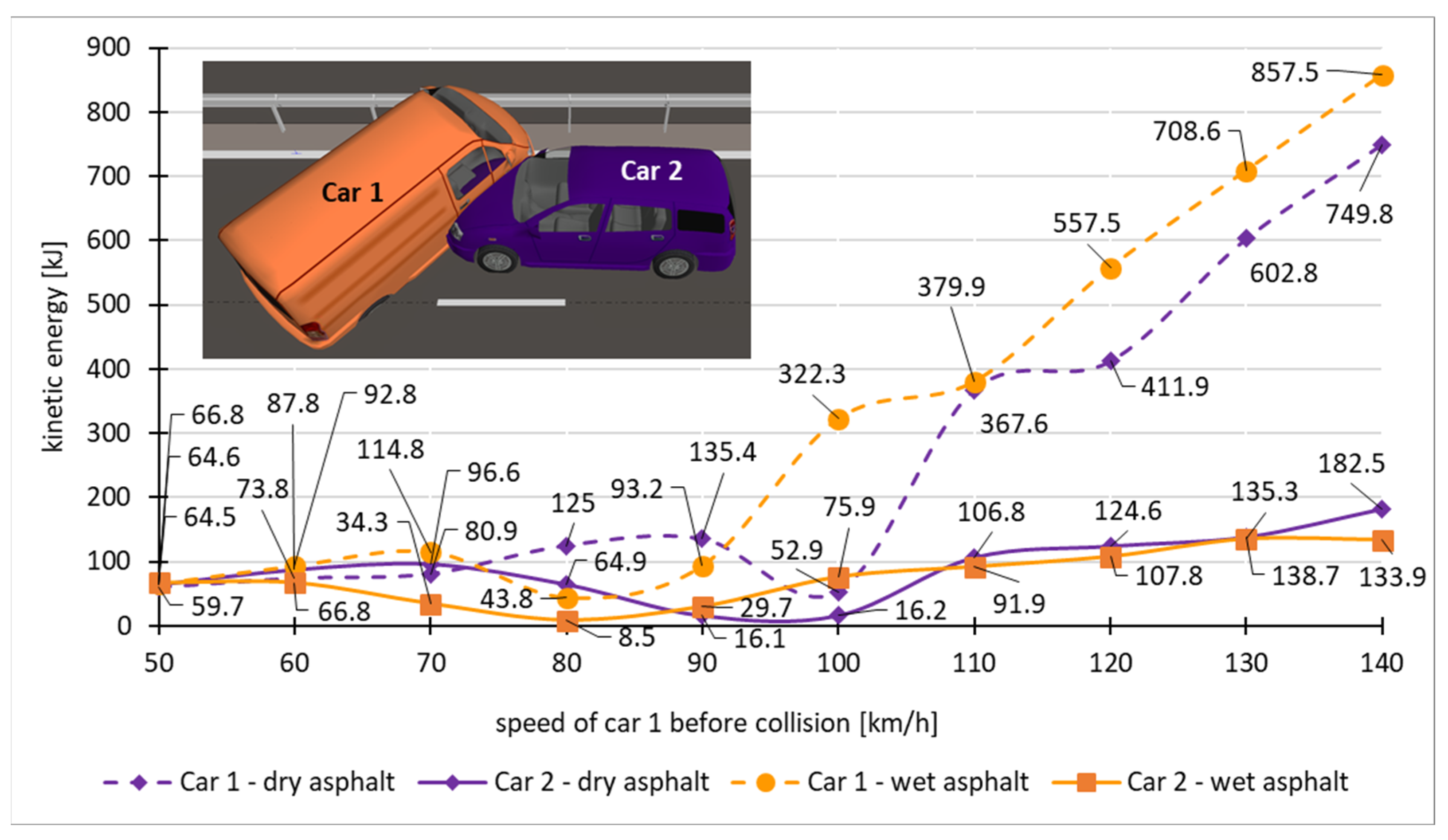
Table 1, along with the post-collision behaviour of the vehicles, reveals that vehicles tend to sustain less damage when driven on wet asphalt. At lower vehicle speeds, a significant difference in the extent of damage is noted depending on the surface condition. This disparity becomes less pronounced only when Vehicle 1 reaches speeds of at least 80 km/h. Nevertheless, the deformation depth—as an indicator of body deformation —remains lower on wet asphalt, even at higher speeds. This mechanism can be explained by the reduced tyre-to-surface adhesion on wet roads. In accident scenarios, reduced adhesion can cause the vehicle to enter a skid prior to impact, allowing the vehicle to dissipate part of its kinetic energy before the actual collision occurs. As a result, the sliding vehicle reduces its speed, leading to a collision with a lower impact force.
The values presented in the table refer exclusively to the deformation depth of the vehicle bodies at the moment of impact. However, the final extent of damage is greater, as evidenced by the previously described post-collision vehicle behaviour. After the initial impact, vehicles continued to move in an uncontrolled manner, frequently colliding with safety barriers before fully dissipating their kinetic energy and coming to a complete stop. As a result, the car sustained damage in many places, including the front-left, rear-right, and—under certain conditions—front-right sections of the bodywork (as observed, for example, when Vehicle 1 was travelling on wet asphalt at a speed of 70 km/h). A similar pattern was observed for the delivery van, which also struck safety barriers many times, causing additional damage to its body.
The second simulation scenario assumed that both the delivery van and the car were fully loaded.
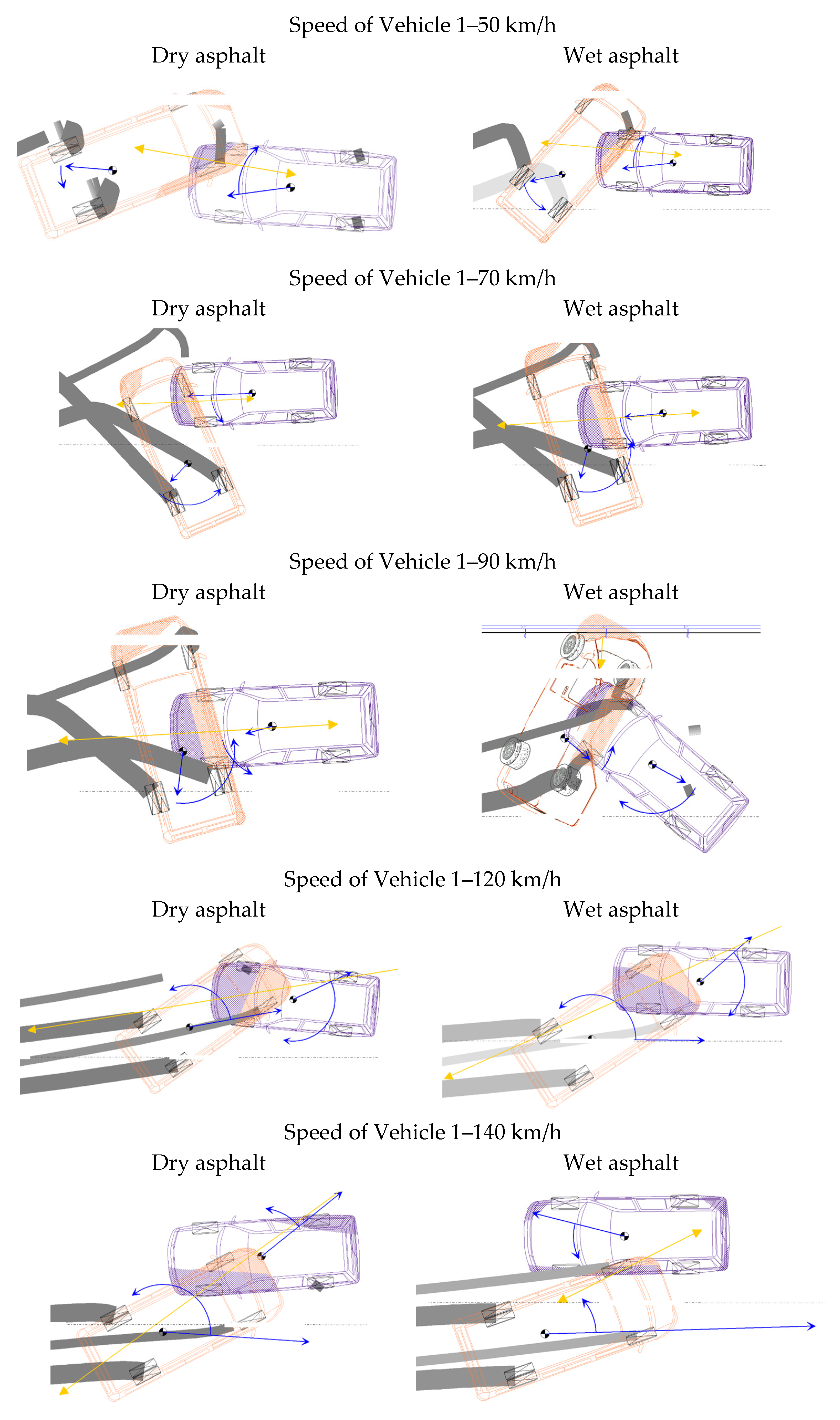
Figure 10 presents the positions of the vehicles at the moment of collision for selected driving speeds of Vehicle 1 and under varying road conditions, i.e., on dry and wet asphalt.
5.1.4. Loaded Vehicles—Dry Asphalt
Figure 10 illustrates schematic representations of the post-impact positions of the vehicles in a scenario where the car was fully occupied by passengers, and the delivery van was loaded to its maximum cargo capacity. At a vehicle speed of 50 km/h on dry asphalt, the delivery van initially impacts the safety barrier, generating a force of 379 kN and releasing 25.5 kJ of kinetic energy. Following the impact, the vehicle rebounds from the barrier and moves toward the centre of the roadway. During this time, the car approaches at the same speed maintained prior to the incident. The reason for the lack of driver reaction in the car remains unclear. Despite an apparently sufficient reaction time of 3.03 s, the driver fails to respond and collides with the delivery van at full speed. The maximum overlapping volume of the vehicle silhouettes resulting from the collision is 0.77 m
3. The combination of the car’s velocity and the forces acting at the time of impact causes the delivery van to be pushed forward by the car. After several metres, a second collision between the two vehicles occurs. The impact force acting on the delivery van, measured at 30.6 kN, causes the vehicle to begin to turn over onto its side. However, the vehicle does not overturn and remains upright on its wheels. After dissipating its kinetic energy, the delivery van comes to a stop in the middle of the roadway, oriented at an angle of 174.9° relative to its original direction of travel. Meanwhile, the car strikes the safety barrier with the vehicle’s front-right section, generating a force of 90.5 kN, rebounds from the barrier, and subsequently impacts the opposite safety barrier with the vehicle’s rear-left section at a force of 24.5 kN. Following this impact, the vehicle dissipates its remaining kinetic energy and comes to a stop near the centre of the roadway.
In the scenario where the delivery van is travelling at a speed of 70 km/h, the course of the collision is very similar to the one described above. In this case as well, the delivery van first collides with the safety barrier on the opposite side of the roadway, generating an impact force of 651 kN. The car driver has 2.98 s to react and avoid the collision. This reaction time proves to be insufficient, resulting in a collision. As a consequence of the impact, the maximum overlapping volume of the vehicle silhouettes is 0.83 m3. The crash-induced loads are sufficiently high to cause the delivery van to overturn.
At a travel speed of 90 km/h, the delivery van changes lanes at an angle of 61.7°, and after 2.22 s, it collides with the safety barrier. The vehicle then rebounds and impacts the car. As a result of the second collision, the maximum overlapping volume of the vehicle silhouettes is 1.40 m3. Subsequently, due to momentum, Vehicle 1 hits the safety barrier with the vehicle’s front-left section, leading to vehicle rollover.
For vehicle speeds exceeding 90 km/h, the sequence of events is very similar. The initial collision between the vehicles is followed by the rollover of the delivery van. The only variables that change are the magnitude of the loads acting on the vehicles during the impact. A delivery van initially travelling at 120 km/h collides with a passenger car at 48.2 km/h. If the delivery van’s initial speed is 140 km/h, the collision occurs at 66.6 km/h. As a result of the collision, the maximum volume of vehicle silhouette coverage is 2.38 m3 for a driving speed of 120 km/h and 1.51 m3 for a driving speed of 140 km/h.
5.1.5. Loaded Vehicles—Wet Asphalt
The sequence of events during a vehicle collision on wet asphalt closely resembles that observed in the scenario involving the vehicles moving on dry asphalt. The only difference lies in the magnitude of the post-collision parameters obtained. When the delivery van travels at a speed of 50 km/h, it impacts the safety barrier with the vehicle’s front-left section at an angle of 40.5°, 2.88 s after tyre damage. The impact force on the barrier is 379 kN, resulting in the generation of 25.6 kJ of kinetic energy. After rebounding from the safety barrier, the vehicle begins to roll backward, obstructing the path of the oncoming car, which subsequently collides with it on its right side. The maximum overlapping volume of the vehicle silhouettes in this scenario is 0.77 m3. As a result of the collision, the delivery van rotates and comes to a stop in the centre of the roadway, oriented at an angle of 191.2° relative to its original direction of travel. During this time, the car collides with the safety barriers—first with the vehicle front section, and then with the rear—before coming to a complete stop.
At a travel speed of 70 km/h, the delivery van strikes the safety barrier with the vehicle’s front-left section, generating an impact force of 465 kN at an angle of 59.5°. Then the vehicle rebounds from the barrier and hits the car on its left side at an angle of 107.8°. This impact results in the maximum overlapping volume of the vehicle silhouettes of 1.21 m3. The car gradually decelerates, but in the process, it pushes the delivery van forward. As a result of the process, the delivery van overturns onto its side.
In the scenario where tyre damage occurs at a delivery van speed of 90 km/h, the vehicle impacts the car with its left side at an angle of 47.8°, while simultaneously hitting the safety barrier with the vehicle’s front-left section. As a result of high post-impact loads, the delivery van overturns onto its side, while the car comes to a stop in the centre of the roadway.
At delivery van speeds of 120 km/h and 140 km/h, a site collision with the car occurs. In each case, the collision leads to a loss of stability and subsequent rollover of the delivery van. Simultaneously, the car is subjected to inertial forces, causing it to move uncontrollably along the roadway, during which the car impacts the safety barriers several times.
5.1.6. The Depth of Vehicle Body—Loaded Vehicle
Table 2 presents the vehicle body deformation depths recorded under varying vehicle speeds and asphalt surface conditions (dry and wet).
The data presented in the table show that during a collision on wet asphalt, the delivery vehicle sustains less deformation than on dry asphalt only at speeds of 50, 120, and 140 km/h. In contrast, the passenger car exhibits less deformation on the wet surface when vehicle 1 was travelling at 50, 130, and 140 km/h. At all other speeds, the damage to both vehicles is greater. This situation results from the trajectory of the delivery vehicle after the tyre failure, which was discussed earlier.
When comparing the depth of deformation between unladen and fully loaded vehicles, clear differences can be observed depending on the road surface and driving speed. The fully loaded delivery vehicle travelling on dry asphalt sustained greater damage during the collision with the passenger car at speeds of 50 and 120 km/h. In contrast, on wet asphalt, the same vehicle experienced less deformation when its speed was 100, 120, and 140 km/h.
The passenger car, on the other hand, suffered more severe damage on dry asphalt when the delivery vehicle was travelling at 50, 130, and 140 km/h. Smaller deformations of the passenger car were recorded on wet asphalt when the delivery vehicle’s speed was 90, 100, and 140 km/h.
5.2. Coefficient of Restitution
One of the fundamental parameters used in road accident reconstruction is the coefficient of restitution. The coefficient describes the relationship between vehicle speeds before and after a collision. Thus, the coefficient indicates the degree to which the impact was elastic or inelastic. The parameter enables a precise estimation of the energy dissipated due to deformation, and aids in determining the collision mechanism. The coefficient of restitution is commonly applied in calculations of kinetic energy loss as well as in estimating the initial speed of vehicles, particularly in cases where no braking marks are present. The coefficient depends on several factors, including the vehicle design, deformation zone stiffness, contact geometry, as well as the impact angle, collision speed, and point of contact.
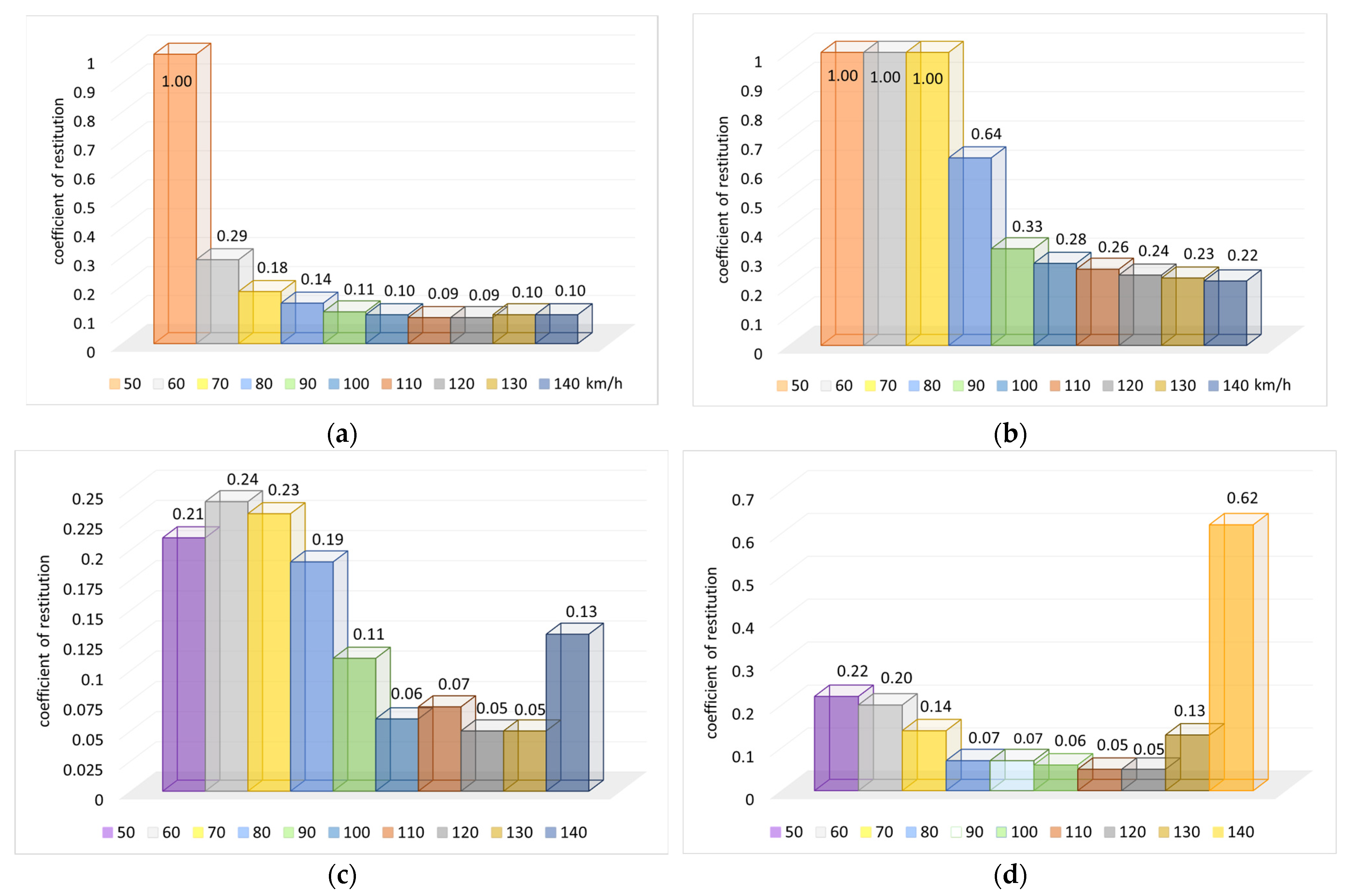
Figure 11 presents the coefficient of restitution as a function of the pre-collision speed of the delivery van, vehicle loading conditions, and road surface conditions.
5.2.1. Unladen Vehicles—Dry Asphalt
The road collision simulation demonstrated that dry asphalt surfaces provide a high coefficient of adhesion between the tyres and the road surface, which limits skidding and allows for the effective transmission of forces without additional losses. Moreover, unladen vehicles have a lower total mass, which results in a reduced moment of inertia and limited structural deformation during impact. A collision at a delivery van speed of 50 km/h exhibits an elastic nature, whereas at 60 km/h, the collision becomes partially elastic. At higher speeds, the collision demonstrates a predominantly plastic nature.
5.2.2. Unladen Vehicles—Wet Asphalt
In the case of a wet road surface, the key factor influencing collision dynamics is the reduced coefficient of friction between the tyres and the asphalt. The moment of body contact remains physically comparable to the previously discussed scenario; however, the presence of surface moisture significantly affects the final outcome of the road incident. A potential delay in the timing of vehicle contact, resulting from microskidding, combined with energy redistribution due to lateral and rotational motions, leads to elastic or partially elastic collision behaviour at lower speeds of the delivery van. Only when the vehicle speed exceeds 90 km/h does the collision exhibit a plastic nature.
5.2.3. Loaded Vehicles—Dry Asphalt
An additional vehicle load increases the total system mass, and consequently, the amount of kinetic energy transferred during impact. This added mass amplifies deformation within the deformation zones and influences suspension and damping system performance, leading to greater energy absorption by the vehicle body. An important aspect in this scenario is that the delivery van initially impacts the energy-absorbing barrier, and only subsequently collides with the car. This sequence of impacts significantly reduces the coefficient of restitution. At lower delivery van speeds on dry asphalt, the collision retains a partially elastic nature, whereas at higher velocities, a larger portion of the energy is converted into permanent deformations.
5.2.4. Loaded Vehicles—Wet Asphalt
In the final simulation variant, a combination of effects typically associated with loaded vehicles operating on a wet surface is noted. In this case, a cumulative damping effect is noted, resulting from two key factors: the high kinetic energy associated with vehicle mass and the loss of tyre-road adhesion, which leads to uncontrolled lateral displacements that absorb part of the collision energy. Due to the increased plastic deformations and the limited potential for post-collision motion, the coefficient of restitution for each analysed speed of the delivery van is the lowest among all examined scenarios.
5.4. Resultant Force During the Accident
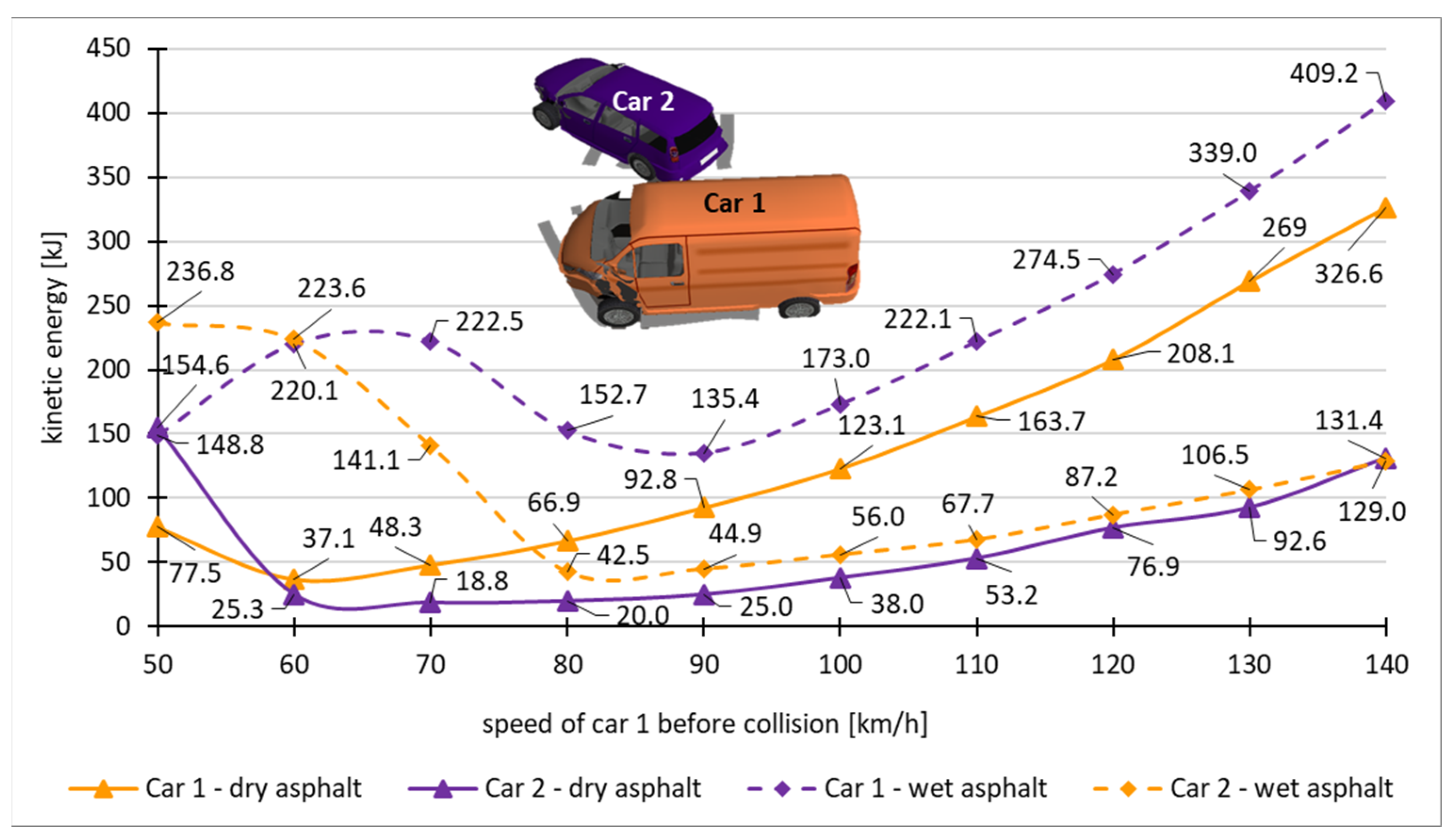
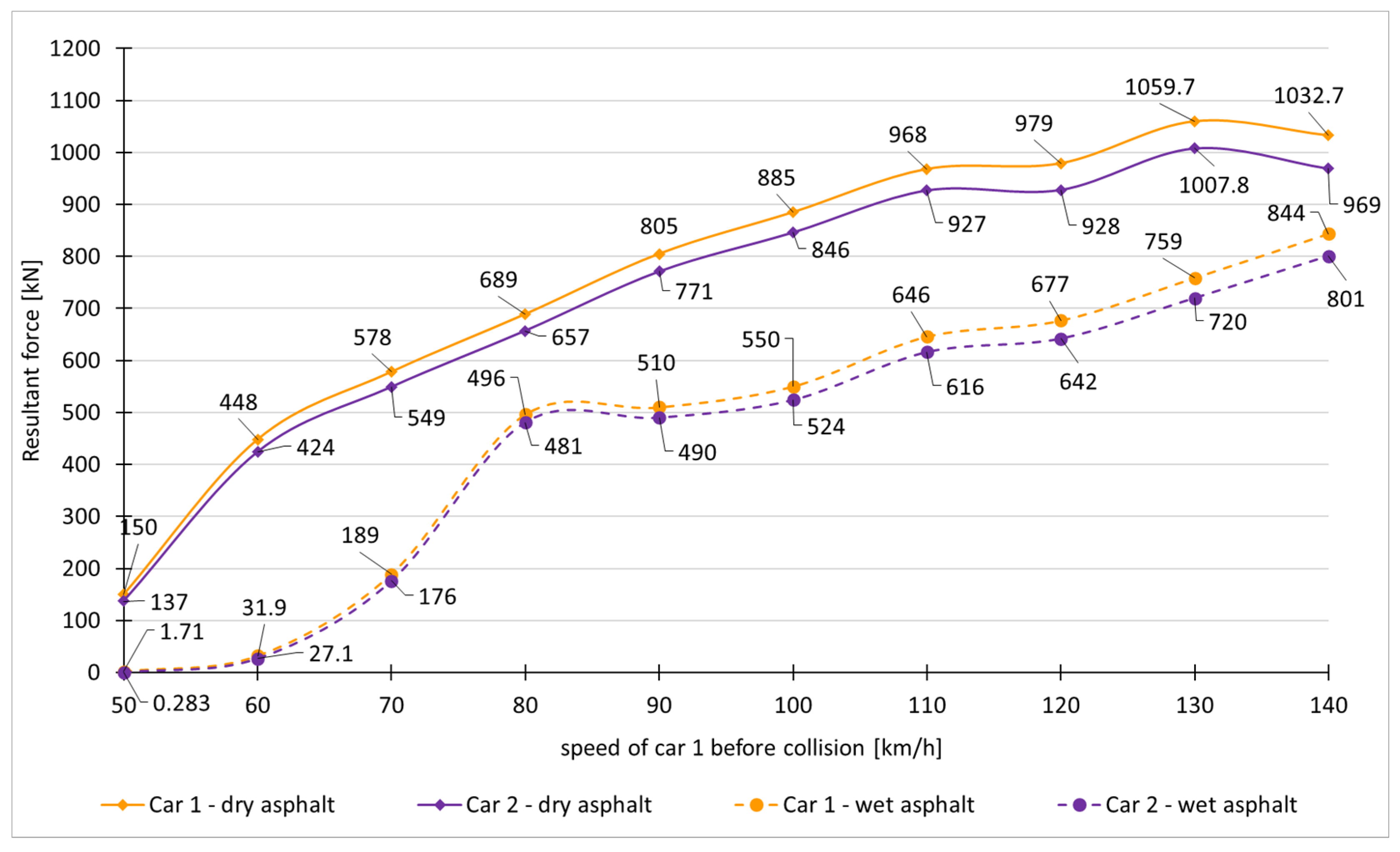
The magnitude of the force generated during a road incident, further referred to as the resultant force, is a key parameter for determining the extent of vehicle body deformation, as well as the acceleration and speed of the vehicles prior to the collision. This section presents the variation in collision force values as a function of vehicle speed (for both unladen vehicles in
Figure 14 and fully loaded ones in
Figure 15), in order to illustrate the loads acting on the vehicles and on the occupants inside them. The V-SIM simulation software enables modelling of the forces involved during a collision and the analysis of its consequences. The simulations are based on mathematical models that take into account both the resultant force and the moment of force.
5.4.1. Unladen Vehicles
For unladen vehicles driving on dry asphalt under the simulated conditions, the resultant collision force generated during an impact involving a delivery van travelling at 50 km/h ranges between 137 and 150 kN. These are considerable values for a collision occurring at such a relatively low speed, as they correspond to pressures of approximately 14,000–15,000 kg. Therefore, during a road accident, the collision configuration and the effectiveness of deformation zones in absorbing the kinetic energy associated with such high levels of force are of critical importance.
Further analysis of the diagram indicates that a collision at a vehicle speed of 60 km/h results in force values approximately three times greater than those recorded at the speed discussed previously.
At higher delivery van speeds, the value of the impact force increases in a linear way; however, the differences in magnitude are no longer as significant, with the force increasing by approximately 100 kN for each subsequent speed increment.
For unladen vehicles driving on wet asphalt under the simulated conditions, the resultant collision force generated during an impact involving a delivery van travelling at 50 km/h ranges between 0.3 and 1.7 kN. This represents a significant difference, up to a hundredfold, compared to the force magnitudes observed for analogous speeds on dry asphalt. The force values recorded for other speeds are also lower, with a maximum value not exceeding 900 kN at a speed of 140 km/h. In the vehicle speed range of 50 to 80 km/h, the resultant forces generated during the collision increase by a factor of three to four. It is only beyond a delivery van speed of 90 km/h that these forces begin to increase by approximately 10% each time.
5.4.2. Loaded Vehicles
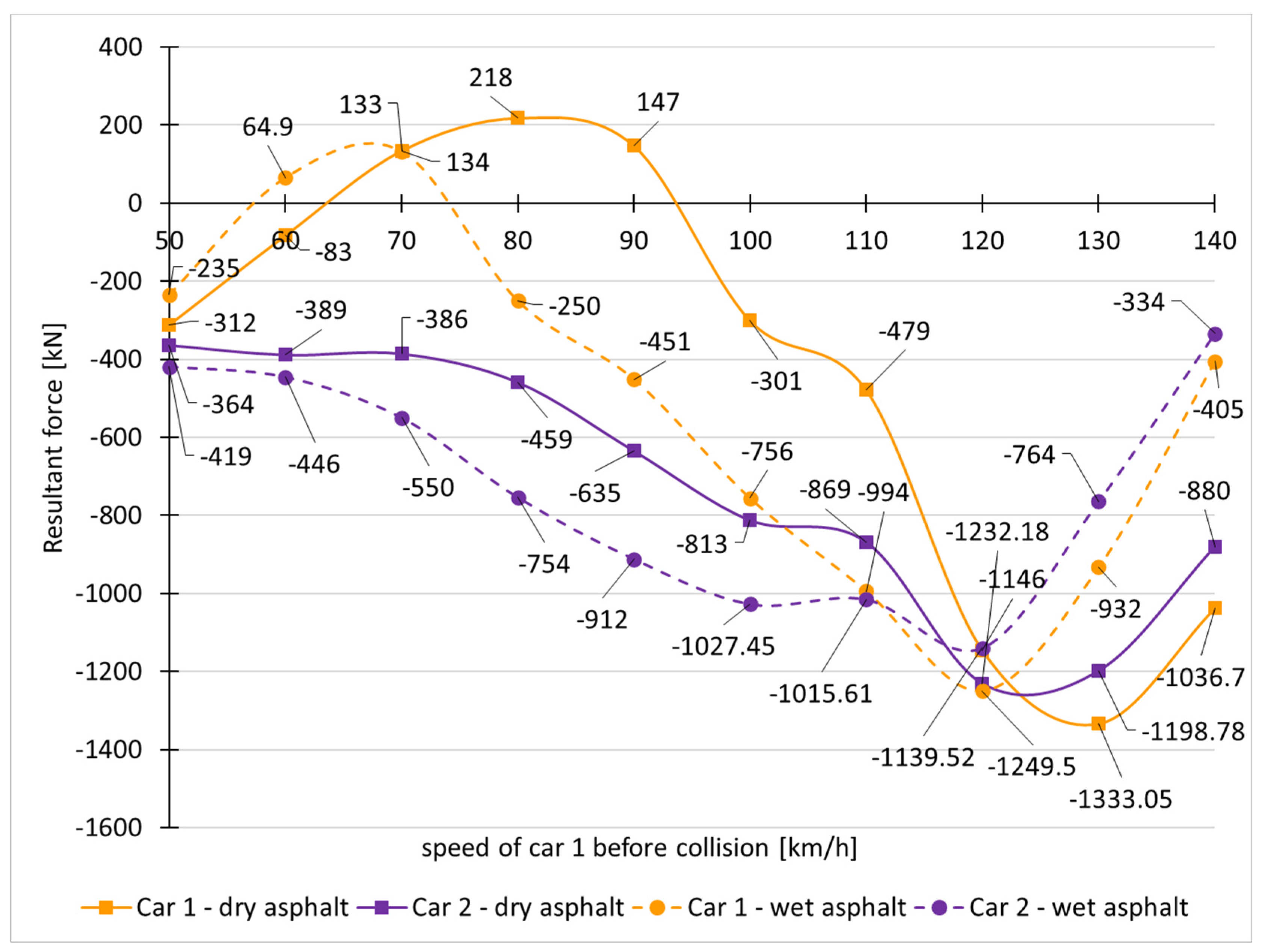
Loaded vehicles behave entirely differently during a collision, as previously demonstrated. The resultant forces varying with the speed of Vehicle 1 also exhibit an irregular pattern in this case, as illustrated in
Figure 15.
The magnitude of resultant forces generated during a collision involving loaded vehicles, whether driven on dry or wet asphalt, is significantly greater compared to the forces observed in collisions involving unladen vehicles. The minimum recorded value of the resultant force for Vehicle 1, travelling at 50 km/h, is 235 kN and is noted for the vehicle driven on wet asphalt.
An analysis of the diagram reveals that Vehicle 2 consistently exhibits negative resultant force values, regardless of the examined speed of Vehicle 1 or road conditions. In contrast, the delivery van demonstrates such resultant force values only at speeds below 60 km/h and above 95 km/h when driven on dry asphalt, and below 58 km/h and above 75 km/h when driven on wet asphalt.
The negative force values observed in the diagram result from the post-collision direction of vehicle motion. A negative sign indicates that, immediately after the impact with the other vehicle, the given vehicle moved in the direction opposite to its initial trajectory under the influence of the dynamic reaction to a sudden stop or a high-intensity collision. This phenomenon is commonly referred to as the recoil force.