Article

Status of Herd Health Biosecurity Measures and Associated Risk Factors in Dairy Farms in Asella–Bishoftu Milk Shed, Ethiopia


by
Yobsan Degefa Dadi
1,2,
Fikru Gizaw Gurmessa
1,
Minda Asfaw Geresu
1,
Alemayehu Lemma
2 and
Teshita Edaso Beriso
1,*
1
School of Veterinary Medicine, College of Agriculture and Environmental Science, Arsi University, Asella P.O. Box 193, Ethiopia
2
College of Veterinary Medicine and Agriculture, Addis Ababa University, Bishoftu P.O. Box 34, Ethiopia
*
Author to whom correspondence should be addressed.
Dairy 2026, 7(5), 71; https://doi.org/10.3390/dairy7050071
Submission received: 29 April 2026 / Revised: 21 July 2026 / Accepted: 27 August 2026 / Published: 1 September 2026
(This article belongs to the Section Dairy Animal Health)

Abstract

Biosecurity measures (BSMs) are risk-reduction strategies that prevent pathogen introduction and limit disease spread in dairy herds. A cross-sectional questionnaire-based study was conducted from July 2025 to February 2026 to assess the BSM status and associated factors in dairy farms in Asella, Adama, and Bishoftu, Ethiopia. The towns were purposely selected, while the kebeles (the smallest administrative unit in Ethiopia) and the farms were randomly chosen. The data were collected from 300 farms using an online kobotoolbox. The external and internal biosecurity practice scores were calculated using the conceptual framework of Ghent University’s Biocheck tool. Overall, 85% of the farms had poor external BSMs (<50%), while 16.7% had poor internal BSMs. The contrast between relatively good internal and poor external BSMs indicated that disease management was largely focused on control after pathogen entry rather than prevention. In total, 62% of the farms exhibited poor combined BSMs (internal and external). Poor BSMs were significantly associated (p < 0.05) with a lack of formal education (OR = 17.08), non-membership in a milk cooperative (OR = 3.25), no training (OR = 3.34), small-scale farming (OR = 1.89), and limited land (<60 m2; OR = 3.8). In conclusion, BSM adoption was low, emphasizing the need for improved training and supportive policies to enhance productivity.

1. Introduction

Dairy production is rapidly increasing in Ethiopia and contributes significantly to public health, nutrition, the environment, and livelihoods [1]. However, productivity remains low due to factors such as limited genetic potential, poor nutrition, traditional management systems, inadequate skilled manpower, and the prevalence of infectious and noninfectious diseases [2]. Among these constraints, disease is the most important and is responsible for reducing both the number and the productivity of the animals [3]. Diseases have many negative impacts on the production and the productivity of dairy cattle, including mortality, morbidity, weight loss, poor growth rates, poor fertility and reduced animal draft power, resulting in significant economic losses [4]. The most common diseases affecting dairy farms in Ethiopia are mastitis, brucellosis, bovine tuberculosis, bovine viral diarrhea, infectious bovine rhinotracheitis, foot-and-mouth disease, and reproductive health problems, which are major constraints to livestock production in general and dairy farming in particular [5,6,7].
Globally, animal health management at the herd level is gradually shifting from cure-based to disease prevention through the implementation of BSMs in dairy production processes [8]. BSMs can be categorized into external and internal BSMs [9]. External BSMs are preventive, risk-reduction strategies designed to prevent the introduction of pathogenic infections (hazards) from outside a farm. Internal BSMs aim to limit the transmission of infectious hazards within-farm [10]. Adopting acceptable biosecurity practices is the most cost-efficient and effective disease prevention and control method available in the modern herd management approach [11,12].
Our study areas, namely, Asella, Adama and Bishoftu, are among the areas with the highest milk production in the country. Arsi (Oromia region) is one of the highest milk-producing zones in the country. Arsi has the highest number of cattle (approximately 507,362 head), followed by West Arsi (498,730 head), Bale (356,556 head), and East Shewa (176,899 head) [13]. Town-specific cattle estimates are not available in the CSA report. Asella city in the Arsi Zone is a low-temperature highland with an altitude of more than 2400 m above sea level. It has been recognized as having a climate suitable for dairy farming [14].
Livestock disease is a constraint that impacts farm productivity, food safety, animal welfare, and farmer income, and zoonotic diseases can impact farmer health and may also have a public health impact on the wider consumer population [3,4]. The infectious agents that cause diseases at the farm level can be transmitted through several routes, mainly via aerosols and secretions from interactions between infected animals and non-infected livestock via fomites within a barn, including people, and via trucks and other vehicles moving within and between farms [9]. The implementation of BSMs for disease prevention can lead to many benefits, including improved livestock production efficiency, reduced livestock deaths, improved animal welfare, and good animal health, which positively influence the immune response to vaccines [15]. Additionally, the implementation of BSMs reduces the use of antibiotics on farms due to reduced disease pressure [9,15].
In the Ethiopian dairy production context, biosecurity practices are often inadequately implemented due to limited awareness, lack of training, financial constraints, and weak extension support [15,16,17]. Poor implementation of farm-level biosecurity practices has been identified as a major contributor to the persistence and spread of these diseases. Recognizing these challenges, this study aimed to assess the current status of dairy farms’ biosecurity practices and identify the key gaps and risk factors associated with poor biosecurity implementation.

2. Materials and Methods

2.1. Study Area

This study was carried out across the towns of Asella, Adama, and Bishoftu, located in central Ethiopia. The Bishoftu–Asella milk shed covers Adama in the East Shewa zone to the north and Asella, the capital of the Arsi zone, to the south. Adama and Bishoftu are included in the East Shewa zone alongside the Rift Valley. The climate of Adama is not considered suitable for raising dairy cows. However, the zone is on a route connected to a dairy product consumption area or a large-scale consumption market (Addis Ababa). It is evaluated as a suitable place for processing and distribution. However, Asella town is a low-temperature, highland area, and it is evaluated as a climate suitable for dairy farming [14].
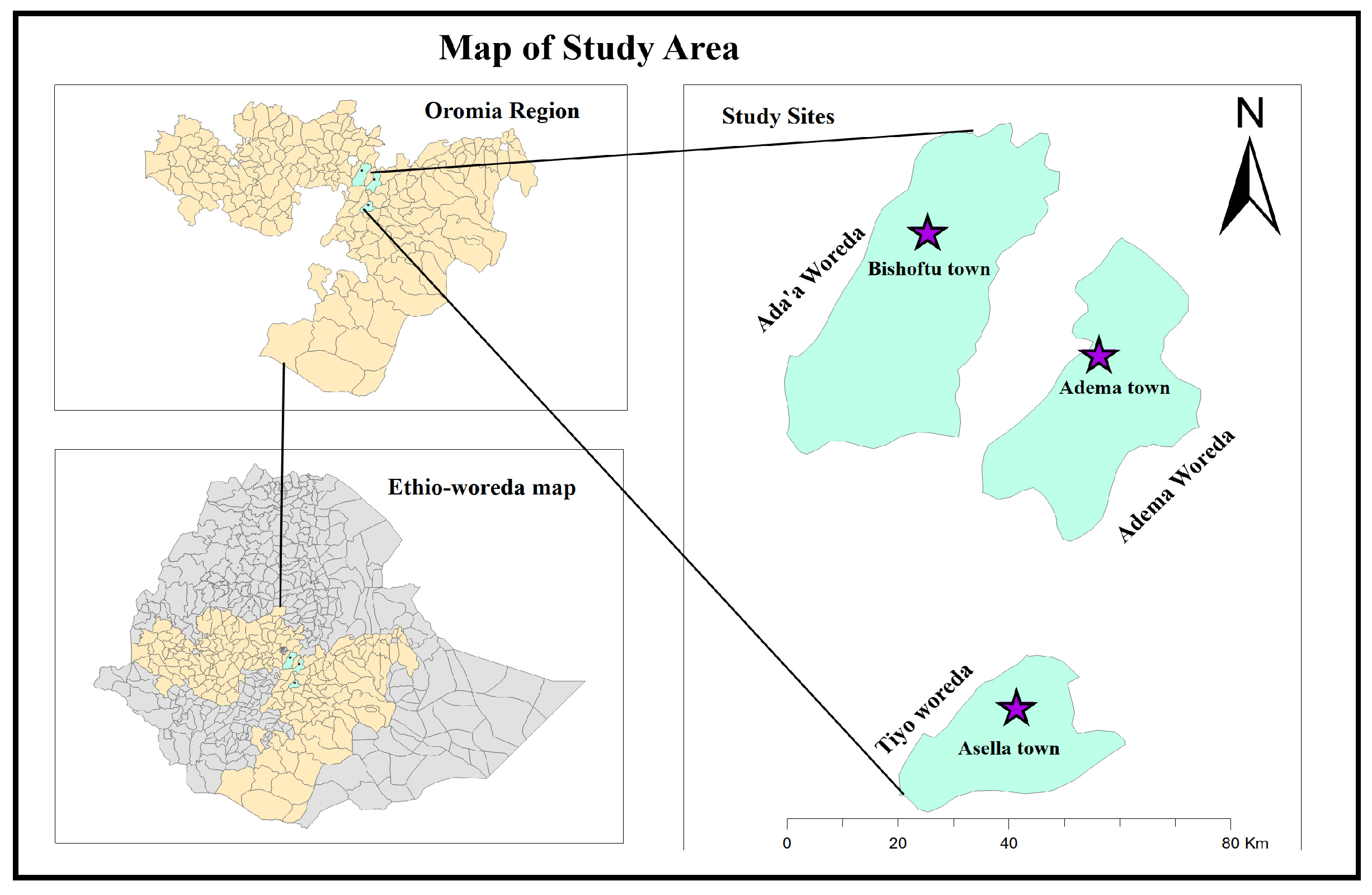
Asella town is situated approximately 175 km south of Addis Ababa at geographical coordinates of 8°49′ N and 40°41′ E, with elevations ranging from 2500 to 3000 m above sea level. The area experiences a cool climate, with mean annual temperatures between 8.4 °C and 22.6 °C and an average annual rainfall of about 2000 mm. The estimated cattle population in the town is approximately 324,000 head. Adama town lies about 100 km east of Addis Ababa, at 8°33′ N latitude and 39°27′ E longitude, at an elevation of approximately 1700 m above sea level. The town is characterized by a relatively warm climate, with a mean annual temperature of 20.7 °C and an average annual rainfall of 897.9 mm. Bishoftu is a town about 47 km southeast of Addis Ababa. Its coordinates are 8°45′ N and 38°59′ E, and its average height is 1850 m above sea level. The town experiences moderate climatic conditions, with mean annual temperatures ranging from 12.3 to 27.7 °C and an average annual rainfall of approximately 800 mm. The estimated cattle population in the town is about 197,557 [13] (Figure 1).

2.2. Study Population

The target populations were all dairy farms in the Bishoftu–Asela milk shed. The owners or managers of dairy farms were the study population for the assessment of farm BSM status and related risk factors. Official statistics on the number of dairy farms in Asella, Adama, and Bishoftu were unavailable. Based on estimates from the agricultural offices of the three towns, the numbers of dairy farms were approximately 600 in Asella, 500 in Adama, and 500 in Bishoftu. The different dairy farm production systems were considered and categorized into three dairy production systems: large-scale (>30 cows), medium-scale (5–30 cows), and small-scale (≤5 cows) dairy farms. Farm size was categorized as small size (<60 m2) and large size (≥60 m2) [18].

2.3. Study Design

A questionnaire-based cross-sectional study design was employed to assess the status of biosecurity practices and associated risk factors from July 2025 to February 2026.

2.4. Sample Size Determination and Sampling Techniques

The sample size determination for this study was calculated based on the formula developed by Thrusfield [19]. The size of the sample was calculated using a 95% level of confidence, 0.05 desired absolute precision, and by considering a previous report by Moje et al. finding 79.5% of farms in central Ethiopia having a poor level of biosecurity [16].
n = Z2 × P (1 − P)d2
where Z = 1.96 (95% confidence level), d = marginal error of 0.05, P = proportion of previous study biosecurity level (79.5%), and 1 − P = proportion of farmers not meeting the required biosecurity level. Accordingly, the calculated sample size was 249, but to increase precision, the sample size was increased to 300 (100 dairy farms from each town).
The study sites (towns) were selected purposefully on the basis of the prevailing number of dairy farms. From each selected town, 10 kebeles and an average of 10 dairy farms from each selected kebele were randomly selected after the sampling frame was developed. The sampling frame was prepared with animal health workers from each town. The farms were approached for their willingness to participate in this study, and those farms that agreed to participate were assessed. If any of the selected farms did not agree to participate, the next farm on the list was selected on the basis of the willingness of the farm owners.

2.5. Study Methodology

Questionnaire

Questionnaire data for assessing biosecurity status were collected through face-to-face interviews. The questionnaire was developed based on the scientific literature, validated biosecurity assessment frameworks including the conceptual framework of the Biocheck.UGent tool, and previous dairy biosecurity studies, with indicators adapted to the local smallholder dairy production context. Although the Biocheck.UGent tool is an internationally validated instrument for farm biosecurity assessment, the complete tool was not directly applied in this study because it was primarily developed for commercial livestock production systems and comprises a substantially larger number of weighted indicators than could be practically implemented under the conditions of smallholder dairy farms in the study area. Instead, the conceptual framework of Biocheck.UGent, particularly the classification of biosecurity into external and internal measures, together with indicators reported in previous dairy biosecurity studies, was used to guide the selection of context-appropriate biosecurity practices. Its content validity was ensured through expert review by professionals in veterinary medicine, animal health, dairy production, and epidemiology, and modifications were made based on their feedback [8,15,16].
The draft questionnaire was pretested on nine dairy farm owners (three from each town) outside the final sample to improve clarity and revise unclear questions. The final questionnaire was uploaded to KoboToolbox (Version 2.025.10) and prepared in English, then translated into Amharic or Afan Oromo during interviews according to respondents’ preferences. The questionnaire consisted of three sections. Section 1 collected information on the demographic characteristics of the farm owners, including sex, age, educational level, cattle breed, herd size, daily milk yield, dairy farming experience, and milk marketing channels. Section 2 assessed farm hygiene practices and farmers’ awareness of major dairy cattle diseases, disease prevention, and biosecurity. Section 3 focused on the biosecurity measures (BSMs) used to assess the biosecurity status of dairy farms (Supplementary File S1).
The selected BSMs were categorized into external and internal biosecurity measures based on the risks they address at the farm level, following the conceptual classification adopted by the Biocheck.UGent framework. External biosecurity measures comprised ten practices: (1) use of a footbath at the farm entrance; (2) availability of sanitation facilities (hand washing or sanitizer); (3) verification of the origin and health status of purchased animals; (4) quarantine of newly purchased animals; (5) maintenance of records for medical treatment, vaccination, and animal deaths; (6) controlled breeding through artificial insemination; (7) implementation of hygienic precautions during pen cleaning, including the use of personal protective equipment such as gloves and rubber boots; (8) safe disposal of waste and dead animal carcasses; (9) purchase of commercial feeds and nutritional supplements (vitamins and minerals); and (10) implementation of insect or rodent control strategies [15,20,21].
Internal biosecurity measures consisted of ten practices: (1) vaccination against common contagious diseases; (2) implementation of dry cow therapy (DCT); (3) cleaning teats with disinfectant or soap before milking; (4) teat disinfection after milking (teat dipping); (5) isolation of sick animals; (6) treatment of sick animals; (7) isolation and testing of aborted cows; (8) ensuring calves receive colostrum; (9) discarding milk from diseased or treated cows; and (10) consistent daily cleaning of animal pens [15,20,21].
The selected indicators do not represent all biosecurity measures included in comprehensive assessment tools such as Biocheck.UGent. Rather, they represent the core biosecurity management practices considered epidemiologically relevant, feasible to assess, and applicable under Ethiopian smallholder dairy production conditions. The objective of this study was to identify major biosecurity gaps and assess the level of adoption of essential biosecurity practices rather than to generate a complete Biocheck.UGent biosecurity score.
The biosecurity status of dairy farms was assessed using a quantitative scoring system. This approach was developed based on the assumption that all selected biosecurity practices contributed equally to disease prevention and control at the farm level. Equal weighting of the selected practices was adopted because no standardized biosecurity assessment criteria or weighting system has been validated specifically for Ethiopian smallholder dairy farms, where herd sizes are generally small and detailed farm-level biosecurity information is limited. Accordingly, each biosecurity practice was assigned a binary score, where a score of 1 indicated that the practice was implemented on the farm and a score of 0 indicated that it was not implemented. A total of 20 major biosecurity practices, comprising 10 external and 10 internal measures, were evaluated to determine the overall biosecurity status of each dairy farm. The total biosecurity score was calculated by adding up the number of implemented practices, with scores ranging from 0 to 20. The farm-level biosecurity adoption score was calculated as follows: biosecurity adoption score (%) = (number of implemented biosecurity practices/total number of assessed biosecurity practices) × 100.
A cut-off point of 50% was used to categorize farms into two biosecurity groups. Farms with a biosecurity adoption score of ≥50% were classified as having good biosecurity, whereas farms with a score of <50% were classified as having poor biosecurity. This threshold was selected because it represents farms implementing at least half of the assessed preventive measures and provides a practical distinction between relatively good and poor levels of biosecurity adoption. A binary classification was used over multi-level categories (e.g., low, medium, and high biosecurity) because no locally validated framework currently exists to define meaningful biosecurity categories for smallholder dairy farms in the study area. The binary approach was therefore considered more appropriate, easier to interpret, and suitable for evaluating disease prevention practices under smallholder production conditions while facilitating comparison with previous studies that employed similar quantitative biosecurity assessment approaches (Supplementary File S1) [15,16].

2.6. Data Management and Analysis

All quantitative survey data collected using KoboToolbox (Version 2.025.10) were downloaded into Microsoft Excel, checked for completeness and consistency, and exported to Stata version 16 for statistical analysis. Descriptive statistics were used to summarize farm characteristics and biosecurity practices. The biosecurity status of each dairy farm was assessed using a quantitative scoring system in which each biosecurity practice was assigned a score of 1 if implemented and 0 otherwise. The overall biosecurity adoption score was calculated from the implemented biosecurity practices, with all practices assigned equal weight. Based on the overall score, farms were classified as having good biosecurity (score ≥ 50) or poor biosecurity (score < 50). To identify factors associated with the overall biosecurity status, logistic regression analyses were performed using farm- and farmer-level characteristics obtained from the general questionnaire. The explanatory variables included were farmer age, sex, educational level, dairy farming experience, herd size, production system, housing type, farm ownership, previous biosecurity training, access to veterinary services, and other farm management characteristics. Variables used to construct the biosecurity score were not included as explanatory variables in the regression analysis. Initially, univariable logistic regression was performed to assess the association between each explanatory variable and biosecurity status. Variables with a liberal screening criterion of p ≤ 0.25 were evaluated for multicollinearity before inclusion in the multivariable logistic regression model. Statistical significance was declared at p < 0.05.

3. Results

3.1. Overview of Dairy Farms

A total of 300 dairy farm owners/managers were assessed in the questionnaire survey and observation, drawn equally from Adama, Asella, and Bishoftu towns (100 dairy farms from each town). The majority of the farm owners/managers (66.0%) were in the 31–50 age group, indicating that dairy farming in the study areas was mainly managed by economically active and productive age groups. With regard to sex, the male-dominated (66.3%) nature of dairy farm ownership and management in the study area was clear, with a smaller percentage of female owners (37.7%). Most of the respondents were married (88.7%); regarding educational status, nearly two-thirds of the dairy farm owners/managers (68.0%) had primary or secondary education, while only 15.7% attained degree-level education or above.
The majority of the farms were small-scale, with 55.0% keeping five or fewer cows, and only 3.7% were categorized as large-scale farms (more than 30 cows). Only 24.7% of all the farms assessed were dairy cooperative members, while the remaining 74.3% were not. Private ownership dominated the farms (82.3%), and the majority of the farm owners/managers (73.3%) had fewer than ten years of dairy farming experience. The overall average daily milk yield per cow/day was 13.43 L (95% CI: 12.49–14.36), with little difference among the study towns: cows in Asella produced a mean of 12.39 L/day (95% CI: 10.31–14.02), while greater yields were found in Adama at 14.05 L/day (95% CI: 12.90–15.18). Similarly, cows in Bishoftu produced an average of 13.85 L per day (95% CI: 11.86–15.83).

3.2. Dairy Farm Management and Hygiene Practices

The barn cleaning frequency varied greatly. Although 40.3% cleaned barns daily and 24.0% cleaned twice a day, the remaining proportion cleaned weekly or less frequently. Moreover, over 70.0% of the dairy farms disposed of manure in their dairy farm house and at the gate, with only 14.0% composting and 2.0% using biogas systems. The cow body cleaning practices varied; 61.0% of the farms employed whole-body cleaning, 20.7% full and partial cleaning, 6.0% only parts of the body, and 12.3% reported no cleaning at all.
A majority (97.3%) of the farms reported not having a footbath, with only 1.4% of the farms practicing it sometimes and 1.3% using it consistently. Among those who implemented footbaths, the disinfectants used were formaldehyde (1.0%), hydrogen peroxide (0.7%), and sodium hypochlorite (0.6%), and 0.4% of the respondents were unaware of the name of the disinfectant they were using. The practice of changing the footbath disinfectant on those farms that had footbaths were reported daily on 0.9% of farms, 1.1% twice a week, 0.3% weekly, and 0.4% every two weeks. The availability of separate dairy farm clothing or personal protective equipment (PPE) was absent in 64.3% of the dairy farms. Where separate clothing was used, it was only for workers and not for visitors.
The current study revealed that milking was almost entirely manual, with 98.3% of farms using hand milking. Encouragingly, 90.7% of the dairy farm milkers reported washing their hands before milking, with 73.3% using soap and water. A large majority (90.3%) of the dairy farms cleaned the cows’ udders and teats before milking, with the majority using warm water. However, there were significant gaps in post-milking hygiene. Only 20.7% of the dairy farms used teat dipping after milking. Furthermore, 18.7% of the farms utilized a single towel for multiple cows, and more than half (54.0%) of the dairy farms did not remove the foremilk (stripping the first two to three expressions) (Table 1).

3.3. Dairy Cattle Diseases and Health Management

The majority of the dairy farms (59.0%, n = 177) stated that dairy cattle diseases posed a significant herd health problem on their farms, while 41% (n = 133) reported no disease encounters. Out of these reported diseases, mastitis was identified as the most prevalent disease (71.7%), followed by foot-and-mouth disease (13.6%). Additionally, 0.5% (n = 1) of the farms reported mastitis with calf mortality, 0.5% (n = 1) reported mastitis with dystocia and milk fever, and 1.1% (n = 2) reported mastitis with milk fever and brucellosis. Bovine tuberculosis was reported on two farms (1.1%). In 1.7% of the farms, calf mortality was recorded. However, 16 farms (9%) indicated that they did not know the specific disease affecting their animals. This study finding demonstrates that only 6.3% of the dairy farm owners/managers had knowledge of biosecurity practices used for the prevention and control of infectious diseases. More than 72.3% expressed a strong need for training in disease prevention and control.

3.4. Biosecurity Measurement Practices

3.4.1. External Biosecurity Practices

Overall, only 2.7% (8/300) of the farms had a footbath at the farm entrance. Even among the farms with footbaths, the regular use of appropriate disinfectants was reported by 0.6% (2/300) of the dairy farms. Hand-washing facilities for visitors and workers were absent on most of the farms (89.3%). Practices such as quarantine of newly purchased animals (23.3%), proof of animal health status and origin during purchasing (20.7%), and rodent or insect control strategies (4.0%) were rarely implemented. These findings indicate a high risk of disease introduction from outside sources, particularly through animal movement and visitors (Table 2).
Using the quantitative biosecurity scoring system, only 15% of the dairy farms achieved a score ≥ 50% and were classified as having good external biosecurity practices, while the rest (85%) of the farms were categorized as having poor external biosecurity practices. A majority (78.6%) of the farms received scores ranging from 2 (20%) to 4 (40%). Few (8.3%) farms received a good biosecurity score above 7 (70%), and none received a perfect score of 100% (Table 3).
Univariable and multivariable logistic regression analyses were used to assess the association between the various risk factors, including town, owner sex, educational status, training attainment, access to veterinary services, farm experience, herd size, membership in milk cooperatives, and primary source of household income, and the level of external biosecurity practices. Those variables with p < 0.25 in the univariable logistic regression analysis were subjected to multivariable logistic regression, and using the backward elimination technique, the final model was developed. Accordingly, training status, membership in milk cooperatives, farm size, and herd size (p < 0.05) were significantly associated with poor external biosecurity practices.
The dairy farms managed by owners who had not received training in farm management (p = 0.03; OR = 2.8; 95% CI: 1.23–4.31) were nearly three times more likely to exhibit poor external biosecurity practices compared to those whose owners had received training. Similarly, farms that were not members of a milk cooperative (p = 0.019; OR = 2.36; 95% CI: 1.15–4.83) were more likely to have poor external biosecurity practices than those that were members of cooperatives. Furthermore, farms with a land size of less than 60 m2 (small) (p = 0.007; OR = 6.87; 95% CI: 3.15–11.83) were significantly more likely to exhibit poor external biosecurity practices compared to farms with a land size of ≥60 m2 (large).

3.4.2. Internal Biosecurity Practices

The internal biosecurity practices were relatively better as compared to the external biosecurity practices. Among the internal biosecurity practices, vaccination against common contagious diseases was reported by 84.0% of the dairy farmers; 80.7% of the farms practiced daily cleaning of cattle pens. However, the majority (79.3%) of the dairy farms did not practiced teat dipping after milking, and also, dry cow therapy was not practiced on 85% of the dairy farms (Table 4).
The internal biosecurity components scores showed that most of the farms were in good compliance with internal biosecurity practices. The majority (67.3%) of the farms had scores ranging from 5 (50%) to 7 (70%), suggesting that basic internal biosecurity measures were widely applied. However, a significant proportion of the farms still scored in the lower range, indicating limitations in some internal practices. Only a small number (16%) of the farms received high scores between 8 and 10 (80–100%). Based on the quantitative scoring, the internal biosecurity practices indicated that 83.3% of the farms were classified as having a good level of biosecurity practices (≥50%), although gaps remained in teat dipping after milking and dry cow therapy (Table 5).
Using univariable and multivariable logistic regression, the association between the different risk factors, such as educational status, training attainment, access to veterinary services, farm experience, herd size, membership in milk cooperatives, and primary source of household income, and the level of internal biosecurity practices was analyzed. Membership in milk cooperatives, primary source of income, and access to veterinary services (p < 0.05) had a significant association with poor external biosecurity practices in the multivariable logistic regression analysis.
Dairy farms that were not members of a milk cooperative (p = 0.01; OR = 3.2; 95% CI: 1.03–6.41) were three times more likely to exhibit poor internal biosecurity practices compared to those that were members of a milk cooperative. Similarly, farms that did not have access to veterinary services (p = 0.04; OR = 5.26; 95% CI: 2.35–7.82) were five times more likely to have poor internal biosecurity practices than those that had access to veterinary services. Furthermore, the farms for which dairy production was not the primary source of household income (p = 0.02; OR = 1.97; 95% CI: 1.01–3.82) were significantly more likely to exhibit poor internal biosecurity practices compared to the farms where dairy farming was the main source of household income.

3.4.3. Overall Biosecurity Status

The assessment of the biosecurity practices across the farms revealed varying levels of implementation for external, internal, and overall biosecurity measures. With regard to external biosecurity practices, the majority of the farms, 85.0% (95% CI: 80.46–88.62), were categorized as having poor practices (<50%), while only 15.0% of the farms (95% CI: 11.37–19.53) demonstrated good practices (≥50%). In contrast, internal biosecurity practices were generally better, with 83.3% of the farms (95% CI: 78.65–87.15) classified as having good practices. Overall (combination of external and internal biosecurity practices), 62% of the farms (95% CI: 56.34–67.34) were found to have poor biosecurity practices, whereas 38% of the farms (95% CI: 32.65–43.65) exhibited good biosecurity practices.

3.5. Association of Risk Factors with Overall Level of Biosecurity Practices

Logistic Regression

The overall level of biosecurity practices associated with the socio-demographic risk factors was determined as the proportion of dairy farms with a poor level of biosecurity practices out of the total number of assessed farms. The univariable logistic regression analysis revealed that study town, educational status, attaining training, herd size, farm experience and farm size were significantly associated with overall poor biosecurity practices (p < 0.05).
Those variables with p < 0.25 in the univariable logistic regression analysis were subjected to multivariable logistic regression, and using the backward elimination technique, the final model was developed. Accordingly, farm size, attaining training, herd size and educational status were significantly (p < 0.05) associated with overall biosecurity practices in the multivariable logistic regression analysis. The dairy farms managed/owned by individuals with no formal education were 17 times (OR: 17.08) more likely to have poorer overall biosecurity practices as compared to those dairy farms managed/owned by individuals with a degree or above educational status. With regard to farm size, small-scale dairy farms (OR = 1.89) were nearly twice as likely to exhibit poor overall biosecurity practices when compared with large-scale dairy farms (Table 6).
Furthermore, attaining training was significantly associated with the level of overall biosecurity practices among the dairy farm owners/managers. The dairy farm owners/managers who had not attained dairy farm management-related training (OR = 3.34; 95% CI: 1.78–6.25) were three times more likely to have poor overall biosecurity practices compared with those who had received training. This finding suggests that a lack of training among dairy farm owners/managers was an important factor contributing to the inadequate implementation of biosecurity measures on dairy farms. This study found that dairy farms with land sizes < 60 m2 (OR: 3.8) were nearly four times more likely to have unsatisfactory biosecurity practices than farms with land sizes ≥ 60 m2 (Table 6).

4. Discussion

The present study assessed the biosecurity practices of 300 dairy farms across Adama, Asella, and Bishoftu towns. A majority (85%) of the farms had unsatisfactory external BSMs (<50%), while the internal BSMs were relatively better (83% were satisfactory). The contrast between comparatively good internal practices and poor external biosecurity suggested that disease management on the dairy farms in the study areas was focused on control after the infectious agent entered into the farm (internal biosecurity), which was cure-based rather than prevention-oriented (external biosecurity practices). The current findings revealed an overall low level of biosecurity measures (combination of internal and external biosecurity) among the surveyed farms, with a limited number implementing biosecurity measures. Similar findings were documented in previous studies, which indicated that biosecurity practices were poorly practiced [8,16,20].
This finding revealed that the majority (66%) of the dairy farms in the study areas were owned by the economically productive age group (31–50 years). This pattern was consistent with the demographic characteristics of urban and peri-urban dairy systems in Ethiopia, where livestock production is predominantly managed by middle-aged household heads who engage in diversified livelihood strategies [12]. A similar demographic finding was reported in studies undertaken in central Ethiopian dairy production systems, which demonstrated that the sector was primarily operated by members of the active working population who were in charge of home economic operations [16].
Biosecurity measures depend entirely on hygiene and farm management strategies that prevent the introduction and spread of infectious diseases. In the current study, the barn cleaning frequency varied significantly between the farms. While around two-thirds of the farms cleaned barns daily or twice daily, the rest were cleaned less regularly, instead reporting weekly or even monthly cleaning schedules. This finding was in line with the research conducted on smallholder dairy farms in central Ethiopia by Moje et al. [16] and in Gonder by Tegegne and Tesfaye [21], both of which reported 77.4% and 88.3%, of dairy farms cleaned the barn on a daily basis. On the contrary, Abayneh et al. [20] reported a lower percentage (31.4%) of farms compared to the current findings that implemented daily cleanings, and they attributed their finding to a shortage of water. Inadequate hygiene procedures enhance pathogen persistence in the farm environment, raising the risk of disease transmission on the farms. Poor hygienic conditions were also linked to a greater prevalence of mastitis and other infectious diseases in dairy cattle [22].
The waste management practices observed in this study further highlighted the gaps in environmental hygiene. More than 70% of the farms disposed of manure as waste within or near the farm premises, while only a small proportion utilized composting or biogas systems. A similar finding was reported in the Bako Tibe district of the West Showa zone in Ethiopia: the researchers found dairy production systems where the manure management infrastructure was at low levels and inadequately integrated into the farm management plans [23]. Improper manure disposal can lead to environmental contamination and the spread of zoonotic infections.
Disease occurrence remains a major challenge in dairy production systems in Ethiopia. In the present study, nearly 59% of the farms reported experiencing dairy cattle diseases, with mastitis identified as the most prevalent disease. Mastitis accounted for more than 70% of the reported cases, highlighting its importance as a major constraint to dairy productivity. These findings were in line with previous studies in different parts of Ethiopia that reported mastitis as one of the most common diseases affecting dairy cattle [24,25]. Mastitis not only reduces milk production but also affects milk quality and increases veterinary treatment costs, resulting in substantial economic losses for dairy farmers [22]. This may be due to the fact that farmers have low teat dipping practices and a lack awareness of the transmission of dairy diseases. Linking biosecurity and disease control with improving livestock productivity can provide a pathway for sustainable livelihood improvement for smallholder dairy farmers [10,26]. Other diseases reported in the present study included foot-and-mouth disease and bovine tuberculosis, which were known to have significant economic and public health implications. Foot-and-mouth disease remains endemic in Ethiopia and continues to affect livestock productivity due to its highly contagious nature [27]. Similarly, bovine tuberculosis has been widely reported in Ethiopian dairy systems and poses a serious zoonotic risk [28].
External biosecurity measures are used to prevent the introduction of pathogens into farms through animal movement, visitors, and contaminated equipment. The present study revealed that external biosecurity practices were rarely implemented across most of the dairy farms. Of the external biosecurity practices assessed in this study, a footbath at the farm entrance was observed only in 2.7% of the dairy farms. Among the farms with footbaths, only 0.6% reported regular use of recommended disinfectants, and only 0.9% changed the disinfectants on a daily basis. Additionally, other external biosecurity practices were poorly implemented, with limited availability of hand-washing facilities (11.7%) and low adoption of quarantine for newly purchased animals (23.3%), proof of animal health status during purchasing (20.7%), and rodent or insect control plans (4.0%). This finding was in agreement with a recent report from central Ethiopia by Moje et al. [16], in which only 2.4% of the farms used a footbath at the farm entrance and 16.6% of the farms checked the health status of newly arrived animals.
Despite the fact that testing or diagnosing animals for infectious disease upon arrival at a farm is a necessary disease prevention method, 79.3% of the dairy farms in the current study never checked the proof of origin and health status of the incoming animals, and only 23.3% of the farms quarantined the newly arriving animals before introducing them to the existing herd. This finding was in agreement with a study conducted by Moje et al. [16] in central Ethiopia, in which 83.4% of the farms in the study did not check the health status of the animals they brought to their herd. Only 16.6% of the respondents used quarantine facilities to check and monitor animals before they were introduced to the rest of the animals in the herd. A report by Hodge et al. [29], also identified the external biosecurity approach as beneficial, but the farmers did not apply it on their dairy farms. Similarly, low levels of biosecurity implementation were reported in other developing countries with smallholder dairy systems in Uganda due to resource constraints and limited awareness among farmers [30]. Another study by Sarrazin et al. [31] from Belgium also reported only 12% of the farms used quarantine for their newly introduced cattle. In contrast to this finding, a study conducted in and around Harar and Dire Dawa cities by Harun et al. [8] reported that 40% of the herd owners quarantined or tested new animal additions to their farm. The main reason for the low rate of the quarantine practice in smallholder dairy farms in the study area could be the small farm sizes and the lack of farm space to maintain a physically separated area for the quarantine and isolation of purchased or sick livestock. The farmers in the study area often sourced cows through informal markets, relying on trust-based transactions, and prioritized immediate production traits and purchase price over biosecurity documentation. The reason for not testing newly introduced animals may be due to a lack of diagnostic testing kits or expertise, and it requires contacting either private or public veterinary services.
Internal biosecurity measures focus on preventing disease transmission within farms through practices such as vaccination, isolation of sick animals, and hygienic management. More than 80% of the farms reported vaccinating cattle against common infectious diseases and indicated some level of engagement with veterinary services. Additionally, treatment of diseased animals was performed by a majority of the dairy farms (95%), and more than half (52.7%) reported to have isolated sick animals from the herd. This finding is in agreement with Harun et al. [8], who reported that 55% of farms implemented isolation of sick animals, and it is in contrast to Ribbens et al. [32], who reported none of the farmers isolated sick animals.
The current assessment revealed that the majority (90.7%) of the dairy farms’ milkers reported washing their hands before milking, and 90.3% of the dairy farms cleaned the cows’ udders and teats before milking, which indicated an awareness of basic hygiene practices before milking. However, there were significant gaps in post-milking hygiene, as only 20.7% of the dairy farms used teat dipping after milking, and more than half (54.0%) of the dairy farms did not remove the foremilk (stripping the first two to three expressions). Teat dipping is widely recognized as an effective preventive measure against mastitis by reducing bacterial contamination of the teat canal after milking [33]. The low adoption of teat dipping after milking observed in this study was consistent with previous studies conducted in dairy farms in Gondar, Ethiopia, where the practice was rarely implemented due to limited awareness and lack of access to disinfectants [21]. Similar findings were reported by Abayneh et al. [20], who reported inadequate hygienic practices among milk handlers in southern Ethiopia. The poor adoption of post-milking teat dipping indicated a lack of understanding regarding contagious mastitis pathogens (such as Staphylococcus aureus) and a need for education on mastitis transmission [33]. Furthermore, the majority of the milkers considered fore-stripping a method to start the milk flow rather than a diagnostic or hygienic tool, and they may have thought the step was redundant if the cow let down.
The present study revealed that for overall BSMs (combination of external and internal), 62.0% of the farms received a quantitative score < 50% and were classified as having a poor overall biosecurity level, mainly due to a poor level of external BSMs. This shows that internal hygiene alone is insufficient without strong external biosecurity measures. The non-adoption of external biosecurity practices was largely attributed to the limitation of farm size (land). Smallholder farms often lack the land required to maintain the physical distance necessary for effective quarantine and isolation protocols for new or diseased animals. Enhancing the uptake of both internal and external BSMs necessitates a shift toward localized, participatory engagement. By leveraging individual consultations and group-based learning through extension services and veterinarians, interventions can be tailored to the specific socio-economic and spatial realities of each farm [8,20,22].
Educational status was significantly associated with overall biosecurity practices in the multivariable logistic regression model, indicating that education played an important role in the adoption of biosecurity measures. Compared with the dairy farmers who had attained a bachelor’s degree or above, the farmers with a lower educational attainment had higher odds of poor biosecurity practices. The association was observed among farmers with no formal education, who were about 17 times more likely to have poor biosecurity practices (OR = 17.08). Farmers with diploma-level education (OR = 4.45), secondary education (OR = 3.30), and primary education (OR = 3.04) also had higher odds of poor biosecurity practices than those with a bachelor’s degree or above. These findings suggest a clear educational status connection, whereby the likelihood of implementing good biosecurity practices increased with educational attainment. The present finding agrees with those of Moje et al. [16] and Nyokabi et al. [34], who also reported that educational attainment was significantly associated with the adoption of biosecurity practices among dairy farmers. This association might reflect the broader characteristics of Ethiopia’s dairy sector, where many smallholder and semi-commercial dairy farms are managed by individuals with a limited formal education. The farmers with a higher educational attainment were more likely to understand disease risks, adopt recommended biosecurity measures, and utilize information provided through veterinary and extension services. Similarly, Can and Altuğ [35] identified educational attainment as an important determinant of technology adoption and improved management practices in cattle production systems.
Training attainment was another significant risk factor associated with overall BSMs. The dairy farmers who had not received dairy farm management training were three times more likely to have poor overall biosecurity practices compared to those who had received training. The current finding is in line with the study carried out by Moje et al. [16], who reported a significant association between lack of attaining training and a poor level of biosecurity practices. The adoption of enhanced biosecurity practices was associated with dairy farmer training and knowledge of dairy husbandry practices. Hence, it is essential to promote training opportunities concerning dairy production and basic husbandry practices. Training programs improve farmers’ knowledge of disease transmission and encourage the adoption of preventive measures [36].
The present study demonstrated that herd size was significantly associated with the overall level of biosecurity practices, with small-scale farms (less than or equal to 5 cows) being more likely to demonstrate overall poor biosecurity practices compared to medium-scale (6–30 cows) and large-scale farms (>30 cows). This disparity may be attributed to differences in financial capacity, knowledge access, and institutional support between farm categories. Smallholder dairy farmers often operate under limited economic resources and prioritize immediate production needs over preventive investments such as sanitation infrastructure, quarantine facilities, and pest control systems [16].
Additionally, limited awareness and technical knowledge about disease prevention may further constrain the adoption of BSMs on small farms (35 34]. A similar finding was reported in Ethiopian dairy production systems, where smallholder farms frequently exhibited poor hygiene and disease prevention practices due to resource limitations and insufficient veterinary advisory services [8,16]. These conditions may increase the vulnerability of small farms to infectious diseases and compromise both animal health and milk safety. Studies conducted in different countries have consistently demonstrated that larger and more commercially oriented dairy enterprises tend to adopt higher standards of farm biosecurity compared to smallholder operations [26,31,33,37].
The current study showed that dairy farms with a farm size (land) < 60 m2 (OR: 3.8) were nearly four times more likely to have poor biosecurity practices than farms with land sizes ≥ 60 m2. Most of the dairy farmers reported that limited land size posed a significant challenge, resulting in high stocking densities and overcrowding in the dairy farms across the study sites. This finding is in agreement with the previous finding reported by Hordofa et al. [38] that the overcrowding of dairy cows had a negative effect on the health status of the cows. In addition, Moje et al. [16], and Duguma [39] stated that owners could face problems with dairy farm expansion due to insufficient space for dairy operations (including where animals are kept and where various activities such as milking and feeding of animals are carried out). Thus, the biosecurity scores were significantly associated with the farm size. The level of overall BSMs was also significantly associated with membership in a cooperative. The dairy farmers who were not owned by a cooperative had a poorer level of BSM implementation (p = 0.04) than farms owned by a cooperative. This could be due to the country’s socioeconomic condition, particularly for smallholder farmers with low bargaining power, skills, and expertise. Thus, dairy cooperatives are often regarded as a critical foundation, enabling farmers to overcome the barriers that prevent them from taking advantage of the opportunities associated with acceptable dairy management [40].
This finding suggests that strengthening veterinary extension services, improving farmer awareness, and providing targeted support for smallholder farms could play a critical role in enhancing biosecurity adoption and reducing disease risks in the study area and beyond, to the regional and national level.
Despite its contributions, the present study has limitations. The cross-sectional design limits the ability to establish causal relationships between the risk factors and the biosecurity practices. Due to the limited detailed information, the biosecurity measures were not weighted according to their contribution to disease prevention; instead, all the components were assumed to contribute equally, which may have affected the overall biosecurity score. Furthermore, the absence of a standardized biosecurity classification framework in Ethiopia necessitated the use of a binary classification of the overall biosecurity score, which may have reduced variability and limited the ability to capture more subtle differences in biosecurity implementation. Future studies should focus on developing standardized and weighted biosecurity assessment frameworks that better reflect the relative importance of the individual biosecurity measures and provide a more refined evaluation of biosecurity implementation.

5. Conclusions

The present study demonstrated that the overall level of biosecurity practices in dairy farms within the Asella–Bishoftu milk shed was poor. Although a majority of the internal biosecurity measures were relatively widely practiced, there was poor implementation of teat dip after milking and dry cow therapy. The majority of the farms were poor in external biosecurity interventions such as footbaths, quarantine of newly purchased animals, rodent and insect control programs, and adequate sanitation facilities at farm entrances. The limited awareness of biosecurity concepts among the farmers further contributed to the poor implementation of preventive practices. As a result, a high number of the farms (62.0%) were classified as having an overall poor biosecurity status. Furthermore, factors such as the farmers’ educational level, prior training exposure, membership in a milk cooperative, the herd size and the farm (land) size were significantly associated with the overall BSM. Overall, the findings highlight the urgent need to strengthen biosecurity awareness and implementation in dairy farms to reduce disease risks, improve productivity, reduce antibiotic resistance and safeguard public health. It is recommended that livestock authorities and extension services provide regular, practical biosecurity training programs for dairy farmers to enhance on-farm awareness and adoption. Regional authorities and stakeholders should integrate biosecurity guidelines into dairy development programs and establish supportive policies to ensure their effective implementation at both the farm and community levels.

Supplementary Materials

The following supporting information can be downloaded at: https://www.mdpi.com/article/10.3390/dairy7050071/s1, Supplementary File S1: Questionnaire survey.

Author Contributions

Conceptualization: T.E.B., Y.D.D., F.G.G., M.A.G. and A.L.; data curation: Y.D.D., F.G.G., M.A.G. and A.L.; formal analysis: T.E.B. and Y.D.D.; funding acquisition: T.E.B.; investigation: T.E.B., Y.D.D., F.G.G., M.A.G. and A.L.; methodology: T.E.B., Y.D.D. and F.G.G.; project administration: T.E.B.; resources: T.E.B.; software: T.E.B. and Y.D.D.; supervision: T.E.B.; validation: T.E.B.; visualization: T.E.B.; writing—original draft: T.E.B. and Y.D.D.; writing—review and editing: T.E.B., Y.D.D., F.G.G., M.A.G. and A.L. All authors have read and agreed to the published version of the manuscript.

Funding

The authors declare that this study received funding from the Korea International Cooperation Agency (KOICA).

Institutional Review Board Statement

Ethical clearance was obtained from the Animal Ethical Clearance Committee, College of Agriculture and Environmental Science, Arsi University (Ref no. 2-16/5/0554/17). The review committee reviewed and approved the research on 23 July 2025. All the procedures involving human participants were conducted in accordance with the Declaration of Helsinki. All the information obtained from the dairy farms was treated with strict confidentiality and used solely for academic and research purposes. No personal/specific farm identifiers were disclosed in the reporting of results, and this study was conducted in a manner that respected the privacy, rights, and welfare of all the participating dairy farm owners.

Informed Consent Statement

Informed consent was obtained from all the participants. The participants were informed about the purpose of this study, the type of information being collected, and their right to decline participation or withdraw at any time without any negative consequences.

Data Availability Statement

Restrictions apply to the availability of these data. The data were obtained from the Korea International Cooperation Agency and are available from Teshita Edaso Beriso (teshitaedaso@arsiun.edu.et) with the permission of the Korea International Cooperation Agency.

Acknowledgments

The authors would like to express their sincere appreciation to the Agriculture Offices of Asella, Adama, and Bishoftu towns, as well as the animal health experts, for their invaluable support, cooperation, and contributions, which greatly facilitated the successful implementation of this study.

Conflicts of Interest

The authors declare no conflicts of interest. This study received funding from the Korea International Cooperation Agency (KOICA). The funder was involved in the design of the study but had no role in the collection, analysis, or interpretation of the data; the writing of the manuscript; or the decision to submit the manuscript for publication.

References

  1. Gebreyohanes, G.; Yilma, Z.; Moyo, S.; Mwai, O.A. Dairy Industry Development in Ethiopia: Current Status and Challenges; International Livestock Research Institute (ILRI): Nairobi, Kenya, 2021. [Google Scholar]
  2. Akalu, B. Review on epidemiology of bovine tuberculosis in Ethiopia. Acad. J. Anim. Dis. 2017, 6, 57–66. [Google Scholar]
  3. Negassa, A.; Rashid, S.; Gebremedhin, B. Livestock Production and Marketing in Ethiopia; International Livestock Research Institute (ILRI): Nairobi, Kenya, 2011. [Google Scholar]
  4. Mekonnen, S.A.; Gezehagn, A.; Berju, A.; Haile, B.; Dejene, H.; Nigatu, S.; Molla, W.; Jemberu, W.T. Health and economic burden of foodborne zoonoses in Ethiopia. PLoS ONE 2021, 16, e0262032. [Google Scholar] [PubMed]
  5. Dereje, T.; Gezahegn, M.; Endale, Y.; Ararsa, B.; Melkam, A. Study on major health problems of cattle development in southwestern Ethiopia. Acad. Res. J. Agric. Sci. Res. 2018, 6, 222–232. [Google Scholar]
  6. Welay, K.; Mekonnen, N.; Tadesse, B.; Kassa, T. Major bovine diseases in Ethiopia. J. Vet. Med. Anim. Health 2018, 10, 120–126. [Google Scholar] [PubMed]
  7. Mebrahtu, T.; Feven, M.; Hassen, K. Dairy health problems in Mekelle, Ethiopia. BMC Res. Notes 2018, 11, 236. [Google Scholar] [PubMed]
  8. Harun, M.H.; Shimelis, S.; Andargie, B.; Abdi, M.Y.; Bekere, H.Y. Assessment of biosecurity status in dairy cow farms. Bull. Natl. Res. Cent. 2022, 46, 152. [Google Scholar]
  9. Villaamil, L.; Romero, J.; Benavides, B. Biosecurity practices in dairy farms: A review. Animals 2020, 10, 1626. [Google Scholar]
  10. Moya, S.; Tirado, F.; Espluga, J.; Ciaravino, G.; Armengol, R.; Diéguez, J.; Yus, E.; Benavides, B.; Casal, J.; Allepuz, A. Farmers’ decision-making on biosecurity measures. Transbound. Emerg. Dis. 2020, 67, 698–710. [Google Scholar] [PubMed]
  11. Benavides, B.; Casal, J.; Diéguez, J.F.; Yus, E.; Moya, S.J.; Armengol, R. Development of a quantitative risk assessment of bovine viral diarrhea virus and bovine herpesvirus-1 introduction in dairy cattle herds to improve biosecurity. J. Dairy Sci. 2020, 103, 6454–6466. [Google Scholar] [PubMed]
  12. Mamo, G.; Bayu, Y.; Tadesse, B. Assessment of dairy production systems and constraints in Ethiopia. Int. J. Livest. Prod. 2019, 10, 132–140. [Google Scholar]
  13. Central Statistical Authority. Agricultural Sample Survey 2020/21: Report on Livestock and Livestock Characteristics; CSA: Addis Ababa, Ethiopia, 2021.
  14. Park, S.; Huh, C.H.; Befekadu, C. Dairy value chain in Ethiopia: Constraints and prospects. Anim. Ind. Technol. 2023, 10, 1–27. [Google Scholar]
  15. Ndungu, E.K.; Lindahl, J.F.; Grace, D. Biosecurity practices in smallholder dairy farms in East Africa. Front. Vet. Sci. 2023, 10, 1187421. [Google Scholar] [PubMed]
  16. Moje, N.; Waktole, H.; Kassahun, R.; Megersa, B.; Chomen, M.T.; Leta, S.; Debela, M.; Amenu, K. Biosecurity measures of dairy farms in central Ethiopia. Front. Vet. Sci. 2023, 10, 1086702. [Google Scholar] [PubMed]
  17. Huber, N.; Andraud, M.; Sassu, E.L.; Prigge, C.; Zoche-Golob, V.; Käsbohrer, A.; D’Angelantonio, D.; Viltrop, A.; Żmudzki, J.; Jones, H.; et al. What is a biosecurity measure? A definition proposal. One Health 2022, 15, 100433. [Google Scholar] [PubMed]
  18. Kidane, A.B.; Delesa, K.E.; Mummed, Y.Y.; Tadesse, M. Production system characterization of dairy farms in Ethiopia. Int. J. Adv. Res. Biol. Sci. 2019, 6, 37–55. [Google Scholar]
  19. Thrusfield, M. Veterinary Epidemiology, 3rd ed.; Blackwell Science: Oxford, UK, 2018. [Google Scholar]
  20. Abayneh, E.; Minale, G.; Wasihun, S.; Ephram, T. Knowledge and hygienic practice among milk and cottage cheese handlers in districts of Gamo and Gofa zone, southern Ethiopia. Acta Sci. Vet. Sci. 2020, 2, 45–55. [Google Scholar]
  21. Tegegne, B.; Tesfaye, S. Hygienic milking practices and mastitis in Gondar. J. Vet. Med. Anim. Health 2017, 9, 260–267. [Google Scholar]
  22. Radostits, O.M. Herd health management. In Veterinary Medicine: A Textbook of the Diseases of Cattle, Horses, Sheep, Pigs and Goats, 10th ed.; Radostits, O.M., Gay, C.C., Hinchcliff, K.W., Constable, P.D., Eds.; Saunders Elsevier: London, UK, 2007; pp. 3–28. [Google Scholar]
  23. Benti, M.; Yigrem, S.; Jembere, T. Assessment of dairy cattle production, handling and marketing systems in Bako Tibe district, Ethiopia. Int. J. Food Sci. Agric. 2021, 5, 538–549. [Google Scholar]
  24. Belay, G.; Desta, B.; Alehegn, W.; Fufa, A. Subclinical mastitis in dairy farms of Addis Ababa and Sebeta towns, Ethiopia. Biomed. J. Sci. Tech. Res. 2019, 12, 9566–9571. [Google Scholar]
  25. Abebe, T.; Mezgebu, E. Prevalence of bovine mastitis and its effect on farm economic return in dairy farms in Holeta. Austin J. Vet. Sci. Anim. Husb. 2023, 10, 1127. [Google Scholar]
  26. Sayers, R.G.; Sayers, G.P.; Mee, J.F.; Good, M.; Bermingham, M.L.; Grant, J.; Dillon, P.G. Implementing biosecurity on dairy farms. Vet. J. 2013, 197, 259–267. [Google Scholar] [PubMed]
  27. Dabasa, G.; Abunna, F. Review on foot and mouth disease in Ethiopia: Epidemiology, economic impact and control measures. J. Vet. Med. Anim. Health 2021, 13, 1–10. [Google Scholar]
  28. Kemal, J.; Sibhat, B.; Abraham, A.; Terefe, Y.; Tulu, K.T.; Welay, K.; Getahun, N. Bovine tuberculosis in eastern Ethiopia: Prevalence and risk factors. BMC Infect. Dis. 2019, 39, 19. [Google Scholar] [PubMed]
  29. Hodge, H.; Barnes, T.; Hall, R. Adoption of biosecurity practices on dairy farms and its role in disease prevention. Prev. Vet. Med. 2020, 181, 105065. [Google Scholar]
  30. Wolff, C.; Abebe, G.; Boqvist, S. Biosecurity in cattle production in Uganda. Acta Vet. Scand. 2017, 59, 40. [Google Scholar]
  31. Sarrazin, S.; Cay, A.B.; Laureyns, J.; Dewulf, J. Biosecurity in Belgian cattle farms. Prev. Vet. Med. 2014, 117, 129–139. [Google Scholar] [PubMed]
  32. Ribbens, S.; Dewulf, J.; Koenen, F.; Mintiens, K.; De Sadeleer, L.; de Kruif, A.; Maes, D. Biosecurity in Belgian cattle farms. Prev. Vet. Med. 2008, 83, 228–241. [Google Scholar] [PubMed]
  33. Rotich, C.; Omore, A.; Kivaria, F.; Lindahl, J.F. Biosecurity and mastitis control in East Africa. Front. Vet. Sci. 2024, 11, 1245678. [Google Scholar]
  34. Nyokabi, N.S.; Berg, S.; Mihret, A.; Almaw, G.; Worku, G.G.; Lindahl, J.F.; Wood, J.L.; Moore, H.L. Adoption of biosecurity practices in Ethiopia. Transbound. Emerg. Dis. 2023, 2023, 2277409. [Google Scholar] [PubMed]
  35. Can, M.F.; Altuğ, N. Socioeconomic implications of biosecurity practices in small-scale dairy farms. Vet. Q. 2014, 34, 67–73. [Google Scholar] [PubMed]
  36. Singh, B.; Gautam, S.; Sharma, R. Impact of training on dairy farming practices. Indian J. Dairy. Sci. 2020, 73, 287–292. [Google Scholar]
  37. Renault, V.; Damiaans, B.; Sarrazin, S.; Humblet, M.-F.; Dewulf, J.; Saegerman, C. Biosecurity practices in livestock farms: A systematic review. Transbound. Emerg. Dis. 2021, 68, 1894–1905. [Google Scholar] [PubMed]
  38. Hordofa, D.; Abunna, F.; Megersa, B.; Abebe, R. Incidence of morbidity and mortality in calves from birth to 6 months of age and associated risk factors on dairy farms in Hawassa city, southern Ethiopia. Heliyon 2021, 7, e08546. [Google Scholar] [PubMed]
  39. Duguma, B. A survey of management practices and major diseases of dairy cattle in smallholdings in selected towns of Jimma zone, southwestern Ethiopia. Anim. Prod. Sci. 2020, 60, 1838–1849. [Google Scholar]
  40. Gezahegn, T.W.; Van Passel, S.; Berhanu, T.; D’Haese, M.; Maertens, M. Big is efficient: Evidence from agricultural cooperatives in Ethiopia. Agric. Econ. 2019, 50, 555–566. [Google Scholar]
Figure 1. Map of study area.
Dairy 07 00071 g001
Table 1. Cow’s udder and teat cleaning (n = 300).
Variable/QuestionCategoryPercent (%)
Milkers washing hands before milkingNo9.3
Yes90.7
Hand washing method before milkingSoap and water73.3
Water only17.0
Other0.3
No hand washing before milking9.3
Udder and teat cleaning before milkingNo9.7
Yes90.3
Method of udder/teat cleaning before milkingWarm water only46.7
Warm water and soap20.3
Cold water only16.7
Cold water and soap6.7
No udder cleaning before milking9.7
Person responsible for milkingOwner55.0
Employed milkers43.7
Both1.3
Udder and teat cleaning after milkingYes51.3
No48.7
Method of udder/teat cleaning after milkingWarm water only38.0
Cold water only11.7
Disinfectants1.3
Other0.3
No udder cleaning after milking48.7
Use of towel before milkingYes72.0
No28.0
Towel use practiceSeparate towel per cow53.3
One towel for multiple cows18.7
No towel used28.0
Table 2. External biosecurity practices (n = 300).
External Biosecurity PracticeCategory No of Responses Percent (%)95% CI
Use of a footbath at the entrance of the farmNo29297.394.73–98.66
Yes82.71.33–5.26
Availability of hand washing or sanitizer at the entranceNo26889.385.27–92.37
Yes3210.77.62–14.72
Proof of origin and health status when purchasing cattleNo23879.374.34–83.56
Yes6220.716.43–25.65
Quarantine of newly purchased cattleNo23076.771.51–81.13
Yes7023.318.86–28.48
Record keeping (for treatment, vaccination, and death of cow)No21070.064.54–74.94
Yes9030.025.05–35.45
Controlled breeding (use of AI) at the farm levelNo144.72.77–7.74
Yes28695.392.25–97.22
Precaution taken while cleaning the cow houseNo21471.365.92–76.19
Yes8628.723.80–34.07
Performing safe disposal of wastages and dead cattleNo21070.064.54–74.94
Yes9030.025.05–35.45
Purchase of commercial feeds, supportives/supplementsNo4715.711.95–20.25
Yes25384.379.74–88.04
Development of an insect or rodent control planNo28896.093.06–97.72
Yes124.02.27–6.93
AI: artificial insemination; CI: confidence interval.
Table 3. Score of external biosecurity practices (n = 300).
Score of External Biosecurity Percentage of Biosecurity Score Level (%)No of FarmsPercent of Farms %Level of Biosecurity
(Category)
0010.34Poor
110186.0
2209030.0
3309632.0
4405016.67
550134.33Good
66072.33
77082.67
880134.33
99041.34
1010000.0
Table 4. Internal biosecurity practices (n = 300).
Internal Biosecurity/QuestionsCategory Number of Responses Percent (%)95% CI
1. Vaccinating against common contagious diseasesNo4816.012.25–20.62
Yes25284.079.37–87.74
2. Performing dry cow therapy (DCT)No25585.080.46–88.62
Yes4515.011.37–19.53
3. Cleaning teats with disinfectant/soap before milkingNo9431.326.30–36.83
Yes20668.763.16–73.69
4. Disinfecting teats after milking (teat dipping)No23879.374.34–83.56
Yes6220.716.43–25.65
5. Isolating sick animalsNo14247.341.70–53.02
Yes15852.746.97–58.29
6. Treating sick animalsNo155.03.02–8.14
Yes28595.091.85–96.97
7. Isolating and testing aborted cowsNo21170.364.88–75.25
Yes8929.724.74–35.11
8. Allowing calves to suckle colostrumNo4916.312.54–20.98
Yes25183.779.01–87.45
9. Discarding milk from diseased and treated cattleNo9933.027.88–38.55
Yes20167.061.44–72.11
10. Consistent daily cleaning of the cattle penNo5819.315.22–24.22
Yes24280.775.77–84.77
Table 5. Score of internal biosecurity practices (n = 300).
Score of Internal Biosecurity Out of 10Biosecurity Score Level (%)No of FarmsPercent of Farms (%)Level of Biosecurity
(Category)
11010.33Poor
22041.33
330124.0
4403311
5506020.0Good
6608729.0
7705518.33
880299.67
990155.0
1010041.33
Table 6. Logistic regression output analysis between overall biosecurity practices and the associated risk factors (n = 300).
VariableCategoryLevel of Overall BiosecurityLogistic Regression
Univariable Multivariable
Good n (%)Poor n (%)OR (95% CI)p-ValueOR (95% CI)p-Value
TownAsella40 (40.0)60 (60.0)1.6 (1.2–2.15)0.04--
Adama29 (29.0)71 (71.0)2.0 (1.1–3.6)0.02--
Bishoftu45 (45.0)55 (55.0)Ref ---
Age of farm owner18–30 19 (38.0)31 (62.0)Ref ---
31–5067 (33.8)131 (66.2)1.19 (0.63–2.27)0.58--
51–6527 (57.4)20 (42.6)0.45 (0.20–1.02)0.06--
>651 (20.0)4 (80.0)2.45 (0.25–23.59)0.43--
Milk cooperative memberYes82 (36.3)144 (63.7)Ref-Ref
No32 (43.2)42 (56.8)2.25 (1.07–3.04)0.033.25 (1.23–4.04)0.04
Educational statusBachelor’s degree or above30 (63.8)17 (36.2)Ref-Ref-
Diploma or level4 (26.7)11 (73.3)4.85 (1.33–17.62)0.0164.45 (1.16–17.02)0.029
Secondary education 32 (36.8)55 (63.2)3.02 (1.45–6.34)0.0033.30 (1.48–7.33)0.003
Primary education44 (37.6)73 (62.4)2.92 (1.44–5.92)0.0033.04 (1.41–6.53)0.004
No formal education4 (11.8)30 (88.2)13.23 (3.98–43.98)0.00117.08 (4.77–31.67)0.001
Attained trainingNo32 (14.3)192 (85.7)3.22 (1.72–6.00)0.0013.34 (1.78–6.25)0.001
Yes58 (76.3)18 (23.7)Ref-Ref-
Farm experience (years)<538 (30.2)88 (69.8)2.22 (1.14–4.34)0.019--
5–1035 (37.2)59 (62.8)1.62 (0.81–3.23)0.017--
11–1516 (55.2)13 (44.8)0.78 (0.31–1.95)0.049--
>1525 (49.0)26 (51.0)Ref ---
Farm size<60 m2 (small)68 (31.3)149 (68.7)3.6 (1.04–5.27)0.023.8 (1.09–5.36)0.01
≥60 m2 (large)27 (32.5)56 (67.5)Ref
Herd sizeLarge (>30 cows)7 (63.6)4 (36.4)Ref---
Medium (5–30)40 (32.3)84 (67.7)3.67 (1.01–13.28)0.0472.11 (1.18–3.480.049
Small (≤5 cows)67 (40.6)98 (59.4)2.55 (1.72–9.08)0.0311.89 (1.02–6.84)0.038
OR: odds ratio, CI: confidence interval, Ref: Reference.
Disclaimer/Publisher’s Note: The statements, opinions and data contained in all publications are solely those of the individual author(s) and contributor(s) and not of MDPI and/or the editor(s). MDPI and/or the editor(s) disclaim responsibility for any injury to people or property resulting from any ideas, methods, instructions or products referred to in the content.