
Article

Volatile Compound Profile, Fatty Acid Composition and Lipid Quality Parameters of Artisanal Kargı Tulum Cheese During Production and Ripening
by
Çağım Akbulut Çakır
Department of Food Engineering, Engineering Faculty, Harran University, 63000 Şanlıurfa, Turkey
Submission received: 24 October 2025 / Revised: 24 December 2025 / Accepted: 6 January 2026 / Published: 9 January 2026

Abstract

Kargı Tulum cheese differs from other Tulum cheeses with its unique production and ripening method. No systematic study has yet explored the change in the volatile compounds and fatty acids during the ripening process of Kargı Tulum cheese. The objective of this study was to monitor the change in the fatty acids and volatile compounds of Kargı Tulum cheese at different time points during the production and ripening stages. Fatty acid profile, lipid quality parameters and volatile compound profiles were determined. A principal component analysis (PCA) was performed to determine how the volatile profiles differed across production and ripening stages. During the ripening, short- and medium-chain fatty acids (FAs) increased with notably high levels of butyric acid. Lipid quality parameters, including total saturated FAs (SFAs), atherogenicity index (AI), and thrombogenicity index (TI), remained unchanged throughout ripening. A total of 62 volatile compounds (VOC) were detected. Esters and ketones were the most abundant groups in fresh curds, while carboxylic acids became the dominant group by the end of the ripening process. The total concentration of most VOC increased over time. Butyric acid, hexanoic acid, ethyl hexanoate and acetic acid were the dominant compounds contributing the flavor of the Kargı Tulum cheese. This study presents data on what flavor compounds form and how they change during ripening and can be useful for comparative purposes in future studies on ripened raw milk cheeses.

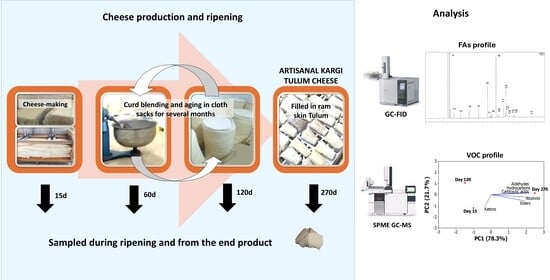
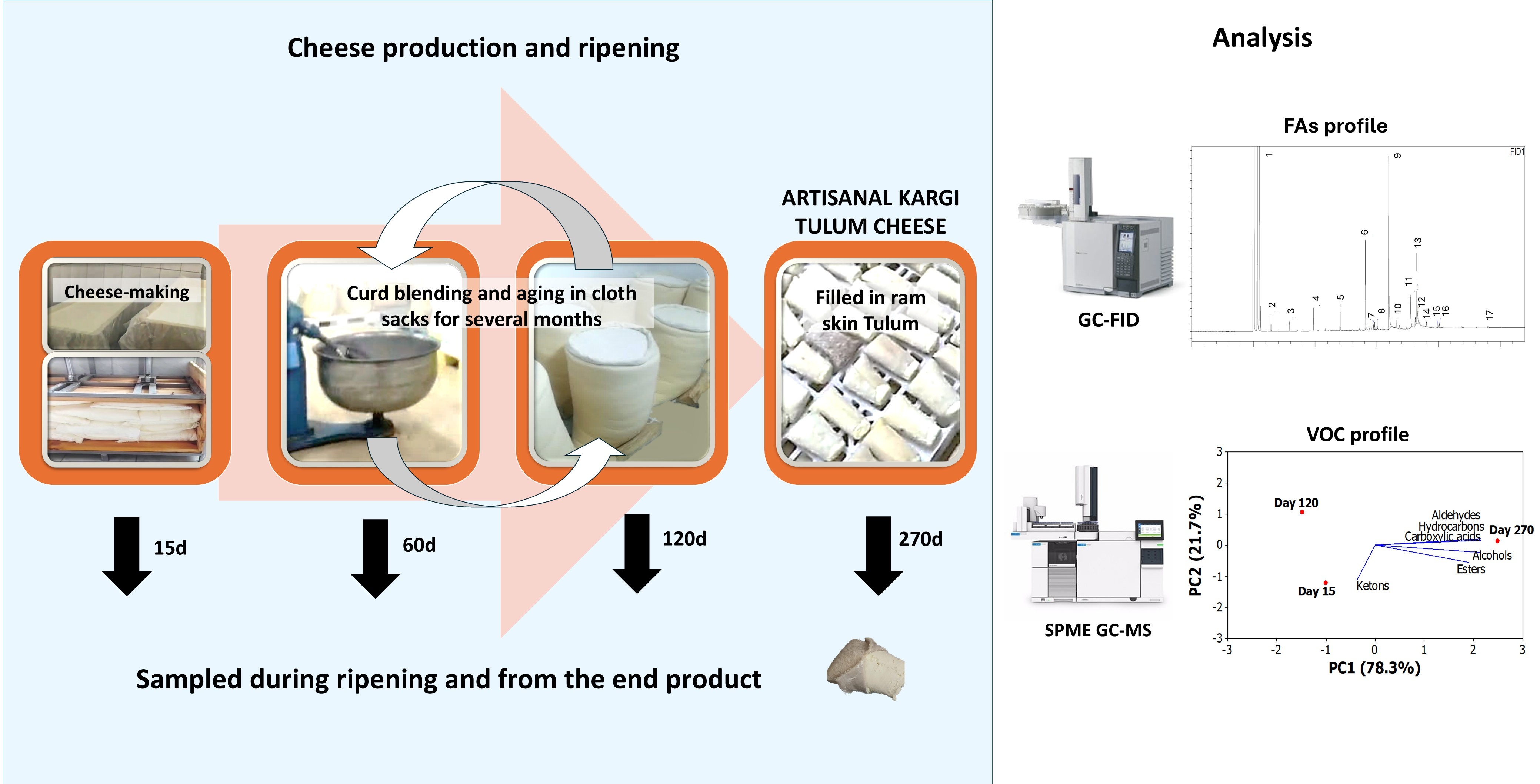
Graphical Abstract

1. Introduction

Tulum cheese varieties are among the most consumed cheese types in Turkey. Artisanal Kargı Tulum cheese is made traditionally using raw sheep, cow, and goat milk or their mixtures at an altitude of 1500 to 1800 m on the plateaus of the Kargı district in Çorum. Kargı Tulum cheese is a geographically indicated (GI) product which is designated for products that are identified with a specific region, area or country of origin due to their distinctive features, reputation or other characteristics. The milk used in Kargı Tulum cheese is sourced from animals grazing on the Kargı plateaus, which host over 70 endemic plant species, 8 of which are unique to Kargı, contributing to its unique taste and aroma. Other distinctive features that differentiate the Kargı Tulum cheese from other tulum cheese types includes long curd formation (24–36 h), long whey draining (48–60 h), periodic blending of curds made on different dates, and aging in cloth sacks and later in animal skins inside well aerated rooms located at the plateau. Coagulation of milk occurs using minimal amount of rennet over 24 h at 15–18 °C. Ripening occurs at 10–15 °C in well-ventilated rooms on the plateau, where the cheese curds are placed in cloth sacks holding 100–150 kg. Every 15 to 20 days, the curds are mixed with freshly made cheese and moved into clean sacks. This blending process is a defining characteristic of Kargı Tulum cheese, distinguishing it from other Tulum varieties and showing similarities to the production method of Lancashire cheese. The ripening process takes 6 months in winter and 4 months in summer. After ripening in cloth sacks, the matured cheese is tightly packed into a tulum made from ram or sheep skin. Traditionally, Kargı Tulum cheese production begins with the sheep breeding season in late spring and continues until the end of autumn.
Kargı Tulum cheese is a semi-hard cheese with a compact, very smooth, and cohesive texture that melts in the mouth. Unlike most other Turkish Tulum cheese varieties, it does not crumble easily. Due to its strong flavor, it is best served sliced into thin layers. When cut thinly, it becomes soft and smooth enough to be spreadable. Although it is not common practice to use in culinary applications, it can be used to aromatize pasta and salads.
Despite its unique characteristics, there are limited number of studies on Kargı Tulum cheese, particularly on its ripening process and biochemical changes during aging. Previous studies on Kargı Tulum cheese have mainly focused on samples obtained from local markets. Researchers such as Dinkçi et al. [1], Akbulut Çakır et al. [2], and Yıldırım and Özbey [3] reported significant variations in the microbial counts and chemical composition of these samples. Elçioğlu and Kunduhoğlu [4] examined the probiotic potential of lactobacilli isolated from the cheese, while Özbey [5] compared the fatty acid composition, lipid quality indices, and texture of cheeses made from raw goat, cow, and sheep milk Kargı Tulum cheese. However, no study has yet investigated changes in the volatile profile and fatty acid composition of Kargı Tulum cheese during ripening. In our previous study we investigated the compositional, proteolytic and textural changes during the ripening of the Kargı Tulum cheese [6]. The aim of this study was to evaluate fatty acid development and volatile compound (VOC) profiles during the aging process of artisanal Kargı Tulum cheese.

2. Materials and Methods

2.1. Cheese Making and Sampling

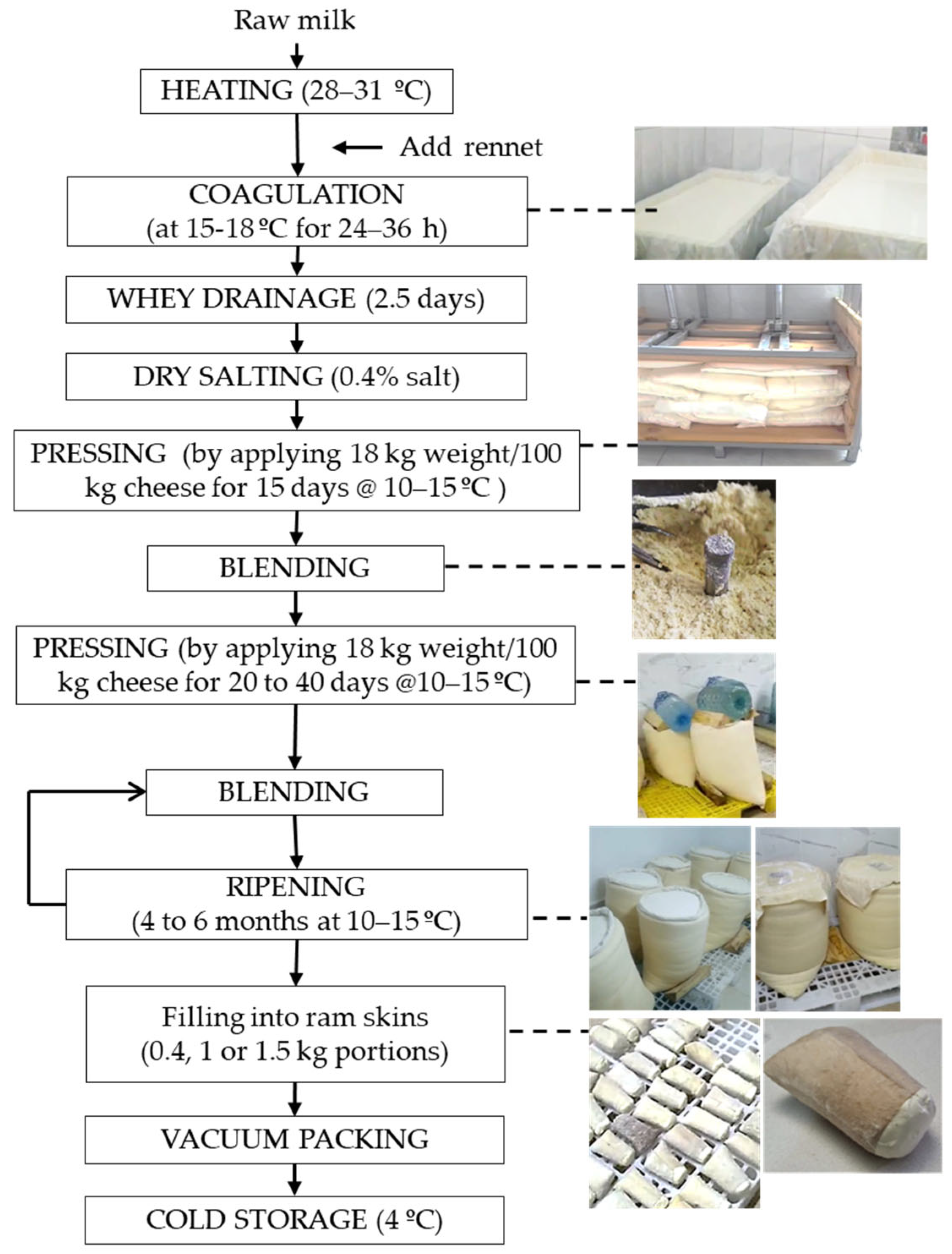
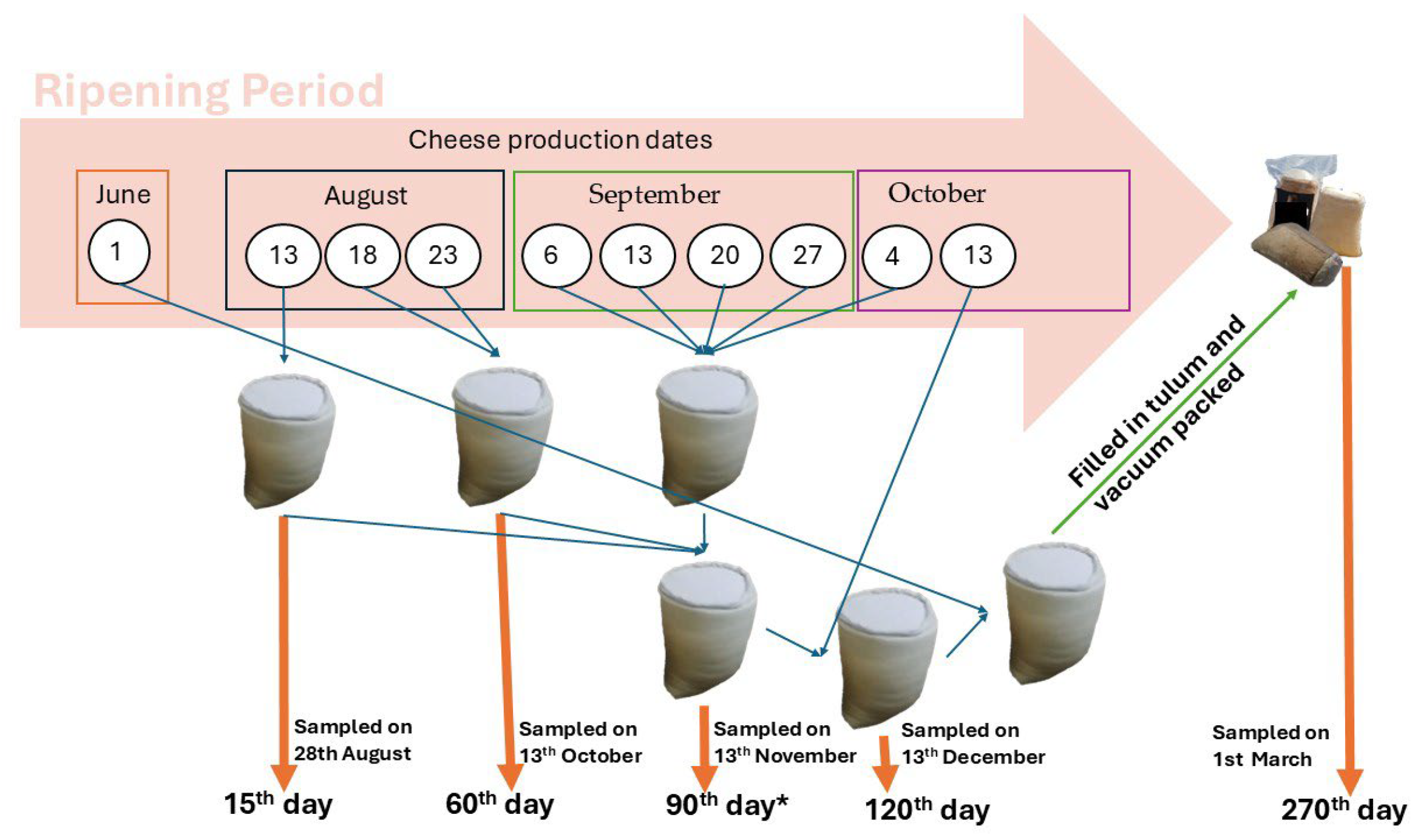
Kargı Tulum cheese samples were produced using raw cow milk at a local production facility (Döğen Tic., Kargı, Çorum, Turkey) in Uzunyurt village of Çorum’s Kargı district. A flow chart of the cheese making process is given in Figure 1.
Raw cow’s milk was filtered and transferred to a 500 L cheese vat. Diluted rennet (4 mL, Naturen Mandra 175, 175 IMCU/mL) was added at 15–18 °C, and coagulation occurred within 24 h in summer and 36 h in winter. The curd was cut, and whey was drained through a cheesecloth for 2.5 days. The drained curd was salted (0.4%), mixed for 20–25 min, and filled into 130–135 kg cloth sacks. These were pressed (180 kg/ton) for 15 days, after which samples were collected. The curds were then re-blended, transferred into clean 100–150 kg sacks, and pressed again (18 kg per sack) for 20–40 days, with periodic scraping of whey residues. Ripening occurred at 10–15 °C in ventilated plateau rooms for 4–6 months, during which curds were blended with newly made batches at least five times. Cheese was produced on ten different dates between June and November. The details regarding the production and sampling dates of the cheese samples are given in Figure 2. Samples were collected on days 15, 60, and 120 of ripening mainly based on the dates the curds were mixed and blended (3 replicates each). Our results of the previous study on proteolytic and microbial activity of Kargı Tulum cheese showed that there is no dramatic change on day 90 and most proteolytic activity indicators (ripening index and gel electrophoresis results) were stable through day 15 to day 120 [6]. In addition, day 90 and day 120 cheese samples were a blend of cheeses produced on same dates. Therefore day 15, 60, 120 and 270 were selected for Fas analysis and day 15, 120 and 270 for VOC to reduce the costs. At each time point samples were collected from 3 different sacks (3 replicates which means 3 different cloth sacks that were produced on same dates and treated similarly—when they were blended, they included same cheeses made at same dates). As mentioned before, ripening process of Kargı Tulum Cheese involves blending of cheese curds made at different dates and except for the 15th day old fresh cheese curds, each sample was a blend of the cheese curds made at different dates within the last 3 months. Once matured, the cheeses were transferred into softened ram skins (referred to as Tulum) using a filling machine, vacuum-packed, and stored at 4 °C. Samples of these vacuum-packed, ready-for-sale Tulum cheeses were also collected in triplicate (270 d—ripened 8 months before filling in ram skin Tulum and analyzed after storing at 4 °C for 1 month). The ram skins used for cheese filling purchased from local suppliers in a dry form. Before filling, the skins are softened by soaking in water and the salt is washed off.

2.2. Fatty Acid Profile Analysis

The fat in the cheese samples was extracted using the method described by Folch [7] and sent to the central laboratory at Harran University for analysis of the total fatty acid profile by GC-MS. One gram of the extracted fat was mixed thoroughly with 10 mL of hexane. After allowing the mixture to settle, the upper hexane phase was transferred to a separate container. Subsequently, 0.5 mL of a 2 N KOH-methanol solution was added, and the mixture was vortexed. It was then kept in a dark environment for 1 h. A sample from the upper phase was injected into a GC-FID system (Shimadzu Nexis GC 2030, Manchester, UK). The column used was a Technorama TR-CN 100 capillary column with dimensions of 100 m × 0.25 mm × 0.20 µm (TR882192). The resulting peaks were identified by comparison with a standard fatty acid chromatogram, and fatty acid percentages were calculated based on peak areas.

2.3. Lipid Quality Parameters

Lipid quality indices were calculated as proposed by Ulbricht and Southgate [8] by following equations:
Atherogenicity index (AI): AI = (C12:0 + (4 × C14:0) + C16:0)/ƩUFA
Thrombogenicity index (TI): TI = (C14:0 + C16:0 + C18:0)/((0.5 × ƩMUFA) + (0.5 × Ʃn–6 PUFA) + (3 × Ʃn–3 PUFA) + (n–3/n–6))
Hypocholesterolemic FAs (DFA): DFA = ƩMUFA + ƩPUFA + C18:0
Hypercholesterolemic FAs (OFA): OFA = C12:0 + C14:0 + C16:0
Hypocholesterolemic/Hypercholesterolemic ratio (H/H): H/H = DFA/OFA
Health-promoting index (HPI): HPI = ΣUFA/[C12:0 + (4 × C14:0) + C16:0]

2.4. Volatile Compound Analysis

Volatile organic compounds (VOCs) in the cheese samples were analyzed on days 15, 120, and 270 using a GC-MS system (Agilent 7890B GC, 7010B MS, Santa Clara, CA, USA). The analysis was performed using the Solid Phase Microextraction (SPME) method. For each sample, 3 g of cheese was placed in a 20 mL vial and incubated at 40 °C for 15 min. VOCs were absorbed onto the SPME fiber for 30 min. The fiber was then desorbed and the volatiles injected into a DB-Wax capillary column (60 m × 0.25 mm i.d. × 0.25 μm; J&W Scientific, Folsom, Santa Clara, CA, USA) for 5 min. The injection temperature was set at 250 °C. The column temperature was initially held at 40 °C for 4 min, then increased at a rate of 3 °C/min to 90 °C, followed by 4 °C/min to 130 °C. After holding at 130 °C for 4 min, the temperature was further increased at 5 °C/min to a final temperature of 240 °C, which was held for 8 min. Helium (He) was used as the carrier gas. The electron ionization energy was 70 eV, and the mass scan range was 30–600 m/z. The split ratio was 1:10. Compound concentrations were calculated by comparing the peak areas of the internal standard and the unknown compounds. VOCs were identified based on their ion spectra and retention times, using both authentic standards and reference spectra from the NIST 98 mass spectral library (version 2.0; Ringoes, NJ, USA). Each compound was expressed as μg per 100 g of cheese.

2.5. Statistical Analysis

Statistical analysis was performed by SPSS version 16 (SPSS Inc., Chicago, IL, USA). An analysis of variance (ANOVA) was performed to establish statistical differences between the FAs and VOC profiles of the samples. Differences between means were evaluated by Tukey multiple comparisons test (p ≤ 0.05). A principal component analysis (PCA) was performed using correlation matrix with Minitab 16 Statistical Software, where concentrations of the VOC were used as variables.

3. Results

3.1. Fatty Acid Profile and Lipid Quality Parameters

The changes in the fatty acid profile of the Kargı Tulum cheese during ripening are presented at Table 1. Levels of capric, caprylic, and caproic acids were 2.38%, 0.98%, and 1.66%, respectively. Butyric acid, ranging from 2.29% to 3.50%, was one of the primary short-chain FAs (SCFAs) in our samples. Ripening significantly influenced the SCFA and medium-chain fatty acid (MCFA) content of the Kargı Tulum cheese (p < 0.05). SCFA and MCFA levels increased after day 15, while long-chain fatty acid (LCFA) levels gradually decreased toward the end of ripening. SCFA and MCFA levels stabilized after 60 days and tended to decrease by day 120. Palmitic acid was the most abundant fatty acid. The second most abundant fatty acid was oleic acid (C18:1n9c), which dominated the monounsaturated FAs (MUFAs). No significant changes were observed in palmitic or oleic acid levels during ripening. Cis-linoleic acid levels increased during the ripening, except at 60 days, when both cis-linoleic and linolenic acids dropped to undetectable levels.
The lipid quality Indices of the cheese samples are presented In Table 2. Saturated FAs (SFAs) were dominant and did not change significantly during ripening (p > 0.05). MUFA levels decreased at 60 d but stabilized for the remainder of ripening. Polyunsaturated FAs (PUFAs) increased at 120 days after becoming undetectable at 60 d. Atherogenic (AI) and thrombogenic (TI) indices, as well as desirable fatty acid (DFA), hypercholesterolemic fatty acid (OFA), and hypocholesterolemic/hypercholesterolemic ratio (H/H) values, were consistent throughout the ripening.

3.2. Volatile Compounds

Mean values of the VOC on 15th day, 120th day and after ripening on 270th day are presented in Table 3. A total of 62 VOC was detected in Kargı Tulum cheese samples during ripening, including 16 esters, 8 acids, 6 ketones, 3 aldehydes, 17 alcohols, 1 terpene, 4 hydrocarbons and 7 other compounds.
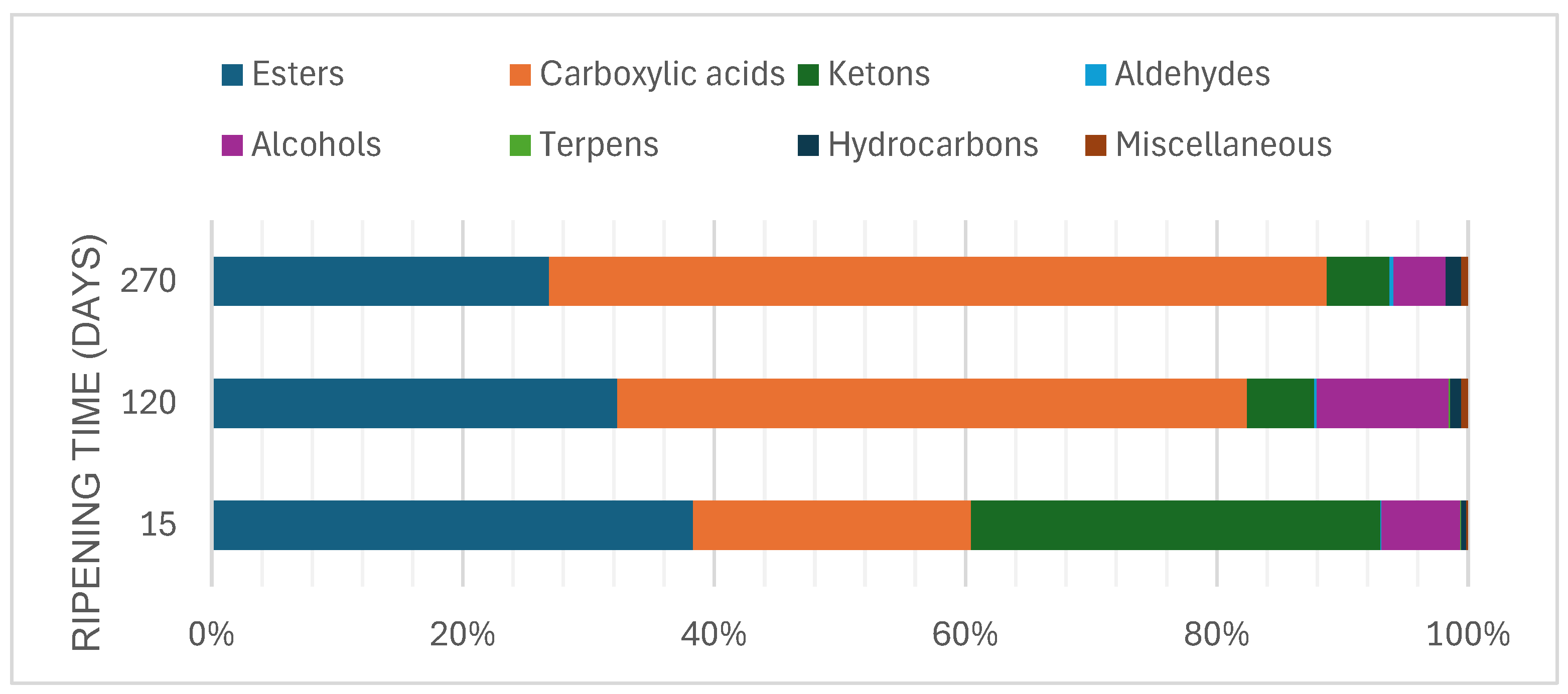
While esters were the most abundant compounds at the beginning of ripening, carboxylic acids became dominant by the end (Figure 3). An increase was observed in the total concentration of most volatile groups by 270 d. This increase was mostly steady for carboxylic acids, whereas other volatile groups showed a decline at day 120 before increasing again. Ketone levels, however, decreased over the ripening period.
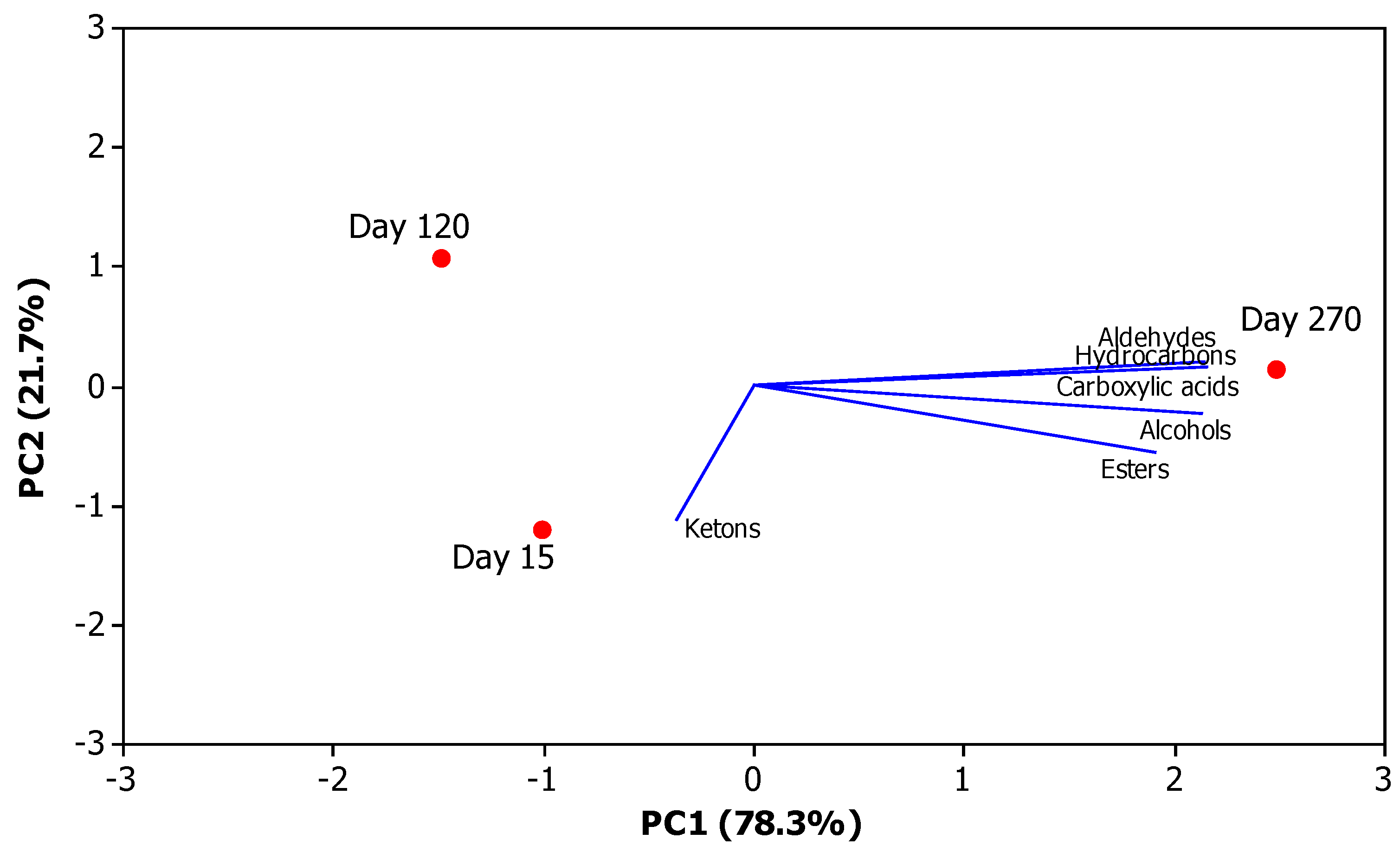
A principal component analysis (PCA) was performed using the total concentrations of the main volatile groups (carboxylic acids, esters, alcohols, ketones, aldehydes and hydrocarbons) as variables, to determine how the volatile profiles differed across production and ripening stages. A biplot overlay of the score plot and loading plot obtained by PCA of VOC main groups on Day 25, Day 120 and Day 270 of the ripening is shown in Figure 4.
A large proportion of the total variability (78.3%) was explained by principal component 1 (PC1), while principal component 2 (PC2) accounted for 21.7%. Day 15 and Day 120 samples were positioned on the negative side of PC1, whereas Day 270 was located on the positive side, indicating a clear distinction in volatile profiles at Day 270. According to the PCA plot, ketones were dominant in the Day 15 samples compared to those from Days 120 and 270. In contrast, Day 270 was characterized by higher levels of carboxylic acids, aldehydes, hydrocarbons, alcohols, and esters. Both Day 120 and Day 270 were located on the positive side of PC2, while Day 15 was positioned on the negative side. Although PC2 explained a smaller portion of the variance, it still made a meaningful contribution (21.7%).

3.2.1. Esters

In Kargı Tulum cheese samples, 16 esters were detected. The most abundant esters were ethyl hexanoate, ethyl octanoate, and ethyl butyrate. A decrease was observed in total ester concentration at 120 d; however, there was a dramatic increase at 270 d, particularly in ethyl hexanoate, ethyl butyrate and propyl butyrate levels.

3.2.2. Carboxylic Acids

Carboxylic acids were the main VOC of the Kargı Tulum cheese at the end of the ripening period. During the first 120 days of ripening, the total concentration of carboxylic acids remained relatively stable. However, a dramatic increase was observed at 270 days, particularly in butyric, hexanoic, and acetic acid levels.

3.2.3. Ketones

Ketones were among the most dominant VOC groups at 15 d; however, a dramatic decrease was observed by 120 days (Figure 3). At the beginning of ripening, six ketones were detected, but three of them became undetectable by the end of ripening. Although their levels increased slightly by day 270, they remained much lower than at 15 days. The most abundant ketones in Kargı Tulum cheese were 2-pentanone, 2-heptanone and 2-nonanone.

3.2.4. Aldehydes

Aldehydes were among the least found VOC groups in Kargı Tulum cheese. In Kargı Tulum cheese samples, only three aldehydes were detected, all at very low concentrations. Two of these aldehydes degraded during ripening, while heptanal formed by the end of the ripening period.

3.2.5. Alcohols

12 different alcohols were detected in Kargı Tulum cheese samples, which constituted the third major VOC group at 120 and 270 days of ripening. The total alcohol concentration decreased at 120 d but increased significantly thereafter (p < 0.05). Heptanol was the major alcohol detected in Kargı Tulum cheese.

3.2.6. Hydrocarbons

Low levels of hydrocarbons were detected in Kargı Tulum cheese, with an increase observed at 270 days of ripening. Styrene was the dominant hydrocarbon at 270 d and it was not detected earlier.

3.2.7. Terpenes

The only terpene detected in Kargı Tulum cheese was (+)-4-Carene, found at low concentrations, and it was absent at the end of ripening.

3.2.8. Miscellaneous Compounds

Isoamyl lactate was detected at a negligible amount on day 15 and was not observed later during ripening.

4. Discussion

The fatty acid profile provides valuable insights into the origin and production time of cheese, serving as a chemical biomarker alongside its nutritional role [9]. Levels of capric, caprylic, and caproic acids (2.38%, 0.98%, and 1.66%, respectively) were typical to cow cheese samples in previous studies [9]. Higher levels of capric acid are associated with goat cheese. Although goat milk is often used alongside cow milk in Kargı Tulum cheese production, our samples were made solely with cow milk due to seasonal factors. Butyric acid was one of the primary short-chain FAs (SCFAs) in our samples. High butyric acid levels are also characteristic of Italian cheeses such as Pecorino Romano, Fiore Sardo, and Provolone, contributing to their piquant or pungent flavors [10]. Previous studies on other Tulum and Mediterranean cheeses reported an increase in SCFAs and MCFAs during the ripening due to lipolytic degradation of triglycerides [11,12]. SCFAs contribute significantly to flavor development, adding sharp and tangy notes to the cheese [10]. Lipolytic activity during ripening breaks down triglycerides, increasing SCFA levels [13]. There was an increase in SCFAs and MCFAs after day 15. However, SCFA and MCFA levels stabilized after 60 days and tended to decrease by day 120, a trend also observed by Tomar et al. [12] during Tulum cheese ripening which they attributed to further microbial catabolism. The observed fluctuations in fatty acid concentrations during ripening in our study were most likely due to the blending of cheese curds produced on different dates. Some cheese samples consisted of cheese curds produced over 4 consecutive months. Such blending practices can introduce FAs that were previously absent or, conversely, result in the disappearance of certain FAs depending on the variation in the combined curds. Palmitic acid was the most abundant fatty acid, consistent with findings in previous cheese studies [11,12]. The dominance of palmitic and oleic acids aligns with typical cow milk fat composition. Oleic acid is associated with anti-cancer and anti-atherogenic properties [14]. No significant changes were observed in palmitic or oleic acid levels during ripening. The transient decrease in cis-linoleic and linolenic acids at 60 days may be related to oxidative degradation or early utilization for volatile precursor formation. Mixing cheese curds from different production dates may accelerate lipolysis in the early ripening stages, leading to reductions in certain FAs that contribute to SCFA and MCFA formation. There are no previous studies tracking changes in FAs during Kargı Tulum cheese ripening. Özbey [5] analyzed Kargı Tulum cheese made from different milk types. Our results for the ready-for-sale samples (270 days) largely align with their findings for cow milk cheese, except for higher butyric and caproic acid levels, as well as higher cis-linoleic acid (C18:2n6c) and linolenic acid (C18:3n6). Notably, Özbey [5] did not report any linolenic acid. These differences may be attributed to seasonal variations and age of the cheese.
The lipid quality indices suggest that Kargı Tulum cheese, despite its high SFA content, exhibits favorable nutritional quality comparable to other traditional cow milk cheeses. While SFAs have been linked to health issues like cardiovascular diseases, recent studies suggest that dairy SFAs may not directly cause such conditions [14]. All lipid quality indices were stable through the ripening which was possibly due to the heterogeneity of the samples caused by the blending of cheese curds made at different dates. Our AI and TI values aligned with Özbey’s findings for cow milk Kargı Tulum cheese, which were higher than those for goat and sheep milk cheeses [5]. Ali et al. [15] reported the AI and TI values for the different cheese types in the range of 1.13–3.97 and 2.06–4.48, respectively, and they found cow milk cheeses had higher values. Several other studies also found higher AI and TI values for cow milk cheese compared to sheep and goat milk cheeses [16]. DFA and OFA contents in our samples were consistent with Özbey’s results for cow milk Kargı Tulum cheese and did not change during ripening [5]. Ali et al. [15] reported DFA values for various cheeses ranging from 32 to 53 and OFA values between 43% and 57%. H/H is the ratio of DFA/OFA and gives information on cardiovascular disease development risk [5]. Our H/H did not change significantly during ripening. HPI is also used as an indicator of the health value of dietary fat and higher HPI values are desired. Our HPI values were similar to those reported by Özbey [5] for the cow and goat cheeses. Stable AI and TI values, together with moderate H/H and HPI ratios, indicate a limited atherogenic and thrombogenic potential. Similar findings have been reported for other ripened dairy products, where matrix effects and fatty acid distribution mitigate SFA health risks.
Volatile compound evolution reflected typical ripening dynamics of semi-hard cheeses. Early stages were characterized by ketones, products of β-oxidation and fungal metabolism, which later decreased as they were reduced to secondary alcohols. The subsequent rise in esters, alcohols, and carboxylic acids toward the end of ripening contributed to complex aroma formation. In particular, high butyric, hexanoic, and acetic acid levels are known contributors to the sharp, piquant, and vinegar-like notes typical of matured Tulum cheeses [17]. The increase in ethyl esters at 270 days suggests intensified esterification or alcoholysis reactions as ripening progresses. The PCA results confirmed distinct chemical profiles between early and late ripening stages, highlighting the transformation from ketone-dominated to acid- and ester-dominated volatiles. Esters are responsible for the floral and fruity aroma of the cheese. They typically have low perception thresholds and can mask the bitterness and sharpness of amines and free FAs [18]. Esters are formed either through the esterification of carboxylic acids and alcohols or through alcoholysis [19]. In Kargı Tulum cheese samples, the most abundant esters were ethyl hexanoate, ethyl octanoate, and ethyl butyrate. Previous studies on other types of Tulum cheese have also identified ethyl esters as the dominant ester group [19,20,21,22,23]. Hayaloğlu et al. [17] noted that ethyl esters are commonly found in goat cheeses. In this study a decrease in total ester concentration at 120 d was observed; however, there was a dramatic increase at 270 d, particularly in ethyl hexanoate, ethyl butyrate and propyl butyrate levels. Similar trends have been reported in studies on ewe cheeses, where concentrations of ethyl hexanoate and ethyl butanoate increased during ripening [22]. Carboxylic acids were the main VOC of the Kargı Tulum cheese at the end of the ripening period. Carboxylic acids are mainly formed by lipolysis in cheese during the ripening period. Short- and medium-chain carboxylic acids can also result from the oxidation of ketones and esters, and they significantly affect cheese aroma due to their low detection thresholds [23]. During the first 120 days of ripening, the total concentration of carboxylic acids remained relatively stable. However, a dramatic increase was observed at 270 days, particularly in butyric, hexanoic, and acetic acid levels. Hayaloğlu et al. [17] found that butyric acid was one of the dominant acids in skin-bag-cheeses compared to those aged in plastic containers. Similarly, Ozturkoglu-Budak et al. [22] reported butyric acid as one of the most abundant carboxylic acids in goat skin Tulum cheese, where it contributes to a rancid, cheese-like odor. Hexanoic, octanoic, and acetic acids were also detected in high amounts in previous studies on Tulum cheese [20,23]. Hexanoic and octanoic acids contribute to goatish and waxy aroma notes, while acetic acid imparts a Feta-like pungent and vinegar aroma [20]. Ketones were among the most dominant VOC groups at the fresh cheese samples. The decrease in ketones during ripening could be attributed to enzymatic reduction in ketones to secondary alcohols, depending on their intermediate compounds [22]. Ketones are mainly formed by enzymatic activity of mold and fungi through the oxidation of FAs to β-ketoacids and their subsequent decarboxylation to methyl ketones. Ketones have low detection threshold and significantly contribute to cheese flavor with their characteristic aromas [23]. The most abundant ketones in Kargı Tulum cheese were 2-pentanone, 2-heptanone and 2-nonanone. Both 2-heptanone and 2-pentanone were also detected in high concentrations in Divle Tulum cheese and have been reported as primary ketones in some ewe cheeses, such as La Serena, Zamorano, and Torta del Casar [22]. Furthermore, 2-heptanone and 2-nonanone are key flavor compounds in Blue cheese [24]. 2-Heptanone is described as having a butterscotch-like odor, while 2-nonanone is associated with floral, fruity, and peachy aromas and has an extremely low detection threshold [19]. Aldehydes were scarce in Kargı Tulum cheese samples. In cheese, aldehydes can quickly metabolize into acids or alcohols due to the catabolism of FAs, or the decarboxylation and deamination of amino acids, which prevents their accumulation [19]. Aldehydes contribute grassy, bitter almond, herbal and malt flavors. However, due to their very low detection thresholds, excessive aldehyde concentrations can lead to undesirable flavors in cheese [20]. Alcohols are mainly formed during fermentation processes, such as lactose metabolism, and other pathways include amino acid metabolism and the degradation of methyl ketones and FAs [25]. Secondary alcohols, such as 2-heptanol were more dominant in Kargı Tulum cheese. Similarly, Ozturkoglu-Budak et al. [22] reported that secondary alcohols were the dominant group at the end of ripening in Divle Tulum Cheese. Secondary alcohols are produced through the enzymatic reduction in corresponding methyl ketones, which are de-rived from FAs via β-oxidation or from β-ketoacids. Notably, 2-heptanol contributes fruity notes, such as lemon and herbaceous tones, and imparts a green and fresher flavor profile [26]. Unlike findings from some previous studies on Tulum cheese [19,20], we did not detect ethanol or isoamyl alcohol in the Kargı Tulum cheese samples. We detected low levels of hydrocarbons in Kargı Tulum cheese towards the end of ripening. Hydrocarbons do not contribute to cheese aroma much due to their high detection limit [22]. The limited presence of terpenes in this study likely reflects feed composition and seasonal feeding practices. The observed fluctuations in some VOC concentrations during ripening in our study could also be due to the blending of cheese curds produced on different dates.

5. Conclusions

Kargı Tulum Cheese differs from other Tulum cheese varieties due to its unique production method and ripening process, which involves blending cheese curds produced on different dates. SCFA and MCFA increased at the beginning of the ripening, with notably high levels of butyric acid, but they were mostly stable during the rest of the ripening period. Lipid quality parameters, including total saturated FAs (SFAs), atherogenicity index (AI), and thrombogenicity index (TI), remained unchanged throughout ripening. Those relatively stable values of FAs and lipid quality indices were most likely due to blending of the cheese curds made at different dates throughout the ripening. The total concentration of most volatile groups increased by the end of the 270-day ripening period. Esters and ketones were the most abundant groups at the beginning of ripening, while carboxylic acids became dominant by the end. Overall, during the ripening, blending process of the cheese curds at different stages of maturity appeared to influence how FAs and volatile compound profiles are developed by smoothing the extreme changes in dominant FAs and lipid health indices, and by introducing variability and fluctuations in SCFAs, MCFAs, and VOCs. However, that still did not prevent the emergence of a characteristic late-ripening aroma dominated by acids and esters. Results of this study can also be useful for comparative purposes in future studies on ripened raw milk cheeses.

Funding

This research received no external funding.

Institutional Review Board Statement

Not applicable.

Informed Consent Statement

Not applicable.

Data Availability Statement

The raw data supporting the conclusions of this article will be made available by the authors upon request.

Acknowledgments

The author would like to thank Mustafa Döğen Kargı Tulum Cheese Production Facility (Döğen Tic., Kargı, Çorum) for their support in the production of Kargı Tulum cheese samples.

Conflicts of Interest

The authors declare no conflicts of interest.

Abbreviations

The following abbreviations are used in this manuscript:
VOCVolatile organic compound
PCAPrincipal component analysis
FAsFatty acids
UFAsUnsaturated fatty acids
SFAsSaturated fatty acids
SCFAsShort-chain FAs
MCFAsMedium-chain FAs
LCFAsLong-chain FAs
MUFAsMonounsaturated FAs
PUFAPolyunsaturated FAs
AIAtherogenicity index
TIThrombogenicity index
DFAsHypocholesterolemic FAs
OFAsHypercholesterolemic FAs
H/HHypocholesterolemic/Hypercholesterolemic ratio
HPIHealth-promoting index

References

  1. Dinkçi, N.; Ünal, G.; Akalin, A.; Varol, S.; Gönç, S. Kargı Tulum peynirinin kimyasal ve mikrobiyolojik özelliği. Ege Üniv Ziraat Fak Derg. 2012, 49, 287–292. [Google Scholar] [CrossRef]
  2. Akbulut-Çakır, Ç.; Büyüksırıt-Bedir, T.; İstanbullu-Paksoy, Ö. Kargı Tulum peynirinin bazı kimyasal, tekstürel ve mikrobiyolojik özelliklerinin belirlenmesi. Euroasia J. Math. Eng. Nat. Med. Sci. 2021, 8, 127–134. [Google Scholar] [CrossRef]
  3. Yıldırım, Ş.; Özbey, F. Determination of some characteristic properties in traditional Kargı Tulum cheese. Food Sci. Technol. 2022, 42, e58122. [Google Scholar] [CrossRef]
  4. Elçioğlu, O.; Kunduhoğlu, B. Probiotic characteristics of natural lactobacilli isolated from traditional Kargı tulum cheese. Ital. J. Food Sci. 2014, 26, 31. [Google Scholar]
  5. Özbey, F. Fatty acid composition, lipid quality indices, and textural profile of traditional Kargı Tulum PDO cheese: Lipid Quality Index of Kargi Tulum Cheese. Prog. Nutr. 2023, 25, e2023021. [Google Scholar] [CrossRef]
  6. Akbulut-Çakır, Ç.; Oral, F.B.; Büyüksırıt-Bedir, T. Changes in the proteolytic activity, microbiological properties, and texture characteristics of artisanal Kargı Tulum cheese during ripening. J. Food Sci. Technol. 2025. [Google Scholar] [CrossRef]
  7. Folch, J.; Lees, M.; Stanley, G.S. A simple method for the isolation and purification of total lipides from animal tissues. J. Biol. Chem. 1957, 226, 497–509. [Google Scholar] [CrossRef]
  8. Ulbricht, T.L.V.; Southgate, D.A.T. Coronary heart disease: Seven dietary factors. Lancet 1991, 338, 985–992. [Google Scholar] [CrossRef]
  9. Reis Lima, M.; Bahri, H.; Sá Morais, J.; Veloso, A.C.A.; Fontes, L.; Lemos, E.T.; Peres, A.M. Assessing serra da estrela pdo cheeses’ origin-production date using fatty acids profiles. J. Food Meas. Charact. 2019, 13, 2988–2997. [Google Scholar] [CrossRef]
  10. Addis, M.; Piredda, G.; Pes, M.; Di Salvo, R.; Scintu, M.F.; Pirisi, A. Effect of the use of three different lamb paste rennets on lipolysis of the PDO Pecorino Romano cheese. Int. Dairy J. 2005, 15, 563–569. [Google Scholar] [CrossRef]
  11. Sert, D.; Akin, N.; Aktumsek, A. Lipolysis in Tulum cheese produced from raw and pasteurized goats’ milk during ripening. Small Rumin Res. 2014, 121, 351–360. [Google Scholar] [CrossRef]
  12. Tomar, O.; Akarca, G.; Gök, V.; Çağlar, M.Y. The effects of packaging materials on the fatty acid composition, organic acid content, and texture profiles of Tulum cheese. J. Food Sci. 2020, 85, 3134–3140. [Google Scholar] [CrossRef] [PubMed]
  13. Fox, P.F.; Guinee, T.P.; Cogan, T.M.; McSweeney, P.L.H. Biochemistry of Cheese Ripening. In Fundamentals of Cheese Science; Springer: Boston, MA, USA, 2017. [Google Scholar] [CrossRef]
  14. Paszczyk, B.; Łuczyńska, J. The comparison of fatty acid composition and lipid quality indices in hard cow, sheep, and goat cheeses. Foods 2020, 9, 1667. [Google Scholar] [CrossRef] [PubMed]
  15. Ali, A.H.; Khalifa, S.A.; Gan, R.Y.; Shah, N.; Ayyash, M. Fatty acids, lipid quality parameters, and amino acid profiles of unripened and ripened cheeses produced from different milk sources. J. Food Compos. Anal. 2023, 123, 105588. [Google Scholar] [CrossRef]
  16. Aguilar, C.; Toro-Mujica, P.; Vargas-Bello-Pérez, E.; Vera, R.; Ugalde, C.; Rodríguez, S.; Briones, I. A comparative study of the fatty acid profiles in commercial sheep cheeses. Grasas Y. Aceites 2014, 65, e048. [Google Scholar] [CrossRef][Green Version]
  17. Hayaloğlu, A.A.; Yasar, K.; Tolu, C.; Sahingil, D. Characterizing volatile compounds and proteolysis in Gokceada artisanal goat cheese. Small Rumin. Res. 2013, 113, 187–194. [Google Scholar] [CrossRef]
  18. Bertuzzi, A.S.; McSweeney, P.L.; Rea, M.C.; Kilcawley, K.N. Detection of volatile compounds of cheese and their contribution to the favor profile of surface-ripened cheese. Compr. Rev. Food Sci. Food Saf. 2018, 17, 371–390. [Google Scholar] [CrossRef]
  19. Sözeri Atik, D.; Akın, N.; Akal, H.C.; Koçak, C. The determination of volatile profile during the ripening period of traditional Tulum cheese from Turkey, produced in Anamur in the Central Taurus region and ripened in goatskin. Int. Dairy J. 2021, 117, 104991. [Google Scholar] [CrossRef]
  20. Demirci, S.; Öztürk, H.İ.; Atik, D.S.; Koçak, C.; Demirci, T.; Akın, N. Volatile profile evolution and sensory evaluation of traditional skinbag Tulum cheeses manufactured in Karaman mountainous region of Turkey during ripening. Eur. Food Res. Technol. 2021, 247, 2097–2108. [Google Scholar] [CrossRef]
  21. Hayaloğlu, A.; Cakmakci, S.; Brechany, E.; Deegan, K.; McSweeney, P. Microbiology, biochemistry, and volatile composition of Tulum cheese ripened in goat’s skin or plastic bags. J. Dairy Sci. 2007, 90, 1102–1121. [Google Scholar] [CrossRef]
  22. Ozturkoglu-Budak, S.; Gursoy, A.; Aykas, D.P.; Kocak, C.; Donmez, S.; de Vries, R.P.; Bron, P.A. Volatile compound profiling of Turkish Divle Cave cheese during production and ripening. J. Dairy Sci. 2016, 99, 5120–5131. [Google Scholar] [CrossRef]
  23. Tekin, A.; Hayaloglu, A.A. Understanding the mechanism of ripening biochemistry and flavour development in brine ripened cheeses. Int. Dairy J. 2023, 137, 105508. [Google Scholar] [CrossRef]
  24. Urbach, G. The flavour of milk and dairy products: II. Cheese: Contribution of volatile compounds. Int. J. Dairy Technol. 1997, 50, 79–89. [Google Scholar] [CrossRef]
  25. Molimard, P.; Spinnler, H.E. Compound Involved in the Flavor of Surface Mold-Ripened Cheeses: Origins and Properties. J. Dairy Sci. 1996, 79, 169–184. [Google Scholar] [CrossRef]
  26. de Santis, D.; Fidaleo, M. Effect of aging pit on volatile compounds and sensory attributes of traditional Italian Fossa cheese. LWT 2022, 153, 112507. [Google Scholar] [CrossRef]
Figure 1. Flow chart of Kargı Tulum Cheese production.
Dairy 07 00008 g001
Figure 2. Kargı Tulum cheese production and sampling timeline. * This time point was not analyzed for FAs and VOC and is not included in this study.
Dairy 07 00008 g002
Figure 3. Change in the total volatile compound groups isolated from Kargı Tulum cheese during production and ripening.
Dairy 07 00008 g003
Figure 4. Biplot overlay of the score plot and loading plot obtained by principal component (PC) analysis of VOC main groups on Day 15, Day 120 and Day 270 of the ripening.
Dairy 07 00008 g004
Table 1. Fatty acids profile (% area) of Kargı Tulum cheese samples during the ripening (mean ± SD; n = 3).
Ripening (Days)
1560120270
Mean ± SDMean ± SDMean ± SDMean ± SD
C4:0 butyric acid2.29 ± 0.21 b3.50 ± 0.08 a3.12 ± 0.02 a3.39 ± 0.28 a
C6:0 caproic acid1.66 ± 0.05 b2.60 ± 0.17 a1.98 ± 0.03 ab2.32 ± 0.19 ab
C8:0 caprylic acid0.98 ± 0.05 c1.75 ± 0.05 a1.46 ± 0.04 ab1.39 ± 0.10 b
C10:0 capric acid2.38 ± 0.07 b3.81 ± 0.47 a3.53 ± 0.03 ab3.18 ± 0.16 ab
C11:0 undecanoic acid0.32 ± 0.01 aNd0.19 ± 0.19 a0.16 ± 0.16 a
C12:0 lauric acid3.02 ± 0.05 b4.80 ± 0.53 a4.44 ± 0.04 ab3.69 ± 0.14 ab
C13:0 tridecanoic acid0.16 ± 0.16NdNdNd
C14:0 myristic acid12.73 ± 0.7 a14.08 ± 0.82 a13.39 ± 0.88 a13.73 ± 0.33 a
C14:1 myristoleic acid2.76 ± 0.14 a1.87 ± 0.09 ab0.96 ± 0.10 b1.39 ± 0.45 b
C15:0 pentadecanoic acid1.76 ± 0.13 aNd1.13 ± 0.27 a1.39 ± 0.01 a
C16:0 palmitic acid40.35 ± 0.16 a38.73 ± 0.18 a38.20 ± 1.79 a37.14 ± 0.88 a
C16:1 palmitoleic acid2.42 ± 0.02 a2.38 ± 0.38 a1.86 ± 0.08 ab1.66 ± 0.04 b
C17:1 heptadecanoic acid0.64 ± 0.24 b1.66 ± 0.49 a0.60 ± 0.00 b0.34 ± 0.06 b
C18:0 stearic acid5.46 ± 0.04 b6.64 ± 0.95 ab6.52 ± 0.02 ab8.27 ± 0.11 a
C18:1n9t trans-elaidic acid0.12 ± 0.17 bNdNd1.31 ± 0.35 a
C18:1n9c cis-oleic acid18.52 ± 1.50 a16.39 ± 2.99 a16.39 ± 5.04 a18.29 ± 2.43 a
C18:2n6c cis-linoleic acid1.07 ± 0.00 bNd1.82 ± 0.03 a1.75 ± 0.17 a
C18:3n6 linolenic acid0.17 ± 0.23 aNd0.23 ± 0.32 a0.46 ± 0.00 a
C21:0 heneicosanoic acid0.29 ± 0.02 bNd0.15 ± 0.20 b0.70 ± 0.02 a
C23:0 tricosanoic acid0.74 ± 0.90 a0.98 ± 1.38 a1.10 ± 0.13 a0.58 ± 0.38 a
C24:1 nervonic aid1.47 ± 2.07 a1.75 ± 2.48 a1.17 ± 1.65 a0.73 ± 1.03 a
SCFA4.93 ± 0.25 b7.85 ± 0.04 a6.60 ± 0.23 ab7.09 ± 0.57 a
MCFA21.37 ± 0.59 b24.55 ± 0.82 a22.50 ± 0.24 ab22.14 ± 0.17 ab
LCFA73.80 ± 0.89 a68.53 ± 0.85 b69.47 ± 0.42 b71.59 ± 0.44 ab
a–c Different letters in the same row indicate significant statistical differences (Tukey’s test. p ≤ 0.05). SCFA: short-chain fatty acids (C4–C8), MCFA: medium-chain fatty acids (C10–C14), LCFA: Long-chain fatty acids (≥C15), Nd: not detected
Table 2. Lipid quality indices of Kargı Tulum Cheese (mean ± SD; n = 3).
Ripening (Days)
1560120270
Mean ± SDMean ± SDMean ± SDMean ± SD
SFA72.76±0.42 a78.54±0.29 a75.84±3.24 a75.96±2.00 a
UFA27.34±0.52 a22.39±0.64 a22.73±1.81 a24.86±1.88 a
MUFA26.11±0.35 a22.39±0.64 b20.46±0.24 b22.65±0.75 b
PUFA1.23±0.17 b0.00±0.002.28±0.44 a2.22±0.13 a
AI3.45±0.16 a4.46±0.04 a4.28±0.58 a3.88±0.37 a
TI4.29±0.14 a5.32±0.16 a5.16±0.65 a4.79±0.44 a
DFA32.80±0.49 a29.03±0.04 a29.25±1.79 a33.13±1.96 a
OFA56.09±0.75 a57.60±1.17 a56.03±2.71 a54.56±1.25 a
H/H0.58±0.01 a0.50±0.01 a0.52±0.06 a0.61±0.05 a
HPI0.29±0.01 a0.22±0.00 a0.24±0.03 a0.26±0.02 a
a–b Different letters in the same row indicate significant statistical differences (Tukey’s test. p ≤ 0.05). SFA: total saturated fatty acids, UFA: Total unsaturated fatty acids, MUFA: monounsaturated fatty acids, PUFA: polyunsaturated fatty acids, AI: atherogenicity index, TI: Thrombogenicity index, DFA: Hypocholesterolemic fatty acids, OFA: Hypercholesterolemic fatty acids, H/H: the ratio of hypocholesterolemic and hypercholesterolemic fatty acids, HPI: Health-promoting index.
Table 3. Volatile compounds of the Kargı Tulum Cheese during the ripening (µg/100 g cheese, mean ± SD; n = 3).
Ripening (Days)
CAS NoRTVolatile Compounds15120270
Mean ± SDMean ± SDMean ± SD
Ester
105-54-412Ethyl butyrate3.05 ± 0.07 b3.78 ± 0.19 b7.37 ± 0.06 a
539-82-216Ethyl valerate0.06 ± 0.01 a0.06 ± 0.01 aNd
539-90-217Isobutyl butyrate0.06 ± 0.00 a0.07 ± 0.01 aNd
123-66-021Ethyl hexanoate13.73 ± 0.04 b5.52 ± 0.12 c23.69 ± 0.3 a
106-27-423Isoamyl butyrate0.34 ± 0.08 a0.27 ± 0.03 a0.24 ± 0.01 a
626-77-725Propyl hexanoate0.06 ± 0.01 c0.55 ± 0.0 b2.19 ± 0.02 a
106-30-926Ethyl heptanoate0.18 ± 0.05 a0.03 ± 0.0 b0.12 ± 0.0 ab
105-79-327Isobutyl hexanoate0.08 ± 0.01NdNd
2601-13-0292-methylbutyl hexanoate0.05 ± 0.01NdNd
106-32-130Ethyl octanoate10.40 ± 0.19 a1.68 ± 0.08 c6.54 ± 0.17 b
2198-61-031Isoamyl hexanoate0.11 ± 0.00NdNd
624-13-534Propyl octanoateNdNd0.54 ± 0.08
110-38-339Ethyl caprate2.71 ± 0.36 a0.39 ± 0.06 b1.82 ± 0.15 a
7367-84-241Ethyl (Z)-4-decenoate0.27 ± 0.04 ab0.07 ± 0.01 b0.48 ± 0.12 a
103-45-7452-Phenethyl acetate0.72 ± 0.05 a0.26 ± 0.03 b0.49 ± 0.09 ab
123-29-546Ethyl nonanoate0.19 ± 0.01 a0.04 ± 0.00 b0.12 ± 0.00 a
105-66-847Propyl butyrate0.22 ± 0.00 c1.12 ± 0.00 b2.98 ± 0.03 a
Total concentration32.25 ± 1.10 b13.84 ± 0.04 c46.05 ± 1.03 a
Carboxylic acids
79-33-426L-Lactic acid0.12 ± 0.04 a0.13 ± 0.04 aNd
64-19-730Acetic acid0.79 ± 0.13 c2.32 ± 0.11 b10.93 ± 0.01 a
79-09-434Propanoic acidNd1.03 ± 0.03Nd
107-92-637Butyric acid9.87 ± 0.261 b9.72 ± 0.54 b57.20 ± 3.10 a
142-62-145Hexanoic acid (Caproic acid)6.66 ± 0.17 b6.34 ± 7.34 b32.56 ± 0.20 a
124-07-251Octanoic acid (Caprylic acid)0.88 ± 0.03 c1.47 ± 0.05 b4.26 ± 0.01 a
334-48-556n-Decanoic acid (Capric acid)0.17 ± 0.06 b0.15 ± 0.07 b0.56 ± 0.07 a
Total concentration18.49 ± 0.43 b21.17 ± 7.78 b106.05 ± 2.77 a
Ketons
107-87-992-Pentanone6.39 ± 0.56 a0.54 ± 0.08 b2.73 ± 0.34 c
591-78-6132-Hexanone0.16 ± 0.01NdNd
110-43-0182-Heptanone12.48 ± 0.05 a1.41 ± 0.08 c4.82 ± 0.07 b
111-13-7242-Octanone0.20 ± 0.00 a0.02 ± 0.00 bNd
821-55-6282-Nonanone8.03 ± 0.02 a0.31 ± 0.14 c1.05 ± 0.10 b
112-12-9372-Undecanone0.18 ± 0.04NdNd
Total concentration27.44 ± 0.50 a2.28 ± 0.13 c8.59 ± 0.31 b
Aldehydes
107-89-1203-Hydroxybutanal0.06 ± 0.00 a0.03 ± 0.01 bNd
111-71-720HeptanalNdNd0.51 ± 0.01
105-68-019Isoamyl propionateNd0.06 ± 0.03Nd
Total concentration0.06 ± 0.00 b0.09 ± 0.01 b0.51 ± 0.00 a
Alcohols
14898-79-411(−)-2-ButanolNdNd0.35 ± 0.07
6032-29-7152-Pentanol1.29 ± 0.09 a0.69 ± 0.11 b1.47 ± 0.03 a
20549-48-820Neodihydrocarveol0.49 ± 0.00 c1.74 ± 0.00 a0.55 ± 0.01 b
626-93-720(±)-2-HexanolNd0.03 ± 0.01Nd
6033-23-425(+)-2-Heptanol2.04 ± 0.12 a1.04 ± 0.17 b2.53 ± 0.03 a
111-27-3261-HexanolNd0.04 ± 0.02Nd
4730-22-7296-Methyl-2-heptanol0.03 ± 0.00 b0.04 ± 0.02 b0.21 ± 0.01 a
628-99-934(±)-2-Nonanol0.82 ± 0.02 a0.08 ± 0.01 b0.81 ± 0.11 a
19132-06-034(+)-2.3-Butanediol0.08 ± 0.02NdNd
39546-75-3367-Octen-2-ol0.16 ± 0.01NdNd
505-10-2413-(Methylthio)-1-propanolNd0.04 ± 0.01Nd
60-12-847Phenylethyl Alcohol0.27 ± 0.00 b0.76 ± 0.18 a0.22 ± 0.01 b
Total concentration5.22 ± 0.16 b4.46 ± 0.13 c6.14 ± 0.08 a
Terpens
13837-63-3 (+)-4-Carene0.07 ± 0.00 a0.06 ± 0.01 aNd
Total concentration0.07 ± 0.00 a0.06 ± 0.01 aNd
Hydrocarbons
106-42-316p-XyleneNd 0.08 ± 0.02 ab0.15 ± 0.03 a
100-42-522StyreneNd Nd1.22 ± 0.03
Total concentrationNd 0.08 ± 0.02 b1.37 ± 0.11 a
Miscellaneous compounds
19329-89-623Isoamyl lactate0.05 ± 0.01Nd Nd
a–c Different letters in the same row indicate significant statistical differences (Tukey’s test. p ≤ 0.05). RT: Retention time, Nd: not detected
Disclaimer/Publisher’s Note: The statements, opinions and data contained in all publications are solely those of the individual author(s) and contributor(s) and not of MDPI and/or the editor(s). MDPI and/or the editor(s) disclaim responsibility for any injury to people or property resulting from any ideas, methods, instructions or products referred to in the content.