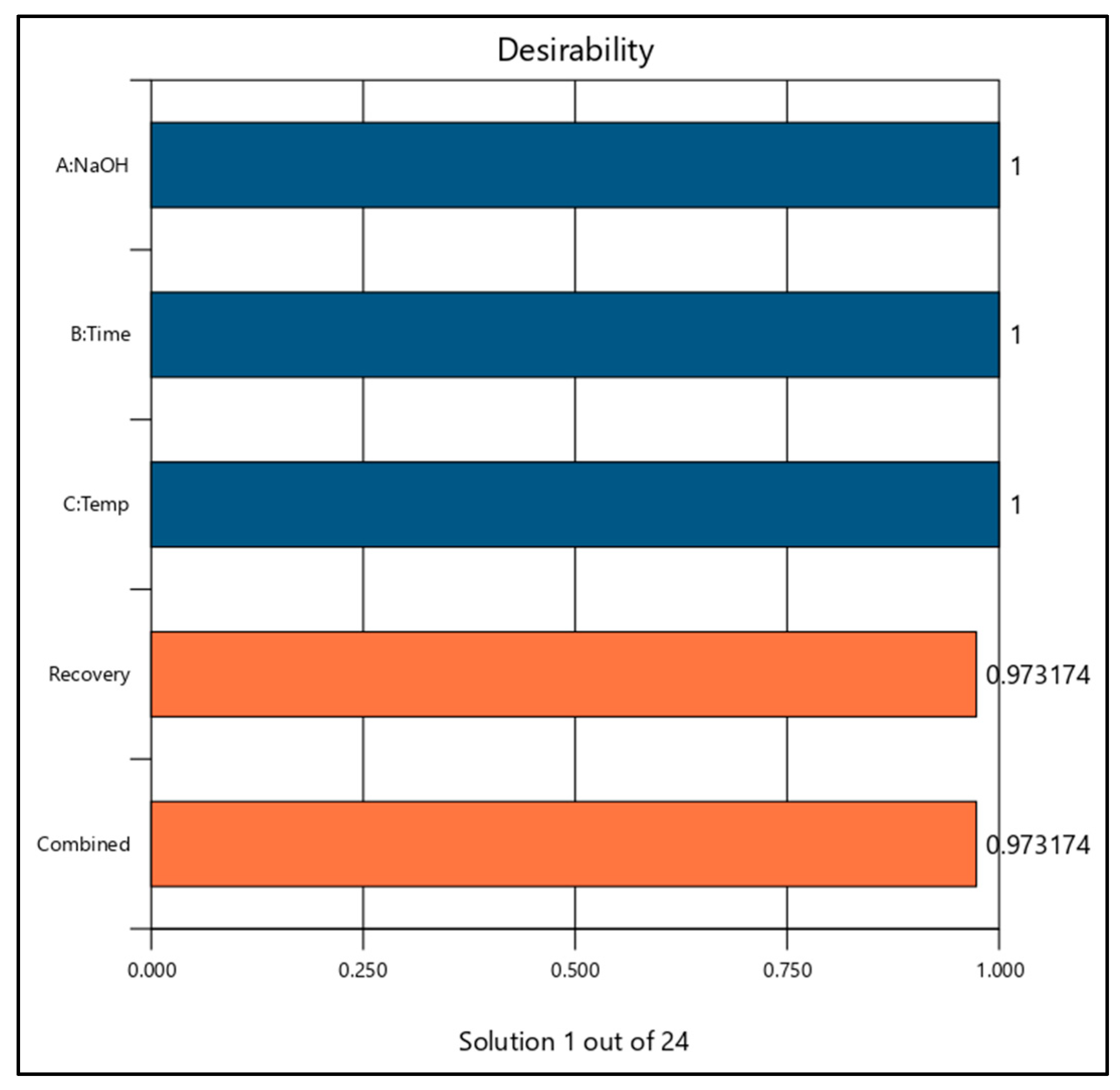
RSM combined with a CCD was employed to evaluate the interactions among the three experimental factors and their effects on cotinine recovery. Model performance was assessed using ANOVA, regression modelling, diagnostic plots, and three-dimensional response surface visualisations. A confirmation experiment was subsequently conducted to validate the optimal extraction conditions predicted by the model.
3.3.1. ANOVA
The ANOVA results for the RSM model are summarised in
Table 5. The model exhibited a very high F-value of 1166.09 with a corresponding
p < 0.0001, indicating that the fitted model is highly significant for predicting cotinine recovery from fingernail samples. The F-value reflects the ratio of variance explained by the model to the residual variance; therefore, a higher F-value denotes stronger explanatory power. The extremely low
p-value confirms that the likelihood of obtaining such a strong model due to random noise is negligible.
All linear terms (A: NaOH concentration, B: extraction time, and C: extraction temperature), interaction terms (AB, AC, and BC), and quadratic terms (A
2, B
2, and C
2) were statistically significant (
p < 0.0001), demonstrating that both individual factors and their combined and non-linear effects exert a substantial influence on cotinine extraction efficiency. These findings support the suitability of a full quadratic model for describing the response surface behaviour. The lack-of-fit test was not significant (F = 0.75,
p = 0.6192), indicating that the discrepancy between the model predictions and experimental observations is not statistically meaningful. A non-significant lack of fit is desirable, as it suggests that the model adequately represents the experimental domain [
23]. Furthermore, the residual error was low (mean square = 0.2335), providing additional evidence of the model’s accuracy and reliability.
Overall, the ANOVA results confirm that the quadratic RSM model is statistically robust, demonstrates strong predictive capability, and is well suited for optimising cotinine extraction from fingernails.
Model predictability was assessed using several statistical indicators. The coefficient of determination (R2 = 0.9990) indicates that the fitted model explains more than 99% of the variability in cotinine recovery, reflecting an exceptionally strong model fit. The adjusted R2 (0.9982), which accounts for the number of model terms, is in close agreement with the predicted R2 (0.9958), with a difference in less than 0.2. This close alignment demonstrates excellent internal consistency and robust predictive performance.
The model also exhibited a very low standard deviation (0.4833) and a coefficient of variation in only 0.6638%, indicating high precision and excellent repeatability of the experimental data. Furthermore, the adequate precision value of 104.24, which far exceeds the recommended threshold of 4, signifies an exceptionally high signal-to-noise ratio. This result confirms that the model has sufficient resolution to reliably navigate the design space. Collectively, the high R
2 values, strong agreement between the adjusted and predicted R
2 values, low variability, and excellent adequate precision demonstrate that the quadratic RSM model is statistically robust and highly reliable for predicting cotinine recovery [
24,
25].
3.3.2. Regression Equation
The model coefficients, expressed in terms of coded factors, are presented in
Table 6. These coefficients describe both the magnitude and direction of the relationship between each experimental factor and the response variable. Coded units were employed to standardise factor scales and to minimise multicollinearity among the variables. A positive coefficient indicates that an increase in the corresponding factor results in higher cotinine recovery, whereas a negative coefficient denotes an inverse relationship [
26].
The precision of each model term was evaluated using the standard errors of the coefficient estimates. Smaller standard errors indicate more precise parameter estimation and greater confidence in the influence of each factor on the response variable. In this model, the standard errors were consistently low across all linear, interaction, and quadratic terms, ranging from 0.1267 to 0.1931, demonstrating excellent estimation precision.
Among the linear terms, extraction time (B) and extraction temperature (C) exhibited the lowest standard errors (0.1308), indicating that these coefficients were estimated with the highest precision. The interaction terms (AB, AC, and BC) and quadratic terms (A2, B2, and C2) likewise displayed comparably low standard errors, further confirming the stability of the model. In addition, the 95% confidence intervals for all coefficients were narrow, reinforcing the reliability of the parameter estimates.
Multicollinearity was assessed using the variance inflation factor (VIF). Multicollinearity is generally considered problematic when VIF values exceed 5–10 or when condition indices exceed 10–30 [
27]. In the present model, all VIF values ranged from 1.00 to 1.08, which is well below the accepted thresholds. This indicates that the predictor variables are largely independent and that the regression coefficients were not inflated by inter-factor correlations. Collectively, the low standard errors, narrow confidence intervals, and minimal multicollinearity demonstrate that the regression coefficients were estimated with high precision, further supporting the robustness and reliability of the fitted RSM model.
The final regression equation, expressed in terms of actual (uncoded) factors, describes the combined influence of each experimental variable on cotinine recovery. In this model, A represents NaOH concentration, B denotes extraction temperature, and C corresponds to extraction time. The equation comprises linear (A, B, C), quadratic (A
2, B
2, C
2), and interaction (AB, AC, BC) terms. Collectively, these terms enable the prediction of cotinine recovery across any specified combination of factor levels within the experimental domain. The final regression equation in actual factor units is presented below:
Further interpretation of the regression Equation (3) indicates that the intercept term of 82.68 represents the predicted cotinine recovery when all variables are set at their respective centre levels. Cotinine recovery increases proportionally with increasing extraction time, decreasing NaOH concentration, and decreasing extraction temperature. Among the linear terms, extraction temperature exhibits the strongest influence on the response, as reflected by the magnitude of its coefficient.
The interaction term AB indicates an antagonistic effect between NaOH concentration and extraction temperature, whereas the positive AC interaction coefficient reveals a synergistic interaction between NaOH concentration and extraction time. Although the BC interaction term is negative, its magnitude is smaller, indicating a comparatively weaker antagonistic effect relative to AB.
All quadratic terms are negative, demonstrating pronounced curvature in the response surface and indicating the presence of a well-defined maximum within the experimental domain. Among these quadratic effects, extraction temperature and extraction time contribute more strongly to the curvature than NaOH concentration, suggesting that these variables play a dominant role in defining the optimal extraction conditions.
3.3.3. Residuals Plot
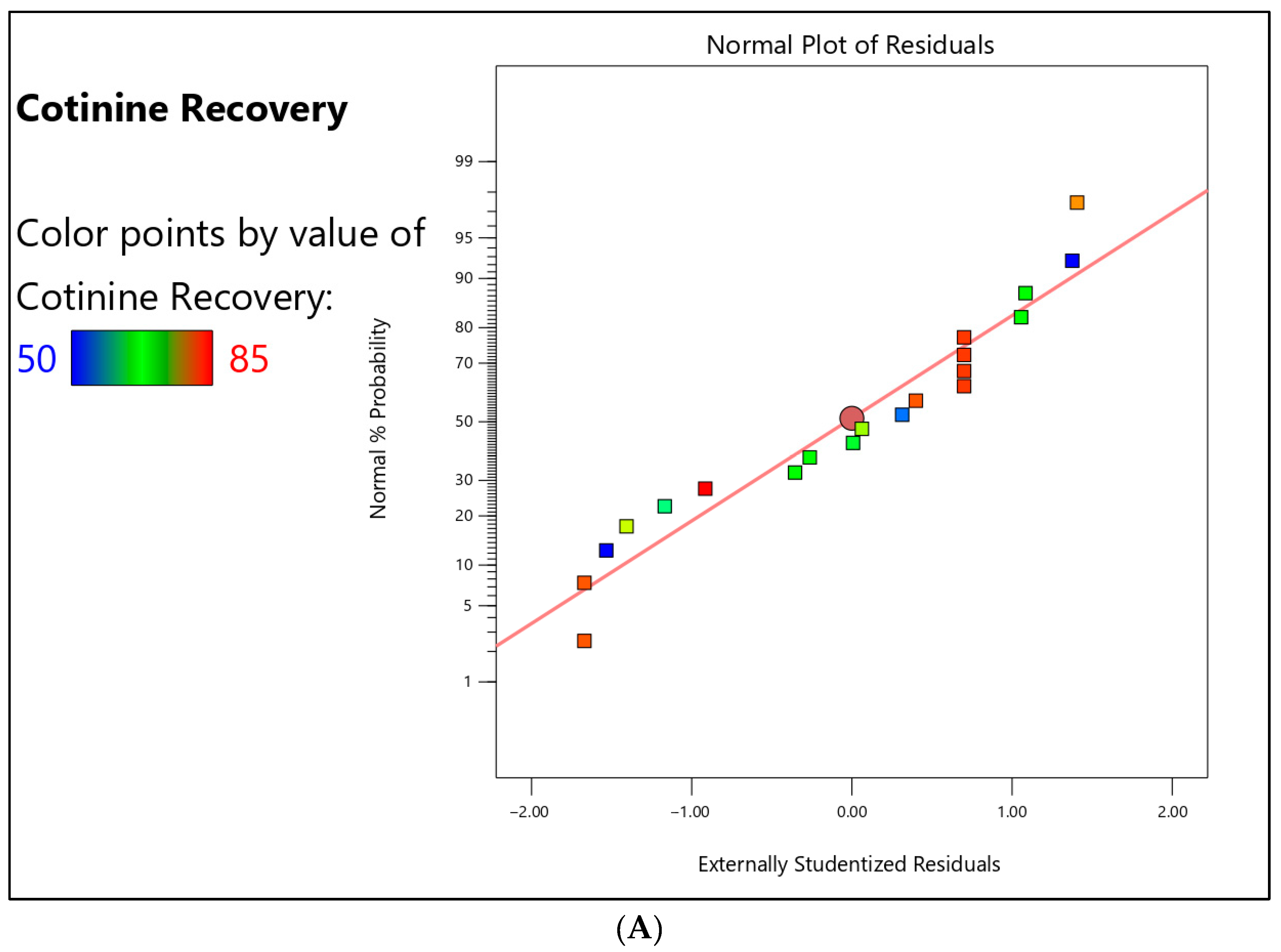
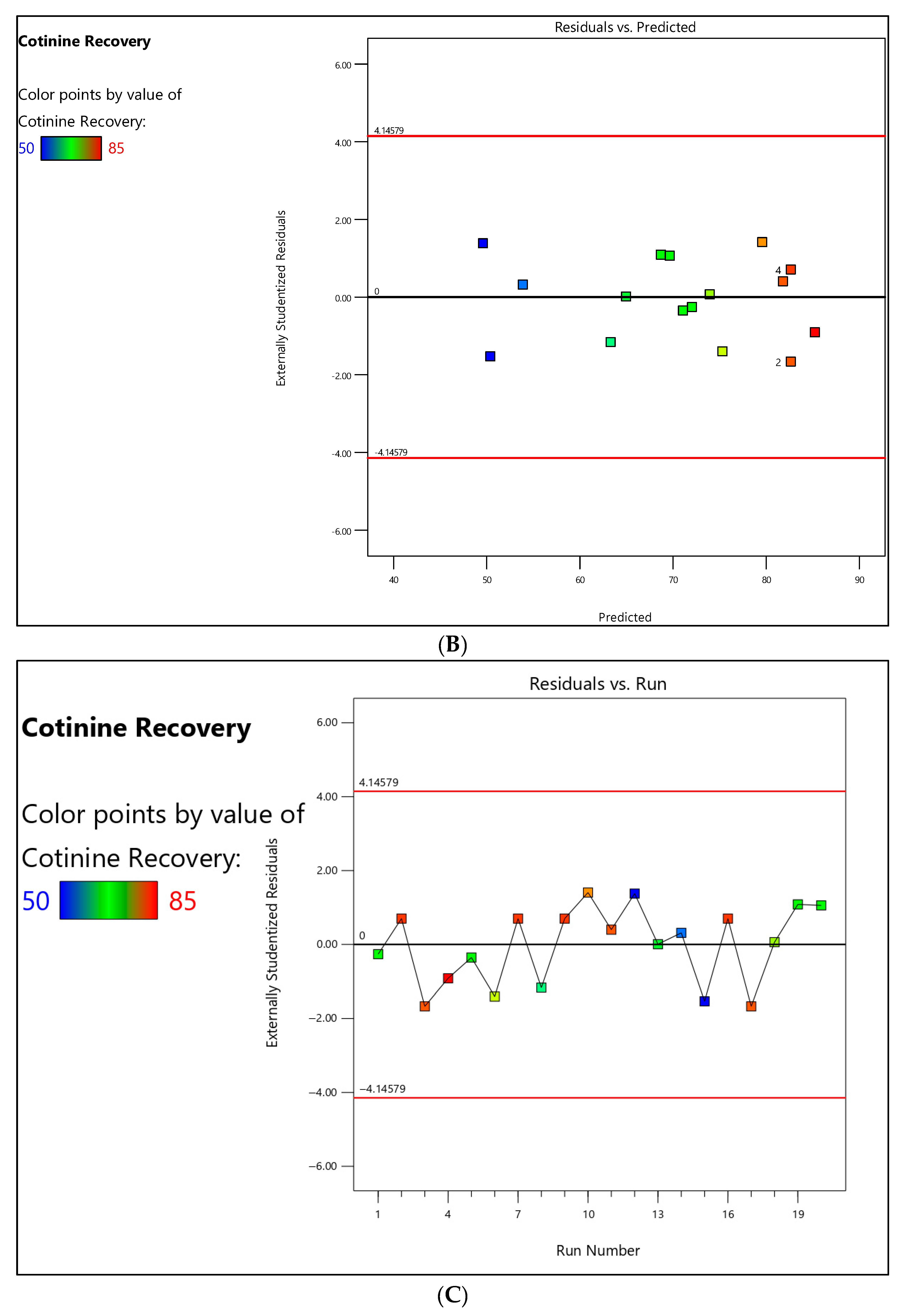
Residual plots were employed to assess the adequacy of the fitted model (
Figure 3). A residual is defined as the difference between the observed and predicted response values, and its behaviour provides critical information regarding model validity [
28]. The first diagnostic evaluated was the normal probability plot, which assesses whether the residuals follow a normal distribution. When this assumption is satisfied, the residuals are expected to align closely along a straight line with only minor and random deviations [
29]. In contrast, pronounced curvature or an S-shaped pattern would indicate deviation from normality and may suggest the need for transformation of the response variable. As illustrated in
Figure 3A, the residuals closely follow a straight line with minimal scatter, confirming that the normality assumption is met.
The second diagnostic examined was the plot of residuals versus predicted values, which evaluates the assumption of constant variance (homoscedasticity). Ideally, the residuals should be randomly distributed with no discernible pattern. A funnel-shaped or megaphone-shaped distribution would indicate non-constant variance, potentially necessitating corrective data transformation [
30]. As shown in
Figure 3B, the residuals are randomly scattered and confined within a consistent range across all predicted values, indicating stable variance throughout the dataset.
The residuals versus run order plot was also examined to identify any hidden or time-dependent factors that may have influenced the experimental outcomes. A random distribution of residuals around the zero line indicates that no external or time-related variables affected the response [
31]. As shown in
Figure 3C, the residuals are scattered without systematic trends, confirming that the experimental sequence did not introduce bias or instability.
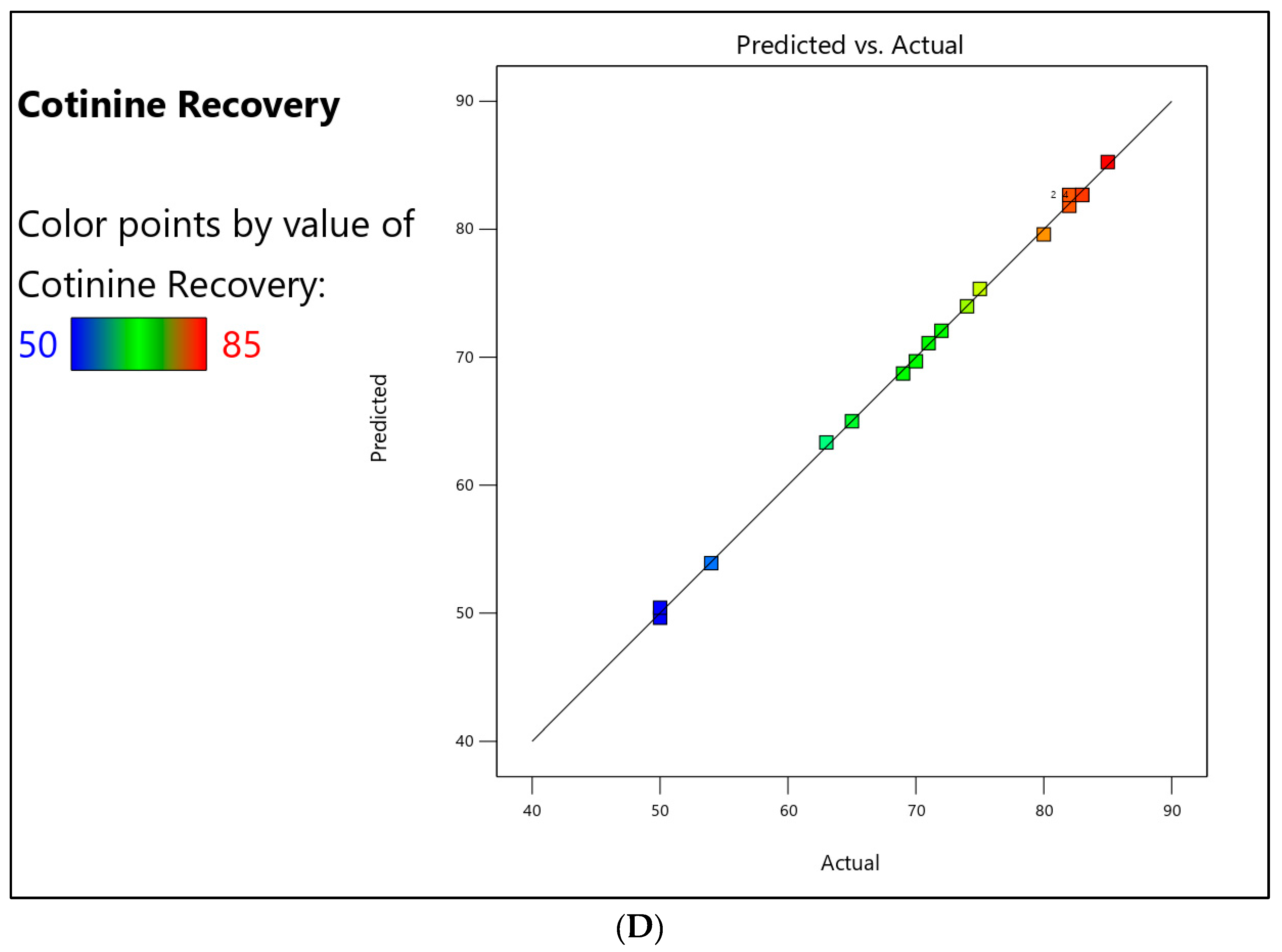
Figure 3D presents the plot of predicted values against experimentally observed values. The close alignment of the data points along the reference line demonstrates strong agreement between predicted and measured responses, indicating that the model accurately captures the relationship between the extraction parameters and cotinine recovery.
Collectively, the normal probability plot, residuals versus predicted values plot, residuals versus run order plot, and predicted versus actual values plot confirm that the developed model is valid, well fitted, and statistically robust.
3.3.4. Three-Dimensional Graphs
Three-dimensional response surface plots and corresponding contour plots were employed to further interpret the behaviour of the fitted model. These graphical tools provide a visual representation of the response surface and offer deeper insight into the individual effects of the experimental factors, as well as their interactions, on cotinine recovery. In this study, the three investigated factors were NaOH concentration, extraction temperature, and extraction time. The shape and curvature of the response surfaces reflect the combined influence of paired factors on cotinine recovery, with steeper surfaces indicating stronger interaction effects and flatter surfaces suggesting weaker interactions. The contour plots provide additional clarity by delineating regions of higher and lower predicted recovery. Together, these visual representations facilitate the identification of favourable factor combinations that lead to enhanced extraction efficiency.
NaOH concentration with extraction time.
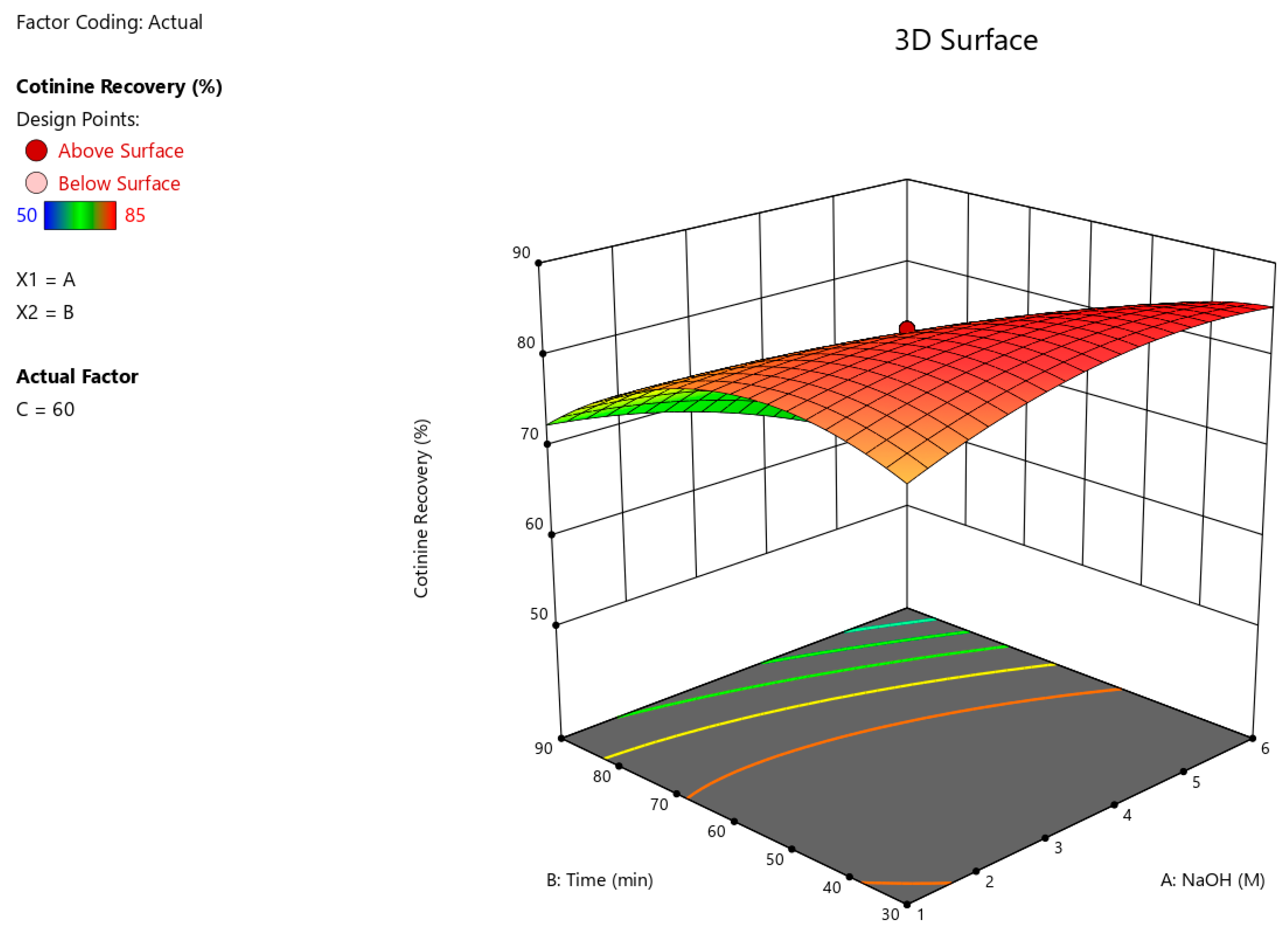
Figure 4 illustrates the three-dimensional response surface depicting the interaction between NaOH concentration (A) and extraction time (B) on cotinine recovery, with extraction temperature (C) held constant at 60 °C. The response surface exhibits a clear upward trend in cotinine recovery with increasing NaOH concentration and extraction time. The red-shaded region corresponds to the highest predicted recovery values, indicating favourable extraction performance, whereas the green and blue regions represent lower recovery yields. The pronounced curvature of the surface reflects a strong interaction between NaOH concentration and extraction time.
At lower NaOH concentrations (approximately 1–2 M), extending the extraction time results in only modest improvements in cotinine recovery. In contrast, as the NaOH concentration increases towards 5–6 M, the response surface rises sharply, particularly when the extraction time exceeds approximately 60 min. This behaviour suggests that efficient cotinine release from the fingernail keratin matrix requires both sufficient alkalinity and adequate digestion time to facilitate keratin breakdown.
The contour plot at the base of the surface further highlights this interaction, showing a progressive transition from low-recovery regions to high-recovery zones as both factors increase. Overall, the figure indicates that optimal cotinine extraction is achieved under conditions combining higher NaOH concentrations with longer extraction durations, consistent with the statistical significance of the linear and interaction terms identified in the RSM analysis.
NaOH concentration with extraction temperature.
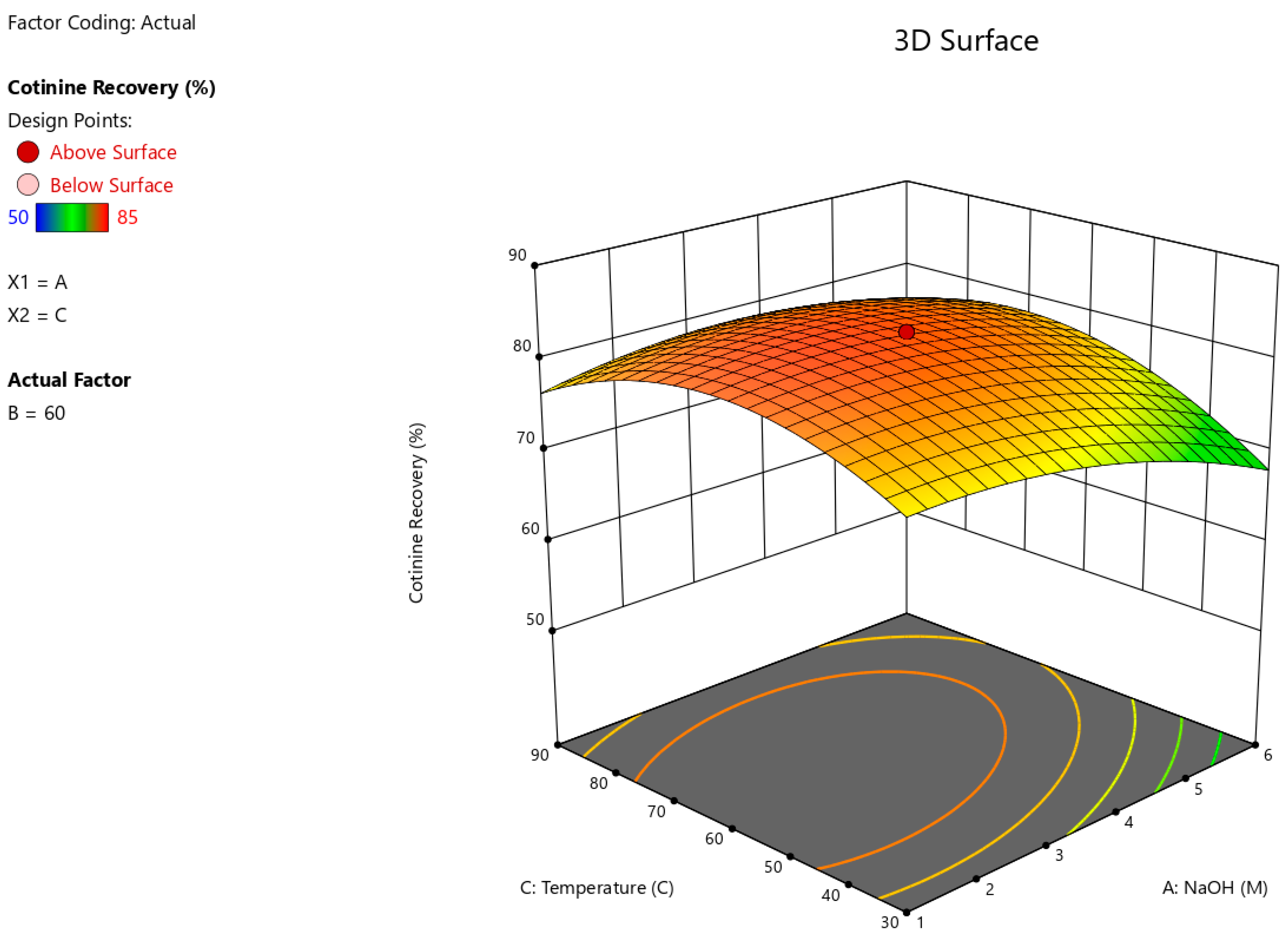
Figure 5 illustrates the combined effects of NaOH concentration (A) and extraction temperature (C) on cotinine recovery, with extraction time (B) held constant at 60 min. The response surface shows a clear increase in cotinine recovery with increasing NaOH concentration, with the highest predicted values occurring at elevated NaOH levels and moderate temperatures. The warm-coloured region (orange to red) denotes the optimal extraction conditions, where cotinine recovery exceeds 80%.
The curvature of the surface reveals a pronounced interaction between NaOH concentration and extraction temperature. At lower NaOH concentrations (approximately 1–2 M), increasing the temperature results in only modest improvements in recovery. In contrast, at higher NaOH concentrations (5–6 M), temperature exerts a more substantial influence: moderate temperatures (approximately 50–70 °C) promote enhanced cotinine release, whereas excessively high temperatures (≥80–90 °C) lead to a decline in recovery. This behaviour suggests that very high temperatures, particularly when combined with strong alkalinity, may promote thermal degradation or adversely affect cotinine stability.
The contour plot at the base of the surface highlights a broad, curved region corresponding to the zone of maximum predicted recovery. As both NaOH concentration and extraction temperature approach their optimal mid-to-high values, the contour lines form a smooth, elevated plateau, corroborating the significant interaction and quadratic effects identified in the statistical analysis.
The figure demonstrates that optimal cotinine extraction is achieved under conditions of high NaOH concentration coupled with moderate extraction temperatures, consistent with the model’s prediction of a broad and stable optimum region within this factor space.
Extraction temperature with extraction duration.
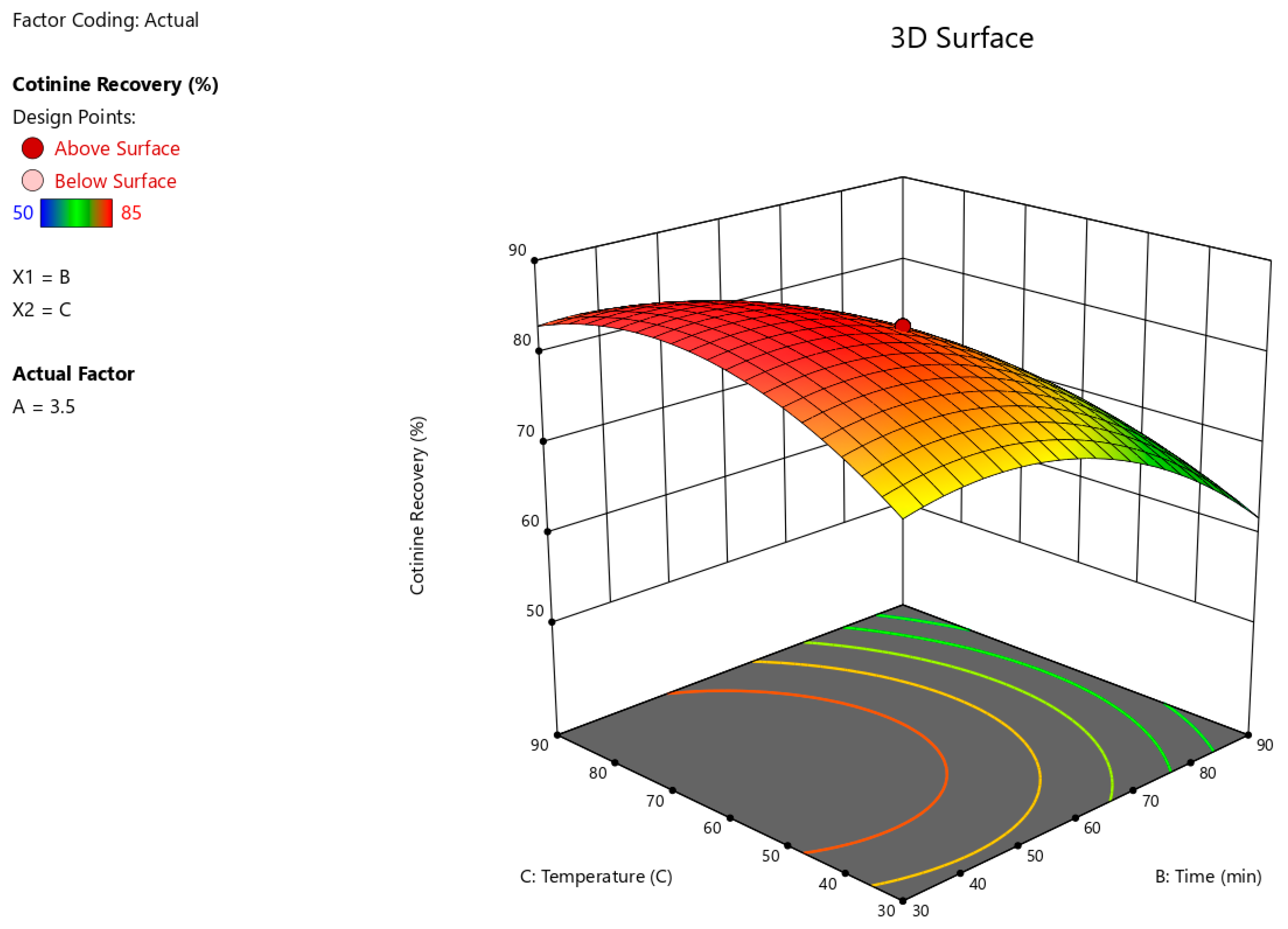
Figure 6 depicts the interactive effects of extraction time (B) and extraction temperature (C) on cotinine recovery, with NaOH concentration maintained at 3.5 M. The response surface exhibits a pronounced curvature, indicating that cotinine recovery initially increases with both factors but begins to decline once the upper limits of extraction time or temperature are exceeded. The red-shaded region denotes the optimal zone of the surface, corresponding to cotinine recovery values exceeding 80%. The plot demonstrates that moderate extraction times (approximately 50–70 min) combined with mid-range temperatures (approximately 50–70 °C) yield the highest recovery.
At shorter extraction times, increasing temperature alone is insufficient to maximise cotinine release, as alkaline digestion requires adequate time to facilitate keratin breakdown. Conversely, extending the extraction time beyond approximately 70–80 min or increasing the temperature above approximately 75–80 °C results in a downward slope of the response surface, indicating reduced recovery. This decline may be attributed to thermal instability or partial degradation of cotinine under prolonged heating conditions.
The contour plot at the base of the figure reinforces these observations by revealing a well-defined elliptical region that represents the optimal combination of extraction time and temperature. This pattern confirms a significant interaction between the two factors, consistent with the RSM analysis in which both the linear and quadratic terms for extraction time and temperature were found to be statistically significant.
Overall, the figure highlights that optimal cotinine extraction is achieved under moderate extraction times and temperatures, whereas excessively long extraction durations or high temperatures lead to diminished recovery.




 ,
,