Article

Communicating the “Last Mile” of Seismic Risk: Insights from a Case Study

1
Istituto Nazionale di Geofisica e Vulcanologia (INGV), Sezione Milano, 20133 Milan, Italy
2
Istituto Nazionale di Geofisica e Vulcanologia (INGV), Osservatorio Nazionale Terremoti, 16145 Genoa, Italy
3
Istituto Nazionale di Geofisica e Vulcanologia (INGV), Sezione Irpinia, 83035 Grottaminarda, Italy
*
Author to whom correspondence should be addressed.
GeoHazards 2026, 7(2), 72; https://doi.org/10.3390/geohazards7020072

Submission received: 4 May 2026 / Revised: 5 June 2026 / Accepted: 9 June 2026 / Published: 12 June 2026

Abstract

Earthquake risk communication often remains centered on event parameters and structural collapse, while local site effects, building response and non-structural elements vulnerability shape how earthquakes are experienced and what people can do to reduce risk. This study examines whether a multi-modal, experience-based strategy focused on these dimensions, which are referred to as “last mile” of seismic risk, can improve public understanding and support actionable preparedness behaviors. The case study is the exhibition “Terremoti: Attenti agli Elementi!—Dettagli che salvano la vita” (Earthquakes: Beware of the Elements!—Details that Save Lives), designed for school audiences and the general public. Its effectiveness was assessed through five multiple-choice questions administered before (N = 183) and after (N = 174) the visit to the Genoa Science Festival; responses were analyzed overall and by topic and demographic group. Correct answers increased significantly from pre- to post-visit, with the largest gains concerning local site effects (+43.29%) and household prevention measures (+49.45%), whereas building vulnerability (+14.97%) and building dynamic response (+0.49%) showed more limited improvement. These exploratory results suggest that seismic risk communication is more effective when abstract concepts are translated into observable, manipulable, and everyday experiences, and support a shift toward a “last-mile” framework of seismic risk communication.

1. Introduction

1.1. Seismic Risk Communication

The primary objective of earthquake engineering and civil protection is the preservation of life through the prevention of structural collapse [1,2,3,4]. This life-safety performance objective has been remarkably successful in several developed countries where modern building codes have significantly reduced casualty rates even in high-magnitude events. However, public discourse on earthquakes often remains focused on parameters that do not fully capture the complexity of seismic risk [5]. For instance, the magnitude of the event is relevant to civil protection authorities but does not directly translate into expected damage for lay audiences. This distinction is supported by recent analyses of community-reported intensities: Chaffeur et al. [6], using more than 25 years of USGS “Did You Feel It?” data in California, showed that moderate and higher reported shaking intensities are often associated with earthquakes of lower magnitude than expected, including several M < 4.5 events producing locally significant shaking. These findings reinforce the need to communicate seismic risk in terms of locally experienced ground motion rather than magnitude alone.
Risk perception is strongly influenced by cognitive biases that systematically affect how individuals interpret low-probability, high-impact events, often leading to distortions in judgment and decision-making [7,8,9,10,11]. Low-risk perception is often associated with poor disaster outcomes [12]. A proper risk perception is mostly associated with safe behaviors towards hazards [13].
In the context of earthquakes, these biases may contribute to an oversimplified interpretation of seismic risk, where magnitude is incorrectly perceived as a direct proxy for damage. This simplification obscures the complexity of the so-called last-mile problem, where seismic waves interact with local geological conditions and the built environment. Site-specific amplification effects and construction characteristics strongly influence the actual damage distribution. Furthermore, a substantial portion of earthquake losses arises not from the collapse of the structural frame, but from the failure of non-structural elements (NSEs) such as partitions, ceilings, utilities, and contents [14,15,16,17]. These dimensions are frequently neglected in standard risk communication, revealing a persistent cultural gap and a predominantly top-down orientation that fails to empower communities [18].
Constructivist learning theories suggest that effective science communication should support active meaning-making processes rather than simple information transfer, aligning with experiential and participatory approaches to learning [19].
This paper argues that bridging this gap requires a radical shift in focus towards two often-ignored variables: Local Site Effects and Non-Structural Elements Vulnerability (NSEV) [18,20]. By focusing on these more tangible factors, we aim to transform seismic risk from an abstract probability into a manageable and actionable reality.
This study addresses the following research question: to what extent can a multi-modal, experience-based communication strategy centered on local site effects and non-structural elements vulnerability improve public understanding of seismic risk and support more actionable preparedness behaviors? Within this framework, we present a communication strategy developed through the KnowRISK project. In particular, the exhibition “Terremoti: Attenti agli Elementi!—Dettagli che salvano la vita” (Earthquakes: Beware of the Elements!—Details that Save Lives), presented at the 2019 Genoa Science Festival under the theme “Elements”, is used as a case study. The Genoa Science Festival represents one of the largest science communication events in Italy, attracting a highly heterogeneous audience including students, families, and the general public. The choice of this venue was strategic, as it allows for testing seismic risk communication tools in a non-specialist and cognitively diverse context, maximizing outreach and educational transferability.
The exhibition adopts a multi-modal communication approach, integrating narrative tools, structured informational panels, and interactive installations. This design enables the translation of complex seismic processes into accessible, experience-based knowledge.
The communication framework developed for the exhibition also informed the production of an educational book [21] aimed at extending the project’s outreach beyond the physical installation, supporting long-term dissemination and seismic risk awareness.

1.2. Background Framework

To address the research question, this background framework draws on three complementary strands of literature: people-centered risk communication, cognitive barriers to preparedness, and experiential learning. These strands support the hypothesis that seismic risk communication becomes more effective when it moves from abstract event parameters toward tangible, locally experienced, and actionable dimensions of risk, particularly local site effects of earthquakes, non-structural elements seismic vulnerability, while also considering building response.
Seismic risk communication has undergone a profound paradigm shift, transitioning from a one-way (“top-down”) model to a two-way, participatory (“bottom-up”) approach [22]. Historically, communication was conceived as a simple transfer of information from experts to a public considered an empty container to be filled. Today, international frameworks, such as the Sendai Framework for Disaster Risk Reduction 2015–2030 [23], promote “people-centered” approaches, where local communities and local knowledge are central elements in understanding and managing risk. This approach recognizes that citizens are not merely passive recipients but key actors with whom a continuous exchange must be established to build resilience [24,25]. Empirical evidence supports this perspective: participatory and experiential educational models that integrate hands-on learning, collaboration, and community-based action planning have been shown to improve hazard knowledge, self-efficacy, and collective preparedness, thereby strengthening resilience at individual and community levels [26].
Effective science communication should support active meaning-making processes and participatory approaches, rather than a simple one-way transfer of information from experts to the public [27,28].
While it is widely recognized that low risk awareness is a primary cause of insufficient prevention and preparedness [29], despite efforts to increase public awareness, the so-called “risk perception paradox” frequently occurs, wherein a high perception of danger does not automatically translate into preparedness and mitigation behaviors [7,30]. This discrepancy is often fueled by fatalism and a poor understanding of the difference between hazard and risk [31]. Many individuals tend to believe they have no control over natural disasters, delegating the entire responsibility for protection to institutions or experts. This confusion generates feelings of helplessness: if the earthquake is perceived as an uncontrollable event or an inescapable fatality, citizens give up on taking preventive action. Adding to this are systematic cognitive obstacles, such as unrealistic optimism and normalization bias, which lead people to believe they are safe (“it won’t happen to me”) or to become accustomed to minor tremors without taking effective action [32]. Indeed, the transition from merely intending to prepare to actual adjustment adoption is a complex process heavily mediated by social-cognitive factors, including outcome expectancy and beliefs regarding personal capacity to act effectively [33].
A first key dimension for bridging this gap is the communication of local site effects. While earthquake magnitude is often used in public discourse as a simplified indicator of earthquake severity, the effects experienced by people depend strongly on how seismic waves are modified during the final part of their path and on how they interact with local ground conditions and the built environment. Communicating local site effects, therefore, shifts attention from the earthquake as a distant source phenomenon to the shaking as it is locally experienced. In this sense, local site effects represent a crucial component of the “last mile” of seismic wave propagation and provide a tangible entry point for non-expert audiences to understand why earthquakes of similar magnitude may produce very different effects.
A second key dimension is the seismic vulnerability of non-structural elements. To overcome resignation and inaction, recent literature emphasizes the crucial importance of communicating about the mitigation of damage to non-structural elements of buildings [20]. Although seismic engineering and building codes traditionally focus on preventing structural collapse to save lives, recent studies have shown that a substantial share of economic losses, operational interruptions, and injuries may stem from the failure of non-structural elements, such as furniture, suspended ceilings, utilities, and shelving, which can sustain damage even during light or moderate earthquakes. In some building contexts, these losses have been estimated to account for between 65% and 85% of total construction-related costs [34,35]. Unlike many structural interventions, several non-structural elements seismic vulnerability reduction measures can be directly implemented by citizens and homeowners through low-cost “Do-It-Yourself” actions. Educational initiatives and guides based on progressive strategies such as “Move, Protect and Secure” allow seismic risk to be transformed from an abstract threat into a manageable reality within homes or schools, promoting a sense of self-efficacy and people’s empowerment [36].
Taken together, these arguments suggest that communication strategies centred on seismic local site effects and non-structural elements damage mitigation, when supported by multi-modal and experiential tools, should produce stronger gains in public understanding than communication centred on more abstract engineering concepts. This expectation underpins the exhibition design and the structure of the pre- and post-visit questionnaire used in this study.
Despite the growing literature on seismic risk communication, limited attention has been devoted to evaluating how multi-modal, experience-based exhibitions might be effective on public understanding of local site effects and non-structural vulnerability. This study addresses this gap through the assessment of a public-engagement exhibition combining interactive, visual, and action-oriented communication strategies. The work explores which seismic concepts are more effectively assimilated through experiential communication approaches and how different forms of interaction influence immediate learning outcomes.

2. Methodology

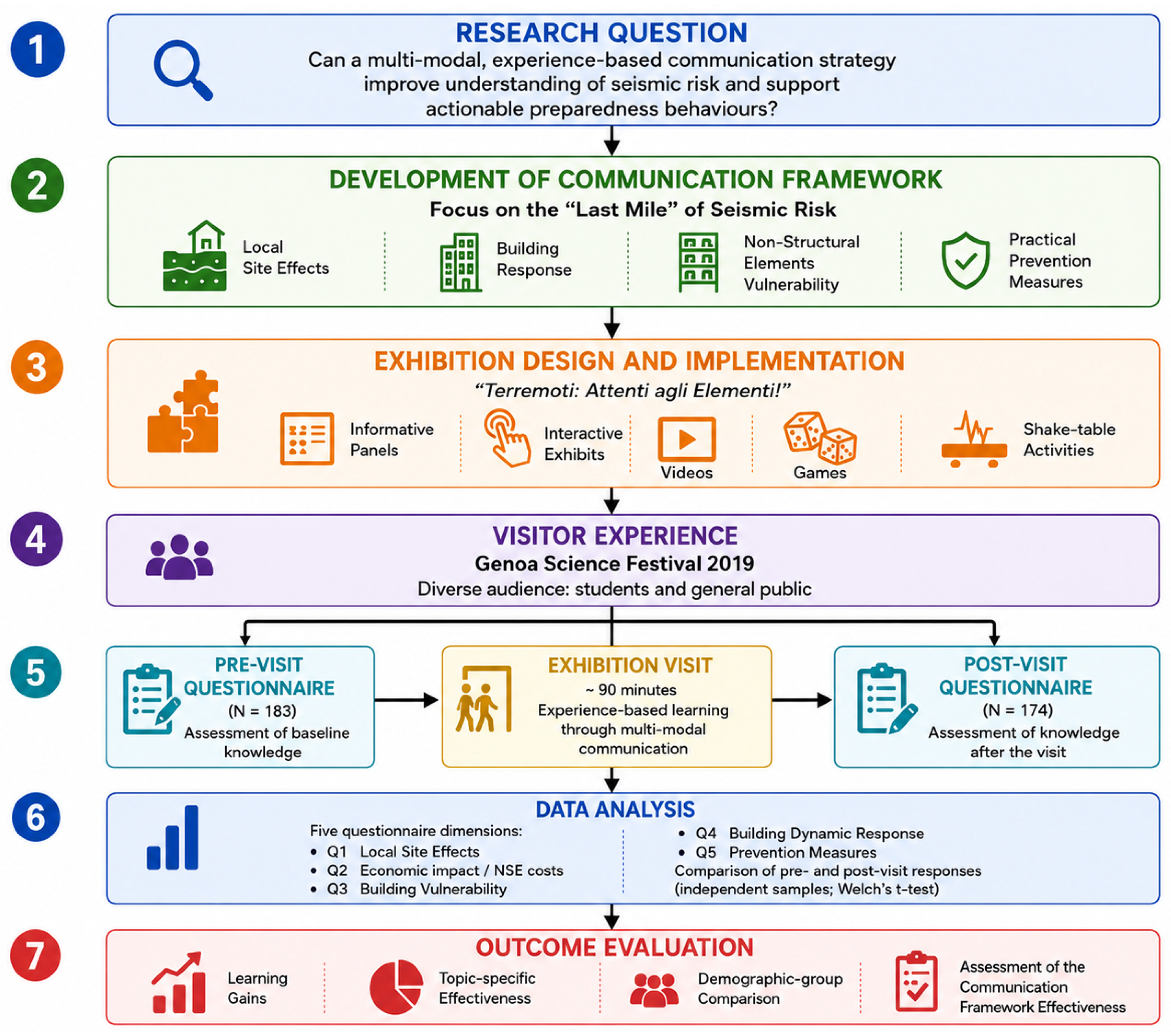
This study uses an exploratory case-study approach to evaluate whether a multi-modal, experience-based communication strategy centered on local site effects and non-structural elements seismic vulnerability can improve public understanding of seismic risk and promote actionable preparedness behaviors. The methodology combines two elements: the description of the exhibition as a communication tool and the assessment of its effectiveness through a pre- and post-visit questionnaire administered during the Genoa Science Festival. The framework of the methodology is presented in Figure 1.
The exhibition was specifically designed within the organizational framework of the Genoa Science Festival, a large-scale public engagement event characterized by high visitor turnover and tightly scheduled activities. Each exhibition session lasted approximately 75 min and partially overlapped with the arrival of subsequent visitor groups, requiring the communication pathway to remain concise and efficiently structured. Visitors, particularly school groups, typically attended multiple activities during the same day, limiting the feasibility of long laboratory-style experiences and extensive assessment procedures. Consequently, the questionnaire was intentionally designed to be concise in order to maximize participation and response reliability while minimizing participant fatigue and incomplete responses. It was developed to assess the main concepts addressed in the exhibition while remaining accessible to a general audience. Although the use of identical questions before and after the visit may have partially introduced testing or recall effects, this approach was considered the most suitable for consistently assessing immediate learning gains associated with the exhibition experience.
The exhibition is analyzed as the operational implementation of the proposed framework, with particular attention to how its narrative structure, panels, interactive exhibits, videos, and games address local site effects, building response, non-structural elements’ vulnerability, and the impact of practical prevention measures on the interest and understanding of the visitors. To this end, a questionnaire measuring changes in visitors’ understanding of these dimensions and to identify differences in learning outcomes across topics and demographic groups was designed. Because the study was conducted with a heterogeneous audience, the results are interpreted as exploratory evidence of the effectiveness of the proposed approach.

2.1. The Exhibition

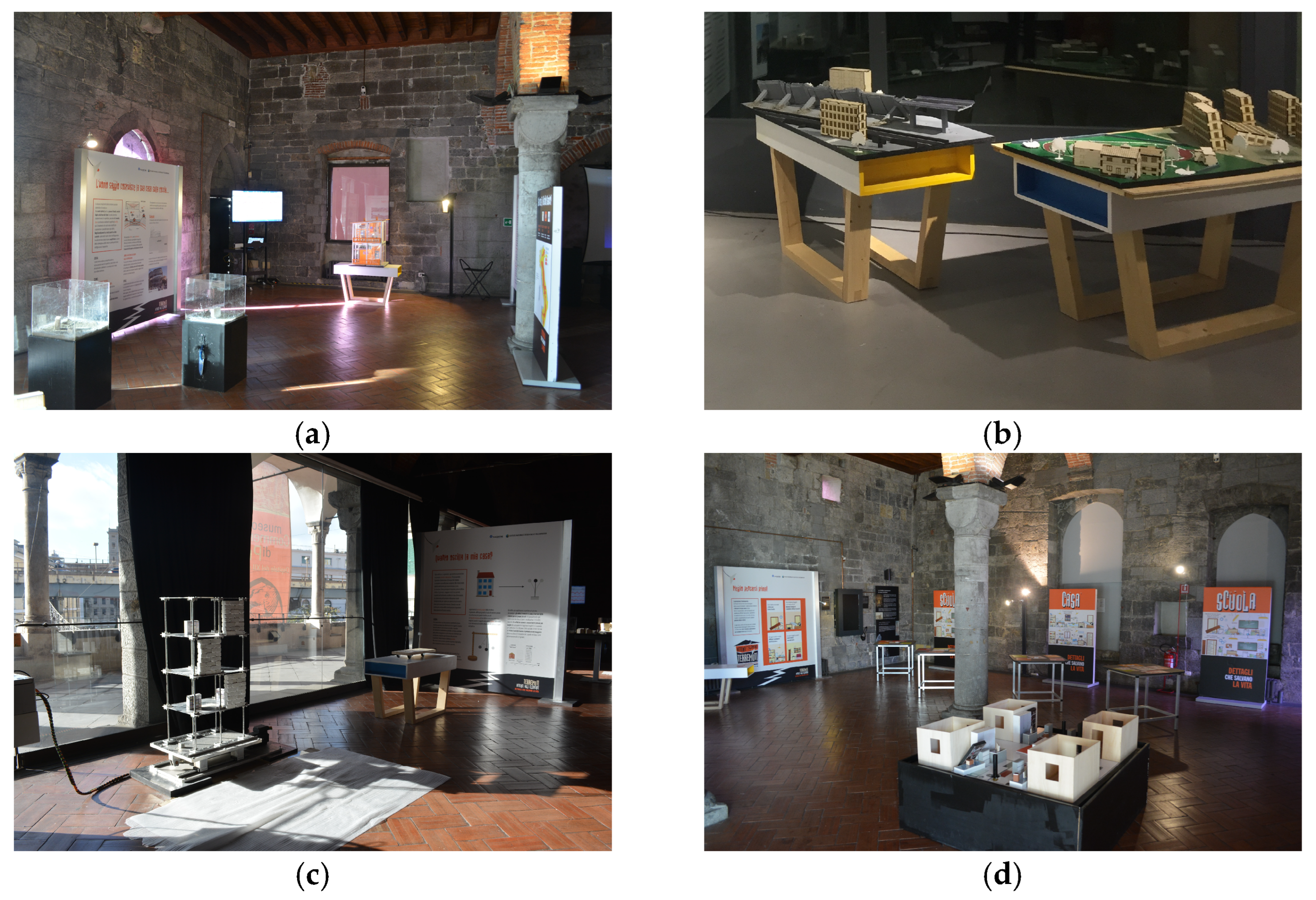
The exhibition includes 17 panels, 6 exhibits, 2 games, 2 videos, 1 seismic station, 1 portable shake-table and 1 toy-like shake-table model (Figure 2).
The scientific itinerary of the exhibition lasts 90 min and is organized into thematic areas, each designed to communicate specific aspects of seismic risk prevention using diverse tools tailored to different audiences, from children to adults. The exhibition integrates interactive, experiential, and informational approaches, allowing each visitor to gain a concrete and comprehensive understanding of seismic phenomena, building behavior, and prevention strategies, promoting a culture of safety that is both accessible and scientifically rigorous.
A key component of the exhibition is the introductory video “https://youtu.be/RdA_CTM4fVI” (accessed on 8 June 2026), which plays a crucial role in framing the visitor’s perspective. The video emphasizes that earthquakes occur frequently worldwide, but their effects can vary significantly depending on building characteristics and prevention measures. The video incorporates short, slogan-like statements designed to capture attention on the diversity of possible impacts and guide the narrative flow:
  • “Earthquakes can shake buildings without causing damage,” the statement displayed over footage of a high-rise building in Tokyo during the 2011 Tohoku earthquake;
  • “They can transform the physical appearance of entire cities”, the statement displayed over an image of Amatrice after the 2016 Central Italy earthquake;
  • “They can affect economic systems”, the statement displayed over an image of damage to warehouses storing Parmigiano Reggiano during the 2012 Emilia earthquake;
  • “They can impact cultural heritage”, the statement displayed over an image of the collapse of the church in Norcia following the 2016 seismic sequence;
  • “They can damage personal belongings and everyday environments”, the statement displayed over footage of a domestic interior during the 2016 Ecuador earthquake, where falling objects pose a direct threat to occupants.
By juxtaposing these scenarios, the video highlights that the consequences of earthquakes extend beyond structural collapse, encompassing functional, economic, cultural, and personal dimensions. The sequence concludes by posing three key questions that guide the entire exhibition:
  • Why do some buildings collapse during an earthquake while others do not?
  • How vulnerable are our homes?
  • And what about the furniture and objects inside our homes…?
These questions are further contextualized, focusing on proximity issues, through references to everyday environments with the following sentences, each displayed on a key-image: “in our most intimate spaces…”, “at school…”, “in our everyday lives…”
Following the introductory video, the exhibition unfolds as a structured narrative pathway that progressively guides visitors from general concepts to increasingly specific and experience-based aspects of seismic risk. The exhibition develops through a sequence of large-format panels (2 × 1.5 m and 2 × 2 m), which constitute a component of the overall multi-modal communication design. The panels are complementary tools that support and guide the exploration of the interactive exhibits. In particular, they provide a conceptual framework that enables visitors to interpret what they observe and experience during hands-on activities. At the same time, they ensure that the exhibition remains accessible even in the absence of guided tours, allowing for autonomous and self-paced learning. Each panel follows a consistent and structured format designed to facilitate comprehension:
  • A catchy and predictive title, intended to capture attention and anticipate the key message;
  • A short introductory statement, summarizing the main concept in a concise and accessible way;
  • Four thematic sections labeled “What,” “How,” “Where,” and “Curiosity,” which present the content from complementary perspectives.
The “What” section introduces the phenomenon in simplified terms, establishing a clear conceptual entry point. The “How” section explains the underlying mechanisms, often through analogies and visual representations. The “Where” section contextualizes the phenomenon spatially, linking it to real-world environments. Finally, the “Curiosity” section provides additional examples or engaging details that reinforce attention and memorability.
Within the multi-modal design of the exhibition, the panels play a dual role: they act as cognitive scaffolding, supporting the interpretation of interactive experiences, and as independent learning resources, ensuring that key messages remain accessible even without direct facilitation. By structuring information in a layered and coherent way, they contribute to bridging the gap between observation, understanding, and application.
The first section introduces the concept of seismic risk (P1 in Table 1), providing a conceptual framework that supports the interpretation of the subsequent content.
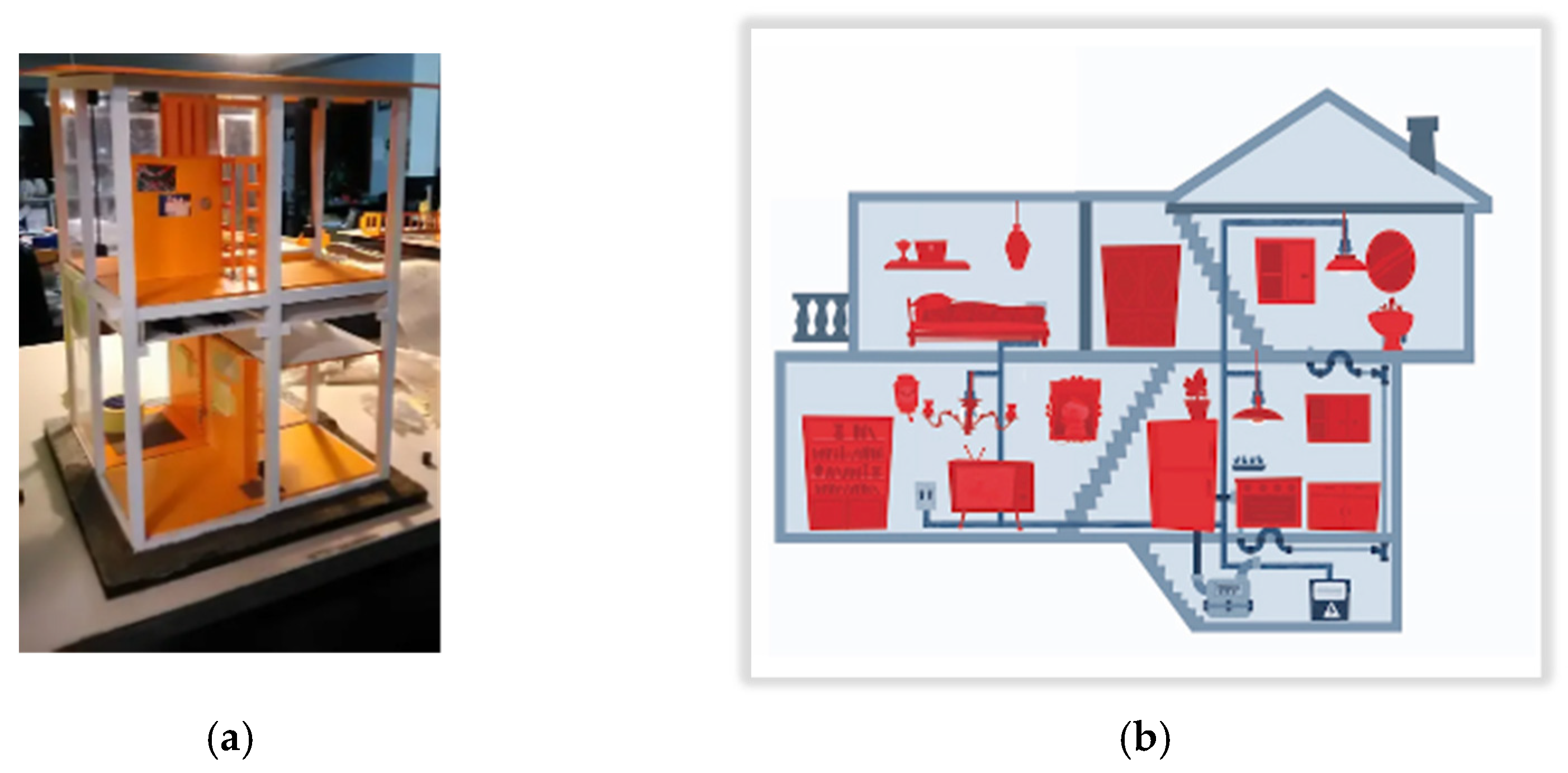
The exhibition then moves to the scale of the building, introducing the distinction between structural and non-structural elements (P2 in Table 1). A hands-on exhibit displays a scaled model of a building with highlighted structural and non-structural elements placed on top of a base made of rocks and sand, summarizing the key aspects that will be unraveled through the visit (Figure 3).
This distinction represents a central conceptual shift, as it broadens the understanding of seismic impact beyond collapse, highlighting the relevance of elements that directly affect everyday life inside buildings.
The pathway then focuses on the role of ground conditions, introducing the concept that seismic waves are modified as they propagate toward the surface.
The panel on site amplification (P2 in Table 1) recalls a saying, “the wise man builds his house on the rock”, to highlight how geological and topographic conditions can increase the intensity of ground motion. Visitors can observe images of seismic amplification, which occur in soft sediments such as sands and clays or on mountainous reliefs. Concrete and iconic examples, such as the Colosseum, illustrate how different parts of structures rest on different substrates and therefore respond differently to the same seismic events. A seismological station allows visitors to visualize in real time the accelerogram waveform generated by participants’ jumps, while mechanical liquefaction exhibits demonstrate water upwelling and the toppling of building models. These tools support an intuitive understanding of seismic phenomena.
Soil liquefaction is introduced by the panel “When water makes the difference” (P3 in Table 1), which illustrates how specific ground conditions can lead to severe damage and how this type of damage is different from that directly caused by shaking [37]. The panel on soil liquefaction is complemented by an interactive exhibit designed to translate a complex geotechnical phenomenon into a directly observable and manipulable experience. The exhibit consists of a container filled with water-saturated sand, on which small-scale building models are placed. Visitors can activate the system to simulate seismic shaking. As the shaking increases, water emerges from the sand and the pore water pressure within the saturated soil rises, progressively reducing the effective stress between soil particles. As a result, the soil loses strength and stiffness, causing the model buildings to tilt or sink. This process reproduces, in a simplified but effective way, the mechanism of liquefaction, whereby saturated granular soils temporarily behave like a fluid under seismic loading. The interactive nature of the exhibit allows visitors to directly observe the transformation of the ground and its consequences on buildings, bridging the gap between abstract explanation and physical experience [37]. By making visible the loss of soil bearing capacity and its immediate effects on structures, the exhibit reinforces the understanding of how local ground conditions can critically influence earthquake damage.
Together, these sections bring the focus to the interaction between seismic waves and local conditions, introducing the key idea that the effects of an earthquake are shaped in its final stage of propagation.
Building on this, the exhibition addresses the question of why similar buildings may respond differently to the same earthquake. Through a panel (P5 in Table 1) with images of real case studies and a video, visitors are shown how construction quality, maintenance, and previous damage influence structural performance. A video showing building damage that occurred in the 2016–2017 earthquakes in Central Italy allows visitors to see the effects of ground shaking on specific vulnerability situations. In this section, children and adolescents learn through hands-on interaction with the models (e.g., the rocking inverse pendula), experiencing dynamic structural response, while adults are offered more detailed explanations through a portable shake table model regarding engineering implications and structural vulnerability. To explain the complex dynamic behavior of buildings—such as soil-structure interaction, resonance, and the subsequent swaying of the structure (addressed in panels P6 and P7) the exhibition translates advanced seismological concepts (e.g., [38,39]) into accessible, hands-on activities.
The focus then shifts from the structural behavior of buildings to what happens inside them. Panels dedicated to non-structural damage (P8 in Table 1) show how furniture, objects, and internal elements can fall, obstruct evacuation routes, or cause injuries, even when the building itself does not collapse. This section explicitly connects seismic risk to the everyday experience of individuals, emphasizing that safety is not only a matter of structural integrity but also of interior conditions.
The final part (P10-to-P13 in Table 1) of the exhibition translates scientific knowledge into practical guidance. It is dedicated to citizen action in structural and non-structural seismic prevention, promoting actionable resilience. Interventions on structural elements, such as base isolation or reinforcements, are distinguished from non-structural actions, summarized in the “Move-Protect-Secure-Retrofit” strategy, aimed at reducing economic losses and risks to personal safety, for example, from tipping furniture that may obstruct escape routes [20]. Through videos, informational panels, games and hands-on activities, visitors can directly experiment with domestic safety, furnishing scale rooms and testing stability, identifying common errors, and understanding the importance of preventive choices. To enhance awareness of the role of furniture and non-structural elements, as well as of the actions that can be taken to reduce risk, the exhibition includes an interactive toy-like model of a shake table (2 m × 2 m). Visitors, through control knobs resembling joysticks, can activate and modulate the simulated seismic shaking and manually operate the model. Through this hands-on interaction, visitors can observe how different furniture arrangements and securing strategies influence damage during shaking. On the platform, modular boxes representing domestic environments, such as bedrooms, are positioned. Visitors are invited to arrange furniture and objects within these spaces before activating the shaking. During the simulation, poorly arranged or unsecured elements fall, move, or obstruct evacuation paths, while more carefully arranged configurations show reduced damage and safer conditions. This direct comparison enables visitors to observe the consequences of their choices in real time. Visitors are not only exposed to information but are required to make choices, test them, and immediately observe the outcomes. In doing so, the exhibit effectively translates abstract recommendations, such as securing furniture or optimizing spatial arrangement, into concrete, embodied experiences.
In addition to the vibrating table exhibit, the exhibition includes a card-based interactive game designed to reinforce understanding of non-structural risk and appropriate prevention measures [20,40]. The game requires visitors to match illustrated cards to a board representing different types of actions. Each card depicts a specific situation involving non-structural elements vulnerability within buildings, such as furniture or objects that may be unsecured, improperly positioned, protected, or structurally improved. Visitors are asked to correctly associate each card with one of four action categories: moving, securing, protecting, or strengthening. Importantly, some cards intentionally represent incorrect or unsafe actions. This design choice introduces a critical dimension of the activity: visitors must not only recognize correct behaviors but also identify and reject inappropriate ones. This process encourages active reasoning and helps to clarify common misconceptions related to household safety. Through this interactive format, abstract recommendations are translated into a structured decision-making task. The game supports the consolidation of knowledge by requiring participants to classify, compare, and evaluate different scenarios, thereby reinforcing the distinction between effective and ineffective prevention strategies. A simplified version of the activity is designed for younger children [20,40]. In this case, participants are asked to observe the effects of an earthquake on familiar environments, such as a bedroom (P12 in Table 1) or a classroom (P13 in Table 1), and to compare images of the same space with and without vulnerability reduction measures based on the “Move–Protect–Secure” strategy. Using a magnetic board, children identify and mark the differences between the two scenarios, describing what has been changed and why. This hands-on approach facilitates understanding by linking visual observation to reasoning about safety improvements.
The exhibition concludes by reinforcing the importance of anticipatory action, emphasizing that prevention must take place before an earthquake occurs.

2.2. Effectiveness Assessment

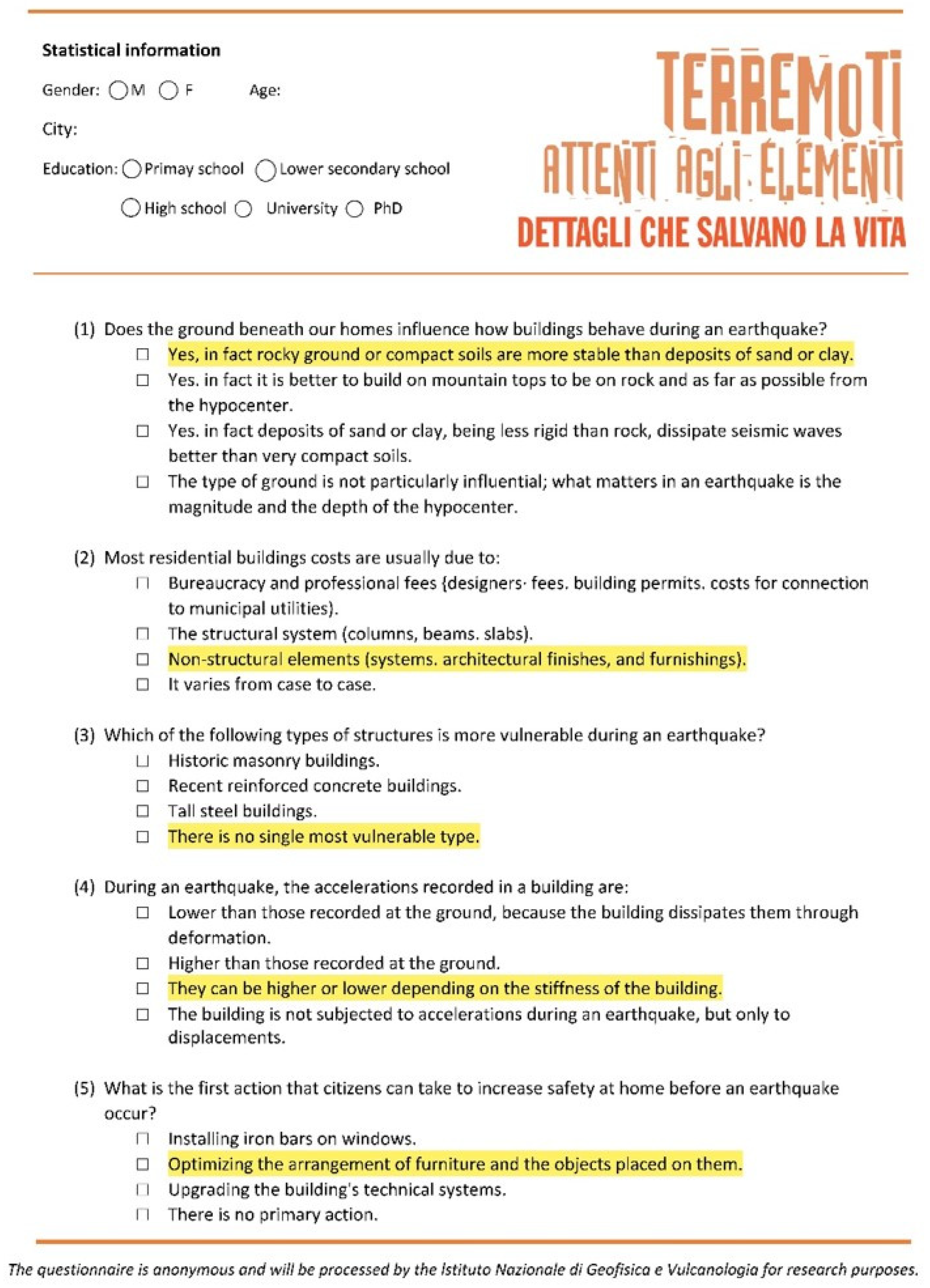
The effectiveness of the exhibition was assessed through a structured questionnaire composed of five multiple-choice questions, each targeting to reflect the “last mile” framework of seismic risk communication. Each question included one scientifically correct answer and three distractors designed to reflect common misconceptions or simplified interpretations. A pre-/post-exposure design was adopted with questionnaires administered before and after the visit (Table 2). In particular, Question 1 addresses local site effects, emphasizing the role of ground conditions in shaping seismic shaking. Questions 2 and 5 focus on Non-Structural Elements Vulnerability, highlighting the economic and safety implications and translating them into actionable prevention measures. Questions 3 and 4 address building vulnerability and response, reinforcing the idea that damage results from the interaction between seismic input and local conditions rather than from the hazard alone. For completeness, the full questionnaire used in this study is reported in Appendix A (Figure A1).
The questionnaire was administered during the final six days of the exhibition at the Genoa Science Festival, before and after the visit. Data collection included the weekend to involve both school groups and the general public. Each visit lasted approximately 90 min, during which the questionnaire was completed as part of the exhibition pathway. However, the high level of engagement, manifested through questions, discussions, curiosity, and the desire to further explore and interact with the exhibits, often made the available time insufficient. As a result, the questionnaire could only be administered to a limited number of participants, leading to the collection of 183 pre-visit and 174 post-visit responses. Since the questionnaires were administered anonymously, pre- and post-visit responses could not be reliably matched at the individual level. Consequently, the two datasets were treated as independent samples for the statistical analysis.
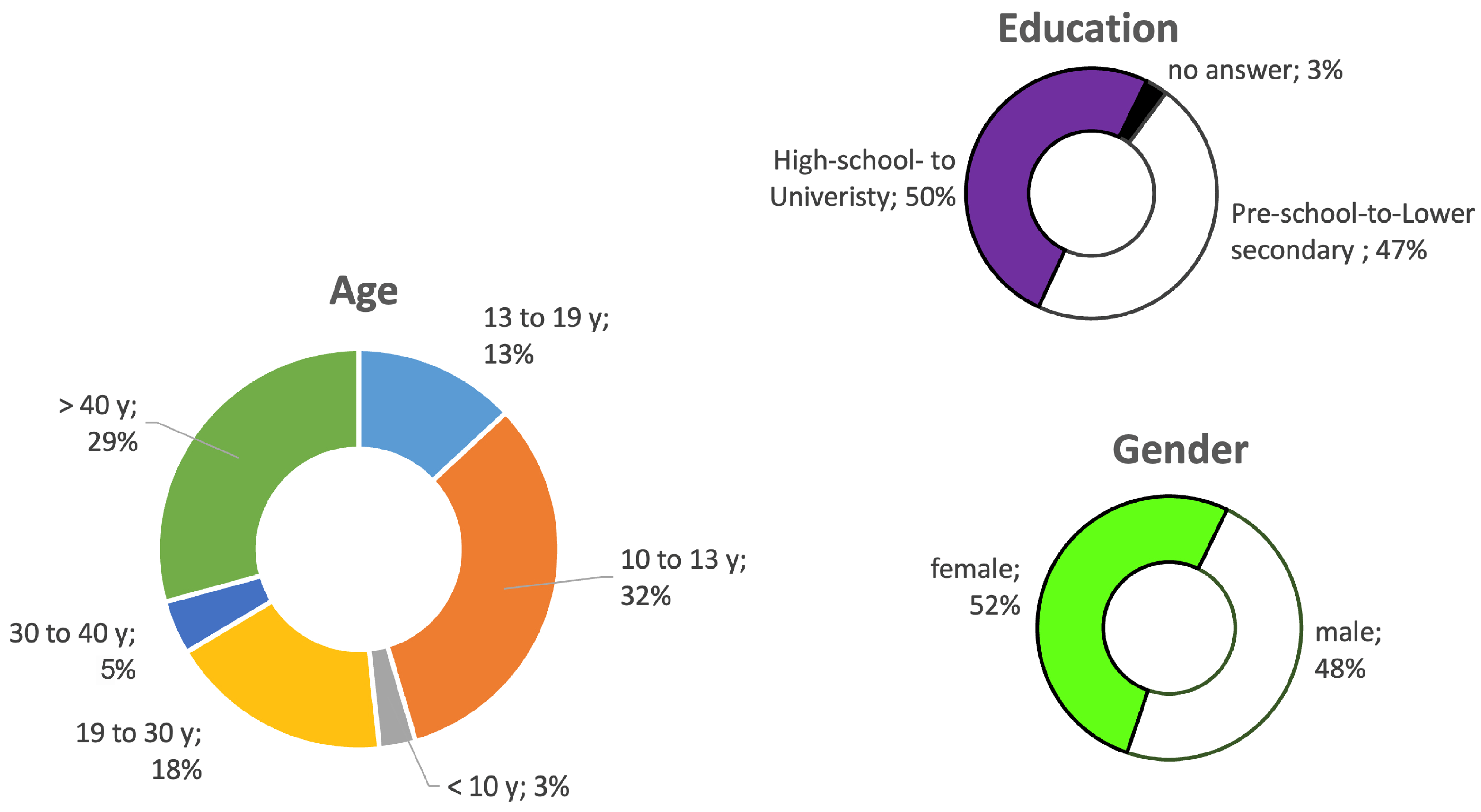
The distribution of respondents by age, educational level, and gender is presented in Figure 4.
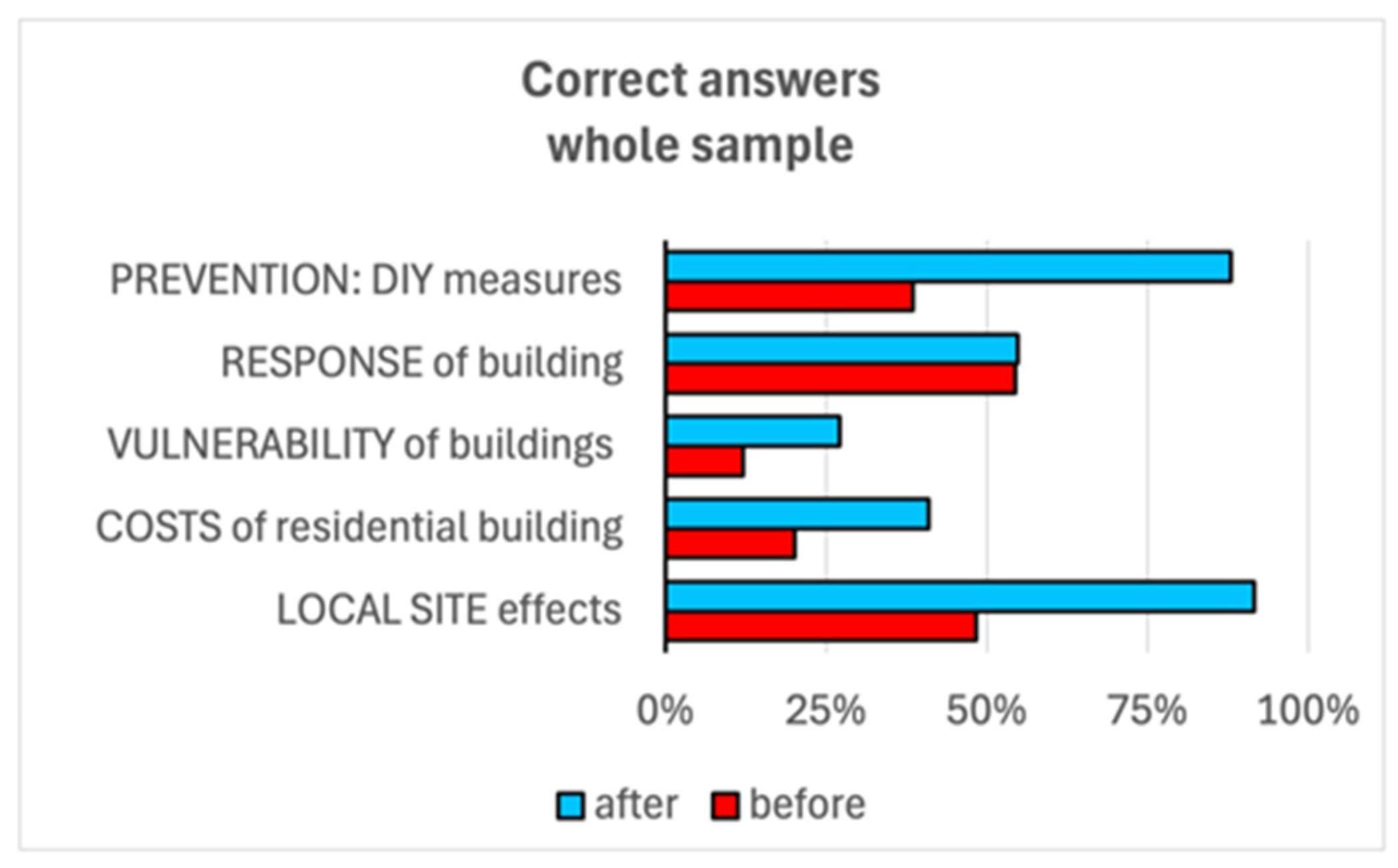
The question on household prevention measures shows the highest increase, from 38.50% to 87.95% (+49.45%) (Figure 5). Participants demonstrate a marked ability to identify simple, actionable strategies (e.g., securing furniture), suggesting that the exhibition effectively conveyed practical knowledge with immediate applicability. Despite its apparent simplicity, this question revealed a significant pre-visit knowledge gap, indicating that non-structural damage is not commonly perceived as a primary source of earthquake risk. The question on building costs shows a moderate increase, from 20.11% to 40.96% (+20.85%) (Figure 5). Despite the improvement, the relatively low proportion of correct responses indicates persistent misunderstandings, particularly the tendency to associate costs primarily with structural components or administrative factors rather than non-structural elements.
The question on building vulnerability shows a limited increase, from 12.13% to 27.10% (+14.97%) (Figure 5). The persistence of incorrect responses suggests that participants continue to rely on simplified assumptions, such as the belief that certain building types are inherently more vulnerable regardless of design and maintenance conditions.
The question on building dynamic response shows negligible variation, with correct responses increasing from 54.38% to 54.87% (+0.49%) (Figure 5). This indicates that the concept related to the relationship between structural stiffness and seismic accelerations remains difficult to understand and was not significantly influenced by the exhibition.
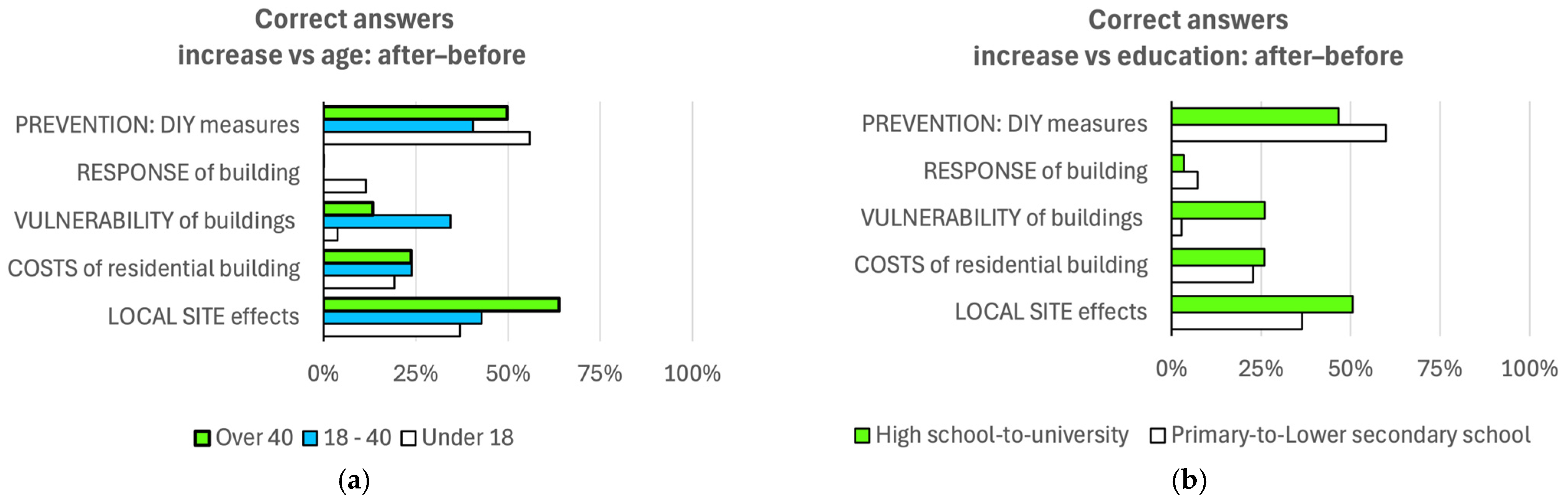
The analysis highlights variations in learning outcomes across demographic groups (Figure 6):
  • Age: younger participants (under 18) show the highest gains, particularly in practical and perceptual topics, indicating greater cognitive flexibility;
  • Education level: participants with higher education levels show more limited changes in technical topics, suggesting stronger persistence of pre-existing knowledge structures;
  • Bender: both male and female participants exhibit similar patterns, with significant improvements in practical and perceptual domains and more limited changes in technical areas.
Given the descriptive nature of the analysis, results should be interpreted as exploratory.

3. Discussion

The results provide a positive, although exploratory, answer to the research question. A multi-modal, experience-based communication strategy centered on earthquake local site effects and non-structural elements vulnerability appears to improve public understanding of seismic risk, particularly when the content is tangible, observable, and directly connected to everyday experience. The strongest learning gains were observed for local site effects and practical prevention measures, whereas more abstract engineering concepts, such as building response and structural vulnerability, showed more limited improvement. This pattern suggests that the effectiveness of seismic risk communication depends not only on the scientific relevance of the content, but also on its proximity to lived experience and its translation into actionable knowledge.
In particular, the strong improvement in understanding of local site effects highlights the importance of addressing the “last mile” of seismic wave propagation, which directly shapes how ground motion is experienced. Concepts that are closely aligned with perceptual experience appear to be more easily understood and retained, as they can be directly related to what individuals feel during an earthquake.
Similarly, the substantial increase in correct responses related to practical prevention measures demonstrates the effectiveness of action-oriented communication. Information that can be translated into immediate, concrete actions facilitates both comprehension and behavioral relevance, effectively bridging the gap between knowledge and preparedness [30,41].
By contrast, limited improvements in building response and vulnerability indicate that abstract engineering concepts are more difficult to communicate effectively. These topics are likely influenced by pre-existing mental models and cognitive biases, which tend to persist even after exposure to new information [7,30].

3.1. Why the Multi-Modal Design Was Effective

A key factor underlying these results is the exhibition’s multi-modal design, which integrates visual, interactive, and decision-based learning approaches. This design does not rely on a single communication channel, but combines narrative framing, structured panels, physical models, interactive exhibits, games, and guided or self-guided exploration. The exhibits engage complementary cognitive processes:
  • Understanding, through the observation of physical phenomena, such as the liquefaction exhibit, where visitors can directly observe the loss of soil bearing capacity and its effects on buildings;
  • Action through hands-on interaction, such as the vibrating platform, where visitors arrange furniture and immediately observe the consequences of their choices during simulated shaking;
  • Evaluation through classification and reasoning tasks, such as the card-based game, requires visitors to distinguish between correct and incorrect prevention actions.
This combination of modalities enables visitors not only to receive information but to experience, test, and evaluate it. By translating abstract concepts into observable and manipulable phenomena, the exhibition strengthens the connection between scientific knowledge and everyday experience, thereby enhancing both understanding and retention. The exhibition design aligns with Kolb’s experiential learning theory, according to which knowledge is constructed through a cyclical process of concrete experience, reflective observation, abstract conceptualization, and active experimentation [19].
The introductory video plays a crucial role in shaping these outcomes. By presenting a range of real-world impacts, from undamaged buildings to urban destruction, economic losses, cultural heritage damage, and domestic risks, it broadens seismic impact beyond structural collapse. This initial framing prepares visitors to interpret subsequent information through an experiential lens. In particular, it
  • Foregrounds the variability of earthquake effects, anticipating the focus on local site conditions (Q1);
  • Introduces the relevance of non-structural damage, preparing visitors for the emphasis on indoor safety and prevention (Q5);
  • Situates risk within familiar contexts (home, school, everyday life), increasing cognitive engagement and perceived relevance.
As a result, the concepts most aligned with this experiential framing show the highest learning gains.

3.2. Linking Learning Gains to the Exhibition Pathway

The analysis of questionnaire results can be directly interpreted considering the exhibition’s narrative structure and communication strategy.
The strongest improvements are associated with topics that are explicitly emphasized across multiple components of the exhibition, including the introductory video, explanatory panels, and interactive exhibits.
In particular, the high increase in correct responses related to local site effects (Q1) can be linked to the central role of ground–shaking within the exhibition pathway. Visitors are repeatedly exposed to this concept through visual explanations (site amplification and liquefaction panels) and interactive experiences (liquefaction exhibit), allowing them to link geophysical processes to observable effects. This aligns with experiential learning theory, according to which learning is most effective when individuals actively engage with phenomena, as in the case of the toy-like shake-table model and liquefaction experiments, which transform abstract concepts into lived experiences.
Similarly, the very high improvement observed in practical prevention measures (Q5) reflects the emphasis on actionable knowledge. The combination of narrative framing (video), visual examples (non-structural damage panels), and interactive activities (toy-like shake-table model and card-based game) supports the internalization of behaviors that are directly applicable to everyday life.

3.3. Barriers to Abstract Engineering Concepts

The questions that show limited improvement correspond to sections of the exhibition dealing with more abstract or engineering-based concepts. The minimal variation observed in building response (Q4) reflects the difficulty of conveying dynamic structural behavior, despite the use of analogies such as pendulums and oscillations. These concepts require a level of abstraction that is less directly connected to perceptual experience, making them harder to assimilate within the limited duration of a visit.
Similarly, the modest improvement in concepts related to building vulnerability (Q3) can be attributed to the persistence of simplified mental models. Visitors tend to retain pre-existing assumptions—such as the idea that certain building types are inherently more vulnerable—despite exposure to case studies showing more complex and context-dependent behavior.
The demographic variations in learning outcomes observed in the quantitative assessment provide crucial insights into the cognitive barriers affecting seismic risk communication. The finding that younger participants (under 18) exhibit the highest learning gains in practical and perceptual topics highlights their cognitive flexibility, making them particularly responsive to the experiential and action-oriented design of the exhibition. Conversely, the persistence of misconceptions among participants with higher education levels, particularly regarding abstract technical topics like dynamic building response and vulnerability, reveals a significant challenge. This outcome suggests that higher formal education may be associated with more stable pre-existing knowledge structures that are less easily modified within the limited timeframe of a standard exhibition visit.
This specific gap was directly addressed during the Milan installations (years 2023–2026), where the engineering component was strengthened through the introduction of a dedicated side laboratory focusing on building resonance and structural vulnerability reduction measures [40]. While this hands-on laboratory proved highly successful, its average duration of approximately one hour makes it incompatible with the standard exhibition pathway. This logistical constraint clearly demonstrates that effectively deconstructing engineering misconceptions requires dedicated time and specialized attention that cannot be easily condensed into a general public tour.

3.4. Scalability, Adaptation, and Transferability

The exhibition reached more than 1000 visitors during its first implementation and approximately 3000 in subsequent installations, confirming strong public engagement and scalability across different seismic contexts (Table 3).
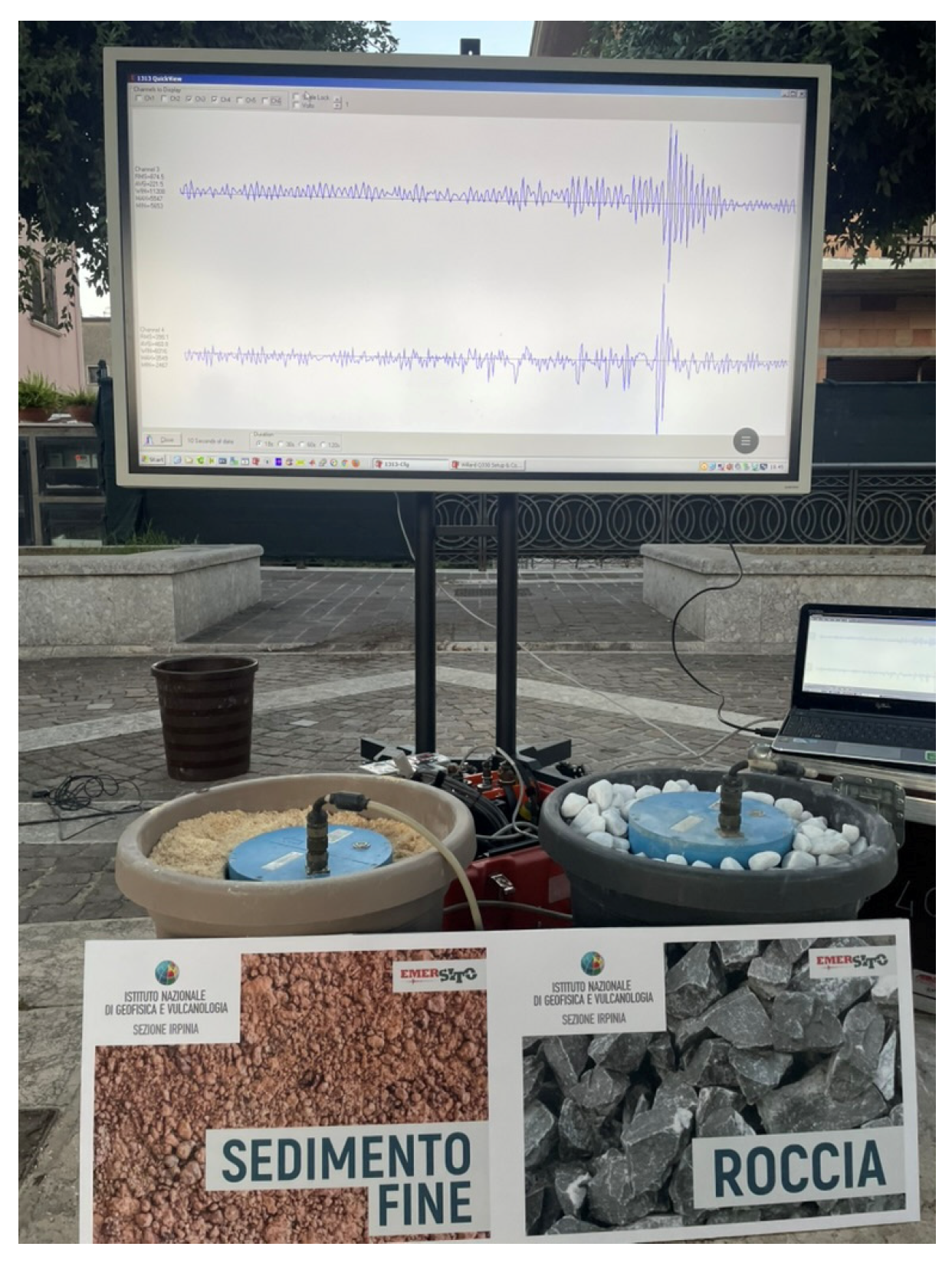
The impact of the exhibition is further confirmed by its ability to be requested, adapted, and successfully re-proposed in territories with different hazard profiles. Following the initial implementation, the exhibition underwent iterative adjustments for subsequent installations in Varese, Milan, and Padua, areas in the north of Italy characterized by low-to-moderate seismic hazard, and in Grottaminarda, located in the south of Italy in a high seismic hazard zone. The exhibition is currently displayed during open-day events in Grottaminarda and Milan. These adaptations enabled targeted modifications of the communication strategy based on both contextual factors and observed learning outcomes, such as placing greater emphasis on the interactive communication of local site effects. In this context, an exhibit was developed in which seismic sensors installed in sandy and gravel materials simulate ground motion in soft and hard soils (Figure 7). The resulting waveforms are displayed and compared, allowing visitors to directly observe how soil conditions influence seismic shaking. Visitors actively engage with the exhibit by triggering a simulated earthquake (e.g., by jumping) and are then asked to identify the waveform associated with either sandy or rocky ground.
The transferability of the proposed framework is further supported by the translation of the exhibition content into an educational book designed to support teaching in upper secondary schools. The book extends the exhibition’s experience-based approach into formal education by combining in-depth explanations, visually engaging design, hands-on activities, and multimedia resources. The planned digital version will further enhance accessibility and dissemination. In this sense, the exhibition does not remain a stand-alone outreach event but becomes the basis for a broader educational pathway capable of supporting longer-term learning and the consolidation of a prevention culture among younger generations.
These iterative adjustments and extensions highlight the flexibility of the proposed communication framework. They also show the importance of tailoring content to the hazard context, the audience, and the educational setting.

3.5. Implications for Seismic Risk Communication

The findings reveal a consistent pattern in the effectiveness of seismic risk communication. Communication strategies prove to be significantly more effective when they focus on tangible, observable, and experience-based aspects of seismic phenomena.
The exhibition reinforces the core argument of this study: since addressing structural vulnerability demands a level of dedicated attention that exceeds the format of a standard exhibition, general risk communication must pivot towards the “last mile” framework. The effectiveness of the exhibition can be interpreted within a combined framework of constructivist learning theory, experiential learning theory [19], and cognitive bias theory [7], highlighting the importance of experience-based approaches in overcoming persistent misconceptions in seismic risk communication.
These results suggest that future seismic risk communication should not rely primarily on abstract technical explanations or on magnitude-based narratives. Instead, communication strategies should prioritize tangible, locally experienced, and actionable dimensions of seismic impact. By doing so, they can help overcome cognitive barriers, strengthen self-efficacy, and support a more concrete culture of prevention.
While the present study provides evidence of immediate learning gains and increased awareness following the exhibition experience, the exploratory nature of the assessment does not allow the isolation of exhibition-specific effects from other potential influences, nor does it directly assess whether this knowledge translates into long-term behavioral change or preparedness actions. Future research should therefore investigate the persistence of learning outcomes over time and evaluate whether experience-based communication strategies influence actual household mitigation measures and preparedness decisions. Follow-up surveys conducted weeks or months after participation could help assess both knowledge retention and the adoption of concrete safety measures, such as securing furniture, preparing emergency kits, or identifying safer indoor spaces. Further developments could also include more detailed analyses of how demographic variables such as age, educational background, and previous earthquake experience influence learning outcomes and risk perception. Such approaches would help clarify how different audiences perceive, retain, and translate seismic risk knowledge into preparedness-related behaviors.

4. Conclusions

This study highlights the necessity of a paradigm shift in seismic risk communication, advocating a shift toward tangible, experience-based seismic risk communication [5,18,42]. Through the case study of the exhibition “Terremoti: Attenti agli Elementi!—Dettagli che salvano la vita”, this study provides exploratory evidence that public understanding and immediate awareness can be enhanced when communication focuses on proximity issues, everyday experiences, specifically local site effects and non-structural elements vulnerability. By translating abstract probabilities into observable phenomena and actionable knowledge, the exhibition supported visitors’ immediate understanding of practical prevention concepts and seismic risk awareness [33].
The quantitative assessment and the subsequent iterative adaptations of the exhibition revealed clear patterns in how risk information is assimilated. While multi-modal, interactive, and decision-based tools proved highly effective in teaching practical prevention measures and the role of ground-shaking, more abstract engineering concepts, such as dynamic building response and structural vulnerability, remained difficult to convey due to the persistence of entrenched misconceptions. This highlights the limitations of traditional, top-down communication approaches that rely heavily on complex technical explanations without an experiential anchor.
Ultimately, the successful deployment of the exhibition across territories with varying levels of seismic hazard, from low-to-moderate areas, together with the development of a dedicated educational book for upper secondary schools, further supports the scalability and transferability of the approach. For civil protection authorities and policymakers, these findings offer a clear directive: future risk communication campaigns must prioritize actionable, experience-based knowledge tailored to the cognitive and contextual needs of the audience. By emphasizing non-structural safety and the specificities of the local environment, it is possible to bridge the gap between scientific awareness and practical preparedness, fostering a more resilient society.

Author Contributions

Conceptualization, G.M., F.M., E.E. and S.S.; methodology, G.M., F.M., E.E. and S.S.; validation, G.M., F.M., E.E. and S.S.; formal analysis, F.M.; data curation, F.M. and G.M.; writing—original draft preparation, G.M., E.E., F.M., S.S. and L.Z.; writing—review and editing, G.M., E.E., F.M., S.S. and L.Z.; visualization, F.M. and G.M.; supervision, G.M. and E.E.; project administration, G.M.; funding acquisition, F.M. and G.M. All authors have read and agreed to the published version of the manuscript.

Funding

This research was funded by INGV.

Data Availability Statement

The original contributions presented in this study are included in the article. Further inquiries can be directed to the corresponding author.

Acknowledgments

The authors acknowledge all the institutions and collaborators involved in the design and implementation of the exhibition “Terremoti: Attenti agli Elementi!—Dettagli che salvano la vita”, developed through the collaboration between INGV, EUCENTRE, and the University of Genoa. The exhibition was developed as a follow-up to the KnowRISK project (DG-ECHO, GA ECHO/SUB/2015/718655/PREV28). A special acknowledgment is due to Maddalena De Lucia for her key role in the conception, development, and promotion of the exhibition, to the INGV Graphics and Imaging Laboratory for visual design, and to all personnel involved in technical support, installation, and educational activities, as listed in the exhibition acknowledgments panel. The authors also acknowledge Salvatore Marino and Lorenzo Scandolo for their contribution to the development of the engineering component of the exhibits, and for their scientific input and fruitful discussion, as well as EUCENTRE for the support provided in this context, and Fabio Bovenzi for video production. The Varese installation benefited from the support of Parco Campo dei Fiori, including the staff of the Osservatorio Geofisico, students involved in school-based work-related learning programs (PCTO) from local schools, the NGO AstroNatura, and the Volunteer Ecological Guards (NGO) of the Parco Campo dei Fiori. The Padua installation was supported by the Department of Geosciences of the University of Padua. The Grottaminarda (AV) and Milan installations were supported by the INGV Irpinia and Milan Sections and their personnel, respectively. During the preparation of this manuscript/study, the author(s) used ChatGPT GPT-5.5 and NotebookLM (Google) for the purposes of English editing and support in structuring the manuscript and including an assessment of its logical coherence. Figure 1 (Methodological framework) was created using ChatGPT GPT-5.5. The authors have reviewed and edited the output and take full responsibility for the content of this publication.

Conflicts of Interest

The authors declare no conflicts of interest.

Appendix A

The questionnaire was developed following the objectives of the exhibition. It was distributed to visitors before and after the visit, Figure A1.
Figure A1. List of questions and associated multiple-choice response options; correct answers are highlighted in yellow.
Geohazards 07 00072 g0a1

References

  1. Ghobarah, A. Performance-based design in earthquake engineering: State of development. Eng. Struct. 2001, 23, 878–884. [Google Scholar] [CrossRef]
  2. Liel, A.B.; Haselton, C.B.; Deierlein, G.G.; Baker, J.W. Incorporating modeling uncertainties in the assessment of seismic collapse risk of buildings. Struct. Saf. 2009, 31, 197–211. [Google Scholar] [CrossRef]
  3. Sonwani, J.K.; Jia, G.; Mahmoud, H.N.; Wang, Z. Seismic Collapse Risk Assessment of Braced Frames under Near-Fault Earthquakes. Metals 2021, 11, 1271. [Google Scholar] [CrossRef]
  4. Dolce, M. Earthquake and structural engineering science for civil protection. Bull. Earthq. Eng. 2023, 21, 6143–6170. [Google Scholar] [CrossRef]
  5. Musacchio, G.; Falsaperla, S.; Solarino, S.; Piangiamore, G.L.; Crescimbene, M.; Pino, N.A.; Eva, E.; Manzoli, F.; Fabbri, M.; Butturi, M.; et al. KnowRISK on seismic risk communication: The set-up of a participatory strategy-Italy case study. In Proceedings of the International Conference on Earthquake Engineering and Structural Dynamics, Geotechnical, Geological and Earthquake Engineering; Springer: Cham, Switzerland, 2019; Volume 47, pp. 413–429. [Google Scholar] [CrossRef]
  6. Chaffeur, J.M.; Saunders, J.K.; Minson, S.E.; Baltay Sundstrom, A.S.; Cochran, E.S.; Hough, S.; Quitoriano, V.; Page, M.T.; Blair, J.L. What 25+ years of Did You Feel It? Intensities tell us about shaking in California. Seismol. Res. Lett. 2025, 96, 2625–2637. [Google Scholar] [CrossRef]
  7. Slovic, P. The Perception of Risk; Earthscan Publications: London, UK, 2000. [Google Scholar]
  8. Crescimbene, M.; Cugliari, L.; La Longa, F.; Moreschini, I. Living with the Volcano: Perception of Tsunami and Volcanic Risk Among Residents of Stromboli Island, Italy. Soc. Sci. 2026, 15, 157. [Google Scholar] [CrossRef]
  9. Crescimbene, M.; La Longa, F.; Peruzza, L.; Pessina, V.; Pino, N.A. The seismic risk perception in Italy compared to some hazard, exposure and vulnerability indicators. In Proceedings of the International Conference of Urban Risk, Lisbon, 30 June 2016; Earth-Prints: Santa Fe, NM, USA, 2016; Available online: https://www.earth-prints.org/handle/2122/10362 (accessed on 8 June 2026).
  10. Zidarich, S.; Crescimbene, M.; Musacchio, G.; Sestito, M.G.; Reitano, D.; D’Angela, D.; Perrone, D.; Aiello, M.A.; Magliulo, G. Seismic risk perception of non-structural elements in Italian hospitals: Pilot studies. Bull. Geophys. Oceanogr. 2025, 66, 195–216. [Google Scholar] [CrossRef]
  11. Islam, A.R.M.T.; Tasnuva, A.; Mithila; Biswas, D.; Alam, E. Perceived earthquake knowledge, awareness, and preparedness in a seismic risk-prone city of Bangladesh. Geomat. Nat. Hazards Risk 2026, 17, 2660156. [Google Scholar] [CrossRef]
  12. Otoufi, M.; Pishgooie, S.A.H.; Habibi, H. Disasters characteristics: An effective factor in risk perception of healthcare middle managers in Armed Forces: A qualitative study. Mil. Caring Sci. 2019, 6, 215–227. [Google Scholar] [CrossRef]
  13. Peacock, W.G.; Brody, S.D.; Highfield, W. Hurricane risk perceptions among Florida’s single family homeowners. Landsc. Urban Plan. 2005, 73, 120–135. [Google Scholar] [CrossRef]
  14. Zito, M.; Nascimbene, R.; Dubini, P.; D’Angela, D.; Magliulo, G. Experimental seismic assessment of nonstructural elements: Testing protocols and novel perspectives. Buildings 2022, 12, 1871. [Google Scholar] [CrossRef]
  15. Perrone, D.; Calvi, P.M.; Nascimbene, R.; Fischer, E.C.; Magliulo, G. Seismic performance of non-structural elements during the 2016 Central Italy earthquake. Bull. Earthq. Eng. 2019, 17, 5655–5677. [Google Scholar] [CrossRef]
  16. Miranda Mosqueda, G.; Retamales, R.; Pekcan, G. Performance of Nonstructural Components during the 27 February 2010 Chile Earthquake. Earthq. Spectra 2012, 28, 453–471. [Google Scholar] [CrossRef]
  17. Filiatrault, A.; Sullivan, T. Performance-based seismic design of nonstructural building components: The next frontier of earthquake engineering. Earthq. Eng. Eng. Vib. 2014, 13, 17–46. [Google Scholar] [CrossRef]
  18. Musacchio, G.; Sarao, A.; Falsaperla, S.; Scolobig, A. A scoping review of seismic risk communication in Europe. Front. Earth Sci. 2023, 11, 1155576. [Google Scholar] [CrossRef]
  19. Kolb, D.A. Experiential Learning: Experience as the Source of Learning and Development; Prentice-Hall: Englewood Cliffs, NJ, USA, 1984. [Google Scholar]
  20. Solarino, S.; Ferreira, M.A.; Musacchio, G.; Rupakhety, R.; O’Neill, H.; Falsaperla, S.; Vicente, M.; Lopes, M.; Oliveira, C.S. What scientific information on non-structural elements seismic risk people need to know? Part 2: Tools for risk communication. Ann. Geophys. 2021, 64, SE322. [Google Scholar] [CrossRef]
  21. Musacchio, G.; Eva, E.; Solarino, S.; Scandolo, L.; Meroni, F.; Marino, S.; De Lucia, M.; Di Laura, F. TERREMOTI: Attenti Agli Elementi! Testo per la Scuola Superiore e Alcuni Corsi Universitari; INGV—Istituto Nazionale di Geofisica e Vulcanologia: Roma, Italy, 2025; Available online: https://www.earth-prints.org/handle/2122/58104 (accessed on 8 June 2026).
  22. Musacchio, G.; Falsaperla, S.; Bernhardsdóttir, A.E.; Ferreira, M.A.; Sousa, M.L.; Carvalho, A.; Zonno, G. Education: Can a bottom-up strategy help for earthquake disaster prevention? Bull. Earthq. Eng. 2015, 14, 2069–2086. [Google Scholar] [CrossRef]
  23. UNISDR. Sendai Framework for Disaster Risk Reduction 2015–2030; UNISDR: Geneva, Switzerland, 2015. [Google Scholar]
  24. Haywood, B.K. A sense of place in public participation in scientific research. Sci. Educ. 2014, 98, 64–83. [Google Scholar] [CrossRef]
  25. Lee, K.A.; Lee, J.R.; Bell, P. A review of Citizen Science within the Earth Sciences: Potential benefits and obstacles. Proc. Geol. Assoc. 2020, 131, 605–617. [Google Scholar] [CrossRef]
  26. Pratt-Sitaula, B.; Pickering, J.; Coe, M.; Butler, R.; Magura, B.; Witter, R.; Groom, R. Developing community disaster resilience through collaborative professional development: Integrating teachers, informal educators, and emergency management personnel. Int. J. Disaster Risk Reduct. 2026, 138, 106100. [Google Scholar] [CrossRef]
  27. La Longa, F.; Camassi, R.; Crescimbene, M. Educational strategies to reduce risk: A choice of social responsibility. Ann. Geophys. 2012, 55, 445–451. [Google Scholar] [CrossRef]
  28. Balog-Way, D.; McComas, K.; Besley, J. The evolving field of risk communication. Risk Anal. 2020, 40, 2240–2262. [Google Scholar] [CrossRef] [PubMed]
  29. Maidl, E.; Buchecker, M. Raising risk preparedness by flood risk communication. Nat. Hazards Earth Syst. Sci. 2015, 15, 1577–1595. [Google Scholar] [CrossRef]
  30. Wachinger, G.; Renn, O.; Begg, C.; Kuhlicke, C. The risk perception paradox-implications for governance and communication of natural hazards. Risk Anal. 2013, 33, 1049–1065. [Google Scholar] [CrossRef]
  31. McClure, J.; Allen, M.W.; Walkey, F. Countering Fatalism: Causal Information in News Reports Affects Judgments About Earthquake Damage. Basic Appl. Soc. Psychol. 2001, 23, 109–121. [Google Scholar] [CrossRef]
  32. Lindell, M.K.; Arlikatti, S.; Prater, C.S. Why people do what they do to protect against earthquake risk: Perceptions of hazard adjustment attributes. Risk Anal. 2009, 29, 1072–1088. [Google Scholar] [CrossRef]
  33. Paton, D. Disaster preparedness: A social-cognitive perspective. Disaster Prev. Manag. Int. J. 2003, 12, 210–216. [Google Scholar] [CrossRef]
  34. De Lucia, M.; Benassi, F.; Meroni, F.; Musacchio, G.; Pino, N.A.; Strozza, S. Seismic disasters and the demographic perspective: 1968, Belice and 1980, Irpinia-Basilicata (southern Italy) case studies. Ann. Geophys. 2020, 63, SE107. [Google Scholar] [CrossRef]
  35. FEMA. Earthquake Safety at Home; Federal Emergency Management Agency: Washington, DC, USA, 2020. Available online: https://www.fema.gov/sites/default/files/2020-08/fema_earthquakes_fema-p-530-earthquake-safety-at-home-march-2020.pdf (accessed on 8 June 2026).
  36. Ferreira, M.A.; Solarino, S.; Musacchio, G.; Mota de Sa, F.; Oliveira, C.S.; Lopes, M.; O’Neill, H.; Orlando, L.; Faggioli, M.M. KnowRISK tools for preparedness and community resilience: Practical Guide, Short Guide for Students, Portfolio and Video. In Proceedings of the 16th European Conference on Earthquake Engineering, Thessaloniki, Greece, 18–21 June 2018. [Google Scholar]
  37. Seed, H.B.; Idriss, I.M. Simplified procedure for evaluating soil liquefaction potential. J. Soil Mech. Found. Div. 1971, 97, 1249–1273. [Google Scholar] [CrossRef]
  38. Gueguen, P.; Bard, P.Y. Soil-structure and soil-structure-soil interaction: Experimental evidence at the Volvi test site. J. Earthq. Eng. 2005, 9, 657–693. [Google Scholar] [CrossRef]
  39. Bard, P.Y.; Chazelas, J.L.; Gueguen, P.; Kham, M.; Semblat, J.F. Site-city interaction. In Assessing and Managing Earthquake Risk; Oliveira, C.S., Roca, A., Goula, X., Eds.; Springer: Berlin/Heidelberg, Germany, 2005; pp. 91–114. ISBN 1-4020-3524-1. [Google Scholar]
  40. Musacchio, G.; Goretti, A.; Meroni, F. Building resilience: Youth learning through earthquake shaking simulations. Geosciences 2025, 15, 216. [Google Scholar] [CrossRef]
  41. Paton, D.; Okada, N.; Sagala, S. Understanding preparedness for natural hazards: Cross cultural comparison. J. Integr. Disaster Risk Manag. 2013, 3, 18–35. [Google Scholar] [CrossRef]
  42. Renn, O. Risk Governance: Coping with Uncertainty in a Complex World; Earthscan: London, UK, 2008. [Google Scholar]
Figure 1. Methodological framework adopted in this study.
Geohazards 07 00072 g001
Figure 2. Selected images of the display at the Genoa Science Festival. Interactive exhibits exemplify the liquefaction phenomenon. (a) Visitors, by pushing a button, activate the shaking system that causes sand to liquefy, buildings to overturn and items buried in the sand to pop up; (b) 3D models showing liquefaction damage; (c) Shake-table and mock-up models; (d) the games corner: visitors are asked to arrange furniture in boxes representing bedrooms, and shake them through a manually operated shake-table.
Geohazards 07 00072 g002
Figure 3. Model of a building (a) and a sketch (b) illustrating the distinction between structural components (load-bearing frame) and non-structural elements (partitions, utilities, and contents). The model rests on a base composed of two different materials, namely stone and rock, to highlight the influence of local conditions on seismic ground motion. On the sketch, in red are coloured buildings contents.
Geohazards 07 00072 g003
Figure 4. Age, education and gender of the sample. An overall statistically significant increase in knowledge was observed from pre- to post-visit (Δ = 1.324), t (≈295) = 10.60, p < 0.001, 95% CI [1.078, 1.570], Cohen’s d ≈ 1.23, based on a Welch’s t-test for independent samples. The choice of the Welch test is justified when the two sets of responses are treated as independent samples with different sizes and variances that are not necessarily equal; however, if the BEFORE and AFTER measurements come from the same subjects, the most appropriate test is the paired-samples t test. Since it is not possible to associate every BEFORE observation with the same response observed AFTER visiting the exhibition, the choice of the Welch test is justified. However, the amount of improvement varies substantially depending on the nature of the content, suggesting that not all types of information are equally accessible or effectively communicated.
Geohazards 07 00072 g004
Figure 5. Percentage of correct answers before and after the visit for the whole sample across the 5 questionnaire concepts. The question on seismic local site conditions shows a substantial increase in correct responses, from 48.27% to 91.56% (+43.29%) (Figure 5). This result indicates improvement in participants’ understanding of how ground conditions affect earthquake impact, as well as the successful correction of common misconceptions (e.g., the assumption that softer soils dissipate seismic waves more effectively).
Geohazards 07 00072 g005
Figure 6. Increase in correct answers (after-visit before-visit) across the five questionnaire concepts, disaggregated by age group (a) and education (b).
Geohazards 07 00072 g006
Figure 7. Site amplification exhibit implemented at the Grottaminarda display for the exhibition. The display shows real-time signals from two identical seismic sensors installed on fine and coarse materials illustrate the influence of local ground conditions on seismic-wave amplification.
Geohazards 07 00072 g007
Table 1. The list of the 13 informative and gaming panels.
Title
P1Do you know what seismic risk is?
P2Mind the Elements!
P3The wise man builds his house on the rock
P4When water makes the difference
P5Why did this building collapse… and that one didn’t?
P6How much does my house sway?
P7Shaking and resonance
P8Great, my house held up well! But… watch out!
P9Let’s make our homes safer: structural elements
P10Let’s make our homes safer: non-structural elements
P11Better to think ahead!
P12House
P13School
Table 2. Questionnaire used to assess the effectiveness of the exhibition.
ConceptQuestion
Q1LOCAL SITE effectsDoes the ground beneath our homes influence how buildings behave during an earthquake?
Q2COSTS of residential buildingMost residential building costs are usually due to
Q3VULNERABILITY of buildings Which of the following types of structures is more vulnerable during an earthquake?
Q4RESPONSE of buildingDuring an earthquake, the accelerations recorded in a building are
Q5PREVENTION: DIY measures What is the first action that citizens can take to increase safety at home before an earthquake occurs?
Table 3. The number of people visiting the exhibition during major events.
EventTotal Number of VisitorsNumber of DaysNumber of Groups per DayAllowed Visitors
per Group
Maximum Number
Genova Science Festival106610830
Grottaminarda 2019210014740
Varese 20203758230
Padua 2022700--30
Milan 20234005330
Milan 20242503330
Milan 20252503330
Disclaimer/Publisher’s Note: The statements, opinions and data contained in all publications are solely those of the individual author(s) and contributor(s) and not of MDPI and/or the editor(s). MDPI and/or the editor(s) disclaim responsibility for any injury to people or property resulting from any ideas, methods, instructions or products referred to in the content.