Article

Patterns and Prediction of Thaw Settlement and Thaw Compression in Permafrost


College of Geology Engineering and Geomatics, Chang’an University, Xi’an 710054, China
*
Author to whom correspondence should be addressed.
GeoHazards 2026, 7(2), 60; https://doi.org/10.3390/geohazards7020060
Submission received: 4 April 2026 / Revised: 14 May 2026 / Accepted: 15 May 2026 / Published: 20 May 2026

Abstract

Permafrost foundations are prone to settlement during thawing, resulting from both thaw settlement and thaw-induced compression. The relative contributions of these components are strongly influenced by soil structure and loading conditions. Therefore, clarifying their interaction and identifying the conditions for significant compressive deformation are essential for accurate predictions. Laboratory tests were conducted to determine the thaw-settlement and thaw-compression coefficients. A new index, the thaw proportion of thaw settlement, was introduced to quantify the relative contributions of the two deformation components. By combining this ratio with compressive strain characteristics, criteria for identifying significant thaw-compression deformation and the corresponding load–porosity conditions were established. In addition, multiple machine learning models were developed, and their predictive performance was systematically evaluated. The main findings are outlined as follows: (1) The thaw proportion of thaw settlement is controlled by soil type, natural water content, dry density, and external load, with clear differences among soil types. It increases with water content, but decreases with increasing dry density and load. (2) Significant thaw-compression deformation is defined by a compressive strain of 8%, and the corresponding load–porosity conditions are identified. (3) Machine learning models effectively predict permafrost deformation. After Bayesian Optimisation (BO), performance improves markedly, with the BO-Support Vector Machine (SVM) model achieving the highest accuracy for thaw-settlement-coefficient prediction (R2 = 0.85), and the BO-Extreme Gradient Boosting (XGBoost) model performing best for post-thaw compressive strain (R2 = 0.95).

1. Introduction

The thaw-settlement coefficient and post-thaw-compression coefficient are commonly used to describe the mechanical response of frozen soils after ice melting, encompassing processes such as particle rearrangement, structural degradation and volumetric contraction. Considered together, these parameters provide a practical measure of how sensitive permafrost is to coupled thermal and mechanical disturbances. Along the Qinghai–Tibet engineering corridor, permafrost is typically characterised by high ice content and pronounced thermal sensitivity [1,2]. Under changing thermal conditions, this type of ground is particularly susceptible to both immediate settlement and subsequent compressive deformation, which may accumulate and pose challenges for infrastructure stability [3]. Despite this, the relative roles of thaw settlement and thaw compression, as well as their governing factors, are not yet fully clarified [4]. A more systematic investigation is therefore required to identify the dominant controls, explore their variation patterns, and develop predictive approaches that are better suited to engineering practice. Such efforts are especially relevant for the design and long-term performance of subgrades along the Qinghai–Tibet Expressway, where deformation-related issues such as differential settlement, longitudinal cracking, and uneven embankment deformation remain critical concerns [5].
In recent years, considerable attention has been devoted, both domestically and internationally, to understanding the deformation behaviour of thaw settlement and its governing factors. With respect to the fundamental characteristics and evolution of thaw settlement, Yang et al. [6] conducted experimental investigations on silty clay, loamy clay and sandy loam under both water-supply and non-water-supply conditions. The results showed that, although different soil types exhibit distinct thaw-settlement responses, their deformation processes can generally be divided into three stages: initial slow development, rapid increase, and eventual stabilisation. Fine-grained soils were found to display relatively higher thaw-settlement coefficients. Bi et al. [7] performed uniaxial consolidation tests on undisturbed frozen soils from varying burial depths, analysing compressive strength, elastic modulus, failure characteristics and thaw-settlement behaviour, and further summarised the depth-dependent variation in thaw-settlement coefficients. Wu et al. [8] investigated frost heave and thaw-settlement characteristics across different soil layers through laboratory testing, deriving representative coefficients and identifying stage-wise deformation patterns. Xu et al. [9] focused on deformation characteristics and structural evolution during thawing through laboratory experiments, demonstrating that thaw settlement is closely related to water content and soil compaction. Chen et al. [10] combined confined compression tests with particle image velocimetry to examine deformation mechanisms in fine-grained soils, highlighting the role of ice–water phase transition and dynamic loading in intensifying settlement and compression. Joudieh et al. [11] explored the effect of overburden pressure on post-freeze–thaw compressibility using temperature-controlled consolidation tests, showing that increased stress levels significantly modify the compression curve and influence settlement behaviour. Mohammadi et al. [3] developed a unified stress–strain framework to analyse existing thaw-settlement data and assess the performance of empirical prediction models, noting that their applicability varies under different soil conditions.
With respect to the factors influencing thaw settlement, previous studies have examined a wide range of soil properties and environmental conditions. Jin [12], based on a modified frozen soil testing system, investigated the combined effects of soil type, water content and dry density on the thaw-settlement coefficient, and further characterised its spatial variability along the Qinghai–Tibet Highway. Zhang et al. [13] explored the roles of external load and fine particle content in saturated gravelly soils, and subsequently proposed an empirical model incorporating both factors. Hu et al. [14] suggested that repeated temperature cycling progressively degrades soil structure, leading to reduced compressibility. Jiao et al. [15] examined freeze–thaw erosion processes in thaw-sensitive zones and demonstrated that higher ice content significantly increases the thaw-settlement coefficient. In saline soils, Liu et al. [16] showed that variations in salinity influence water migration and pore structure development during freezing, ultimately affecting thaw-deformation behaviour. The role of thermal conditions has also been emphasised. Derk et al. [17] analysed the effects of temperature gradients on water migration, frost heave and thaw settlement in saturated clay, and proposed a three-parameter model for water intake rate. Considering engineering backgrounds, Wang et al. [18] investigated island-like permafrost along the Iran–Turkey high-speed railway, revealing that thaw settlement increases with water content but decreases with dry density. Liu et al. [19] examined the coupled effects of moisture, temperature, and load through a combination of thaw-settlement, thaw-compression and triaxial tests, and developed a time-dependent model. Further experimental studies have confirmed consistent trends. Yang Yuwei et al. [20] reported that both frost heave and thaw settlement decrease with increasing dry density in sandy gravel soils, while Gao et al. [21] highlighted the dominant role of load and water content, together with the negative correlation between freezing temperature and thaw settlement. Hou et al. [22] obtained similar conclusions for silty clay in permafrost regions. In terms of modelling approaches, Qu et al. [1] established a unified theoretical framework for frost heave and thaw settlement based on mass conservation and volume consistency, incorporating water content and dry density as key variables. Zhou et al. [23,24] further developed a semi-analytical–semi-empirical prediction method for thaw deformation under artificial freezing conditions, and proposed calculation approaches for both the thaw-settlement and thaw-compression coefficients based on similarity principles.
Because thaw-settlement deformation is influenced by multiple coupled factors, including water content, dry density, soil type, and external loading, its behaviour exhibits strong nonlinearity and variability. Traditional empirical or regression-based approaches often have limited capability in capturing these complex relationships. With the rapid advancement of data-driven approaches, machine learning techniques have increasingly been introduced into the prediction of thaw-settlement deformation. Tao et al. [25] developed an improved artificial neural network to establish a multi-factor database for thaw-settlement coefficients, achieving high prediction accuracy. Building on numerical simulations, Wang et al. [26] investigated the influence of thaw settlement in artificial frozen ground on stratum displacement fields using a three-dimensional finite element model, and subsequently constructed a Backpropagation Neural Network (BPNN) for coefficient prediction. Yao et al. [27] proposed a predictive framework incorporating parameters such as dry density, water content, fine particle content, and the Atterberg limits. Li et al. [28], through laboratory testing of silty clay, examined the underlying mechanisms and controlling factors of thaw settlement, and derived an empirical formulation for coefficient estimation. Wu et al. [29] extended neural network applications by developing a BPNN model capable of simultaneously predicting frost heave and thaw-settlement deformation in subgrade soils. In addition to neural network-based methods, alternative data analysis approaches have also been explored. Zhao et al. [30] employed grey relational analysis to quantitatively identify dominant influencing factors, while Zhou et al. [31] utilised Genetic Expression Programming (GEP) to construct a predictive model for thaw-settlement coefficients. At a larger spatial scale, Liu et al. [32] integrated remote sensing data with a Radial Basis Function (RBF) neural network to perform regional risk zoning of thaw settlement along the Qinghai–Tibet engineering corridor. Meanwhile, advances in experimental and imaging techniques have provided new insights into model development. Harvey et al. [33] applied industrial Computed Tomography (CT) scanning to conduct three-dimensional structural analyses of permafrost samples, enabling quantitative estimation of excess ice content and potential settlement volume. Based on multi-parameter indicators, Li et al. [34] established a Fisher discriminant model to classify thaw-settlement grades in permafrost.
Settlement deformation in permafrost during thawing arises from the combined effects of thaw settlement and subsequent compression, yet the interaction between these components remains insufficiently understood, particularly under varying soil structures and loading conditions. Previous studies have shown that thawing deformation in frozen soils is jointly influenced by temperature, moisture, and stress conditions, resulting in complex compression behaviour during thawing processes [2]. This lack of clarity makes it difficult to accurately evaluate deformation behaviour in engineering applications. To address this issue, this study examines a dataset of 207 soil samples collected along the Qinghai–Tibet corridor. Laboratory tests were carried out to determine both thaw-settlement coefficients across different soil types and thaw-compression coefficients under a range of loading conditions. Rather than treating these two deformation components independently, their combined behaviour is analysed to reveal underlying patterns and controlling factors. Based on these analyses, a series of predictive models based on different machine learning approaches are developed and systematically compared, with particular attention given to their accuracy and applicability under complex conditions. Through this integrated framework, the study aims to improve the understanding of thaw-induced deformation and to support the identification of thaw-sensitive soils, the evaluation of deformation risk under different loading conditions, and the determination of critical deformation thresholds for permafrost subgrades along the Qinghai–Tibet Expressway.

2. Regional Background

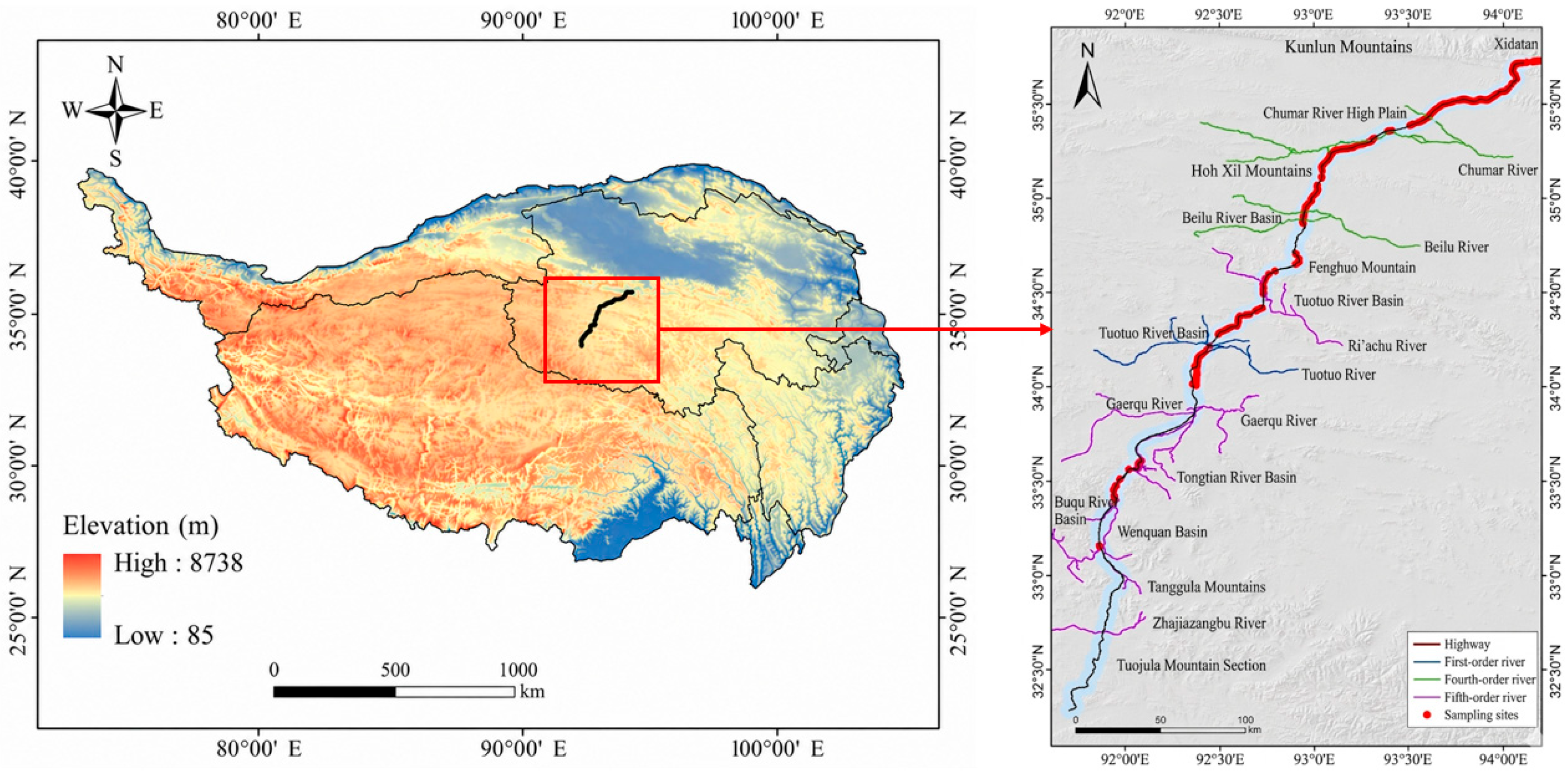
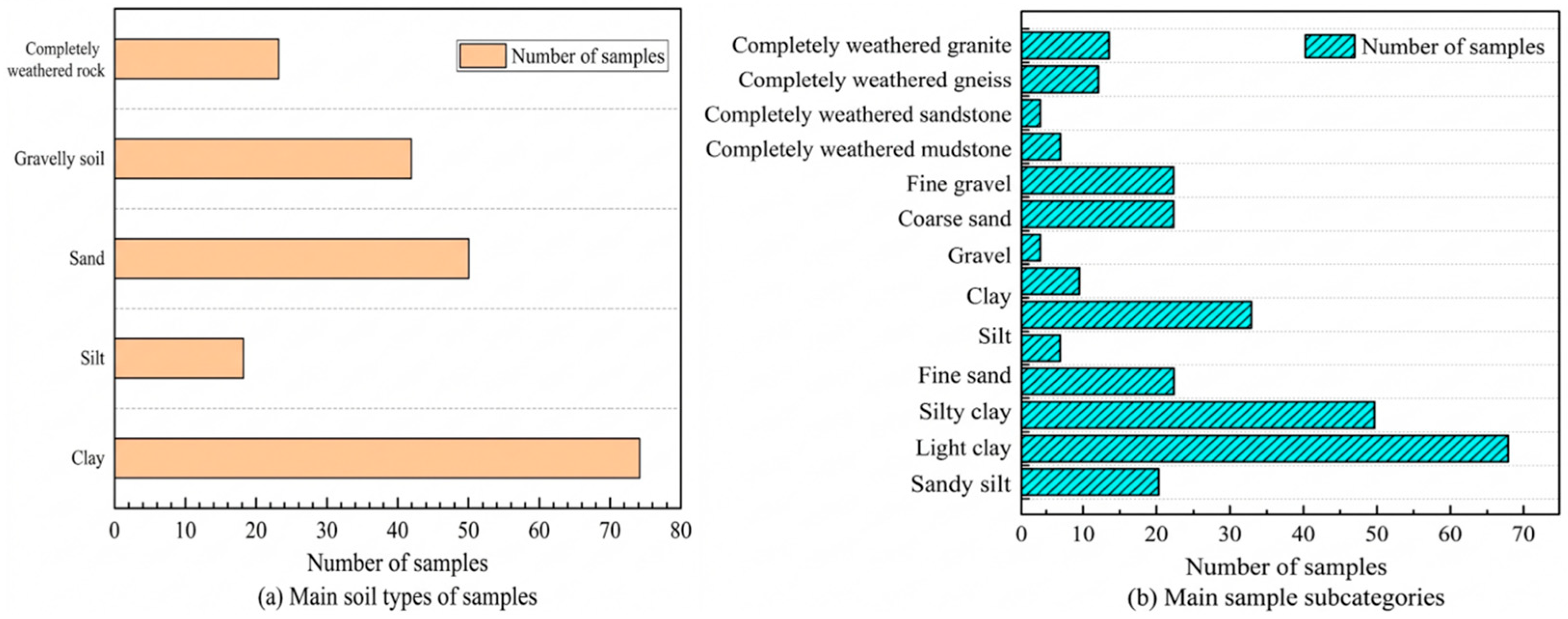
Soil samples used in this study were collected along a test section of the Qinghai–Tibet Engineering Corridor located in the Qinghai–Tibet Plateau region of western China, extending approximately 437 km from Xidatan in the north to the Tanggula Mountains in the south. In total, 207 samples were obtained. In Figure 1, the sampling locations are distributed across the entire corridor, covering several representative geomorphological units, including the Tuotuo River Basin, the Chumar River Plateau, and the Beilü River region. Based on drilling data, the collected soils were further analysed and classified according to the “National Standard for Engineering Classification of Soils” (GB/T 50145-2007, China) [35]. The samples fall into five primary categories with 14 sub-types, namely clay, fully weathered rock, silt, sand and gravelly soil. The distribution of these soil types is illustrated in Figure 2. To characterise their basic physical properties, tests on natural water content and density were carried out following the relevant provisions of the “Code for Geotechnical Investigation of Frozen Ground” (GB 50324-2014, China) [36] and the “National Standard for Geotechnical Testing Methods” (GB/T 50123-2019, China) [37]. The resulting parameters are outlined in Table 1.

3. Data Sources and Methods

3.1. Experimental Methods and Apparatus

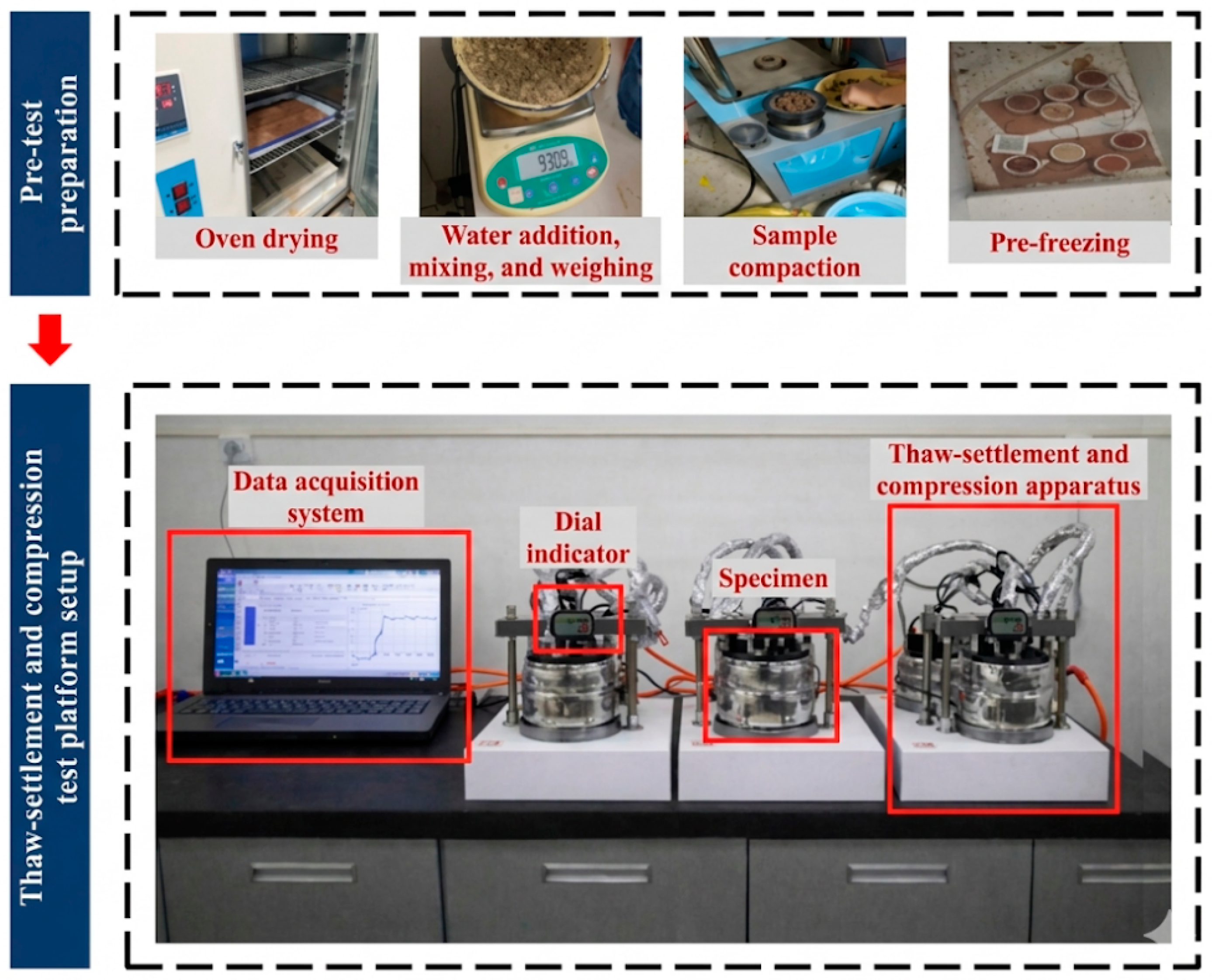
Laboratory tests were performed to determine the thaw-compression coefficient under controlled conditions. Laboratory tests were performed to determine the thaw-compression coefficient under controlled conditions. A step-loading scheme was adopted, in which each specimen was sequentially loaded under the five loading levels of 50, 100, 200, 400, and 600 kPa after thawing completely to a stable state. All experiments were conducted in a large-scale low-temperature environmental chamber, where the temperature was maintained at approximately −1 °C to ensure consistent thawing conditions. The chamber integrates a refrigeration system, auxiliary heating units, and air circulation devices, allowing the temperature field to remain stable throughout the testing process. The loading and measurement system includes a lever-type loading device, a heated pressure-transmitting plate and a constant-temperature water circulation system, together with pipelines for water supply and drainage. Deformation was monitored using dial gauges. A schematic illustration of the experimental setup and procedure is depicted in Figure 3.
The corresponding calculation equations are given as follows:
a f 0 = Δ h 0 h 0 × 100 %
δ i = Δ h i h 0
a f = δ i + 1 δ i P i + 1 P i × 100 %
where a f 0 is the thaw-settlement coefficient of frozen soil (%); Δ h 0 is the thaw-settlement coefficient of frozen soil (mm); Δ h i is the deformation at a given pressure after thawing (mm); h 0 is the initial height of the frozen soil specimen (mm); a f is the thaw compression coefficient of frozen soil within a given pressure range ( MPa 1 ); δ i + 1 and δ i are the settlement values corresponding to a given load (mm); while P i + 1 and P i are the graded pressure values ( MPa ).

3.2. Methodology for Constructing a Prediction Model for Melting-Compression Coefficient and Post-Thaw Compressive Strain

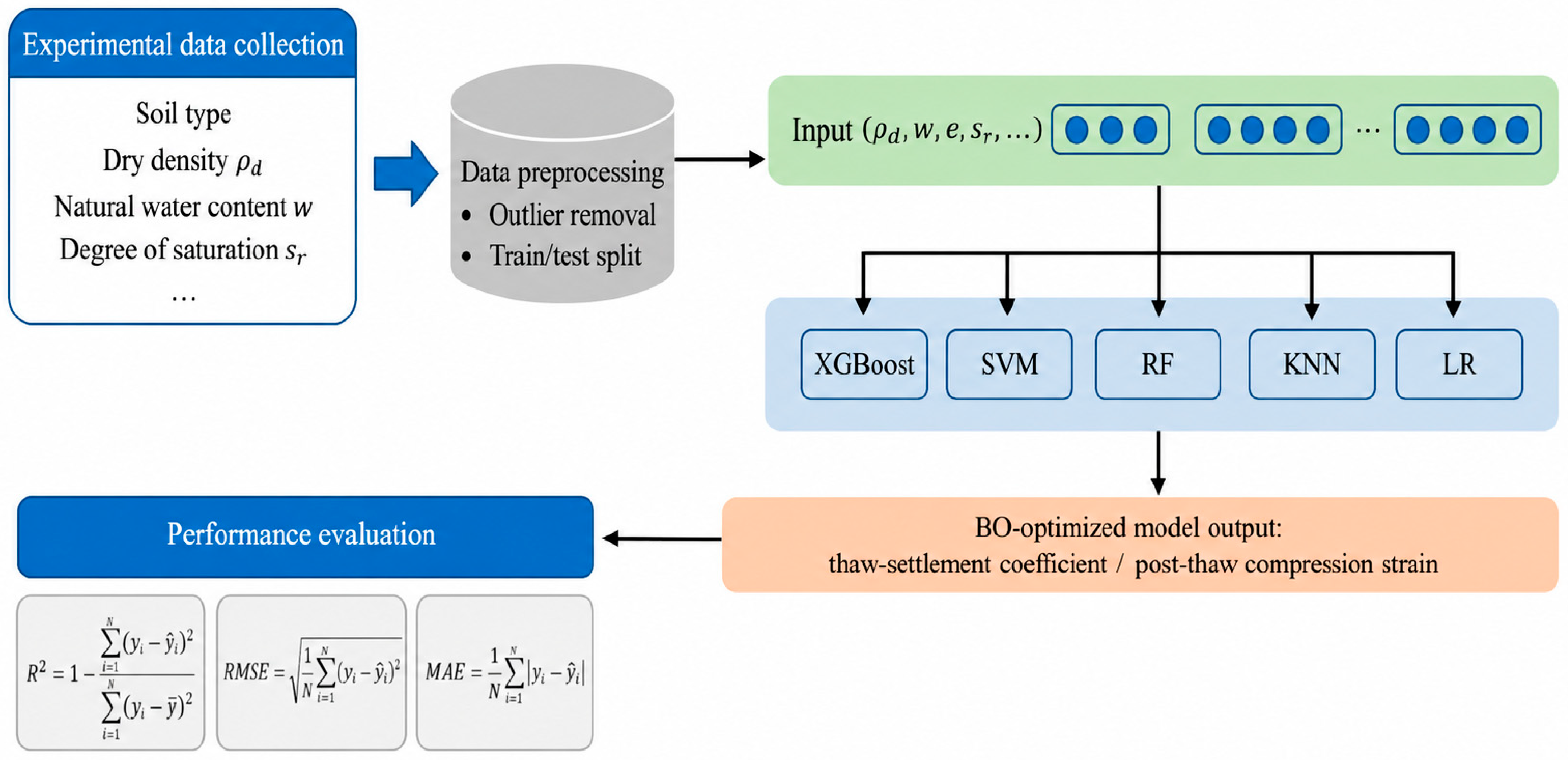
To explore the relationship between the thaw-settlement coefficient and post-thaw compressive strain, several machine learning models were implemented (Figure 4). Five representative algorithms—Support Vector Machines (SVM), Random Forests (RF), K-Nearest Neighbours (KNN), Logistic Regression (LR) and Extreme Gradient Boosting (XGBoost)—were selected to enable a comparative evaluation of predictive performance. Rather than relying on default parameter settings, model performance was further refined through Bayesian Optimisation (BO), which was used to identify suitable combinations of hyperparameters within the predefined search space. This approach allows the model to iteratively adjust its parameters based on feedback from the objective function, leading to improved predictive capability. In practical terms, BO operates by constructing a surrogate representation of the objective function and progressively selecting sampling points that are expected to yield better performance. Through this iterative process, the parameter space can be explored efficiently, avoiding the need for an exhaustive search. The optimisation procedure can be expressed as follows:
θ * = arg min θ Θ     f ( θ )
where θ is the combination of model hyperparameters; Θ is the parameter search space; and f ( θ ) is the error function of the model in cross-validation. Through iterative updating of the surrogate model, the optimisation process progressively narrows the search towards regions associated with improved model performance, allowing a suitable set of hyperparameters to be identified. The corresponding search ranges and selected optimal values are summarised in Table 2.
The predictive models were constructed using soil type, water content, dry density and applied load as input variables, while the outputs correspond to the thaw-settlement coefficient and post-thaw compressive strain. For model development, the dataset was partitioned into training and testing subsets at a ratio of 7:3, enabling both model fitting and independent validation. Model performance was assessed using several commonly adopted metrics, including the coefficient of determination (R2), Root Mean Square Error (RMSE) and Mean Absolute Error (MAE). The parameter settings and optimization ranges of the machine-learning models are summarized in Table 3.

4. Research Results

4.1. Thaw-Settlement Coefficient Measurements

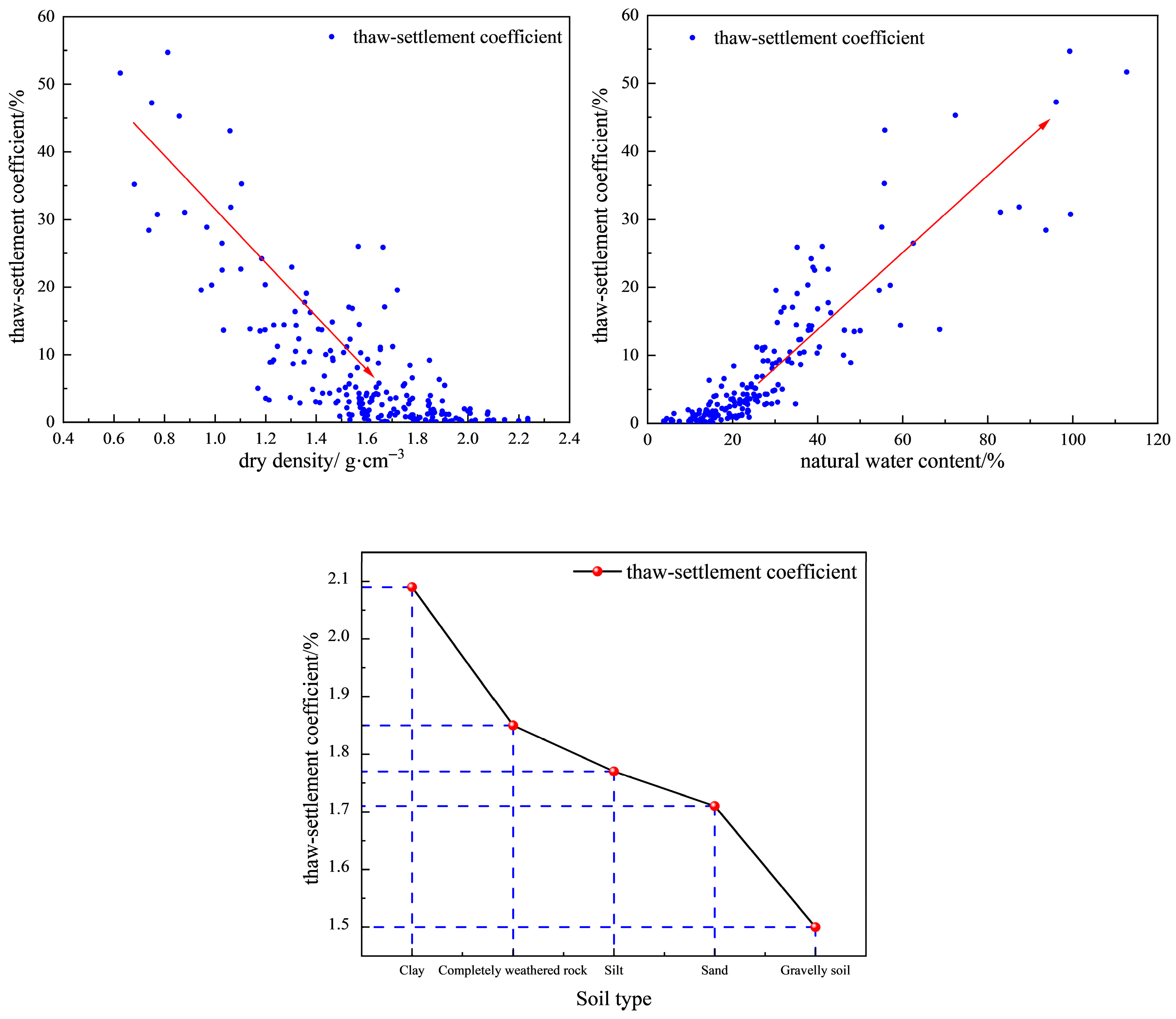
Figure 5 presents a clear dependence of the settlement coefficient on several key variables, although the sensitivity varies between them. Changes in dry density, for instance, lead to a pronounced reduction in settlement: as density increases from 0.6–1.0 to 1.8–2.3 g·cm−3, the average coefficient drops sharply from 35.72% to 1.34%. This indicates that denser soil structures are considerably more resistant to deformation during thawing. In contrast, water content exerts an opposite influence. When the gravimetric water content increases from approximately 0–20% to 60–120%, the thaw-settlement coefficient increases markedly. In particular, most water-rich samples exhibit values in the range of 20–50%, with some exceeding 50%, indicating pronounced structural collapse after thawing. This behaviour suggests that water-rich soils tend to exhibit larger thaw settlement during thawing. Differences between soil types are also evident. Among the tested materials, clay exhibits the highest average settlement coefficient (2.10%), followed by fully weathered rock (1.85%) and silt (1.77%), whereas sand (1.71%) and gravelly soil (1.50%) show comparatively lower values.
Overall, these observations point to a consistent pattern: soils with lower density and higher water content tend to undergo more pronounced settlement during thawing, reflecting the combined effects of structural looseness and water-related weakening.

4.2. Thaw-Compression Coefficient Determinations

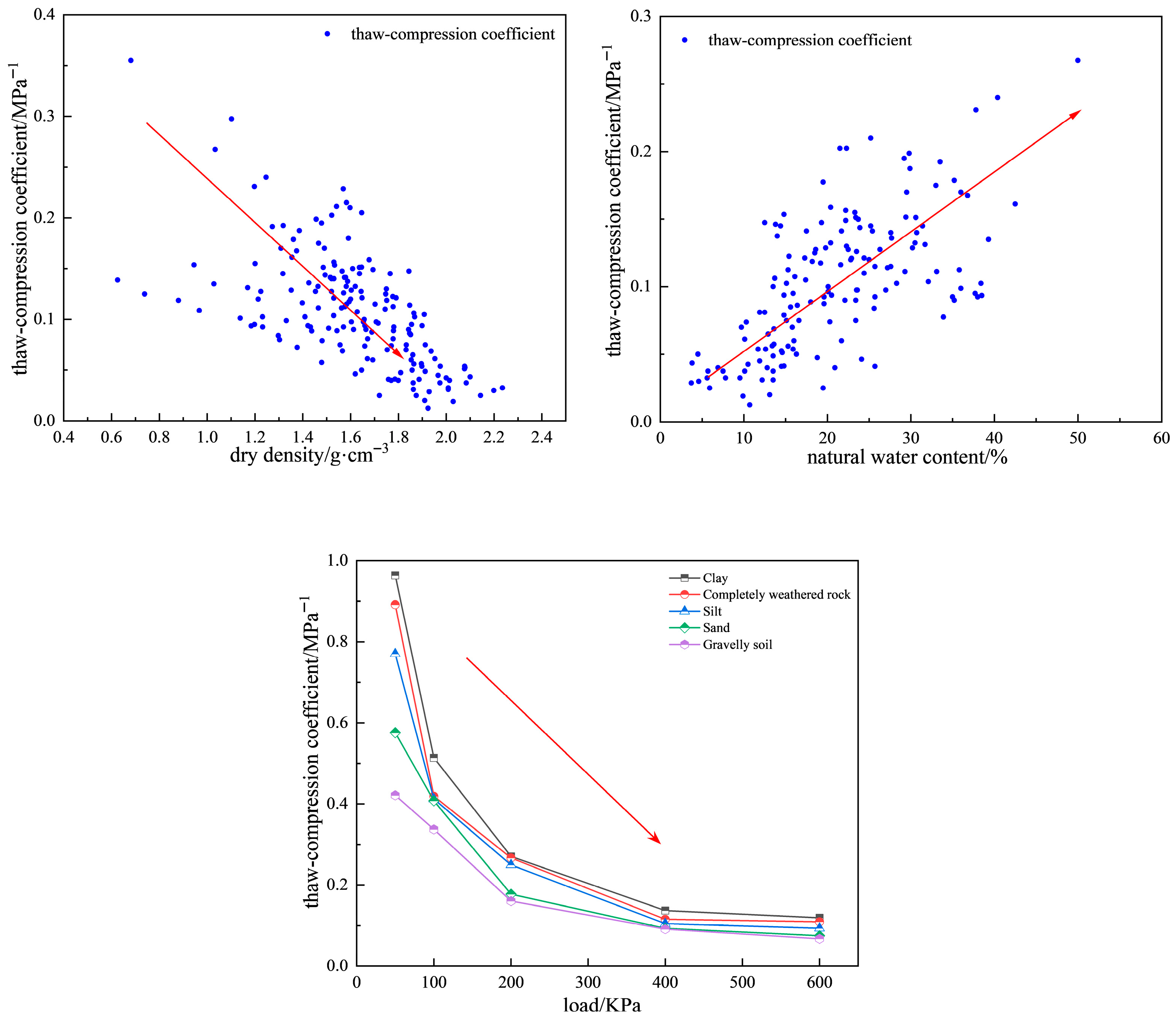
Figure 6 illustrates the variation in the thaw-compression coefficient under different conditions, showing clear sensitivity to changes in soil properties and external loading. Among these factors, dry density plays a dominant role. At relatively low densities (0.6–1.0 g·cm−3), the compression coefficient remains comparatively high, typically ranging between 0.20 and 0.35 MPa−1. As density increases to 1.8–2.2 g·cm−3, this value drops substantially to approximately 0.03–0.10 MPa−1, indicating that denser soil structures exhibit reduced compressibility after thawing. Water content produces an opposite response. Under low water contents (5–15%), the compression coefficient remains at a relatively low level (0.03–0.08 MPa−1), whereas higher water contents (30–50%) are associated with a marked increase to 0.12–0.23 MPa−1. This trend suggests that higher water content is generally associated with greater thaw-compression deformation during thawing. As the applied load increases from 50 to 600 kPa, the compression coefficient decreases significantly, from approximately 0.42–0.95 to 0.07–0.11 MPa−1. In addition, comparisons across soil types show that fine-grained soils consistently exhibit higher compression coefficients than coarse-grained soils under similar loading conditions, highlighting their greater susceptibility to post-thaw deformation.
Collectively, these results indicate that thaw-compression behaviour is governed by the combined effects of soil density, water contents and external loading. Looser and wetter soils tend to undergo more pronounced compression following thawing, whereas increasing density and load act to restrain further deformation.

4.3. Effect of Thaw Proportion of Thaw Settlement

4.3.1. Effect of Soil Type on Proportion of Melting Settlement

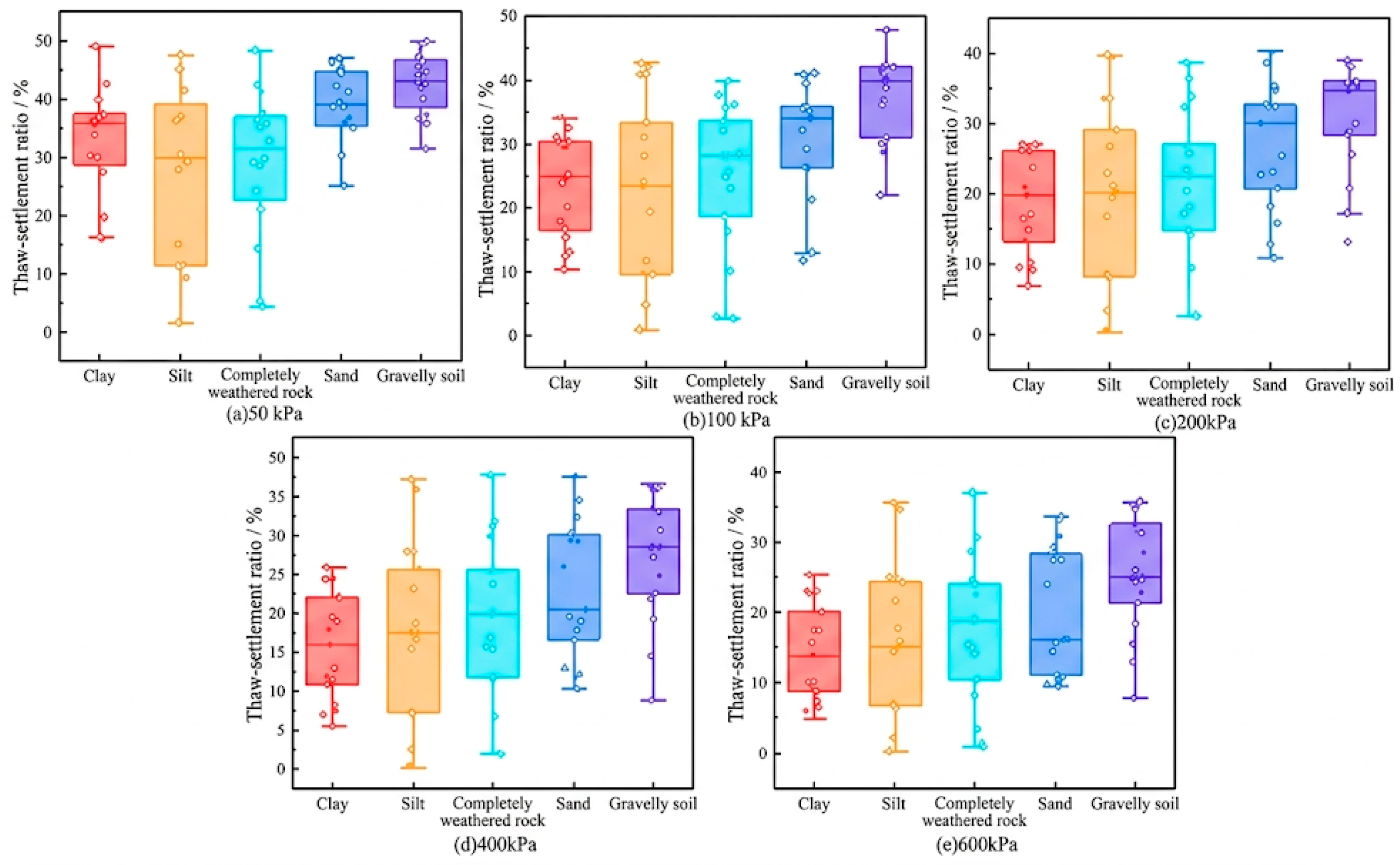
Figure 7 depicts the influence of loading conditions on the proportion of thaw settlement across different soil types, revealing a consistent downward trend as load increases. Under low loading conditions (50 kPa), thaw settlement contributes a relatively large share of total deformation. In particular, gravelly and sandy soils exhibit median values of approximately 40–45%, while fully weathered rock types range between 30% and 35%, and finer-grained soils such as silt and clay show slightly lower proportions of around 25–30%. As the load increases, this contribution gradually diminishes. Within the range of 100–200 kPa, the median proportion for all soil types decreases by roughly 5–10%, although the relative ordering among soil types remains largely unchanged. This suggests that the influence of soil type persists despite the increasing dominance of external loading. At higher load levels (400–600 kPa), the proportion of thaw settlement is further reduced to approximately 10–25%. At the same time, the distribution becomes noticeably more concentrated, indicating reduced variability among samples. Under these conditions, differences between soil types are mainly reflected in median values rather than dispersion.

4.3.2. Effect of Natural Water Content on Proportion of Thaw Settlement

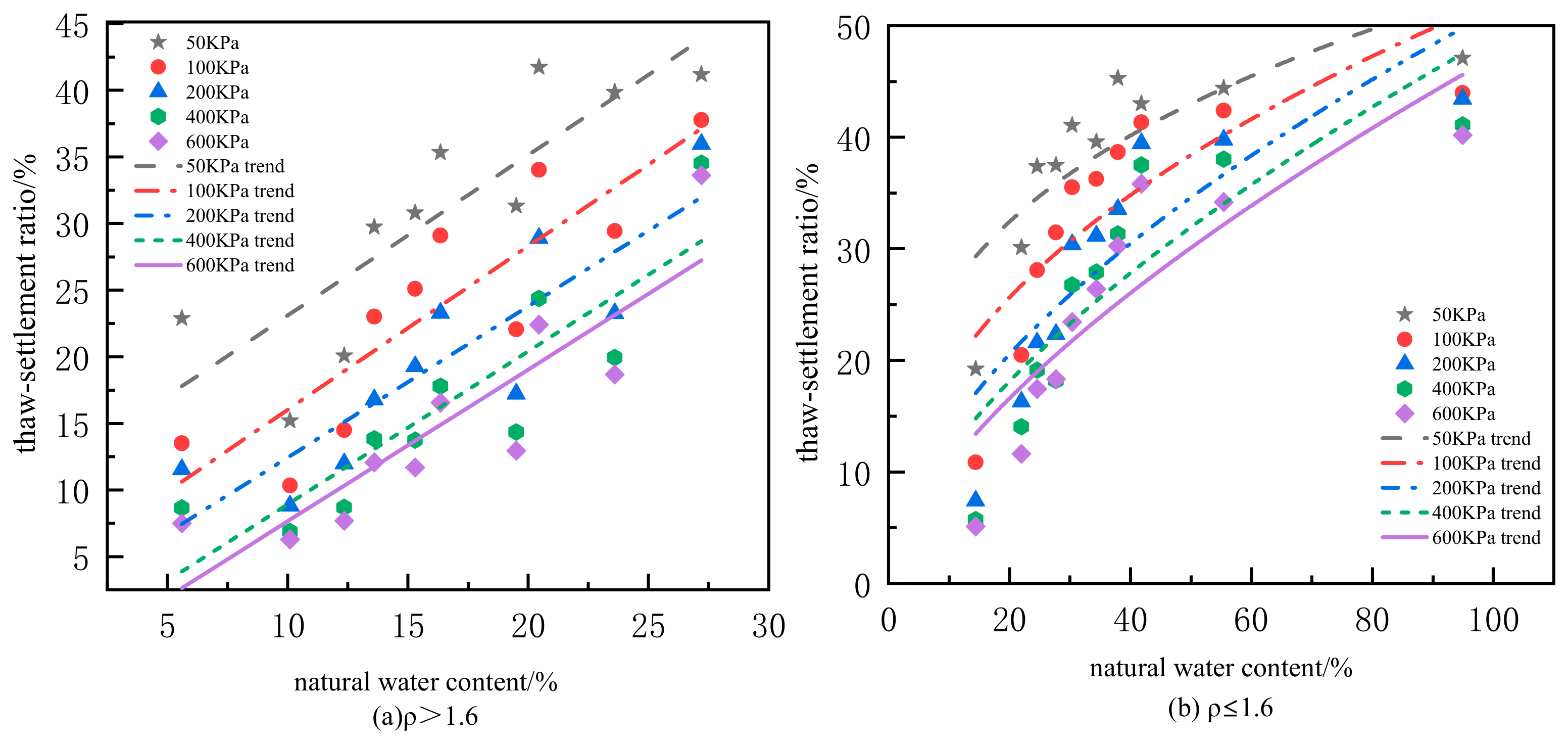
Figure 8 illustrates the combined influence of water content (w) and dry density (ρ) on the proportion of thaw settlement, revealing a clear interaction between the two variables. When the ρ is relatively low (ρ < 1.6 g·cm−3), the proportion of thaw settlement increases markedly with rising w. At moderate w (~15%), the proportion remains relatively limited (5–20%), but it rises substantially to around 15–35% as w reaches 25–30%. Under very high w (90–100%), the proportion can further increase to 40–50%, indicating a strong sensitivity to w in loosely structured soils. Variations under different loading conditions are present but remain within a relatively narrow range (w ≈ 5–10%). A different pattern emerges at higher dry densities (ρ ≥ 1.6 g·cm−3). Although the proportion of thaw settlement still increases with w, both the overall magnitude and the rate of increase are reduced. At low w (5–10%), the proportion is typically confined to 5–15%, and it rises more gradually to approximately 15–30% as w increases. Even at comparable w (~27%), noticeable differences can be observed under varying loads, with values of about 40–42% at 50 kPa and 33–35% at 600 kPa. These results highlight the coupled effect of w and ρ on thaw-settlement behaviour. Soils with lower density exhibit a stronger and more rapid response to changes in w, whereas denser soils show a more moderated and gradual variation.

4.3.3. Effect of Dry Density on Proportion of Melting and Settling

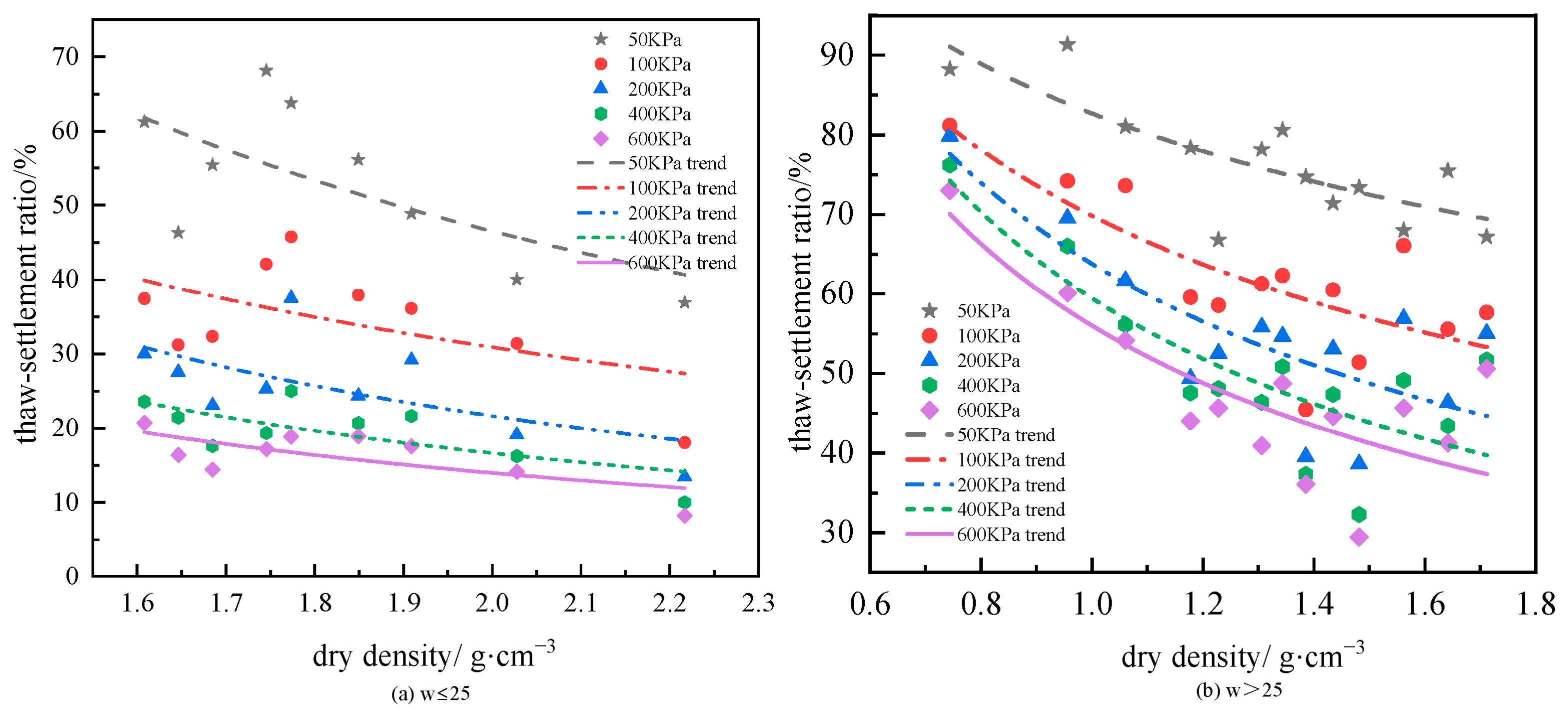
Figure 9 depicts the influence of ρ on the proportion of thaw settlement, showing a consistent decreasing trend across all w. This effect becomes particularly pronounced at higher w (>25%), where changes in density lead to substantial variation in settlement behaviour. For example, when the ρ ≈ 1.61 g·cm−3, the proportion of thaw settlement ranges from approximately 20.74% to 61.28%. As density increases to approximately 2.22 g·cm−3, this range narrows significantly to 8.22–36.89%, indicating a marked reduction in deformation potential. Under identical density conditions, increasing load further suppresses the proportion of thaw settlement. At lower w (≤25%), the same decreasing tendency with respect to ρ can still be observed, although the overall variation becomes less sensitive. In relatively loose soils (ρ ≈ 0.74–0.96 g·cm−3), the proportion of thaw settlement remains high, typically between 60.11% and 91.34%. Even as density increases to approximately 1.71 g·cm−3, the values remain within a comparatively elevated range (50.61–67.20%), suggesting that density alone is insufficient to significantly reduce deformation under low w. Overall, the results demonstrate a clear negative correlation between ρ and the proportion of thaw settlement. This relationship is particularly evident under high w, where density plays a dominant role in controlling deformation. In contrast, under lower w, the influence of ρ is still present but becomes less pronounced.

4.4. Criteria for Onset of Significant Compressive Deformation Under Load–Porosity Conditions

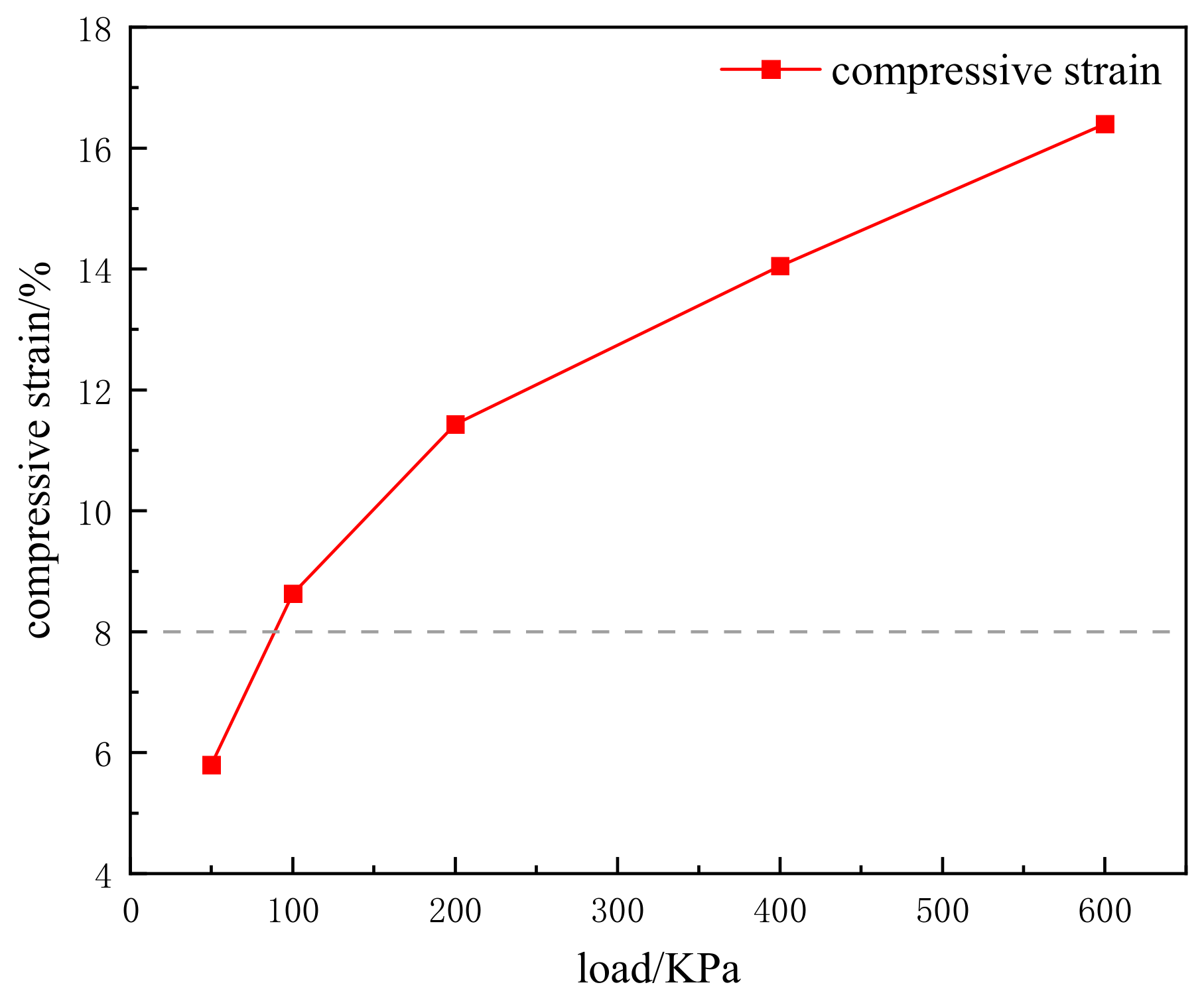
In permafrost engineering, excessive thaw-induced compressive deformation can adversely affect the long-term performance and stability of subgrades. Field investigations of paved highway embankments in Tibetan Plateau permafrost environments have shown that differential thaw settlement is closely associated with embankment cracking and performance deterioration [5]. Therefore, it is important to identify a practical deformation threshold for evaluating the potential impact of thaw-induced compression on subgrade performance. To explore the overall variation characteristics of thaw-compression deformation under different loading conditions, the mean compressive strain was analysed based on all 207 experimental samples, including clay, silt, sandy soil, fully weathered rock types, and gravelly soil. Although different soil types exhibit different deformation characteristics, the combined statistical treatment was intended to identify the overall load-dependent trend across the full dataset. As shown in Table 4, the mean compressive strain increases progressively from 5.80% at 50 kPa to 16.40% at 600 kPa, indicating that thaw-compression deformation becomes more pronounced with increasing loading levels. A relatively noticeable increase can be observed within the loading range of 100–200 kPa, where the mean compressive strain rises from 8.63% at 100 kPa to 11.43% at 200 kPa. Based on the overall statistical characteristics observed across all tested specimens and loading conditions in this study, a compressive strain of approximately 8% was used as a preliminary empirical reference value for describing relatively significant thaw-compression deformation under the present experimental conditions (Figure 10). The gray dashed line indicates the empirical compressive-strain threshold of 8%.
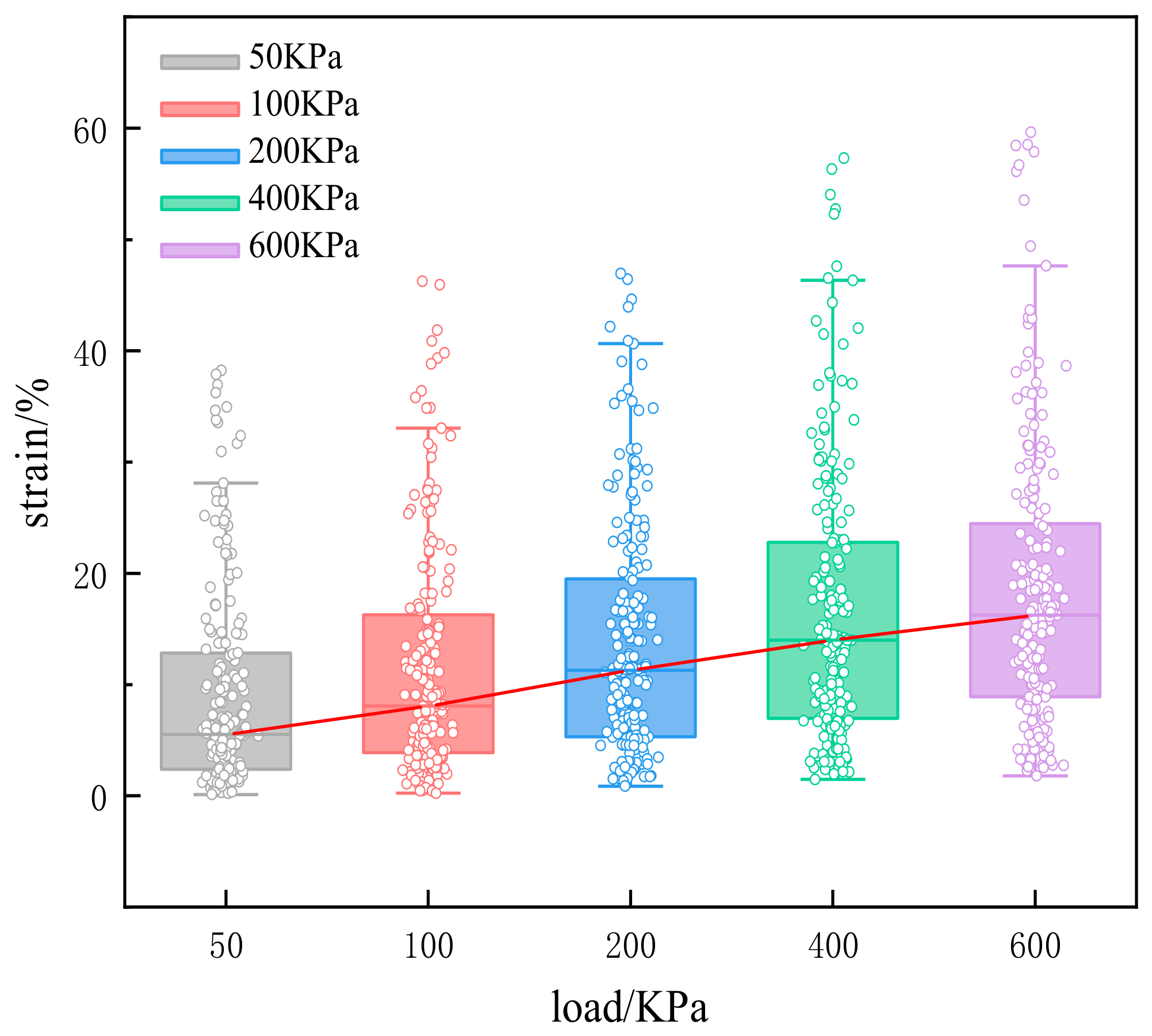
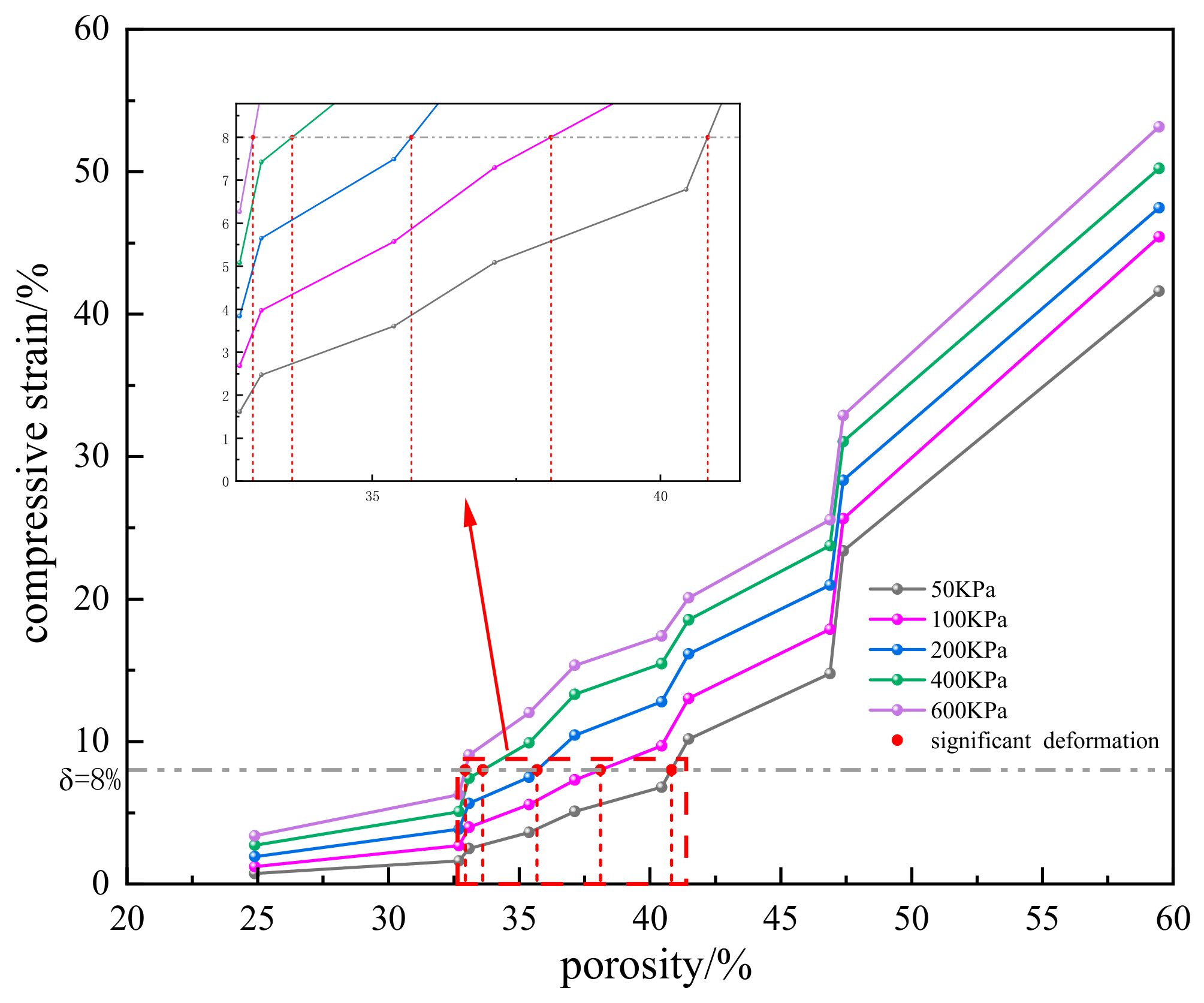
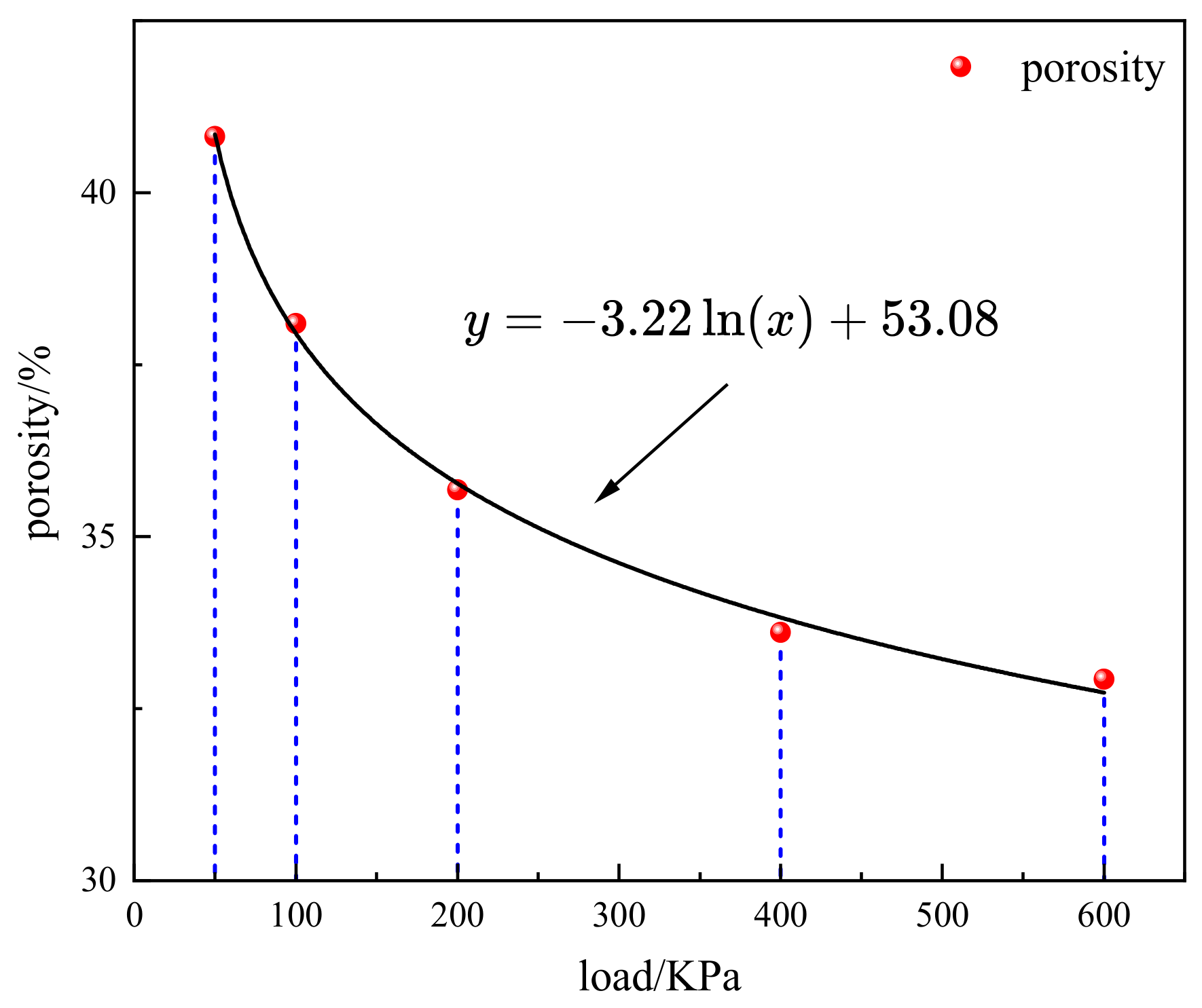
Compressive deformation of permafrost after thawing can be understood as a compaction process within the soil pore structure under external loading. In Figure 11 and Figure 12, compressive strain is jointly controlled by load and porosity, with higher loads and greater porosity both contributing to more pronounced deformation. Building on the previously defined threshold of 8% compressive strain, porosity is introduced as a key structural parameter to further characterise the onset of significant deformation. Compared with variables such as water content or dry density, porosity provides a more direct representation of the internal void structure. Accordingly, the porosity corresponding to a compressive strain of approximately 8% is used in this study as a reference porosity ( n * ) for describing relatively significant thaw-compression deformation. The n * values were statistically derived from the fitted load–porosity relationship based on the complete experimental dataset, rather than measured from a specific soil type or individual specimen. The calculated n* decreases systematically with increasing load (i.e., 40.82% at 50 kPa, 38.10% at 100 kPa, 35.68% at 200 kPa, 33.61% at 400 kPa, and 32.93% at 600 kPa), indicating that higher loading conditions are generally associated with lower reference porosity values corresponding to relatively significant thaw-compression deformation.
Since these critical values are obtained at discrete load levels, a continuous relationship is required to describe the onset condition more comprehensively. To this end, the load–porosity relationship was further fitted, with the logarithmic function providing the best representation (R2 = 0.9887). This result suggests that the decrease in n * is more rapid at lower load levels and gradually stabilises as the load increases.
Based on this fitted relationship, a load–porosity relationship can be identified to describe the variation characteristics of thaw-compression deformation under different loading conditions (Figure 13). States located above the fitted curve are generally associated with relatively more pronounced thaw-compression deformation, whereas those below the curve correspond to comparatively lower deformation levels. In this study, porosity was introduced as a comprehensive structural parameter because it can simultaneously reflect the combined influences of dry density, water content, and internal void structure. Combined with external loading conditions, the load–porosity relationship provides a useful way to characterise the variation trend of thaw-compression deformation under different soil conditions.

5. Analysis of Thaw-Settlement Coefficient and Post-Thaw Compressive-Strain Prediction Models

5.1. Comparative Analysis of Prediction Performance for Different Machine Learning Models

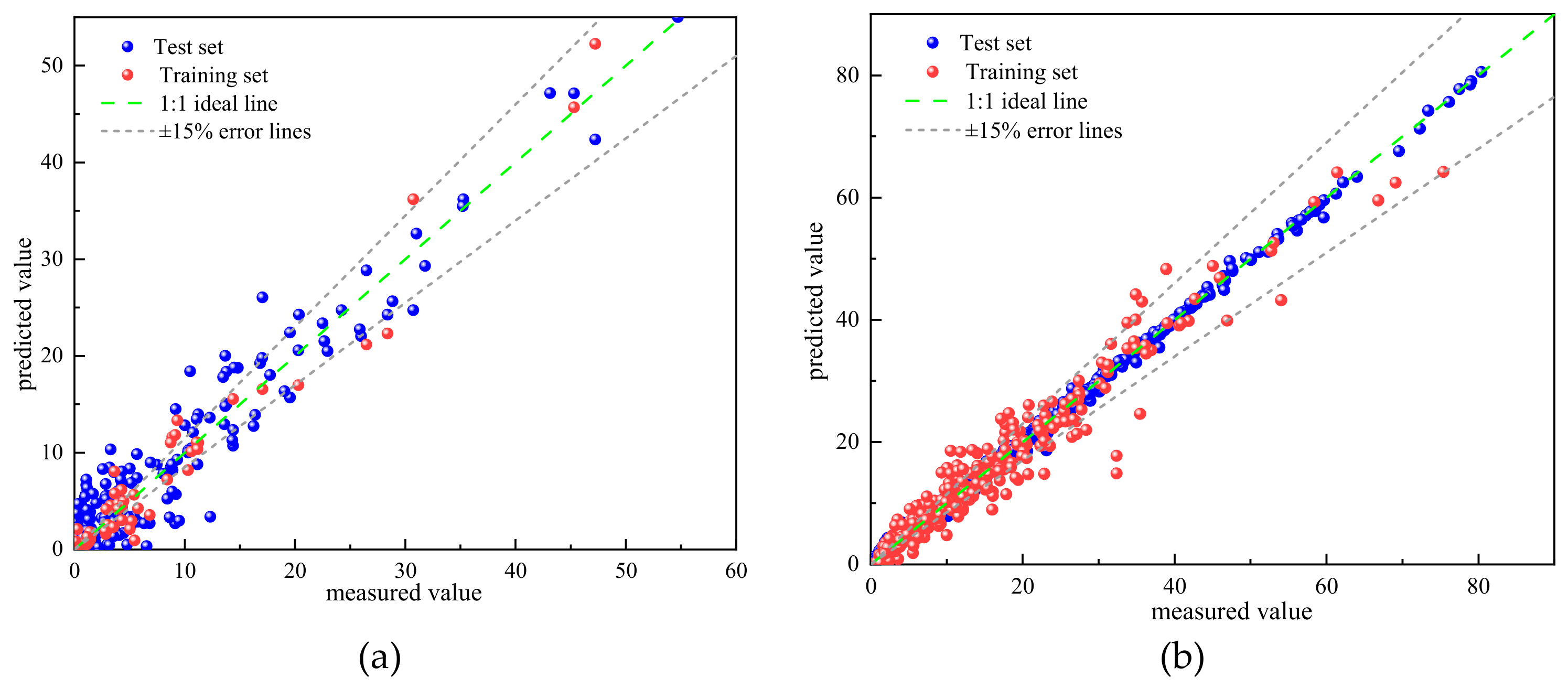
The predictive performance of different models is summarised in Table 5. For the thaw-settlement coefficient, the Bayesian-optimised SVM model achieves the highest accuracy, with R2, RMSE and MAE values of 0.85, 3.75 and 2.30, respectively. Models such as BO-KNN and BO-XGBoost show comparable but slightly lower performance (R2 ≈ 0.82), whereas the non-optimised models generally exhibit reduced predictive capability. A similar pattern is observed in the prediction of post-thaw compressive strain, although the best performance is obtained using the BO-XGBoost model (R2 = 0.95, RMSE = 2.93, MAE = 2.13). Other models, including XGBoost and BO-RF, also perform well but with marginally lower accuracy. These results suggest that the incorporation of BO plays a key role in enhancing model performance by improving parameter selection. The corresponding prediction results for the optimal models are presented in Figure 14.
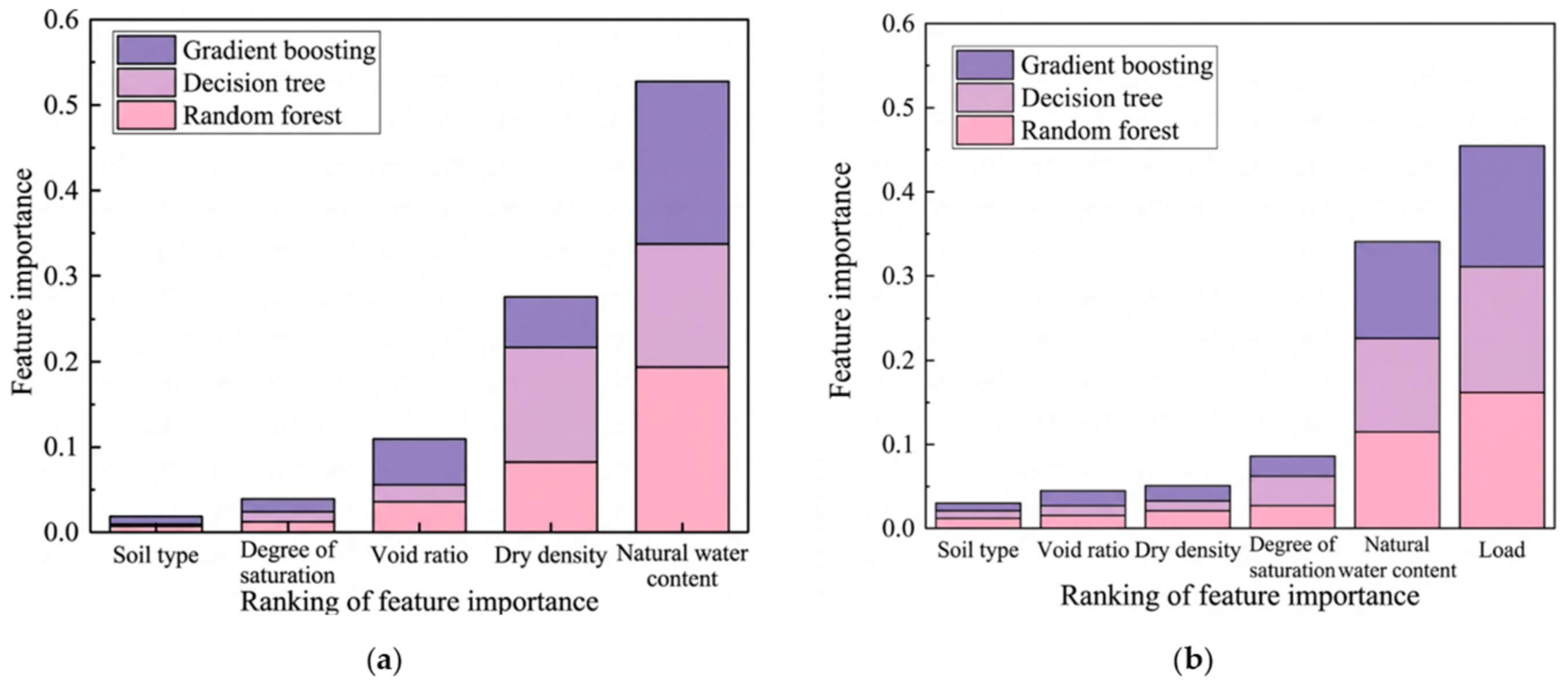
Further insight can be obtained from the feature importance analysis in Figure 15, which highlights differences in the controlling factors for the two deformation indices. Natural water content consistently ranks as a dominant variable in both cases, reflecting its fundamental influence on thaw-induced deformation. For the thaw-settlement coefficient, dry density and porosity contribute more significantly, suggesting that soil structure and compactness govern settlement behaviour to a large extent. In contrast, the prediction of post-thaw compressive strain is more strongly influenced by external loading, followed by water content and saturation, indicating that stress conditions during thawing play a more critical role in controlling compressive deformation.

5.2. Comparison and Analysis of Empirical Models

To evaluate the reliability of the proposed models, their predictions were compared with results obtained from existing empirical formulas using independent test samples. Both the thaw-settlement coefficient and the thaw-compression coefficient were considered in the validation process.
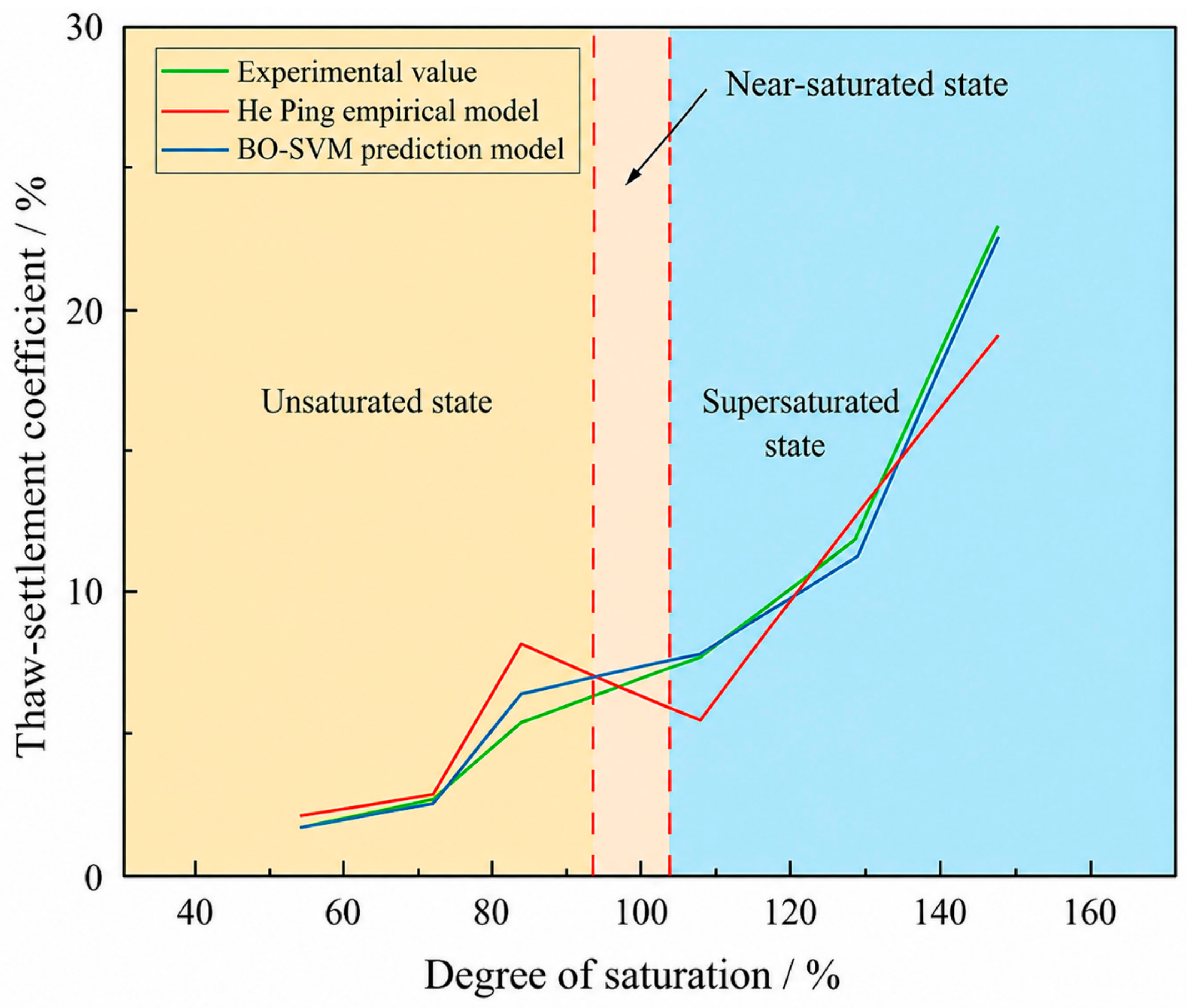
(1) For the thaw-settlement coefficient, the performance of the BO-SVM model was assessed against the empirical formulation proposed by He et al. [38] under different saturation conditions (Figure 16). A total of 63 samples were used for validation, including 32 unsaturated, 16 saturated, and 15 oversaturated cases. In Table 6, the BO-SVM model achieves noticeably higher prediction accuracy across all categories, indicating improved adaptability to varying saturation conditions compared with the traditional empirical approach.
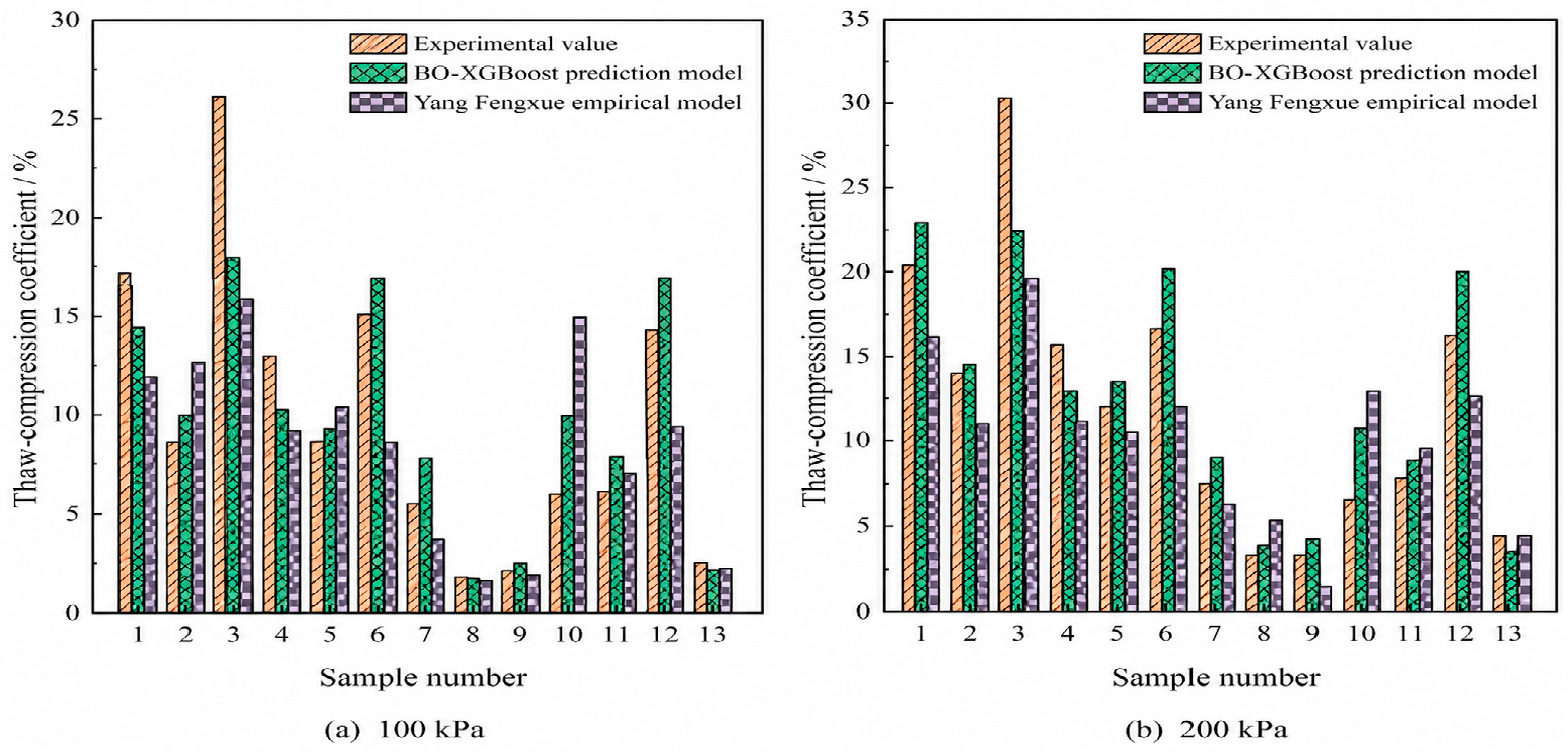
(2) A similar comparison was carried out for the thaw-compression coefficient. The predictions obtained using the BO-XGBoost model were evaluated against the empirical method from Yang et al. [39] with those of the BO-XGBoost model (Figure 17). Thirteen sets of thaw-compression coefficients (Figure 17), based on 13 datasets under loading conditions of 100 and 200 kPa, were assessed. The loading interval of 100–200 kPa was selected because the empirical model proposed by Yang et al. [38]. was originally established and validated within this loading range. The results in Table 7 show that the machine learning model provides better agreement with the measured data, with reduced prediction errors and improved fitting performance. Overall, these comparisons demonstrate that the proposed machine learning models offer enhanced predictive capability relative to conventional empirical formulas, particularly under complex conditions where multiple influencing factors interact.

6. Conclusions

This study investigates the compositional characteristics and governing mechanisms of thaw-induced deformation in permafrost based on laboratory testing and predictive modelling. A thaw proportion of thaw settlement is introduced to quantify the relative contributions of thaw settlement and post-thaw compression, providing a basis for subsequent analysis and model development. The main conclusions are outlined as follows:
(1) The proportion of thaw settlement is mainly controlled by gravimetric water content, dry density, soil type, and external loading. Higher water content increases thaw settlement, whereas higher dry density suppresses thaw-induced deformation. Increasing load gradually shifts the deformation mode from thaw-settlement to compression-dominated deformation, which provides practical guidance for identifying thaw-sensitive soils in permafrost engineering.
(2) A compressive strain of approximately 8% was used in this study as a preliminary empirical reference value for describing relatively significant thaw-compression deformation under the present experimental conditions. The relationship between load and reference porosity follows a logarithmic trend, with a high fitting accuracy (R2 = 0.9887). Higher loading conditions are generally associated with lower reference porosity values corresponding to relatively significant thaw-compression deformation. The observed load–porosity relationship may provide useful references for understanding thaw-induced deformation characteristics and potential long-term deformation risks in permafrost engineering regions.
(3) Bayesian-optimised machine-learning models demonstrate strong capability in predicting thaw-induced deformation. The BO-SVM model achieved the best performance for thaw-settlement-coefficient prediction (R2 = 0.85), while the BO-XGBoost model showed the highest accuracy for post-thaw compressive-strain prediction (R2 = 0.95). These models may support rapid engineering evaluation of thaw-induced deformation in permafrost regions.

Author Contributions

Conceptualisation, Z.L. and Z.Y.; methodology, Z.L., Z.W. and F.C.; software, Z.W. and F.C.; validation, Z.L., X.L. and L.W.; formal analysis, Z.L. and Z.W.; investigation, Z.L., Z.W., F.C. and T.L.; resources, Z.Y.; data curation, Z.W. and F.C.; writing—original draft preparation, Z.L.; writing—review and editing, Z.Y., X.L. and L.W.; visualisation, Z.W. and F.C.; supervision, Z.Y.; project administration, Z.Y.; funding acquisition, Z.Y. All authors have read and agreed to the published version of the manuscript.

Funding

This research received no external funding.

Data Availability Statement

The data presented in this study are available on request from the corresponding author. (The data presented in this study are experimental data generated by our research group. As these data are subject to internal data management restrictions and are associated with ongoing research within the group, they are not publicly available at this time).

Conflicts of Interest

The authors declare no conflicts of interest.

References

  1. Qu, H.; Tang, A.; Zhao, A.; Mu, D.; Wang, Z. A unified theoretical thaw expansion and settlement coefficient model for frozen soil. J. Cold Reg. Eng. 2025, 39, 04025008. [Google Scholar] [CrossRef]
  2. Jin, L.; Wang, S.J.; Chen, J.B.; Duan, K. Study on the thawing compression deformation mechanism of ice-rich frozen soil. J. Highw. Transp. Res. Dev. (Engl. Ed.) 2013, 7, 23–29. [Google Scholar]
  3. Mohammadi, Z.; Hayley, J.L. Compilation and analysis of thaw settlement test results: Implications for prediction tools and stress–strain characterization in permafrost. Earth Syst. Sci. Data 2025, 17, 3921–3947. [Google Scholar] [CrossRef]
  4. Ma, W.; Mu, Y.; Wu, Q.; Sun, Z.; Liu, Y. Characteristics and mechanisms of embankment deformation along the Qinghai–Tibet Railway in permafrost regions. Cold Reg. Sci. Technol. 2011, 67, 178–186. [Google Scholar] [CrossRef]
  5. Liu, W.; Yu, W.; Hu, D.; Lu, Y.; Chen, L.; Yi, X.; Han, F. Crack damage investigation of paved highway embankment in the Tibetan Plateau permafrost environments. Cold Reg. Sci. Technol. 2019, 163, 78–86. [Google Scholar] [CrossRef]
  6. Yang, G.Q.; Yang, P.; He, W.L.; Zhang, C.J. Experimental study on thermophysical properties of marine artificial frozen soil. J. Nanjing For. Univ. (Nat. Sci. Ed.) 2017, 41, 170–176. [Google Scholar]
  7. Bi, G.Q.; Xiong, M.; Chai, M.T.; Hu, Y.; Yu, H. Mechanical experimental study on undisturbed soil at different depths in permafrost regions. J. Lanzhou Univ. Technol. 2023, 49, 109–114. [Google Scholar]
  8. Wu, X.; Hu, J.; Shi, J.; Xiang, H.; Xia, J. Study on Frost Heave and Thaw Settlement Characteristics of Sanya Estuary Channel Soil Layer. Appl. Sci. 2024, 14, 9761. [Google Scholar] [CrossRef]
  9. Xu, C.; Zhang, Z.; Zhao, Y.; Jin, D.; Yu, Q.; Meng, X. Experimental study of thaw settlement and internal structural changes in frozen soil during the thawing process. Case Stud. Constr. Mater. 2025, 22, e04279. [Google Scholar] [CrossRef]
  10. Chen, J.; Liang, S.; Zhang, Y.; Zhu, X.; Wang, M.; Jia, M. Macro-microscopic deformation evolution of thawing frozen fine-grained soil used in heavy-haul railway subgrades in cold regions. Res. Cold Arid Reg. 2025, 17, 97–109. [Google Scholar] [CrossRef]
  11. Joudieh, Z.; Cuisinier, O.; Abdallah, A.; Masrouri, F. Impact of overburden pressure on the thermo-hydro-mechanical behavior of silty sand during a freeze-thaw cycle in the context of Artificial Ground Freezing. Eng. Geol. 2025, 350, 107992. [Google Scholar] [CrossRef]
  12. Jin, H.C. Experimental Study on Thaw Compression Characteristics of Remolded Frozen Soil. Master’s Thesis, Chang’an University, Xi’an, China, 2018. [Google Scholar]
  13. Zhang, J.X.; Song, Y.W.; Yang, H. Study on the influence of load and fine particle content on frost heave and thaw settlement of saturated sandy gravel. Rock Soil Mech. 2022, 43, 213–221. [Google Scholar]
  14. Hu, M.Z.; Tan, Y.Z.; Wu, P.; Yang, A.W. Effect of freeze-thaw cycles on compression characteristics of improved soft clay. J. Guangxi Univ. (Nat. Sci. Ed.) 2015, 40, 208–212. [Google Scholar]
  15. Jiao, C.; Niu, F.; Luo, J.; He, P.; Yu, F. Quantifying freeze-thaw erosion dynamics in retrogressive thaw slumps: Integrating geophysical and experimental approaches. Catena 2025, 261, 109543. [Google Scholar] [CrossRef]
  16. Liu, J.; Yang, P.; Yang, Z. Experimental study on deformation characteristics of chloride silty clay during freeze-thaw in an open system. Cold Reg. Sci. Technol. 2022, 197, 103518. [Google Scholar] [CrossRef]
  17. Derk, L.; Unold, F. Effect of temperature gradients on water migration, frost heave and thaw-settlement of a clay during freezing-thaw process. Exp. Heat Transf. 2023, 36, 585–596. [Google Scholar] [CrossRef]
  18. Wang, B. Thaw-settlement characteristics and engineering countermeasures of island permafrost in Tieli-Yichun High-Speed Railway. Railw. Eng. 2022, 62, 153–157. [Google Scholar]
  19. Liu, X.H.; Cai, D.G.; Yan, H.Y.; Bi, Z.Q.; Li, Z.Q. Study on engineering characteristics and time-varying model of island permafrost in high-speed railway subgrade. J. China Railw. Soc. 2026, 48, 125–136. [Google Scholar]
  20. Yang, Y.W. Test on frost heave and thaw settlement characteristics of Shijiazhuang-Taiyuan passenger dedicated line subgrade and frost damage control measures. Railw. Qual. Control 2023, 51, 37–42. [Google Scholar]
  21. Gao, Z.Z.; Wang, M.; Ni, B. Study on thaw-settlement characteristics of weak expansive soil in Huainan. Jiangsu Build. Mater. 2022, 189, 13–16. [Google Scholar]
  22. Hou, X.H.; Gong, N.; Wang, W. Experimental study on thaw-settlement characteristics of silty clay in permafrost regions. Munic. Technol. 2022, 40, 27–31. [Google Scholar]
  23. Zhou, J.; Tang, Y. Centrifuge experimental study of thaw settlement characteristics of mucky clay after artificial ground freezing. Eng. Geol. 2015, 190, 98–108. [Google Scholar] [CrossRef]
  24. Zhou, J.; Zhao, W.; Tang, Y. Practical prediction method on thaw deformation of soft clay subject to artificial ground freezing based on elaborate centrifuge modeling experiments. Tunn. Undergr. Space Technol. 2022, 122, 104352. [Google Scholar] [CrossRef]
  25. Tao, X.L.; Ma, J.R.; Huang, L. Experimental study on artificial frozen soil thaw settlement and prediction of thaw settlement coefficient. J. Min. Saf. Eng. 2015, 32, 996–1003. [Google Scholar]
  26. Wang, X.B.; Yang, P. Prediction method of frozen soil thaw settlement coefficient based on BP artificial neural network. For. Eng. 2008, 24, 18–21. [Google Scholar]
  27. Yao, X.L.; Qi, J.L. Artificial neural network prediction method for thaw settlement coefficient. J. Glaciol. Geocryol. 2011, 33, 891–896. [Google Scholar]
  28. Li, X.L.; Wang, W. Experimental study on thaw settlement characteristics and influencing factors of silty clay in Changchun area. Sci. Technol. Eng. 2020, 20, 14854–14861. [Google Scholar]
  29. Wu, G.; Xie, Y.; Wei, J.; Yue, X. Experimental study and prediction model on frost heave and thawing settlement deformation of subgrade soil in alpine meadow area of Qinghai-Tibet Plateau. Arab. J. Geosci. 2022, 15, 1111. [Google Scholar] [CrossRef]
  30. Zhao, Y.H.; Mi, W.J.; Wu, X.P.; Miao, X.Y. Sensitivity Analysis of Influencing Factors on Thaw Settlement Coefficient of Silty Clay Based on Grey Relational Analysis. Constr. Technol. 2016, 45, 353–355. [Google Scholar]
  31. Zhou, Z.J.; Tang, P.X.; Yan, K.Z. Prediction of Freeze-Thaw Coefficient Based on Gene Expression Programming Algorithm. J. Ningxia Univ. (Nat. Sci. Ed.) 2013, 34, 147–150. [Google Scholar]
  32. Liu, Z.; Zhu, Y.; Chen, J.; Cui, F.; Zhu, W.; Liu, J.; Yu, H. Risk Zoning of Permafrost Thaw Settlement in the Qinghai–Tibet Engineering Corridor. Remote Sens. 2023, 15, 3913. [Google Scholar] [CrossRef]
  33. Harvey, J.; Roustaei, M.; Pumple, J.; Francis, E.; Froese, D. Estimation of Excess Ice and Thaw Settlement in Frozen Soil Using Industrial Computed Tomography. Permafr. Periglac. Process. 2026, 37, 254–266. [Google Scholar] [CrossRef]
  34. Li, H.Y.; Ma, P.D. Discrimination of Permafrost Thaw-Settlement Classes Based on Fisher Discriminant Method. J. Changchun Inst. Technol. (Nat. Sci. Ed.) 2023, 24, 53–60. [Google Scholar]
  35. GB/T 50145-2007; Standard for Engineering Classification of Soils. China Architecture & Building Press: Beijing, China, 2007.
  36. GB 50324-2014; Code for Geotechnical Investigation of Frozen Ground. China Planning Press: Beijing, China, 2014.
  37. GB/T 50123-2019; Standard for Geotechnical Testing Methods. China Planning Press: Beijing, China, 2019.
  38. He, P.; Cheng, G.D.; Yang, C.S.; Zhao, S.P.; Zhu, Y.L. Evaluation Method for Thaw-Settlement Coefficient of Frozen Soil. J. Glaciol. Geocryol. 2003, 25, 608–613. [Google Scholar]
  39. Yang, F.X.; Zhang, X.F.; Leng, Y.F.; Zhao, Y.M. Empirical determination method for volumetric compression coefficient of frozen soil during thawing. Rock Soil Mech. 2011, 32, 3432–3436. [Google Scholar]
Figure 1. Spatial distribution of sampling points.
Geohazards 07 00060 g001
Figure 2. Distribution of soil properties in samples from Qinghai–Tibet Engineering Corridor subjected to thaw-compression testing.
Geohazards 07 00060 g002
Figure 3. Flowchart of thaw-compression test.
Geohazards 07 00060 g003
Figure 4. Schematic of machine learning prediction model.
Geohazards 07 00060 g004
Figure 5. Relationship between thaw-settlement coefficient and key influencing factors.
Geohazards 07 00060 g005
Figure 6. Relationship between thaw-compression coefficient and key influencing factors.
Geohazards 07 00060 g006
Figure 7. Distribution of thaw-settlement proportion for different soil types under various loads.
Geohazards 07 00060 g007
Figure 8. Relationship between natural water content and proportion of thaw settlement.
Geohazards 07 00060 g008
Figure 9. Relationship between dry density and proportion of settled material.
Geohazards 07 00060 g009
Figure 10. Definition criterion for significant compressive deformation.
Geohazards 07 00060 g010
Figure 11. Compressive strain versus load.
Geohazards 07 00060 g011
Figure 12. Compressive strain versus porosity.
Geohazards 07 00060 g012
Figure 13. Initial conditions for significant compressive deformation in load–porosity relationship.
Geohazards 07 00060 g013
Figure 14. Prediction results of optimal model: (a) thaw-compression coefficient; (b) post-thaw compressive strain.
Geohazards 07 00060 g014
Figure 15. Feature importance rankings: (a) thaw-settlement coefficient; (b) post-thaw compressive strain.
Geohazards 07 00060 g015
Figure 16. Variation in thaw-settlement coefficient.
Geohazards 07 00060 g016
Figure 17. Validation of thaw-compression-coefficient prediction model.
Geohazards 07 00060 g017
Table 1. Basic physical properties of soil samples.
Soil Sample
Category
Sampling Depth Range (m)Gravimetric Water Content Range (%)Dry Density Range (g·cm−3)Saturation Range (%)Number of
Samples
Clay0.5–841.28–154.870.68–2.0210.1–10075
Silt1–710.1–112.70.63–1.9547.7–10018
Sandysoil0–83.7–870.88–2.2424.3–10051
Fully weathered rock types0–73.8–62.51.27–2.2818.6–10022
Gravelly soil1–79.7–68.71.13–1.8349.7–10041
Table 2. Test conditions for determining settlement and thaw-compression coefficients.
FactorDescription
Soil typeClay, silt, sandy soil, fully weathered rock types, gravelly soil
Load (kPa)50 → 100 → 200 → 400 → 600
Dry density (g·cm−3)0.68–2.28
Gravimetric water content (%)3.7–154.87
Note: the loading levels were sequentially applied to the same specimen during the thaw-compression test.
Table 3. Hyperparameter search ranges and optimal values from BO.
Parameter NameSVMRFKNNLRXGBoost
Regularisation coefficient C[0.1, 100] → 10[0.01, 100] → 1
Kernel width γ[0.0001, 1] → 0.1
Insensitivity loss ε[0.001, 0.5] → 0.1
Number of neighbours k[3, 25] → 7
Number of decision trees[100, 800] → 400[200, 1200] → 600
Maximum tree depth[3, 30] → 15[3, 12] → 6
Minimum number of samples for a split[2, 20] → 5
Minimum number of leaf node samples[1, 10] → 2
Maximum feature sampling ratio0.3–1.0 → 0.7
Learning rate[0.01, 0.3] → 0.1
Sampling ratio[0.6, 1.0] → 0.8
Feature sampling ratio[0.6, 1.0] → 0.8
Minimum leaf node weight[1, 10] → 3
Split minimum loss[0, 5] → 1
L1 regularisation coefficient[0, 1] → 0.5[0, 5] → 1
L2 regularisation coefficient[0.0001, 10] → 1[0.0001, 10] → 1
Note: “→” indicates the optimal parameter value selected from the corresponding search range, and “—“ indicates that the parameter is not applicable to the corresponding model.
Table 4. Correspondence between compressive strain and different loads.
Load/KpaCompressive Strain/%
505.80
1008.63
20011.43
40014.05
60016.40
Table 5. Evaluation metrics for various models of thaw-settlement coefficient.
ModelR2 (Melting/Settlement)/R2 (Compression)RMSE (Melt-Settlement)/RMSE (Compression)MAE (Melting and Sedimentation)/MAE (Compression)MAPE (Fusion-Sedimentation)/MAPE (Compression)
BO-XGB0.82/0.954.23/2.932.68/2.13248.53/22.85
XGB0.79/0.944.46/3.132.68/2.11269.32/21.91
BO-SVM0.85/0.753.75/6.402.30/4.13135.40/40.03
SVM0.39/0.607.69/8.083.67/4.95260.38/50.92
BO-KNN0.82/0.784.19/5.982.60/4.26185.03/45.06
KNN0.79/0.724.53/6.742.55/4.90204.80/52.28
BO-LR0.80/0.714.36/6.883.24/5.10355.93/69.23
LR0.79/0.714.45/6.883.45/5.10380.11/69.23
BO-RF0.80/0.904.39/4.132.57/2.95163.19/33.40
RF0.79/0.894.46/4.202.82/2.92351.18/33.43
Table 6. Comparison of thaw-settlement coefficient prediction results.
ModelR2RMSEMAE
He Model0.745.954.41
BO-SVM model0.843.752.69
Table 7. Comparison of post-thaw compressive-strain prediction results.
ModelR2 (100/200 kPa)RMSE (100/200 kPa)MAE (100/200 kPa)
Yang Model0.573/0.5635.87/4.715.01/4.33
BO-XGBoost model0.807/0.7894.285/3.623.556/2.54
Disclaimer/Publisher’s Note: The statements, opinions and data contained in all publications are solely those of the individual author(s) and contributor(s) and not of MDPI and/or the editor(s). MDPI and/or the editor(s) disclaim responsibility for any injury to people or property resulting from any ideas, methods, instructions or products referred to in the content.