3.1. Data Processing
Data processing is a very important step for a reliable analysis of seismic activity and for providing valid conclusions about the magmatic and tectonic status of Santorini [
22]. This study used data from local and regional seismological stations, which were collected during February 2025. The data included high-resolution seismograms, which passed a preliminary quality control check to remove noise and record errors. Following this, procedures for event location and magnitude calculation (M
L) were applied, while parameters such as frequency, amplitude, and duration of recordings (spectral analysis) were used to distinguish between tectonic and volcanic events [
23].
To distinguish between tectonic and magmatic processes, we examined key observable parameters: (i) focal depth distribution, (ii) spatial clustering and fault-parallel alignment of epicenters, (iii) temporal evolution of the seismic sequence, (iv) magnitude–frequency relationships (b-values), and (v) waveform characteristics derived from spectral analysis and machine learning classification. These diagnostic parameters allow robust identification of shallow pressure-driven events versus deeper tectonic fault activation. To ensure the reliability of the classification, consistency in depth and size was checked. The identified VT events were associated with greater focal depths (D > 8–10 km), while volcanic events were concentrated at shallow levels (D < 5–7 km), according to the spatial distribution shown in
Section 3.4.1. Also, the temporal clustering of swarm-type earthquakes without a dominant mainshock falls into the above category. In contrast, the activation of tectonic faults is supported by deeper events (D > 10–12 km), alignment of the epicenter with mapped fault systems, focal mechanism solutions indicating normal or laterally normal faults consistent, and high-frequency signatures characteristic of brittle failure.
The distinction between tectonic and volcanic earthquakes was based on established spectral and temporal criteria that have been widely documented in seismological studies of volcanic environments [
24,
25,
26]. In addition, the events were also mapped spatially and in relation to depth to investigate possible spatiotemporal correlations with known tectonic structures and the subvolcanic magmatic system [
27].
3.2. Seismological Analysis of the Seismic Sequence Between Santorini—Amorgos Islands, North Aegean Sea
Accurate estimation of the epicenter, focal depth, and focal mechanisms of an earthquake is a crucial step in understanding the activation of tectonic and/or volcanic structures in a region. Incorrect or unclear location can provide false conclusions about the activation of faults or changes in the magmatic system pressure [
16]. More especially in volcanic environments, such as Santorini, detailed analysis of the focal mechanisms provides critical information on whether the events are derived from purely tectonic processes or from magmatic processes, such as magma migration or hydrothermal circulation [
28,
29].
It is essential for risk assessment to characterize a seismic sequence as either a swarm or a series of foreshocks that may precede a stronger mainshock [
30]. Swarms are characterized by several small events without the occurrence of a main earthquake [
30], whereas foreshocks in contrast usually have a temporal and spatial organization that terminates in a stronger event [
31]. The analysis of spatiotemporal evolution, the focal mechanisms, and the frequency of seismic waves is a decisive tool for distinguishing between the two phenomena [
21].
In the case of the seismic sequence in Santorini in 2025, the analysis of the data indicated swarm characteristics, with several small to intermediate magnitude microearthquakes distributed around the caldera and at depths consistent with the magmatic system [
22]. The absence of a stronger main earthquake and the presence of events with volcanic characteristics enhance the interpretation that the sequence is related to magmatic processes rather than classical tectonic activation [
31]. This highlights the need for continuous observation with optimized seismological station networks to ensure a timely and accurate understanding of the evolution of such crises, with direct applications in risk assessment and protective measures [
22].
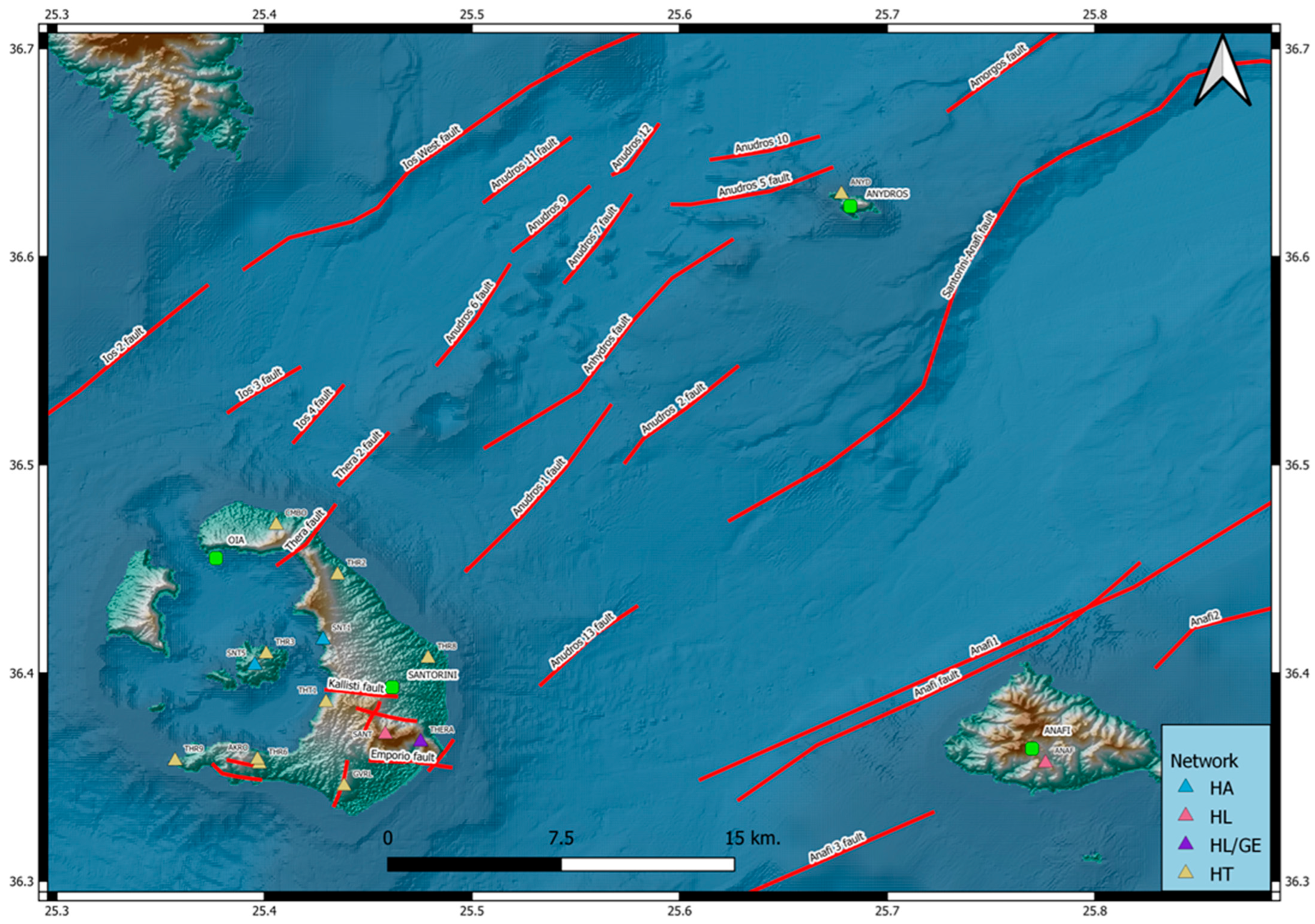
For this seismic analysis, seismic data from HUSN (
Figure 3), a network of high-sensitivity seismic stations, was evaluated, which provided reliable and high-resolution recordings of seismic waves. This ensured the necessary spatial and temporal coverage of the data (
Figure 4).
These data were used to accurately determine the focal parameters of the seismic events, including the location of the epicenters, the time of occurrence, and the estimated magnitude. Emphasis was focused on the spatial relationship of the epicenters with the active faults represented on the map, to study the correlation between seismicity and tectonic structures. Analysis of the recordings enabled the epicenters to be in relation to the active faults in the area, as shown on the map, confirming the close correlation between seismic activity and tectonic structures. The use of a significant number of seismological stations enabled a more accurate determination of both the epicenters and the focal parameters and reduced uncertainty, which is critical for the reliability of the conclusions. The results demonstrate the importance of systematic seismological observation for understanding seismicity and investigating its relationship with active faults, providing critical data for future risk and disaster management studies.
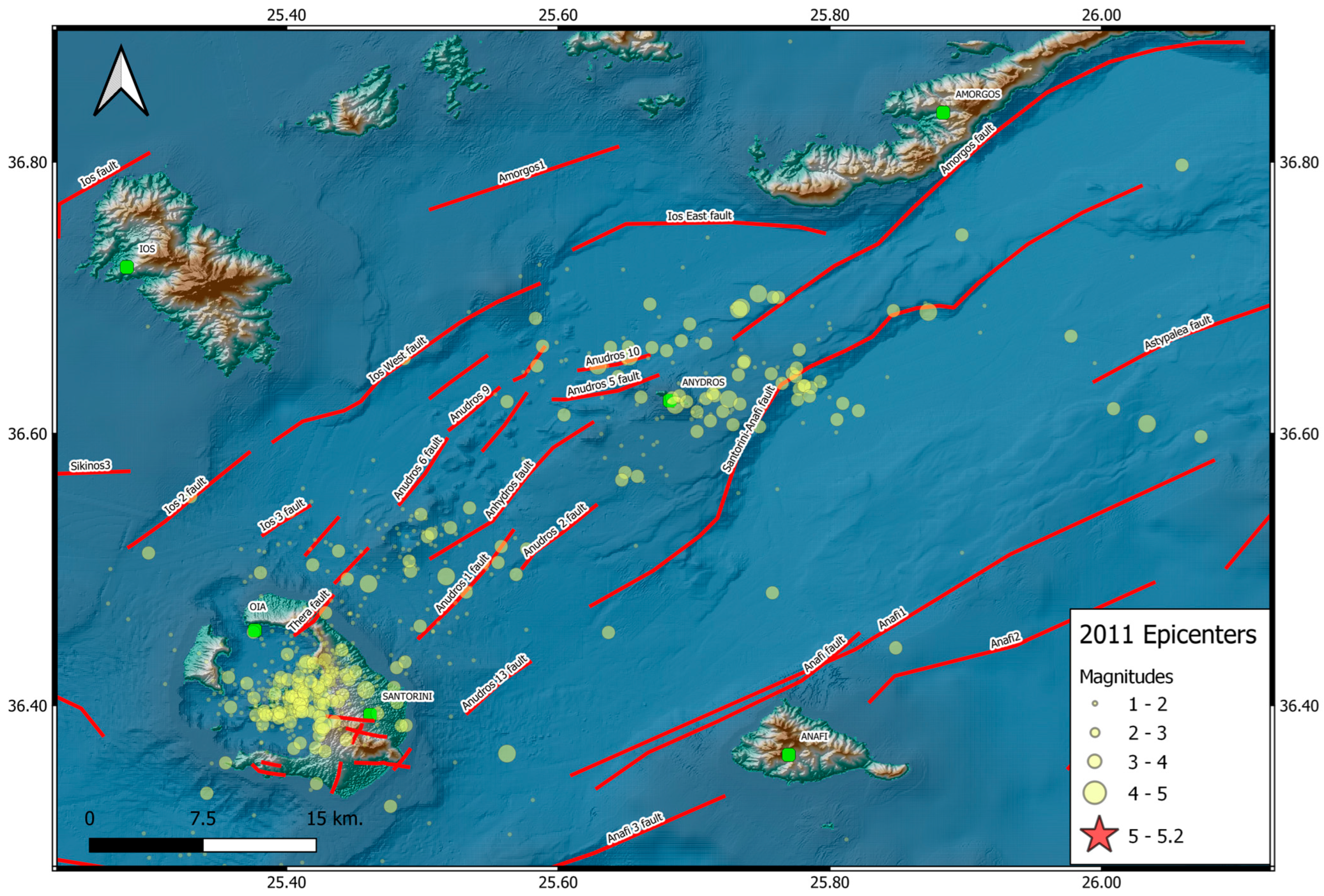
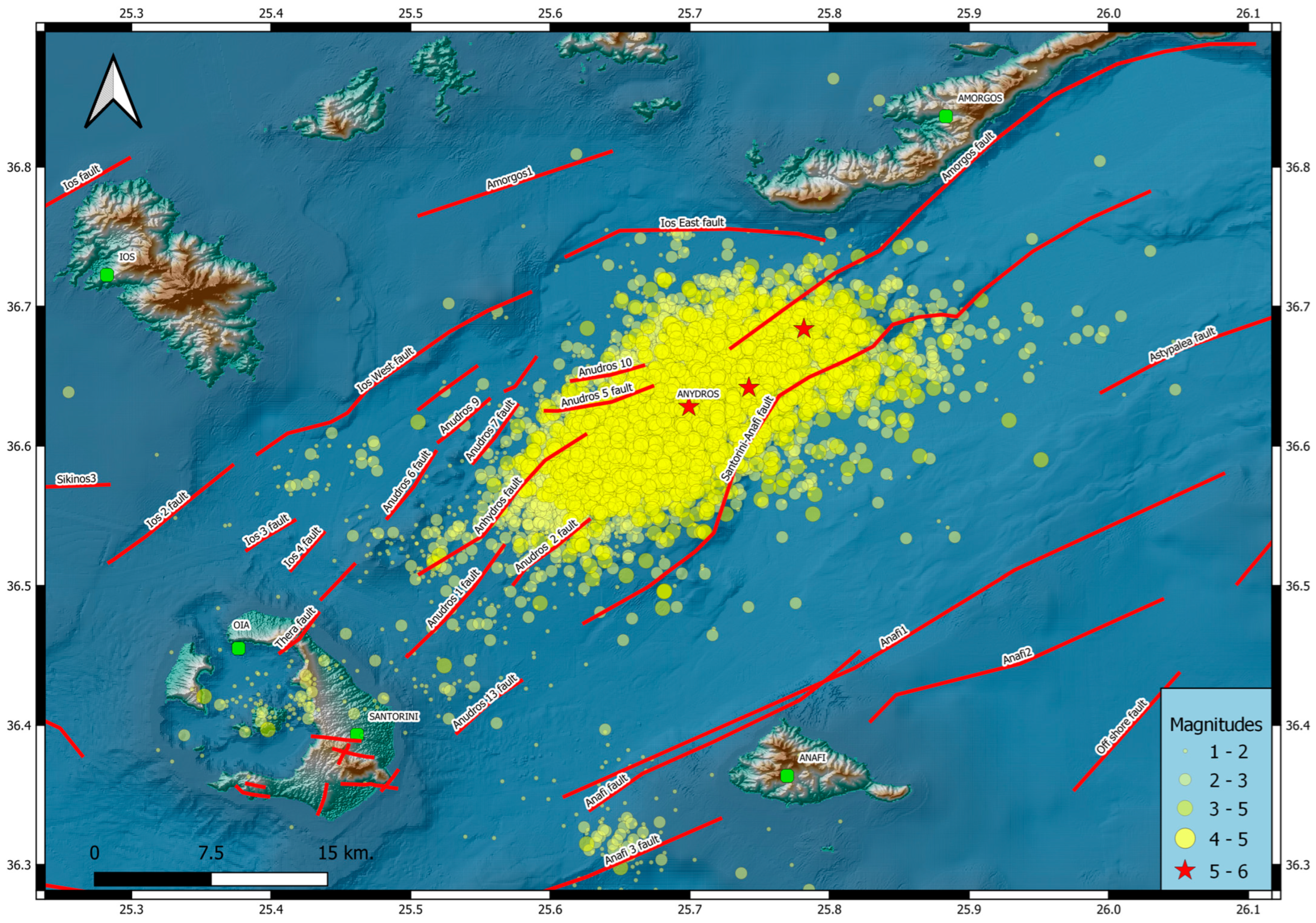
During the period 26 January 2025 to 22 February 2025, more than 10.000 events were recorded, ranging in magnitude from 1.0 to 5.3 on the Richter scale. The epicenters were located at depths of 4–16 km, mainly in the sea area between Santorini, Amorgos, Ios, and Anydros Islands. The strongest earthquake occurred on 22 February, with a magnitude ML = 5.3, causing intense concern about a possible continuation or escalation of the activity.
Earthquakes that occurred in the North Aegean region between Santorini and Anydros Island, are shown in
Figure 4.
The largest events in the swarm are marked with red stars; green squares represent islands near the epicenter. Red lines represent the main faults for the study area as originated from [
15,
32], available at
https://land.copernicus.eu/imagery-in-situ/eu-dem (accessed on 6 December 2025). Bathymetry was obtained using Emodnet Bathymetry [
15] and DEM. The distribution of the epicenters for the seismic swarm January–February 2025 also appears on the map with yellow circles. The size of the circles indicates the magnitude of seismic events. The larger circle indicates higher magnitudes.
A few days after the beginning of the swarm, a network of portable seismographs was installed in the area. The installation and use of this network proved particularly useful and constructive for the analysis of this swarm, for several reasons. First, the portable network allows for more complete coverage of areas near the epicenter, where permanent stations cannot provide sufficient spatial resolution or fully record strong accelerations due to instrument saturation. This is critical, especially in the early stages of a seismic sequence, where the dynamics of seismicity and fault activation proceed at a rapid speed. Additionally, the use of the portable network enabled the observation of high-quality data from small and medium earthquakes that are often missed by permanent stations, enhancing the ability to map epicenters and determine focal parameters with greater accuracy. The close spatial distribution of the portable stations also allows the spatial distribution of seismicity to be identified and studied on a smaller scale, revealing the activation of smaller branches or secondary faults that may not be detected by the national network. Finally, the data from the portable network contributed to the validation of the permanent station recordings and the estimation of the uncertainty of the earthquake parameters. The availability of multiple, independent observations of the same events allowed the application of cross-checking and statistical analysis methods, enhancing the reliability of conclusions regarding the progress of the sequence, the intensity of the earthquakes, and their relationship to the active faults in the area. Overall, the portable network provided a valuable tool for understanding seismic dynamics and for real-time analytical monitoring of the seismic sequence.
For the purposes of this study, a combined dataset was used that includes broad-band 3-component seismological stations, accelerographs from the national seismograph network (NOA and AUTH), as well as data from the portable seismograph network. The seismological stations provided reliable recordings of low and medium frequencies, while the accelerographs, from the national network, recorded high frequencies and strong accelerations, thus fully covering the spectrum of seismic intensities and areas. The technical characteristics of the instruments, such as frequency range, sensitivity, dynamic range, and sampling parameters, are presented in detail in
Table 1.
Summary, more than 40.000 seismic event waveforms were analyzed. Waveform processing included high-order Butterworth filtering to cut off noise outside the band of interest, base corrections, and Fourier and wavelet transforms to determine spectral energy in different frequency bands. Fourier and wavelet transforms were used to determine spectral energy in different frequency bands. These recordings were used to accurately determine the focal parameters of the seismic events, including the geographical location of the epicenter, the focal depth, and the time of occurrence. The combined use of both seismological stations, and the portable network allowed for the validation of results, reduction of uncertainty, and accurate mapping of seismic activity in relation to active faults in the region. In addition, the mobile network provided high-resolution data from the early stages of the sequence, which is critical for understanding the dynamic evolution of the seismic sequence and the activation of faults.
3.3. Moment Tensor Solutions (MT’s)
The calculation of seismic parameters and the determination of the focal mechanism are essential tools for understanding the processes that govern a seismic swarm. The estimation of parameters such as seismic moment, combined with the analysis of rupture mechanisms, allows the distinction between tectonic activity, processes related to the circulation of fluids or magmatic movements, as well as the understanding of the evolution of seismic energy over time. In the case of the cluster that occurred in Santorini in February 2025, this analysis was crucial, as the activity was characterized by a multitude of microearthquakes and the absence of a dominant main earthquake. The investigation of focal mechanisms allowed the connection of events with active tectonic faults in the area and the distinction of the seismicity associated with tectonic deformation from that influenced by the presence of the Columbo volcanic system. The systematic monitoring of the parameters over time made it possible to understand the evolution of the sequence, while at the same time contributing to the improvement of the assessment of seismic hazard for the broader Cyclades region.
In this section, the seismic parameters for the largest earthquakes in the cluster, specifically those with a magnitude equal to or greater than M
L = 4.0, will be calculated. The selection of this category of events is since the largest earthquakes provide higher quality recordings and signals with a better signal-to-noise ratio, which allows for a more reliable estimation of the source parameters [
36]. The calculation of these parameters is considered necessary to investigate the nature of seismic activity and to clarify whether the events are related to purely tectonic processes or if they are associated with volcanic processes, such as magmatic intrusion or fluid movement [
37]. This distinction is achieved through the analysis of focal mechanisms, which capture the kinematics of the faults that are activated. Mechanisms characterized by horizontal slip or normal rupture are usually associated with tectonic deformation, while mechanisms with significant extensional or uplift components indicate processes that are related to volcanic activity. To calculate the rupture mechanisms, Ammon’s software method [
38], which is based on waveform inversion and provides reliable moment solutions for medium and large-sized events, was applied. In this way, it became possible to correlate seismic activity with the underlying geodynamic processes, contributing to the understanding of the evolution of the cluster in space and time.
For a given velocity structure, this method calculates synthetic seismograms, which are then directly compared with the real seismograms. The process is based on the calculation of Green’s Functions, which describe the Earth’s response to an ideal point source and are the cornerstone for the creation of synthetic waveforms. Green’s Functions incorporate the effect of the velocity structure [
36], (stratification, elastic properties, absorption) on the propagation of seismic waves and make it possible to simulate how a real seismic event would be recorded at a station. For their calculation, the reflectivity method of Kennett [
39] was used, which allows for the accurate estimation of the propagation of seismic waves in layered media, considering reflections and refractions at all boundaries between layers. The application of the methodology follows the approach of Randall [
40], who developed computational techniques for the practical generation of Green’s Functions in seismological applications.
In the present study, the three-dimensional velocity model of Papazachos [
41] for the Greek area was used, which provides a realistic approximation of the velocity distribution in the region. This model was combined with synthetic seismic models representing the three fundamental forms of deformation (normal, reverse and horizontal slip), allowing the reliable calculation of synthetic seismograms. The comparison of the synthetics with the real data allowed the inversion of the waveforms and the estimation of the focal mechanisms for the largest earthquakes of the cluster.
This sequence has a scientific interest, as the area is part of the active volcanic arc of the South Aegean, where seismicity is directly linked to the dynamic interaction of tectonic and volcanic processes. The earthquake of 10 February 2025 was the strongest event to date and enabled a detailed analysis of the spatiotemporal distribution of the seismic epicenters, the mechanistic solution of the earthquake and the energy released.
The Mw = 5.4, 10 February 2025 Earthquake
On 10 February 2025, a seismic event of moment magnitude Mw ≈ 5.4 was recorded, which is part of the seismic swarm that was active in the broader area between Santorini, Anydros Island in the first weeks of the year. The earthquake of 10 February 2025 is considered one of the strongest in the sequence, and its occurrence intensified concerns about possible changes in the geodynamic state of the region. Research approaches based on analyses of seismic “regularity” and the release of rupture energy show that larger events are accompanied by characteristic transitions in the structure of seismic disturbances.
In this study, the M
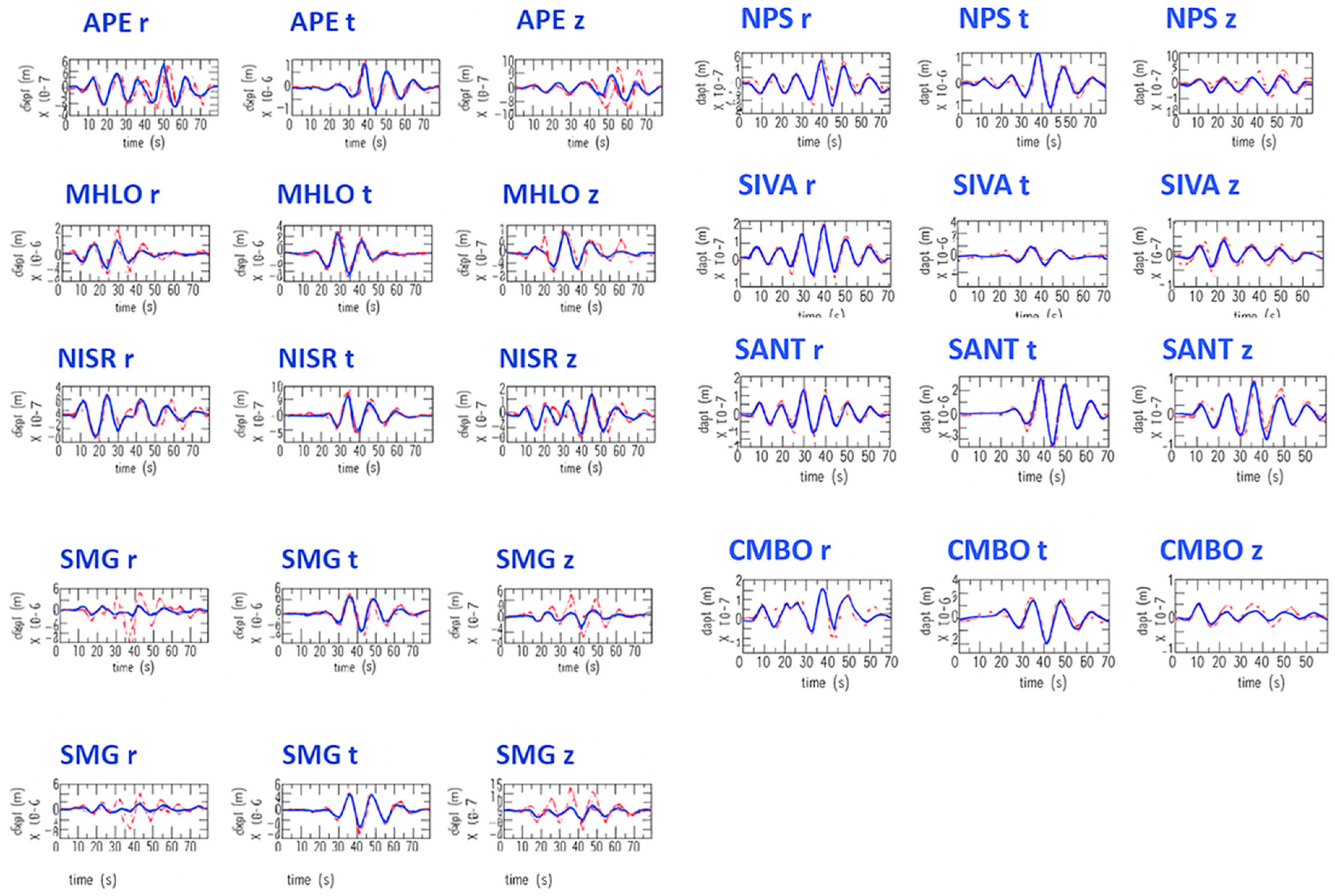
w = 5.4 earthquake of 10 February 2025, between Santorini and Anydros Island, North Aegean Sea, Greece, examined in detail using the procedure described in
Section 3.3. Seismic parameters are calculated, to evaluate the seismotectonic significance of the event in the broader area of Santorini. The source parameters (φ, δ, λ), the Moment Magnitude (M
w), the Seismic Moment (M
0) and the Depth (d) were estimated. For this purpose, data from ten broadband stations with three components were used, each at epicentral distances less than 250 km. The inversion indicates the activation of a normal type of fault. The optimal solution was strike = 260°, dip = 55°, rake = −86° and the focal depth was calculated to be 9 km. The focal solution, with a focal depth of approximately 9 km, indicates that the event occurred within the upper crustal section, within the zone of active extensional deformation characterizing the volcanic arc of the South Aegean. The seismic moment was determined as M
0 = 1.4 × 10
26 dyn × cm, and the calculated double couple (DC) was found to be equal to 55%, while the compensated linear vector dipole (CLVD) was 45%. Of particular interest is the relatively high CLVD ratio (45%) compared to the double pair (DC = 55%), which may indicate a departure from purely elastic fracture. This can be interpreted either as an indication of the complex geometry of the rupture surface, or as a result of combined tectonic and magmatic processes, especially considering the proximity of the epicenter to the Colombo volcanic field. These geometric characteristics of the fault plane are in accordance with the seismotectonic environment of the region.
Figure 5 shows the procedural outcomes.
The following table (
Table 2), available at [
42], presents solutions from various agencies for the Santorini earthquake on 10 February 2025.
Overall, the inversion results confirm that the 10 February 2025 earthquake (M
w = 5.4) is associated with the activation of an E-W trending extensional fault, compatible with the general tectonic structure of the region. The presence of a significant non-dual component pair (CLVD) suggests possible mechanical or rheological inhomogeneity of the fault, or a component of a non-purely tectonic nature, which deserves further investigation through comprehensive seismological and geophysical analysis.
Figure 5 shows the procedural outcomes.
3.4. Analysis of Seismicity in Santorini–Amorgos Islands During the Period December 2024–February 2025
This section examines the seismic activity that occurred in the wider area of Santorini and Amorgos during the period December 2024–February 2025. Within this period, intense and ongoing swarm seismic activity was observed [
18]. The area is part of the South Aegean volcanic arc, where active tectonic structures and magmatic systems meet, resulting in complex geodynamic processes [
43,
44]. The analysis of seismicity in the area contributes significantly to understanding how tectonic and volcanic mechanisms interact, as well as to assessing volcanic risk [
44,
45].
First, the criteria for distinguishing between tectonic and volcanic earthquakes are presented (
Section 3.4.1), [
45], followed by statistical analysis and classification of events based on their magnitude and depth (
Section 3.4.2), while
Section 3.4.3 examines in detail the spatial and temporal evolution of the epicenters. The combined consideration of this data leads to the interpretation of the 2025 seismic excitation as a phreatotectonic swarm, which is most likely due to a temporary increase in pressure caused by fluid intrusion or small-scale magmatic activity [
44].
3.4.1. Classification Criteria for Tectonic and Volcanic Earthquakes
Earthquakes are categorized into two main categories, depending on their focal mechanism, tectonic and volcanic [
46]. The distinction between tectonic and volcanic earthquakes is crucial for the study of areas with intense geodynamic activity, such as the volcanic arc of the South Aegean Sea, and particularly Santorini, where active faults and magmatic systems coexist. In this region, earthquakes result either from the accumulation of energy along faults in the submarine and terrestrial crust (tectonic earthquakes) or from the movement of magma and pressure changes in the volcanic system (volcanic earthquakes) [
47]. Tectonic earthquakes are the most common form of seismic activity and are related to the rupture of rocks along active faults due to the accumulation and sudden release of elastic energy in the lithosphere [
47]. In contrast, volcanic earthquakes are associated with magmatic or hydrothermal activity in active volcanic systems and are caused by the movement of fluids, such as magma, gases, or hot liquids, within the crust [
46].
From a seismological point of view, the two types of earthquakes show clear differences in their morphological and spectral characteristics. Tectonic earthquakes are characterized by high-frequency seismic waves and short duration, with a clearly defined rupture point [
40]. Volcanic earthquakes, on the other hand, exhibit prolonged low-frequency waves (long-period events), which are attributed to fluid flow and the complex geometry of their sources. In addition, volcanic earthquakes occur at shallower depths (usually <10 km), while tectonic earthquakes can reach depths of up to 20–30 km, representing deeper structures of the lithosphere [
48].
In terms of magnitude and energy output, tectonic earthquakes are generally stronger, often exceeding magnitudes of M
L = 7.0, as they are associated with large fault zones. Volcanic earthquakes, on the other hand, have lower magnitudes (usually M
L < 5.0), but can occur in the form of seismic swarms, with dozens or hundreds of small events within a short period of time. The occurrence of such swarms is usually associated with the movement or accumulation of magma and is an important indicator for monitoring possible volcanic processes [
48].
Understanding the differences between tectonic and volcanic earthquakes is essential for interpreting data on seismic activity in the Offshore region between Santorini and Amorgos Islands. This region, where active faults and magmatic processes coexist, exhibits complex seismotectonic behavior, with events that can be attributed to both faulting mechanisms and fluid movements in the subvolcanic system [
44]. In this context, the analysis of the spatiotemporal evolution of seismic events during the period December 2024 to February 2025 allows the identification of the dominant processes that were at work, as well as the investigation of the possible transition from purely tectonic to seismotectonic activity.
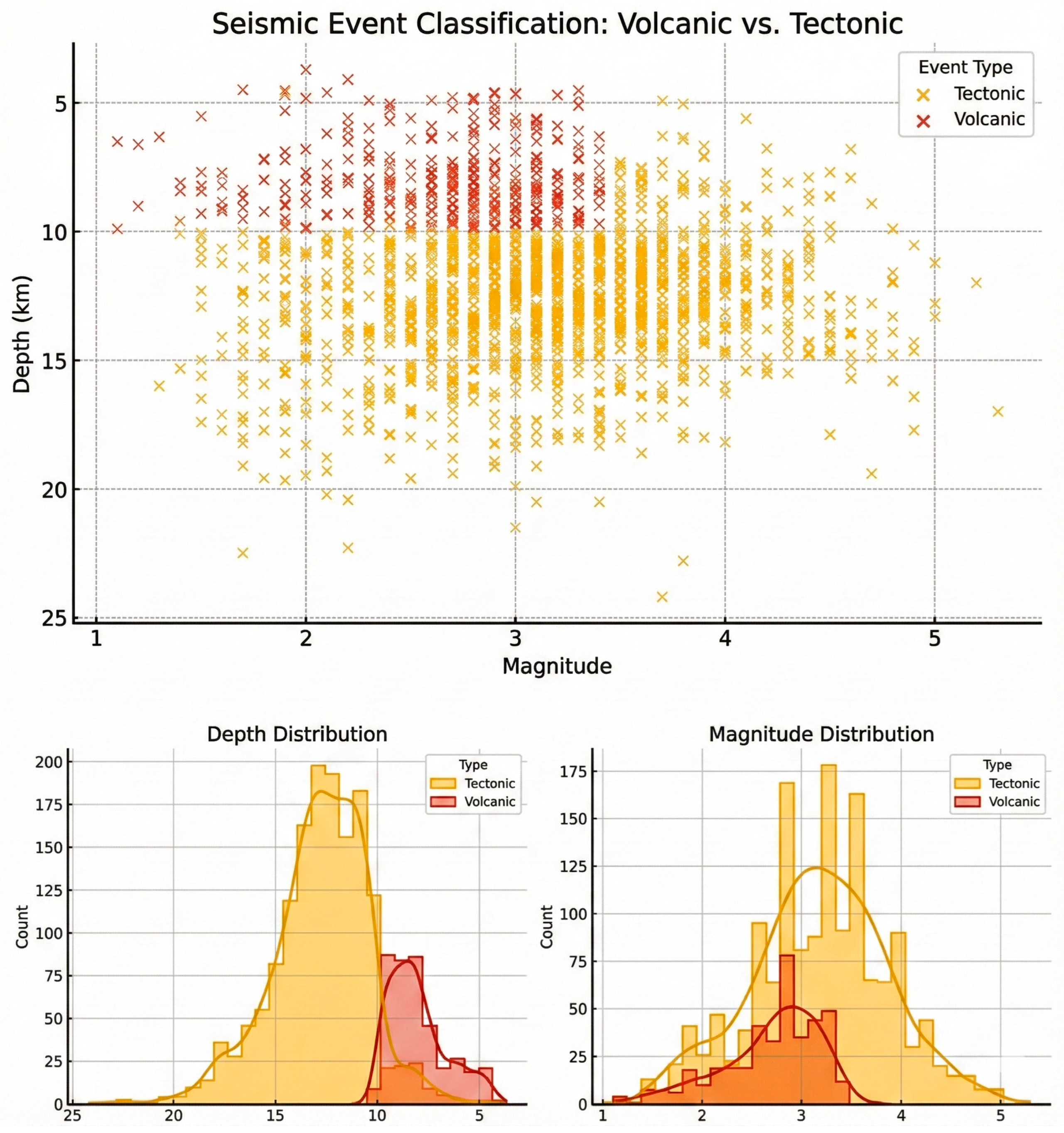
By applying machine learning methods for the period February 2025, the classification of seismic events based on depth and magnitude allows the two types of seismicity to be distinguished, revealing their different mechanisms. The attendance of shallow volcanic and deeper tectonic events, as shown in the diagram, enhances the suggestion of a transitional phase from purely tectonic to seismotectonic activity, in line with the analysis of the spatiotemporal evolution of earthquakes from December 2024 to February 2025. The figure below (
Figure 6) indicates the results of classifying seismic events into two categories—volcanic and tectonic. The data refers to the period of the ending December 2024 until February 2025 and include observations of the magnitude and depth of seismic vibrations.
Uncertainties and possible errors in the dataset were methodically evaluated to assure the accuracy of the statistical results. The frequency-magnitude and depth distributions were constructed with the locating agencies’ magnitude and depth uncertainties in mind. In addition, catalogue completeness was evaluated using typical completion magnitude (Mc) estimation to remove influence from missing low-magnitude occurrences. Potential network-related biases were addressed by merging data from both permanent and temporary stations, which significantly improved spatial coverage and reduced preferential detection effects. To assess potential misclassification and guarantee strong separation between tectonic and volcanic events, the classification findings obtained from machine learning techniques were cross validated with waveform features.
The first graph (top) indicates the relationship between depth and size. Different colors denote tectonic and volcanic events. The yellow dots correspond to tectonic events, while the red dots correspond to volcanic events. Tectonic events tend to occur at greater depths (approximately 10–20 km), while volcanic events are concentrated in shallower areas (5–10 km). However, both categories have similar magnitude ranges, with most events having a magnitude between 2 and 4 on the Richter scale. However, both categories have similar magnitude ranges, with most events having a magnitude between 2 and 4 on the Richter scale. In the lower left graph, the depth distribution confirms the above observations: tectonic events show a strong peak around 15 km, while volcanic events are concentrated mainly at 8–10 km, reflecting their physical origin—tectonic events are associated with deeper faults in the crust, while volcanic events are associated with magma movements closer to the surface. In the lower right graph, the size distribution shows that both categories have similar statistical characteristics, with slightly higher average values for volcanic events. Overall, the results indicate that the machine learning model was able to satisfactorily separate the two categories based on depth and size, revealing clear physiological differences between volcanic and tectonic seismicity in February 2025.
3.4.2. Statistical Analysis of Seismic Events
Statistical analysis of seismic events is a critical step in studying the seismicity of an area, as it allows for the quantitative recording and interpretation of the physical processes associated with the focal mechanisms of earthquakes [
22]. By analyzing parameters such as magnitude, depth, frequency of occurrence, and spatial distribution of seismic events, it is possible to identify patterns that reveal the nature of the mechanisms at work in the subsurface. Particularly in areas where tectonic faults and volcanic processes coexist [
47], statistical data processing takes on dual significance: on the one hand, for understanding purely tectonic events and, on the other, for detecting possible signs of magmatic activity. The importance of statistical data is not limited to scientific research but also extends to crisis management and strategic security policy planning. Through systematically recording and analyzing historical and recent data, scientists can develop reliable prediction models and more accurately estimate potential future developments.
Santorini is one of the most active volcanic areas in the Aegean Sea, where tectonic deformation and magmatic activity coexist in close interaction. The volcanic arc of the South Aegean, to which it belongs, is formed by the convergence of the African and Eurasian lithospheric plates, creating an environment where seismicity reflects both rift movements and magma mobility in the lower crust. In this context, statistical analysis of earthquakes allows the mapping of active zones and the identification of spatial or temporal variations that may be related to the reactivation of the volcanic system.
Statistical data provide valuable knowledge regarding the frequency, intensity, and distribution of eruptions, while also enabling risk assessment and the implementation of preventive measures to protect residents and visitors to the island. Furthermore, the presentation of data using statistical indicators improves the communication of scientific findings to the public and decision-makers, making statistical data an indispensable tool in the study and monitoring of the Santorini seismic cluster. By comparing statistical patterns from different time periods, it can be determined whether the activity is shifting from purely tectonic to seismotectonic or volcanic, as observed in the period December 2024–February 2025. The statistical approach, therefore, is not merely a descriptive method, but a tool for interpretation and prediction, enhancing the overall understanding of the dynamic equilibrium of the Santorini volcanic complex.
In this study, a big set of seismic data was used to draw reliable conclusions about the rate of change in seismicity in the Santorini area. The systematic recording and analysis of this data allows for an understanding of the tectonic processes affecting the region and provides a clear picture of the frequency and intensity of earthquakes over time. The compilation of this information into a single set allows the creation of graphs and visualizations that highlight patterns of seismic activity, thus contributing to the prediction of possible future events and the management of potential risks.
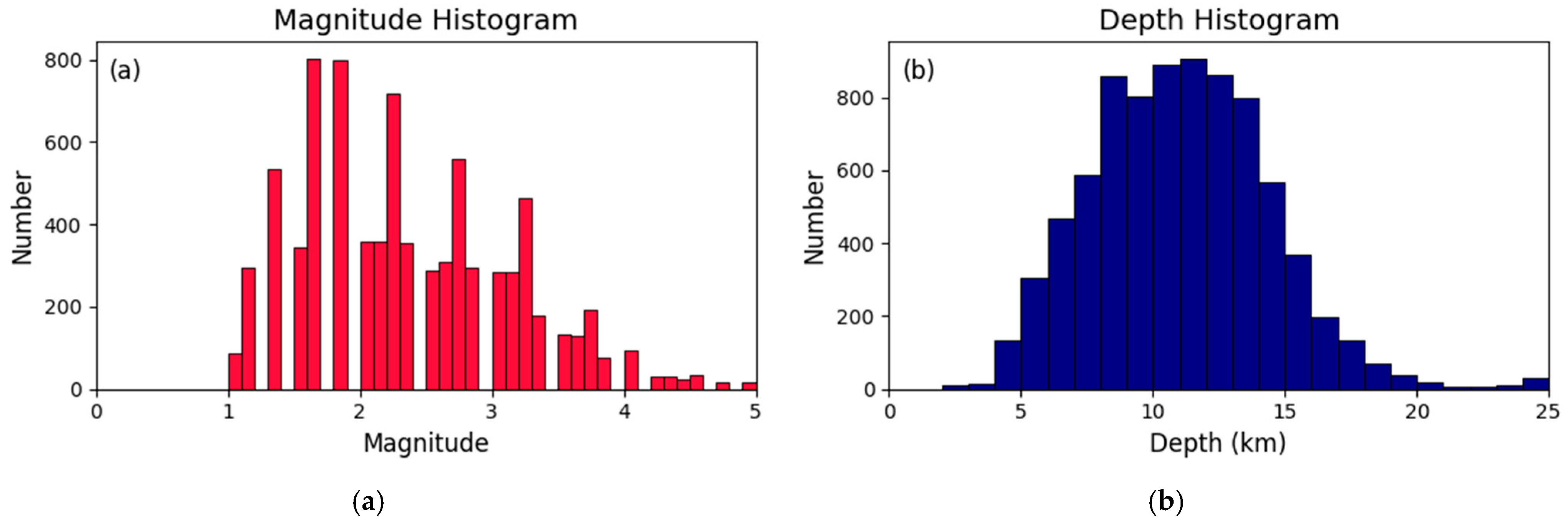
Figure 7 represents the statistical characteristics of seismic activity recorded in Santorini during the recent seismic swarm. Diagram (a), shows the histogram of magnitudes, where most of the events are concentrated in the range 1.5 < M
L< 3.0 degrees, while events with a magnitude greater than 4.0 are relatively limited. This distribution indicates intense microseismic activity, which is consistent with magmatic or hydrothermal stimulation phenomena, without, however, recording strong earthquakes that would indicate large-scale fault rupture. Diagram (b) indicates the distribution of focal depths of the events, which shows maximum distribution between 7 and 13 km. This range probably corresponds to the upper part of the magmatic system or to the activation of pre-existing fault zones related to magmatic pressure. The combination of shallow seismic activity and low magnitudes supports the interpretation of a process of mild magmatic unrest in the Santorini volcanic complex, with no evidence of imminent major volcanic eruption.
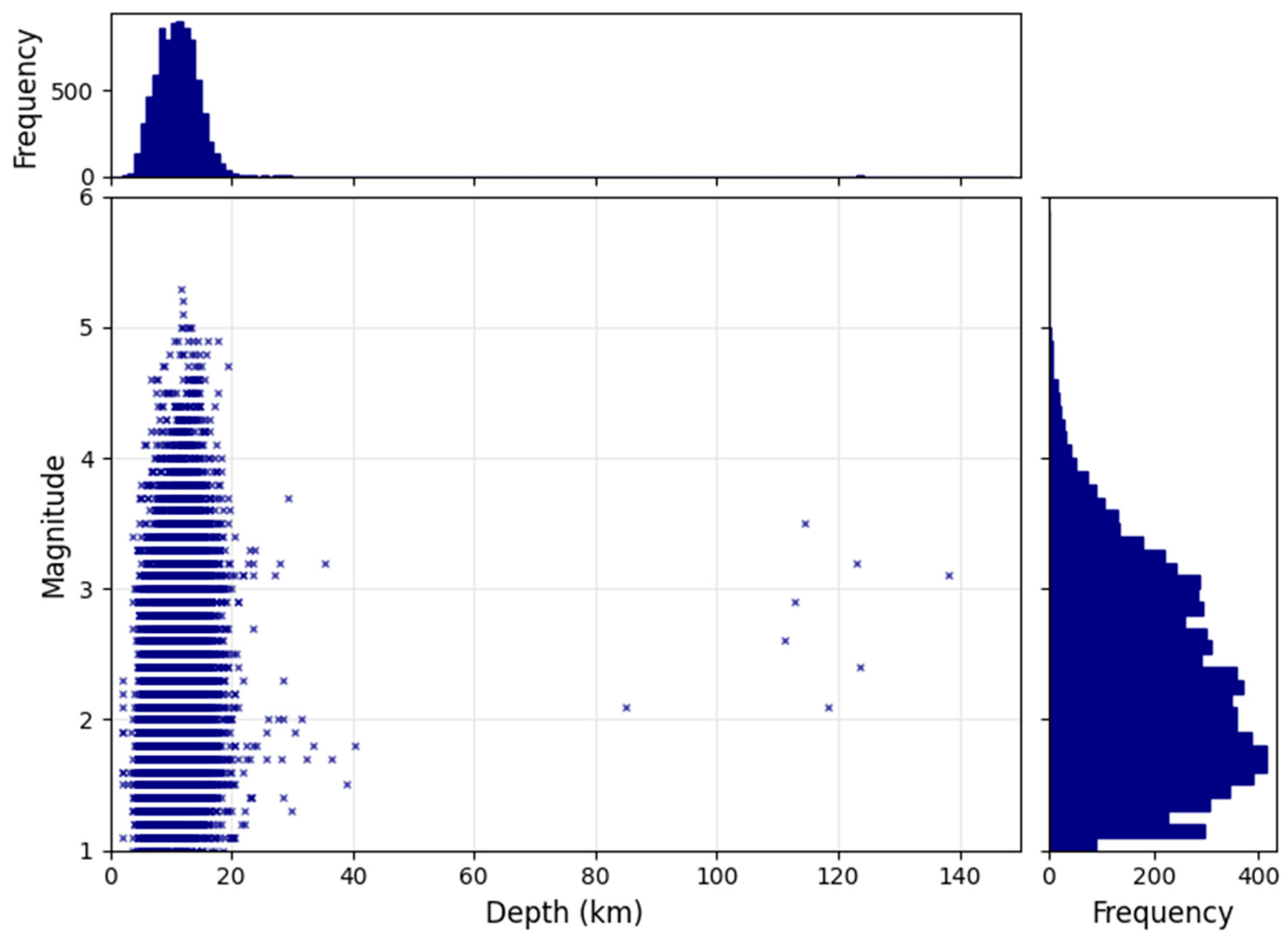
Figure 8 shows the correlation between focal depth and magnitude of seismic events recorded in Santorini, accompanied by the corresponding distribution histograms for each parameter. It is observed that most events are concentrated at shallow depths, between 5 km < D < 20 km, which suggests that the seismicity originates mainly from the upper parts of the crust, close to the magma reservoir of the volcanic system. Accordingly, the magnitudes range mainly between 1.0 and 3.5, with a limited number of events exceeding magnitude 4.0. This distribution indicates intense microseismic activity, which is consistent with processes caused by fluid movement or pressure changes within the volcanic system. The presence of isolated deeper events (D > 40 km), although rare, may indicate activation of deeper fault zones or energy escape to greater depths, without however documenting systematic seismicity at the lower crustal or upper mantle level. Overall, the spatial and statistical distribution of the data at Santorini reflects a state of mild magmatic or hydrothermal excitation, with no clear indication of evolution towards intense volcanic activity. Nevertheless, the persistence of microseismic activity at shallow depths is an indicator that requires continuous monitoring, as it may herald changes in the dynamics of the system.
3.4.3. Spatial-Temporal Evolution of Seismicity and Classification of Seismic Events
The analysis of the spatiotemporal evolution of seismicity in Santorini (
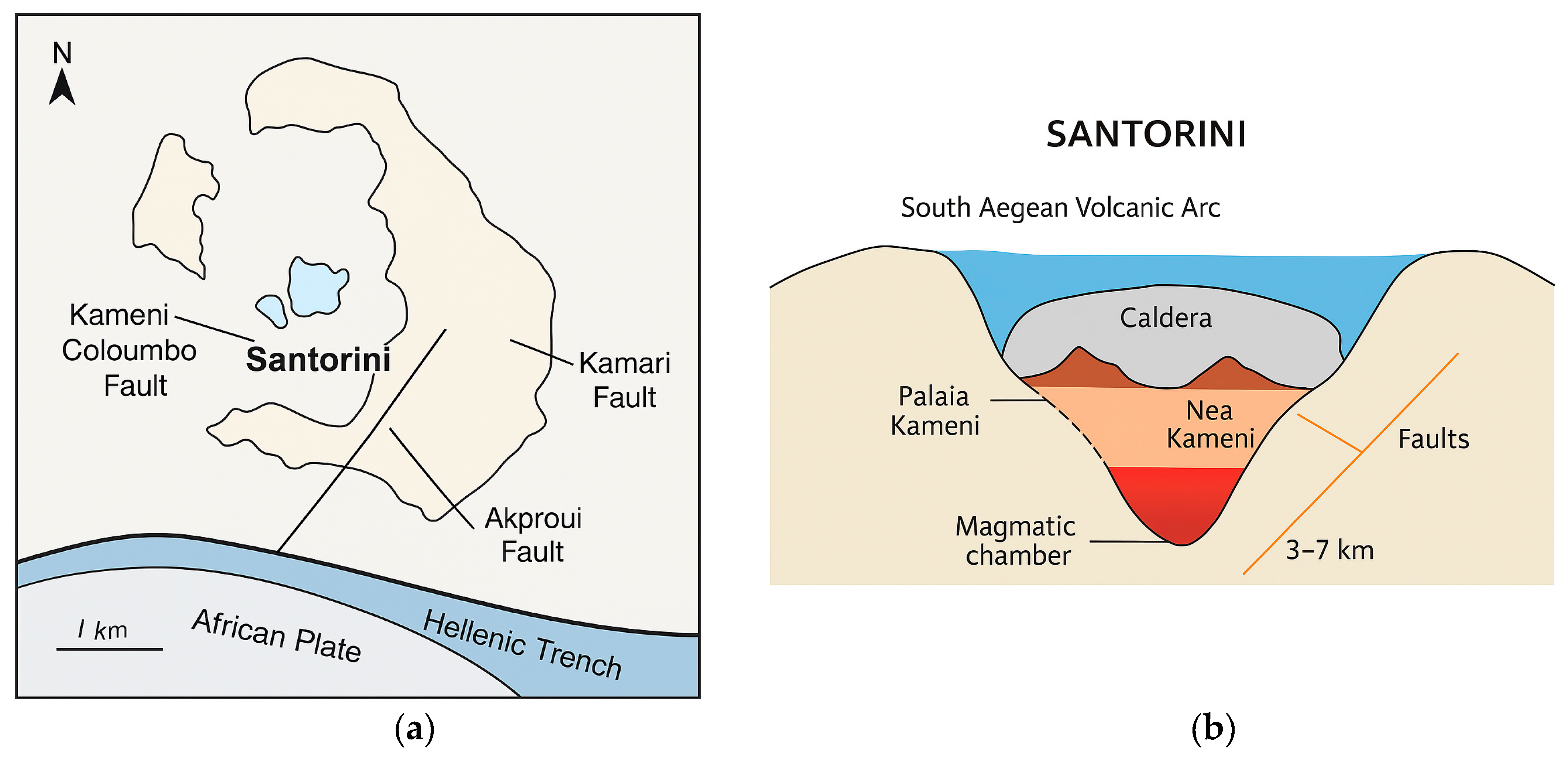
Figure 9) offers crucial information for the investigation of the processes taking place in its active volcanic system. The distribution of seismic events both in space and time reveals the presence of zones of concentrated deformation, which are associated with the active faults of the island complex and the boundaries of the caldera edifice. The spatial concentrations of seismicity along the Columbo-Kamari faults and the southwestern periphery of the caldera indicate the close relationship of seismic activity with the structure of the volcanic field and the presence of magmatic or hydrothermal flows at shallow depths.
The temporal evolution of seismicity shows characteristics of seismic swarms, with successive episodes of microearthquakes occurring in short time intervals, lasting from a few hours to a few days. These swarms do not follow the typical main earthquake-aftershock sequence, which suggests non-tectonic processes. The periodic occurrence of such episodes is interpreted as a result of pressure changes in the magmatic or hydrothermal system, possibly associated with fluid migration or the entry of new magma into the upper crustal part below Nea Kameni.
In terms of depth, most seismic events are located at shallow levels, between 5 and 20 km, which correspond to the crustal brittle zone above the main magma chamber. Individual deeper events up to about 40 km are also detected, which are probably associated with stress transport or with crystallization and gas expansion processes in the lower magmatic parts. The spatiotemporal migration of the epicenters during some episodes is an indication of temporary pressure or liquefaction within conduits and cracks communicating with the magma chamber.
The classification of seismic events, based on the characteristics of their waveforms, confirms the existence of different focal mechanisms. Most earthquakes belong to the volcano-tectonic (VT) type, with clear, high-frequency signals and abrupt arrivals of P waves, indicative of brittle faulting. At the same time, long-period (LP) earthquakes and hybrid events, characterized by lower frequencies and more gradual arrivals, phenomena related to fluid flow or pressure in magmatic-hydrothermal conduits, are recorded. The simultaneous presence of the two types of events (VT and LP) reveals the combined action of mechanical and fluid-dynamic processes, characteristic of magmatic feedback that precedes or accompanies phases of volcanic unrest.
Overall, the spatiotemporal evolution and morphological classification of seismicity in Santorini indicate an active, but relatively stable, system, in which seismic activity is mainly controlled by magmatic and hydrothermal processes at shallow depths. Continuous monitoring of the distribution and type of seismic events is a key tool for the early detection of possible changes in the volcanic regime and the assessment of volcanic risk in Santorini.
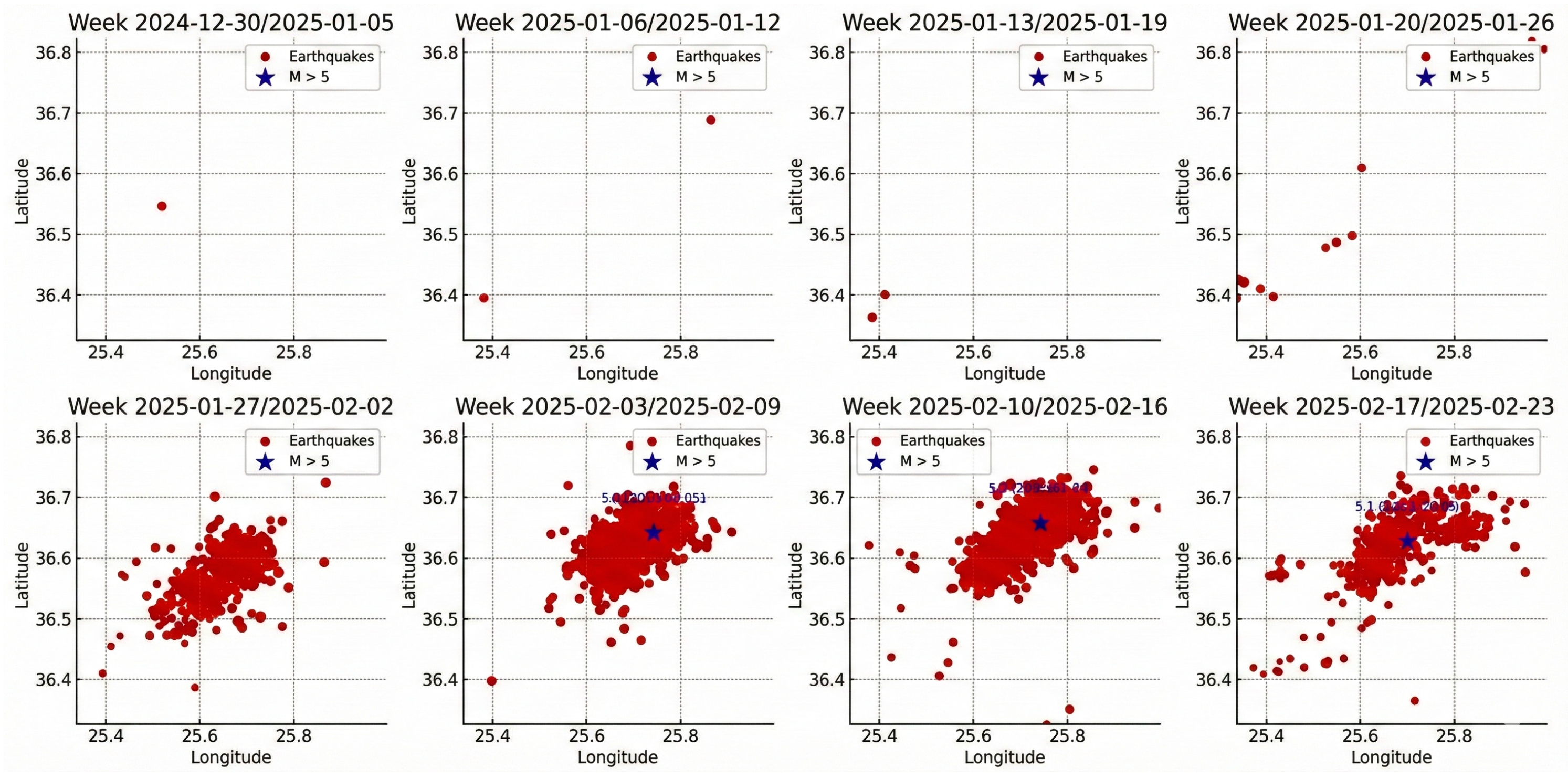
For the purposes of this study, the dynamic evolution of seismic activity in the volcanic and tectonic complex of Santorini–Amorgos Island complex on a weekly basis during the period from late December 2024 to late February 2025. The analysis aims to understand the spatial and temporal evolution of the seismic cluster, as well as to evaluate possible mechanisms that led to the activation of the fault system in the area. Recording the weekly distribution of epicenters allows for the detection of progressive changes in the stress field, providing valuable information on the seismotectonic behavior of the system.
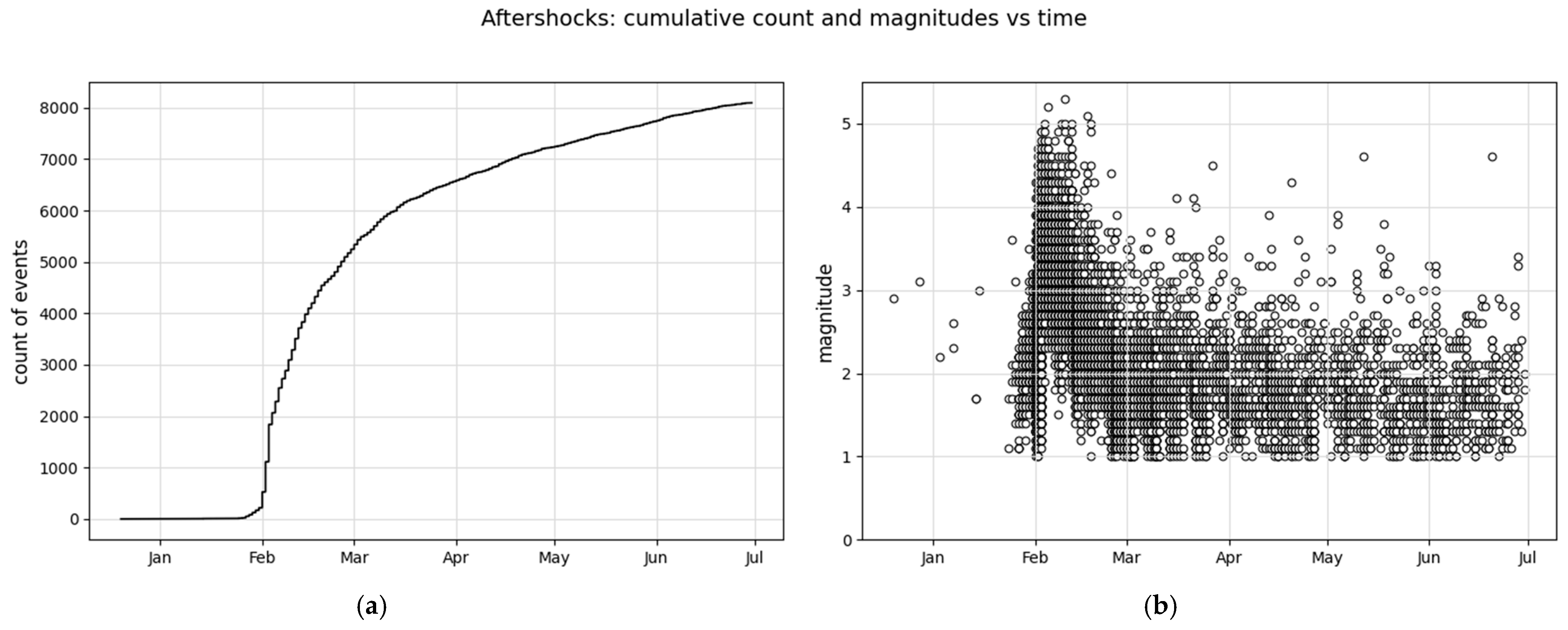
Figure 10 presents the temporal evolution of seismic activity associated with the Santorini earthquake sequence, depicting on the one hand the cumulative number of events (left diagram) and on the other hand the change in their magnitudes over time (right diagram). The cumulative distribution curve shows a strong and sharp increase in the number of events in early February, which indicates the sudden onset of a strong episode of microseismic excitation. This period corresponds to the main stage of activation of the volcanic system, during which most of the earthquakes of the sequence were recorded. Subsequently, the rate of accumulation of events decreases progressively, following a characteristic exponential decreasing course, as predicted by Omori’s law for post-seismic sequences. This decrease reflects the gradual release of stresses and the attenuation of the processes that caused the initial seismic outburst.
The distribution of magnitudes in the right-hand diagram reflects the intensity and duration of the phenomenon. The largest magnitudes (up to ~5.0) are observed in the initial phase of the sequence, indicating the abrupt release of energy from the activation of faults associated with the Santorini volcanic complex. After this first stage, the magnitudes gradually decrease, with the activity being dominated by microearthquakes of magnitude 1.0 < ML < 3.0. This indicates the transition from a phase of intense mechanical instability to a period of gradual adjustment of the system. The maintenance of low but stable seismicity over the following months is probably related to the remaining movement of fluids or gases in the magma conduits, as well as to the equalization of pressures in the crustal part below Nea Kameni.
Overall, the data indicates that the Santorini earthquake series was the product of combined tectonic and magmatic processes, with a main phase of intense activity at the beginning of the year and gradual attenuation thereafter. The evolution of this sequence reveals a volcanic system in a state of mild excitation, where microseismic activity functions as a mechanism for releasing energy and pressure. Monitoring the rate and intensity of these events is essential for assessing the volcanic hazard and understanding the internal dynamics of the Santorini volcanic complex.
3.4.4. Machine Learning-Assisted Classification of Tectonic and Volcanic Events
A machine learning (ML) approach was used to investigate whether the recorded earthquakes formed discernible clusters corresponding to tectonic and volcanic origins to supplement the seismological and spatiotemporal analysis. The study’s main goal was to determine whether data-driven clustering patterns aligned with the accepted physical parameters governing seismicity in the Santorini volcanic system, rather than to create a stand-alone predictive classifier. Because of this, the ML component was created as an exploratory tool to aid in the interpretation of the seismic sequence, with the primary analysis of the study depending on the temporal migration, depth evolution, and spatial distribution of events.
A rule-based pre-classification applied to a subset of earthquakes was used to create the training dataset for the machine learning model. Well-established seismotectonic criteria, such as focal depth thresholds, magnitude characteristics, waveform morphology reported in the literature, and the known behavior of volcano-tectonic swarms in Santorini, served as the foundation for this initial classification. Volcanic events were defined as those that happened at shallow depths (less than 10 km), within clusters with swarm-like temporal patterns, and connected to the volcanic center. On the other hand, deeper events (>10–12 km) that were in line with significant fault structures and showed signs of tectonic deformation were classified as tectonic. A supervised model that used depth and magnitude as its main input features used these labeled data as its training set.
Internal consistency tests were used to validate the model by contrasting the ML classification results with the original rule-based labels. Additional qualitative validation involved comparing the ML results with independent observational indicators, including the spatial clustering of epicenters, the depth distribution observed across the sequence, and the temporal evolution of seismicity. This cross-check ensured that the ML-derived patterns were physically meaningful and aligned with the geological processes inferred from the detailed spatiotemporal analysis—our primary methodological focus. As a result, the ML approach served as an additional analytical layer that supported the seismological interpretation of the February 2025 Santorini seismic activity’s tectonic versus volcanic origins rather than taking its place.