
Eco-Friendly Synthesis of Cerium Oxide Nanoparticles from Lycium cooperi

 , , and
Abstract
1. Introduction
2. Experimental Details
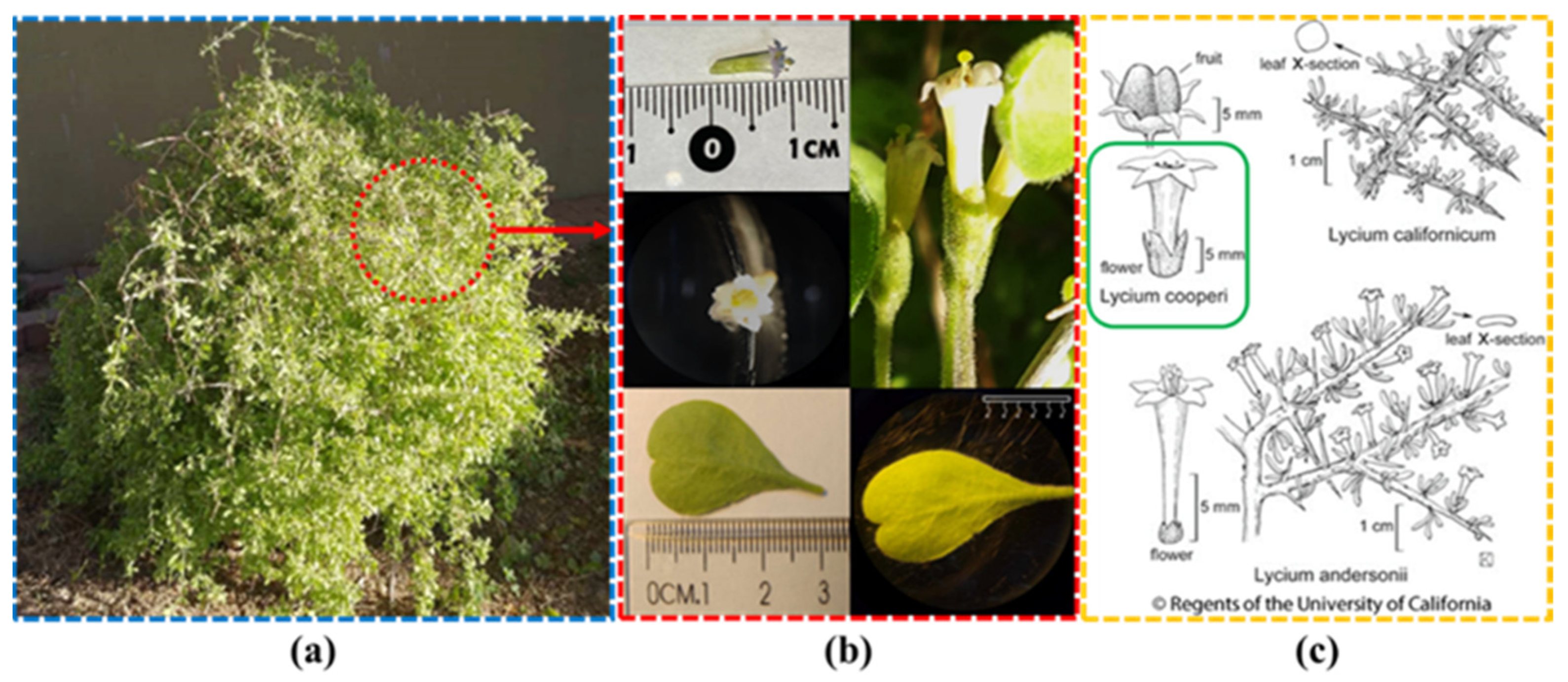
2.1. Morphological Characteristic of L. cooperi Plant
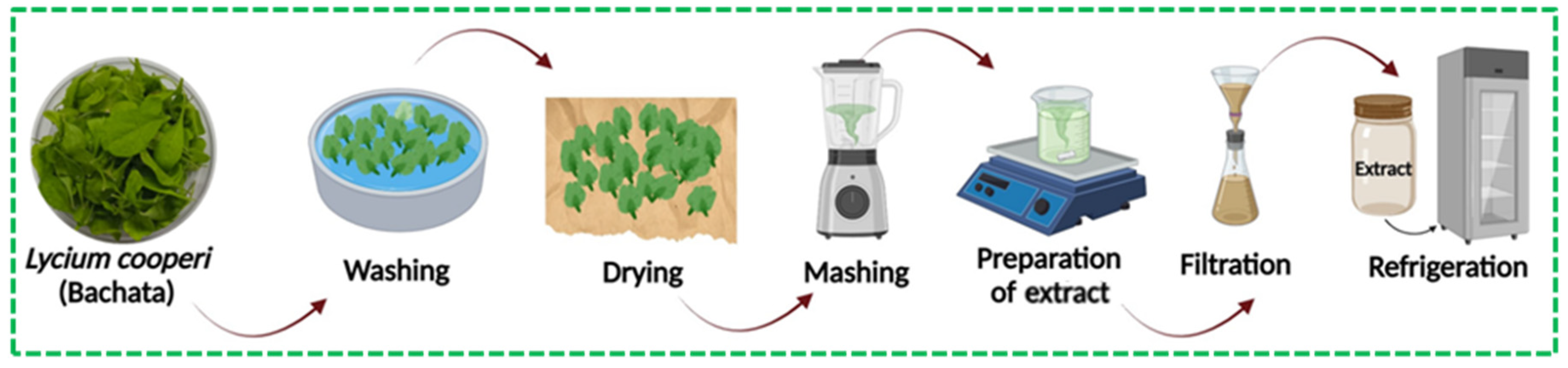
2.2. Preparation of L. cooperi Extract
2.3. Phytochemical Characterization of L. cooperi Extract
- Alkaloids
- Flavonoids
- Saponins
- Tannins
- Terpenoids
- Cardiac glycosides
- Carbohydrates
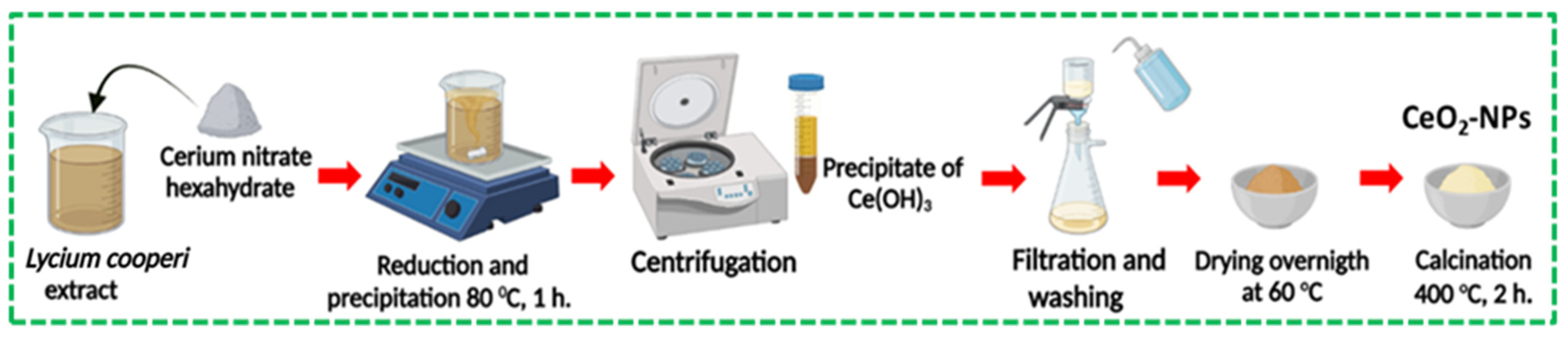
2.4. Green Synthesis of CeO2-NPs
2.5. Characterization of CeO2-NPs
3. Results and Discussion
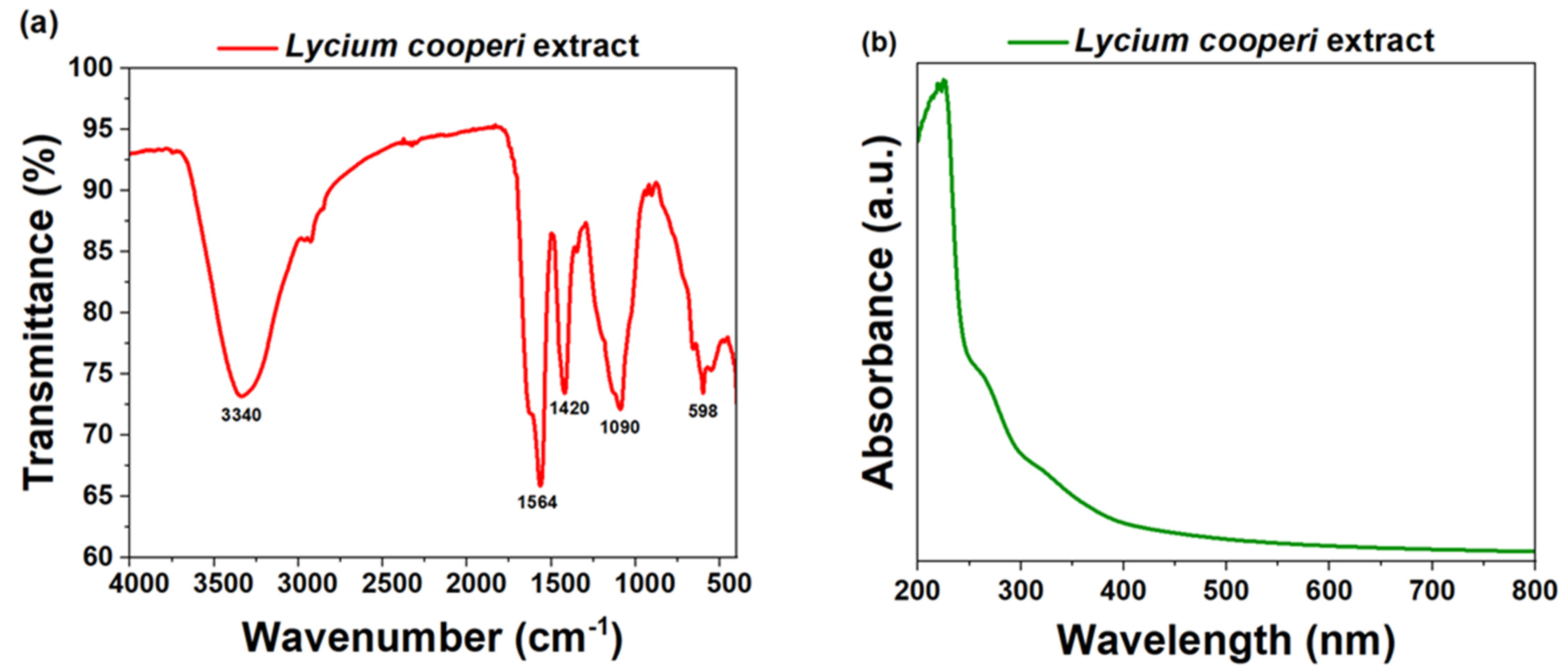
3.1. Phytochemical Analysis of L. cooperi Aqueous Extract
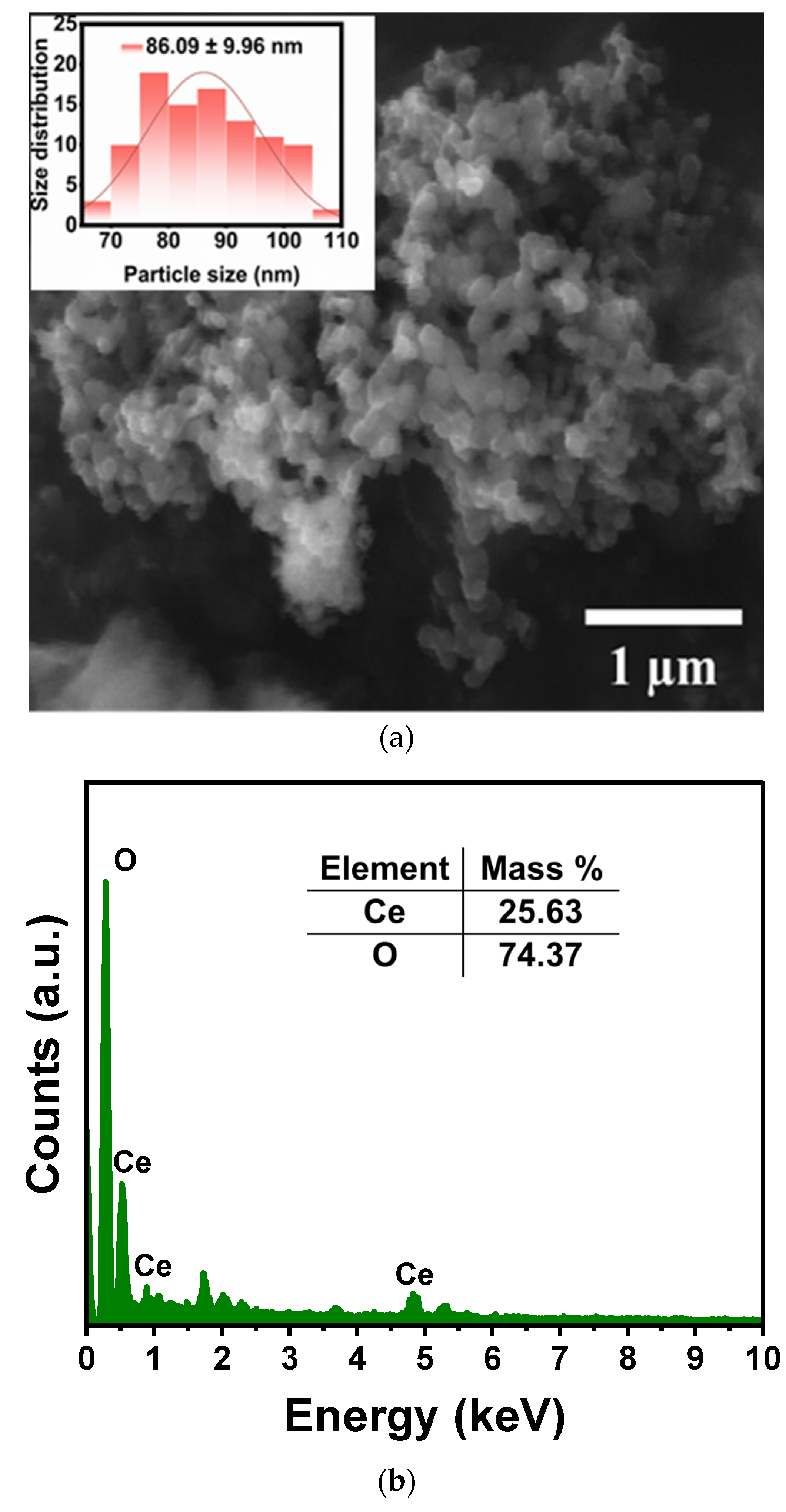
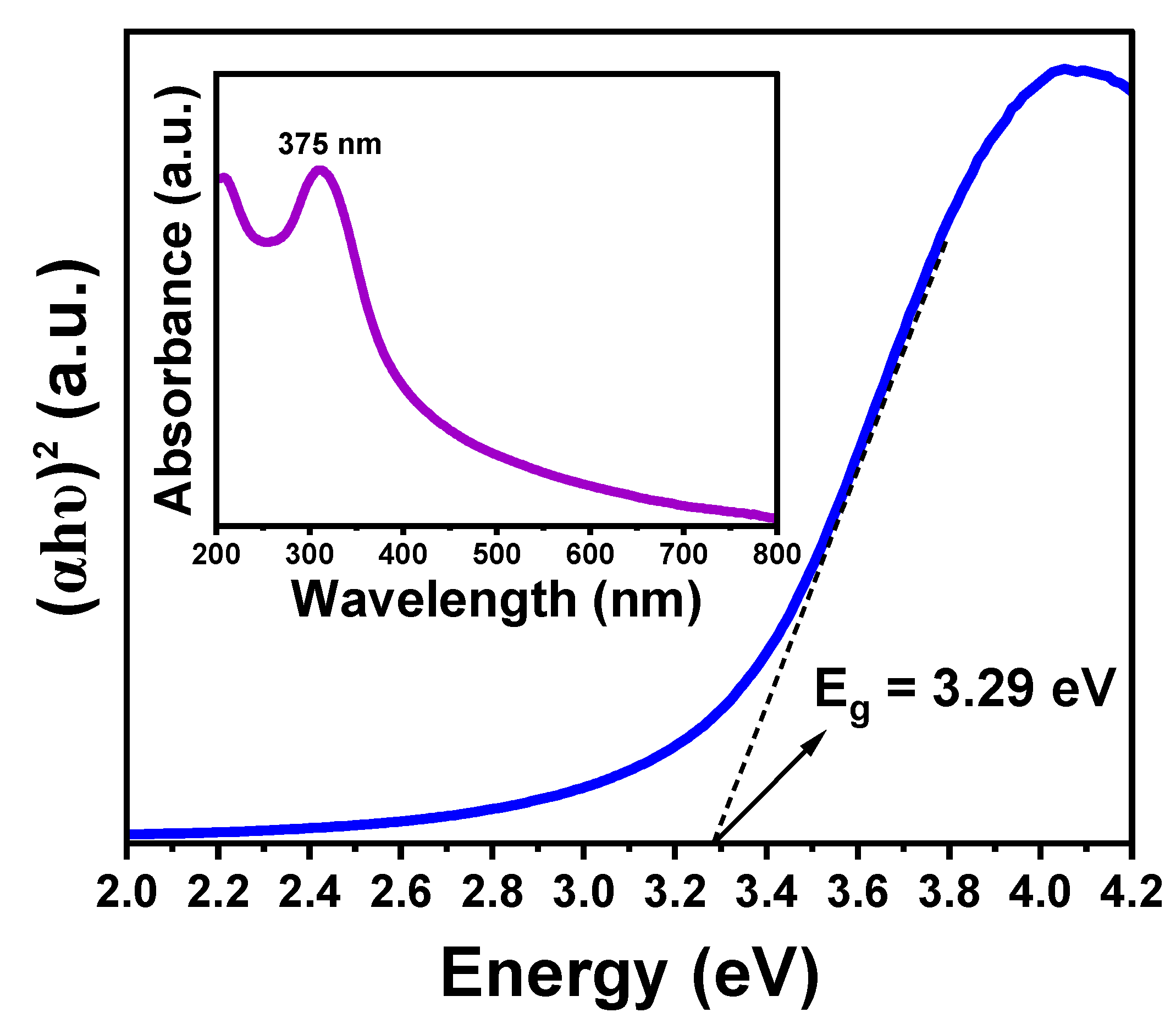
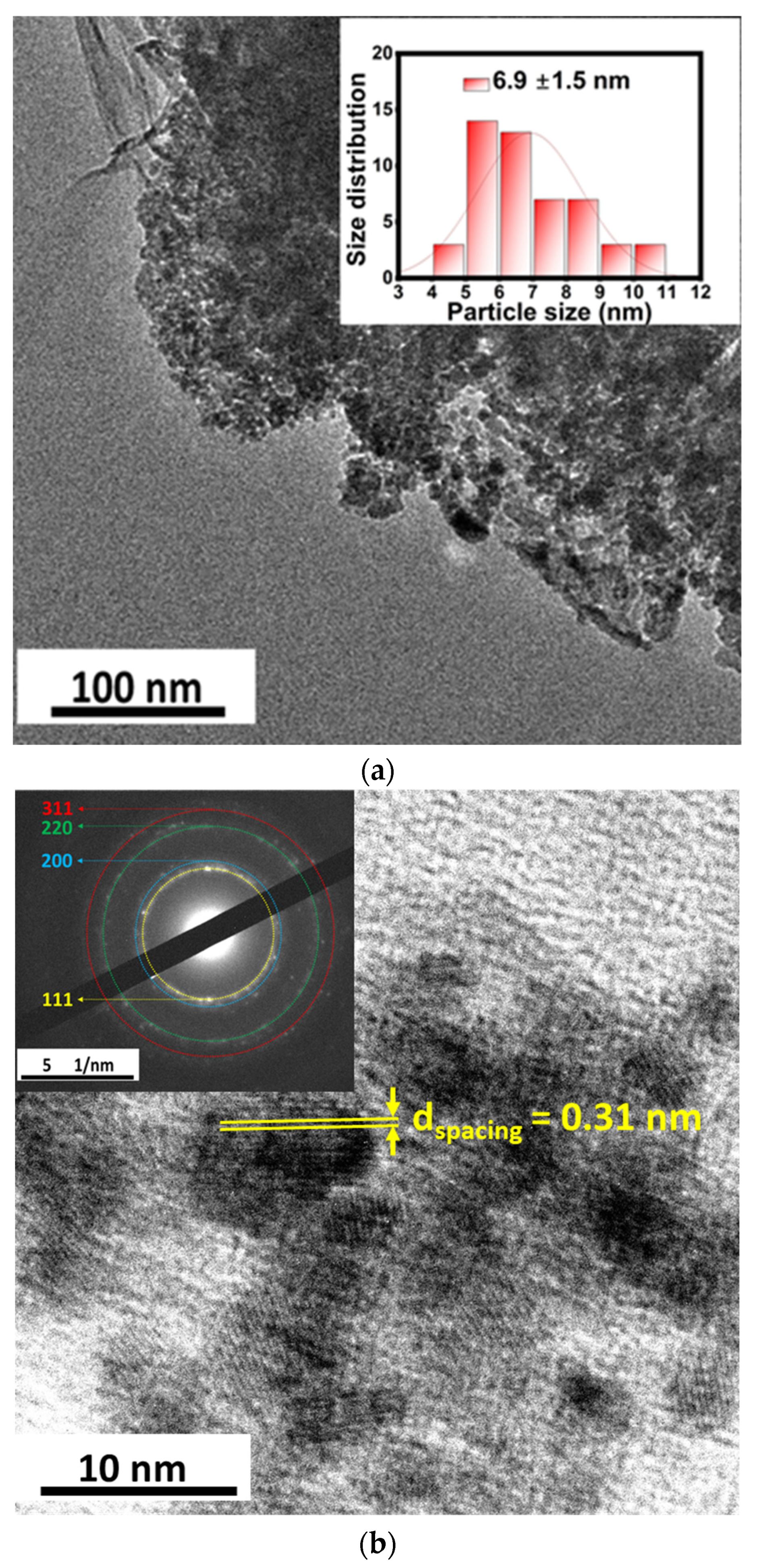
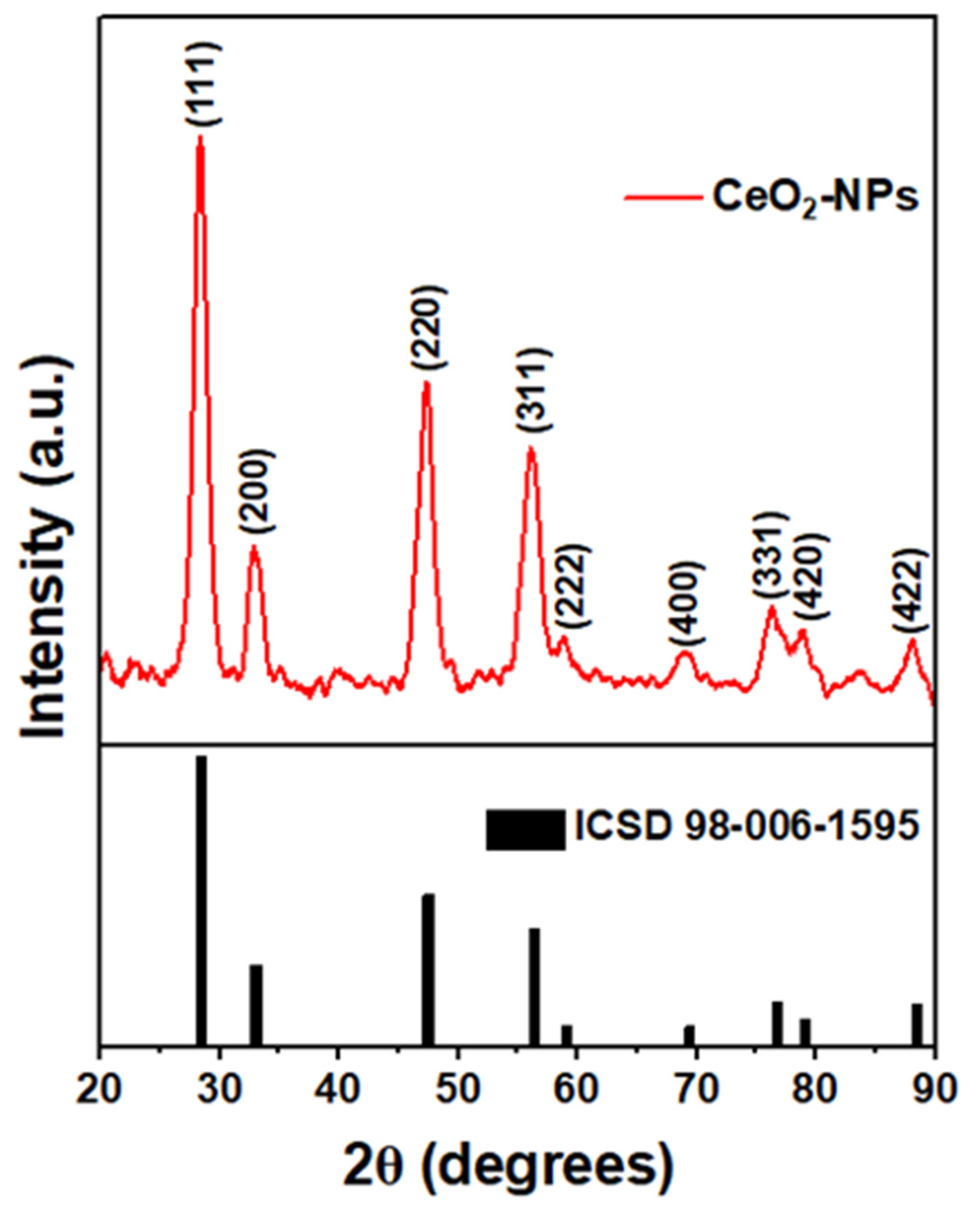
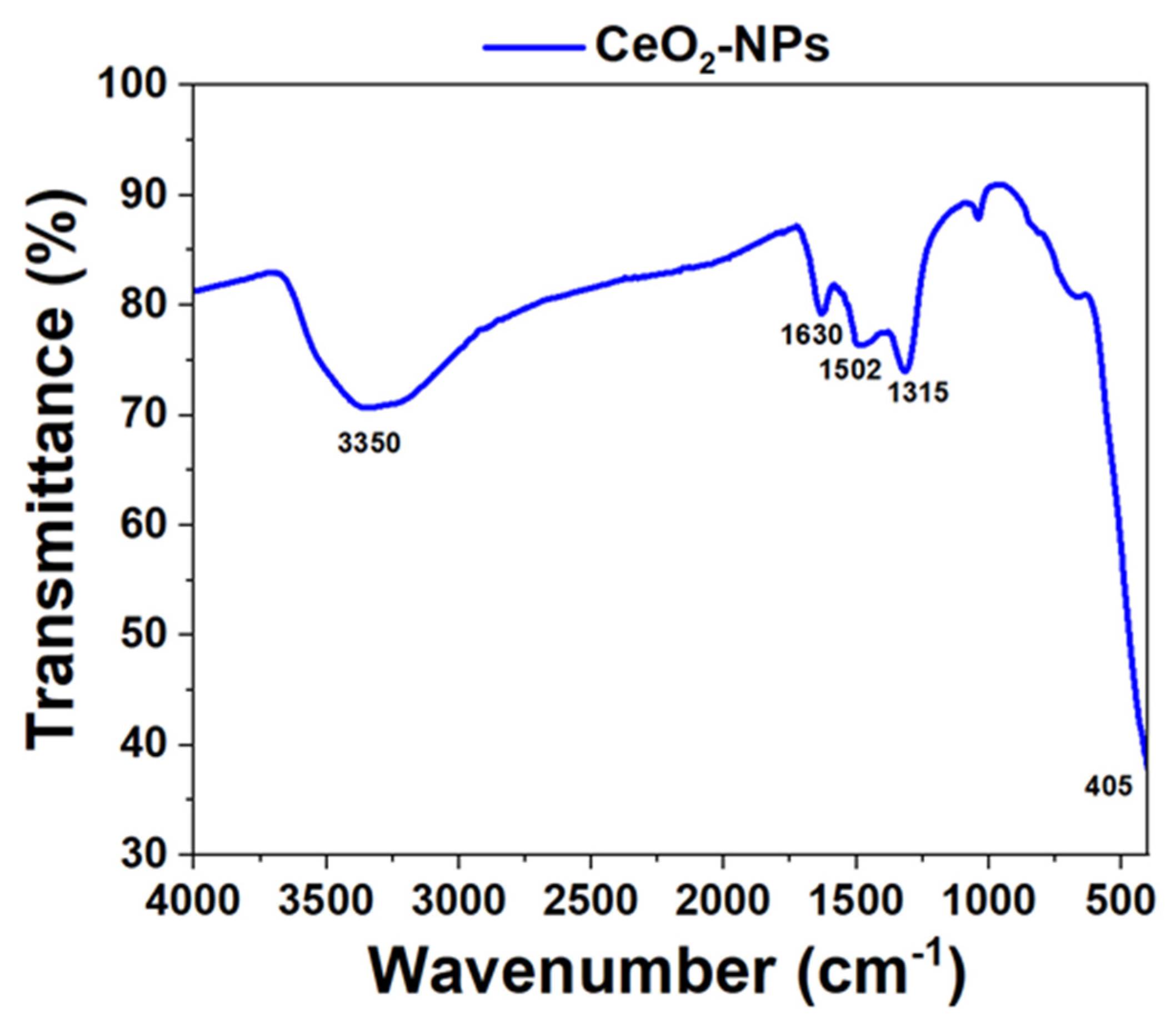
3.2. Physicochemical Analysis of CeO2-NPs
4. Conclusions
Author Contributions
Funding
Data Availability Statement
Acknowledgments
Conflicts of Interest
References
- Yan, Y.Q.; Wu, Y.Z.; Wu, Y.H.; Weng, Z.L.; Liu, S.J.; Liu, Z.G.; Han, B. Recent Advances of CeO2-Based Composite Materials for Photocatalytic Applications. ChemSusChem 2024, 17, e202301778. [Google Scholar] [CrossRef] [PubMed]
- Othman, A.; Gowda, A.; Andreescu, D.; Hassan, M.H.; Babu, S.V.; Seo, J.; Andreescu, S. Two decades of ceria nanoparticles research: Structure, properties and emerging applications. Mater. Horiz. 2024, 11, 3213–3266. [Google Scholar] [CrossRef]
- Bakr, A.M.; Darwish, A.; Azab, A.A.; El Awady, M.E.; Hamed, A.A.; Elzwawy, A. Structural, dielectric, and antimicrobial evaluation of PMMA/CeO2 for optoelectronic devices. Sci. Rep. 2024, 14, 2548. [Google Scholar] [CrossRef]
- Motazedian, M.; Hosseinabadi, N.; Khosravifard, A. The ceria–Germania solid oxide hydrogen storage hollow porous nanoparticles. Mater. Chem. Phys. 2023, 307, 128100. [Google Scholar] [CrossRef]
- Kalaycıoğlu, Z.; Özuğur Uysal, B.; Pekcan, O.; Erim, F.B. Efficient photocatalytic degradation of methylene blue dye from aqueous solution with cerium oxide nanoparticles and graphene oxide-doped polyacrylamide. ACS Omega 2023, 8, 13004–13015. [Google Scholar] [CrossRef] [PubMed]
- Bhushan, S.; Singh, S.; Maiti, T.K.; Das, A.; Barui, A.; Chaudhari, L.R.; Meghnad, G.; Dutt, D. Cerium oxide nanoparticles disseminated chitosan gelatin scaffold for bone tissue engineering applications. Int. J. Biol. Macromol. 2023, 236, 123813. [Google Scholar] [CrossRef]
- Vijayan, A.; Ramadoss, S.; Sisubalan, N.; Gnanaraj, M.; Chandrasekaran, K.; Kokkarachedu, V. Cerium Oxide Nanoparticles for Biomedical Applications. In Nanoparticles in Modern Antimicrobial and Antiviral Applications; Springer International Publishing: Cham, Switzerland, 2024; pp. 175–200. [Google Scholar]
- Kim, Y.G.; Lee, Y.; Lee, N.; Soh, M.; Kim, D.; Hyeon, T. Ceria-based therapeutic antioxidants for biomedical applications. Adv. Mater. 2024, 36, 2210819. [Google Scholar] [CrossRef] [PubMed]
- Sonawane, L.D.; Mandawade, A.S.; Ahemad, H.I.; Aher, Y.B.; Gite, A.B.; Nikam, L.K.; Shinde, S.D.; Jain, G.H.; Patil, G.E.; Shinde, M.S. Sol-gel and hydrothermal synthesis of CeO2 NPs: Their physiochemical properties and applications for gas sensor with photocatalytic activities. Inorg. Chem. Commun. 2024, 164, 112313. [Google Scholar] [CrossRef]
- Nyoka, M.; Choonara, Y.E.; Kumar, P.; Kondiah, P.P.; Pillay, V. Synthesis of cerium oxide nanoparticles using various methods: Implications for biomedical applications. Nanomaterials 2020, 10, 242. [Google Scholar] [CrossRef] [PubMed]
- Miu, B.A.; Dinischiotu, A. New green approaches in nanoparticles synthesis: An overview. Molecules 2022, 27, 6472. [Google Scholar] [CrossRef] [PubMed]
- Nobahar, A.; Carlier, J.D.; Miguel, M.G.; Costa, M.C. A review of plant metabolites with metal interaction capacity: A green approach for industrial applications. BioMetals 2021, 34, 761–793. [Google Scholar] [CrossRef] [PubMed]
- Ahmed, S.F.; Mofijur, M.; Rafa, N.; Chowdhury, A.T.; Chowdhury, S.; Nahrin, M.; Saiful Islam, A.B.M.; Ong, H.C. Green approaches in synthesizing nanomaterials for environmental nanobioremediation: Technological advancements, applications, benefits, and challenges. Environ. Res. 2022, 204, 111967. [Google Scholar] [CrossRef] [PubMed]
- Yao, X.; Peng, Y.; Xu, L.J.; Li, L.; Wu, Q.L.; Xiao, P.G. Phytochemical and biological studies of Lycium medicinal plants. Chem. Biodivers. 2011, 8, 976–1010. [Google Scholar] [CrossRef] [PubMed]
- Yao, R.; Heinrich, M.; Weckerle, C. The genus Lycium as food and medicine: A botanical, ethnobotanical and historical review. J. Ethnopharmacol. 2018, 212, 50–66. [Google Scholar] [CrossRef] [PubMed]
- Aseyd Nezhad, S.; Es-haghi, A.; Tabrizi, M.H. Green synthesis of cerium oxide nanoparticle using Origanum majorana L. leaf extract, its characterization and biological activities. Appl. Organomet. Chem. 2020, 34, e5314. [Google Scholar] [CrossRef]
- Altaf, M.; Manoharadas, S.; Zeyad, M.T. Green synthesis of cerium oxide nanoparticles using Acorus calamus extract and their antibiofilm activity against bacterial pathogens. Microsc. Res. Tech. 2021, 84, 1638–1648. [Google Scholar] [CrossRef] [PubMed]
- Muthuvel, A.; Jothibas, M.; Mohana, V.; Manoharan, C.J.I.C.C. Green synthesis of cerium oxide nanoparticles using Calotropis procera flower extract and their photocatalytic degradation and antibacterial activity. Inorg. Chem. Commun. 2020, 119, 108086. [Google Scholar] [CrossRef]
- Manimaran, R. Optimization of Azadirachta indica leaf extract mediated cerium oxide nanoparticles synthesis, characterization, and its applications. Ind. Crops Prod. 2023, 204, 117304. [Google Scholar] [CrossRef]
- Parvathy, S.; Manjula, G.; Balachandar, R.; Subbaiya, R. Green synthesis and characterization of cerium oxide nanoparticles from Artabotrys hexapetalus leaf extract and its antibacterial and anticancer properties. Mater. Lett. 2022, 314, 131811. [Google Scholar] [CrossRef]
- Ahmed, H.E.; Iqbal, Y.; Aziz, M.H.; Atif, M.; Batool, Z.; Hanif, A.; Yaqub, N.; Farooq, W.A.; Ahmad, S.; Fatehmulla, A.; et al. Green synthesis of CeO2 nanoparticles from the Abelmoschus esculentus extract: Evaluation of antioxidant, anticancer, antibacterial, and wound-healing activities. Molecules 2021, 26, 4659. [Google Scholar] [CrossRef]
- Putri, G.E.; Rilda, Y.; Syukri, S.; Labanni, A.; Arief, S. Highly antimicrobial activity of cerium oxide nanoparticles synthesized using Moringa oleifera leaf extract by a rapid green precipitation method. J. Mater. Res. Technol. 2021, 15, 2355–2364. [Google Scholar] [CrossRef]
- Sabouri, Z.; Sabouri, M.; Amiri, M.S.; Khatami, M.; Darroudi, M. Plant-based synthesis of cerium oxide nanoparticles using Rheum turkestanicum extract and evaluation of their cytotoxicity and photocatalytic properties. Mater. Technol. 2022, 37, 555–568. [Google Scholar] [CrossRef]
- Michael, H. Nee. Lycium cooperi, in Jepson Flora Project (eds.) Jepson eFlora. 2021. Available online: https://ucjeps.berkeley.edu/eflora/eflora_display.php?tid=32210 (accessed on 20 October 2023).
- Marslin, G.; Siram, K.; Maqbool, Q.; Selvakesavan, R.K.; Kruszka, D.; Kachlicki, P.; Franklin, G. Secondary Metabolites in the Green Synthesis of Metallic Nanoparticles. Materials 2018, 11, 940. [Google Scholar] [CrossRef] [PubMed]
- Wongsa, P.; Phatikulrungsun, P.; Prathumthong, S. FT-IR characteristics, phenolic profiles and inhibitory potential against digestive enzymes of 25 herbal infusions. Sci. Rep. 2022, 12, 6631. [Google Scholar] [CrossRef] [PubMed]
- Bi, H.; Zhang, L.X.; Xing, Y.; Zhang, P.; Chen, J.J.; Yin, J.; Bie, L.J. Morphology-controlled synthesis of CeO2 nanocrystals and their facet-dependent gas sensing properties. Sens. Actuators B Chem. 2021, 330, 129374. [Google Scholar] [CrossRef]





| L. cooperi Plant | |
|---|---|
| Habit: | Glandular-puberulent; branches rigidly ascending to erect, shrub, leafy. |
| Leaf: | Size: 1–3 cm, shape: oblanceolate to obovate. |
| Flower: | Calyx size: 8–15 mm, calyx shape: narrowly bell-shaped, lobe number: 4–5 mm, lobe shape: tube, lobe size: 1.5–3 mm, corolla shape: narrowly funnel-shaped, corolla color: white, corolla size: 9–12 mm. |
| Fruit: | Size: 5–9 mm, color: yellow to orange. |
| Seed: | Several |
| Distribution: | California, Arizona, and Utah. |
| Metabolite | Test | Result |
|---|---|---|
| Alkaloids | Hager and tannic acid | (+) |
| Flavonoids | Ammonia | (+) |
| Saponins | Froth’s | (−) |
| Tannins | FeCl3 | (−) |
| Terpenoids | Terpenoid | (−) |
| Cardiac glycosides | Keller–Kellani | (+) |
| Carbohydrates | Benedict | (+) |
| Plant Extract | Size of NPs | Band Gap | Synthesis Time and Temperature | Calcination Temperature and Time | Ref. |
|---|---|---|---|---|---|
| Origanum majorana L. | ~20 nm | - | 48 h at 100 °C | 450 °C for 4 h | [16] |
| Acorus calamus | ~22 nm | - | 4 h at RT | 400 °C for 2 h | [17] |
| Calotropis procera | ~21 nm | ~3.3 eV | 3 h at 85 °C | 400 °C for 2 h | [18] |
| Azadirachta indica | ~28 nm | - | - | - | [19] |
| Artabotrys hexapetalus | - | ~3.2 eV | 6 h at 80 °C | - | [20] |
| Abelmoschus esculentus | ~36 nm | - | 6 h at 120 °C | 600 °C for 4 h | [21] |
| Moringa oleifera | ~17 nm | ~2.6 eV | 2 h at 80 °C | 600 °C for 2 h | [22] |
| Rheum turkestanicum | ~30 nm | ~3.3 eV | 24 h at 80 °C | 400–600 °C for 2 h | [23] |
| Lycium cooperi | ~7 nm | ~3.3 eV | 1 h at 80 °C | 400 °C for 2 h | This work |
Disclaimer/Publisher’s Note: The statements, opinions and data contained in all publications are solely those of the individual author(s) and contributor(s) and not of MDPI and/or the editor(s). MDPI and/or the editor(s) disclaim responsibility for any injury to people or property resulting from any ideas, methods, instructions or products referred to in the content. |
© 2025 by the authors. Licensee MDPI, Basel, Switzerland. This article is an open access article distributed under the terms and conditions of the Creative Commons Attribution (CC BY) license (https://creativecommons.org/licenses/by/4.0/).
Share and Cite
Castillo-Saenz, J.; Salomón-Carlos, J.; Beltrán-Partida, E.; Valdez-Salas, B. Eco-Friendly Synthesis of Cerium Oxide Nanoparticles from Lycium cooperi. Reactions 2025, 6, 14. https://doi.org/10.3390/reactions6010014
Castillo-Saenz J, Salomón-Carlos J, Beltrán-Partida E, Valdez-Salas B. Eco-Friendly Synthesis of Cerium Oxide Nanoparticles from Lycium cooperi. Reactions. 2025; 6(1):14. https://doi.org/10.3390/reactions6010014
Chicago/Turabian StyleCastillo-Saenz, Jhonathan, Jorge Salomón-Carlos, Ernesto Beltrán-Partida, and Benjamín Valdez-Salas. 2025. "Eco-Friendly Synthesis of Cerium Oxide Nanoparticles from Lycium cooperi" Reactions 6, no. 1: 14. https://doi.org/10.3390/reactions6010014
APA StyleCastillo-Saenz, J., Salomón-Carlos, J., Beltrán-Partida, E., & Valdez-Salas, B. (2025). Eco-Friendly Synthesis of Cerium Oxide Nanoparticles from Lycium cooperi. Reactions, 6(1), 14. https://doi.org/10.3390/reactions6010014