


Effects of Microbial and Non-Microbial Biostimulants on Chickpea Growth, Yield, and Soil Properties in a Marginal Mediterranean Environment



Abstract
1. Introduction
2. Materials and Methods
2.1. Field Trial
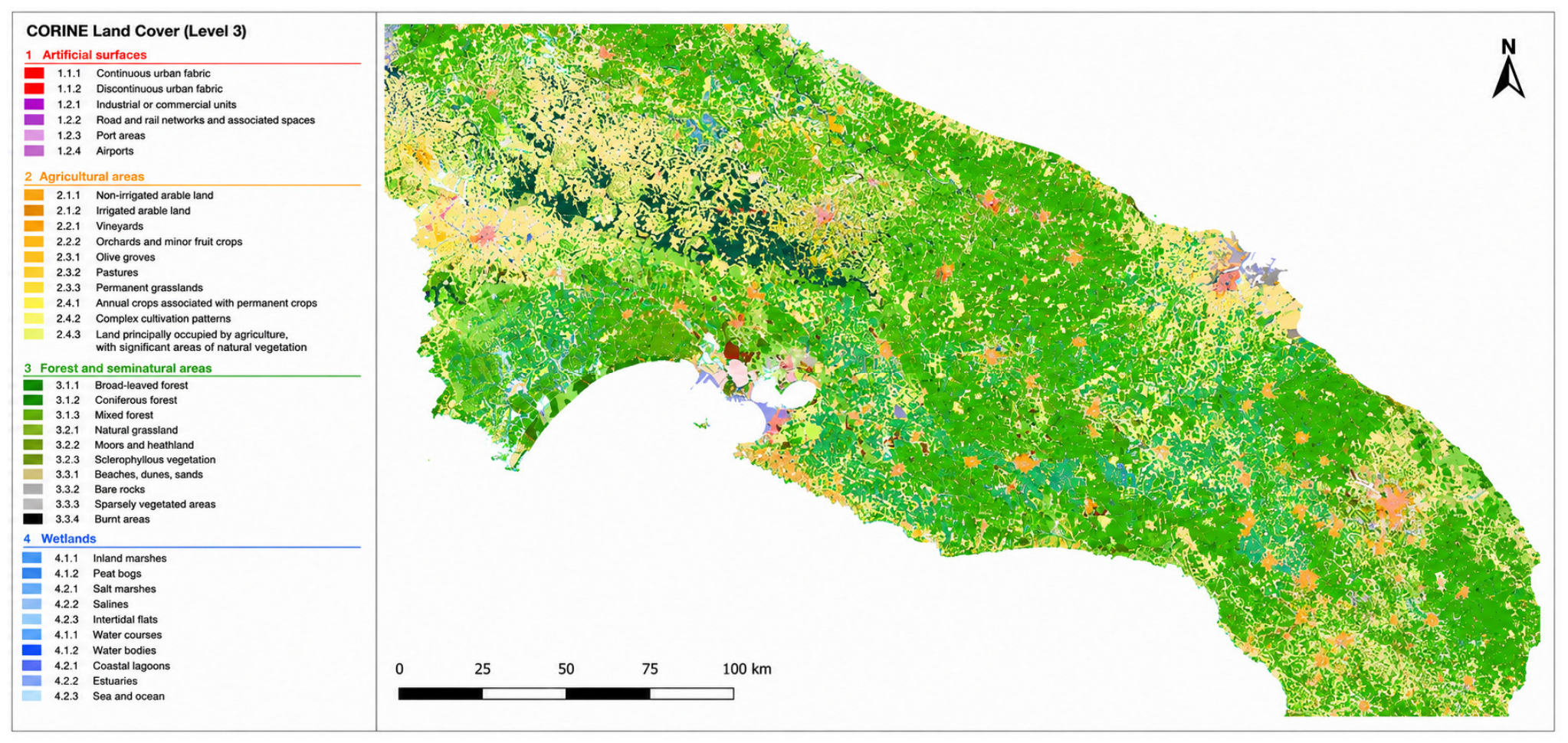
2.2. Site Characterization with UAV and GIS Analysis
2.3. Plant Sampling, Agronomic Characterization, and Yield
2.4. Soil Physicochemical Analysis
2.5. Statistical Analysis
3. Results
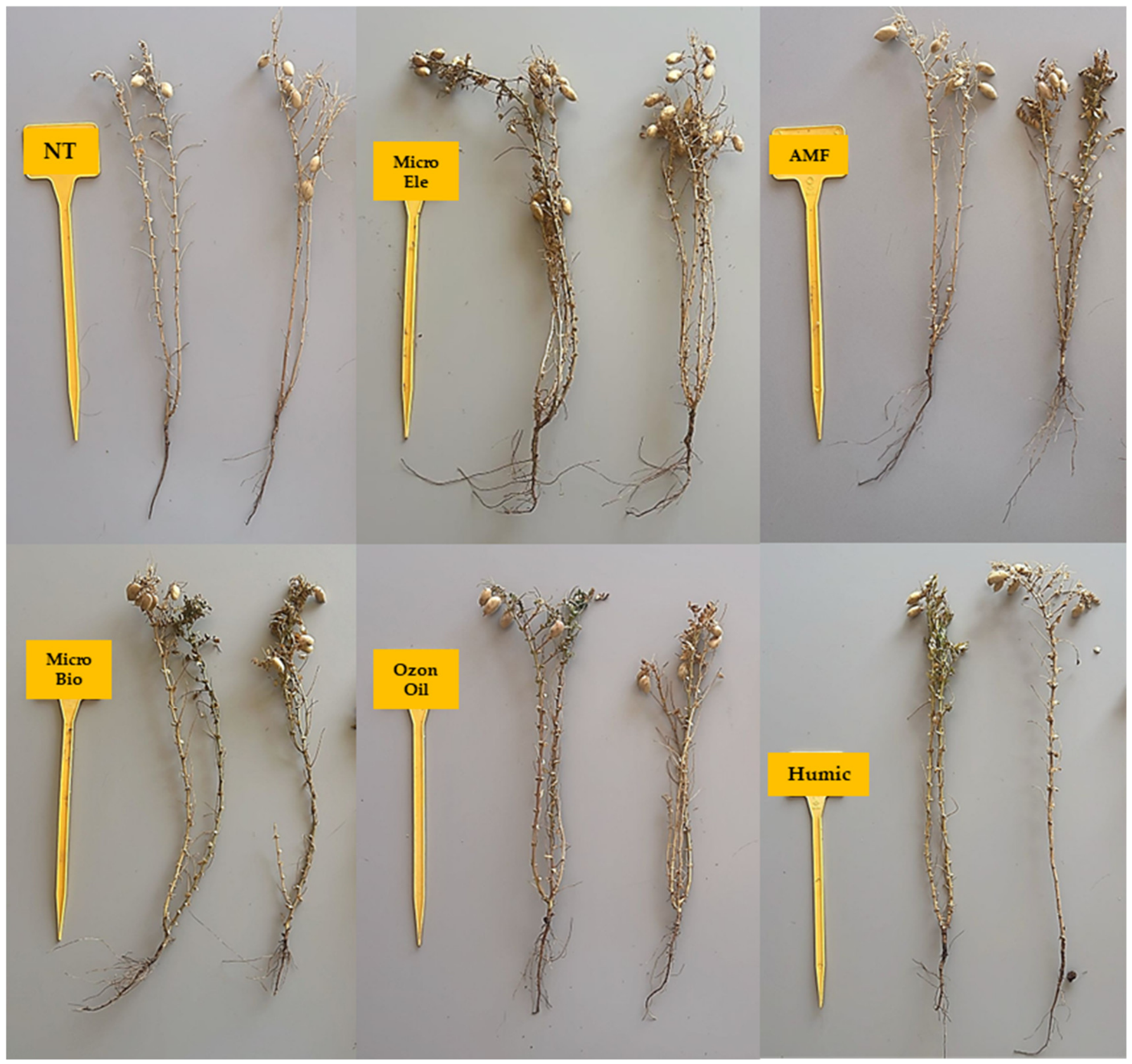
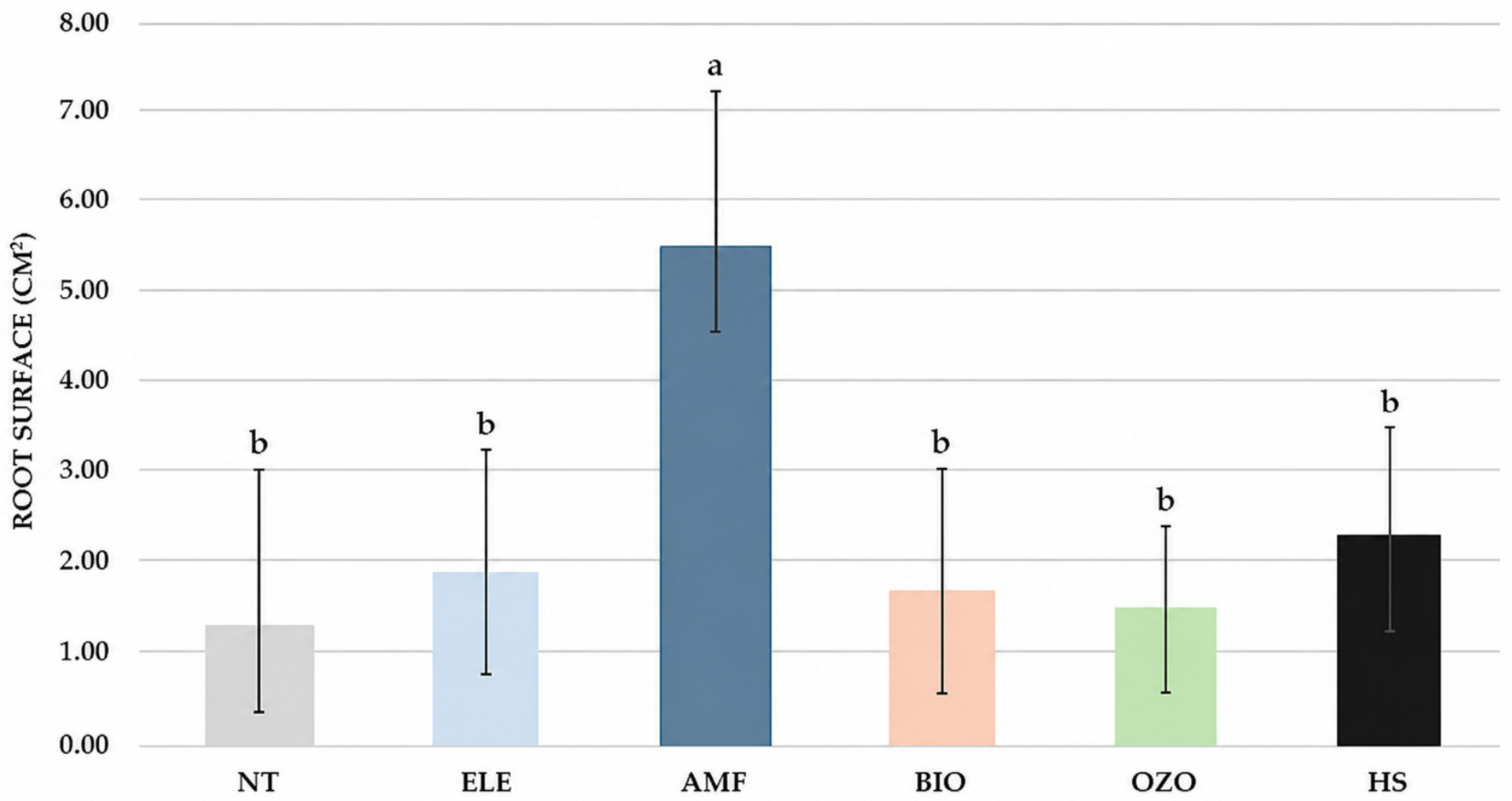
3.1. Effects of Biostimulant Treatments on Chickpea Growth, Yield Components, and Seed Nutritional Quality
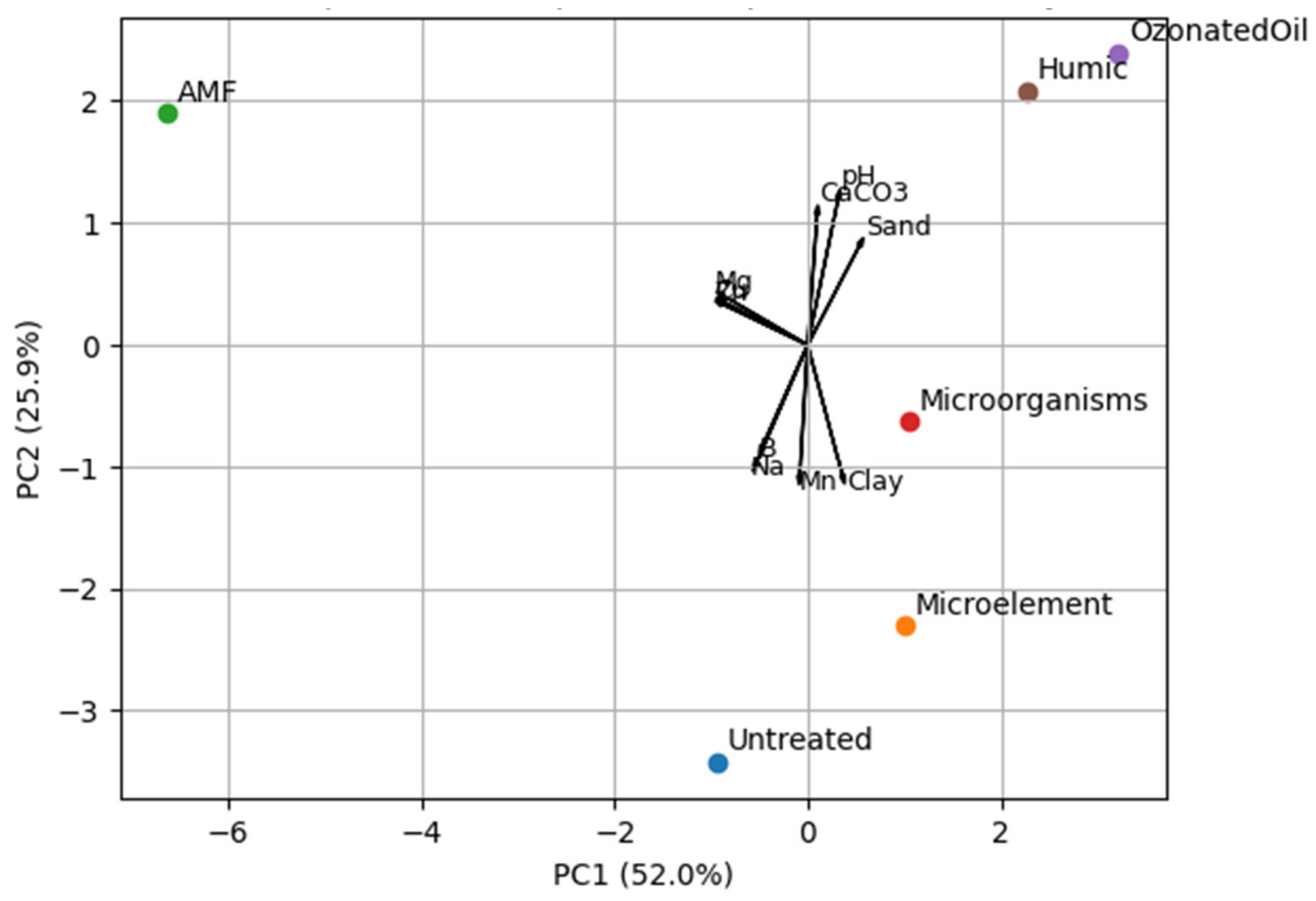
3.2. Effects of Biostimulant Treatments on Soil Chemical Properties After Chickpea Cultivation
4. Discussion
5. Conclusions
Author Contributions
Funding
Institutional Review Board Statement
Informed Consent Statement
Data Availability Statement
Acknowledgments
Conflicts of Interest
References
- Losacco, D.; Campanale, C.; Triozzi, M.; Massarelli, C.; Uricchio, V.F. Application of Wood and Vegetable Waste-Based Biochars in Sustainable Agriculture: Evaluation on Nitrate Leaching, Pesticide Fate, Soil Properties, and Brassica Oleracea Growth. Environments 2024, 11, 13. [Google Scholar] [CrossRef]
- Summo, C.; Angelis, D.D.; Ricciardi, L.; Caponio, F.; Lotti, C.; Pavan, S.; Pasqualone, A. Nutritional, Physico-Chemical and Functional Characterization of a Global Chickpea Collection. J. Food Compos. Anal. 2019, 84, 103306. [Google Scholar] [CrossRef]
- Manickavasagan, A.; Thirunathan, P. Pulses: Processing and Product Development. In Pulses: Processing and Product Development; Springer: Cham, Switzerland, 2020; pp. 1–342. [Google Scholar] [CrossRef]
- FAOSTAT. Crops and Livestock Products—Chickpeas, Dry, Production Quantity, 2014–2023; Food and Agriculture Organization of the United Nations: Rome, Italy, 2025. Available online: https://www.fao.org/faostat/en/#data/QCL (accessed on 19 May 2026).
- Silva, L.L.; Duarte, I.; Lourenço, E.; Simões, N.; Chaves, M.M. Yield and Water Productivity of Five Chickpea Varieties under Supplemental Irrigation in Contrasting Years. Irrig. Sci. 2014, 32, 393–403. [Google Scholar] [CrossRef]
- Varshney, R.K.; Thudi, M.; Nayak, S.N.; Gaur, P.M.; Kashiwagi, J.; Krishnamurthy, L.; Jaganathan, D.; Koppolu, J.; Bohra, A.; Tripathi, S.; et al. Genetic Dissection of Drought Tolerance in Chickpea (Cicer arietinum L.). Theor. Appl. Genet. 2014, 127, 445–462. [Google Scholar] [CrossRef] [PubMed]
- Yakhin, O.I.; Lubyanov, A.A.; Yakhin, I.A.; Brown, P.H. Biostimulants in Plant Science: A Global Perspective. Front. Plant Sci. 2017, 7, 2049. [Google Scholar] [CrossRef] [PubMed]
- Du Jardin, P. Plant Biostimulants: Definition, Concept, Main Categories and Regulation. Sci. Hortic. 2015, 196, 3–14. [Google Scholar] [CrossRef]
- Rouphael, Y.; Colla, G. Toward a Sustainable Agriculture through Plant Biostimulants: From Experimental Data to Practical Applications. Agronomy 2020, 10, 1461. [Google Scholar] [CrossRef]
- Zulfiqar, F.; Navarro, M.; Ashraf, M.; Akram, N.A.; Munné-Bosch, S. Nanofertilizer Use for Sustainable Agriculture: Advantages and Limitations. Plant Sci. 2019, 289, 110270. [Google Scholar] [CrossRef] [PubMed]
- Gómez, E.; Alonso, A.; Sánchez, J.; Muñoz, P.; Marín, J.; Mostaza-Colado, D.; Mauri, P.V. Application of Biostimulant in Seeds and Soil on Three Chickpea Varieties: Impacts on Germination, Vegetative Development, and Bacterial Facilitation of Nitrogen and Phosphorus. Life 2024, 14, 148. [Google Scholar] [CrossRef] [PubMed]
- Khan, M.A.B.; Asif, M.; Javaid, M.M.; Rasheed, M.; Ercisli, S.; Alrefaei, A.F.; Yousef, A.F.; Ali, M.M. Foliar Bio-Stimulant Application at Flower Initiation Optimizes Chickpea Productivity and Grain Quality in Rainfed Environments. BMC Plant Biol. 2026, 26, 641. [Google Scholar] [CrossRef] [PubMed]
- Waraich, E.A.; Ahmad, R.; Halim, A.; Aziz, T. Alleviation of Temperature Stress by Nutrient Management in Crop Plants: A Review. J. Soil Sci. Plant Nutr. 2012, 12, 221–244. [Google Scholar] [CrossRef]
- Briat, J.F.; Fobis-Loisy, I.; Grignon, N.; Lobréaux, S.; Pascal, N.; Savino, G.; Thoiron, S.; von Wirén, N.; Wuytswinkel, O.V. Cellular and Molecular Aspects of Iron Metabolism in Plants. Biol. Cell 1995, 84, 69–81. [Google Scholar] [CrossRef]
- Rout, G.R.; Sahoo, S. ROLE OF IRON IN PLANT GROWTH AND METABOLISM. Rev. Agric. Sci. 2015, 3, 1–24. [Google Scholar] [CrossRef]
- Dear, B.S.; Lipsett, J.; Dear, B.S.; Lipsett, J. The Effect of Boron Supply on the Growth and Seed Production of Subterranean Clover (Trifolium subterraneum L.). Aust. J. Agric. Res. 1987, 38, 537–546. [Google Scholar] [CrossRef]
- Chen, W.; Yang, X.; He, Z.; Feng, Y.; Hu, F. Differential Changes in Photosynthetic Capacity, 77 K Chlorophyll Fluorescence and Chloroplast Ultrastructure between Zn-Efficient and Zn-Inefficient Rice Genotypes (Oryza Sativa) under Low Zinc Stress. Physiol. Plant. 2008, 132, 89–101. [Google Scholar] [CrossRef] [PubMed]
- Bittner, F. Molybdenum Metabolism in Plants and Crosstalk to Iron. Front. Plant Sci. 2014, 5, 28. [Google Scholar] [CrossRef] [PubMed]
- Bursakov, S.A.; Kroupin, P.Y.; Karlov, G.I.; Divashuk, M.G. Tracing the Element: The Molecular Bases of Molybdenum Homeostasis in Legumes. Agronomy 2023, 13, 2300. [Google Scholar] [CrossRef]
- López-Padrón, I.; Martínez-González, L.; Pérez-Domínguez, G.; Reyes-Guerrero, Y.; Núñez, M.; Cabrera, A. Use of Biostimulants in Chickpea Cultivation. Cultiv. Trop. 2021, 42, e13. [Google Scholar]
- Naseer, I.; Ahmad, M.; Nadeem, S.M.; Ahmad, I.; Najm-ul-Seher; Zahir, Z.A. Rhizobial Inoculants for Sustainable Agriculture: Prospects and Applications. In Biofertilizers for Sustainable Agriculture and Environment; Springer International Publishing: Cham, Switzerland, 2019; pp. 245–283. [Google Scholar] [CrossRef] [PubMed]
- Benjelloun, I.; Alami, I.T.; Khadir, M.E.; Douira, A.; Udupa, S.M. Co-Inoculation of Mesorhizobium Ciceri with Either Bacillus Sp. or Enterobacter Aerogenes on Chickpea Improves Growth and Productivity in Phosphate-Deficient Soils in Dry Areas of a Mediterranean Region. Plants 2021, 10, 571. [Google Scholar] [CrossRef] [PubMed]
- Li, X.; Wu, Y.; Huang, C.; Rahman, M.A.; Argaman, E.; Xiao, Y. Inoculation with Arbuscular Mycorrhizal Fungi in the Field Promotes Plant Colonization Rate and Yield. Eur. J. Agron. 2025, 164, 127503. [Google Scholar] [CrossRef]
- Rathor, P.; Gorim, L.Y.; Thilakarathna, M.S. Plant Physiological and Molecular Responses Triggered by Humic Based Biostimulants—A Way Forward to Sustainable Agriculture. Plant Soil 2023, 492, 31–60. [Google Scholar] [CrossRef]
- Düzgün, E.Z.; Toğay, N. The Effects of Different Planting Densities on Lentil (Lens Culinaris Medic.) Yield and Yield Components in Mardin Conditions. ISPEC J. Agric. Sci. 2021, 5, 560–567. [Google Scholar] [CrossRef]
- Mozafari, F.; Heidari, G.; Khalesro, S. Effect of Applying Different Levels of Humic Acid and Salicylic Acid on Yield and Quality of Chickpea (Cicer arietinum L.) Seed. Iran. J. Field Crops Res. 2025, 23, 303–320. [Google Scholar] [CrossRef]
- Ali, M.; Dahan, R.; Mishra, J.P.; Saxena, N.P. Towards the More Efficient Use of Water and Nutrients in Food Legume Cropping. In Linking Research and Marketing Opportunities for Pulses in the 21st Century; Springer: Dordrecht, The Netherlands, 2000; pp. 355–368. [Google Scholar] [CrossRef]
- Valenciano, J.B.; Miguélez-Frade, M.M.; Marcelo, V.; Reinoso, B. Response of Irrigated Common Bean (Phaseolus vulgaris) Yield to Foliar Zinc Application in Spain. New Zealand J. Crop Hortic. Sci. 2007, 35, 325–330. [Google Scholar] [CrossRef]
- Statuto, D.; Puglisi, R.; Margiotta, S.; Picuno, P. Implementing multi-temporal cartography into a GIS for analyzing rural landscape and protecting forest heritage. In Proceedings of the 15th Conference on: “Public Recreation and Landscape Protection: With Environment Hand in Hand!”, Křtiny, Czech Republic, 13–15 May 2024; pp. 173–177. [Google Scholar]
- Picuno, P.; Puglisi, R.; Spyrou, G.; Dimitriou, E.; Papadakis, G.; Smirniotaki, M.; Margout-Jantac, D. Training Farmers on Circular Economy Implementation: The TANGO-Circular Project. In Proceedings of the 49th Symposium Actual Tasks on Agricultural Engineering, Opatija, Croatia, 28 February–2 March 2023; Volume 1, pp. 517–525. [Google Scholar]
- Dati Meteo Arpa Puglia. Available online: http://www.webgis.arpa.puglia.it/meteo/index.php (accessed on 24 March 2026).
- Eleiwa, M.E.; Hamed, E.; Shehata, H.S. The Role of Biofertilizers and/or Some Micronutrients on Wheat Plant (Triticum aestivum L.) Growth in Newly Reclaimed Soil. J. Med. Plants Res. 2012, 6, 3359–3369. [Google Scholar] [CrossRef]
- Mbarki, S.; Sytar, O.; Cerda, A.; Zivcak, M.; Rastogi, A.; He, X.; Zoghlami, A.; Abdelly, C.; Brestic, M. Strategies to Mitigate the Salt Stress Effects on Photosynthetic Apparatus and Productivity of Crop Plants. In Salinity Responses and Tolerance in Plants, Volume 1: Targeting Sensory, Transport and Signaling Mechanisms; Kumar, V., Wani, S.H., Suprasanna, P., Tran, L.-S.P., Eds.; Springer International Publishing: Cham, Switzerland, 2018; pp. 85–136. ISBN 978-3-319-75671-4. [Google Scholar]
- Calvo Velez, P.; Nelson, L.; Kloepper, J. Agricultural Uses of Plant Biostimulants. Plant Soil 2014, 383, 3–41. [Google Scholar] [CrossRef]
- Corrales, I.; Poschenrieder, C.; Barceló, J. Boron-Induced Amelioration of Aluminium Toxicity in a Monocot and a Dicot Species. J. Plant Physiol. 2008, 165, 504–513. [Google Scholar] [CrossRef] [PubMed]
- Upadhyaya, H.; Dutta, B.K.; Panda, S.K. Zinc Modulates Drought-Induced Biochemical Damages in Tea [Camellia sinensis (L) O Kuntze]. J. Agric. Food Chem. 2013, 61, 6660–6670. [Google Scholar] [CrossRef] [PubMed]
- Zahoor, R.; Zhao, W.; Dong, H.; Snider, J.L.; Abid, M.; Iqbal, B.; Zhou, Z. Potassium Improves Photosynthetic Tolerance to and Recovery from Episodic Drought Stress in Functional Leaves of Cotton (Gossypium hirsutum L.). Plant Physiol. Biochem. 2017, 119, 21–32. [Google Scholar] [CrossRef] [PubMed]
- Sarwar, M.; Saleem, M.F.; Ullah, N.; Ali, S.; Rizwan, M.; Shahid, M.R.; Alyemeni, M.N.; Alamri, S.A.; Ahmad, P. Role of Mineral Nutrition in Alleviation of Heat Stress in Cotton Plants Grown in Glasshouse and Field Conditions. Sci. Rep. 2019, 9, 13022. [Google Scholar] [CrossRef] [PubMed]
- Jain, M.; Mathur, G.; Koul, S.; Sarin, N. Ameliorative Effects of Proline on Salt Stress-Induced Lipid Peroxidation in Cell Lines of Groundnut (Arachis hypogaea L.). Plant Cell Rep. 2001, 20, 463–468. [Google Scholar] [CrossRef]
- Stavrianakou, S.; Liakopoulos, G.; Karabourniotis, G. Boron Deficiency Effects on Growth, Photosynthesis and Relative Concentrations of Phenolics of Dittrichia Viscosa (Asteraceae). Environ. Exp. Bot. 2006, 56, 293–300. [Google Scholar] [CrossRef]
- Venugopalan, V.K.; Nath, R.; Sengupta, K.; Pal, A.K.; Banerjee, S.; Banerjee, P.; Chandran, M.A.S.; Roy, S.; Sharma, L.; Hossain, A.; et al. Foliar Spray of Micronutrients Alleviates Heat and Moisture Stress in Lentil (Lens Culinaris Medik) Grown Under Rainfed Field Conditions. Front. Plant Sci. 2022, 13, 847743. [Google Scholar] [CrossRef] [PubMed]
- O’Callaghan, M. Microbial Inoculation of Seed for Improved Crop Performance: Issues and Opportunities. Appl. Microbiol. Biotechnol. 2016, 100, 5729–5746. [Google Scholar] [CrossRef] [PubMed]
- Smith, S.M.; Read, D. 2-Colonization of Roots and Anatomy of Arbuscular Mycorrhizas. Mycorrhizal Symbiosis 2008, 42–90. [Google Scholar] [CrossRef]
- Arjmand-Ghajur, E.; Sarabi, V.; Hashempour, H. Biostimulants (AMF and PGPRs) Have the Potential to Mitigate the Negative Impacts of Water-Deficit Stress on Dwarf Chicory (Cichorium Pumilum Jacq.). Ind. Crops Prod. 2025, 235, 121768. [Google Scholar] [CrossRef]
- Madhaiyan, M.; Poonguzhali, S.; Ryu, J.; Sa, T. Regulation of Ethylene Levels in Canola (Brassica Campestris) by 1-Aminocyclopropane-1-Carboxylate Deaminase-Containing Methylobacterium Fujisawaense. Planta 2006, 224, 268–278. [Google Scholar] [CrossRef] [PubMed]
- Abanda-Nkpwatt, D.; Musch, M.; Tschiersch, J.; Boettner, M.; Schwab, W. Molecular Interaction between Methylobacterium Extorquens and Seedlings: Growth Promotion, Methanol Consumption, and Localization of the Methanol Emission Site. J. Exp. Bot. 2006, 57, 4025–4032. [Google Scholar] [CrossRef] [PubMed]
- Bolla, P.K.; Panozzo, A.; Minozzi, E.; Valente, F.; Potestio, S.; Visioli, G.; Martinez-Sañudo, I.; Vamerali, T. Effects of Foliar-Sprayed Bio-Fertilizer with N-Fixing Methylobacterium symbioticum on Morpho-Physiological Traits of Maize under Varying N Fertilization Rates. Front. Plant Sci. 2025, 16, 1661290. [Google Scholar] [CrossRef] [PubMed]
- Valente, F.; Panozzo, A.; Bozzolin, F.; Barion, G.; Bolla, P.K.; Bertin, V.; Potestio, S.; Visioli, G.; Wang, Y.; Vamerali, T. Growth, Photosynthesis and Yield Responses of Common Wheat to Foliar Application of Methylobacterium symbioticum under Decreasing Chemical Nitrogen Fertilization. Agriculture 2024, 14, 1670. [Google Scholar] [CrossRef]
- Dodd, I.C.; Perez-Alfocea, F. Microbial Amelioration of Crop Salinity Stress. J. Exp. Bot. 2012, 63, 3415–3428. [Google Scholar] [CrossRef] [PubMed]
- Xu, C.; Leskovar, D.I. Effects of A. Nodosum Seaweed Extracts on Spinach Growth, Physiology and Nutrition Value under Drought Stress. Sci. Hortic. 2015, 183, 39–47. [Google Scholar] [CrossRef]
- Rouphael, Y.; Colla, G. Editorial: Biostimulants in Agriculture. Front. Plant Sci. 2020, 11, 40. [Google Scholar] [CrossRef] [PubMed]
- Olaetxea, M.; Mora, V.; Baigorri, R.; Zamarreño, A.M.; García-Mina, J.M. The Singular Molecular Conformation of Humic Acids in Solution Influences Their Ability to Enhance Root Hydraulic Conductivity and Plant Growth. Molecules 2020, 26, 3. [Google Scholar] [CrossRef] [PubMed]
- Canellas, L.P.; Olivares, F.L.; Aguiar, N.O.; Jones, D.L.; Nebbioso, A.; Mazzei, P.; Piccolo, A. Humic and Fulvic Acids as Biostimulants in Horticulture. Sci. Hortic. 2015, 196, 15–27. [Google Scholar] [CrossRef]
- García, A.C.; Santos, L.A.; Izquierdo, F.G.; Rumjanek, V.M.; Castro, R.N.; Dos Santos, F.S.; De Souza, L.G.A.; Berbara, R.L.L. Potentialities of Vermicompost Humic Acids to Alleviate Water Stress in Rice Plants (Oryza sativa L.). J. Geochem. Explor. 2014, 136, 48–54. [Google Scholar] [CrossRef]
- Canellas, L.; Olivares, F. Physiological Responses to Humic Substances as Plant Growth Promoter. Chem. Biol. Technol. Agric. 2014, 1, 3. [Google Scholar] [CrossRef]
- Jin, Y.; Yuan, Y.; Liu, Z.; Gai, S.; Cheng, K.; Yang, F. Effect of Humic Substances on Nitrogen Cycling in Soil-Plant Ecosystems: Advances, Issues, and Future Perspectives. J. Environ. Manag. 2024, 351, 119738. [Google Scholar] [CrossRef] [PubMed]
- Maffia, A.; Oliva, M.; Marra, F.; Mallamaci, C.; Nardi, S.; Muscolo, A. Humic Substances: Bridging Ecology and Agriculture for a Greener Future. Agronomy 2025, 15, 410. [Google Scholar] [CrossRef]
- Bulgari, R.; Franzoni, G.; Ferrante, A. Biostimulants Application in Horticultural Crops under Abiotic Stress Conditions. Agronomy 2019, 9, 306. [Google Scholar] [CrossRef]
- Zhang, S.; Lehmann, A.; Zheng, W.; You, Z.; Rillig, M.C. Arbuscular Mycorrhizal Fungi Increase Grain Yields: A Meta-Analysis. New Phytol. 2019, 222, 543–555. [Google Scholar] [CrossRef] [PubMed]
- Santoyo, G.; Moreno-Hagelsieb, G.; Orozco-Mosqueda, M.D.C.; Glick, B. Plant Growth-Promoting Bacterial Endophytes. Microbiol. Res. 2015, 183, 92–99. [Google Scholar] [CrossRef] [PubMed]
- Guo, C.; Wang, X.; Wang, Q.; Zhao, Z.; Xie, B.; Xu, L.; Zhang, R. Plant Defense Mechanisms against Ozone Stress: Insights from Secondary Metabolism. Environ. Exp. Bot. 2024, 217, 105553. [Google Scholar] [CrossRef]

| Parameters | Value |
|---|---|
| Sand (20–2000 µm) | 52.6 |
| Silt (2–20 µm) | 36.5 |
| Clay (2 µm) | 10.9 |
| Electrical conductivity (mS cm−1) | 0.16 |
| Calcium carbonate (g kg−1) | 177 |
| Total nitrogen (g kg−1) | 1.7 |
| Organic matter content (%) | 3 |
| Phosphorus (mg kg−1) | 6 |
| Potassium (mg kg−1) | 280 |
| Ca (g kg−1) | 4.8 |
| Mg (mg kg−1) | 216 |
| Na (mg kg−1) | 84 |
| Cation exchange capacity (meq/100 g) | 27 |
| Iron (mg kg−1) | 4 |
| Boron (mg kg−1) | 1 |
| Manganese (mg kg−1) | 9 |
| Copper (mg kg−1) | 1 |
| Zinc (mg kg−1) | 0.33 |
| C/N ratio | 11 |
| Treatment Code | Treatment Type | Main Components/ Composition | Dose | Application Method | Application Timing |
|---|---|---|---|---|---|
| NT | Biostimulant-free control | No biostimulant | - | - | - |
| ELE | Micronutrient-based biostimulant | B 4%, Mo 0.02%, Zn 4.5%, N 4%, Cu 0.15% | 2 L ha−1 | Foliar application | BBCH 51 and BBCH 75 |
| AMF | Arbuscular mycorrhizal fungi-based biostimulant | 40% symbiotic fungi of the genus Glomus spp. per 100 g of product | 20 kg ha−1 | Soil application in dripping mode | At transplanting |
| BIO | Microbial biostimulant | Methylobacterium symbioticum SB23, 3 × 10⁷ CFU g−1 | 0.5 kg ha−1 | Foliar application | BBCH 51 |
| OZO | Ozonated vegetable oil-based biostimulant | 85% ozonated sunflower oil | 1 kg ha−1 | Foliar spray | BBCH 51 |
| HS | Humic-substance-based biostimulant | 0.5% organic N, 30% organic C, and 90% organic matter on a dry weight basis | 2 L ha−1 | Foliar application | BBCH 51 |
| Month | MTT (°C) | MTN (°C) | MTX (°C) | Rainfall (mm) | RH (%) |
|---|---|---|---|---|---|
| Jan | 12.1 | 8.9 | 15.3 | 3.56 | 81.2 |
| Feb | 11.5 | 8.3 | 14.8 | 2.26 | 78.7 |
| Mar | 13.9 | 10.7 | 17.0 | 3.22 | 75.3 |
| Apr | 15.9 | 12.1 | 19.7 | 0.42 | 66.1 |
| May | 19.7 | 15.7 | 23.7 | 1.62 | 62.3 |
| Jun | 26.9 | 22.2 | 31.6 | 0 | 48.8 |
| Jul | 28.2 | 23.8 | 32.5 | 0 | 33.6 |
| Treatments | Plant Height (cm) | Shoots Number | Pod Number | Pod Weight (g) | Pod Length (cm) | Seeds Number | Seeds Weight (g) |
|---|---|---|---|---|---|---|---|
| NT | 29.3 ± 4.2 c | 3 ± 0.00 | 13 ± 1.5 c | 27.96 ± 4.6 c | 2.99 ± 0.2 c | 14 ± 0.07 d | 23.22 ± 2.7 c |
| ELE | 32.3 ± 4.2 b | 3 ± 0.00 | 23 ± 1.3 a | 27.92 ± 2.5 c | 3.3 ± 0.3 b | 34 ± 0.04 a | 39.91 ± 2.1 a |
| AMF | 33.06 ± 4.3 b | 3 ± 0.00 | 17 ± 1.7 b | 37.04 ± 3.8 a | 3.15 ± 0.3 bc | 20 ± 1.2 c | 35.67 ± 3.00 b |
| BIO | 31.6 ± 4.6 ab | 3 ± 0.00 | 17 ± 2.7 b | 27.44 ± 4.5 c | 2.99 ± 0.3 b | 25 ± 0.09 b | 36.63 ± 3.8 a |
| OZO | 34.3 ± 4.5 ab | 3 ± 0.00 | 19 ± 2.1 ab | 35.6 ± 4.3 a | 3.3 ± 0.3 b | 22 ± 0.03 c | 36.76 ± 2.4 ab |
| HS | 37.8 ± 4.1 a | 3 ± 0.00 | 18 ± 3.1 b | 31.1 ± 4.5 b | 6.3 ± 0.3 a | 21 ± 1.6 c | 35.7 ± 2.1 b |
| p < 0.001 | *** | ns | *** | *** | *** | *** | *** |
| Treatments | Grain Yield (kg ha−1) |
|---|---|
| NT | 375.1 ± 80.2 bc |
| ELE | 404.3 ± 109.5 ab |
| AMF | 339.2 ± 48.7 c |
| BIO | 378.8 ± 60.2 bc |
| OZO | 430.6 ± 34.5 a |
| HS | 382.4 ± 92.6 bc |
| Parameters | Biostimulant-Free Control | Microelement | Arbuscular Mycorrhizal Fungi | Microorganisms | Ozonated Vegetable Oil | Humic Substance |
|---|---|---|---|---|---|---|
| Sand (20–2000 µm) | 22.0 | 29.8 | 28 | 37.8 | 35.8 | 37.8 |
| Silt (2–20 µm) | 46.5 | 38.8 | 52.5 | 38.8 | 38.8 | 38.8 |
| Clay (2 µm) | 31.5 | 31.4 | 19.5 | 23.4 | 25.4 | 23.4 |
| pH | 7.9 | 7.9 | 8.0 | 8.0 | 8.1 | 8.1 |
| CEC (meq/100 g) | 30.3 | 34.4 | 33.5 | 35.5 | 29.6 | 28.8 |
| Electrical conductivity (mS cm−1) | 0.27 | 0.19 | 0.49 | 0.21 | 0.18 | 0.19 |
| Total nitrogen (g kg−1) | 1.7 | 1.9 | 1.5 | 2.0 | 2.0 | 1.9 |
| Phosphorus (mg kg−1) | 6.7 | 9.8 | 12.1 | 6.6 | 8.5 | 8.5 |
| Potassium (mg/kg−1) | 299 | 245 | 361 | 264 | 234 | 239 |
| Na (mg/kg−1) | 78 | 71 | 73 | 72 | 64 | 60 |
| Ca (g kg−1) | 5.5 | 6.4 | 4.8 | 6.5 | 5.4 | 5.3 |
| Mg (mg kg−1) | 212 | 200 | 849 | 198 | 165 | 166 |
| Manganese (mg kg−1) | 27.9 | 26.5 | 20.6 | 30 | 14.8 | 20.8 |
| Zinc (mg kg−1) | 0.38 | 0.38 | 0.79 | 0.39 | 0.31 | 0.36 |
| Boron (mg kg−1) | 1.72 | 0.94 | 1.20 | 0.95 | 0.85 | 0.80 |
| Iron (mg kg−1) | 5.19 | 5.94 | 6.03 | 5.95 | 3.83 | 5.26 |
| Copper (mg kg−1) | 1.71 | 1.63 | 4.83 | 1.96 | 1.44 | 1.32 |
| Calcium carbonate (g kg−1) | 124 | 128 | 166 | 178 | 179 | 162 |
| Organic matter content (%) | 3.2 | 3.4 | 2.3 | 3.3 | 3.7 | 3.4 |
| C/N ratio | 10.3 | 10.3 | 9.1 | 9.7 | 10.9 | 10.4 |
Disclaimer/Publisher’s Note: The statements, opinions and data contained in all publications are solely those of the individual author(s) and contributor(s) and not of MDPI and/or the editor(s). MDPI and/or the editor(s) disclaim responsibility for any injury to people or property resulting from any ideas, methods, instructions or products referred to in the content. |
© 2026 by the authors. Licensee MDPI, Basel, Switzerland. This article is an open access article distributed under the terms and conditions of the Creative Commons Attribution (CC BY) license.
Share and Cite
Losacco, D.; Puglisi, R.; Salvemini, C.; Convertini, S. Effects of Microbial and Non-Microbial Biostimulants on Chickpea Growth, Yield, and Soil Properties in a Marginal Mediterranean Environment. AgriEngineering 2026, 8, 268. https://doi.org/10.3390/agriengineering8070268
Losacco D, Puglisi R, Salvemini C, Convertini S. Effects of Microbial and Non-Microbial Biostimulants on Chickpea Growth, Yield, and Soil Properties in a Marginal Mediterranean Environment. AgriEngineering. 2026; 8(7):268. https://doi.org/10.3390/agriengineering8070268
Chicago/Turabian StyleLosacco, Daniela, Roberto Puglisi, Carlo Salvemini, and Stefano Convertini. 2026. "Effects of Microbial and Non-Microbial Biostimulants on Chickpea Growth, Yield, and Soil Properties in a Marginal Mediterranean Environment" AgriEngineering 8, no. 7: 268. https://doi.org/10.3390/agriengineering8070268
APA StyleLosacco, D., Puglisi, R., Salvemini, C., & Convertini, S. (2026). Effects of Microbial and Non-Microbial Biostimulants on Chickpea Growth, Yield, and Soil Properties in a Marginal Mediterranean Environment. AgriEngineering, 8(7), 268. https://doi.org/10.3390/agriengineering8070268

