1. Introduction
The conventional generation-following-load regulatory framework faces great challenges, including response delays and suboptimal cost–benefit outcomes, especially under conditions of high renewable energy penetration [
1]. In response to these challenges, the cooperative control system of demand-side flexible resources has emerged as a critical strategy to mitigate wind and solar curtailment while ensuring the security and stability of the power system [
2]. In particular, air conditioning (AC) loads, which constitute a major flexible resource within the non-industrial sector, represent approximately 30% to 50% of peak summer electricity demand [
3]. However, the effective utilization of this potential is contingent upon the development and implementation of optimal control strategies. Therefore, it is imperative to select AC loads as adjustable resources and to conduct comprehensive research on control strategies to fully exploit their flexibility.
Direct Load Control (DLC) is widely used for the control of AC loads [
4,
5,
6,
7]. The primary control methodologies encompass thermostatic control, direct start-stop control, and duty cycling control (DCC). Jin, Xu et al. [
8] experimentally examined the impact of thermostatic control on the flexibility of AC loads.
Ren, Haoshan et al. [
9] proposed a differentiated collaborative scheduling method for AC systems in different types of buildings, which combines precooling control with temperature reset strategies. Ultimately, this method achieves a reduction in energy consumption costs of building clusters and an improvement in the benefits of demand response participation.
In [
10,
11], the contribution of AC loads to frequency control and the integration management of renewable energy via thermostatic control is analyzed. Furthermore, metrics such as peaking capacity and power-saving potential under DCC for AC loads were assessed in [
12].
The existing literature indicates that different AC load control approaches exhibit considerable variation in dynamic response characteristics and applicable temporal scales, with each method offering technical advantages suited to particular regulatory contexts. Nonetheless, as the participation of demand-side resources in grid co-control expands, the inherent limitations of singular control strategies become increasingly apparent. Consequently, there is an urgent need for a hybrid control framework that enables multi-timescale coordination to optimize complementary strategies and facilitate precise multi-objective tuning under complex operational conditions. In this regard, Zhao, Dongmei et al. [
13,
14,
15,
16,
17,
18] proposed a cooperative scheduling framework integrating generation and load, alongside coordinated scheduling strategies for diverse demand-side resources across day-ahead and intraday timescales. These contributions provide a theoretical foundation for the standardization of cooperative control mechanisms spanning multiple temporal scales. Liu, Tianhao et al. [
19]. proposed that under the two-stage scheduling framework, ice-storage air-conditioners adopt a time-series scheduling strategy: ice-making and cold storage (valley filling) during valley periods and ice melting and cold release (peak shaving) during high-carbon periods, which confirms the practical value of AC loads in carbon-aware scheduling.
In the field of hybrid control research, Zeng, Qingbin et al. [
20] have optimized start-stop cycles by integrating switching mechanisms and thermostatic control to reduce the frequency of start-stop events. Notably, Liu, Guangsheng et al. [
21] examined the combined application of start-stop and thermostatic control, demonstrating that this hybrid approach prolongs state transition durations relative to conventional start-stop control methods. Liu, Zhiwei et al. [
22] implemented direct start-stop control with setpoint adjustments, achieving a significant reduction in AC start-stop cycles. Collectively, these studies indicate that hybrid control strategies substantially enhance the flexibility potential of AC systems. Ma Yunfeng et al. [
23] proposed a hybrid control strategy integrating temperature setpoint adjustment and start-stop control for ACs participating in power grid peak load reduction. With a wide-range transport model for wide-range temperature setpoint adjustment, a safe protocol to suppress power rebound and oscillation, and an optimized model predictive control-based controller, it effectively improves AC clusters’ tracking accuracy and response stability to peak load reduction signals, offering a new technical approach for large-scale flexible loads in power grid ancillary services. Qiao Ruixun et al. [
24] treated variable-frequency ACs as virtual energy storage units in 5G base station scenarios, determining responsive power via a “1-h day-ahead + 15-min intraday” two-layer timescale framework. Their control logic implied “variable-frequency regulation + temperature range constraints” but did not elaborate on technical implementation paths, focusing mainly on virtual energy storage modeling and multi-timescale power optimization. Yang Weichen et al. [
25] designed a “15-min temperature instruction + 1-min direct power control” hybrid strategy for variable-frequency AC clusters to smooth distributed power fluctuations (low/high-frequency, respectively). While achieving full-frequency fluctuation absorption via centralized optimization + autonomous response, the study had single scenario adaptability, lacking medium-to-long timescale regulation coverage. This limited its scope to short-term fluctuations only, making it unsuitable for hour/day-level coordination scenarios (e.g., grid peak-valley arbitrage, cross-day load transfer) and reducing generality.
Existing research on multi-timescale control strategies has primarily focused on the magnitude of AC load response power across different timescales, while lacking systematic exploration of the collaborative coordination among various control methods to achieve the target response power. Compared with existing single-timescale or thermostatic control methods, the proposed multi-timescale hybrid control strategy for AC loads in this paper adopts a day-ahead and intraday coordinated scheduling approach, which not only enhances applicability under actual conditions but also significantly improves the accuracy of scheduling results and reduces response deviations.
To fill this research gap, this study develops a hybrid control framework integrating the multi-timescale source-load coordinated scheduling architecture outlined in [
17] and proposes a multi-timescale hybrid control strategy. Firstly, a multi-timescale scheduling scheme is proposed to distinguish between day-ahead and intraday scheduling horizons. This scheme effectively overcomes the limitation of existing studies that focus solely on a single short-term scheduling horizon. By formulating scheduling plans on the long-term day-ahead horizon and performing dynamic optimization on the short-term intraday horizon, the practical application value and implementation feasibility of the strategy are remarkably enhanced. Subsequently, the operational characteristics of various control methods are analyzed to optimize the scheduling timing and DCC parameters for the day-ahead stage. During the intraday stage, direct start-stop control is employed to correct scheduling deviations. To quantify the control power of nodes under coordinated direct start-stop control with DCC interventions, a hybrid control strategy based on a mathematical response power model is proposed. This study addresses two typical limitations of existing research. Most scheduling studies only focus on power regulation outcomes while neglecting the response path and implementation feasibility of AC load power. Studies on control methods mostly adopt a single control mode and lack multi-mode collaborative design. The power response model established in this paper not only organically integrates the two control methods but also systematically resolves the adaptive selection of AC load operating states during their coordination. This bridges the research gap in load operating state optimization under multi-mode collaborative control. Comparative analysis with single control methods and existing hybrid control methods demonstrates that the proposed strategy can effectively smooth load curve fluctuations, correct intraday response deviations, and thereby improve system scheduling accuracy.
The rest of this paper is structured as follows.
Section 2 presents the multi-timescale source-load coordinated scheduling architecture, alongside the AC load model and day-ahead scheduling objective function.
Section 3 analyzes mechanisms behind different air-conditioning load control methods and explores the multi-timescale control mechanism.
Section 4 examines the multi-timescale hybrid control mechanism and develops a model for AC load response power, based on their state changes during control.
Section 5 verifies the proposed multi-timescale hybrid control strategy’s effectiveness through variable analysis under specific cases. Finally,
Section 6 presents key conclusions and an overview of relevant future work.
2. Multi-Timescale Scheduling Architecture and AC Load Control Mechanism
2.1. Multi-Timescale Source-Load Coordinated Scheduling Architecture
The generation of renewable energy and the consumption of electrical load are intrinsically characterized by uncertainty. Reliance solely on day-ahead forecasts for scheduling frequently results in deviations from planned operations, which impedes the effective participation of flexible resources in demand response programs and leads to inefficient utilization of resources [
14]. Consequently, the implementation of a multi-timescale, coordinated scheduling framework that integrates both day-ahead and intraday planning for source-load management is imperative to improve the precision of flexible resource control.
Day-ahead scheduling is a vital part of power system operations. During the day-ahead scheduling, the start-up and shutdown schedules of conventional generating units are established by accounting for anticipated renewable energy output and load response. This scheduling process operates on an hourly timescale, encompassing a 24 h decision horizon.
Given the inherent limitations in forecast horizon and accuracy, discrepancies frequently emerge between day-ahead schedules and actual system conditions. To address these variances, intraday rolling optimization is conducted at five-minute intervals. During this process, flexible resources are dynamically adjusted based on short-term forecasts to minimize operational deviations, with continuous updates to the scheduling plan until the operational period concludes. Intraday scheduling serves to coordinate the output of flexible resources to compensate for supply shortfalls, reduce the need for adjustments in conventional power generation, and allocate fast-response equipment to effectively manage system power fluctuations.
2.2. AC Load Model and Day-Ahead Scheduling Objective Function
This paper uses a first-order equivalent thermal parameter model [
5] to analyze AC systems. The indoor temperature is given by
where
and
denote the indoor temperature at time
t and
t + 1, respectively;
denotes the outdoor temperature at time
t + 1;
C denotes the equivalent heat capacity of the room;
Q denotes the AC cooling/heating capacity;
R denotes the equivalent thermal resistance of the room.
denotes the operating time interval.
The cooling/heating capacity of AC loads at time t can be calculated by
where
denotes the rated power of the AC load;
denotes the performance coefficient of the AC.
The operating duration of the AC is governed by temperature thresholds: It starts up when the set upper temperature threshold is reached and shuts down when the set lower temperature threshold is reached. By designating the indoor temperature lower threshold as and the upper threshold as , the AC load modulates its operational status in accordance with these parameters, thereby maintaining the indoor temperature within the specified range .
The operating status of the AC can be expressed by Equations (3)–(6).
where
denotes the AC startup duration, and
denotes its shutdown duration, respectively.
denotes the outdoor temperature at time
t;
The operating cycle of an AC is defined as the total duration encompassing both its shutdown phase, which occurs from the time the indoor temperature rises from the lower threshold to the upper threshold, and its startup phase, which spans from when the temperature reaches the upper threshold until it decreases back to the lower threshold. The duty cycle is quantified as the ratio of the startup phase duration to the overall length of the operating cycle.
where
denotes the duration of one operating cycle, and
r denotes the duration of duty cycle.
This study primarily focuses on the control methods, without providing an in-depth discussion of the solutions to the day-ahead and intraday optimization problems as outlined in [
16]. After establishing the target control curve via day-ahead optimization, the load response power is precomputed to satisfy grid-side demand while avoiding both excessive and insufficient responses. The objective function is formulated to minimize the discrepancy between the actual response and the grid demand. Then, the day-ahead actual response power is determined by solving the following optimization problem.
where
denotes the deviation;
denotes the grid-side scheduled dispatch power;
denotes the AC power available for dispatch.
Constraints of the optimization problem are as follows:
where
denotes the maximum response power of ACs.
- (2)
Temperature constraint
To ensure user participation willingness during control implementation, the indoor temperature must stay within the agreed range, as described by
where
is the lower temperature thresholds agreed with users;
is the upper temperature thresholds agreed with users; and
is the indoor temperature.
- (3)
Control time constraints
For the direct start-stop mode, constraints on continuous on/off times are
where
and
represent the allowable continuous on/off durations for AC loads;
and
denote the maximum durations that AC loads can be turned on or off.
As two prevalent control methods employed in AC load control, direct start-stop control and DCC demonstrate notably complementary features concerning their adaptability across different timescales. Direct start-stop control enables rapid alterations in load power through discrete switching of the AC’s operational states, thereby offering a fast response capability. However, due to constraints related to human comfort, this method is unsuitable for long-term control applications, making it more appropriate for short-term scheduling scenarios within a single day. Conversely, DCC establishes temperature bands based on outdoor conditions to regulate the upper and lower threshold of AC operating temperatures, thereby determining the start-stop timings within a cycle. This approach is characterized by a longer scheduling cycle, which aligns with the steady-state optimization requirements relevant to day-ahead scheduling. The integration of these two methods substantially expands the control margin. To facilitate a comprehensive understanding, this chapter provides a detailed analysis of both control methods, accompanied by an in-depth comparison of their respective mechanisms and operational characteristics.
2.3. Direct Start-Stop Control and DCC Mechanism
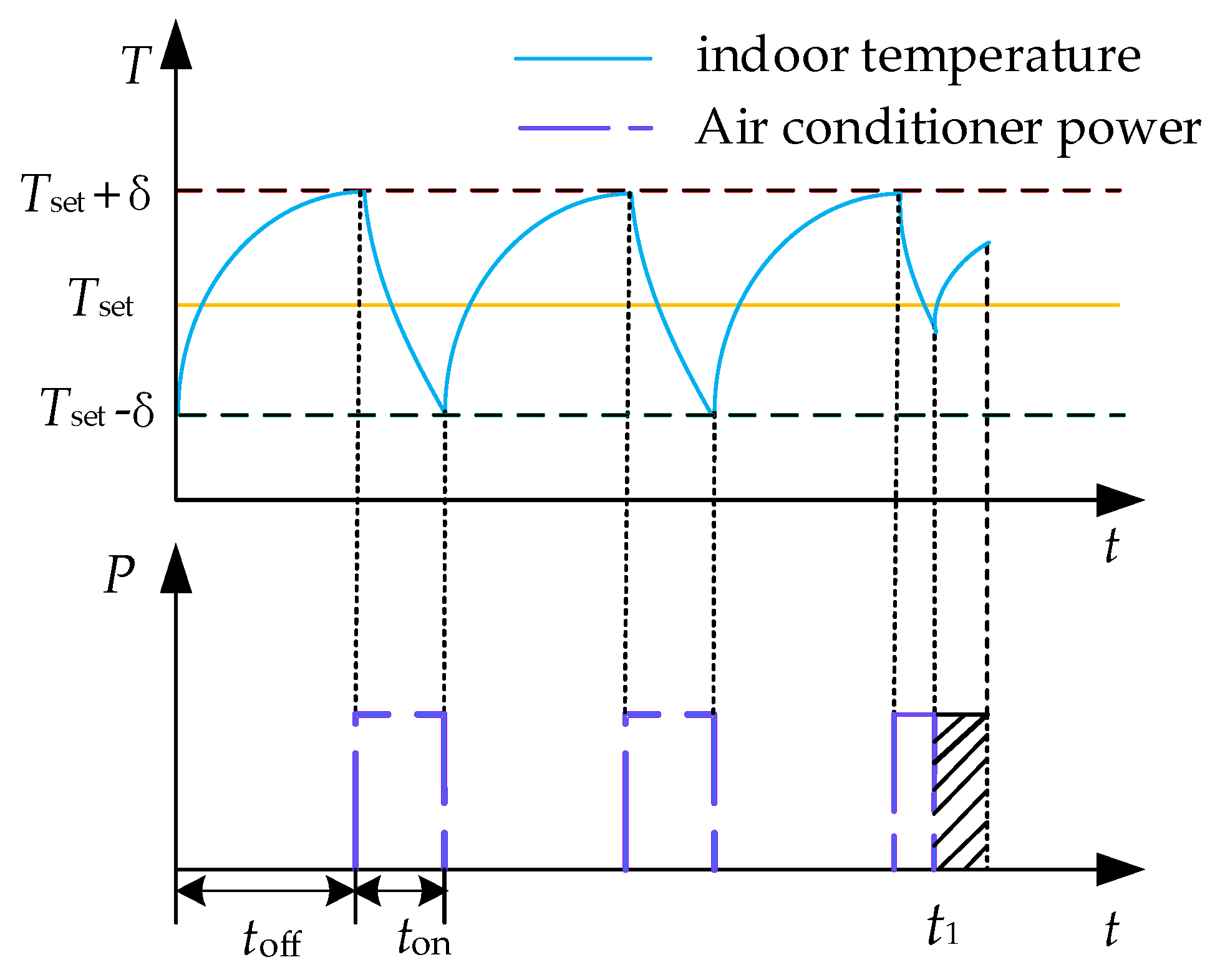
Taking the AC operating in cooling mode as an example, the direct start-stop control mechanism is illustrated in
Figure 1. In this context,
ton denotes the moment at which the AC starts up when the indoor temperature reaches the lower comfort threshold (
), while
toff denotes the moment at which the AC shuts down upon reaching the upper comfort threshold (
). Prior to time
t1, the AC load maintains the indoor temperature within the allowable range defined by
and
. At time
t1, in response to a control signal, the AC modifies its operational state through direct start-stop control, thereby reducing the load power. As a result, the indoor temperature increases gradually. The shaded area in
Figure 1 represents the quantity of electrical energy conserved due to the load reduction.
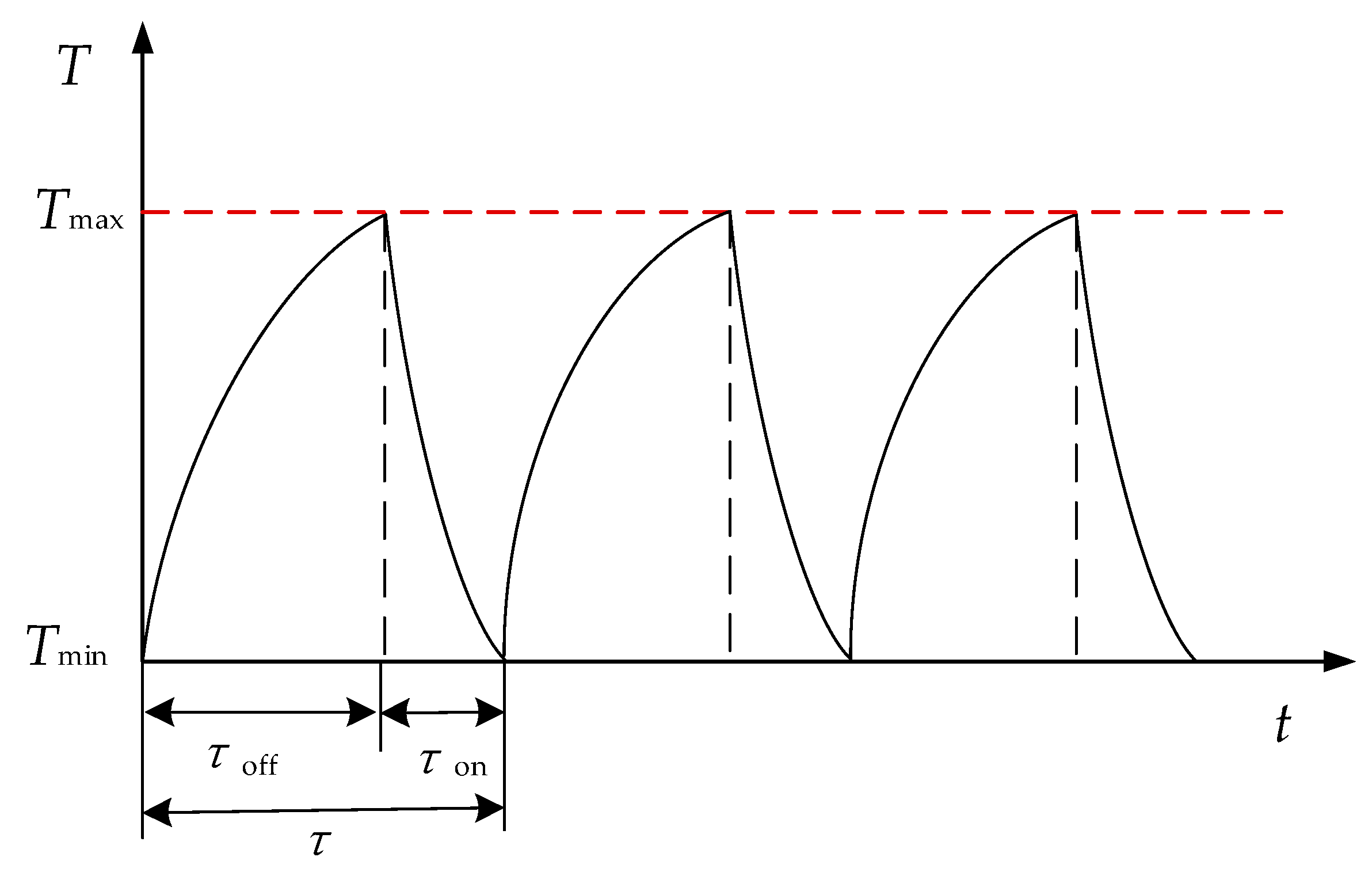
DCC adjusts the operating state of AC by defining temperature ranges. For instance, as illustrated by the temperature profile in
Figure 2, the indoor temperature oscillates within the defined range
. During the shutdown phase, the indoor temperature gradually rises to
, triggering the transition from startup state to shutdown state. Subsequently, the cooling effect during the startup phase reduces the temperature to
, at which point the cycle recommences.
Adjusting the indoor temperature range can have a direct impact on the duty cycle, which in turn regulates the magnitude of the load power response over a specified response period. Specifically, the power of the response can be determined by first calculating
r in accordance with Equation (6), followed by solving for the response using the following equation.
where
denotes the duty cycle when the AC is not involved in the response.
2.4. Multi-Timescale Control Mechanism
Direct start-stop control, characterized by fast response, can shift the load state within a short period. It is particularly suitable for scheduling scenarios with stringent response speed requirements, such as frequency control and intraday emergency peak shaving.
Compared with direct start-stop control, DCC features long-timescale scheduling capability, which can effectively support cyclical load planning. However, once the day-ahead schedule is established, the real-time dynamic adjustment for intraday deviations and minute-level load fluctuations presents significant challenges. Therefore, integrating these two control methods into a cooperative control architecture is imperative to address diverse scheduling requirements.
Compared with thermostatic control, DCC allows the indoor temperature to dynamically fluctuate within a wider range and can release more adjustable response power without breaking through the user comfort threshold; direct start-stop control has a faster response speed, which is more suitable for the real-time adjustment needs of the multi-timescale scheduling framework in this study. Based on this, this study integrates the technical advantages of both and selects the hybrid control method combining direct start-stop control and DCC. In this study, DCC is employed as the foundational method for day-ahead scheduling. To address real-world user requirements, hourly scheduling plans are formulated based on temperature forecasts, with user-specific indoor temperature variation intervals. By implementing differentiated duty cycle strategies across various time slots, this approach maximizes user control potential while concurrently enhancing incentives for user participation.
For intraday scheduling, direct start-stop control is implemented to deliver ancillary services aimed at mitigating deviations caused by external disturbances, such as fluctuations in renewable energy output or abrupt changes in ambient temperature. It is important to acknowledge that temporal coupling may arise during collaborative operations, where the stochastic nature of direct start-stop control has the potential to compromise the integrity of the previously established schedule for DCC, while simultaneously increasing thermal discomfort for users. Therefore, it is imperative to formulate a multi-timescale hybrid control strategy to quantitatively define the timing coordination mechanisms and the interactive effects of these control methods.
3. Multi-Timescale Hybrid Control Strategy
To resolve the aforementioned challenges, this study introduces a hybrid control methodology grounded in a multi-timescale coordinated scheduling architecture. By integrating direct start-stop control and DCC methods, the proposed approach achieves two primary goals: facilitating short-term dynamic control through multi-scale synergy and optimizing long-term steady-state optimization. In this section, the core mechanism of the proposed hybrid control strategy is systematically elaborated, and a mathematical model for the AC load response power based on this control strategy is established.
3.1. Multi-Timescale Hybrid Control Mechanism
The multi-timescale hybrid control strategy proposed in this study is structured into two hierarchical layers. The upper layer is dedicated to long-term steady-state optimization, wherein a foundational operational framework is established through the formulation of a DCC schedule. Meanwhile, the lower layer emphasizes short-term dynamic control, employing direct start-stop control to promptly respond to real-time disturbances. When the AC load implements the day-ahead schedule, conventional start-stop control under perturbations (e.g., sudden changes in grid demand or ambient temperature) results in substantial deviations from the planned schedule and adversely affects user thermal comfort indices. Notably, direct adjustment of DCC parameter settings may induce cascading interference with subsequent scheduling sequences. Consequently, during periods of short-term control demand fluctuations, employing the rapid-response direct start-stop control method can effectively improve grid control precision and enhance customer satisfaction metrics, while maintaining the integrity of the original schedule.
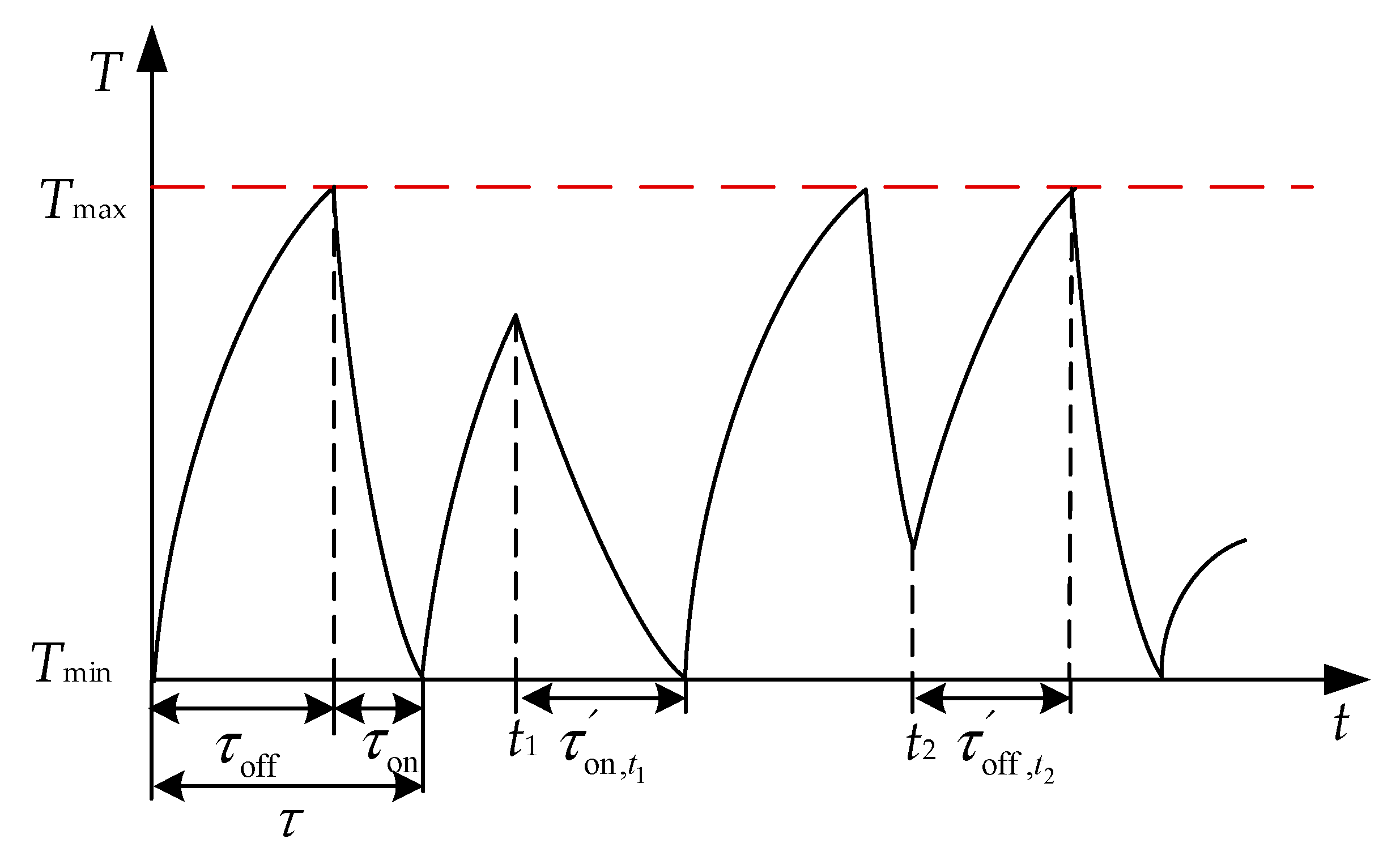
In the hybrid control strategy that combines direct start-stop control and DCC, the variations in indoor temperature across different time periods and under different control methods are illustrated in
Figure 3.
The mechanism of the proposed hybrid control strategy is illustrated in
Figure 3. Through long-term steady-state optimization results, control parameters for the DCC method were determined, and the DCC cycle was defined as the aggregate duration of AC load shutdown time and startup time. When the AC operates in DCC mode, it may encounter extreme conditions such as frequency fluctuations, power generation outages, or sudden load surges. These conditions, often resulting from severe weather events or the variability inherent in renewable energy sources, require the system to possess intra-day responsiveness to effectively mitigate the adverse effects associated with such disturbances. At a specific time
t1, when an increase in load is needed, the direct start-stop control strategy initiates a transition of the AC from the off state to the on state. Conversely, at times
t2, a demand for load reduction prompts the transition of the AC from the on state to the off state using the same control method. The available startup time (denoted as
) and shutdown time (denoted as
) of the AC at temperature corresponding to times
and
can be determined using Equations (3) and (4), which incorporate the present temperature, as detailed below:
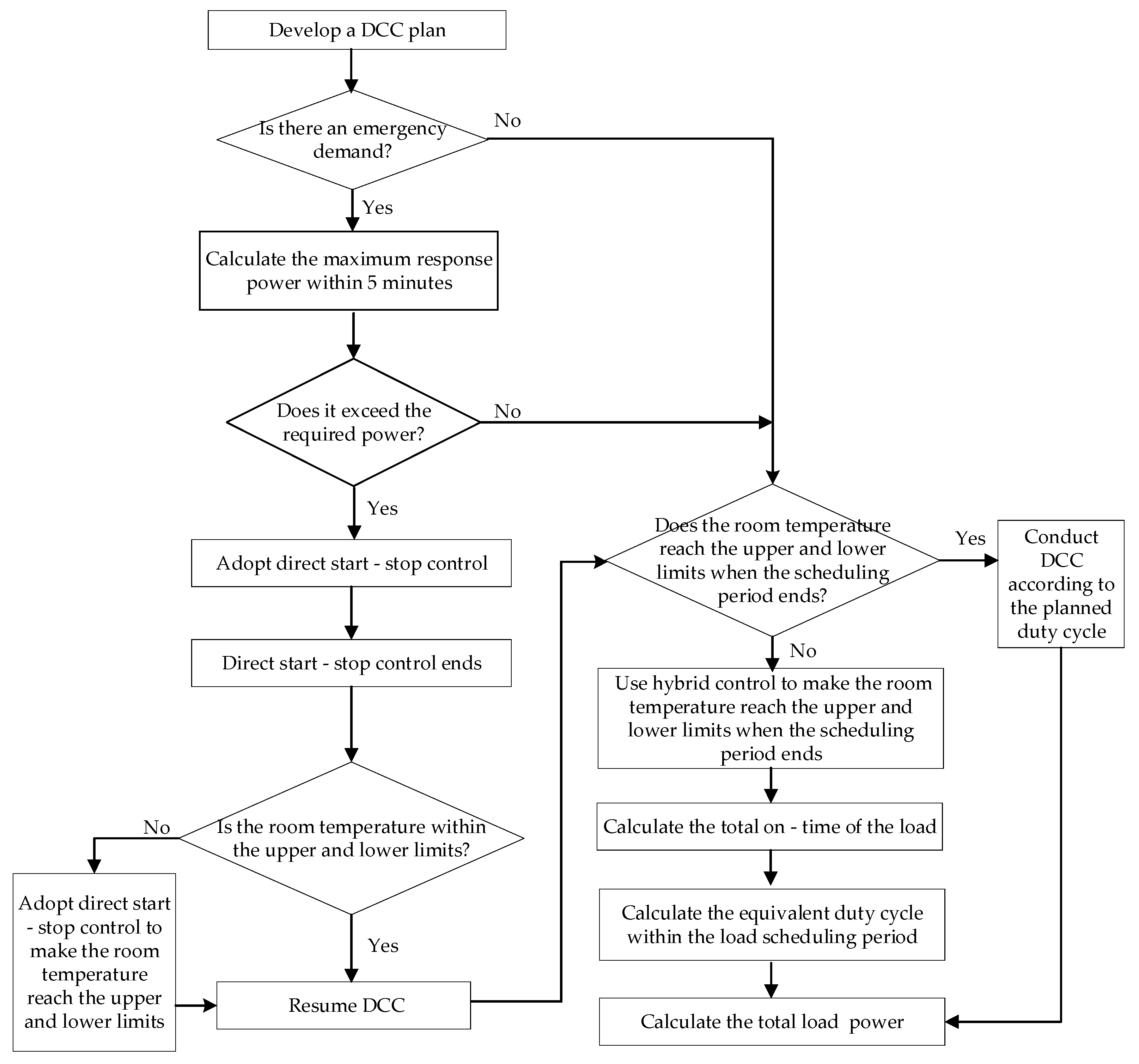
The coordination mechanism of the hybrid control scheme is determined by the varying states of the load. The selection of specific control methods and the demand response process during load control are illustrated in
Figure 4.
Firstly, analyze whether emergency demand arises intraday. Secondly, indoor temperature is continuously monitored and analyzed to verify whether it remains within predefined upper and lower thresholds. This step aims to ensure that the subsequent control phase proceeds as planned without compromising occupant comfort. If, by the end of the control period, the indoor temperature has not reached either threshold, a hybrid control strategy is implemented to adjust the startup and shutdown durations, thereby controlling the temperature to the specified thresholds. Following this, the control durations of different control methods are analyzed to calculate the response power within one control cycle. Furthermore, once the response power is established, it supports the system in developing the subsequent control strategy. The detailed analytical procedure is delineated in the following section.
3.2. Modeling of AC Load Response Power
The quantitative model of response power constructed in this paper addresses a key issue in traditional scheduling scenarios. Under the original day-ahead scheduling plan, the adoption of direct start-stop control in response to intraday random demand disturbances tends to disrupt the original scheduling plan, which makes it impossible to calculate the response power based on the traditional DCC and results in the difficulty of accurately quantifying the AC load power throughout the entire scheduling cycle. To solve this problem, this paper systematically analyzes the quantification of start-stop time after introducing direct start-stop control into the traditional DCC framework and decomposes the quantification process into four stages for detailed elaboration. At the end of a scheduling cycle, the duty cycle can be calculated based on the total startup time of the load throughout the cycle, commonly termed the equivalent duty cycle. Subsequently, the power and capacity corresponding to the cycle are determined.
- (1)
During the intraday operation of AC loads, except for the periods participating in demand response, the operation strategy is implemented in accordance with the day-ahead planned duty cycle for all other periods. It should be noted that within a single control period, AC loads are unable to complete an integer number of complete start-stop operation cycles in accordance with the day-ahead planned duty cycle; meanwhile, the original DCC operation cycle of ACs will be disrupted after participating in demand response. To ensure that the indoor temperature is within the constraint boundary at the end of the control period, thereby enabling the next regulation period to operate normally according to the original duty cycle, the operation is still performed in accordance with the day-ahead determined duty cycle for the remaining time within the control period, and thus the operation duration at the planned duty cycle r can be expressed as
where
m denotes the number of complete DCC cycles that can be performed within a single scheduling period;
α is a 0–1 binary state variable, where
α = 0 indicates an incomplete scheduling cycle, and
α = 1 signifies a complete cycle;
denotes the remaining time within a period that is insufficient for completing a full start-stop cycle after m cycles or after responding to the power demand.
- (2)
Due to the randomness of the trigger time of intraday demand response, it is difficult to accurately match the end node of the DCC cycle, resulting in the fact that when demand response is initiated, the DCC has often completed a period of operation in accordance with the day-ahead planned duty cycle. Therefore, in formulating the operation strategy for the entire control period, it is necessary to take the accumulated operation duration of ACs within this period into account. In this case, the DCC actual on-time within the cycle is determined as
where
denotes the operation at the start of the actual control period.
- (3)
In this study, a rolling optimization cycle of 5 min is set: first, the target operating power of ACs for the next 5 min is determined based on real-time regulation demands, and then the operating duty cycle that can meet this power requirement is identified accordingly. Given that the dynamically calculated duty cycle deviates from the pre-designed day-ahead planned duty cycle, it is necessary to adopt the direct start-stop control strategy to adjust the operating state of ACs; among them, the start-up time of ACs during the demand response participation phase can be expressed as
where
denotes the duty cycle required to meet the intraday response power.
- (4)
At the end of demand response, the indoor temperature is usually not within the preset indoor temperature constraint boundary, making it impossible to directly continue operation in accordance with the day-ahead planned duty cycle. To reduce subsequent temperature deviations, ACs need to maintain their current start-up state or switch to the shutdown state until the indoor temperature reaches the preset upper or lower threshold, after which operation is resumed in accordance with the day-ahead planned duty cycle.
Based on the indoor temperature at the end of the response phase, the time required to recover to the indoor temperature boundary can be calculated via Equations (13) and (14), respectively. To quickly restore the original duty cycle operation mode, it is necessary to compare the time required for the current temperature to reach the upper and lower thresholds of the indoor temperature, and select the method with shorter time consumption to determine the subsequent operating state of ACs. In addition, since the duty cycle calculation only considers the actual operating duration of ACs, the start-up duration
from the end of the response phase to the point when the indoor temperature reaches the threshold can be expressed as
where
is the duration for the temperature to recover to the lower limit of the indoor temperature at the end of the response;
is the duration for the temperature to recover to the upper limit of the indoor temperature at the end of the response.
The equivalent duty cycle
for a scheduling cycle can be derived as
where
denotes the duration of a scheduling cycle, which, in this study, is defined as one hour.
When the equivalent duty cycle
is known, a specific amount of capacity reduction can be achieved through a hybrid control strategy over a given time period, as expressed below:
where
denotes the reducible capacity within a time period;
N denotes the number of ACs participating in the response.
When scheduling across multiple time intervals in a day, the total curtailed response capacity can be expressed as
where
n denotes the number of control periods.
4. Results
4.1. Simulation Examples and Parameters
To address the issue of substantial fluctuations in load profiles, the DCC method is adopted to flatten the load curve. During intraday operation, direct start-stop control is employed to respond to emergency grid demands and reduce dispatch deviations. However, switching to direct start-stop control during DCC operation may influence subsequent DCC scheduling. Therefore, the hybrid control strategy and response power model have been developed, as detailed in
Section 2 and
Section 4, and their effectiveness is validated through the scenarios presented herein.
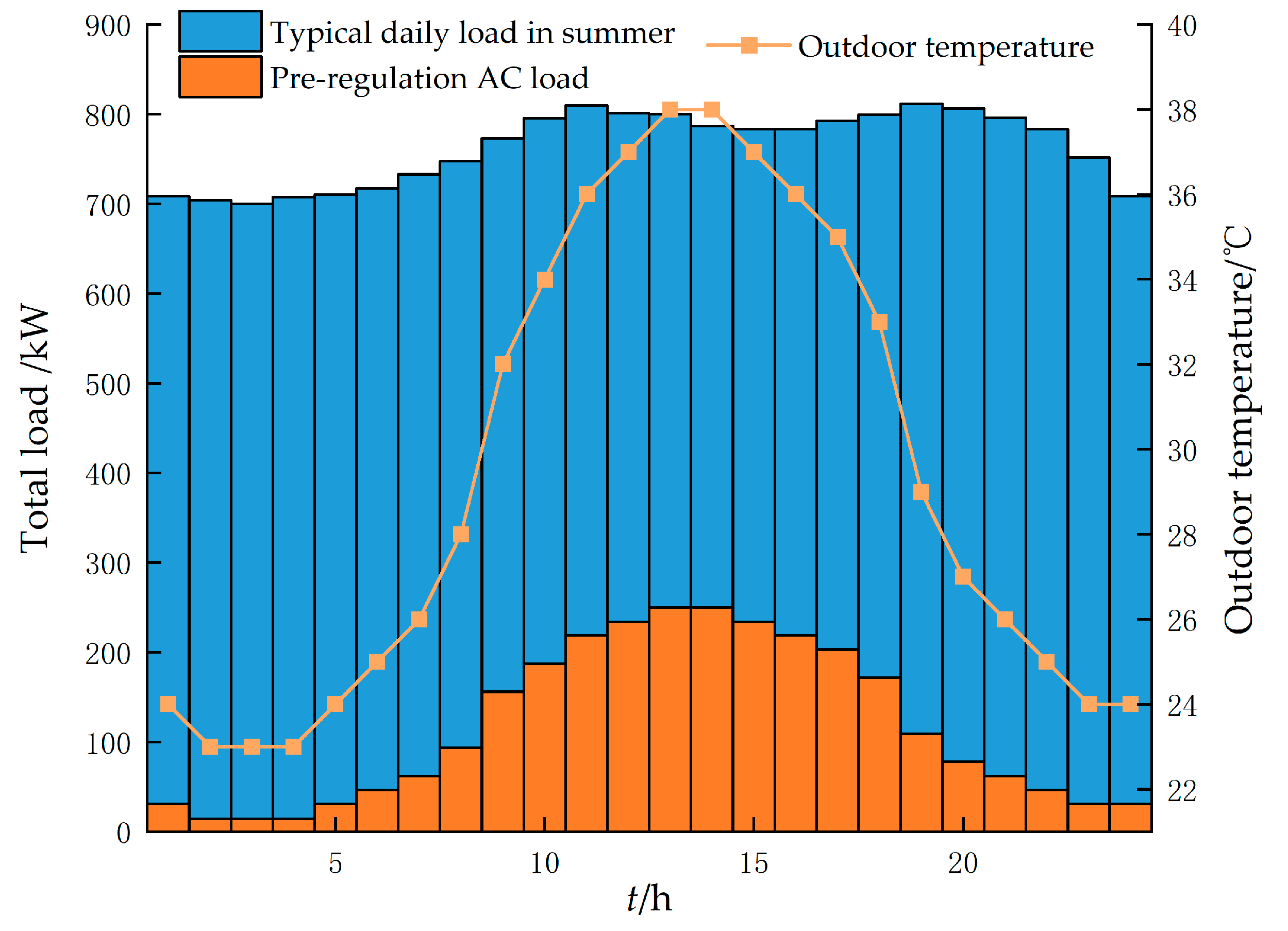
In this study, 300 air conditioners in operation within a commercial building were selected as the research sample, with their operating mode uniformly set to cooling mode. Meanwhile, the 24 h power consumption curve of this batch of air conditioners was taken as the baseline load, on the basis of which a comprehensive analysis was carried out.
Figure 5 illustrates the initial power consumption data alongside the corresponding outdoor temperature on a representative summer day in the region. Additionally,
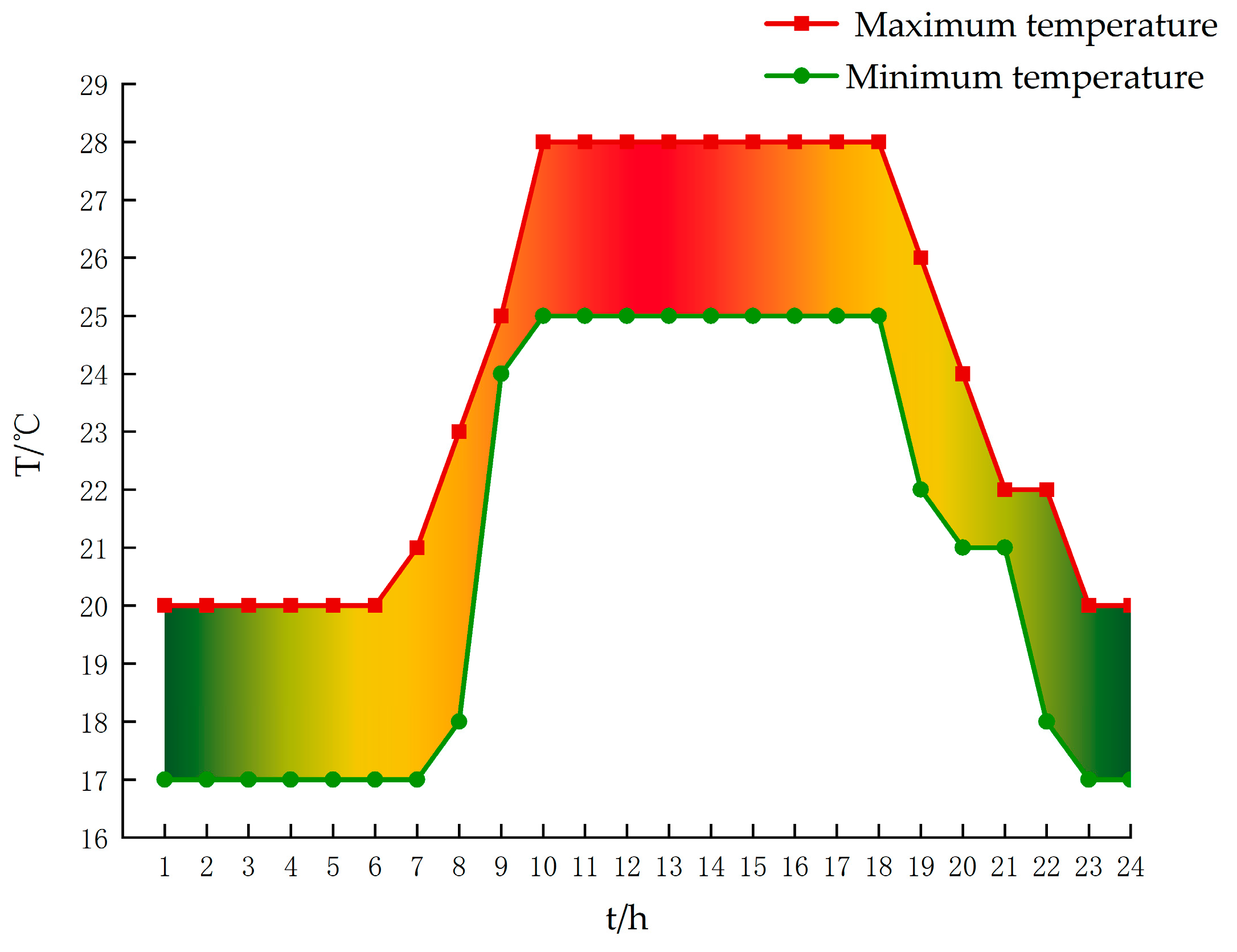
Table 1 details the allowable range of indoor temperature adjustments for each time interval.
According to the AC load operating parameters used in [
12,
21], the average power of the AC is set as
, the average cooling energy efficiency ratio is designated as
, the equivalent heat capacity is defined as
, and the equivalent thermal resistance is specified as
in the following analysis. The subsequent analysis focuses on both day-ahead and intraday scheduling. Day-ahead scheduling determines the duty cycle based on the indoor temperature thresholds, with the objectives of load curtailment and load curve smoothing. Intraday scheduling considers scheduling requirements within the upper and lower thresholds of indoor temperature, aiming to minimize response deviations.
During different operation periods, variations in electricity demand result in the occurrence of load peaks and valleys. Mitigating the discrepancy between these peaks and valleys is essential for ensuring the stability of the power system. Therefore, the peak shaving rate beta and valley filling rate gamma, as defined below, are utilized as metrics to assess the effectiveness of load control.
where
denotes the peak shaving rate;
and
represent the maximum power before and after peak-load period control.
where
denotes the valley filling rate;
and
represent the minimum power before and after control during the load valley period.
In addition, to characterize the user comfort during the regulation process, the Predicted Mean Vote (PMV) index [
26] is introduced to conduct a quantitative analysis of user comfort, highlighting the superiority of the proposed hybrid control strategy.
where
is the PMV value of indoor users at time t;
is the average skin temperature when the human body feels comfortable;
M and
are the human metabolic rate and clothing thermal resistance, respectively.
4.2. Day-Ahead Operation Analysis
In the context of day-ahead scheduling, this paper conducts an analysis of two control strategies, where
- (1)
For the first control strategy, the duty cycle of the DCC depends on the indoor temperature threshold.
- (2)
For the second control strategy, the duty cycle of the DCC depends on the target power curve and the indoor temperature thresholds.
After determining the DCC duty cycle based on the target power curve, it is observed that directly applying this duty cycle to set the AC control temperature leads to substantial discrepancies between the achieved indoor temperature and user comfort requirements. Consequently, it becomes imperative to formulate an optimization problem aimed at minimizing the deviation between the actual duty cycle and the target duty cycle, while concurrently determining the actual operating temperature and duty cycle of the air conditioner within feasible temperature constraints.
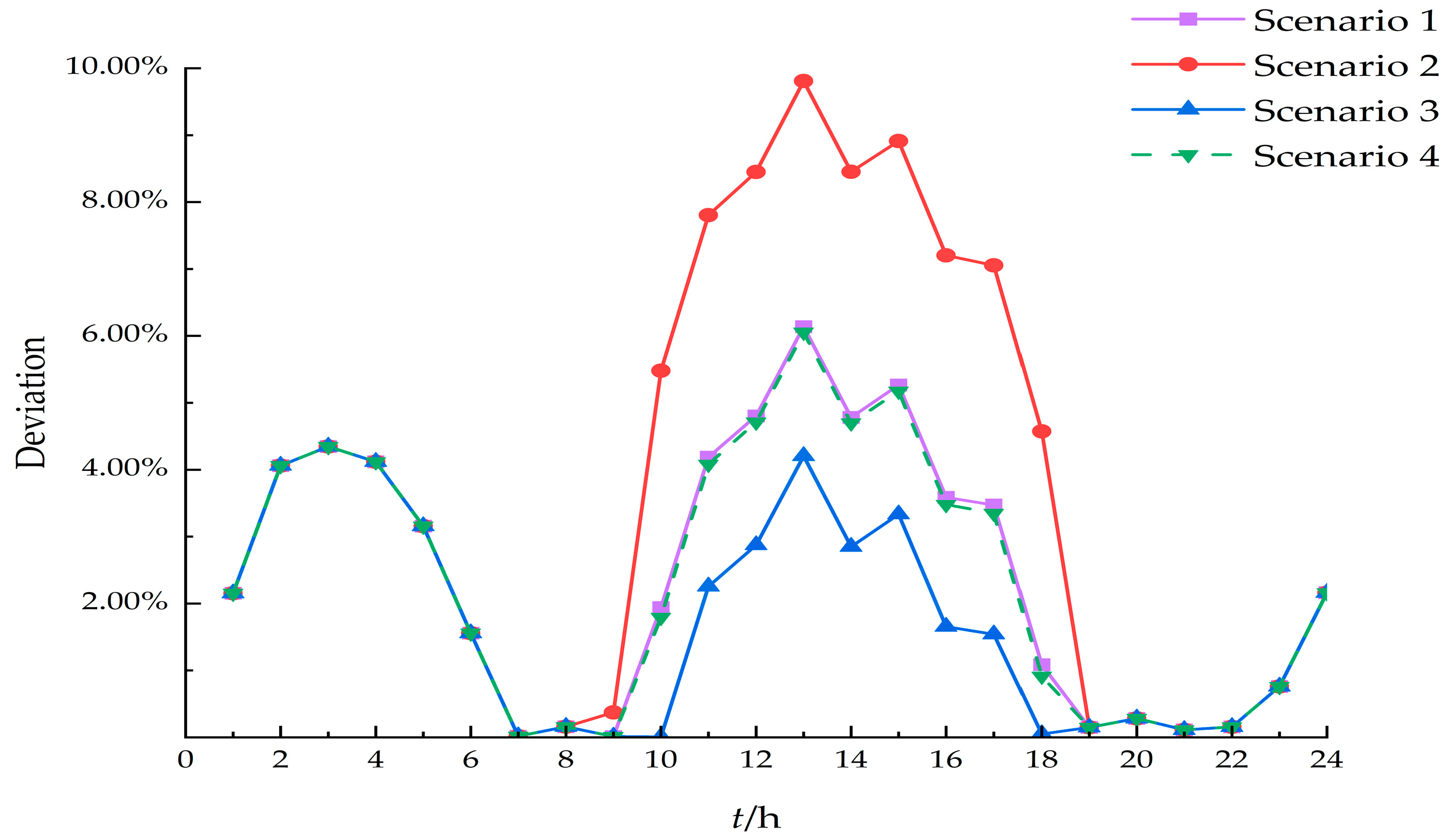
In this study, four constraint scenarios are defined based on indoor temperature control intervals. Specifically, the upper limits of the maximum temperature are set as 27 °C, 27 °C, 28 °C, and 28 °C, with their corresponding upper limits of the minimum temperature being 26 °C, 22 °C, 27 °C, and 25 °C, respectively. These constraints serve to determine the temperature setting intervals for each time period. The minimum deviation under different constraints is shown in
Figure 6.
Among the evaluated scenarios, Scenario 3 exhibits the duty cycle with the least deviation from the target value. Nevertheless, the lower temperature threshold in Scenario 3 is excessively elevated, compromising user comfort and thereby potentially reducing user engagement in the response. Scenario 2 provides the highest level of comfort; however, it shows a considerable deviation from the target control curve. The deviations observed in Scenarios 1 and 4 are comparable, although Scenario 1 operates within a narrower temperature control range than Scenario 4. Consequently, Scenario 4 is selected for load control purposes, with its temperature settings across different time periods illustrated in
Figure 7.
Figure 6 and
Figure 7 illustrate, respectively, the discrepancy between the actual AC duty cycle and the target duty cycle, as well as the actual operating temperature of the AC. Utilizing these two datasets, the duty cycle and AC power associated with the minimum deviation can be determined.
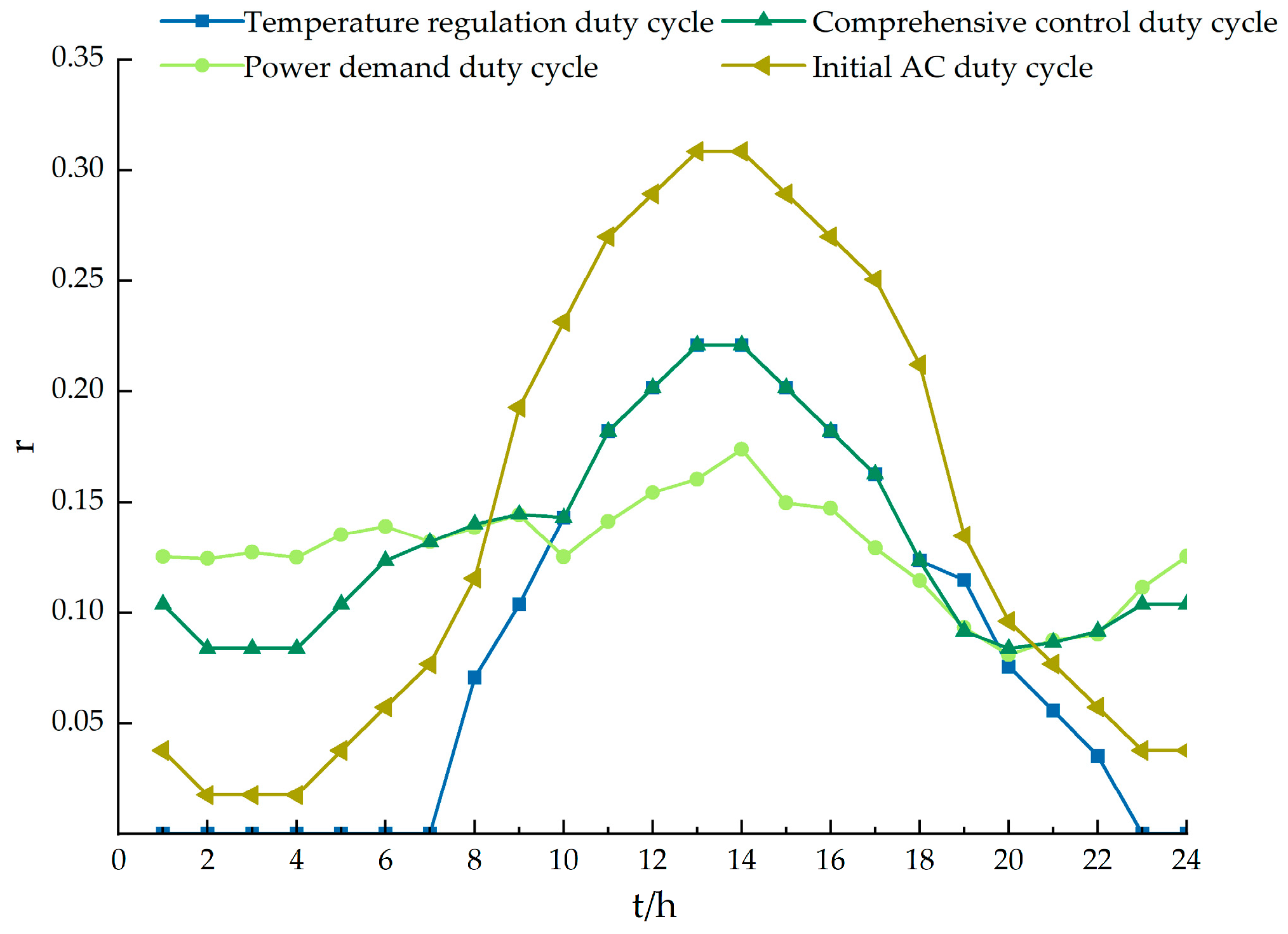
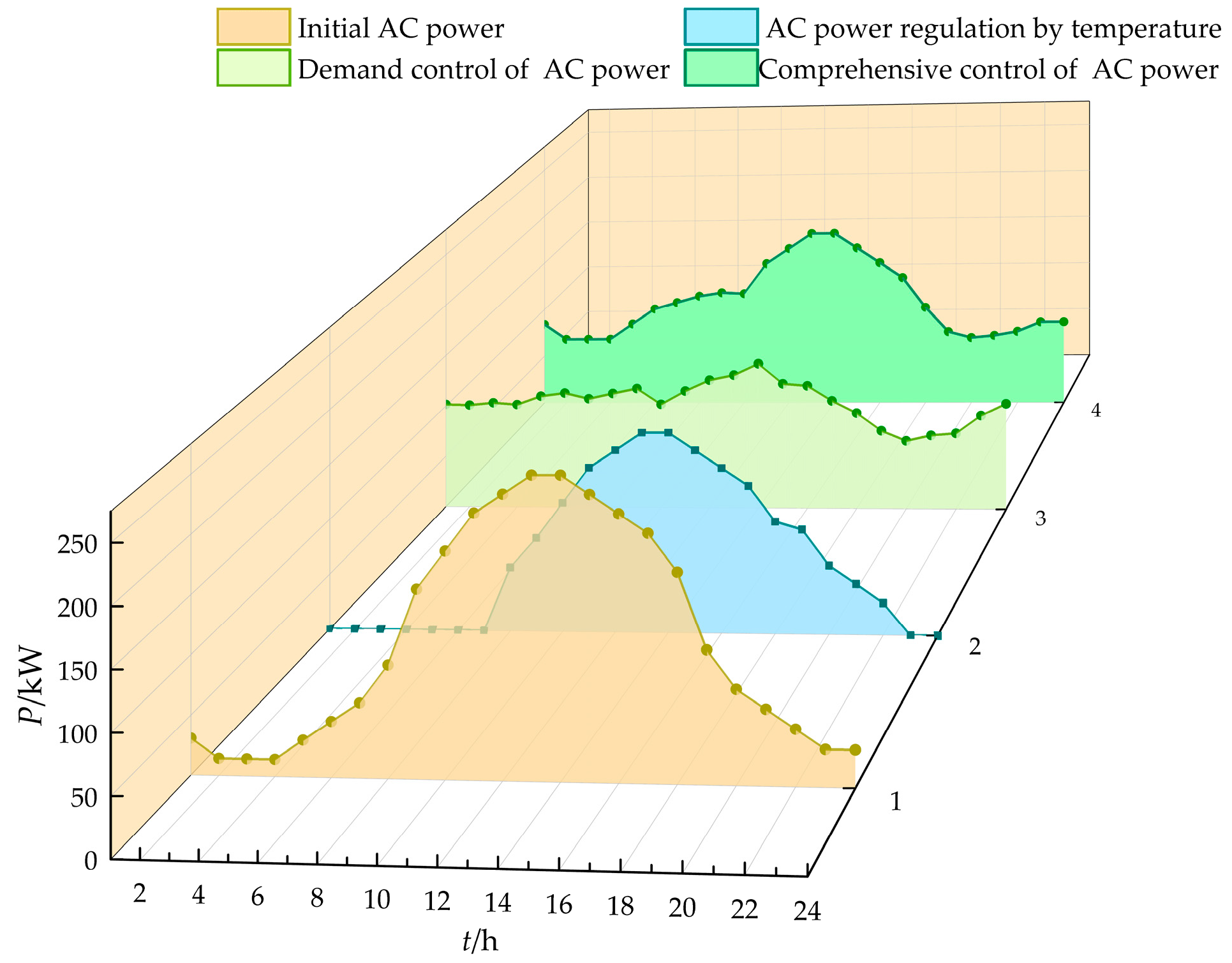
Figure 8 and
Figure 9 present a comparative analysis of four sets of duty cycle and AC power curves. One curve is derived with the aim of minimizing the deviation between the actual and target curves; two others correspond to scenarios focused on target power control and temperature control, respectively; while the final one represents the baseline operation of the AC.
In
Figure 9, “Demand Control of AC Power” represents the target control curve, while “Comprehensive Control of AC Power” refers to the actual control power curve obtained after accounting for deviations and comfort requirements. Although discrepancy exists between the actual control power curve and the target control curve, it is overall smoother and has a smaller peak-valley difference compared with the original AC power curve and the AC power curve under temperature control.
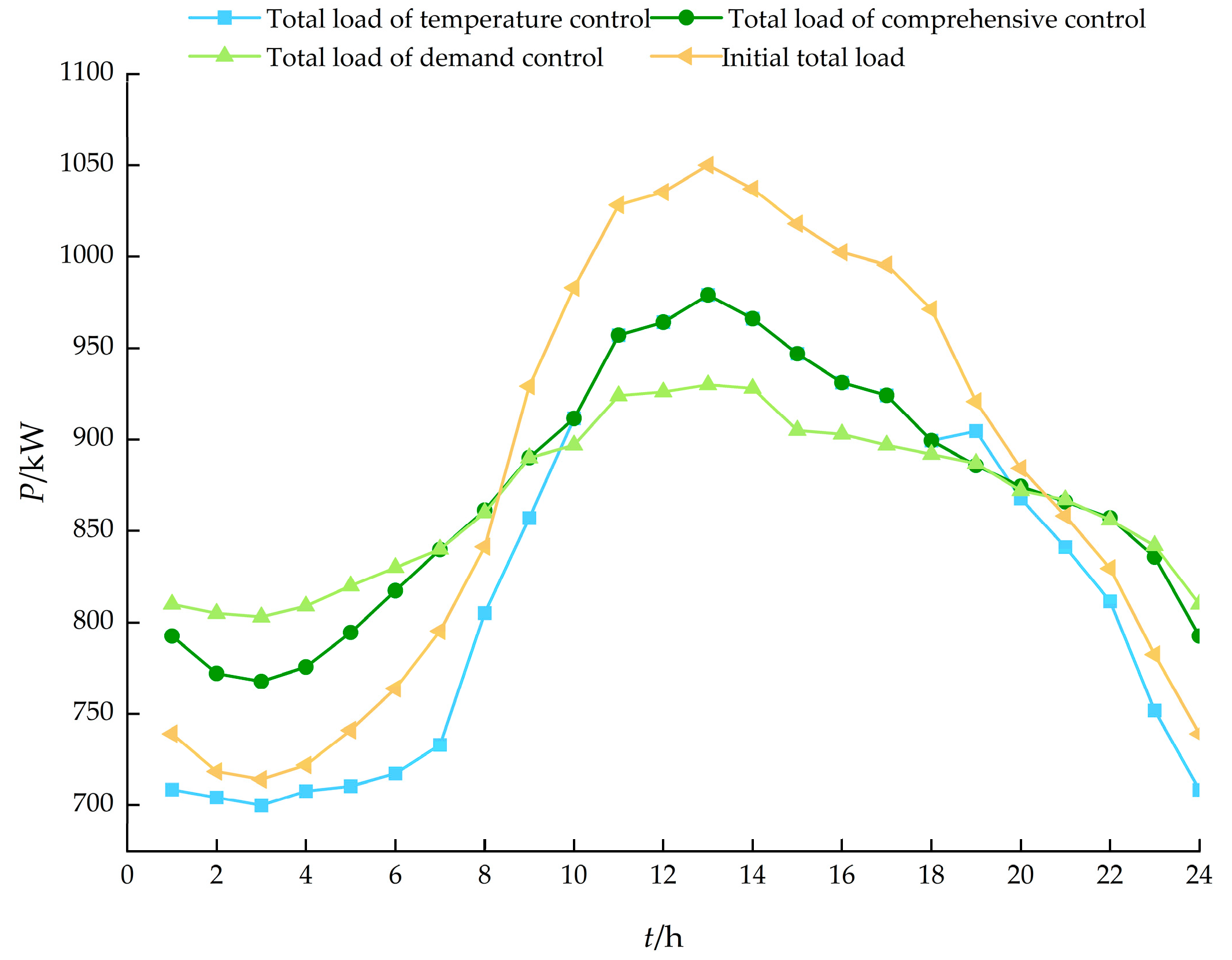
The core objective of AC load control is to reduce the peak-valley difference in the total load curve and make it smoother overall.
Figure 10 presents the total load curves under four cases. Although the temperature-based control method fully considers user comfort, its effect on flattening the load curve is relatively limited. As can be seen from the load power data during the off-peak electricity consumption periods (0:00–8:00 and after 22:00), there is a significant deviation between the actual power and the target regulation power curve. In contrast, the comprehensive control strategy proposed in this paper is implemented on the premise of balancing indoor temperature constraints and minimizing scheduling deviations, which not only achieves a balance between precise load power control and user comfort, but also effectively reduces the peak-valley difference in the load throughout the entire regulation period. Following control, the peak shaving rate attains 7.3%, and the valley filling rate reaches 7.5%.
4.3. Intraday Operation Analysis
During intraday control, if the indoor temperature remains within the established upper and lower limits, the day-ahead scheduling strategy is maintained. This may cause temporary indoor temperature deviations.
At the end of a one-hour cycle, the DCC may fail to complete the entire cycle. Under these circumstances, the temperature may fail to attain the designated upper or lower thresholds, thereby impairing subsequent regulatory processes and resulting in a progressive increase in the discrepancy between the actual regulated temperature and the intended target.
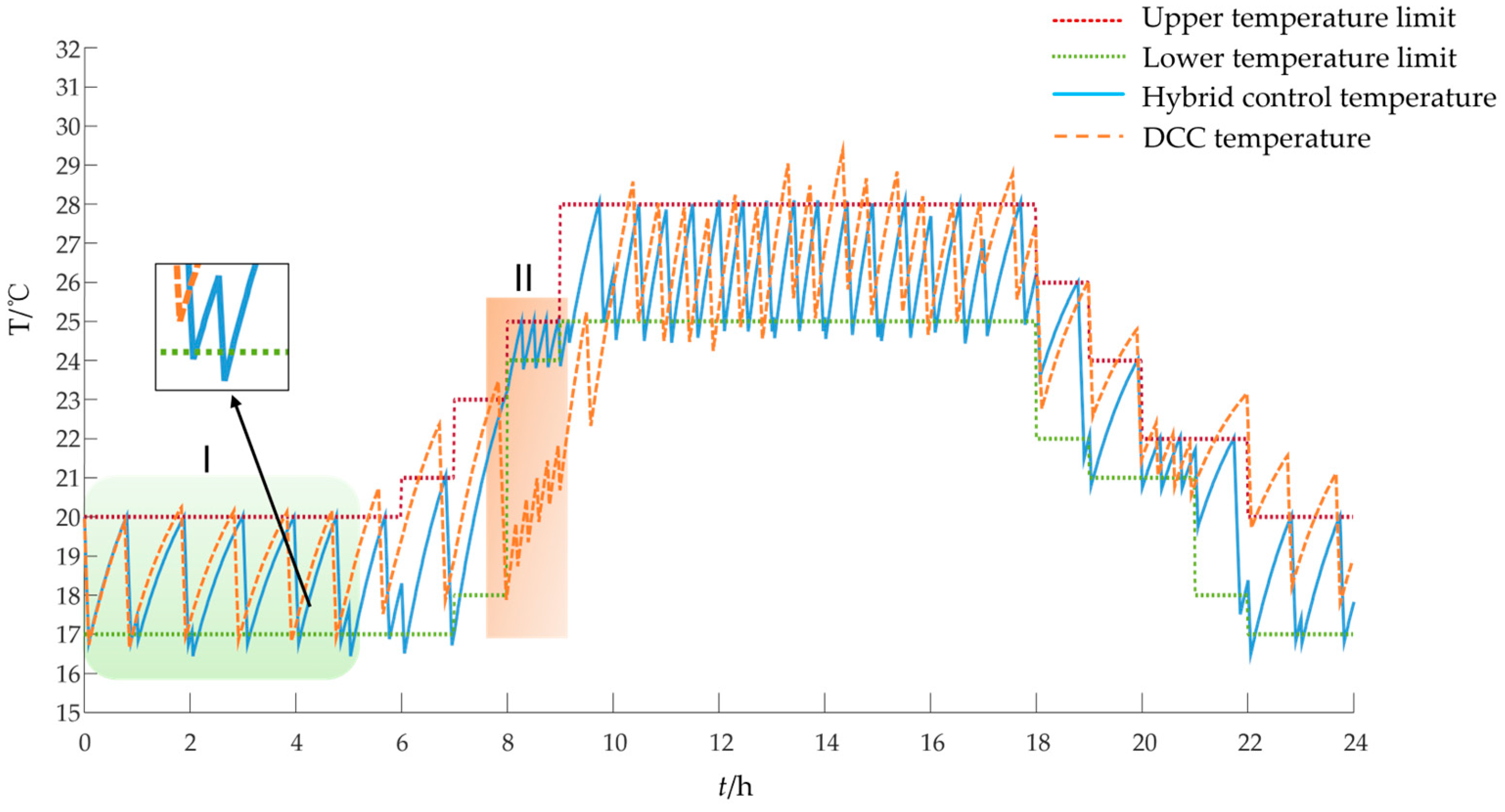
Hybrid control strategy effectively mitigates these temperature deviations. By implementing this strategy, the indoor temperature remains within a comfortable threshold most of the time, thus satisfying user comfort requirements while maintaining regulatory precision. Indoor temperature variations under different controls are shown in
Figure 11.
The startup and shutdown times of the DCC are determined by the external temperature and the upper and lower thresholds of the indoor temperature during the current control period. Its control performance is relatively better when these temperature thresholds remain constant, as demonstrated by the green region I in
Figure 11. However, if the temperature range changes for the subsequent period and the indoor temperature at the end of the previous period is outside the next period’s thresholds, adhering to the original start/stop schedule will lead to significant deviations, as indicated by the yellow shaded region II of
Figure 11.
To address this issue, the hybrid control strategy adjusts the AC’s operating state through direct start/stop control. This adjustment restores the indoor temperature within the thresholds of the next control period, thereby ensuring that subsequent control proceeds as planned. The enlarged detail in
Figure 11 clearly highlights this difference. When the DCC fails to complete a full start/stop cycle, the temperature at the end of the period deviates from the indoor temperature thresholds, which can negatively affect control in the next period and even cause the temperature to exceed the constraint range. Conversely, the intervention of direct start/stop control enables the system to recalibrate the start/stop state, bringing the indoor temperature closer to the set limits, effectively minimizing the adverse effects on the next period’s control.
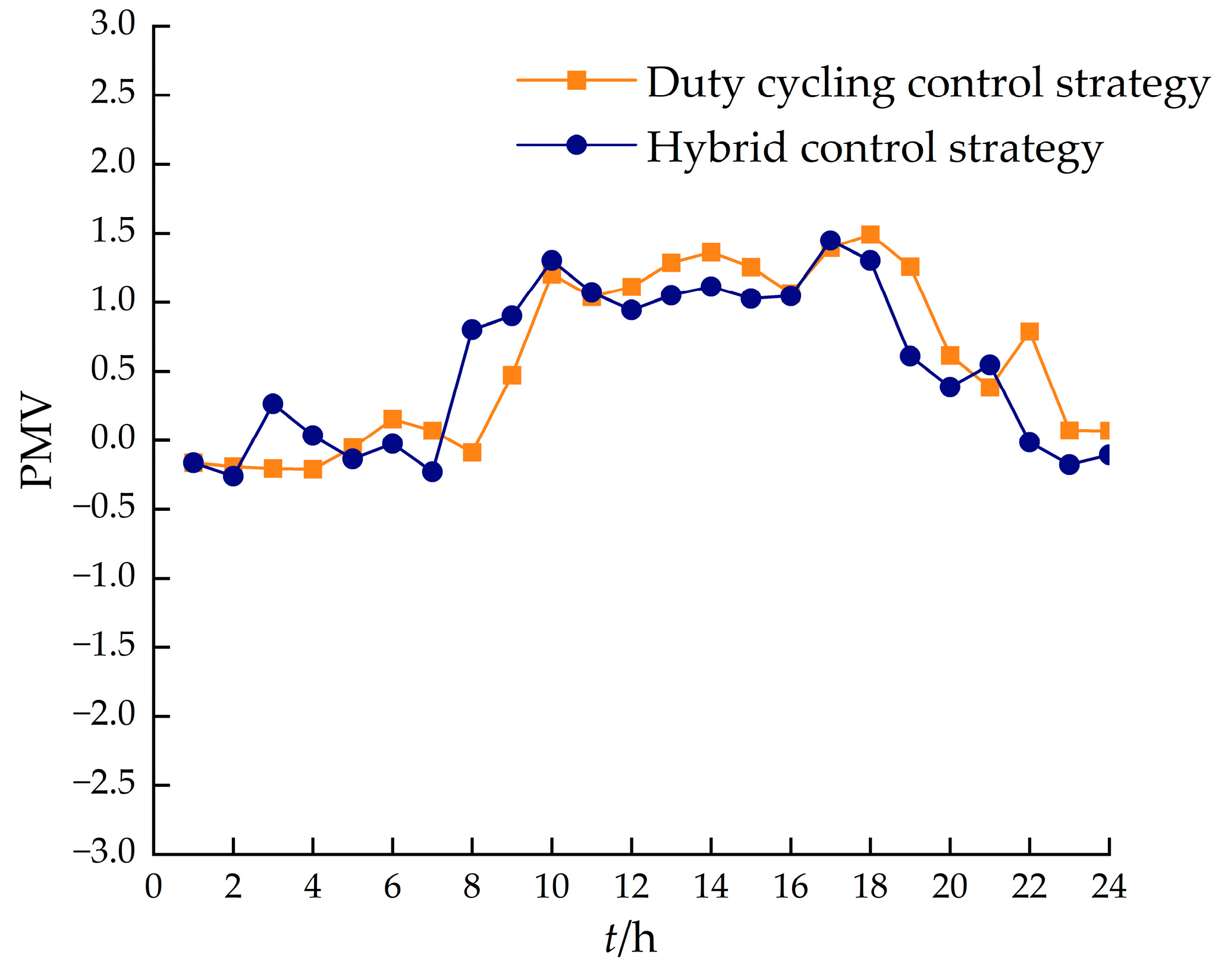
By selecting the indoor temperatures under different control methods at the same moment to conduct PMV analysis, it can be seen that there is no significant difference in the PMV index under different control methods; this is because the indoor temperatures under the two control methods fluctuate within the preset temperature range for most of the time. In some time periods, the user comfort of DCC is better than that of the hybrid control strategy, which is due to the adjustment of the AC operating duty cycle in this period to achieve the regulatory goal of balancing the power curve, thus resulting in a certain degree of reduction in user comfort. Meanwhile, it can be clearly seen from
Figure 12 that in most time periods, the study takes into account user comfort while implementing power regulation, and there is no significant decrease compared with the comfort level of DCC.
Additionally, the hybrid control strategy not only reduces temperature deviations associated with DCC during intraday operations but also enables adjustments to the operating state of the AC load when intraday power modifications are required, thereby achieving the intended response performance.
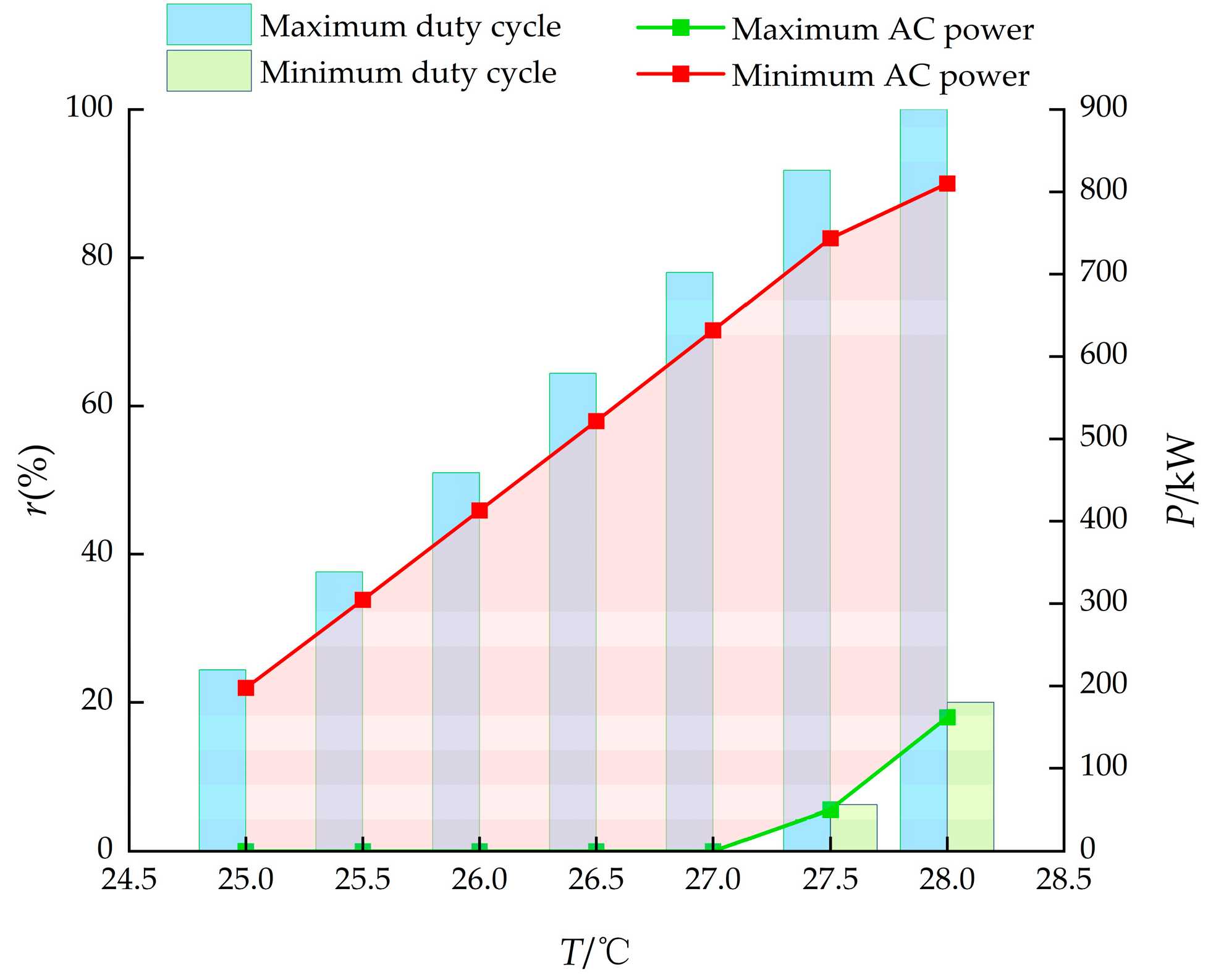
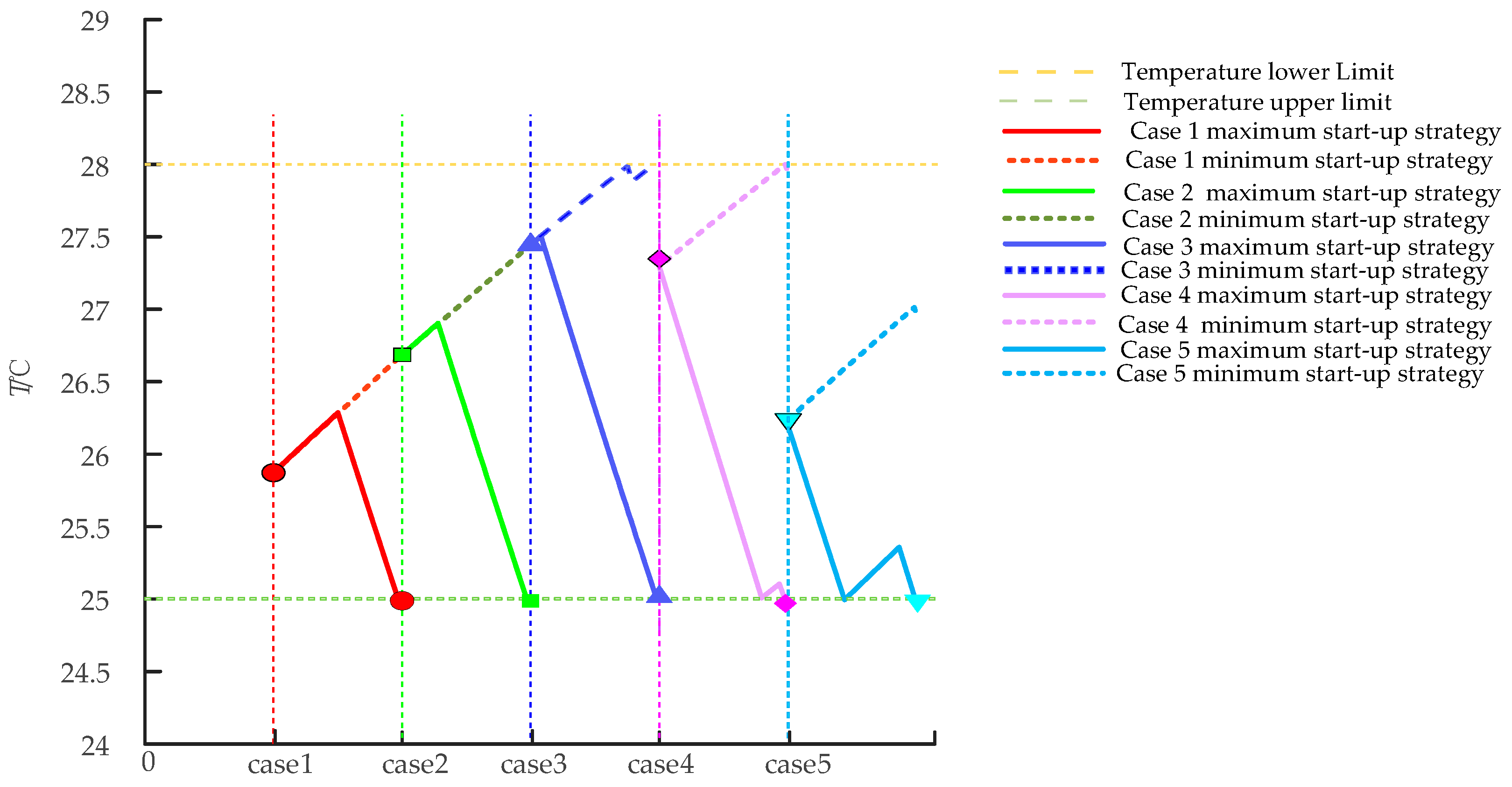
Figure 13 includes five distinct cases, each associated with a unique initial temperature. This figure clearly illustrates the changes in indoor temperature over the subsequent five minutes, depicting the AC’s operation under two conditions—maximum runtime and minimum runtime—across different initial temperatures.
During the temperature rise phase, the AC system remains inactive, while retaining the capacity to increase power output. The maximum responsive power varies with the ambient temperature at different time points. In contrast, during the temperature drop phase, the AC system operates continuously and is capable of reducing power output. At this stage, the system runs at its minimum power level, which also fluctuates based on the temperature at varying times of the day.
Figure 14 presents the corresponding changes in duty cycle and power when adjustments are implemented at different temperatures.
For further analysis, a practical daily demand scenario is examined: when the AC shuts down from an indoor temperature of 25 °C, a demand of 150 kW emerges at the 15 min. At this point, the indoor temperature is 27.45 °C, and the average power over the subsequent five minutes can reach a maximum of 729.81 kW and a minimum of 35.64 kW. This demand falls within the upper and lower thresholds of the power capacity and can be met through the following stages.
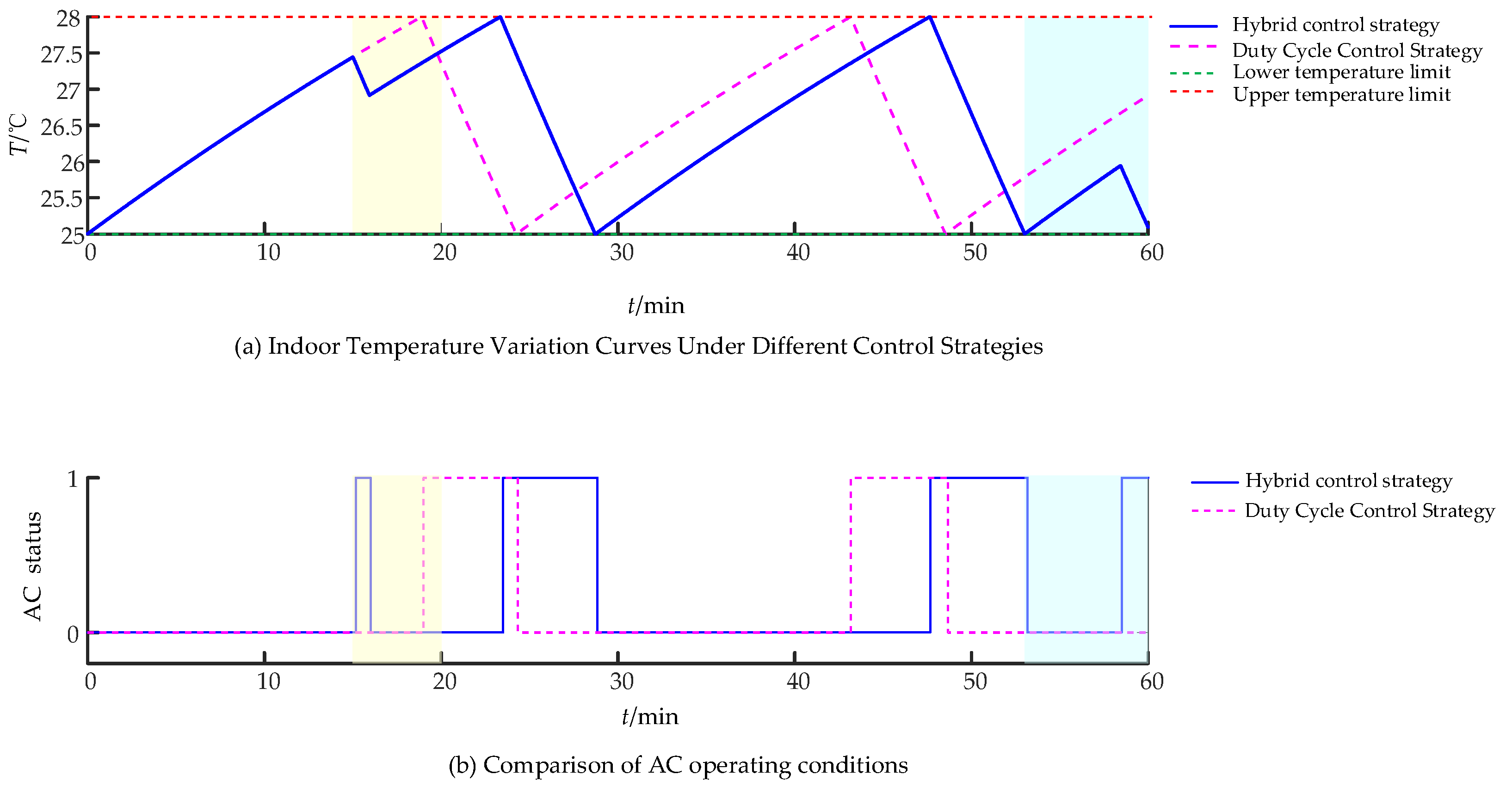
During the first response period, direct start-stop control is implemented with a duty cycle of 0.19. At an indoor temperature of 27.45 °C, the AC starts up for 4.4 min to reduce the temperature to the lower threshold. The intraday response is completed within five minutes, after which direct control cycles consisting of 0.95 min of operation followed by 4.05 min of inactivity are implemented. The corresponding variations in indoor temperature and AC operational status during this period are illustrated within the yellow-shaded region of
Figure 14. At this stage, the 150 kW demand response is fully achieved.
The second stage, occurring five minutes later during the recovery period, prioritizes rapid re-entry into the control cycle by focusing on swiftly reaching the temperature thresholds. The AC operates for 4.74 min to attain the lower temperature threshold, then remains off for 2.54 min to reach the upper threshold. This cycle continues with the AC off until the indoor temperature reaches the upper threshold.
During the third-phase control cycle, the AC operates at a duty cycle of 0.22. At the 53rd minute of the cycle, the indoor temperature reaches the lower temperature limit. If the AC system remained completely shut down for the remaining seven minutes, the temperature would fail to stay within the vicinity of the temperature boundary by the end of the 60 min control cycle—thus compromising the implementation of the subsequent phase’s control plan.
Therefore, direct start-stop control mode is adopted for the final seven minutes, where the duration of each start-stop cycle is determined by calculations based on the 0.22 duty cycle. By the end of this phase, the indoor temperature stabilizes near the lower temperature limit of 25 °C. In contrast, without implementing direct start-stop control during this period, the indoor temperature would rise to 27 °C. The specific variations in indoor temperature and AC operating status after the 53rd minute can be observed in detail in the blue shaded area of
Figure 15.
4.4. Comparison of the Proposed Multi-Time Scale Hybrid Control Strategy with Existing Hybrid Control Strategy
Comparisons have been conducted in previous sections between the hybrid control strategy proposed in this paper and the DCC. These comparisons have clarified the significant advantages of the proposed strategy in terms of power response characteristics and temperature regulation accuracy. This section will further compare with the hybrid control strategies reported in existing studies to highlight the innovative value of our proposed strategy. While all relevant existing studies [
21,
22,
23] cover research content related to hybrid control, refs. [
21,
22] lack an analysis of the coordination mechanism between the two control methods. In contrast, the hybrid strategy proposed in [
23] takes the coordinated optimization of different control methods as its core, and its research object is consistent with that of our paper, thus exhibiting stronger comparability and representativeness. Accordingly, this section selects the hybrid control strategy in [
23] as the core comparison object, which explicitly adopts the hybrid control mode of temperature control and direct start-stop control.
Among the existing hybrid strategies combining temperature control and direct start-stop control, the former achieves indirect power regulation by adjusting temperature set-points, while the latter corrects power deviations by directly adjusting the number of operating ACs. Notably, the temperature dead band in these strategies is typically only 1 °C. An excessively narrow band causes a significant rise in AC start-stop frequency, exacerbating equipment wear and shortening system service life. Furthermore, existing strategies lack global planning logic as their regulation relies solely on intraday peak-shaving demand without optimizing the all-day load curve. While theoretically capable of valley filling, they mainly focus on intraday peak shaving in practice. The proposed multi-timescale hybrid control strategy contrasts sharply with these approaches, with differences in regulatory effects stemming from fundamental discrepancies in core architectures.
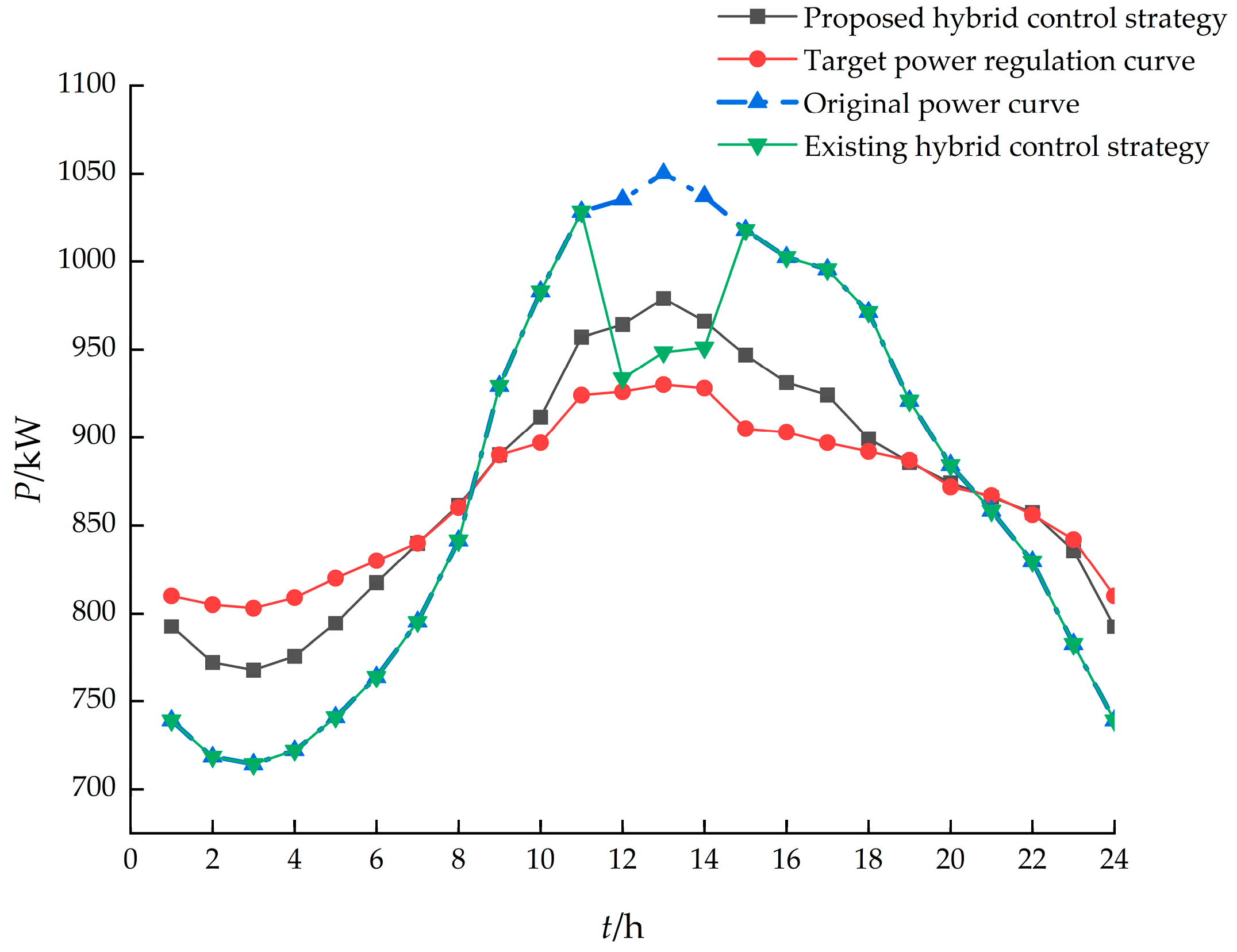
The proposed strategy features a core architecture of “day-ahead global planning plus intraday precise correction”. In the day-ahead phase, all-day load forecast data is used to define peak-shaving/valley-filling capacities and corresponding comfortable temperature ranges for each time period. During the intraday phase, 5 min rolling fine-tuning is performed, with power regulation achieved via optimized AC operating states. In this mode, peak-shaving and valley-filling are not isolated but serve the unified goal of all-day load smoothing. It maintains low AC start-stop frequency through wide temperature bands and reduces the all-day load peak-valley gap via planned peak/valley regulation capacities, ultimately achieving global load curve smoothing. This all-day regulation capability based on global planning is exactly what existing strategies lack. To highlight the proposed strategy’s superiority, this section compares power curves of different hybrid control strategies, with results presented in
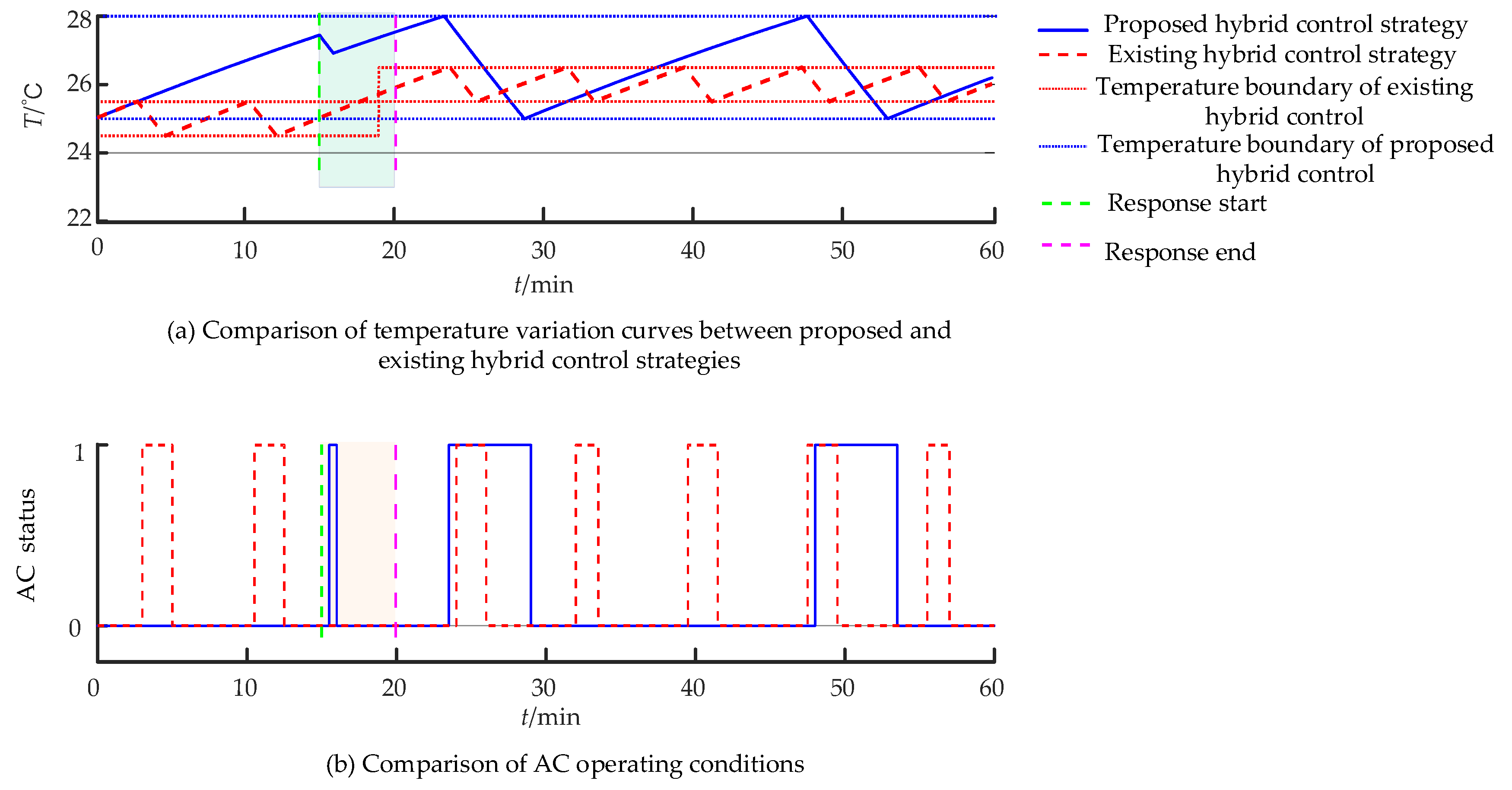
Figure 16.
Focusing on the intraday peak shaving characteristics of existing hybrid control strategy, the intraday load peak period is selected for comparison of response effects. The results show that the peak shaving effect of existing strategy is slightly better than that of the strategy proposed in this paper. However, this advantage is achieved at the cost of increasing the AC set temperature. It leads to a decrease in user thermal comfort and creates a contradiction between temperature control accuracy and user experience. From the perspective of full-time operation effects, the multi-timescale hybrid control strategy proposed in this paper not only completes the peak shaving task but also simultaneously takes into account the all-day load valley filling demand. It not only effectively reduces the load peak-valley difference but also realizes the smooth optimization of the overall load curve. It truly achieves the coordinated control goal of peak shaving, valley filling and load stabilization. This fully reflects the comprehensive superiority of this strategy.
In addition, previous sections have compared the temperature variations in the proposed control strategy and the single control strategy in response to intraday random demands. This section further compares the proposed strategy with existing hybrid control strategy. The regulation requirement remains consistent with the previous one, which is to adjust the ACs power to 150 kW within 15 min. The temperature variation curves of the two hybrid control strategies are presented in
Figure 17.
To achieve the power target, the proposed strategy modifies the operating status of ACs to ensure the average power in subsequent periods meets the requirement. The existing strategy achieves the power target by adjusting the set temperature and changing the number of ACs participating in regulation. As shown in
Figure 17, the temperature regulation method cannot meet the accuracy requirement of rapid response within 5 min due to thermal inertia during temperature elevation. Meanwhile, the AC start-stop fluctuations are more frequent under this mode, which is not conducive to the long-term stable operation of equipment. Additionally, the existing strategy changes the number of regulated ACs through direct control, leading to user fairness issues. The proposed strategy avoids this problem as it does not involve adjusting the number of ACs.
To clearly highlight the superiority of the proposed strategy, the relevant indicators of different hybrid control strategies are compared and summarized in
Table 2.
The data in
Table 2 further quantitatively verify the comprehensive superiority of the multi-timescale hybrid control strategy proposed in this paper. In terms of the regulation dimension, the strategy adopts a multi-timescale architecture combining day-ahead and intraday control. Compared with the existing strategy that only focuses on intraday minute-level regulation, it possesses stronger overall planning and coordinated regulation capabilities. From the equipment perspective, its start-stop frequency is merely 43% of that of the existing strategy, which can significantly reduce mechanical wear of equipment and effectively extend the system’s service life. Regarding user experience, the thermal comfort PMV index is closer to the ideal value, outperforming the existing strategy and substantially enhancing users’ thermal comfort. In terms of load regulation effect, although the single-period peak-shaving rate of the proposed strategy is slightly lower than that of the existing strategy, it has successfully achieved 7.5% load valley filling and reduced the all-day load peak-valley difference to 212 kW. In contrast, due to the lack of overall load planning, the existing strategy results in a much higher peak-valley difference of 314 kW. The proposed strategy maintains 300 ACs in regulation throughout without adjusting equipment quantity, significantly reducing regulation complexity and operation costs. All users’ ACs participate equally, ensuring user fairness and enhancing acceptance to support large-scale implementation. To conclude, compared with the existing strategy, the proposed strategy offers outstanding and unparalleled advantages in three key dimensions, specifically reducing equipment deterioration, ensuring user comfort levels, and achieving comprehensive load optimization.
5. Discussion
This study proposes a hybrid control strategy for multi-timescale AC load demand response, integrating direct start-stop control and duty cycle control into a multi-time-scale source-load coordinated dispatch framework. Case study results verify that the strategy can effectively improve the response accuracy of AC loads and enhance the feasibility of power system dispatch, which is consistent with the initial research hypothesis aimed at addressing the limitations of single-timescale and single-control strategies.
From the perspective of dynamic response characteristics, the hybrid control strategy proposed in this paper fully leverages the complementary advantages of two distinct control methods, aligning with the core direction of optimizing urban energy systems through intelligent and adaptive control. Duty cycle control, featuring a long dispatch cycle, lays a stable operational foundation for day-ahead steady-state optimization and can effectively meet the steady-state dispatch requirements of power systems with high renewable energy penetration, which is also a key requirement for constructing low-carbon and resilient energy infrastructures. In contrast, direct start-stop control, relying on its rapid response capability, can compensate for intraday deviations caused by renewable energy fluctuations and sudden load changes, addressing the issue of insufficient real-time adjustability in traditional single-control methods.
This hierarchical control mechanism not only expands the regulation margin of AC loads, which are a core component of urban flexible load resources, but also achieves a balance between grid regulation demands and user thermal comfort. Compared with existing hybrid control strategies, the proposed strategy is more adaptable to various dispatch requirements such as steady-state dispatch, real-time deviation correction, and peak-valley gap reduction. It also boasts higher response accuracy, avoiding the limitations of insufficient flexibility and large deviations in existing strategies when adapting to multiple scenarios.
In terms of quantitative performance, the established equivalent duty cycle model and calculative method for curtailment capacity realize accurate quantification of the response potential of AC loads under the hybrid control mode. This solves the long-standing challenge in grid dispatch of large power response deviations when demand-side resources participate [
2,
3], and addressing this challenge is crucial for unlocking the value of demand response in urban energy management systems. Compared with the hybrid control schemes proposed by Zeng et al. [
20] and Liu et al. [
21], which focus on reducing start-stop frequency or extending state transition time, this study further achieves the coordination and optimization of multi-time-scale dispatch. This technological breakthrough makes the control strategy more adaptable to the complex operational scenarios of modern power systems with high renewable energy integration, thereby supporting the construction of flexible, efficient and sustainable urban energy networks, which is also a core pillar of the intelligent development of urban energy systems.
The proposed hybrid control strategy is not an isolated load control method but a core component that can be integrated into broader smart grid coordination frameworks, with clear application paths in specific scenarios:
In the scenario of distributed renewable energy grid connection, the hybrid control strategy can serve as a distributed demand response terminal. At the regional grid level, day-ahead duty cycle control parameters can be optimized based on the predicted output of distributed photovoltaic (PV) and wind power, adjusting the baseline curve of AC loads to match the “valley” periods of renewable energy generation. During intra-day operation, through a 5 min rolling optimization cycle, direct start-stop control is used to respond to real-time fluctuations in PV and wind power, mitigating the impact of renewable energy uncertainty on grid frequency and voltage stability. Together with energy storage devices and flexible generating units, it forms a “source-load-storage” coordinated regulation system, improving the absorption capacity of distributed renewable energy.
In the scenario of urban smart grid operation, the strategy can be integrated into the hierarchical dispatch system of “transmission network—distribution network—microgrid”. For the transmission network, the aggregated curtailment capacity of AC loads can be incorporated into day-ahead unit commitment and economic dispatch models to provide peak shaving and frequency regulation services at the system level. For the distribution network, it can coordinate AC loads in scenarios such as residential communities and commercial buildings, solving problems of voltage deviation and load imbalance in the distribution network.
At the level of large-scale power-load interaction mechanisms, the hybrid control strategy provides a scalable technical solution for the aggregation of demand-side resources. With the popularization of smart meters and the Internet of Things technology, a large number of distributed AC loads can be aggregated into virtual power plants (VPPs) through this strategy. The day-ahead dispatch layer of VPPs can submit curtailment capacity quotes to the power market based on the equivalent duty cycle prediction of hybrid control. The intra-day control layer responds to real-time grid dispatch instructions through direct start-stop control, realizing the market-oriented operation of flexible demand-side resources, promoting the formation of a “source-load bidirectional interaction” mechanism in smart grids, and breaking the traditional one-way mode of “source following load”.
Despite the certain achievements of this study, there are still limitations that point to future research directions. Firstly, the current research assumes that AC loads have uniform thermal parameters and user comfort thresholds. However, in practical applications, residential, commercial, and industrial AC loads differ significantly in thermal inertia, usage patterns, and comfort requirements. In the future, AC loads should be classified according to user types and load characteristics, and differentiated hybrid control parameters should be formulated to improve the practical applicability of the strategy. Secondly, the study does not consider the impact of communication delays and information transmission errors on control effects. In the future, communication delay models should be incorporated into the hybrid control framework, and robust control algorithms should be designed to enhance the anti-interference capability of the strategy. Finally, with the development of multi-energy systems [
27], the interaction between AC loads and other energy-consuming equipment (such as electric vehicles and heat pumps) will become more complex. In the future, the hybrid control strategy can be extended to the field of multi-energy load coordination, tapping the potential of coordinated regulation in integrated energy systems [
28] to further improve the flexibility and resilience of smart grids.
6. Conclusions and Future Works
The hybrid control strategy proposed in this paper, based on a multi-timescale source-load coordinated scheduling architecture, provides robust support for the formulation of long-timescale scheduling plans. It effectively resolves the issue where an integer number of control cycles cannot be completed within the scheduling cycle when DCC occurs, thereby avoiding an operating state unfavorable for subsequent control. Meanwhile, the strategy offers a solution to the challenge that DCC struggles to flexibly cope with intraday response deviations. By enhancing the flexibility of load dispatch and response through direct start-stop control, it facilitates the development of the next-round scheduling strategy. Additionally, with the objective function of minimizing power response deviation, the strategy calculates the response power that best meets scheduling requirements, ultimately achieving optimal control performance. This study specifically addresses the inadequacies of existing hybrid control strategies, including incomplete coordination mechanisms and insufficient multi-timescale coordination capabilities. It breaks the limitation of fixed control modes under a single timescale and fills the research gap in the timescale adaptability of existing hybrid control strategies. Compared with existing strategies, the proposed hybrid control strategy in this paper can adapt to various regulation demands and exhibits broader applicability.
In the model and analysis process of this study, the following premise assumptions are made, where AC equipment participating in demand response is of the same type with consistent parameter configurations, the first-order equivalent thermal parameter model can accurately characterize the actual thermal environment, and the responsive loads continuously participate in the scheduling cycle without withdrawing midway. However, in practical application scenarios, the above assumptions have significant realistic constraints. First, AC equipment generally exhibits heterogeneity in brand, model and parameters, and classification scheduling needs to be realized through cluster analysis; second, the simplified characterization of the actual thermal environment by the first-order model may deviate due to dynamic changes in building envelope structures, indoor and outdoor thermal disturbances and other factors; third, users’ thermal comfort demands, equipment failures, subjective operational intentions and other factors may cause AC to withdraw from the response process midway. All the above factors will affect the actual implementation effect of the hybrid strategy to varying degrees.
Based on this, the follow-up research of this study will further expand the research dimensions. On the one hand, it will analyze the uncertainty of load participation in response and its impact on scheduling economy; on the other hand, it will deeply explore the coordination mechanism of response participation among multiple load clusters, so as to improve the application adaptability of the hybrid strategy.