
Decontamination-Sludge-Induced Corrosion of Steel in Simulated Pore Solutions and Alkali-Activated Slag Pastes




Abstract
1. Introduction
2. Materials and Testing Methods
2.1. Preparation of the Decontamination Sludge and the Synthetic Solutions Used to Simulate the Pore Solutions of Portland Cement and Alkali-Activated Cement Pastes in the Presence of the Sludge
2.2. Preparation of the Steel Reinforcement Reference Based on Portland Cement and Alkali-Activated Slag Pastes with the Sludge
2.3. Testing Procedure
2.3.1. Electrochemical Testing
2.3.2. Analysis of the Surface of the Carbon Steel After the Electrochemical Tests
2.3.3. Characterisation of the Cementitious Pastes Mixed with the Sludge
3. Results and Discussion
3.1. Study of Simulated Cement Pore Solutions Mixed with the Decontamination Sludge
3.1.1. Evaluation of the Corrosion Process of Carbon Steel in Contact with Simulated Cement Pore Solutions and Decontamination Sludge
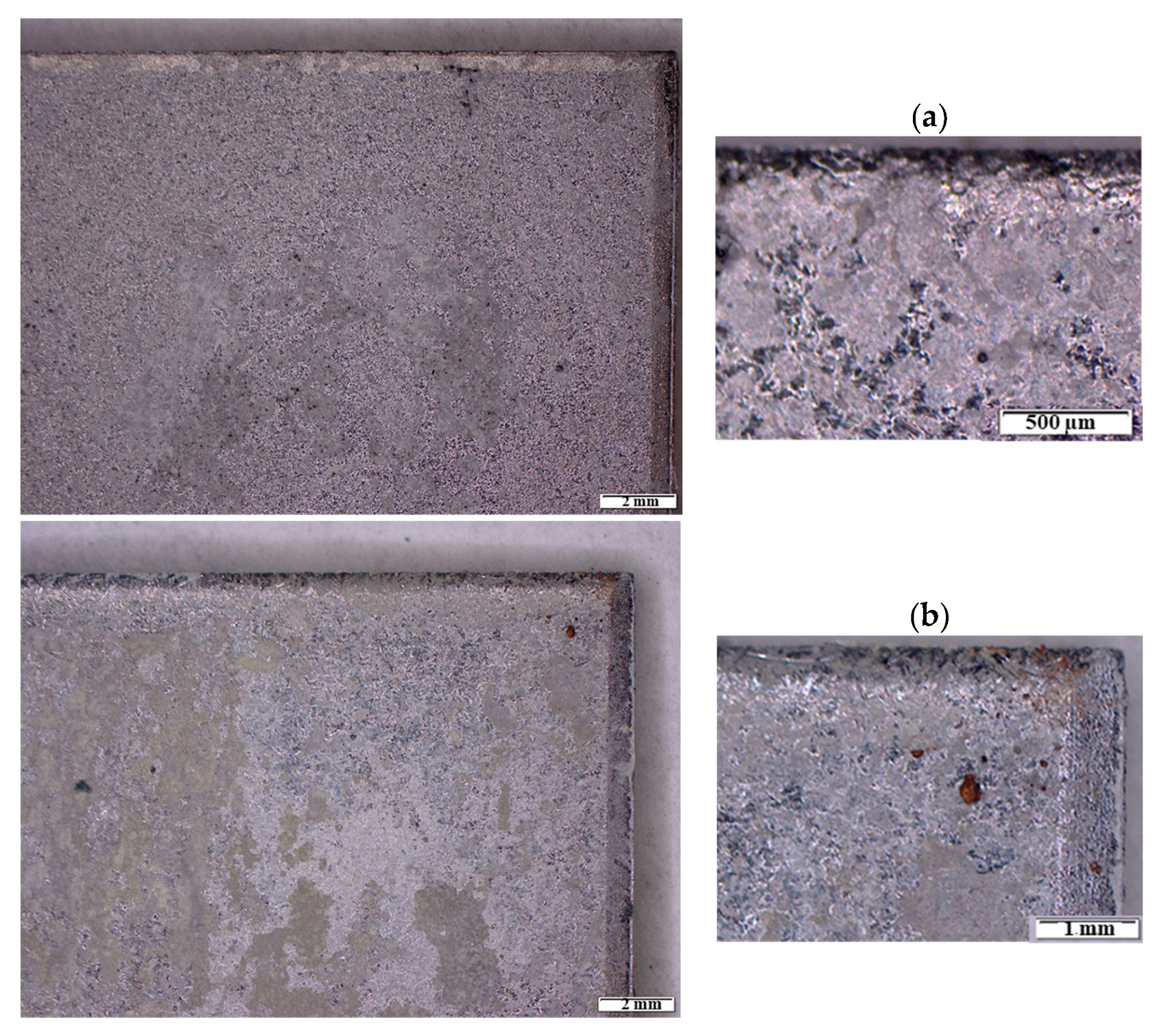
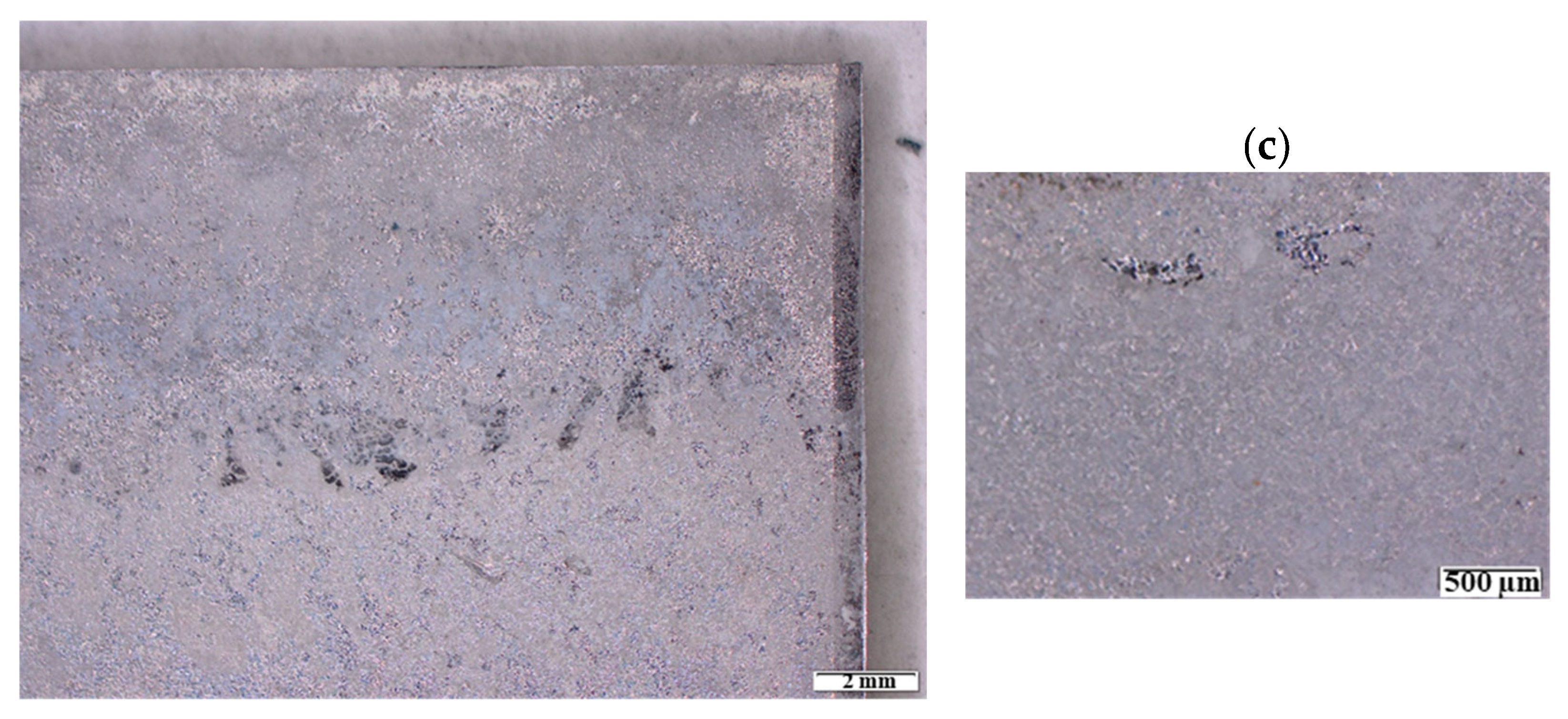
3.1.2. Analysis of the Surface of Carbon Steel in Contact with Simulated Cement Pore Solutions and Decontamination Sludge
3.2. Study of Cementitious Pastes Mixed with the Decontamination Sludge
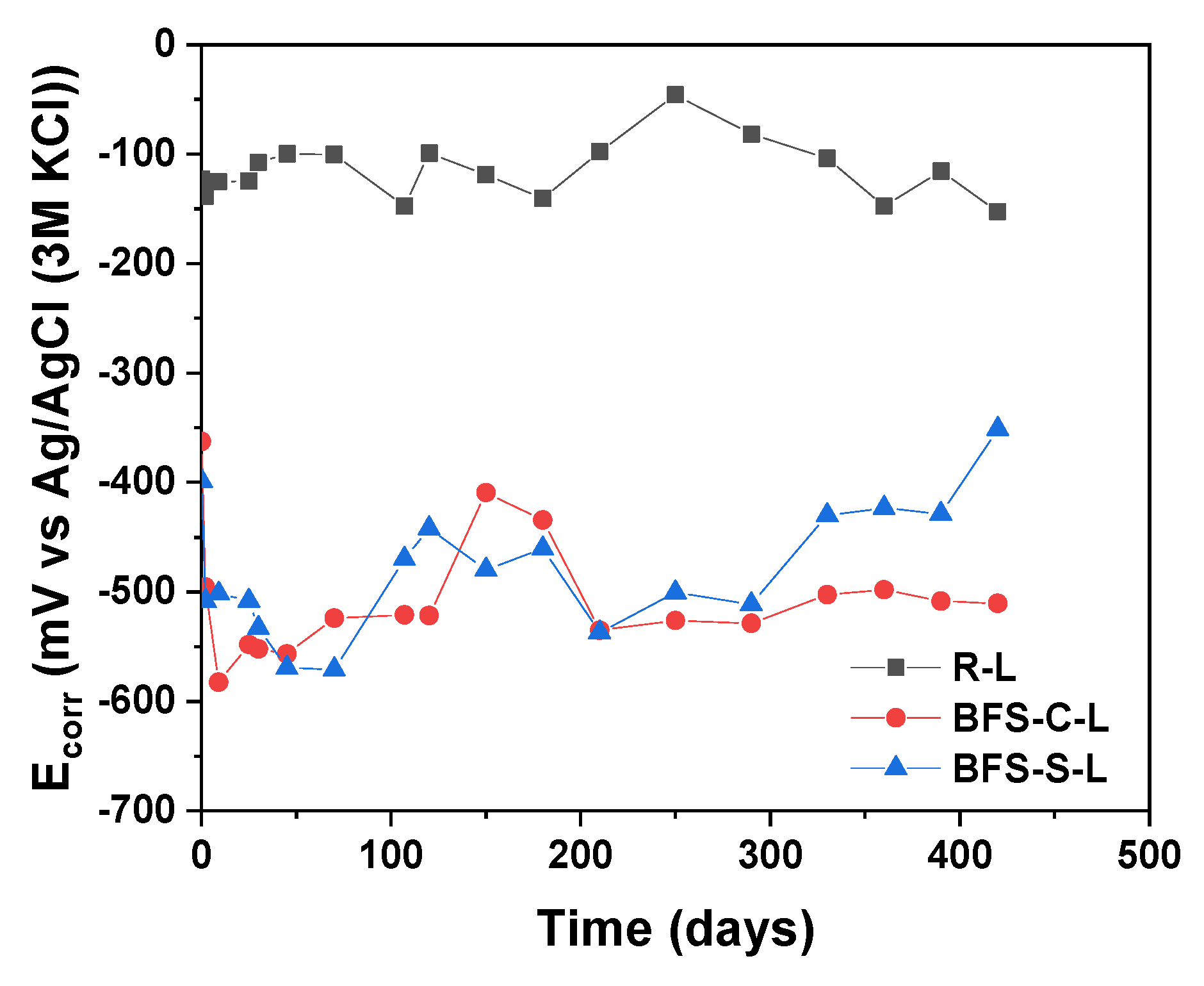
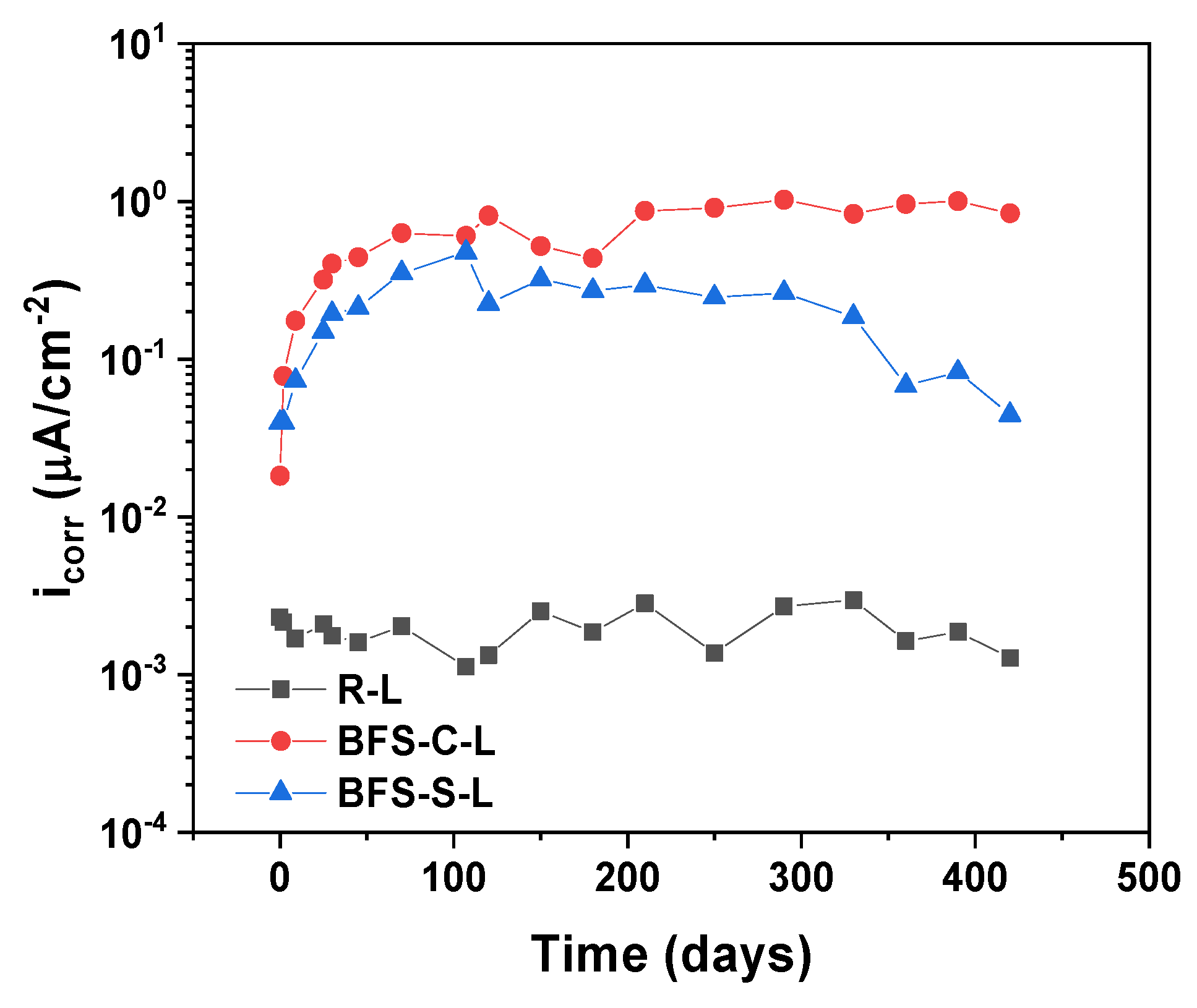
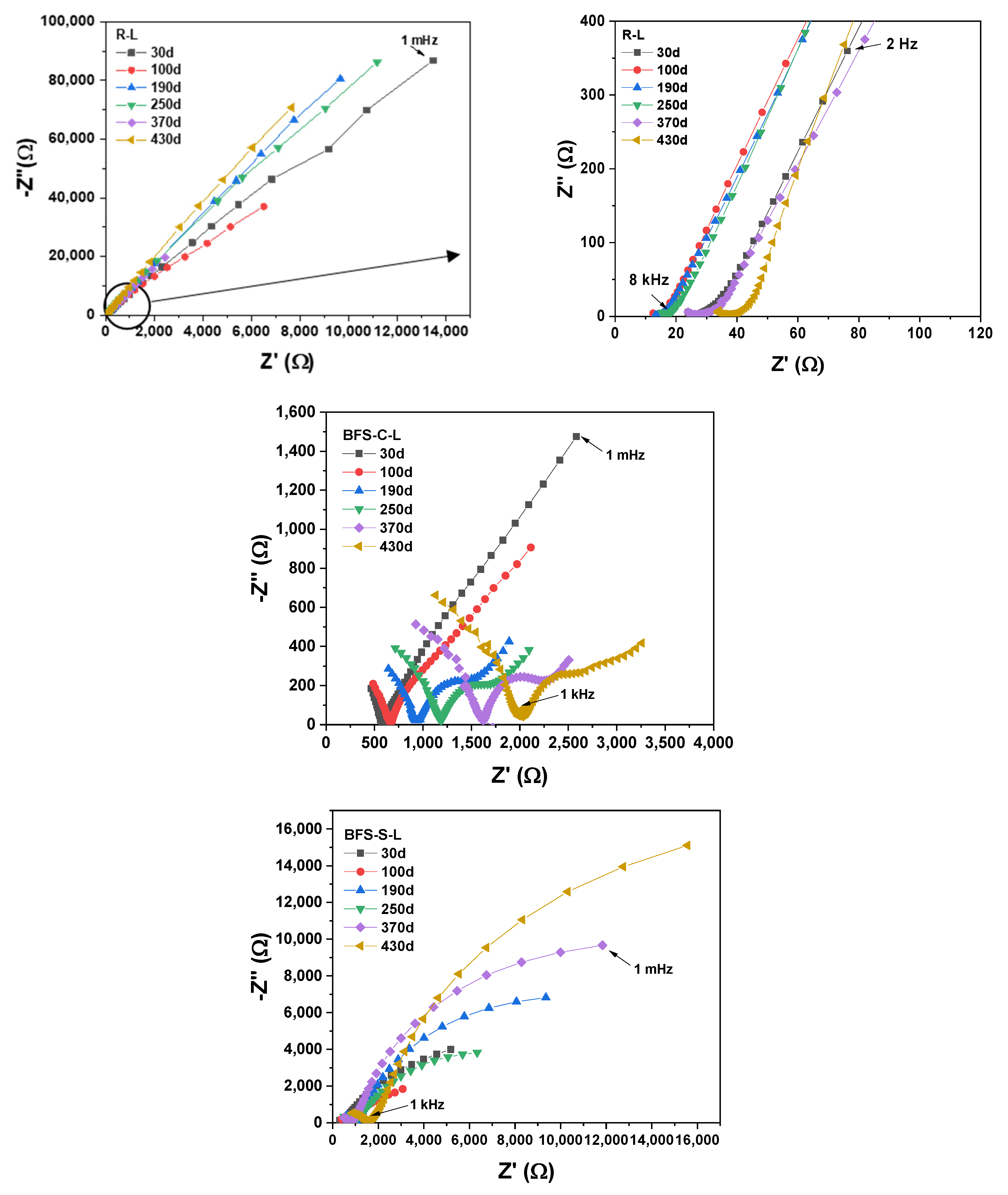
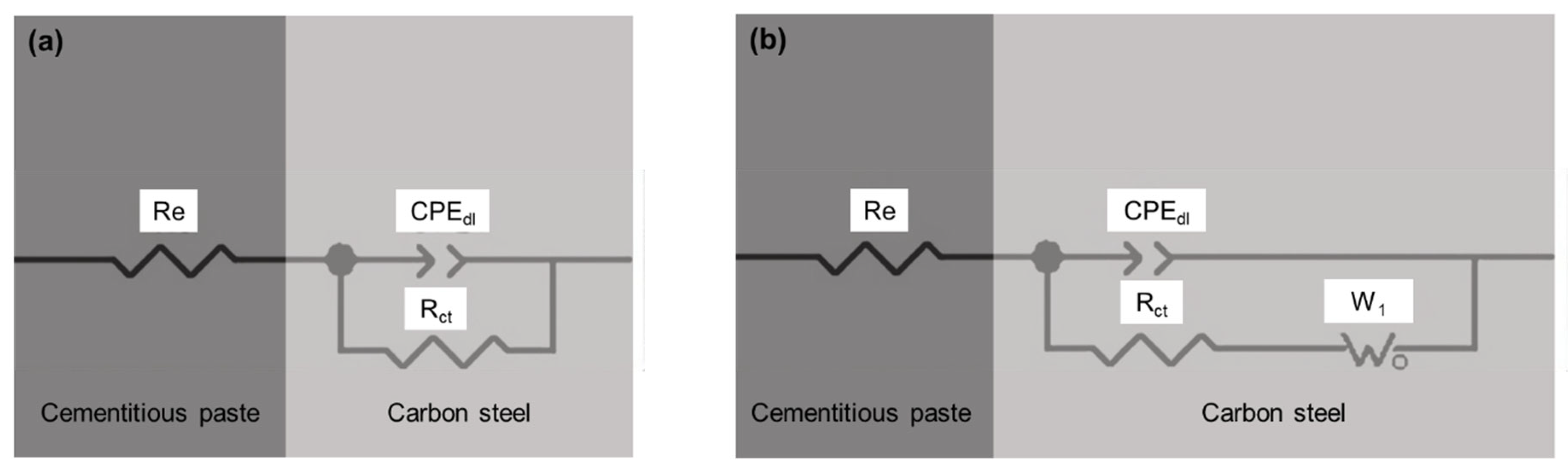
3.2.1. Evaluation of the Corrosion of Carbon Steel Embedded in the Cementitious Pastes Containing Decontamination Sludge
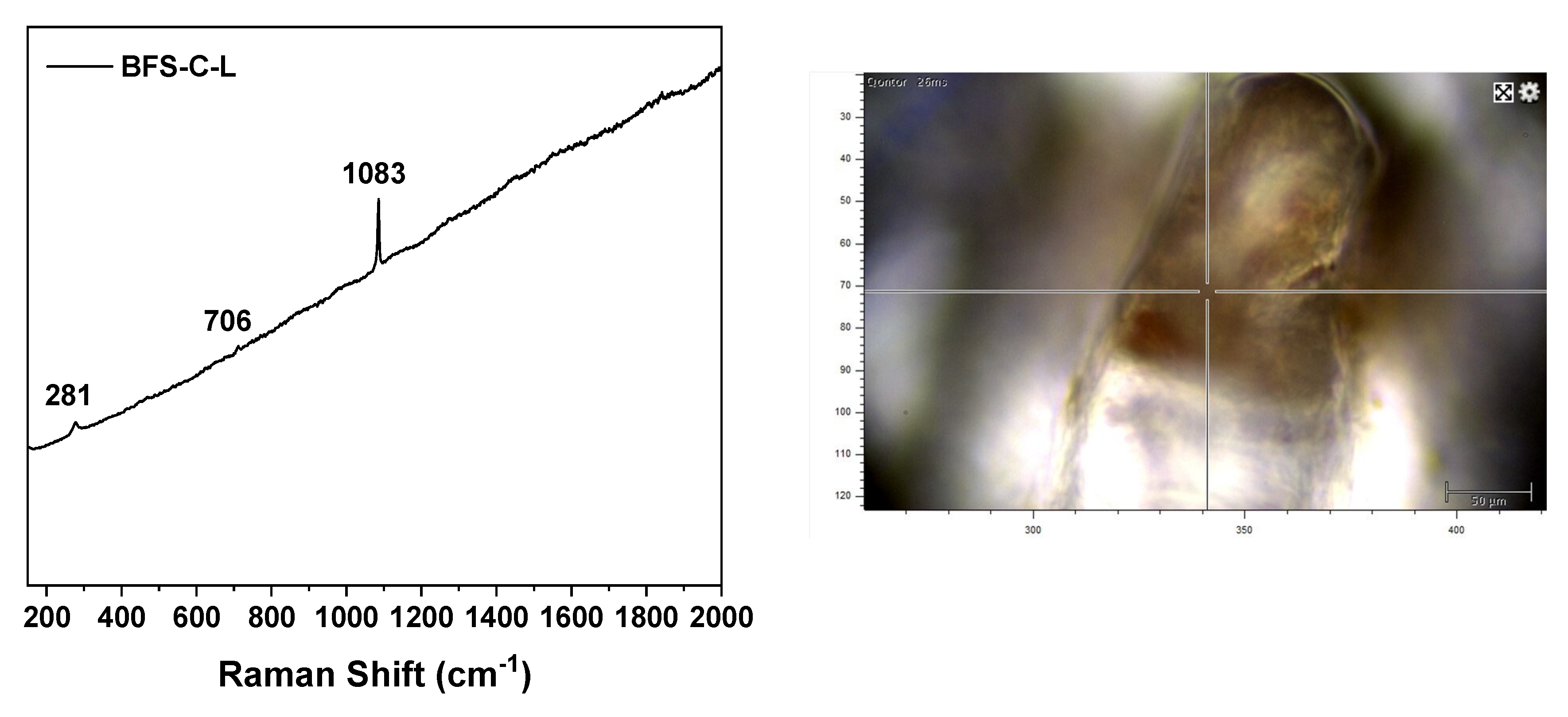
3.2.2. Analysis of the Surface of the Carbon Steel and the Corrosion Products on the Surface of the Steel Embedded in the Cementitious Pastes Containing Decontamination Sludge
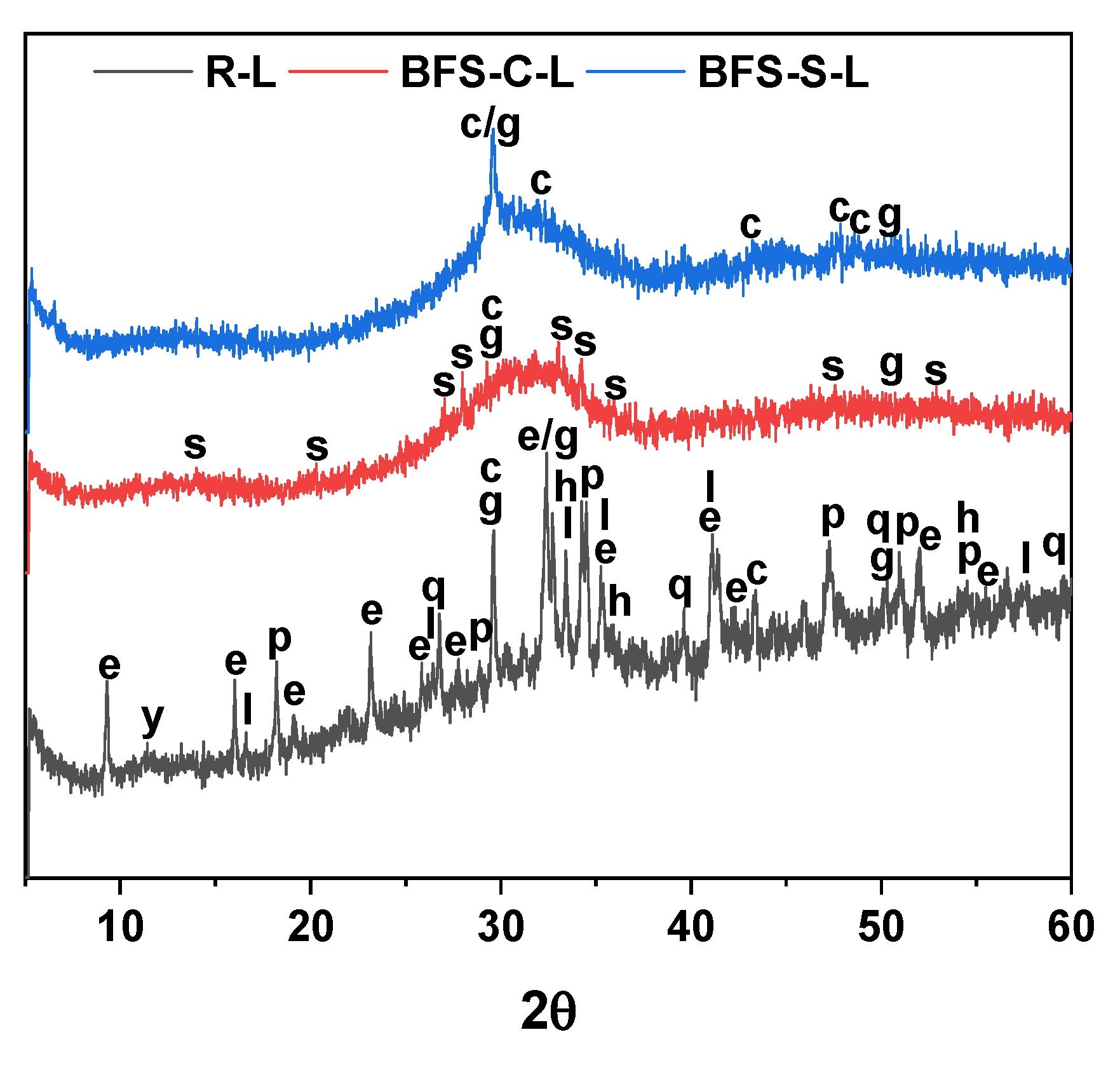
3.2.3. Characterisation of the Cementitious Pastes Mixed with the Decontamination Sludge
4. Conclusions
Author Contributions
Funding
Data Availability Statement
Acknowledgments
Conflicts of Interest
References
- IAEA. Methods for the Minimization of Radioactive Waste from Decontamination and Decommissioning of Nuclear Facilities; Technical Reports Series No. 401; IAEA: Vienna, Austria, 2001. [Google Scholar]
- NDA Strategic Position on Radioactive Waste Treatment: August 2023. Available online: https://www.gov.uk/government/publications/nda-strategic-position-on-radioactive-waste-treatment/nda-strategic-position-on-radioactive-waste-treatment-july-2023 (accessed on 1 December 2024).
- Feng, D.; Ye, F.; Chen, D.; Liang, S. Research progress on solidification/stabilization of sludge with Alkali-Activated cementitious materials: A review. Sustain. Chem. Pharm. 2025, 43, 101904. [Google Scholar] [CrossRef] [Scilit]
- Li, J.; Wang, J. Advances in cement solidification technology for waste radioactive ion exchange resins: A review. J. Hazard. Mater. 2006, 135, 443–448. [Google Scholar] [CrossRef] [Scilit] [PubMed]
- Anji, R.D.; Khandelwal, S.K.; Muthiah, R.; Shanmugamani, A.G.; Paul, B.; Rao, S.V.S.; Sinha, P.K. Conditioning of Sludge Produced through Chemical Treatment of Radioactive Liquid Waste—Operating Experiences. Ann. Nucl. Energy 2010, 37, 934–941. [Google Scholar] [CrossRef] [Scilit]
- Majersky, D.; Sekely, S.; Katrlik, J. Characterization and Treatment Experience of TRU Sludges During Decommissioning NPP A-1 in Slovak Republic. In Proceedings of the 9th International Conference on Radioactive Waste Management and Environmental Remediation, Oxford, UK, 21–25 September 2003; Volume 4811, pp. 251–257. [Google Scholar]
- Barbhuiya, S.; Das, B.B.; Qureshi, T.; Adak, D. Cement-Based Solidification of Nuclear Waste: Mechanisms, Formulations and Regulatory Considerations. J. Environ. Manag. 2024, 356, 120712. [Google Scholar] [CrossRef] [Scilit] [PubMed]
- Liu, J.; Xu, Y.; Zhang, W.; Ye, J.; Wang, R. Solidification Performance and Mechanism of Typical Radioactive Nuclear Waste by Geopolymers and Geopolymer Ceramics: A Review. Prog. Nucl. Energy 2024, 169, 105106. [Google Scholar] [CrossRef] [Scilit]
- Duxson, P.; Fernández-Jiménez, A.; Provis, J.L.; Lukey, G.C.; Palomo, A.; Van Deventer, J.S.J. Geopolymer Technology: The Current State of the Art. J. Mater. Sci. 2007, 42, 2917–2933. [Google Scholar] [CrossRef] [Scilit]
- Neupane, K. Fly Ash and GGBFS Based Powder-Activated Geopolymer Binders: A Viable Sustainable Alternative of Portland Cement in Concrete Industry. Mech. Mater. 2016, 103, 110–122. [Google Scholar] [CrossRef] [Scilit]
- Palomo, A.; Maltseva, O.; García-Lodeiro, I.; Fernández-Jiménez, A. Portland Versus Alkaline Cement: Continuity or Clean Break: A Key Decision for Global Sustainability. Front. Chem. 2021, 9, 705475. [Google Scholar] [CrossRef] [Scilit]
- Gu, Z.; Hua, S.; Zhao, W.; Li, S.; Gao, Z.; Shan, H. Using Alkali-Activated Cementitious Materials to Solidify High Organic Matter Content Dredged Sludge as Roadbed Material. Adv. Civ. Eng. 2018, 2018, 2152949. [Google Scholar] [CrossRef] [Scilit]
- He, J.; Feng, X.Y.; Zhou, L.R.; Zhang, L. Utilization of soda residue and ground granulated blast furnace slag to stabilize/solidify sewage sludge in leachate soaking environment. Water Sci. Eng. 2021, 14, 304–313. [Google Scholar] [CrossRef] [Scilit]
- Kozai, N.; Sato, J.; Osugi, T.; Shimoyama, I.; Sekine, Y.; Sakamoto, F.; Ohnuki, T. Sewage sludge ash contaminated with radiocesium: Solidification with alkaline-reacted metakaolinite (geopolymer) and Portland cement. J. Hazard. Mater. 2021, 416, 125965. [Google Scholar] [CrossRef] [Scilit] [PubMed]
- De Hita, M.J.; Marugán, E.I.; Torres, E.; Criado, M. Effect of Liquid/Solid Ratio on Sludge Immobilisation in Alkaline Activated Slag Cements. In Proceedings of the 48a Reunión Anual de la Sociedad Nuclear Española, Toledo, Spain, 4–6 October 2023. [Google Scholar]
- Saputra, E. A Colorimetric Detection of Creatinine Based-on EDTA Capped-Gold Nanoparticles (EDTA-AuNPs): Digital Image Colorimetry. Sens. Int. 2024, 5, 100286. [Google Scholar] [CrossRef] [Scilit]
- Lalitha, P.; Arumugam, S.; Sinthiya, A.; Nivetha, C.; Muthuselvam, M. Oxalic Acid Incorporated Acetamide Single Crystal Growth Dynamics, Characterization, NLO and Antimicrobial Activities via Shock Wave Treatment. Results Chem. 2023, 5, 100790. [Google Scholar] [CrossRef] [Scilit]
- Macasoi, C.; Pincu, E.; Jurca, B.; Romanitan, C.; Meltzer, V. Physico-Chemical Study of Nitrazepam and Citric Acid Eutectic Mixture. Thermochim. Acta 2023, 724, 179499. [Google Scholar] [CrossRef] [Scilit]
- Silverstein, R.; Webster, F. Spectrometric Identification of Organic Compounds, 6th ed.; John Wiley & Sons Inc.: New York, NY, USA, 1998; Volume 3. [Google Scholar] [CrossRef] [Scilit]
- Stern, M.; Gaery, M. Electrochemical Polarization: I. A Theoretical Analysis of the Shape of Polarization Curves. J. Electrochem. Soc. 1957, 104, 56–63. [Google Scholar] [CrossRef] [Scilit]
- Andrade, C.; Alonso, C. Corrosion Rate Monitoring and On-Site. Constr. Build. Mater. 1996, 10, 315–328. [Google Scholar] [CrossRef] [Scilit]
- Ghods, P.; Isgor, O.B.; Brown, J.R.; Bensebaa, F.; Kingston, D. XPS Depth Profiling Study on the Passive Oxide Film of Carbon Steel in Saturated Calcium Hydroxide Solution and the Effect of Chloride on the Film Properties. Appl. Surf. Sci. 2011, 257, 4669–4677. [Google Scholar] [CrossRef] [Scilit]
- Mundra, S.; Criado, M.; Bernal, S.A.; Provis, J.L. Chloride-Induced Corrosion of Steel Rebars in Simulated Pore Solutions of Alkali-Activated Concretes. Cem. Concr. Res. 2017, 100, 385–397. [Google Scholar] [CrossRef] [Scilit]
- Hu, X.; Poon, C.S. Chloride-Related Steel Corrosion Initiation in Cement Paste Prepared with the Incorporation of Blast-Furnace Slag. Cem. Concr. Compos. 2022, 126, 104349. [Google Scholar] [CrossRef] [Scilit]
- Criado, M.; Provis, J.L. Alkali Activated Slag Mortars Provide High Resistance to Chloride-Induced Corrosion of Steel. Front. Mater. 2018, 5, 34. [Google Scholar] [CrossRef] [Scilit]
- Criado, M.; Bernal, S.A.; Garcia-Triñanes, P.; Provis, J.L. Influence of Slag Composition on the Stability of Steel in Alkali-Activated Cementitious Materials. J. Mater. Sci. 2018, 53, 5016–5035. [Google Scholar] [CrossRef] [Scilit] [PubMed]
- Bastidas, D.M. Interpretation of Impedance Data for Porous Electrodes and Diffusion Processes. Corrosion 2007, 63, 515–521. [Google Scholar] [CrossRef] [Scilit]
- De Hita, M.J.; Marugán, E.I.; Ramallo, L.; Pachón, A.; Puentes, J.; Torres, E.; Criado, M. Alkali-Activated Cements for the Solidification of Spent Decontamination Liquids. In Proceedings of the 6th International Workshop on Mechanisms and Modelling of Waste/Cement Interactions, Prague, Czech Republic, 20–24 November 2023. [Google Scholar]
- Lecomte, I.; Henrist, C.; Liégeois, M.; Maseri, F.; Rulmont, A.; Cloots, R. (Micro)-Structural Comparison between Geopolymers, Alkali-Activated Slag Cement and Portland Cement. J. Eur. Ceram. Soc. 2006, 26, 3789–3797. [Google Scholar] [CrossRef] [Scilit]
- Provis, J.L.; Palomo, A.; Shi, C. Advances in Understanding Alkali-Activated Materials. Cem. Concr. Res. 2015, 78, 110–125. [Google Scholar] [CrossRef] [Scilit]
- Wehrmeister, U.; Soldati, A.L.; Jacob, D.E.; Häger, T.; Hofmeister, W. Raman Spectroscopy of Synthetic, Geological and Biological Vaterite: A Raman Spectroscopic Study. J. Raman Spectrosc. 2010, 41, 193–201. [Google Scholar] [CrossRef] [Scilit]
- Black, L.; Breen, C.; Yarwood, J.; Garbev, K.; Stemmermann, P.; Gasharova, B. Structural Features of C-S-H(I) and Its Carbonation in Air-A Raman Spectroscopic Study. Part II: Carbonated Phases. J. Am. Ceram. Soc. 2007, 90, 908–917. [Google Scholar] [CrossRef] [Scilit]
- Nieuwoudt, M.K.; Comins, J.D.; Cukrowski, I. The Growth of the Passive Film on Iron in 0.05 M NaOH Studied in Situ by Raman Micro-Spectroscopy and Electrochemical Polarisation. Part I: Near-Resonance Enhancement of the Raman Spectra of Iron Oxide and Oxyhydroxide Compounds. J. Raman Spectrosc. 2011, 42, 1335–1339. [Google Scholar] [CrossRef] [Scilit]
- Colomban, P.; Cherifi, S.; Despert, G. Raman Identification of Corrosion Products on Automotive Galvanized Steel Sheets. J. Raman Spectrosc. 2008, 39, 881–886. [Google Scholar] [CrossRef] [Scilit]
- Kapeluszna, E.; Kotwica, Ł.; Różycka, A.; Gołek, Ł. Incorporation of Al in C-A-S-H Gels with Various Ca/Si and Al/Si Ratio: Microstructural and Structural Characteristics with DTA/TG, XRD, FTIR and TEM Analysis. Constr. Build. Mater. 2017, 155, 643–653. [Google Scholar] [CrossRef] [Scilit]
- Winnefeld, F.; Haha, M.B.; Le Saout, G.; Costoya, M.; Ko, S.C.; Lothenbach, B. Influence of Slag Composition on the Hydration of Alkali-Activated Slags. J. Sustain. Cem. Mater. 2014, 4, 85–100. [Google Scholar] [CrossRef] [Scilit]
- Puertas, F.; Torres-Carrasco, M. Use of Glass Waste as an Activator in the Preparation of Alkali-Activated Slag. Mechanical Strength and Paste Characterisation. Cem. Concr. Res. 2014, 57, 95–104. [Google Scholar] [CrossRef] [Scilit]
- Ke, X.; Bernal, S.A.; Provis, J.L. Controlling the Reaction Kinetics of Sodium Carbonate-Activated Slag Cements Using Calcined Layered Double Hydroxides. Cem. Concr. Res. 2016, 81, 24–37. [Google Scholar] [CrossRef] [Scilit]
- García-Lodeiro, I.; Fernández-Jiménez, A.; Blanco, M.T.; Palomo, A. FTIR Study of the Sol-Gel Synthesis of Cementitious Gels: C-S-H and N-A-S-H. J. Sol-Gel Sci. Technol. 2008, 45, 63–72. [Google Scholar] [CrossRef] [Scilit]
- Steiner, S.; Lothenbach, B.; Proske, T.; Borgschulte, A.; Winnefeld, F. Effect of Relative Humidity on the Carbonation Rate of Portlandite, Calcium Silicate Hydrates and Ettringite. Cem. Concr. Res. 2020, 135, 106116. [Google Scholar] [CrossRef] [Scilit]
- Tang, P.; Wen, J.; Fu, Y.; Liu, X.; Chen, W. Improving the Early-Age Properties of Eco-Binder with High Volume Waste Gypsum: Hydration Process and Ettringite Formation. J. Build. Eng. 2024, 86, 108988. [Google Scholar] [CrossRef] [Scilit]
- Ismail, I.; Bernal, S.A.; Provis, J.L.; San Nicolas, R.; Hamdan, S.; Van Deventer, J.S.J. Modification of Phase Evolution in Alkali-Activated Blast Furnace Slag by the Incorporation of Fly Ash. Cem. Concr. Compos. 2014, 45, 125–135. [Google Scholar] [CrossRef] [Scilit]
- Criado, M.; Aperador, W.; Sobrados, I. Microstructural and Mechanical Properties of Alkali Activated Colombian Raw Materials. Materials 2016, 9, 158. [Google Scholar] [CrossRef] [Scilit]



| Chemicals | Concentration (% by Weight) |
|---|---|
| EDTA | 15 |
| EDTA-Fe | 0.5 |
| EDTA-Ni | 0.5 |
| Hydrazine | 0.5 |
| Citric acid/oxalic acid mixture 50–50 | 0.2 |
| Raw Materials | CaO | SiO2 | Al2O3 | MgO | SO3 | TiO2 | Fe2O3 | K2O | Na2O | MnO | Otros | *LOI |
|---|---|---|---|---|---|---|---|---|---|---|---|---|
| OPC | 63.92 | 20.29 | 4.03 | 1.35 | 2.81 | 0.25 | 4.17 | 0.61 | 0.30 | 0.05 | 2.22 | 2.68 |
| BFS | 45.7 | 32.32 | 9.59 | 7.13 | 1.59 | 0.94 | 0.54 | 0.46 | 0.32 | 0.17 | 0.27 | 0.95 |
| FA | 4.78 | 42.44 | 26.95 | 0.8 | 1.44 | 1.07 | 18.4 | 1.53 | 0.5 | 0.05 | 0.42 | 1.6 |
| ID | R-L-0.55 | BFS-C-L-0.55 | BFS-S-L-0.55 |
|---|---|---|---|
| Activator | water | Na2CO3 | Na2SiO3 |
| Cement (g) | 58.72 | 0 | 0 |
| Fly ash (g) | 33.03 | 0 | 0 |
| Slag (g) | 0 | 91.09 | 91.17 |
| Sludge liquid (g) | 63.25 | 68.31 | 67.68 |
| Sludge solid (g) | 8.25 | 8.91 | 8.83 |
| % by weight activator/slag | 0 | 8 | 7 |
| l/s ratio | 0.55 | 0.55 | 0.55 |
| Curing Time (Days) | Re (Ω) | Ydl (S·sα) | α | Rct (Ω) | Chi-Square Values |
|---|---|---|---|---|---|
| 30 | 28.50 | 1.6 × 10⁻⁴ | 0.93 | 2.0 × 10⁶ | 3.3 × 10⁻³ |
| 100 | 15.29 | 2.1 × 10⁻⁴ | 0.98 | 1.8 × 10⁵ | 9.3 × 10⁻³ |
| 190 | 15.19 | 2.2 × 10⁻⁴ | 0.96 | 1.2 × 10⁶ | 9.9 × 10⁻³ |
| 250 | 17.48 | 2.1 × 10⁻⁴ | 0.96 | 9.5 × 10⁵ | 9.9 × 10⁻³ |
| 370 | 29.8 | 2.4 × 10⁻⁴ | 0.93 | 2.4 × 10⁶ | 3.3 × 10⁻³ |
| 430 | 39.81 | 2.3 × 10⁻⁴ | 0.96 | 1.3 × 10⁶ | 3.9 × 10⁻³ |
| Curing Time (Days) | Re (Ω) | Ydl (S·sα) | α | Rct (Ω) | σw (Ωs−1/2) | Chi-Square Values |
|---|---|---|---|---|---|---|
| 30 | 569.4 | 1.2 × 10⁻³ | 0.49 | 9417 | 198 × 10−3 | 1.7 × 10⁻⁵ |
| 100 | 657 | 1.1 × 10⁻³ | 0.58 | 1362 | 5.0 × 10⁻³ | 6.6 × 10⁻⁵ |
| 190/162 | 926.1 | 9.8 × 10⁻⁴ | 0.58 | 813 | 3.6 × 10⁻³ | 7.7 × 10⁻⁵ |
| 250 | 1168 | 9.4 × 10⁻⁴ | 0.58 | 763 | 3.9 × 10⁻³ | 7.4 × 10⁻⁵ |
| 370 | 1608 | 7.4 × 10⁻⁴ | 0.70 | 711.1 | 2.6 × 10⁻³ | 1.3 × 10⁻⁴ |
| 430 | 1987 | 9.1 × 10⁻⁴ | 0.57 | 1241 | 5.1 × 10⁻³ | 1.9 × 10⁻⁴ |
| Curing Time (Days) | Re (Ω) | Ydl (S·sα) | α | Rct (Ω) | Chi-Square Values |
|---|---|---|---|---|---|
| 30 | 419 | 7.8 × 10⁻⁴ | 0.67 | 1.7 × 10⁴ | 1.7 × 10⁻⁴ |
| 100 | 568.3 | 1.2 × 10⁻³ | 0.55 | 1.1 × 10⁴ | 1.3 × 10⁻⁴ |
| 190 | 965.9 | 5.6 × 10⁻⁴ | 0.76 | 2.2 × 10⁴ | 6.4 × 10⁻⁴ |
| 250 | 907 | 6.7 × 10⁻⁴ | 0.67 | 1.5 × 10⁴ | 1.9 × 10⁻⁴ |
| 370 | 829.2 | 4.6 × 10⁻⁴ | 0.79 | 3.1 × 10⁴ | 9.5 × 10⁻⁴ |
| 430 | 1577 | 3.7 × 10⁻⁴ | 0.77 | 6.2 × 10⁴ | 1.8 × 10⁻³ |
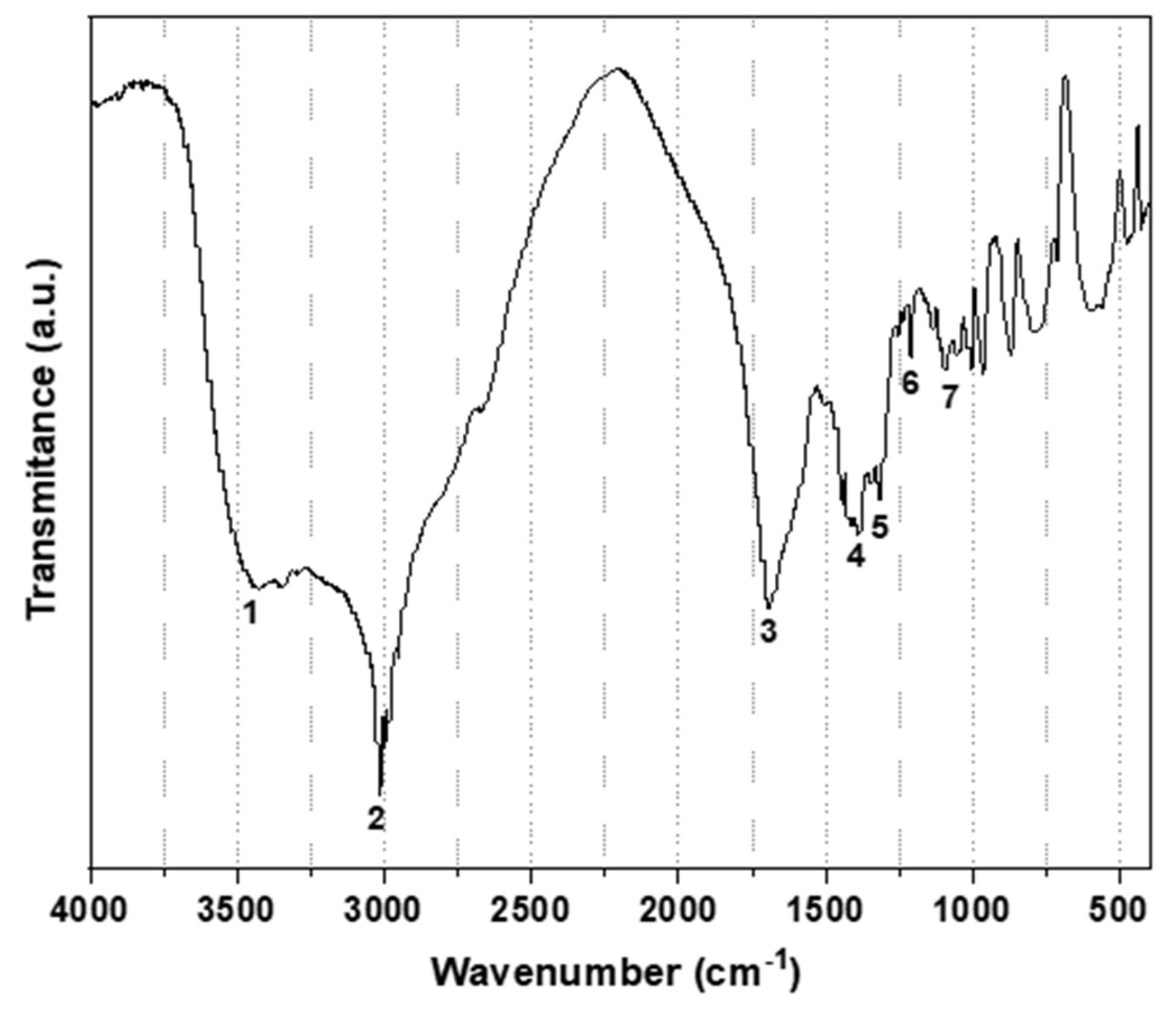
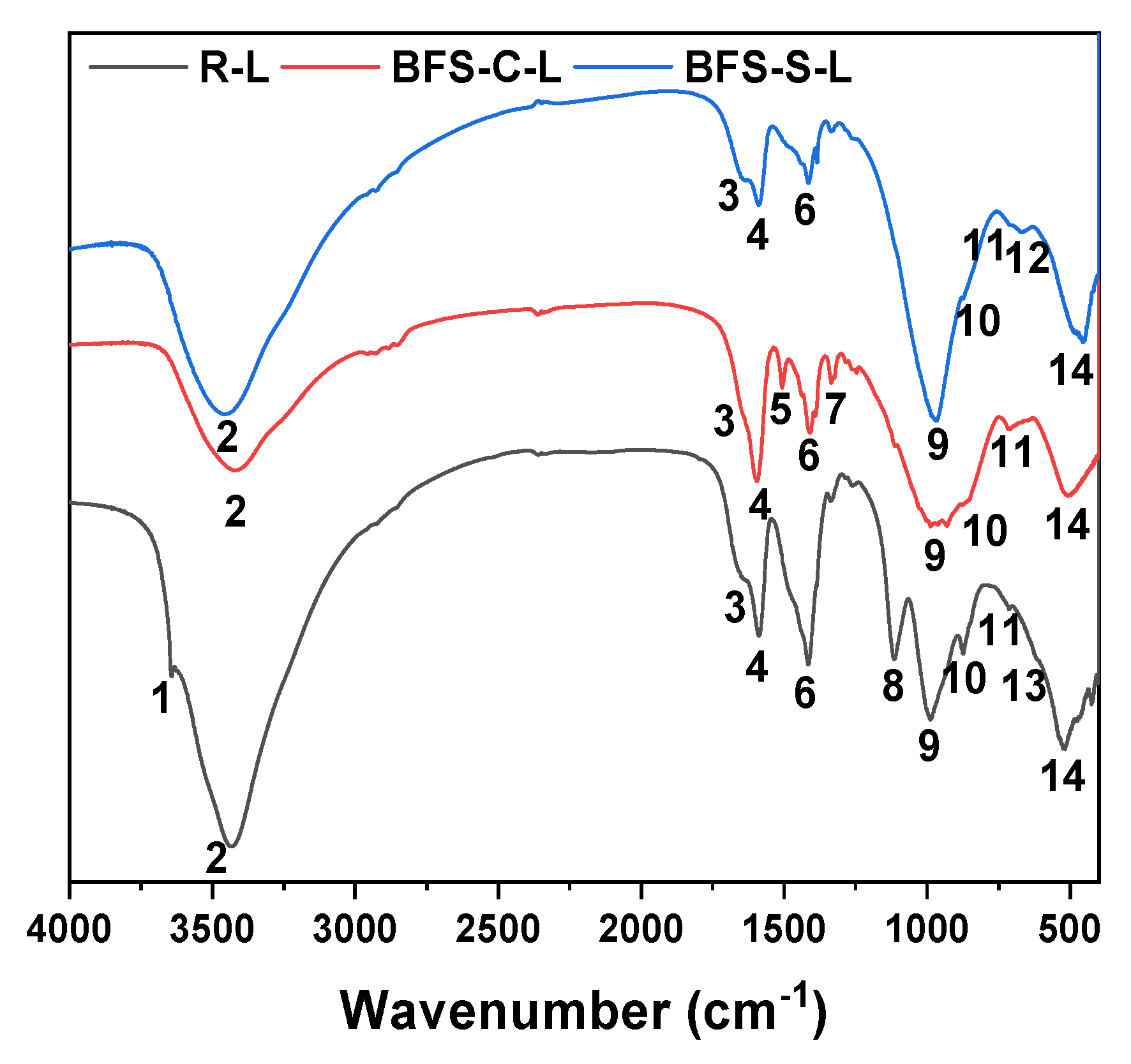
| Band | Assigned to | R-L | BFS-C-L | BFS-S-L |
|---|---|---|---|---|
| 1 | ν O-H, portlandite | 3644 | ||
| 2 | ν O-H, water | 3427 | 3424 | 3451 |
| 3 | ν C=O, EDTA | 1653 | 1642 | 1646 |
| 4 | δ H-O-H, water | 1589 | 1598 | 1590 |
| 5 | δ C-H, AEDT | 1509 | ||
| 6 | ν C-O, carbonate | 1417 | 1417 | 1419 |
| 7 | ν C-O-O−, citric acid and EDTA | 1335 | ||
| 8 | ν S-O, ettringite | 1111 | ||
| 9 | ν Si-O, C-S-H gel | 988 | ||
| ν T-O (T = Si or Al), C-A-S-H gel | 961 | 971 | ||
| 10 | δout O-C-O, carbonate | 874 | 856 | 871 |
| 11 | δin O-C-O, carbonate | 714 | 718 | 718 |
| 12 | ν Al-O, C-A-S-H gel | 673 | ||
| 13 | ν Al-O, C-S-H gel | 619 | ||
| 14 | δ O-Si-O, C-S-H gel | 525 | ||
| δ O-Si-O, C-A-S-H gel | 511 | 453 |
Disclaimer/Publisher’s Note: The statements, opinions and data contained in all publications are solely those of the individual author(s) and contributor(s) and not of MDPI and/or the editor(s). MDPI and/or the editor(s) disclaim responsibility for any injury to people or property resulting from any ideas, methods, instructions or products referred to in the content. |
© 2025 by the authors. Licensee MDPI, Basel, Switzerland. This article is an open access article distributed under the terms and conditions of the Creative Commons Attribution (CC BY) license (https://creativecommons.org/licenses/by/4.0/).
Share and Cite
Criado, M.; Torres, E.; Hinojosa-Platero, J.; Pachón-Montaño, A. Decontamination-Sludge-Induced Corrosion of Steel in Simulated Pore Solutions and Alkali-Activated Slag Pastes. Corros. Mater. Degrad. 2025, 6, 8. https://doi.org/10.3390/cmd6010008
Criado M, Torres E, Hinojosa-Platero J, Pachón-Montaño A. Decontamination-Sludge-Induced Corrosion of Steel in Simulated Pore Solutions and Alkali-Activated Slag Pastes. Corrosion and Materials Degradation. 2025; 6(1):8. https://doi.org/10.3390/cmd6010008
Chicago/Turabian StyleCriado, María, Elena Torres, Jaime Hinojosa-Platero, and Alicia Pachón-Montaño. 2025. "Decontamination-Sludge-Induced Corrosion of Steel in Simulated Pore Solutions and Alkali-Activated Slag Pastes" Corrosion and Materials Degradation 6, no. 1: 8. https://doi.org/10.3390/cmd6010008
APA StyleCriado, M., Torres, E., Hinojosa-Platero, J., & Pachón-Montaño, A. (2025). Decontamination-Sludge-Induced Corrosion of Steel in Simulated Pore Solutions and Alkali-Activated Slag Pastes. Corrosion and Materials Degradation, 6(1), 8. https://doi.org/10.3390/cmd6010008