Article

Assessment of Soil Degradation by Erosion in a Small Catchment in the Black Soil Region of Northeast China


College of Resources and Environment, Huazhong Agricultural University, Wuhan 430070, China
*
Author to whom correspondence should be addressed.
Soil Syst. 2026, 10(2), 32; https://doi.org/10.3390/soilsystems10020032
Submission received: 26 November 2025 / Revised: 12 February 2026 / Accepted: 16 February 2026 / Published: 19 February 2026
(This article belongs to the Topic Soil Quality: Monitoring Attributes and Productivity)

Abstract

Soil erosion and deposition processes act as key drivers of soil resources distribution across landscapes, affecting soil quality and functionality. However, the impacts of long-term soil erosion on soil quality and degradation in the black soil region remain unclear. Here, we assessed soil quality and degradation as a consequence of historical erosion and soil redistribution in an agricultural catchment in Northeast China. Soil quality indices (SQI) were calculated using both linear and non-linear scoring function methods, along with soil indicator selection approaches, including Total Data Set (TDS) and Minimum Data Set (MDS). Soil degradation indices (SDI), resistance indices (SRI), and the change of SQI (CSQI) were computed and compared. The mean SDI for bulk density (BD) and sand was greater than 0. When BD and sand were excluded, the mean SDI and SRI for the 0–10 cm and 10–20 cm soil layers were −29.8% and −21.9%, and 0.57 and 0.65, respectively. Surface soil (0–10 cm) organic matter (SOM), available potassium (AK), structure stability index (SSI), and total nitrogen (TN) in eroding sites, as well as AK, SSI, SOM, TN, and available phosphorus (AP) in depositional sites, are particularly sensitive to long-term erosion. Field capacity, sand, AK, and SSI were selected to develop the SQI, with the non-linear method utilizing MDS outperforming other SQIs. Most SQIs in eroding sites were lower than those in depositional sites and increased with higher soil redistribution rates. The assessment of soil degradation using SDI, SRI, and CSQI revealed that long-term erosion markedly diminished soil quality, although deposition somewhat alleviated this impact. The lower SQI in the 10–20 cm compared to the 0–10 cm soil layer was primarily attributed to decreased FC, while long-term erosion degraded soil quality by negatively affecting AK and sand content. These findings enhance our comprehension of soil degradation caused by erosion in the Mollisol region of Northeast China.

1. Introduction

Soil is a non-renewable natural asset that is indispensable for food production, ecosystem services, environmental health, and socioeconomic growth. However, over one-third of soil resources worldwide are experiencing degradation due to unsustainable land management practices [1]. These practices deplete soil nutrients and increase soil erodibility, further accelerating soil degradation. Soil degradation negatively impacts soil functions, potentially hindering crop production, food security, and ecosystem services [2]. Consequently, more than 1500 million people globally are at risk of hunger owing to poor soil quality [3]. Therefore, maintaining and enhancing soil quality holds great significance for agricultural production and human well-being.
Soil quality denotes the capability of soil to operate within the boundaries of ecological systems, with the aim of sustaining biological productivity, safeguarding environmental quality, and enhancing plant and animal health [4]. Estimating soil quality is quite difficult because soil is more complex than air and water, consisting of solid, liquid, and gaseous phases. Soil quality is not measurable directly, but can be assessed through quantitative evaluations of soil physical, chemical, and biological properties [5]. Currently, various methods for soil quality assessment have been developed, including soil quality and test kits, fuzzy methods, grey correlation method, soil management assessment frameworks, and soil quality indices [6,7,8,9]. Among these, soil quality indices are the most commonly used way due to their flexibility and simplicity [10]. Generally, the assessment of soil quality index typically includes three key procedures: indicator selection, scoring transformation, and index integration. Common approaches for determining the minimum data set (MDS) include regression analysis, factor analysis, principal component analysis (PCA), and discriminant analysis, as well as various scoring functions. To date, soil quality evaluation frameworks have been widely and successfully applied across diverse ecosystems, including forestlands, coastal zones, wetlands, grasslands, and croplands.
Land use type and agricultural management regimes are closely associated with soil quality, since different management strategies can modify soil physical, chemical, and biological characteristics, potentially leading to soil degradation. Previous studies have indicated that conventional tillage often results in lower soil quality compared with reduced tillage or undisturbed soil conditions. Rainfed croplands generally exhibit inferior soil conditions relative to irrigated systems. Importantly, once natural soils are converted to cultivated land, they become highly vulnerable to degradation across multiple properties, often leading to irreversible reductions in soil quality. Intensive agricultural management has triggered severe soil erosion in many regions [11]. Moreover, erosion processes tend to be more intense in already degraded soils, creating a positive feedback loop that further reduces soil quality over time. For instance, soil physical properties including bulk density, porosity, and aggregate stability are commonly degraded by erosional processes [12]. As erosion intensifies and progressively impairs soil physical structure, the severity and rate of erosion tend to increase further [13]. Soil erosion is accompanied by the selective loss of clay particles and soil organic matter. Previous studies have documented that soil erosion in agricultural landscapes redistributes roughly 42 teragrams (Tg) of nitrogen annually, accompanied by annual fluxes of 2.1–3.9 Tg of organic phosphorus and 12.5–22.5 Tg of inorganic phosphorus [14]. Moreover, approximately 70–90% of eroded topsoil tends to accumulate within the same or neighboring topographical zones rather than being exported outside the source watershed [15]. During sediment deposition, soil organic carbon, total nitrogen, and total phosphorus are generally transported with sediment movement. Such lateral translocation of topsoil can alter the spatial redistribution of soil nutrients. Therefore, the interaction between erosion and deposition gives rise to marked spatial reallocation of soil components at the landscape scale, ultimately influencing soil quality and functional capacity [16,17,18].
The black soil region of Northeast China is one of major grain production base in our country. Unfortunately, the area has experienced significant soil erosion over the past few decades, particularly in agricultural lands, due to long-term intensive agricultural practices, improper management, and the combined effects of multiple erosive forces (wind, water, freezing, and thawing) [19,20]. Consequently, severe erosion not only resulted in soil redistribution but also contributed to soil degradation [21,22,23]. Several studies in this region have explored the impact of different land use, land use conversion, and cultivation on soil quality [24,25,26]. Most recently, serval studies have focused on the effect of erosion and deposition on soil characteristics, bacterial community dynamics, and soil quality on the slope [22,27,28]. However, few studies have examined the variation of soil quality in relation to soil erosion and deposition within the catchment or watershed.
Accordingly, the objectives of this study were to (i) develop soil quality indices (SQI) for assessing soil quality using two methods of indicator selection (TDS and MDS) and two scoring methods (linear and non-linear); (ii) evaluate the effects of erosion and deposition on the degradation of soil quality and soil quality indicators; and (iii) elucidate the influencing paths of erosion and deposition on soil quality.

2. Materials and Methods

2.1. Study Catchment

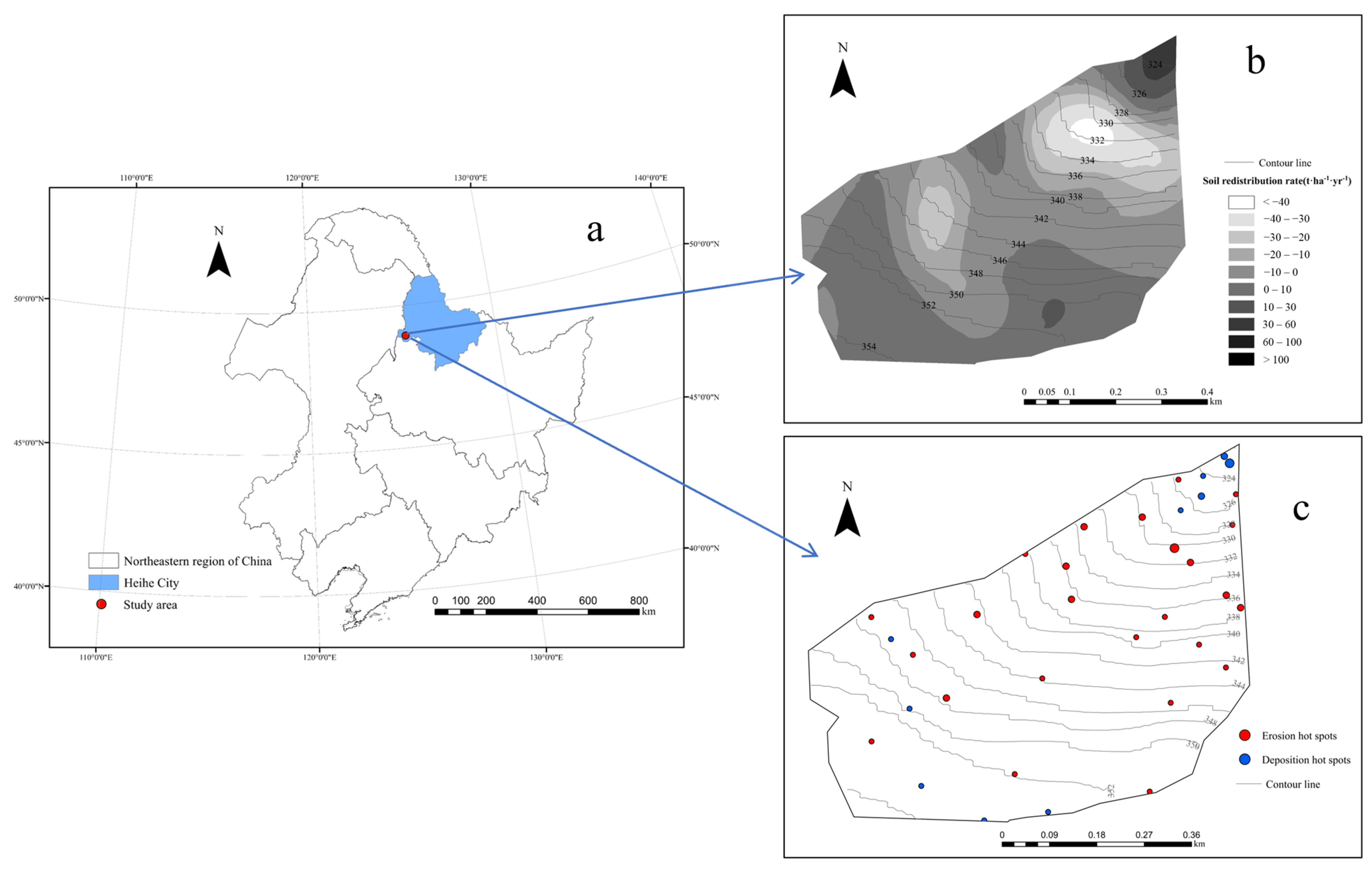
The Xianhehu catchment is located in Nenjiang Region of Heilongjiang Province, northeast China (125°11′38″~125°12′5″ E, 45°56′22″~45°56′45″ N; Figure 1a) and covers an area of 28.5 ha. The region exhibits a continental semihumid climate, characterized by a prolonged and cold winter. Average annual precipitation is 534 mm, while the temperatures in January and July stand at −20 °C and 21 °C, respectively [29]. The rainy season spans from May to October, while snowfall predominantly occurs between November and April. Catchment elevation varies from 320 to 360 m a.s.l. The catchment has a mean slope of 4.2%, with values varying between 0.4% and 8.4%.
Parent materials are quaternary lacustrine and fluvial sand beds or loess sediments, and soil is Luvic Phaeozem [30]. Historically, most areas of the study catchment were covered with scrubland, which has been converted to farmland since the 1950s. Currently, the dominant land use type is agricultural lands, with mainly maize (Zea mays L.) and soybean (Glycine max (Linn.) Merr.). Downslope tillage represents the primary tillage practice in the study area, which to some extent exacerbates water erosion processes.

2.2. Field Soil Collection and Analysis

Soil sampling was conducted in 2022, when maize and soybean were growing. According to the nuclide tracing results [31], disturbed and undisturbed soil samples were gathered at 0–10 cm and 10–20 cm soil depths across 34 sites where erosion and deposition were more intense (Figure 1c). Soil samples were also collected from forest sites with no erosion or deposition, which had remained undisturbed since at least 1950. Soil properties include soil pH, bulk density (BD), field capacity (FC), total soil porosity (TPO), soil texture, soil organic matter (SOM), total nitrogen (TN), available phosphorus (AP), and available potassium (AK). Soil properties were analyzed using standard laboratory methods (Table S1).
The soil structure stability index (SSI) also serves as an indicator of soil’s resistance to external disruptive forces, with its percentage value calculated as follows [32]:
S S I = S O M S I L + C L A × 100
where SIL, CLA and SOM are the content of sixlt, clay, and soil organic matter, respectively.

2.3. Soil Erosion and Deposition Assessment

We used the soil redistribution rate (SRR) to characterize soil erosion and deposition patterns. The SRR was determined using the 137Cs tracer method. It has the characteristics of decades-scale retrospective monitoring and no need for long-term field observation [31]. The SRR data are obtained from Fang et al. [31] and applied the Mass balance model 2 to transform 137Cs activity measurements into soil redistribution rates (t·ha−1·yr−1) [33].
For a site experiencing soil degradation, the Mass balance model 2 can be formulated as follows:
d A t d t = 1 Γ I t λ + P R d A t
where A(t) represents the total 137Cs inventory present per unit area (Bq·m−2), d indicates the accumulated mass depth that aligns with the typical plowing depth (kg·m−2), The variable R denotes the soil erosion rate (kg·m−2·yr−1), Γ represents the proportion of freshly deposited 137Cs that gets washed away by erosion before it can mix into the topsoil layer, while I(t) stands for the annual deposition rate of 137Cs at any given time t (Bq·m−2·yr−1), measured in becquerels per square meter per year., λ stands for the yearly depositional flux of 137Cs at time t (yr−1), and P serves as a correction factor accounting for variations in particle size.
With respect to depositional zones, the corresponding soil deposition rate is formulated as
R = A e x t 0 t C d ( t ) e λ t t d t
Aex denotes the surplus amount of 137Cs inventory (Bq·m−2), which is determined by subtracting the local direct fallout input Aref from the total measured inventory A(t), while Cd(t′) (Bq·kg−1) indicates the concentration of 137Cs found within the sediment deposits. Sites with SRR value “>0” were identified as depositional site, and SRR value “<0” were identified as eroding site. The SRR were classified into six erosion classes based on their magnitudes. The soil redistribution rate (SRR) was categorized into six grades with corresponding names: severe erosion (SRR < −20 t·ha−1·yr−1), moderate erosion (−20~−10 t·ha−1·yr−1), mild erosion (−10~0 t·ha−1·yr−1), mild deposition (0~10 t·ha−1·yr−1), moderate deposition (10~20 t·ha−1·yr−1), and severe deposition (SRR > 20 t·ha−1·yr−1).

2.4. Soil Degradation and Resistance Indices

We used soil degradation index (SDI) and resistance indices (SRI) to quantify the magnitude of degradation of soil indicators. SDI was obtained through the equation listed below [34]:
S D I = X a X b X b × 100 %
where Xa and Xb represent the measured average values of individual soil properties in disturbed agricultural land and undisturbed forestland, respectively. Mean positive and negative SDI values, categorized by soil property, served as land degradation indices in response to the impacts of land use change. In the calculation of SDI, we compared the average value of each soil property in disturbed cultivated lands with that of the same soil property in undisturbed forests.
SRI represents the response of soil properties to the disturbance. SRI was computed using the following equation [35] (Equation (5)):
S R I = 1 2 | D 0 | ( X b + | D 0 | )
D0 represents the difference between disturbed soil (Xa) following the completion of disturbance and the undisturbed reference soil (Xb). The Soil Resilience Index (SRI) ranges from −1 to +1, with lower values indicating more severe soil degradation.

2.5. Soil Quality Indices (SQI) Assessment

Drawing upon prior research [36,37], SQI was derived through a three-phase methodology [10,26,38]: (a) pinpointing appropriate metrics for the minimum data set (MDS); (b) scoring MDS indicators according to their response characteristics; and (c) synthesizing the individual metric scores to formulate a comprehensive soil quality index. A total of 13 soil indicators were adopted for the TDS in this study, and the MDS was further established via principal component analysis (PCA) and Pearson’s correlation analysis (PCC). The selected soil indicators were then normalized and scored using both linear and non-linear scoring functions.
We applied linear scoring functions (Equations (6) and (7)) to quantify “more is better” and “less is better” indicators, respectively, as follows:
L S = X X m a x
L S = X m i n X
where X represents a soil indicator’s measured value, and Xmax and Xmin stand for the maximum and minimum values.
A sigmoidal function (Equation (8)) was employed to carry out the non-linear scoring process, with X representing the measured indicator, Xm denoting the mean, and b standing in for the slope—set at −2.5 for scenarios where “more is better” and +2.5 for cases where “less is better”.
N L S = 1 1 + X X m b
Upon score determination, SQI were calculated through TDS and MDS approaches per Equation (9) [39]:
S Q I = i = 1 n W i × S i
where Si represents the indicator score derived from linear or non-linear curves; n represents the count of soil indicators in the TDS and MDS; and Wi is the weight of soil indicators obtained via PCA. Higher SQI values signify better soil quality and more outstanding performance of soil functions.
The sensitivity index (SI) was utilized to estimate the performance of SQI, as shown in Equation (10):
S I = S Q I m a x S Q I m i n
where SI represents the sensitivity index for SQI, and SQImax and SQImin are the maximum and minimum values of each individual SQI scenario, respectively.
We used an index termed the change of SQI (CSQI) [34] to estimate the degree of soil quality degradation, which is computed via Equation (11):
C S Q I = S Q I a S Q I b S Q I a × 100 %
where SQIa and SQIb denote the measured average values of individual soil quality indices (SQI) in disturbed croplands and undisturbed forest sites, respectively.

2.6. Data Analysis

Statistical analyses encompassed one-way analysis, Pearson’s correlation analysis, and principal component analysis, all implemented with SPSS 19 (version 25.0 SPSS Inc: Armonk, NY, USA) [40]. The structural equation model was developed using “lavvan” package in R4.4.1 [41]. The fit of SEM was evaluated using the Chi-square test (χ2), p value, goodness of fit index (GFI), and comparative fit index (CFI).

3. Results

3.1. Effect of Erosion and Deposition on Soil Indicators

Soil erosion significantly reduced the contents of soil nutrients (e.g., SOM, TN, and AK), TPO, CP, Silt, and SSI. This demonstrated that soil erosion contributed to lower soil nutrients and soil physical properties in Mollisols, although deposition slightly alleviated such negative effects (Table 1). However, the impacts of erosion and deposition on soil BD and FC were negligible in the 0–10 cm layer. Soil sand contents across the 0–20 cm soil depth exhibited a trend opposite to that of other soil properties (e.g., SOM, TN, AK, Silt, Clay, and pH). As much, with the increase in soil redistribution rate (SRR), FC, TPO, CP, TN, Silt, and Clay content showed an upward trend in the 0–10 cm soil layer, whereas no obvious trend were observed for SOM, AP, AK, and SSI. These findings indicated that long-term soil erosion markedly influenced soil physical and chemical properties as well as their spatial variability.

3.2. SDI and SRI as Influenced by Soil Properties Under Erosion and Deposition

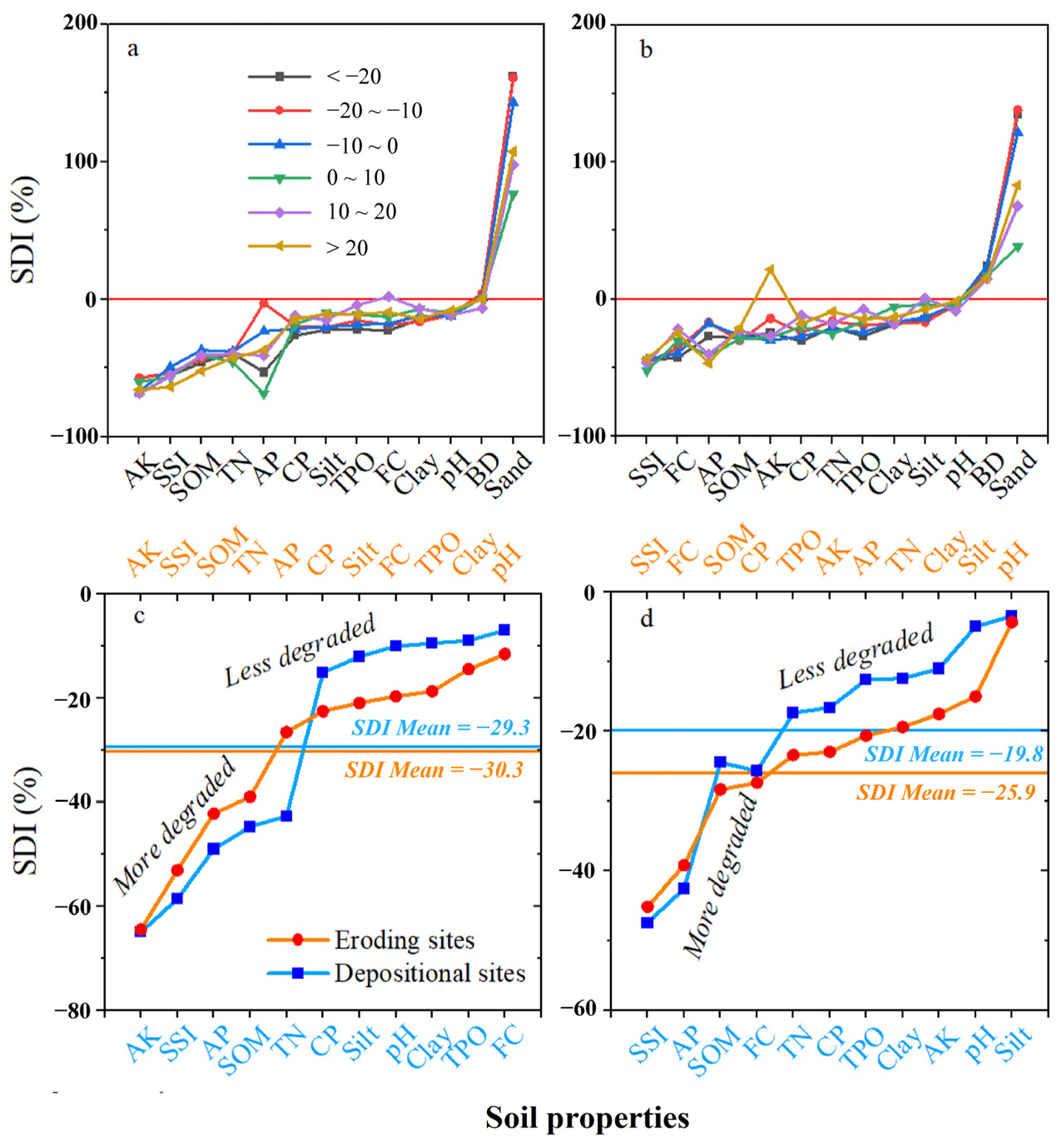
Compared with the SDI values of other soil properties, sand shows the strongest mobility, followed by BD. The SDIs for the BD and sand were both greater than 0 although the SDI values for BD were slightly lower than 0 under 10~20 t·ha−1·yr−1 and >20 t·ha−1·yr−1 (Figure 2a). Excluding BD and sand, SDIs in the 0–10 cm soil layer varied from −68.91% to −3.02% in eroding sites, while the SDI values ranged from −68.98% to 1.74% in depositional sites. A similar trend was observed in the 10–20 cm soil layer (Figure 2b). For 0–10 cm soil layer, the SDIs were less than the mean SDI value for AK, SSI, SOM, and TN in the eroding site and AK, SSI, AP, SOM, and TN in the depositional sites (Figure 2c,d). Notably, SDIs of sand in the 0–10 cm soil layer ranged from 76.45% to 107.41% in eroding sites and from 143.23% to 162.03% in depositional sites.
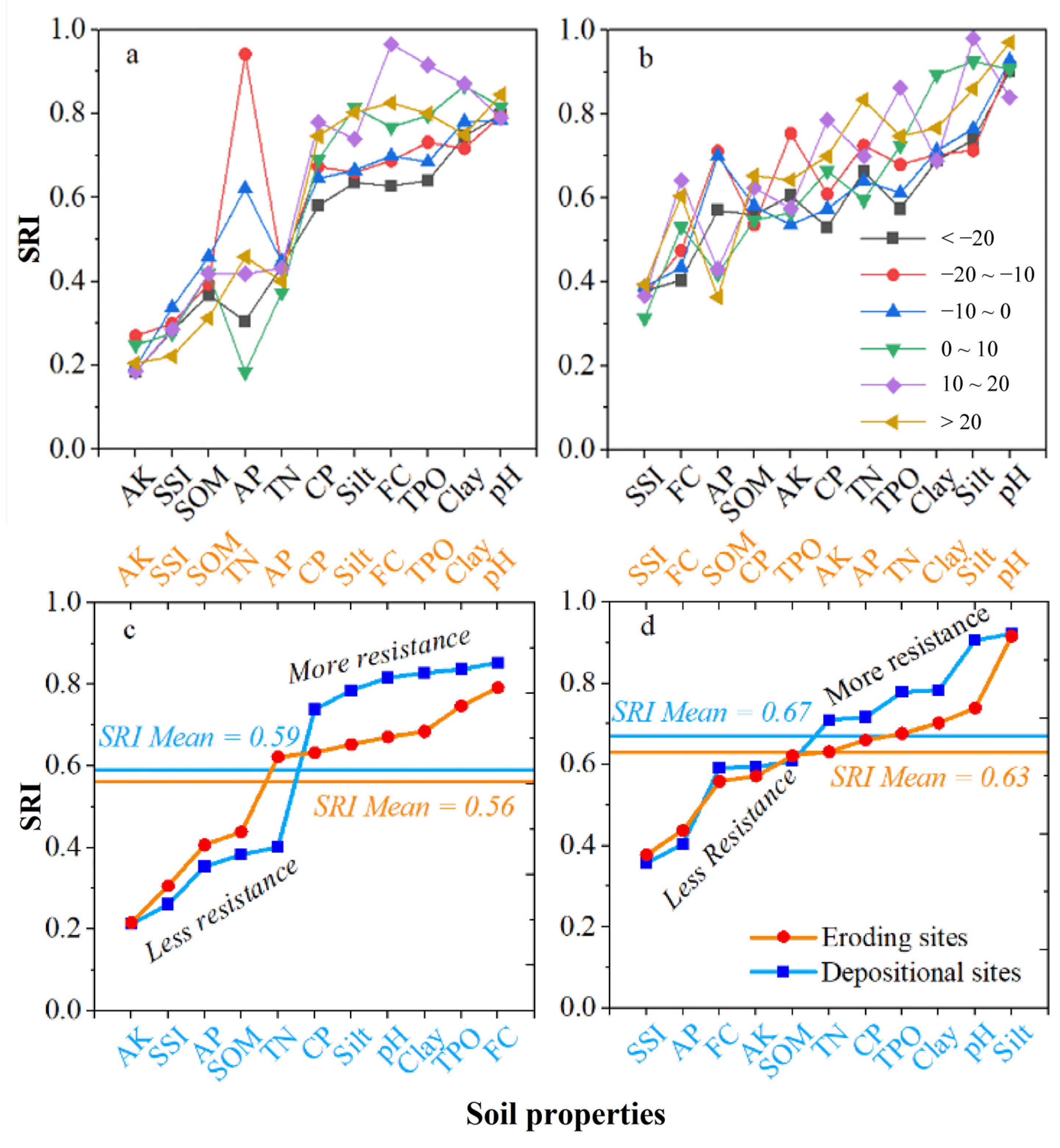
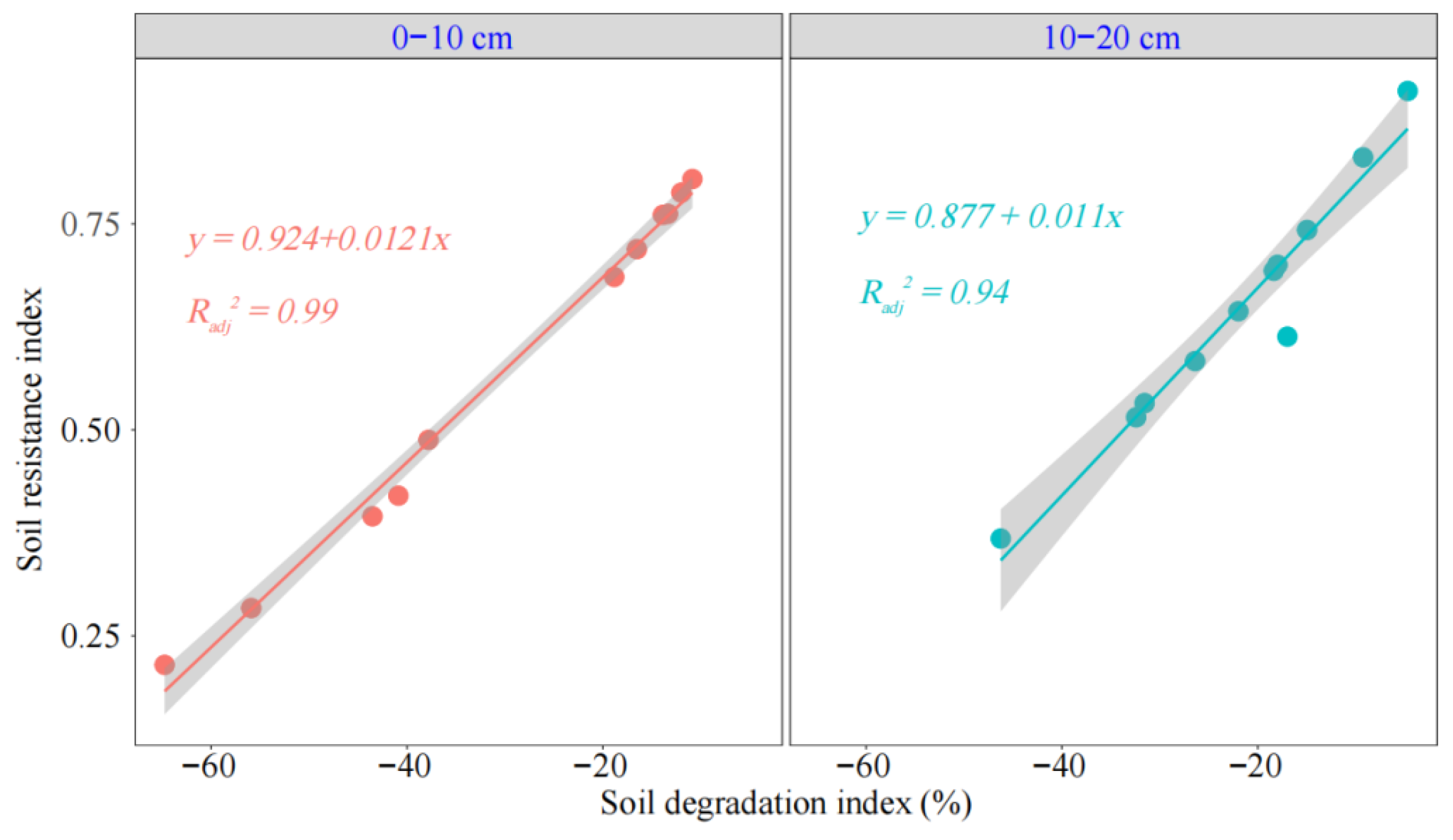
Likewise, the SRIs in the 0–10 cm soil layer ranged from 0.18 to 0.96 and from 0.31 to 0.98 in the 10–20 cm soil layer when BD and sand were excluded (Figure 3a,b). The lowest SRI was observed for AK, SSI, SOM, and TN in eroding sites, whereas the lowest SRI in depositional sites was AK, SSI, AP, SOM, and TN in the 0–10 cm soil layer (Figure 3c). For 10–20 cm soil layer, the lowest SRI was SSI, FC, SOM, CP in eroding sites and SDI, AP, SOM and FC in depositional sites (Figure 3d). The SRI was significantly correlated with the SDI in the 0–10 cm (Radj2 = 0.99, p < 0.001) and 10–20 cm (Radj2 = 0.94, p < 0.001) soil layer, suggesting that the tools could equally be employed for measuring the degradation of soil quality (Figure 4).

3.3. Soil Quality Assessment by PCA

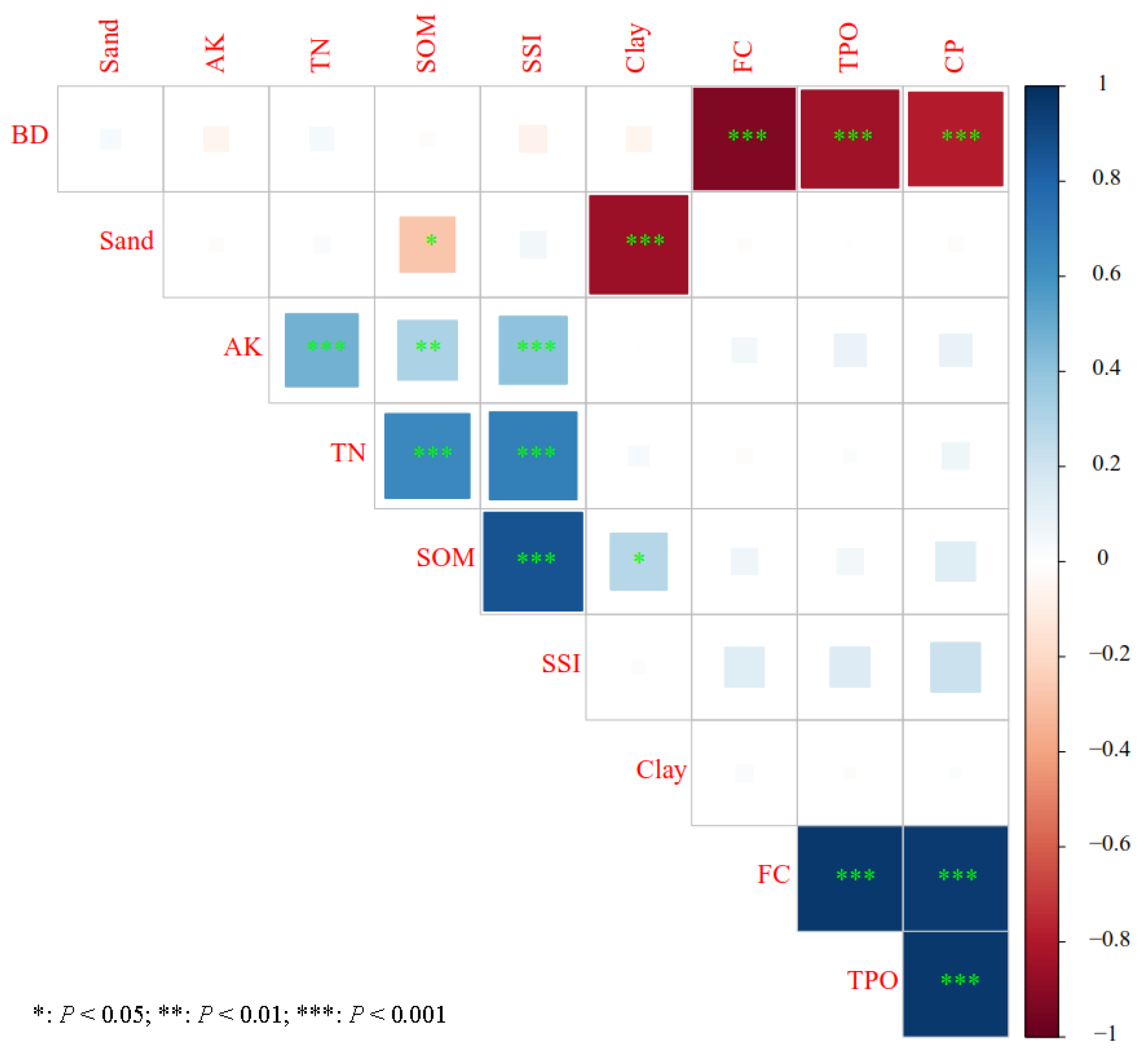
PCA was performed to select the minimum data set (MDS). According to Table 2, four principal components with eigenvalue > 1 explained about 87.176% of soil variability. The first principal component (PC1) explained 32.013% of the total variance, with the remaining three components contributing 25.624%, 21.067%, and 8.472% sequentially. BD, FC, TPO and CP possessed relatively higher loading values in PC1, but only FC was retained according to the significant correlations between these four indicators (Figure 5). Similarly, SSI were selected as the key indicator to represent PC3 based on significant correlations. Given the significant correlations between sand and clay content, and SOM and SSI, only sand content was selected as the indicator for PC2. Meanwhile, AK possessed the highest loading value and thus was retained in PC4 (Figure 5). Overall, FC, sand, SSI, and AK were selected as the key indicators for the MDS, which is used to characterize soil quality changes in the study catchment, and their weight values were ranked as Sand (0.266) and FC (0.266) (equal weight) > SSI (0.242) > AK (0.226).
All soil indicators were transformed using the linear and non-linear scoring functions (Table 3). For the TDS, SQI values ranged from 0.496 up to 0.685 for SQI-L, and from 0.381 to 0.572 for SQI-NLT. When employing the MDS method, the SQI values were in the range of 0.369–0.545 for SQI-LM, and 0.368–0.579 for SQI-NLM.
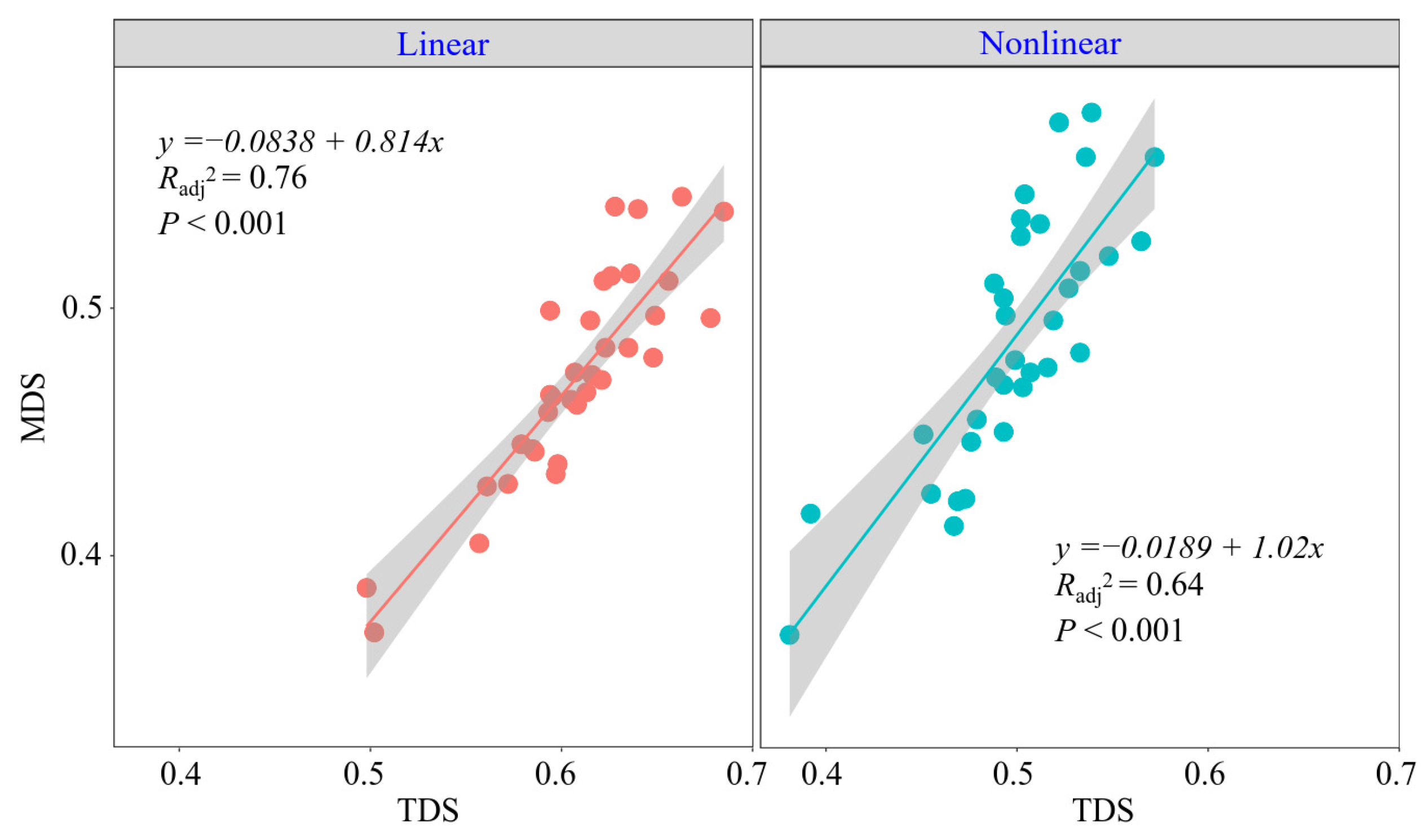
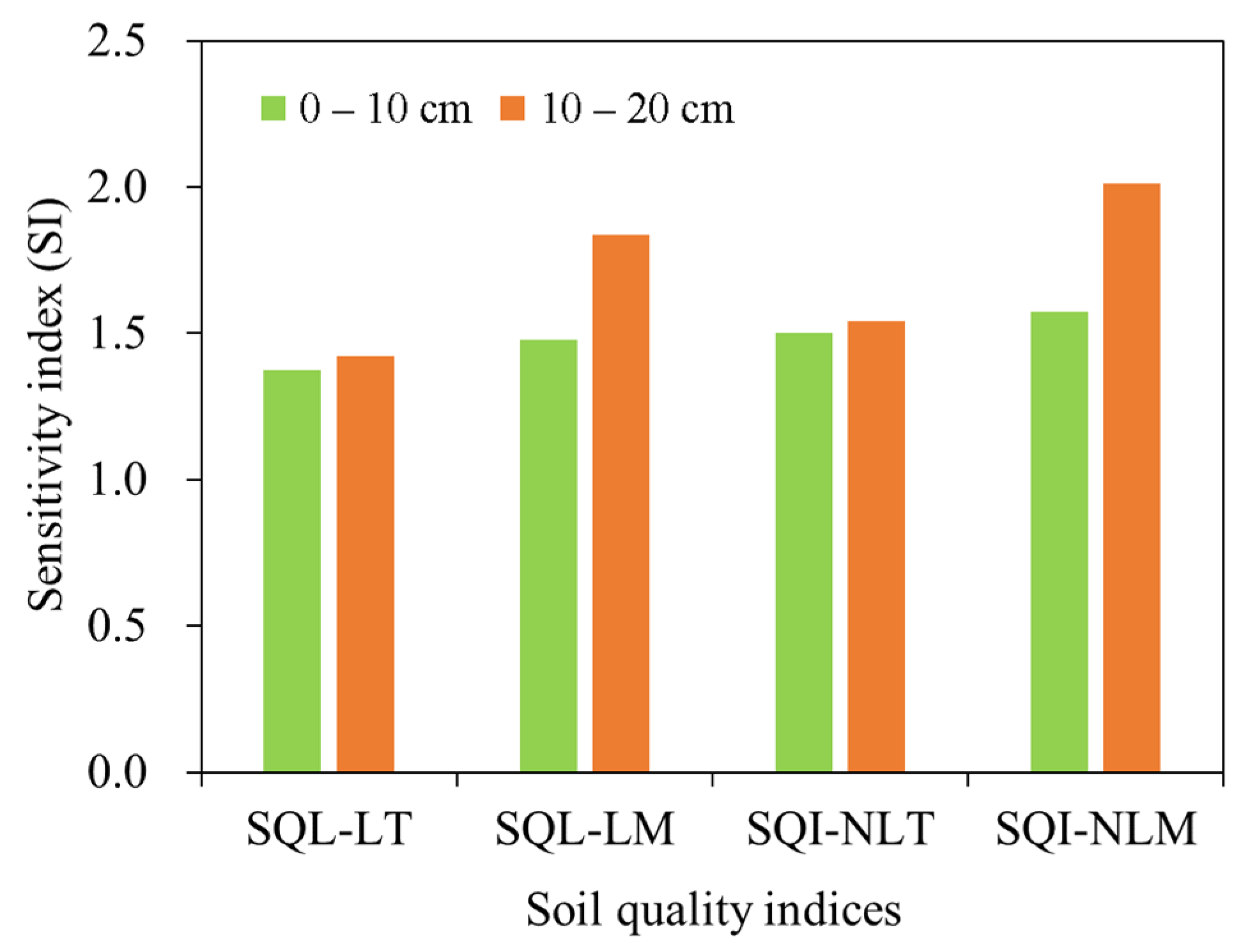
The results demonstrated that accurate quantification of SQI in the Mollisol region is achievable through the most interpretive indicator of this key soil indicator combination (MDS), explaining approximately 64~76% of the overall variation (Figure 6). Regarding four SQI scenarios, the levels of the sensitivity index (SI) associated with SQI-NLM (1.572 in 0–10 cm and 2.014 in 10–20 cm) were comparatively higher than those of other SQIs (Figure 7). Non-linear SQIs, particularly SQI-NLM, were more sensitive to environmental and management conditions than linear SQIs.

3.4. Impact of Erosion and Deposition on Soil Quality

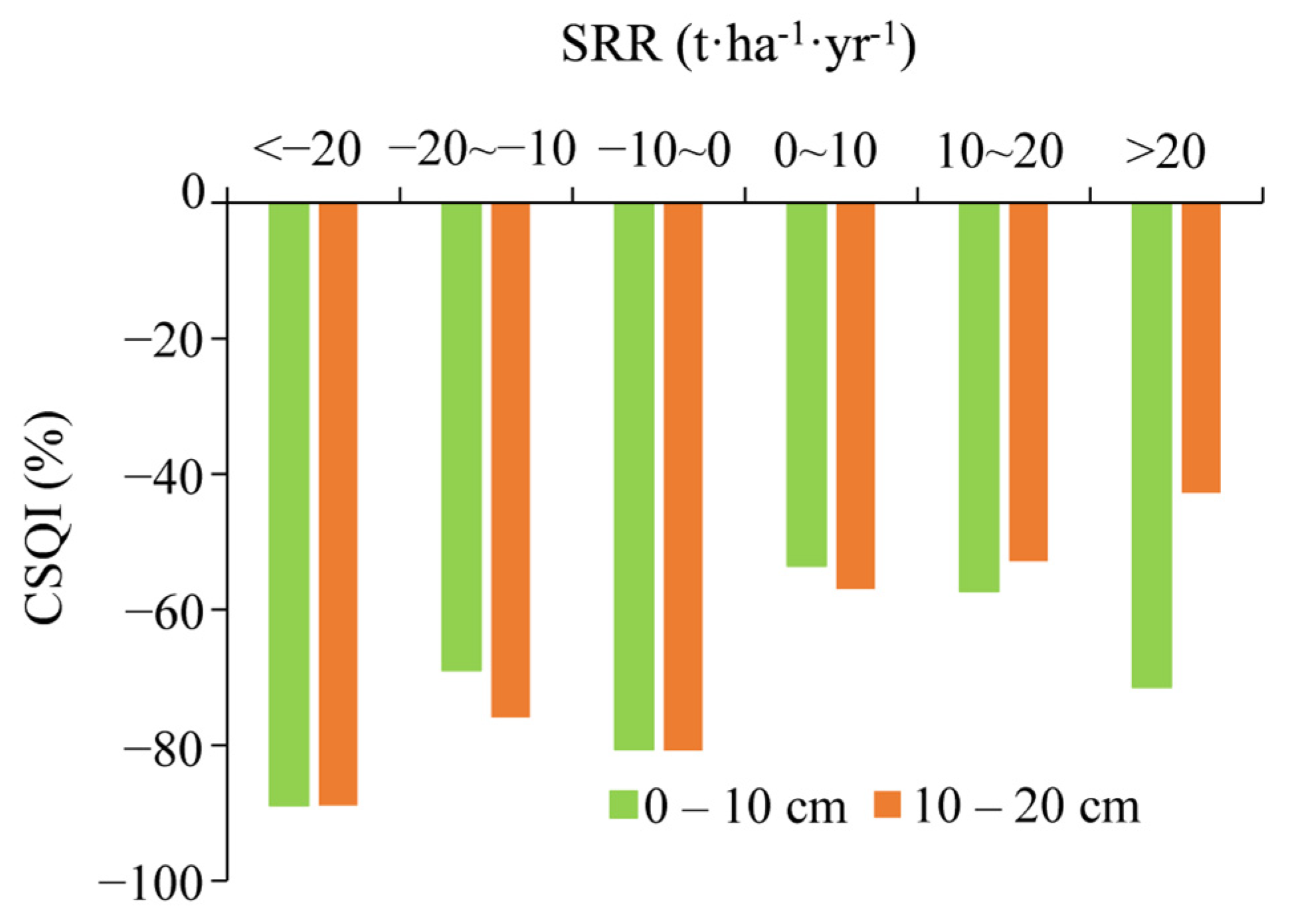
The four SQIs measured in intact forest areas were notably higher than those in erosional sites and deposition zones across the research catchment (Table 4). Within the 0–10 cm soil layer, the four SQIs across the study catchment exhibited a pattern of initial increase followed by a decrease as SRR gradually increased. Notably, soil quality indices (SQIs) in the range of −10~0 t·ha−1·yr−1 were slightly lower than those at −20~−10 t·ha−1·yr−1. A similar pattern was also detected between the 10~20 t·ha−1·yr−1 and >20 t·ha−1·yr−1 intervals. In the 10–20 cm soil layer, SQIs showed an increasing trend with rising soil redistribution rate (SRR). In addition, the composite soil quality index (CSQI) exhibited a distinct increasing trend along the SRR gradient, with the only exception being the 0–10 cm layer at SRR > 20 t·ha−1·yr−1 (Figure 8).
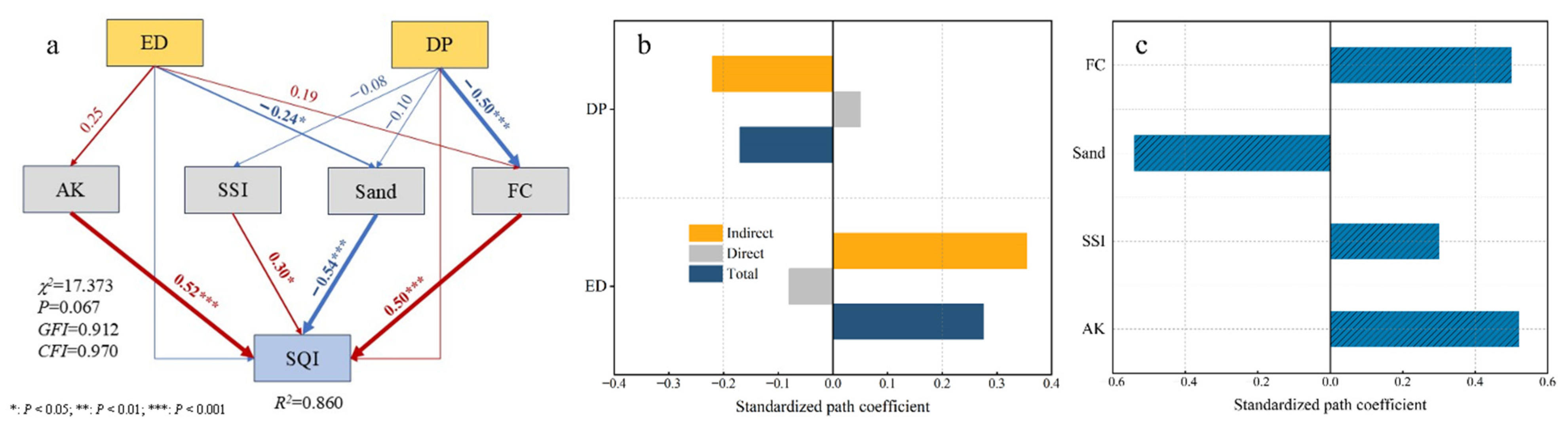
A structural equation model (SEM) was adopted to clarify the mechanisms by which erosional and depositional processes influenced soil quality. The influence of erosion and deposition on SQI was primarily mediated by indirect effects (Figure 9a). Both the total and indirect effects of soil depth on SQI were negative, with standardized path coefficients (SPCs) of −0.17 and −0.22, respectively (Figure 9b). Notably, erosion and deposition exerted a negative direct effect (SPC = −0.08), while their total effect was positive (SPC = 0.28)—a result largely attributed to the indirect effect (SPC = 0.36). Specifically, soil depth indirectly influenced SQI by negatively affecting field capacity (FC; SPC = −0.50), whereas erosion and deposition impacted SQI indirectly through their negative effect on sand content (SPC = −0.24). Among the key indicators, FC, soil structure stability index (SSI), and available potassium (AK) exhibited positive effects on SQI, while sand content had a negative impact with an SPC of −0.54 (Figure 9c).

4. Discussion

4.1. Degradation of Soil Properties Induced by Soil Erosion

In the study catchment, most of soil nutrients levels and SOM were found to be the highest in the forest sites and lowest in the eroding sites (Table 1). A similar trend was observed for FC, TPO, clay and silt content, whereas relatively higher BD and higher sand content were observed in eroding and depositional sites. Notably, we observed that mean SDIs for BD and sand were higher than 0, whereas the SDI for other soil properties were lower than 0 (Figure 2). The higher sand content may be attributed to sediment selectivity. Soil erosion caused light and fine soil particles with low density to migrate from the eroding sites, while coarse particles are usually retained in situ [42]. Related studies have confirmed that soil clay particles and reactive organic carbon are preferentially transported via hydraulic erosion [43]. In this study, erosion induced losses of light and fine particles and SOM can be partly responsible for high BD in the eroding sites [44].
For the 0–10 cm soil layer, AK, SSI, SOM, and TN in eroding sites and AK, SSI, AP, SOM, and TN in depositional sites stated the lowest (i.e., more degraded) SDI values below the mean, suggesting these soil indicators were the most deteriorated properties (Figure 2). Likewise, the SRI values for these soil indicators had the lowest values (Figure 3). Zahedifar (2023) reported negative SDI values for cropland soils, with SDI of SSI and SOM was below the mean, supporting our results [8]. These results indicated that long-term erosion has significantly contributed to topsoil soil degradation. Previous studies have demonstrated that soil erosion strips away vital nutrients through direct transportation, and simultaneously depleting SOM through both physical removal and the accelerated breakdown of remaining organic materials [13,25,45,46,47,48]. In addition, soil acidification caused by long-term erosion and cultivation can result in the leaching of base caution and decreased levels of soil nutrients [49]. Contrary to our expectation, lower SDIs of SSI, SOM, TN and AP in depositional sites than those in eroding sites in the 0–10 cm soil layer, indicating these soil indicators were more degraded in depositional sites (Figure 2). This phenomenon can be attributed to lower TN and AP at soil redistribution rates of 0~10 t·ha−1·yr−1 and SOM at SRR of 20 t·ha−1·yr−1. It could also be partially explained by field survey, indicating that some eroded soil particles flowed out of the catchment, despite a portion being deposited at the catchment outlet [31].

4.2. Effect of Erosion and Deposition and Soil Quality Degradation

Four indicators were selected for the MDS to assess soil quality and degradation in the black soil region of Northeast China (Table 3). This indicated that these indicators played an important role in assessing soil quality in the study area. Previous studies have also identified these indicators as suitable for capturing the dynamics of soil quality [5,24,38,50,51,52]. SSI is an important indicator of soil quality due to the role of soil structure and stability in maintaining soil fertility, water infiltration and resistance to erosion. SOM, a key indicator of soil fertility and crop productivity, was widely recognized and frequently selected in the MDS for assessing soil quality [53].
In the present study, given that SSI calculated from SOM and soil texture (clay and silt), SOM was not maintained in MDS due to its significant correlation with SSI (Figure 5). Soil sand content directly affects soil fertility and soil quality [54,55]. Here, SDIs for sand were greater than 0, indicating severe soil degradation in the study catchment. The result aligns with Liu et al. (2024), who identified sand as one of the most representative indicators of soil quality in the black soil region [24]. Other studies have also suggested that soil sand content is a crucial physical indicator for assessing soil quality [27,56].
The soil in forest sites exhibited greater water retention at the field capacity (FC). Higher BD and sand content and lower SOM could be factors in lower FC availability in eroding and depositional sites [38]. On the other hand, erosion and deposition induced soil loss in eroding sites and soil accumulation in depositional sites, altering the distribution of soil depth and soil particle composition in deposition area. This could alter soil pore characteristics and field capacity. Potassium is the third significant essential macronutrient for plant productivity [57]. Our studies confirmed the results of Zhu et al. (2024) in the hilly region of southern Jiangsu, which emphasized soil AK was a critical factor to consider in the evaluation of soil quality [52].
Soil erosion is a major threat to soil quality degradation [58]. Several studies have documented the effects of soil erosion on soil quality and its degradation, but limited research has focused specifically on how erosion and deposition affect soil quality in the catchment. Our study revealed that long-term erosion has led to serious soil quality deterioration in agricultural land, while deposition somewhat alleviated these negative impacts (Table 4 and Figure 8). Specifically, the lowest CSQI in the 0–10 cm soil layer under SRR less than −20 t·ha−1·yr−1, whereas the highest CSQI were obtained in the 10–20 cm soil layer under SRR greater than 20 t·ha−1·yr−1. Notably, lower CSQI in the 0–10 cm was observed under SRR greater than 20 t·ha−1·yr−1 compared to those under SRR of 0~10 and 10~20 t·ha−1·yr−1. As a result, the correlation between SRR and SQI was weak, despite the mean CSQI in depositional sites being higher than in eroding sites. Fang et al. (2024) stated that slope soil quality was significantly affected by soil erosion in the black soil region of Northeast China [27]. The discrepancy may be partly attributed to variations in slope length, shape, and gradient. In addition, field surveys indicated that while sediment deposition generally occurs at the catchment outlet, some eroded sediments flowed out of the catchment (Figure 1), further complicating the correlation between SRR and SQI in the area.
Furthermore, the study catchment experienced soil quality degradation characterized by reductions in FC, SSI, and AK, coupled with an increase in sand content. The SEM further additionally indicated that the degradation of soil quality in Mollisols was primarily driven by long-term erosion, which indirectly influenced key soil quality indicators such as FC, SSI, AK, and sand content. As previously discussed, erosion and deposition induced soil loss in eroding areas soil accumulation in depositional areas. This dynamic altered the distribution of soil depth, soil particle size, and the contents of SOM and nutrients in both eroding and deposition areas, ultimately impacting soil quality (Figure 9). Interestingly, FC, SSI and sand are soil physical properties, indicating that these indicators are particularly sensitive to the influence of agricultural soil erosion under long-term cultivation. Unfortunately, the degradation of soil physical properties is relatively difficult to restore. Similar results haves been reported in Hailun city, Northeast China. Consequently, if current practices remain unchanged, soil quality is likely to continue to decline over time.

4.3. Implications and Limitations

Agricultural land is the predominant land use in black soil region of Northeast China. In this study, the SDI and SRI were applied to quantify the degradation of soil quality indicators, while also employing a composite SQI and CSQI to measure overall soil quality and its decline. Furthermore, this study quantified the responses of soil quality and its degradation to erosion and deposition processes. Long-term soil erosion has a negative impact on key soil quality indicators (FC, sand, AK, and SSI), leading to overall soil quality degradation. In contrast, deposition can alleviate such negative effects to a certain extent. Moreover, AK, SSI and sand in the 0–10 cm layer and FC, SSI, as well as sand in the 10–20 cm soil layer are more degraded. These findings significantly advance understanding of Mollisol region soil degradation, offering critical scientific guidance, emphasizing the need for more attention to controlling the degradation of soil physical indicators induced by soil erosion under long-term cultivation.
Previous studies have identified that soil physical, chemical, and biological properties were key determinants of soil quality [59]. In this study, the lack of biological indicators incorporated into the SQI restricted our understanding of the pathways driving soil quality degradation. Further research should incorporate a broader range of biological indicators to enhance the applicability of the results. The relatively small size of the catchment led to the deposition of some eroded sediments within the catchment, while a portion has been transported away. This phenomenon indicated that soil quality in depositional sites could be underestimated when evaluated at large regional scale. Within large regions, variables such as topography, land use type and management practices can vary greatly across the black soil region [24,60]. Furthermore, gully erosion has escalated dramatically, increasing from approximately 6853 and 92,899 hm2 from 1950 to 2013, thereby reducing arable land and posing a threat to food security. To better understand SQI variability in the black soil region, future studies should consider the impacts of land use, topography, shelterbelts, and gully erosion, as well as their interactive effects. This approach will not only illuminate the challenges posed by climate change but also contribute to the development of effective management strategies.

5. Conclusions

Soil quality was assessed using principal component analysis together with a scoring method in an agricultural catchment in the black soil region of Northeast China. The results indicated that sand content, SSI, AK, and SOM could be more sensitive to soil quality degradation in this region according to the SRI and SDI. Mean SDI values greater than 0 for sand and BD, alongside mean SDI values less than 0 for other soil indicators, highlighted a greater vulnerability to long-term erosion under cultivation. FC, sand content, AK, and SSI were selected to develop an integrated SQI based on PCA and PCC. The SQI derived from the non-linear method showed greater max/min ratios than the SQI calculated using linear method. Consequently, the SQI values obtained from the non-linear scoring method are more sensitive and effective. Meanwhile, SQI based on MDS can serve as a useful tool for the comprehensive evaluation of SQI under erosion conditions. The SQIs in depositional sites were obviously higher than those in eroding sites within this catchment. SEM revealed that erosion and deposition markedly affected the degradation of soil quality by increasing the proportion of sand and decreasing AK and FC within the catchment. This study enhances our understanding of soil quality degradation, which is crucial for maintaining agricultural sustainability in the Mollisol region of Northeast China.

Supplementary Materials

The following supporting information can be downloaded at: https://www.mdpi.com/article/10.3390/soilsystems10020032/s1, Table S1: Methods used in laboratory analyzes for selected indicators [61,62].

Author Contributions

Conceptualization, F.L.; methodology, H.Z. and Z.G.; formal analysis, J.Z.; investigation, H.Z. and J.Z.; data curation, H.Z.; writing—original draft preparation, F.L. and H.Z.; writing—review and editing, F.L.; funding acquisition, Z.G. All authors have read and agreed to the published version of the manuscript.

Funding

This work is financially supported by the National Key Research and Development Program of China (2021YFD150073).

Data Availability Statement

The original contributions presented in this study are included in the article. Further inquiries can be directed to the corresponding author.

Acknowledgments

We thank Haiyan Fang from Institute of Geographic Sciences and Natural Resources Research, Chinese Academy of Sciences for the cooperation and assistance in the field sampling. As much, we are grateful to Jiusan Soil and Water Conservation station of Beijing Normal University for providing living support.

Conflicts of Interest

The authors declare no conflicts of interest.

Abbreviations

The following abbreviations are used in this manuscript:
SQIsoil quality indices
TDSTotal Data Set
MDSMinimum Data Set
PCAPrincipal Component Analysis
PCCPearson’s correlation analysis
CVcoefficient of variation
BDbulk density
FCfield capacity
TPOtotal soil porosity
CPcapillary porosity
SOMsoil organic matter
TNtotal nitrogen
APavailable phosphorus
AKavailable potassium
SSIsoil structure stability index
SRRsoil redistribution rate
SDIsoil degradation indices
SRIsoil resistance indices
SIsensitivity index
CSQIthe change of SQI
SEMstructural equation model

References

  1. Wang, J.; Zhao, W.W.; Wang, G.; Yang, S.Q.; Pereira, P. Effects of long-term afforestation and natural grassland recovery on soil properties and quality in Loess Plateau (China). Sci. Total Environ. 2021, 770, 144833. [Google Scholar] [CrossRef]
  2. Amundson, R.; Berhe, A.A.; Hopmans, J.W.; Olson, C.; Sztein, A.E.; Sparks, D.L. Soil and human security in the 21st century. Science 2015, 348, 1261071. [Google Scholar] [CrossRef]
  3. Vasu, D.; Tiwary, P.; Chandran, P.; Singh, S.K. Soil Quality for Sustainable Agriculture. In Nutrient Dynamic for Sustainable Crop Production; Meena, R.S., Ed.; Springer: Singapore, 2020; pp. 41–66. [Google Scholar]
  4. Karlen, D.L.; Ditzler, C.A.; Andrews, S.S. Soil quality: Why and how? Geoderma 2003, 114, 145–156. [Google Scholar] [CrossRef]
  5. Shao, G.D.; Ai, J.J.; Sun, Q.W.; Hou, L.Y.; Dong, Y.F. Soil quality assessment under different forest types in the Mount Tai, central Eastern China. Ecol. Indic. 2020, 115, 106439. [Google Scholar] [CrossRef]
  6. Ditzler, C.A.; Tugel, A.J. Soil quality field tools: Experiences of USDA-NRCS Soil Quality Institute. Agron. J. 2002, 94, 33–38. [Google Scholar] [CrossRef]
  7. Jin, H.F.; Shi, D.M.; Lou, Y.B.; Zhang, J.L.; Ye, Q.; Jiang, N. Evaluation of the quality of cultivated-layer soil based on different degrees of erosion in sloping farmland with purple soil in China. Catena 2021, 198, 105048. [Google Scholar] [CrossRef]
  8. Zahedifar, M. Assessing alteration of soil quality, degradation, and resistance indices under different land uses through network and factor analysis. Catena 2023, 222, 106807. [Google Scholar] [CrossRef]
  9. Zhang, Z.Y.; Ai, N.; Liu, G.Q.; Liu, C.H.; Qiang, F.F. Soil quality evaluation of various microtopography types at different restoration modes in the loess area of Northern Shaanxi. Catena 2021, 207, 105633. [Google Scholar] [CrossRef]
  10. Andrews, S.S.; Karlen, D.L.; Mitchell, J.P. A comparison of soil quality indexing methods for vegetable production systems in Northern California. Agric. Ecosyst. Environ. 2002, 90, 25–45. [Google Scholar] [CrossRef]
  11. Lal, R. Soil degradation by erosion. Land Degrad. Dev. 2001, 12, 519–539. [Google Scholar] [CrossRef]
  12. Qiu, L.P.; Zhang, Q.; Zhu, H.S.; Reich, P.B.; Banerjee, S.; van der Heijden, M.G.A.; Sadowsky, M.J.; Ishii, S.; Jia, X.X.; Shao, M.G.; et al. Erosion reduces soil microbial diversity, network complexity and multifunctionality. Isme J. 2021, 15, 2474–2489. [Google Scholar] [CrossRef] [PubMed]
  13. Wang, Z.; Pan, S.L.; Lv, J.F.; Peng, Y.M.; Shi, J.; Wang, X. Erosion and deposition controlling redistribution and biodegradation of nitrogen fractions along a Mollisol agricultural landscape. J. Soils Sediments 2023, 24, 86–97. [Google Scholar] [CrossRef]
  14. Quinton, J.N.; Govers, G.; Van Oost, K.; Bardgett, R.D. The impact of agricultural soil erosion on biogeochemical cycling. Nat. Geosci. 2010, 3, 311–314. [Google Scholar] [CrossRef]
  15. Berhe, A.A.; Barnes, R.T.; Six, J.; Marin-Spiotta, E. Role of Soil Erosion in Biogeochemical Cycling of Essential Elements: Carbon, Nitrogen, and Phosphorus. Annu. Rev. Earth Planet. Sci. 2018, 46, 521–548. [Google Scholar] [CrossRef]
  16. An, J.; Zheng, F.L.; Wang, B. Using 137Cs technique to investigate the spatial distribution of erosion and deposition regimes for a small catchment in the black soil region, Northeast China. Catena 2014, 123, 243–251. [Google Scholar] [CrossRef]
  17. Doetterl, S.; Berhe, A.A.; Nadeu, E.; Wang, Z.G.; Sommer, M.; Fiener, P. Erosion, deposition and soil carbon: A review of process-level controls, experimental tools and models to address C cycling in dynamic landscapes. Earth-Sci. Rev. 2016, 154, 102–122. [Google Scholar] [CrossRef]
  18. Xiao, H.B.; Li, Z.W.; Chang, X.F.; Huang, B.; Nie, X.D.; Liu, C.; Liu, L.; Wang, D.Y.; Jiang, J.Y. The mineralization and sequestration of organic carbon in relation to agricultural soil erosion. Geoderma 2018, 329, 73–81. [Google Scholar] [CrossRef]
  19. Chen, S.Q.; Zhang, G.H.; Zhu, P.Z.; Wang, C.S.; Wan, Y.Q. Impact of slope position on soil erodibility indicators in rolling hill regions of northeast China. Catena 2022, 217, 106475. [Google Scholar] [CrossRef]
  20. Liu, C.; Liu, G.; Dan, C.X.; Shen, E.S.; Li, H.R.; Zhang, Q.; Guo, Z.; Zhang, Y. Variability in mollic epipedon thickness in response to soil erosion-deposition rates along slopes in Northeast China. Soil Tillage Res. 2023, 227, 105616. [Google Scholar] [CrossRef]
  21. Kong, W.B.; Su, F.Y.; Zhang, Q.; Ishii, S.; Sadowsky, M.J.; Banerjee, S.; Shao, M.G.; Qiu, L.P.; Wei, X.R. Erosion and deposition divergently affect the structure of soil bacterial communities and functionality. Catena 2022, 209, 105805. [Google Scholar] [CrossRef]
  22. Lv, J.F.; Shi, J.; Wang, Z.; Peng, Y.M.; Wang, X. Effects of erosion and deposition on the extent and characteristics of organic carbon associated with soil minerals in Mollisol landscape. Catena 2023, 228, 107190. [Google Scholar] [CrossRef]
  23. Zhao, H.P.; Zhang, F.; Yu, Z.Y.; Li, J. Spatiotemporal variation in soil degradation and economic damage caused by wind erosion in Northwest China. J. Environ. Manag. 2022, 314, 115121. [Google Scholar] [CrossRef] [PubMed]
  24. Liu, B.; Wen, Y.R.; Lin, L.T.; Wen, X.; Gao, R.L.; Zhang, B.; Li, T.Y.; Yao, S.H. Variations in soil quality indicators under different cultivation ages and slope positions of arable land in the Mollisol region of China. Catena 2024, 246, 108418. [Google Scholar] [CrossRef]
  25. Ma, R.; Tian, Z.Y.; Zhao, Y.; Wu, Y.H.; Liang, Y. Response of soil quality degradation to cultivation and soil erosion: A case study in a Mollisol region of Northeast China. Soil Tillage Res. 2024, 242, 106159. [Google Scholar] [CrossRef]
  26. Yu, P.J.; Liu, S.W.; Zhang, L.; Li, Q.; Zhou, D.W. Selecting the minimum data set and quantitative soil quality indexing of alkaline soils under different land uses in northeastern China. Sci. Total Environ. 2018, 616, 564–571. [Google Scholar] [CrossRef]
  27. Fang, H.Y.; Zhai, Y.Y.; Li, C.Y. Evaluating the impact of soil erosion on soil quality in an agricultural land, northeastern China. Sci. Rep. 2024, 14, 15629. [Google Scholar] [CrossRef]
  28. Zhu, M.A.; Cheng, G.C.; Zhang, X.; Guo, Y.F.; Wu, Y.; Wang, Q.; Wang, H.M.; Wang, W.J. Shelterbelts increased soil inorganic carbon but decreased nitrate nitrogen, total phosphorus, and bulk density relative to neighbor farmlands depending on tree growth, geoclimate, and soil microbes in the Northeast China Plain. Catena 2023, 231, 107344. [Google Scholar] [CrossRef]
  29. Zhang, Y.G.; Wu, Y.Q.; Lin, B.Y.; Zheng, Q.H.; Yin, J.Y. Characteristics and factors controlling the development of ephemeral gullies in cultivated catchments of black soil region, Northeast China. Soil Tillage Res. 2007, 96, 28–41. [Google Scholar] [CrossRef]
  30. Wu, Y.Q.; Zheng, Q.H.; Zhang, Y.G.; Liu, B.Y.; Cheng, H.; Wang, Y.Z. Development of gullies and sediment production in the black soil region of northeastern China. Geomorphology 2008, 101, 683–691. [Google Scholar] [CrossRef]
  31. Fang, H.Y.; Sun, L.Y.; Qi, D.L.; Cai, Q.G. Using Cs-137 technique to quantify soil erosion and deposition rates in an agricultural catchment in the black soil region, Northeast China. Geomorphology 2012, 169, 142–150. [Google Scholar] [CrossRef]
  32. Yu, P.J.; Liu, J.L.; Tang, H.Y.; Ci, E.; Tang, X.G.; Liu, S.W.; Ding, Z.; Ma, M.G. The increased soil aggregate stability and aggregate-associated carbon by farmland use change in a karst region of Southwest China. Catena 2023, 231, 107284. [Google Scholar] [CrossRef]
  33. Walling, D.E.; He, Q. Improved models for estimating soil erosion rates from cesium-137 measurements. J. Environ. Qual. 1999, 28, 611–622. [Google Scholar] [CrossRef]
  34. Zhao, Q.H.; Liu, S.L.; Deng, L.; Dong, S.K.; Wang, C. Soil degradation associated with water-level fluctuations in the Manwan Reservoir, Lancang River Basin. Catena 2014, 113, 226–235. [Google Scholar] [CrossRef]
  35. Orwin, K.H.; Wardle, D.A. New indices for quantifying the resistance and resilience of soil biota to exogenous disturbances. Soil Biol. Biochem. 2004, 36, 1907–1912. [Google Scholar] [CrossRef]
  36. Li, X.Y.; Wang, D.Y.; Ren, Y.X.; Wang, Z.M.; Zhou, Y.H. Soil quality assessment of croplands in the black soil zone of Jilin Province, China: Establishing a minimum data set model. Ecol. Indic. 2019, 107, 105251. [Google Scholar] [CrossRef]
  37. Sanchez-Navarro, A.; Gil-Vazquez, J.M.; Delgado-Iniesta, M.J.; Marin-Sanleandro, P.; Blanco-Bernardeau, A.; Ortiz-Silla, R. Establishing an index and identification of limiting parameters for characterizing soil quality in Mediterranean ecosystems. Catena 2015, 131, 35–45. [Google Scholar] [CrossRef]
  38. Leul, Y.; Assen, M.; Damene, S.; Legass, A. Effects of land use types on soil quality dynamics in a tropical sub-humid ecosystem, western Ethiopia. Ecol. Indic. 2023, 147, 110024. [Google Scholar] [CrossRef]
  39. Mamehpour, N.; Rezapour, S.; Ghaemian, N. Quantitative assessment of soil quality indices for urban croplands in a calcareous semi-arid ecosystem. Geoderma 2021, 382, 114781. [Google Scholar] [CrossRef]
  40. IBM Corp. IBM SPSS Statistics for Windows; Version 25.0; IBM Corp.: Armonk, NY, USA, 2017. [Google Scholar]
  41. Khasanov, D.M. A Package for Linear Algebra Analysis; R Package Version 4.4.1; R Foundation for Statistical Computing: Vienna, Austria, 2022. [Google Scholar]
  42. Wu, Z.L.; Deng, Y.S.; Cai, C.F.; Huang, J.; Huang, W.X. Multifractal analysis on spatial variability of soil particles and nutrients of Benggang in granite hilly region, China. Catena 2021, 207, 105594. [Google Scholar] [CrossRef]
  43. Starr, G.C.; Lal, R.; Malone, R.; Hothem, D.; Owens, L.; Kimble, J. Modeling soil carbon transported by water erosion processes. Land Degrad. Dev. 2000, 11, 83–91. [Google Scholar] [CrossRef]
  44. Li, H.Q.; Zhu, H.S.; Wei, X.R.; Liu, B.Y.; Shao, M.G. Soil erosion leads to degradation of hydraulic properties in the agricultural region of Northeast China. Agric. Ecosyst. Environ. 2021, 314, 107388. [Google Scholar] [CrossRef]
  45. Hancock, G.R.; Wells, T.; Martinez, C.; Dever, C. Soil erosion and tolerable soil loss: Insights into erosion rates for a well-managed grassland catchment. Geoderma 2015, 237, 256–265. [Google Scholar] [CrossRef]
  46. Sarapatka, B.; Cap, L.; Bila, P. The varying effect of water erosion on chemical and biochemical soil properties in different parts of Chernozem slopes. Geoderma 2018, 314, 20–26. [Google Scholar] [CrossRef]
  47. Shen, Y.L.; Gu, J.; Liu, G.; Wang, X.K.; Shi, H.Q.; Shu, C.B.; Zhang, Q.; Guo, Z.; Zhang, Y. Predicting soil erosion and deposition on sloping farmland with different shapes in northeast China by using 137Cs. Catena 2023, 229, 107238. [Google Scholar] [CrossRef]
  48. Zhu, Y.L.; Wang, D.Y.; Wang, X.J.; Li, W.B.; Shi, P. Aggregate-associated soil organic carbon dynamics as affected by erosion and deposition along contrasting hillslopes in the Chinese Corn Belt. Catena 2021, 199, 105106. [Google Scholar] [CrossRef]
  49. Lu, X.Q.; Zhang, X.Y.; Zhan, N.; Wang, Z.; Li, S.F. Factors contributing to soil acidification in the past two decades in China. Environ. Earth Sci. 2023, 82, 74. [Google Scholar] [CrossRef]
  50. Isong, I.A.; John, K.; Okon, P.B.; Ogban, P.I.; Afu, S.M. Soil quality estimation using environmental covariates and predictive models: An example from tropical soils of Nigeria. Ecol. Process. 2022, 11, 66. [Google Scholar] [CrossRef]
  51. Negis, H.; Eker, C.S.; Erci, V.; Gumus, I. Establishment of a minimum dataset and soil quality assessment for multiple reclaimed areas on a wind-eroded region. Catena 2023, 229, 107208. [Google Scholar] [CrossRef]
  52. Zhu, Z.Y.; Chen, J.Y.; Hu, H.B.; Zhou, M.J.; Zhu, Y.; Wu, C.M.; Zhu, L.; Jiang, X.Y.; Wang, J.L. Soil quality evaluation of different land use modes in small watersheds in the hilly region of southern Jiangsu. Ecol. Indic. 2024, 160, 111895. [Google Scholar] [CrossRef]
  53. Teng, L.D.; Jiang, G.H.; Ding, Z.L.; Wang, Y.; Liang, T.B.; Zhang, J.Z.; Dai, H.X.; Cao, F.B. Evaluation of tobacco-planting soil quality using multiple distinct scoring methods and soil quality indices. J. Clean. Prod. 2024, 441, 140883. [Google Scholar] [CrossRef]
  54. Cai, Q.Y.; Wang, X.S.; Ma, T.; Ye, J.S. Soil fertility thresholds driven by sand content indicate drylands degradation phases on the Tibetan Plateau. Land Degrad. Dev. 2023, 34, 3272–3280. [Google Scholar] [CrossRef]
  55. Qu, L.L.; Lu, H.Z.; Tian, Z.Y.; Schoorl, J.M.; Huang, B.; Liang, Y.H.; Qiu, D.; Liang, Y. Spatial prediction of soil sand content at various sampling density based on geostatistical and machine learning algorithms in plain areas. Catena 2024, 234, 107572. [Google Scholar] [CrossRef]
  56. Yu, P.J.; Liu, J.L.; Tang, H.Y.; Sun, X.Z.; Liu, S.W.; Tang, X.G.; Ding, Z.; Ma, M.G.; Ci, E. Establishing a soil quality index to evaluate soil quality after afforestation in a karst region of Southwest China. Catena 2023, 230, 107237. [Google Scholar] [CrossRef]
  57. Sattar, A.; Naveed, M.; Ali, M.; Zahir, Z.A.; Nadeem, S.M.; Yaseen, M.; Meena, V.S.; Farooq, M.; Singh, R.; Rahman, M.; et al. Perspectives of potassium solubilizing microbes in sustainable food production system: A review. Appl. Soil Ecol. 2019, 133, 146–159. [Google Scholar] [CrossRef]
  58. Lal, R. Soil erosion impact on agronomic productivity and environment quality. Crit. Rev. Plant Sci. 1998, 17, 319–464. [Google Scholar] [CrossRef]
  59. Maurya, S.; Abraham, J.S.; Somasundaram, S.; Toteja, R.; Gupta, R.; Makhija, S. Indicators for assessment of soil quality: A mini-review. Environ. Monit. Assess. 2020, 192, 604. [Google Scholar] [CrossRef]
  60. Zhang, S.H.; Sun, L.; Jamshidi, A.H.; Niu, Y.; Fan, Z.F.; Zhang, H.D.; Liu, X. Assessment of the degree of degradation of sloping cropland in a typical black soil region. Land Degrad. Dev. 2022, 33, 2220–2230. [Google Scholar] [CrossRef]
  61. Institute of Soil Science; Chinese Academy of Sciences. Soil Physical Properties Determination Method; Science Press: Beijing, China, 1978; pp. 3–130. [Google Scholar]
  62. Bao, S.D. Soil Agrochemical Analysis; China Agriculture Press: Beijing, China, 2000; pp. 14–209. [Google Scholar]
Figure 1. (a) Location of the study catchment and (b) spatial distribution of soil redistribution rate (SRR) and (c) sampling points.
Soilsystems 10 00032 g001
Figure 2. SDI of soil properties and mean SDI in the 0–10 cm (a,c) and 10–20 cm (b,d) soil layer.
Soilsystems 10 00032 g002
Figure 3. SRI of soil properties and mean SRI in the 0–10 cm (a,c) and 10–20 cm (b,d) soil layer.
Soilsystems 10 00032 g003
Figure 4. The relationship between soil degradation and resistance indices.
Soilsystems 10 00032 g004
Figure 5. Correlation coefficient matrix of the highly loaded variables in each principal component.
Soilsystems 10 00032 g005
Figure 6. Linear relationship between TDS and MDS using the linear and non-linear scoring functions, respectively.
Soilsystems 10 00032 g006
Figure 7. Comparison of SI values among four SQIs.
Soilsystems 10 00032 g007
Figure 8. Changes in soil quality indices (CSQI) in relation to erosion and deposition.
Soilsystems 10 00032 g008
Figure 9. (a) Diagrammatic path analysis for the effects of erosion and deposition (ED), soil depth (DP) and soil quality indicators on soil quality indices (SQI) using structural equation model (SEM). (b) The standardized path coefficient for total, direct and indirect effects ED and DP on the SQI. (c) The standardized path coefficient for the total effects of soil quality indicators on the SQI. FC, field capacity; AK, available potassium; SSI, soil structure stability index.
Soilsystems 10 00032 g009
Table 1. Effects of erosion and deposition on soil properties.
VariableForest SitesEroding SitesDepositional SitesMean
<−20
t·ha−1·yr−1
−20~−10
t·ha−1·yr−1
−10~0
t·ha−1·yr−1
0~10
t·ha−1·yr−1
10~20
t·ha−1·yr−1
>20
t·ha−1·yr−1
0–10 cm
BD
g·cm−3
1.36 ± 0.00 a1.39 ± 0.14 a1.42 ± 0.10 a1.37 ± 0.10 a1.37 ± 0.19 a1.27 ± 0.07 a1.36 ± 0.14 a1.36 ± 0.05
FC
%
34.41 ± 4.97 a26.53 ± 7.95 a28.04 ± 5.42 a28.32 ± 5.48 a29.89 ± 10.09 a35.01 ± 6.18 a31.12 ± 6.66 a29.82 ± 3.00
TPO
%
51.22 ± 3.33 a39.96 ± 7.92 b43.27 ± 4.61 ab41.61 ± 5.78 ab45.37 ± 8.24 ab48.95 ± 3.95 ab45.53 ± 4.79 ab44.12 ± ± 3.20
CP
%
48.97 ± 2.71 a35.94 ± 7.59 b39.40 ± 5.17 ab38.42 ± 5.49 b40.00 ± 7.55 ab42.89 ± 5.09 ab41.83 ± 4.08 ab39.75 ± 2.48
Silt
%
49.13 ± 1.12 a38.17 ± 4.55 b39.06 ± 5.17 b39.23 ± 4.59 b44.09 ± 1.41 ab41.76 ± +0.66 b43.76 ± 7.54 ab41.01 ± 2.56
Sand %10.40 ± 1.24 b27.76 ± 7.04 a27.15 ± 7.84 a25.30 ± 7.43 a18.35 ± 5.00 ab20.58 ± 2.67 ab21.57 ± 7.36 ab23.37 ± 3.72
Clay
%
40.47 ± 1.74 a34.57 ± 2.64 ab33.79 ± 4.36 b35.48 ± 3.57 ab37.56 ± 3.62 ab37.65 ± 2.17 ab34.67 ± 1.72 ab35.62 ± 1.63
pH5.51 ± 0.21 a4.89 ± 0.19 b4.88 ± 0.21 b4.85 ± 0.12 b4.96 ± 0.06 b4.86 ± 0.17 b5.05 ± 0.22 b4.92 ± 0.08
SOM g·kg−174.35 ± 5.12 a39.98 ± 3.69 b42.01 ± 7.09 b46.74 ± 10.1 b43.88 ± 5.53 b43.93 ± 8.70 b35.41 ± 2.79 b41.99 ± 3.93
TN g·kg−13.49 ± 0.16 a2.11 ± 0.27 b2.11 ± 0.34 b2.15 ± 0.38 b1.90 ± 0.22 b2.10 ± 0.36 b1.99 ± 0.11 b2.06 ± 0.10
AP mg·kg−164.25 ± 16.21 a30.03 ± 12.94 ab62.31 ± 42.09 a49.22 ± 40.60 a19.93 ± 16.73 b37.78 ± 16.72 ab40.38 ± 7.38 ab39.96 ± 14.76
AK mg·kg−1321.89 ± 9.63 a100.08 ± 28.92 b137.05 ± 61.25 b105.44 ± 37.06 b128.25 ± 70.94 b100.50 ± 19.09 b109.33 ± 1.04 b113.44 ± 15.51
SSI
%
12.51 ± 1.20 a5.51 ± 0.37 bc5.77 ± 0.75 bc6.31 ± 1.45 b5.41 ± 1.08 bc5.56 ± 1.30 bc4.54 ± 0.48 c5.52 ± 0.58
10–20 cm
BD g·cm−31.30 ± 0.00 b1.62 ± 0.15 a1.57 ± 0.14 ab1.60 ± 0.07 a1.52 ± 0.06 ab1.49 ± 0.13 ab1.50 ± 0.23 ab1.56 ± 0.06
FC
%
34.41 ± 0.85 a19.80 ± 6.07 b22.15 ± 5.11 b20.86 ± 3.97 b23.87 ± 4.98 ab26.91 ± 3.66 ab25.93 ± 10.42 ab23.13 ± 2.47
TPO
%
46.79 ± 2.01 a34.14 ± 7.86 b37.87 ± 5.72 ab35.52 ± 5.94 b39.35 ± 6.43 ab42.36 ± 2.08 ab40.02 ± 11.40 ab38.18 ± 3.04
CP
%
45.25 ± 1.86 a31.36 ± 6.99 b34.26 ± 5.47 ab32.99 ± 5.16 ab36.14 ± 6.41 ab39.82 ± 1.82 ab37.25 ± 11.00 ab35.14 ± 2.98
Silt
%
45.98 ± 3.01 a39.08 ± 1.54 b38.30 ± 4.08 b39.86 ± 5.63 b44.20 ± 2.04 ab46.53 ± 4.57 a42.53 ± 2.76 ab41.24 ± 1.58
Sand %11.57 ± 1.15 b25.78 ± 4.82 a26.13 ± 7.49 a24.31 ± 8.52 ab15.18 ± 3.95 ab18.46 ± 3.49 ab20.11 ± 4.88 ab22.96 ± 2.02
Clay
%
43.04 ± 3.18 a35.14 ± 3.43 b35.57 ± 4.18 b35.82 ± 4.01 b40.62 ± 1.93 ab35.11 ± 4.72 b37.36 ± 3.69 b35.80 ± 0.96
pH5.39 ± 0.31 a5.11 ± 0.21 ab5.17 ± 0.27 ab5.19 ± 0.23 ab5.13 ± 0.09 ab4.92 ± 0.04 b5.31 ± 0.25 ab5.14 ± 0.09
SOM g·kg−158.14 ± 2.62 a41.75 ± 6.14 b40.57 ± 7.19 b42.73 ± 5.88 b41.11 ± 8.57 b44.67 ± 10.64 b45.95 ± 3.91 ab43.13 ± 2.33
TN g·kg−12.63 ± 0.25 a2.10 ± 0.27 ab2.21 ± 0.39 ab2.05 ± 0.32 b1.96 ± 0.35 b2.17 ± 0.58 ab2.39 ± 0.23 ab2.18 ± 0.12
AP mg·kg−134.84 ± 11.16 a25.31 ± 12.39 a28.97 ± 20.89 a28.69 ± 16.50 a20.56 ± 8.37 a20.96 ± 8.37 a18.58 ± 8.56 a24.50 ± 5.25
AK mg·kg−1140.78 ± 60.74 ab106.17 ± 41.74 ab121.00 ± 46.07 ab98.31 ± 29.21 b101.63 ± 36.67 ab102.83 ± 9.22 ab171.33 ± 90.08 a119.93 ± 26.81
SSI
%
10.23 ± 0.74 a5.62 ± 0.65 b5.51 ± 0.94 b5.72 ± 1.02 b4.88 ± 1.22 b5.48 ±1.30 b5.78 ± 0.81 b5.62 ± 0.25
Note: BD, bulk density; FC, field capacity; TPO, total porosity; CP, capillary porosity; SOM, soil organic matter; TN, total nitrogen; AP, available phosphorous; AK, available potassium; SSI: soil structure stability index. Different lowercase letters following the values indicate significant differences among forest sites and different soil redistribution rate (SRR) classes (p < 0.05).
Table 2. Results of principal component analysis for soil variables.
Soil VariablePC1PC2PC3PC4Communality
BD−0.8940.1320.207−0.0340.860
FC0.972−0.116−0.170−0.0550.991
TPO0.960−0.109−0.141−0.0640.958
CP0.954−0.050−0.095−0.0950.932
Silt0.0060.690−0.5400.2090.811
Sand−0.021−0.7980.568−0.1830.994
Clay0.0330.728−0.4590.1060.753
SOM0.2360.7310.514−0.1680.882
TN0.1620.4590.7170.0310.752
AP0.187−0.5960.1480.6090.782
AK0.2100.2510.5050.6930.842
SSI0.3200.4730.740−0.1760.904
Eigenvalue3.8423.0752.5281.017
% of Variance32.01325.62421.0678.472
Cumulative variance (%)32.01357.63778.70587.176
Note: boldface factor loadings are considered highly weighted; bold-underlined factor loadings correspond to the indicators included in the MDS.
Table 3. Type of scoring curves, the attributes of linear and non-linear equations, and calculated weights for the indictors in the TDS and MDS.
Soil VariableScoring CurveNon-LinearLinearWeight
MeanSlopeXmaxXminTDSMDS
BDLess is better1.472.5 1.100.082
FCMore is better25.92−2.547.69 0.0950.266
TPOMore is better40.62−2.554.01 0.092
CPMore is better37.08−2.548.85 0.089
SiltMore is better40.59−2.548.71 0.078
SandLess is better23.512.5 10.400.0950.266
ClayMore is better35.90−2.541.54 0.072
SOMMore is better43.06−2.564.26 0.084
TNMore is better2.14−2.52.96 0.072
APMore is better34.23−2.5131.19 0.075
AKMore is better118.32−2.5356 0.0800.226
SSIMore is better5.77−2.58.84 0.0860.242
Table 4. Soil quality indices under different erosion rate.
VariableForest SitesEroding Sites (t·ha−1·yr−1)Depositional Sites (t·ha−1·yr−1)
<−20−20~−10−10~00~1010~20>20
0–10 cm
SQI-LT0.84 ± 0.02 a0.57 ± 0.04 c0.61 ± 0.05 bc0.59 ± 0.05 bc0.62 ± 0.02 bc0.65 ± 0.03 b0.60 ± 0.02 bc
SQI-LM0.90 ± 0.06 a0.43 ± 0.03 c0.47 ± 0.05 bc0.44 ± 0.08 bc0.52 ± 0.02 b0.51 ± 0.02 b0.47 ± 0.01 bc
SQI-NLT0.73 ± 0.01 a0.46 ± 0.03 c0.51 ± 0.06 bc0.48 ± 0.05 bc0.51 ± 0.01 bc0.54 ± 0.03 b0.50 ± 0.01 bc
SQI-NLM0.83 ± 0.03 a0.44 ± 0.04 c0.49 ± 0.06 bc0.46 ± 0.10 bc0.54 ± 0.03 b0.53 ± 0.00 b0.48 ± 0.02 bc
10–20 cm
SQI-LT0.71 ± 0.03 a0.53 ± 0.05 c0.56 ± 0.06 bc0.55 ± 0.03 bc0.59 ± 0.02 bc0.60 ± 0.03 bc0.61 ± 0.08 b
SQI-LM0.72 ± 0.05 a0.40 ± 0.05 c0.42 ± 0.07 bc0.41 ± 0.02 bc0.48 ± 0.02 bc0.47 ± 0.02 bc0.51 ± 0.10 b
SQI-NLT0.66 ± 0.04 a0.42 ± 0.05 b0.45 ± 0.07 b0.44 ± 0.03 b0.47 ± 0.03 b0.49 ± 0.05 b0.50 ± 0.09 b
SQI-NLM0.77 ± 0.06 a0.41 ± 0.08 c0.44 ± 0.10 bc0.43 ± 0.03 bc0.49 ± 0.05 bc0.50 ± 0.04 bc0.54 ± 0.11 b
Note: Different lowercase letters following the values indicate significant differences among forest sites and different soil redistribution rate (SRR) classes (p < 0.05).
Disclaimer/Publisher’s Note: The statements, opinions and data contained in all publications are solely those of the individual author(s) and contributor(s) and not of MDPI and/or the editor(s). MDPI and/or the editor(s) disclaim responsibility for any injury to people or property resulting from any ideas, methods, instructions or products referred to in the content.