Article

Ecophysiological and Biochemical Adaptation of Thymus saturejoides to Contrasting Soil Conditions in the Western High Atlas Under Climate Change


by
Mohamed El Hassan Bouchari
1,2,
Abdelilah Meddich
2,3,*,
Abderrahim Boutasknit
2,4,
Redouane Ouhaddou
2,5,
Boujemaa Fassih
2,
Lahoucine Ech-Chatir
2,
Mohamed Anli
6,7 and
Abdelmajid Haddioui
1
1
Laboratory of Agro-Industrial and Medical Biotechnologies, Faculty of Sciences and Techniques, Sultan Moulay Slimane University, B.P. 523, Beni Mellal 23000, Morocco
2
Laboratory of Excellence in Agrobiotechnology and Bioengineering, Faculty of Sciences Semlalia Marrakech, Cadi Ayyad University, AgroBiotech Center, CNRST-Accredited Research Unit (URL05-CNRST), Abiotic Stress Physiology Team, Marrakech 40000, Morocco
3
African Sustainable Agriculture Research Institute (ASARI), Mohammed VI Polytechnic University (UM6P), Laayoune 70000, Morocco
4
Laboratory of Biology, Geosciences, Physics and Environment, Pluridisciplinary Faculty of Nador, University Mohamed Premier, B.P. 300, Seloune, Nador 62700, Morocco
5
Agricultural Innovation and Technology Transfer Center, College of Agriculture and Environmental Sciences, Mohammed VI Polytechnic University, Lot 660, Hay Moulay Rachid, Ben Guerir 43150, Morocco
6
Laboratory for Research on Environmental Resources and Well-Being “LaRRE-B”, Patsy University Center, University of the Comoros, Moroni 269, Comoros
7
Ministry of Youth, Employment, Labor, Sports, Arts and Culture, Union of the Comoros, Oasis, Moroni 269, Comoros
*
Author to whom correspondence should be addressed.
Soil Syst. 2026, 10(1), 13; https://doi.org/10.3390/soilsystems10010013
Submission received: 13 September 2025 / Revised: 20 December 2025 / Accepted: 6 January 2026 / Published: 14 January 2026

Abstract

In the context of climate change, alterations to the physico-chemical properties of soils, particularly in Mediterranean regions, are a growing source of preoccupation. This study analyzes the ecological plasticity and biochemical adaptability of Thymus saturejoides to changes in soil physico-chemical properties in four contrasting environments in Morocco’s western High Atlas (TM: Tidili msfioua, SF: Sti fadma, TA: Taouss, TN: Tisi ntast). It highlights the influence of edaphic characteristics on the physiology and metabolic composition of the species, revealing marked soil heterogeneity between sites. The results for the physico-chemical characteristics of the soil revealed marked heterogeneity between sites. Tisi ntast and Taouss soils had the highest values in terms of electrical conductivity (TN: 0.25 dS/m, TA: 0.18 dS/m), available phosphorus (TN: 18.58 ppm and TA: 26.06 ppm) and total nitrogen (TN: 0.27% and TA: 0.14%), associated with a silty texture, suggesting higher fertility. Conversely, the soil at the TM site was characterized by low total nitrogen content (0.09%), a high C/N ratio (24.4) and a sandy-silty texture, indicating more constraining conditions for plant growth. From a physiological standpoint, plants from the TA site had the lowest chlorophyll levels (17.10 mg g−1 FW), while those from the TN site showed the highest levels (31.08 mg g−1 FW), accompanied by increased protein content and reduced polyphenol oxidase and peroxidase. In contrast, TM plants showed significant accumulation of total soluble sugars (30 mg g−1 FW), proline (22.53 µmol g−1 FW), hydrogen peroxide (1.33 nmol g−1 FW) and malondialdehyde (62.97 nmol g−1 FW), reflecting strong activation of oxidative stress responses. On the other hand, plants from the TA site displayed significantly lower levels of these stress markers compared to other sites, suggesting greater physiological resilience. These results highlight the pivotal role of interactions between edaphic and environmental conditions in modulating plant physiological and biochemical responses, shedding light on the ecological adaptation mechanisms of plant species to the contrasting ecosystems of the Western High Atlas.

1. Introduction

The impact of climate on soil is crucial as it directly influences soil health, microbial diversity, and the overall functioning of the ecosystem. Climate change—primarily driven by rising temperatures and altered precipitation patterns—is disrupting soil systems by affecting both their biological and physical properties [1]. In recent years, Morocco has been increasingly exposed to significant climatic changes, including a succession of drought years, which have led to an estimated 5–30% decrease in rainfall [2]. These climatic phenomena exert significant pressure on soil quality, undermining its fertility and threatening the long-term sustainability of vegetation cover and agricultural productivity.
In this context, it is essential to assess how these environmental pressures may affect native plant species that are of ecological and economic value. The Moroccan High Atlas, a biodiversity hotspot, is distinguished by exceptionally diverse vegetation and a high rate of endemism [3]. Its forest landscapes are primarily dominated by holm oak (Quercus ilex L.) and juniper species (Juniperus phoenicea, J. oxycedrus) [2], while medicinal and aromatic plants also play a central role in local livelihoods. Among these Thymus saturejoides Cosson, an aromatic and medicinal plant endemic to Morocco, stands out for its ecological significance and traditional therapeutic value [4]. This species is particularly well adapted to the arid and semi-arid soil conditions of the mountainous regions of the High Atlas, where it contributes to soil stabilization thanks to its dense and extensive root system, thereby reducing the risks of erosion [5]. It also helps maintain local floral biodiversity, serving as a melliferous plant for pollinators and occupying specific ecological niches that are often nutrient-poor [6]. Its ability to adapt to low-fertility, carbonate-rich or water-stressed soils illustrates a high degree of ecological plasticity, making it a sentinel plant representative of environmental change in Mediterranean areas [7]. Morphologically, T. saturejoides is an erect, highly branched shrub that can grow up to 60 cm in height, with spatulate leaves, loose glomerular inflorescences, and pale pink corolla [8]. Therapeutically, this species plays a central role in traditional Moroccan medicine, notably in the treatment of digestive (gastrointestinal) and respiratory disorders, in the form of infusion, decoction or inhalation [9,10,11,12]. Pharmacological studies have confirmed its powerful antioxidant [13], antimicrobial [14,15], antifungal [16], and even anti-inflammatory properties attributed to its richness in phenolic compounds, essential oils, flavonoids and terpenes [17]. These properties make it a plant of interest for the development of natural pharmaceutical and cosmetic products, while reinforcing its economic importance for local populations. However, increasing environmental pressures induced by climate change—such as rising temperatures, changing rainfall patterns and alterations in the physico-chemical properties of soils—represent a serious threat to the survival, spatial distribution and biochemical integrity of this species of interest [18,19].
Although T. saturejoides is widely recognized for its traditional uses and biological and pharmacological properties, current scientific knowledge remains fragmentary regarding its ecological responses to environmental constraints, particularly in relation to the pedological characteristics of its natural habitat [20,21]. To date, most studies on this endemic Moroccan species have primarily focused on its phytochemical composition, antimicrobial activity, and therapeutic potential, providing valuable insights into its bioactive compounds [22,23]. However, comparatively little attention has been paid to the ecological drivers that govern its establishment, performance, and spatial distribution in situ.
In Mediterranean arid and semi-arid ecosystems, such as the Ourika watershed located south of Marrakech (Morocco), soil properties play a decisive role in shaping plant community structure and species persistence. This region is characterized by strong altitudinal gradients, heterogeneous lithology, and pronounced variability in soil physico-chemical properties, including texture, pH, organic matter content, nutrient availability, salinity, and water-holding capacity. These factors directly influence plant growth, physiological functioning, and metabolic expression, particularly for perennial aromatic and medicinal plants that are exposed to recurrent water and nutrient limitations. Despite the ecological significance of soil-plant interactions in such environments, the influence of soil properties on the adaptability of T. saturejoides has not yet been comprehensively investigated. Existing literature provides little information on how variations in soil fertility, mineral composition, or organic matter content affect its growth strategies, resource-use efficiency, or adaptive responses across contrasting edaphic conditions. This gap is especially critical in the Ourika watershed, where increasing anthropogenic pressure and climatic variability exacerbate soil degradation processes, potentially threatening the long-term persistence of endemic species. The absence of an integrated edaphic and ecological framework for T. saturejoides limits our ability to accurately predict its response to environmental change and constrains the development of effective conservation, restoration, and sustainable exploitation strategies. Therefore, improving our understanding of the relationships between soil properties and plant performance is of high scientific and practical relevance. By explicitly addressing the role of soil physico-chemical characteristics in shaping the adaptability of T. saturejoides, this study aims to fill a critical knowledge gap and provide a more holistic perspective on the ecological functioning and resilience of this species within its native range.
Against this backdrop of climatic variability, this study was carried out to better understand how environmental changes—particularly those affecting soil physico-chemical properties—influence the physiological behavior and biochemical composition of T. saturejoides. Focusing on four contrasting sites in Morocco’s western High Atlas, this research aims to analyze the dynamics between local edaphic conditions including pH, electrical conductivity, organic carbon, total nitrogen and available phosphorus—and the metabolic responses of this endemic species. The ultimate objective is to assess how soil alterations, potentially induced by climate change, modulate biochemical adaptation mechanisms and physiological markers of stress in T. saturejoides. This integrated approach is expected to provide new insights into the vulnerability or resilience of this medicinal plant to global environmental change, while contributing to its sustainable development and the preservation of fragile Mediterranean ecosystems.

2. Materials and Methods

2.1. Study Area

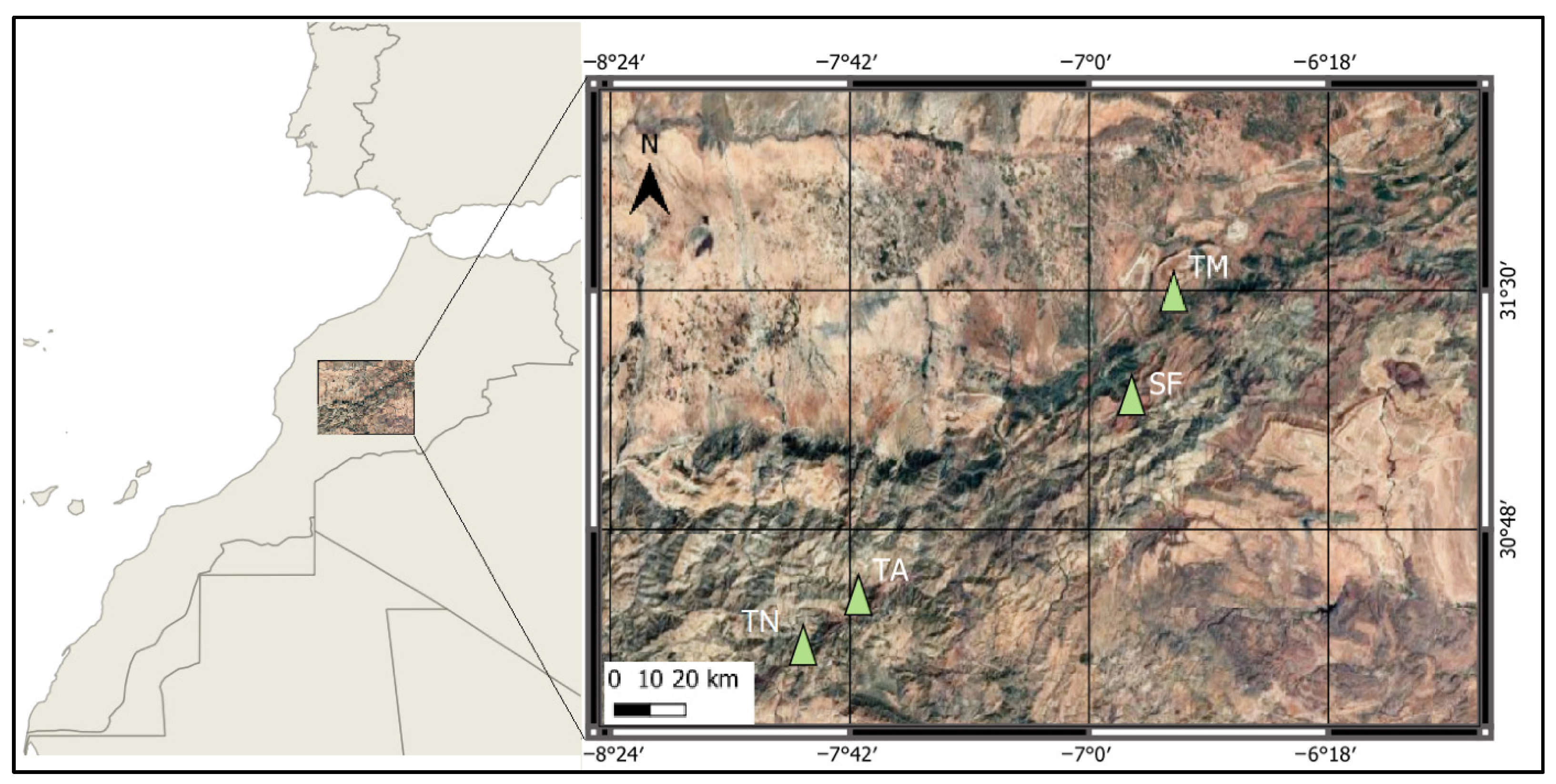
The study area is located in the Ourika watershed, south of Marrakech (Morocco), between longitudes 8°22′ and 7°36′ W and latitudes 30°52′ and 31°27′ N. The altitude in this region ranges from 1232 m to 2155 m above sea level (Figure 1, Table 1). This area was selected primarily for its remarkable biodiversity, and the presence of a well-documented medicinal plant species, T. saturejoides, widely used in traditional pharmacy for its active ingredients in human medicine. The climate of the area is characterized by average annual rainfall ranging from 541 mm to 700 mm. Average monthly maximum temperatures range between 21.5 °C and 32 °C while average monthly minimum temperatures vary between 4 °C and 5.7 °C. The average annual temperature is approximately 17.6 °C. These climatic data were obtained from records taken at the Aghbalou station between 1970 and 2014 [24]. However, in 2023, a marked decline in precipitation was observed, with annual rainfall dropping to 212–243 mm—less than half the historical average. While the average annual temperature remained relatively stable (between 17.1 °C and 17.5 °C), the pronounced reduction in rainfall highlights increasing aridity and growing stress on local ecosystems [25].

2.2. Soil Analysis

Soil sampling was carried out at the four study sites (TM, SF, TA and TN) in the rhizosphere zone of T. saturejoides, at a depth of between 10 and 40 cm. For each site, 40 spot samples were taken around the targeted plants, then homogenized to form a representative composite sample. The samples were transported in polyethylene bags, then air-dried at room temperature, sieved to 2 mm and stored in airtight containers for subsequent analysis. Physico-chemical analyses were carried out after soil drying at ambient temperature. The pH (pH meter, HI 9025, Hanna Instruments, Padova, Italy) and electrical conductivity (conductivity meter, HI-9033, Hanna Instruments, Padova, Italy) were measured using a 1:2 (w/v) diluted soil suspension [26]. Total organic carbon (TOC) and total organic matter (TOM) were quantified by oxidizing the organic matter in the presence of sulfuric acid, followed by the determination of excess potassium dichromate [27]. Available phosphorus (AP) was measured using the Olsen method [28]. Total Kjeldahl Nitrogen (TKN) was measured using the Kjeldahl method [29]. Finally, soil texture was determined using Robinson’s method, based on the sedimentation of suspended particles. After dispersing the soil using a chemical dispersant, the sand, silt, and clay fractions were quantified by measuring the settling velocity of the particles in a solution. These results were then used to classify the soil according to the textural triangle.

2.3. Collectoin of Plant Samples

The aerial parts of the studied species were collected from four separate sites (TM, SF, TA, and TN) between 26 April and 14 May 2023. A total of 40 samples were collected from each site, with plant heights ranging from 11 to 22 cm. Immediately after harvesting, the samples were placed in ice-cooled containers maintained at a temperature of 4 °C to preserve their biochemical integrity before the intended analyses.

2.4. Physiological Measurement

2.4.1. Water Content Assessment

The water content (WC) of T. saturejoides samples was determined using the gravimetric method. Fresh leaf samples (2 g) were weighed immediately after harvesting to obtain the mass of fresh matter (FM). These samples were then oven-dried at 70 °C for 72 h until a constant total chlorophyll was obtained, then weighed again to determine the mass of dry matter (DM). The WC was expressed as a percentage using the following formula [30]:
W C   ( % ) =   F M D M F M × 100

2.4.2. Chlorophyll Pigments Content

The concentrations of chlorophyll a, b, total chlorophyll, and carotenoids were determined using the method described by Arnon [31]. Approximately 50 mg of fresh leaves were carefully weighed, and then ground using a mortar and pestle in 4 mL of 80% (v/v) acetone, in cold conditions and protected from light to prevent pigment degradation. The resulting homogenate was filtered through a double layer of gauze to remove plant residues, then centrifuged at 10,000× g for 10 min at 4 °C. The clear supernatant was collected, and its absorbance was measured using a UV-visible spectrophotometer (model UV-3100PC or equivalent) at wavelengths of 663 nm, 645 nm and 480 nm, corresponding, respectively, to the absorption peaks of chlorophyll a, chlorophyll b and carotenoids. Pigment concentrations were subsequently calculated using the following equations:
Chlorophyll a mg g−1 = [(12.7 × A663) − (2.69 × A645)] × V/1000 × FW
Chlorophyll b mg g−1 = [(22.9 × A645) − (4.68 × A663)] × V/1000 × FW
Total Chlorophyll mg g−1 = [A480 + (0.114 × A663) − (0.638 × A645)] × V/1000 × FW
where A is the optical density, V is the final volume of the extract, and FW means fresh weight.

2.5. Proteins, Soluble Sugar and Proline Content

The soluble protein content was determined using the colorimetric method of Bradford [32]. 0.05 g of fresh leaves previously frozen at −20 °C were cold homogenized in 2 mL of 1 M phosphate buffer (pH 7.2), then the mixture was centrifuged at 18,000× g for 15 min at 4 °C. A volume of 0.1 mL of the resulting supernatant was mixed with 2 mL of Bradford reagent and 0.1 mL of distilled water. After incubation for 10 min at room temperature, the absorbance was measured at 595 nm using a spectrophotometer.
The total soluble sugar (TSS) content of T. saturejoides leaves was determined using the colorimetric method of Dubois [33]. Fresh leaves previously stored at −20 °C were cold-ground in 80% ethanol, and then centrifuged at 5000 rpm for 10 min. A volume of 0.25 mL of the resulting supernatant was mixed with 0.25 mL of phenol and 1.25 mL of sulfuric acid. After incubation at room temperature, the absorbance was measured at 485 nm using a spectrophotometer.
Proline was quantified from 0.1 g of fresh leaves extracted in 4 mL of 40% ethanol and stored overnight at 4 °C. A 0.5 mL aliquot was mixed with 1 mL of acetic acid–ninhydrin–ethanol solution, heated at 90 °C for 20 min, and absorbance was read at 520 nm [34].

2.6. Lipid Peroxidation and Hydrogen Peroxide Content

The malondialdehyde (MDA) content was determined using the method described by Heath and Packer [35]. 0.05 g of frozen leaves were homogenized in a mixture of 1 mL of 10% (w/v) trichloroacetic acid (TCA) and 1 mL of acetone. The solution was centrifuged at 8000× g for 15 min. 2.5 mL of supernatant was mixed with 0.5 mL of 0.1% (v/v) H3PO4 and 0.5 mL of 0.6% thiobarbituric acid (TBA). The mixture was heated in a water bath at 100 °C for 30 min, then immediately cooled in an ice bath. 0.75 mL of 1-butanol was added and the solution was centrifuged at 8000× g for 15 min. After recovering the butonolic layer, the absorbance was read at 532 nm and 600 nm.
The hydrogen peroxide (H2O2) content of the leaves was assessed following the protocol of Velikova et al. [36]. 0.05 g of frozen leaf samples were treated with 1.5 mL of 10% (w/v) trichloroacetic acid (TCA) and then centrifuged for 15 min at 15,000× g. The 0.5 mL of supernatant was mixed with 0.5 mL of potassium phosphate buffer (10 mM, pH 7.0), to which 1 mL potassium iodide solution (1 M) was added. After incubation for one hour in the dark at room temperature, the absorbance at 390 nm was recorded and plotted against a standard curve of H2O2.

2.7. Antioxidant Enzymes Activities

Polyphenol oxidase (PPO) activity was examined using the Gauillard method [37]. The reaction mixture consisted of an enzyme extract, 50 mM catéchol, and 100 mM tampon phosphate pH 6. Absorbance was measured at 410 nm, and the PPO activity was calculated in units per milligram of protein. Peroxidase (POX) activity was evaluated by mixing phosphate buffer (100 mM), 40 mM guaiacol, 10 mM H2O2, and 0.1 mL of enzyme extract. The mixture was incubated for 3 min at room temperature and read at 740 nm. The results obtained were expressed in units per mg of protein [38].

2.8. Data Analysis

All data were subjected to statistical analysis using SPSS version 20 (SPSS Inc., Chicago, IL, USA). A one-way analysis of variance (ANOVA) was performed to assess differences among treatments, followed by the Student–Newman–Keuls post hoc test for pairwise comparisons. The significance level was set at p ≤ 0.05. Prior to conducting the ANOVA, data were tested for normality and homogeneity of variances to ensure compliance with the statistical assumptions. All figures were generated using GraphPad Prism 9 Software.

3. Results

3.1. Soil Characteristics

Physico-chemical soil analyses revealed significant variations between the four studied sites (Table 2). pH values measured at the TM and SF sites were significantly closer to neutral. In contrast, the TN and TA sites had the highest electrical conductivity (EC). Total organic carbon (TOC) was most abundant in the soils from TN site, while the TA site showed the lowest values. Total nitrogen (TKN) peaked at the TN site. As for available phosphorus, the highest concentrations were recorded at the TA and TN sites. This increased phosphorus availability seems to be correlated with the silty texture of their soils. Conversely, the TM and SF sites, characterized by a sandier texture, had not only the lowest phosphorus levels, but also the highest C/N ratios.

3.2. Physiological Responses

3.2.1. Water Content in the Plant

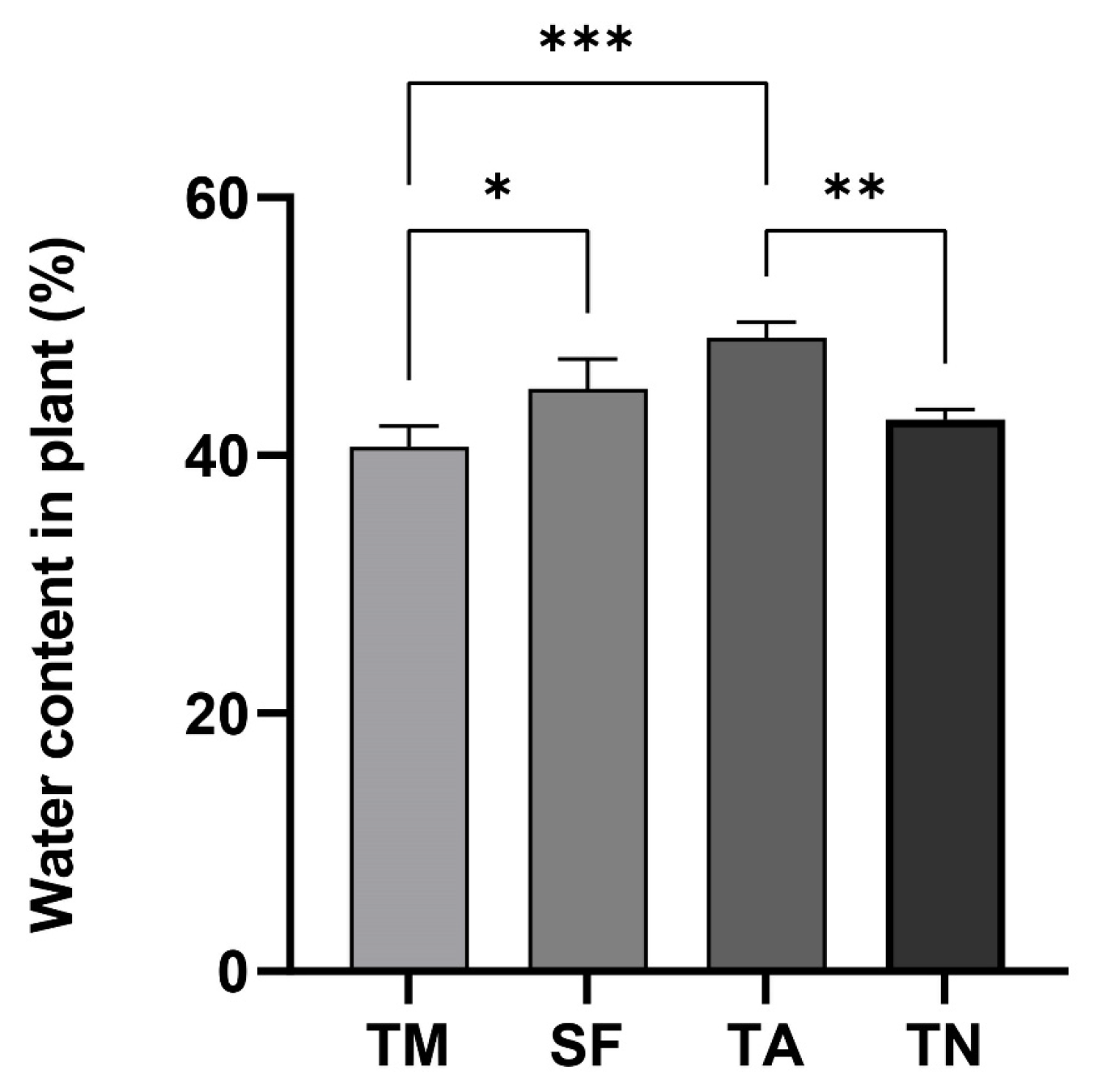
Analysis of the water content of samples collected at the four sites revealed statistically significant variations between the areas studied (Figure 2). At all sites, water content exceeded 40%. The highest values were recorded at the TA and SF sites, differing significantly from those measured at the TM and TN sites (p < 0.05).

3.2.2. Chlorophyll Pigment Content

Chlorophyll a and b levels were highest in samples from the TN site, with values significantly higher than those from the other sites (Table 3). In general, leaves from this site had the highest concentrations of chlorophyll a, b and total chlorophyll. Conversely, samples from the TA site had the lowest levels of chlorophyll pigments, with a statistically significant difference from the other sites. Leaves from the SF and TM sites showed intermediate and relatively similar concentrations of chlorophyll a and b. Leaves from the TM site showed high concentrations of carotenoid, while those from the TA site recorded the lowest concentrations.

3.3. Proteins, Soluble Sugar and Proline Content

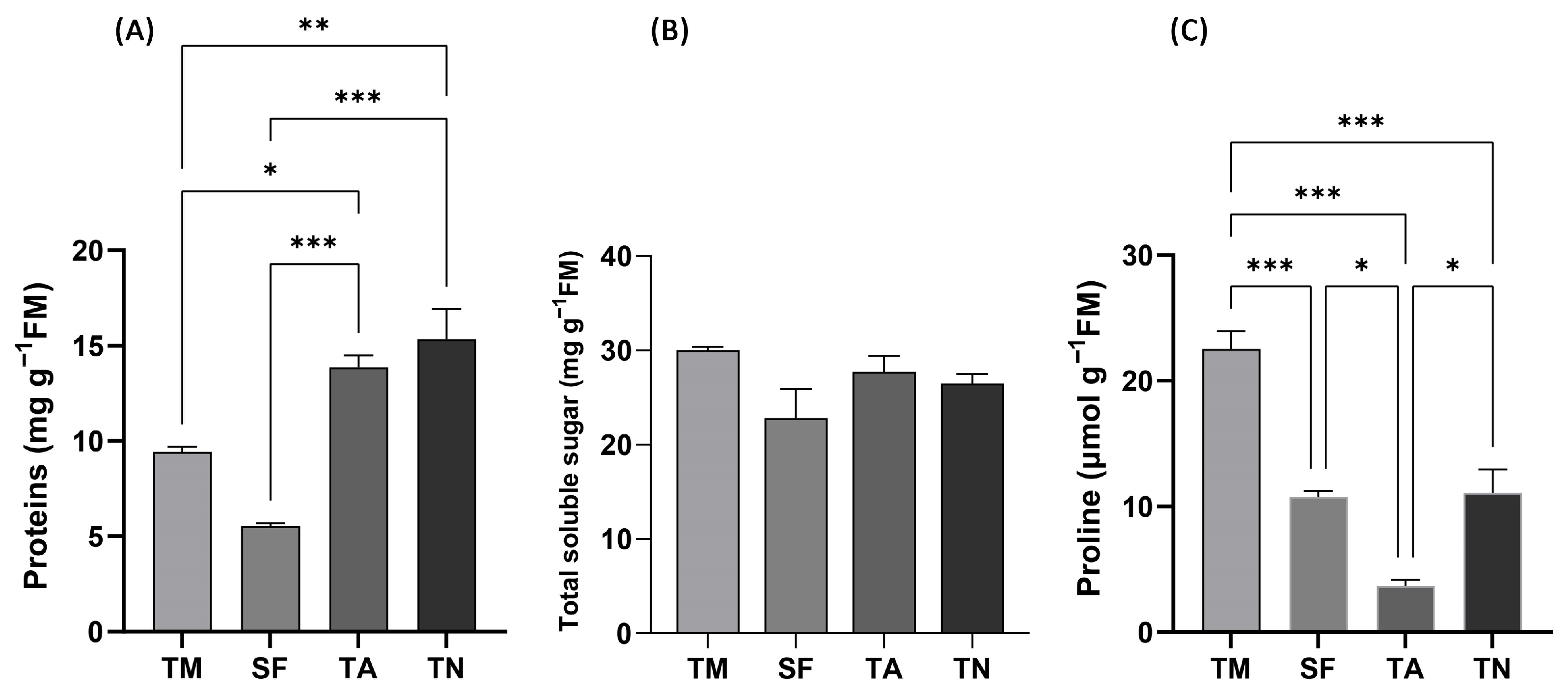
Soluble protein concentrations reached their highest levels in samples from the TN and TA sites, with values significantly higher than those observed in the other localities (Figure 3A). In contrast, samples taken from the SF site showed the lowest soluble protein concentrations, with a highly significant difference (p < 0.001) compared to the other sites. With regard to total soluble sugars, no statistically significant differences were found between sites (Figure 3B). Nevertheless, samples from the TM site recorded the highest value, while those from the SF site showed the lowest concentrations. Regarding proline content, significant variations were observed between the different sites (Figure 3C). Samples from the TM site exhibited the highest proline concentration, followed by those from SF and TA, while the lowest levels were recorded in samples from TN. These differences were statistically significant (p < 0.001), indicating a site-dependent accumulation pattern that may reflect differential exposure to environmental stressors.

3.4. Hydrogen Peroxide and Malondialdehyde Levels

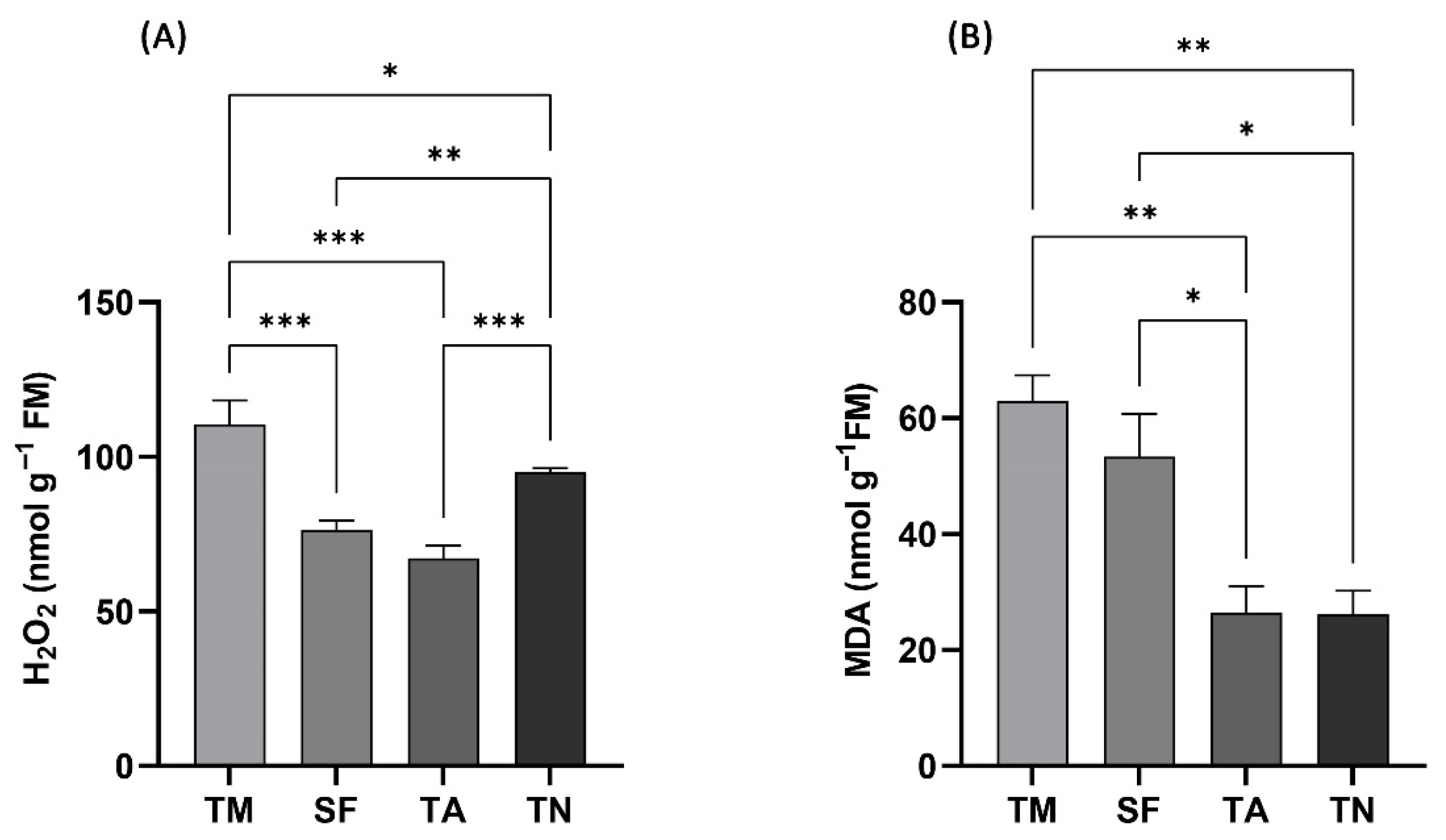
Results for oxidative stress markers show notable variations (p < 0.001) between samples from different sites (Figure 4A). Plant leaves collected from TM and TN showed the highest concentrations of hydrogen peroxide (H2O2), with levels approximately 30% higher than those measured at the TA and SF sites. On the other hand, malondialdehyde (MDA) levels are highest in samples collected at TM, while plants from TA and TN showed reduced MDA levels by approximately 50% compared to those observed at the TM and SF sites (Figure 4B).

3.5. Antioxidant Enzyme Content

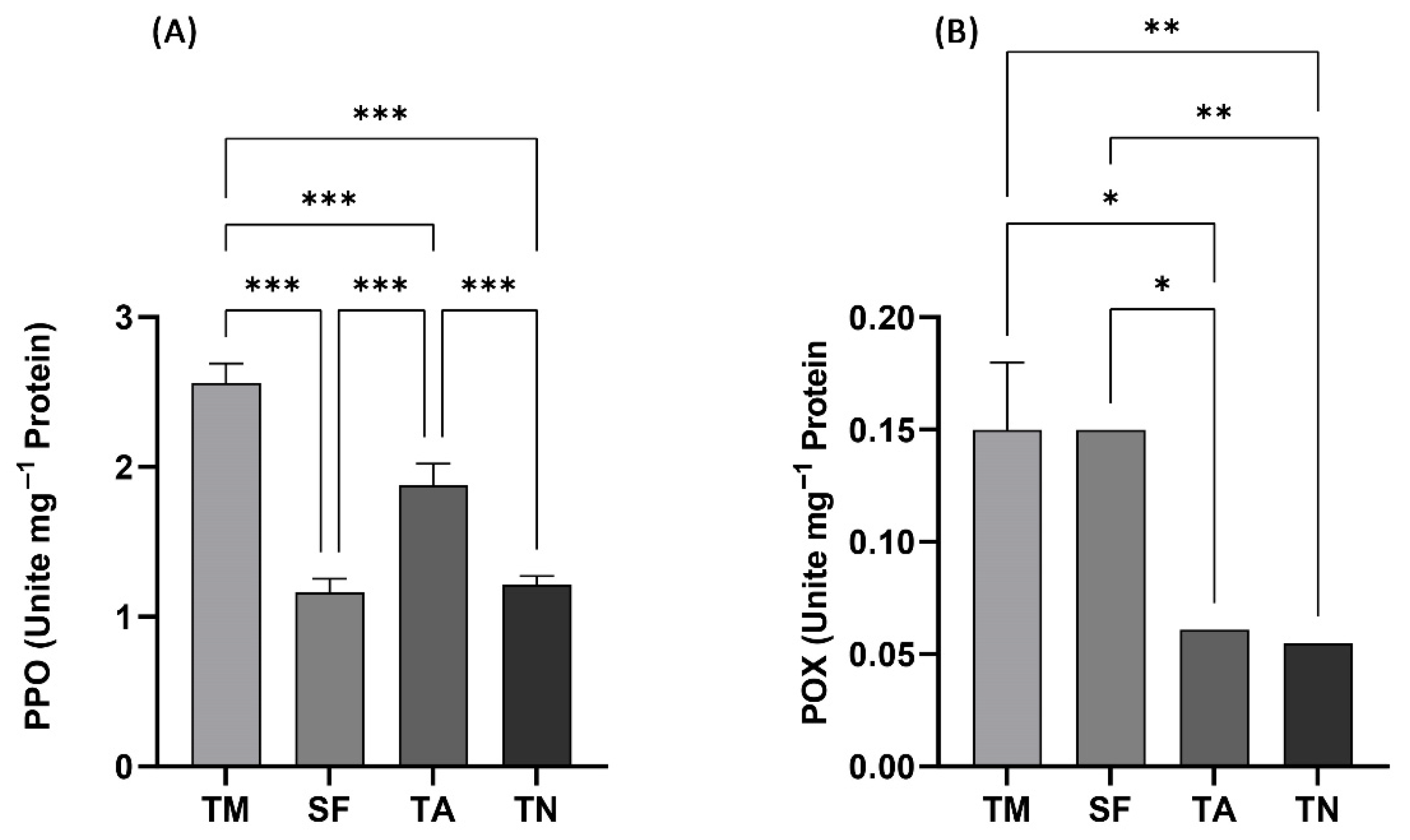
Enzyme test results revealed highly significant variations (p < 0.01) in antioxidant activities between samples from different study sites (Figure 5). Polyphenol oxidase (PPO) activity was highest in samples from the TM and TA sites, reaching levels almost 50% and 40% higher, respectively, than those measured at SF (Figure 5A). As for POX, a significant increase (p < 0.001) in its activity was recorded at TM and SF, reaching levels nearly 60% higher than those observed at TA and TN, respectively (Figure 5B).

3.6. Principal Component Analysis and Heat Mapping

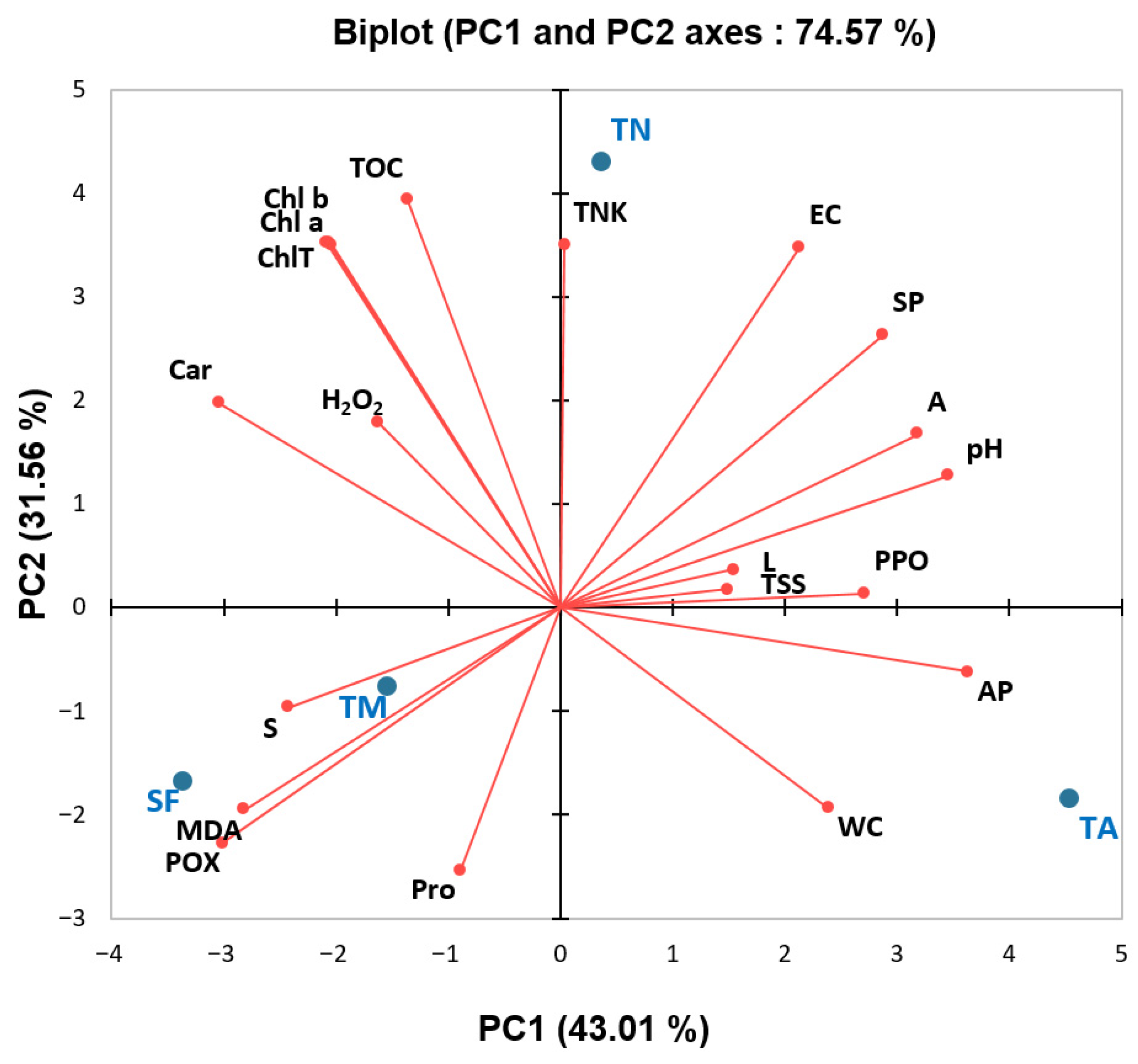
Principal component analysis (PCA) integrated both the soil physicochemical parameters and the plant biochemical and physiological parameters (Figure 6). Two principal components explained 74.57% of the variability in the data, with 43.01% for the first principal component (PC1) and 31.56% for the second (PC2). The first principal axis (PC1) clearly separates the TN site, which is positively correlated, from the TM and SF sites, which are negatively correlated. The TA Site, on the other hand, is close near TN along PC1 but is oriented differently along PC2. The variable distribution on the biplot highlights strong positive associations at the TN site between soil edaphic properties (pH, electrical conductivity, total organic carbon, total nitrogen and available phosphorus) and chlorophyll pigments (chlorophyll a, chlorophyll b, total chlorophyll, carotenoids) as well as organic osmolytes (total soluble sugars and soluble proteins) of TN site plants. The TA site stands out for its positive correlation between plant tissue water content and soil available phosphorus content. In contrast, SF and TM show higher levels of stress-related compounds such as proline, malondialdehyde (MDA) and the enzyme peroxidase (POX), along with a predominance of sandy soil texture. Hydrogen peroxide (H2O2) is also associated with TN, suggesting moderate oxidative activity under favorable conditions. Furthermore, the distribution of sites according to texture shows a clear distinction: TN and TA have a sandy-loamy soils, while TM and SF are associated with a sandier texture, reflected in their opposite orientation along PC1.
The PCA demonstrates that soil texture and fertility are major drivers of plant biochemical and physiological variation. TN and TA, with more fertile sandy-loamy soils, support healthier plants with higher photosynthetic pigments and osmolytes. In contrast, TM and SF, with sandy soils, elicit stronger stress responses in plants. This highlights a clear soil-plant interaction and differentiated adaptive strategies of T. saturejoides according to local environmental conditions.
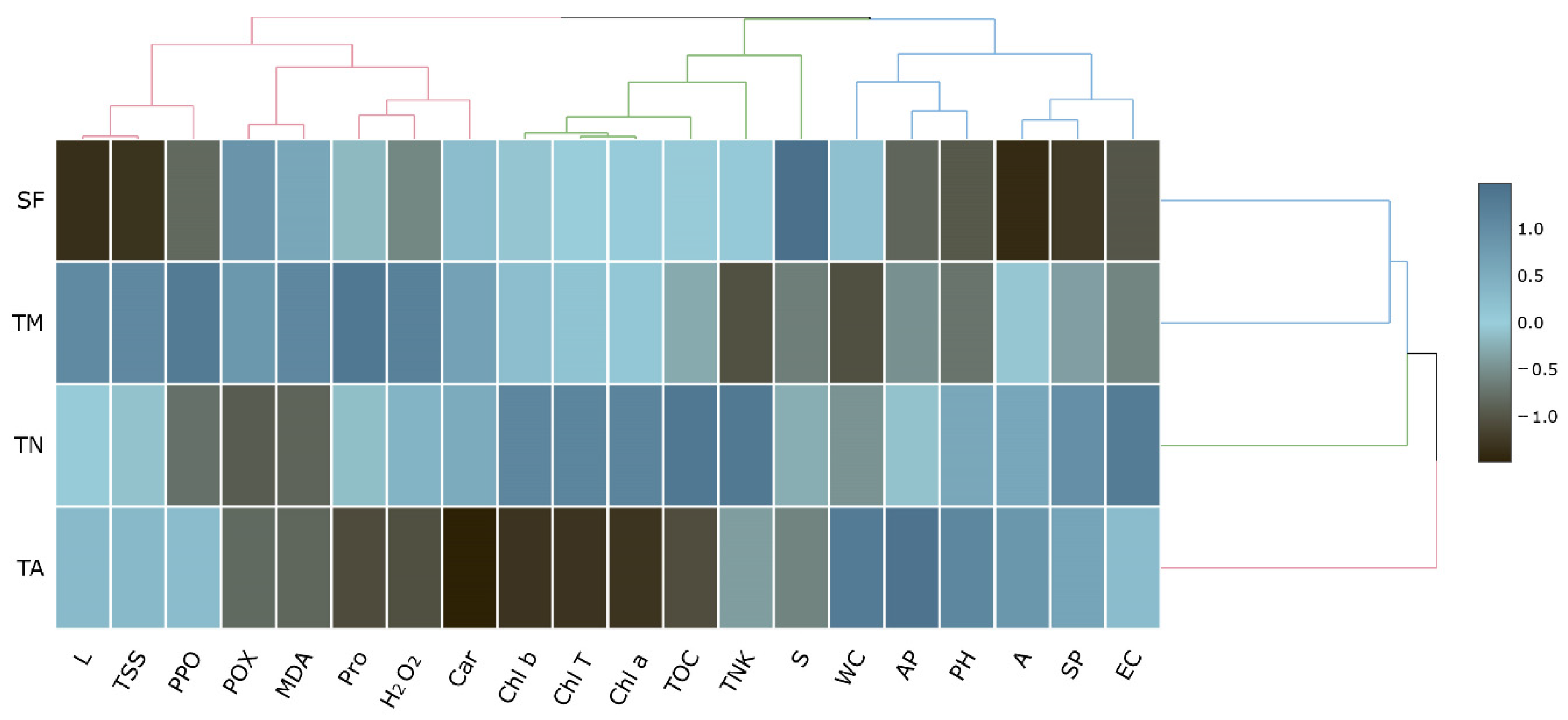
On the basis of two-way hierarchical clustering analysis (HCA) and the parameters analyzed (Figure 7), the study sites were classified into three distinct ecological profiles, reflecting both the physico-chemical properties of the soil and the physiological and biochemical responses of T. saturejoides. Level I, comprising the SF and TM sites, is characterized by high sand content, high levels of TKN and TOC, and increased plant chlorophyll pigments. These characteristics suggest an environment with limited water retention but active photosynthetic processes. Moderate levels of oxidative stress markers (MDA, H2O2, proline), antioxidant enzyme activities (PPO, POX), total soluble sugars (TSS) and silt content were also observed, indicating an adaptive physiological response to the constraints of soil poverty. Level II, represented by the TN site, is distinguished by high values of AP, pH, EC and plant WC, reflecting a more balanced soil structure with good nutrient availability and moisture retention. These conditions favor efficient physiological functioning and improved stress tolerance. Level III, corresponding to the TA site, is characterized by particularly high levels of PA, pH, EC and clay content, as well as high levels of WC and SP. This combination indicates a fertile, fine-textured soil environment that ensures an optimal supply of water and nutrients, thus promoting enhanced physiological and biochemical plant performance under stressful environmental conditions. This stratification highlights the essential role of soil quality and composition in modulating the responses of T. saturejoides to environmental stressors, and underscores the complex link between edaphic factors and the resilience of this plant in semi-arid Mediterranean ecosystems.

4. Discussion

4.1. Influence of Pedo-Climatic Constraints on T. saturejoides in the Western High Atlas

In Morocco’s western High Atlas, a region subject to severe environmental constraints such as low soil fertility, high summer markers, and irregular precipitation [39], these factors and others generate a progressive alteration in the soil’s physico-chemical properties. This edaphic degradation can induce a series of physiological adjustments in plants aimed at preserving their water balance and cellular integrity. These adaptive responses commonly include the accumulation of osmoprotective solutes such as proline and soluble sugars, oxidative stress markers, and antioxidant enzymes, which play a key role in tolerance to stress conditions [40]. In this context, we aimed to assess the extent to which pedo-climatic constraints accentuate the physiological and biochemical responses of T. saturejoides in its natural habitat. This approach aims to understand the better adaptation mechanisms of this endemic species in ecosystems subjected to increasing environmental stress, in order to contribute to its conservation and sustainable development.

4.2. Soil Physico-Chemical Variability and Nutrient Availability Across Sites

The results of this study highlighted significant variations in soil physico-chemical parameters between the different sites studied, which appear to induce differentiated physiological and biochemical responses in T. saturejoides. Soils at TN, TM and SF have a slightly more acidic pH than those at TA. Similar patterns have been reported in Mediterranean and semi-arid ecosystems, where soil heterogeneity strongly controls nutrient dynamics and plant performance [41,42]. In the present study, soils at TN, TM, and SF exhibited a slightly more acidic pH compared to those at TA. This relative acidity could be linked to a greater accumulation of organic matter, whose decomposition and mineralization release organic acids that can lower soil pH [43]. Such observations are consistent with previous studies showing that organic matter-rich soils often tend toward acidification [44,45].
Furthermore, the predominantly sandy texture of the soil at site TA could contribute to a lesser buffering effect, thus influencing pH stability. The predominantly sandy texture of the TA site may contribute to a reduced buffering capacity, as sandy soils generally exhibit lower cation exchange capacity and high porosity, making them less effective at stabilizing pH fluctuations than soils richer in clay or organic matter [46]. The relative acidification of soils at the TN, TM and SF sites could also have an impact on the bioavailability of AP [47]. Indeed, under acidic conditions, phosphorus tends to form poorly soluble complexes with iron and aluminum, thereby limiting its availability to plants [48]. This limitation is particularly marked at the TM site. Conversely, at the TA site, where soil pH is close to neutral, phosphorus is less subject to precipitation, making the available fraction more readily available [49]. At neutral pH, calcium–phosphorus interactions are also reduced, limiting the formation of insoluble calcium phosphates and favoring optimal phosphorus solubility [50]. These observations are in line with previous work demonstrating that soils at neutral pH are more favorable to phosphorus solubilization and reduce the formation of insoluble complexes with other elements, thus optimizing phosphorus nutrition for plants. However, our results further suggest that this effect is strongly modulated by local soil characteristics, emphasizing the site-specific nature of phosphorus dynamics in T. saturejoides habitats.
Beyond phosphorus, optimum TKN availability also varied markedly among sites, reflecting the combined influence of pH, organic matter content, and C/N ratio. Previous research has shown that optimal TKN availability is generally associated with slightly acidic to neutral soils rich in organic matter, as observed at the TN site, where microbial activity involved in nitrogen mineralization is likely enhanced [51]. In our study, sites with a moderate to balanced C/N ratio (between 10 and 15) appear to offer optimal conditions to support dynamic microbial activity, promote efficient mineralization of organic matter and limit nitrogen losses through leaching or volatilization [52,53,54]. This balanced ratio ensures a simultaneous supply of carbon, chlorophyll a, b, and, and nitrogen, necessary for microbial cell synthesis.
On the other hand, the TM site, characterized by a C/N ratio of over 20, suggests a relative excess of carbon over nitrogen. Such conditions are known to limit the activity of nitrogen-solubilizing microorganisms [54,55]. This finding partially explains the lower TKN content observed at this site and aligns with earlier studies reporting nitrogen immobilization under high C/N conditions. Nevertheless, our study highlights that this limitation is further amplified by soil texture.
Indeed, soil texture plays a key role in the retention and availability of nutrients, particularly AP and TKN [56,57,58,59]. The coarse structure of sandy soils at TM and SF sites favors rapid water drainage, increasing the risk of nitrogen leaching and reducing TKN availability [60,61]. By contrast, the silty soils of the TA and TN sites exhibit higher water- and nutrient-holding capacities, which promote nutrient retention and create a more favorable environment for the microbial activity involved in organic matter mineralization [61,62]. Thus, in our study, the differences observed in TKN content between sites could be partly explained by the variation in soil texture, directly influencing the nitrogen cycle and its bioavailability.

4.3. Soil Texture and Water Availability as Drivers of Plant Water Status

Soil physicochemical properties, such as nutrient availability, water retention and texture, strongly influence plant growth, physiology and biochemistry [63]. A well-structured soil, rich in organic matter and balanced in terms of texture, enables optimal water retention and promotes efficient water and nutrient uptake [64]. Texture plays a key role in the soil’s ability to retain moisture: silty soils, with their intermediate composition of fine and coarse particles, offer good water retention capacity while ensuring adequate aeration [65,66]. Conversely, sandy soils, characterized by coarse particles and low cohesion, drain water rapidly, reducing its availability to plants [67]. In this context, plants harvested from sites TM and SF, with a sandy-loam texture, had lower leaf water content, probably due to the soil’s low water retention capacity. On the other hand, plants from sites TA and TN, with a silty texture, showed a higher water content, reflecting better water conditions linked to a soil texture more favorable to water retention and availability.

4.4. Effects of Soil Properties on Photosynthetic Pigments and Physiological Performance

Variations in plant water content and photosynthetic pigment composition in T. saturejoides are broadly consistent with previous studies reporting that water scarcity and nutrient limitation strongly affect plant water status and photosynthetic efficiency in Mediterranean environments. Several authors have shown that water stress disrupts cellular hydration, leading to reduced photosynthesis and enhanced oxidative stress [68,69,70]. In line with these observations, the present study demonstrates that plant water status, together with soil nutrient availability, plays a decisive role in modulating photosynthetic pigment composition in T. saturejoides across the different study sites. Specifically, chlorophyll and carotenoid levels varied significantly as a function of both water availability and soil nutrient levels, notably total nitrogen and available phosphorus. Plants from the TN and TM sites exhibited the highest concentrations of chlorophyll a, chlorophyll b, and total chlorophyll, which is consistent with their relatively higher soil fertility, characterized by elevated nitrogen, organic carbon, and electrical conductivity. These results corroborate previous studies highlighting the fundamental role of nitrogen in chlorophyll biosynthesis, as nitrogen is a core structural component of the chlorophyll molecule and is directly involved in the synthesis of photosynthetic proteins [71]. In parallel, phosphorus availability supports chloroplast development and function by facilitating nucleic acid synthesis, membrane phospholipid formation, and energy transfer processes essential for photosynthesis [72]. However, our study extends previous knowledge by showing that pigment accumulation is not solely driven by water availability, but rather by the combined effects of plant water status and site-specific soil nutrient profiles, particularly TKN and AP.
The SF site also shows a high carotenoid content, a response frequently reported under conditions of moderate to severe water and nutrient stress. Similar increases in carotenoid content have been documented as adaptive strategies that enhance photoprotection and mitigate oxidative damage through the scavenging of reactive oxygen species [73,74]. Furthermore, plants at the TN site have the highest concentrations of chlorophyll a, b, and total, consistent with their high nutrient levels (AP and TKN). Nitrogen plays a fundamental role in the biosynthesis of chlorophyll pigments, as it is a key element in the structure of chlorophyll [75,76,77]. Similarly, phosphorus is essential for the synthesis of nucleic acids and membrane phospholipids, supporting cell division and the proper functioning of chloroplasts [78]. Good water absorption facilitates the transport of these nutrients, enhancing pigment stability and photosynthetic efficiency [71]. This translates into improved plant physiological health and a greater capacity to capture light energy for conversion into biochemical energy. In contrast, plants at site SF have a relatively higher carotenoid content. This increase can be interpreted as an adaptive mechanism to enhance cellular protection against oxidative damage induced by reduced water and nutrient content [79,80,81]. Carotenoids, in addition to their role in light capture, act as powerful antioxidants capable of neutralizing reactive oxygen species generated in excess under water or nutrient stress [82,83]. Thus, the adjustment of pigment levels in plants reflects their ability to adapt to environmental constraints by modulating their physiological and biochemical balance [84].

4.5. Biochemical Stress Responses Induced by Soil Constraints

Complementing this pigment defense, plants can also accumulate certain compatible metabolites, such as soluble sugars and proline, which play a central role in osmoregulation and protection against oxidative damage [85,86]. Soluble sugars act as both energy sources and signaling molecules, stabilizing cellular structures (proteins, membranes) and trapping ROS [87]. Prolines, for their part, in addition to their osmotic function, protect enzymes, maintain membrane integrity, chelate metal ions, and mitigate the toxic effects of oxidative stress [88]. In our study, plants from site TM, subjected to more constraining pedo-climatic conditions, showed a significant accumulation of proline and soluble sugars, reflecting an adaptive response aimed at limiting oxidative damage, as evidenced by the parallel increase in H2O2 and MDA levels. Conversely, plants at sites TA and TN recorded lower levels of proline, reflecting a less constrained physiological state. Furthermore, these plants showed a notable accumulation in proteins compared to those at sites TM and SF, suggesting better nucleic acid stability and enhanced cell membrane integrity. Indeed, proteins play a multifunctional role in responses to oxidative stress: they participate in the repair of damaged cell structures, stabilize enzyme complexes, regulate ionic balance, and act as protective buffers against redox imbalances. Their accumulation is often correlated with reduced lipid peroxidation and lower levels of hydrogen peroxide (H2O2), as noted in TA plants, reflecting a more efficient antioxidant state and reduced exposure to oxidative stress.

4.6. Antioxidant Defense Systems Under Contrasting Edaphic Conditions

Antioxidant enzymes such as PPO and POX play a central role in cellular defense against excessive ROS accumulation [82,89]. Plants at site TM, subjected to greater stress due to a sandy-silty texture less favorable to water retention, showed high levels of H2O2 and MDA, accompanied by high PPO and POX enzyme activity. Conversely, the site TA, characterized by a more favorable silty texture, showed the lowest levels of these oxidative stress markers, consistent with less solicitation of enzymatic defense mechanisms. Thus, protein accumulation and modulation of antioxidant enzymes form part of a complex network of biochemical adaptations enabling T. saturejoides plants to maintain cellular integrity in the face of variable soil and climatic conditions.

4.7. Ecological Implications for Adaptability and Conservation

These findings highlight the critical role of soil physico-chemical properties in shaping the physiological and biochemical adaptability of T. saturejoides. Understanding these soil-plant relationships provides essential insights into the resilience and vulnerability of this endemic species under ongoing environmental change, supporting the development of targeted conservation and sustainable management strategies in fragile Mediterranean ecosystems.

5. Conclusions

The decisive influence of soil physico-chemical properties on the physiological and biochemical responses of T. saturejoides in contrasting environments was demonstrated. The results reveal a close correlation between soil texture, nutrient availability (particularly phosphorus and nitrogen), pH, electrical conductivity, and the plant’s adaptation mechanisms in the face of environmental constraints. Indeed, the TN site stood out as the most favorable for growth, with a nutrient-rich loamy soil, good water retention capacity and a balanced C/N ratio. These characteristics favored efficient photosynthetic activity, reflected in high levels of chlorophyll and protein, and moderate oxidative stress, reflected in low concentrations of H2O2 and MDA. In contrast, plants from the TM site, characterized by a nitrogen-poor sandy-loam soil and a high C/N ratio, showed clear signs of oxidative stress. This is reflected in a high accumulation of stress compounds such as proline, hydrogen peroxide and MDA, and a strong induction of antioxidant enzymes (PPO, POX). These adaptive responses suggest a significant metabolic effort to maintain redox balance and cell viability in a more constrained environment. On the other hand, site TA, although also provided with a favorable loam soil, displays a distinct biochemical profile, marked by a lower accumulation of stress markers and a high protein content, suggesting alternative, less energetically costly tolerance mechanisms. As for site SF, it displays an intermediate profile, in terms of both edaphic constraints and plant responses. These observations highlight the crucial importance of soil-plant interactions in regulating physiological resilience. They open up concrete prospects for the valorization of T. saturejoides: The TN and TA sites appear to be promising locations for enhancing biomass production and bioactive compound accumulation., which can be valorized in the pharmaceutical, cosmetics and agri-food sectors for their antioxidant and adaptive properties.
Populations from the TM and SF sites, due to their stress resilience, may serve in breeding programs or as bio-indicators. Sustainable use of this endemic species requires combining agronomic practices with commercial valorization based on extract properties. Applied research partnerships are essential to enhance the exploitation of its bioactive compounds and expand industrial applications.

Author Contributions

Conceptualization and methodology, M.E.H.B. and A.B.; data curation, M.E.H.B.; investigation, writing—original draft preparation, M.E.H.B., A.B. and R.O.; Formal analysis, L.E.-C., B.F. and M.A.; software, M.E.H.B. and L.E.-C.; writing—review and editing, M.E.H.B., R.O., A.B., L.E.-C., B.F., M.A., A.M. and A.H.; supervision, A.M. and A.H. All authors have read and agreed to the published version of the manuscript.

Funding

This research received no external funding.

Data Availability Statement

Data generated in this study are available upon reasonable request to the corresponding author.

Conflicts of Interest

The authors declare no conflicts of interest.

Abbreviations

AClay
APAvailable phosphorus
C/Ncarbon nitrogen ratio
CarCarotenoid
Chl aChlorophyll a
Chl bChlorophyll b
ECElectrical conductivity
HCAHierarchical clustering analysis
Lsilt
MDAMalondialdehyde
PCAPrincipal Component Analysis
POXperoxidase
PPOPolyphenol Oxidase
ProProline
SSand
SFSti Fadma
SPSoluble protein
T ChlTotal chlorophyll
TATaouss
TKNTotal Kjeldahl nitrogen
TMTidili msfioua
TNTisi ntast
TOCTotal organic carbon
TOMTotal organic matter
TSSTotal soluble sugar
WCWater content in plant

References

  1. Amante, G.; Wedajo, M. Impacts of Climate change on soil microbial diversity, distribution and abundance. Int. J. Food Agric. Nat. Resour. 2024, 5, 158–168. [Google Scholar] [CrossRef]
  2. Nguyen, T.T.; Aderdour, N.; Rhinane, H.; Buerkert, A. Vegetation Cover Dynamics in the High Atlas Mountains of Morocco. Remote Sens. 2023, 15, 1366. [Google Scholar] [CrossRef]
  3. Montanari, B. Aromatic, medicinal plants and vulnerability of traditional herbal knowledge in a berber community of the high atlas mountains of Morocco. Plant Divers. Resour. 2014, 36, 388–402. [Google Scholar]
  4. Taleb, M.S. Aromatic and medicinal plants in Morocco: Diversity and socio-economic role. Int. J. Agric. Biosyst. Eng. 2017, 11, 812–816. [Google Scholar]
  5. Nassif, F.; Tanji, A. Conserving plant diversity: An opportunity for the 21st century for Morocco. In Environmental, Social and Economic Issues of the 21st Century; Nova Science Publishers: Hauppauge, NY, USA, 2017; Volume 1. [Google Scholar]
  6. Elgadi, S.; Zine, H.; Dallahi, Y.; Ouhammou, A. Unveiling floristic diversity in the High Atlas: Insights from a protected reserve in a global Mediterranean biodiversity hotspot. Biosyst. Divers. 2024, 32, 416–425. [Google Scholar] [CrossRef]
  7. Oublid, H.; Ait Hamza, M.; Boubaker, H.; El Hamdaoui, A.; El Yaagoubi, M.; Abbad, I.; El Moutaouakil, M.; Msanda, F. Effect of temperature, pretreatments, gibberellin (GA3), salt and drought stress on germination of Thymus satureioides coss of Morocco. J. Appl. Res. Med. Aromat. Plants 2024, 38, 100524. [Google Scholar] [CrossRef]
  8. Benabid, A. Flore et Écosystèmes du Maroc: Evaluation et Préservation de la Biodiversité; Société Française d’Ethnopharmacologie: Metz, France, 2000. [Google Scholar]
  9. Chaachouay, N.; Douira, A.; Zidane, L. Herbal Medicine Used in the Treatment of Human Diseases in the Rif, Northern Morocco. Arab. J. Sci. Eng. 2021, 47, 131–153. [Google Scholar] [CrossRef]
  10. Hayat, J.; Mustapha, A.; Abdelmajid, M.; Mourad, B.; Ali, S.; Said, E.; Saadia, B. Ethnobotanical survey of medicinal plants growing in the region of “Oulad Daoud Zkhanine”(Nador Province), in Northeastern Morocco. Ethnobot. Res. Appl. 2020, 19, 1–12. [Google Scholar]
  11. Fadili, K.; Sekkate, C.; Alistiqsa, F.; Haloui, Z.; Chakir, S.; Zair, T. Ethnobotanical study of medicinal plants from Er-Rich region (Moroccan high atlas). Adv. Environ. Biol. 2017, 11, 27–41. [Google Scholar]
  12. Abouri, M.; El Mousadik, A.; Msanda, F.; Boubaker, H.; Saadi, B.; Cherifi, K. An ethnobotanical survey of medicinal plants used in the Tata Province, Morocco. Int. J. Med. Plants Res. 2012, 1, 99–123. [Google Scholar]
  13. Kasrati, A.; Jamali, C.A.; Bekkouche, K.; Wohlmuth, H.; Leach, D.; Abbad, A. Comparative evaluation of antioxidant and insecticidal properties of essential oils from five Moroccan aromatic herbs. J. Food Sci. Technol. 2015, 52, 2312–2319. [Google Scholar] [CrossRef] [PubMed]
  14. El Asbahani, A.; Jilale, A.; Voisin, S.N.; Aït Addi, E.H.; Casabianca, H.; El Mousadik, A.; Hartmann, D.J.; Renaud, F.N.R. Chemical composition and antimicrobial activity of nine essential oils obtained by steam distillation of plants from the Souss-Massa Region (Morocco). J. Essent. Oil Res. 2015, 27, 34–44. [Google Scholar] [CrossRef]
  15. El-Bakkal, S.E.; Zeroual, S.; Elouazkiti, M.; Mansori, M.; Bouamama, H.; Zehhar, N.; El-Kaoua, M. Comparison of yield chemical composition and biological activities of essential oils obtained from thymus pallidus and thymus satureioides Coss. grown in wild and cultivated conditions in Morocco. J. Essent. Oil Bear. Plants 2020, 23, 1–14. [Google Scholar] [CrossRef]
  16. Boubaker, H.; Karim, H.; El-Hamdaoui, A.; Msanda, F.; Leach, D.; Bombarda, I.; Vanloot, P.; Abbad, A.; Boudyach, E.H.; Aoumar, A.A.B. Chemical characterization and antifungal activities of four Thymus species essential oils against postharvest fungal pathogens of citrus. Ind. Crops Prod. 2016, 86, 95–101. [Google Scholar] [CrossRef]
  17. Kasrati, A.; Jamali, C.A.; Fadli, M.; Bekkouche, K.; Hassani, L.; Wohlmuth, H.; Leach, D.; Abbad, A. Antioxidative activity and synergistic effect of Thymus saturejoides Coss. essential oils with cefixime against selected food-borne bacteria. Ind. Crops Prod. 2014, 61, 338–344. [Google Scholar] [CrossRef]
  18. Maimouni, S.; Daghor, L.; Oukassou, M.; Moutaki, S.E.; Lhissou, R. Evaluate the effect of topographic factors and lithology on forest cover distribution: A case study of the Moroccan high atlas. Environ. Model. Assess. 2021, 26, 787–801. [Google Scholar] [CrossRef]
  19. El Yaagoubi, M.; Mechqoq, H.; El Hamdaoui, A.; Mukku, V.J.; El Mousadik, A.; Msanda, F.; El Aouad, N. A review on Moroccan Thymus species: Traditional uses, essential oils chemical composition and biological effects. J. Ethnopharmacol. 2021, 278, 114205. [Google Scholar] [CrossRef]
  20. Perrino, E.V.; Valerio, F.; Jallali, S.; Trani, A.; Mezzapesa, G.N. Ecological and Biological Properties of Satureja cuneifolia Ten. and Thymus spinulosus Ten.: Two Wild Officinal Species of Conservation Concern in Apulia (Italy). A Preliminary Survey. Plants 2021, 10, 1952. [Google Scholar] [CrossRef]
  21. Ouarghidi, A.; Abbad, I.; Mfuni, T. Factors Shaping Phenotypic Variation in Thymus saturejoides. Plants 2025, 14, 1772. [Google Scholar] [CrossRef] [PubMed]
  22. Mahdi, I.; Fahsi, N.; Annaz, H.; Drissi, B.; Barakate, M. Thymus satureioides Coss.: Mineral Composition, Nutritional Value, Phytochemical Profiling, and Dermatological Properties. Molecules 2023, 28, 4636. [Google Scholar] [CrossRef] [PubMed]
  23. Halat, D.H.; Krayem, M.; Khaled, S. A Focused Insight into Thyme: Biological, Chemical, and Therapeutic Properties of an Indigenous Mediterranean Herb. Nutrients 2022, 14, 2104. [Google Scholar] [CrossRef]
  24. Ayt Ougougdal, H.; Yacoubi Khebiza, M.; Messouli, M.; Lachir, A. Assessment of future water demand and supply under IPCC climate change and socio-economic scenarios, using a combination of models in Ourika Watershed, High Atlas, Morocco. Water 2020, 12, 1751. [Google Scholar] [CrossRef]
  25. Sparks, A.; White, T.; Stackhouse, P. POWER Data Access Viewer 2024. NASA Langley Research Center. Available online: https://power.larc.nasa.gov (accessed on 25 April 2025).
  26. Estefan, G.; Sommer, R.; Ryan, J. Methods of Soil, Plant, and Water Analysis: A Manual for the West Asia and North Africa Region; ICARDA: Beirut, Lebanon, 2013; Volume 3, pp. 65–119. [Google Scholar]
  27. Aubert, G. Methodes D’analyses des Sols: Documents de Travail Tous Droits Reserves; Centre Régional de Documentation Pédagogique: Lyon, France, 1978. [Google Scholar]
  28. Olsen, S.R.; Sommers, L.E. Phosphorus. Methods of Soil Analysis, Part 2: Chemical and Microbiological Properties, Agronomy Monograph; Wiley: Hoboken, NJ, USA, 1982; pp. 421–422. [Google Scholar]
  29. Kjeldahl, J. New method for the determination of nitrogen. Chem. News 1883, 48, 101–102. [Google Scholar] [CrossRef]
  30. Kramer, P.J.; Boyer, J.S. Water Relations of Plants and Soils; Academic Press: London, UK, 1995. [Google Scholar]
  31. Arnon, D.I. Copper enzymes in isolated chloroplasts. polyphenoloxidase in Beta vulgaris. Plant Physiol. 1949, 24, 1–15. [Google Scholar] [CrossRef] [PubMed]
  32. Bradford, M.M. A rapid and sensitive method for the quantitation of microgram quantities of protein utilizing the principle of protein-dye binding. Anal. Biochem. 1976, 72, 248–254. [Google Scholar] [CrossRef]
  33. Dubois, M.K. Use of phenol reagent for the determination of total sugar. Anal. Chem. 1956, 28, 350. [Google Scholar] [CrossRef]
  34. Carillo, P.; Mastrolonardo, G.; Nacca, F.; Parisi, D.; Verlotta, A.; Fuggi, A. Nitrogen metabolism in durum wheat under salinity: Accumulation of proline and glycine betaine. Funct. Plant Biol. 2008, 35, 412–426. [Google Scholar] [CrossRef] [PubMed]
  35. Heath, R.L.; Packer, L. Photoperoxidation in isolated chloroplasts: I. Kinetics and stoichiometry of fatty acid peroxidation. Arch. Biochem. Biophys. 1968, 125, 189–198. [Google Scholar] [CrossRef]
  36. Velikova, V.; Yordanov, I.; Edreva, A. Oxidative stress and some antioxidant systems in acid rain-treated bean plants protective role of exogenous polyamines. Plant Sci. 2000, 151, 59–66. [Google Scholar] [CrossRef]
  37. Gauillard, F.; Richardforget, F.; Nicolas, J. New spectrophotometric assay for polyphenol oxidase activity. Anal. Biochem. 1993, 215, 59–65. [Google Scholar] [CrossRef]
  38. Polle, A.; Otter, T.; Seifert, F. Apoplastic peroxidases and lignification in needles of Norway spruce (Picea abies L.). Plant Physiol. 1994, 106, 53–60. [Google Scholar] [CrossRef]
  39. El-Ghazouani, F.; Boukhanfer, R.; Yacoubi, B.; Zekhnini, A. Ethnobotanical study of medicinal plants used in the rural area of the Western High Atlas (Morocco). Ethnobot. Res. Appl. 2024, 29, 1–26. [Google Scholar] [CrossRef]
  40. Ouhaddou, R.; Ech-chatir, L.; Ikan, C.; Soussani, F.E.; Errouh, F.; Boutasknit, A.; Rodrigez, J.C.; Er-Raki, S.; Duponnois, R.; Meddich, A. Investigation of the impact of dual inoculations of arbuscular mycorrhizal fungi and plant growth-promoting rhizobacteria on drought tolerance of maize grown in a compost-amended field under Mediterranean conditions. Front. Microbiol. 2024, 15, 1432637. [Google Scholar] [CrossRef]
  41. Noroozisharaf, A.; Kaviani, M. Effect of soil application of humic acid on nutrients uptake, essential oil and chemical compositions of garden thyme (Thymus vulgaris L.) under greenhouse conditions. Physiol. Mol. Biol. Plants 2018, 24, 423–431. [Google Scholar] [CrossRef]
  42. Vasil, I.E.; Shabanova, E.V.; Tsagaan, B. applied sciences Elemental Profiles of Wild Thymus L. Plants Growing in Different Soil and Climate Conditions. Appl. Sci. 2022, 12, 3094. [Google Scholar] [CrossRef]
  43. Clarholm, M.; Skyllberg, U. Translocation of metals by trees and fungi regulates pH, soil organic matter turnover and nitrogen availability in acidic forest soils. Soil Biol. Biochem. 2013, 63, 142–153. [Google Scholar] [CrossRef]
  44. Zhang, X.; Guo, J.; Vogt, R.D.; Mulder, J.; Wang, Y.; Qian, C.; Wang, J.; Zhang, X. Soil acidification as an additional driver to organic carbon accumulation in major Chinese croplands. Geoderma 2020, 366, 114234. [Google Scholar] [CrossRef]
  45. Vaičiulytė, V.; Ložienė, K.; Sivicka, I. Effect of Organic Matter Fertilizers on the Composition of Volatiles, Morphometrical and Anatomical Parameters of Essential Oil-Bearing Thymus × citriodorus Cultivated in an Open Field Conditions. Horticulturae 2022, 8, 917. [Google Scholar] [CrossRef]
  46. Ismail, S.M.; Almulhim, N.; Sedky, A.; El-Cossy, S.A.-N.; Mahmoud, E. Impact of Soil Ameliorants on Soil Chemical Characteristics, Sugar Beet Water Productivity, and Yield Components in Sandy Soils Under Deficit Irrigation. Sustainability 2025, 17, 1513. [Google Scholar] [CrossRef]
  47. Hu, Y.; Chen, J.; Hui, D.; Li, J.; Yao, X.; Zhang, D. Science of the Total Environment Soil acidification suppresses phosphorus supply through enhancing organomineral association. Sci. Total Environ. 2023, 905, 167105. [Google Scholar] [CrossRef]
  48. Lacour, S.; Deluchat, V.; Bollinger, J.-C.; Serpaud, B. Complexation of trivalent cations (Al (III), Cr (III), Fe (III)) with two phosphonic acids in the pH range of fresh waters. Talanta 1998, 46, 999–1009. [Google Scholar] [CrossRef] [PubMed]
  49. Gutiérrez-Martín, M.; Baigorri, R.; Rubio-Gracia, S.; García, R.; San Francisco, S.; Caballero, M.; Atarés, S. Single Superphosphate-P Fractions Influence Bacterial Communities in Wheat Rhizosphere Soil Under Microcosm Conditions. Eur. J. Soil Sci. 2025, 76, e70096. [Google Scholar] [CrossRef]
  50. Gowthaman, S.; Yamamoto, M.; Nakashima, K.; Ivanov, V. Calcium phosphate biocement using bone meal and acid urease: An eco-friendly approach for soil improvement. J. Clean. Prod. 2021, 319, 128782. [Google Scholar] [CrossRef]
  51. Yang, J.; Masoudi, A.; Li, H.; Gu, Y.; Wang, C.; Wang, M.; Wu, C.; Liu, Y.; Zhao, X.; Yu, Z. Soil total nitrogen mediated the impact of climatic factors on urban soil organic matter under different land uses. J. Soil Sci. Plant Nutr. 2024, 24, 5487–5504. [Google Scholar] [CrossRef]
  52. Salangsang, M.C.D.; Sekine, M.; Akizuki, S.; Sakai, H.D.; Kurosawa, N.; Toda, T. Effect of carbon to nitrogen ratio of food waste and short resting period on microbial accumulation during anaerobic digestion. Biomass Bioenergy 2022, 162, 106481. [Google Scholar] [CrossRef]
  53. Van Peteghem, L.; Sakarika, M.; Matassa, S.; Rabaey, K. The role of microorganisms and carbon-to-nitrogen ratios for microbial protein production from bioethanol. Appl. Environ. Microbiol. 2022, 88, e01188-22. [Google Scholar] [CrossRef]
  54. Cui, J.; Zhu, R.; Wang, X.; Xu, X.; Ai, C.; He, P.; Liang, G.; Zhou, W.; Zhu, P. Effect of high soil C/N ratio and nitrogen limitation caused by the long-term combined organic-inorganic fertilization on the soil microbial community structure and its dominated SOC decomposition. J. Environ. Manag. 2022, 303, 114155. [Google Scholar] [CrossRef]
  55. Guan, H.L.; Fan, J.W.; Lu, X. Soil specific enzyme stoichiometry reflects nitrogen limitation of microorganisms under different types of vegetation restoration in the karst areas. Appl. Soil Ecol. 2022, 169, 104253. [Google Scholar] [CrossRef]
  56. Simonneaux, V.; Cheggour, A.; Deschamps, C.; Mouillot, F.; Cerdan, O.; Le Bissonnais, Y. Land use and climate change effects on soil erosion in a semi-arid mountainous watershed (High Atlas, Morocco). J. Arid Environ. 2015, 122, 64–75. [Google Scholar] [CrossRef]
  57. Ding, S.J.; Zhang, X.F.; Yang, W.L.; Xin, X.L.; Zhu, A.N.; Huang, S.M. Soil nutrients and aggregate composition of four soils with contrasting textures in a long-term experiment. Eurasian Soil Sci. 2021, 54, 1746–1755. [Google Scholar] [CrossRef]
  58. Pandao, M.R.; Thakare, A.A.; Choudhari, R.J.; Navghare, N.R.; Sirsat, D.D.; Rathod, S.R. Soil health and nutrient management. Int. J. Plant Soil Sci. 2024, 36, 873–883. [Google Scholar] [CrossRef]
  59. Huntley, B.J. Soil, water and nutrients. In Ecology of Angola: Terrestrial Biomes and Ecoregions; Springer: Berlin/Heidelberg, Germany, 2023; pp. 127–147. [Google Scholar]
  60. Ding, S.; Xin, X.; Yang, W.; Zhang, X.; Zhu, A.; Huang, S.; Yang, J.; Ren, G.; Li, M. Transformation of fertilizer nitrogen in fluvo-aquic soils with different textures and its influencing factors. Plant Soil 2022, 471, 541–558. [Google Scholar] [CrossRef]
  61. Kuśmierz, S.; Skowrońska, M.; Tkaczyk, P.; Lipiński, W.; Mielniczuk, J. Soil organic carbon and mineral nitrogen contents in soils as affected by their pH, texture and fertilization. Agronomy 2023, 13, 267. [Google Scholar] [CrossRef]
  62. Ye, C.; Zheng, G.; Tao, Y.; Xu, Y.; Chu, G.; Xu, C.; Chen, S.; Liu, Y.; Zhang, X.; Wang, D. Effect of soil texture on soil nutrient status and rice nutrient absorption in paddy soils. Agronomy 2024, 14, 1339. [Google Scholar] [CrossRef]
  63. Zhang, X.; Li, J.; Shao, L.; Qin, F.; Yang, J.; Gu, H.; Zhai, P.; Pan, X. Effects of organic fertilizers on yield, soil physico-chemical property, soil microbial community diversity and structure of Brassica rapa var. Chinensis. Front. Microbiol. 2023, 14, 1132853. [Google Scholar] [CrossRef] [PubMed]
  64. Ikan, C.; Soussani, F.; Ouhaddou, R.; Ech-Chatir, L.; Errouh, F.; Boutasknit, A.; Assouguem, A.; Ali, E.A.; Ullah, R.; Ait Barka, E.; et al. Use of Biofertilizers as an Effective Management Strategy to Improve the Photosynthetic Apparatus, Yield, and Tolerance to Drought Stress of Drip-Irrigated Wheat in Semi-Arid Environments. Agronomy 2024, 14, 1316. [Google Scholar] [CrossRef]
  65. Abdallah, A.M.; Jat, H.S.; Choudhary, M.; Abdelaty, E.F.; Sharma, P.C.; Jat, M.L. Conservation agriculture effects on soil water holding capacity and water-saving varied with management practices and agroecological conditions: A Review. Agronomy 2021, 11, 1681. [Google Scholar] [CrossRef]
  66. Santos, J.A.; Gonzaga, M.I.S.; dos Santos, W.M.; da Silva, A.J. Water retention and availability in tropical soils of different textures amended with biochar. Catena 2022, 219, 106616. [Google Scholar] [CrossRef]
  67. Sharma, P.K.; Kumar, S. Soil structure and plant growth. In Soil Physical Environment and Plant Growth: Evaluation and Management; Springer: Berlin/Heidelberg, Germany, 2023; pp. 125–154. [Google Scholar]
  68. Benaffari, W.; Boutasknit, A.; Anli, M.; Ait-El-mokhtar, M.; Ait-Rahou, Y.; Ben-Laouane, R.; Ben Ahmed, H.; Mitsui, T.; Baslam, M.; Meddich, A. The Native Arbuscular Mycorrhizal Fungi and Vermicompost-Based Organic Amendments Enhance Soil Fertility, Growth Performance, and the Drought Stress Tolerance of Quinoa. Plants 2022, 11, 393. [Google Scholar] [CrossRef]
  69. Ouhaddou, R.; Ech-chatir, L.; Anli, M.; Ben-Laouane, R.; Boutasknit, A.; Meddich, A. Secondary Metabolites, Osmolytes and Antioxidant Activity as the Main Attributes Enhanced by Biostimulants for Growth and Resilience of Lettuce to Drought Stress. Gesunde Pflanz. 2023, 75, 1737–1753. [Google Scholar] [CrossRef]
  70. Li, Y.; Kong, D.; Fu, Y.; Sussman, M.R.; Wu, H. The effect of developmental and environmental factors on secondary metabolites in medicinal plants. Plant Physiol. Biochem. 2020, 148, 80–89. [Google Scholar] [CrossRef]
  71. Dong, J.-Y.; Cheng, X.-F.; Fu, T.-R.; Ding, J.-L.; Fan, X.-L. Determination of chlorophyll a and b using absorption spectrum. Guang Pu Xue Yu Guang Pu Fen Xi 2008, 28, 141–144. [Google Scholar] [PubMed]
  72. Bouain, N.; Cho, H.; Sandhu, J.; Tuiwong, P.; Prom-u-thai, C.; Zheng, L.; Shahzad, Z.; Rouached, H. Plant Growth Stimulation by High CO2 Depends on Phosphorus Homeostasis in Chloroplasts. Curr. Biol. 2022, 32, 4493–4500.e4. [Google Scholar] [CrossRef]
  73. Chiyaneh, E.R.; Mahdavikia, H.; Alipour, H.; Dolatabadian, A.; Battaglia, M.L.; Maitra, S.; Harrison, M.T. Biostimulants alleviate water deficit stress and enhance essential oil productivity: A case study with savory. Sci. Rep. 2023, 13, 720. [Google Scholar] [CrossRef] [PubMed]
  74. Moreno, J.C.; Al-Babili, S. Are carotenoids the true colors of crop improvement? New Phytol. 2022, 237, 1946–1950. [Google Scholar] [CrossRef]
  75. Fathi, A. Role of nitrogen (N) in plant growth, photosynthesis pigments, and N use efficiency: A review. Agrisost 2022, 28, 1–8. [Google Scholar]
  76. Chen, L.-H.; Xu, M.; Cheng, Z.; Yang, L.-T. Effects of nitrogen deficiency on the photosynthesis, chlorophyll a fluorescence, antioxidant system, and sulfur compounds in Oryza sativa. Int. J. Mol. Sci. 2024, 25, 10409. [Google Scholar] [CrossRef]
  77. Muhammad, I.; Yang, L.; Ahmad, S.; Farooq, S.; Al-Ghamdi, A.A.; Khan, A.; Zeeshan, M.; Elshikh, M.S.; Abbasi, A.M.; Zhou, X.-B. Nitrogen fertilizer modulates plant growth, chlorophyll pigments and enzymatic activities under different irrigation regimes. Agronomy 2022, 12, 845. [Google Scholar] [CrossRef]
  78. Khan, F.; Siddique, A.B.; Shabala, S.; Zhou, M.; Zhao, C. Phosphorus Plays Key Roles in Regulating Plants’ Physiological Responses to Abiotic Stresses. Plants 2023, 12, 2861. [Google Scholar] [CrossRef] [PubMed]
  79. Maslova, T.G.; Markovskaya, E.F.; Slemnev, N.N. Functions of carotenoids in leaves of higher plants. Biol. Bull. Rev. 2021, 11, 476–487. [Google Scholar] [CrossRef]
  80. Dewanjee, S.; Bhattacharjee, N.; Chakraborty, P.; Bhattacharjee, S. Carotenoids as antioxidants. In Carotenoids: Structure and Function in the Human Body; Springer: Berlin/Heidelberg, Germany, 2021; pp. 447–473. [Google Scholar]
  81. Akbari, B.; Baghaei-Yazdi, N.; Bahmaie, M.; Mahdavi Abhari, F. The role of plant-derived natural antioxidants in reduction of oxidative stress. BioFactors 2022, 48, 611–633. [Google Scholar] [CrossRef]
  82. Dumanović, J.; Nepovimova, E.; Natić, M.; Kuča, K.; Jaćević, V. The Significance of Reactive Oxygen Species and Antioxidant Defense System in Plants: A Concise Overview. Front. Plant Sci. 2021, 11, 552969. [Google Scholar] [CrossRef]
  83. Swapnil, P.; Meena, M.; Singh, S.K.; Dhuldhaj, U.P.; Marwal, A. Vital roles of carotenoids in plants and humans to deteriorate stress with its structure, biosynthesis, metabolic engineering and functional aspects. Curr. Plant Biol. 2021, 26, 100203. [Google Scholar] [CrossRef]
  84. Wang, H.; Li, J.; Liu, H.; Chen, S.; uz Zaman, Q.; Rehman, M.; El-Kahtany, K.; Fahad, S.; Deng, G.; Yang, J. Variability in morpho-biochemical, photosynthetic pigmentation, enzymatic and quality attributes of potato for salinity stress tolerance. Plant Physiol. Biochem. 2023, 203, 108036. [Google Scholar] [CrossRef]
  85. Li, W.; Meng, R.; Liu, Y.; Chen, S.; Jiang, J.; Wang, L.; Zhao, S.; Wang, Z.; Fang, W.; Chen, F. Heterografted chrysanthemums enhance salt stress tolerance by integrating reactive oxygen species, soluble sugar, and proline. Hortic. Res. 2022, 9, uhac073. [Google Scholar] [CrossRef] [PubMed]
  86. Ozturk, M.; Turkyilmaz Unal, B.; García-Caparrós, P.; Khursheed, A.; Gul, A.; Hasanuzzaman, M. Osmoregulation and its actions during the drought stress in plants. Physiol. Plant. 2021, 172, 1321–1335. [Google Scholar] [CrossRef] [PubMed]
  87. Kesawat, M.S.; Satheesh, N.; Kherawat, B.S.; Kumar, A.; Kim, H.-U.; Chung, S.-M.; Kumar, M. Regulation of reactive oxygen species during salt stress in plants and their crosstalk with other signaling molecules—Current perspectives and future directions. Plants 2023, 12, 864. [Google Scholar] [CrossRef] [PubMed]
  88. Hosseinifard, M.; Stefaniak, S.; Ghorbani Javid, M.; Soltani, E.; Wojtyla, Ł.; Garnczarska, M. Contribution of exogenous proline to abiotic stresses tolerance in plants: A review. Int. J. Mol. Sci. 2022, 23, 5186. [Google Scholar] [CrossRef]
  89. Mohammadi, M.A.; Cheng, Y.; Aslam, M.; Jakada, B.H.; Wai, M.H.; Ye, K.; He, X.; Luo, T.; Ye, L.; Dong, C. ROS and oxidative response systems in plants under biotic and abiotic stresses: Revisiting the crucial role of phosphite triggered plants defense response. Front. Microbiol. 2021, 12, 631318. [Google Scholar] [CrossRef]
Figure 1. The study area map: TM: Tidili mesfioua; SF: Sti Fadma; TA: Taous; TN: Tizi ntast in Morocco.
Soilsystems 10 00013 g001
Figure 2. Water content levels in the plant (%). TM: Tidili Mesfioua, SF: Seti Fadma, TA: Taous, TN: Tizi ntest. * p < 0.05; ** p < 0.01; *** p < 0.001.
Soilsystems 10 00013 g002
Figure 3. Percentage of soluble proteins (A), Total soluble sugar (B), and Proline (C). TM: Tidili Mesfioua, SF: Seti Fadma, TA: Taous, TN: Tizi test. * p < 0.05; ** p < 0.01; *** p < 0.001.
Soilsystems 10 00013 g003
Figure 4. Hydrogen peroxide (H2O2) (A) and malondialdehyde (MDA) (B) levels. TM: Tidili Mesfioua, SF: Seti Fadma, TA: Taous, TN: Tizi ntest. * p < 0.05; ** p < 0.01; *** p < 0.001.
Soilsystems 10 00013 g004
Figure 5. Polyphenol Oxidase (PPO) (A) and peroxidase (POX) (B). TM: Tidili Mesfioua, SF: Seti Fadma, TA: Taous, TN: Tizi ntest. * p < 0.05; ** p < 0.01; *** p < 0.001.
Soilsystems 10 00013 g005
Figure 6. Principal Component Analysis (PCA). TM: Tidili Mesfioua, SF: Seti Fadma, TA: Taous, TN: Tizi ntest. TKN: Total Kjeldahl nitrogen, EC: Electrical conductivity, SP: Soluble protein, AP: Available phosphorus, TSS: Total soluble sugar, A: Clay, S: Sand, L: silt, PPO: Polyphenol Oxidase, POX: peroxidase, TOC: Total organic carbon, WC: Water content in plant, Chl a: Chlorophyll a, Chl b: Chlorophyll b, T Chl: Total chlorophyll, Car: Carotenoide, Pro: Proline, MDA: Malondialdehyde, H2O2: hydrogen peroxide.
Soilsystems 10 00013 g006
Figure 7. Two-way hierarchical clustering analysis (HCA). TM: Tidili Mesfioua, SF: Seti Fadma, TA: Taous, TN: Tizi ntest. TKN: Total Kjeldahl nitrogen, EC: Electrical conductivity, SP: Soluble protein, AP: Available phosphorus, TSS: Total soluble sugar, A: Clay, S: Sand, L: silt, PPO: Polyphenol Oxidase, POX: peroxidase, TOC: Total organic carbon, WC: Water content in plant, Chl a: Chlorophyll a, Chl b: Chlorophyll b, T Chl: Total chlorophyll, Car: Carotenoide, Pro: Proline, MDA: Malondialdehyde, H2O2: hydrogen peroxide.
Soilsystems 10 00013 g007
Table 1. List of sites surveyed with latitude, longitude and altitude.
SitesLongitudeLatitudeAltitude (m)
TM31°26′42.0″ N7°36′00.0″ W1232
SF31°16′41.85″ N7°41′29.57″ W1342
TA30°57′04.9″ N8°15′43.5″ W1336
TN30°51′53.9″ N8°22′43.0″ W2155
TM: Tidili msfioua, SF: Sti Fadma, TA: Taouss, and TN: Tisi ntast.
Table 2. Physico-chemical properties of soil samples from the studied regions in Morocco.
PHEC (dS/m)TOC (mg/g)AP (ppm)TKN (%)C/NTexture
TM6.93 ± 0.14 b0.13 ± 0.01b c2.20 ± 0.20 b16.65 ± 2.56 b0.09 ± 0.00 d24.4Sandy-silty
SF6.89 ± 0.02 b0.10 ± 0.01 c2.43 ± 0.00 b14.89 ± 0.25 b0.17 ± 0.00 c14.3Sandy-silty
TA7.24 ± 0.04 a0.18 ± 0.06 ab1.50 ± 0.20 b26.06 ± 1.71 a0.14 ± 0.01 b10.7Silty
TN7.15 ± 0.02 a0.25 ± 0.03 a3.66 ± 0.67 a18.58 ± 1.62 b0.27 ± 0.02 a13.5Silty
EC: Electrical conductivity; TOC: Total organic carbon; AP: Available phosphorus; TKN: Total Kjeldahl-nitrogen; C/N: carbon/nitrogen ratio. TM: Tidili Mesfioua; SF: Seti Fadma; TA: Taous; TN: Tizi ntest. Means (±standard error) within the same column, followed by different letters (a, b, c, d), are significantly different at p < 0.05.
Table 3. Chlorophyll a (Chl a), chlorophyll b (Chl b), total chlorophyll (T Chl) and carotenoid (car) content in the leaves of T. saturejoides.
Chl a (mg g−1 FW)Chl b (mg g−1 FW)T Chl (mg g−1 FW)Car (mg g−1 FW)
TM15.30 ± 0.36 b10.21 ± 0.23 b25.51 ± 0.39 b48.08 ± 5.89 a
SF15.07 ± 0.17 b9.46 ± 0.11 b24.53 ± 0.06 b38.87 ± 2.14 b
TA10.62 ± 1.31 c6.47 ± 0.84 c17.10 ± 2.16 c25.70 ± 1.79 c
TN18.75 ± 0.12 a12.32 ± 0.01 a31.08 ± 0.13 a40.90 ± 0.76 ab
TM: Tidili Mesfioua, SF: Seti Fadma, TA: Taous, TN: Tizi ntest. Means (±standard error) within the same graph, followed by different letters (a, b, c), are significantly different at p < 0.05.
Disclaimer/Publisher’s Note: The statements, opinions and data contained in all publications are solely those of the individual author(s) and contributor(s) and not of MDPI and/or the editor(s). MDPI and/or the editor(s) disclaim responsibility for any injury to people or property resulting from any ideas, methods, instructions or products referred to in the content.