
Neutrophil–Galectin-9 Axis Linking Innate and Adaptive Immunity in ATL, Sézary Syndrome, COVID-19, and Psoriasis: An AI-Assisted Integrative Review


Abstract
1. Introduction
2. Materials and Methods
2.1. Literature Search and AI Assistance
2.2. Inclusion and Exclusion Criteria
2.3. Data Synthesis
3. Results and Discussion
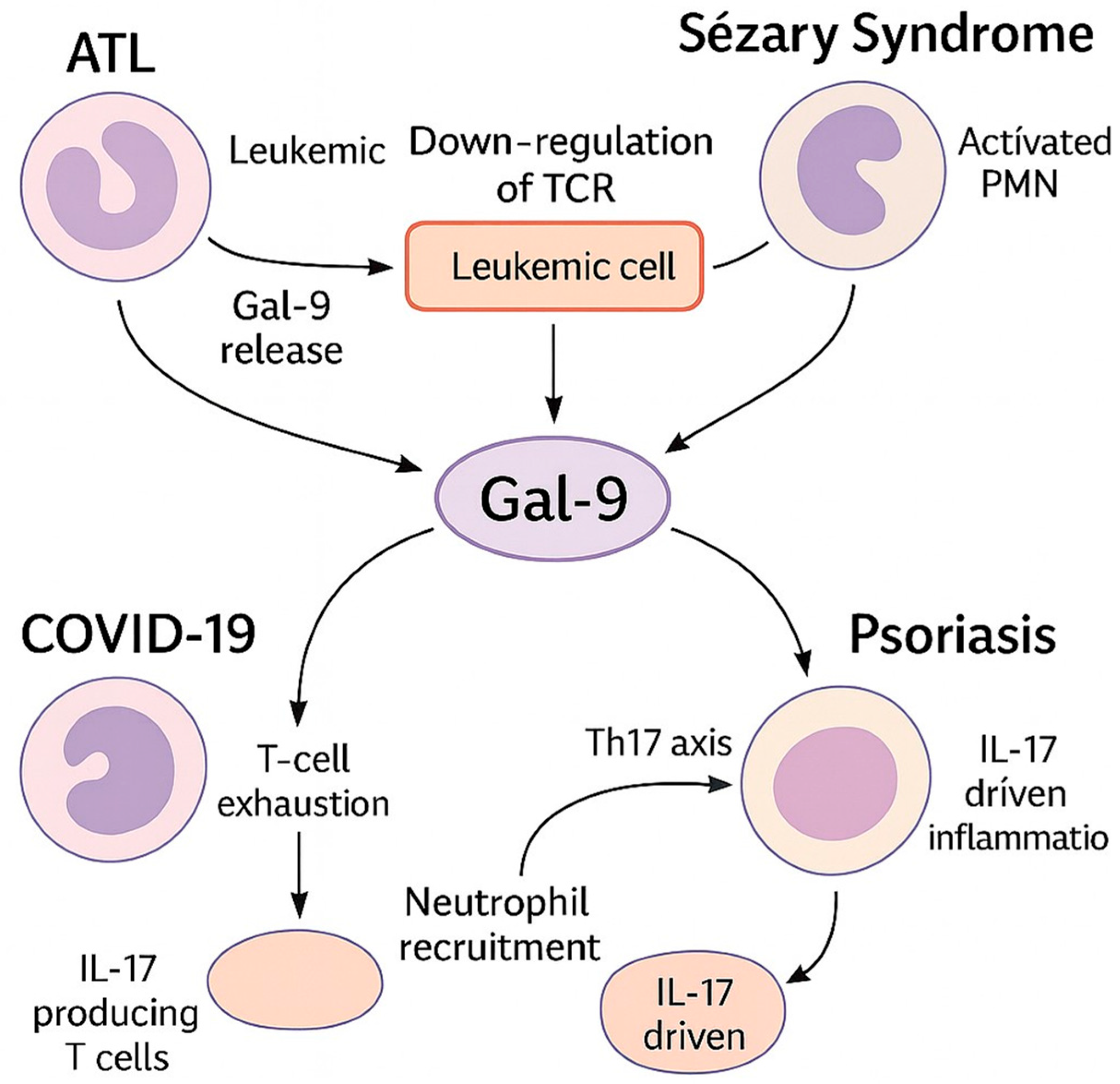
3.1. Disease-Specific Features of the Neutrophil–Galectin-9 Axis
- ATL and Neutrophils
3.2. Neutrophil Dysfunction and Immune Dysregulation in SS and ATL
3.3. The Role of Gal-9 as a ‘Diagnostic and Prognostic Biomarker’ in COVID-19
3.4. Neutrophil–Galectin-9 Axis in Psoriasis
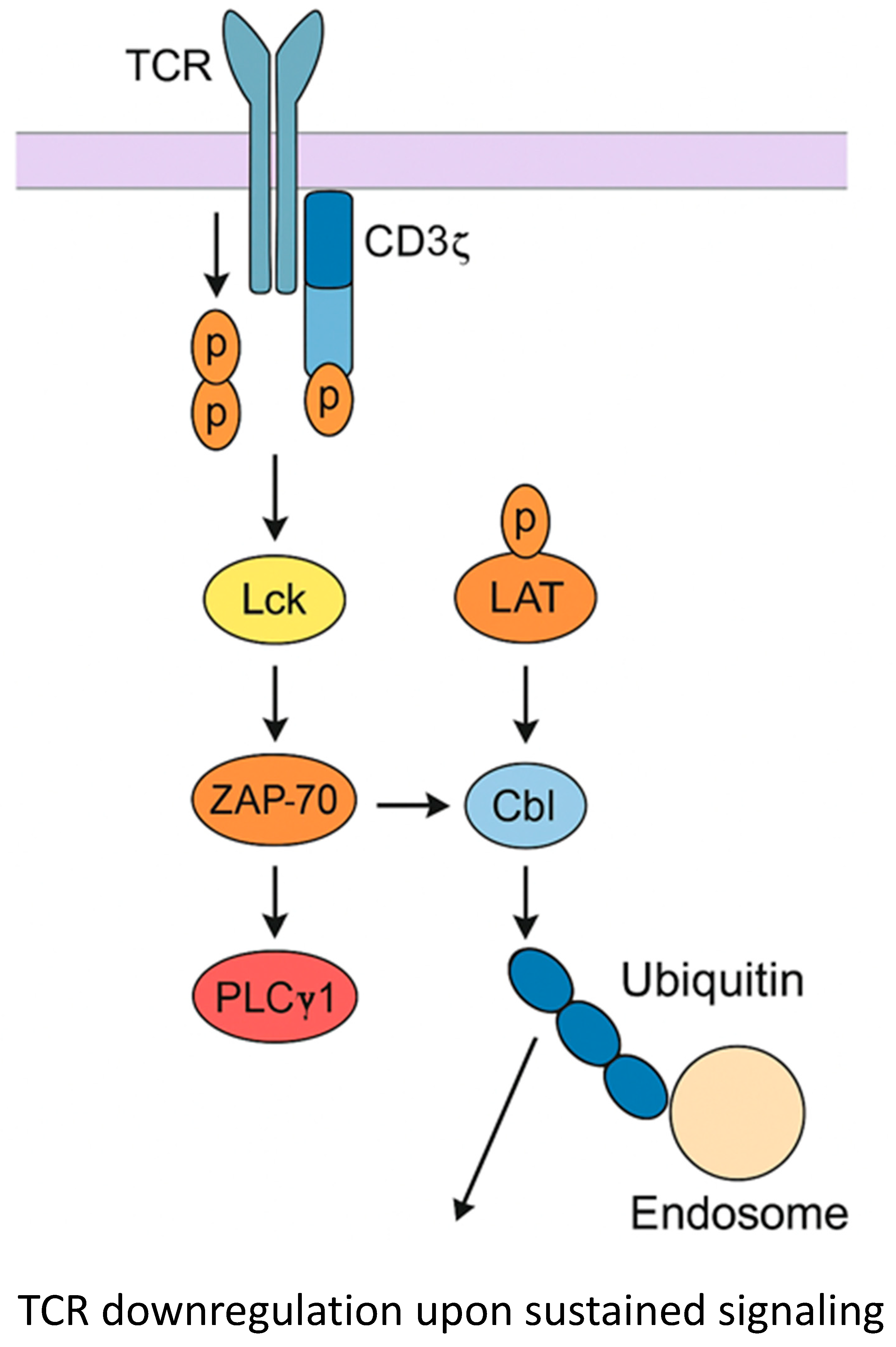
3.5. Context-Dependent T-Cell Stimulation by Galectin-9
4. Conclusions
Funding
Institutional Review Board Statement
Informed Consent Statement
Data Availability Statement
Acknowledgments
Conflicts of Interest
Abbreviations
| ATL | Adult T-cell leukemia |
| SS | Sézary syndrome |
| Gal-9 | galectin-9 |
| OPN | Osteopontin |
| COVID-19 | coronavirus disease 2019 |
| AI | artificial intelligence |
| NETs | neutrophil extracellular traps |
| PMA | phorbol 12-myristate 13-acetate |
| PKC | Protein kinase C |
References
- Ambreen, S.; McCarthy, A.; Hidalgo, A.; Adrover, J.M. Heart of the matter: Neutrophils, cancer, and cardiovascular disease. J. Exp. Med. 2025, 222, e20242402. [Google Scholar] [CrossRef]
- Xiong, S.; Dong, L.; Cheng, L. Neutrophils in cancer carcinogenesis and metastasis. J. Hematol. Oncol. 2021, 14, 173. [Google Scholar] [CrossRef]
- Zhu, K.; Li, P.; Mo, Y.; Wang, J.; Jiang, X.; Ge, J.; Huang, W.; Liu, Y.; Tang, Y.; Gong, Z.; et al. Neutrophils: Accomplices in metastasis. Cancer Lett. 2020, 492, 11–20. [Google Scholar] [CrossRef]
- Yamamoto, S.; Hattori, T.; Asou, N.; Nishimura, H.; Kawano, F.; Yodoi, J.; Takatsuki, K. Absolute neutrophilia in adult T cell leukemia. Jpn. J. Cancer Res. 1986, 77, 858–861. [Google Scholar] [PubMed]
- Poszepczynska, E.; Martinvalet, D.; Bouloc, A.; Echchakir, H.; Wechsler, J.; Becherel, P.A.; Boumsell, L.; Bensussan, A.; Bagot, M. Erythrodermic cutaneous T-cell lymphoma with disseminated pustulosis. Production of high levels of interleukin-8 by tumour cells. Br. J. Dermatol. 2001, 144, 1073–1079. [Google Scholar] [CrossRef] [PubMed]
- Takasaki, Y.; Iwanaga, M.; Imaizumi, Y.; Tawara, M.; Joh, T.; Kohno, T.; Yamada, Y.; Kamihira, S.; Ikeda, S.; Miyazaki, Y.; et al. Long-term study of indolent adult T-cell leukemia-lymphoma. Blood 2010, 115, 4337–4343. [Google Scholar] [CrossRef]
- Fierro, M.T.; Cuffini, A.M.; Novelli, M.; Banche, G.; Allizond, V.; Comessatti, A.; Brizio, M.; Scalas, D.; Merlino, C.; Quaglino, P.; et al. Functional and phenotypical alterations of polymorphonuclear cells in Sezary syndrome patients. Eur. J. Dermatol. 2011, 21, 921–929. [Google Scholar] [CrossRef]
- Bozorgmehr, N.; Mashhouri, S.; Perez Rosero, E.; Xu, L.; Shahbaz, S.; Sligl, W.; Osman, M.; Kutsogiannis, D.J.; MacIntyre, E.; O’Neil, C.R.; et al. Galectin-9, a Player in Cytokine Release Syndrome and a Surrogate Diagnostic Biomarker in SARS-CoV-2 Infection. mBio 2021, 12, e00384-21. [Google Scholar] [CrossRef]
- Dashti, M.; Mohammadi, M.; Dehnavi, S.; Sadeghi, M. Immunomodulatory interactions between mesenchymal stromal/stem cells and immune cells in psoriasis: Therapeutic potential and challenges. Stem. Cell Res. Ther. 2025, 16, 241. [Google Scholar] [CrossRef] [PubMed]
- Hattori, T. Unlocking medical breakthroughs: The transformative role of case reports in cloinical discovery. Reports 2025, 8, 9. [Google Scholar] [CrossRef]
- Cao, Z.; Leng, P.; Xu, H.; Li, X. The regulating role of galectin-9 in immune cell populations. Front. Pharmacol. 2024, 15, 1462061. [Google Scholar] [CrossRef]
- Tsuda, H.; Takatsuki, K. Specific decrease in T3 antigen density in adult T-cell leukaemia cells: I. Flow microfluorometric analysis. Br. J. Cancer 1984, 50, 843–845. [Google Scholar] [CrossRef]
- Kataoka, K.; Nagata, Y.; Kitanaka, A.; Shiraishi, Y.; Shimamura, T.; Yasunaga, J.; Totoki, Y.; Chiba, K.; Sato-Otsubo, A.; Nagae, G.; et al. Integrated molecular analysis of adult T cell leukemia/lymphoma. Nat. Genet. 2015, 47, 1304–1315. [Google Scholar] [CrossRef]
- Mohammed, T.O.; Chagan-Yasutan, H.; Ashino, Y.; Nakayama, W.; Takahashi, Y.; Shimomura, T.; Fujimoto, T.; Watanabe, Y.; Niki, T.; Suzushima, H.; et al. Galectin-9 as a Predictive Marker for the Onset of Immune-Related Adverse Effects Associated with Anti-CCR4 MoAb Therapy in Patients with Adult T Cell Leukemia. Tohoku J. Exp. Med. 2017, 241, 201–208. [Google Scholar] [CrossRef] [PubMed]
- Takeuchi, M.; Miyoshi, H.; Nakashima, K.; Kawamoto, K.; Yamada, K.; Yanagida, E.; Muta, H.; Moritsubo, M.; Umeno, T.; Suzuki, T.; et al. Comprehensive immunohistochemical analysis of immune checkpoint molecules in adult T cell leukemia/lymphoma. Ann. Hematol. 2020, 99, 1093–1098. [Google Scholar] [CrossRef]
- Najidh, S.; Tensen, C.P.; van der Sluijs-Gelling, A.J.; Teodosio, C.; Cats, D.; Mei, H.; Kuipers, T.B.; Out-Luijting, J.J.; Zoutman, W.H.; van Hall, T.; et al. Improved Sezary cell detection and novel insights into immunophenotypic and molecular heterogeneity in Sezary syndrome. Blood 2021, 138, 2539–2554. [Google Scholar] [CrossRef] [PubMed]
- Jonak, C.; Brunner, P.M. Blood will tell: Profiling Sezary syndrome. Blood 2021, 138, 2450–2451. [Google Scholar] [CrossRef]
- Liu, Z.; Wu, X.; Hwang, S.T.; Liu, J. The Role of Tumor Microenvironment in Mycosis Fungoides and Sezary Syndrome. Ann. Dermatol. 2021, 33, 487–496. [Google Scholar] [CrossRef]
- McKenna, E.; Wubben, R.; Isaza-Correa, J.M.; Melo, A.M.; Mhaonaigh, A.U.; Conlon, N.; O’Donnell, J.S.; Ni Cheallaigh, C.; Hurley, T.; Stevenson, N.J.; et al. Neutrophils in COVID-19: Not Innocent Bystanders. Front. Immunol. 2022, 13, 864387. [Google Scholar] [CrossRef] [PubMed]
- Paranga, T.G.; Pavel-Tanasa, M.; Constantinescu, D.; Iftimi, E.; Plesca, C.E.; Miftode, I.L.; Cianga, P.; Miftode, E. Distinct soluble immune checkpoint profiles characterize COVID-19 severity, mortality and SARS-CoV-2 variant infections. Front. Immunol. 2024, 15, 1464480. [Google Scholar] [CrossRef]
- Czerwinska, J.; Owczarczyk-Saczonek, A. The Role of the Neutrophilic Network in the Pathogenesis of Psoriasis. Int. J. Mol. Sci. 2022, 23, 1840. [Google Scholar] [CrossRef]
- Chagan-Yasutan, H.; He, N.; Arlud, S.; Fang, J.; Hattori, T. The elevation of plasma galectin-9 levels in patients with psoriasis and its associations with inflammatory and immune checkpoint molecules in skin tissues. Hum. Immunol. 2024, 85, 110741. [Google Scholar] [CrossRef]
- Chen, H.Y.; Wu, Y.F.; Chou, F.C.; Wu, Y.H.; Yeh, L.T.; Lin, K.I.; Liu, F.T.; Sytwu, H.K. Intracellular Galectin-9 Enhances Proximal TCR Signaling and Potentiates Autoimmune Diseases. J. Immunol. 2020, 204, 1158–1172. [Google Scholar] [CrossRef]
- Gossink, E.M.; Coffer, P.J.; Cutilli, A.; Lindemans, C.A. Immunomodulation by galectin-9: Distinct role in T cell populations, current therapeutic avenues and future potential. Cell. Immunol. 2025, 407, 104890. [Google Scholar] [CrossRef] [PubMed]
- San Jose, E.; Borroto, A.; Niedergang, F.; Alcover, A.; Alarcon, B. Triggering the TCR complex causes the downregulation of nonengaged receptors by a signal transduction-dependent mechanism. Immunity 2000, 12, 161–170. [Google Scholar] [CrossRef]
- Shahbaz, S.; Dunsmore, G.; Koleva, P.; Xu, L.; Houston, S.; Elahi, S. Galectin-9 and VISTA Expression Define Terminally Exhausted T Cells in HIV-1 Infection. J. Immunol. 2020, 204, 2474–2491. [Google Scholar] [CrossRef] [PubMed]
- von Essen, M.; Nielsen, M.W.; Bonefeld, C.M.; Boding, L.; Larsen, J.M.; Leitges, M.; Baier, G.; Odum, N.; Geisler, C. Protein kinase C (PKC) alpha and PKC theta are the major PKC isotypes involved in TCR down-regulation. J. Immunol. 2006, 176, 7502–7510. [Google Scholar] [CrossRef] [PubMed]



| Step | Description | Number of Records |
|---|---|---|
| 1. Initial AI-assisted retrieval | Comprehensive literature search using GPT-5 and Adobe Acrobat AI Assistant covering ATL, Sézary syndrome, COVID-19, psoriasis, neutrophils, Galectin-9, and TCR signaling. | 312 |
| 2. Title and abstract screening | AI-based clustering followed by manual exclusion of irrelevant or non-mechanistic studies. | 142 |
| 3. Full-text eligibility assessment | Evaluation of study design, disease relevance, and mechanistic contribution focusing on Gal-9, neutrophil biology, and TCR regulation. | 67 |
| 4. Final inclusion for synthesis | Studies selected for integration into the mechanistic and conceptual framework of this integrative review. | 20 |
| Disease Context | Neutrophil Activation/Status | Primary Source of Galectin-9 | Gal-9 Levels | Effects on T Cells/ATL | TCR Expression/Signaling | Innate–Adaptive Crosstalk | Clinical Correlations/Biomarkers | Key References |
|---|---|---|---|---|---|---|---|---|
| Adult T-cell leukemia/lymphoma (ATL) | Neutrophilia driven by Tax-mediated cytokine storm and infection-associated inflammation. | Leukemic + stromal cells; possible contribution from activated neutrophils. | High prior to therapy; declines with sIL-2R after chemotherapy. | Tim-3-mediated immunoregulation; potential driver of ATL activation. | Surface TCR downregulated; pathway chronically stimulated (noncanonical, cytokine- and Gal-9–associated). | Neutrophil-Gal-9 bridges myeloid activation and leukemic T-cell signaling. | Neutrophilia ≥ 7.5 × 10⁹/L predicts poor survival; Gal-9 correlates with tumor load. | [4,6,12,13,14,15] |
| Sézary syndrome (SS) | Elevated counts with reduced antimicrobial function; ↑CD11b, ↑CD66b, ↓CD62L phenotype. | Not clearly defined (limited direct evidence). | Not well quantified in SS-specific studies. | T-cell dysfunction with enhanced MDSC suppression. | Downregulation of THEMIS and LAIR1. | Aberrant neutrophil-T-cell signaling and MDSC-driven suppression. | Impaired microbicidal activity despite neutrophilia. | [16,17,18] |
| COVID-19 | Hyperactivated neutrophils with NETosis; contribute to ARDS and thrombosis. | Activated neutrophils (major source). | Elevated; correlates with sTREM-1, MCP-1, IL-6, NLR, PLR, ESR. | Induces T-cell exhaustion and reduced CD3-TCR expression. | Downregulated CD3-TCR complex. | Neutrophil-derived Gal-9 links innate hyperactivation to adaptive suppression. | Severity and mortality correlate with Gal-9. | [8,19,20] |
| Psoriasis | Abundant NET-forming neutrophils; drive IL-17-dependent inflammation. | Lesional keratinocytes (LGALS9) and circulating cells. | Increased; correlates with inflammatory/checkpoint molecules. | Promotes IL-17-mediated T-cell activation. | TCR modulation is indirect via cytokine milieu. | NETs amplify Th17 and autoantigen responses. | Neutrophil decline parallels clinical remission. | [9,21,22] |
Disclaimer/Publisher’s Note: The statements, opinions and data contained in all publications are solely those of the individual author(s) and contributor(s) and not of MDPI and/or the editor(s). MDPI and/or the editor(s) disclaim responsibility for any injury to people or property resulting from any ideas, methods, instructions or products referred to in the content. |
© 2025 by the author. Licensee MDPI, Basel, Switzerland. This article is an open access article distributed under the terms and conditions of the Creative Commons Attribution (CC BY) license.
Share and Cite
Hattori, T. Neutrophil–Galectin-9 Axis Linking Innate and Adaptive Immunity in ATL, Sézary Syndrome, COVID-19, and Psoriasis: An AI-Assisted Integrative Review. Reports 2026, 9, 16. https://doi.org/10.3390/reports9010016
Hattori T. Neutrophil–Galectin-9 Axis Linking Innate and Adaptive Immunity in ATL, Sézary Syndrome, COVID-19, and Psoriasis: An AI-Assisted Integrative Review. Reports. 2026; 9(1):16. https://doi.org/10.3390/reports9010016
Chicago/Turabian StyleHattori, Toshio. 2026. "Neutrophil–Galectin-9 Axis Linking Innate and Adaptive Immunity in ATL, Sézary Syndrome, COVID-19, and Psoriasis: An AI-Assisted Integrative Review" Reports 9, no. 1: 16. https://doi.org/10.3390/reports9010016
APA StyleHattori, T. (2026). Neutrophil–Galectin-9 Axis Linking Innate and Adaptive Immunity in ATL, Sézary Syndrome, COVID-19, and Psoriasis: An AI-Assisted Integrative Review. Reports, 9(1), 16. https://doi.org/10.3390/reports9010016