
Article

Wildfire Risk Assessment in the Mediterranean Under Climate Change

by
Ioannis Zarikos
1,*,
Nadia Politi
1,
Effrosyni Karakitsou
1,
Εirini Barianaki
2,
Nikolaos Gounaris
1,
Diamando Vlachogiannis
1 and
Athanasios Sfetsos
1
1
Environmental Research Laboratory, National Centre for Scientific Research “Demokritos”, 15310 Athens, Greece
2
Department of Economic and Regional Development, Panteion University of Social and Political Sciences, 17671 Athens, Greece
*
Author to whom correspondence should be addressed.
Fire 2026, 9(3), 135; https://doi.org/10.3390/fire9030135
Submission received: 18 December 2025 / Revised: 10 March 2026 / Accepted: 12 March 2026 / Published: 23 March 2026
(This article belongs to the Topic Disaster Risk Management and Resilience)

Abstract

This study presents a comprehensive wildfire risk assessment framework for Rhodes Island, Greece, aimed at quantifying the impacts of climate change on hazard levels and vulnerability in a typical Mediterranean environment. The approach integrates Fire Weather Index (FWI) data, detailed fuel-type mapping, and multiple vulnerability indicators covering ecological, socioeconomic, and population factors, enabling spatially explicit estimates of current and future wildfire risk. Historically, Rhodes mostly faces moderate wildfire risk, mainly in central and northeastern regions, with localised areas of higher risk near settlements and key economic sites. Climate forecasts for 2025–2049 predict a notable increase in hazard, with areas experiencing extreme fire weather (FWI > 50) increasing from 15.19% to 66–72%, across all emission scenarios. Ecological vulnerability is particularly alarming, as 93% of the island is already highly susceptible; fire-prone forest and agricultural zones are expected to move into the highest ecological risk categories, especially in the central mountain areas. The devastating 2023 wildfire, which burned over 17,600 hectares, caused more than €5.8 million in direct damages and led to the largest evacuation in the island’s history, closely aligning with high-risk zones modelled in the framework. An important insight is the limited spatial variation in near-future risk between RCP 4.5 and RCP 8.5, indicating that significant wildfire intensification is largely unavoidable by mid-century, emphasising the urgent need for quick adaptation and risk mitigation efforts for Mediterranean critical infrastructure and communities.

1. Introduction

Critical Infrastructure (CI) is indispensable in ensuring societies’ safety, economic stability, and well-being. However, the increasing frequency and intensity of natural hazards, particularly wildfires, pose significant threats to CI worldwide, with devastating socio-economic and environmental consequences. Satellite observations show that the frequency of extreme wildfire events worldwide increased by 2.2 times between 2003 and 2023, with the fire behaviour exacerbating in the boreal and temperate regions [1]. According to the European Forest Fire Information System (EFFIS) Annual report, in 2023, the EU experienced one of its most severe wildfire seasons since 2000, burning over 500,000 hectares, about half the size of Cyprus. Notably, 41% of this area was within the Natura 2000 network, which is vital for biodiversity [2]. Recent wildfire seasons in the European Union are a clear consequence of climate change, with increased fire intensity, extension beyond traditional summer months, and fires affecting previously unaffected areas [3,4,5,6].
Wildfire activity is driven by the intricate interaction of climate change, vegetation types, and topographical features [7,8]. The recent increase in wildfires is linked to prolonged drought, persistent high temperatures, changing precipitation patterns, land-use modifications, including forest-land encroachment and unplanned urbanisation, and anthropogenic ignitions [9,10,11,12,13,14,15]. While anthropogenic ignition is the primary source of wildfires in Greece, as in much of the Mediterranean [16], the susceptibility to ignition and the extent of burned areas are largely determined by the structure, quantity, and connectivity of available fuel, as well as its moisture content [17]. Wildfires are catastrophic events that induce significant social, economic, and environmental impacts because of their destructive potential and the difficulty of controlling them. The health impacts of wildfires, both short-term and long-term, are significant and should not be underestimated [18]. Exposure to wildfire smoke has been linked to increased mortality at the population level and a rise in respiratory illnesses. Furthermore, exposure to fine particulate matter (PM2.5) and chemicals in wildfire smoke is associated with a higher risk of developing various cancers [19,20].
Shifts in wildfire disturbances can have serious ecological impacts, such as reducing vegetation’s resilience to future disturbances, altering regional water supplies and water quality, and changing how wildlife responds, effects that are particularly pronounced during extended drought periods [21,22,23,24]. The escalating economic and social costs of increased wildfire activity are alarming, including infrastructure and property damages, declining property values near affected areas, and mounting firefighting expenses [25,26,27]. According to Eurostat, in 2023, EU governments allocated 40.6 billion EUR to fire protection services, marking an 8.5% increase from the previous year.
Wildfires can cause direct damage to critical infrastructure (CI), triggering cascading effects at multiple scales and levels [28]. These impacts may compromise CI functionality and lead to secondary consequences that disrupt normal societal and economic activities [29]. Therefore, ensuring that CI is resilient, that is capable of withstanding and rapidly recovering from wildfires, is essential for effective emergency management and for maintaining society’s ability to respond to disasters. A relevant review [30] provided an in-depth evaluation of anticipated single- and multi-hazard impacts on energy, transport, industrial, and social critical infrastructure across Europe until 2100. The study highlighted significant regional differences in projected changes related to wildfires, as well as elevated—but uneven—economic losses across the industry, transport, and energy sectors. More specifically, projected losses across Europe will be uneven, with southern and south-eastern countries facing the greatest impacts and likely needing to invest more in adaptation measures. The review of Naser, M.Z. and Kodur, V. (2025) [28] highlighted how increased urbanisation in wildfire-prone areas has greatly elevated the risks to buildings, industrial facilities, and critical infrastructure. As these assets now face greater wildfire threats, further research into their specific vulnerabilities is essential [31]. Following recent destructive wildfires, the focus must be placed on implementing effective, proactive mitigation and preparedness strategies.
Sfetsos et al. (2021) examined the climate resilience of interconnected critical infrastructures in Southern France, considering aspects of infrastructure business continuity and societal resilience [32]. The case study analysed and quantified the evolution of wildfire risk associated with climate change and critically evaluated the acceptable level of risk to interconnected critical infrastructure in this context. A comprehensive comparative analysis of wildfire impacts and related critical infrastructure resilience strategies in the European Union and the United States was presented [33], highlighting key challenges that hinder effective wildfire resilience.
The Mediterranean region, widely recognised as a hotspot for climate change, is particularly vulnerable to wildfires due to its unique combination of climatic, ecological, and anthropogenic factors. In recent years, the Mediterranean basin has experienced intense wildfire seasons, such as those in Portugal (2017) [34], Greece (2021) [35], and France (2025), primarily driven by prolonged and increasingly severe droughts.
Europe’s ability to cope in the coming decades will be increasingly strained by the higher probability of extreme fire events in a warming climate, combined with a one-week average extension of the fire season across most countries [36,37,38,39]. Climate change projections of wildfire events under a moderate CIMP6 scenario, compared to a baseline of fire danger, using a 30-year ERA5 reanalysis, showed that areas in southern Europe could experience a tenfold increase in the probability of catastrophic fires in any given year [40].
The study by Politi et al. (2022) [41], using dynamically downscaled high-resolution simulations at 5 km under RCP4.5 and RCP8.5, projected that Greece is likely to experience notably severe drought conditions in the coming years. The use of high spatial resolution in the analysis revealed significant variation in drought characteristics across different regions, with pronounced temporal and spatial differences depending on the emission scenario considered. Moreover, by computing the daily Fire Weather Index (FWI) and Initial Spread Index (ISI) from climate projections, a significant projected increase in wildfire risk for Greece, particularly in the southern mainland and the Aegean Islands, was identified in a study using identical climate datasets [42], underscoring the increasing probability of wildfire occurrences under climate change. The implementation of a comprehensive methodology to assess the evolution of the spatial and temporal distribution of fire weather danger revealed greater increases under RCP4.5 than under RCP8.5, especially in most areas of the Natura 2000 network, including archaeological sites and locations of natural beauty with significant tourist activity, such as Rhodes Island [39].
Rhodes Island, Greece, has experienced recurrent wildfires that have severely affected its CI, residential areas, and landscape [43,44]. According to the National Bank of Greece (NBG), Rhodes has exceptional natural assets that position it as a potential model for sustainable development (https://www.nbg.gr/el/omilos/meletes-oikonomikes-analuseis/reports/rodos-2023, accessed on 11 March 2026). Local entrepreneurs are instrumental in bringing this vision to life through active investment and the strategic promotion of the island’s distinctive identity. As a key pillar of Greece’s tourism industry, attracting 12% of all tourists and 17% of international visitors, Rhodes must prioritise protection against wildfires, the island’s most significant threat, to safeguard its residents, infrastructure, and natural environment. In this work, we present and apply a novel, integrated approach to assess wildfire risk and impacts under climate change, using Rhodes Island as a case study, taking into account historical wildfires, exposure based on FWI and fuel types, and vulnerability. Impact assessment is determined using population, socioeconomic and ecological data to derive reparation costs for buildings and critical infrastructure. Moreover, wildfire risk projections are derived from climate simulations under RCP4.8 and RCP8.5 for the period 2025–2049. The primary goal is to provide a robust, adaptable framework for accurately assessing wildfire risk and impacts across regions threatened by climate change. This approach is crucial for estimating population and asset exposure to wildfires and assessing socioeconomic implications. Section 2 outlines the methodology, data, tools, and study area. Section 3 presents the results and examines projected changes relative to the historical period. Section 4 summarises the study’s main findings and conclusions.

2. Materials and Methods

2.1. Methodology

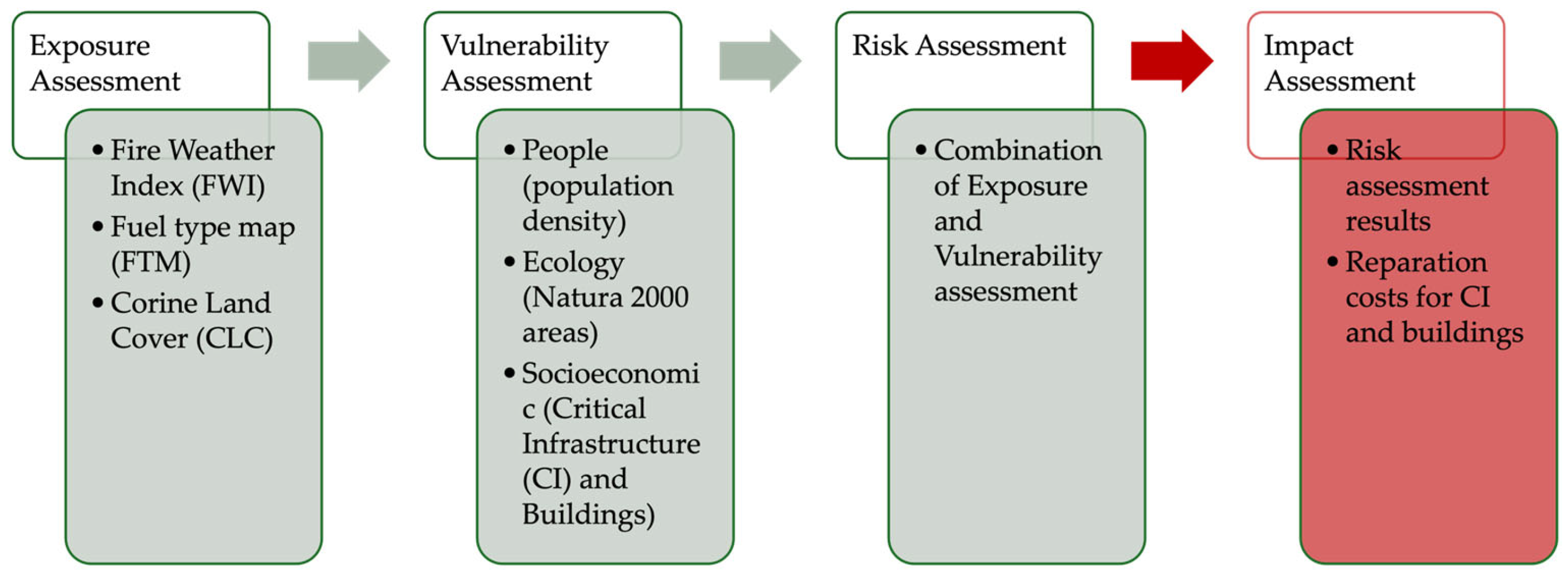
The applied methodology for the wildfire risk assessment comprises 3 steps, as shown in Figure 1. During the first step, wildfire exposure is estimated using a combination of the Fire Weather Index (FWI) (Hazard) and Fuel Type (FT) maps. The wildfire vulnerability is estimated according to the categories proposed in the literature [45,46], People; Ecological; and Socioeconomic. Based on the results of the first two steps of the methodology, the risk assessment is performed. Finally, by utilising the historical data from previous wildfires, an impact assessment was performed for the Case Study area.

2.1.1. Exposure

Wildfire exposure is estimated based on the combined effect of FWI and FT. Both FWI and FT are divided into categories, each with a specific score. Throughout the Greek fire season, which runs from 1 May to 31 October, the General Secretariat of Civil Protection issues a daily national fire danger map based on empirical data to assess risk corresponding to each Forest Service area (LFSO boundaries). Based on this system, fire danger levels are divided into five distinct categories. In our approach, we apply the same five-class structure to the FWI using the number of days with FWI > 50 to represent the extreme fire danger category [47]. The five categories are presented in Table 1. The FT-based European fuel map [48] is classified into 10 categories by increasing flammability. In our analysis, the same classification system is maintained. The integration and analysis of these datasets is based on the Corine Land Cover, which serves as the analysis grid, due to its correlation with the FT dataset.
The exposure is calculated as the product of FWI score and FT, ranging between 1 and 50. Finally, the exposure score is categorised into 5 categories, presented in Table 2.

2.1.2. Vulnerability

The vulnerability is categorised into three types: economic, ecological, and population. The economic vulnerability covers the majority of the CI in the case study area (road network, power distribution network, and buildings) based on their location and their total reparation cost in case of complete damage, the ecological vulnerability based on the CLC categories, with respect to their vegetation type and coverage, and the population-based vulnerability on the population density (people/km2) in the case study area. Each vulnerability type is divided into 5 categories, with the score increasing as the vulnerability increases. The vulnerability classification is presented in detail in Table 3, below.

2.1.3. Risk

The wildfire risk is calculated and categorised based on the scoring system used for exposure and vulnerability, described above. For each of the vulnerability categories, the risk ( R i s k i ) is calculated as the product of the exposure and vulnerability score, Equation (1). The total risk ( R i s k t o t ), is calculated with emphasis on the risk to the local population, as shown in Equation (2), based on the existing literature [45].
R i s k i = E x p s o s u r e i   ·   V u l n e r a b i l i t y i
R i s k t o t = 0.5 R i s k p o p + 0.25 R i s k e c o l + 0.25 R i s k e c o n
where i refers to the risk categories: p o p for people, e c o l for ecological, and e c o n for the economic risk.

2.2. Data and Tools

2.2.1. Climate Projections Data and Fire Weather Index (FWI)

Historical and future daily climate parameter datasets were generated from long-term climate simulations using the non-hydrostatic Weather Research and Forecasting model (WRF/ARW, v3.6.1) [49] for the historical period (1980–2004) and the near future period (2025–2049). The WRF model dynamically downscaled EC-EARTH [50] global climate simulations for the Representative Concentration Pathways (RCP) 4.5 and 8.5 scenarios to produce high-resolution climate datasets at 5 km horizontal resolution over Greece. Additional information and validation results of these simulations are available in recent studies [51,52,53,54,55,56]. The uncertainty inherent in the results stems from dependence on a single model of data, regardless of its high spatial resolution, as well as from the constraints of the emissions scenarios.
In the present study, the Canadian Forest Fire Weather Index (FWI) was used, which is one of the most widely used indicators for operational fire danger forecasts by the European Forest Fire Information System (EFFIS) (https://effis.jrc.ec.europa.eu/, accessed on 11 March 2026) network and fire risk assessment. The FWI is based on the Canadian Forest Fire Weather Index (FWI) System (CFFWIS) and is extensively described (https://cwfis.cfs.nrcan.gc.ca/background/summary/fwi, accessed on 11 March 2026). The Canadian Forest Fire Weather Index (FWI) System consists of six components that account for the effects of fuel moisture and weather conditions on fire behaviour. The mathematical formulas, system equations, and codes of its components are available in the work of the Canadian Forest Service [47]. The final FWI is a standard aggregated numerical rating of fire intensity that takes into consideration the other components. Generally, the higher the FWI, the more likely weather conditions are to lead to extensive wildfire occurrences.
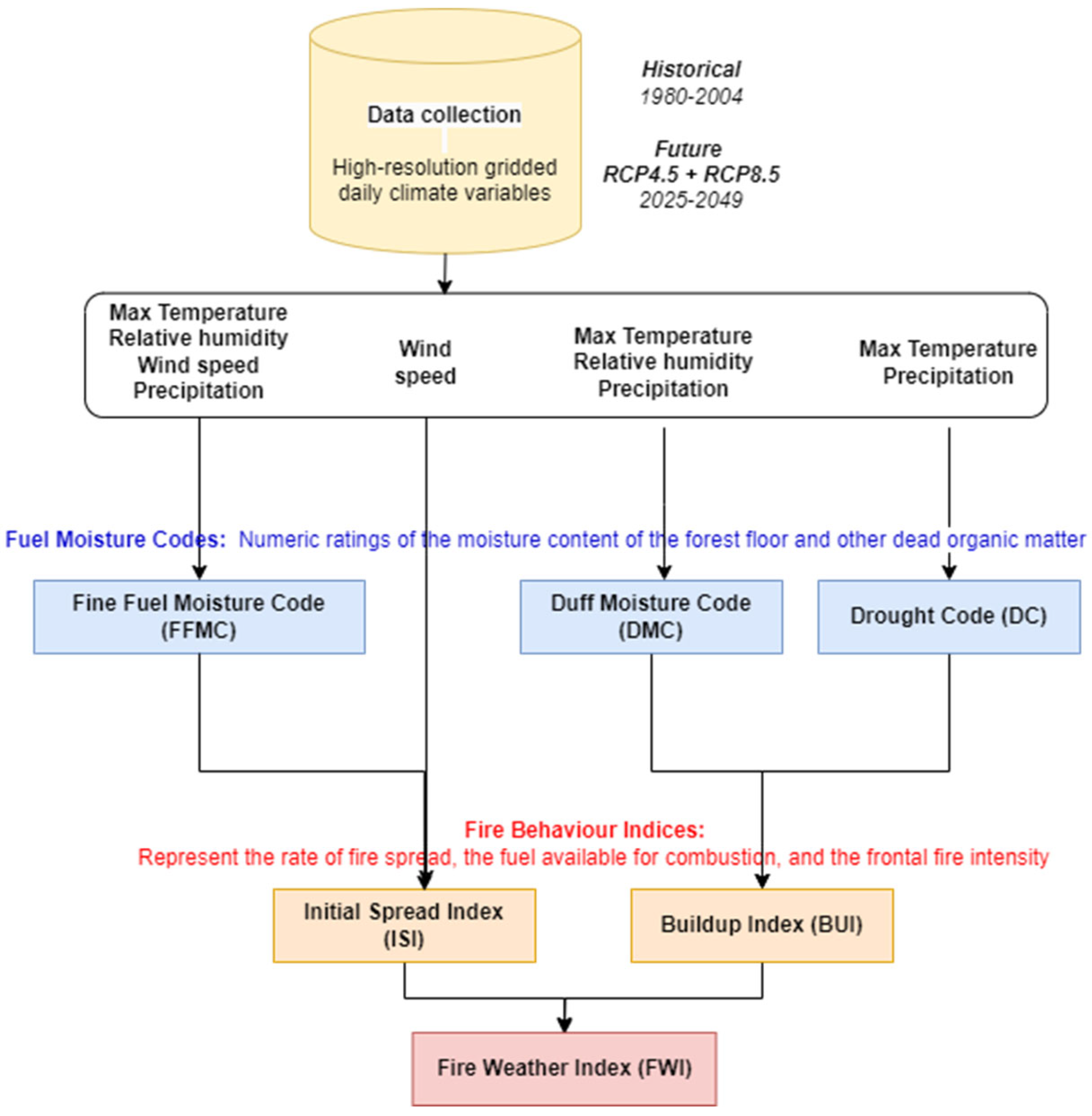
All FWI System components are calculated daily using four meteorological variables: precipitation, wind speed at 10 m, relative humidity, and maximum air temperature. FWI System fuel moisture codes are based on the previous day’s conditions to reflect the cumulative effect of daily weather on fuel moisture. The calculated historical and future fire weather gridded datasets at 5 km for Greece (Rhodes Island included) are extensively described and analysed [42] for the Greek fire season, which spans from May to October. The components and structure of the FWI System are illustrated in the workflow diagram (Figure 2). Table 4 illustrates the classification of FWI values into fire danger classes for European environmental territories, as proposed by EFFIS. The FWI extreme class thresholds map for Greece, as derived from previous works [39,42], shows that the value of 50 can be considered as extreme FWI for the island of Rhodes. Thus, for this work, the number of days with very high fire weather danger (FWI > 50) was investigated.

2.2.2. High-Accuracy Fuel Type Maps

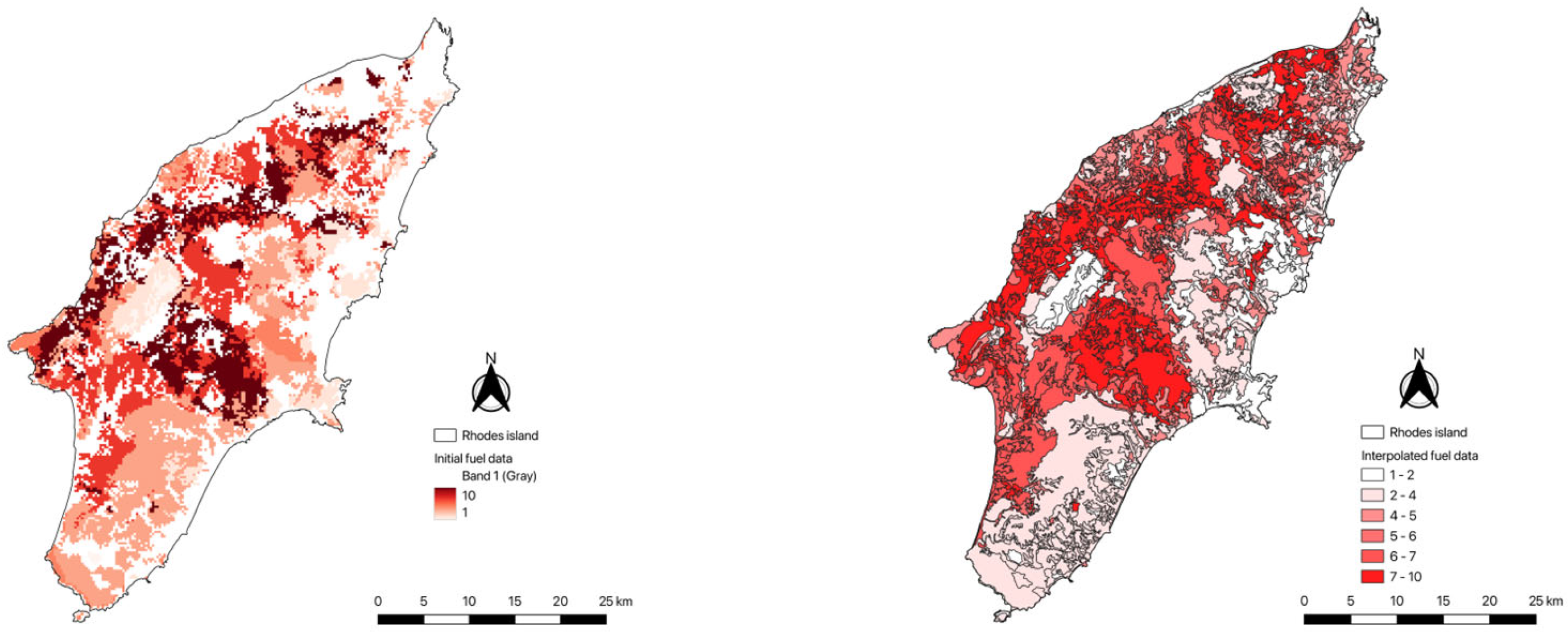
The existing EFFIS fuel map (https://forest-fire.emergency.copernicus.eu/applications/data-and-services, accessed on 11 March 2026) for the area of interest contains extensive data gaps that partially cover the total extent of the case study area. To accurately map flammable locations, the fuel type map was aligned with Corine Land Cover (CLC) classes. The raster-derived fuel attributes (FT map) were interpolated onto vector polygons sharing the same CLC category, preserving vegetation homogeneity, which is essential for our methodology. Zonal statistics were computed to obtain mean raster values for polygons with existing data within each CLC group, using inverse-distance weighted averaging from the nearest same-CLC neighbours. This approach generated complete, spatially continuous fuel maps, enabling precise delineation of fuel types. The dataset was then corrected and post-processed using in situ and remote sensing observations. The results are presented in Figure 3, and the link-up table between the CLC and FT data is shown in Table 5, below.

2.3. Case Study Area

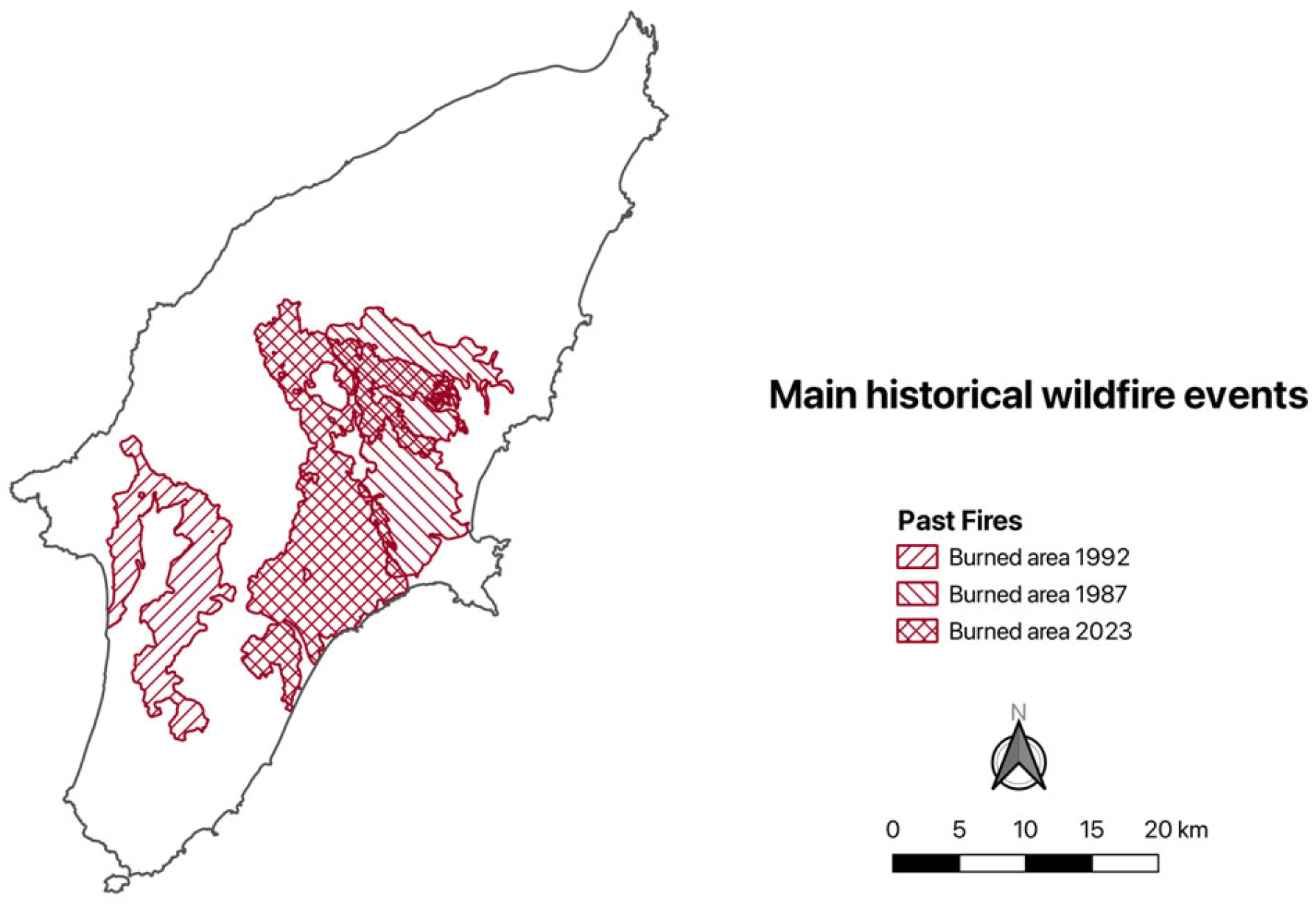
The South Aegean Region, an archipelago region at the South-eastern edge of Greece, administratively includes the island clusters of the Cyclades and the Dodecanese with a population of approximately 309.000 inhabitants, representing 3% of the total Greek population. In the last 30 years, climate change has had a more pronounced effect in this region compared to continental Greece and Europe at large. The significant hazards included sea level rise, increasing temperatures leading to more frequent heatwaves, wildfires, and an increase in extreme weather events such as heavy rainfall and flooding. These hazards pose significant risks to people, housing, infrastructure, services, the environment, and the local economy. The island of Rhodes, the former capital of the Dodecanese island complex, is prone to wildfires, as shown in Table 6 and Figure 4. Such extensive wildfires have a significant impact on the small rural areas, especially islands. Wildfires are mainly caused by prolonged heatwaves with characteristic low humidity, and by unmanaged forests (with fire-prone vegetation like pine trees).
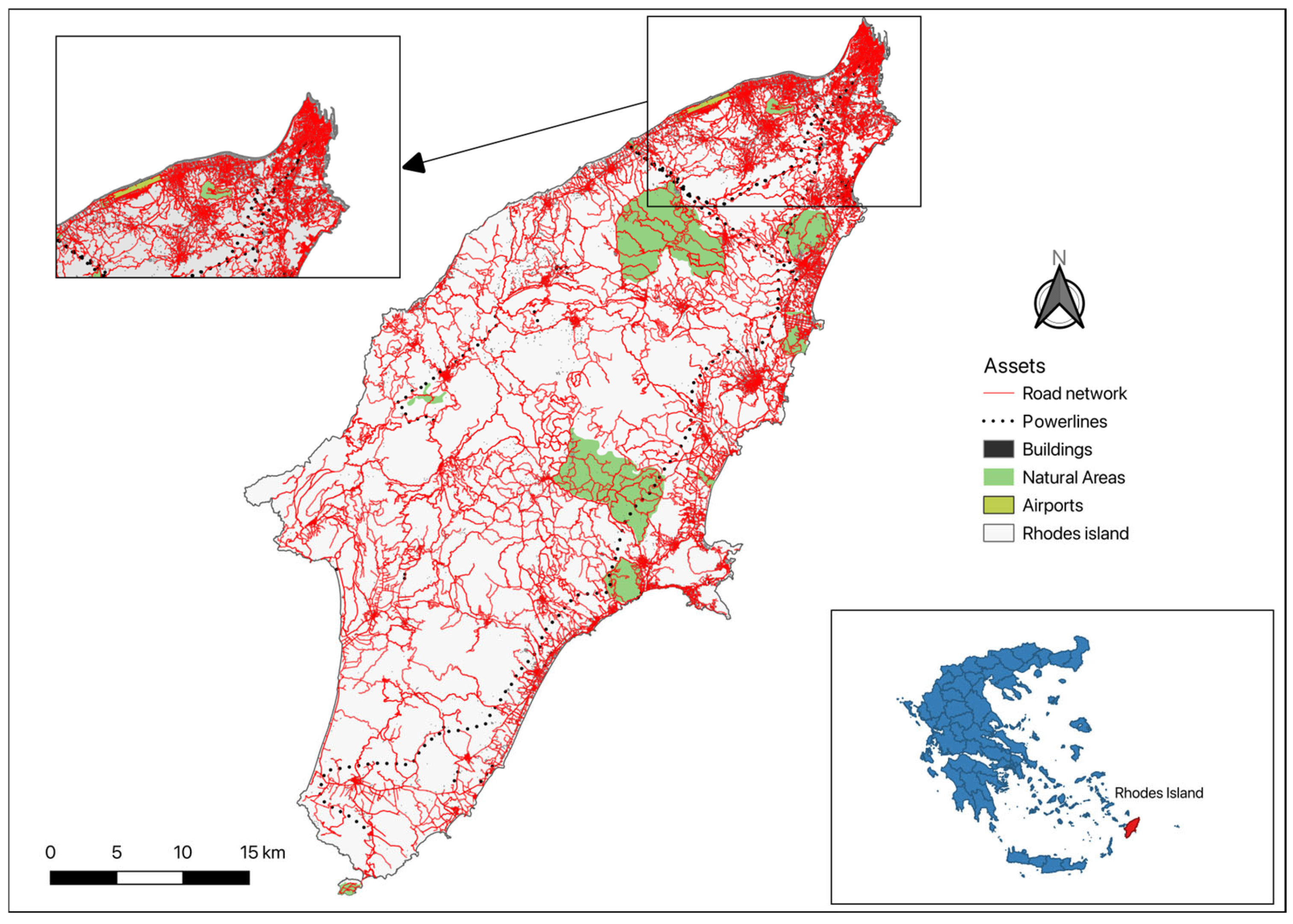
Extreme hazards, like wildfires, can severely disrupt the adequate supply of essential services, such as drinking water, food, electricity, and healthcare, to the inhabitants. These challenges become even more pronounced during the tourist season, when the region faces a sharp increase in population over the summer months. Figure 5 illustrates the critical infrastructure of the island, which comprises the road network, power lines, buildings, natural areas, and airports.

3. Results and Discussion

3.1. Hazard

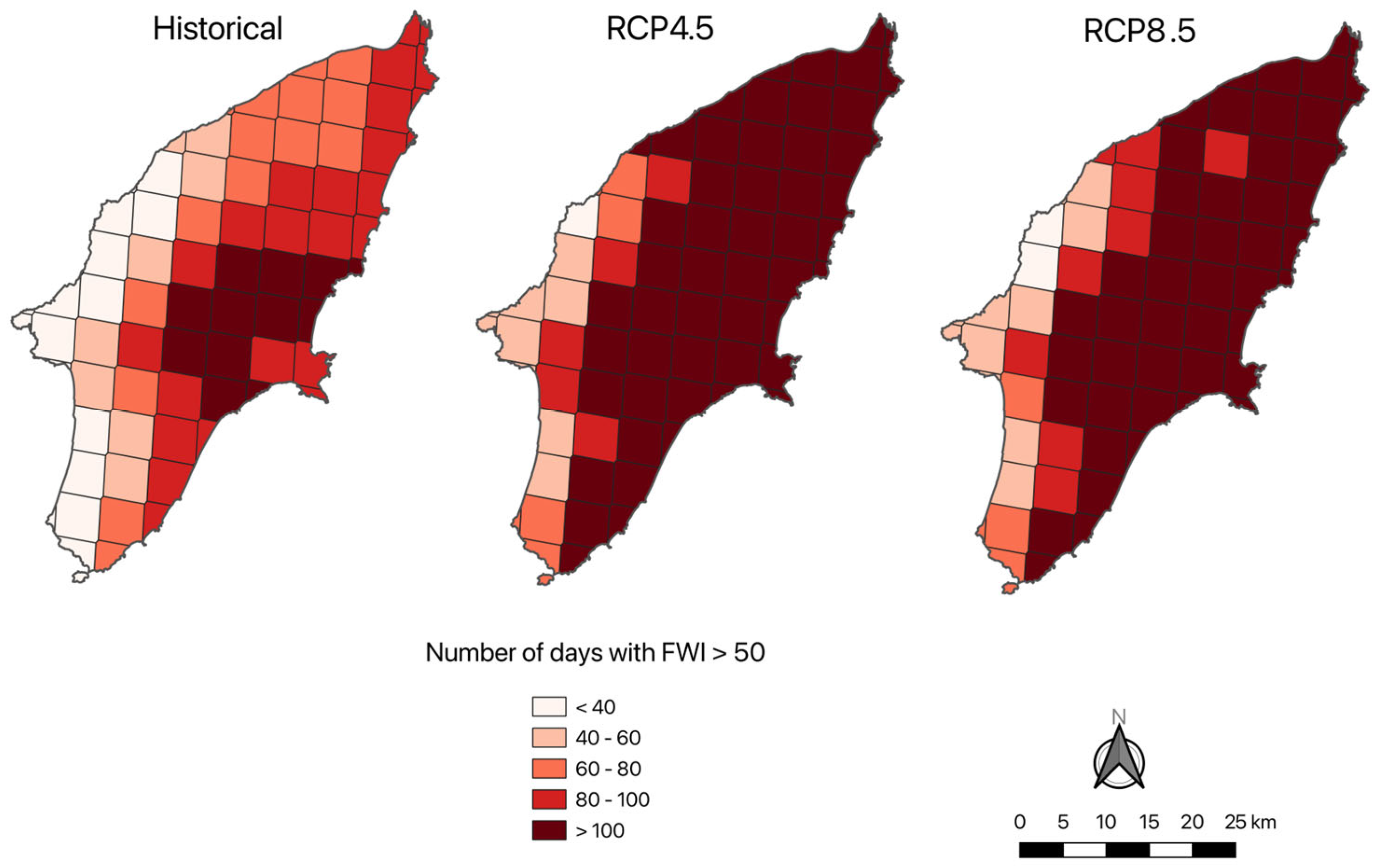
Wildfire is one of the main hazards that has historically affected Rhodes Island, causing devastating impacts on the CI, people, and the environment (Table 6). Historical FWI data align with the occurrence of these wildfire events, both in terms of probability and the areas within the case study region where they occurred. Figure 6 illustrates the number of days with FWI > 50, which EFFIS classifies as an extreme fire risk. In the historical data, high hazard scores are mainly located in the central and southern parts of the island. Future projections indicate an increase in areas with hazard scores > 4, covering more than 77% of the island, across all scenarios.
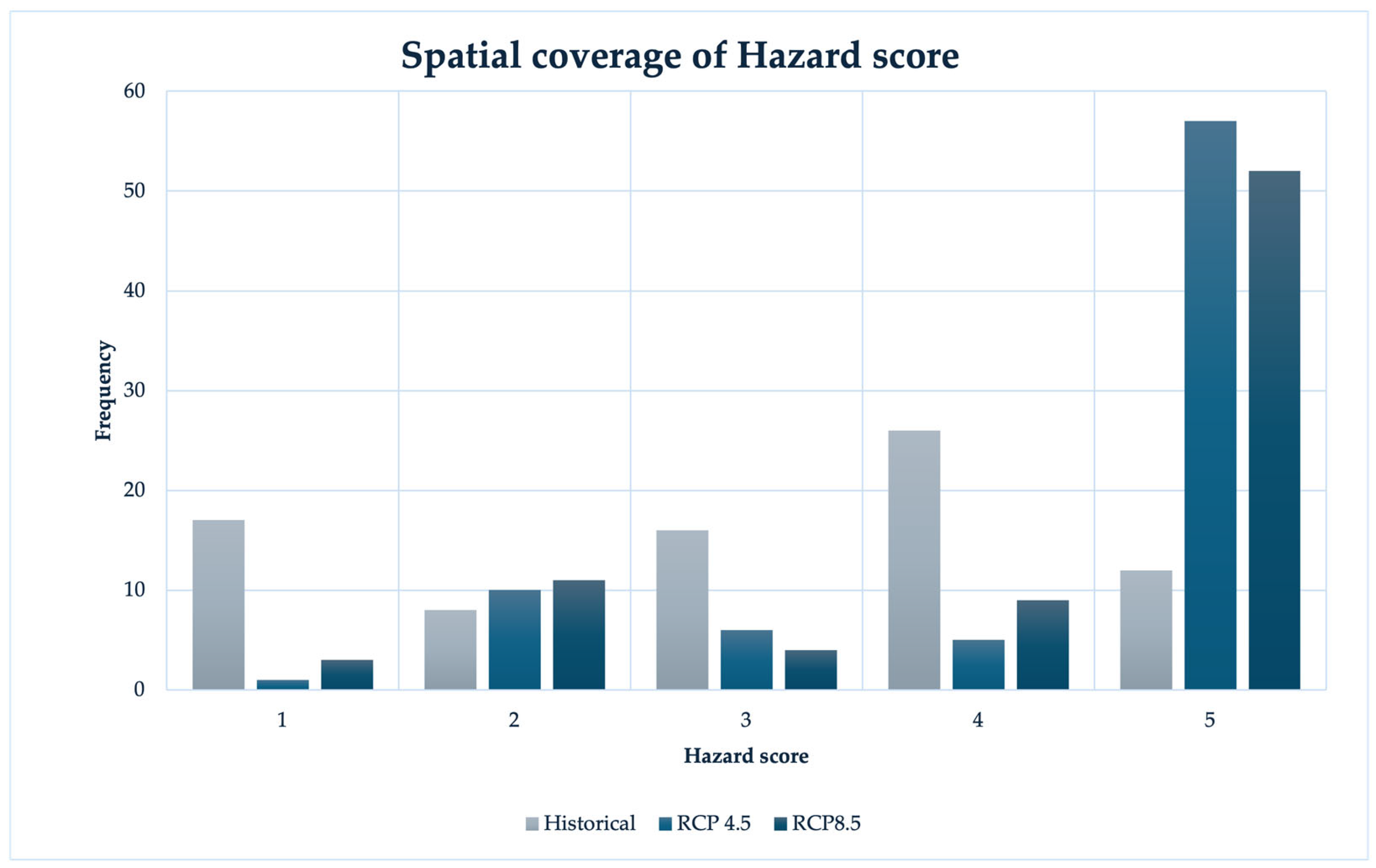
The historical data indicate that 15.19% of the island has more than 100 days with a hazard score of 5, as shown in Figure 7. This observation differs for near-future projections, regardless of the scenario. RCP 4.5 shows an increase in areas with a score of 5 to 72%, and RCP 8.5 shows an increase to 66%. It is important to highlight that, due to the minimal differences between RCP4.5 and RCP8.5 emission trajectories prior to 2050, the projected impacts of climate change remain comparable, with only minor variations detected in certain regions of the island.

3.2. Exposure

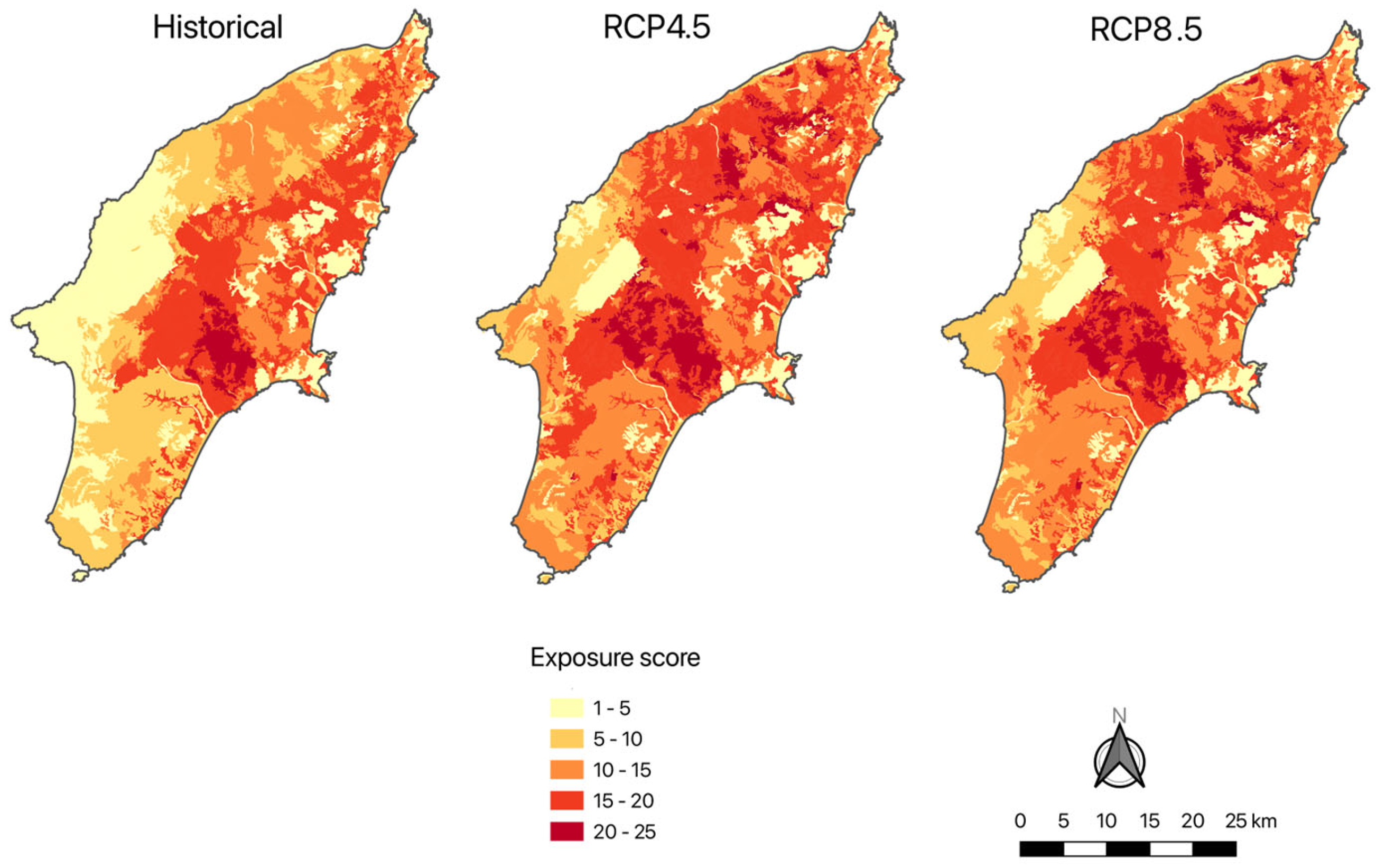
Wildfire exposure is calculated as the product of hazard (FWI) and the FT distribution in the case study area (CSA). In our case, wildfire exposure is strongly dependent on the FWI distribution, particularly when comparing historical data with future projections (Figure 8). The historical data indicate an increased wildfire exposure in the central and eastern parts of the CSA, with the higher risk categories located in the centre of the CSA, where the major wildfires have taken place in the past (Figure 4). In comparison with the historical period, near-future projection data show an increase in the areas with high (score 3–5) wildfire exposure values regardless of the simulated scenario. The highest increase can be observed at the north-west parts of the island, with less distinct in the south-west parts of the island.
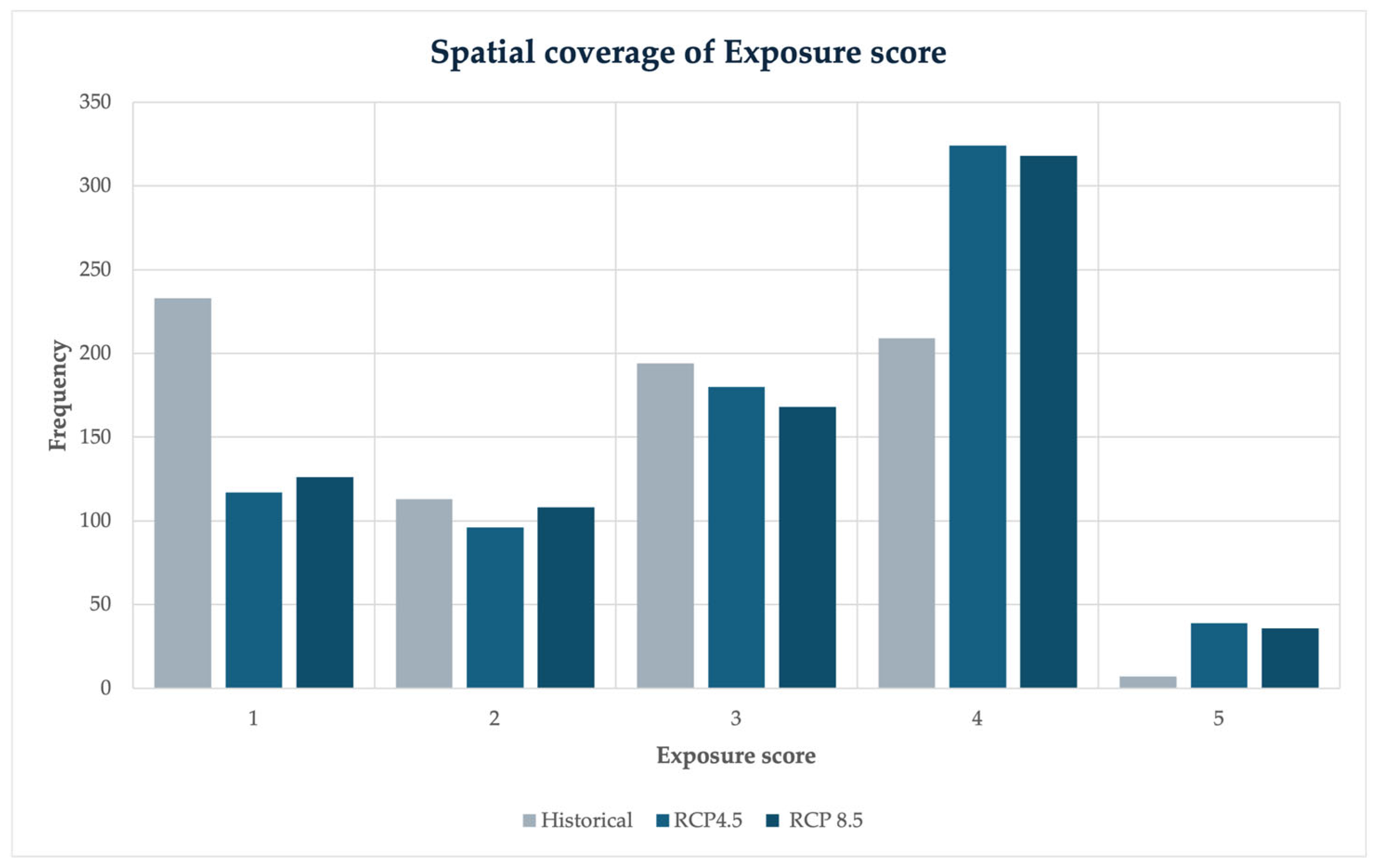
This observation is more evident in Figure 9, which shows the exposure score histograms for the historical and near future periods, for both scenarios. The data show clearly a drastic decrease in the areas with an exposure score of 1 by half, which are mainly located in the western part of the island. The same trend is observed in both score categories 2 and 3, but with a milder decrease. On the contrary, there is a distinct increase in areas with exposure scores of 4 and 5, showing the negative effects of climate change and the increasing stress from wildfires. As noted above, there is no distinct difference between the different RCP scenarios with respect to exposure.

3.3. Vulnerability

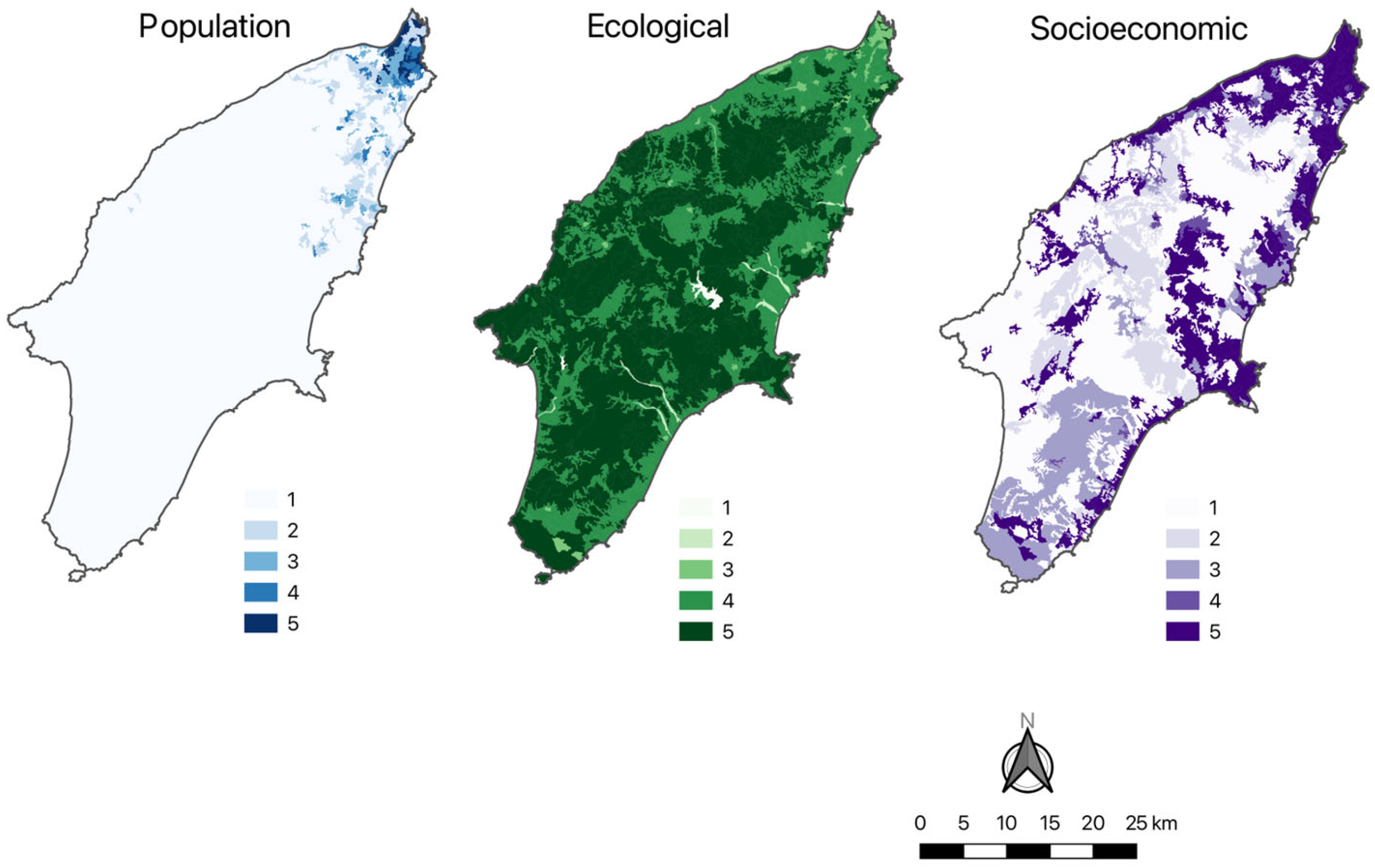
The vulnerabilities across the different categories are presented in Figure 10. As noted above, we assessed the vulnerability of three categories: (i) Population, (ii) Ecological, and (iii) Socioeconomic. Based on Figure 10 (Left), the population vulnerability is higher in the northern part of the island, where the city of Rhodes is located. Lower vulnerability scores are observed in coastal areas in the northeastern part of the island, as well as in some areas along the northwest coast. These areas are the most touristic, with a population density of more than 17 people/km2. The rest of the island is characterised by a low vulnerability score, due to the low population density (8 people/km2).
On the contrary, the ecological vulnerability is evidently high in the majority of the island. As shown in Figure 10 (Centre), 93% of the island is characterised by a high vulnerability score (≥4). These vulnerable areas are primarily due to the island’s extensive forested and agricultural cover and extensive marshlands. The rest of the island (7%), with a vulnerability score < 4, comprises the urban and peri-urban areas along the coast, where the major touristic activity takes place.
The socioeconomic vulnerability of the case study area, compared to other categories, exhibits a wider spatial distribution. Specifically, the socioeconomic assets are mainly concentrated in the northern coastal region of the islands. Thus, the vulnerability is attributable to the heightened economic and administrative activity in that area. The less-populated areas of the island—the centre and southern parts—show a low vulnerability score (1–3). The parts of this area with high socioeconomic vulnerability are due to the distribution of the high-voltage powerlines and substations.

3.4. Risk Assessment

The risk for each individual category and the overall risk per scenario is calculated as the product of exposure and vulnerability for each category.
The three maps in Figure 11 illustrate the wildfire risk to the population in Rhodes under historical, RCP4.5, and RCP8.5 climate scenarios, showing a generally stable yet worrying vulnerability pattern. Historically, Rhodes exhibits predominantly low risk (category 1, marked in dark blue) across most of the island, with small, scattered patches of slightly higher risk (category 2, marked in light yellow) centred in specific coastal and inland settlement areas, reflecting the distribution of human populations. The pattern relates to the distribution of the island’s densely populated areas, which are associated with the city’s administrative centre and tourist activities along the island’s northern and eastern coasts. Under the RCP4.5 scenario, which indicates moderate climate warming, the distribution of population risk remains very similar to current levels, with most of the island still classified as risk category 1 and only small areas classified as category 2. The RCP8.5 scenario, representing extreme climate change conditions, also shows the mostly blue (category 1) classification across most of the island, with only slight increases in the yellow (category 2) patches compared to the other scenarios.
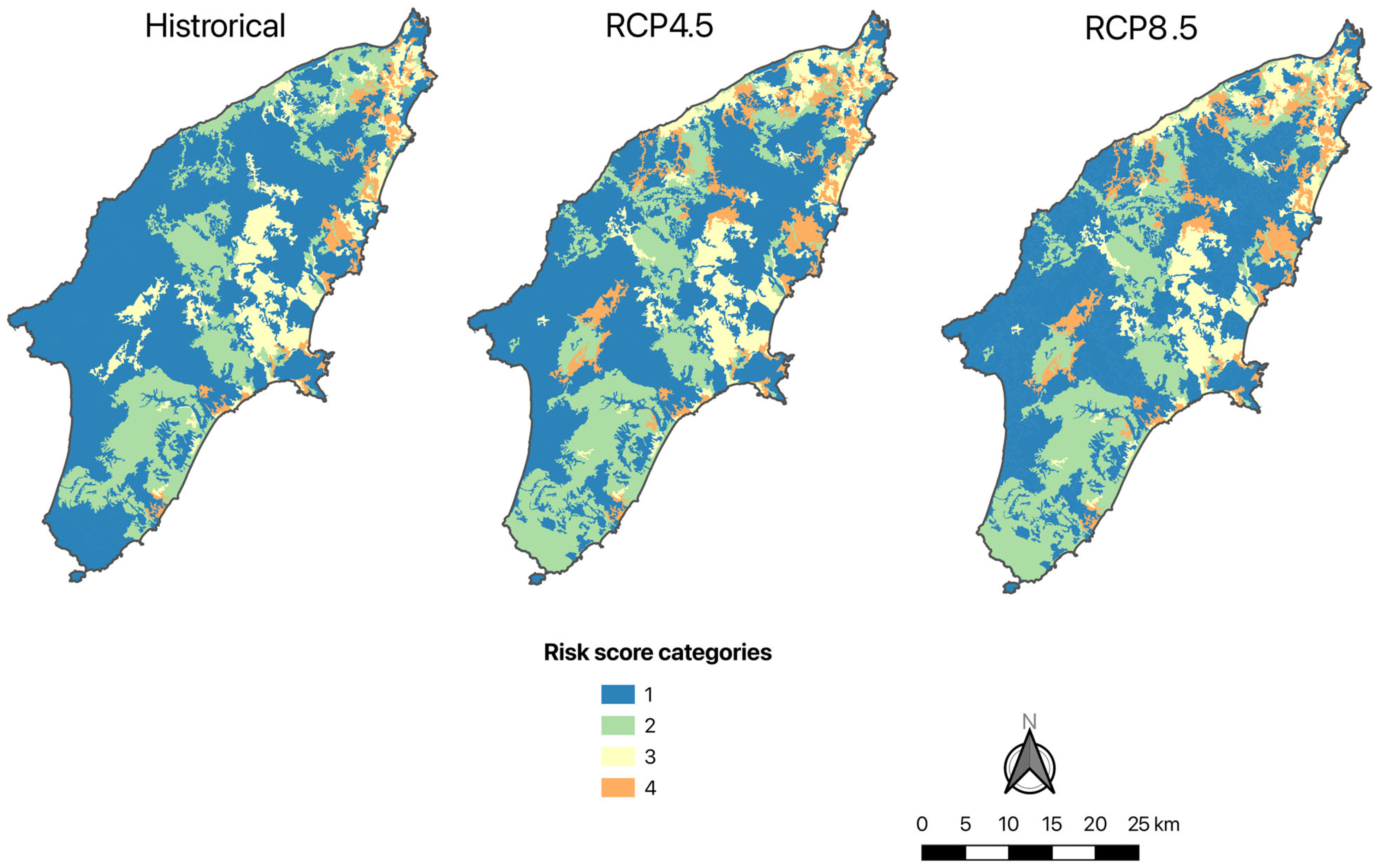
Figure 12 demonstrates ecological wildfire risk in Rhodes across historical, RCP4.5, and RCP8.5 climate scenarios. Historically, Rhodes shows moderate risk levels mainly in the central mountainous regions, with risk scores mostly in categories 3 and 4 (yellow to orange). At the same time, coastal areas and some northern parts display lower risk (categories 1–2, shown in blue and green), influenced by lower vegetation density and a different type of vegetation. Under the RCP4.5 scenario representing moderate climate warming, ecological risk increases significantly across the island, with the central mountainous areas shifting to the highest risk category (category 5, shown in red), indicating severe wildfire risk. The orange and yellow zones expand considerably, covering larger parts of the island’s interior, suggesting that even with moderate warming, substantial areas would face heightened fire risk. The RCP8.5 scenario indicates the most severe risk landscape, with the highest risk category (red, category 5) remaining widespread in the central regions and potentially spreading to other areas, while the extent of orange (category 4) zones increases noticeably across the island. Suggesting that under high-end climate change conditions, most of Rhodes’ interior would face significantly increased ecological wildfire vulnerability. The comparative progression across the three maps demonstrates a clear escalation pattern in which climate change drives substantial increases in ecological risk from wildfires, with the consistency of high-risk zones in central areas across all scenarios suggesting that these regions possess inherent fire-prone characteristics that will intensify under future climate conditions. This assessment reflects the growing concern about wildfire risks in the Mediterranean region, particularly following catastrophic events such as the July 2023 Rhodes wildfire that burned over 17,600 hectares.
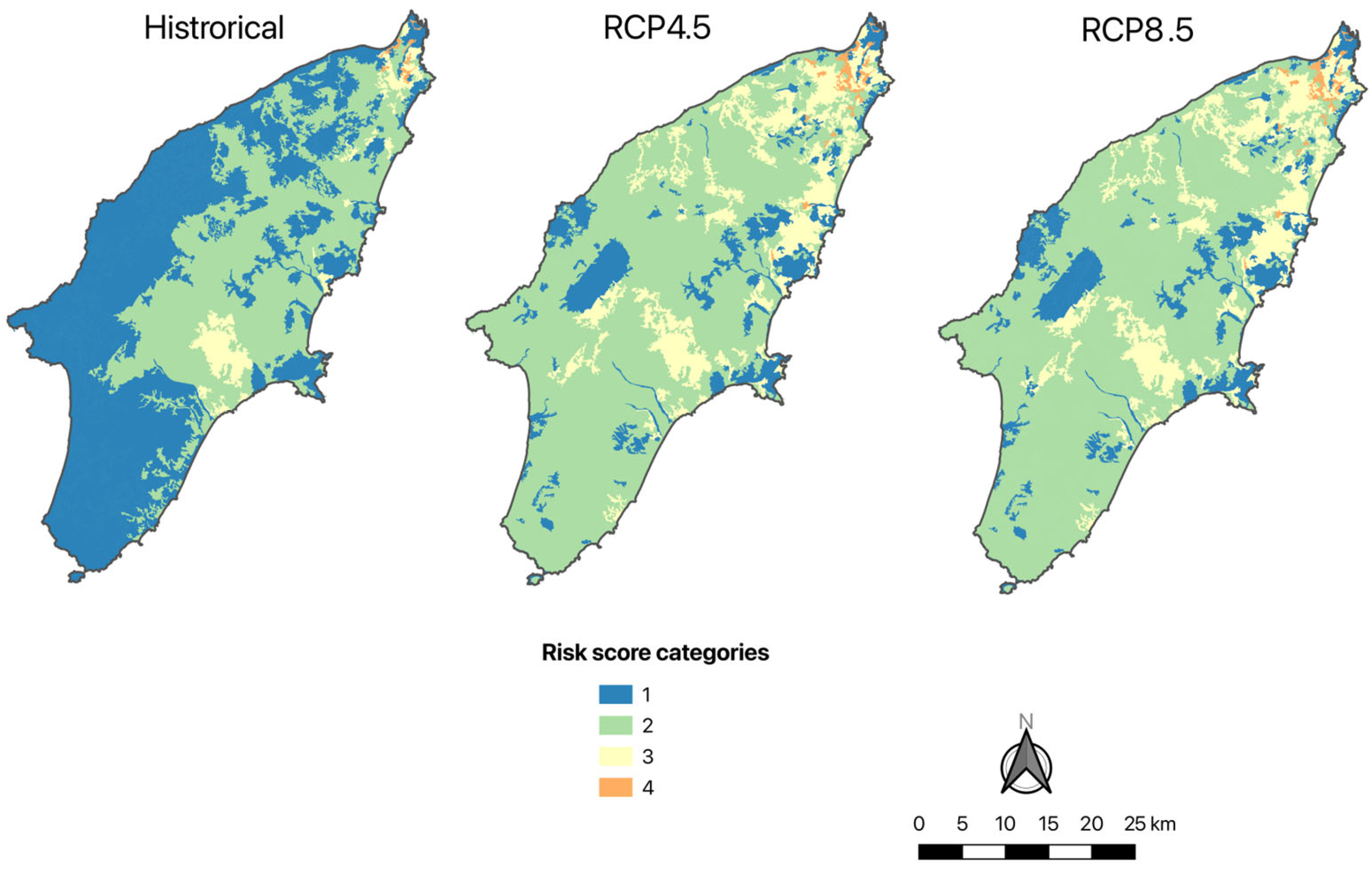
In the case of socioeconomic risk (Figure 13), Rhodes has historically exhibited a mixed risk profile, with category 1 (dark blue) covering substantial parts of the island, especially in the western and southern regions. Meanwhile, categories 2 (light green) and 3 (pale yellow) are intermingled across the central and northern areas, reflecting moderate economic exposure to fire-prone landscapes. The historical distribution indicates that economically vital areas, including the electricity distribution network, the road network, and houses, are dispersed across zones with varying baseline vulnerability. There are concentrated patches of category 3 and occasional category 4 (orange) areas, highlighting sectors where economic assets face heightened wildfire hazard exposure. Under the RCP4.5 scenario, socio-economic risk notably increases across the island, with a significant expansion of category 3 and category 4 zones covering much larger areas of the central and northern regions. The rise in orange (category 4) patches indicates that, under moderate climate change conditions, considerably more economically productive areas could face higher wildfire risk, potentially threatening agricultural output, power supply, transport, and tourism-dependent communities. Compared with RCP4.5, similar observations can be made for RCP8.5, with the increase in risk in a few small areas in the western part of the island.
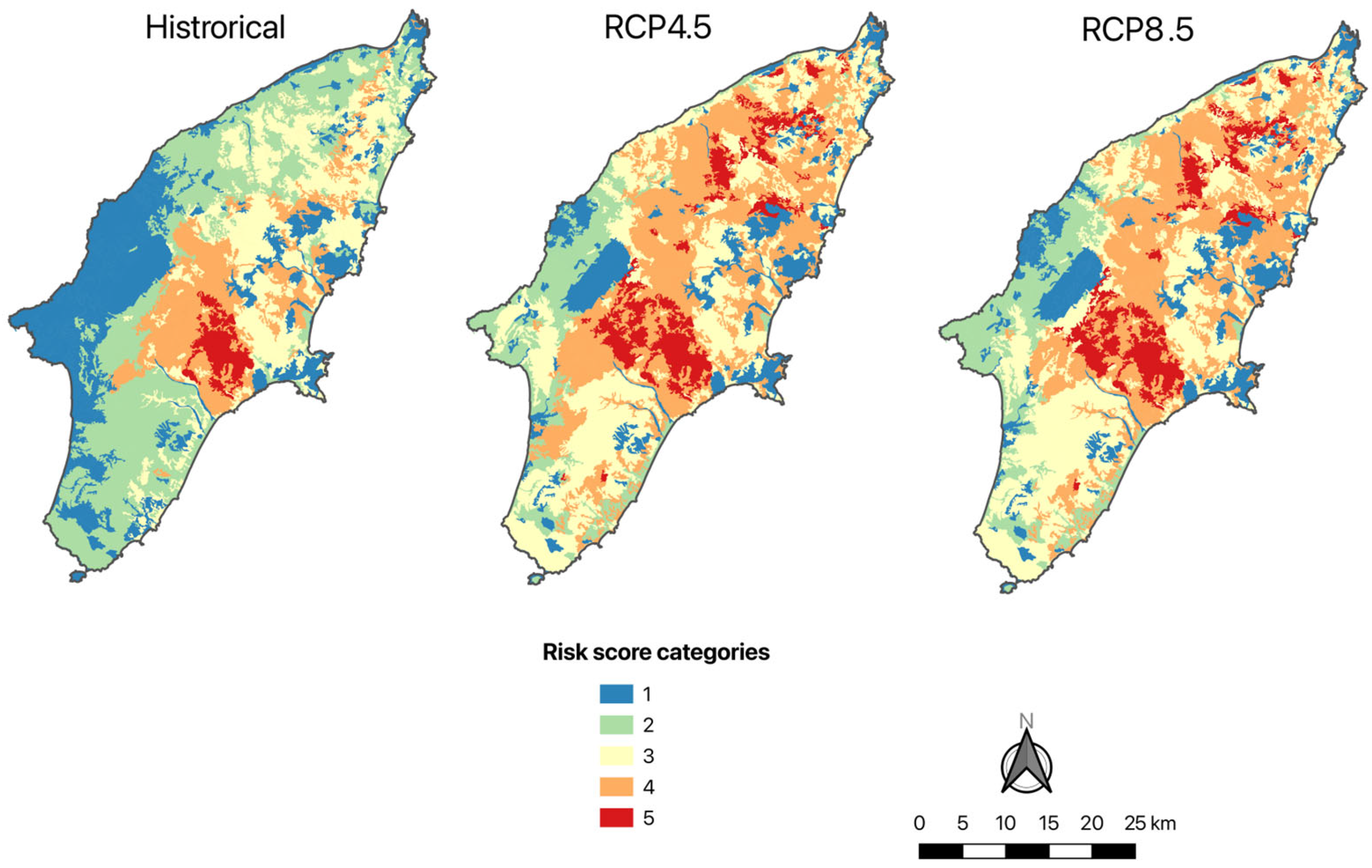
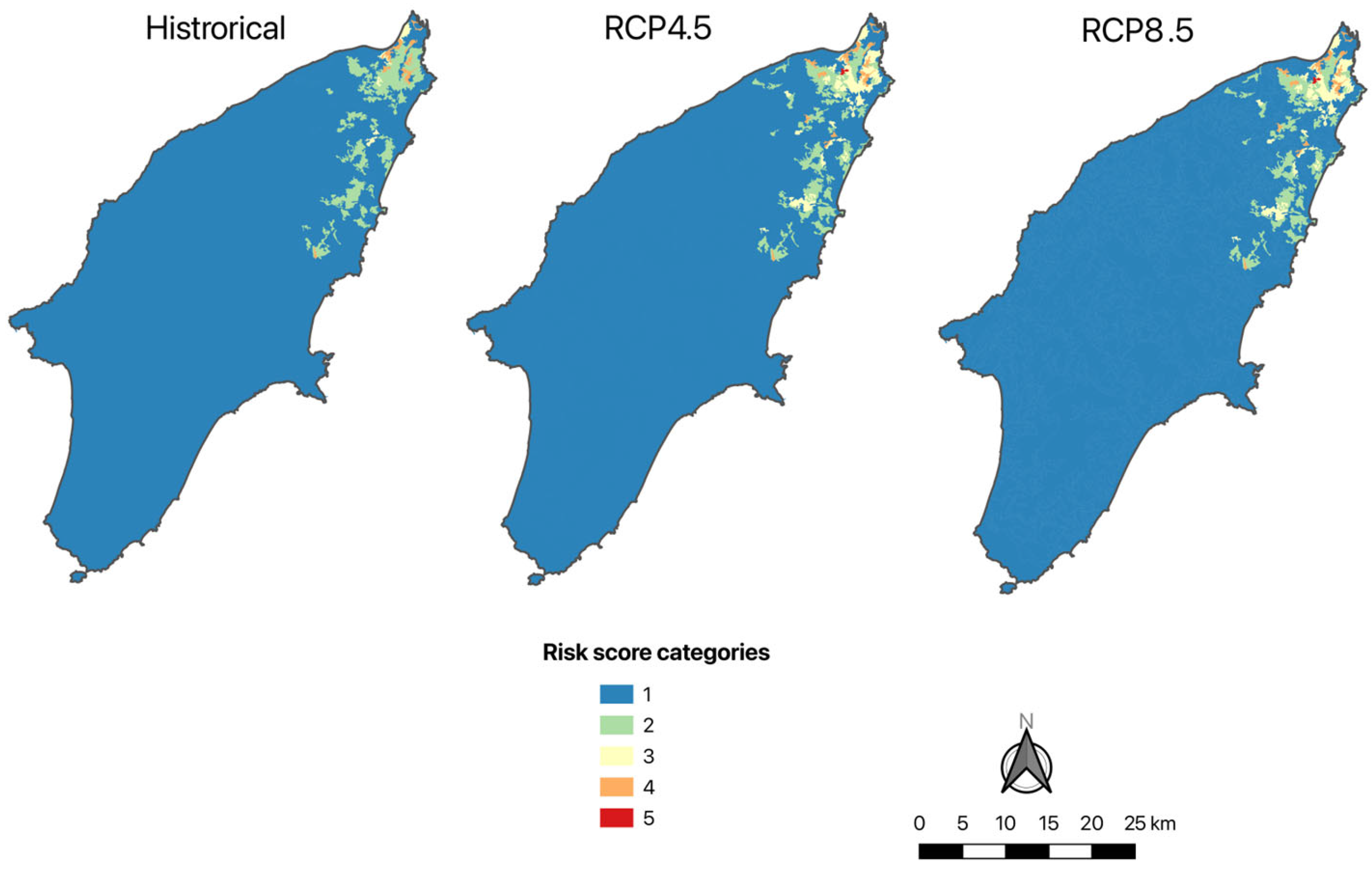
The total wildfire risk is shown in Figure 14. Historically, Rhodes mainly displays a risk profile of categories 1 (dark blue) and 2 (light green) across most of the island, with category 1 concentrated along the western and southern coasts, indicating that the baseline total risk remains relatively moderate across much of the landscape. The historical map shows scattered patches of category 3 (pale yellow), mainly in the central interior regions where multiple risk factors converge, especially where ecological vulnerability aligns with economically productive areas. Meanwhile, category 4 (orange) risk zones are rare and highly localised, suggesting that most of Rhodes’ territory experiences either low or moderate overall wildfire risk. Under the RCP4.5 and RCP8.5 scenarios, total risk increases noticeably across the island, with category 2 (light green) expanding significantly to replace much of the category 1 (dark blue) zones, particularly in the northern and central regions. The category 3 (pale yellow) patches grow in extent and intensity, especially concentrated in the central plateau and scattered across the interior, while isolated category 4 (orange) areas begin to emerge in the most vulnerable locations where ecological hazards, economic assets, and landscape characteristics coincide to create heightened combined risk. The differences between the two scenarios are minor and not significant.

3.5. Impact Assessment

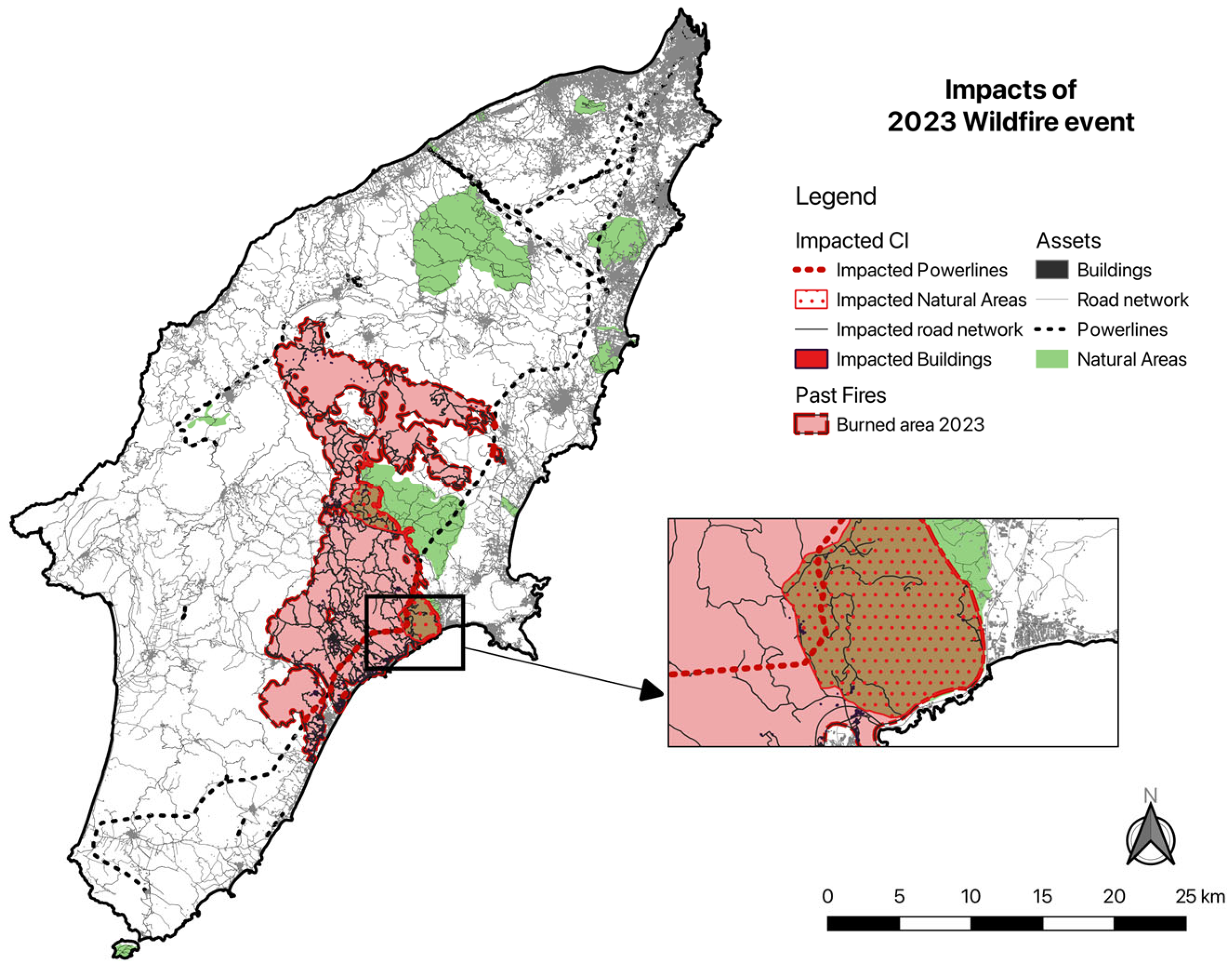
In 2023, the island of Rhodes suffered a 10-day wildfire event that caused extensive damage to over 17.600 acres. The extent of the burned area is presented in red colour in Figure 15. The ecological impact of the wildfire was a burn of 1.4% of the Natural areas [57], totalling 2,420,946 m2.
The event had a significant economic impact on the power distribution network and a small number of houses. According to reports from the Greek Electricity Distribution Network operator, 15 km of power lines, 110 pillars, and 3 substations were completely damaged. This led to a complete loss of service in the affected areas for the first 24 h, with network repairs lasting days after the event. The total reparation costs for the electricity grid amounted to €1,289,000. In addition to the electricity grid, the damage to the water distribution network was estimated at €400,000, with an additional €150,000 required to fund the emergency leasing of a desalination unit and power-generating sets to meet urgent water-supply needs in settlements or areas affected by the devastating fires. In addition to these damages, the Civil Protection reports indicate the complete destruction of 6 houses and partial damage to 39 others. The agricultural sector was the most affected of all. According to the Regional Authority reports, nearly 2500 livestock were lost, excluding wildlife losses, during this catastrophic event. Moreover, nearly 60,000 olive trees and 20,000 of various cultivations were burned, totalling €4,000,000 in reparation costs for the agricultural sector.
Finally, with respect to casualties, the impact on the population was zero; however, during the 10-day period, 19,000 people were evacuated from 11 settlements in the area to the northern parts of the island, either by land (16,000) or by sea (3000).

4. Conclusions

This study introduces a comprehensive wildfire risk assessment methodology implemented for Rhodes Island, accounting for both historical and future climate scenarios. It highlights the significant threat posed by climate change to the critical infrastructure and populations of the Mediterranean region.
The approach combines Fire Weather Index (FWI) data and fuel-type mapping with vulnerability assessments across ecological, socioeconomic, and population dimensions, creating a robust framework for evaluating wildfire risk. Historically, Rhodes had mostly moderate risk levels concentrated in the central and northeastern areas, with sporadic patches of higher risk near settlements and economic assets. However, climate projections for 2025–2049 show a substantial increase in wildfire hazard, with areas experiencing extreme fire weather conditions (FWI > 50) expanding sharply from 15.19% of the island under historical conditions to 66–72% under future scenarios, regardless of emission pathway.
The most significant impacts are in the ecological domain, where 93% of Rhodes is already highly vulnerable, with extensive forests and agricultural areas. Climate projections suggest that these already fire-prone zones will face intensified hazard conditions, leading to substantially higher ecological risks under both RCP 4.5 and RCP 8.5. The central mountainous areas, which have historically shown moderate ecological risk, are expected to shift into the highest risk categories, reflecting how climate change will increase fuel availability and worsen fire weather conditions.
This escalation is confirmed by the devastating 2023 wildfire that burned over 17,600 hectares, providing real-world evidence of the vulnerability patterns outlined in this assessment. This wildfire event resulted in quantified damages exceeding €5.8 million, including €4 million in agricultural losses, €1.3 million in damage to the electricity grid, and €550,000 in water infrastructure damage. The event burned 17,600 hectares, destroyed 2.42 million m2 of natural areas, and necessitated the largest evacuation operation in the island’s history, displacing 19,000 people over 10 days, all achieved with zero casualties. The spatial correlation between burned areas and modelled high-risk zones validates the assessment framework and confirms that projected climate change impacts are already materialising, highlighting the urgent need for comprehensive adaptation strategies.
A key finding is the limited difference between the RCP 4.5 and RCP 8.5 scenarios in spatial risk distribution in the near future (2025–2049), indicating that climate change impacts on wildfire risk are already largely unavoidable for this period. This highlights the urgent need to implement adaptive management and mitigation strategies now, as even moderate emission pathways will lead to significant wildfire intensification.
Future research should extend the assessment to longer timelines (beyond 2049) to identify potential differences across scenarios and evaluate the effectiveness of various adaptation and mitigation measures. Including land-use change projections, fire behaviour modelling, and socioeconomic capacity assessments would improve the framework’s relevance for regional policy and infrastructure planning. The methodology demonstrated here is valuable for quantifying compound climate change impacts and should be applied to other Mediterranean regions facing similar wildfire risks. It should be noted that because RCP4.5 and RCP8.5 emission trajectories are not significantly different before 2050, the impacts of climate change are similar, with only subtle variations observed in some areas of the island. This conclusion applies only to the analysed time horizon and modelling framework.
This work provides a quantitative basis for understanding wildfire risk under climate change in island communities. It underscores the need for proactive, science-based risk management to safeguard both natural and human systems in the Mediterranean. The findings stress that although climate change poses an unprecedented challenge to regional resilience, spatially resolved risk assessments like this deliver crucial data for targeted adaptation and mitigation efforts in the coming decades.

Author Contributions

Conceptualisation, A.S. and I.Z.; methodology, A.S., D.V. and I.Z.; data curation, I.Z., N.P., Ε.B., E.K. and N.G.; writing—original draft preparation, I.Z., N.P., D.V. and A.S.; funding acquisition, A.S. All authors have read and agreed to the published version of the manuscript.

Funding

This research was funded by the European Union’s Horizon program “ICARIA”, grant number GAP-101093806. This work was supported by computational time granted from the Greek Research and Technology Network (GRNET) in the National HPC facility, ARIS, under projects ID HRCOG (pr004020) and HRPOG (pr006028).

Institutional Review Board Statement

Not applicable.

Informed Consent Statement

Informed consent was obtained from all subjects involved in the study.

Data Availability Statement

The data presented in this study are available on request from the corresponding author.

Conflicts of Interest

The authors declare no conflicts of interest.

References

  1. Cunningham, C.X.; Williamson, G.J.; Bowman, D.M.J.S. Increasing Frequency and Intensity of the Most Extreme Wildfires on Earth. Nat. Ecol. Evol. 2024, 8, 1420–1425. [Google Scholar] [CrossRef] [PubMed]
  2. European Commission; Joint Research Centre. Forest Fires in Europe, Middle East and North Africa 2023; Publications Office: Luxembourg, 2024. [Google Scholar]
  3. Intergovernmental Panel on Climate Change (IPCC). Climate Change 2022—Impacts, Adaptation and Vulnerability: Working Group II Contribution to the Sixth Assessment Report of the Intergovernmental Panel on Climate Change, 1st ed.; Cambridge University Press: Cambridge, UK, 2023. [Google Scholar]
  4. Fargione, J.; Haase, D.L.; Burney, O.T.; Kildisheva, O.A.; Edge, G.; Cook-Patton, S.C.; Chapman, T.; Rempel, A.; Hurteau, M.D.; Davis, K.T.; et al. Challenges to the Reforestation Pipeline in the United States. Front. For. Glob. Change 2021, 4, 629198. [Google Scholar] [CrossRef]
  5. Shi, G.; Yan, H.; Zhang, W.; Dodson, J.; Heijnis, H.; Burrows, M. Rapid Warming Has Resulted in More Wildfires in Northeastern Australia. Sci. Total Environ. 2021, 771, 144888. [Google Scholar] [CrossRef] [PubMed]
  6. European Commission. Joint Research Centre. Wildfires Triggering Natech Events: A Structural Analysis of Natech Hazards in the Context of the Emerging Wildfire Threat in Europe; Publications Office: Luxembourg, 2020. [Google Scholar]
  7. Pausas, J.G.; Keeley, J.E. Wildfires and Global Change. Front. Ecol. Environ. 2021, 19, 387–395. [Google Scholar] [CrossRef]
  8. Keeley, J.E.; Syphard, A.D. Historical Patterns of Wildfire Ignition Sources in California Ecosystems. Int. J. Wildland Fire 2018, 27, 781–799. [Google Scholar] [CrossRef]
  9. Grünig, M.; Seidl, R.; Senf, C. Increasing Aridity Causes Larger and More Severe Forest Fires across Europe. Glob. Change Biol. 2023, 29, 1648–1659. [Google Scholar] [CrossRef]
  10. Cattau, M.E.; Wessman, C.; Mahood, A.; Balch, J.K. Anthropogenic and Lightning-started Fires Are Becoming Larger and More Frequent over a Longer Season Length in the U.S.A. Glob. Ecol. Biogeogr. 2020, 29, 668–681. [Google Scholar] [CrossRef]
  11. Ellis, T.M.; Bowman, D.M.J.S.; Jain, P.; Flannigan, M.D.; Williamson, G.J. Global Increase in Wildfire Risk Due to Climate-driven Declines in Fuel Moisture. Glob. Change Biol. 2022, 28, 1544–1559. [Google Scholar] [CrossRef]
  12. Jain, P.; Castellanos-Acuna, D.; Coogan, S.C.P.; Abatzoglou, J.T.; Flannigan, M.D. Observed Increases in Extreme Fire Weather Driven by Atmospheric Humidity and Temperature. Nat. Clim. Change 2022, 12, 63–70. [Google Scholar] [CrossRef]
  13. Parisien, M.-A.; Barber, Q.E.; Bourbonnais, M.L.; Daniels, L.D.; Flannigan, M.D.; Gray, R.W.; Hoffman, K.M.; Jain, P.; Stephens, S.L.; Taylor, S.W.; et al. Abrupt, Climate-Induced Increase in Wildfires in British Columbia since the Mid-2000s. Commun. Earth Environ. 2023, 4, 309. [Google Scholar] [CrossRef]
  14. Richardson, D.; Black, A.S.; Irving, D.; Matear, R.J.; Monselesan, D.P.; Risbey, J.S.; Squire, D.T.; Tozer, C.R. Global Increase in Wildfire Potential from Compound Fire Weather and Drought. npj Clim. Atmos. Sci. 2022, 5, 23. [Google Scholar] [CrossRef]
  15. Duane, A.; Castellnou, M.; Brotons, L. Towards a Comprehensive Look at Global Drivers of Novel Extreme Wildfire Events. Clim. Change 2021, 165, 43. [Google Scholar] [CrossRef]
  16. Ganteaume, A.; Camia, A.; Jappiot, M.; San-Miguel-Ayanz, J.; Long-Fournel, M.; Lampin, C. A Review of the Main Driving Factors of Forest Fire Ignition Over Europe. Environ. Manag. 2013, 51, 651–662. [Google Scholar] [CrossRef] [PubMed]
  17. Pausas, J.G.; Ribeiro, E. The Global Fire-Productivity Relationship: Fire and Productivity. Glob. Ecol. Biogeogr. 2013, 22, 728–736. [Google Scholar] [CrossRef]
  18. O’Neill, S.M.; Diao, M.; Raffuse, S.; Al-Hamdan, M.; Barik, M.; Jia, Y.; Reid, S.; Zou, Y.; Tong, D.; West, J.J.; et al. A Multi-Analysis Approach for Estimating Regional Health Impacts from the 2017 Northern California Wildfires. J. Air Waste Manag. Assoc. 2021, 71, 791–814. [Google Scholar] [CrossRef]
  19. Grant, E.; Runkle, J.D. Long-Term Health Effects of Wildfire Exposure: A Scoping Review. J. Clim. Change Health 2022, 6, 100110. [Google Scholar] [CrossRef]
  20. Alari, A.; Ballester, J.; Milà, C.; Benmarhnia, T.; Sofiev, M.; Uppstu, A.; Hänninen, R.; Tonne, C. Quantifying the Short-Term Mortality Effects of Wildfire Smoke in Europe: A Multicountry Epidemiological Study in 654 Contiguous Regions. Lancet Planet. Health 2025, 9, 101296. [Google Scholar] [CrossRef]
  21. San-Miguel-Ayanz, J.; Moreno, J.M.; Camia, A. Analysis of Large Fires in European Mediterranean Landscapes: Lessons Learned and Perspectives. For. Ecol. Manag. 2013, 294, 11–22. [Google Scholar] [CrossRef]
  22. Mansilha, C.; Melo, A.; Martins, Z.E.; Ferreira, I.M.P.L.V.O.; Pereira, A.M.; Espinha Marques, J. Wildfire Effects on Groundwater Quality from Springs Connected to Small Public Supply Systems in a Peri-Urban Forest Area (Braga Region, NW Portugal). Water 2020, 12, 1146. [Google Scholar] [CrossRef]
  23. Moazeni, S.; Cerdà, A. The Impacts of Forest Fires on Watershed Hydrological Response. A Review. Trees For. People 2024, 18, 100707. [Google Scholar] [CrossRef]
  24. Buma, B.; Livneh, B. Potential Effects of Forest Disturbances and Management on Water Resources in a Warmer Climate. For. Sci. 2015, 61, 895–903. [Google Scholar] [CrossRef]
  25. Poduška, Z.; Stajić, S. The Cost of Forest Fires: A Socioeconomic Analysis. In Fire Hazards: Socio-Economic and Regional Issues; Rodrigo-Comino, J., Salvati, L., Eds.; Springer International Publishing: Cham, Switzerland, 2024; pp. 123–135. [Google Scholar]
  26. McCaffrey, S.; Toman, E.; Stidham, M.; Shindler, B. Social Science Research Related to Wildfire Management: An Overview of Recent Findings and Future Research Needs. Int. J. Wildland Fire 2013, 22, 15–24. [Google Scholar] [CrossRef]
  27. Newman Thacker, F.E.; Uyttewaal, K.; Quiñones, T.; Leemans, R.; Hannah, B.; Stoof, C.R. In This Current Wildfire Crisis, Acknowledge Widespread Suffering. Ambio 2025, 54, 759–773. [Google Scholar] [CrossRef] [PubMed]
  28. Naser, M.Z.; Kodur, V. Vulnerability of Structures and Infrastructure to Wildfires: A Perspective into Assessment and Mitigation Strategies. Nat. Hazards 2025, 121, 9995–10015. [Google Scholar] [CrossRef]
  29. Park, H.; Nam, K.; Lim, H. Is Critical Infrastructure Safe from Wildfires? A Case Study of Wildland-Industrial and -Urban Interface Areas in South Korea. Int. J. Disaster Risk Reduct. 2023, 95, 103849. [Google Scholar] [CrossRef]
  30. Forzieri, G.; Bianchi, A.; Silva, F.B.E.; Marin Herrera, M.A.; Leblois, A.; Lavalle, C.; Aerts, J.C.J.H.; Feyen, L. Escalating Impacts of Climate Extremes on Critical Infrastructures in Europe. Glob. Environ. Change 2018, 48, 97–107. [Google Scholar] [CrossRef]
  31. Ricciardi, G.; Scalas, M.; Apreda, C.; Reder, A.; Mercogliano, P.; Sousa, H.S.; Santamaria-Ariza, M.; Matos, J.C.; Di Pietro, A.; Ormando, C.; et al. Quantitative Key Performance Indicators for Risk and Resilience Assessment of the Built Environment Assets under Climatic and Non-Climatic Hazards. Int. J. Disaster Risk Reduct. 2025, 128, 105720. [Google Scholar] [CrossRef]
  32. Sfetsos, A.; Giroud, F.; Clemencau, A.; Varela, V.; Freissinet, C.; LeCroart, J.; Vlachogiannis, D.; Politi, N.; Karozis, S.; Gkotsis, I.; et al. Assessing the Effects of Forest Fires on Interconnected Critical Infrastructures under Climate Change. Evidence from South France. Infrastructures 2021, 6, 16. [Google Scholar] [CrossRef]
  33. Kalapodis, N.; Sakkas, G.; Kazantzidou-Firtinidou, D.; Alcasena, F.; Cardarilli, M.; Eftychidis, G.; Koerner, C.; Moore-Merrell, L.; Gugliandolo, E.; Demestichas, K.; et al. Towards Resilient Critical Infrastructure in the Face of Extreme Wildfire Events: Lessons and Policy Pathways from the US and EU. Infrastructures 2025, 10, 246. [Google Scholar] [CrossRef]
  34. Turco, M.; Jerez, S.; Augusto, S.; Tarín-Carrasco, P.; Ratola, N.; Jiménez-Guerrero, P.; Trigo, R.M. Climate Drivers of the 2017 Devastating Fires in Portugal. Sci. Rep. 2019, 9, 13886. [Google Scholar] [CrossRef]
  35. Giannaros, T.M.; Papavasileiou, G.; Lagouvardos, K.; Kotroni, V.; Dafis, S.; Karagiannidis, A.; Dragozi, E. Meteorological Analysis of the 2021 Extreme Wildfires in Greece: Lessons Learned and Implications for Early Warning of the Potential for Pyroconvection. Atmosphere 2022, 13, 475. [Google Scholar] [CrossRef]
  36. Dupuy, J.; Fargeon, H.; Martin-StPaul, N.; Pimont, F.; Ruffault, J.; Guijarro, M.; Hernando, C.; Madrigal, J.; Fernandes, P. Climate Change Impact on Future Wildfire Danger and Activity in Southern Europe: A Review. Ann. For. Sci. 2020, 77, 35. [Google Scholar] [CrossRef]
  37. Politi, N.; Vlachogiannis, D.; Sfetsos, A. A Statistical Analysis of Drought and Fire Weather Indicators in the Context of Climate Change: The Case of the Attica Region, Greece. Climate 2024, 12, 135. [Google Scholar] [CrossRef]
  38. Varela, V.; Vlachogiannis, D.; Sfetsos, A.; Karozis, S.; Politi, N.; Giroud, F. Projection of Forest Fire Danger Due to Climate Change in the French Mediterranean Region. Sustainability 2019, 11, 4284. [Google Scholar] [CrossRef]
  39. Varela, V.; Vlachogiannis, D.; Sfetsos, A.; Politi, N.; Karozis, S. Methodology for the Study of Near-Future Changes of Fire Weather Patterns with Emphasis on Archaeological and Protected Touristic Areas in Greece. Forests 2020, 11, 1168. [Google Scholar] [CrossRef]
  40. El Garroussi, S.; Di Giuseppe, F.; Barnard, C.; Wetterhall, F. Europe Faces up to Tenfold Increase in Extreme Fires in a Warming Climate. npj Clim. Atmos. Sci. 2024, 7, 30. [Google Scholar] [CrossRef]
  41. Politi, N.; Vlachogiannis, D.; Sfetsos, A.; Nastos, P.T.; Dalezios, N.R. High Resolution Future Projections of Drought Characteristics in Greece Based on SPI and SPEI Indices. Atmosphere 2022, 13, 1468. [Google Scholar] [CrossRef]
  42. Politi, N.; Vlachogiannis, D.; Sfetsos, A.; Gounaris, N.; Varela, V. Investigation of Fire Weather Danger under a Changing Climate at High Resolution in Greece. Sustainability 2023, 15, 2498. [Google Scholar] [CrossRef]
  43. Synolakis, C.E.; Karagiannis, G.M. Wildfire Risk Management in the Era of Climate Change. PNAS Nexus 2024, 3, pgae151. [Google Scholar] [CrossRef]
  44. Nacheva, L. Burn Severity Assessment of Rhodes Island Wildfire with Remote Sensing Data. E3S Web Conf. 2025, 638, 01011. [Google Scholar] [CrossRef]
  45. Oom, D.; de Rigo, D.; Pfeiffer, H.; Branco, A.; Ferrari, D.; Grecchi, R.; Artés-Vivancos, T.; Houston Durrant, T.; Boca, R.; Maianti, P.; et al. Pan-European Wildfire Risk Assessment; EUR 31160 EN; Publications Office of the European Union: Luxembourg, 2022. [Google Scholar] [CrossRef]
  46. Varela, V.; Sfetsos, A.; Vlachogiannis, D.; Gounaris, N. Fire Weather Index (FWI) Classification for Fire Danger Assessment Applied in Greece. Tethys 2018, 15, 31–40. [Google Scholar] [CrossRef]
  47. Van Wagner, T.L.C.E. Pickett Equations and FORTRAN Program for the Canadian Forest Fire Weather Index System; Canadian Forestry Service: Ottawa, ON, Canada, 1985. [Google Scholar]
  48. Aragoneses, E.; García, M.; Salis, M.; Ribeiro, L.M.; Chuvieco, E. Classification and Mapping of European Fuels Using a Hierarchical, Multipurpose Fuel Classification System. Earth Syst. Sci. Data 2023, 15, 1287–1315. [Google Scholar] [CrossRef]
  49. Skamarock, W.C.; Klemp, J.B.; Dudhia, J.; Gill, D.O.; Barker, D.M.; Duda, M.G.; Huang, X.-Y.; Wang, W.; Powers, J.G. A Description of the Advanced Research WRF Version 3; NCAR: Boulder, CO, USA, 2008. [Google Scholar] [CrossRef]
  50. Hazeleger, W.; Wang, X.; Severijns, C.; Ştefǎnescu, S.; Bintanja, R.; Sterl, A.; Wyser, K.; Semmler, T.; Yang, S.; van den Hurk, B.; et al. EC-Earth V2.2: Description and Validation of a New Seamless Earth System Prediction Model. Clim. Dyn. 2012, 39, 2611–2629. [Google Scholar] [CrossRef]
  51. Politi, N.; Vlachogiannis, D.; Sfetsos, A.; Nastos, P.T. High Resolution Projections for Extreme Temperatures and Precipitation over Greece. Clim. Dyn. 2022, 61, 633–667. [Google Scholar] [CrossRef]
  52. Politi, N.; Vlachogiannis, D.; Sfetsos, A.; Nastos, P.T. High-Resolution Dynamical Downscaling of ERA-Interim Temperature and Precipitation Using WRF Model for Greece. Clim. Dyn. 2021, 57, 799–825. [Google Scholar] [CrossRef]
  53. Politi, N.; Sfetsos, A.; Vlachogiannis, D.; Nastos, P.T.; Karozis, S. A Sensitivity Study of High-Resolution Climate Simulations for Greece. Climate 2020, 8, 44. [Google Scholar] [CrossRef]
  54. Katopodis, T.; Markantonis, I.; Politi, N.; Vlachogiannis, D.; Sfetsos, A. High-Resolution Solar Climate Atlas for Greece under Climate Change Using the Weather Research and Forecasting (WRF) Model. Atmosphere 2020, 11, 761. [Google Scholar] [CrossRef]
  55. Katopodis, T.; Markantonis, I.; Vlachogiannis, D.; Politi, N.; Sfetsos, A. Assessing Climate Change Impacts on Wind Characteristics in Greece through High Resolution Regional Climate Modelling. Renew. Energy 2021, 179, 427–444. [Google Scholar] [CrossRef]
  56. Politi, N.; Nastos, P.T.; Sfetsos, A.; Vlachogiannis, D.; Dalezios, N.R. Evaluation of the AWR-WRF Model Configuration at High Resolution over the Domain of Greece. Atmos. Res. 2018, 208, 229–245. [Google Scholar] [CrossRef]
  57. European Commission; Directorate General for the Environment. Natura 2000: Protecting Europe’s Biodiversity; Publications Office: Luxembourg, 2008. [Google Scholar]
Figure 1. Risk and Impact Assessment Methodology Workflow Diagram.
Fire 09 00135 g001
Figure 2. Structure and components of the Canadian Forest Fire Weather Index (FWI) System.
Fire 09 00135 g002
Figure 3. (Left) Original Fuel type map, (Right) Updated Fuel type map covering the full extent of the case study area.
Fire 09 00135 g003
Figure 4. Spatial distribution of the major wildfire events historically affected Rhodes Island.
Fire 09 00135 g004
Figure 5. Spatial distribution of the CI of Rhodes Island.
Fire 09 00135 g005
Figure 6. Spatial distribution of the number of days with FWI > 50. (Left) Historical period 1980–2004, (Centre) RCP4.5 scenario for 2025–2049, (Right) RCP8.5 scenario for 2025–2049.
Fire 09 00135 g006
Figure 7. Hazard score spatial distribution histograms.
Fire 09 00135 g007
Figure 8. Wildfire exposure. (Left) Historical period 1980–2004, (Centre) RCP4.5 scenario for 2025–2049, (Right) RCP8.5 scenario for 2025–2049.
Fire 09 00135 g008
Figure 9. Exposure scores spatial distribution histograms.
Fire 09 00135 g009
Figure 10. Vulnerability of the different categories. (Left) Population, (Centre) Ecological, (Right) Socioeconomic.
Fire 09 00135 g010
Figure 11. Population risk assessment (Left) Historical period 1980–2004, (Centre) RCP4.5 scenario for 2025–2049, (Right) RCP8.5 scenario for 2025–2049.
Fire 09 00135 g011
Figure 12. Ecological risk assessment (Left) Historical period 1980–2004, (Centre) RCP4.5 scenario for 2025–2049, (Right) RCP8.5 scenario for 2025–2049.
Fire 09 00135 g012
Figure 13. Socioeconomic risk assessment (Left) Historical period 1980–2004, (Centre) RCP4.5 scenario for 2025–2049, (Right) RCP8.5 scenario for 2025–2049.
Fire 09 00135 g013
Figure 14. Total risk assessment (Left) Historical period 1980–2004, (Centre) RCP4.5 scenario for 2025–2049, (Right) RCP8.5 scenario for 2025–2049.
Fire 09 00135 g014
Figure 15. Distribution of total and impacted critical infrastructures during the wildfire event of 2023.
Fire 09 00135 g015
Table 1. Classification of FWI score based on the days with FWI > 50.
ScoreDays with FWI > 50
1<40
240–60
360–80
480–100
5>100
Table 2. Classification of wildfire exposure score in the 5 categories.
ScoreExposure Range
1<10
210–20
320–30
430–40
5>40
Table 3. Classification of the vulnerability score per category.
ScoreEconomic (M€)Ecological (CLC Code)People (People/km2)
1<2.7335, 512<8
22.7–5431, 332, 411, 412, 421, 422, 4238–17
354–81111, 112, 121, 122, 123, 124, 131, 132, 13317–25
481–108211, 212, 213, 221, 222, 223, 231, 241, 242, 243, 24425–35
5>108311, 312, 313, 321, 322, 323, 324, 334>35
Table 4. Classification of fire danger classes according to EFFIS.
Fire Danger ClassesFWI
Low<11.2
Moderate11.2–21.3
High21.3–38
Very High38–50
Extreme50–70
Very Extreme>70
Table 5. Linkup table between the Corine land cover dataset and the Fuel type map, as it was produced after the data interpolation.
CLC CodeFuel Type
112, 122, 123, 124, 142, 331, 333, 5121
1212
2313
131, 133, 311, 3114
222, 242, 3235
2216
141, 223, 243, 3247
312, 31310
Table 6. Historical wildfire events affected Rhodes Island.
DateDuration (Days)Burned Area (Acres)Damages
9 September 1987412.865Agricultural facilities: 47
Livestock: 935
Agricultural equipment: 30
24 September 199297.200Casualties: 1
Houses: 1
Agricultural facilities: 5
Livestock: 400
Agricultural equipment: 4
22 July 2008613.300Livestock: 4.164
17 July 20231017.630Houses: 5
Livestock: 2.500
Powergrid:
110 pillars
3 substations
15 km powerlines
Disclaimer/Publisher’s Note: The statements, opinions and data contained in all publications are solely those of the individual author(s) and contributor(s) and not of MDPI and/or the editor(s). MDPI and/or the editor(s) disclaim responsibility for any injury to people or property resulting from any ideas, methods, instructions or products referred to in the content.