
Wind Speed Prediction Based on AM-BiLSTM Improved by PSO-VMD for Forest Fire Spread


Abstract
1. Introduction
- A hybridwind speed prediction model is developed for complex forest fire scenarios, integrating variational mode decomposition (VMD) with long short-term memory-based architectures to capture the non-linear and highly fluctuating characteristics of wind.
- A particle swarm optimization-based strategy is employed to adaptively determine VMD parameters, thereby enhancing the decomposition precision of wind speed time series for the prediction model.
- Bi-directional LSTM and attention mechanisms are incorporated to effectively model temporal dependencies and highlight critical patterns in wind speed sequences.
- Predicted wind speed sequences are integrated into forest fire spread modeling to demonstrate the practical utility of accurate wind prediction in guiding fire propagation forecasts.
- Extensive evaluation shows that the proposed hybrid model outperforms existing physical, statistical, and machine learning methods, demonstrating its robustness and applicability in real-world scenarios.
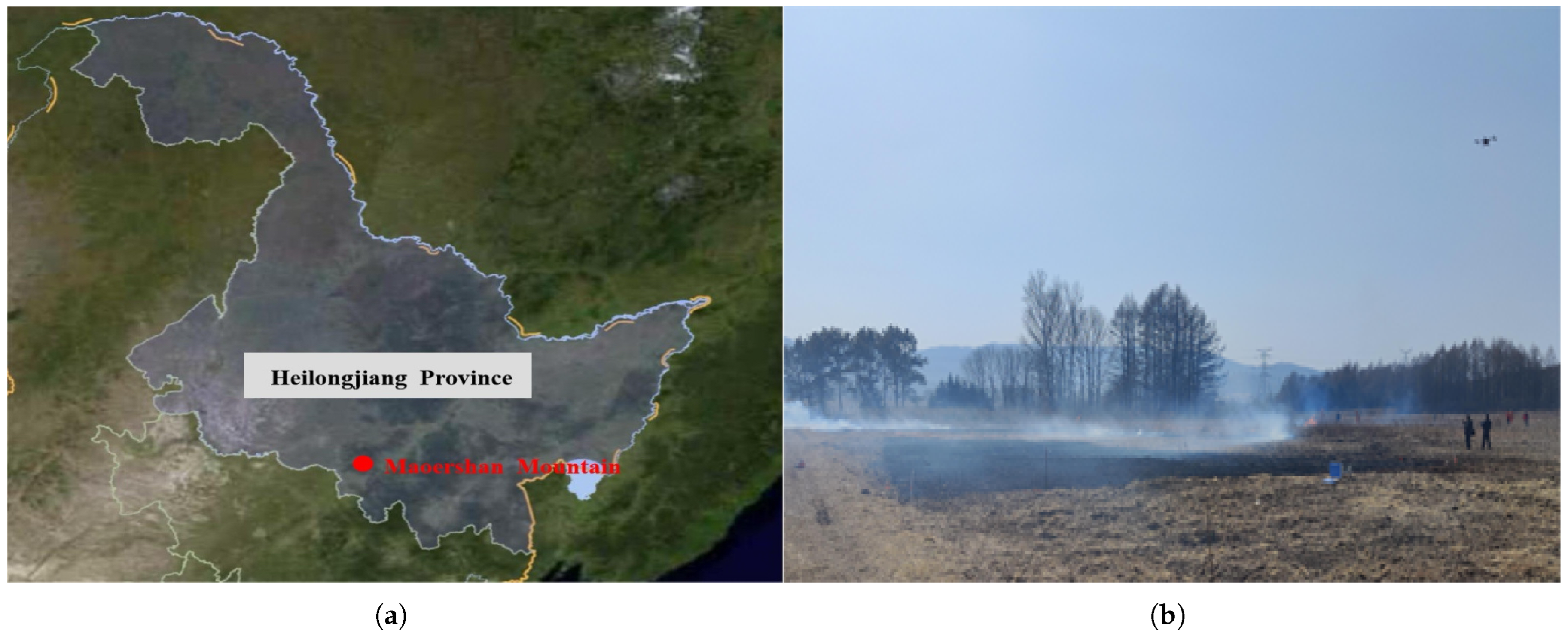
- The model’s generalization is validated through four field burning experiments in Liutiao Village, covering uniform fuel combustion, long fire line combustion, alternating fuel combustion, and multi-source merging combustion, demonstrating its applicability across diverse fire scenarios, fuel types, and regions.
2. Materials and Methods
2.1. Data Source
2.2. Methods
2.2.1. Variational Mode Decomposition (VMD)
2.2.2. Particle Swarm Optimization (PSO)
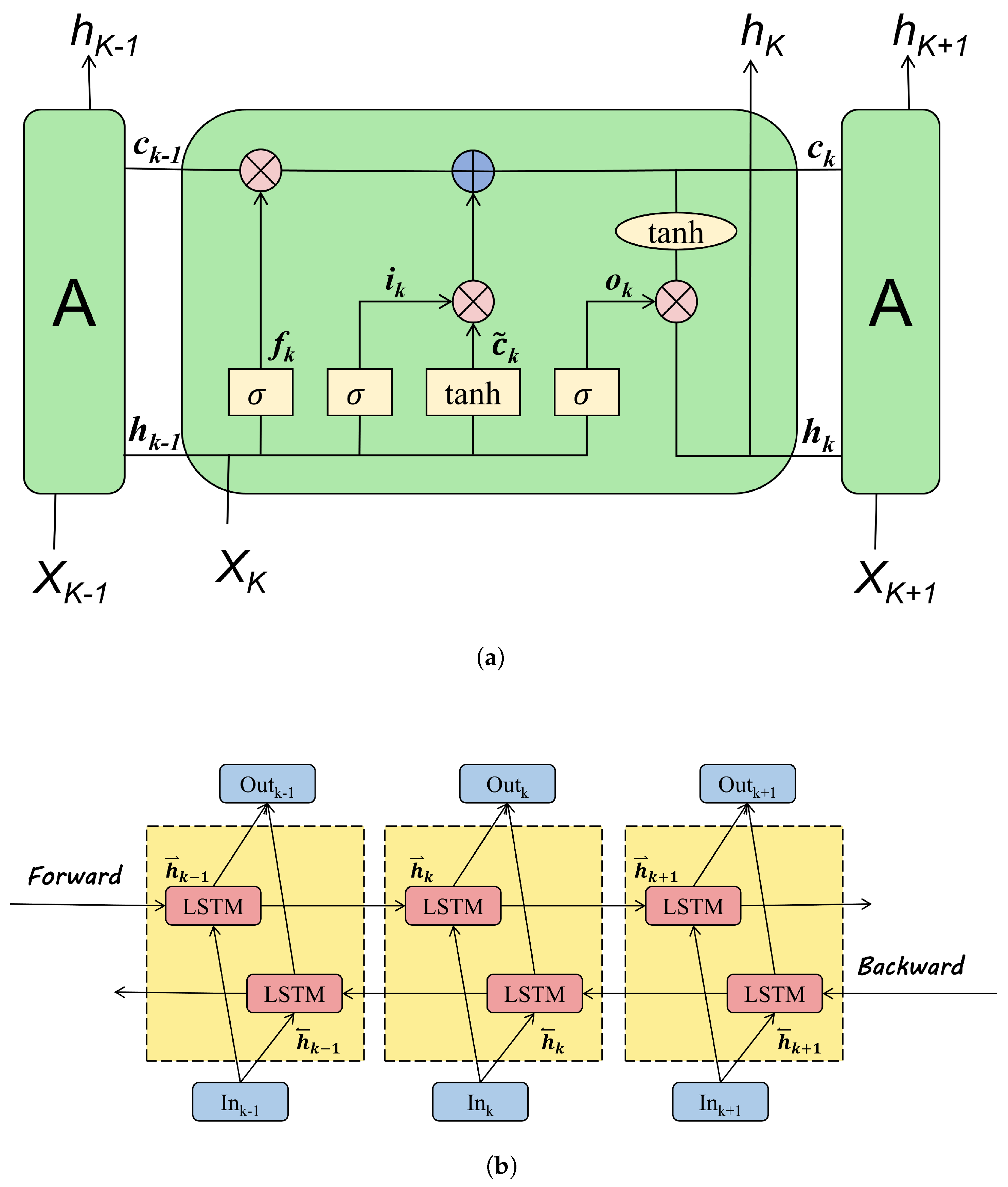
2.2.3. Bidirectional Long Short-Term Memory (BiLSTM)
2.2.4. Attention Mechanism (AM)
2.2.5. The Proposed Model
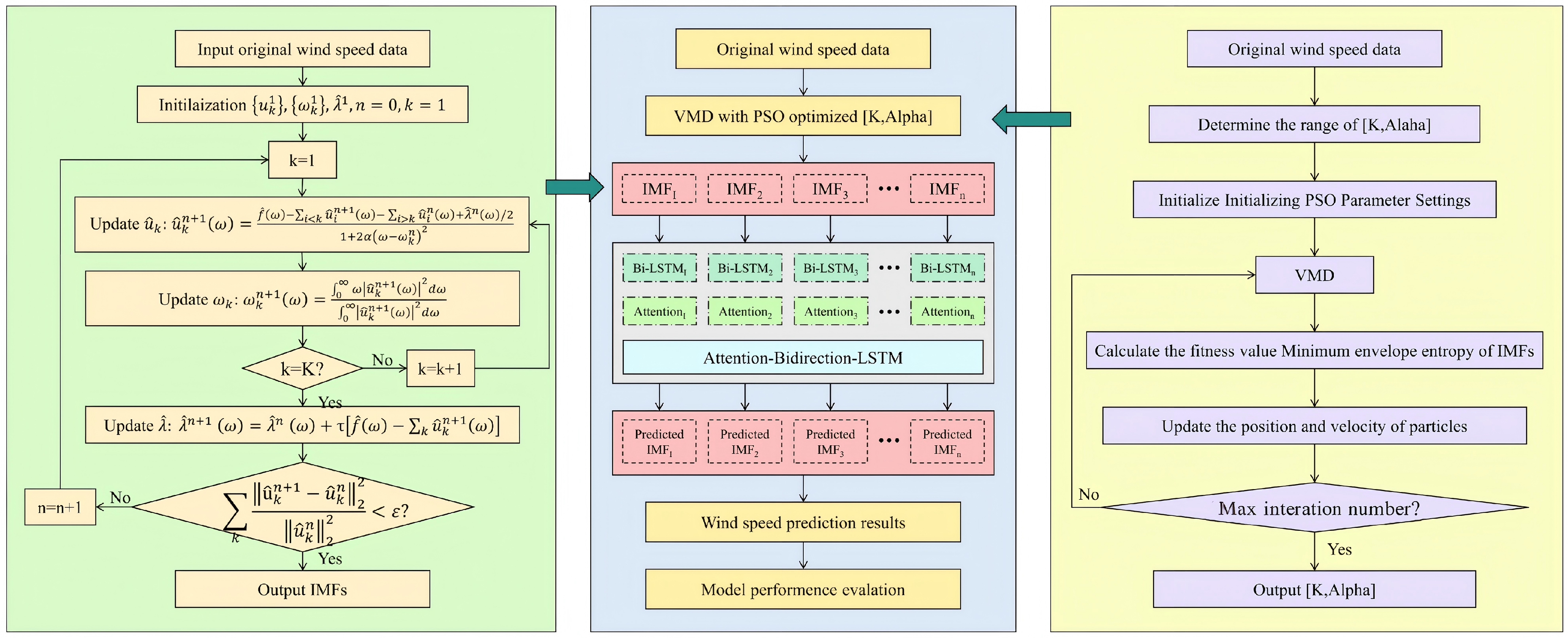
- Step 1:
- Collect the original wind speed sequence and input it into the model.
- Step 2:
- PSO is used to select the optimal VMD parameters . A particle swarm size of 10 and 100 iterations are chosen based on preliminary experiments to balance computational cost and convergence. The fitness function is the minimum envelope entropy of the decomposed sequence, ensuring effective parameter selection for VMD.
- Step 3:
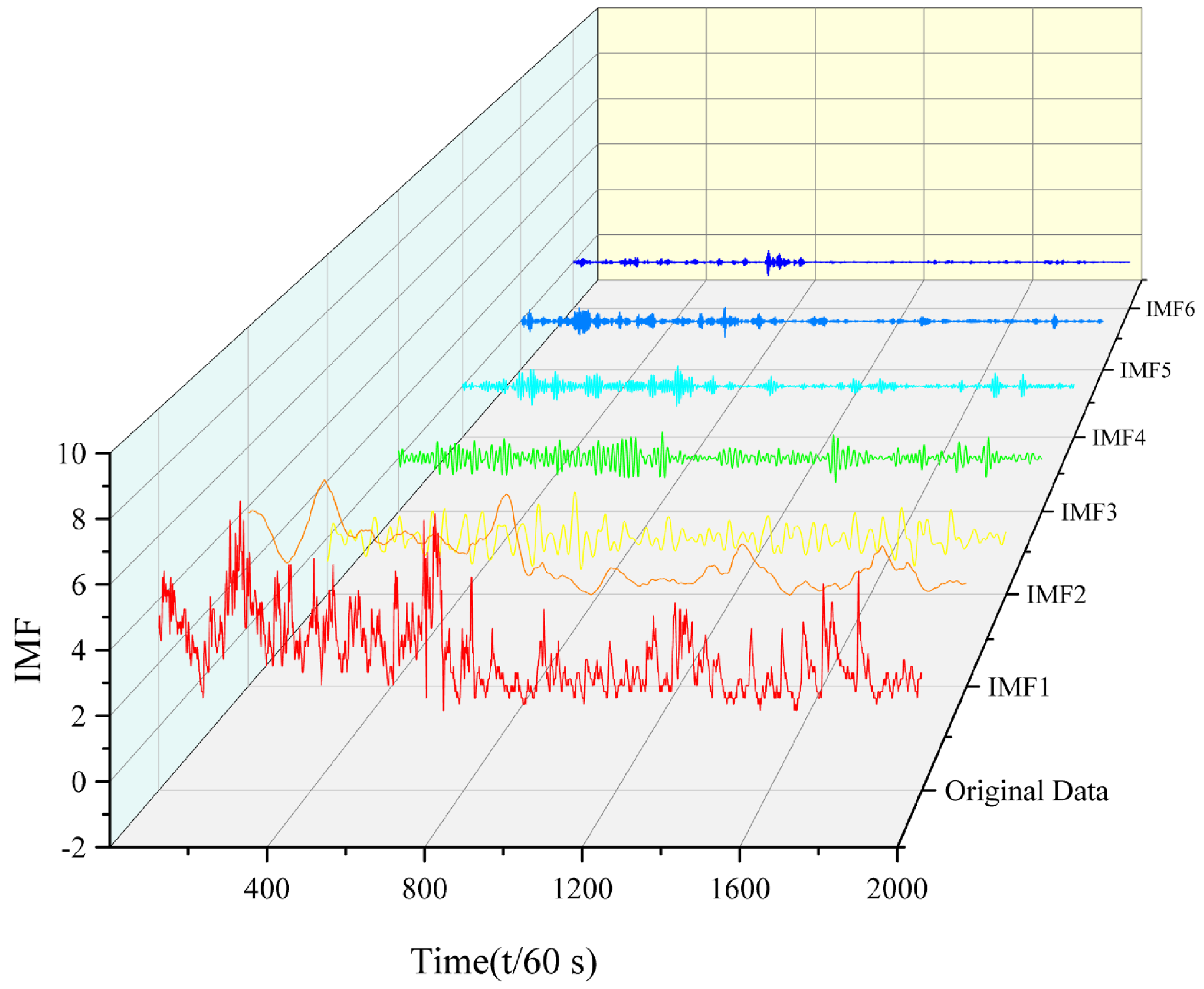
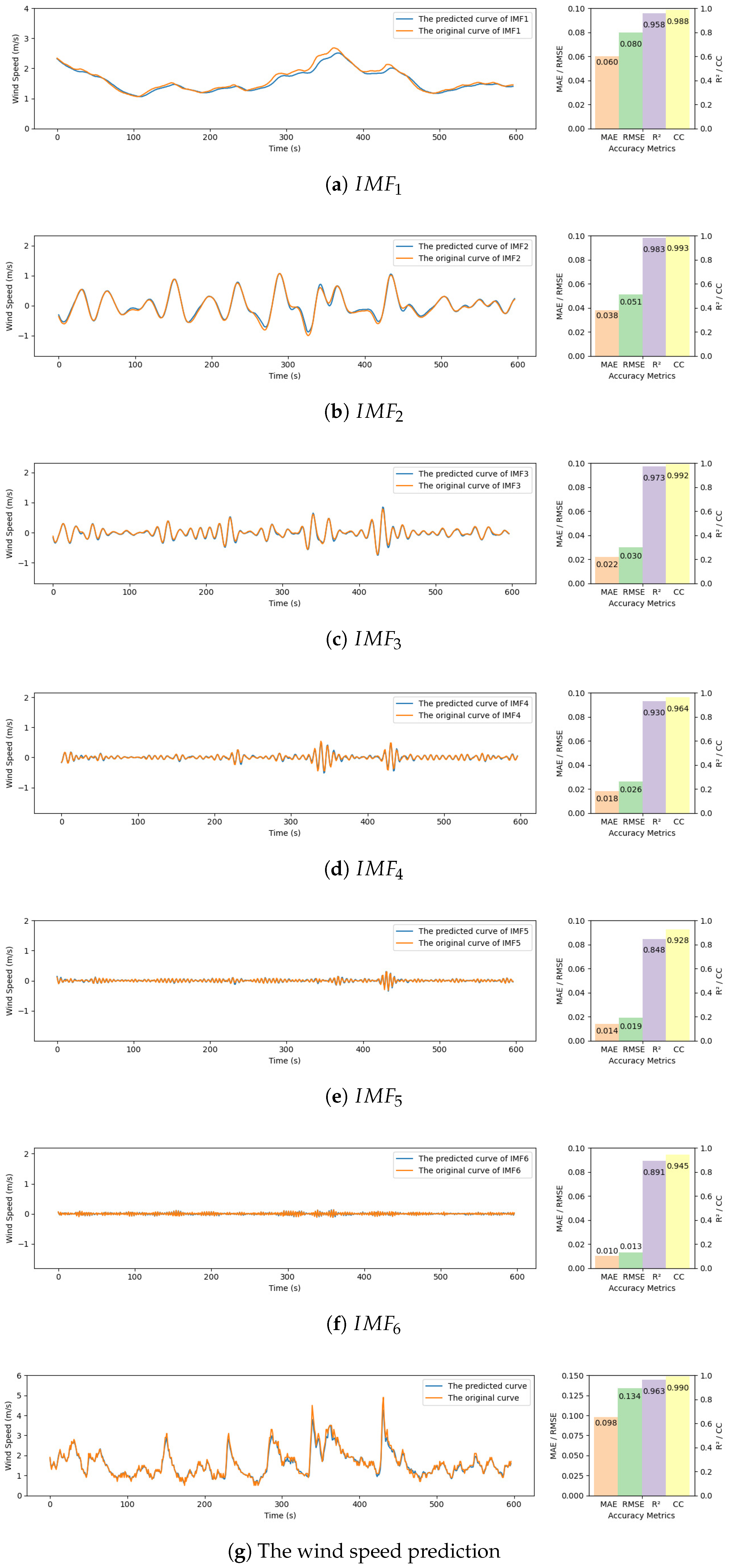
- The original wind speed sequence is decomposed of VMD to obtain K mutually independent subsequences to , and the oscillation frequency increases gradually with K.
- Step 4:
- The IMFs are divided into training and testing sets according to 7:3, and the predicted to are generated by AM-BiLSTM neural network.
- Step 5:
- Reconstruct the predicted to generate wind speed prediction results as follows:where is the reconstructed sequence of predicted wind speeds at time step t, and is the predicted result for the i-th IMF at time step t.No additional post-processing steps (such as smoothing, normalization, or error correction) are applied during the reconstruction, as the VMD decomposition ensures that the sum of the IMFs theoretically reconstructs the original signal with negligible error, and the AM-BiLSTM predictions preserve this property.
- Step 6:
- Evaluate the performance of the model.
2.3. Fire Spread Prediction
2.4. Performance Metrics
- (1)
- Mean Absolute Error (MAE):
- (2)
- Correlation Coefficient (CC):
- (3)
- Root Mean Square Error (RMSE):
- (4)
- Coefficient of Determination :
- (5)
- Mean Absolute Percentage Error (MAPE):
- (6)
- Sum of Squared Errors (SSE):
- (7)
- Theil Inequality Coefficient (TIC):
- (8)
- Percent Bias (PBIAS):
- (9)
- Recall:
- (10)
3. Results
3.1. Autocorrelation Analysis
3.2. VMD and IMF Prediction
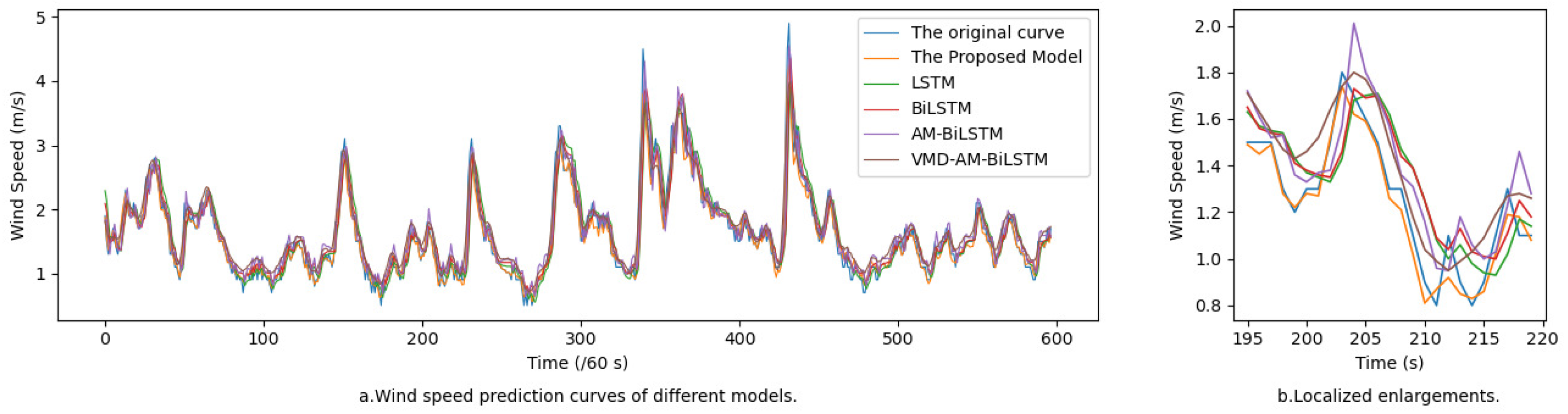
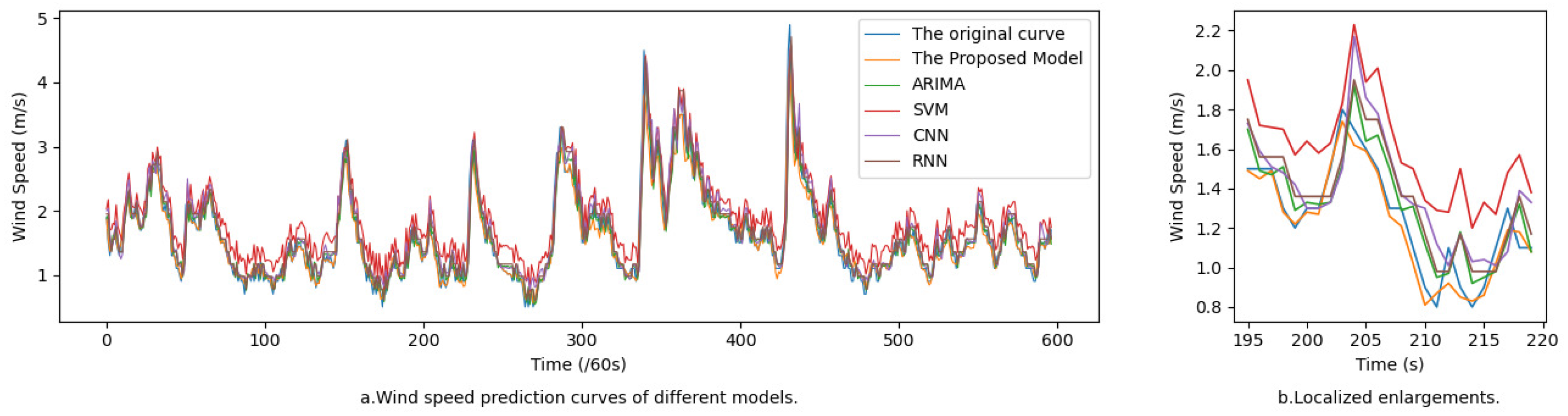
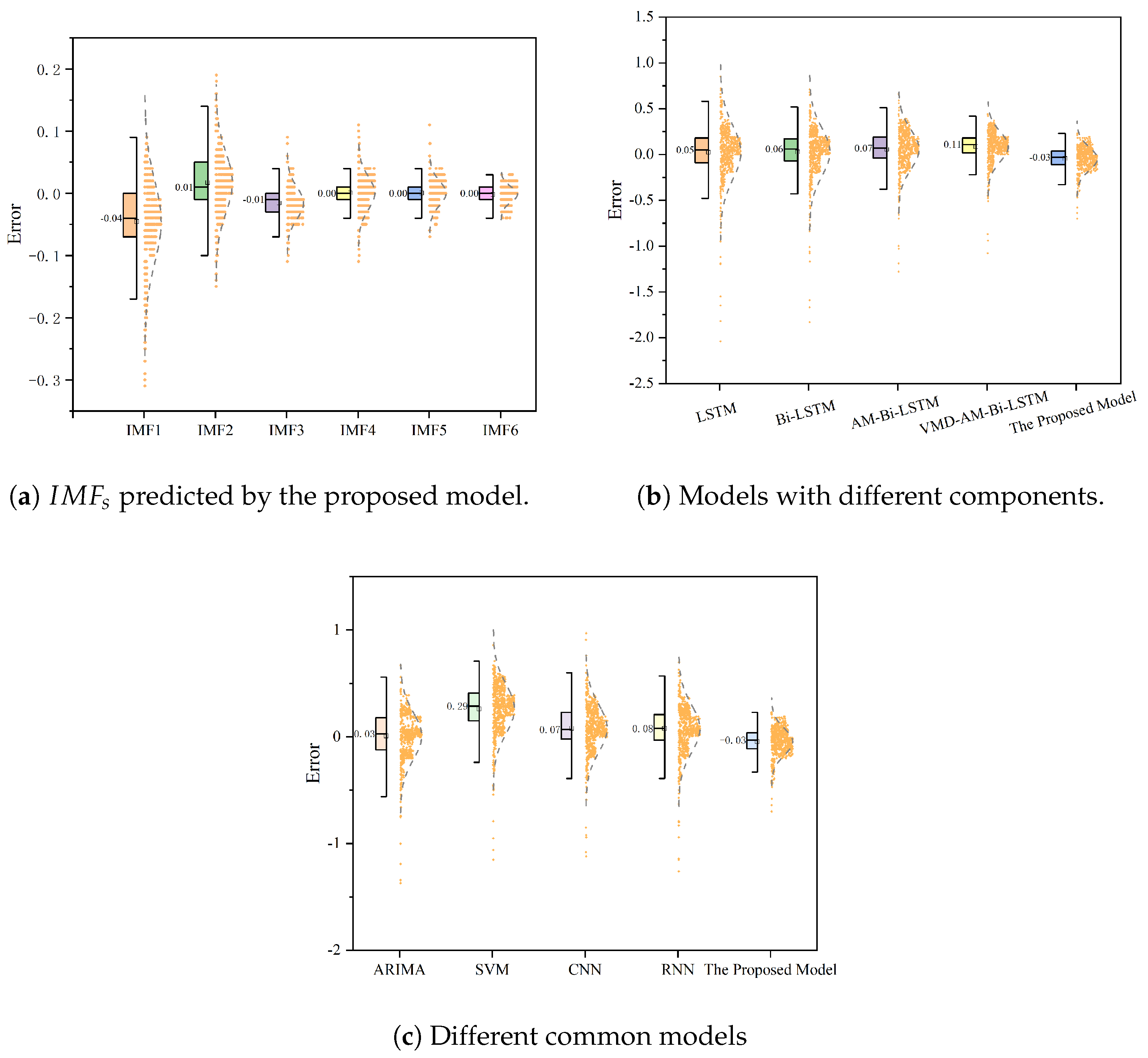
3.3. Comparison Models
3.4. Quantitative Evaluation of Fire Spread Simulations
4. Discussion
4.1. The Proposed Model Prediction Analysis
4.2. Model Component Analysis
4.3. Different Model Predictions Analysis
4.4. Fire Spread Prediction Analysis
- High computational demand: The PSO optimization of VMD parameters combined with AM-BiLSTM training is computationally intensive, limiting real-time deployment in resource-constrained field operations.
- Dependence on data quality and quantity: The model relies heavily on high-resolution IoT-collected wind data from specific sites (Mao’er Mountain and Liutiao Village); performance may degrade in regions with sparse observations, different fuel types, or extreme weather events.
- Assumptions in decomposition and simulation: VMD mode number (K) and penalty factor () are optimized but still require pre-tuning, potentially introducing subjectivity; FARSITE simulations assume spatially uniform wind fields, which may overlook fine-scale terrain-induced or fire-atmosphere feedback variations.
- Limited scope of validation: While validated across four diverse field experiments, the model has not been extensively tested in large-scale, multi-day wildfires, crown fires, or drastically different ecosystems (e.g., boreal or Mediterranean forests).
- Lack of uncertainty quantification: The current framework provides point predictions without confidence intervals or probabilistic outputs, which could better address the inherent stochasticity of wind in wildfire scenarios.
4.5. Generalization and Limitations
5. Conclusions
- Enhancing the performance of the model, particularly in predicting wind speeds during rapid increases in wind speed. This could involve refining the model architecture or incorporating additional techniques to capture sudden changes in wind conditions more accurately.
- Considering more input variables and expanding the scope of predicted outcomes. For example, incorporating terrain and weather data as inputs to predict both wind speed and wind direction. Exploring the prediction of two-dimensional wind fields could also be considered.
- Establishing a closer integration with wildfire spread models to develop a coupled wind–fire prediction model. This would involve linking the wind speed prediction model with wildfire spread models to improve the accuracy of wildfire spread prediction based on predicted wind conditions.
Author Contributions
Funding
Data Availability Statement
Acknowledgments
Conflicts of Interest
References
- Naderpour, M.; Rizeei, H.M.; Ramezani, F. Forest fire risk prediction: A spatial deep neural network-based framework. Remote Sens. 2021, 13, 2513. [Google Scholar] [CrossRef]
- Molina, J.R.; Herrera, M.A.; Silva, F.R. Wildfire-induced reduction in the carbon storage of mediterranean ecosystems: An application to brush and forest fires impacts assessment. Environ. Impact Assess. Rev. 2019, 76, 88–97. [Google Scholar] [CrossRef]
- Ghodrat, M.; Shakeriaski, F.; Fanaee, S.A.; Simeoni, A. Software-based simulations of wildfire spread and wind-fire interaction. Fire 2022, 6, 12. [Google Scholar] [CrossRef]
- Guo, F.; Su, Z.; Wang, G.; Sun, L.; Tigabu, M.; Yang, X.; Hu, H.q. Understanding fire drivers and relative impacts in different chinese forest ecosystems. Sci. Total Environ. 2017, 605–606, 411–425. [Google Scholar] [CrossRef]
- Jolly, W.M.; Cochrane, M.A.; Freeborn, P.H.; Holden, Z.A.; Brown, T.J.; Williamson, G.J.; Bowman, D.M.J.S. Climate-induced variations in global wildfire danger from 1979 to 2013. Nat. Commun. 2015, 6, 7537. [Google Scholar] [CrossRef]
- Tyukavina, A.; Potapov, P.V.; Hansen, M.C.; Pickens, A.H.; Stehman, S.; Turubanova, S.; Parker, D.; Zalles, V.; Lima, A.; Kommareddy, I.; et al. Global trends of forest loss due to fire from 2001 to 2019. Front. Remote Sens. 2022, 3, 825190. [Google Scholar] [CrossRef]
- Lyon, L.J.; Huff, M.H.; Hooper, R.G.; Telfer, E.S.; Schreiner, D.S.; Smith, J.K. Wildland Fire in Ecosystems: Effects of Fire on Fauna; USDA Forest Service, Rocky Mountain Research Station: Ogden, UT, USA, 2012. [CrossRef]
- Neary, D.G.; Ryan, K.C.; Debano, L.F. Wildland Fire in Ecosystems: Effects of Fire on Soils and Water; USDA Forest Service, Rocky Mountain Research Station: Ogden, UT, USA, 2005. [CrossRef]
- Huot, F.; Hu, R.L.; Goyal, N.; Sankar, T.R.; Ihme, M.; Chen, Y.F. Next day wildfire spread: A machine learning dataset to predict wildfire spreading from remote-sensing data. IEEE Trans. Geosci. Remote Sens. 2021, 60, 4412513. [Google Scholar] [CrossRef]
- Li, X.; Wang, X.; Sun, S.; Wang, Y.; Li, S.; Li, D. Predicting the wildland fire spread using a mixed-input cnn model with both channel and spatial attention mechanisms. Fire Technol. 2023, 59, 2683–2717. [Google Scholar] [CrossRef]
- Yin, K.; Shu, L.; Cheng, P.; Wang, M.; Huang, Y. DACSA: Deformable average channel and spatial attention model for wildfire prediction and drivers. Stoch. Environ. Res. Risk Assess. 2025, 39, 5647–5661. [Google Scholar] [CrossRef]
- Finney, M. Farsite: Fire Area Simulator: Model Development and Evaluation; CreateSpace: North Charleston, SC, USA, 1998. [Google Scholar] [CrossRef]
- Linn, R.R.; Harlow, F.H. Firetec: A Transport Description of Wildfire Behavior; Technical Report; Los Alamos National Laboratory: Los Alamos, NM, USA, 1997. [CrossRef]
- Tolhurst, K.G.; Shields, B.; Chong, D.M. Phoenix: Development and application of a bushfire risk management tool. Aust. J. Emerg. Manag. 2008, 23, 47–54. [Google Scholar]
- Rothermel, R.C. A Mathematical Model for Predicting Fire Spread in Wildland Fuels; Research Paper INT-115; USDA Forest Service, Intermountain Forest and Range Experiment Station: Ogden, UT, USA, 1972.
- Shah, S.U.; Yebra, M.; Dijk, A.; Cary, G.J. Relating mcarthur fire danger indices to remote sensing derived burned area across australia. Int. J. Wildland Fire 2022, 32, 133–148. [Google Scholar] [CrossRef]
- Hodges, J.L.; Lattimer, B.Y. Wildland fire spread modeling using convolutional neural networks. Fire Technol. 2019, 55, 2115–2142. [Google Scholar] [CrossRef]
- Wang, X.; Wang, X.; Zhang, M.; Tang, C.; Li, X.; Sun, S.; Wang, Y.; Li, D.; Li, S. Predicting the continuous spatiotemporal state of ground fire based on the expended lstm model with self-attention mechanisms. Fire 2023, 6, 237. [Google Scholar] [CrossRef]
- Zhu, J.; Liu, X.; Cheng, P.; Wang, M.; Huang, Y. Unveiling spatiotemporal patterns of wildfire risk: A transformer-based earth system analysis. Clim. Dyn. 2025, 63, 21. [Google Scholar] [CrossRef]
- Albini, F.A. Response of free-burning fires to nonsteady wind. Combust. Sci. Technol. 1982, 29, 225–241. [Google Scholar] [CrossRef]
- Abouali, A.; Viegas, D.X.; Raposo, J.R.N. Analysis of the wind flow and fire spread dynamics over a sloped–ridgeline hill. Combust. Flame 2021, 234, 111724. [Google Scholar] [CrossRef]
- Peace, M.; Mattner, T.W.; Mills, G.; Kepert, J.D.; McCaw, L. Coupled fire–atmosphere simulations of the rocky river fire using wrf-sfire. J. Appl. Meteorol. Climatol. 2016, 55, 1151–1168. [Google Scholar] [CrossRef]
- Dahl, N.; Xue, H.; Hu, X.; Xue, M. Coupled fire–atmosphere modeling of wildland fire spread using devs-fire and arps. Nat. Hazards 2015, 77, 1013–1035. [Google Scholar] [CrossRef]
- Filippi, J.B.; Bosseur, F.; Balbi, J.H.; Veynante, D.; Lac, C.; Moigne, P.L.; Mari, C.; Strada, S.; Cuenot, B.; Cariolle, D. A Coupled Atmosphere-Wildland Fire Meso-Scale Model; Technical Report; Université de Corse/CNRS: Corte, France, 2009.
- Filippi, J.B.; Bosseur, F.; Mari, C.; Strada, S. Numerical experiments using mesonh/forefire coupled atmospheric-fire model. In Proceedings of the Eighth Symposium on Fire and Forest Meteorology, Kalispell, MT, USA, 13–15 October 2009; p. 9. [Google Scholar]
- Filippi, J.B.; Pialat, X.; Clements, C.B. Assessment of forefire/meso-nh for wildland fire/atmosphere coupled simulation of the fireflux experiment. Proc. Combust. Inst. 2013, 34, 2633–2640. [Google Scholar] [CrossRef]
- Sawant, M.M.; Patil, R.S.; Shikhare, T.; Nagle, S.; Chavan, S.; Negi, S.; Bokde, N.D. A selective review on recent advancements in long, short and ultra-short-term wind power prediction. Energies 2022, 15, 8107. [Google Scholar] [CrossRef]
- Landberg, L. A mathematical look at a physical power prediction model. Wind. Energy 1998, 1, 23–28. [Google Scholar] [CrossRef]
- Karakus, O.; Kuruoglu, E.E.; Altinkaya, M.A. One-day ahead wind speed/power prediction based on polynomial autoregressive model. IET Renew. Power Gener. 2017, 11, 1430–1439. [Google Scholar] [CrossRef]
- Tian, Z.; Li, S.; Wang, Y.; Wang, X. Wind power prediction method based on hybrid kernel function support vector machine. Wind Eng. 2017, 42, 252–264. [Google Scholar] [CrossRef]
- Wang, J.; Li, Z. Wind speed interval prediction based on multidimensional time series of convolutional neural networks. Eng. Appl. Artif. Intell. 2023, 121, 105987. [Google Scholar] [CrossRef]
- Li, K.; Wang, Z.; Yan, B.; Yang, Q.; Zhou, X. A wind speed prediction methodology based on deep neural network without future information leakage. SSRN Electron. J. 2022. [Google Scholar] [CrossRef]
- Lin, C.F.; Li, X.; Shi, T.; Sheng, J.; Sun, S.; Wang, Y.; Li, D. Forecasting of wind speed under wind-fire coupling scenarios by combining hs-vmd and am-lstm. Ecol. Inform. 2023, 77, 102270. [Google Scholar] [CrossRef]
- Li, J.; Song, Z.; Wang, X.; Wang, Y.; Jia, Y. A novel offshore wind farm typhoon wind speed prediction model based on pso–bi-lstm improved by vmd. Energy 2022, 251, 123848. [Google Scholar] [CrossRef]
- Tuerxun, W.; Xu, C.; Guo, H.; Guo, L.; Zeng, N.; Cheng, Z. An ultra-short-term wind speed prediction model using lstm based on modified tuna swarm optimization and successive variational mode decomposition. Energy Sci. Eng. 2022, 10, 3001–3022. [Google Scholar] [CrossRef]
- Masinda, M.M.; Li, F.; Liu, Q.; Sun, L.; Hu, T. Prediction model of moisture content of dead fine fuel in forest plantations on maoer mountain, northeast china. J. For. Res. 2021, 32, 2023–2035. [Google Scholar] [CrossRef]
- Wu, Z.; Wang, B.; Li, M.; Tian, Y.; Quan, Y.; Liu, J. Simulation of forest fire spread based on artificial intelligence. Ecol. Indic. 2022, 136, 108653. [Google Scholar] [CrossRef]
- Dragomiretskiy, K.; Zosso, D. Variational mode decomposition. IEEE Trans. Signal Process. 2014, 62, 531–544. [Google Scholar] [CrossRef]
- Wu, J.; Chen, X.; Zhu, M. A 1/f noise detection method for igbt devices based on pso-vmd. Electronics 2022, 11, 1722. [Google Scholar] [CrossRef]
- Qi, P.; Chang, J.; Chen, X.; Wang, T.; Wu, M. Identification of rock properties of rock wall cut by roadheader based on pso-vmd-lssvm. Front. Earth Sci. 2022, 10, 884633. [Google Scholar] [CrossRef]
- Peng, Z.; Bai, H.; Shiina, T.; Deng, J.; Liu, B.; Zhang, X. Led-lidar echo denoising based on adaptive pso-vmd. Information 2022, 13, 558. [Google Scholar] [CrossRef]
- Hochreiter, S.; Schmidhuber, J. Long short-term memory. Neural Comput. 1997, 9, 1735–1780. [Google Scholar] [CrossRef]
- Bazi, R.; Benkedjouh, T.; Habbouche, H.; Rechak, S.; Zerhouni, N. A hybrid cnn-bilstm approach-based variational mode decomposition for tool wear monitoring. Int. J. Adv. Manuf. Technol. 2022, 119, 3803–3817. [Google Scholar] [CrossRef]
- Yang, Y.; Zhang, Y. Multi-point wind power prediction in wind farms based on am-lstm. In 2021 IEEE Sustainable Power and Energy Conference (iSPEC); IEEE: Piscataway, NJ, USA, 2021; pp. 8–12. [Google Scholar] [CrossRef]
- Phillips, R.J.; Waldrop, T.A.; Simon, D.M. Assessment of the farsite model for predicting fire behavior in the southern appalachian mountains. In Proceedings of the 13th Biennial Southern Silvicultural Research Conference; U.S. Department of Agriculture, Forest Service, Southern Research Station: Asheville, NC, USA, 2006; pp. 521–525. [Google Scholar]
- Zigner, K.; Carvalho, L.M.V.; Peterson, S.H.; Fujioka, F.; Duine, G.; Jones, C.E.; Roberts, D.A.; Moritz, M.A. Evaluating the ability of farsite to simulate wildfires influenced by extreme, downslope winds in santa barbara, california. Fire 2020, 3, 29. [Google Scholar] [CrossRef]
- Valero-Carreras, D.; Alcaraz, J.; Landete, M. Comparing two svm models through different metrics based on the confusion matrix. Comput. Oper. Res. 2022, 152, 106131. [Google Scholar] [CrossRef]
- Tinungki, G.M. The analysis of partial autocorrelation function in predicting maximum wind speed. IOP Conf. Ser. Earth Environ. Sci. 2019, 235, 012097. [Google Scholar] [CrossRef]
- Zhou, Q.; Chen, D.L.; Hu, Z.; Chen, X. Decompositions of taylor diagram and diso performance criteria. Int. J. Climatol. 2021, 41, 5726–5732. [Google Scholar] [CrossRef]
- Filippi, J.B.; Bosseur, F.; Mari, C.; Lac, C. Simulation of a large wildfire in a coupled fire-atmosphere model. Atmosphere 2018, 9, 218. [Google Scholar] [CrossRef]
- Sun, T.; Zhang, L.; Chen, W.; Tang, X.; Qin, Q. Mountains forest fire spread simulator based on geo-cellular automaton combined with wang zhengfei velocity model. IEEE J. Sel. Top. Appl. Earth Obs. Remote Sens. 2013, 6, 1971–1987. [Google Scholar] [CrossRef]
- Zhe, C. Forest fire spread fast model based on 3d cellular automaton in spatially heterogeneous area. J. Beijing For. Univ. 2012, 34, 86–91. [Google Scholar]
- Boer, M.M.; Nolan, R.H.; Dios, V.R.; Clarke, H.; Price, O.F.; Bradstock, R.A. Changing weather extremes call for early warning of potential for catastrophic fire. Earth’s Future 2017, 5, 1196–1202. [Google Scholar] [CrossRef]


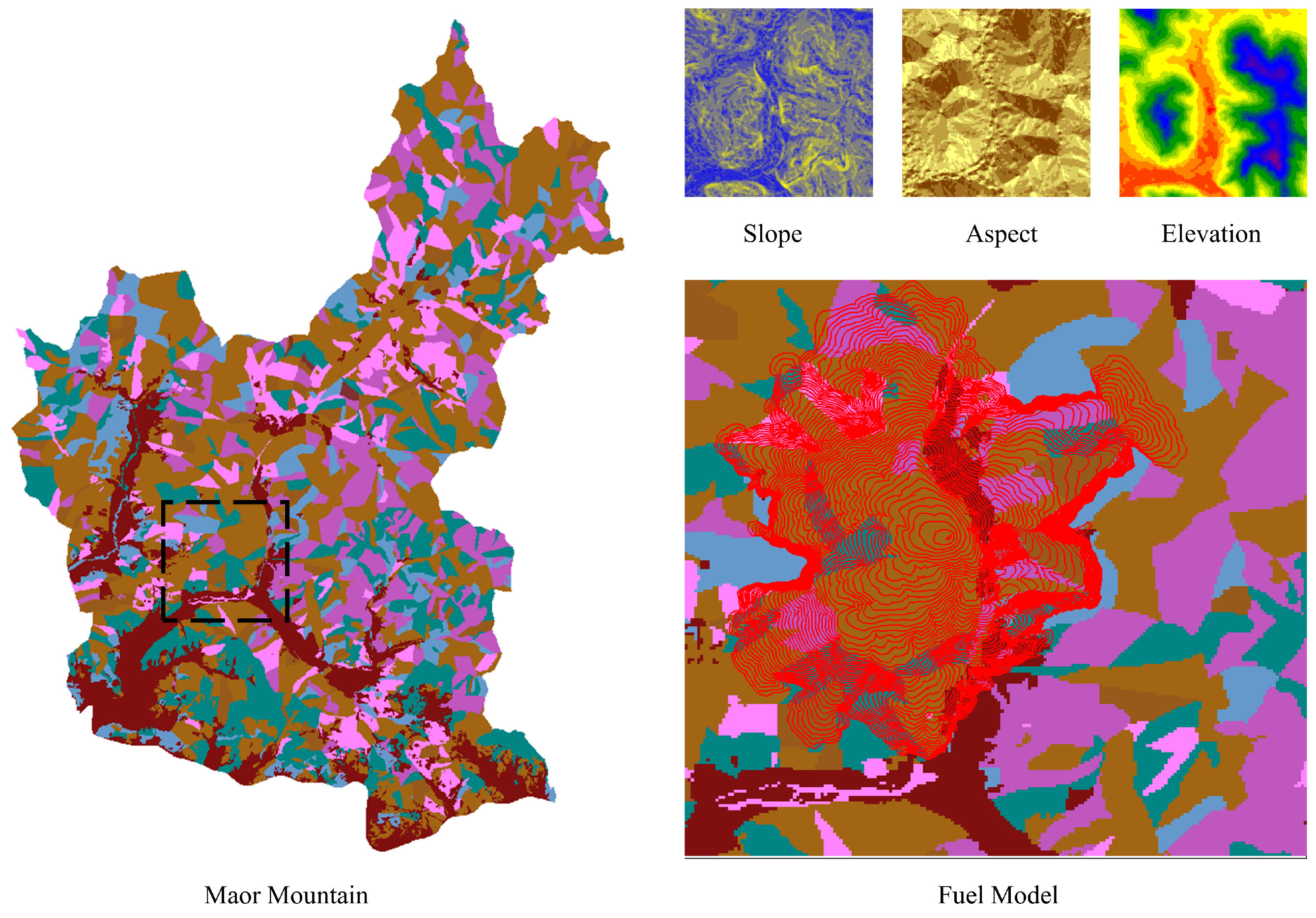



| Parameter Type | Parameter | Unit | Min | Max |
|---|---|---|---|---|
| Elevation | Meters | 261 | 767 | |
| Terrain | Slope | Degrees | 0 | 60 |
| Aspect | Degrees | 0 | 359 | |
| Fuel Model | Class | 1 | 204 | |
| Fuel | Canopy | Percent | 0 | 95 |
| Stand Height | Meters | 0 | 50 | |
| Climate | Wind Speed | Mph | 0 | 5 |
| Wind Direction | Degrees | 0 | 359 |
| Prediction | Positive | Negative | |
|---|---|---|---|
| Reference | |||
| Positive | TP | FN | |
| Negative | FP | TN | |
| Scenario | Final Burned Area (ha) | Maximum Perimeter (m) | Avg. Area Growth Rate (ha/min) |
|---|---|---|---|
| No Wind | 2.50 (error > 10%) | 800 | 0.021 |
| Measured Wind | 8.00 | 2000 | 0.067 |
| Predicted Wind | 7.52 (error < 6%) | 1920 | 0.063 |
| Model | MAE | RMSE | MAPE (%) | PBIAS | SSE | TIC | CC | |
|---|---|---|---|---|---|---|---|---|
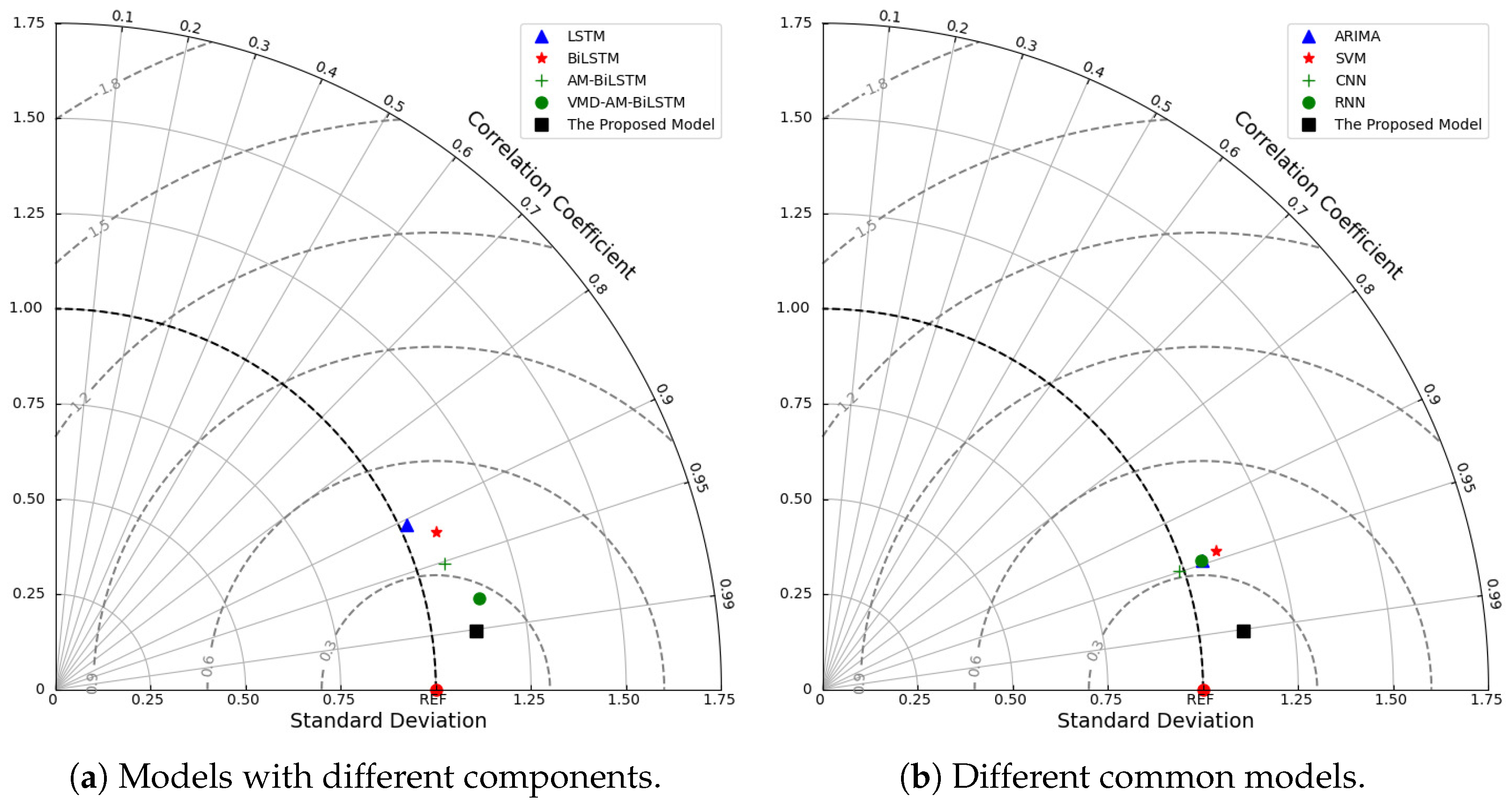
| LSTM | 0.199 | 0.295 | 0.820 | 12.345 | 1.403 | 51.965 | 0.158 | 0.907 |
| Bi-LSTM | 0.180 | 0.263 | 0.857 | 11.801 | 1.610 | 41.393 | 0.158 | 0.927 |
| AM-Bi-LSTM | 0.166 | 0.221 | 0.899 | 11.767 | 3.363 | 29.080 | 0.159 | 0.953 |
| VMD-AM-Bi-LSTM | 0.148 | 0.185 | 0.929 | 11.118 | 5.249 | 20.399 | 0.149 | 0.980 |
| The Proposed Model | 0.098 | 0.143 | 0.963 | 6.119 | −2.835 | 10.748 | 0.077 | 0.990 |
| Model | MAE | RMSE | MAPE (%) | SSE | TIC | CC | |
|---|---|---|---|---|---|---|---|
| AROMA | 0.155 | 0.221 | 0.899 | 10.331 | 29.243 | 0.140 | 0.948 |
| SVM | 0.305 | 0.350 | 0.747 | 23.255 | 73.125 | 0.295 | 0.944 |
| CNN | 0.176 | 0.236 | 0.884 | 12.064 | 33.372 | 0.166 | 0.948 |
| RNN | 0.177 | 0.237 | 0.884 | 12.888 | 33.506 | 0.191 | 0.947 |
| The Proposed Model | 0.098 | 0.134 | 0.963 | 6.119 | 10.748 | 0.077 | 0.990 |
| Fire Num | Wind Condition | MAE | MAPE RMSE | Recall | F1-Score | |
|---|---|---|---|---|---|---|
| 1 | Predicted wind | 5.158 | 45.513 | 0.832 | 0.889 | 0.925 |
| No wind | 5.777 | 47.452 | 0.814 | 0.859 | 0.914 | |
| 2 | Predicted wind | 3.190 | 40.498 | 0.863 | 0.929 | 0.950 |
| No wind | 3.175 | 50.968 | 0.763 | 0.917 | 0.950 | |
| 3 | Predicted wind No wind | 1.839 | 41.148 | 0.813 | 0.926 | 0.955 |
| No wind | 2.315 | 49.721 | 0.703 | 0.894 | 0.942 | |
| 4 | Predicted wind No wind | 1.931 | 30.501 | 0.929 | 0.970 | 0.969 |
| No wind | 3.401 | 49.184 | 0.799 | 0.891 | 0.938 | |
| 5 | Predicted wind No wind | 1.453 | 35.703 | 0.897 | 0.970 | 0.973 |
| No wind | 3.231 | 51.471 | 0.775 | 0.936 | 0.940 | |
| 6 | Predicted wind No wind | 2.533 | 29.563 | 0.914 | 0.936 | 0.954 |
| No wind | 3.366 | 46.475 | 0.777 | 0.900 | 0.937 |
| Precision | Recall | Sørensen Coefficient | Kappa Coefficient | |
|---|---|---|---|---|
| MCNN | 0.952 | 0.973 | 0.962 | 0.951 |
| DCIGN | 0.908 | 0.927 | 0.917 | 0.899 |
| DNN | 0.901 | 0.928 | 0.914 | 0.896 |
Disclaimer/Publisher’s Note: The statements, opinions and data contained in all publications are solely those of the individual author(s) and contributor(s) and not of MDPI and/or the editor(s). MDPI and/or the editor(s) disclaim responsibility for any injury to people or property resulting from any ideas, methods, instructions or products referred to in the content. |
© 2026 by the authors. Licensee MDPI, Basel, Switzerland. This article is an open access article distributed under the terms and conditions of the Creative Commons Attribution (CC BY) license.
Share and Cite
Zhu, H.; Liu, S.; Jia, H.; Li, S.; Zhu, L.; Li, X. Wind Speed Prediction Based on AM-BiLSTM Improved by PSO-VMD for Forest Fire Spread. Fire 2026, 9, 110. https://doi.org/10.3390/fire9030110
Zhu H, Liu S, Jia H, Li S, Zhu L, Li X. Wind Speed Prediction Based on AM-BiLSTM Improved by PSO-VMD for Forest Fire Spread. Fire. 2026; 9(3):110. https://doi.org/10.3390/fire9030110
Chicago/Turabian StyleZhu, Haining, Shuwen Liu, Huimin Jia, Sanping Li, Liangkuan Zhu, and Xingdong Li. 2026. "Wind Speed Prediction Based on AM-BiLSTM Improved by PSO-VMD for Forest Fire Spread" Fire 9, no. 3: 110. https://doi.org/10.3390/fire9030110
APA StyleZhu, H., Liu, S., Jia, H., Li, S., Zhu, L., & Li, X. (2026). Wind Speed Prediction Based on AM-BiLSTM Improved by PSO-VMD for Forest Fire Spread. Fire, 9(3), 110. https://doi.org/10.3390/fire9030110