


Abstract
Achieving efficient and clean use of low-volatile coal is of vital importance to China’s energy system. This study aims to elucidate how the high-concentration-CO2 atmosphere influences the migration pathways of fuel-bound nitrogen during the pyrolysis of low-volatile coal, thereby providing critical insights for the prediction and control of NOx emissions under oxy-fuel conditions. A high-temperature drop-tube furnace system capable of high heating rates (up to 104–105 °C/s) was employed to comparatively investigate the pyrolysis behavior of a typical low-volatile coal (volatile matter content of 7.44%) under Ar and pure CO2 atmospheres at 1000–1400 °C. The outcomes show that the CO2 atmosphere significantly promoted the release of volatiles, with the volatile release rate at 1400 °C reaching 2.1 times that under the Ar atmosphere. While volatile nitrogen primarily consists of HCN and NH3 with HCN dominance at lower temperatures, NH3 release exceeds HCN by more than tenfold at 1400 °C. CO2 promotes nitrogen release through enhanced gasification reactions, reducing char nitrogen proportion while increasing volatile nitrogen yield approximately fourfold at elevated temperatures. The X-ray photoelectron spectroscopy analysis reveals the transformation pathway of nitrogen functionalities from quaternary nitrogen to pyridine nitrogen and subsequently to pyridine under oxy-fuel conditions. These findings provide fundamental insights into fuel nitrogen evolution mechanisms and offer theoretical support for optimizing oxy-fuel combustion processes toward efficient NOx control.
1. Introduction
China is one of the few countries with abundant reserves of low-volatile coals [1]. It accounts for about 19% of China’s total coal production and more than 29% of China’s power coal. Characterized by high coalification degree, difficult ignition [2], poor reactivity [3], and low burnout rate [4], low-volatile coals exhibit substantially different combustion characteristics compared to high-volatile coals [5,6].
In pursuit of carbon peaking and carbon neutrality, carbon capture, utilization, and storage (CCUS) technologies have been identified as critical development pathways [7]. Oxy-fuel combustion is considered one of the most promising technologies for large-scale carbon capture [8,9] and has gained widespread recognition as one of the most feasible and economically viable CO2 capture solutions in coal-fired power generation [10,11]. For oxy-fuel combustion, O2 is mixed with recirculated flue gas and fed into the furnace in place of air, ensuing the reaction within an O2/CO2 environment, where CO2 acts as the primary diluent in the oxidizer stream—replacing the role of N2 in conventional air-fired systems (O2/N2) [12,13]. Notable differences exist between CO2 and N2 in terms of physical [14], thermodynamic [15,16], and chemical properties [17,18]. As an emerging technology with substantial industrial potential, oxy-fuel combustion enables the simultaneous removal of multiple pollutants, including CO2, SO2, and NOx.
The N-containing organic functional groups in coal plays a determining role in the transport and conversion routes of fuel-bound nitrogen throughout pyrolysis, gasification, and combustion processes [19]. Consequently, elucidating the chemical speciation of nitrogen in coal is crucial for predicting NOx formation during coal combustion [20,21]. Extensive research has established that pyrrole-type nitrogen represents the predominant functional group, comprising approximately 50–80% of total nitrogen, while pyridine-type nitrogen accounts for 20–40%, and quaternary nitrogen constitutes less than 20% [22]. Coal rank also significantly influences the speciation of nitrogen-containing functional groups.
During the pyrolysis process, a part of the N in coal evolved into volatile species such as HCN and NH3 [23], with the rest remaining in the char. The nitrogen remaining in the char was more easily converted to NOx during combustion. The proportion of nitrogen released as volatiles during pyrolysis directly affects NOx emissions in the flue gas. Therefore, studies are devoted to examining the migration and transformation characteristics of nitrogen in coal [24,25].
The conversion of chemically bound nitrogen in the course of coal pyrolysis is influenced by multiple factors, including coal structure, pyrolysis conditions, and atmospheric environment. Early systematic studies laid the foundation for understanding its release mechanisms, particularly highlighting the critical role of the heating rate. Using the Thermogravimetric–Fourier transform infrared spectroscopy (TG-FTIR) method, Solomon et al. [26,27] found that nitrogen embedded in cyclic structures of coal exhibited high thermal stability and required elevated temperatures for decomposition. They also observed that the ratio of HCN to NH3 release was regulated by the heating rate: slow heating favored NH3 formation due to secondary reactions between HCN and hydrogen in char, while fast heating leads to HCN dominance. This phenomenon was further verified by Ohtsuka et al. [28,29] in fixed-bed experiments; moreover, they suggested that fuel nitrogen could be directed toward N2 formation through condition optimization, thereby suppressing the generation of NOx precursors [28,29].
Subsequent studies further revealed the source pathways and conversion mechanisms of nitrogen-containing gases. Fletcher et al. [30,31] clearly demonstrated that HCN and NH3 originated from different pathways—tar and char, respectively—and proposed a free-radical mechanism for N2 formation. Crelling et al. [32] supplemented this by finding that the nitrogen retention capacity of char was closely related to its pyrolysis precursors.
Meanwhile, the influence of reactor configuration and operating conditions has also been elucidated. Li and Xie et al. [33,34,35] observed that due to differences in residence time, the release characteristics of volatile nitrogen varied significantly across different reactors, and nitrogen-containing gases could form simultaneously in both the gas and char phases. This conclusion was supported by Chang et al. [36]. Deng et al. [37] further indicated in an entrained-flow reactor that, although high temperatures initially promoted HCN release, when the temperature exceeded 1000 °C with prolonged residence time, HCN yield decreased as it was converted to soot nitrogen or decomposed into other nitrogen-containing species such as N2.
The fundamental reason for the above behaviors lies in the forms of nitrogen functional groups in coal and their pyrolysis pathways. Kambara et al. [38,39] confirmed through XPS analysis that pyrrole/pyridine-type nitrogen primarily converted to HCN, whereas quaternary nitrogen tended to form NH3. However, Schmiers et al. [40] proposed an alternative viewpoint: HCN was initially formed, and part of it was subsequently converted to NH3 through secondary reactions, indicating that such reactions played a key role in NH3 formation.
In oxy-fuel environments, the replacement of air N2 with recycled CO2 significantly affects the evolution of volatile nitrogen in the course of coal pyrolysis. Chang et al. [36] pointed out that CO2 mainly influenced volatile-N generation by influencing the concentration of H radicals and their interaction with nitrogen-containing structures. Duan et al. [41] investigated the effect of CO2 on NH3 and HCN formation in a tube furnace. At low temperatures, CO2 adsorbed onto the surfaces of coal and char, hindering the combination of N and H radicals. And CO2 might react with H radicals, thereby reducing NH3 formation. At high temperatures, the -CN bonds in the char were cleaved and reacted with H radicals, leading to HCN generation. Li et al. [42] confirmed this conclusion in a suspension bed reactor: when the gasification effect of CO2 was weak, CO2 adsorption on the char surface inhibited volatile-N formation by blocking H radicals from combining with char nitrogen sites. When gasification was strong, it promoted the liberation of H radicals and induced cracking of nitrogen-containing functional groups, thereby enhancing volatile-N generation. Selected studies on pulverized coal pyrolysis under oxy-fuel conditions are summarized in Table 1.
Table 1.
Study on pulverized coal pyrolysis under oxy-fuel conditions.
Researchers worldwide have extensively investigated nitrogen migration and transformation during pulverized coal pyrolysis, with particular focus on factors such as pyrolysis temperature, heating rate, coal properties, and atmosphere. This study focuses on the impact of the CO2-rich atmosphere in governing the behavior of fuel-bound nitrogen during coal pyrolysis, with its core being the examination of CO2’s role as a key gasifying agent, for which few relevant studies exist [46,47]. The following research gaps require further investigation: (1) limited attention has been given to low-volatile coal, especially in the oxy-fuel combustion environment, and (2) most of the experiments have been operated under conditions of lower temperature and low heating rate, significantly below actual combustion conditions. To address these gaps, a custom drop-tube furnace system capable of achieving heating rates up to 104–105 °C/s is utilized to examine low-volatile coal under oxy-fuel atmospheres at 1000–1400 °C. By monitoring HCN releases, quantifying NH3, and applying X-ray photoelectron spectroscopy (XPS) to decide nitrogen functional group distribution, nitrogen transformation pathways and fuel nitrogen allocation are systematically elucidated. The study specifically reveals key nitrogen migration mechanisms responsible for NOx reduction under oxy-fuel conditions of low-volatile coal.
2. Experimental Details
2.1. Introduction to the System
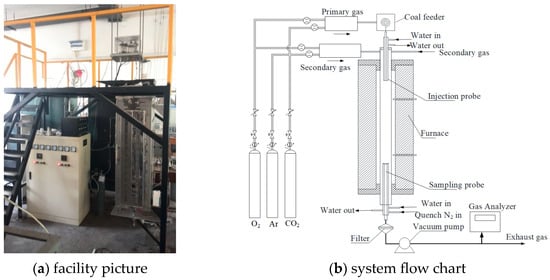
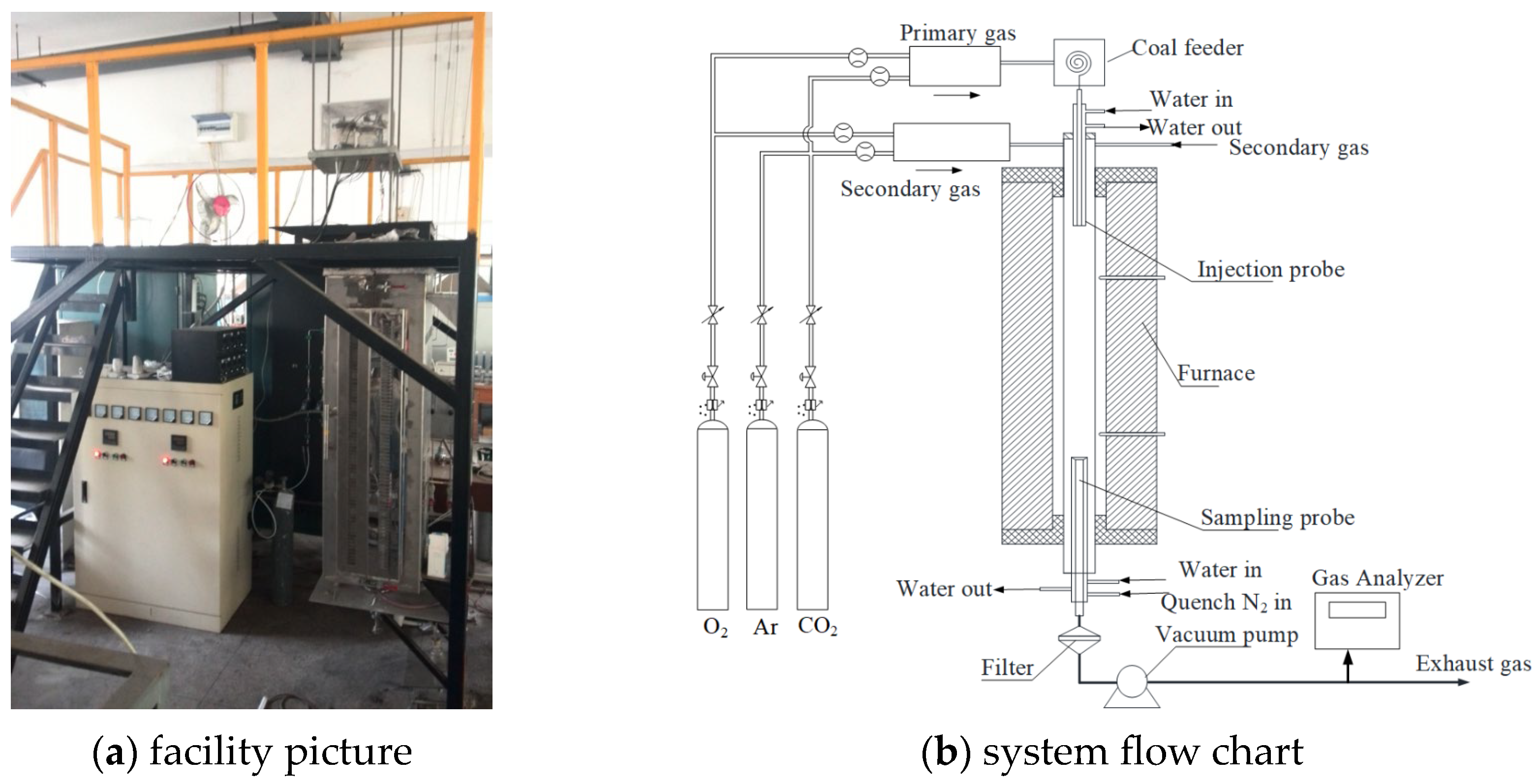
A high-temperature drop-tube furnace with electric heating is employed to carry out the experiments, whose schematic diagram is provided in Figure 1. The system, with the aid of an entrained-flow reactor, transports a mixture of powdered fuel and reactive gas into a heated tube, where they undergo simultaneous physical and chemical reactions. Upon entering the isothermal reaction zone, the fuel is rapidly heated to the preset temperature, and the resulting products are subsequently cooled, filtered, and collected by a sampling system. This system provides a close approximation of actual pulverized coal boiler conditions, enabling representative simulation of fuel combustion processes.
Figure 1.
Diagram of high-temperature drop-tube furnace system.
The reaction system of the drop-tube furnace primarily consists of a vertically oriented high-temperature heating furnace and a flange-sealed reaction tube. The furnace body measures 1400 mm in total length, featuring a 1150 mm internal heating zone and an inner diameter of 70 mm. To achieve maximum temperature capability, the heating elements are silicon-molybdenum rods, providing a heating range of 0–1450 °C. For high-temperature experimental requirements, a high-temperature corundum tube is employed as the reaction chamber, having a bore of 50 mm and an overall length of 1620 mm, with the experimental temperature up to 1700 °C. The drop-tube furnace operates as an entrained-flow reactor, effectively minimizing particle interactions while achieving higher reaction temperatures and heating rates (104–105 °C/s) compared to fixed-bed reactors, thereby more closely resembling actual pulverized coal combustion conditions. Coal powder is carried by primary air into the feeding tube to avoid particle agglomeration and mutual interference. The powder feeding system utilizes a high-precision PEF-90 vibratory feeder manufactured by SANICI Co., Ltd. (Japan), with feed rates continuously adjustable between 0 and 2 g/min, and calibration is performed at both the start and end of experiments with errors maintained below 5% to ensure feeding stability.
2.2. Experimental Measurements
The analysis and measurement system primarily consists of a GASMET Dx4000 Fourier transform infrared gas analyzer (Finland) and a VA-3000 gas analyzer manufactured by HORIBA (Japan). During experiments, appropriate analytical instruments are selected based on specific measurement requirements. The GASMET Dx4000 is primarily employed for HCN measurement, while the VA-3000 flue gas analyzer monitored other components including O2, CO, CO2, and NO. The VA-3000 utilizes chemiluminescence for NO detection, ensuring high measurement accuracy. Additionally, a catalytic converter is used to reduce any NO2 present during combustion to NO. To ensure data accuracy throughout the experimental campaign, both the GASMET Dx4000 and VA-3000 gas analyzers are calibrated prior to testing.
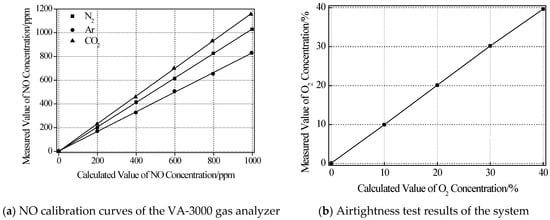
For the VA-3000 analyzer, since the experiments in this work are conducted under high Ar and CO2 concentrations, respectively, NO calibration is performed separately under these specific atmospheres. Depicted in Figure 2a, the calibration results demonstrate that while the measured NO values vary significantly across different background atmospheres, the linear correlation with the calculated values remain greater than 0.999 in all cases. Consequently, the experimental data are corrected using these calibration curves to obtain accurate results.
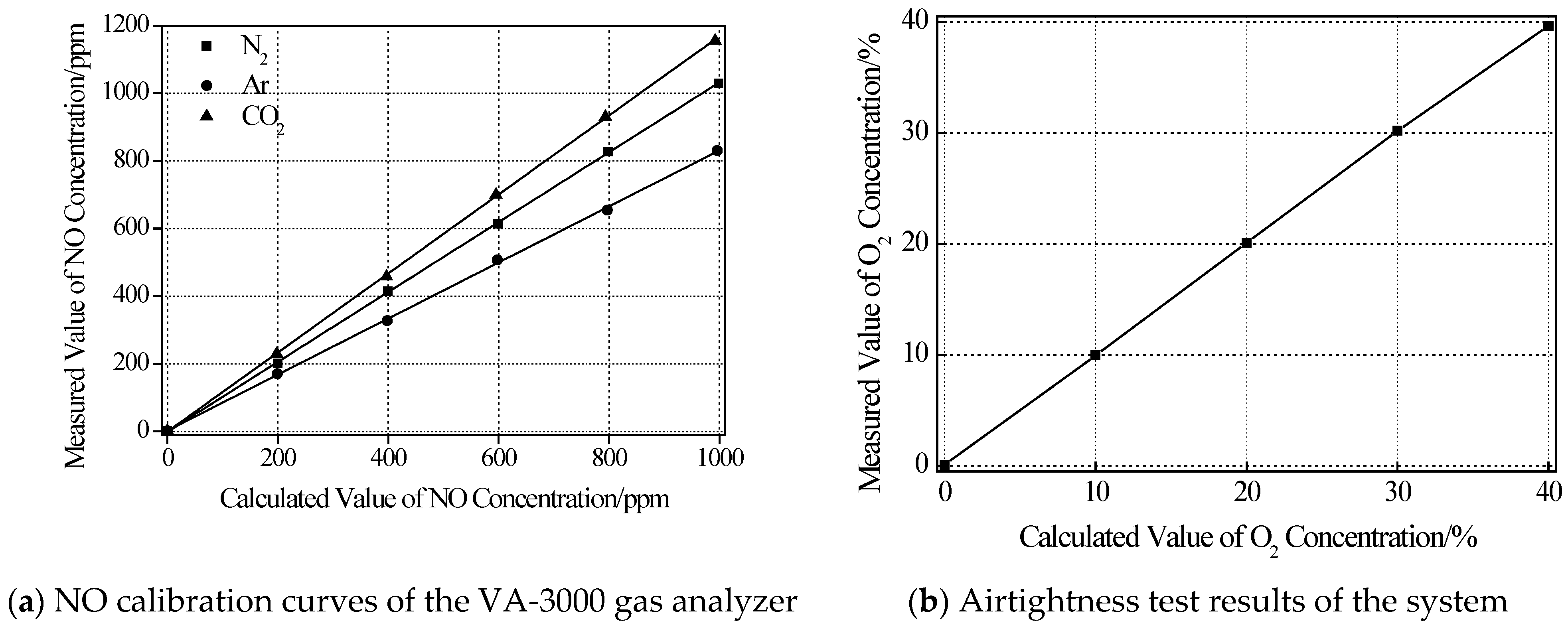
Figure 2.
NO calibration curves of the gas analyzer and airtightness test results of the system.
Airtightness tests are performed on the experimental system before the formal experiments. This test is conducted under negative pressure conditions, where a vacuum pump is connected to the outlet of the absorption bottle during the process. While maintaining the negative pressure of the system, gas mixtures with oxygen concentrations of 0%, 10%, 20%, 30%, and 40% are prepared using the gas supply system. The primary and secondary gas flow rates are maintained consistent with the experimental operating conditions. A flue gas analyzer is used to measure the oxygen concentration in the exhaust gas. The system’s airtightness is evaluated by comparing the consistency and linearity between the measured and calculated oxygen concentrations. The test results are shown in Figure 2b. The results indicate that the measured oxygen concentrations are basically consistent with the calculated values, with a linear correlation coefficient greater than 0.999. This demonstrates that the overall airtightness of the experimental system is excellent and fully meets the experimental requirements.
XPS is employed to characterize the chemical forms of nitrogen functional groups in raw coal and its derived char. Measurements are performed using an AXIS-ULTRA DLD-600 W X-ray photoelectron spectrometer (Shimadzu-Kratos, Japan). Sample preparation involves mounting the specimens on the sample stage using double-sided adhesive tape. To minimize random errors, a spot diameter of 500–700 μm is selected for spectral acquisition. Based on previous studies, the N 1 s spectra of coal nitrogen obtained by XPS typically exhibit four characteristic binding energy peaks, each corresponding to distinct nitrogen-containing functional groups, as documented in [48].
The volatile release rate during pulverized coal pyrolysis is analyzed using the ash tracer method [49,50], based on the ash contents of raw coal and corresponding char, using the following equation:
where VR represents the volatile release rate of pulverized coal (unit: %); denotes the ash content of the char; denotes the ash content of the raw coal.
The partitioning of fuel nitrogen into char and volatiles during pulverized coal pyrolysis is established. Building on this, and assuming all remaining nitrogen converts to N2, the conversion ratio of fuel nitrogen to N2 is evaluated. The proportion of char nitrogen can be calculated from the ash content of raw coal and coal char, along with elemental nitrogen content, using the following equation:
where represents the proportion of char nitrogen (unit: %); denotes the nitrogen proportion from elemental analysis of the char; denotes the nitrogen proportion from elemental analysis of the raw coal.
Based on the measured concentrations of HCN and NH3 released during pulverized coal pyrolysis, the proportion of volatile nitrogen is derived from the formula below:
where represents the proportion of volatile nitrogen (unit: %); denotes the sum of HCN and NH3 concentrations in the flue gas (unit: ppm); denotes the total gas flow rate during the experiment (unit: L/min); denotes the molar mass of nitrogen (14 g/mol); denotes the gas molar volume (22.4 L/mol); FR denotes coal feeding rate during the experiment (0.2 g/min); denotes the nitrogen content from elemental analysis of the dried coal sample.
The N2 fraction was derived from the overall nitrogen balance using the following formula:
where represents the N2 conversion ratio (unit: %); represents the proportion of char nitrogen (unit: %); represents the proportion of volatile nitrogen (unit: %).
In this study, the term is defined as the total combined yield of HCN and NH3. Other nitrogenous species that may form during pyrolysis (e.g., HNCO, HCNO, amines, tar-N, and CN-containing radicals) were not quantitatively detected. Therefore, the value obtained by difference in this study represents an upper-bound estimate, with the actual molecular N2 yield expected to be somewhat lower. Although some researchers have identified N-X structures in coal, it is generally acknowledged that the principal forms of nitrogen in coal are N-6, N-5, and N-Q [51]. The XPS analysis results in this study show no distinct peak around 403.5 eV; therefore, only the three forms—N-6, N-5, and N-Q—are considered in the analysis. Furthermore, the peak area serves as the basis for quantification.
The concentration of NH3 in exhaust gas is measured by solution absorption-ion chromatography using an 881 Compact IC pro ion chromatograph produced by METROHM (Swiss). The concentration of ammonium ions in the solution is determined by the ion chromatograph. To assess the NH3 concentration in the tail gas, the volume of the absorbing solution, absorption duration, flow rate of the scrubbed exhaust gas, and the mass of the powdered sample are integrated into the following calculation:
where represents the NH3 concentration in the tail gas (unit: ppm); represents the concentration of in the solution (unit: mg/L); epresents the volume of the solution, which is 0.1 L; represents the molar mass of , which is 18 g/mol; represents the gas flow rate through the gas-washing bottle (under standard conditions) in units of L/min; represents the duration of continuous powder feeding during the experiment (unit: min).
This study employs the high-temperature combustion method to measure the ash content of samples collected by the filter and of the raw coal. To ensure the accuracy of the measurement data, the ash content determination for each sample is performed at least three times, and the average of the results is taken.
2.3. Fuels and Conditions
To minimize the effect of variations in fuel-nitrogen content among coal samples, this study selects Shenhua bituminous coal and Jincheng low-volatile coal with comparable nitrogen content as experimental materials. After grinding and sieving, the raw coal is prepared within a narrow particle size range (98–105 μm) and dried at 105 °C for 48 h prior to testing. The volatile matter content is determined to be 33.37% for SH bituminous coal and 7.44% for JC anthracite. Table 2 presents the industrial and elemental analyses of the pulverized coal.
Table 2.
Ultimate and proximate analysis of the two solid fuels (air-dried basis).
Pyrolysis experiments are conducted under Ar and CO2 atmospheres at temperatures of 1000 °C, 1200 °C, and 1400 °C. A low feeding rate of 12 g/h is maintained to minimize particle interactions. Table 3 summarizes the specific operating conditions employed in the experiments. With a residence time of approximately 2–3 s in the high-temperature heating zone and the elevated pyrolysis temperatures, all generated tar is considered to have undergone secondary pyrolysis. Therefore, tar analysis is not included in this work.
Table 3.
Experimental operating condition settings.
3. Results and Discussion
3.1. Release of Volatiles During Pulverized Coal Pyrolysis
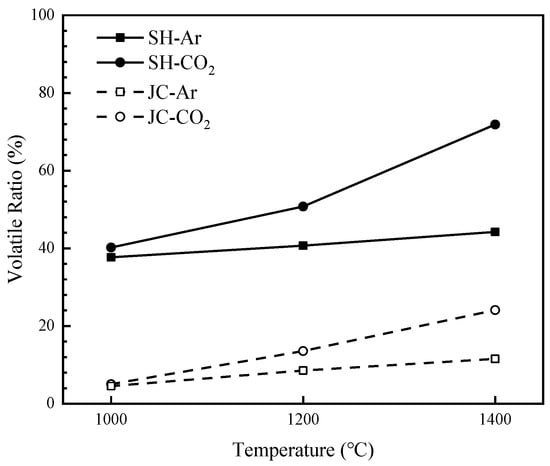
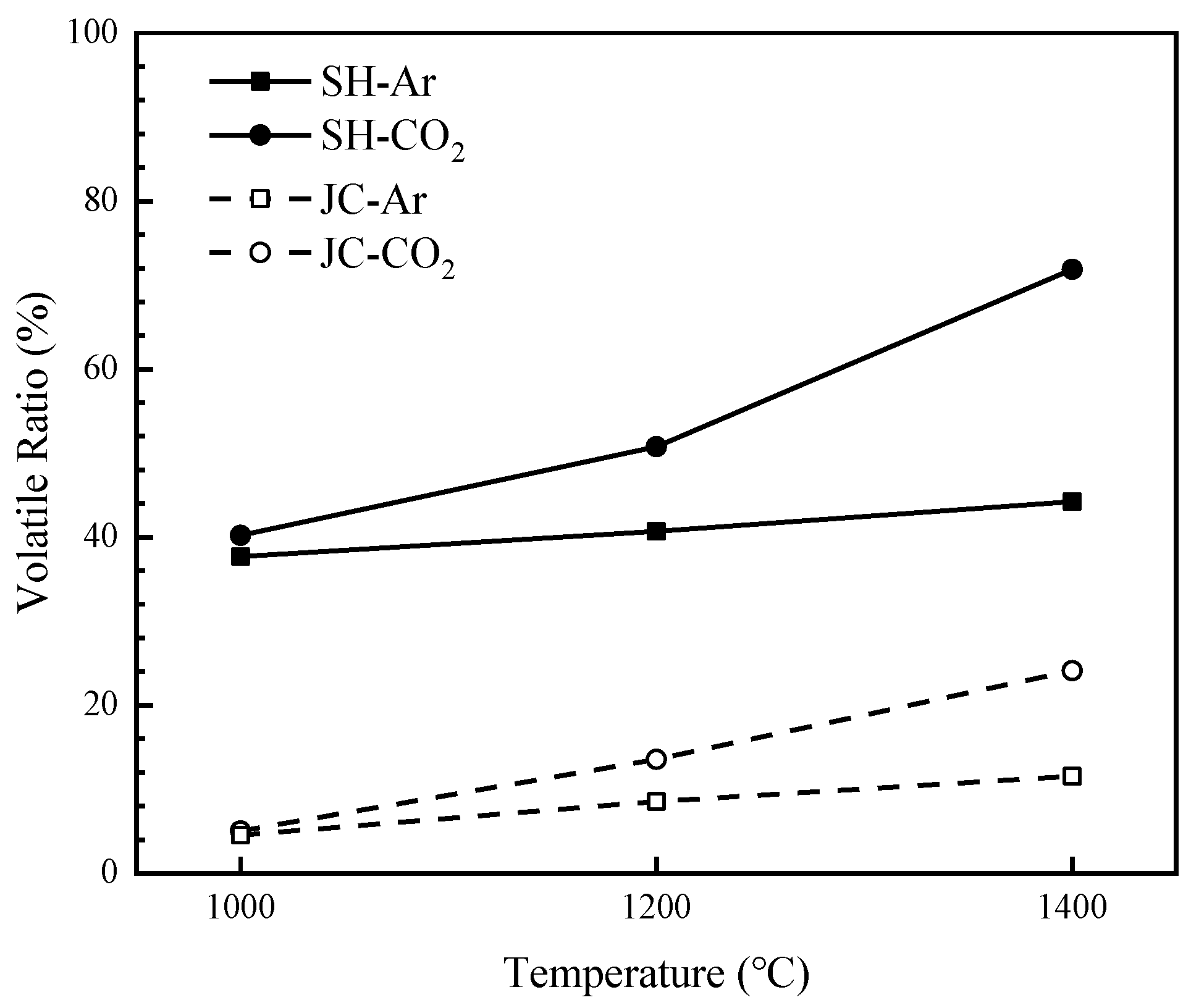
Figure 3 presents the volatile matter release rates during pyrolysis of SH bituminous coal and JC low-volatile coal under Ar and CO2 atmospheres across the tested temperature range. In an Ar environment, the volatile release rates for both coals increase gradually with rising temperature. This trend results from the thermal decomposition of macromolecular structures with higher stability in the coal, leading to enhanced volatile release. In CO2 atmosphere, the high CO2 concentration significantly enhances gas diffusion to the char surface and promotes gasification reactions. As CO2 diffusion to the char surface improves, the governing regime of the gasification reaction gradually shifts from diffusion-controlled to transition-controlled and eventually to kinetically controlled. This shift substantially increases the temperature sensitivity of the gasification reaction rate, resulting in a rapid increase in volatile matter release with temperature during pulverized coal pyrolysis in CO2 atmosphere [52,53].
Figure 3.
Volatile release rate during the pyrolysis of SH bituminous coal and JC low-volatile coal.
Comparison of the volatile release rate as a function of temperature during pyrolysis in CO2 atmosphere reveals distinct temperature sensitivities between the two coal types. The volatile matter content of SH coal is over four times higher than that of JC low-volatile. Table 4 lists the physical property parameters of the two coals and their corresponding chars. The char derived from SH coal exhibits greater porosity and specific surface area compared to JC coal, which aligns with the findings reported by Zhang et al. [54]. This increased specific surface area significantly enhances char reactivity, promoting the C-CO2 gasification reaction on the char surface [55].
Table 4.
Summary of the physical properties of the coal samples and their chars.
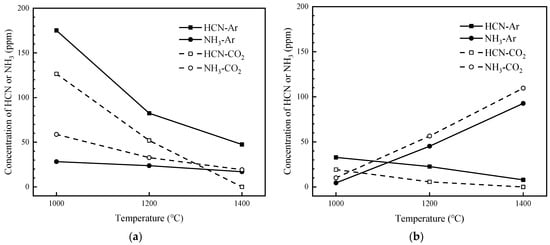
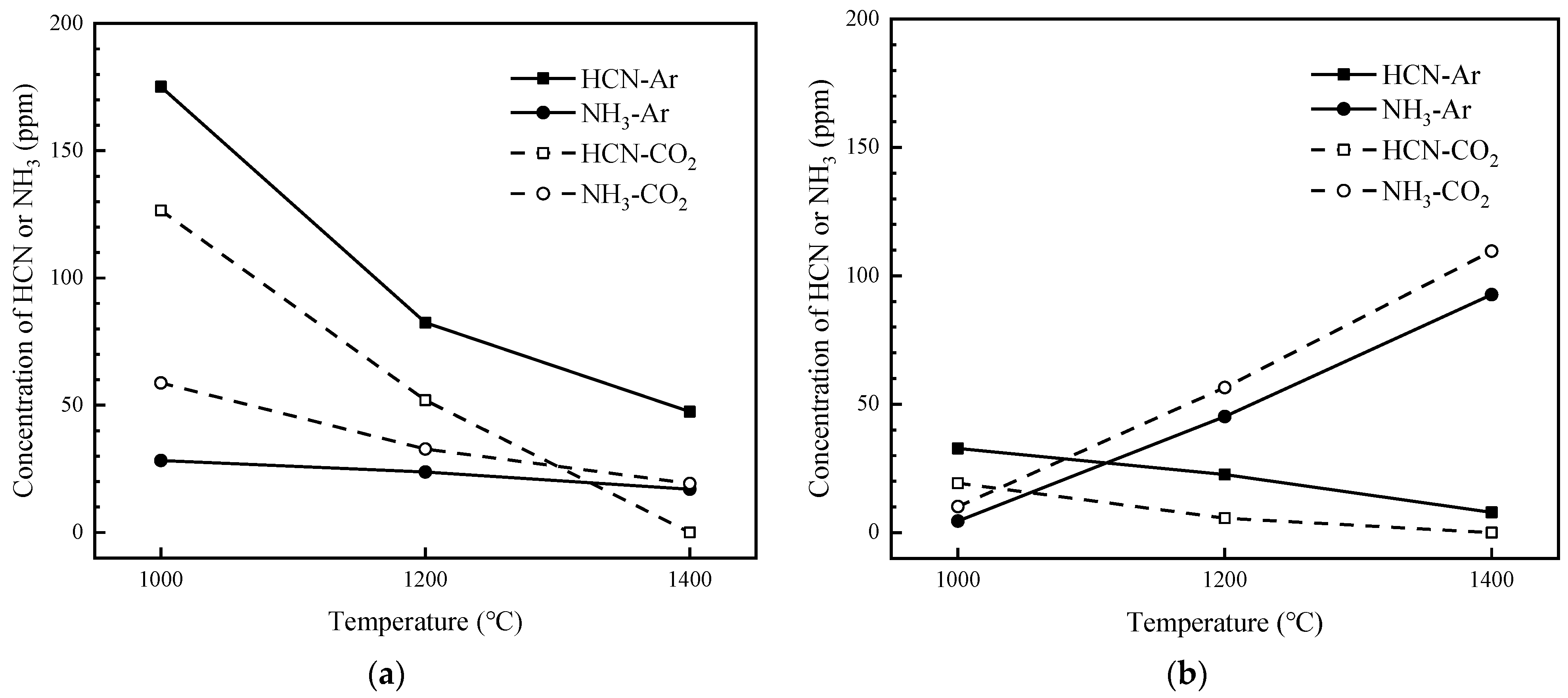
Figure 4a shows the variation in volatile nitrogen release as a function of temperature throughout pulverized coal pyrolysis in Ar and CO2 atmospheres. As presented in Figure 4, volatile nitrogen released from the SH bituminous coal pyrolysis process primarily consists of HCN and NH3. Under most conditions (except at 1400 °C in CO2 atmosphere), the HCN release exceeds that of NH3. As temperature rises, the concentrations of both HCN and NH3 exhibit a declining trend. Simultaneously, the HCN-to-NH3 release ratio also decreases with rising temperature. This suggests that some HCN released during the initial period of SH bituminous coal pyrolysis undergoes hydrogenation and hydrolysis reactions to form NH3, representing the key source of NH3 under its pyrolysis process. The transformation pathway is as follows: HCN + H2 → NH3 + CH4 and HCN + H2O → NH3 + CO.
Figure 4.
Release of HCN and NH3 from (a) SH bituminous coal and (b) JC low-volatile coal.
The transformation of HCN into NH3 throughout pyrolysis contributes to the observed decrease in HCN release. Figure 4a indicates that the decline in NH3 concentration with rising temperature is significantly smaller than the corresponding decrease in HCN, suggesting that HCN may also be transformed into other nitrogen-containing species, including N2 and soot nitrogen.
A comparison of volatile nitrogen release during SH bituminous coal pyrolysis under the two atmospheres reveals that HCN emission is suppressed in the CO2 atmosphere relative to that in Ar. The release of NH3 as a secondary reaction product of HCN exceeds the level observed in the Ar atmosphere. Under CO2 atmosphere and 1400 °C, the release of NH3 even exceeds that of HCN. It can be considered that the reason for the decrease in HCN release under the CO2 atmosphere is that the CO2 atmosphere promotes the secondary reaction of HCN. This is a good explanation for the change in the emission of both in the CO2 atmosphere.
Figure 4b shows the temperature-dependent release profiles of volatile nitrogen species during JC low-volatile coal pyrolysis under Ar and CO2 atmospheres. Similarly to SH bituminous coal, the volatile nitrogen released from JC anthracite pyrolysis consists primarily of HCN and NH3. Both HCN release and the HCN/NH3 ratio decrease with increasing temperature. The effect of atmosphere on volatile nitrogen release from JC low-volatile coal is consistent with that observed for SH bituminous coal. However, unlike SH bituminous coal, NH3 release during JC low-volatile coal pyrolysis increases significantly with temperature. At 1000 °C, volatile nitrogen from JC anthracite remains dominated by HCN. As temperature increases, HCN release decreases while NH3 release rises markedly, resulting in a gradual shift toward NH3 dominance. Notably, at 1400 °C, NH3 release exceeds that of HCN by more than tenfold, indicating that the formation pathway of NH3 during JC low-volatile coal pyrolysis differs substantially from that in SH bituminous coal. This difference likely arises from the different coal ranks of the two samples.
During pyrolysis, SH bituminous coal and JC low-volatile coal exhibit contrasting trends in NH3 release with increasing temperature, suggesting fundamentally different formation pathways. As previously discussed, NH3 formation during SH bituminous coal pyrolysis primarily results from secondary hydrogenation and hydrolysis reactions of HCN. This study further investigates the dominant sources of NH3 during JC low-volatile coal pyrolysis.
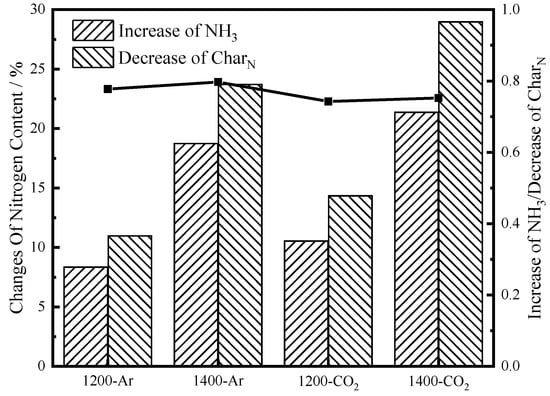
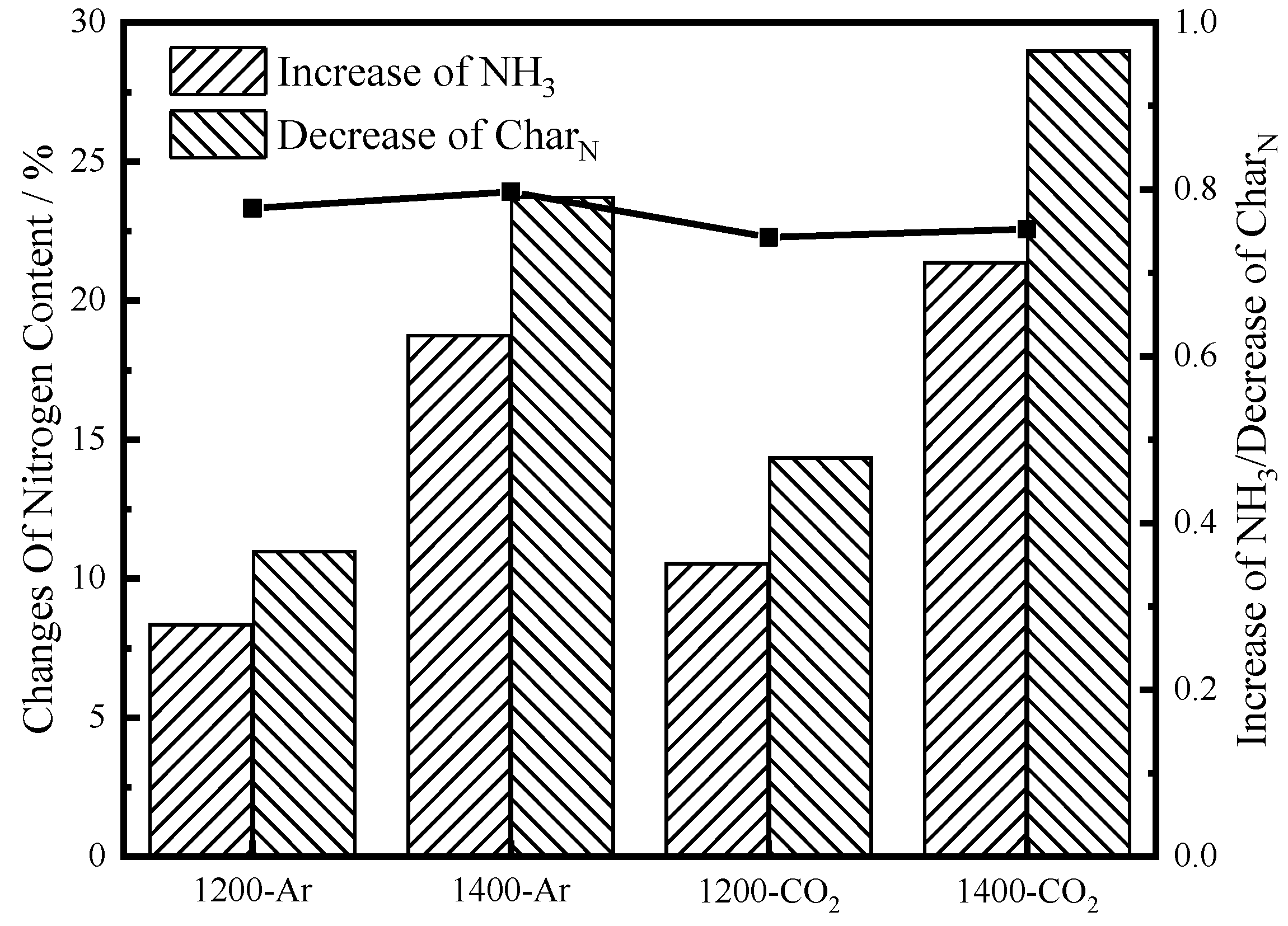
Figure 5 shows the proportions of NH3 and char nitrogen during JC low-volatile coal pyrolysis and their variations with temperature and atmosphere. As shown, the two parameters exhibit highly consistent trends, with their ratio remaining constant (approximately 0.75) within experimental uncertainty. This correlation suggests that NH3 formation during JC low-volatile coal pyrolysis primarily originates from hydrogenation and hydrolysis reactions of char nitrogen, which is consistent with conclusions from prior studies [33,56].
Figure 5.
Changes in the proportions of NH3 and char-N as a function of temperature during the pyrolysis of JC low-volatile anthracite.
3.2. Transformation of Fuel-Nitrogen in the Coal Pyrolysis Process
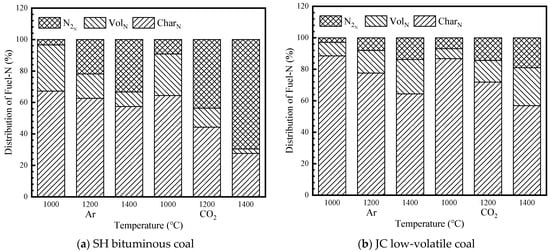
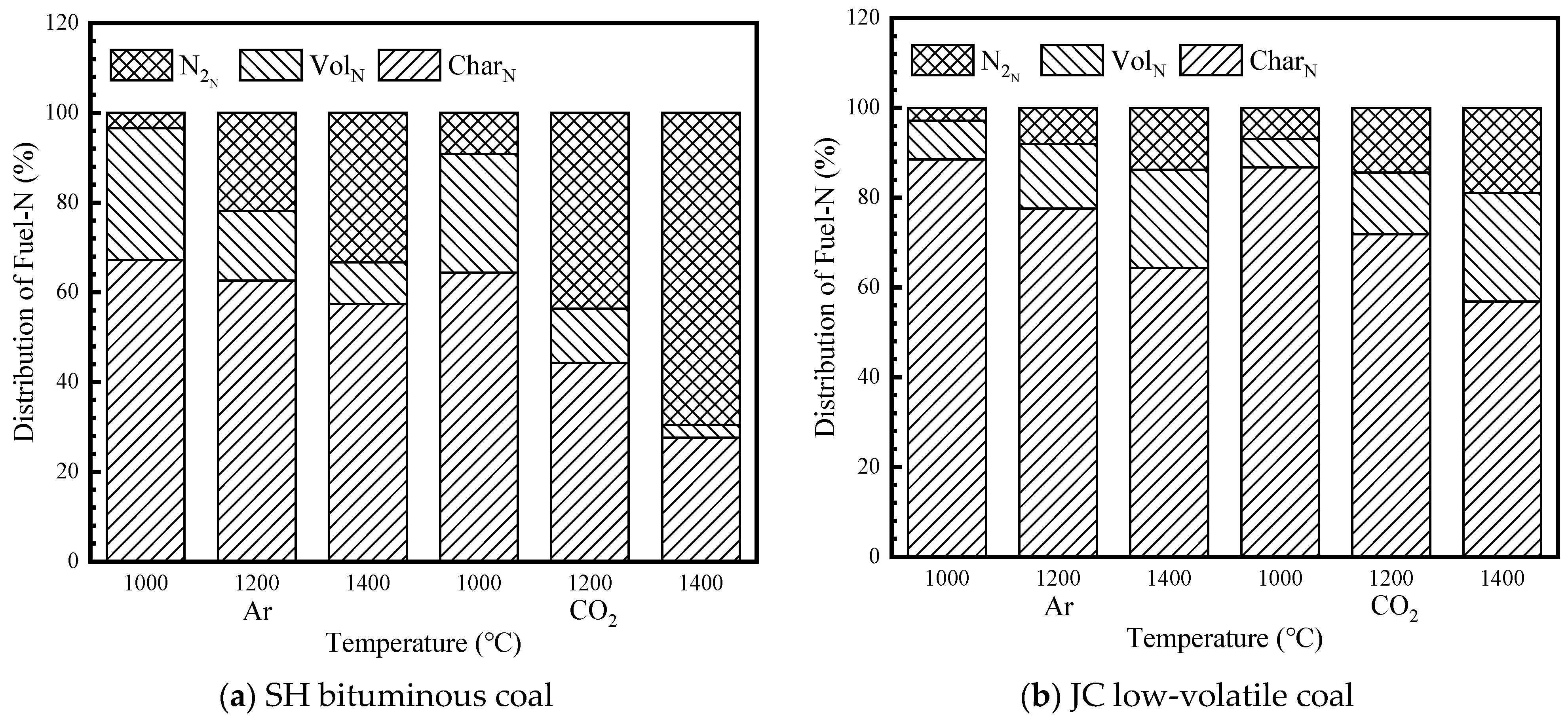
Figure 6a shows the variation in fuel nitrogen distribution with temperature during SH bituminous coal pyrolysis in Ar and CO2 atmospheres. As shown, the proportions of both char nitrogen and volatile nitrogen decrease with increasing temperature, while the proportion of N2 increases. This phenomenon is primarily due to two key factors. First, elevated temperatures provide sufficient energy to break chemical bonds in thermally stable molecular structures, releasing additional volatile matter. Since most nitrogen atoms in coal char are located at the edges of macromolecular structures, they are released along with the volatile matter. Second, HCN constitutes the predominant volatile nitrogen species during SH bituminous coal pyrolysis. Under high-temperature conditions, HCN can decompose into other gaseous products, and NH3 release also decreases with rising temperature.
Figure 6.
Variation of nitrogen morphology with temperature and atmosphere.
Comparative analysis reveals that under identical temperature conditions, the proportions of both char nitrogen and volatile nitrogen in CO2 atmosphere show a decrease in comparison to those in Ar atmosphere. The reduction in char nitrogen proportion is attributed to enhanced gasification reactions on the char surface. As previously noted, the CO2 atmosphere promotes secondary reactions of HCN—the main volatile nitrogen species—and the decreased proportion of total volatile nitrogen corroborates this observation. These factors collectively contribute to the rapid increase in N2 conversion during pyrolysis, reaching approximately 70% at 1400 °C, which is more than twice the value observed in Ar atmosphere.
Figure 6b demonstrates that the temperature-dependent variation in fuel nitrogen distribution during JC low-volatile coal pyrolysis differs significantly from that of SH coal (with high volatile content), particularly in volatile nitrogen behavior. While volatile nitrogen proportion decreases with temperature in SH bituminous coal, it increases substantially during JC low-volatile coal pyrolysis. This distinction primarily arises from the minimal HCN release and dominant NH3 formation at elevated temperatures during JC low-volatile coal pyrolysis, with NH3 release increasing markedly with temperature. Furthermore, although the atmospheric effects on char nitrogen proportion follow similar trends for both coals, the magnitude of these effects varies. The CO2 atmosphere exerts a more pronounced influence on char nitrogen content in SH bituminous coal, whereas temperature variation affects JC low-volatile coal more significantly. These differences stem from variations in char-specific surface area and the thermal stability of molecular structures in the raw coals.
3.3. Transformation of Nitrogen-Containing Functional Groups
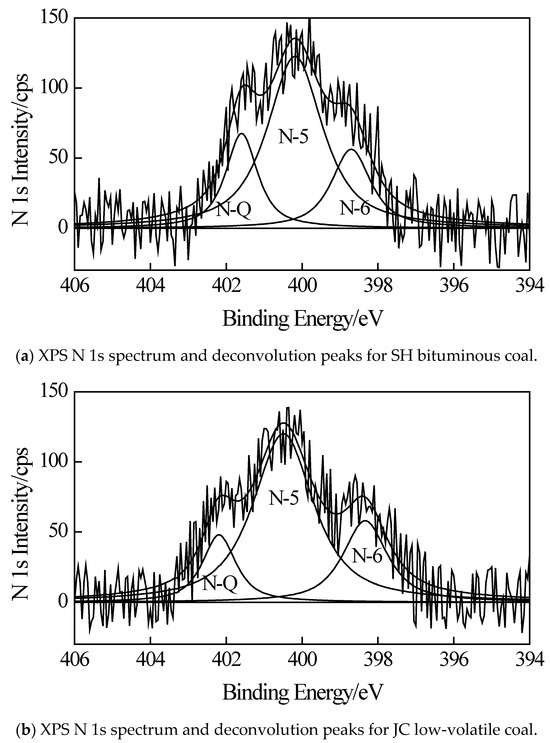
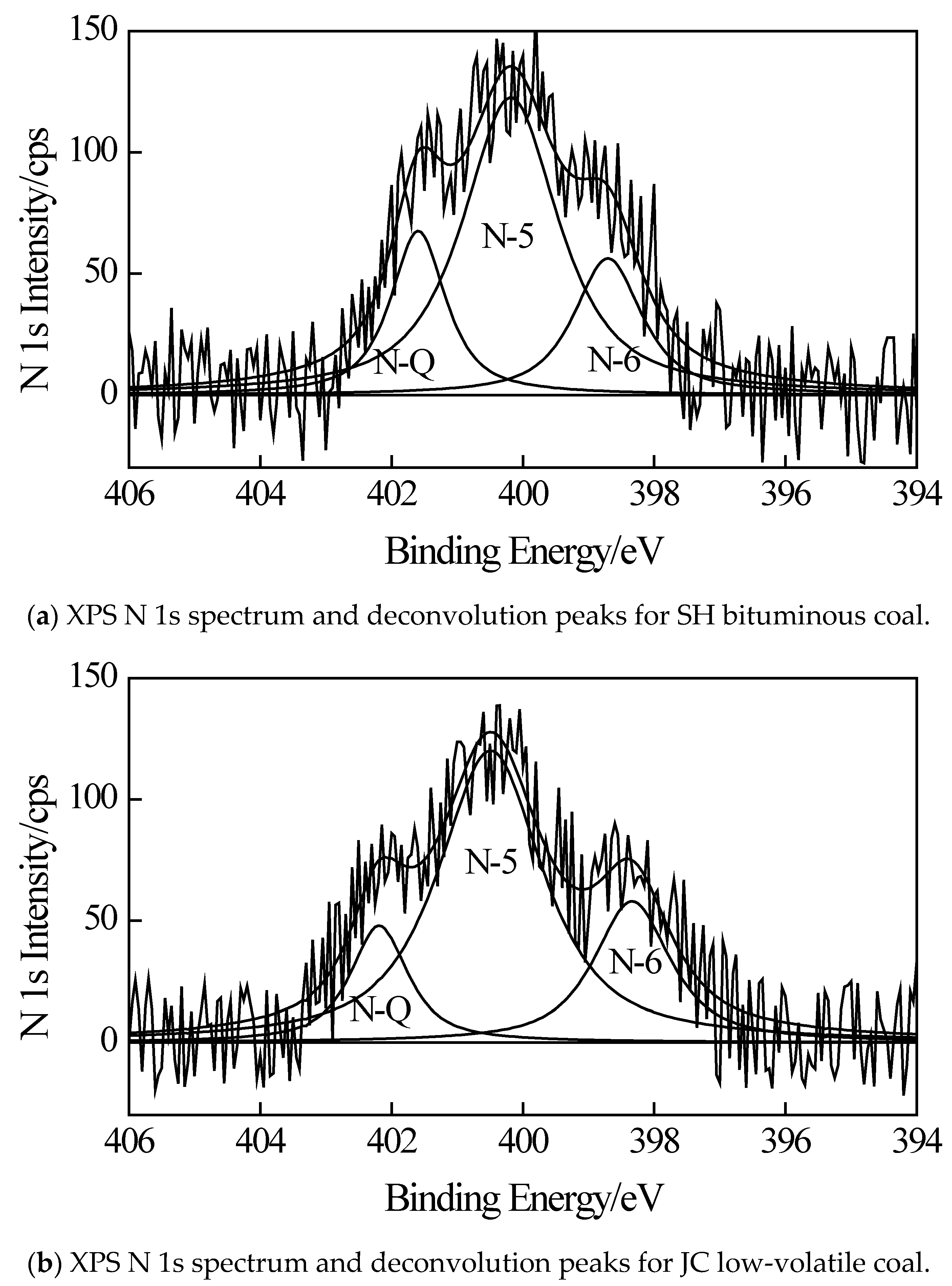
Figure 7a,b show the XPS N 1s spectra and corresponding peak deconvolution results for the SH bituminous coal and JC low-volatile coal, respectively. The N 1s spectra for both coals comprise three overlapping peaks with binding energies located approximately at 398.5 eV, 400.35 eV, and 401.8 eV, which correspond to N-6, N-5, and N-Q, respectively. N-5 represents the primary nitrogen form in both samples, then N-6, and finally N-Q.
Figure 7.
XPS analysis of nitrogen species.
Quantitative XPS analysis in Table 5 reveals that, for SH bituminous coal, the fractions of N-5, N-6, and N-Q are 60.8%, 19.4%, and 19.8%, respectively. In contrast, for JC low-volatile coal, the corresponding proportions are 63.6%, 22.4%, and 14.0%. These results indicate that JC low-volatile coal exhibits higher combined proportions of N-5 and N-6 but a lower proportion of N-Q compared to the SH bituminous coal.
Table 5.
Results of the XPS qualitative analysis.
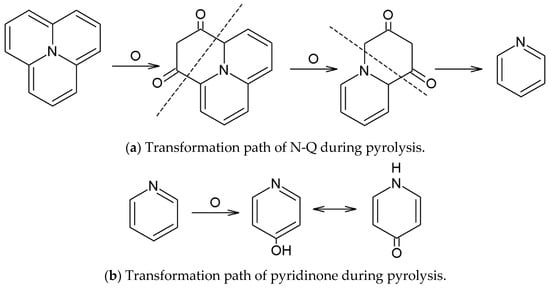
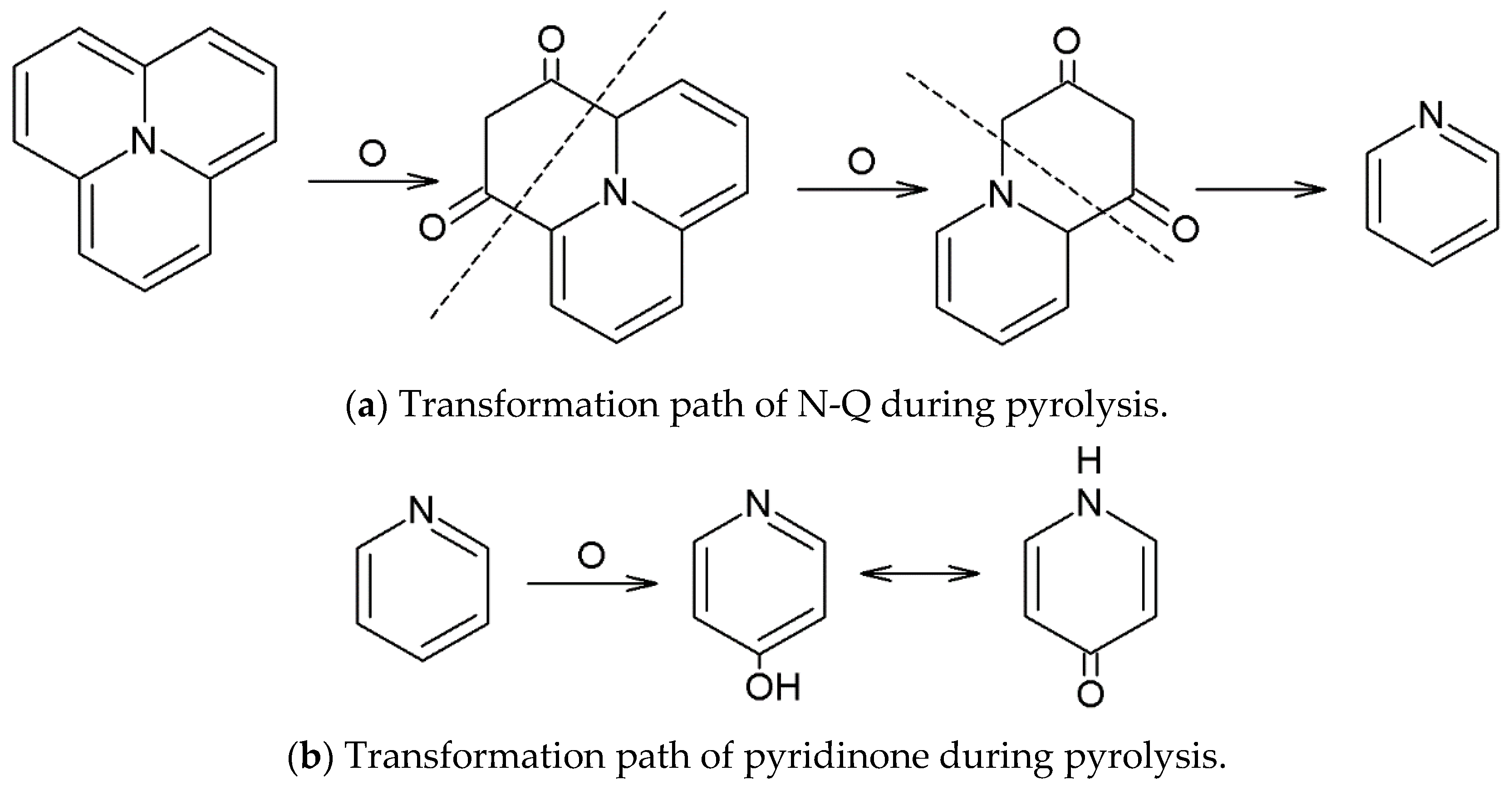
XPS analysis of the raw coal samples confirmed that quaternary nitrogen (N-Q) is present in coals of different ranks. However, it was not detected in the resulting chars, indicating its conversion to other nitrogen forms during pyrolysis. In coal molecular structure, quaternary nitrogen essentially represents pyridine nitrogen located within condensed aromatic systems. Under specific conditions, when carbon bonds rupture, the internal nitrogen atoms become exposed at the edges. If both connected aromatic rings undergo cleavage, the quaternary nitrogen transforms into pyridine nitrogen. It can be proposed that under high-temperature conditions, oxygen radicals can disrupt aromatic ring structures, gradually exposing nitrogen atoms at the edges, with the proposed reaction pathway illustrated in Figure 8a.
Figure 8.
Transformation path of N-containing groups in coal char (dashed lines represent breaks, and arrows indicate binding/association.).
In pyridine nitrogen, two electrons from the nitrogen atom participate in the large π-bond of the aromatic ring, leaving one lone electron pair at the nitrogen site. The binding energy of pyridone nitrogen differs from that of pyridine nitrogen but resembles that of pyrrole nitrogen. This suggests that the N-5 species observed in high-temperature coal char corresponds to pyridone structures. At elevated temperatures, pyridine can be oxidized to form pyridone, with the transformation pathway illustrated in Figure 8b.
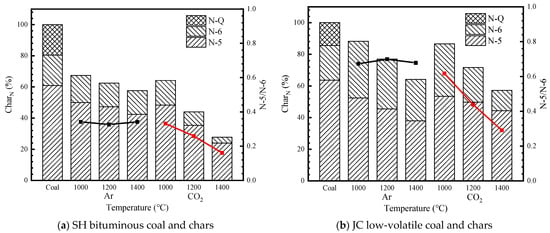
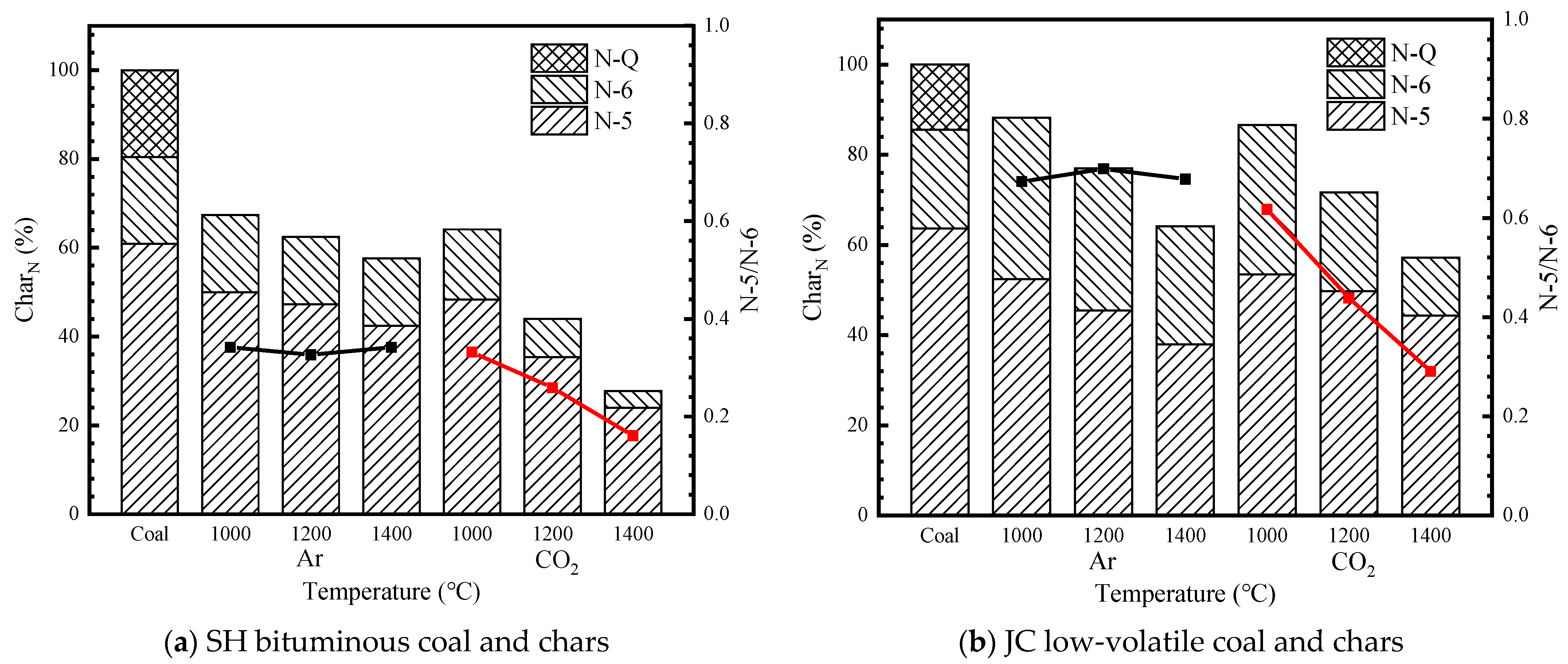
Figure 9 presents the variations in N functional group content and N-6/N-5 ratio of JC low-volatile coal and SH bituminous coal pyrolytic chars, with temperature under Ar and CO2 atmospheres. Under Ar atmosphere, the concentrations of N-5 and N-6 decrease more rapidly with increasing temperature in JC char than in SH char. This difference arises because JC low-volatile coal exhibits higher thermal stability in its molecular structure than SH coal, and thus its molecular structure requires higher temperatures for bond cleavage compared to SH coal.
Figure 9.
Changes in N functional group content and N-6/N-5 ratio with temperature and atmosphere.
In contrast, under CO2 atmosphere, the residual concentrations of N-5 and N-6 in JC char decrease more slowly with increasing temperature compared to SH char. This behavior is attributed to the significantly smaller specific surface area of JC char relative to SH char, which substantially limits the enhancing effect of gasification reactions on nitrogen release from the char matrix.
Comparison of the N-6/N-5 ratios in the two chars reveals that SH char exhibits a lower N-6/N-5 ratio than JC char under all experimental conditions.
All pyrolysis experiments in this study are conducted under oxygen-free conditions. The active oxygen required for the conversion of quaternary nitrogen to pyridine and pyridine to pyridone primarily originated from the inherent oxygen in the coal molecular structure. Notably, the oxygen content of SH bituminous coal is more than threefold higher than that of JC low-volatile coal.
4. Conclusions
Through a systematic investigation of the pyrolysis behavior of low-volatile coal (7.44% volatile matter) under oxy-fuel conditions, this work reveals the synergistic regulatory effects of temperature and reaction atmosphere on the behavior and evolution of fuel nitrogen. The major findings are presented as follows:
- (1)
- At identical temperatures, the pyrolysis release rate of low-volatile coal in an oxy-fuel atmosphere surpasses that in Ar atmosphere. Under oxy-fuel environment at 1400 °C, the volatile matter release rate of low-volatile coal reaches 2.1 times the value observed in Ar atmosphere, primarily attributed to enhanced gas diffusion toward the char surface and promoted gasification reactions under high CO2 concentrations.
- (2)
- Volatile nitrogen released during the pyrolysis of low-volatile coal primarily exists as HCN and NH3. While HCN dominates at lower temperatures, NH3 release at high temperatures (e.g., 1400 °C) can exceed that of HCN by more than tenfold. The formation of NH3 is attributed to hydrogenation and hydrolysis reactions of char nitrogen.
- (3)
- Under CO2 atmosphere, the gasification reactions between CO2 and the char surface promote nitrogen release during pulverized coal pyrolysis and reduce the proportion of char nitrogen. This promoting effect becomes more pronounced at elevated temperatures due to intensified gasification. Specifically, the proportion of volatile nitrogen in low-volatile coal increases with rising temperature, reaching approximately four times higher at 1400 °C compared to that at 1000 °C.
- (4)
- XPS analysis indicates that the residual contents of both pyrrolic and pyridinic in the char derived from low-volatile coal pyrolysis decrease with increasing pyrolysis temperature. Under a CO2 atmosphere, the pyridinic/pyrrolic ratio exhibits a significant decline as temperature rises, demonstrating that elevated temperatures promote the conversion of pyridinic nitrogen to pyridonic nitrogen. This behavior is primarily ascribed to the increased concentration of active oxygen radicals resulting from enhanced gasification reactions under the CO2 atmosphere, which accelerates the transformation of nitrogen-containing functional groups.
Author Contributions
Conceptualization, F.H. and X.W.; methodology, F.H., C.M. and T.Z.; Investigation, F.H., Y.L. and T.Z.; validation, H.L., X.L. and C.M.; data curation, T.Z.; writing—original draft preparation, F.H. and X.W.; writing—review and editing, F.H. and X.W.; funding acquisition, F.H. and Z.L. All authors have read and agreed to the published version of the manuscript.
Funding
This work is supported by the Key Research and Development Program of Science and Technology of China (2024ZD1003503 and 2025ZD1010208), the National Natural Science Foundation of China (52106145 and 42272296), and the “CUG Scholar” Scientific Research Funds at China University of Geosciences (No. 2022131).
Data Availability Statement
The original contributions presented in the study are included in the article, further inquiries can be directed to the corresponding author.
Conflicts of Interest
The authors declare no conflicts of interest. The funders had no role in the design of the study; in the collection, analyses, or interpretation of data; in the writing of the manuscript; or in the decision to publish the results.
Abbreviations
The following abbreviations are used in this manuscript:
| XPS | X-ray Photoelectron Spectroscopy |
| CCUS | Carbon neutrality, Carbon capture, Utilization, and Storage |
| TG-FTIR | Thermogravimetric–Fourier transform infrared spectroscopy |
| N-6 | Pyridinic |
| N-5 | Pyrrolic |
| N-Q | Quaternary Nitrogen |
References
- Huang, X.; Hu, F.; Liu, X.; Liu, Z. Structure and reactivity of chars prepared from low-volatile coal under O2/N2 and O2/CO2 conditions in a flat-flame assisted entrained flow reactor. Energy 2022, 261, 125370. [Google Scholar] [CrossRef] [Scilit]
- Kuznetsov, G.; Syrodoy, S.; Salomatov, V.; Malyshev, D.; Kostoreva, Z.; Purin, M.; Yankovsky, S. Ignition and combustion characteristics of coal-water fuels based on coal & semi-coke. Combust. Flame 2022, 246, 112430. [Google Scholar]
- Gautam, S. Assessment of low-volatile poor caking Indian coal for coke making. Int. J. Coal Prep. Util. 2017, 37, 33–43. [Google Scholar] [CrossRef] [Scilit]
- Ma, G.; Liu, J.; Wang, C.; Liu, K.; Che, D. Numerical simulation on the co-combustion characteristics of low-volatile carbon-based fuel blends and their blends with bituminous coal under oxy-fuel conditions. Powder Technol. 2025, 467, 121560. [Google Scholar] [CrossRef] [Scilit]
- Riaza, J.; Khatami, R.; Levendis, Y.A.; Álvarez, L.; Gil, M.V.; Pevida, C.; Rubiera, F.; Pis, J.J. Single particle ignition and combustion of anthracite, semi-anthracite and bituminous coals in air and simulated oxy-fuel conditions. Combust. Flame 2014, 161, 1096–1108. [Google Scholar] [CrossRef] [Scilit]
- Wells, W.F.; Smoot, L.D. Relation between reactivity and structure for coals and chars. Fuel 1991, 70, 454–458. [Google Scholar] [CrossRef] [Scilit]
- Tapia, J.F.D.; Lee, J.-Y.; Ooi, R.E.; Foo, D.C.; Tan, R.R. A review of optimization and decision-making models for the planning of CO2 capture, utilization and storage (CCUS) systems. Sustain. Prod. Consum. 2018, 13, 1–15. [Google Scholar] [CrossRef] [Scilit]
- Zaheer, A.; Ali, U. Part load operation of oxyfuel combustion power plant for co-firing of coal and biomass with carbon capture. Next Chem. Eng. 2025, 1, 100011. [Google Scholar] [CrossRef] [Scilit]
- Guo, J.; Liu, J.; Zhang, T.; Hu, F.; Li, P.; Liu, Z.; Zheng, C. Review on research and development of oxy-coal burner for carbon capture. Sci. China Technol. Sci. 2024, 67, 647–672. [Google Scholar] [CrossRef] [Scilit]
- Hu, F.; Li, P.; Guo, J.; Wang, K.; Liu, Z.; Zheng, C. Evaluation, development, and validation of a new reduced mechanism for methane oxy-fuel combustion. Int. J. Greenh. Gas Control 2018, 78, 327–340. [Google Scholar] [CrossRef] [Scilit]
- Hong, D.; Guo, X.; Wang, C. A reactive molecular dynamics study of HCN oxidation during pressurized oxy-fuel combustion. Fuel Process. Technol. 2021, 224, 107020. [Google Scholar] [CrossRef] [Scilit]
- Buhre, B.J.; Elliott, L.K.; Sheng, C.; Gupta, R.P.; Wall, T.F. Oxy-fuel combustion technology for coal-fired power generation. Progress Energy Combust. Sci. 2005, 31, 283–307. [Google Scholar] [CrossRef] [Scilit]
- Toftegaard, M.B.; Brix, J.; Jensen, P.A.; Glarborg, P.; Jensen, A.D. Oxy-fuel combustion of solid fuels. Prog Energy Combust. Sci. 2010, 36, 581–625. [Google Scholar] [CrossRef] [Scilit]
- Wang, C.A.; Zhang, X.; Liu, Y.; Che, D. Pyrolysis and combustion characteristics of coals in oxyfuel combustion. Appl. Energy 2012, 97, 264–273. [Google Scholar] [CrossRef] [Scilit]
- Feng, D.; Guo, D.; Zhao, Y.; Tan, H.; Chang, G.; Zhang, T.; Sun, S. Formation and O2/CO2 combustion characteristics of real-environment coal char in high-temperature oxy-fuel conditions. J. Energy Inst. 2019, 92, 1670–1682. [Google Scholar] [CrossRef] [Scilit]
- Okonkwo, O.; Yablonsky, G.; Biswas, P. Thermodynamic analysis of tri-reforming of oxy-fuel combustion exhaust gas. J. CO2 Util. 2020, 39, 101156. [Google Scholar] [CrossRef] [Scilit]
- Hu, F.; Li, P.; Guo, J.; Liu, Z.; Wang, L.; Mi, J.; Dally, B.; Zheng, C. Global reaction mechanisms for MILD oxy-combustion of methane. Energy 2018, 147, 839–857. [Google Scholar] [CrossRef] [Scilit]
- Yin, C.; Rosendahl, L.A.; Kær, S.K. Chemistry and radiation in oxy-fuel combustion: A computational fluid dynamics modeling study. Fuel 2011, 90, 2519–2529. [Google Scholar] [CrossRef] [Scilit]
- Wei, Y.; Xi, Z.; Xia, Y.; Cai, J.; Lu, Z.; Yao, S. Investigation of the effect of ammonia on coal pyrolysis based on TG-FTIR. Energy 2025, 324, 136111. [Google Scholar] [CrossRef] [Scilit]
- Wang, C.A.; Gao, X.; Liu, C.; Zhou, L.; Zhao, L.; Du, Y.; Che, D. Experimental investigation on physical and chemical properties of solid products from co-pyrolysis of bituminous coal and semi-coke. J. Energy Inst. 2021, 99, 59–72. [Google Scholar] [CrossRef] [Scilit]
- Shaddix, C.R.; Molina, A. Fundamental investigation of NOx formation during oxy-fuel combustion of pulverized coal. Proc. Combust. Inst. 2011, 33, 1723–1730. [Google Scholar] [CrossRef] [Scilit]
- Zan, H.; Chen, X.; Pan, S.; Geng, P.; Liu, D.; Ma, J.; Liang, C. Experimental and modelling study on emission of volatile nitrogen derived NO during pressured oxy-fuel combustion under wet flue gas environment. J. Therm. Sci. 2023, 32, 1750–1757. [Google Scholar] [CrossRef] [Scilit]
- Xiong, X.; Yu, S.; Qin, D.; Tan, H.; Lu, X. Evolution behaviors of the nitrogen-containing species and SO2 from coal fast pyrolysis. J. Energy Inst. 2022, 105, 133–140. [Google Scholar] [CrossRef] [Scilit]
- Jiao, T.; Fan, H.; Liu, S.; Yang, S.; Du, W.; Shi, P.; Yang, C.; Wang, Y.; Shangguan, J. A review on nitrogen transformation and conversion during coal pyrolysis and combustion based on quantum chemical calculation and experimental study. Chin. J. Chem. Eng. 2021, 35, 107–123. [Google Scholar] [CrossRef] [Scilit]
- Tsubouchi, N.; Ohtsuka, Y. Nitrogen release during high temperature pyrolysis of coals and catalytic role of calcium in N2 formation. Fuel 2002, 81, 2335–2342. [Google Scholar] [CrossRef] [Scilit]
- Solomon, P.R.; Colket, M.B. Evolution of fuel nitrogen in coal devolatilization. Fuel 1978, 57, 749–755. [Google Scholar] [CrossRef] [Scilit]
- Solomon, P.R.; Hamblen, D.G. Finding order in coal pyrolysis kinetics. Prog Energy Combust. Sci. 1983, 9, 323–361. [Google Scholar] [CrossRef] [Scilit]
- Ohtsuka, Y.; Furimsky, E. Effect of ultrafine iron and mineral matter on conversion of nitrogen and carbon during pyrolysis and gasification of coal. Energy Fuels 1995, 9, 141–147. [Google Scholar] [CrossRef] [Scilit]
- Wu, Z.; Ohtsuka, Y. Nitrogen distribution in a fixed bed pyrolysis of coals with different ranks: Formation and source of N2. Energy Fuels 1997, 11, 477–482. [Google Scholar] [CrossRef] [Scilit]
- Zhang, H.; Fletcher, T.H. Nitrogen transformations during secondary coal pyrolysis. Energy Fuels 2001, 15, 1512–1522. [Google Scholar] [CrossRef] [Scilit]
- Genetti, D.; Fletcher, T.H. Modeling nitrogen release during devolatilization on the basis of chemical structure of coal. Energy Fuels 1999, 13, 1082–1091. [Google Scholar] [CrossRef] [Scilit]
- Crelling, J.C.; Thomas, K.M.; Marsh, H. The release of nitrogen and sulphur during the combustion of chars derived from lithotypes and maceral concentrates. Fuel 1993, 72, 349–357. [Google Scholar] [CrossRef] [Scilit]
- Li, C.-Z.; Tan, L.L. Formation of NOx and SOx precursors during the pyrolysis of coal and biomass. Part III. Further discussion on the formation of HCN and NH3 during pyrolysis. Fuel 2000, 79, 1899–1906. [Google Scholar] [CrossRef] [Scilit]
- Xie, Z.; Feng, J.; Zhao, W.; Xie, K.-C.; Pratt, K.C.; Li, C.-Z. Formation of NOx and SOx precursors during the pyrolysis of coal and biomass. Part IV. Pyrolysis of a set of Australian and Chinese coals. Fuel 2001, 80, 2131–2138. [Google Scholar] [CrossRef] [Scilit]
- Tan, L.L.; Li, C.-Z. Formation of NOx and SOx precursors during the pyrolysis of coal and biomass. Part I. Effects of reactor configuration on the determined yields of HCN and NH3 during pyrolysis. Fuel 2000, 79, 1883–1889. [Google Scholar] [CrossRef] [Scilit]
- Chang, L.; Xie, Z.; Xie, K.-C.; Pratt, K.C.; Hayashi, J.-I.; Chiba, T.; Li, C.-Z. Formation of NOx precursors during the pyrolysis of coal and biomass. Part VI. Effects of gas atmosphere on the formation of NH3 and HCN. Fuel 2003, 82, 1159–1166. [Google Scholar] [CrossRef] [Scilit]
- Deng, L.; Jin, X.; Zhang, Y.; Che, D. Release of nitrogen species during rapid pyrolysis of model coals. Energy Fuels 2013, 27, 430–439. [Google Scholar] [CrossRef] [Scilit]
- Kambara, S.; Takarada, T.; Yamampto, Y. Relation between fu⁃ netional forms of coal nitrogen and formation of NOx precursors during rapid pyrolysis. Energy Fuel 1996, 10, 1022–1027. [Google Scholar]
- Kambara, S.; Takarada, T.; Toyoshima, M.; Kato, K. Relation between functional forms of coal nitrogen and NOx emissions from pulverized coal combustion. Fuel 1995, 74, 1247–1253. [Google Scholar] [CrossRef] [Scilit]
- Schmiers, H.; Friebel, J.; Streubel, P.; Hesse, R.; Köpsel, R. Change of chemical bonding of nitrogen of polymeric N-heterocyclic compounds during pyrolysis. Carbon 1999, 37, 1965–1978. [Google Scholar] [CrossRef] [Scilit]
- Duan, L.; Zhao, C.; Ren, Q.; Wu, Z.; Chen, X. NOx precursors evolution during coal heating process in CO2 atmosphere. Fuel 2011, 90, 1668–1673. [Google Scholar] [CrossRef] [Scilit]
- Li, X.; Zhang, S.; Yang, W.; Liu, Y.; Yang, H.; Chen, H. Evolution of NOx Precursors during Rapid Pyrolysis of Coals in CO2 Atmosphere. Energy Fuels 2015, 29, 7474–7482. [Google Scholar] [CrossRef] [Scilit]
- Duan, Y.; Duan, L.; Wang, J.; Anthony, E.J. Observation of simultaneously low CO, NOx and SO2 emission during oxy-coal combustion in a pressurized fluidized bed. Fuel 2019, 242, 374–381. [Google Scholar] [CrossRef] [Scilit]
- Zhou, Q.; Zhang, Y.; Zhang, J.; Ding, D. Evolution behaviors of nitrogen functionalities during fast CO2-rich pyrolysis of coal. Fuel 2018, 229, 135–143. [Google Scholar] [CrossRef] [Scilit]
- Wang, B.; Sun, L.; Su, S.; Xiang, J.; Hu, S.; Fei, H. Char structural evolution during pyrolysis and its influence on combustion reactivity in air and oxy-fuel conditions. Energy Fuels 2012, 26, 1565–1574. [Google Scholar] [CrossRef] [Scilit]
- Jiang, P.; Meng, Y.; Lu, Z.; Xu, L.; Yang, G.; Luo, X.; Shi, K.; Wu, T. Kinetic and thermodynamic investigations of CO2 gasification of coal chars prepared via conventional and microwave pyrolysis. Int. J. Coal Sci. Technol. 2020, 7, 422–432. [Google Scholar] [CrossRef] [Scilit]
- Ochoa, J.; Cassanello, M.; Bonelli, P.; Cukierman, A. CO2 gasification of Argentinean coal chars: A kinetic characterization. Fuel Process. Technol. 2001, 74, 161–176. [Google Scholar] [CrossRef] [Scilit]
- Lei, M.; Zhang, Y.; Hong, D.; Ye, B. Characterization of nitrogen and sulfur migration during pressurized coal pyrolysis and oxy-fuel combustion. Fuel 2022, 317, 123484. [Google Scholar] [CrossRef] [Scilit]
- Hu, F.; Li, P.; Zhang, T.; Zu, D.; Cheng, P.; Liu, Y.; Mi, J.; Liu, Z. Experimental investigation on co-firing residual char and pulverized coal under MILD combustion using low-temperature preheating air. Energy 2022, 244, 122574. [Google Scholar] [CrossRef] [Scilit]
- Ballantyne, T.R.; Ashman, P.J.; Mullinger, P.J. A new method for determining the conversion of low-ash coals using synthetic ash as a tracer. Fuel 2005, 84, 1980–1985. [Google Scholar] [CrossRef] [Scilit]
- Liu, D.; Zhang, Q.; Zhao, F.; Liu, X.; Zhang, S. The occurrence and distribution of nitrogen in coal of different ranks and densities. Minerals 2024, 14, 549. [Google Scholar] [CrossRef] [Scilit]
- Duan, L.; Zhao, C.; Zhou, W.; Qu, C.; Chen, X. Investigation on coal pyrolysis in CO2 atmosphere. Energy Fuels 2009, 23, 3826–3830. [Google Scholar] [CrossRef] [Scilit]
- HUANG, J.-J. Effect of CO2 on pyrolysis behaviors of lignite. J. Fuel Chem. Technol. 2013, 41, 257–264. [Google Scholar] [CrossRef] [Scilit]
- Zhang, X.; Zhu, S.; Song, W.; Wang, X.; Zhu, J.; Chen, R.; Ding, H.; Hui, J.; Lyu, Q. Experimental study on conversion characteristics of anthracite and bituminous coal during preheating-gasification. Fuel 2022, 324, 124712. [Google Scholar] [CrossRef] [Scilit]
- Issac, M.; Dai, B.; Zhang, L. Kinetics underpinning the C-CO2 gasification of waste tyre char and its interaction with coal char upon co-gasification. Fuel 2019, 256, 115991. [Google Scholar] [CrossRef] [Scilit]
- Tian, F.-J.; Wu, H.; Yu, J.-L.; McKenzie, L.J.; Konstantinidis, S.; Hayashi, J.-I.; Chiba, T.; Li, C.-Z. Formation of NOx precursors during the pyrolysis of coal and biomass. Part VIII. Effects of pressure on the formation of NH3 and HCN during the pyrolysis and gasification of Victorian brown coal in steam. Fuel 2005, 84, 2102–2108. [Google Scholar] [CrossRef] [Scilit]

Disclaimer/Publisher’s Note: The statements, opinions and data contained in all publications are solely those of the individual author(s) and contributor(s) and not of MDPI and/or the editor(s). MDPI and/or the editor(s) disclaim responsibility for any injury to people or property resulting from any ideas, methods, instructions or products referred to in the content. |
© 2025 by the authors. Licensee MDPI, Basel, Switzerland. This article is an open access article distributed under the terms and conditions of the Creative Commons Attribution (CC BY) license.