
Precast Industrial Buildings with Vault or Shed Roof Subject to Simulated Cellulosic Fire


Abstract
1. Introduction
2. Methods
3. Case Study Buildings
4. Results
4.1. Zone Models
4.2. CFD Models
| Q′ is the maximum heat release rate (RHR) of the fire | [kW]; |
| ρ∞ is the air density | [kg/m3]; |
| cp is the air specific heat | [kJ/kg K]; |
| g is the gravitational constant | [m/s2]; |
| T∞ is the ambient temperature | [K]. |
5. Discussion and Conclusions
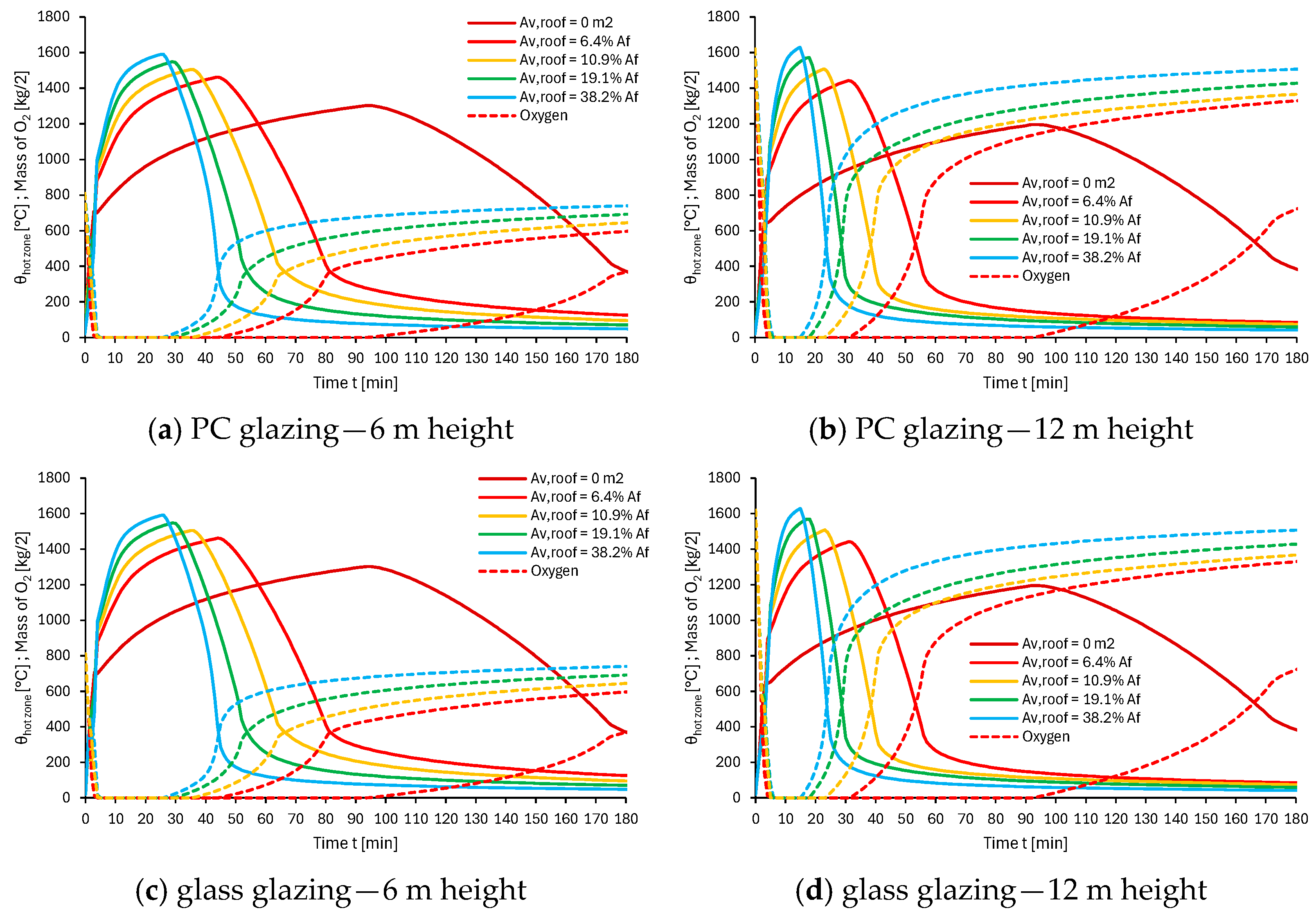
- The type of glazing, and the possible presence of smoke and heat evacuators on the roof, play a negligible role in the development of the full fire time history.
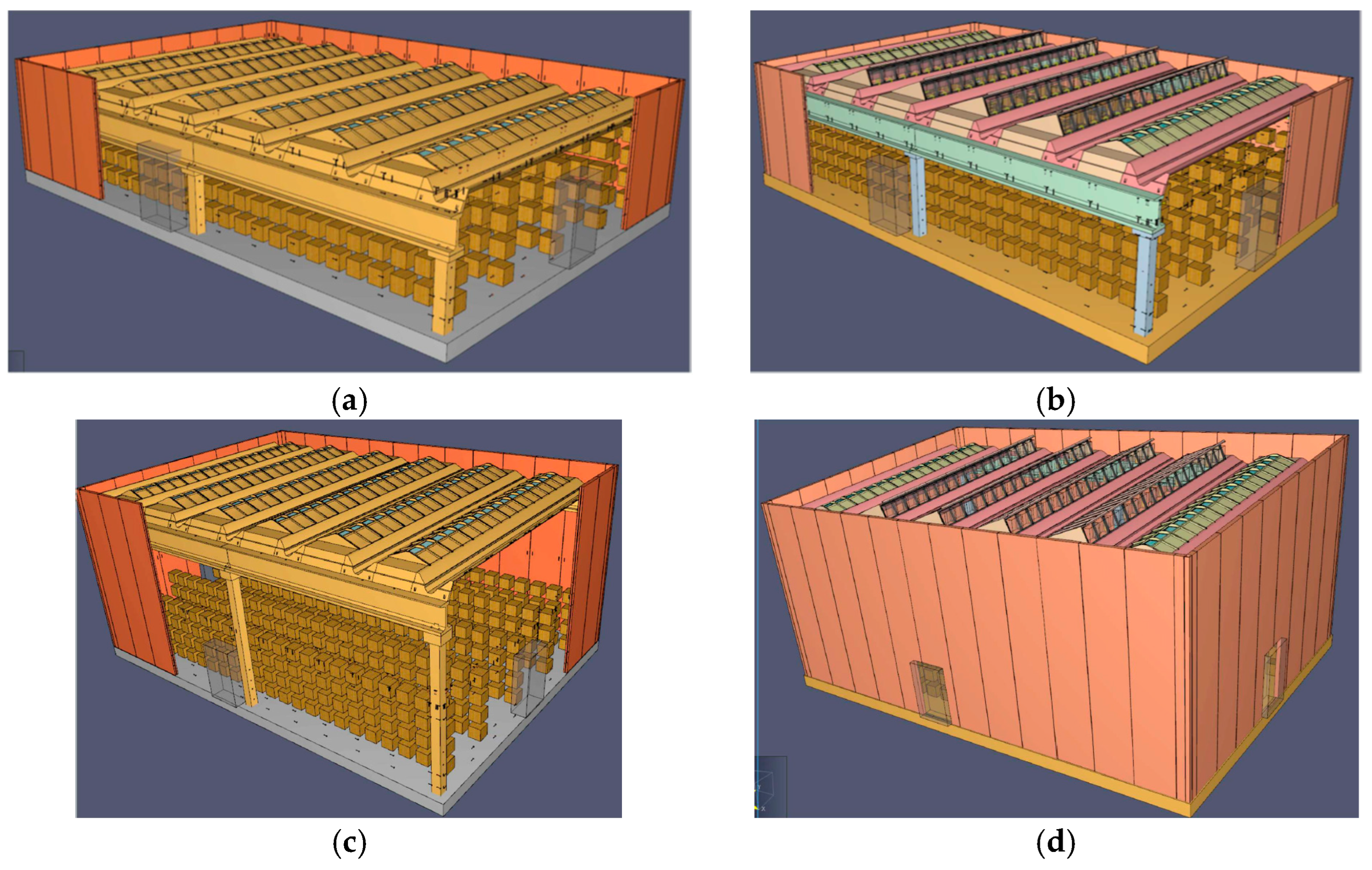
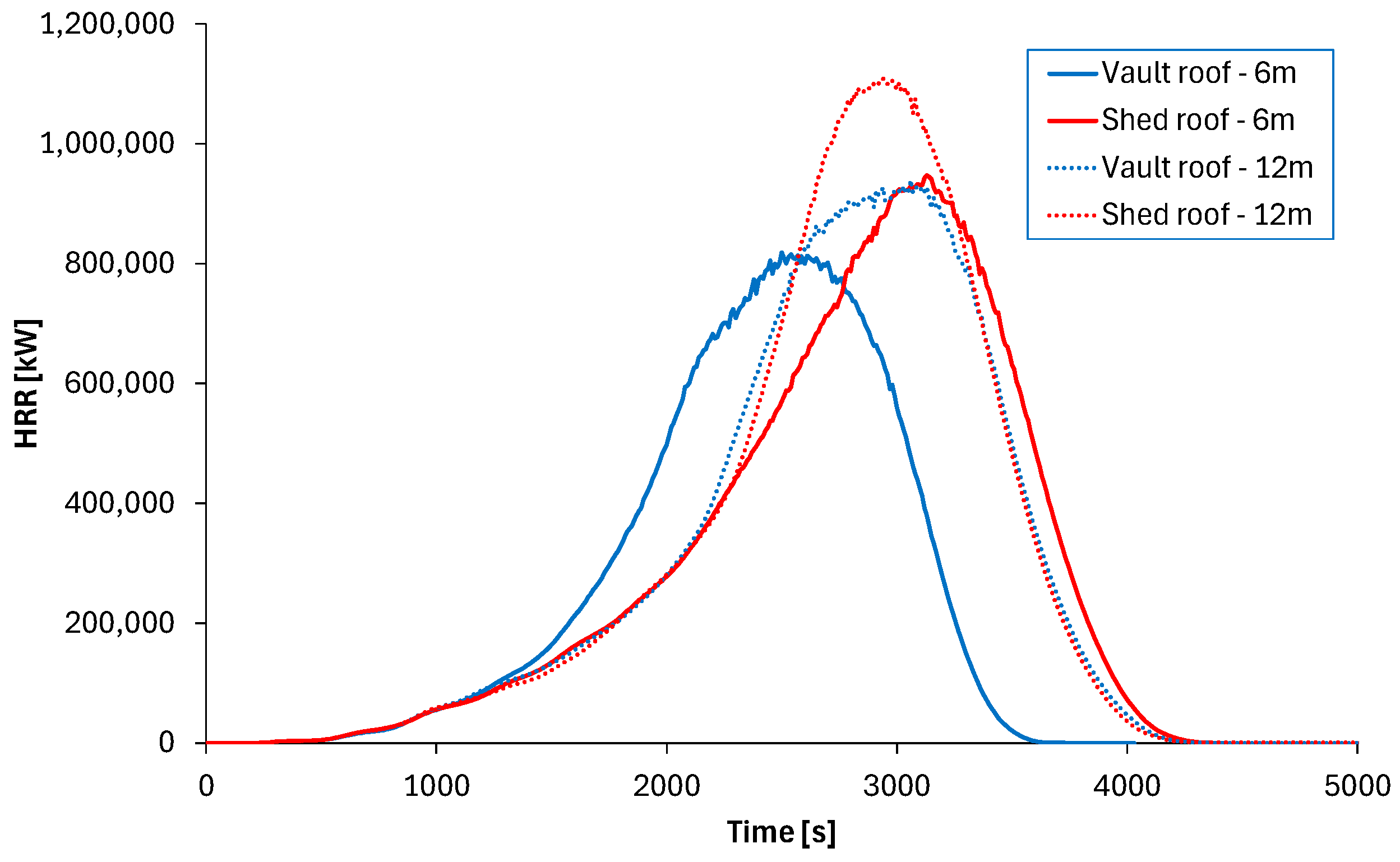
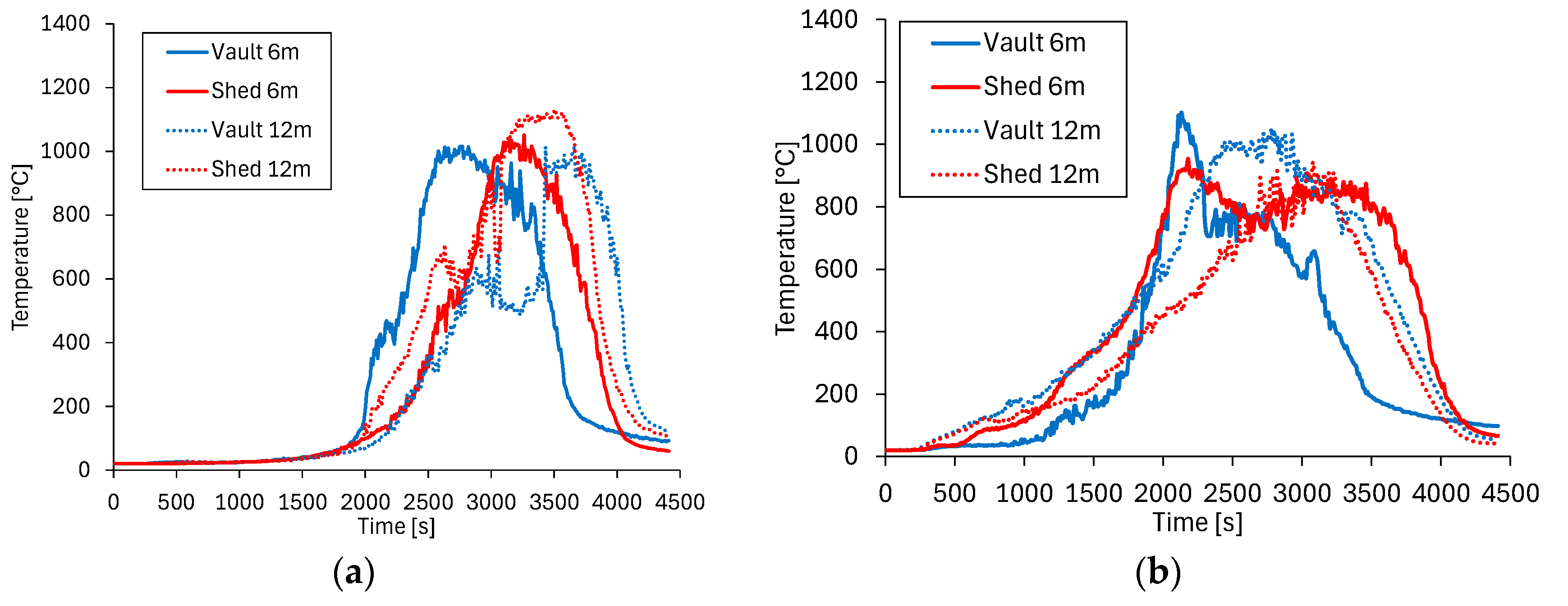
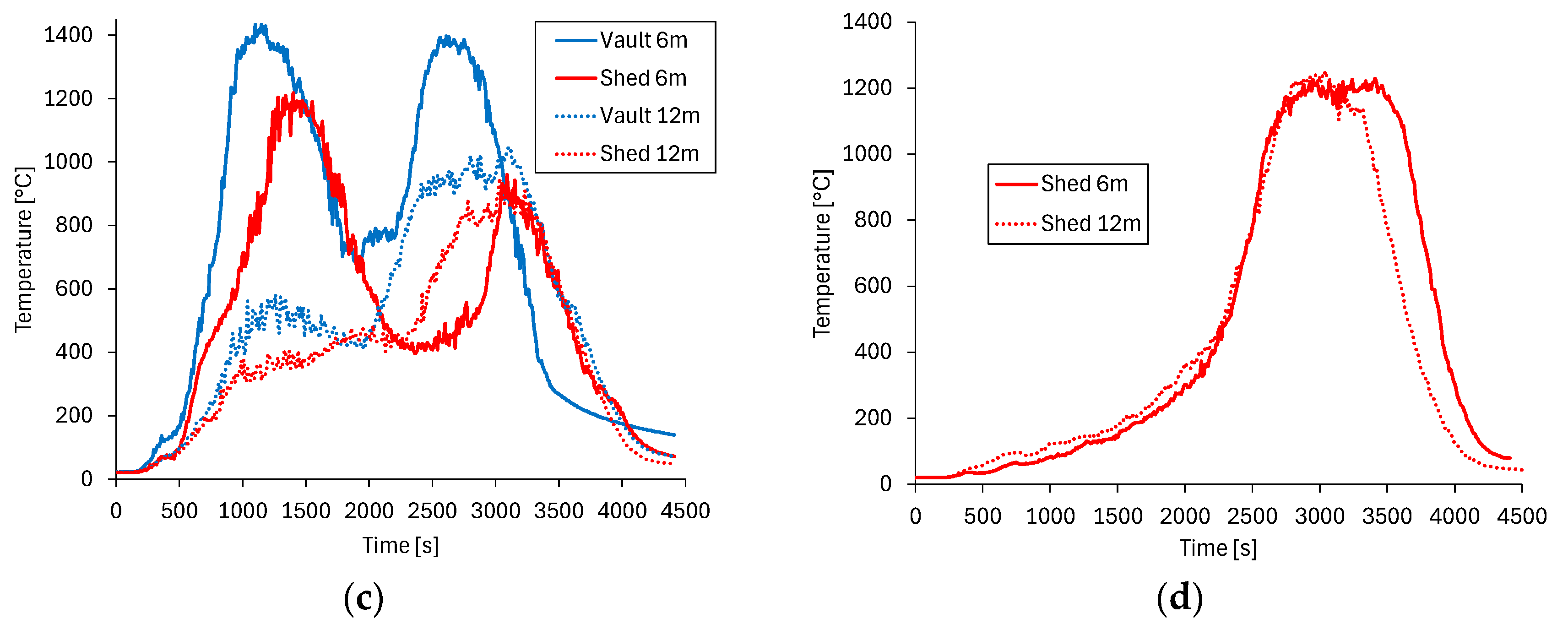
- All simulations show natural fires that are controlled by ventilation, even if restricted to the most severe time window of the fire. The time duration of the severe fire phase is significantly greater for the building with a lower height, while the peak temperature is indeed similar for all compartment heights.
- A larger glazed surface on the roof corresponds to a shorter severe fire phase and a higher peak temperature, ranging from about 1200 °C to about 1600 °C.
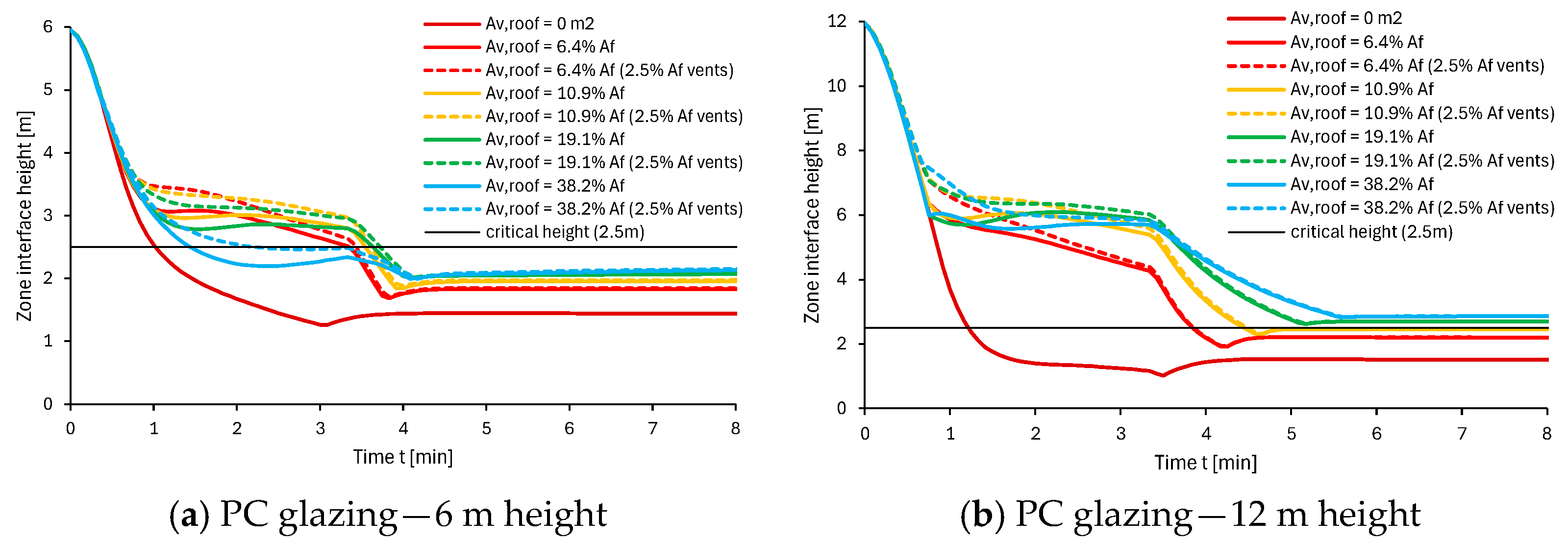
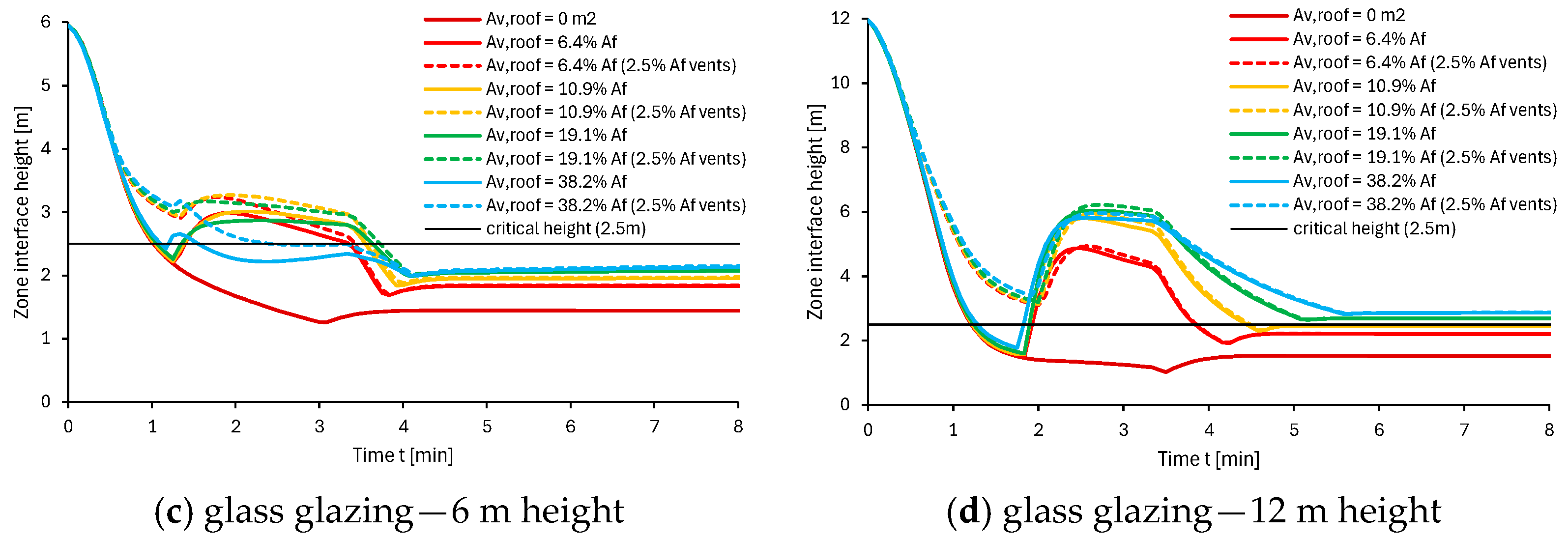
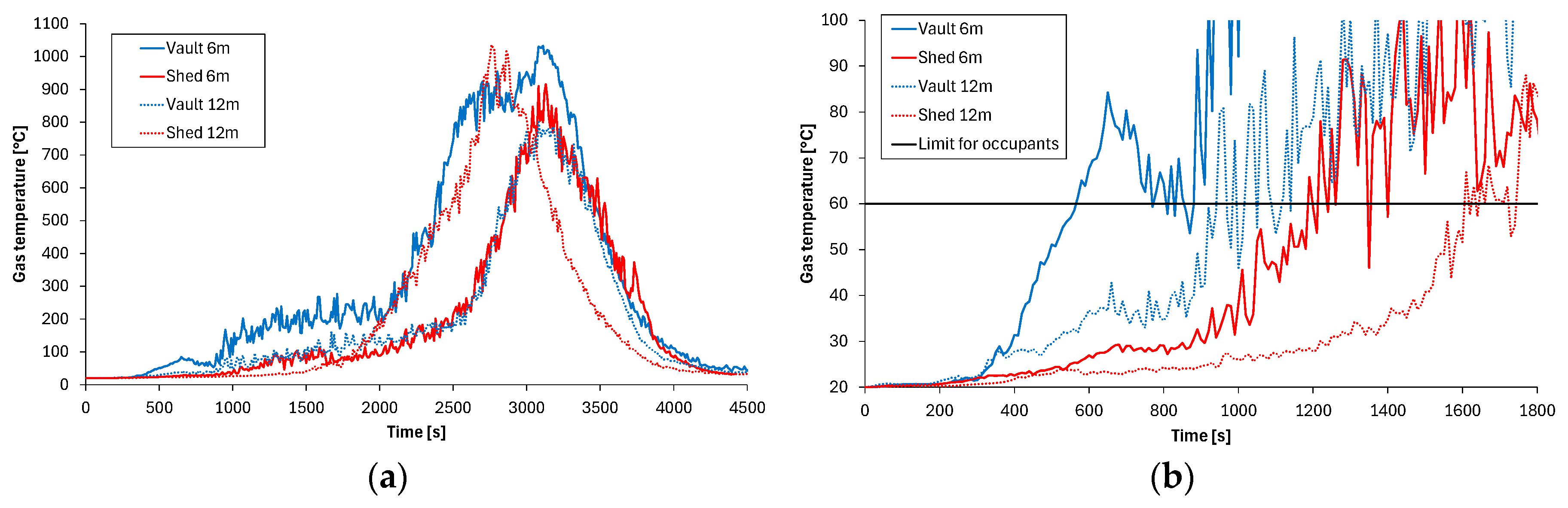
- In the early phase of fire development, however, the type of glazing plays a role in the height of the hot gas layer, with unsafe configurations where glass is employed, and generally much safer configurations when PC is employed.
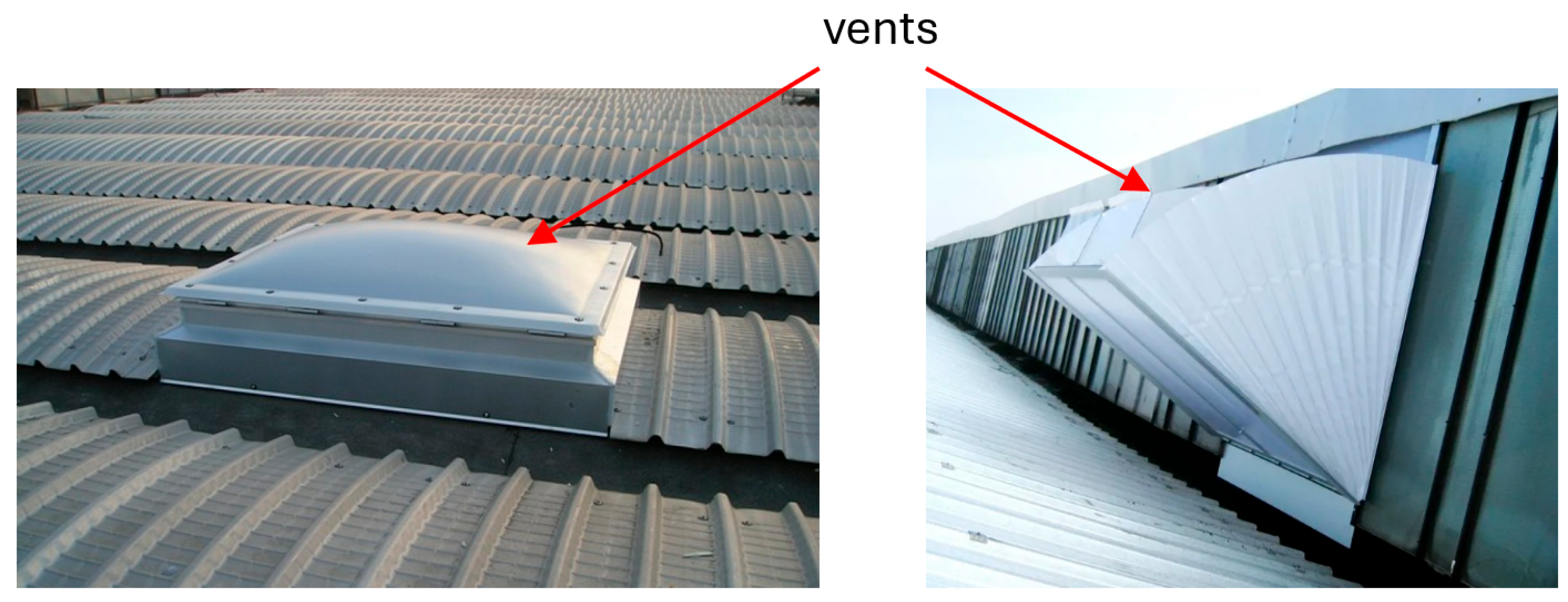
- For the configurations with glass glazing, the presence of heat and smoke evacuators is beneficial to avoid early accumulation of hot gases down to heights dangerous for the evacuation. No particular benefits are observed when large heat and smoke evacuators are employed in combination with PC windows.
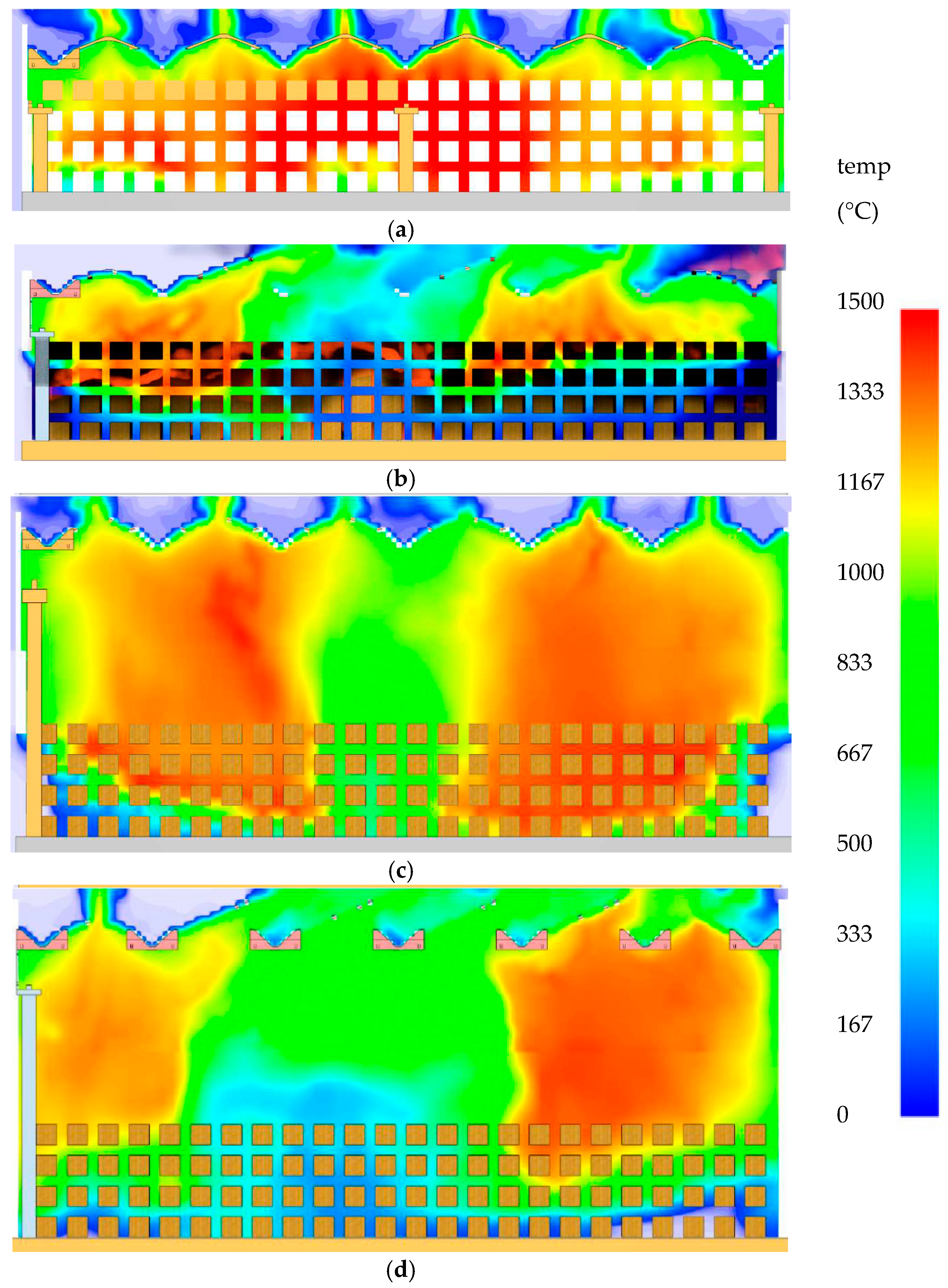
- Severe peak temperatures resulted from the simulations, in the range of 900–1100 °C, for all main structural elements, except for the roof elements in the configurations with short columns, where peaks as high as 1400 °C were detected, mainly due to the efficient engulfment of the roof elements in fire. This is, as expected, less conservative, though in line with the results of the zone models.
- This suggests that preventing efficient flame engulfment of the roof, keeping a proper clearance between the taller position of combustible material and the roof itself, may be suggested as a passive measure of containment of the high temperatures.
- Despite such high temperatures, in line or higher than the equivalent ISO834 demand of 1045 °C following the traditional design approach from Eurocodes, there is a significant lowering of the time window associated with the severe fire phase. In the analysis, such severe fire phase lasted in the range of 15 to 30 min, which is remarkably lower than the standard nominal fire curve at 120 min, as also pointed out by the zone analysis.
- This is indeed a positive feature for reinforced concrete members, which due to their low thermal diffusivity, typically suffer from fires having a long duration of the severe phase.
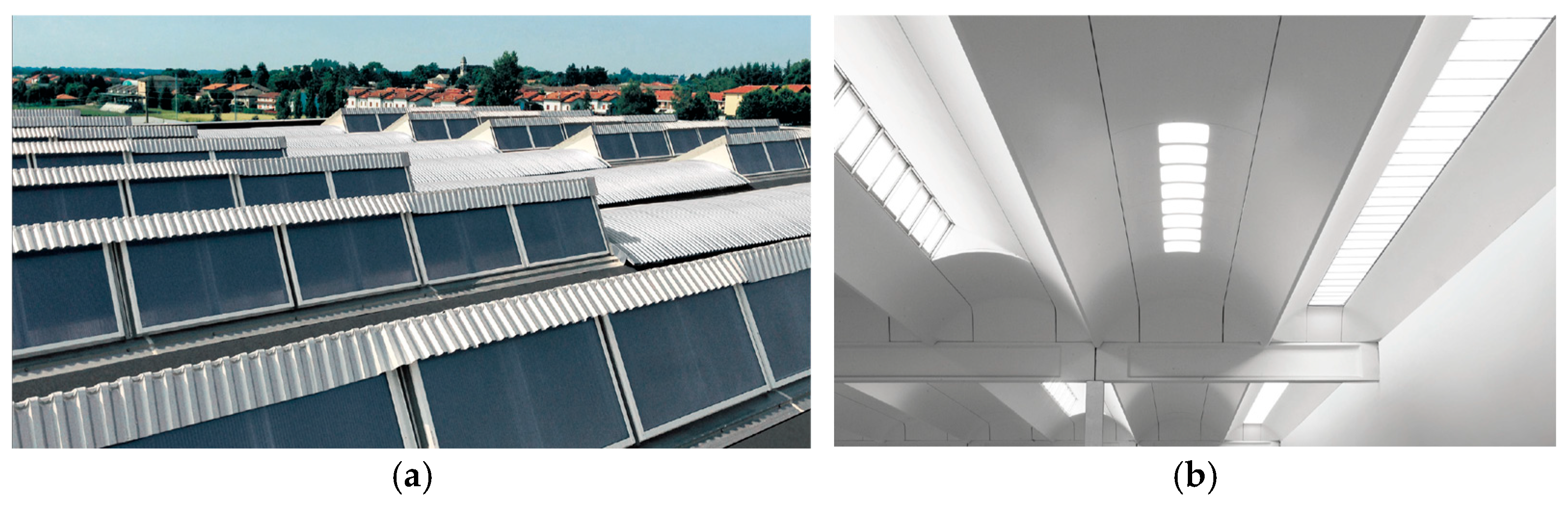
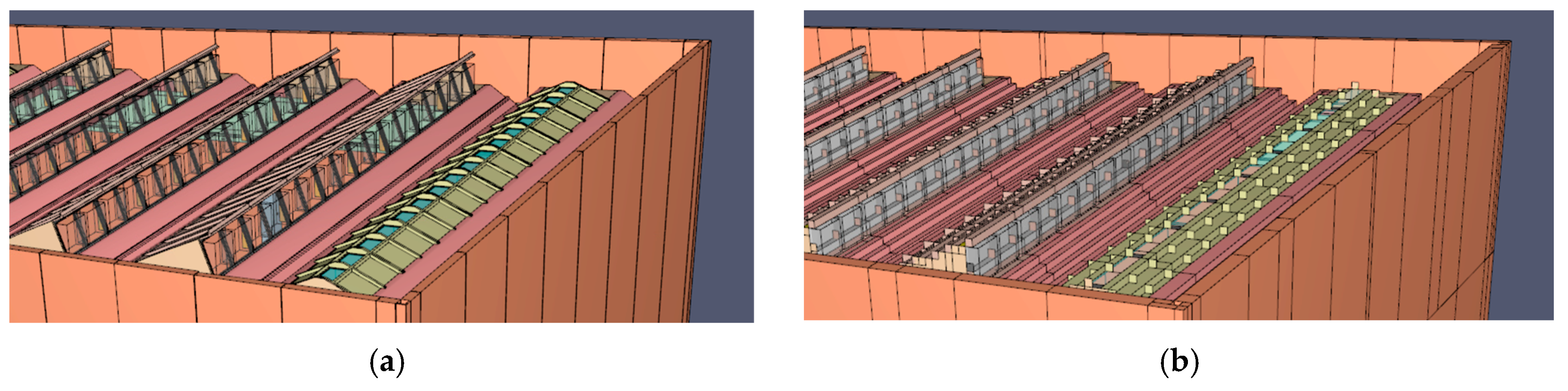
- Concerning the shed roof configurations, high peak temperatures of about 1200 °C were obtained around the sheds. This poses questions about the performance of the exposed steel struts supporting windows and reinforced concrete shed plates.
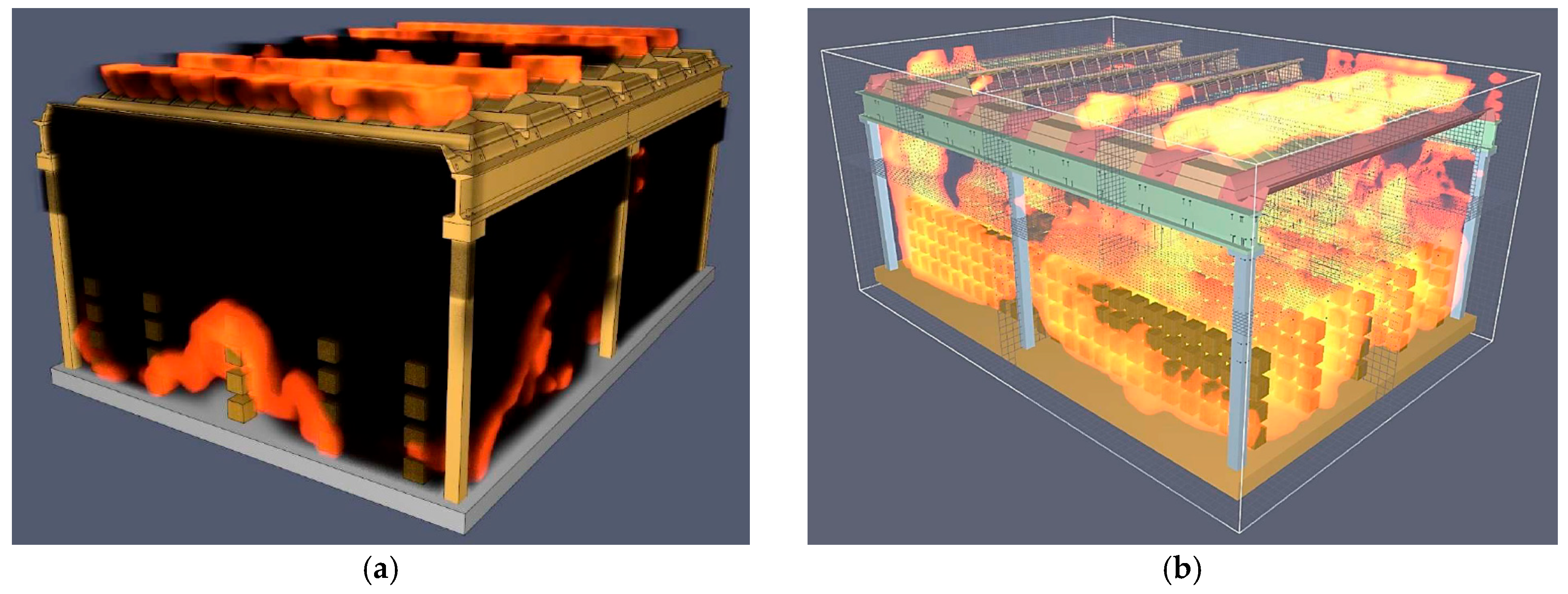
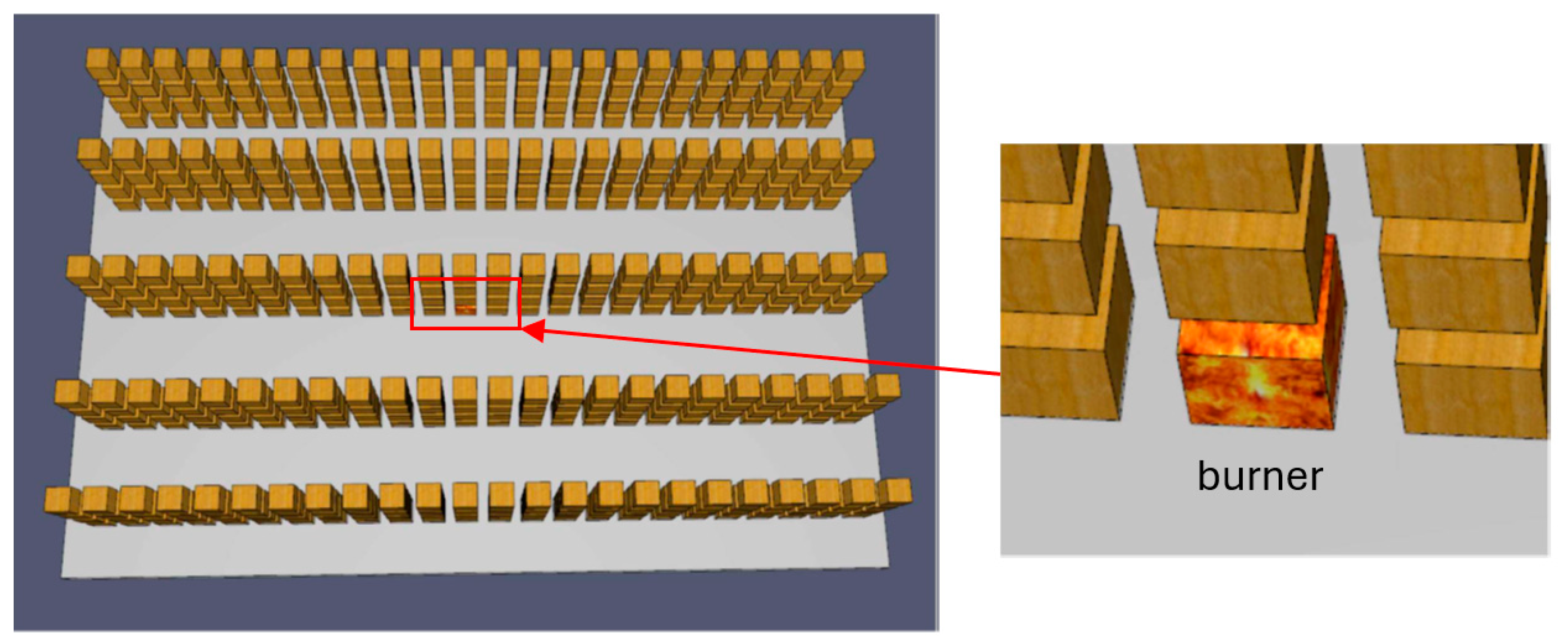
- It is observed that the shape of the roof is very efficient in conveying heat and smoke to the windows, with temperature rises over the exposed wing-shaped roof members in case inclined evacuation is adopted (i.e., shed roof configuration).
- Concerning the indirect information about the evacuation of occupants from the fire simulation, it was found that the available evacuation time prior to the exposure to smoke or unbearable temperature is, for all cases, larger than 6 min, typically more than what is required for the evacuation of such premises.
- Shed configurations, allowing an almost double area of PC glazing, provide the most efficient passive evacuation mechanism of heat and smoke, after the polymeric glazing attains glass transition and loses integrity.
- Moreover, taller building configurations allow a delayed time limit for temperature rise and smoke accumulation at the bottom of the building.
Author Contributions
Funding
Data Availability Statement
Acknowledgments
Conflicts of Interest
References
- Italian Ministry of Interior, Department of Firefighters, Public Rescue and Civil Protection, Central Committee for the Technologic Innovation, Digitalisation, and Logistic-Instrumental Resources. Annuario Statistico del Corpo Nazionale dei vigili del Fuoco. 2025. Available online: https://www.vigilfuoco.it/chi-siamo/le-statistiche/annuari-delle-statistiche-ufficiali-del-corpo-nazionale-dei-vigili-del-fuoco (accessed on 21 December 2025). (In Italian).
- Ward, E.J. Automatic Heat and Smoke Venting in Sprinklered Buildings; Technical Report; Factory Mutual Research Corporation: Norwood, MA, USA, 1985. [Google Scholar]
- Elovitz, K.M.; Elovitz, D.M. Understanding smoke management and control. ASHRAE J. 1993, 35, 34–37. [Google Scholar]
- Elovitz, D.M. Evaluating smoke control and smoke management systems. ASHRAE J. 1996, 38, 46–54. [Google Scholar]
- Krisman, A.; Gopala, Y. Gravity Smoke Vents in Storage Occupancies; Technical Report January; Factory Mutual Research Corporation: Norwood, MA, USA, 2023. [Google Scholar]
- NFPA 204; Standard for Smoke and Heat Venting. National Fire Protection Association: Quincy, MA, USA, 2021.
- Heskestad, G. Model Study of Automatic Smoke and Heat Vent Performance in Sprinklered Fires; Project ID 21933; Factory Mutual Research: Norwood, MA, USA, 1974. [Google Scholar]
- Hinkley, P.L.; Hansell, G.O.; Marshall, N.R.; Harisson, R. Large-scale experiments with roof vents and sprinklers Part 2: The Operation of Sprinklers and the Effect of Venting with Growing Fires. Fire Sci. Technol. 1993, 13, 43–59. [Google Scholar] [CrossRef]
- Beyler, C.L.; Cooper, Y. Interaction of Sprinklers with Smoke and Heat Vents. Fire Technol. 2001, 37, 9–35. [Google Scholar] [CrossRef]
- Wang, Y.; Sun, J.; He, L.; Wang, Q.; Rush, D. Experimental study on fallout behaviour of tempered glass façades with different frame insulation conditions in an enclosure fire. Proc. Combust. Inst. 2019, 37, 3889–3898. [Google Scholar] [CrossRef]
- Han, S.S.; Chow, W.K. Cone calorimeter studies on fire behavior of polycarbonate glazing sheets. J. Appl. Fire Sci. 2004, 12, 245–261. [Google Scholar] [CrossRef]
- Ghazzawi, Y.M.; Osorio, F.A.; Heitzmann, M.T. Fire performance of continuous glass fibre reinforced polycarbonate composites: The effect of fibre architecture on the fire properties of polycarbonate composites. J. Compos. Mater. 2018, 53, 1705–1715. [Google Scholar] [CrossRef]
- Cai, B.; Jiang, Q.; Xu, W.; Wang, L.; Luo, Z.; Wang, B. A nitrogen-rich DOPO-based phosphoramide for improving the fire resistance of polycarbonate with comparable mechanical property. J. Appl. Polym. Sci. 2023, 140, e54513. [Google Scholar]
- Dal Lago, B.; Nicora, A.; Tucci, P.; Panico, A. Precast concrete industrial portal frames subjected to simulated fire. Lect. Notes Civil. Eng. 2023, 350, 13–23. [Google Scholar]
- Bosio, M.; Di Salvatore, C.; Bellotti, D.; Capacci, L.; Belleri, A.; Piccolo, V.; Cavalieri, F.; Dal Lago, B.; Riva, P.; Magliulo, G.; et al. Modelling and seismic response analysis of non-residential single-storey existing precast buildings in Italy. J. Earthq. Eng. 2023, 27, 1047–1068. [Google Scholar] [CrossRef]
- Dal Lago, B. Experimental and numerical assessment of the service behaviour of an innovative long-span precast roof element. Int. J. Concr. Struct. Mater. 2017, 11, 261–273. [Google Scholar] [CrossRef]
- Capacci, L.; Dal Lago, B. Structural modelling and probabilistic seismic assessment of existing long-span precast industrial buildings. Bull. Earthq. Eng. 2025, 23, 2581–2609. [Google Scholar] [CrossRef]
- Lougheed, G.D.; Hadjisophocleous, G.V. Investigation of Atrium Smoke Exhaust Effectiveness; ASHRAE Transactions, Symposia, BN-97-5-1; ASHRAE: Peachtree Corners, GA, USA, 1997. [Google Scholar]
- Klote, J.H. Prediction of Smoke Movement in Atria: Part I and II; ASHRAE Transactions: Symposia; ASHRAE: Peachtree Corners, GA, USA, 1997; Volume 3. [Google Scholar]
- Tanaka, T.; Yamana, T. Smoke Control in Large Scale Spaces (Part 1: Analytic Theories for Simple Smoke Control Problems); Building Research Institute, Ministry of Construction: Tokyo, Japan, 1985.
- Tanaka, T.; Yamana, T. Smoke Control in Large Scale Spaces (Part 2: Smoke Control Experiments in a Large Scale Space); Building Research Institute, Ministry of Construction: Tokyo, Japan, 1985.
- Gordonova, P. Smoke and Fire Gases Venting in Large Industrial Spaces and Stores; Technical Report TVIT–04/3001; Lund University: Lund, Sweden, 2004. [Google Scholar]
- Top, S.M. The effect of domed and hip roof coverings on mosque design in case of fire. J. Eng. Res. 2023, 11, 267–274. [Google Scholar] [CrossRef]
- Malendowski, M.; Gglema, A.; Kurzawa, Z.; Polus, L. Structural response under natural fire of barrel shape shell construction. In Proceedings of the International Conference, Prague, Czech Republic, 19–20 April 2013. [Google Scholar]
- Dal Lago, B.; Tucci, P. Causes of local collapse of a precast concrete industrial roof after a fire event. Comput. Concr. 2023, 31, 371–384. [Google Scholar]
- CEN-EN 1991-1-2; Eurocode 1: Actions on Structures, Part 1–2: General Actions—Actions on Structures Exposed to Fire. European Committee for Standardization: Brussels, Belgium, 2002.
- Cadorin, J.-F.; Pintea, D.; Franssen, J.-M. The Design Fire Tool OZone V2.0—Theoretical Description and Validation On Experimental Fire Tests; Internal Report SPEC/2001_01; University of Liège: Liège, Belgium, 2001. [Google Scholar]
- de Silva, D.; Sassi, S.; De Rosa, G.; Corbella, G.; Nigro, E. Effect of the fire modelling on the structural temperature evolution using advanced calculation models. Fire 2023, 6, 91. [Google Scholar] [CrossRef]
- Bolina, F.L.; Dal Lago, B.; Martínez, E.D.R. The effect of experimental thermal-physical parameters on the temperature field of UHPC structures in case of fire. Constr. Build. Mater. 2024, 411, 134254. [Google Scholar] [CrossRef]
- Bolina, F.L.; München, R.M.; Dal Lago, B.; Kodur, V. A comparative study between ultra-high-performance concrete structures and normal strength concrete structures exposed to fire. Structures 2024, 68, 107197. [Google Scholar] [CrossRef]
- Bolina, F.L.; Henn, A.; Dal Lago, B. Simplified design procedure for RC ribbed slabs in fire based on experimental and numerical thermal analysis. Buildings 2025, 15, 1631. [Google Scholar] [CrossRef]
- Thunderhead Engineering. PyroSim: A Model Construction Tool for Fire Dynamics Simulator (FDS). In PyroSim User Manual; Thunderhead Engineering: New York, NY, USA, 2010. [Google Scholar]
- Italian Ministry of Interior, Department of Firefighters, Public Rescue and Civil Protection, Central Committee for Prevention and Technical Safety. Decreto 3 Agosto 2015 (G.U. 20 agosto 2015, n. 192—SO n. 51) e Successive Integrazioni. Available online: https://www.gazzettaufficiale.it/eli/id/2015/08/20/15A06189/sg (accessed on 21 December 2025). (In Italian).
- UNI 9494-1:2017; Sistemi per il Controllo di Fumo e Calore—Parte 1: Progettazione e Installazione dei Sistemi di Evacuazione Naturale di Fumo e Calore (SENFC). UNI: Milan, Italy, 2017. (In Italian)
- Cadorin, J.-F.; Franssen, J.-M. A tool to design steel elements submitted to compartment fires—OZone V2. Part 1: Pre- and post-flashover compartment fire model. Fire Saf. J. 2003, 38, 395–427. [Google Scholar] [CrossRef]
- Cadorin, J.-F.; Pintea, D.; Dotreppe, J.-C.; Franssen, J.-M. A tool to design steel elements submitted to compartment fires—OZone V2. Part 2: Methodology and application. Fire Saf. J. 2003, 38, 429–451. [Google Scholar] [CrossRef]
- Zhou, B.; Yoshioka, H.; Noguchi, T.; Ando, T. Experimental study of expanded polystyrene (EPS) External Thermal Insulation Composite Systems (ETICS) masonery façade reaction-to-fire performance. Therm. Sci. Eng. Prog. 2018, 8, 83–92. [Google Scholar] [CrossRef]
- An, W.; Jiang, L.; Sun, J.; Liew, K.M. Correlation analysis of sample thickness, heat flux, and cone calorimetry test data of polystyrene foam. J. Therm. Anal. Calorim. 2015, 119, 229–238. [Google Scholar] [CrossRef]
- Zhang, M.; Gou, F.; Wang, Y.; Sun, J. Melt-flowing of expanded polystyrene in large-scale discrete flame spread. Fire Saf. J. 2024, 142, 104011. [Google Scholar] [CrossRef]
- SFPE Handbook of Fire Protection Engineering, 3rd ed.; National Fire Protection Association, Society of Fire Protection Engineers: Quincy, MA, USA, 2002.
- Babrauskas, V. Ignition of Wood: A Review of the State of the Art. J. Fire Prot. Eng. 2002, 12, 163–189. [Google Scholar] [CrossRef]
- Dai, X.; Alam, N.; Liu, C.; Nadjai, A.; Rush, D.; Welch, S. Scaling-up’ fire spread on wood cribs to predict a large-scale travelling fire test using CFD. Adv. Eng. Softw. 2024, 189, 103589. [Google Scholar] [CrossRef]
- McGrattan, K.; McDermott, R.; Hostikka, S.; Floyd, J.; Vanella, M.; Weinschenk, C.; Overholt, K. Fire Dynamics Simulator, 6th ed.; NIST Special Publication 1019; NIST: Gaithersburg, MD, USA, 2017.
- Charlier, M.; Glorieux, A.; Dai, X.; Alam, N.; Welch, S.; Anderson, J.; Vassart, O.; Nadjai, A. Travelling fire experiments in steel-framed structure: Numerical investigations with CFD and FEM. J. Struct. Fire Eng. 2021, 12, 309–327. [Google Scholar] [CrossRef]
- USNRC; EPRI. Verification and Validation of Selected Fire Models for Nuclear Power Plant Applications, Volume 1: Main Report; NUREG-1824 and EPRI 10 11999; U.S. Nuclear Regulatory Commission, Office of Nuclear Regulatory Research (RES): Rockville, MD, USA; Electric Power Research Institute (EPRI): Palo Alto, CA, USA, 2007.
- Rizzo, F. Simulazione con Modelli di Campo di Incendi in Ambienti Industriali con Differenti Tipologie di Copertura. Master’s Thesis, University of Insubria, Varese/Como, Italy, 2024. (In Italian). [Google Scholar]





| Window transmissivity | 0.8 |
| Bernoulli coefficient | 0.7 |
| Convection coefficient | |
| hot surface | 35 W/m2 K |
| cold surface | 9 W/m2 K |
| Air entrained model | Heskestad |
| Walls/roof/pavement concrete properties | |
| density | 2300 kg/m3 |
| specific heat | 1000 J/kg K |
| conductivity | 1.6 W/m K |
| emissivity | 0.8 |
| Equivalent thickness | |
| pavement | 20 cm |
| roof | 10 cm |
| walls | 12 cm |
| Calorific power of fuel | 17.5 MJ/kg |
| Combustion efficiency factor | 1 |
| Combustion model | extended fire duration |
| Stoichiometric coefficient | 1.27 |
| Temp. of PC integrity loss | 150 °C |
| Temp. of glass integrity loss | 400 °C |
| Vault 6 m | Shed 6 m | Vault 12 m | Shed 12 m | |
|---|---|---|---|---|
| Time to attain 60 °C on ambient thermocouple at 2 m | ~570 s 9 min | ~1180 s 20 min | ~940 s 16 min | ~1600 s 26 min |
| Time for smoke to accumulate down to ~2.5 m | 360–480 s 6–8 min | 1320–1620 s 22–27 min | 440–500 s 7–8 min | 1320–1500 s 22–25 min |
| Time for loss of integrity of the first roof window | 310 s 5 min | 830 s 14 min | 490 s 8 min | 990 s 16 min |
Disclaimer/Publisher’s Note: The statements, opinions and data contained in all publications are solely those of the individual author(s) and contributor(s) and not of MDPI and/or the editor(s). MDPI and/or the editor(s) disclaim responsibility for any injury to people or property resulting from any ideas, methods, instructions or products referred to in the content. |
© 2025 by the authors. Licensee MDPI, Basel, Switzerland. This article is an open access article distributed under the terms and conditions of the Creative Commons Attribution (CC BY) license.
Share and Cite
Dal Lago, B.; Rizzo, F.; Tucci, P. Precast Industrial Buildings with Vault or Shed Roof Subject to Simulated Cellulosic Fire. Fire 2026, 9, 11. https://doi.org/10.3390/fire9010011
Dal Lago B, Rizzo F, Tucci P. Precast Industrial Buildings with Vault or Shed Roof Subject to Simulated Cellulosic Fire. Fire. 2026; 9(1):11. https://doi.org/10.3390/fire9010011
Chicago/Turabian StyleDal Lago, Bruno, Francesco Rizzo, and Paride Tucci. 2026. "Precast Industrial Buildings with Vault or Shed Roof Subject to Simulated Cellulosic Fire" Fire 9, no. 1: 11. https://doi.org/10.3390/fire9010011
APA StyleDal Lago, B., Rizzo, F., & Tucci, P. (2026). Precast Industrial Buildings with Vault or Shed Roof Subject to Simulated Cellulosic Fire. Fire, 9(1), 11. https://doi.org/10.3390/fire9010011