Article

Plasma-Polymerized Polystyrene Coatings for Hydrophobic and Thermally Stable Cotton Textiles

by
Lian Farhadian
,
Samira Amiri Khoshkar Vandani
and
Hai-Feng Ji
*
Department of Chemistry, Drexel University, Philadelphia, PA 19104, USA
*
Author to whom correspondence should be addressed.
Submission received: 2 December 2025 / Revised: 22 December 2025 / Accepted: 30 December 2025 / Published: 31 December 2025
(This article belongs to the Special Issue Recent Advances of Dielectric Barrier Discharges)

Abstract

Dielectric barrier discharge (DBD) plasma provides a solvent-free and energy-efficient approach for the in situ polymerization of styrene on cotton textiles. Traditional methods for polystyrene (PS) coating often require elevated temperatures, chemical initiators, or organic solvents, conditions that are incompatible with porous, heat-sensitive substrates such as cotton. In this work, we demonstrate that DBD plasma can initiate and sustain styrene polymerization directly on cotton fibers under ambient conditions. FT-IR spectroscopy confirms the consumption of the vinyl C=C bond and the formation of atactic, amorphous polystyrene. Thermogravimetric analysis indicates that the cotton coated with DBD polymerized PS exhibits enhanced thermal stability compared to cotton coated with commercial PS. Additionally, UV aging tests confirm that the plasma-deposited coating maintains its hydrophobicity after exposure to light. Together, these findings highlight DBD plasma as a sustainable and effective approach for producing hydrophobic, thermally robust, and UV-stable textile coatings without the need for solvents, initiators, or harsh processing conditions.

1. Introduction

The development of sustainable and energy-efficient polymerization methods has received increasing attention in recent years as industries and researchers seek alternatives to conventional chemical processes that rely on high temperatures, solvents, or hazardous initiators. Among the emerging techniques, plasma-assisted polymerization has distinguished itself as an environmentally friendly and versatile platform that enables polymer formation under mild conditions. In particular, dielectric barrier discharge (DBD) plasma, an atmospheric, non-thermal plasma generated between electrodes separated by a dielectric layer, has shown unique advantages for materials processing. Because it operates under ambient pressure, it eliminates the need for vacuum systems or organic solvents. It avoids excessive heating, making DBD plasma well-suited for modifying heat-sensitive and porous substrates [1]. These benefits have facilitated their growing use in applications ranging from surface functionalization and sterilization to pollutant degradation and material synthesis [2,3,4,5,6,7].
In polymer science, DBD plasma has enabled solvent-free, initiator-free polymerization routes that minimize chemical waste and energy consumption. Previous studies have demonstrated successful plasma-induced polymerization of diverse monomers, including acrylic acid [8], aminophenol to form polyaniline derivatives [9], and even acrylamide [10]. Moreover, plasma-initiated polymerization within porous substrates has been used to create functional composites such as conductive paper-based electronics and water-purification materials [11,12,13,14,15,16,17]. In one example, sodium 4-styrenesulfonate was polymerized with divinylbenzene directly inside filter paper, yielding a composite with significantly enhanced dye removal performance [17]. These studies highlight the capability of DBD plasma to initiate polymerization internally within porous structures, a feature particularly difficult to achieve using conventional thermal or photochemical methods.
Despite this versatility, the use of DBD plasma for textile finishing remains comparatively underexplored, especially for generating hydrophobic coatings that enhance fabric performance without compromising softness, porosity, or breathability. Cotton, one of the most widely used natural fibers, is inherently hydrophilic due to its abundant hydroxyl groups. While various chemical treatments can impart hydrophobicity, many rely on fluorinated compounds, solvents, or harsh reaction conditions that are environmentally undesirable. This creates an opportunity for cleaner, low-energy methods that can deposit durable hydrophobic coatings directly onto cotton substrates.
Polystyrene (PS) is an attractive candidate for such coatings. As a classic vinyl polymer composed of a hydrocarbon backbone with pendant phenyl groups, PS is naturally hydrophobic and widely used in plastics, composites, and textile finishes. Conventional synthesis methods, including free radical, anionic, cationic, and metallocene-catalyzed polymerizations, generally require stringent conditions, a moisture-free environment, or thermal initiators, which limit their compatibility with cellulose-based textiles [1,18,19,20,21,22]. Applying these methods directly to cotton risks fabric degradation or incomplete polymer deposition due to cotton’s sensitivity to heat and solvent swelling.
DBD plasma polymerization offers a compelling solution to these limitations. Unlike UV-initiated or thermally driven processes, which often suffer from shallow penetration or risk damaging the substrate, plasma generates reactive species that can diffuse into porous networks [23,24]. These reactive species serve as in situ radical initiators, enabling polymerization to occur both on the fiber surface and within the microstructure of cotton under ambient conditions. We therefore hypothesized that DBD plasma could initiate the polymerization of styrene directly onto cotton fibers, forming a robust, hydrophobic polystyrene coating without the use of solvents, initiators, or elevated temperatures.
In this study, we investigate the feasibility of using DBD plasma to polymerize styrene in situ on cotton textiles. We evaluate the chemical identity of the resulting polymer using FT-IR spectroscopy, assess hydrophobicity through water contact angle measurements, and compare the thermal and UV stability of plasma-coated cotton with textile samples coated using commercially available polystyrene (Sigma-Aldrich, St. Louis, MO, USA). Collectively, these results highlight the potential of DBD plasma polymerization as a sustainable strategy for producing hydrophobic, thermally stable, and UV-resistant textile coatings.

2. Materials and Methods

A liquid styrene monomer (99%, Alfa Aesar, Ward Hill (Haverhill), MA, USA) was used for the polymerization experiments, and a commercially available 100% cotton fabric (plain weave, approximately 120 g·m−2) was used for coating with styrene. A 5% (w/v) solution of polystyrene (Sigma-Aldrich, USA) in toluene was used to coat cotton with it, and its thermogravimetric analysis (TGA) result was compared with that of cotton coated with DBD plasma-polymerized polystyrene.

2.1. DBD Plasma Generation

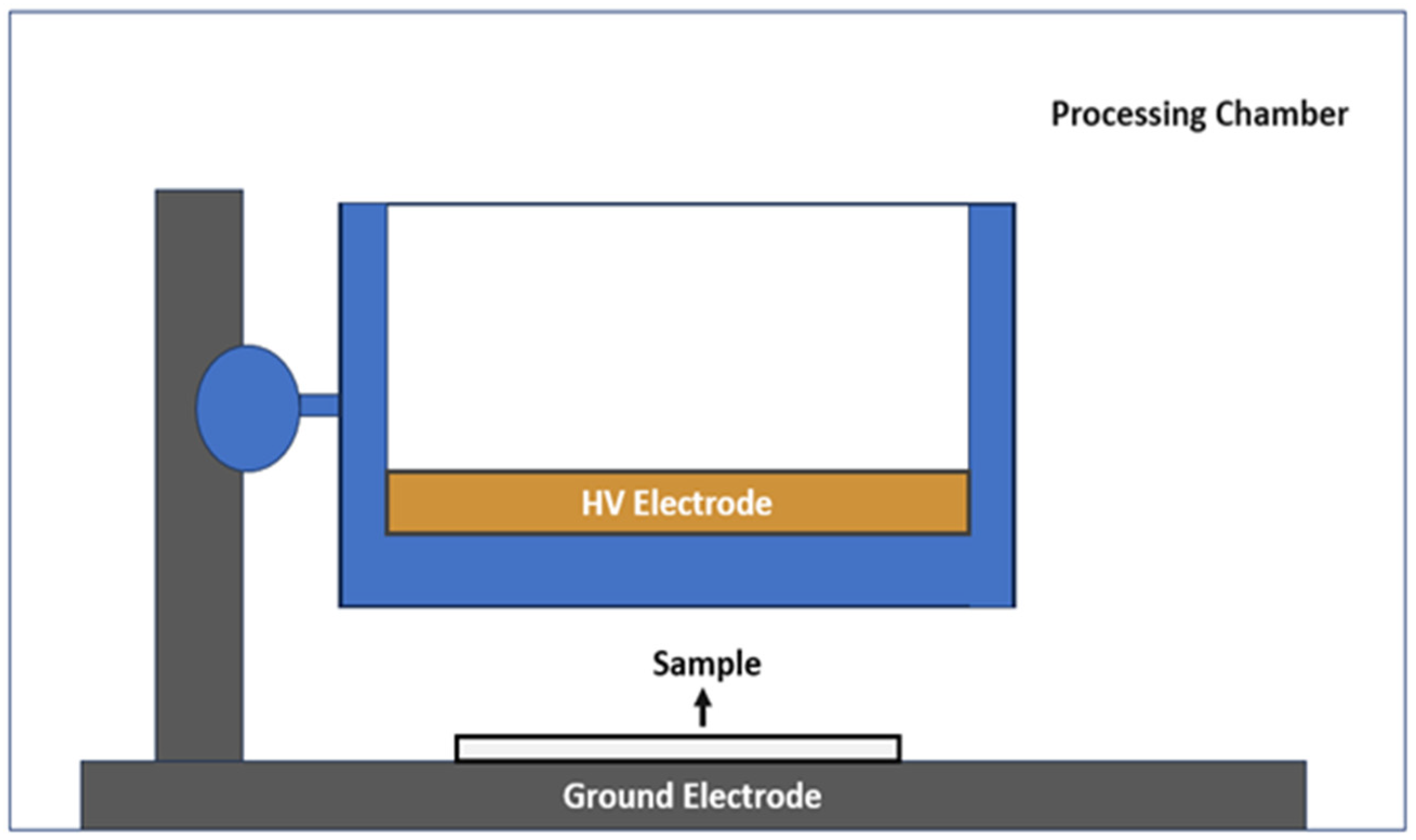
DBD plasma was generated using a microsecond-pulsed power supply in an electrode–dielectric barrier discharge configuration (Figure 1). The powered electrode consisted of a 38 mm × 64 mm copper plate covered by a 1 mm-thick glass slide serving as the dielectric barrier. The glass dielectric had a resistance of 1015 Ω, a dielectric constant of 4.6, and a dielectric strength of 30 kV/mm. Each voltage pulse delivered approximately 10 mJ of input energy, and the discharge operated in the streamer regime. The pulse frequency was 690 Hz, and the applied waveform comprised AC-driven high-voltage cycles containing nanosecond microdischarge (streamer) events within each half-cycle. The interelectrode distance (discharge gap) was maintained at 5 mm [25].
The styrene monomer was deposited over 5 cm × 5 cm cotton pieces using a drop-cast coating technique. 10 µL of styrene monomer was deposited onto each piece of cotton. The automatic pipette tip was used to spread the monomer evenly over each substrate. Each sample was placed in a separate small deep Petri dish for transportation and labeled accordingly. Plasma-induced polymerization was performed using the DBD plasma machine.
Three separate rounds of polymerization were performed for all the samples, set to polymerize for 1 to 3 min. Each cotton sample containing the deposited styrene layer was placed under the plasma instrument, starting from the shortest time sample (1 min). Each sample was polymerized using the air plasma for the designated time (1 min, 2 min, 3 min) in an atmospheric environment. After all the samples were polymerized, characterization was performed using FT-IR spectroscopy.

2.2. FT-IR Characterization and Analysis

A Perkin Elmer Spectrum One FT-IR Spectrometer (Waltham, MA, USA) was used to obtain the FT-IR spectra of the samples before and after plasma polymerization. Each cotton piece was placed face down on the FT-IR crystal, with the plasma-polymerized side facing the FT-IR diamond. FT-IR spectra were acquired using attenuated total reflection (ATR) mode over the spectral range of 650–3650 cm−1 with a resolution of 4 cm−1.

2.3. Hydrophobicity Test Analysis

Surface hydrophobicity analysis is used to evaluate the affinity of polymers for water-based solutions. Among different methods, water contact angle measurement is the most prevalent. In this technique, a water droplet is placed on the material’s surface, and the angle between the edge of the droplet and the surface is measured. A <90° contact angle indicates a hydrophilic surface, while an angle greater than 90° signifies hydrophobicity. The sessile drop method is commonly employed for such measurements, where a droplet is put on the surface, and the contact angle is determined through image analysis.
The contact angle was measured using the static sessile drop method, with an OCA15 plus contact angle goniometer (DataPhysics Instruments) featuring an image resolution of 752 × 582 pixels, a 50 fps video recorder, and an accuracy of ±0.1°. The drop volume was 3.0 μL, and measurements were performed in a controlled temperature and humidity (23 °C and 45%). Since polystyrene is hydrophobic, cotton coated with polystyrene was also expected to be hydrophobic.

2.4. Thermogravimetric Analysis (TGA)

The thermal stability and decomposition behavior of the samples were evaluated using a Q20 Thermogravimetric Analyzer. For this analysis, 5–10 mg of each sample was weighed into a platinum pan and analyzed under a nitrogen atmosphere to prevent oxidative degradation. The samples were heated from 25 °C to 600 °C at a constant rate of 10 °C/min. Before analysis, the instrument was calibrated for weight and temperature using standard reference materials. Two types of cotton samples were prepared for comparison: one was soaked in a 5% (w/v) solution of commercially available polystyrene in toluene and air-dried completely at room temperature; the other was soaked in liquid styrene monomer and subsequently polymerized on both sides using dielectric barrier discharge (DBD) plasma for 3 min on each side under ambient air conditions. The TGA curves were used to determine the onset of thermal degradation, weight loss patterns, and the thermal stability of the plasma-polymerized polystyrene-coated cotton compared to the commercially coated counterpart. Derivative weight (%/°C) curves were plotted to identify peak degradation temperatures and distinguish between multi-step decomposition events.

2.5. UV Stability of PS-Coated Cotton Textile

To evaluate the UV stability of the formed DBD plasma polymerized polystyrene layer, the treated cotton samples were subjected to ultraviolet (UV) exposure in a top-loading UV chamber equipped with a cylindrical inner cavity (UVA/UVB chamber, 280–400 nm). The samples were placed at the bottom of the chamber and exposed to UV irradiation for 1 h. The purpose of this test was to simulate environmental UV aging conditions and assess the durability of the plasma-polymerized coating. After UV exposure, the water contact angle of the samples was re-measured to determine whether the polymer layer retained its hydrophobicity.

3. Results and Discussion

3.1. Characterization of PS Using Infrared Spectroscopy

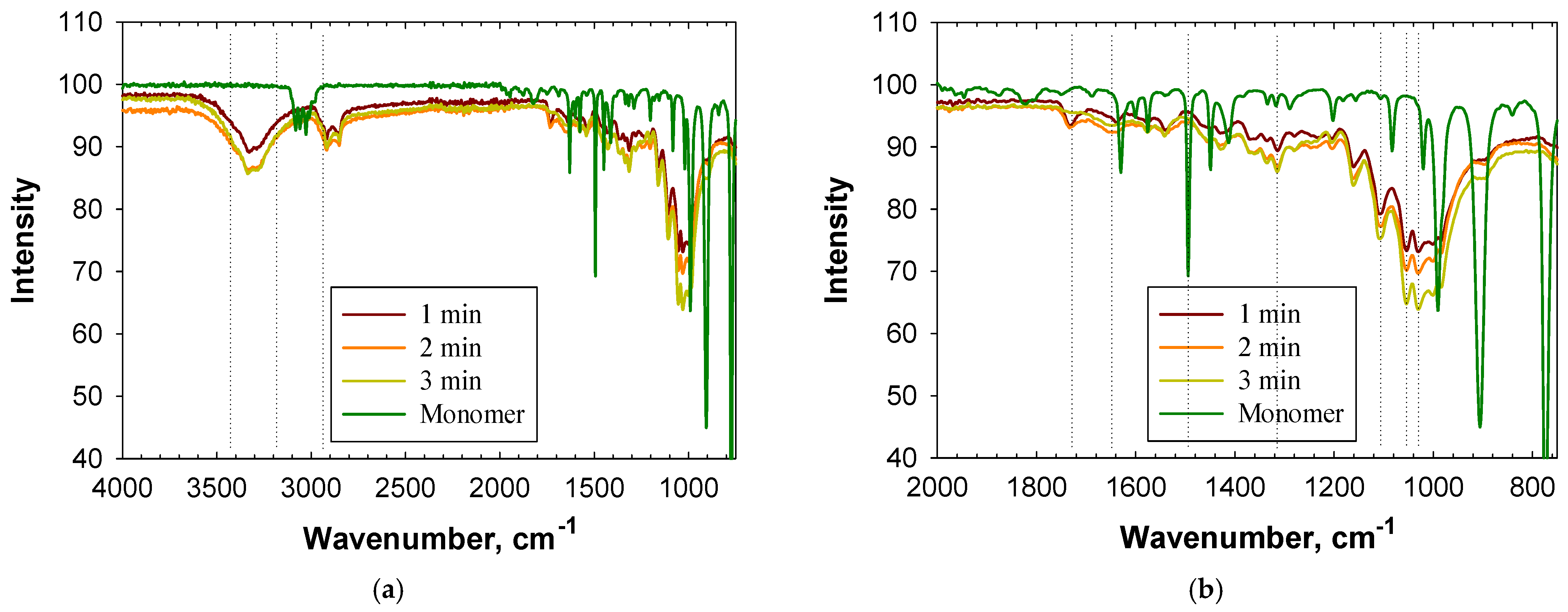
The FT-IR spectra of styrene and DBD-treated samples (Figure 2) confirmed successful polymerization. The strong absorption at ~1630 cm−1 in the monomer spectrum (red) corresponds to the C=C stretching vibration of the vinyl group in styrene. The bands at ~3000–3100 cm−1 region are referred to as aromatic sp2 C–H stretching. The reduction of the ~1630 cm−1 vinyl C=C stretch in 1 min treated samples indicated consumption of styrene double bonds. New sp3 C–H stretching bands became prominent between 2800 and 3000 cm−1, matching well with the FT-IR signatures reported for amorphous (atactic) polystyrene [26]. It is noteworthy that the aromatic C–H stretching modes (3100–3000 cm−1) are known to broaden and weaken in amorphous polymers due to variations in local molecular environments [27], which explains why these peaks diminish or disappear in the polymerized form. After 3 min of treatment, no further spectral changes were observed, indicating that polymerization was complete. Lastly, subtle shifts in the aromatic C–C stretching region (~1600–1500 cm−1) to slightly higher wavenumbers are observed after polymerization. This shift is likely due to the restricted vibrational freedom of the aromatic rings once they are integrated into the polystyrene network.
As noted above, our spectra indicate that the polymer we synthesized is amorphous and most consistent with an atactic microstructure, which aligns with the radical polymerization pathway that lacks stereospecific control. To further validate this, we compared our FT-IR data with published spectra of polystyrene of known tacticities. We found no evidence of the crystalline bands characteristic of isotactic or syndiotactic materials. Isotactic polystyrene typically exhibits sharp marker absorptions near 920 and 896 cm−1, while syndiotactic polystyrene shows distinct crystalline features such as bands at 778 and 769 cm−1, along with additional absorptions at lower wavenumbers [28]. Additional assignments refine the syndiotactic markers further, identifying α-form bands at 901 and 851 cm−1 and β-form bands at 911 and 858 cm−1 [28]. None of these diagnostic features is observed in our spectra; instead, we see only the broad fingerprint absorptions typical of all polystyrene, consistent with an atactic, amorphous structure.

3.2. Hydrophobicity of Cotton Samples After Polymerization

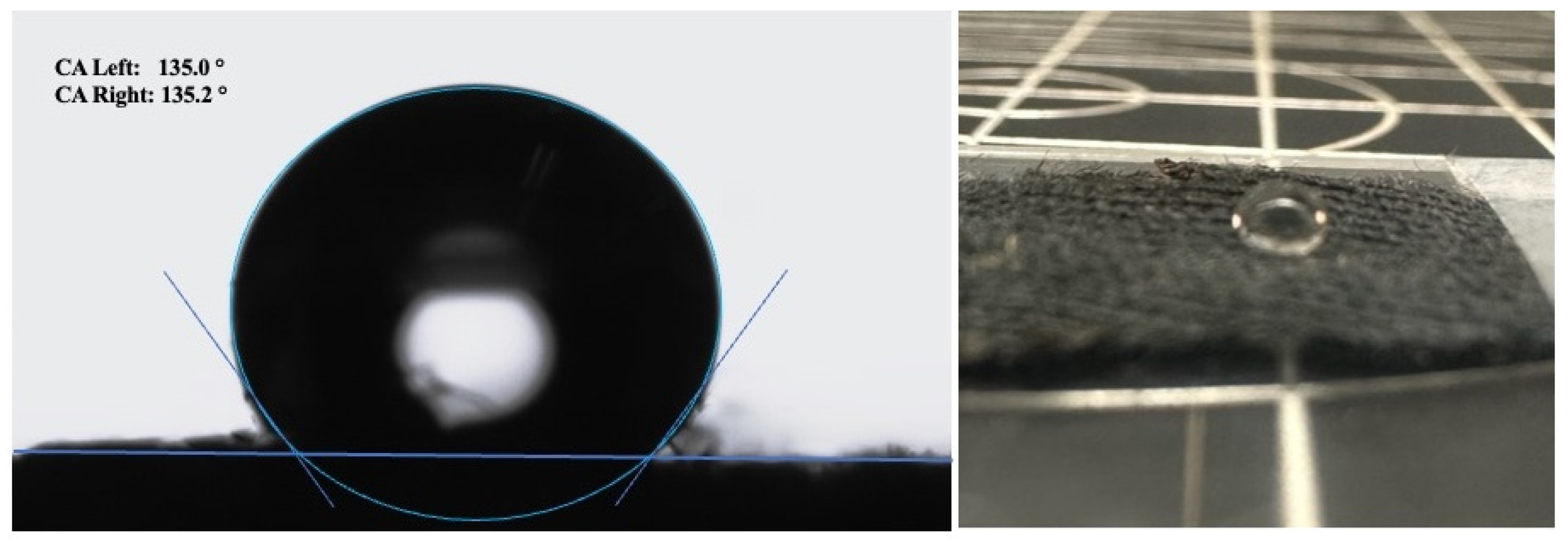
We measured the water contact angle to evaluate the surface hydrophobicity imparted by the polystyrene coating. Untreated cotton absorbed water instantly, resulting in a non-measurable contact angle and confirming its inherent hydrophilicity. In contrast, cotton samples treated with DBD plasma exhibited markedly increased water repellency, with contact angles exceeding 130° after 2 min and reaching approximately 135° after 3 min, as summarized in Table 1. A representative droplet image for the 3 min sample is shown in Figure 3, indicating a durable hydrophobic surface. These values surpass those reported for conventional plasma surface modification of textiles, which typically yield < 120° [29,30].

3.3. Thermal Stability of the PS-Modified Textiles

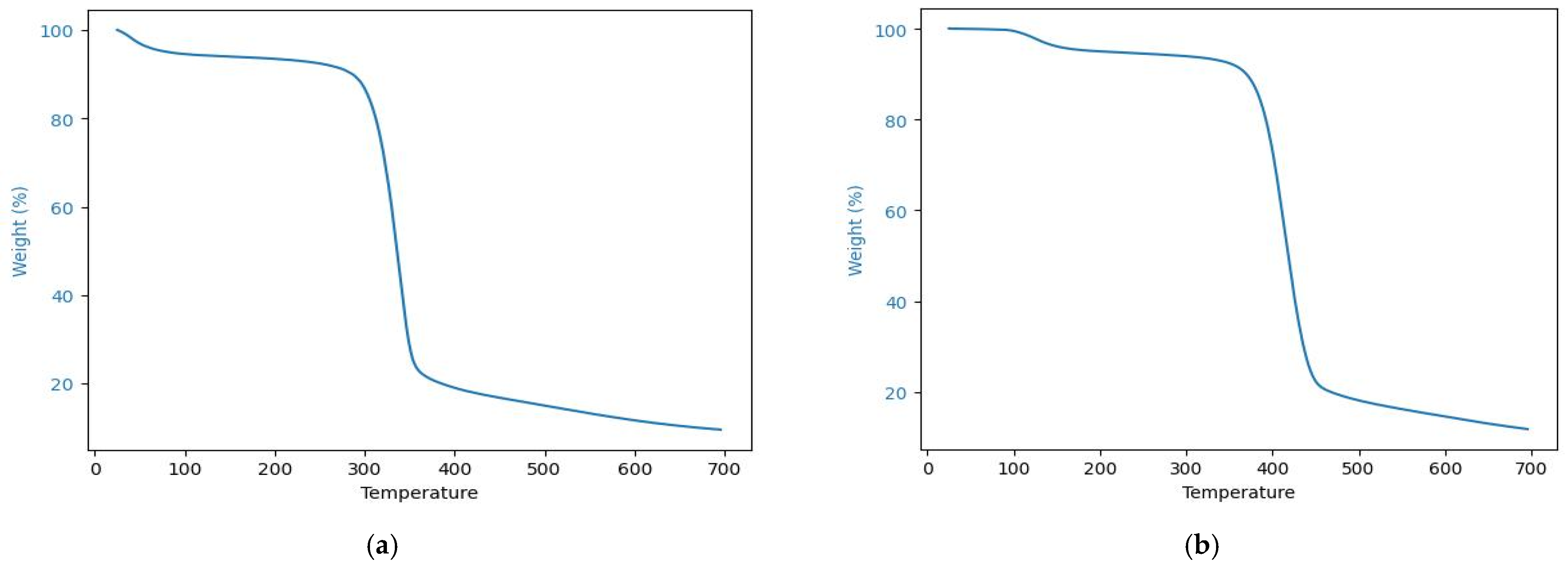
Thermogravimetric analysis (TGA) was performed to compare the thermal stability of cotton coated with commercial PS (Figure 4a) with that of cotton coated via in situ styrene polymerization using a DBD plasma (Figure 4b). Cotton treated with commercial PS exhibited degradation between ~300–400 °C. In contrast, the DBD-treated sample showed a noticeably delayed onset of thermal decomposition (beginning near ~400 °C) along with a broader decomposition profile, indicating enhanced thermal resistance. These results support that DBD plasma polymerization can produce thermally robust coatings under mild, solvent-free conditions. The in situ-formed polymer is more strongly integrated with the fiber structure, potentially increasing its resistance to heat and mechanical stress.

3.4. UV Stability of the PS-Modified Textiles

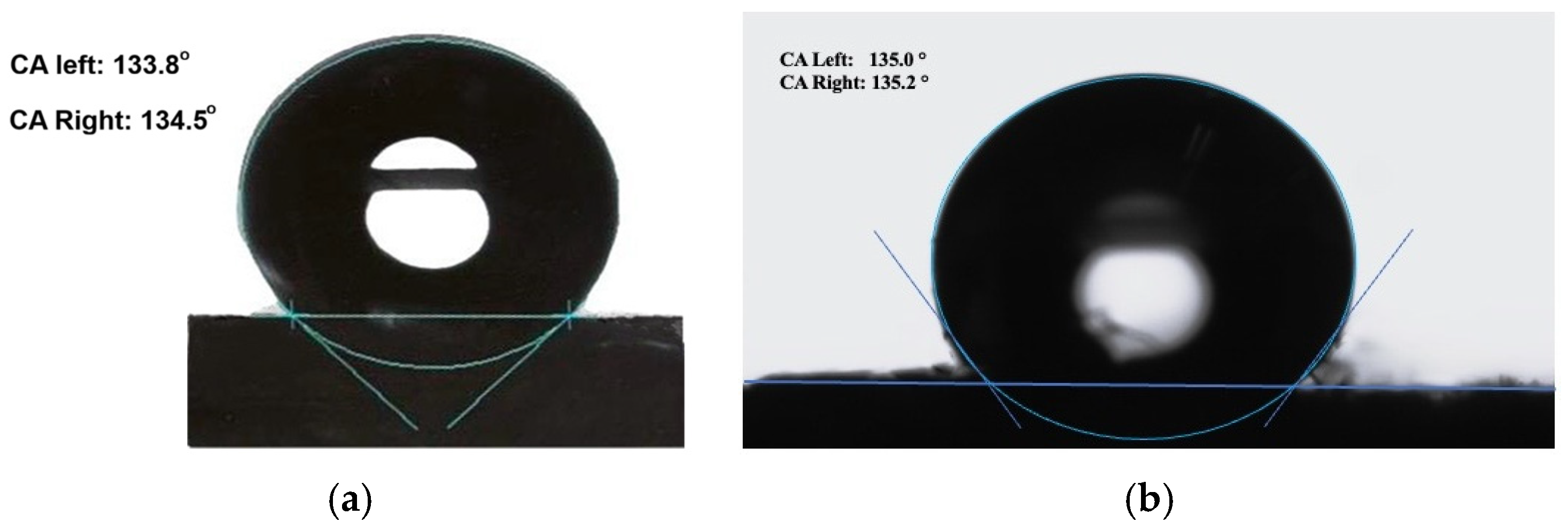
To evaluate the stability of the PS-modified textiles produced by DBD plasma polymerization, the treated cotton samples were exposed to ultraviolet (UV) irradiation (UV/Ozone Pro cleaner, 4.6 mW/cm2, 185–254 nm, Bioforce Nanosciences, Virginia Beach, VA, USA), for 1 h under ambient conditions. Surface hydrophobicity was then assessed by measuring the water contact angle (Figure 5). No significant difference was observed between the UV-exposed and non-exposed samples, indicating that the plasma-polymerized polystyrene layer retained its hydrophobicity and structural integrity after exposure to UV radiation.
Retention of a high water contact angle after UV exposure indicates that the polystyrene coating remained chemically intact, as UV-induced degradation typically introduces polar groups and reduces hydrophobicity. Thus, contact angle serves as a practical proxy for surface integrity under UV aging, since loss of hydrophobicity would signal photochemical breakdown of the polymer layer.
These results demonstrate good resistance to UV-induced deterioration, highlighting the environmental stability of the DBD-generated coating and supporting its potential for light-exposed textile applications.

4. Conclusions

This study demonstrates that dielectric barrier discharge (DBD) plasma is a rapid, environmentally friendly method for generating polystyrene (PS) coatings directly on cotton textiles. Under ambient conditions and without solvents or initiators, DBD plasma successfully polymerized styrene into an amorphous PS layer that firmly adhered to cotton fibers. The resulting fabric exhibited high water repellency, with contact angles of ~135°, and demonstrated improved thermal resistance compared to cotton coated with commercial PS. The coating also retained its hydrophobicity following UV exposure, indicating strong environmental durability. These combined results confirm that plasma-induced polymerization offers significant advantages over conventional coating and polymerization approaches, particularly for porous, heat-sensitive materials. This assertion does not refer to higher polymer yield per unit energy, but rather to process advantages in terms of operating conditions, safety, and sustainability. For instance, conventional thermal or solution-based polymerization typically requires elevated temperatures (commonly 60–80 °C) for several hours, the use of chemical initiators (e.g., peroxides or azo compounds), and often organic solvents. These requirements increase energy consumption, introduce chemical residues, and necessitate post-processing steps for purification and solvent removal. In contrast, DBD plasma polymerization operates under ambient pressure and near-room-temperature conditions, does not require solvents or chemical initiators, and can be completed on time scales of minutes. These features reduce process complexity and environmental burden.
Future work should focus on evaluating long-term mechanical durability, exploring the incorporation of multifunctional crosslinking monomers (e.g., divinyl compounds) to enhance coating robustness, scaling up larger textile formats, and expanding the methodology to other monomers. Overall, DBD plasma polymerization represents a promising approach for sustainable textile finishing and the development of advanced functional fabrics.

Author Contributions

Conceptualization and methodology, all authors; data curation, L.F. and S.A.K.V.; writing—original draft preparation, L.F. and S.A.K.V.; writing, review and editing, all authors; visualization, all authors; supervision, H.-F.J.; project administration, H.-F.J. All authors have read and agreed to the published version of the manuscript.

Funding

This research received no external funding.

Data Availability Statement

The original contributions presented in this study are included in the article. Further inquiries can be directed to the corresponding author.

Conflicts of Interest

The authors declare no conflicts of interest.

References

  1. Kogelschatz, U. Dielectric-Barrier Discharges: Their History, Discharge Physics, and Industrial Applications. Plasma Chem. Plasma Process. 2003, 23, 1–46. [Google Scholar] [CrossRef]
  2. Rieger, J. The Glass Transition Temperature of Polystyrene. J. Therm. Anal. 1996, 46, 965–972. [Google Scholar] [CrossRef]
  3. Van Kooten, T.G.; Spijker, H.T.; Busscher, H.J. Plasma-Treated Polystyrene Surfaces: Model Surfaces for Studying Cell–Biomaterial Interactions. Biomaterials 2004, 25, 1735–1747. [Google Scholar] [CrossRef] [PubMed]
  4. Caicedo-Carvajal, C.E.; Liu, Q.; Remache, Y.; Goy, A.; Suh, K.S. Cancer Tissue Engineering: A Novel 3D Polystyrene Scaffold for In Vitro Isolation and Amplification of Lymphoma Cancer Cells from Heterogeneous Cell Mixtures. J. Tissue Eng. 2011, 2011, 362326. [Google Scholar] [CrossRef] [PubMed]
  5. Wünsch, J.R. Polystyrene: Synthesis, Production and Applications; iSmithers Rapra Publishing: Shawbury, UK, 2000; ISBN 978-1-85957-191-0. [Google Scholar]
  6. Krüger, K.; Tauer, K.; Yagci, Y.; Moszner, N. Photoinitiated Bulk and Emulsion Polymerization of Styrene—Evidence for Photo-Controlled Radical Polymerization. Macromolecules 2011, 44, 9539–9549. [Google Scholar] [CrossRef]
  7. Pishva, P.; Li, J.; Xie, R.; Tang, J.; Nandy, P.; Farouk, T.; Guo, J.; Peng, Z. Nonthermal hydrogen plasma-enabled ambient, fast lignin hydrogenolysis to valuable chemicals and bio-oils. Chem. Eng. J. 2024, 501, 157776. [Google Scholar] [CrossRef]
  8. Mieles, M.; Harper, S.; Ji, H.-F. Bulk Polymerization of Acrylic Acid Using Dielectric-Barrier Discharge Plasma in a Mesoporous Material. Polymers 2023, 15, 2965. [Google Scholar] [CrossRef]
  9. Chen, K.; Cao, M.; Feng, E.; Sohlberg, K.; Ji, H.-F. Polymerization of Solid-State Aminophenol to Polyaniline Derivative Using a Dielectric Barrier Discharge Plasma. Plasma 2020, 3, 187–195. [Google Scholar] [CrossRef]
  10. Shaban, M.; Merkert, N.; van Duin, A.C.T.; van Duin, D.; Weber, A.P. Advancing DBD Plasma Chemistry: Insights into Reactive Nitrogen Species such as NO2, N2O5, and N2O Optimization and Species Reactivity through Experiments and MD Simulations. Environ. Sci. Technol. 2024, 58, 16087–16099. [Google Scholar] [CrossRef]
  11. Chen, K.; Cao, M.; Qiao, Z.; He, L.; Wei, Y.; Ji, H.-F. Polymerization of Solid-State 2,2′-Bithiophene Thin Film or Doped in Cellulose Paper Using DBD Plasma and Its Applications in Paper-Based Electronics. ACS Appl. Polym. Mater. 2020, 2, 1518–1527. [Google Scholar] [CrossRef]
  12. Nguyen, T.M.; Kaushik, N.; Nguyen, T.T.; Choi, E.H.; Nguyen, L.N.; Kaushik, N.K. The Outlook of Flexible DBD-Plasma Devices: Applications in Food Science and Wound Care Solutions. Mater. Today Electron. 2024, 7, 100087. [Google Scholar] [CrossRef]
  13. Cools, P.; Van Vrekhem, S.; De Geyter, N.; Morent, R. The Use of DBD Plasma Treatment and Polymerization for the Enhancement of Biomedical UHMWPE. Thin Solid Films 2014, 572, 251–259. [Google Scholar] [CrossRef]
  14. Borra, J.-P.; Valt, A.; Arefi-Khonsari, F.; Tatoulian, M. Atmospheric Pressure Deposition of Thin Functional Coatings: Polymer Surface Patterning by DBD and Post-Discharge Polymerization of Liquid Vinyl Monomer from Surface Radicals. Plasma Process. Polym. 2012, 9, 1104–1115. [Google Scholar] [CrossRef]
  15. Morent, R.; De Geyter, N.; Van Vlierberghe, S.; Beaurain, A.; Dubruel, P.; Payen, E. Influence of Operating Parameters on Plasma Polymerization of Acrylic Acid in a Mesh-to-Plate Dielectric Barrier Discharge. Prog. Org. Coat. 2011, 70, 336–341. [Google Scholar] [CrossRef]
  16. Bashir, M.; Bashir, S. Polymerization of Acrylic Acid Using Atmospheric Pressure DBD Plasma Jet. IOP Conf. Ser. Mater. Sci. Eng. 2016, 146, 012036. [Google Scholar] [CrossRef]
  17. Amiri Khoshkar Vandani, S.; Farhadian, L.; Pennycuick, A.; Ji, H.-F. Polymerization of Sodium 4-Styrenesulfonate Inside Filter Paper via Dielectric Barrier Discharge Plasma. Plasma 2024, 7, 867–876. [Google Scholar] [CrossRef]
  18. El-Naggar, A.M.; Zohdy, M.H.; Mohammed, S.S.; Alam, E.A. Water Resistance and Surface Morphology of Synthetic Fabrics Covered by Polysiloxane/Acrylate Followed by Electron Beam Irradiation. Nucl. Instrum. Methods Phys. Res. Sect. B Beam Interact. Mater. At. 2003, 201, 595–603. [Google Scholar] [CrossRef]
  19. Singh, A.; Chauhan, A.; Gaur, R. A Comprehensive Review on the Synthesis, Properties, Environmental Impacts, and Chemiluminescence Applications of Polystyrene (PS). Discov. Chem. 2025, 2, 47. [Google Scholar] [CrossRef]
  20. Maafa, I.M. Inhibition of Free Radical Polymerization: A Review. Polymers 2023, 15, 488. [Google Scholar] [CrossRef]
  21. Takahashi, Y.; Nagaki, A. Anionic Polymerization Using Flow Microreactors. Molecules 2019, 24, 1532. [Google Scholar] [CrossRef]
  22. Sharma, M.K.; Hartman, R.L. Perspectives on Polyolefin Catalysis in Microfluidics for High-Throughput Screening: A Minireview. Energy Fuels 2023, 37, 1–18. [Google Scholar] [CrossRef]
  23. Mieles, M.; Stitt, C.; Ji, H.-F. Bulk Polymerization of PEGDA in Spruce Wood Using a DBD Plasma-Initiated Process to Improve the Flexural Strength of the Wood–Polymer Composite. Plasma 2022, 5, 146–153. [Google Scholar] [CrossRef]
  24. Gauthier, M.A.; Gibson, M.I.; Klok, H.-A. Synthesis of Functional Polymers by Post-Polymerization Modification. Angew. Chem. Int. Ed. 2009, 48, 48–58. [Google Scholar] [CrossRef]
  25. Cheng, J.; Chen, Q.; Fridman, G.; Ji, H.-F. A Colorimetric Method for Comparison of Oxidative Strength of DBD Plasma. Sens. Actuators Rep. 2019, 1, 100001. [Google Scholar] [CrossRef]
  26. Hermán, V.; Takacs, H.; Duclairoir, F.; Renault, O.; Tortai, J.H.; Viala, B. Core Double–Shell Cobalt/Graphene/Polystyrene Magnetic Nanocomposites Synthesized by in Situ Sonochemical Polymerization. RSC Adv. 2015, 5, 51371–51381. [Google Scholar] [CrossRef]
  27. Holland-moritz, K.; Siesler, H.W. Infrared Spectroscopy of Polymers. Appl. Spectrosc. Rev. 1976, 11, 1–55. [Google Scholar] [CrossRef]
  28. Kobayashi, M.; Nakaoki, T.; Ishihara, N. Molecular Conformation in Glasses and Gels of Syndiotactic and Isotactic Polystyrenes. Macromolecules 1990, 23, 78–83. [Google Scholar] [CrossRef]
  29. Li, S.; Jinjin, D. Improvement of Hydrophobic Properties of Silk and Cotton by Hexafluoropropene Plasma Treatment. Appl. Surf. Sci. 2007, 253, 5051–5055. [Google Scholar] [CrossRef]
  30. Belhaj Khalifa, I.; Ladhari, N. Hydrophobic Behavior of Cotton Fabric Activated with Air Atmospheric-Pressure Plasma. J. Text. Inst. 2020, 111, 1191–1197. [Google Scholar] [CrossRef]
Figure 1. Scheme of the DBD Plasma device.
Plasma 09 00003 g001
Figure 2. (a) FT-IR spectrum of styrene and polystyrene after DBD polymerization; (b) Zoom zones on aromatic and C=C group signals.
Plasma 09 00003 g002
Figure 3. Water contact angles on PS-coated cotton after 3 min of DBD treatment.
Plasma 09 00003 g003
Figure 4. (a) TGA analysis of cotton coated with commercial PS; (b) cotton coated with DBD polymerized PS.
Plasma 09 00003 g004
Figure 5. Water contact angles on (a) PS-coated cotton before and (b) after UV exposure (1 h).
Plasma 09 00003 g005
Table 1. Water contact angles on PS-coated cotton after 1, 2, and 3 min of DBD treatment.
TimeWater Contact Angle
Without treatment0
1 min129.8°
2 min133.4°
3 min135.1°
Disclaimer/Publisher’s Note: The statements, opinions and data contained in all publications are solely those of the individual author(s) and contributor(s) and not of MDPI and/or the editor(s). MDPI and/or the editor(s) disclaim responsibility for any injury to people or property resulting from any ideas, methods, instructions or products referred to in the content.