Fuzzy Decision Support System for Single-Chamber Ship Lock for Two Vessels


Abstract
1. Introduction
- Lock chamber—the lock chamber is the largest and most substantial component of a ship lock, serving as the space that connects the upper and lower lock heads. It is designed to safely accommodate one or more vessels during the locking process. While the dimensions and position of the lock chamber are fixed, the water level within it is variable during the raising or lowering of vessels.
- Lock heads with gates (upper and lower)—the lock heads, comprising the upper and lower sections, are among the most critical and complex components of a ship lock. They are engineered to be watertight to ensure proper operation and prevent water leakage. The gates within the lock heads are movable elements that can be opened or closed to permit the entry or departure of vessels from the lock chamber [2].
- Lock equipment (mechanical, hydraulic, and electrical systems)—this includes the infrastructure and machinery necessary for filling and emptying the lock chamber as required, as well as equipment for operating and controlling the lock gates. It also encompasses communication systems and other auxiliary devices essential for the safe and efficient functioning of the ship lock.
2. Problem Description
2.1. An Overview of the Ship Lock Operation
2.2. Ship Lock Control Procedures
3. Design of Fuzzy Control System for Ship Locking Process
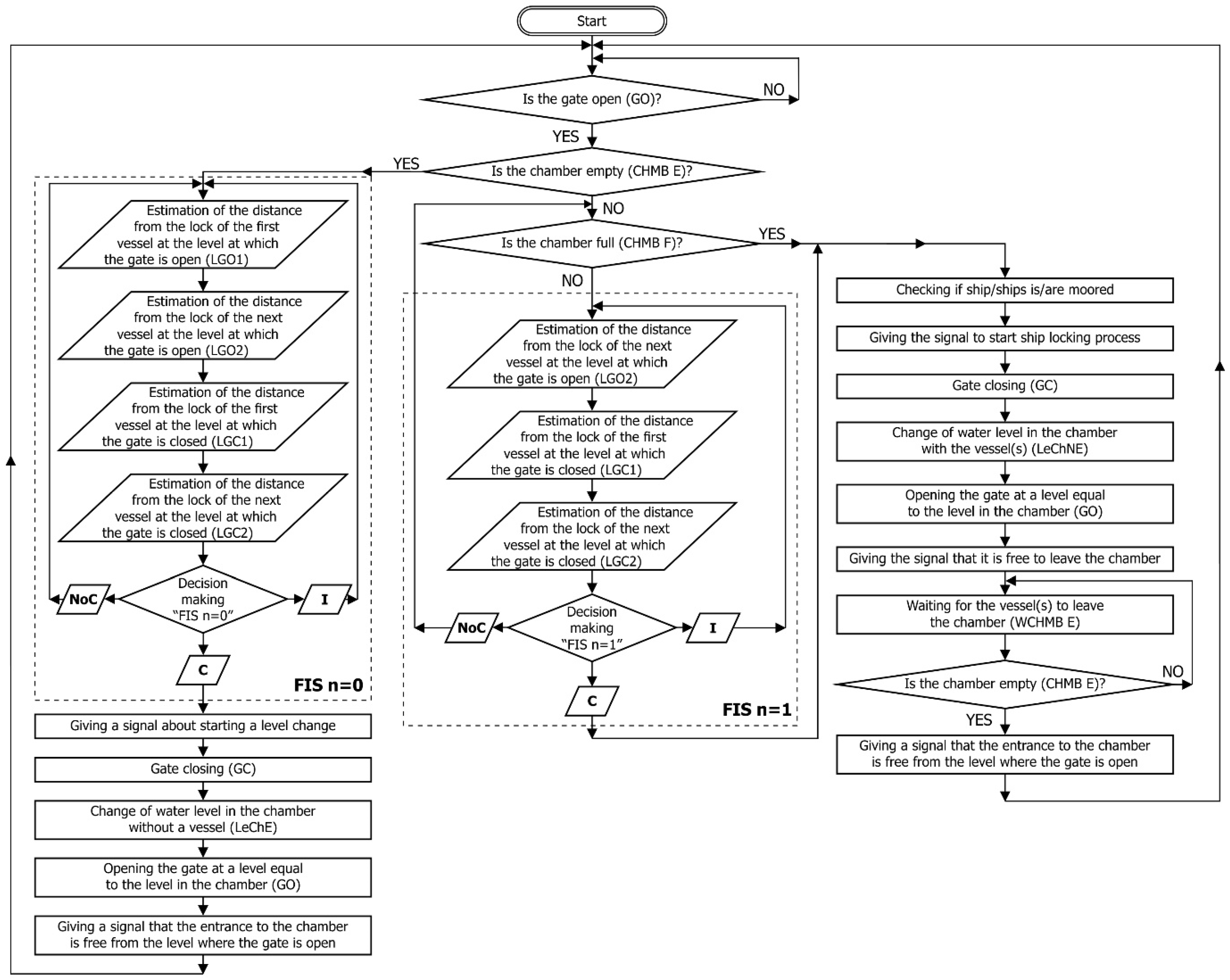
- Definition of the Main Control System;
- Design of a Fuzzy Inference System;
- Integration of a Fuzzy Inference System within the SCADA framework.
3.1. Definition of the Main Control System
3.2. Design of a Fuzzy Inference System
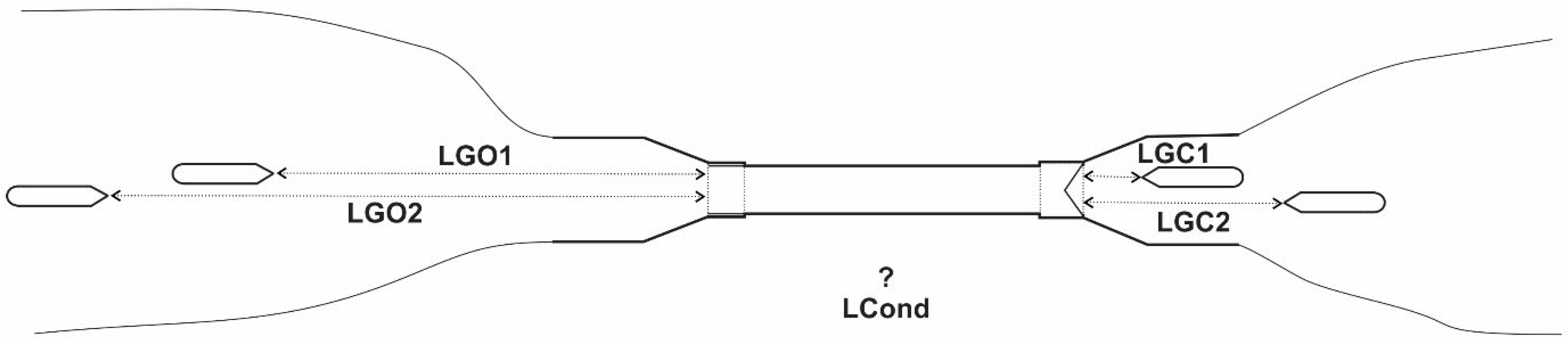
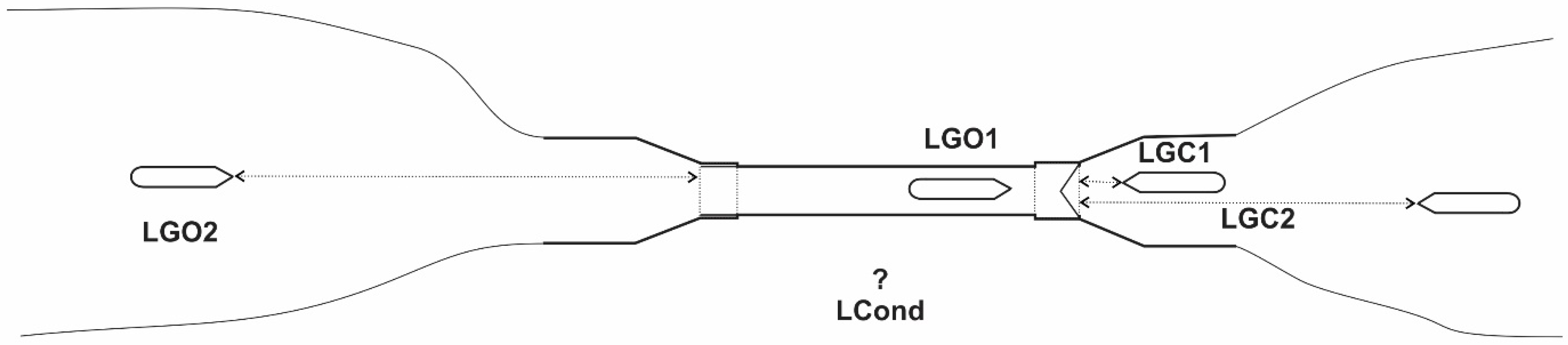
- LGO1: distance from the first vessel to the lock, at the level where the gate is open;
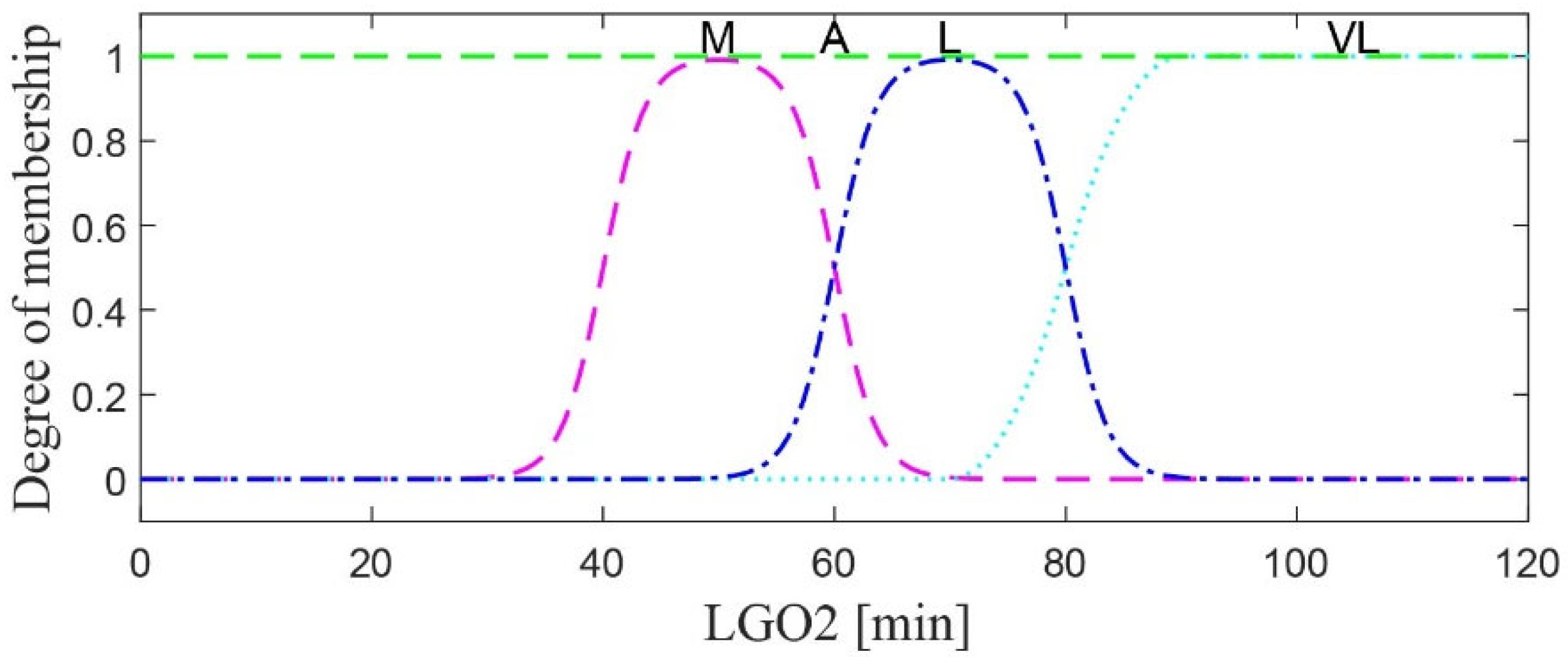
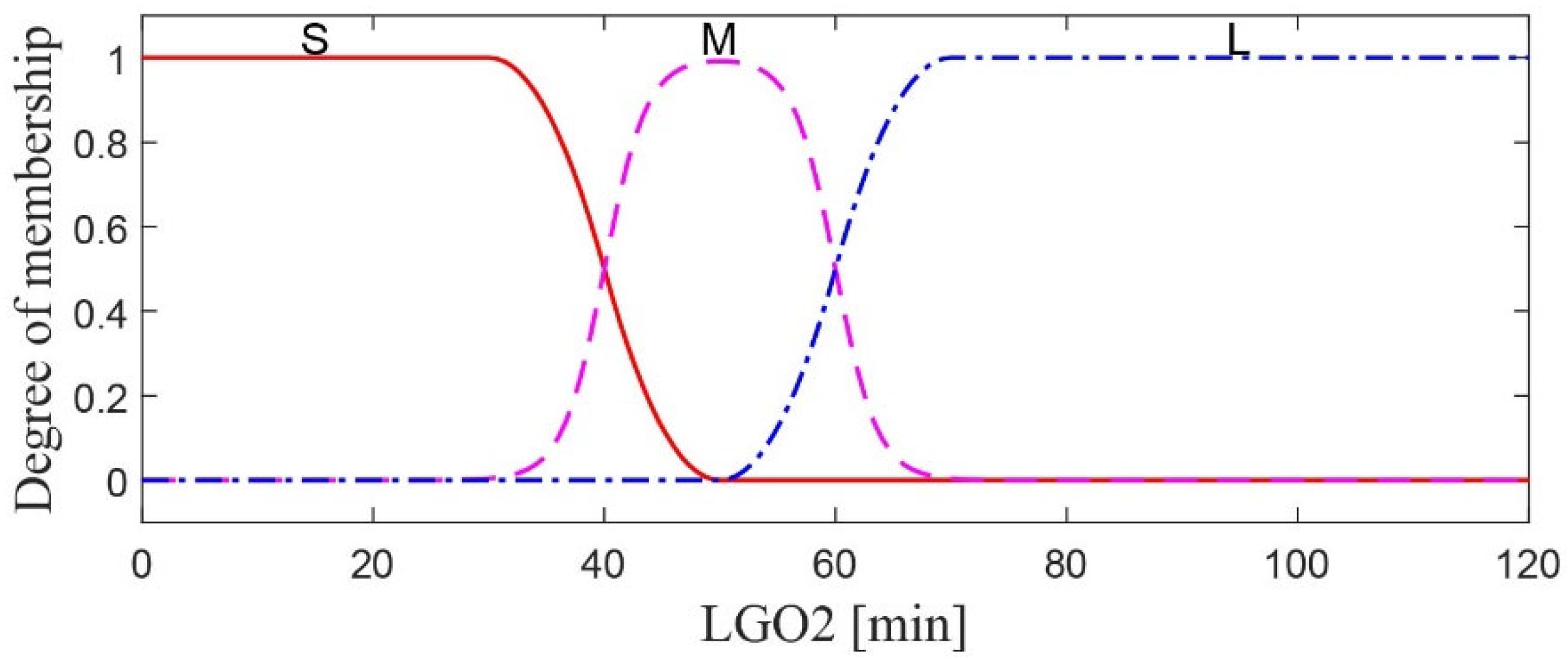
- LGO2: distance from the next vessel to the lock, at the level where the gate is open;
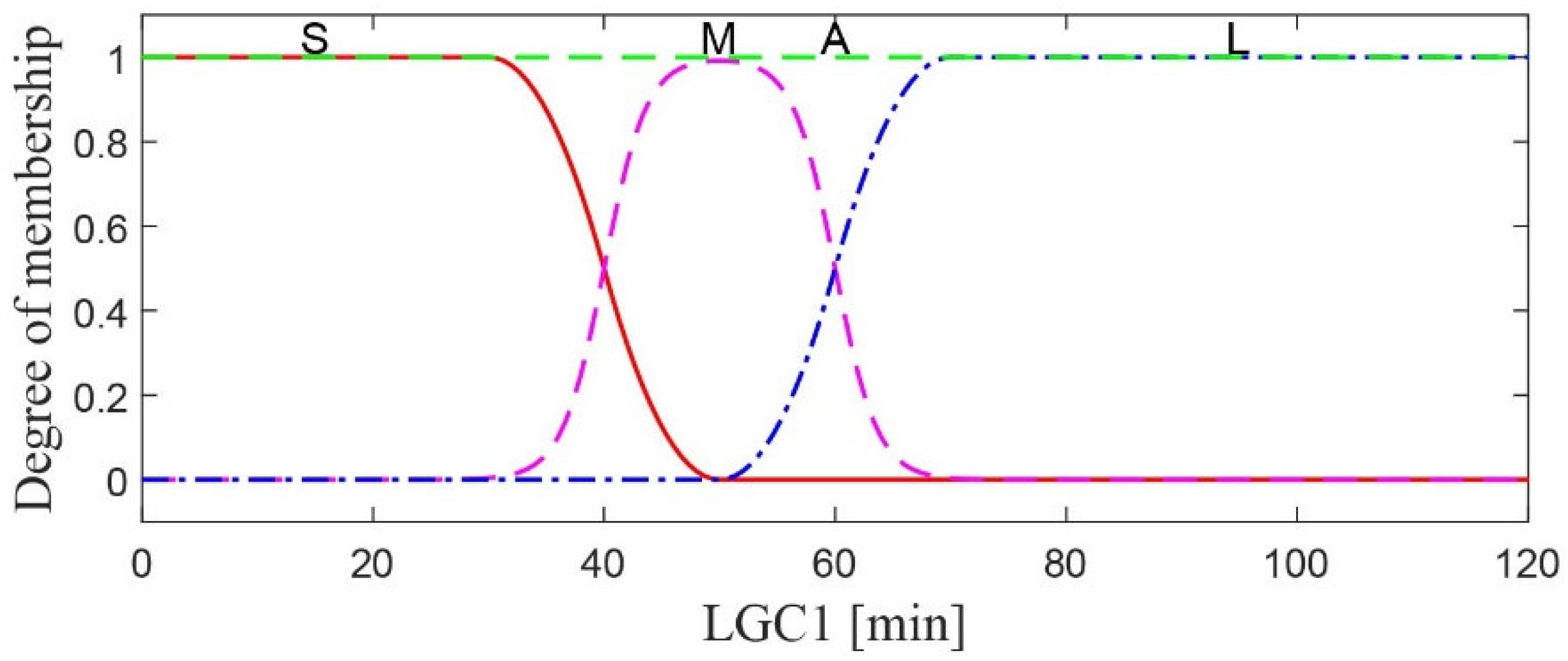
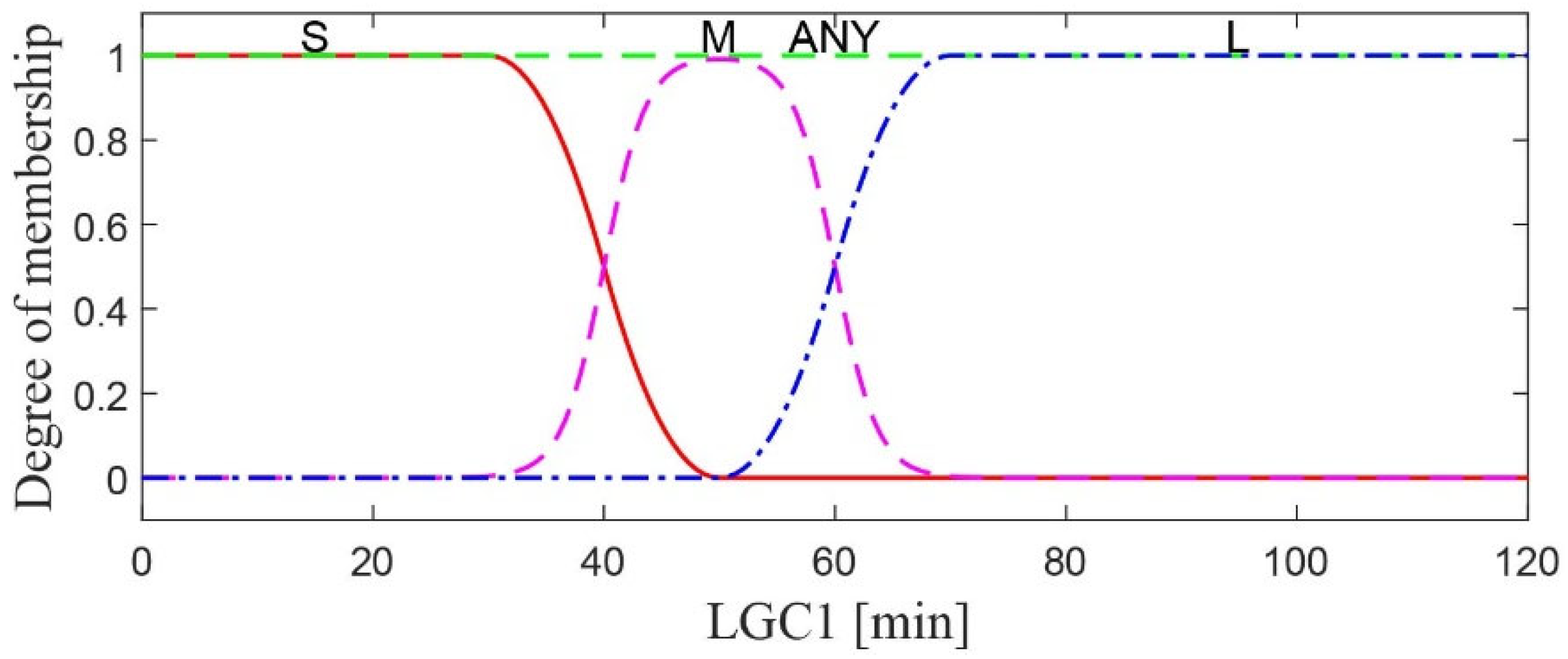
- LGC1: distance from the first vessel to the lock, at the level where the gate is closed;
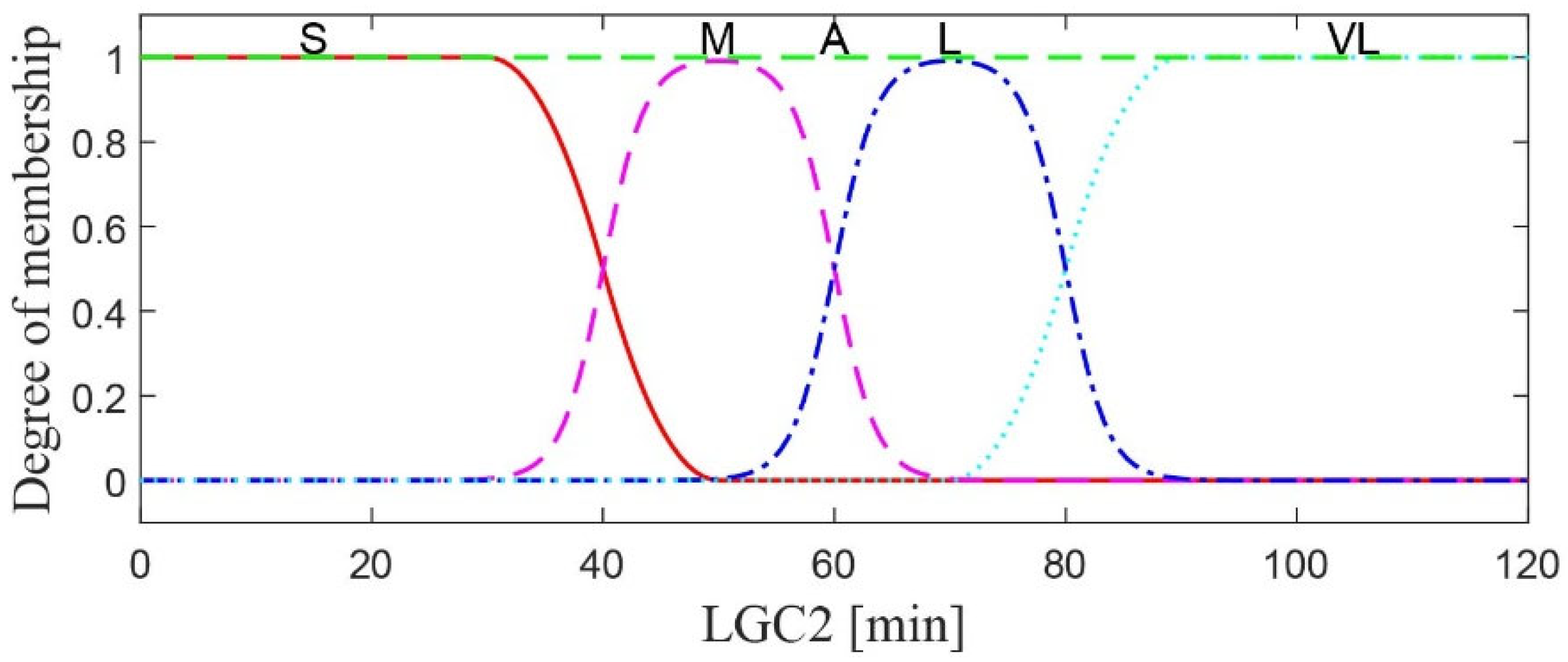
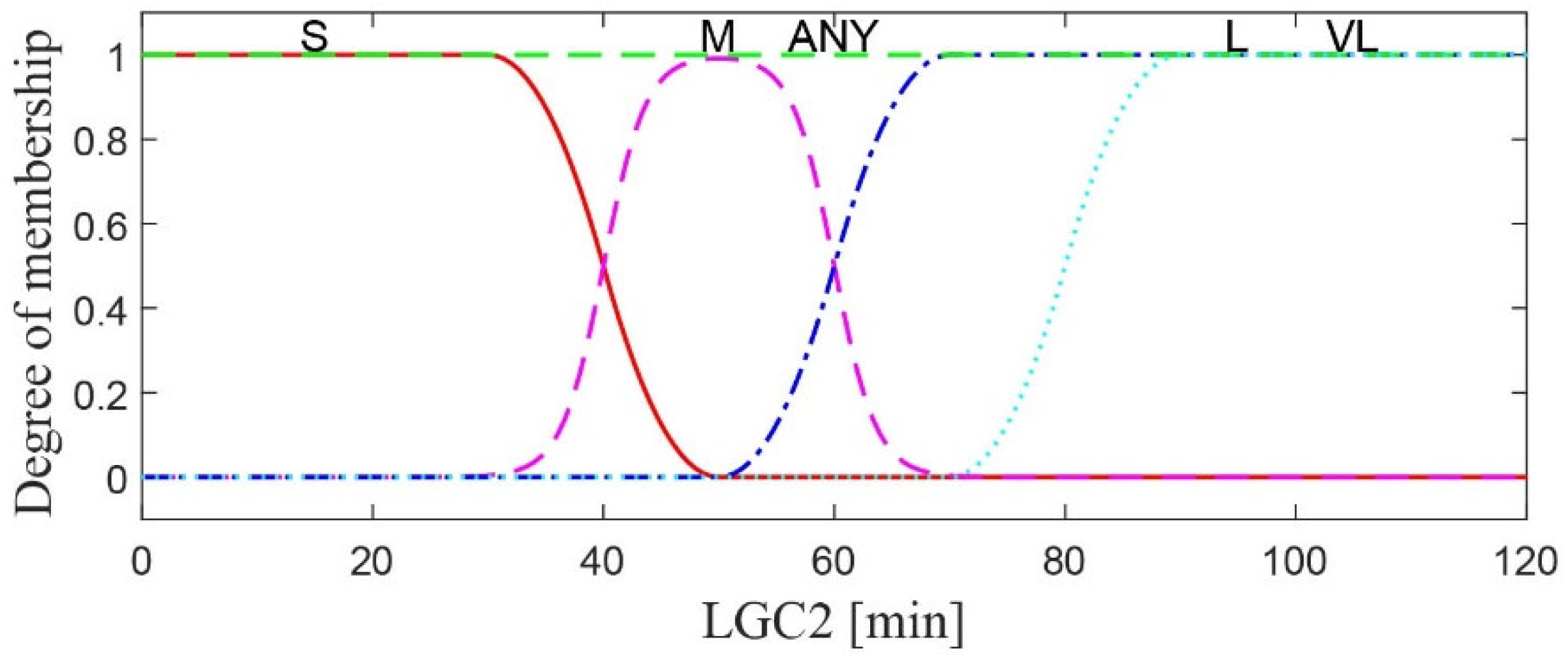
- LGC2: distance from the next vessel to the lock, at the level where the gate is closed.
- Implication: The degree of truth for each rule is determined based on the fuzzified input variables. In this study, the minimum (min) operator is employed for implication, ensuring that the output membership function reflects the most restrictive contribution of the relevant input variables.
- Aggregation: The contributions of all active rules are combined into a single fuzzy set using the maximum (max) operator, which captures the overall degree of membership for each output category.
- Defuzzification: The aggregated fuzzy set is converted into a crisp, actionable control value using the Center of Area (CoA) method. This widely adopted technique computes the centroid of the aggregated membership function, providing an effective balance between accuracy and computational efficiency [30].
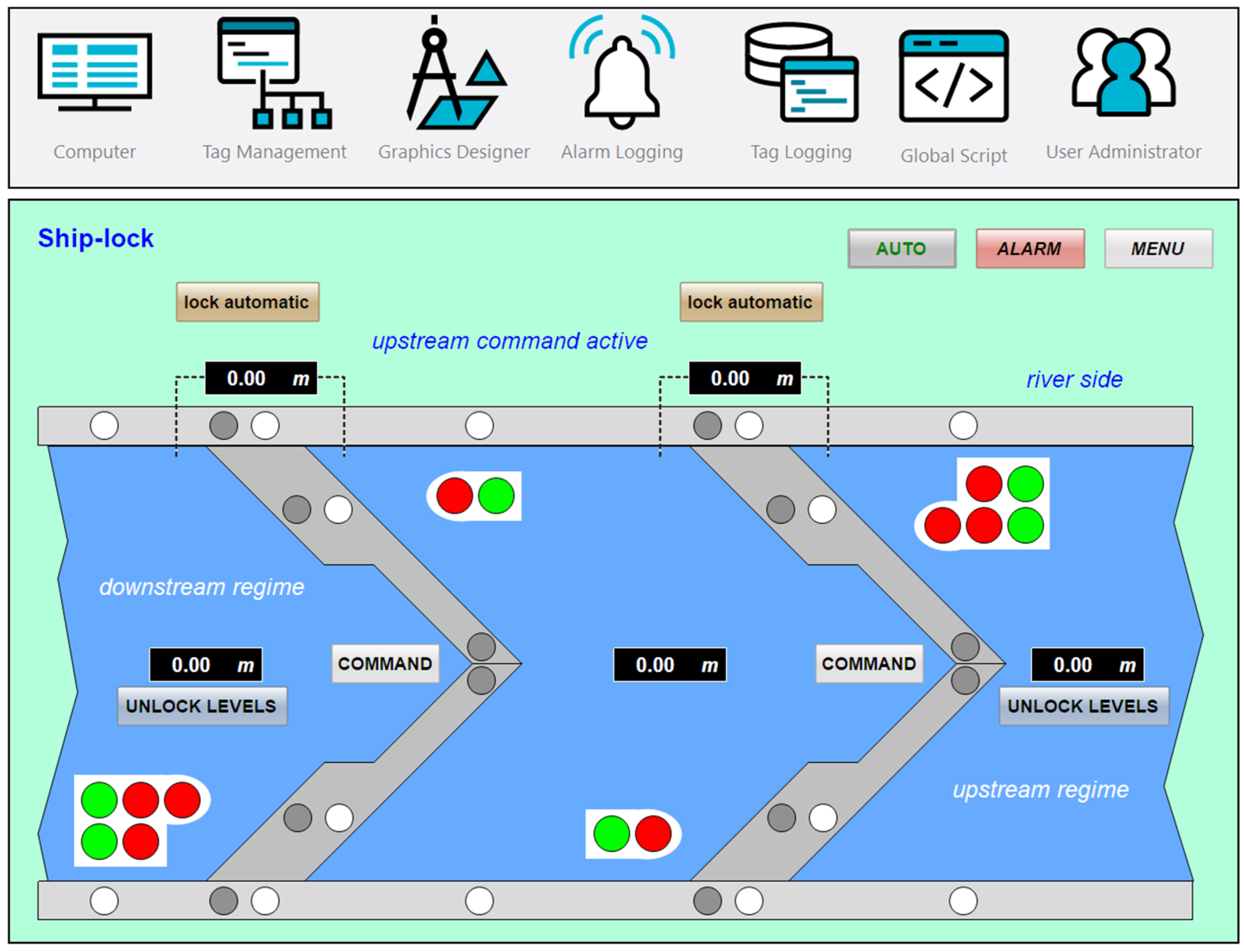
3.3. Integration of a Fuzzy Inference System Within the SCADA Framework
- acquisition, measurement, and processing of real-time data;
- control of ship lock actuators and mechanisms such as gates, pumps, and valves;
- graphical visualization of the entire lock operation status; and
- detection and evaluation of alarm messages, which are signaled in the case of warnings, errors, and system failures.
4. Results and Discussion
5. Conclusions
- as a component of an automated or semi-automated control system; or
- as a decision-making support within a conventional control system.
Further Research Directions
Author Contributions
Funding
Data Availability Statement
Acknowledgments
Conflicts of Interest
Abbreviations
| FDSS | Fuzzy Decision Support System |
| SCADA | Supervisory Control and Data Acquisition |
| PLC | Programmable Logic Controller |
| IWT | Inland waterway transport |
| AIS | Automatic Identification System |
| ECDIS | Electronic Chart Display and Information System |
| FIFO | First In First Out |
| CPU | Central processing unit |
| PC | Personal computer |
| RIS | River Information Services |
| GO | The lock gate is open |
| GC | The lock gate is closed |
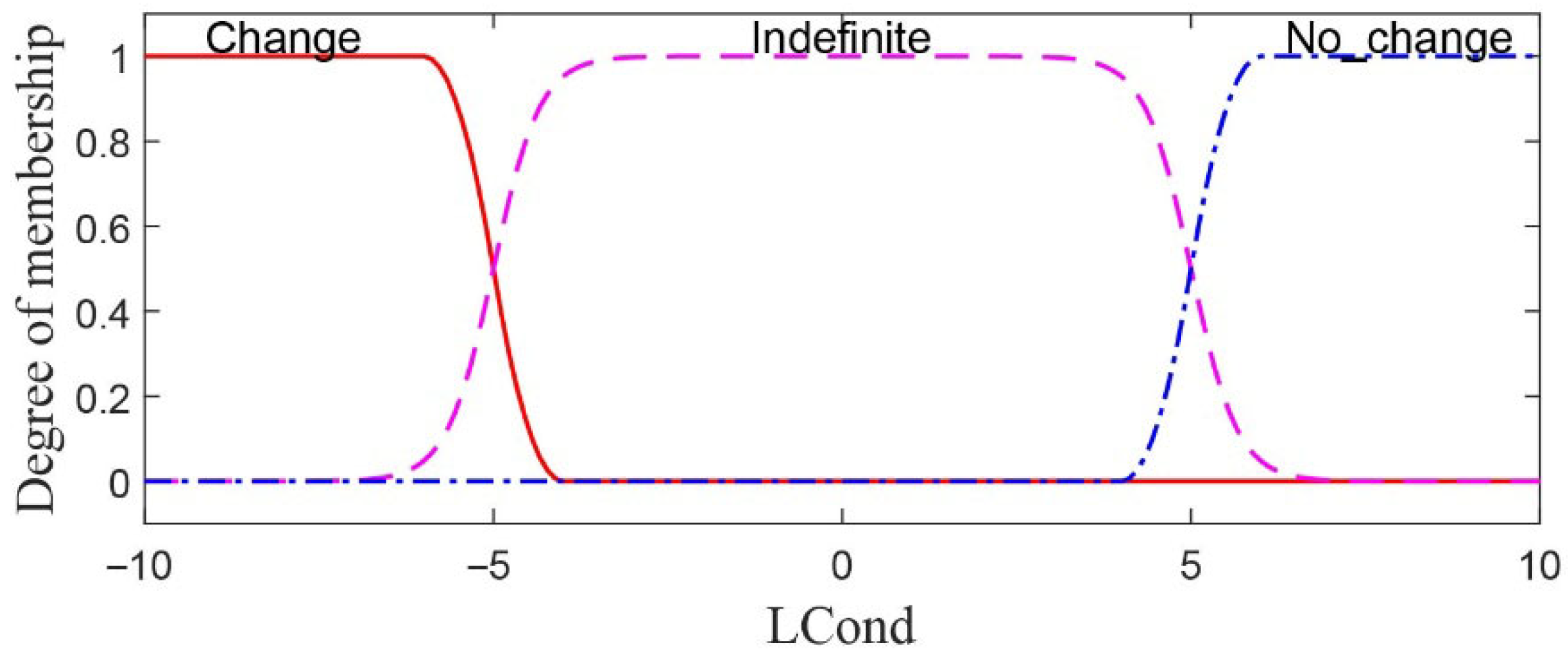
| LCond | Current state of the ship lock |
| FIS | Fuzzy Inference System |
| LGO1 | Distance from the first vessel to the lock at the level where the gate is open |
| LGO2 | Distance from the next vessel to the lock at the level where the gate is open |
| LGC1 | Distance from the first vessel to the lock at the level where the gate is closed |
| LGC2 | Distance from the next vessel to the lock at the level where the gate is closed |
| FIS n = 0 | Fuzzy logic controller for arrangement (scenario) type 0 |
| FIS n = 1 | Fuzzy logic controller for arrangement (scenario) type 1 |
| ZMF | Spline-based Z-shaped membership function |
| PSIGMF | Product of two sigmoidal membership functions |
| TRAPMF | Trapezoidal membership function |
| SMF | Spline-based S-shaped membership function |
| S | Input fuzzy variable—Small |
| M | Input fuzzy variable—Medium |
| L | Input fuzzy variable—Large |
| VL | Input fuzzy variable—Very Large |
| A | Input fuzzy variable—ANY |
| C | Output fuzzy variable—Change |
| I | Output fuzzy variable—Indefinite |
| NoC | Output fuzzy variable—No change |
| CoA | Center of Area |
References
- Smith, L.D.; Sweeney, D.C.; Campbell, J.F. Simulation of alternative approaches to relieving congestion at locks in a river transportation system. J. Oper. Res. Soc. 2009, 60, 519–533. [Google Scholar] [CrossRef]
- Molenaar, W.F. Hydraulic Structures—Locks; Lecture Notes; Delft University of Technology: Delft, The Netherlands, 2011; 146p. [Google Scholar]
- Šulek, P.; Kinczer, T. Expert control system of shipping operation on the Gabcikovo project. Pollack Period. 2019, 14, 139–150. [Google Scholar] [CrossRef]
- Liu, C.; Qi, J.; Chu, X.; Zheng, M.; He, W. Cooperative ship formation system and control methods in the ship lock waterway. Ocean Eng. 2021, 226, 108826. [Google Scholar] [CrossRef]
- Ji, B.; Zhang, D.; Zhang, Z.; Samson, S.Y.; Van Woensel, T. The generalized serial-lock scheduling problem on inland waterway: A novel decomposition-based solution framework and efficient heuristic approach. Transp. Res. E Logist. Transp. Rev. 2022, 168, 102935. [Google Scholar] [CrossRef]
- Xiang, M.; Hu, Y.; Wang, X. Review of the Key Technology Research on Intelligent Locks. In Proceedings of the PIANC Smart Rivers 2022, Nanjing, China, 18–21 October 2022; Li, Y., Hu, Y., Rigo, P., Lefler, F.E., Zhao, G., Eds.; Lecture Notes in Civil Engineering. Springer: Singapore, 2022; Volume 264. [Google Scholar] [CrossRef]
- Zhang, Y.; Zheng, Q.; He, L.J.; Tian, H.W. Ship traffic optimization method for solving the approach channel and lock co-scheduling problem of the Three Gorges Dam on the Yangzi River. Ocean Eng. 2023, 276, 114196. [Google Scholar] [CrossRef]
- Tian, H.; Zheng, Q.; Zhang, Y.; He, L.; Liu, S.; Li, R. Ship Chain Navigation Co-Scheduling of Three Gorges-Gezhouba Dam under Serial-Lock Scenario. J. Mar. Sci. Eng. 2024, 12, 1700. [Google Scholar] [CrossRef]
- Zhang, H.; Xie, H.; Perera, S.; Nayanalochana, P.C.J. Optimizing ship dam-crossing operations under uncertainty: A fuzzy queuing-based approach. Manag. Syst. Eng. 2025, 4, 22. [Google Scholar] [CrossRef]
- Bugarski, V.; Bačkalić, T.; Kuzmanov, U. Fuzzy decision support system for ship lock control. Expert Syst. Appl. 2013, 40, 3953–3960. [Google Scholar] [CrossRef]
- Kanović, Ž.; Bugarski, V.; Bačkalić, T.; Jeličić, Z.; Petković, M.; Matić, D. Optimization of ship lock control system using swarm-based techniques. J. Reprocess. Energy Agric. 2014, 18, 30–35. [Google Scholar]
- Kanović, Ž.; Bugarski, V.; Bačkalić, T. Ship lock control system optimization using GA, PSO and ABC: A comparative review. Promet 2014, 26, 23–31. [Google Scholar] [CrossRef]
- Bačkalić, T.; Bugarski, V.; Kulić, F.; Kanović, Ž. Adaptable fuzzy expert system for ship lock control support. J. Navig. 2016, 69, 1341–1356. [Google Scholar] [CrossRef]
- Kanović, Ž.; Bugarski, V.; Bačkalić, T.; Kulić, F. Application of nature-inspired optimization techniques in vessel traffic control. In Advances in Nature-Inspired Computing and Applications; Shandilya, S.K., Shandilya, S., Nagar, A., Eds.; Springer International Publishing: Cham, Switzerland, 2018; pp. 223–252. ISBN 978-3-319-96450-8. [Google Scholar]
- Manoj, K.S. Industrial Automation with SCADA: Concepts, Communications and Security; Notion Press: Chennai, India, 2019; 240p, ISBN 978-1684668281. [Google Scholar]
- Guyer, J.P. An Introduction to SCADA Systems for Professional Engineers; Guyer Partners: El Macero, CA, USA, 2022; 44p, ISBN 979-8848804041. [Google Scholar]
- Zheng, Q.Q.; Zhang, Y.; Guo, W.J.; Tian, H.W.; He, L.J. Solving energy-efficient lock group co-scheduling problem with ship lift and approach channel using a collaborative adaptive multi-objective algorithm. Expert Syst. Appl. 2024, 242, 122712. [Google Scholar] [CrossRef]
- Szlapczynski, R.; Szlapczynska, J. Review of ship safety domains: Models and applications. Ocean Eng. 2017, 145, 277–289. [Google Scholar] [CrossRef]
- Kecman, V. Learning and Soft Computing: Support Vector Machines, Neural Networks, and Fuzzy Logic Models; Massachusetts Institute of Technology Press: Cambridge, MA, USA, 2001; 525p, ISBN 978-0262527903. [Google Scholar]
- Volosencu, C. Fuzzy Systems: Theory and Applications; IntechOpen: London, UK, 2022; 280p, ISBN 978-1839622915. [Google Scholar]
- Comes, T.; Hiete, M.; Wijngaards, N.; Schultmann, F. Decision Maps: A framework for multi-criteria decision support under severe uncertainty. Decis. Support Syst. 2011, 52, 108–118. [Google Scholar] [CrossRef]
- Onieva, E.; Milanes, V.; Villagra, J.; Perez, J.; Godoy, J. Genetic optimization of a vehicle fuzzy decision system for intersections. Expert Syst. Appl. 2012, 39, 13148–13157. [Google Scholar] [CrossRef]
- Zadeh, L.A. The Concept of a Linguistic Variable and its Application to Approximate reasoning I. Inf. Sci. 1975, 8, 199–249. [Google Scholar] [CrossRef]
- Mamdani, E.H. Application of fuzzy algorithms for the control of a simple dynamic plant. Proc. Inst. Electr. Eng. 1974, 121, 1585–1588. [Google Scholar] [CrossRef]
- Feng, G. A Survey on Analysis and Design of Model-Based Fuzzy Control Systems. IEEE TFS 2006, 14, 676–697. [Google Scholar] [CrossRef]
- Hsiao, B.; Chern, C.-C.; Yu, M.-M. Measuring the relative efficiency of IC design firms using the directional distance function and a meta-frontier approach. Decis. Support Syst. 2012, 53, 881–891. [Google Scholar] [CrossRef]
- Camps-Valls, G.; Martín-Guerrero, J.D.; Rojo-Alvarez, J.L.; Soria-Olivas, E. Fuzzy sigmoid kernel for support vector classifiers. Neurocomputing 2004, 62, 501–506. [Google Scholar] [CrossRef]
- Yager, R.R.; Filev, D.P. Essentials of Fuzzy Modelling and Control; John Wiley and Sons: New York City, NY, USA, 1994; 408p, ISBN 9780471017615. [Google Scholar]
- Zimmermann, H.J. Fuzzy Set Theory and Its Applications, 4th ed.; Springer: Dordrecht, The Netherlands, 2012; 514p, ISBN 978-9401038706. [Google Scholar]
- Jantzen, J. Foundations of Fuzzy Control; John Wiley and Sons: New York City, NY, USA, 2007; 209p, ISBN 978-0470029633. [Google Scholar]
- Nguyen, H.T.; Sugeno, M. Fuzzy Systems: Modeling and Control; Kluwer Academic Publishers: New York City, NY, USA, 1998; 540p, ISBN 978-1461375159. [Google Scholar]
- Cui, G.; Li, R. Stability Analysis and Optimization Strategy of PLC Ship Lock System Based on Fuzzy Logic Control. In Proceedings of the IEEE 2025 International Conference on Electrical Drives, Power Electronics & Engineering (EDPEE), Athens, Greece, 26–28 March 2025; pp. 1439–1443. [Google Scholar] [CrossRef]
- Bačkalić, T. Vessel Traffic Control on Artificial Waterways with Limited Dimensions as a Function of Waterway Capacity (Upravljanje Saobraćajem na Veštačkim Plovnim Putevima Ograničenih Dimenzija u Funkciji Njihove Propusne Sposobnosti). Ph.D. Thesis, University of Novi Sad, Novi Sad, Serbia, 2001. [Google Scholar]
- Bugarski, V.; Bačkalić, T.; Kanović, Ž.; Kulić, F.; Zeković, M. Fuzzy expert system for adaptive vessel traffic control on one-way section on navigable canal. Transp. Probl. 2019, 14, 39–50. [Google Scholar] [CrossRef]
- UNECE Inland Transport Committee. European Agreement on Main Inland Waterways of International Importance (AGN); ECE/TRANS/120/Rev.3; United Nations Economic Commission for Europe: Geneva, Switzerland, 1996. [Google Scholar]
- Ankur, M.; Debanjan, D.; Mehta, S.P.; Shalivahan, S.; Bhattacharya, B.B. PSO vs. GA vs. VFSA: A comparison of performance, accuracy and resolution with respect to inversion of SP data. In Proceedings of the Japan Geoscience Union Meeting 2011, Makuhari, Chiba, Japan, 22–27 May 2011. [Google Scholar]
- Chen, C.C. Design of PSO-based Fuzzy Classification Systems. J. Appl. Sci. Eng. 2006, 9, 63–70. [Google Scholar] [CrossRef]
- Kennedy, J.; Shi, Y.; Eberhart, R.C. Swarm Intelligence; Morgan Kaufmann Division of Academic Press: San Francisco, CA, USA, 2001; 544p, ISBN 978-1558605954. [Google Scholar]



| Fuzzy Variable | Fuzzy Set | Membership Function | Parameters |
|---|---|---|---|
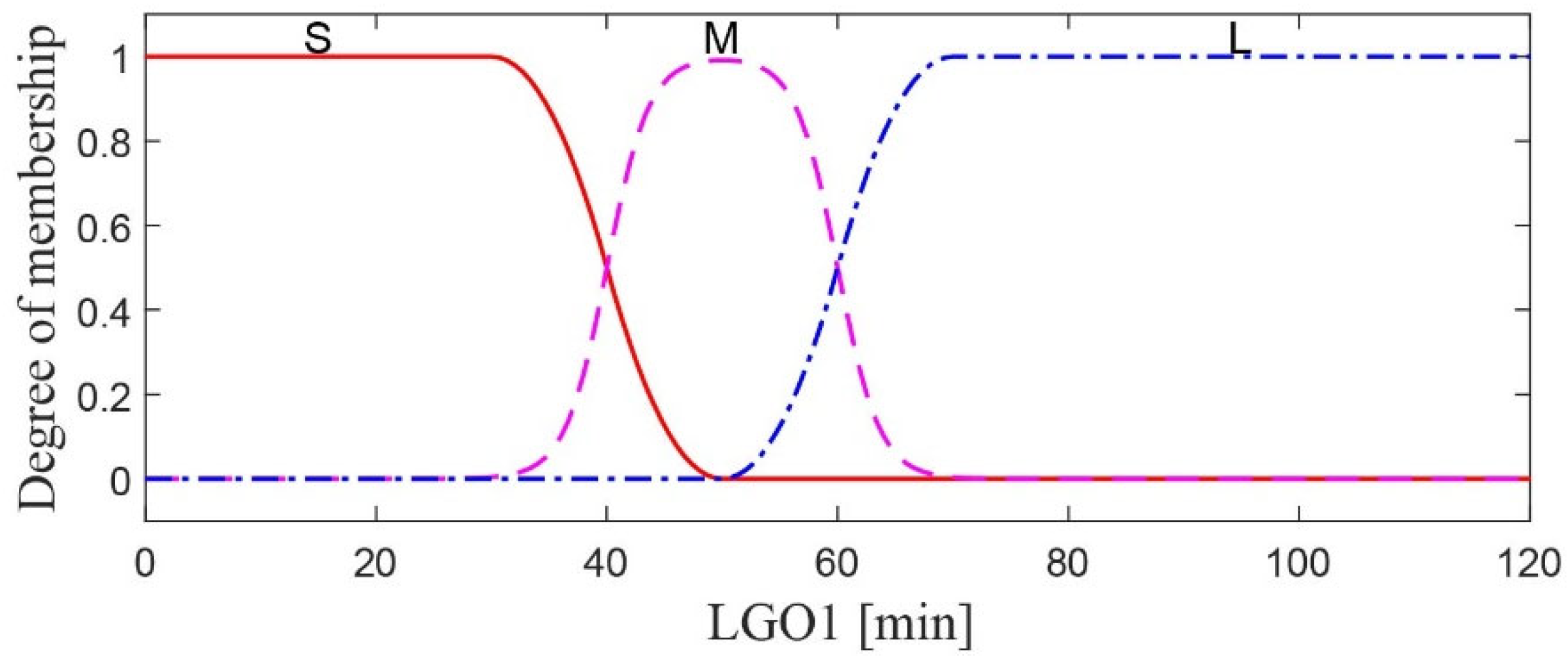
| FIS n = 0—LGO1 | Small (S) | ZMF | [30, 50] |
| Medium (M) | PSIGMF | [0.55, 40, −0.55, 60] | |
| Large (L) | SMF | [50, 70] | |
| FIS n = 0—LGO2 | Medium (M) | PSIGMF | [0.55, 40, −0.55, 60] |
| Large (L) | PSIGMF | [0.55, 60, −0.55, 80] | |
| Very Large (VL) | SMF | [70, 90] | |
| ANY (A) | TRAPMF | [0, 0, 120, 120] | |
| FIS n = 0—LGC1 | Small (S) | ZMF | [30, 50] |
| Medium (M) | PSIGMF | [0.55, 40, −0.55, 60] | |
| Large (L) | SMF | [50, 70] | |
| Any (A) | TRAPMF | [0, 0, 120, 120] | |
| FIS n = 0—LGC2 | Small (S) | ZMF | [30, 50] |
| Medium (M) | PSIGMF | [0.55, 40, −0.55, 60] | |
| Large (L) | PSIGMF | [0.55, 60, −0.55, 80] | |
| Very Large (VL) | SMF | [70, 90] | |
| ANY (A) | TRAPMF | [0, 0, 120, 120] | |
| FIS n = 0—LCond | Change | ZMF | [−6, −4] |
| Indefinite | PSIGMF | [3, −5, −3, 5] | |
| No change | SMF | [4, 6] | |
| FIS n = 1—LGO2 | Small (S) | ZMF | [30, 50] |
| Medium (M) | PSIGMF | [0.55, 40, −0.55, 60] | |
| Large (L) | SMF | [50, 70] | |
| FIS n = 1—LGC1 | Small (S) | ZMF | [30, 50] |
| Medium (M) | PSIGMF | [0.55, 40, −0.55, 60] | |
| Large (L) | SMF | [50, 70] | |
| ANY (A) | TRAPMF | [0, 0, 120, 120] | |
| FIS n = 1—LGC2 | Small (S) | ZMF | [30, 50] |
| Medium (M) | PSIGMF | [0.55, 40, −0.55, 60] | |
| Large (L) | SMF | [50, 70] | |
| Very Large (VL) | SMF | [70, 90] | |
| ANY (A) | TRAPMF | [0, 0, 120, 120] | |
| FIS n = 1—LCond | Change | ZMF | [−6, −4] |
| Indefinite | PSIGMF | [3, −5, −3, 5] | |
| No change | SMF | [4, 6] |
| LGC2/LGC1 | LGO2/LGO1 | ||||||||
|---|---|---|---|---|---|---|---|---|---|
| S/S | M/S | L/S | VL/S | M/M | L/M | VL/M | L/L | VL/L | |
| S/S | NoC | NoC | NoC | NoC | C | C | C | C | C |
| M/S | NoC | NoC | NoC | NoC | I | C | C | C | C |
| L/S | NoC | NoC | NoC | NoC | I | C | C | C | C |
| VL/S | NoC | NoC | NoC | NoC | I | I | I | C | C |
| M/M | NoC | NoC | NoC | NoC | NoC | I | I | I | I |
| L/M | NoC | NoC | NoC | NoC | NoC | NoC | NoC | NoC | I |
| VL/M | NoC | NoC | NoC | NoC | NoC | NoC | NoC | NoC | NoC |
| L/L | NoC | NoC | NoC | NoC | NoC | NoC | NoC | NoC | NoC |
| VL/L | NoC | NoC | NoC | NoC | NoC | NoC | NoC | NoC | NoC |
| LGC2/LGC1 | LGO2 | ||
|---|---|---|---|
| S | M | L | |
| S/S | NoC | C | C |
| M/S | NoC | C | C |
| L/S | NoC | I | C |
| VL/S | NoC | I | C |
| M/M | NoC | C | C |
| L/M | NoC | I | C |
| VL/M | NoC | NoC | C |
| L/L | NoC | NoC | C |
| VL/L | NoC | NoC | C |
| Waterway Category | Chamber Dimensions [m] | Fleet | Vessel Traffic Distribution | Lock Capacity [Vessels/Month] |
|---|---|---|---|---|
| Vb | 190 × 12 | Homogeneous | Poisson | ≈1920 |
| Decision (“LCond”) | Number of Situations | Percentage (%) |
|---|---|---|
| “Change” (‘Empty lockage’) | 32 | 17.78 |
| “Indefinite” | 38 | 21.11 |
| “No change” | 110 | 61.11 |
| Total | 180 | 100.00 |
| Decision (“LCond”) | Number of Situations | Percentage (%) |
|---|---|---|
| “Change” (‘Partially loaded lockage) | 76 | 42.22 |
| “Indefinite” | 32 | 17.78 |
| “No change” | 72 | 40.00 |
| Total | 180 | 100.00 |
| Decision | Number of Situations | Percentage (%) |
|---|---|---|
| ‘Empty lockage’ | 45 | 12.50 |
| ‘No empty lockage’ | 135 | 37.50 |
| ‘Partially loaded lockage’ | 94 | 26.11 |
| ‘Regular lockage’ | 86 | 23.89 |
| Total | 360 | 100.00 |
| Decision (“LCond”) | Number of Situations | Percentage (%) |
|---|---|---|
| “Change” (‘Empty lockage’) | 2 | 3.33 |
| “Indefinite” | 14 | 23.33 |
| “No change” | 44 | 73.33 |
| Total | 60 | 100.00 |
| Decision (“LCond”) | Number of Situations | Percentage (%) |
|---|---|---|
| “Change” (‘Partially loaded lockage) | 29 | 48.33 |
| “Indefinite” | 29 | 48.33 |
| “No change” | 2 | 3.3 |
| Total | 60 | 100.00 |
| Decision | Number of Situations | Percentage (%) |
|---|---|---|
| ‘Empty lockage’ | 9 | 7.50 |
| ‘No empty lockage’ | 51 | 42.50 |
| ‘Partially loaded lockage’ | 57 | 47.50 |
| ‘Regular lockage’ | 3 | 2.50 |
| Total | 120 | 100.00 |
Disclaimer/Publisher’s Note: The statements, opinions and data contained in all publications are solely those of the individual author(s) and contributor(s) and not of MDPI and/or the editor(s). MDPI and/or the editor(s) disclaim responsibility for any injury to people or property resulting from any ideas, methods, instructions or products referred to in the content. |
© 2025 by the authors. Published by MDPI on behalf of the International Institute of Knowledge Innovation and Invention. Licensee MDPI, Basel, Switzerland. This article is an open access article distributed under the terms and conditions of the Creative Commons Attribution (CC BY) license.
Share and Cite
Bugarski, V.; Bačkalić, T.; Kanović, Ž. Fuzzy Decision Support System for Single-Chamber Ship Lock for Two Vessels. Appl. Syst. Innov. 2026, 9, 8. https://doi.org/10.3390/asi9010008
Bugarski V, Bačkalić T, Kanović Ž. Fuzzy Decision Support System for Single-Chamber Ship Lock for Two Vessels. Applied System Innovation. 2026; 9(1):8. https://doi.org/10.3390/asi9010008
Chicago/Turabian StyleBugarski, Vladimir, Todor Bačkalić, and Željko Kanović. 2026. "Fuzzy Decision Support System for Single-Chamber Ship Lock for Two Vessels" Applied System Innovation 9, no. 1: 8. https://doi.org/10.3390/asi9010008
APA StyleBugarski, V., Bačkalić, T., & Kanović, Ž. (2026). Fuzzy Decision Support System for Single-Chamber Ship Lock for Two Vessels. Applied System Innovation, 9(1), 8. https://doi.org/10.3390/asi9010008