Article

Hidden Sea Level Effect on Mediterranean Outflow Proxies

by
Javier P. Tarruella
1,2,* and
Francisco J. Sierro
3,4
1
Área de Paleontología, Departamento de Geología, Universidad de Salamanca, 37008 Salamanca, Spain
2
Área de Estratigrafía, Departamento de Ciencias de la Tierra y del Medio Ambiente, Universidad de Alicante, 03080 Alicante, Spain
3
School of Geographical Sciences, University of Bristol, University Road, Bristol BS8 1SS, UK
4
Departamento de Geología (Grupo GEAPAGE), Universidad de Salamanca, 37008 Salamanca, Spain
*
Author to whom correspondence should be addressed.
Quaternary 2026, 9(5), 65; https://doi.org/10.3390/quat9050065 (registering DOI)
Submission received: 20 August 2026 / Revised: 13 September 2026 / Accepted: 16 September 2026 / Published: 18 September 2026

Abstract

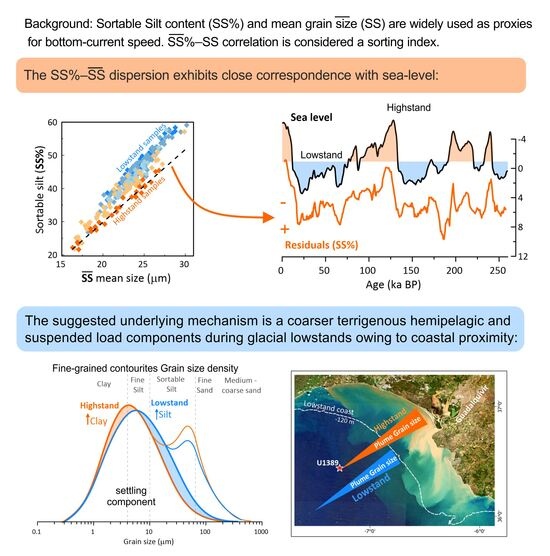
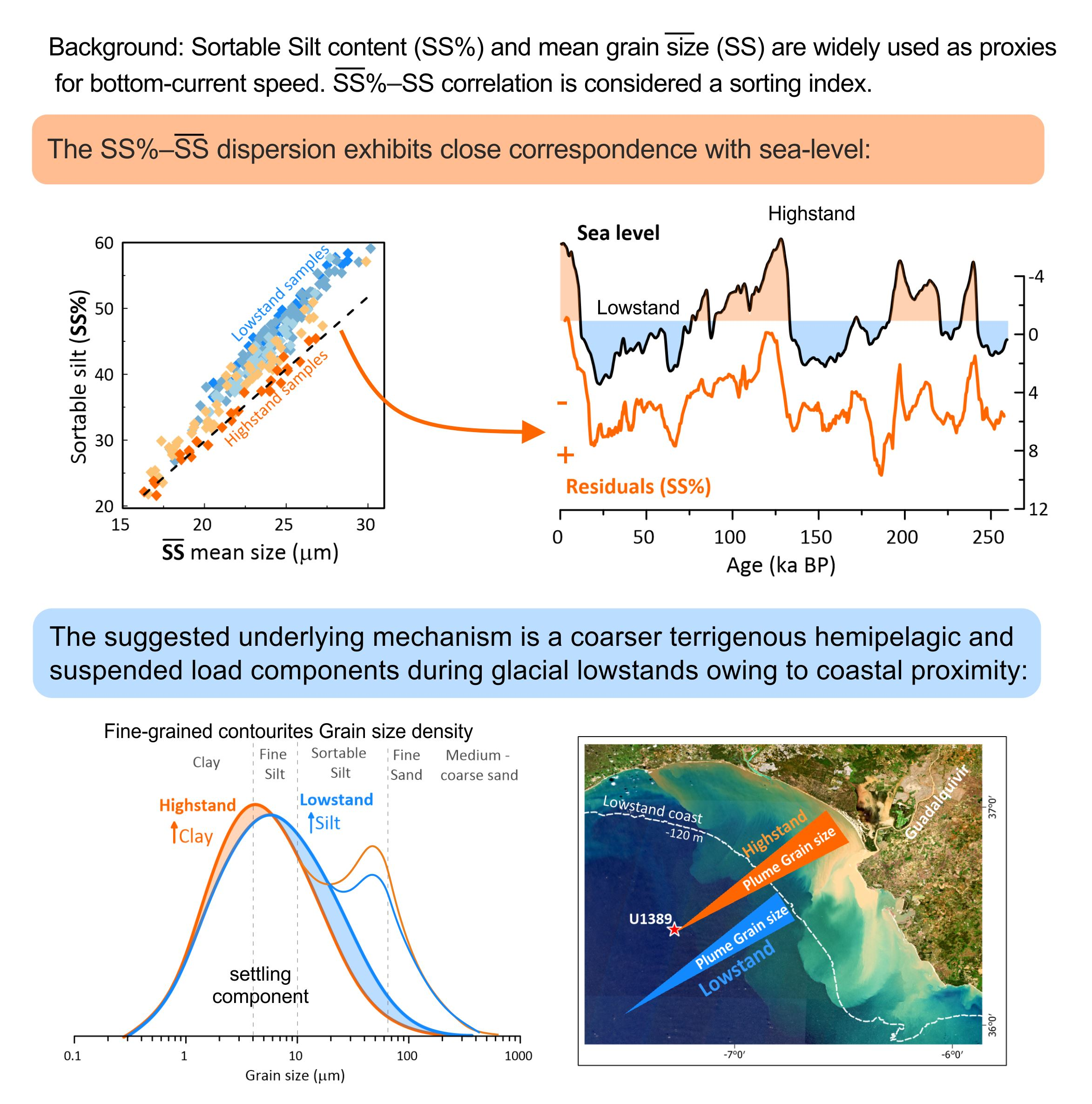
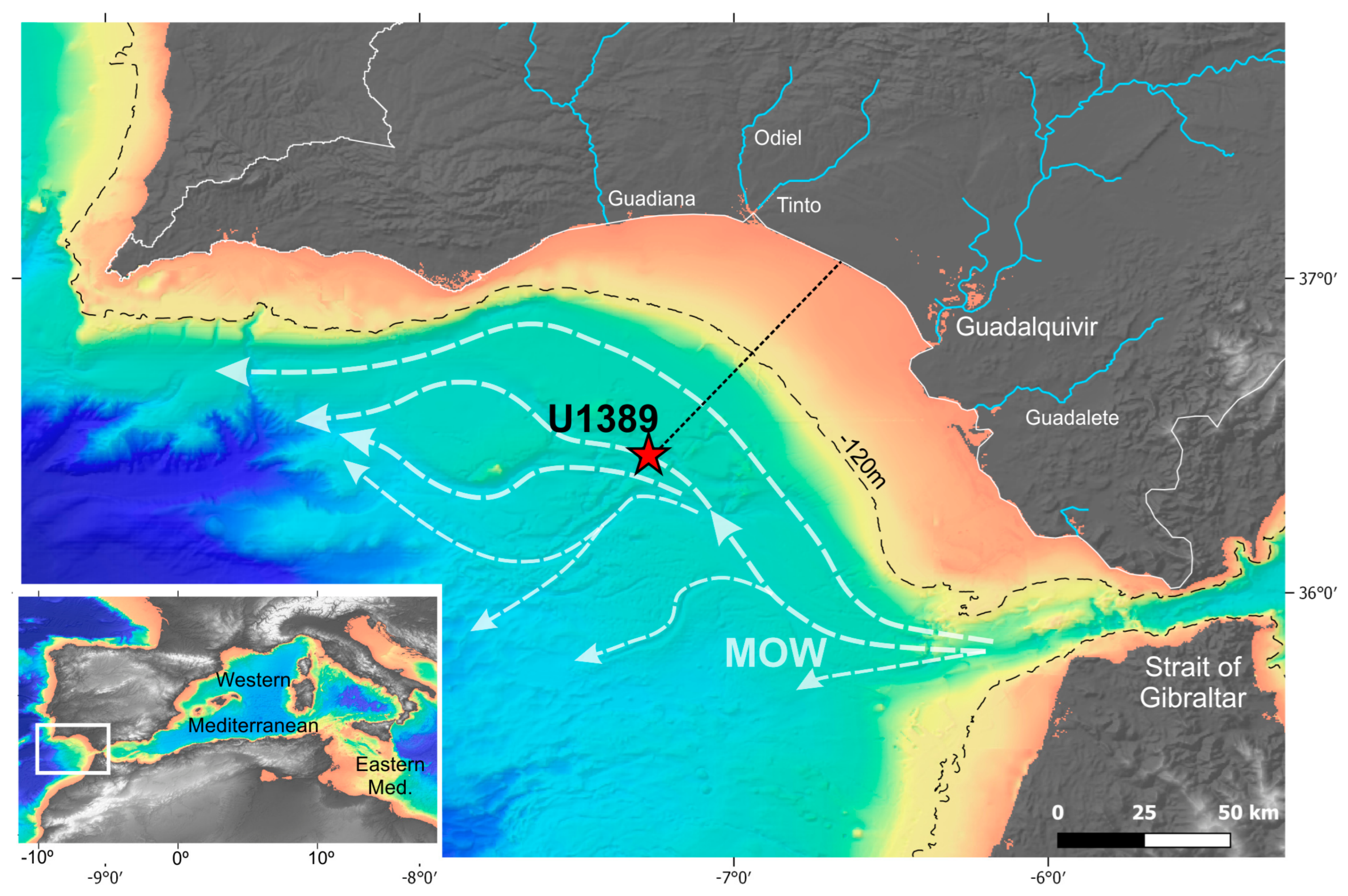
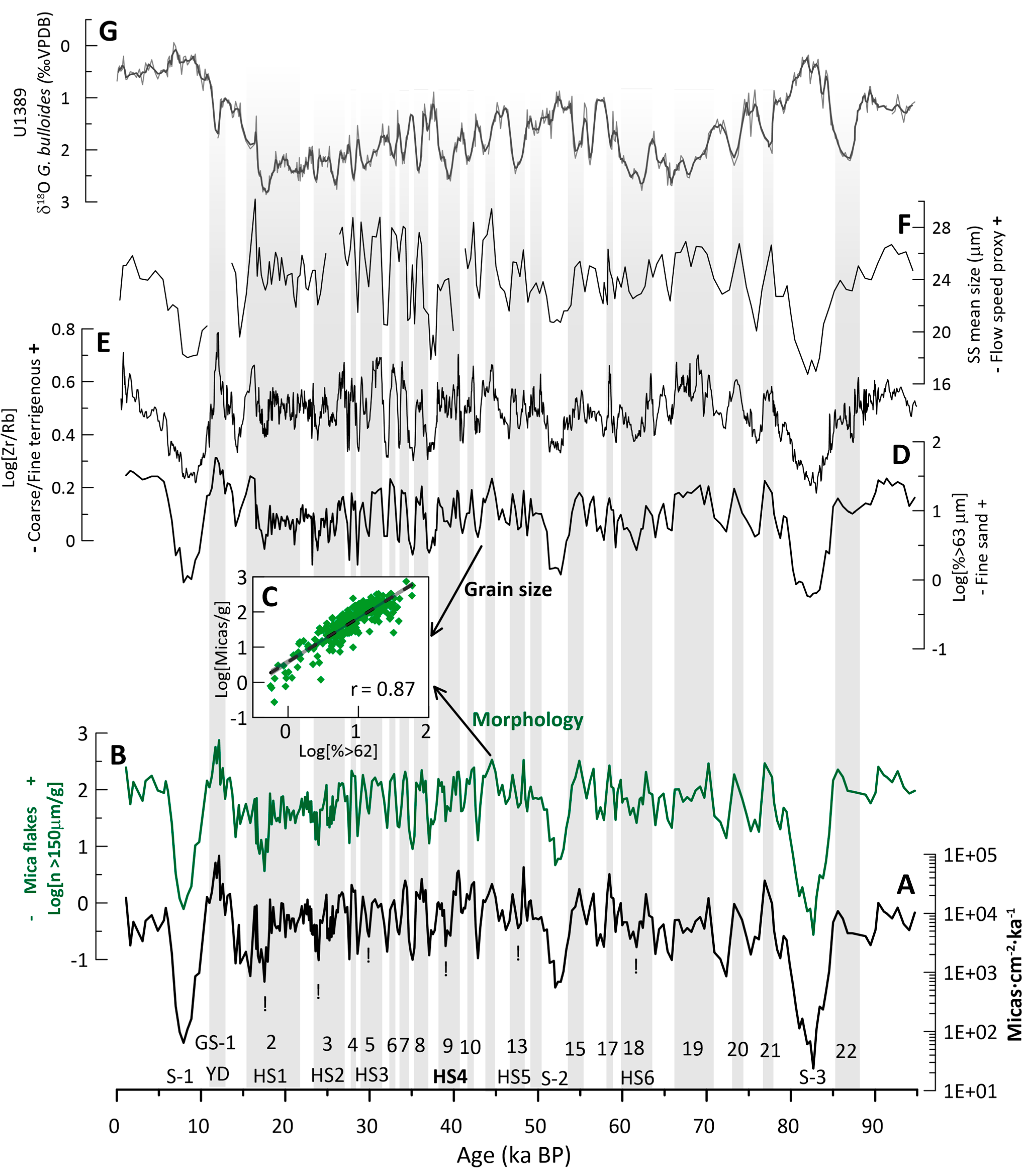
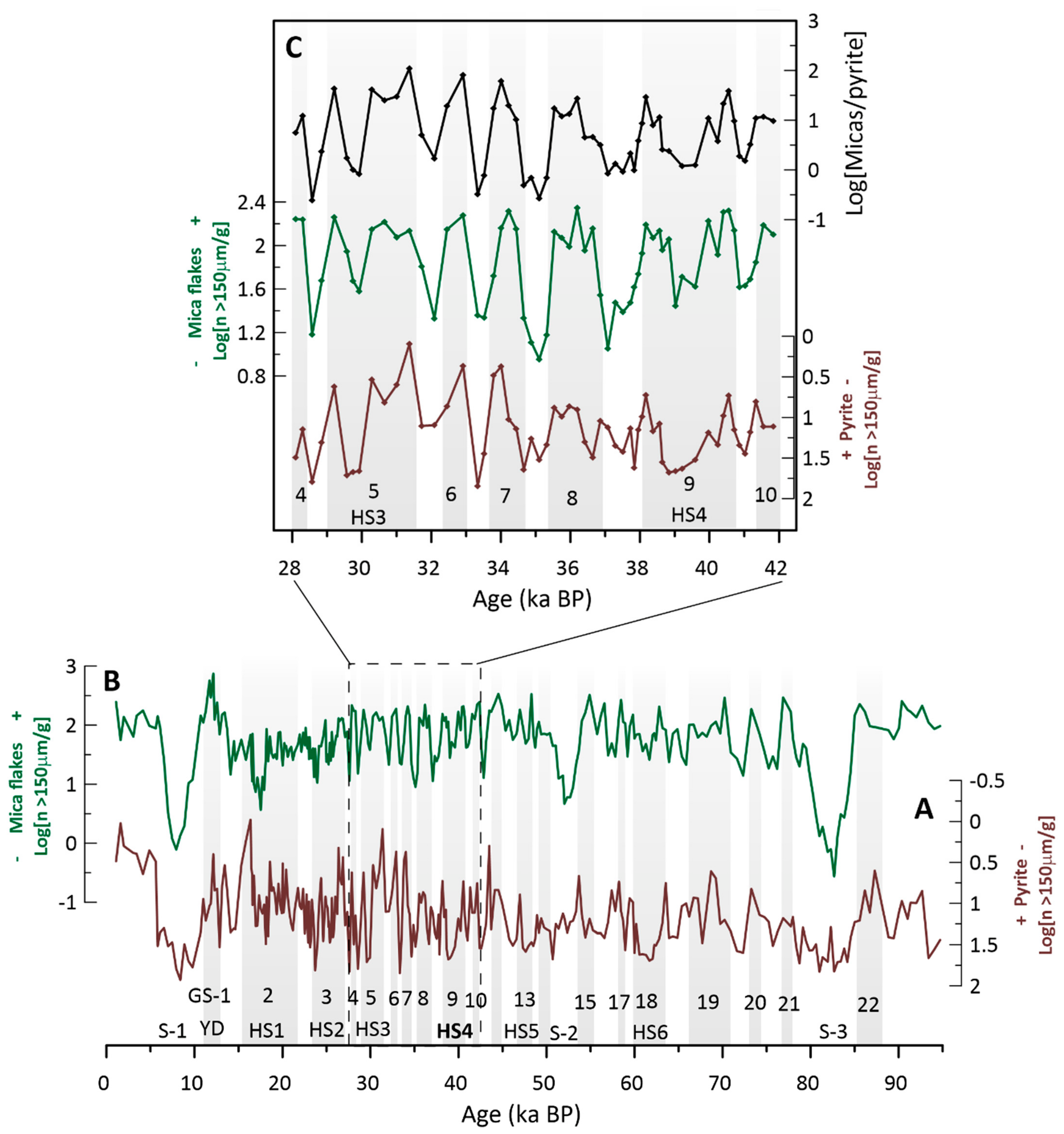
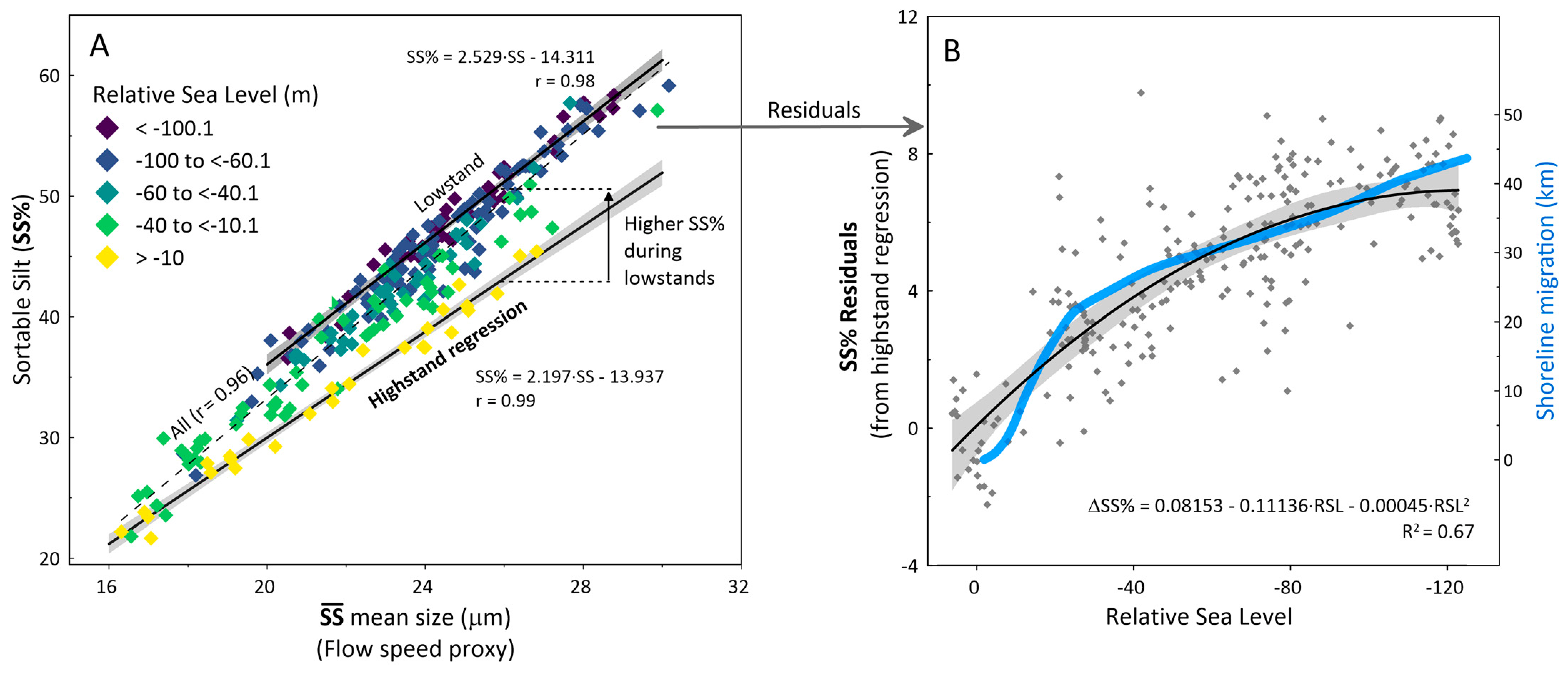
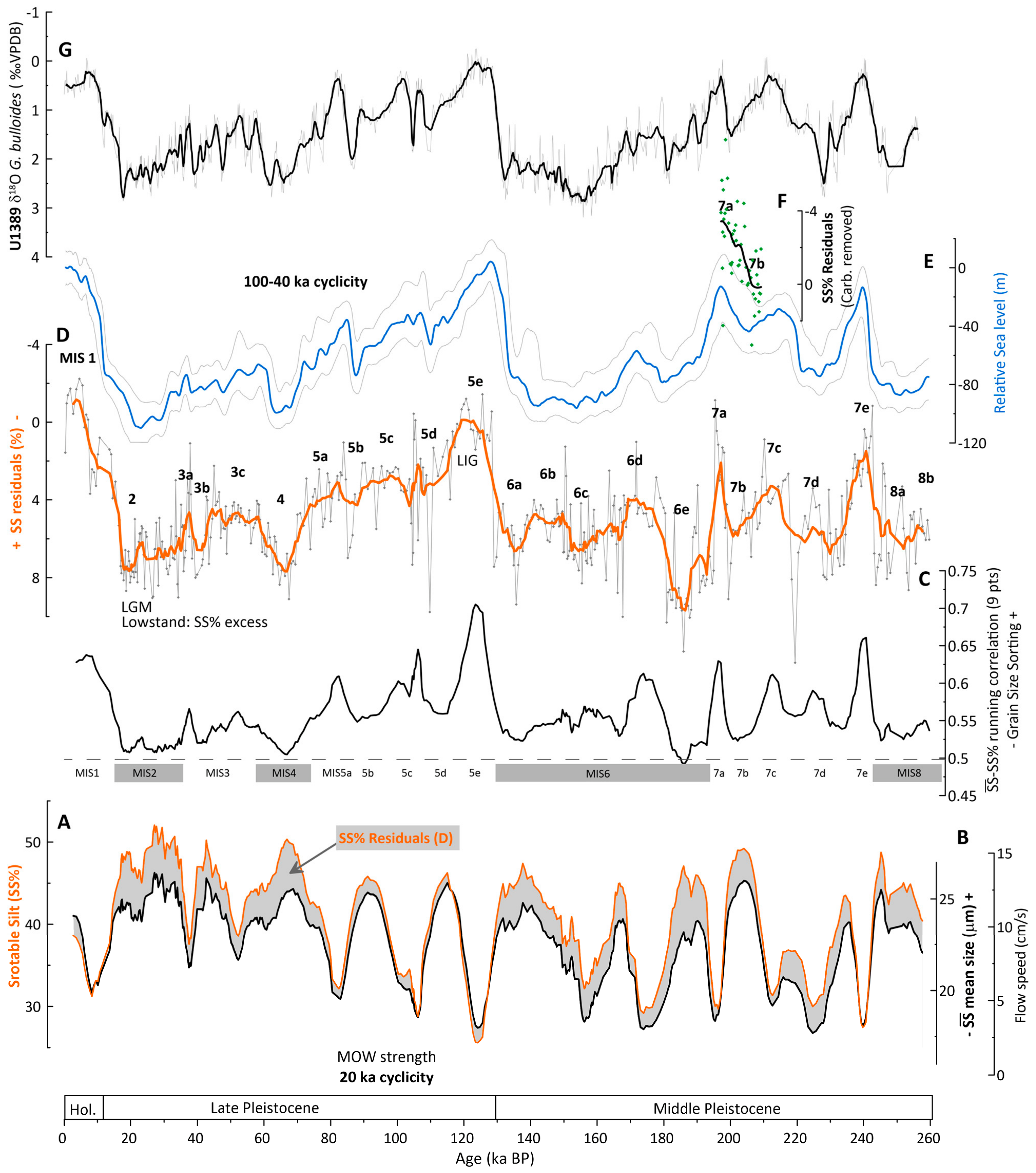
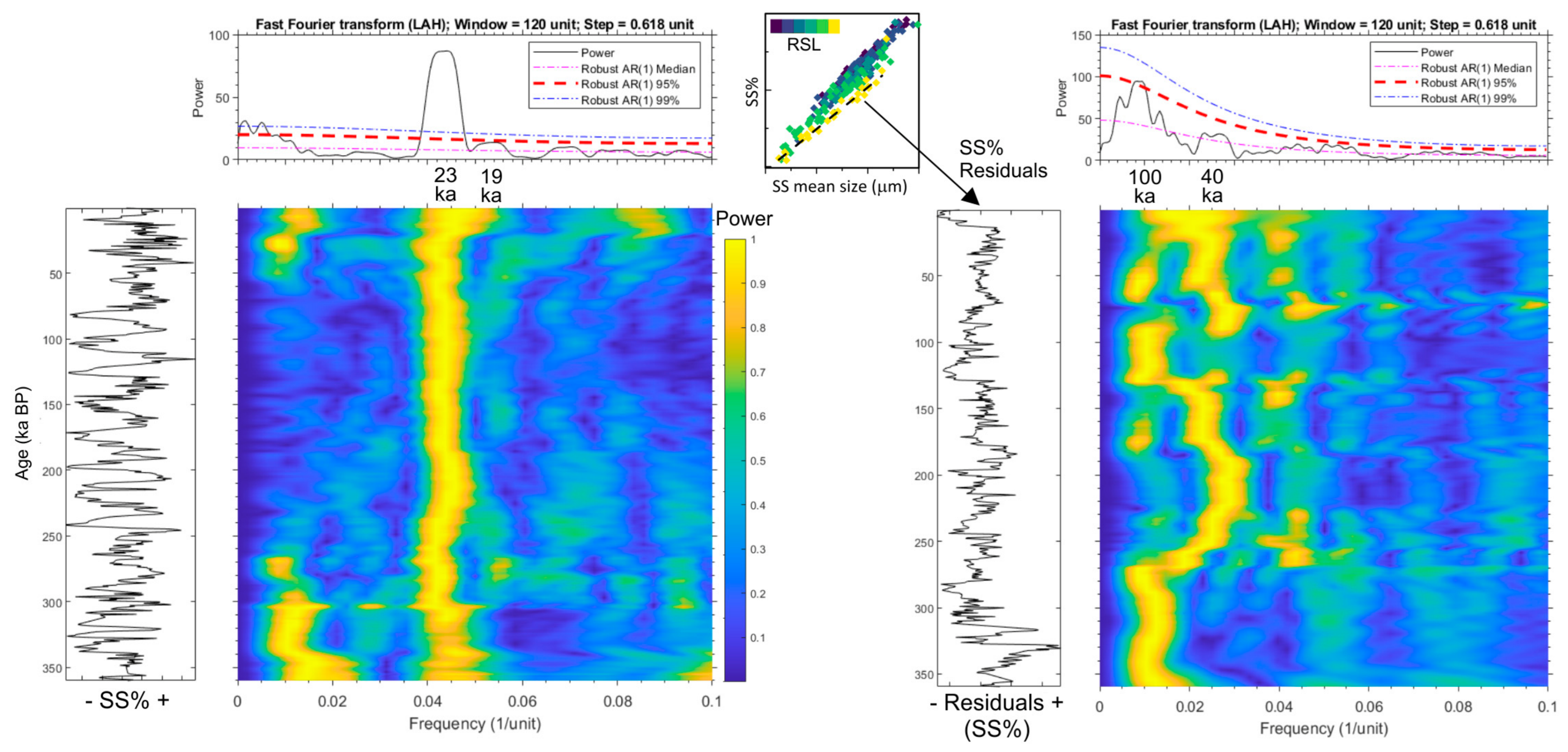
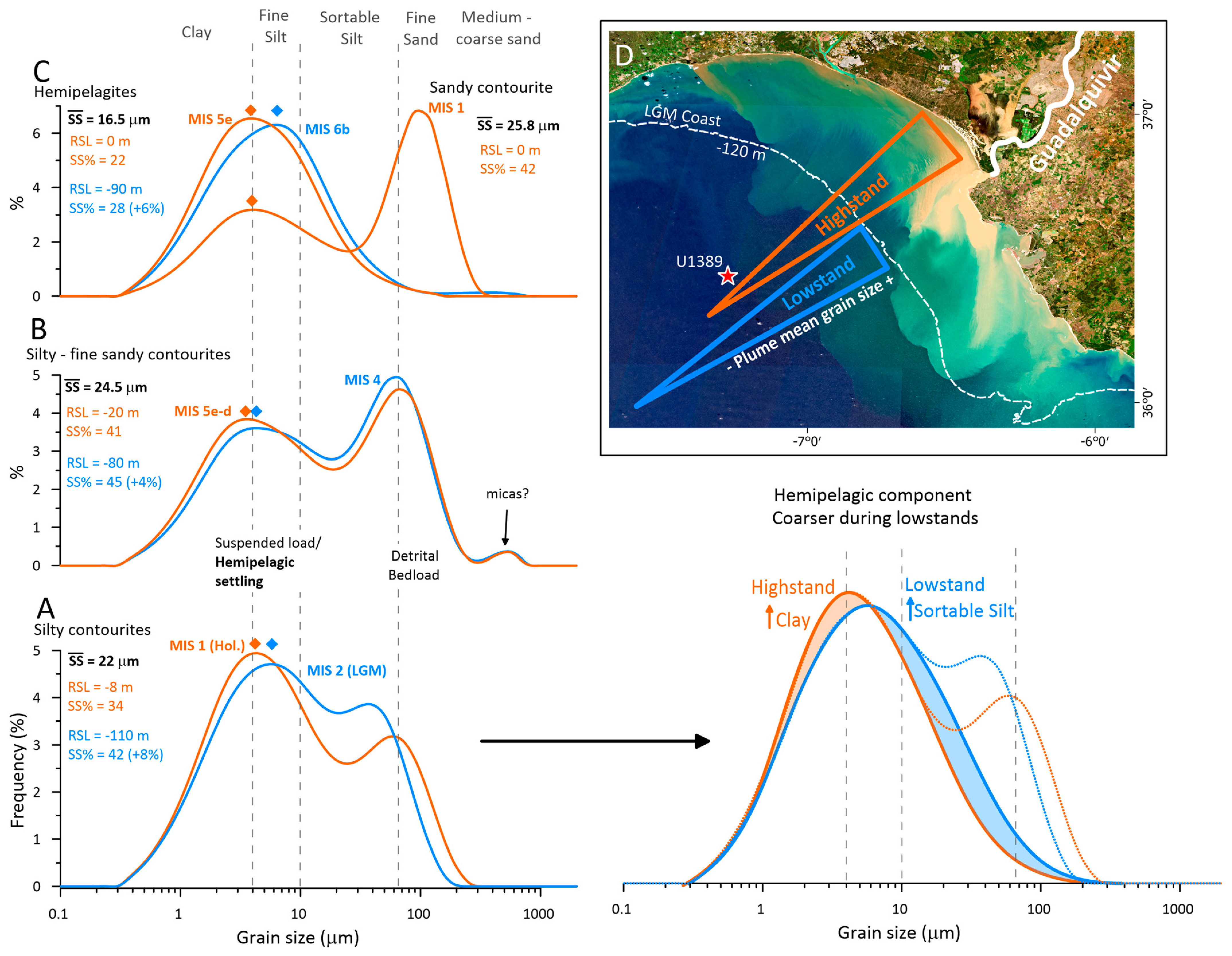
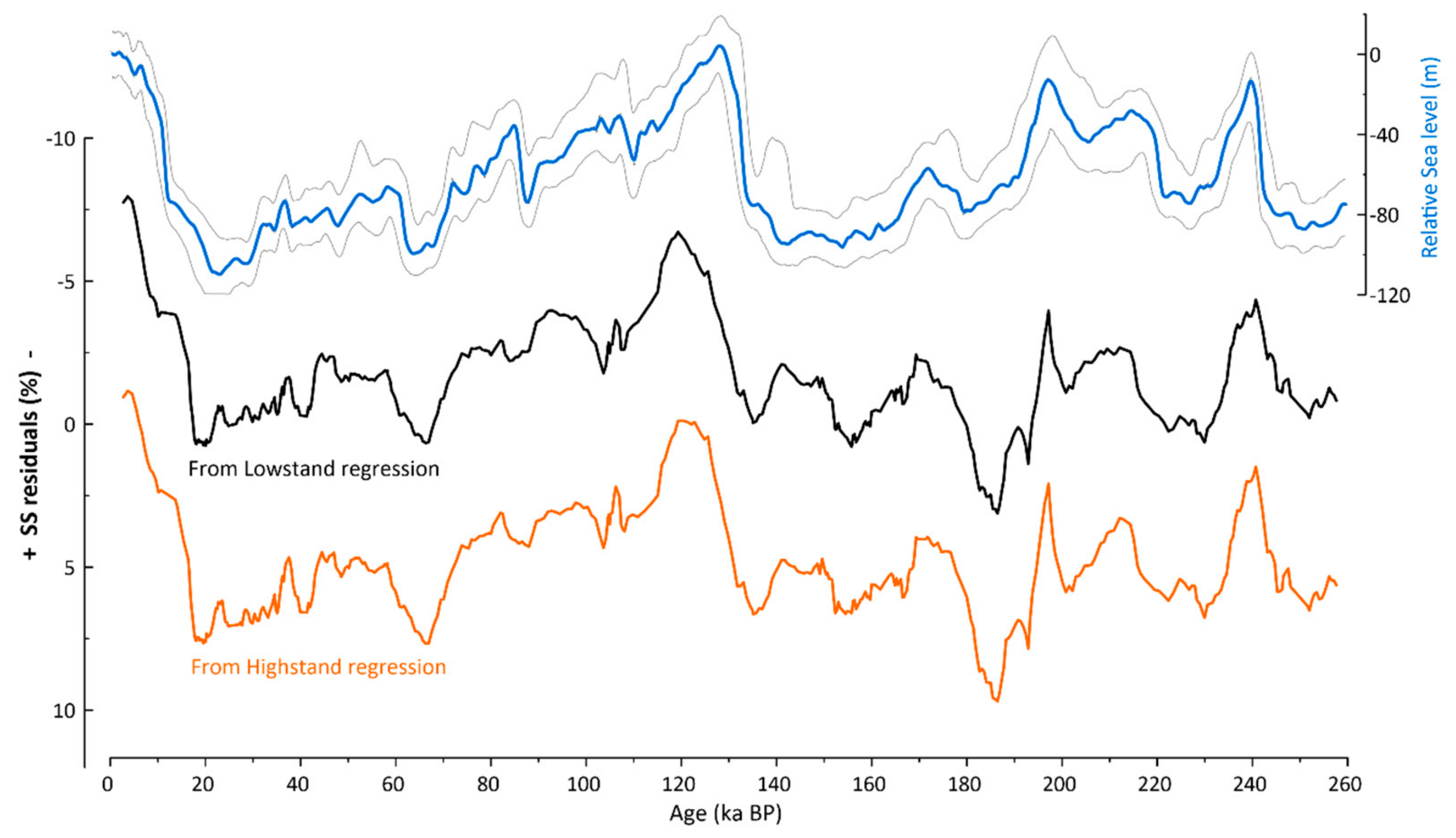
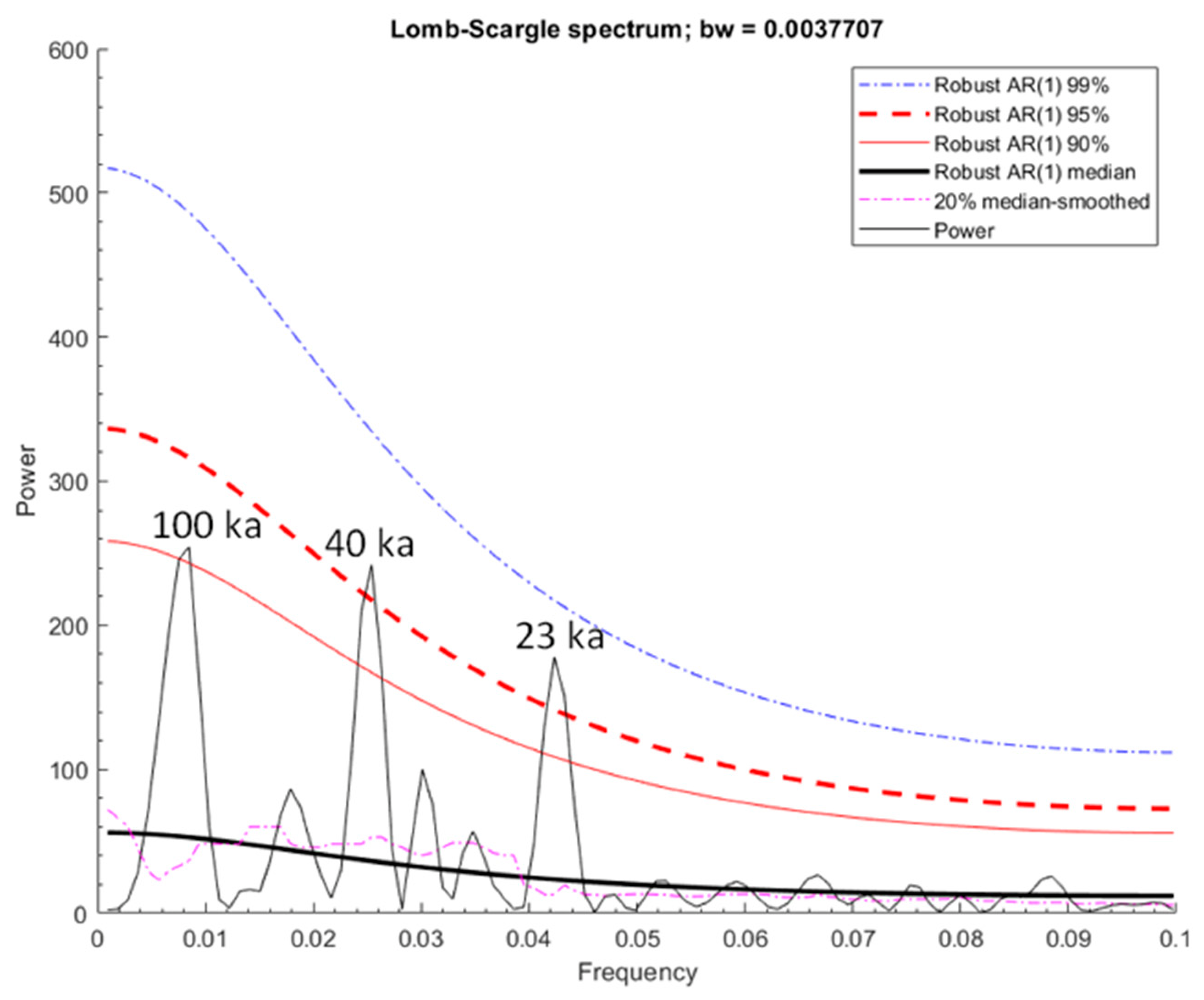
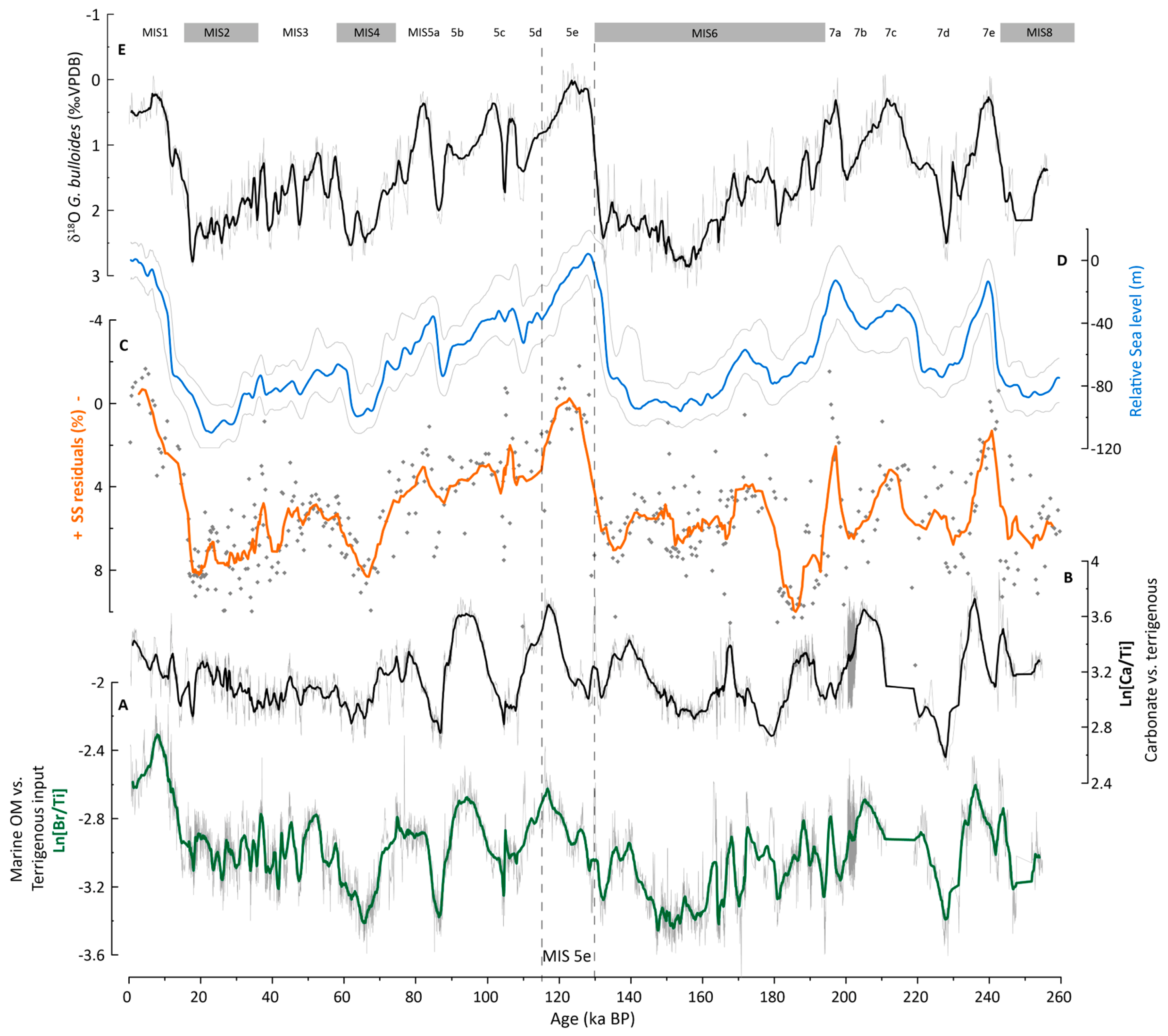
Contourite activity in the Gulf of Cadiz (GoC) is dominated by the precession-driven, ~20 ka cyclicity of the Mediterranean circulation and Mediterranean Outflow Water (MOW). Grain size distributions in contourites are strongly influenced by bottom current speed and are therefore widely used in the GoC to trace past MOW strength changes. However, the influence of sea level changes, driven by the expansion and retreat of ice sheets following the “100 ka world”, is superimposed to some extent through variations in terrigenous sediment supply. Despite the numerous high-resolution proxy records of MOW strength, the influence of glacial–interglacial relative sea level (RSL) changes on these records remains unclear. By analyzing the correlation between sortable silt grain size parameters at IODP U1389, we isolated the grain size variability that is not controlled by bottom current (MOW) sorting. This residual grain size variability closely follows the RSL curves and accounts for the higher sortable silt content observed during RSL lowstands. We suggest that the RSL-induced shoreline proximity contributes to a coarser terrigenous hemipelagic/suspended load component in contourites, increasing silt content. Furthermore, we present novel outflow proxy records based on the specific mineral components by using mica (allogenic) and pyrite (authigenic) counts.
Keywords: continental slope; contourites; sediment plumes; glacial–interglacial changes; IODP U1389; sediment supply continental slope; contourites; sediment plumes; glacial–interglacial changes; IODP U1389; sediment supply
Graphical Abstract