
Article

Late Quaternary Evolution and Internal Structure of an Insular Semi-Enclosed Embayment, Kalloni Gulf, Greece

by
Panagiotis Karsiotis
,
Thomas Hasiotis
,
Ivan Theophilos Petsimeris
,
Evangelia Manoutsoglou
* and
Olympos Andreadis
Department of Marine Sciences, University of the Aegean, 81100 Mytilene, Lesvos, Greece
*
Author to whom correspondence should be addressed.
Quaternary 2025, 8(4), 74; https://doi.org/10.3390/quat8040074
Submission received: 3 October 2025 / Revised: 28 November 2025 / Accepted: 5 December 2025 / Published: 11 December 2025

Abstract

This study provides a comprehensive investigation of the sedimentary and tectonic evolution of Kalloni Gulf, a land-locked island embayment in the Northeast Aegean Sea. Information from a high-resolution seismic dataset was used to investigate the Late Quaternary seismic stratigraphy and internal structure of this shallow embayment. Four main seismic units were observed, bound by three key reflectors corresponding to main unconformities. The seismic units are related to periods of sea-level highstand and marine transgression, as well as to lowstand and marine regressions, dating back to the MIS 6 period. The chronostratigraphic framework of the observed units was based on previous work in the wider area and on global sea-level curves. In addition, information was gained regarding the hydrographic network of Kalloni Gulf, before the Holocene gulf flooding as well as during the Late Quaternary. The study also managed to identify faults and fault zones, which are distributed mainly along the southern and eastern margins of the gulf affecting both the gulf entrance physiography and the paleo-terrain of the eastern margin. With regard to specific structural features the fault zones are considered as strike-slip zones with an almost NNE-SSW orientation. These might be the submarine extension of the Aghia Paraskevi dextral strike-slip fault found onshore that dissects Lesvos, which is considered one of the main geohazards for the island. The results of the study are relevant not only for the reconstruction of the regional Quaternary geology, but also for broader research on Late Pleistocene-Holocene environmental change and tectonic-geodynamic processes in the wider northern Aegean Sea region.

1. Introduction

Sea level has fluctuated through geological time, leading to inland movement of the shoreline during transgression periods and exposing the submerged seafloor above sea level, during regression periods [1,2,3,4]. These fluctuations have been the result of eustatic sea level changes and plate tectonics movements, affecting the ocean basin’s geometry. During the earlier geological periods the main driving force that affected sea level was plate tectonics-induced changes [5]. Nevertheless, during the Quaternary, which is a period characterized by significant variations in global temperature, the main driving force that controlled the global sea level was the periodic exchange of mass between terrestrial ice sheets and oceans accompanied with thermal expansion of the ocean water during warm (interglacial) periods. In general, during ice ages, regression and sea level lowstands occur, whilst during interglacial periods, transgression and sea level highstands occur, affected, however, by regional subsidence or uplift [5,6,7].
Marine Isotope Stages (MIS), deduced from variations in the δ18O proxy, describe alternating warm (interglacial) and cool (glacial) periods of Earth’s paleoclimate and have been widely used in many research papers, often in combination with seismic data to investigate the temporal stratigraphy of marine environments and to correlate seismic units with transgressive and regressive periods, i.e., [8,9,10,11,12,13]. Paleoclimate records from open sea areas provide important information on sea-level changes, sediment supply, and atmospheric conditions during different MIS, offering valuable insights for the study of paleoceanography and past environmental conditions [14]. However, this becomes more complicated when approaching the high-energy shallower shelf, and coastal environments, where the hydrodynamic regime affects sediment distribution and accumulation patterns [15], especially during transgression and sea-level high-stand periods. In contrast, in shallow, semi-enclosed environments the hydrodynamic regime is weak, thus depositional sequences are better preserved. Yet, the observed sedimentary facies depend on local conditions such as physiography and tectonics, sediment supply, hydrodynamics, the gradient of the coastal plains, and the presence of potential sills at the entrance of the enclosed environments that may alter the response to sea-level oscillations. In general, if the semi-enclosed environment is associated with high sediment supply from discharging rivers, then thicker sedimentary sequences may develop and preserved. On the other hand, if riverine fluxes stem from small rivers and ephemeral streams, then smaller depositional sequences are expected to develop.
This study uses a dataset of high-resolution seismic profiles from Kalloni Gulf (Lesvos Island), a land-locked embayment in the Northeast Aegean Sea (Figure 1), in order to investigate sedimentation and tectonic processes that controlled the Late Quaternary evolution of the gulf. Previous studies in the Northeast Aegean Sea [16] but also in Lesvos Island [17], which attempted to reconstruct Holocene relative sea-levels in the region, showed off the difficulties in the definition of a common sea-level curve due to the tectonically complex regime in the wider area that also affected sedimentation patterns. Concerning earlier geological times, the broader area had emerged during the glacial periods of middle to late Pleistocene with extensive drainage systems [18]. Within Kalloni Gulf, preceding studies revealed that the seafloor is populated by thousands of biogenic reefs of various dimensions and shapes, the presence of similar buried features in various stratigraphic levels within the Holocene marine transgressive sedimentary sequence and an underlying erosional surface with a well-developed drainage network that was subaerially exposed before ~9700 years BP and progressively flooded [19]. Here, an effort is made to identify and characterize seismic units and bounding key stratigraphic surfaces deeper within the sedimentary column in order to examine the imprints of sea level fluctuations from the late Pleistocene onwards. This study also examines whether active tectonics have affected the Late Quaternary sedimentary sequences and whether the main structural features of the island extend into Kalloni Gulf.

2. Study Area

Lesvos island is shaped by two shallow land-locked embayments, Gera Gulf to the southeast and Kalloni Gulf to the south. Kalloni Gulf (Figure 1) is actually a drowned Pleistocene river valley that was invaded by the sea during the Holocene transgression. The gulf has a NE-SW orientation, a length of approximately 20 km and an average width of 7 km, covering a total area of about 110 km2. In the southwestern part the gulf communicates with the Aegean Sea through a narrow strait, being 4 km long and 2 km wide. The mean depth to the northeast and shallower part is 10 m, towards the southwestern part is 20 m, whereas the depth reaches 30 m inside the narrow strait. The northern part of the gulf consists of steep rocky coasts, whereas in the southern part rocky shores that transition to pebble and sandy beaches are observed [22].
From a geological perspective Lesvos Island comprises of pre-Alpine, Alpine and post-Alpine formations. Kalloni Gulf lies in the middle of the island separating it into two distinct segments (Figure 1C). The northern and western parts of the island are characterized by Lower Miocene lavas and pyroclastic rocks onlapping the Permo-Triassic metamorphic basement, as well as Quaternary deposits (mainly conglomerates and fluvial deposits) [23]. The southern and eastern parts of the island consists of clastic metasedimentary rocks (schists, phyllites, metapsammites) intercalated with marbles, marble breccias, dolomites, ultramafic rocks, as well as ophiolites that form a tectonic nappe surrounding the tectonic window of Mount Olympos [24]. The previous volcanic activity is also manifested by the existence of thermal springs scattered all over the island [25].
Lesvos Island is located at the Northeastern Aegean Sea, a geodynamically complex area, exhibiting NNE-SSW extension with minor WNW-ESE compression resulting in transtensional tectonics [26]. The geodynamic structure of the wider area is affected by two major tectonic systems, the North Anatolian Fault Zone and the West Anatolia Graben Systems [27]. These two tectonic systems create a fault network comprising dextral NE-SW strike-slip faults and WNW-ESE normal faults (Figure 1B), as also indicated by the distribution of focal mechanisms [20,21,28] and geodetic studies [29,30].
Lesvos active tectonics are demonstrated both by the local seismicity [31] and the onshore and surrounding offshore morphotectonic structures (Figure 1B). The offshore structures have been thoroughly studied by Nomikou et al. [28,32], who mapped (i) Lesvos Basin to the south, a half-graben structure bounded by WNW-ESE normal faults (Figure 1B), that is disrupted eastwards by a narrow channel created by two sub-parallel, high-angle, NW-SE strike-slip faults, (ii) three small basins to the northwest, confined by faults of a WNW-ESE orientation, representing pull-apart structures of the strike-slip fault zone between the Edremit and Skyros faults, which are both major structural elements, characterized by high seismicity and hazard potential [33,34].
Onshore, several major and smaller normal and strike-slip faults of various directions have been detected, some of them shaping the shoreline (i.e., Skala Eresos fault) or associated with geothermal fields (Polichnitos-Plomari fault zone) or controlling the shape of Gera Gulf [26,35,36] (Figure 1B). Yet, the main tectonic structure is the Aghia Paraskevi dextral strike-slip fault, which runs across the central part of Lesvos bisecting the island. This fault zone has an NNE-SSW orientation, creates a series of elongated small onshore valleys in the center of Lesvos, and appears to control Kalloni Gulf [26]. The Aghia Paraskevi fault is associated with the large 1867 magnitude 6.8 earthquake [31] which caused extensive damage and fatalities in the central and eastern villages and the capital city (Mytilene) of the island, as well as surface rupturing, liquefaction and mass movements [37]. The distribution of the last decades’ earthquake epicenters of the fault indicates a possible submarine extension at least along Kalloni Gulf, although this extension has not been mapped or surveyed yet. Seismic hazard assessments for Lesvos have also demonstrated the dominant effect of the Aghia Paraskevi fault in the central part of the island [38].

3. Materials and Methods

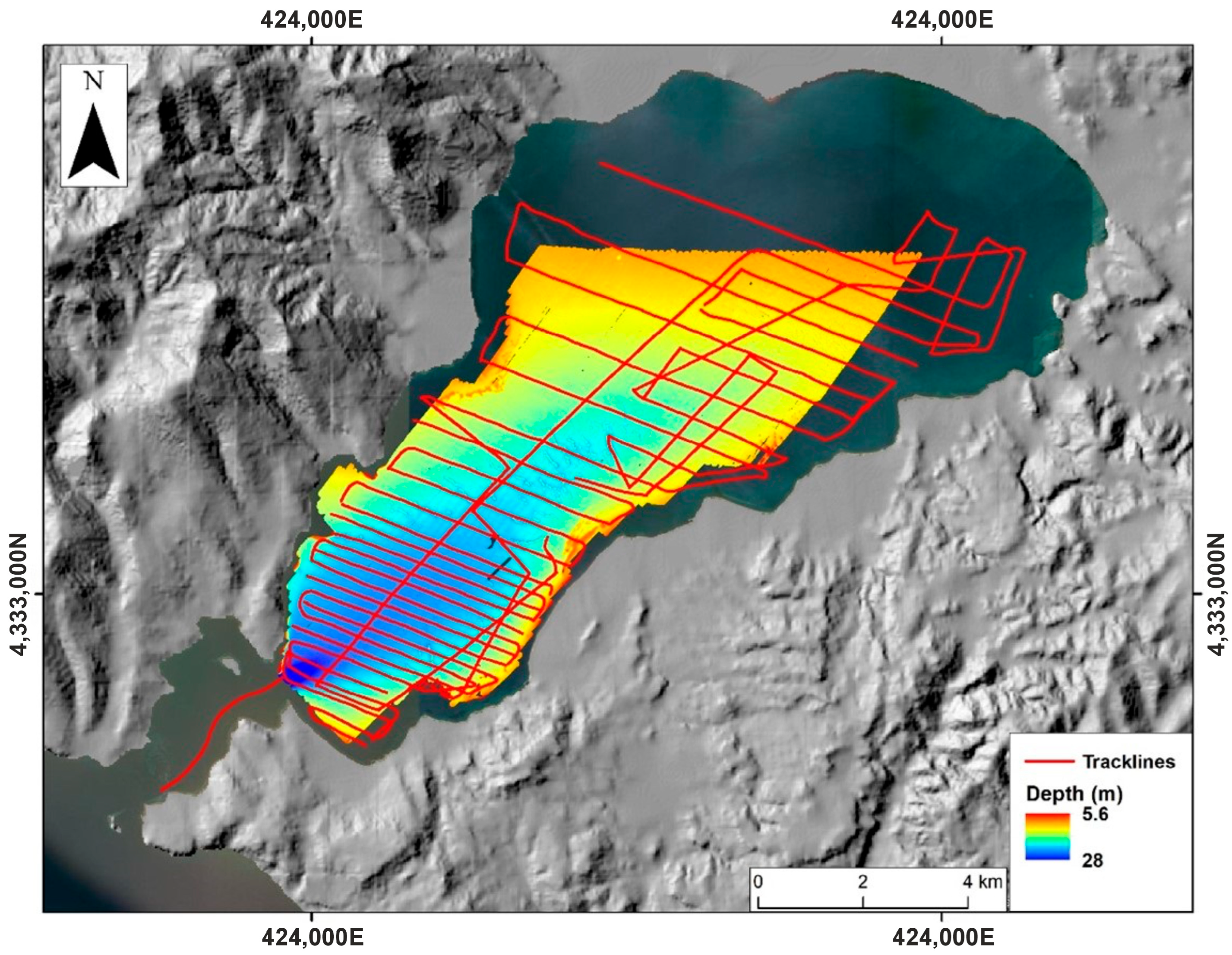
Seismic data were collected in 2024 using a high-resolution Applied Acoustics (UK) boomer subbottom profiler, consisting of a CSP-D 700 Joules energy source, an AA251 Boomer plate mount on a CAT-200 catamaran, and a 12-element hydrophone, which were towed by the R/V “Oceanis”. The boomer operated between 300 and 500 Joule, with a ping rate of 400 msec, a sampling rate of 10 kHz, an AD/V between 1 and 5 V and 200–250 msec record length. A TopCon RTK HiPer HR was used for positioning and time. A dense grid of survey lines was conducted and approximately 220 km of seismic profiles were acquired from the inside of Kalloni Gulf in depths greater than 10 m water depth (Figure 2). A single seismic profile was also acquired from only the deepest part of the narrow strait, that connects Kalloni Gulf with the open Aegean Sea, due to navigation constraints.
The seismic profiles were processed and analyzed in Sonarwiz 7.12. Data processing included bottom tracking, band-pass and swell filtering and gain adjustments. The interpretation of the 2D seismic sections involved picking and digitization of specific stratigraphic horizons, creation of key-seismic units’ isopachs and demarcation of the distribution of faults and buried erosional surfaces. The mapped features (reflectors’ bathymetry and seismic units isopachs) were interpolated in QGIS 3.16 and maps were created in ArcGIS 10.4. Stratigraphic interpretation was based on the study of continuity, amplitude and configuration of the seismic reflections and on the identification of seismic units based on seismic stratigraphic principles of Mitchum et al. [39], Van Wagoner et al. [40], Mitchum and Van Wagoner [41] and Catuneanu et al. [42]. Yet, the absence of long sediment cores or coastal boreholes that could be correlated with and verify the stratigraphic interpretation raised difficulties in characterizing/dating the observed seismic units.
Figure 2. Boomer survey lines and high-resolution bathymetric map of Kalloni Gulf, as derived by MBES (from [43]).
Quaternary 08 00074 g002
Bathymetric data previously collected from Kalloni Gulf with a Teledyne Reson SeaBat T20-R Multibeam echosounder (MBES) were also used to assess the seafloor morphology (Figure 2) through a 1 m pixel-size grid [43]. The hillshade of the Digital Elevation Model (DEM) of Lesvos Island (30 m cell-size, from Hellenic Data Service) and the hydrographic network of Kalloni Gulf (Figure 1C) were used for the understanding of the geomorphology of the gulf’s surrounding region and for correlating terrestrial and marine structures.

4. Results

4.1. Seismic Units and Bounding Key Reflectors

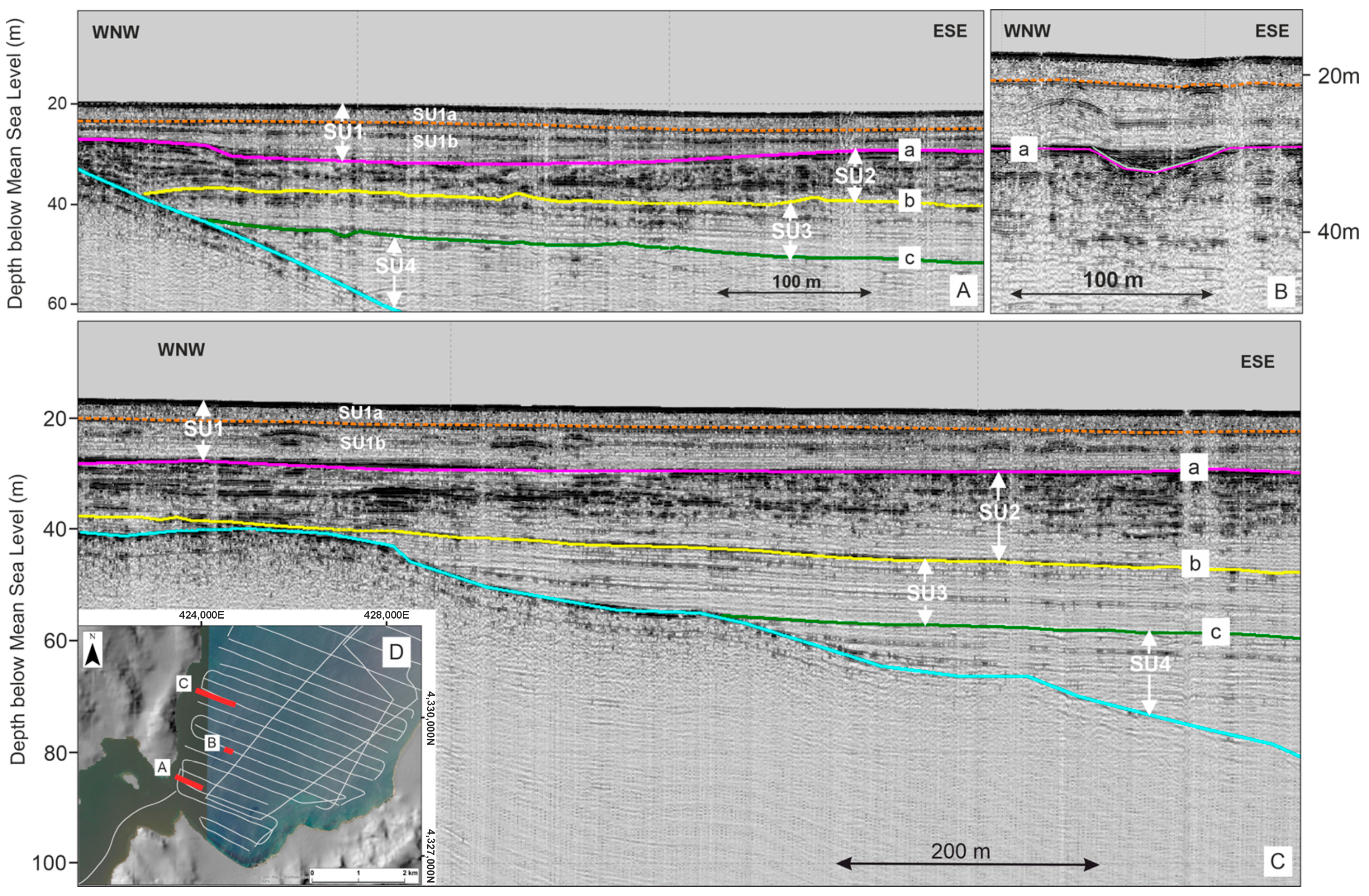
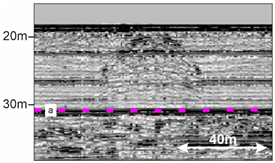
The interpretation of the seismic profiles resulted in the distinction (i) of four seismic units (SU) and the acoustic basement, based on the seismic reflection configuration and the internal architecture, and (ii) of three bounding key reflectors (R) corresponding to erosional unconformities (Table 1 and Figure 3). The key reflectors were better distinguished and digitized towards the strait, in the southwestern part of the gulf, where they terminate with a clear toplap geometry over the acoustic basement (Figure 3A).
Seismic Unit 1 (SU1) is the uppermost reflection package that is bounded between the seafloor and Reflector a (R-a, lower boundary) and can be subdivided into two sub-units. SU1a corresponds to a surficial semi-transparent layer with a sharp and continuous bottom echo that is locally mounded. It resembles an almost homogeneous fine-grained sedimentary layer, and hosts several oyster reefs up to ~5 m. SU1a is underlain by SU1b, which consists of low-amplitude continuous, parallel, internal reflectors, intercalated with two medium-amplitude, parallel, well-stratified reflectors, suggesting alternations between finer and coarser (or more compacted) sediments. A major characteristic of SU1b is the presence of several internal hummocky-chaotic mounded features of varying relief, at different stratigraphic levels that are related to buried biogenic reefs [19]. These reefs appear all along the surveyed area, displaying, however, higher relief (up to ~8 m) toward the central and deeper part of the gulf. Manoutsoglou et al. [19] dated these subunits in Kalloni Gulf based on high resolution profiles acoustic character similarities and radiocarbon dating information from the neighboring semi-enclosed Gera Gulf [44]. Thus, SU1a is related to the Holocene highstand, whilst SU1b corresponds to the Holocene transgression during which the observed oyster reefs started to thrive. R-a constitutes a distinct unconformity, appearing as a continuous, thick and high-amplitude layer, with rugged and irregular morphology, at a depth range between 10 m and 35 m. R-a corresponds, accordingly, to an erosional surface that flooded during the last Holocene transgression.
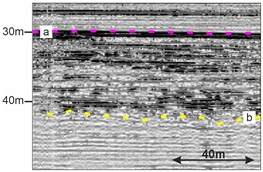
Seismic Unit 2 (SU2) lies below SU1, and is restricted by R-a (at the top) and Reflector b (R-b, lower boundary). SU2 is characterized by continuous and discontinuous, high-amplitude reflectors, locally (near the top) forming a V or U-shaped internal shapes or transitioning to low/medium-amplitude reflectors and small lenses of chaotic acoustic appearance. Internal hyperbolas are observed at several stratigraphic levels, as well as smaller and larger erosional surfaces at the top of this seismic unit. Based on the reflection patterns and following standard seismic stratigraphic principles and interpretations [39,40,41,42], these acoustic returns generally suggest coarser and more compacted sediments, occasionally alternating with some discontinuous layers of relatively finer sediments and locally channelized scours and lensed deposits of mixed material. Towards the central and southern part of the gulf, the SU2 basal reflections (above R-b), appear to be lower in amplitude and parallel, differentiated from the overlying reflections, having a maximum thickness less than 6 m. SU2 can be correlated with older stratigraphic sequences deposited during relative sea-level drops when the gulf was isolated from the open Aegean Sea and terrestrial sedimentation processes prevailed. The irregular morphology of R-a, at the top of SU2, in combination with the shape of the underlying reflectors, gives evidence of the paleo-drainage network of the gulf and of erosional processes prevailing towards the paleo-strait (Figure 3A,B). R-b, at the base of SU2, returns a medium-amplitude reflection of irregular morphology consistent with another distinct unconformity that has a depth range between 17 m and 72 m. Therefore, R-b corresponds to the earliest surface that was exposed during the last regression.
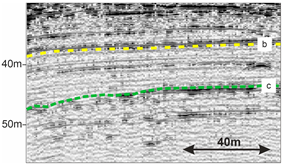
Seismic Unit 3 (SU3) lies below SU2, and it is restricted by R-b at the top and Reflector c (R-c) at the base. SU3 consists of low-amplitude, parallel and laterally continuous, well-stratified reflectors, indicating finer sediments and relatively stable sedimentation conditions (similarly to SU1) probably during a period when the gulf was invaded by the sea. In the bottom half of this seismic unit, two internal, higher-amplitude, continuous, parallel reflectors are observed, as well as some occasional hyperbolas, suggesting locally coarser or more compacted sediments. R-c is the lower bounding unconformity that appears as a continuous, high-amplitude reflector of rugged morphology with occasional hyperbolas and a depth range between 29 m and 89 m.
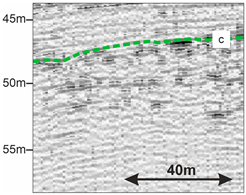
Seismic Unit 4 (SU4) is the lowermost SU observed in the seismic sections, lying below R-c. The basal reflector of SU4 could not be determined due to multiple reflections and the boomer system penetration limit. SU4 is characterized by medium to high-amplitude, parallel to sub-parallel, and locally chaotic reflections intercalating with hyperbolas in various stratigraphic levels, indicating coarser and more compacted sediments and locally episodic sedimentation conditions, similarly to SU2. Thus, SU4 is most likely correlated to a period of a lower sea-level, therefore, R-c corresponds to a flooded erosional surface, which, in contrast with SU2 and R-a, did not present sharp erosional features, that could be related to a buried paleo-hydrographic network.
At the southern margins of the gulf, as well as at the eastern margins in the center of the gulf, the acoustic basement appears (Figure 3C). It is characterized by a high amplitude and strong, almost continuous reflector, locally rugged and displaying several hyperbolic reflections, disappearing towards deeper sedimentary successions (due to acoustic penetration limit). The acoustic basement reflector is often followed by a few strong, almost conformable reflectors.
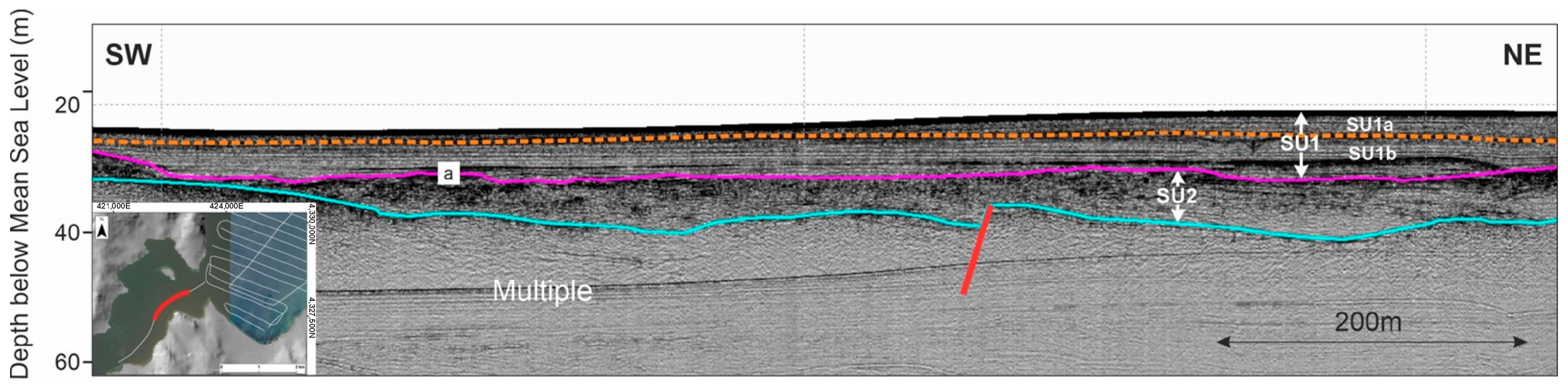
Along the strait in the southwestern part of Kalloni Gulf, the acoustic basement, R-a and occasionally R-b were distinguished, whereas R-c could not be delineated (Figure 4). Both R-a and R-b appeared as sharp erosional surfaces, with distinct irregularities, more evident than those within the gulf, separating SU1 and SU2. The reduced thickness of these units is likely due to the increased current velocities in the strait that enhance erosion and change the deposition patterns. Subunits SU1a and SU1b were also discerned, with SU1a characteristically thinning out. This thinning is consistent with intense modern erosional processes along the strait, likely enhanced by active water exchange, consistent with the circulation patterns described by Millet & Lamy [45]. Yet, other small-scale unconformities exist but the coarse nature of the sediments and the abundant side echoes due to intense rocky surrounding relief prevent a clear image of the stratigraphy. R-b and R-c close to the entrance of the strait are located at 36 m and 43 m under present sea-level, respectively, whilst the acoustic basement rises to about 31–32 m along the strait. However, it is very difficult to verify if this is the deepest point or shallower exposures exist due to the irregular seabed and navigational constraints that did not allow for more than one survey line.

4.2. Pre-Holocene Gulf Morphology

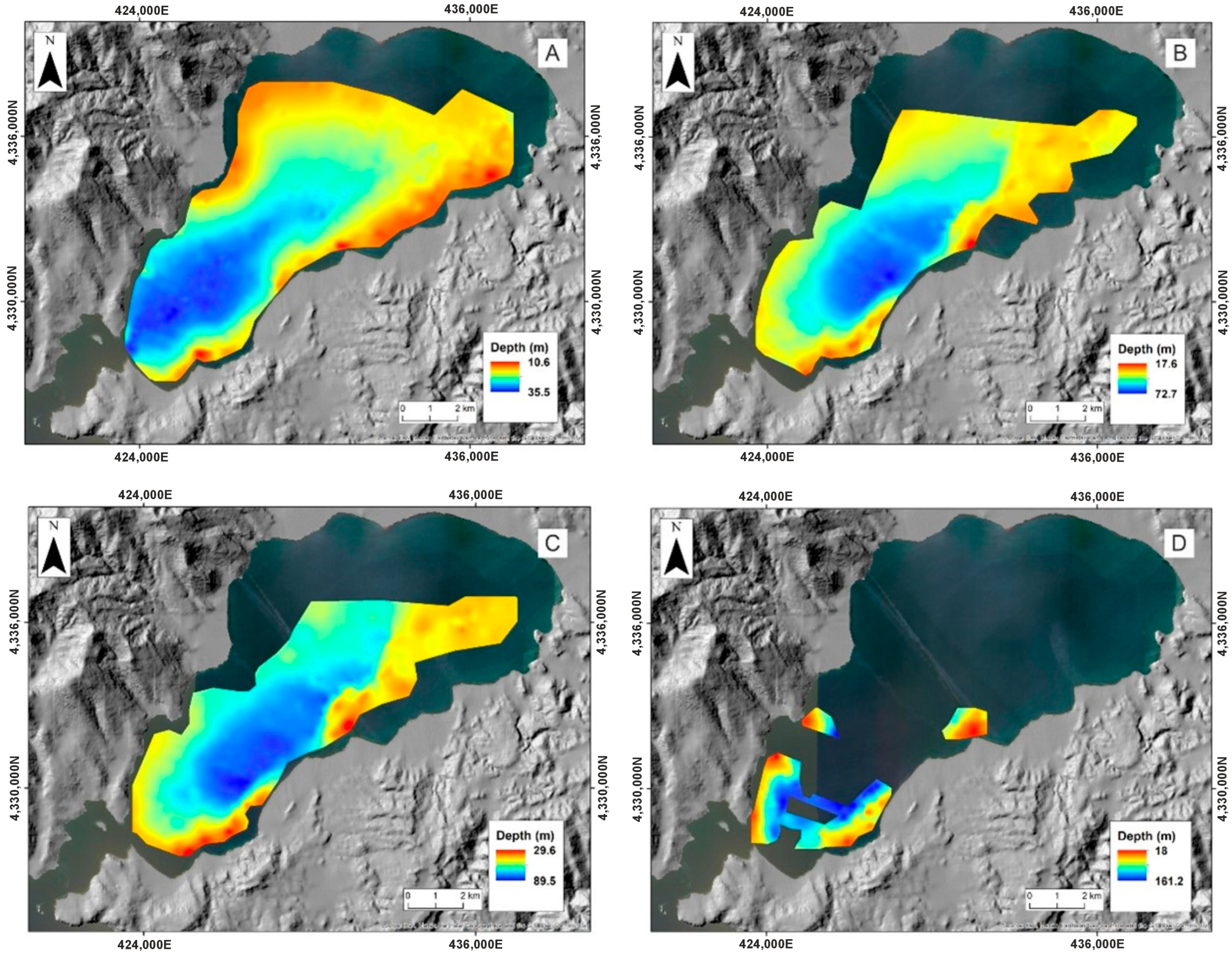
The depth maps of the key reflectors and of the acoustic basement, as described in Section 4.1, revealed the morphology of the Kalloni Gulf during earlier sea level lowstands and highstands. The depth map of R-a (Figure 5A) shows a bathymetric pattern similar to the current seafloor, namely a shallower, low inclination north-eastern part and a deeper, higher inclination, south-western part. Steeper slopes are observed in the southeastern and eastern parts of the gulf, compared to the western coasts, where the slopes are milder. At the south-western end of the gulf the paleo-strait is well-shaped and visible, and at the northeastern part of the gulf a distinct paleo-riverbed can be observed. Additionally, some lower-relief and smaller in length channels are also evident on the north and eastern margins of the gulf. The depth of this reflector ranges between 10 m (below mean sea level) close to the coastline and 35 m near the paleo-strait and in the center of the southern part of the gulf.
The depth map of R-b (Figure 5B) is characterized by a shallow part towards the northern coasts, a large shallow terrace to the northeast and a smaller shallow terrace in the south-southeastern part of the gulf. In the center of the gulf an extended depression can be observed. The slope of R-b is steeper towards the eastern parts of the gulf bounding the observed terraces, whereas milder slopes are detected towards the gulf’s western margins. The depth of R-b ranges between 17 m and 30 m near the coastline at the perimeter and the entrance of the gulf, while it noticeably deepens between 50 m and 72 m in the center of the gulf (along the depression). The extent of R-b is smaller than that of R-a, due to masking by multiple reflectors that obscure deeper sedimentary layers in shallower areas.
The depth map of R-c (Figure 5C) shows a surface morphology similar to R-b. The gulf during the shaping of R-c was shallower towards the north, with a large shallow terrace in the northeast and a smaller terrace in the southeast, both hosting small irregularities. The terraces seem to be incised by small, low-relief channels suggesting the presence of a paleo-drainage system, although sharp V or U-shaped features were not detected along this reflector. In the center of the gulf a large depression is clearly observed, matching the morphology of R-b and appearing to extend both to the northeast and southwest, forming small-scale pond-like features. The slope of this reflector is steeper towards the eastern parts of the gulf immediately below both terraces, whereas milder slopes are observed towards the western margins. The depth ranges between 70 and 89 m in the center of the gulf and from 29 to 45 m along the surrounding areas. Once again, the extent of R-c in Kalloni Gulf is smaller than that of R-a and R-b, due to penetrations limitations especially in the shallower areas.
The acoustic basement is visible only at the southern margins of the gulf, and locally at the eastern and western margins near the center of the gulf, adjacent to small rocky promontories (Figure 5D). It is characterized by steep slopes and a sharp deepening towards the center of the gulf. At the eastern margins the acoustic basement forms two shallow terraces, with the northern terrace appearing larger than the southern one. The depth where the acoustic basement is visible ranges between 18 m and 161 m (at the limit of seismic penetration). Although navigation constraints, along the narrow strait and shallow areas near the gulf entrance, limited the survey lines performed, the acoustic basement appeared to rise to a maximum depth of about 51 m along the strait, creating a sill that controlled water exchange between the gulf and the open Aegean Sea during the Late Quaternary.

4.3. SU Sediment Thickness

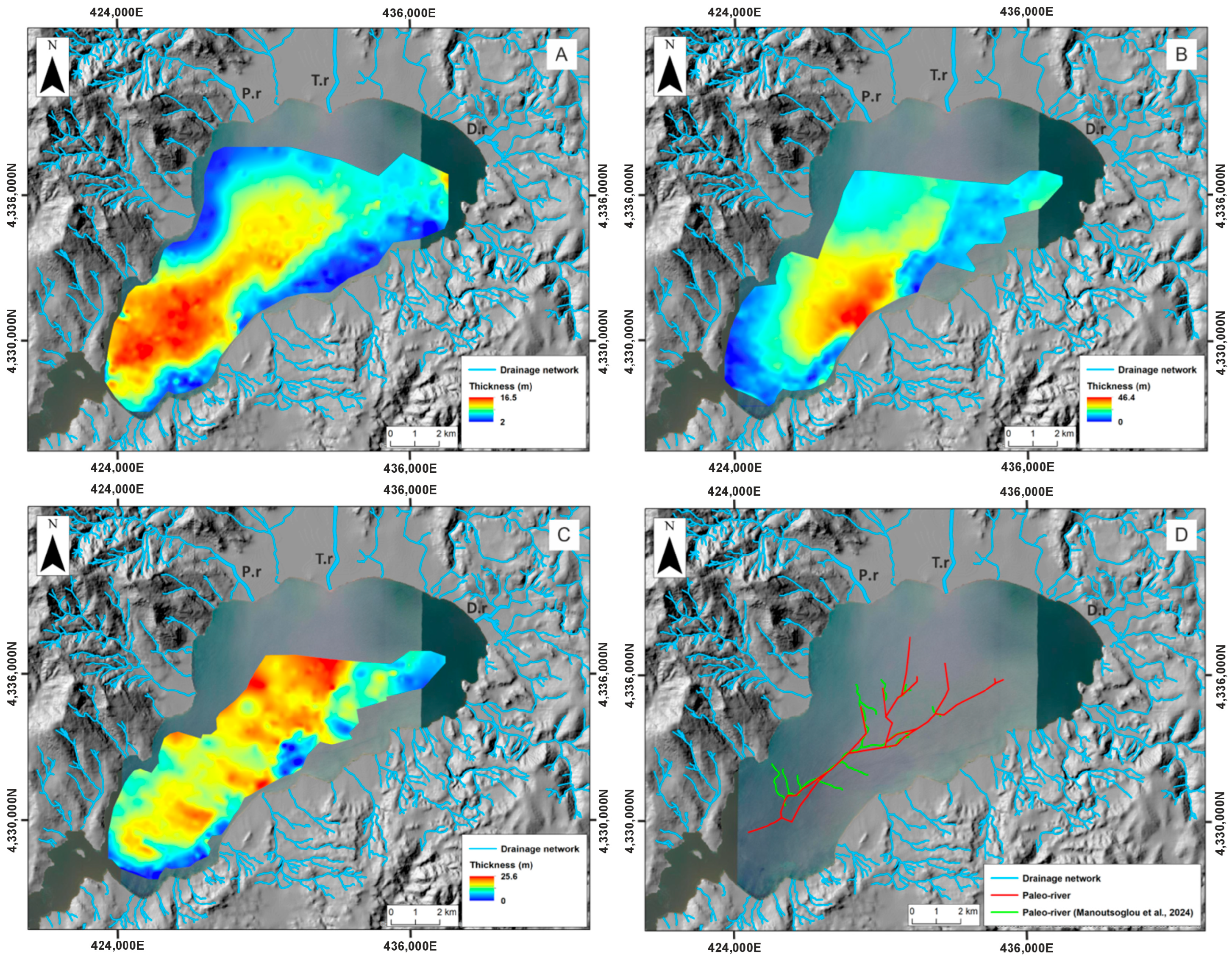
The sediments of SU1 (Figure 6A) appear to be thicker along the central axis of the gulf, following the shape of R-a, thickening southward and locally reaching 16 m. The margins of the gulf are covered by thinner sediments, with a thickness ranging between 2 and 7 m. The sediments of SU1 along the strait gradually thin out. At the northeast and northwest, two areas of thicker sediments are observed, seemingly connected to the central part of the gulf through a narrow channel of relatively thicker deposits. A thicker sediment layer is also observed along the eastern margin of the central gulf.
The thickness of SU2 (Figure 6B) closely follows the bathymetry of R-b. Thicker sediments are observed in the eastern part of the gulf’s center within the observed depression of R-b (reaching a maximum thickness of 46 m), while the thinnest sediments are observed in the northern parts and near the strait, where R-a and R-b converge over the acoustic basement. The two terraces identified in the depth map of R-b, are also covered by a thin layer of deposits.
The sediments of SU3 (Figure 6C) have a more irregular thickness distribution. They are generally thicker in the central axis of the gulf, particularly in its northern parts, reaching a thickness of 25 m. The margins of the gulf and the two terraces of R-c are covered by thinner deposits (1–10 m thick). However, the eastern margin in the center of the gulf, as well as the channel-like features observed on the two terraces of R-c, are covered by thicker sediments.
The mapping of the paleo-channels along R-a together with observations and correlations with the SU1 thickness enabled the reconstruction of the paleo-hydrographic network within Kalloni Gulf. A similar attempt was made by Manoutsoglou et al. [19], using a denser but more spatially limited parametric sub-bottom profiler dataset. The two attempts are highly correlated, and both are illustrated in Figure 6D, providing a clear representation of the riverine network that incised the paleo-landscape. The paleo-hydrographic network appears to consist of two large paleo-river branches, originating from north and northeast, and three smaller rivers all converging toward the center of the gulf.

4.4. Structural Features

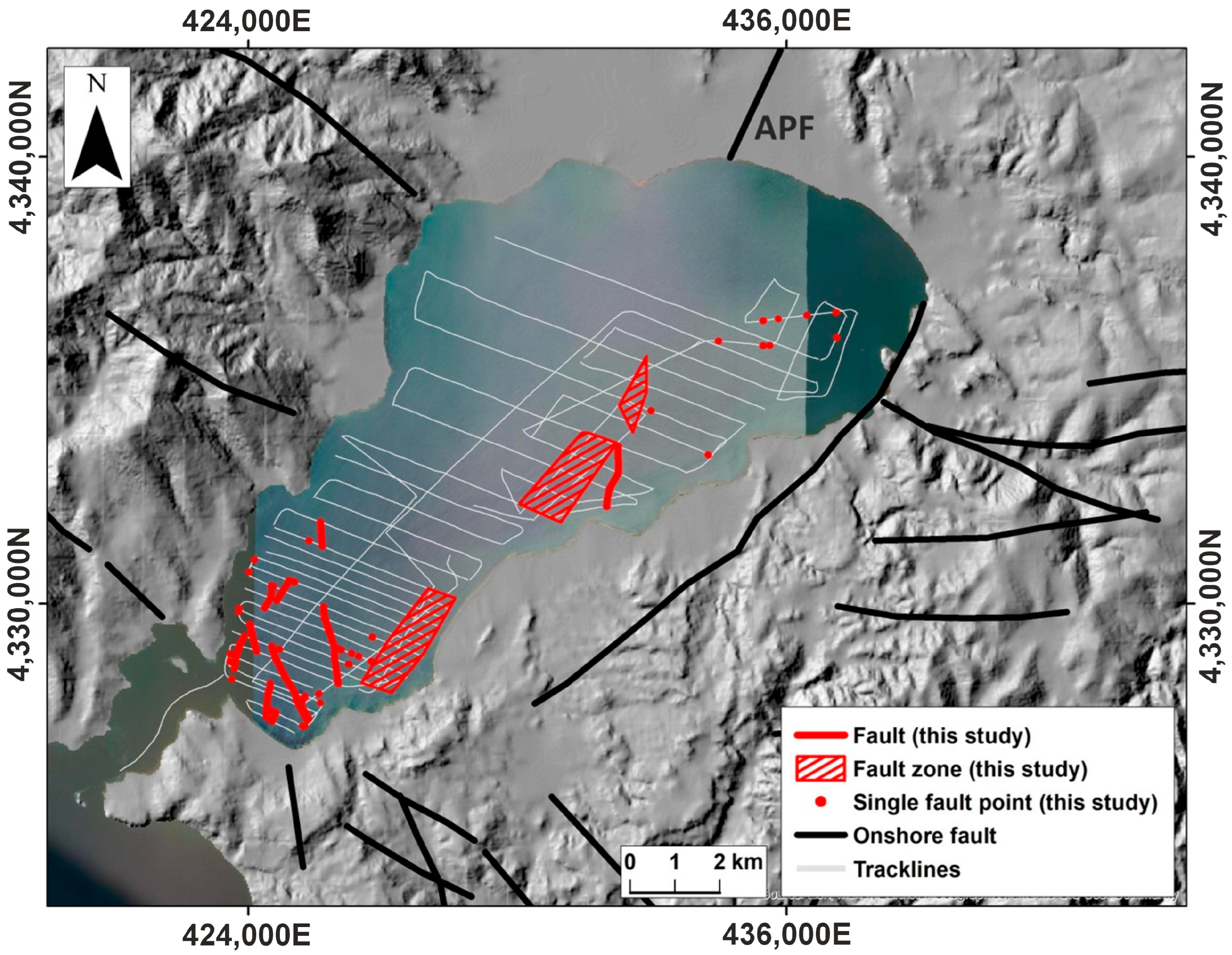
The faults and fault zones observed in Kalloni Gulf (Figure 7) give an insight into the tectonic processes that have controlled the morphology and structure of the aforementioned seismic units and key-reflectors.
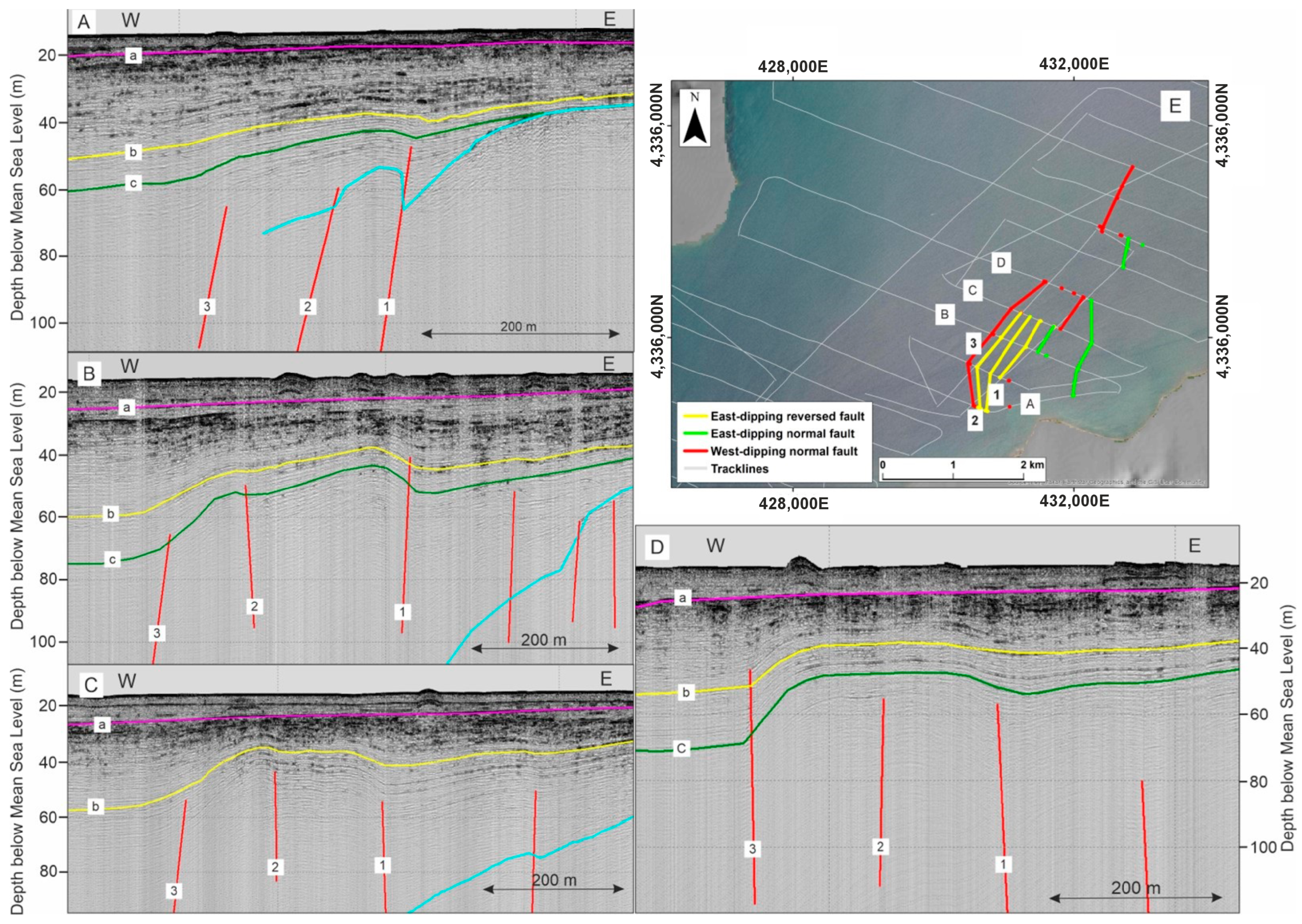
Faults were recognized and mapped by abrupt reflector terminations and vertical displacements, the curvature of reflectors, and hyperbolic reflections across the fault plane deeper in the sedimentary column (Figure 8 and Figure 9). All the observed faults are buried and they do not affect, or even flexure the seabed. Most of the faults are observed towards the eastern and southern margins of the gulf. In the southern part of the gulf normal faults dominate, controlling the shaping of the deeper seabed morphology. These faults are either NNE-SSW oriented and dip towards the gulf’s central axis, affecting primarilly the acoustic basement or NNW-SSE oriented, dipping towards the gulf’s entrance (southwest), affecting both R-b and R-c. In the eastern margin of Kalloni Gulf, where the two terraces of R-b and R-c are located (Figure 5), clusters of closely spaced faults are observed, forming three complex fault zones. They are comprised, mainly, by NE-SW to NNE-SSW oriented faults, dipping both towards southeast and northwest, and display normal and reverse separations. Some of the reverse faults in these fault zones seem to change progressively to normal faults in successive seismic sections, although dipping towards the same direction, whilst in few other faults even the dipping direction appears to change (Figure 8).
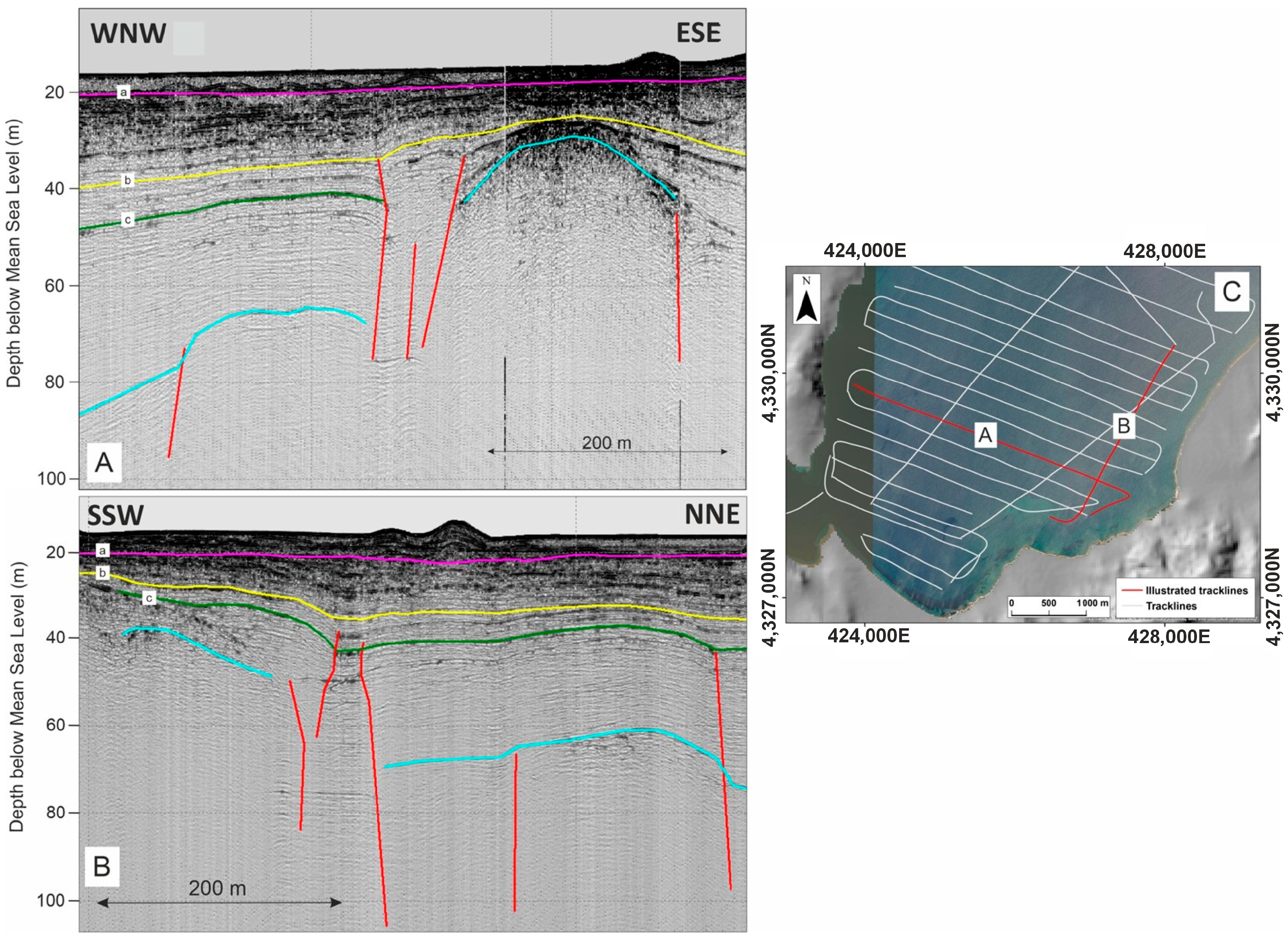
In addition, in some seismic sections along the southern fault zone, very narrowly spaced faults appear to slightly change their dip direction and/or to converge with depth, giving the impression that they could merge deeper in the sedimentary column, where the Boomer system has not managed to penetrate (Figure 9). This fault architecture could possibly indicate the presence of flower structures.
Some of the faults could not be associated with one another across successive seismic profiles and therefore are presented as single fault points (Figure 7).

5. Discussion

5.1. Stratigraphic Framework and Sea Level Changes

The key reflectors mapped in Kalloni Gulf, the seismic units observed and their isopachs provide significant information about the sedimentation conditions and the chrono-stratigraphic framework during their deposition.
SU1 is the most recent seismic unit, observed in Kalloni Gulf, and is correlated with the Holocene marine transgression and highstand. Previous research in the Kalloni and the neighboring Gera Gulf, using seismic data, as well as radiocarbon dating from cores collected from Gera Gulf [19,44], suggests that Holocene sedimentation processes show distinct similarities [43]. Based on these studies, the subunits SU1b and SU1a, which were distinguished in the present study correspond to the Holocene transgressive and highstand system tracts, respectively. The buried biogenic reefs reported by Manoutsoglou et al. [19] were also observed throughout the boomer-surveyed area, expanding the previously mapped terrain where these buried reefs are distributed. R-a, which is the bounding surface of SU1 and SU2, corresponds to the erosional surface that was flooded during the last transgression, which was dated by Manoutsoglou et al. [19] to around 9700 BP, based on the shallowest observed boundary of this unconformity inside the gulf’s strait (31 m) and the sea-level curves of Lambeck et al. [46]. The same unconformity, corresponding to key reflector R-a of this study, is also reported by Isler et al. [11], while reconstructing the chronostratigraphy of the Bababurnu Basin and the shelf of the Biga Peninsula (north of Lesvos Island), using seismic data and radiocarbon dating from sediment cores. This unconformity, in this comparatively deep environment (298 m water depth), was dated at around 14 ka, representing a time lag of around 4.3 ka compared with Kalloni Gulf and coinciding with the onset of rapid transgression after the last deglaciation [47] and with the MIS 2–1 boundary. All the underlying unconformities, their correlative conformities, and the depositional sequences were found to closely match the timing of glacial and interglacial episodes, as given by the global MIS curve [47], indicating that sea-level oscillations had a clear footprint on the sediment transport and deposition in the Northeast Aegean region. The proximity of the two environments (Kalloni Gulf and Bababurnu Basin and shelf of the Biga Peninsula) indicates that the imprints of the marine transgressions and regressions can probably also be observed in the semi-enclosed embayment of Kalloni Gulf and directly linked with the global MIS curves. However, a certain time lag should exist, as already observed from the indirect dating of R-a, due to differences in local physiography/topography (significantly shallower environment).
The local tectonism does not appear to affect the marine regressive and transgressive events in Kalloni Gulf, from R-c onwards, since faults observed disturbing the acoustic basement along and close to the Kalloni strait, did not affect R-c and the overlying seismic units. Although the absence of sediment cores/boreholes from Kalloni Gulf does not allow for the exact dating of the unconformities and depositional sequences, the maximum depth of the unconformities along/close to the strait, in combination with the sea-level curve of Bintanja et al. [48], provide an approximate timing for the observed SU deposition. The same sea-level curve was used by Yaltırak et al. [6] for calculating the tectonic subsidence rate in the neighboring Bababurnu Basin and on the shelf of the Biga Peninsula.
Therefore, it appears that SU2 most likely corresponds to a period between the MIS 5–4 (R-b) and MIS 2–1 (R-a) boundaries. The maximum depth of the unconformity of R-b close to the gulf’s strait has been found at 36 m below the present mean sea level, suggesting that SU2 deposition started around 77 ka BP [48,49]. During this period marine regression and sea-level lowstand took place, although the discrimination of corresponding depositional sequences was not possible. Sea-level fluctuations between MIS 4 and MIS 3 have probably not affected the gulf since they stand deeper than the Kalloni Gulf Strait relief. In the wider area to the north, Isler et al. [11] mapped the depositional sequence of MIS 3 as a thin, locally developed layer formed during a minor sea-level rise, when sea level reached 60 m below the present-day sea-level [50], well below the topography of the Kalloni strait. The subaerial exposure of the gulf during this time appears to have favored valley incision and channelized flows as also indicated by the irregular morphology of R-a, bounding the top of SU2, that hosts the paleo-hydrographic network, as well as the highly eroded surface of the paleo-strait (Figure 3A,B).
SU3, respectively, likely corresponds to the marine transgression and marine highstand between MIS 6–5 (R-c) and MIS 5–4 boundaries. The maximum depth of the unconformity of R-c close to the gulf’s strait was found at 43 m below present mean sea level, indicating that SU3 began to accumulate around 130 ka BP. SU3 has a similar acoustic character to SU1, although buried reefs were not detected within that unit. Therefore, the upper part of SU3 most likely corresponds to marine highstand and lower energy sedimentation processes, while the lower half of this unit (coarser sediments) may correspond either to a transgressive system tract or to the short-term regressive substages related to MIS 5db and MIS 5b.
Correspondingly, SU4 is probably associated with the marine regression and lowstand of MIS 6 and the initial stages of MIS 5, during which the gulf was, again, subaerially exposed and isolated from the open Aegean Sea and terrestrial sedimentation processes prevailed. The paleo-hydrographic network on top of SU4 was not distinct (except from the channels observed on the shallow terraces of R-c), probably due to the penetration limits and seismic attenuation of the Boomer system and the multiple reflections.
The key reflector depth maps and the SU thickness maps also provided insights into the paleo-relief of the gulf during the last two sea-level regressions and transgressions. The surface of R-a had a similar morphology to the seafloor, with the notable absence of reefs. This indicates relatively more stable marine sedimentation conditions and an even distribution of the deposits. The sediments overlie R-a conformably and accumulate primarily along the deeper, central axis of the gulf. Thicker deposits were also observed inside channels mapped on the top of SU2, which correspond to the main branches of the paleo-hydrographic system (towards the northeast and north, Figure 6D). By contrast, SU2 sediments accumulated mainly in the central part of Kalloni Gulf, filling the observed depression along R-b (Figure 5B).
The depth maps of R-b and R-c also have similar morphologies, suggesting relatively stable marine sedimentation conditions within this semi-enclosed environment. However, SU3 deposits have an irregular distribution, mainly due to thick sediment layers accumulated inside the channels observed on top of the two terraces of R-c, as well as sediments deposited in the depression directly below these channels. Some of these channels can be correlated with the present hydrographic network discharging in the gulf (Figure 6C), suggesting relatively increased fluvial sediment supply during MIS 6, which also shaped the paleo-drainage system. The most important morphological feature of R-c is the large depression in the eastern margin at the center of the gulf. Galanidou et al. [51] reported evidence of a still fresh-water body close to the present shoreline of Kalloni Gulf, suggesting the formation of a paleo-lake. Although the seismic data from the present study do not provide definitive evidence for the existence of a paleo-lake, the large central depression could have acted as a drainage basin. This, combined with the increased precipitation reported during the transition to MIS 5 [52], further supports at least temporary flooding of the depression and the potential formation of a paleo-lake. Elevated SU3 thickness to the north (Figure 6C) may also suggest increased riverine inputs from the northernly derived watersheds of Potamia and Tsiknias rivers during that period.
The acoustic basement is visible only on the southern and eastern margins of Kalloni Gulf. In the eastern margin of the gulf the acoustic basement is significantly uplifted, forming a large, buried, ruptured tectonic terrace, while in the southwest entrance of the gulf it is uplifted again, creating a buried sill on which R-c onlaps. On the western part of the gulf entrance, R-b also onlaps the acoustic basement, indicating that the paleo-strait during MIS 5 was relatively narrow and likely located towards the eastern part of the entrance. Inside the gulf but close to the strait, the sediments form only a thin layer above the acoustic basement, probably due to increased current velocities that promoted intense sediment erosion during rapid transgression phases (shallower waters) and reduced depositional rates during sea-level highstands. Along the strait, the seismic units also exhibited low thickness and irregular morphology, likely resulting from increased current velocities, that affected both the erosional and depositional regimes.
The mapping of the paleo-hydrographic network of Kalloni Gulf, along R-a, during the MIS 2–1 boundary validated and expanded upon the mapping of Manoutsoglou et al. [19]. The large north and northeast paleo-rivers may be associated with the present watersheds of Tsiknias and Diavolorema Rivers, respectively, and could be interconnected with neighboring ephemeral streams. The watershed of Potamia River could also correspond to the western branch of the paleo-hydrographic network. In addition, the apparent increased sediment accumulation and the wider paleo-river observed at the northeast of the gulf, compared to the north paleo-river, indicate the dominance of Diavolorema drainage basin in water and sediment supply during the MIS 2–1 boundary, in contrast with the present regime, where the supply from Tsiknias River prevails. The detection of paleo-rivers in the shallower areas was not feasible due to the high-amplitude and the multiple reflections, which limited resolution and locally masked R-a, whilst the absence of typical clinoform deposits suggests a consistently small riverine supply, although the northern, wide and shallow (<10 m water depth) part of the gulf, where Tsiknias River and Mylopotamos River drain, was not approached due to technical and logistical constraints.

5.2. Tectonic Features

Two main fault categories were detected in Kalloni Gulf. The first category includes normal faults in the southern part of the gulf, and the second comprises fault zones along the eastern margin. The faults of the first category can be further divided into (i) those affecting the acoustic basement and dipping towards the central axis of the gulf or bordering the sill in the entrance of Kalloni Gulf, dipping to the east and (ii) those disturbing R-c and R-b and dipping towards southwest. All these faults contribute to shaping the deeper southwestern part of the gulf.
The fault zones in the eastern margin of the gulf (second category), have a general NNE-SSW orientation, they are probably responsible for the uplift of the acoustic basement, the R-b and the R-c, and the formation of the two distinct terraces, as also observed in the key reflector’s depth maps (Figure 5), as well as for the abrupt thinning of SU2 and SU3 in these areas (Figure 6). These zones appear to have a complex structure, consisting of closely spaced faults that define intense deformation zones, or developing simultaneous normal and reverse structures and show changes in dip direction along successive seismic profiles or providing evidence of potential flower structures. The structural characteristics of these fault zones probably indicate a strike-slip component [6,53]. Due to their orientation and location, the fault zones could be correlated with the Aghia Paraskevi strike-slip fault, supporting the submarine extension of the fault in Kalloni Gulf. The absence of relevant evidence of the fault’s extension to the northeast is due to limited survey coverage, operational constraints and progressively reduced seismic penetration of the system towards shallower waters.
Apart from the potential submarine extension of the Aghia Paraskevi fault system, no structures could be associated with the mapped onshore faults. All the faults mapped in the gulf did not appear to affect the sedimentary sequences above SU2.

6. Conclusions

Environmental conditions in Kalloni Gulf changed during the Late Quaternary, periodically transitioning from marine to terrestrial settings according to the global sea-level fluctuations, albeit with a certain time lag due to the shallow topography and the presence of a sill at the gulf entrance. Four seismic units were identified that compose the Late Quaternary sedimentary column in the gulf, each of which was correlated with general periods of sea-level fall and rise:
  • SU1 which corresponds to the last marine transgression and sea-level highstand period from ~9700 BP to present (linked to MIS 1).
  • SU2 is related to a period of sea-level lowstand, during which the gulf was isolated from the open sea and terrestrial sedimentation prevailed. This likely occurred from ~77 ka BP to ~9700 BP, prior to the gulf’s inundation (after 9.7 ka BP) and it is linked to the MIS 2–4 period. On the top of SU2, the paleo-hydrographic network was well developed.
  • SU3 is associated with a sea-level highstand that inundated the gulf probably between ~77 and ~130 ka BP (linked to MIS 5).
  • SU4 corresponds to a period of sea-level fall, which isolated the gulf from the open sea, prior to ~130 ka BP (linked to MIS 6). On top of this seismic unit, the paleo-hydrographic network could not be directly detected in the seismic profiles, yet the R-c topography and the isopach map of the overlying SU3 provide indications for the existence of paleo-hydrographic network.
The spatial information of the paleo-hydrographic network during the last marine transgression [19] was further expanded and shown to be associated with the present-day rivers system.
The depth map of R-c revealed a large depression in the center of Kalloni Gulf during the sea-level lowstand of MIS 6, suggesting a potential site for the formation of a paleo-lake, as also proposed by Galanidou et al. [51]. The SU3 thickness distribution, together with the topography of R-c, indicate the presence of a paleo-channel system that could have supplied the paleo-lake environment.
Normal faults were mainly detected in the southern part of the gulf, affecting seismic units below SU2 and likely controlling the gulf’s bathymetry in the deeper part and the formation of the sill in the entrance. Yet, the most significant tectonic features observed are fragmented fault zones in the eastern margin of the gulf, oriented approximately NNE-SSW, which show evidence of a strike-slip motion. These zones can be directly correlated with the Aghia Paraskevi strike-slip fault, indicating a possible submarine extension of the fault (only inferred up to date) that has given significant historical earthquakes near to densely populated areas.
Future research in Kalloni Gulf obviously requires borehole drilling or collection of long sediment cores to accurately date the sediments and precisely determine sea-level fluctuations within the gulf. Such data would support regional geological reconstruction and provide insights into the Quaternary environmental changes in the broader, geodynamically complex Aegean Sea region.

Author Contributions

Conceptualization, P.K. and T.H.; methodology, P.K., I.T.P. and O.A.; formal analysis, P.K.; resources, T.H.; writing—original draft preparation, P.K.; writing—review and editing, T.H., E.M., I.T.P. and O.A.; visualization, P.K. and E.M.; supervision, E.M.; project administration, T.H. All authors have read and agreed to the published version of the manuscript.

Funding

This research received no external funding.

Data Availability Statement

Data will be made available on request.

Acknowledgments

During the preparation of this manuscript, the authors used ChatGPT (OpenAI, version September 2025) to improve the clarity of sentences. The authors have reviewed and edited the output and take full responsibility for the content of this publication.

Conflicts of Interest

The authors declare no conflicts of interest.

References

  1. Fairbanks, R.G.; Matthews, R.K. The Marine Oxygen Isotope Record in Pleistocene Coral, Barbados, West Indies. Quat. Res. 1978, 10, 181–196. [Google Scholar] [CrossRef]
  2. Chappell, J.; Shackleton, N.J. Oxygen isotopes and sea level. Nature 1986, 324, 137–140. [Google Scholar] [CrossRef]
  3. Haq, B.U.; Hardenbol, J.A.N.; Vail, P.R. Chronology of fluctuating sea levels since the Triassic. Science 1987, 235, 1156–1167. [Google Scholar] [CrossRef]
  4. Pirazzoli, P.A. Global sea-level changes and their measurement. Glob. Planet. Change 1993, 8, 135–148. [Google Scholar] [CrossRef]
  5. Lambeck, K.; Chappell, J. Sea level change through the last glacial cycle. Science 2001, 292, 679–686. [Google Scholar] [CrossRef] [PubMed]
  6. Yaltırak, C.; İşler, E.B.; Aksu, A.E.; Hiscott, R.N. Evolution of the Bababurnu Basin and shelf of the Biga Peninsula: Western extension of the middle strand of the North Anatolian Fault Zone, Northeast Aegean Sea, Turkey. J. Asian Earth Sci. 2012, 57, 103–119. [Google Scholar] [CrossRef]
  7. Simms, A.R.; Rood, D.H.; Rockwell, T.K. Correcting MIS5e and 5a sea-level estimates for tectonic uplift, an example from southern California. Quat. Sci. Rev. 2020, 248, 106571. [Google Scholar] [CrossRef]
  8. Liu, Z.X.; Berne, S.; Saito, Y.; Lericolais, G.; Marsset, T. Quaternary seismic stratigraphy and paleoenvironments on the continental shelf of the East China Sea. J. Asian Earth Sci. 2000, 18, 441–452. [Google Scholar] [CrossRef]
  9. Hjelstuen, B.O.; Sejrup, H.P.; Haflidason, H.; Nygård, A.; Berstad, I.M.; Knorr, G. Late Quaternary seismic stratigraphy and geological development of the south Vøring margin, Norwegian Sea. Quat. Sci. Rev. 2004, 23, 1847–1865. [Google Scholar] [CrossRef]
  10. Anastasakis, G.; Piper, D.J.; Tziavos, C. Sedimentological response to neotectonics and sea-level change in a delta-fed, complex graben: Gulf of Amvrakikos, western Greece. Mar. Geol. 2007, 236, 27–44. [Google Scholar] [CrossRef]
  11. Işler, E.B.; Aksu, A.E.; Yaltırak, C.; Hiscott, R.N. Seismic stratigraphy and Quaternary sedimentary history of the northeast Aegean Sea. Mar. Geol. 2008, 254, 1–17. [Google Scholar] [CrossRef]
  12. Anastasakis, G.; Piper, D.J. The changing architecture of sea-level lowstand deposits across the Mid-Pleistocene transition: South Evoikos Gulf, Greece. Quat. Sci. Rev. 2013, 73, 103–114. [Google Scholar] [CrossRef]
  13. Foutrakis, P.M.; Anastasakis, G. Quaternary continental shelf basins of Saronikos Gulf, Aegean Sea. Geo-Mar. Lett. 2020, 40, 629–647. [Google Scholar] [CrossRef]
  14. Van Kieu, N.; Vu, P.N.H.; Trang, P.H.; Man, H.Q. Late Quaternary high-resolution shallow seismic interpretation: Recognition of depositional sequences and systems tracts in response to sea-level changes in the northernmost part of the central Vietnam continental shelf. Mar. Geol. 2025, 480, 107465. [Google Scholar] [CrossRef]
  15. Tortora, P. Depositional and erosional coastal processes during the last postglacial sea-level rise; an example from the central Tyrrhenian continental shelf (Italy). J. Sediment. Res. 1996, 66, 391–405. [Google Scholar] [CrossRef]
  16. Vacchi, M.; Rovere, A.; Chatzipetros, A.; Zouros, N.; Firpo, M. An updated database of Holocene relative sea level changes in NE Aegean Sea. Quat. Int. 2014, 328, 301–310. [Google Scholar] [CrossRef]
  17. Vacchi, M.; Rovere, A.; Zouros, N.; Desruelles, S.; Caron, V.; Firpo, M. Spatial distribution of sea-level markers on Lesvos Island (NE Aegean Sea): Evidence of differential relative sea-level changes and the neotectonic implications. Geomorphology 2012, 159, 50–62. [Google Scholar] [CrossRef]
  18. Lykousis, V. Sea-level changes and shelf break prograding sequences during the last 400 ka in the Aegean margins: Subsidence rates and palaeogeographic implications. Cont. Shelf Res. 2009, 29, 2037–2044. [Google Scholar] [CrossRef]
  19. Manoutsoglou, E.; Hasiotis, T.; Velegrakis, A.F. Holocene records of oyster reefs in a shallow semi-enclosed island embayment of the Aegean Sea. Estuar. Coast. Shelf Sci. 2024, 302, 108781. [Google Scholar] [CrossRef]
  20. Nomikou, P.; Evangelidis, D.; Papanikolaou, D.; Lampridou, D.; Litsas, D.; Tsaparas, Y.; Koliopanos, I.; Petroulia, M. Morphotectonic Structures along the Southwestern Margin of Lesvos Island, and Their Interrelation with the Southern Strand of the North Anatolian Fault, Aegean Sea, Greece. GeoHazards 2021, 2, 415–429. [Google Scholar] [CrossRef]
  21. Chatzipetros, A.; Kiratzi, A.; Sboras, S.; Zouros, N.; Pavlides, S. Active faulting in the north-eastern Aegean Sea Islands. Tectonophysics 2013, 597–598, 106–122. [Google Scholar] [CrossRef]
  22. Livaditis, G.; Alexouli-Livaditi, A. Morphology of Lesvos’ island and coasts. Bull. Geol. Soc. Greece 2004, 36, 1008–1017. [Google Scholar] [CrossRef]
  23. Pe-Piper, G.; Piper, D.J.; Zouros, N.; Anastasakis, G. Age, stratigraphy, sedimentology and tectonic setting of the Sigri Pyroclastic Formation and its fossil forests, Early Miocene, Lesbos, Greece. Basin Res. 2019, 31, 1178–1197. [Google Scholar] [CrossRef]
  24. Koglin, N.; Kostopoulos, D.; Reischmann, T. The Lesvos mafic–ultramafic complex, Greece: Ophiolite or incipient rift? Lithos 2009, 108, 243–261. [Google Scholar] [CrossRef]
  25. Lambrakis, N.J.; Stamatis, G.N. Contribution to the study of thermal waters in Greece: Chemical patterns and origin of thermal water in the thermal springs of Lesvos. Hydrol. Process. Int. J. 2008, 22, 171–180. [Google Scholar] [CrossRef]
  26. Kreemer, C.; Blewitt, G.; Klein, E.C. A geodetic plate motion and Global Strain Rate Model. Geochem. Geophys. Geosyst. 2014, 15, 3849–3889. [Google Scholar] [CrossRef]
  27. Sakellariou, D.; Tsampouraki-Kraounaki, K. Plio-Quaternary extension and strike-slip tectonics in the Aegean. In Transform Plate Boundaries and Fracture Zones; Elsevier: Amsterdam, The Netherlands, 2019; pp. 339–374. [Google Scholar] [CrossRef]
  28. Papadimitriou, P.; Kassaras, I.; Kaviris, G.; Tselentis, G.A.; Voulgaris, N.; Lekkas, E.; Chouliaras, G.; Evangelidis, C.; Pavlou, K.; Kapetanidis, V.; et al. The 12th June 2017 Mw = 6.3 Lesvos earthquake from detailed seismological observations. J. Geodyn. 2018, 115, 23–42. [Google Scholar] [CrossRef]
  29. Reilinger, R.; McClusky, S.; Paradissis, D.; Ergintav, S.; Vernant, P. Geodetic constraints on the tectonic evolution of the Aegean region and strain accumulation along the Hellenic subduction zone. Tectonophysics 2010, 488, 22–30. [Google Scholar] [CrossRef]
  30. Müller, M.D.; Geiger, A.; Kahle, H.-G.; Veis, G.; Billiris, H.; Paradissis, D.; Felekis, S. Velocity and deformation fields in the North Aegean domain, Greece, and implications for fault kinematics, derived from GPS data 1993–2009. Tectonophysics 2013, 597–598, 34–49. [Google Scholar] [CrossRef]
  31. Papazachos, B.C.; Papazachou, C. The Earthquakes of Greece; Ziti Publ. Co.: Thessaloniki, Greece, 2003; p. 286. Available online: www.emidius.eu (accessed on 23 May 2025).
  32. Nomikou, P.; Papanikolaou, D.; Lampridou, D.; Blum, M.; Hübscher, C. The active tectonic structures along the southern margin of Lesvos Island, related to the seismic activity of July 2017, Aegean Sea, Greece. Geo-Mar. Lett. 2021, 41, 49. [Google Scholar] [CrossRef]
  33. Pavlides, S.; Tsapanos, T.; Zouros, N.; Sboras, S.; Koravos, G.; Chatzipetros, A. Using active fault data for assessing seismic hazard: A case study from NE Aegean sea, Greece. In Proceedings of the Earthquake Geotechnical Engineering Satellite Conference XVIIth International Conference on Soil Mechanics & Geotechnical Engineering, Alexandria, Egypt, 2–3 October 2009; Volume 10, p. 2009. Available online: https://www.researchgate.net/publication/257220587_Using_active_fault_data_for_assessing_seismic_hazard_a_case_study_from_NE_Aegean_sea_Greece (accessed on 15 March 2025).
  34. Papanikolaou, D.; Nomikou, P.; Papanikolaou, I.; Lampridou, D.; Rousakis, G.; Alexandri, M. Active tectonics and seismic hazard in Skyros Basin, North Aegean Sea, Greece. Mar. Geol. 2019, 407, 94–110. [Google Scholar] [CrossRef]
  35. Mourouzidou, O.; Pavlides, S.; Fytikas, M.; Zouros, N. The neotectonic characteristic structures at the area of Gavathas, Northern Lesvos Island (Aegean, Greece). In Proceedings of the 5th International Symposium on Eastern Mediterranean Geology, Thessaloniki, Greece, 14–20 April 2004; pp. S1–S20. Available online: https://www.researchgate.net/publication/258199559_The_neotectonic_characteristic_structures_at_the_area_of_Gavathas_Northern_Lesvos_island_Aegean_Greece (accessed on 7 September 2025).
  36. Soulakellis, N.A.; Novak, I.D.; Zouros, N.; Lowman, P.; Yates, J. Fusing Landsat-5/TM Imagery and Shaded Relief Maps in Tectonic and Geomorphic Mapping. Photogramm. Eng. Remote Sens. 2006, 72, 693–700. [Google Scholar] [CrossRef]
  37. Fytikas, M.; Lombardi, S.; Papachristou, M.; Pavlides, S.; Zouros, N.; Soulakellis, N. Investigation of the 1867 Lesbos (NE Aegean) earthquake fault pattern based on soil-gas geochemical data. Tectonophysics 1999, 308, 249–261. [Google Scholar] [CrossRef]
  38. Vavlas, N.; Kiratzi, A.; Margaris, B.; Karakaisis, G. Probabilistic seismic hazard assessment (PSHA) for Lesvos island using the logic tree approach. Bull. Geol. Soc. Greece 2019, 55, 109–136. [Google Scholar] [CrossRef]
  39. Mitchum, R.M.; Vail, P.R.; Thompson, S., III. Seismic stratigraphy and global changes of sea level, part 2: The depositional sequence as a basic unit for stratigraphic analysis. In Seismic Stratigraphy—Applications to Hydrocarbon Exploration; American Association of Petroleum Geologists: Tulsa, OK, USA, 1977. [Google Scholar] [CrossRef]
  40. Van Wagoner, J.C.; Posamentier, H.W.; Mitchum, R.M.; Vail, P.R.; Sarg, J.F.; Loutit, T.S.; Hardenbol, J. An overview of the fundamentals of sequence stratigraphy and key definitions. In Sea-Level Changes: An Integrated Approach; Society of Economic Paleontologists and Mineralogists: Tulsa, OK, USA, 1988. [Google Scholar] [CrossRef]
  41. Mitchum, R.M., Jr.; Van Wagoner, J.C. High-frequency sequences and their stacking patterns: Sequence-stratigraphic evidence of high-frequency eustatic cycles. Sediment. Geol. 1991, 70, 131–160. [Google Scholar] [CrossRef]
  42. Catuneanu, O.; Abreu, V.; Bhattacharya, J.P.; Blum, M.D.; Dalrymple, R.W.; Eriksson, P.G.; Fielding, C.R.; Fisher, W.L.; Galloway, W.E.; Gibling, M.R.; et al. Towards the standardization of sequence stratigraphy. Earth-Sci. Rev. 2009, 92, 1–33. [Google Scholar] [CrossRef]
  43. Manoutsoglou, E.; Lioupa, V.; Hasiotis, T. Geomorphological patterns of modern and buried reefs in two insular land-locked embayments (Lesvos Island, Greece): A comparative study. J. Coast. Res. 2024, 113, 732–736. [Google Scholar] [CrossRef]
  44. Manoutsoglou, E.; Hasiotis, T. Evidence of Holocene Sea-Level Rise from Buried Oyster Reef Terrain in a Land-Locked Insular Embayment in Greece. Geosciences 2025, 15, 105. [Google Scholar] [CrossRef]
  45. Millet, B.; Lamy, N. Spatial patterns and seasonal strategy of macrobenthic species relating to hydrodynamics in a coastal bay: Jour de Rech. Oceanographique 2002, 27, 30–42. [Google Scholar]
  46. Lambeck, K.; Sivan, D.; Purcell, A. Timing of the last Mediterranean Sea Black Sea connection from isostatic models and regional sea-level data. In The Black Sea Flood Question: Changes in Coastline, Climate, and Human Settlement; Springer: Dordrecht, The Netherlands, 2007; pp. 797–808. [Google Scholar] [CrossRef]
  47. Waelbroeck, C.; Labeyrie, L.; Michel, E.; Duplessy, J.C.; Mcmanus, J.F.; Lambeck, K.; Balbon, E.; Labracherie, M. Sea-level and deep-water temperature changes derived from benthic foraminifera isotopic records. Quat. Sci. Rev. 2002, 21, 295–305. [Google Scholar] [CrossRef]
  48. Bintanja, R.; Van De Wal, R.S.; Oerlemans, J. Modelled atmospheric temperatures and global sea levels over the past million years. Nature 2005, 437, 125–128. [Google Scholar] [CrossRef] [PubMed]
  49. Lobo, F.; Ridente, D. Stratigraphic architecture and spatio-temporal variability of high-frequency (Milankovitch) depositional cycles on modern continental margins: An overview. Mar. Geol. 2014, 352, 215–247. [Google Scholar] [CrossRef]
  50. Siddall, M.; Rohling, E.J.; Thompson, W.G.; Waelbroeck, C. Marine isotope stage 3 sea level fluctuations: Data synthesis and new outlook. Rev. Geophys. 2008, 46, RG4003. [Google Scholar] [CrossRef]
  51. Galanidou, N.; Athanassas, C.; Cole, J.; Iliopoulos, G.; Katerinopoulos, A.; Magganas, A.; McNabb, J. The acheulian site at rodafnidia, Lisvori, on Lesbos, Greece: 2010–2012. In Paleoanthropology of the Balkans and Anatolia: Human Evolution and Its Context; Springer: Dordrecht, The Netherlands, 2017; pp. 119–138. [Google Scholar] [CrossRef]
  52. Sinopoli, G.; Peyron, O.; Masi, A.; Holtvoeth, J.; Francke, A.; Wagner, B.; Sadori, L. Pollen-based temperature and precipitation changes in the Ohrid Basin (western Balkans) between 160 and 70 ka. Clim. Past 2019, 15, 53–71. [Google Scholar] [CrossRef]
  53. Zalan, P.V. Identification of strike-slip faults in seismic sections. In SEG Technical Program Expanded Abstracts; Society of Exploration Geophysicists: Houston, TX, USA, 1987; pp. 116–118. [Google Scholar] [CrossRef]
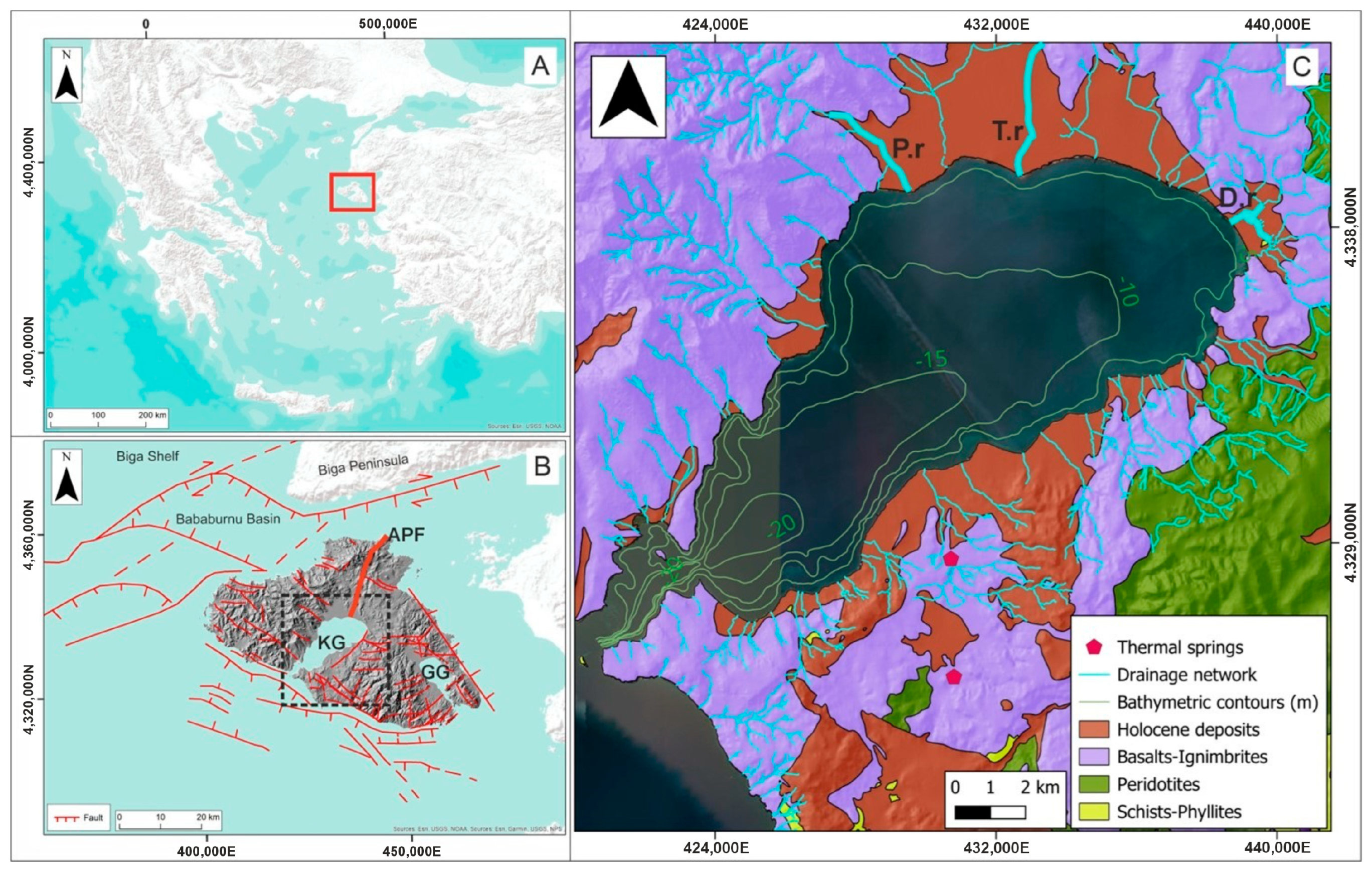
Figure 1. (A) Map of Greece, with Lesvos Island in red box. (B) Map of Lesvos Island with offshore faults (from [20]) and onshore faults (from [21] and the online database of the Hellenic Survey of Geology and Mineral Exploration (HSGME) Institute) (KG: Kalloni Gulf, GG (dotted box): Gera Gulf, APF: Aghia Paraskevi Fault (thick red line)). (C) Kalloni Gulf’s surrounding geology and hydrographic network (from Hellenic Data Service, accessed on 9 October 2018—https://hellenicdataservice.gr/main/), and general bathymetry (from Hellenic Navy Hydrographic Service) (P.r: Potamia river, T.r: Tsiknias river, D.r: Diavolorema river).
Quaternary 08 00074 g001
Figure 3. Seismic profiles showing (A,C) the key reflectors onlapping the acoustic basement towards Kalloni Strait, separating the four seismic units (SU), (B) a paleo-riverbed developing on R-a and (D) inset map showing the location (red lines) of the seismic profiles A, B and C (purple line: R-a, yellow line: R-b, green line: R-c, cyan line: acoustic basement, orange dotted line: SU1b/SU1a unconformity).
Quaternary 08 00074 g003
Figure 4. Seismic profile along the strait, showing the reduced thickness (thinning out) of SU1 and the SU2, both overlying the acoustic basement (purple line (a): R-a, cyan line: acoustic basement, orange dotted line: SU1b/SU1a unconformity, red line: fault). Inset map shows the location (red line) of the seismic profile.
Quaternary 08 00074 g004
Figure 5. Depth maps of (A) Reflector a, (B) Reflector b, (C) Reflector c and (D) the acoustic basement.
Quaternary 08 00074 g005
Figure 6. Thickness map (and surrounding drainage network) (A) of SU1, (B) of SU2 and (C) of SU3. (D) Map of the paleo-hydrographic network (along Reflector a) as delineated in this study and by Manoutsoglou et al. [19] (P.r: Potamia river, T.r: Tsiknias river, D.r: Diavolorema river).
Quaternary 08 00074 g006
Figure 7. Map of the marine faults and fault zones, as well as of the surrounding onshore faults (APF: Aghia Paraskevi Fault), using the hillshade of Lesvos Island DEM (30 m cell-size) as basemap (from Hellenic Data Service).
Quaternary 08 00074 g007
Figure 8. Seismic sections (AD) and numbered faults (1, 2, 3) illustrating part of the middle fault zone. (E): Map showing the successive seismic sections (lettered) and the complex distribution of the individual (numbered) and neighboring smaller faults forming the fault zone. Faults 1 and 2 are representative for changing their character across the successive seismic sections from reverse to normal and from west-dipping to east-dipping (purple line: R-a, yellow line: R-b, green line: R-c, cyan line: acoustic basement, red line: fault).
Quaternary 08 00074 g008
Figure 9. Seismic profiles (A,B), illustrating a fault system that gives the impression of a flower structure. (C): location of the seismic profiles A and B (purple line: R-a, yellow line: R-b, green line: R-c, cyan line: acoustic basement, red line: fault).
Quaternary 08 00074 g009
Table 1. Classification and interpretation of the seismic units (SU) discriminated in the seismic profiles.
SUIllustrationSeismic Characteristics and Interpretation
1Quaternary 08 00074 i001Acoustically semi-transparent surficial layer underlain by low amplitude continuous reflections that are interrupted by two higher amplitude reflections and hummocky-chaotic mounds of various relief on the seafloor and at different stratigraphic levels.
Holocene marine deposits hosting abundant oyster reefs (purple line (a): R-a).
2Quaternary 08 00074 i002Continuous, high-amplitude and rugged upper reflector, locally V or U-shaped, with underlying high amplitude, continuous or discontinuous reflections and locally chaotic lenses or layers. Occasionally internal hyperbolas.
Dominantly coarse-grained and/or compacted low-stand deposits incised by channels (purple line (a): R-a, yellow line (b): R-b).
3Quaternary 08 00074 i003Medium-amplitude, continuous upper reflector, with underlying lower-amplitude, parallel and laterally continuous seismic reflections. Two distinct, internal medium-amplitude reflectors are observed.
Fine-grained high-stand deposits (yellow line (b): R-b, green line (c): R-c).
4Quaternary 08 00074 i004Continuous, high-amplitude and rugged upper reflector, with underlying medium to high-amplitude, parallel to sub-parallel and locally chaotic reflections.
Coarse-grained and/or compacted low-stand deposits (green line (c): R-c).
Disclaimer/Publisher’s Note: The statements, opinions and data contained in all publications are solely those of the individual author(s) and contributor(s) and not of MDPI and/or the editor(s). MDPI and/or the editor(s) disclaim responsibility for any injury to people or property resulting from any ideas, methods, instructions or products referred to in the content.