
Article

Bifunctionalized Microspheres via Pickering Emulsion Polymerization for Removal of Diclofenac from Aqueous Solution

1
College of Transportation Engineering, Dalian Maritime University, Dalian 116026, China
2
Centre for Ports and Maritime Safety, Dalian Maritime University, Dalian 116026, China
3
Dalian National Laboratory for Clean Energy, Dalian Institute of Chemical Physics, Chinese Academy of Sciences, 457 Zhongshan Road, Dalian 116023, China
*
Author to whom correspondence should be addressed.
J. Compos. Sci. 2025, 9(12), 663; https://doi.org/10.3390/jcs9120663 (registering DOI)
Submission received: 3 November 2025 / Revised: 23 November 2025 / Accepted: 30 November 2025 / Published: 2 December 2025
(This article belongs to the Section Composites Applications)

Abstract

The removal of water pollutants with high selectivity and efficiency is still a huge challenge owing to the complex composition of contaminated water. The preparation, modification of Pickering emulsion microspheres, and their application in the adsorption and removal of non-steroidal anti-inflammatory drugs (diclofenac) in water were studied. Poly(2-(diethylamino)ethyl methacrylate-divinylbenzene), (P(DEAEMA-DVB)) microspheres were prepared by Pickering emulsion polymerization. The P(DEAEMA-DVB) polymer was modified with glycidyl trimethylammonium chloride (GTAC) and phenyl glycidyl ether (PGE) to prepare the adsorbent poly(quaternized and phenyl-functionalized) (P(QP-DVB)) with a substantial quantity of quaternary ammonium functional groups. The non-steroidal anti-inflammatory drugs in aqueous solution was mainly adsorbed by the anion exchange interaction with quaternary ammonium species. The adsorption kinetics coincided with the pseudo-second-order kinetic model, and the adsorption isotherm conformed to the Langmuir isotherm model. The optimized P(QP-DVB) particles exhibited well-defined spherical morphology and a uniform particle size distribution ranging from 15 to 30 µm. Nitrogen adsorption/desorption characterization revealed a high specific surface area of 674 m2 g−1 and a pore size distribution from 2 to 25 nm. In addition, the aforementioned microsphere underwent chemical regeneration and exhibits good reusability, thereby reducing both the economic costs and environmental impacts.

1. Introduction

Today, a substantial quantity of pharmaceutical compounds is released into aquatic environments in various forms every year, resulting in detrimental effects on both ecological systems and human health. Contaminated surface waters infiltrate soil layers and subsequently enter into groundwater, thereby posing a risk that drinking water derived from such groundwater may contain residual pharmaceuticals that have not been fully removed during general treatment processes. Although the concentrations of these drugs in aquatic environments are typically low and unlikely to induce acute toxicity in aquatic organisms, prolonged exposure to low levels can lead to chronic toxic effects. These effects primarily manifest as chronic poisoning in microorganisms, algae, invertebrates, fish, and amphibians inhabiting water and sediment. Additionally, pharmaceutical contamination contributes to drinking water pollution and presents potential hazards, including carcinogenicity, mutagenicity, teratogenicity, and disruption of intestinal microbiota. For instance, Zarimah et. al. ascertained the presence of ibuprofen (IBU), diclofenac (DIC), ketoprofen (KET), and naproxen (NAP), regarded as commonly consumed non-steroidal anti-inflammatory drugs (NSAIDs), in the influent wastewater collected from two urban catchments [1]. Furthermore, various pharmaceutical compounds, including IBU and DIC, have been identified in drinking water sources in several countries such as Italy, the United States, the United Kingdom, South Africa, and Canada [2,3,4,5,6]. It has been estimated that, on average, 30 million individuals consume NSAIDs daily due to their analgesic and anti-inflammatory properties [7].
Diclofenac (DIC), a representative NSAID belonging to the arylacetic acid class, exhibits anti-inflammatory, antipyretic, and analgesic properties. It is commonly employed to alleviate conditions such as rheumatoid arthritis, ankylosing spondylitis, non-inflammatory joint pain, arthritis, non-articular rheumatism, neuralgia, cancer-related pain, post-traumatic pain, and fever associated with various inflammatory processes [8]. Compared to other drugs within the same category, DIC is characterized by potent efficacy and relatively low-dosage requirements. Recent data from the Institute for Health Metrics and Evaluation indicate that the worldwide average consumption of DIC across 86 countries and regions is approximately 1443 ± 58 tons [9]. In China, diclofenac has been found in surface waters of major water bodies, including the Liao River, Pearl River, Yellow River, Taihu Lake, and Dongting Lake, with concentrations up to 717 ng L−1 [10,11,12,13]. The cytotoxicity to the liver, renal injuries, and kidney and gill cells are common toxic effects [14]. Consequently, it is imperative to develop several efficient and environmentally sustainable methods for the removal of diclofenac from aquatic ecosystems.
Adsorption technology offers a cost-effective and operationally straightforward approach with a relatively simple treatment infrastructure. Traditional adsorbent materials, including activated carbon, clay, alumina, zeolite, cellulose, silica gel, ion exchange resins, and layered silicates, however, exhibit their respective limitations, including limited selectivity, insufficient adsorption sites, and unsatisfying regeneration capabilities, constraining their industrial application in the removal of NSAIDs from water [15]. Therefore, the development and exploration of novel adsorbent materials with the advantages of outstanding selectivity, enhanced adsorption capacity, and minimal secondary pollution are of significant importance. One promising strategy involves the generation or incorporation of highly exposed adsorption sites with strong interaction on the adsorbent surface, representing a cost-effective and efficient method for the adsorption of non-steroidal anti-inflammatory drugs. Due to the complex matrix of water environment, the content of NSAIDs is low, and they have strong polarity and anionic characteristics (acidic, with a pKa value of 4 to 5), making it difficult for activated carbon adsorption to effectively remove NSAID residues in water. Therefore, the investigation and development of alternative adsorbent materials possessing both high adsorption capacity and enhanced selectivity is of substantial research importance.
In 1907, Pickering identified that solid particles could stabilize emulsion droplets, a phenomenon subsequently termed Pickering emulsion. The underlying mechanism involves amphiphilic solid particles acting as emulsifiers that self-assemble at the oil–water interface, thus leading to a reduction in interfacial tension and an improvement in the stability of the emulsion. Various solid materials have been employed in Pickering emulsion polymerization, including amorphous xylans, covalent organic framework, TiO2, agar, metal–organic frameworks, and chitosan [16,17,18,19,20,21]. Compared to conventional emulsion polymerization techniques, Pickering emulsion polymerization displays the advantages of a simplified preparation process, high product yield, and tunable polymer particle size through modulation of solid particle concentration. This method is recognized as a green, efficient, and environmentally sustainable approach for polymer synthesis.
Recently, several international studies have documented the application of quaternary ammonium strong base anion adsorbents for the effective and highly selective extraction of NSAIDs from aqueous solutions and urine [22,23]. Most NSAIDs are of a pKa value lower than 5, so they mainly exist in the form of negatively charged species in environmental water. Therefore, traditional activated carbon, due to its hydrophobicity, has a weak adsorption capacity for hydrophilic compounds, and its applied case for the removal of NSAIDs from water is also constrained by challenges associated with regeneration [24]. Materials such as mesoporous silica, metal–organic frameworks (MOFs), and carbon nanotubes (CNTs) possess high specific surface areas and suitable porous structures, which facilitate the adsorption process. However, the significant improvement of adsorption efficiency is still largely restricted by the lack of strong binding sites for target pollutants [23]. In this work, we attempt for the first time to modify Pickering emulsion microspheres with quaternary amines and oxygen-activated phenyls to effectively capture the selected NSAIDs (DIC) from aqueous solutions. The microspheres provide a high density of quaternary ammonium salts and oxygen-activated phenyls, which can effectively adsorb anionic NSAIDs by virtue of the anion-exchange capacity of quaternary ammonium cation species and the π–π interaction capacity of oxygen-activated phenyl species.
In the present study, Pickering emulsion polymerization was utilized to synthesize uniform poly(2-(diethylamino)ethyl methacrylate-divinylbenzene) (P(DEAEMA-DVB)) microspheres bearing tertiary ammonium groups. The polymerization employed 2-(diethylamino)ethyl methacrylate as the monomer, divinylbenzene as the crosslinker, and nano-SiO2 as the emulsifier. Subsequently, the microspheres were functionalized with quaternary ammonium groups via the reaction with glycidyl trimethylammonium chloride and phenyl glycidyl ether, yielding quaternized and phenyl-functionalized P(QP-DVB) microspheres. These Pickering emulsion-derived microsphere adsorbents exhibit a high density of active sites, substantial loading capacity, robust ligand binding stability, and rapid binding kinetics, rendering them highly advantageous for the remediation of water pollutants.
The adsorption performance of these microspheres was evaluated with DIC, a non-steroidal anti-inflammatory drug, as the target contaminant. The cationic property of P(QP-DVB) microspheres is highly advantageous and results in the advances in novel adsorbents with the capacity to effectively capture negatively charged contaminants. The developed adsorbent combines a high specific surface area, rapid mass transfer characteristics, and a dense array of functional groups, resulting in a large adsorption capacity. Consequently, the aforementioned adsorbent is suitable for the quick and efficient process for removing the non-steroidal DIC from aqueous environments.

2. Experimental Section

2.1. Chemicals and Materials

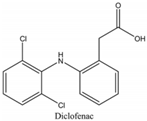
Diclofenac (DIC) and nano-sized silicon dioxide (SiO2, 12 nm) were procured from Sigma-Aldrich (Louis, MO, USA). Divinylbenzene (DVB), 1,4-butanediol diglycidyl ether (BDDE), and 2,2-azobisisobutyronitrile (AIBN) were obtained from Aladdin Chemistry Co., Ltd. (Beijing, China). Additionally, 2-(diethylamino)ethyl methacrylate (DEAEMA) and 1-dodecanol were purchased from TCI (Tokyo, Japan). Glycidyl trimethylammonium chloride (GTAC, ≥90%) and phenyl glycidyl ether (PGE, ≥85%) were purchased by Sigma-Aldrich (Milwaukee, WI, USA). Other analytical-grade reagents, including hydrofluoric acid, triethylamine, sodium hydroxide, ammonia solution, and toluene, were sourced from Damao Chemical Reagent Co., Ltd. (Tianjin, China). Prior to use, DVB was purified by washing with an alkaline solution, followed by drying and distillation under reduced pressure to remove free radical inhibitors. DEAEMA was purified by passing it through an alkaline alumina column. Ultrapure water with a resistivity of 18.2 MΩ·cm (Deionized Water), obtained via a Milli-Q Advantage A10 water purification system (Billerica, MA, USA), was employed throughout the experiments. Unless otherwise indicated, all chemical reagents were of analytical grade and used without any other purification. A stock solution of DIC at a concentration of 1 mg·mL−1 was obtained by dissolving a certain quantity of DIC in pure methanol and stored at −20 °C in the dark. Working solutions of varying DIC concentrations were freshly prepared by diluting the aforementioned stock solution with 50% methanol (v/v) and stored at 4 °C until use. The physicochemical properties and molecular structure of diclofenac are summarized in Table 1.

2.2. Synthesis of P(QP-DVB) Microspheres

The microspheres were fabricated using a single-step process of Pickering emulsion polymerization. Initially, 0.422 g of 1-dodecanol, 22.5 mg of AIBN, 1.2 mL of toluene, 3 mmol of DEAEMA, and 3 mmol of DVB were combined in a test tube and homogenized by vortex mixing; designated as solution A. Solution A was continuously purged with nitrogen gas to maintain an inert atmosphere. Separately, 120 mg of silica nanoparticles and 10 mL of ultrapure water were mixed in a test tube and sonicated for 1 min in an ultrasonic bath, designated as solution B. Subsequently, solution A was added to solution B and rapidly stirred at 6000 rpm for 1 min to form a Pickering emulsion. The resulting emulsion was subsequently treated to polymerization in a water bath maintained at 60 °C for a duration of 24 h. Following polymerization, the composite material was immersed in hydrofluoric acid for 24 h to remove the silica template and then filtered and washed with deionized water until neutral pH was achieved, yielding the DEAEMA-DVB microspheres. To eliminate unreacted impurities, the microspheres underwent Soxhlet extraction with methanol for 12 h. The (QP-DVB) was synthesized through the reaction of amine groups present on the microspheres with two epoxy-functionalized modifiers (PGE and GTAC) that possess distinct interaction functionalities through epoxideamine reaction, respectively. Subsequently, 1 g of DEAEMA-DVB microspheres was reacted with 5 mmol each of PGE and GTAC in a 50:50 (v/v) water/methanol solution under stirring at 60 °C for 3 h to obtain the final P(QP-DVB) microspheres. Then, the sponge was treated as follows: first rinsed with dilute HCl solution, then washed sequentially with a large volume of deionized water, an ethanol–water mixture, and ethanol for thorough purification, and finally dried to constant weight in a vacuum oven at 80 °C. A schematic representation of the adsorbent synthesis procedure is provided in Figure 1.

2.3. Characterizations and Instruments

Scanning electron microscopy (SEM) was carried out on a JSM-7800F scanning electron microscope (JEOL, Tokyo, Japan). Nitrogen adsorption-desorption isotherms were tested at 77 K using a quantachrome Autosorb-iQ2 instrument (Quantachrome, Boynton Beach, FL, USA). Fourier transformed infrared (FT-IR) data were collected on a Nicolet iS5 spectrometer (Thermo Scientific, Waltham, MA, USA), ranging from 4000 to 400 cm−1, using the KBr pellet method. The separation and identification of DIC were conducted using an Agilent 1200 high-performance liquid chromatography (HPLC, Santa Clara, CA, USA) system, which was equipped with a quaternary pump, an online degasser, an autosampler, and a diode array detector (DAD). A gradient elution method was employed utilizing solvent A (consisting of a 20 mM phosphate buffer at pH 2.7) and solvent B (methanol), with the following gradient profile: an increase from 45% to 95% solvent B over 6 min, maintained at 95% solvent B for 1 min, followed by a decrease to 45% solvent B for 1 min, and held at 45% solvent B for an additional 5 min. Detection was performed at a wavelength of 230 nm.

2.4. Batch Adsorption Experiments

Prior to adsorption experiments, the prepared adsorbent was pre-dried overnight in a vacuum oven at 60 °C and thereafter preserved in a desiccator. Due to its lower solubility, stock solution of DIC (1 mg mL−1) was first prepared in pure methanol. The sample solution of desired concentrations was prepared by further dilutions of working solutions 50% MeOH for DIC, and the solution was freshly prepared weekly and stored in the refrigerator (set at 4 °C). Batch adsorption studies were carried out in 250 mL conical flasks fitted with stoppers. Each flask contained 40 mg of the adsorbent and 200 mL of the target drug solution. The flasks were agitated at 120 rpm and maintained at 25 °C for a duration of 2 h. Following agitation, the solutions were filtered through 0.45 µm of polytetrafluoroethylene (PTFE) membrane filters. For the adsorption kinetics investigation, samples were withdrawn at predetermined time intervals (0.5, 1, 5, 10, 20, 30, 40, 50, 60, and 120 min) for a fixed initial drug concentration of 200 mg L−1 to collect the kinetic data. Adsorption isotherms were obtained by varying the initial drug concentration from 10 to 300 mg L−1. To assess the influence of solution pH on adsorption performance, the pH of the drug solution (maintained at 200 mg L−1) was systematically tuned to values of 2, 3, 5, 7, 8, and 9 via 0.3 M NaOH or HCl. Except for experiments specifically designed to evaluate pH effects, the solution pH was consistently set at 7 throughout the adsorption studies.
Both the initial solutions (prior to adsorption) and post-adsorption solutions were filtered using a 0.45 µm cellulose acetate membrane filter. The removal efficiency (Re%) and adsorption capacity at equilibrium (qe) for DIC were thereafter calculated according to Equations (1) and (2), respectively:
R e % = ( C 0 C e ) 100 C 0
q e = ( C 0 C e ) V m
where C0 and Ce are the initial and equilibrium concentrations of adsorbates in solution (mg L−1), respectively, V is the volume of solution (L), and m (g) is the mass of adsorbent.

2.5. Regeneration and Recycling Studies

The used adsorbent was regenerated at 25 °C. Firstly, the adsorbent used in the adsorption experiment was filtered out from the conical flask. Then, the adsorbent was repeatedly washed with a 2% ammonia water–methanol solution. The P(QP-DVB) was regenerated by using a combination of 4% sodium hydroxide and methanol (a mixture of 4% sodium hydroxide in methanol/water (v:v = 6:4). Finally, the adsorbent was dried to remove adsorbed solvent in a vacuum oven at 60 °C overnight for further use. A similar regeneration process was repeated 10 times in subsequent adsorption–desorption cycles of experiments.

3. Results and Discussion

3.1. Characterizations of P(QP-DVB)

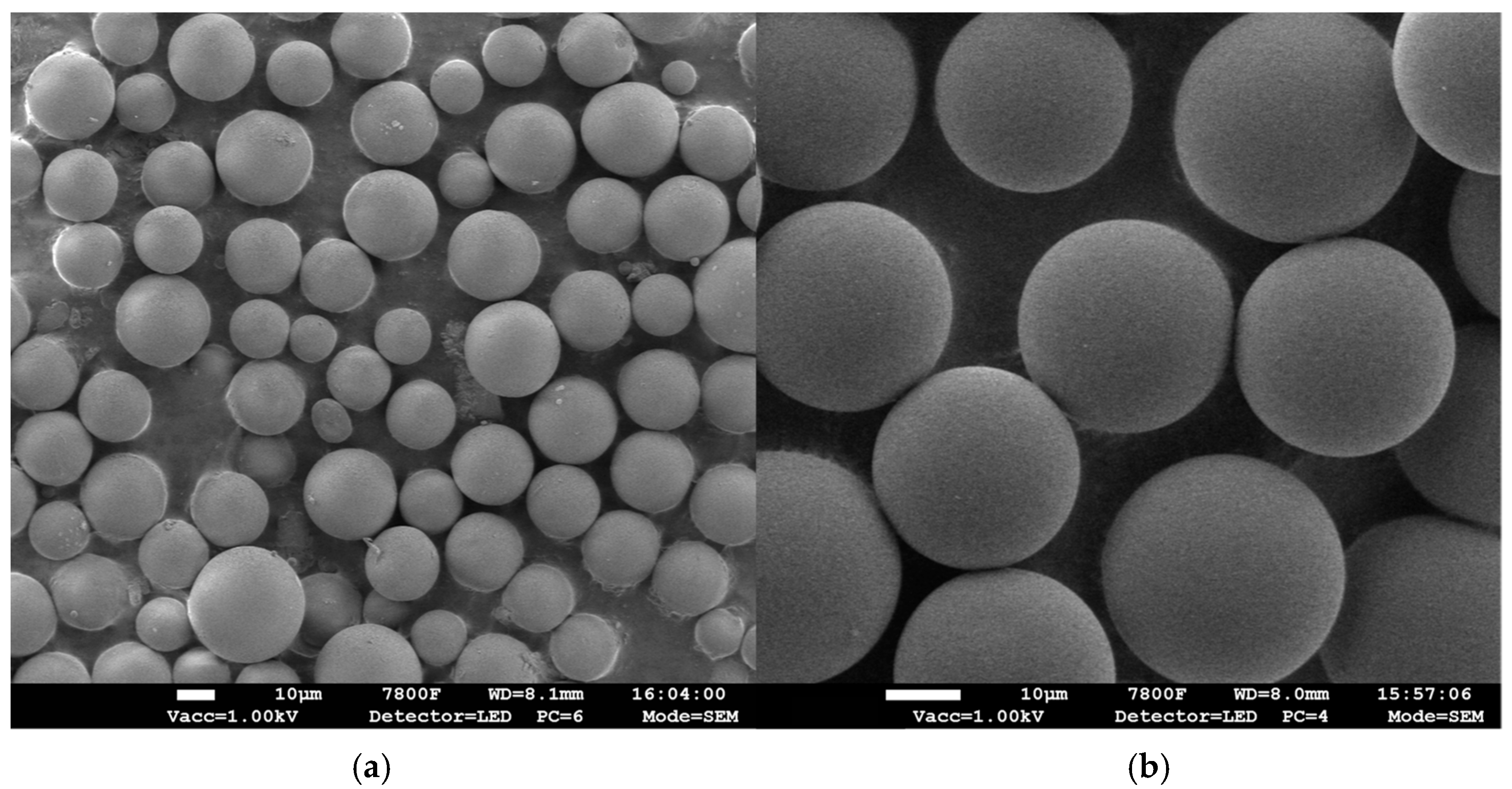
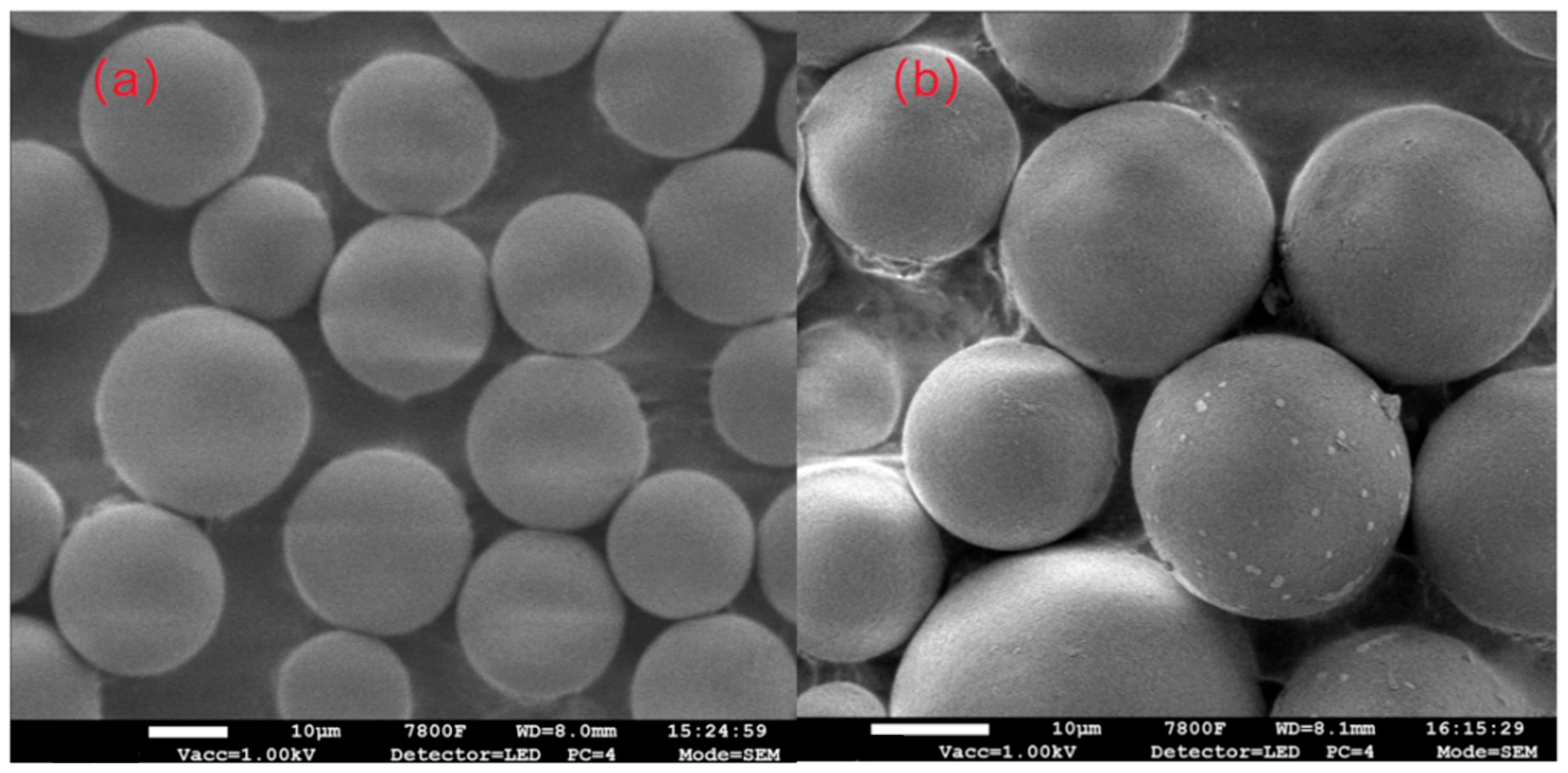
Firstly, the morphology of the synthesized microspheres was characterized by SEM and images in Figure 2. Figure 2a,b represents the morphology of the microspheres at different positions and magnifications. As can be seen, the microspheres are in uniform sizes, with particle diameters ranging from 15 μm to 30 μm, and are all spherical in shape. Therefore, it is speculated that the prepared P(QP-DVB) microspheres can be used for the adsorption of diclofenac in water.
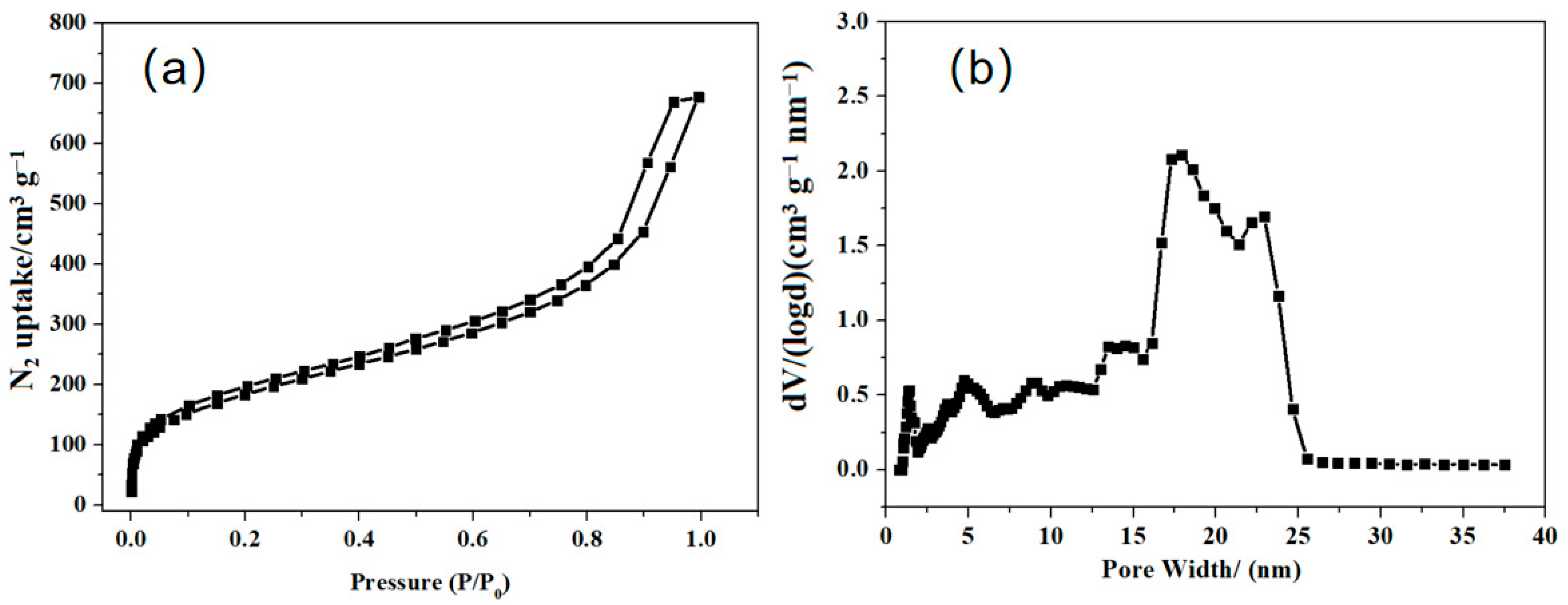
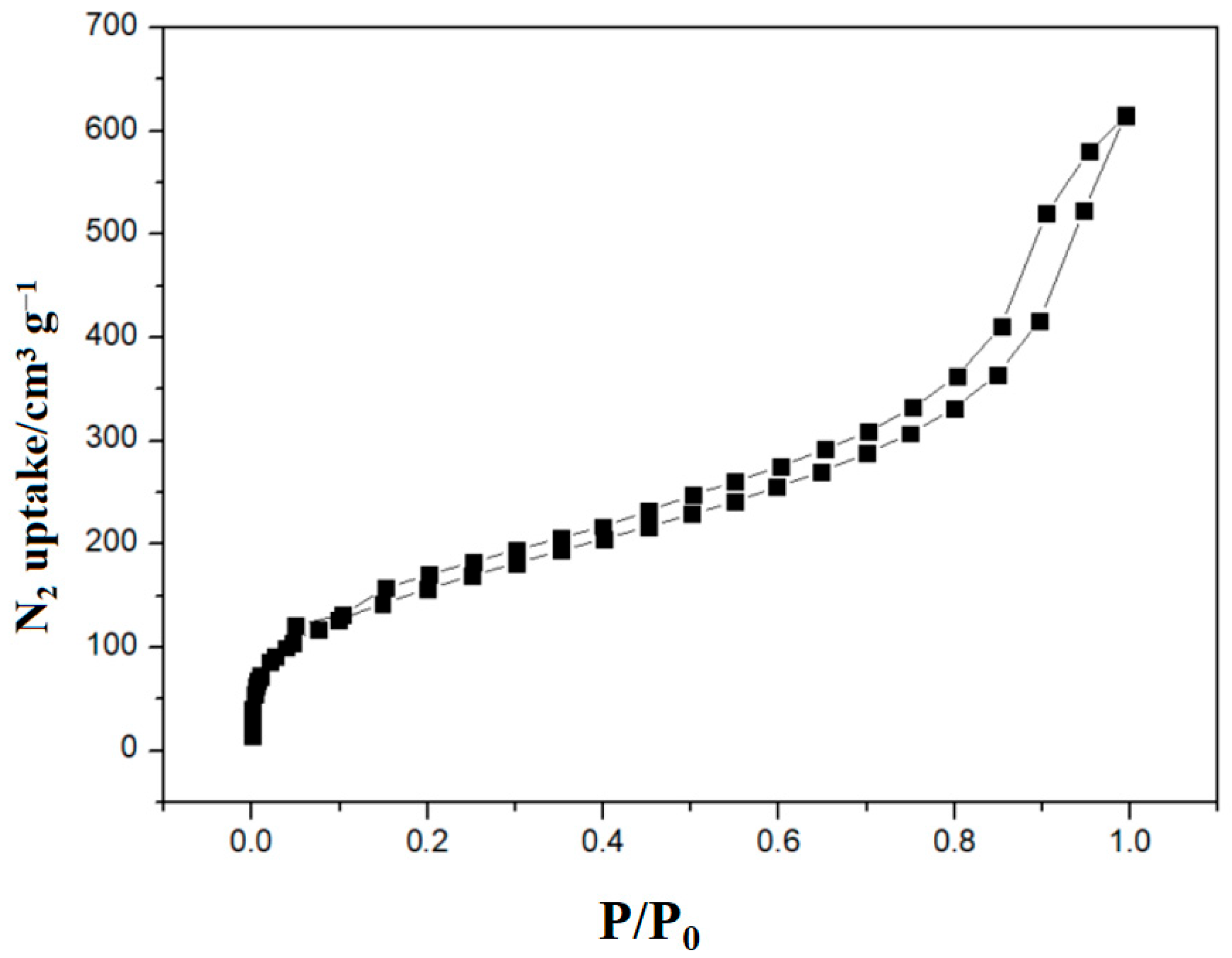
As shown in Table 2, the BET specific surface area and pore volume of the material were calculated from the N2 physical adsorption experiment results to be 637 m2 g−1 and 1.1 cm3 g−1, respectively. Its high specific surface area and pore volume are the crucial properties for the adsorption of drug species in various solutions. Figure 3a of N2 adsorption/desorption isotherm demonstrates the porosity of P(QP-DVB). The nitrogen adsorption–desorption isotherm of the polymer microspheres belongs to type “IV”, confirming the mesoporous structure of P(QP-DVB). The pore size distribution was analyzed by DFT, shown in Figure 3b, featuring the mesopore structure with a range between 2 and 25 nm. SEM and BET results can infer that a porous microsphere with uniform particle size has been successfully synthesized, and, therefore, it is speculated that the prepared P(QP-DVB) microspheres can be used for the adsorption of diclofenac in water.
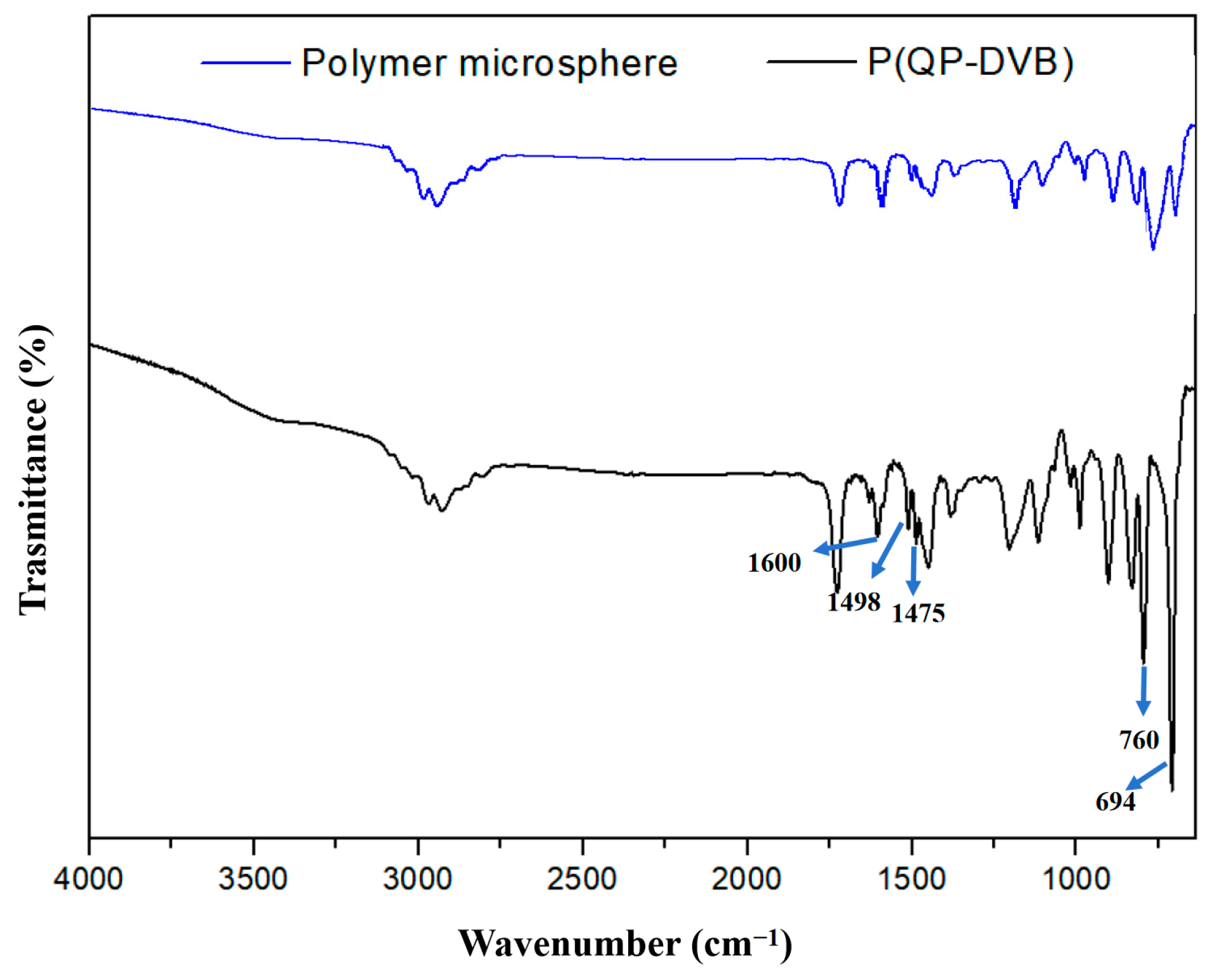
To verify the successful simultaneous graft of two functional groups to the polymer microsphere, the FT-IR spectra of polymer microsphere and P(QP-DVB) are presented in Figure 4. The integration of ether-linked phenyl groups in P(QP-DVB) is evidenced by the prominent absorption bands observed at 1600 and 1496 cm−1, corresponding to the C=C stretching vibrations of the aromatic ring (R-C6H5), as well as the bands at 760 and 694 cm−1, assigned to the =C-H bending modes of the same aromatic moiety. With comparison of polymer microsphere, the increased intensity of aforementioned bands in P(QP-DVB) indicates the successful graft of PGE, due to the existence of benzene ring in PGE. Furthermore, a newly appearing band at about 1475 cm−1 in P(QP-DVB) in the spectra of polymer microsphere and P(QP-DVB) is mainly ascribed to the methyl groups in the grafted membranes owing to the addition of GTAC with methyl [25].

3.2. Adsorption Properties of P(QP-DVB) for DIC

3.2.1. Effect of Solution pH

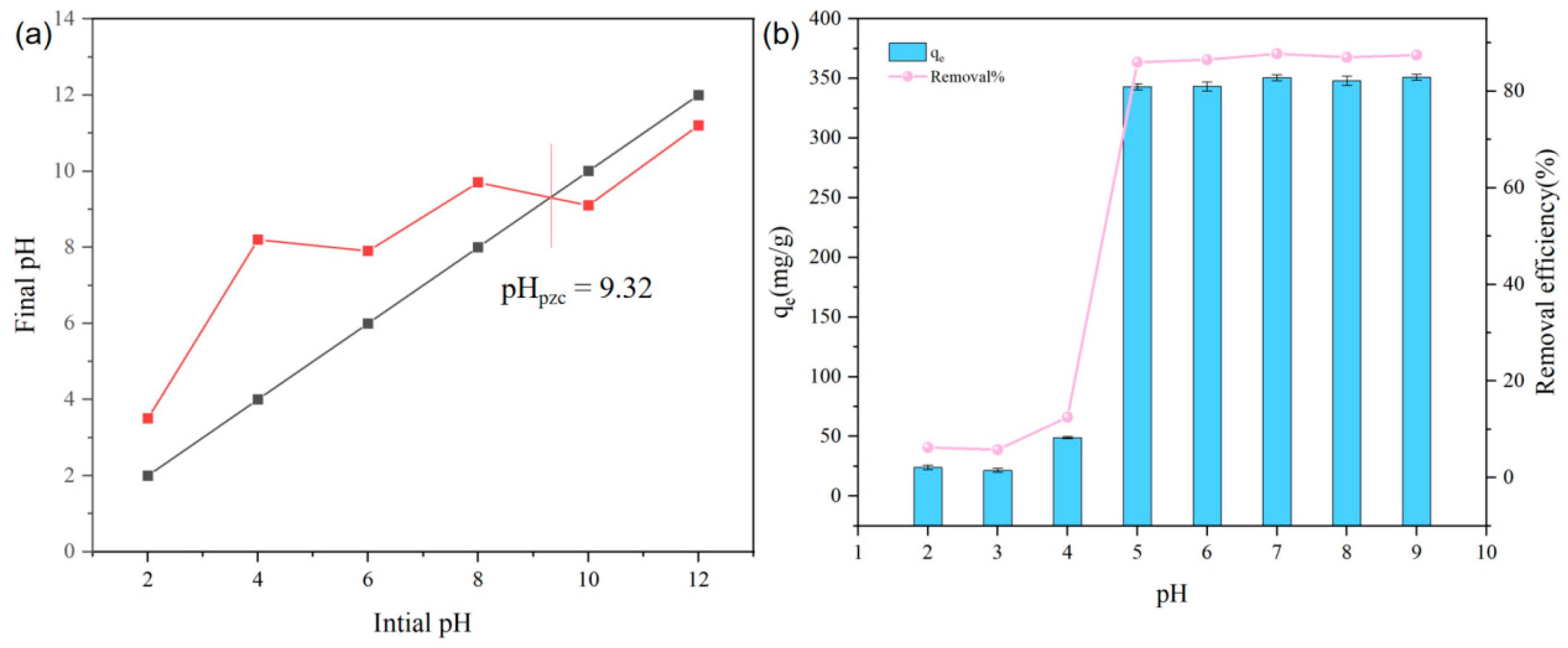
For the adsorption process, pH is a significant reaction condition. Therefore, understanding the impact of pH on P(QP-DVB) on diclofenac removal is essential. Before conducting the experiment, the solution pH was tuned to 2, 3, 4, 5, 6, 7, 8, and 9, respectively, using 0.3 M L−1 NaOH or HCl to investigate the effect of pH on the recovery rate of diclofenac. Within the pH range near pKa, a slight change in pH can lead to significant changes in ionization and retention. As shown in Figure 5, when the pH increases from 2 to 5, the adsorption efficiency of DIC rises significantly from 6% to 86%, while within the pH range of 5 to 10, its capacity remains at a high level and hardly changes with the increase of pH. When pH > pKa (4.15), DIC is in its basic form and can be strongly adsorbed through strong anion exchange interactions. The pH of the point of zero charge (pHpzc) was found as 9.32 (Figure 5a), which suggests that the P(QP-DVB) has a positive surface charge below pH 9.32 and, thus, strong electrostatic interaction with anionic substances. Within the pH range of 5–9 (>pKa + 1~2), DIC is more in its basic forms and can be strongly retained by strong anion–exchange interaction, especially at the pH range from 7.0 to 9.0 where DIC is fully in its anionic forms. At low pH levels (pH 2, 3, 4), the common form for DIC is changed to a protonated and partially ionized state, resulting in a diminished anion–exchange interaction. Therefore, within a wide pH range, the strong anion exchange interaction between the positively charged P(QP-DVB) and the negatively charged DIC is the most vital driving force in the adsorption process of DIC.

3.2.2. Adsorption Kinetic Study

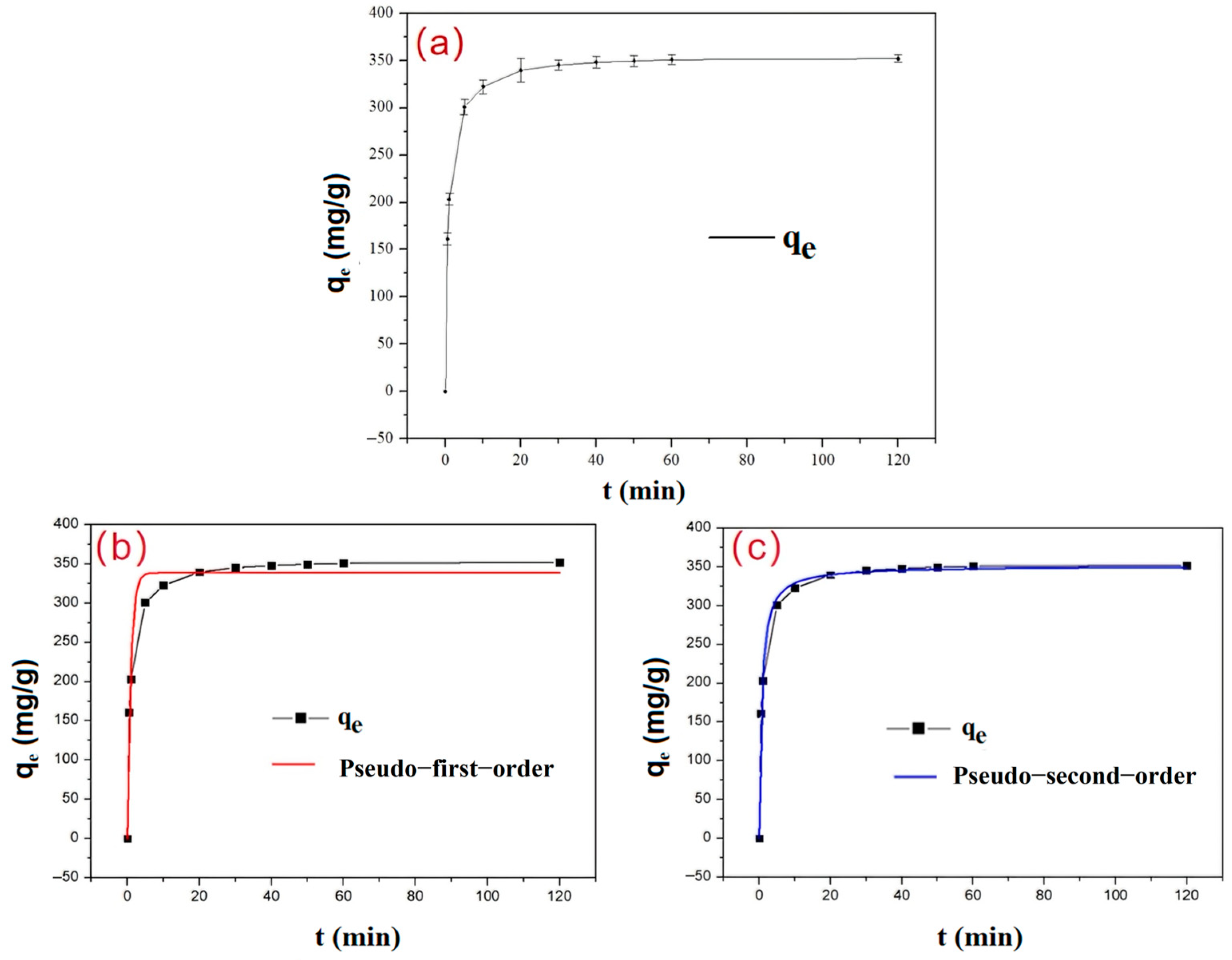
As shown in (Figure 6a), in the first stage of adsorption, the adsorption capacity increases sharply as the adsorption time is extended (0–10 min), indicating that the adsorbate in the solution has a high affinity on the adsorbent surface at this stage, thereby notably accelerating and the adsorption process of DIC, attributable to the presence of numerous vacant adsorption sites on the surface of the adsorbent. After that, the adsorption enters a stable stage (10–60 min), with a relatively small change in the adsorption capacity trend. The adsorption of DIC is basically saturated, demonstrating the approaching adsorption equilibrium state. This is because in the initial stage of adsorption, the concentration of DIC in the solution is the highest, and there are also many adsorption sites on the adsorbent. At this time, the adsorption of DIC mainly occurs on the outer surface of the adsorbent, with less steric hindrance and smaller external diffusion resistance, so DIC can be adsorbed rapidly. However, as the duration for adsorption increases, the number of adsorption sites on the adsorbent decreases, and the concentration of the adsorbate in the solution also decreases. Moreover, when the surface adsorption sites are occupied, the adsorbate needs to diffuse into the interior surface, and the diffusion resistance and steric hindrance gradually increase, so both the adsorption rate and the increase in adsorption capacity slow down. Ultimately, the adsorption capacity is tested as 352 mg g−1 under equilibrium.
l n q e q t = l n q e k 1
t q t = 1 k 2 q e 2 + t q e
The most widely used models for adsorption kinetics are the pseudo-first-order kinetic model (3) and the pseudo-second-order kinetic model (4).
In this study, qe (mg/g) and qt (mg/g) represent the adsorption capacities at equilibrium and at a given time t (min), respectively. The rate constants k1 (1 min−1) and k2 (g (mg·min)−1) correspond to the pseudo-first-order and pseudo-second-order kinetic models, respectively. These parameters are determined from the slope and intercept of linearized plots: qe (as Y-axis) against t (as X-axis) for the pseudo-first-order model and the pseudo-second-order model.
Figure 6b,c, respectively, presents the fitting results of the two kinetic models. As shown in Table 3, analysis of the adsorption kinetics reveals that the experimental data exhibit a strong fit to the pseudo-second-order kinetic model, as evidenced by a high linear correlation coefficient (R2 = 0.997). Furthermore, the equilibrium adsorption capacity calculated from this model closely approximates the experimentally observed value, indicating minimal deviation. This strong agreement substantiates that the adsorption process adheres to the pseudo-second-order kinetic framework, effectively characterizing the entire adsorption behavior of diclofenac (DIC) on P(QP-DVB).
The pseudo-second-order kinetic model encompasses various stages of the adsorption process, including external liquid film diffusion, particle surface diffusion, and internal diffusion, as well as adsorption on both the external and internal surfaces of the adsorbent particles. Consequently, this model provides a comprehensive and accurate description of the adsorption mechanism governing the interaction between the DIC and P(QP-DVB).

3.2.3. Adsorption Isotherm Study

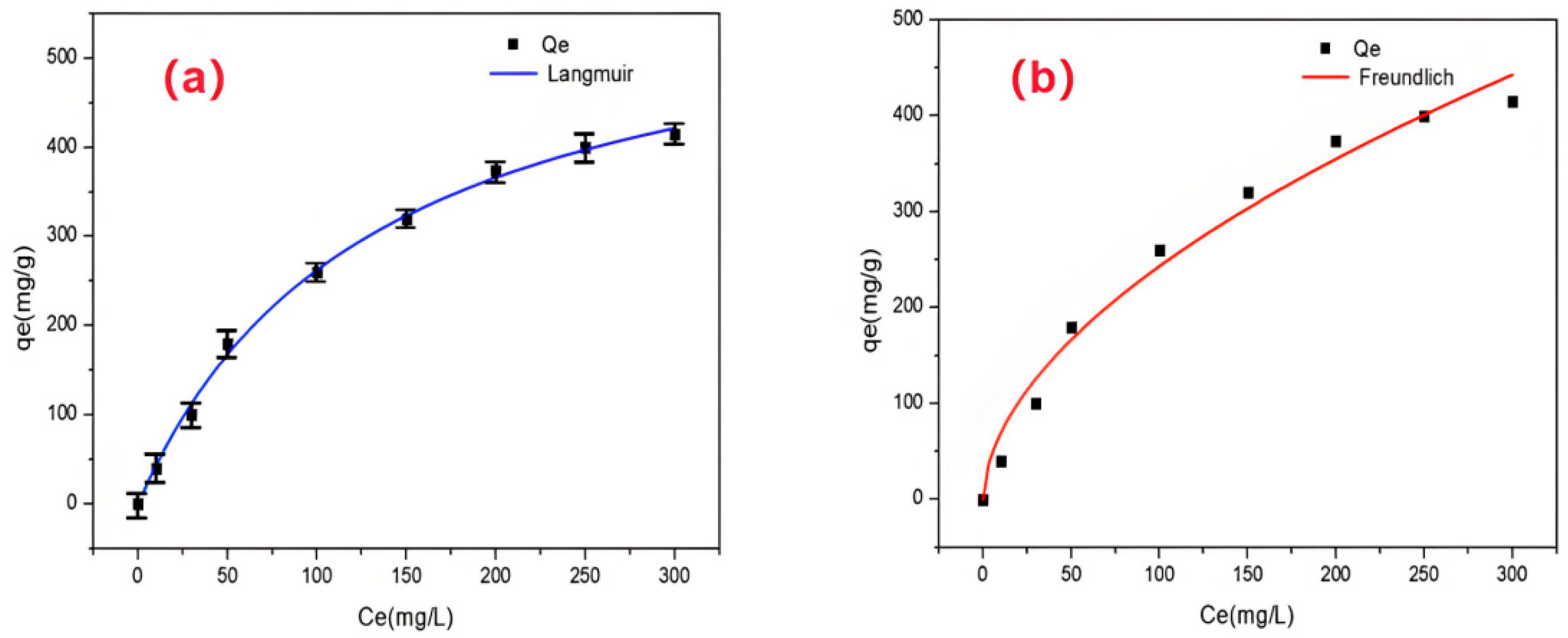
To further elucidate the adsorption characteristics and evaluate the maximum adsorption capacity, the adsorption behavior of DIC on P(QP-DVB) was investigated via Langmuir and Freundlich isotherm models. The well-established nonlinear Langmuir (Equation (5)) and Freundlich (Equation (6)) models were selected to simulate the adsorption data. These models are founded on the premises of monolayer adsorption behavior on the homogeneous surface and multilayer adsorption behavior on the heterogeneous surface, respectively. The Langmuir model postulates the occurrence of monolayer adsorption on a homogeneous surface with the absence of interactions among adsorbed molecules, making it suitable for single-layer adsorption on uniform surfaces. In contrast, the Freundlich model is predicated on the occurrence of multilayer adsorption on heterogeneous surfaces, applicable to adsorption on non-uniform surfaces.
q = q m K L C e 1 + K L C e
q = K f C e 1 / n
where qm (mg g−1) is the maximum adsorption capacity, KL and Kf (L mg−1) are the Langmuir and Freundlich affinity coefficients, respectively, and n (unitless) represents the energetic heterogeneity factor associated with adsorption intensity.
Figure 7 and Table 4 illustrate that the Langmuir model is more fitting to the adsorption isotherm of DIC on P(QP-DVB), as evidenced by a higher correlation coefficient compared to that of the Freundlich model. This finding suggests that chemisorption involving monolayer adsorption on a homogeneous surface is the predominant process. From the isotherm data, the maximum adsorption capacity (qmax) of DIC at pH 7.0 was determined to be 487.56 mg/g, surpassing the capacities reported for other adsorbents in previous studies (see Table 5) [26,27,28,29,30,31,32]. These findings indicate that P(QP-DVB) exhibits outstanding potential for the removal of DIC from aqueous solutions.

3.3. Regeneration and Reusability

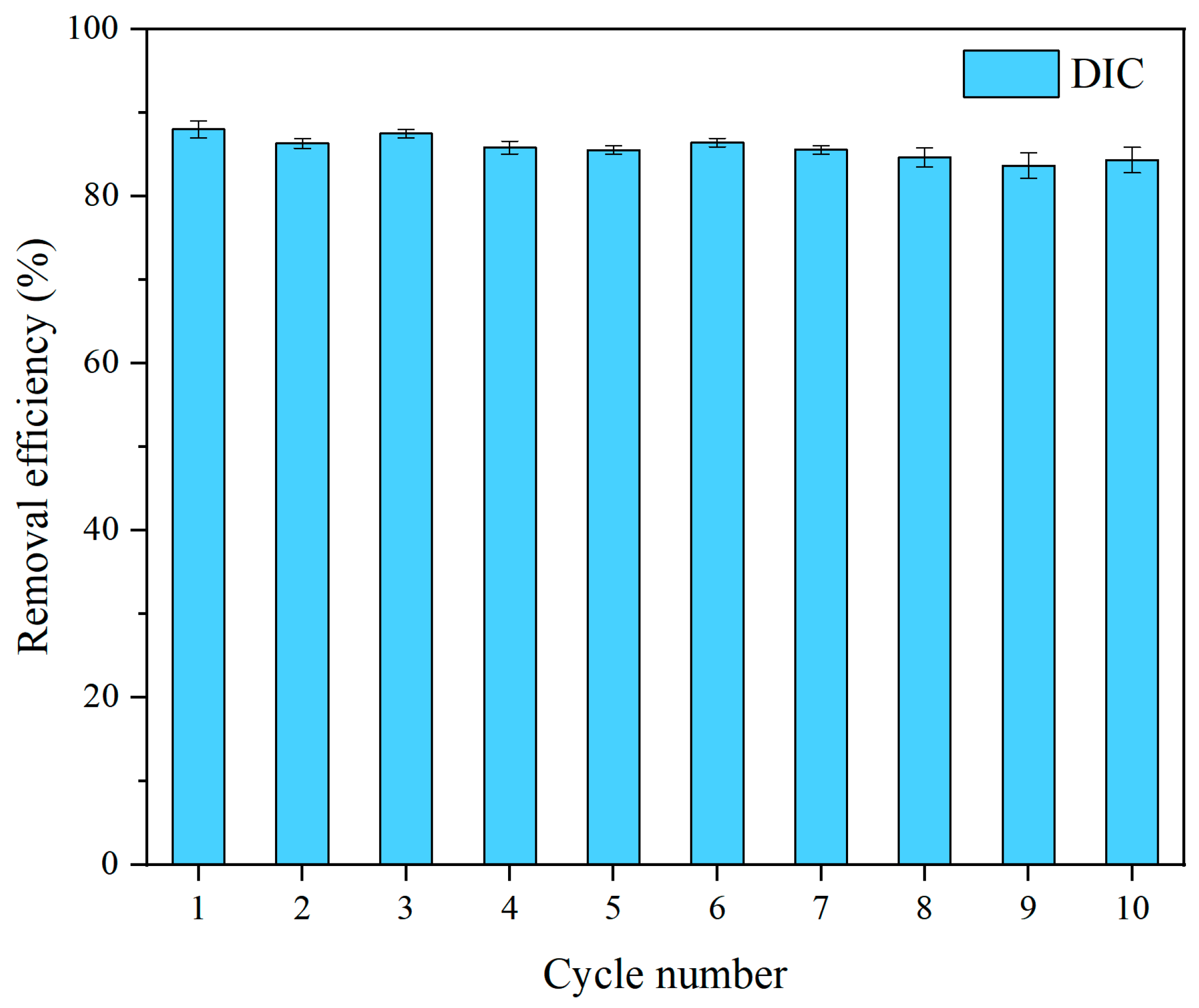
The reusability of adsorption materials is regarded as a critical criterion for assessing their economic applicability. Figure 8 depicts that after 10 adsorption–desorption cycles, the adsorbent still maintains an adsorption efficiency of 85%, with the removal efficiency only decreasing by approximately 3%. The adsorption capacity decreases gradually during cycles, primarily in terms of the fact that some target substances that were not completely eluted from the occupied sites. Another reason is the loss of adsorbent during the elution process. The good regenerability of P(QP-DVB) for the removal of diclofenac confirms that the synthesized adsorbent possesses significant potential for the diclofenac removal from practical water solutions. Figure 9 shows the SEM images of fresh and spent P(QP-DVB) for adsorption, indicating that the morphology of the microspheres has not changed after the adsorption test. Figure 10 shows that after multiple adsorption and desorption, the microspheres still retain their complete pore structure, suggesting that the prepared microspheres can still maintain good adsorption performance and morphology after multiple repeated uses.

3.4. Adsorption Selectivity

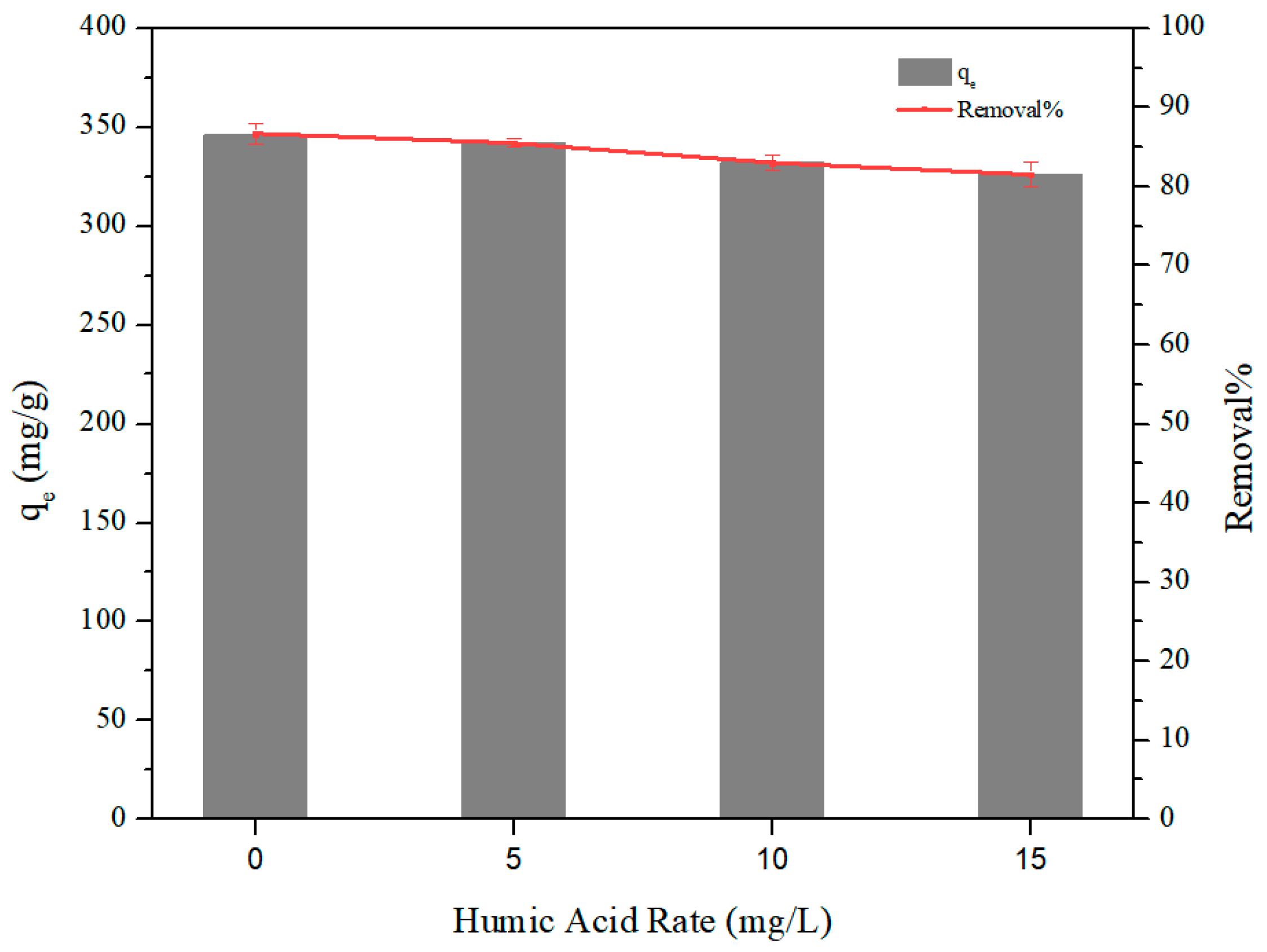
Humic acid, as a representative natural organic matter, was also employed to explore its influence on the adsorption behavior of DIC. The experiment was conducted by introducing different concentrations of humic acid (0, 5, 10, and 15 mg/L) to a 100 mL DIC solution (200 mg/L). The experimental findings, illustrated in Figure 11, demonstrate that humic acid has a slight influence on the adsorption of DIC. However, at the highest concentration of 15 mg/L for humic acid, a slight decrease in DIC removal efficiency, approximately 5%, was observed. This minor reduction is likely attributable to the partial occupation of adsorption sites by the elevated humic acid concentration.

3.5. Comparison with Other Sorbents

To compare with other adsorbents, Table 5 summarizes the reported data on the removal of DIC from water by other materials. As determined by the Langmuir equation, the maximum adsorption capacity of P(QP-DVB) adsorbent for DIC is 487.56 mg g−1, superior to that of other adsorbents. The excellent adsorption capacity, combined with the straightforward separation process from the solution, drives P(QP-DVB) to become a very attractive environmental adsorbent, capable of effectively removing diclofenac from water. Compared to other adsorbents, P(QP-DVB) demonstrates superior adsorption capacity, thanks to the abundant functional groups provided by the microspheres and the effective combination of quaternized amines with DIC through strong electrostatic interactions. Furthermore, the highly porous morphology of P(QP-DVB) likely facilitates the facile diffusion of DIC molecules to the active sites, thereby enhancing the overall adsorption performance.

4. Conclusions

Polymer microspheres P(DEAEMA-DVB) with uniform particle size were prepared via Pickering emulsion polymerization. These microspheres then underwent a modification with GTAC and PGE to introduce bifunctional interactions, and a new adsorption material, P(QP-DVB), was prepared. The particle size of P(QP-DVB) microspheres is 15 μm–30 μm, with uniform size and high specific surface area of 637 m2 g−1. For 200 mg L−1 DIC in water, the maximum adsorption capacity is calculated as 487.56 mg g−1 under the condition of equilibrium. The adsorption mechanism study shows that the strong electrostatic interaction between quaternary ammonium and deprotonated DIC is the main adsorption mechanism of DIC. After 10 cycles of use, the adsorption efficiency only decreased by 3%, indicating that P(QP-DVB) is a reusable adsorbent that can be used to remove diclofenac from water. Therefore, the aforementioned experiments verify that P(QP-DVB) is a green, highly efficient, regenerable, and cost-effective environmental adsorbent for DIC, which could effectively and selectively remove other toxic anionic pollutants from complex water.

Author Contributions

Conceptualization: X.G. and Z.R.; funding: Z.R.; investigation: X.G. and Z.A.; project administration: X.G.; supervision: Z.R. and Z.Y.; visualization: X.G. and Z.A.; writing—original draft: X.G.; writing—review and editing: Z.R. All authors have read and agreed to the published version of the manuscript.

Funding

This work was financially supported by National Natural Science Foundation of China (Grant No. 22308349).

Data Availability Statement

The original contributions presented in this study are included in the article. Further inquiries can be directed to the corresponding author.

Acknowledgments

This work was financially supported by National Natural Science Foundation of China (Grant No. 22308349).

Conflicts of Interest

The authors declare no conflict of interest.

References

  1. Mohd Hanafiah, Z.; Wan Mohtar, W.H.M.; Abd Manan, T.S.B.; Bachi’, N.A.; Abdullah, N.A.; Abd Hamid, H.H.; Beddu, S.; Mohd Kamal, N.L.; Ahmad, A.; Wan Rasdi, N. The Occurrence of Non-Steroidal Anti-Inflammatory Drugs (NSAIDs) in Malaysian Urban Domestic Wastewater. Chemosphere 2022, 287, 132134. [Google Scholar] [CrossRef] [PubMed]
  2. Verlicchi, P.; Al Aukidy, M.; Galletti, A.; Petrovic, M.; Barceló, D. Hospital Effluent: Investigation of the Concentrations and Distribution of Pharmaceuticals and Environmental Risk Assessment. Sci. Total Environ. 2012, 430, 109–118. [Google Scholar] [CrossRef] [PubMed]
  3. Kosma, C.I.; Lambropoulou, D.A.; Albanis, T.A. Occurrence and Removal of PPCPs in Municipal and Hospital Wastewaters in Greece. J. Hazard. Mater. 2010, 179, 804–817. [Google Scholar] [CrossRef]
  4. Balogh, C.; Faragó, N.; Faludi, T.; Kovács, Z.; Kobak, J.; Serfőző, Z. Organic Pollutants in a Large Shallow Lake, and the Potential of the Local Quagga Mussel Population for Their Removal. Ecotoxicol. Environ. Saf. 2025, 296, 118201. [Google Scholar] [CrossRef]
  5. Munzhelele, E.P.; Mudzielwana, R.; Ayinde, W.B.; Gitari, W.M. Pharmaceutical Contaminants in Wastewater and Receiving Water Bodies of South Africa: A Review of Sources, Pathways, Occurrence, Effects, and Geographical Distribution. Water 2024, 16, 796. [Google Scholar] [CrossRef]
  6. Yang, X.; Flowers, R.C.; Weinberg, H.S.; Singer, P.C. Occurrence and Removal of Pharmaceuticals and Personal Care Products (PPCPs) in an Advanced Wastewater Reclamation Plant. Water Res. 2011, 45, 5218–5228. [Google Scholar] [CrossRef]
  7. Feng, L.; van Hullebusch, E.D.; Rodrigo, M.A.; Esposito, G.; Oturan, M.A. Removal of Residual Anti-Inflammatory and Analgesic Pharmaceuticals from Aqueous Systems by Electrochemical Advanced Oxidation Processes. A Review. Chem. Eng. J. 2013, 228, 944–964. [Google Scholar] [CrossRef]
  8. Jones, O.A.; Lester, J.N.; Voulvoulis, N. Pharmaceuticals: A Threat to Drinking Water? Trends Biotechnol. 2005, 23, 163–167. [Google Scholar] [CrossRef]
  9. Triebskorn, R.; Casper, H.; Heyd, A.; Eikemper, R.; Köhler, H.-R.; Schwaiger, J. Toxic Effects of the Non-Steroidal Anti-Inflammatory Drug Diclofenac. Aquat. Toxicol. 2004, 68, 151–166. [Google Scholar] [CrossRef]
  10. Acuña, V.; Ginebreda, A.; Mor, J.R.; Petrovic, M.; Sabater, S.; Sumpter, J.; Barceló, D. Balancing the Health Benefits and Environmental Risks of Pharmaceuticals: Diclofenac as an Example. Environ. Int. 2015, 85, 327–333. [Google Scholar] [CrossRef] [PubMed]
  11. Zhao, J.; Ying, G.; Wang, L.; Yang, J.-F.; Yang, X.; Yang, L.; Li, X. Determination of Phenolic Endocrine Disrupting Chemicals and Acidic Pharmaceuticals in Surface Water of the Pearl Rivers in South China by Gas Chromatography–Negative Chemical Ionization–Mass Spectrometry. Sci. Total Environ. 2009, 407, 962–974. [Google Scholar] [CrossRef]
  12. Wang, L.; Ying, G.; Zhao, J.; Yang, X.; Chen, F.; Tao, R.; Liu, S.; Zhou, L. Occurrence and Risk Assessment of Acidic Pharmaceuticals in the Yellow River, Hai River and Liao River of North China. Sci. Total Environ. 2010, 408, 3139–3147. [Google Scholar] [CrossRef]
  13. Ma, R.; Wang, B.; Lu, S.; Zhang, Y.; Yin, L.; Huang, J.; Deng, S.; Wang, Y.; Yu, G. Characterization of Pharmaceutically Active Compounds in Dongting Lake, China: Occurrence, Chiral Profiling and Environmental Risk. Sci. Total Environ. 2016, 557–558, 268–275. [Google Scholar] [CrossRef]
  14. Dihingia, H.; Pathak, S.; Lalmalsawmdawngliani; Lalhmunsiama; Tiwari, D.; Kim, D.-J. A Sustainable Solution for Diclofenac Degradation from Water by Heterojunction Bimetallic Nanocatalyst. J. Taiwan Inst. Chem. Eng. 2025, 166, 105096. [Google Scholar] [CrossRef]
  15. Gul Zaman, H.; Baloo, L.; Pendyala, R.; Singa, P.K.; Ilyas, S.U.; Kutty, S.R.M. Produced Water Treatment with Conventional Adsorbents and MOF as an Alternative: A Review. Materials 2021, 14, 7607. [Google Scholar] [CrossRef]
  16. Wang, Z.; Li, Z.; Yan, R.; Wang, G.; Wang, Y.; Zhang, X.; Zhang, Z. Facile Fabrication of Hollow Molecularly Imprinted Polymer Microspheres via Pickering Emulsion Polymerization Stabilized with TiO2 Nanoparticles. Arab. J. Chem. 2023, 16, 105304. [Google Scholar] [CrossRef]
  17. Wang, T.; Li, J.; Li, J.; Sun, Y.; Liu, Y.; Guo, Y.; An, C.; Wang, J.; Wu, B. Controlled Preparation of Hollow N-Al/Fe2O3 MICs Microspheres by Two-Droplet Microfluidic Technique and Performance Study. Ceram. Int. 2025, 51, 29538–29547. [Google Scholar] [CrossRef]
  18. Jiao, J.; Yu, S.; Liang, X.; Hong, Y.; Shi, W.; Jiang, C.; Wu, D. Xylan Nanocrystal-Stabilized Pickering Emulsion for Templating Polymer Microspheres with Tunable Structures. Polymer 2025, 335, 128824. [Google Scholar] [CrossRef]
  19. Chen, Z.; Xu, Y.; Xiao, Z.; Zhang, Y.; Weng, H.; Yang, Q.; Xiao, Q.; Xiao, A. A Novel Pickering Emulsion Stabilized by Rational Designed Agar Microsphere. LWT 2023, 181, 114751. [Google Scholar] [CrossRef]
  20. Wang, Z.; Jing, C.; Zhai, W.; Li, Y.; Liu, W.; Zhang, F.; Li, S.; Wang, H.; Yu, D.-G. MIL-101(Fe)/Polysulfone Hollow Microspheres from Pickering Emulsion Template for Effective Photocatalytic Degradation of Methylene Blue. Colloids Surf. A Physicochem. Eng. Asp. 2023, 667, 131394. [Google Scholar] [CrossRef]
  21. Liu, J.; Yun, J.; Song, J.; Sun, J.; Lan, Q. Pickering Emulsion Based on Chitosan with Uniform Droplet Size for High-Efficient and Stable Treatment of 4-Nitrophenol Wastewater. Chem. Eng. Sci. 2025, 309, 121522. [Google Scholar] [CrossRef]
  22. Li, J.; Zhang, X.; Xu, J.; Feng, X.; Liu, S. Porous Imprinted Microspheres with Covalent Organic Framework-Based, Precisely Designed Sites for the Specific Adsorption of Flavonoids. Separations 2025, 12, 267. [Google Scholar] [CrossRef]
  23. Zhu, L.; Gou, X.; Zheng, Y.; Zhang, Z.; Huang, Y.; Zhang, Y.; Li, Y.; Zhang, Z. Dendritic Bifunctional Nanotraps inside SBA-15 for Highly Efficient Removal of Selected Nonsteroidal Anti-Inflammatory Drugs from Wastewater. Environ. Prog. Sustain. Energy 2024, 43, e14347. [Google Scholar] [CrossRef]
  24. Nam, S.; Choi, D.; Kim, S.; Her, N.; Zoh, K. Adsorption Characteristics of Selected Hydrophilic and Hydrophobic Micropollutants in Water Using Activated Carbon. J. Hazard. Mater. 2014, 270, 144–152. [Google Scholar] [CrossRef]
  25. Sajjan, A.M.; Premakshi, H.G.; Kariduraganavar, M.Y. Synthesis and Characterization of GTMAC Grafted Chitosan Membranes for the Dehydration of Low Water Content Isopropanol by Pervaporation. J. Ind. Eng. Chem. 2015, 25, 151–161. [Google Scholar] [CrossRef]
  26. Fan, L.; Lu, Y.; Yang, L.; Huang, F.; Ouyang, X. Fabrication of Polyethylenimine-Functionalized Sodium Alginate/Cellulose Nanocrystal/Polyvinyl Alcohol Core–Shell Microspheres ((PVA/SA/CNC)@PEI) for Diclofenac Sodium Adsorption. J. Colloid Interface Sci. 2019, 554, 48–58. [Google Scholar] [CrossRef] [PubMed]
  27. Ahmad, Z.; Li, Y.; Huang, C.; Gou, X.; Fan, Y.; Chen, J. Underwater Suspended Bifunctionalized Polyethyleneimine-Based Sponge for Selective Removal of Anionic Pollutants from Aqueous Solution. J. Hazard. Mater. 2021, 412, 125284. [Google Scholar] [CrossRef] [PubMed]
  28. Lu, Y.; Wang, Z.; Ouyang, X.; Ji, C.; Liu, Y.; Huang, F.; Yang, L.-Y. Fabrication of Cross-Linked Chitosan Beads Grafted by Polyethylenimine for Efficient Adsorption of Diclofenac Sodium from Water. Int. J. Biol. Macromol. 2020, 145, 1180–1188. [Google Scholar] [CrossRef] [PubMed]
  29. Álvarez, S.; Ribeiro, R.S.; Gomes, H.T.; Sotelo, J.L.; García, J. Synthesis of Carbon Xerogels and Their Application in Adsorption Studies of Caffeine and Diclofenac as Emerging Contaminants. Chem. Eng. Res. Des. 2015, 95, 229–238. [Google Scholar] [CrossRef]
  30. Soares, S.F.; Fernandes, T.; Sacramento, M.; Trindade, T.; Daniel-da-Silva, A.L. Magnetic Quaternary Chitosan Hybrid Nanoparticles for the Efficient Uptake of Diclofenac from Water. Carbohydr. Polym. 2019, 203, 35–44. [Google Scholar] [CrossRef]
  31. Godiya, C.B.; Kumar, S.; Xiao, Y. Amine Functionalized Egg Albumin Hydrogel with Enhanced Adsorption Potential for Diclofenac Sodium in Water. J. Hazard. Mater. 2020, 393, 122417. [Google Scholar] [CrossRef] [PubMed]
  32. Baccar, R.; Sarrà, M.; Bouzid, J.; Feki, M.; Blánquez, P. Removal of Pharmaceutical Compounds by Activated Carbon Prepared from Agricultural By-Product. Chem. Eng. J. 2012, 211–212, 310–317. [Google Scholar] [CrossRef]
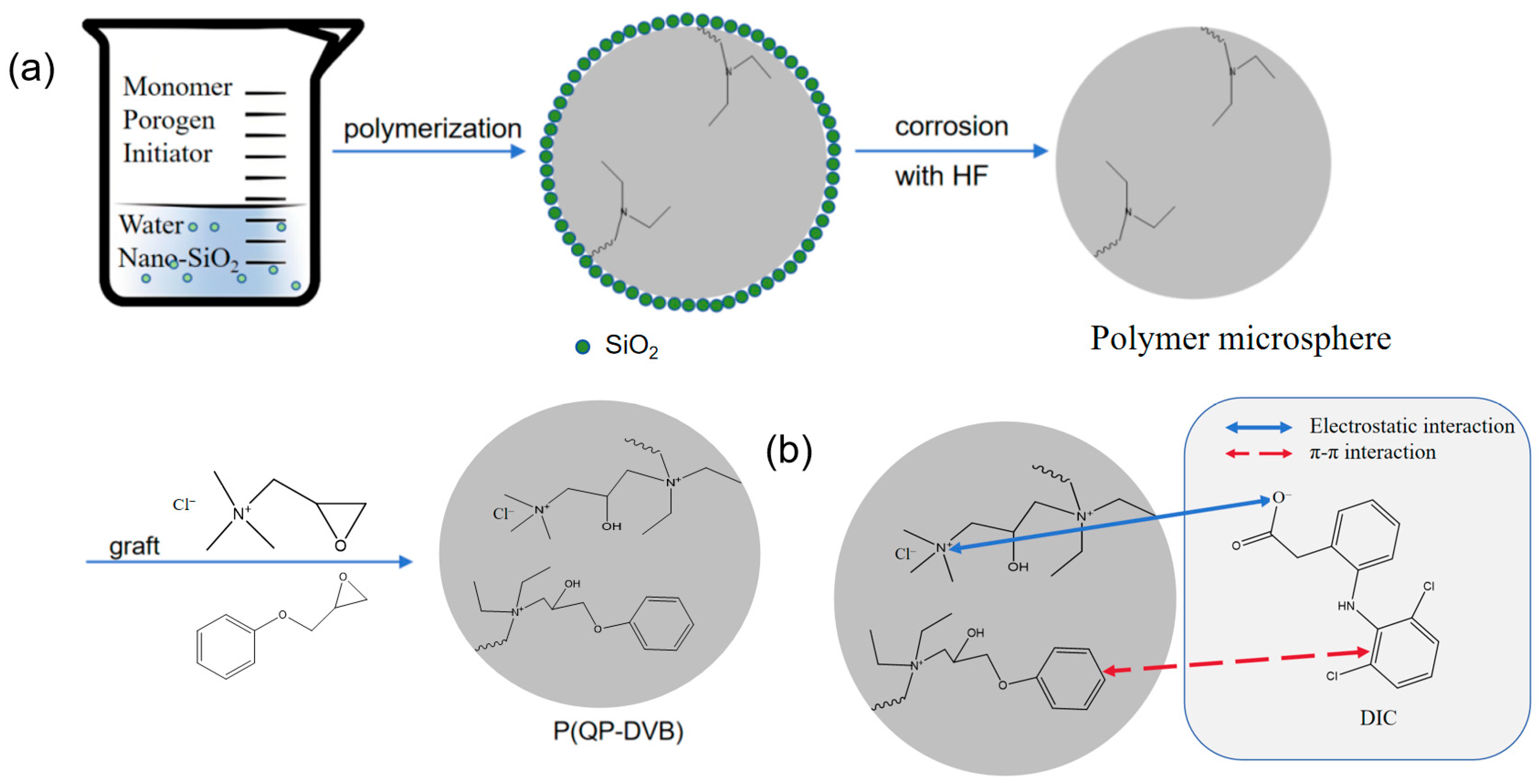
Figure 1. (a) Schematic illustration for preparation of P(QP-DVB) microspheres and (b) the possible interaction mechanisms between DIC and adsorbent.
Jcs 09 00663 g001
Figure 2. SEM images of P(QP-DVB) adsorbent (a) 500× and (b) 1000×.
Jcs 09 00663 g002
Figure 3. (a) N2 adsorption–desorption isotherms and (b) pore size distribution of P(QP-DVB) microspheres.
Jcs 09 00663 g003
Figure 4. Polymers microsphere and P(QP-DVB) FTIR spectra.
Jcs 09 00663 g004
Figure 5. (a) pHpzc of P(QP-DVB) (10 mg P(QP-DVB) in 100 mL 0.1 M KCl), (b) Effect of pH on the adsorption capacity of P(QP-DVB) adsorbents. (Conditions: C0 = 200 mg/L, dosage = 0.2 g/L, t = 2 h).
Jcs 09 00663 g005
Figure 6. (a) Kinetic curves of adsorption process, (b) Fitting for pseudo-first-order equation, and (c) Fitting for pseudo-second-order equation (Conditions: C0 = 200 mg/L, dosage = 0.2 g/L, pH 7).
Jcs 09 00663 g006
Figure 7. (a) Fitting for Langmuir equation and (b) Fitting for Freundlich equation. (Conditions: C0 = 10–300 mg/L, dosage = 0.2 g/L, pH 7, t = 2 h).
Jcs 09 00663 g007
Figure 8. DIC removal efficiencies (%) in 10 subsequent adsorption–desorption cycles. (Conditions: C0 = 200 mg/L, dosage = 0.2 g/L, pH 7, t = 240 min).
Jcs 09 00663 g008
Figure 9. Comparison of fresh and spent P(QP-DVB) SEM images for 10 consecutive sorption–desorption, (a) before the cycles (1000×) and (b) after the cycles (1500×).
Jcs 09 00663 g009
Figure 10. N2 adsorption–desorption isotherms after the cycles.
Jcs 09 00663 g010
Figure 11. Selectivity for the detection of DIC by P(QP-DVB) with humic acid. (Conditions: C0 = 200 mg/L, dosage = 0.2 g/L, pH 7).
Jcs 09 00663 g011
Table 1. The DIC chemical, physical, and structure.
pKaCAS NumberLog PWater Solubility (mg L−1)Structure
4.1515307-86-54.512.37Jcs 09 00663 i001
Table 2. Textural properties for the sorbents.
SBET (m2 g−1)Pore Volume (cm3 g−1)Pore Size (nm)
P(QP-DVB)6371.12–25
Table 3. Adsorption kinetic parameters of P(QP-DVB) for DIC removal.
Model
Pseudo-First OrderPseudo-Second Order
qe,exp (mg/g)qe (mg/g)K1 (min−1)R2qe (mg/g)K2 (g/mg·min)R2
352.0328.00.120.974351.20.00420.997
Table 4. Characteristic parameters of Langmuir and Freundlich isotherms for the adsorption of DIC onto P(QP-DVB).
Model
Langmuir IsothermFreundlich Isotherm
qe,exp
(mg/g)
qm
(mg/g)
KL
(L mg−1)
RLR2Kf
(L mg−1)
nR2
415487.560.0550.0450.99652.700.530.981
Table 5. DIC adsorption performance of the P(QP-DVB) and other reported adsorbents.
AdsorbentC0 (mg/L)T (K)qmax (mg/g)References
SA/CNC/PVA@PEI
composite
100–1000303418.41[26]
SQP-PEI5–60298342.70[27]
EPCS@PEI
adsorbent
50–200308253.32[28]
Carbonxerogels0–60298182.50[29]
Fe3O4@SiO2/SiHTCC0–600298240.40[30]
ALB/PEI hydrogel100–300298232.5[31]
AC derived from agricultural by-product0–1029856.2[32]
P(QP-DVB)10–300298487.56Present work
Disclaimer/Publisher’s Note: The statements, opinions and data contained in all publications are solely those of the individual author(s) and contributor(s) and not of MDPI and/or the editor(s). MDPI and/or the editor(s) disclaim responsibility for any injury to people or property resulting from any ideas, methods, instructions or products referred to in the content.