Article

Food Industry Waste as Bio-Modifiers for Sustainable Concrete: Effects of Roasting Pretreatments and Oilseed Cake Types

by
Sıddıka Yusra Özkılıç
1,
Ayşe Büşra Madenci
2,
Derya Arslan
1,
Fatih Yılmaz
3,
Emrah Madenci
3,* and
Yasin Onuralp Özkılıç
3,4,*
1
Department of Food Engineering, Necmettin Erbakan University, Konya 42090, Türkiye
2
Gastronomy and Culinary Arts, Necmettin Erbakan University, Konya 42090, Türkiye
3
Department of Civil Engineering, Necmettin Erbakan University, Konya 42090, Türkiye
4
Department of Unique Buildings and Constructions Engineering, Don State Technical University, Gagarin Sq. 1, Rostov-on-Don 344003, Russia
*
Authors to whom correspondence should be addressed.
J. Compos. Sci. 2025, 9(12), 699; https://doi.org/10.3390/jcs9120699
Submission received: 30 October 2025 / Revised: 28 November 2025 / Accepted: 11 December 2025 / Published: 14 December 2025

Abstract

The use of food industry by-products in the production of construction materials is a great method to achieve sustainability and simultaneously reduce cement consumption. The present research analyzes the use of pomegranate seed cakes (untreated, oven-roasted, and microwave-treated), grape seeds, and black cumin seeds for 0–15% cement replacement. In addition, the focus is on the thermal pretreatment methods and their compatibility with the microstructure of the cement, especially microwave processing due to its rapid heating, low energy demand, and improved microstructural compatibility. The outcomes suggest that microwave-treated pomegranate seed cakes resulted in the highest workability stability, lowest slump loss, and most uniform distribution in the cement matrix in comparison to untreated and oven-roasted pomegranate seed cakes. Comprehensive mechanical tests (compressive, flexural, and splitting tensile strength) and microstructural analyses (SEM, EDS, FTIR, XRD, BET) were conducted on both raw additives and concrete specimens. Although mechanical performance decreases with increasing organic content, mixtures containing 3–5% bio-modifier provided a favorable balance between workability, strength retention, and microstructural development. Microwave pretreatment not only improved the surface morphology but also made the interface more reactive, and by consuming around 80–85% less energy than the oven roasting, it strengthened the sustainability feature of the process. In a nutshell, the research proves that low-energy thermal pretreatment of food-grade waste can result in functional, eco-efficient cementitious composites, and at the same time, the integration of food engineering principles into environmentally friendly construction material design will become inevitable.

1. Introduction

The rapidly increasing population, urbanization rates and industrial production worldwide are causing the rapid depletion of natural resources, waste production and environmental pollution [1]. The food industry in particular is considered a critical sector in terms of environmental sustainability, not only in terms of its consumer production but also in terms of the very large volumes of waste generated during the production process [2]. A large portion of the by-products resulting from food processing activities—such as fiber, hulls, and pulp—are mostly converted into animal feed, compost, or low-value-added products or disposed of in landfills. However, the high levels of organic matter, cellulose, and complex structures such as lignin in these wastes make them suitable for advanced engineering applications [3]. This is achievable, but still, the present study does not inform us sufficiently about the low-temperature pretreatments’ (like microwave and oven roasting) influence on the physicochemical properties of oilseed cakes when incorporated into cementitious systems. A significant gap is observed in the systematic studies that compare the variants of the same food-derived waste (untreated, oven-roasted, and microwave-processed) under the same experimental conditions.
The discipline of food engineering covers not only food production processes but also the optimization of these processes, the recycling of by-products, and the economic transformation of waste. In this context, the oilseed oilcakes (such as sesame, black cumin, rapeseed, and pomegranate seed) resulting from cold pressing or solvent extraction can be evaluated not only as biofuel, feed, or food additives, but also as functional additives, due to their high carbon, protein and fiber content [4]. The high surface area, porous morphology, and water retention capacity of these materials make them potential additives in areas such as biocomposites or the construction industry. Shivamurthy et al. [5] reported that jatropha oil cakes act as lubricants or bio-solid lubricant fillers in epoxy composites due to their soft and oily composition, thus increasing wear resistance and enabling high load applications. Khalil et al. [6] studied the effective use of jatropha biomass components (including oil cake) in the production of biocomposites. Besides Jatropha oil cake, sunflower, linseed, pumpkin, and castor oil cakes have also been used as filler materials for composite applications [7,8,9,10].
Food engineering encompasses all food production processes, their byproducts, and the conversion of wastes into economic value. The functional properties of biomass-based residues supplied by this discipline enable new applications in various engineering fields, such as building materials. Oilseed oil cakes are an example of highly organic-rich biological wastes that can serve as functional additives both in the food industry and in material-intensive industries, like civil engineering, owing to their fibrous structure, porous morphology, and water-holding capacity. This multifaceted bridge between the two disciplines—food engineering and civil engineering—based on sustainability offers significant opportunities not only in waste management but also in the development of environmentally friendly building materials.
Sustainability efforts, especially in the construction materials sector, have brought alternative solutions to the agenda in terms of partial or complete substitution of high-energy-consuming and high-carbon-emitting materials such as cement [11]. Cement production is responsible for approximately 7% of global CO2 emissions, and numerous studies are being conducted on “green cement” and alternative binder systems to reduce these emissions [12]. A significant portion of these studies focuses on the use of industrial or agricultural wastes as supplementary cementitious materials [13,14,15]. Many agricultural wastes, such as rice husk ash, sugarcane bagasse ash, palm leaf ash, and palm oil fuel ash, are reactively integrated into binder systems through high-temperature treatments. There are very few examples of dioxin-containing waste, and most of those materials require intense heat treatment, including silica or alumina post-processing additions [16,17,18].
In recent years, the use of less processed or uniquely thermally pretreated biobased food waste as additives in cement-based systems has begun to attract attention. The use of such organic resources not only reduces carbon emissions but also provides microstructure improvement, increased impermeability, gains in thermal resistance, and balance in mechanical strength. Microwave heating offers a significant sustainability advantage due to its lower energy demand, faster volumetric heating, and reduced carbon emissions compared to traditional oven roasting. Various studies have shown that low-energy, rapid and homogeneous thermal treatments improve the functional properties of such wastes, particularly microwave heat treatment [19,20]. Furthermore, the fibrous, carbon-rich structures of these wastes contribute to the microstructure of concrete and positively affect properties such as microcrack control and consistency stabilization. However, the precise effects of thermal pretreatment on the surface chemistry, porosity, and hydration compatibility of these organic residues remain inadequately elucidated, indicating a significant knowledge deficiency.
Comprehensive reviews [21] show that global trends in the use of seed-based waste in cement composites are increasing, and the number of publications in this field has increased rapidly, especially in the last five years. However, there are still important gaps in this literature. One of them is the integration of oilseed cakes into concrete, either unprocessed or with different thermal pretreatments. Systematic and comparative studies on how the chemical properties of these wastes change with pretreatment, their effects on the hydration process, their contributions to the microstructure, as well as their roles in high-temperature resistance are quite limited. In this context, it is important to evaluate the effects of thermal processing techniques, which are widely used in food engineering, on the performance of building materials with a holistic approach.
The use of food waste in concrete offers not only environmental sustainability but also economic, social and technical benefits. On-site processing of waste obtained from local food producers and its use in the construction sector reduces carbon emissions from transportation and provides economic advantages to concrete producers with low-cost additive systems. In addition, such applications are of strategic importance in terms of increasing university-industry collaborations and regional development.
This study investigates the use of three different oilseed cakes (pomegranate seed, grape seed, and black cumin) obtained by the cold pressing method as additives in cement-based concrete systems. In particular, pomegranate seed meal was systematically compared by subjecting it to three different thermal pretreatments (untreated—control group, microwave-heated, and oven-roasted). The study aims to evaluate the effects of heat treatment techniques commonly used in food engineering on workability, mechanical strength, high-temperature resistance, and microstructure properties in cementitious systems with an interdisciplinary approach. The produced concrete samples were prepared at 0%, 3%, 5%, 10% and 15% additive rates and subjected to slump, compressive strength, bending, and tensile strength tests. In addition, SEM, XRD, FTIR, BET, and XRF analyses were performed for microstructural characterization. This study not only assesses mechanical performance but also provides a mechanistic understanding of how thermal pretreatments alter the interaction between bio-modifiers and the cement matrix, addressing an overlooked dimension in the literature.
The distinguishing feature of the present study is the evaluation of three various pretreatment conditions (untreated, oven-roasted, microwave-treated) applied to the same oilseed waste and the investigation of their effects on both the mechanical properties of the concrete and the development of the microstructure. The combination of food engineering thermal processes and sustainable concrete design has opened up a new interdisciplinary field of research that has not been thoroughly explored in the past.

2. Materials and Methods

2.1. Production of Oilseed Cakes

In the research work, oilseed cakes derived from grape seeds, black cumin seeds, and pomegranate seeds were utilized. Oilseeds hold multidisciplinary applications in the food sector, not only through the generation of vegetable oils but also through the use of their waste byproducts (press cakes) for the manufacturing of functional foods, animal feeds, and eco-friendly building materials. The byproducts are rich in protein, dietary fiber, phenolic compounds, and minerals, thus offering both nutritional value and environmental advantages [22,23,24].

2.1.1. Roasting Process

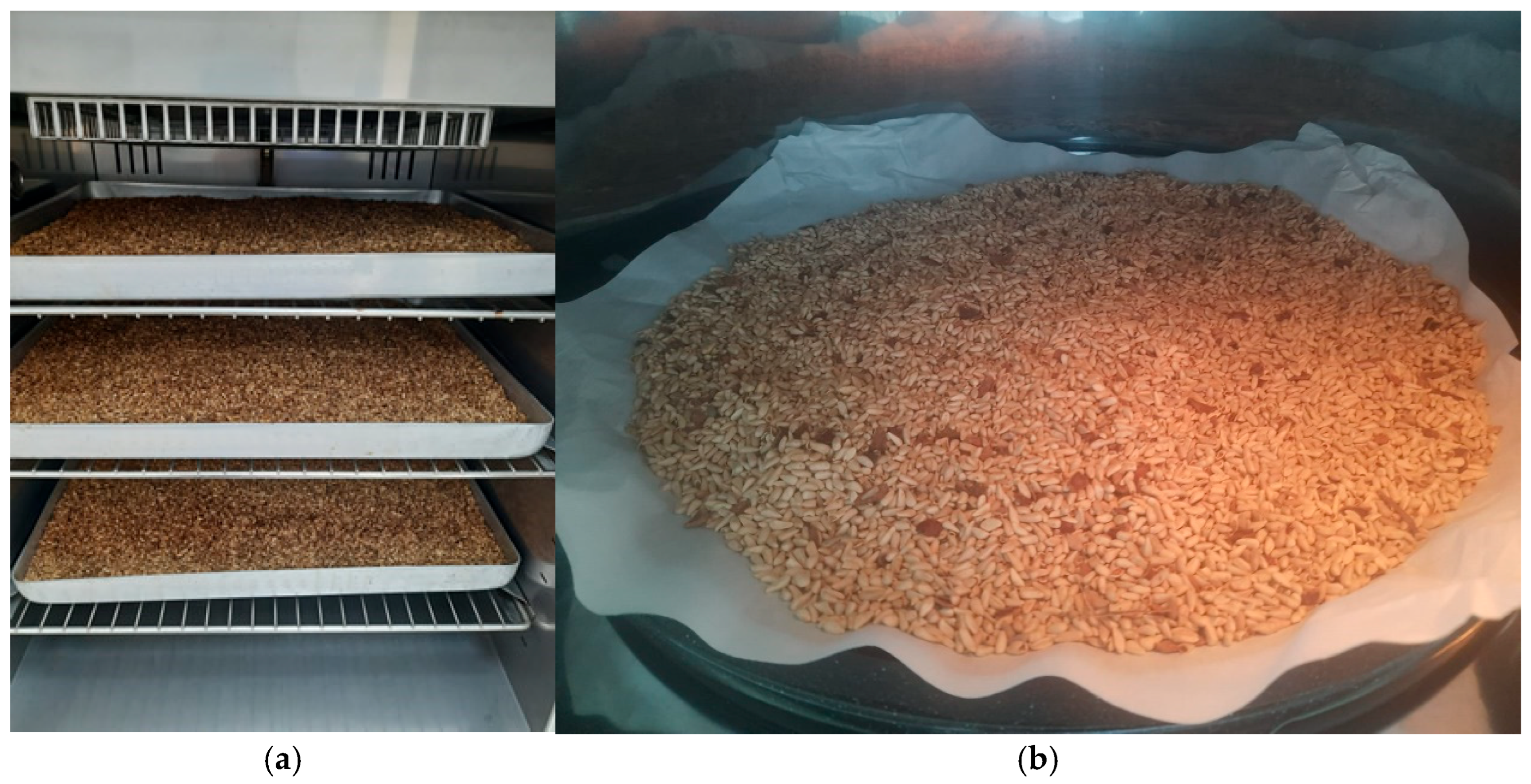
Pomegranate seeds were subjected to two different heat pretreatments before oil extraction: oven(Nüve FN400, Ankara, Türkiye) roasting (120 °C, 30 min) and microwave(LG SolarDOM, LG Electronics, Seoul, Republic of Korea) roasting (600 W, 8 min). These two roasting processes are shown in Figure 1. Roasting is used to increase oil yield, inhibit undesirable enzymatic reactions, and denature cell wall proteins to facilitate the oil flow during pressing. It can also increase the antioxidant capacity of both the oil and the cake by releasing phenolic compounds. Microwave roasting, in particular, provides faster and more energy-efficient heat transfer compared to traditional methods. This method heats the water molecules within the seed from the inside out, triggering physical transformations such as controlled moisture loss, protein denaturation, and micropore formation. These transformations can affect not only food functionality but also the physical-reactive structure of the cake, which will be used as a building material. The roasting process alters the surface morphology of the cake, allowing for the formation of a more porous, fibrous, and reactive structure. This is particularly important for the distribution, bonding, and interfacial transition zones of organic additives used in sustainable concrete applications.
For the roasting processes applied in this study, microwave and oven heating were compared in terms of energy consumption. Microwave pretreatment (600 W, 8 min) required approximately 0.08 kWh of energy, while oven roasting (120 °C, 30 min) consumed approximately 0.60–0.80 kWh. This corresponds to an energy savings of approximately 80–85% when using microwave processing. Since energy consumption is a critical factor in sustainable materials development, the significantly lower energy demand of microwave roasting highlights its environmental advantage. This comparison is consistent with the sustainability goals of using low-energy processes for the valorization of food-related waste materials.

2.1.2. Pressing Process

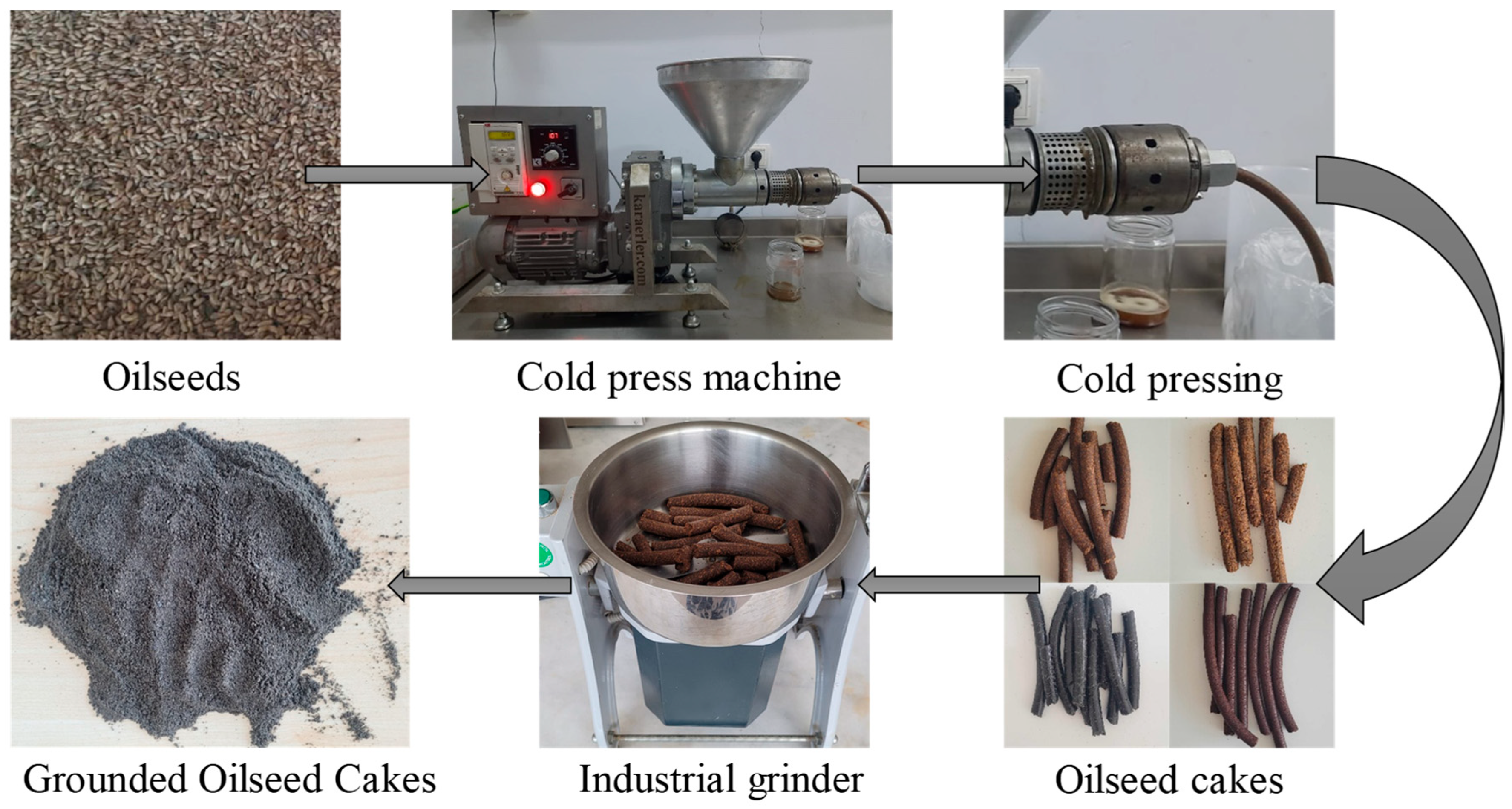
The oilseeds, either roasted or unroasted, were ground and pressed in a cold press machine (220 V, 5 mm nozzle diameter, 33 mm screw shaft, 18 Hz speed) (Karaerler, NF500, Ankara, Türkiye). The exit temperature during pressing was controlled so as not to exceed 50 °C, thus preserving the microstructures. After the cold press process, the oilseed cakes were ground to 1–2 mm sizes using an industrial grinder (Arsel, Istanbul, Türkiye). The resulting cakes were individually packaged and stored for analysis. The oilseed cake manufacturing process is shown in Figure 2.

2.2. Production of Concrete

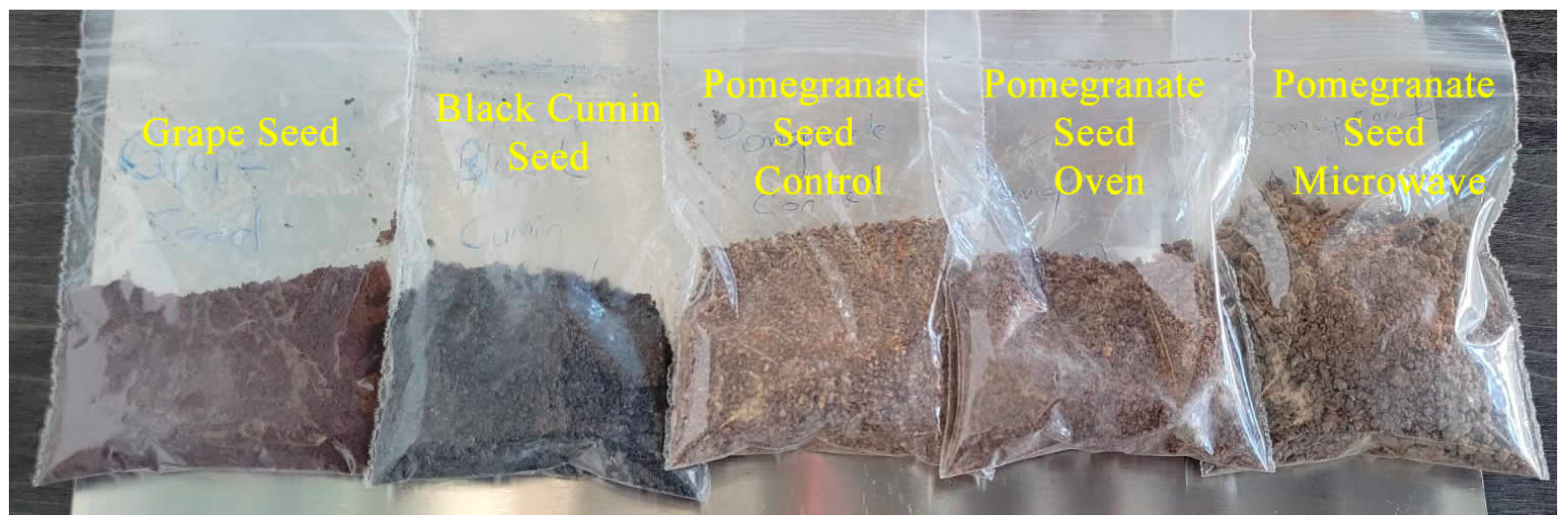
Type C32.5 cement was utilized in the study. According to the manufacturer data, the mineralogical composition of the C32.5 cement used in this study is approximately as follows: C3S: 52–56%, C2S: 18–22%, C3A: 6–8%, and C4AF: 8–10%. This information is important for interpreting the hydration behavior in the presence of organic additives. Fine aggregates of 0–4 mm and coarse aggregates of 5–12 mm were utilized. Oilseed cakes were utilized for the replacement of cement with ratios of 3%, 5%, 10%, and 15%. Moreover, the reference sample was manufactured without any oilseed cakes. The utilized concrete mixture is provided in Table 1 for different replacement ratios. The oilseed cake samples are shown in Figure 3. Figure 4 demonstrates the mixed oilseed cakes in the concrete mixture. For compressive strength, 10 × 10 × 10 cm cubic samples, for splitting tensile strength 10 × 20 cm cylindrical samples, and for flexural strength 10 × 10 × 40 cm bending samples were manufactured. The samples were cured for 28 days.

2.3. Microstructural, Thermal and Functional Characterization of Mixtures and Concrete Samples

To fully demonstrate the performance of the oilseed meal and blended concrete samples used in this study, multifaceted characterization techniques were applied at different scales. This aimed to determine the chemical and physical structure of the additives and to monitor the microstructural and phase changes that occur after their integration into the cement matrix. This multidimensional study shows, with perhaps an entirely different emphasis on critical parameters that interacted with additive and matrix, hydration process, and binder structure, also, high-temperature resistance.

2.3.1. Scanning Electron Microscopy (SEM)

The microstructure, additive-cement bond surfaces, porosity properties, and particle morphology of the additive-concrete samples were examined using Scanning Electron Microscopy (SEM) (Hitachi—SU 1510, Hitachi, Tokyo, Japan). The observations revealed crack behavior on the surface structure, that the homogeneous distribution of additives, and that their interaction with the cement matrix. The micrographs demonstrated the effects of different thermal pretreatment techniques on particle structure, providing the basis for interpreting possible additive mechanisms affecting concrete performance.

2.3.2. Fourier Transform Infrared Spectroscopy (FTIR)

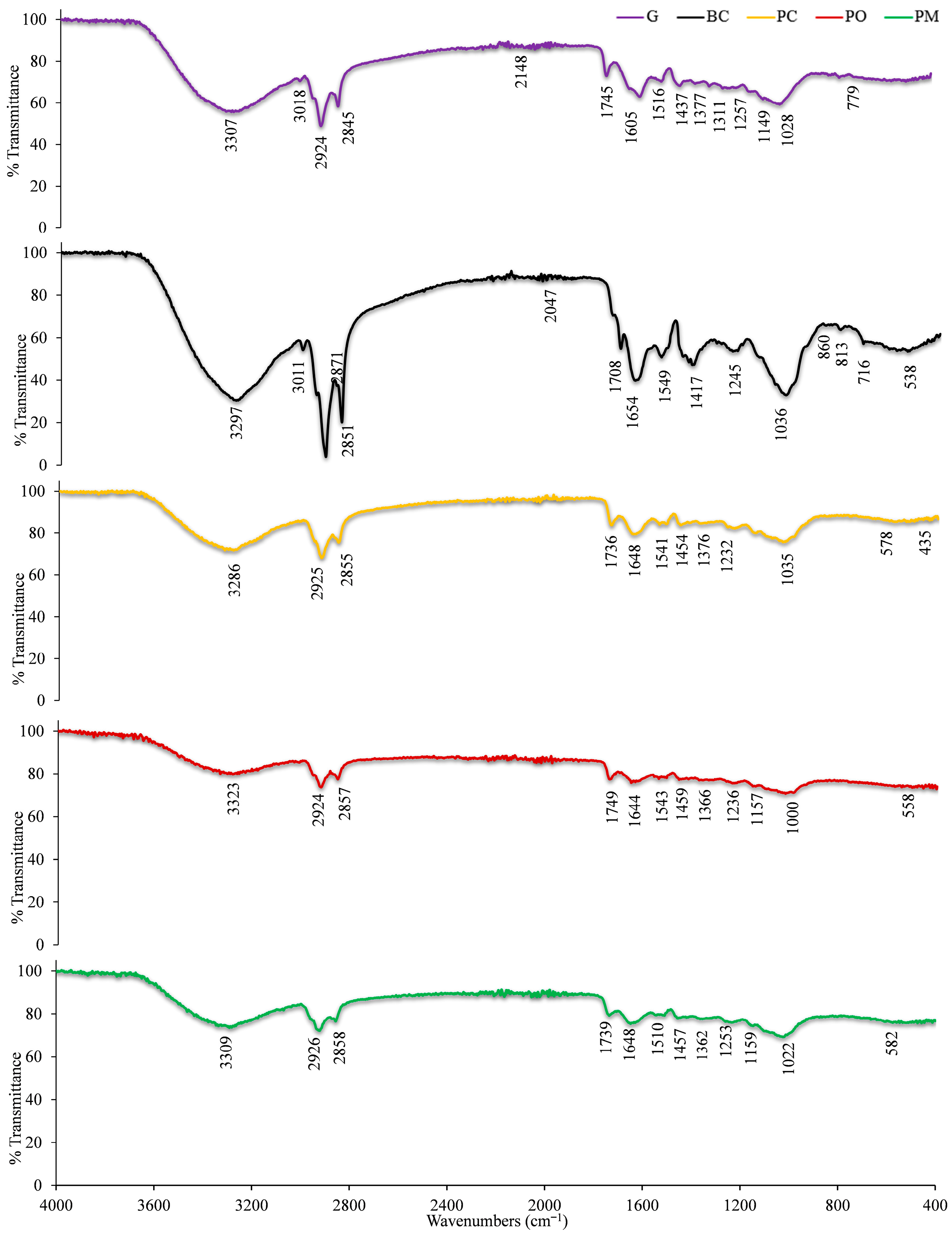
FTIR (Thermo Scientific—Nicolet iS20, Waltham, MA, USA) analysis was conducted to determine the organic functional groups present in the additives. It also determined whether the additive had undergone chemical transformation after pretreatment and the functional structures that interacted with the cement components. The analysis was conducted in the wavelength range of 400–4000 cm−1.

2.3.3. X-Ray Diffraction (XRD)

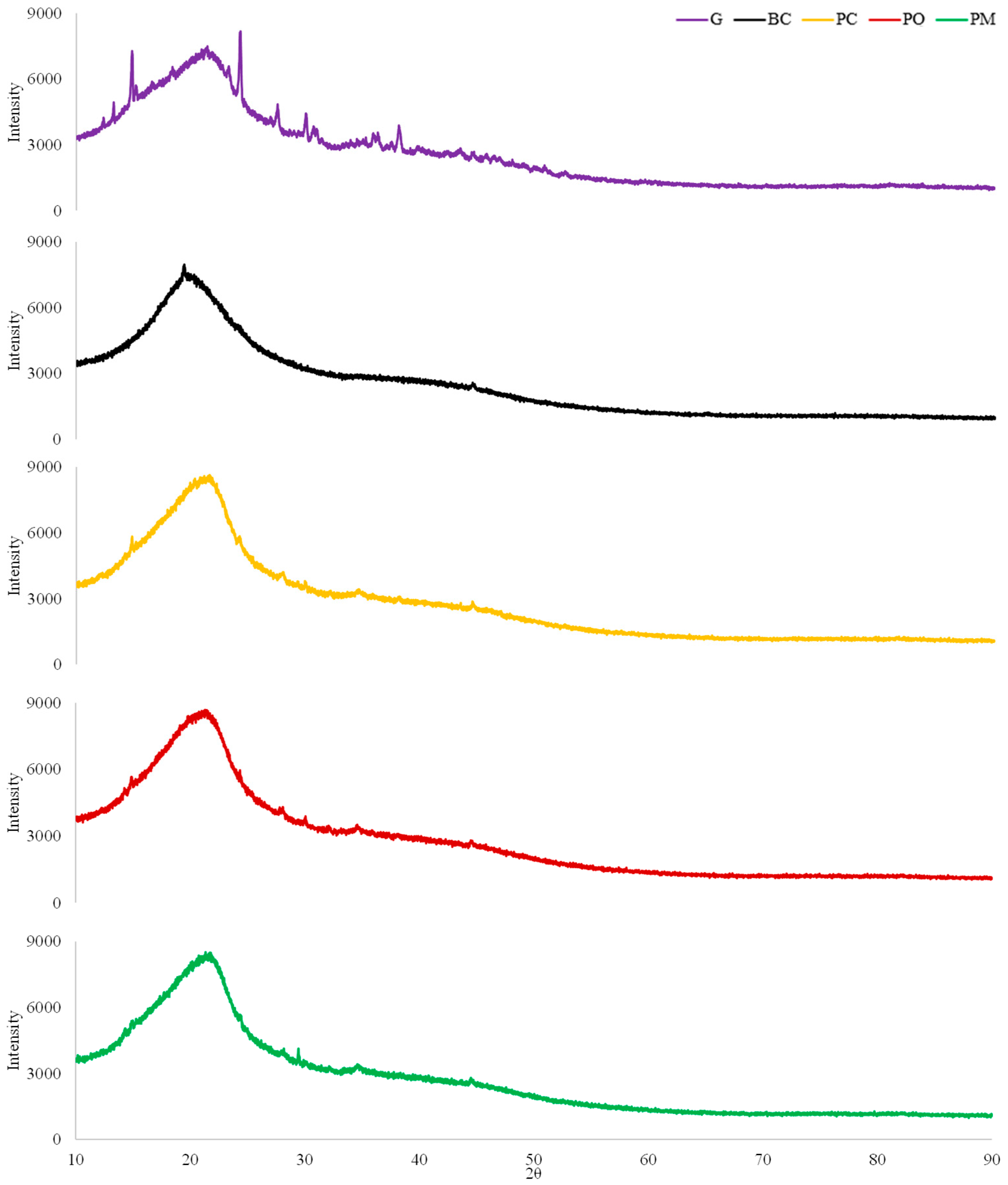
XRD (PANalytical EMPYREAN XRD, Malvern Panalytical, Malvern, UK) analysis was performed solely on the powdered oilseed cake additives to assess their mineralogical composition prior to concrete preparation. This analysis revealed whether the additive supported phase transformations within the binder system. Scanning was performed in the 2θ = 10–90° range using Cu-Kα radiation (λ = 1.5418 Å).

2.3.4. Auxiliary Chemical and Surface Characterization Analyses (XRF and BET)

X-Ray Fluorescence (XRF) (Rigaku—NEX-CG, Rigaku, Osaka, Japan) and Brunauer–Emmett–Teller (BET) (Quantachrome—Quadrasorb Evo 4, Quantachrome Instruments, Boynton Beach, FL, USA) tests were employed to determine the chemical composition and surface properties of the additives. They play an important role in assessing the capacity of the additives to function as pozzolanic reactants and physical bonders within the cement system. XRF analysis was used to determine the oxide-based chemical components of pomegranate seed, grape seed, and black cumin pulp. These data allow us to predict whether the additives behaved reactively or inertly within the binder system. The specific surface areas, total pore volume, and pore diameter distributions of the mixtures were measured using the BET method. The mixture’s surface area directly affects the contact surface with the cement, contributing to the hydration process. This property also plays a critical role in the mixture’s water demand and workability.

3. Microstructural Analysis Results

3.1. SEM Results

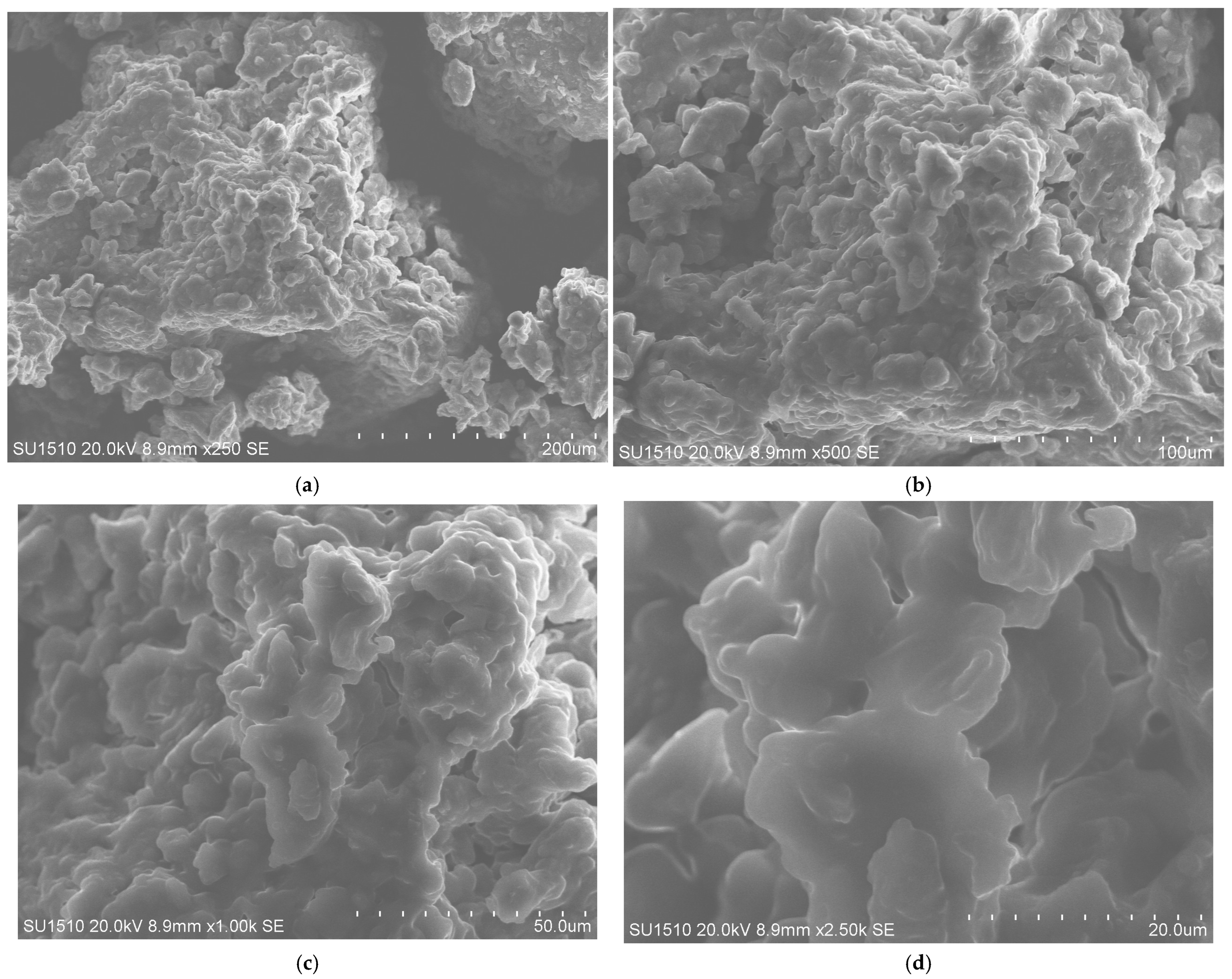
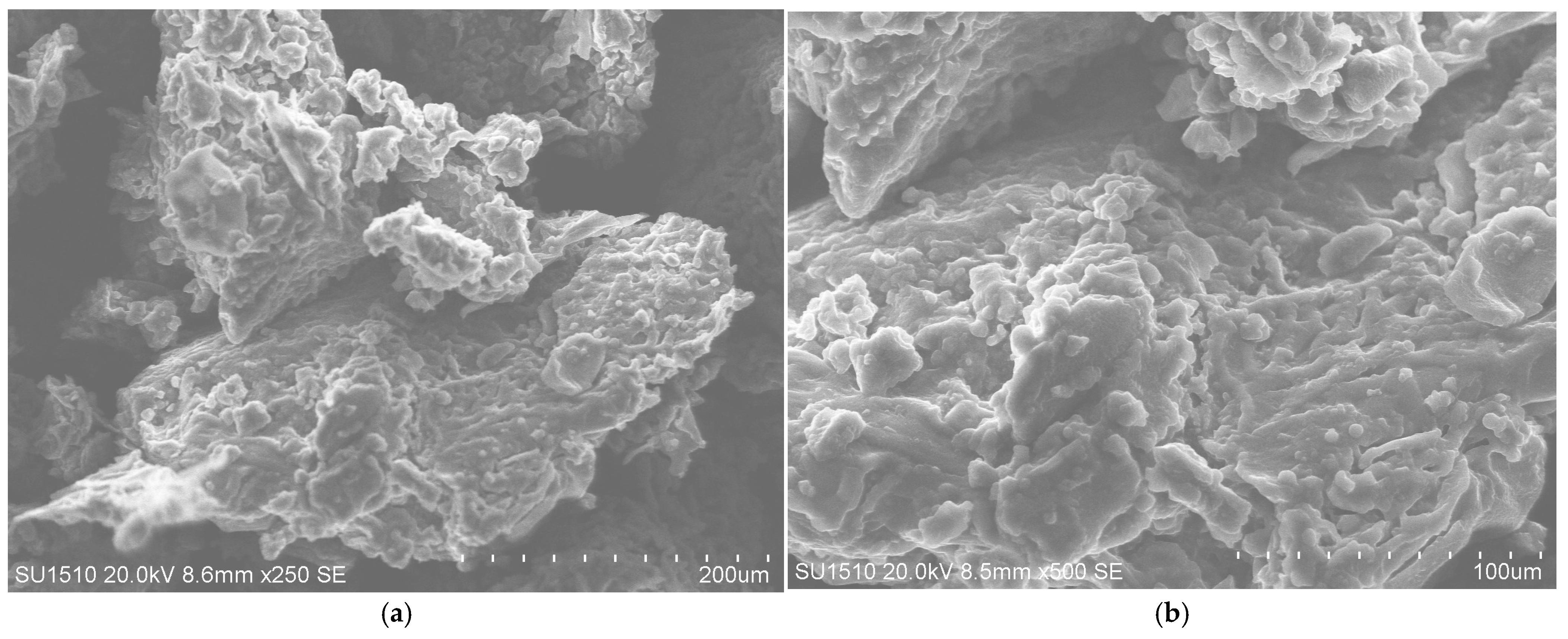
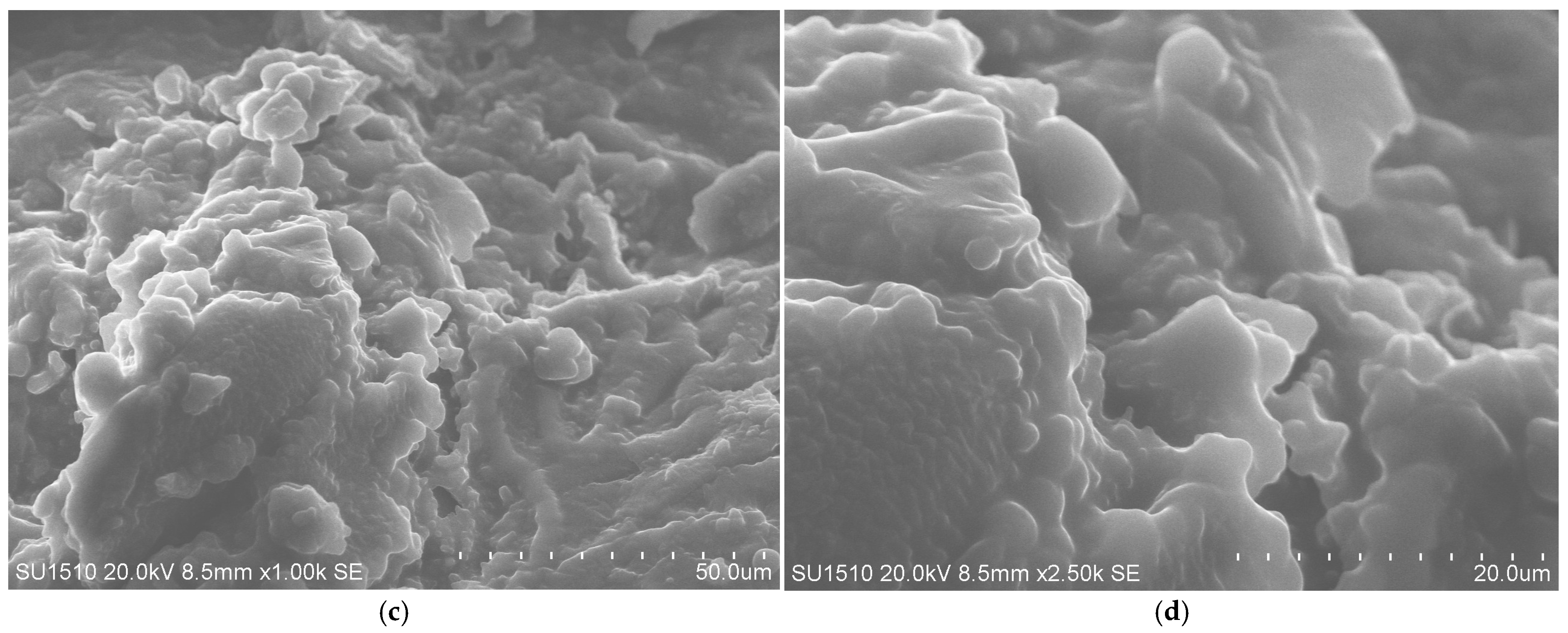
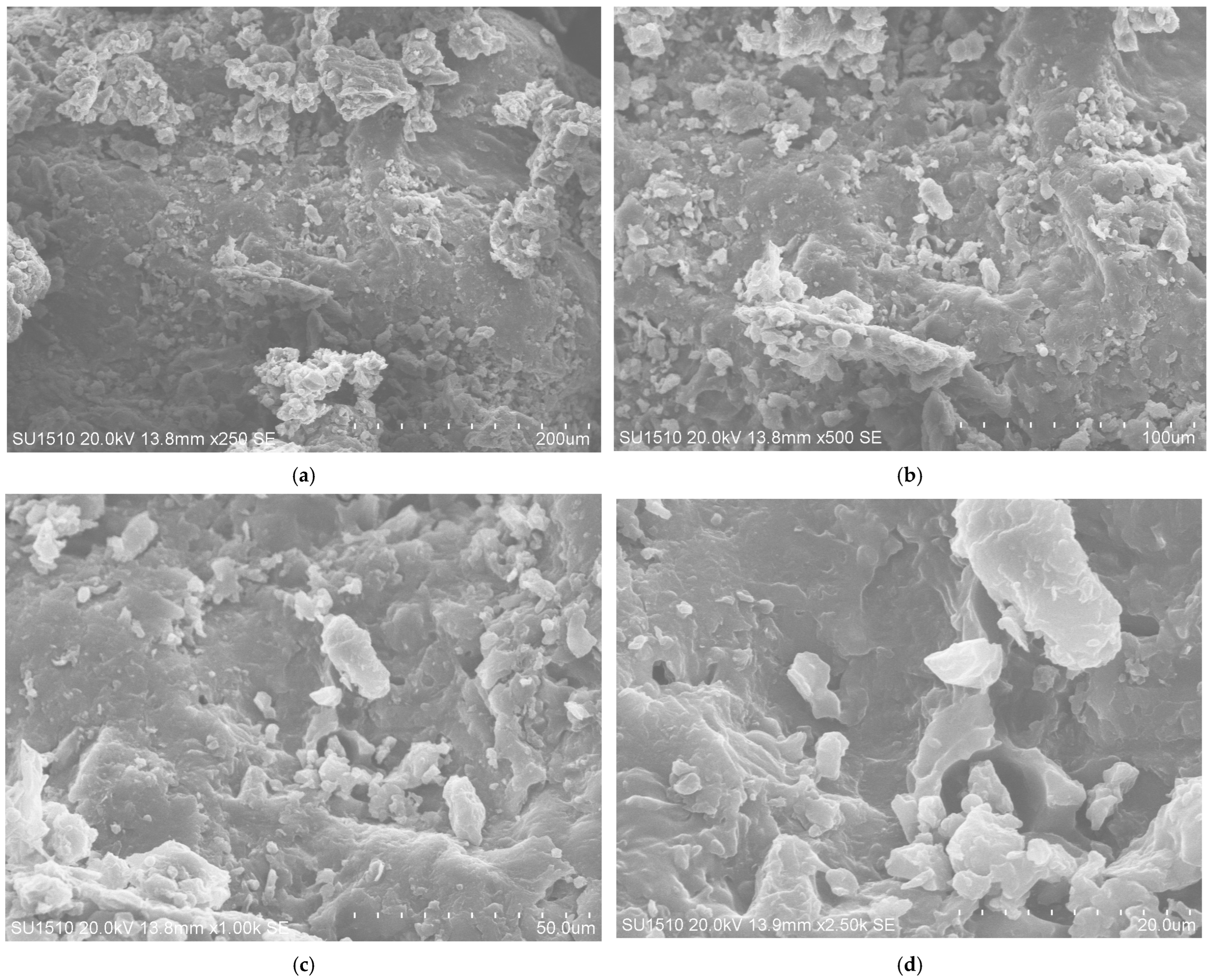
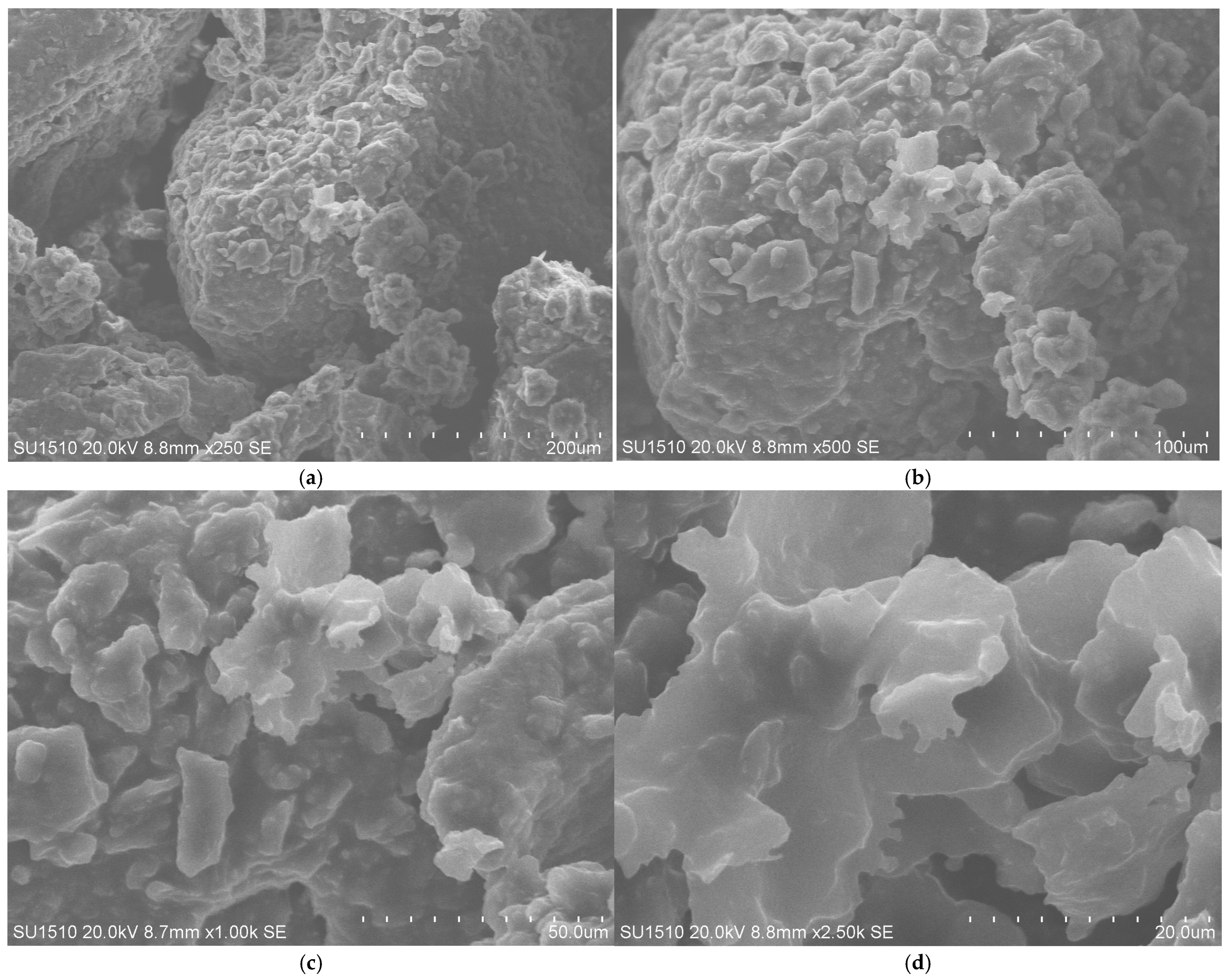
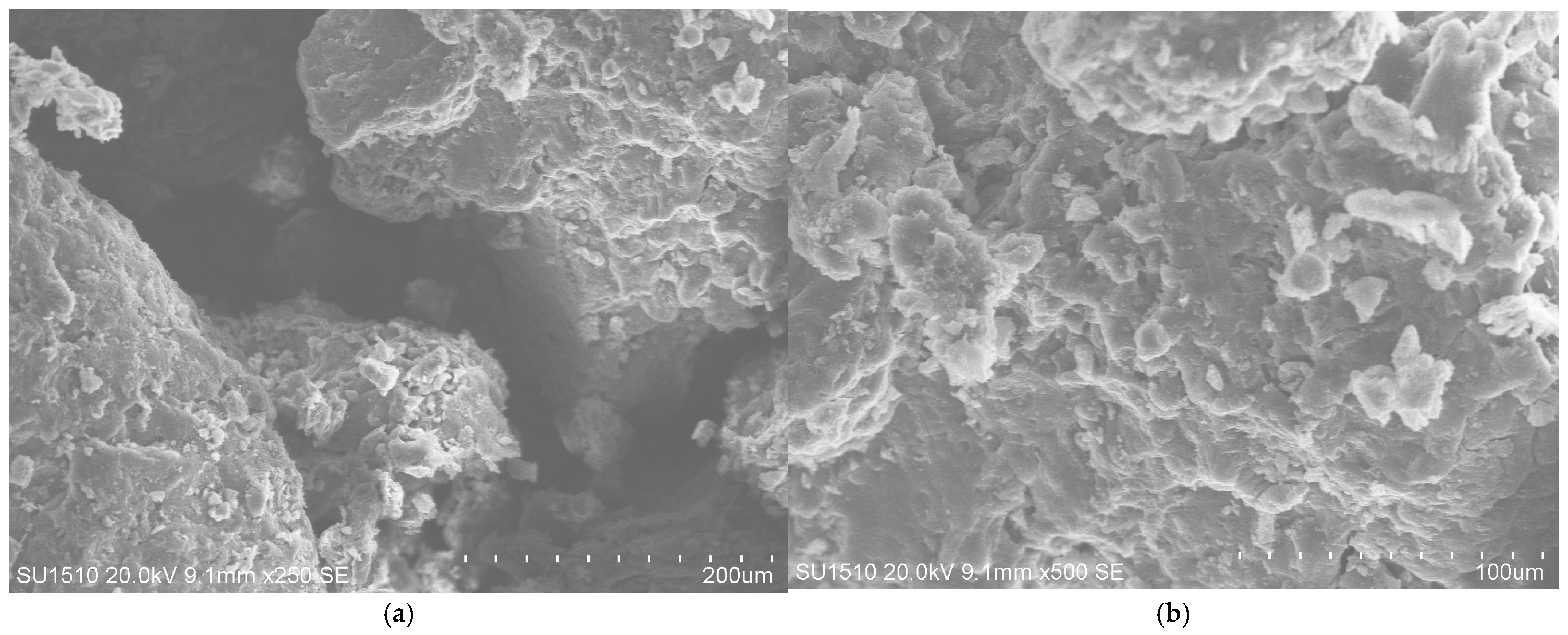
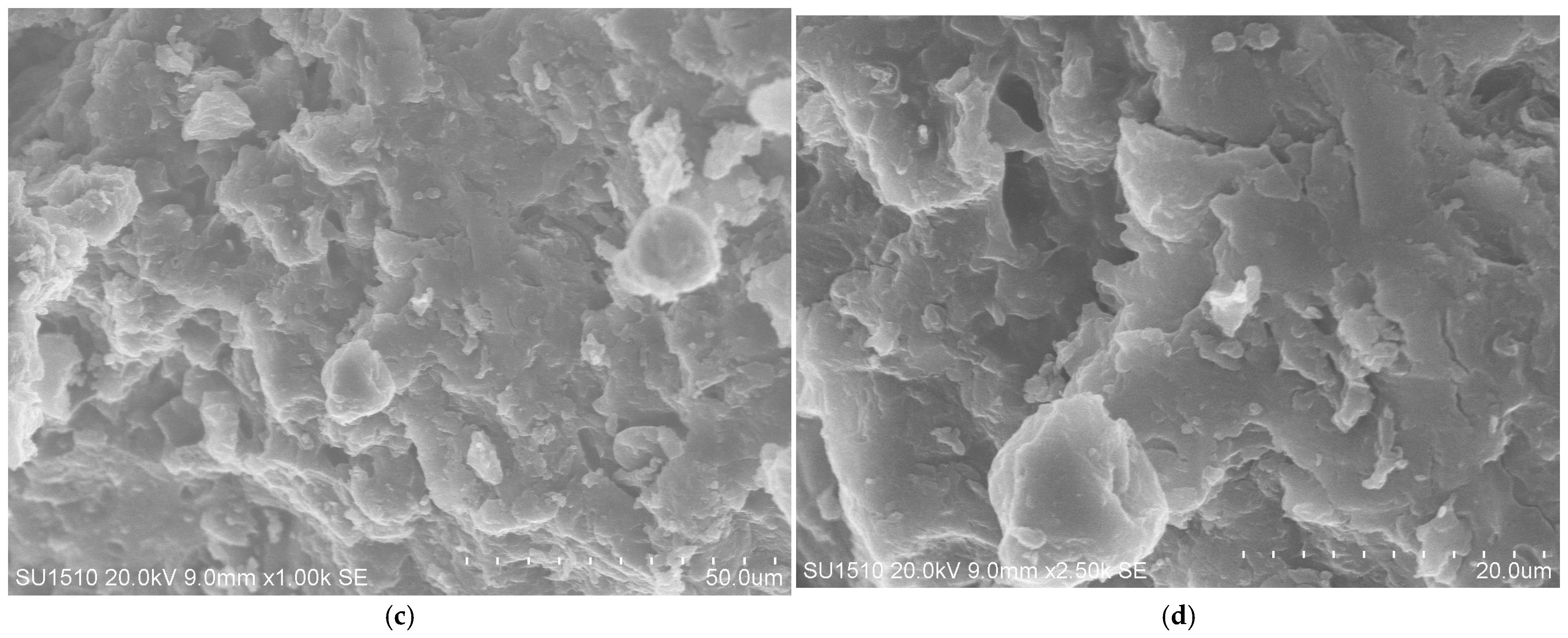
Figure 5, Figure 6, Figure 7, Figure 8 and Figure 9 shows the SEM figures of oilseed cakes. The figures were sorted ×50 to ×2500 for all seed cakes from above to bottom. Micrographs obtained at four different magnifications for each additive show that the particle structures have an irregular, fibrous and porous morphology. The sponge-like structure observed in BC and G additives (Figure 5 and Figure 6) indicates high specific surface area and potential water retention capacity. SEM images of PC (Figure 7) show that the particles have a brittle, irregular, and fractured structure. This morphology, which lacks a fibrous structure, may restrict the homogeneous distribution of the additive in the cement matrix; however, the fractured structure may provide limited advantages in terms of physical bond adhesion. In PM and PO additives (Figure 8 and Figure 9), particles with more compact surfaces and edge fractures were detected. Such morphological variations alter the potential for physical interaction of additives with cement paste and may indirectly affect factors such as hydration product accumulation, water retention behavior, and bond interface quality. These observations indicate that microwave treatment promotes micro-fragmentation and the formation of fine micropores, which facilitate better interfacial bonding with the cement matrix compared to untreated and oven-roasted seed cakes.
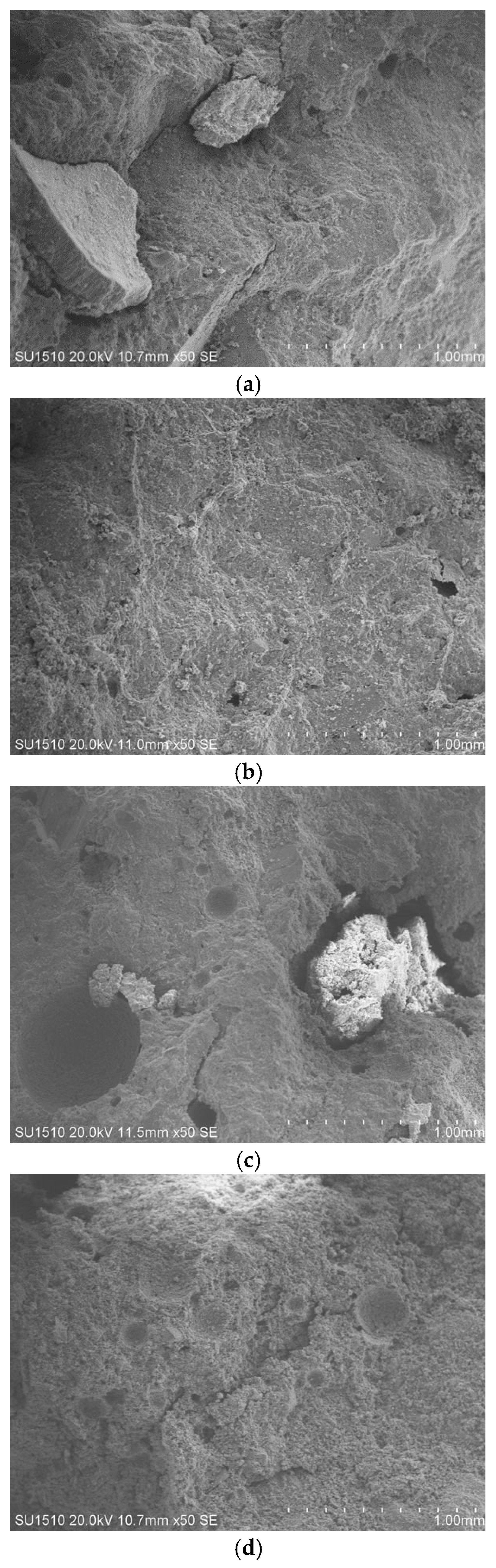
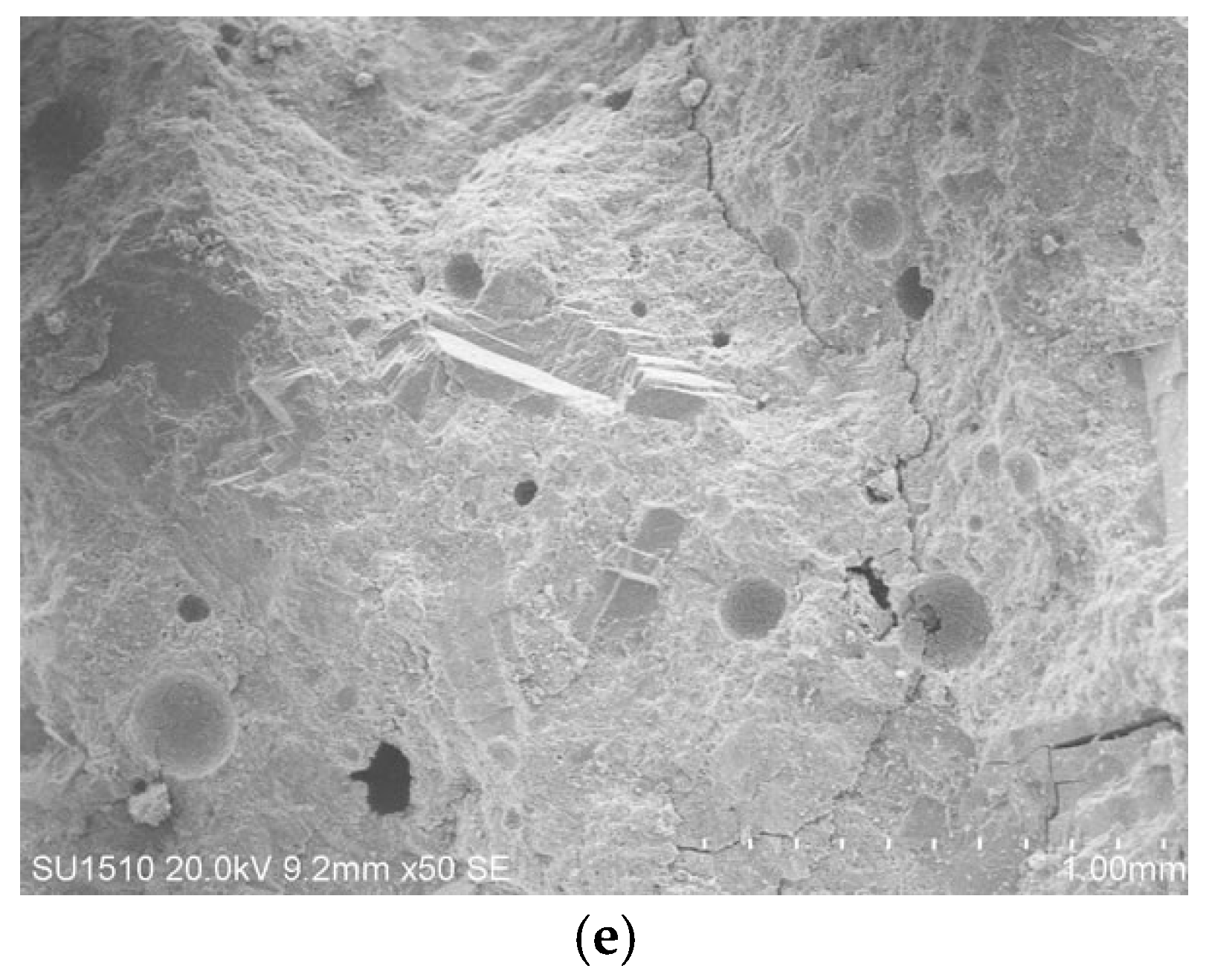
Figure 10a–e shows SEM pictures of samples with 5% oilseed meal additives. These images show how the microstructure of these concretes behaves. A visual examination shows that each addition changes the surface morphology in a different way. These changes might change how the additives physically interact with the cement matrix. Sample G5 (Figure 10a) demonstrates that the additive particles are unevenly spread throughout the matrix, with porous areas being the most common. This means that the grape seed addition does not mix well with the matrix. Sample BC5 (Figure 10b) demonstrates that the black cumin additive is in closer proximity to the cement paste, hence reducing void development around the additive. This more compact microstructure is qualitatively compatible with sample BC5′s strong mechanical performance. Sample PC5 (Figure 10c) is the reference admixture group, however microcracks and uneven voids at the admixture interface show that the pomegranate pulp admixture does not do much to make the concrete denser. Sample PO5 (Figure 10d), on the other hand, shows that the kiln-dried pomegranate seed additive is spread out more evenly and consistently throughout the cement matrix. It may be inferred that the admixture partly occupies the voids and contributes physically to the matrix. The additive particles in the PM5 sample (Figure 10e) exhibit a surface morphology that is uneven and rough. Microporosity production is noticeable around them, even though they are partly immersed in the cement matrix. This might mean that the addition does not allow for much physical interaction. It is also evident from the SEM micrographs that the organic additives primarily establish physical adhesion rather than chemical bonding with the cement hydration products, which is consistent with previous studies on biomass-based fillers.

3.2. EDS Results

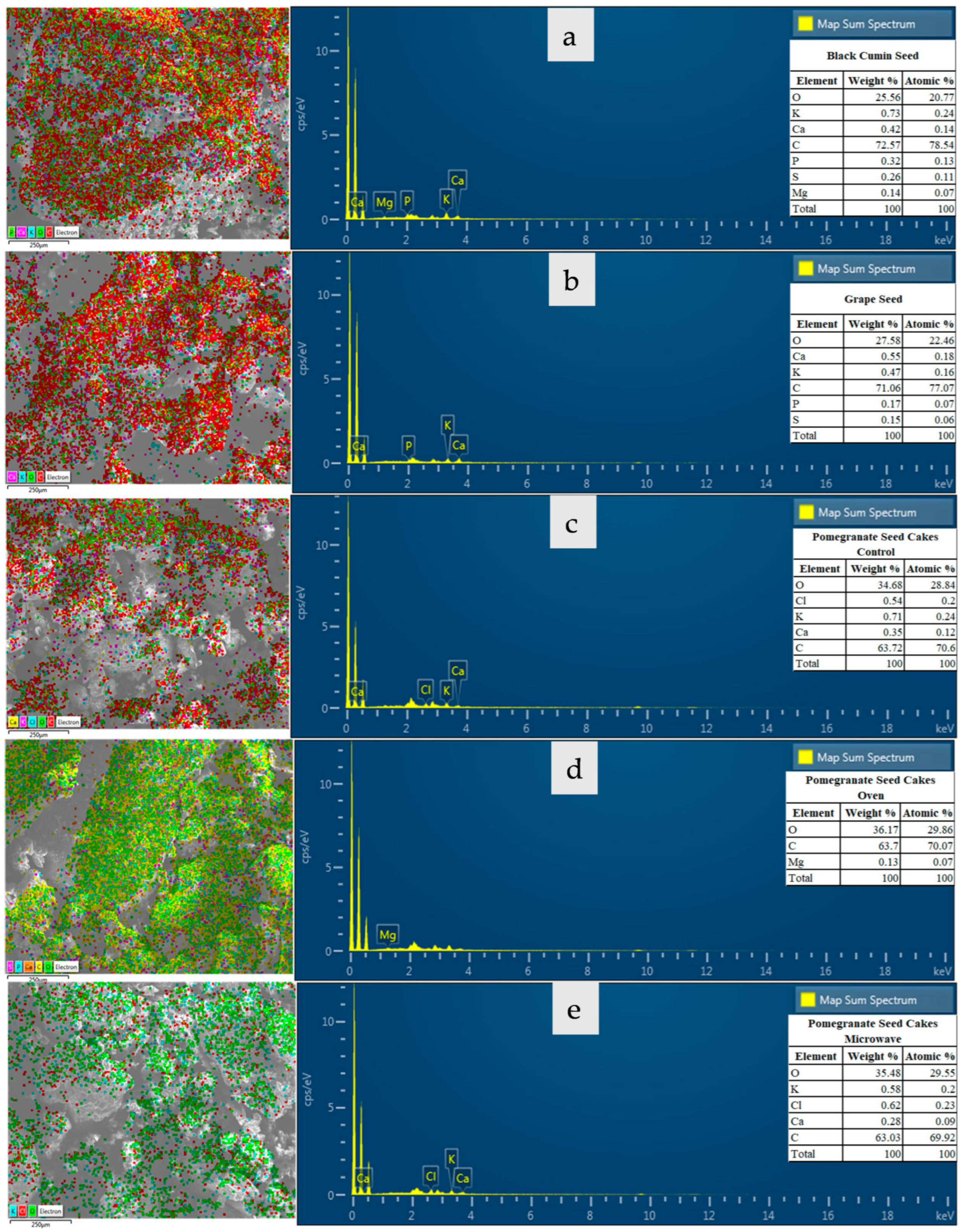
The EDS analysis results presented in Figure 11 and Figure 12, show significant elemental composition differences in both oilseed cake samples and concrete samples prepared with these additives. Energy dispersive EDS analyses performed on the seed meal (BC, G, PC, PO, PM) showed high levels of elements such as carbon (C), oxygen (O), potassium (K), magnesium (Mg), calcium (Ca), and phosphorus (P) (Figure 11). These components indicate the organic structure and biological mineral content of the meal. The decrease in carbon signals was evident in the PM and PO samples, implying the decrease in organic content. And yet, because EDS analysis is only semi-quantitative, the inference remains suggestive at best. This indicates that volatile organic compounds were removed by thermal treatments and the meal structure became more mineralized.
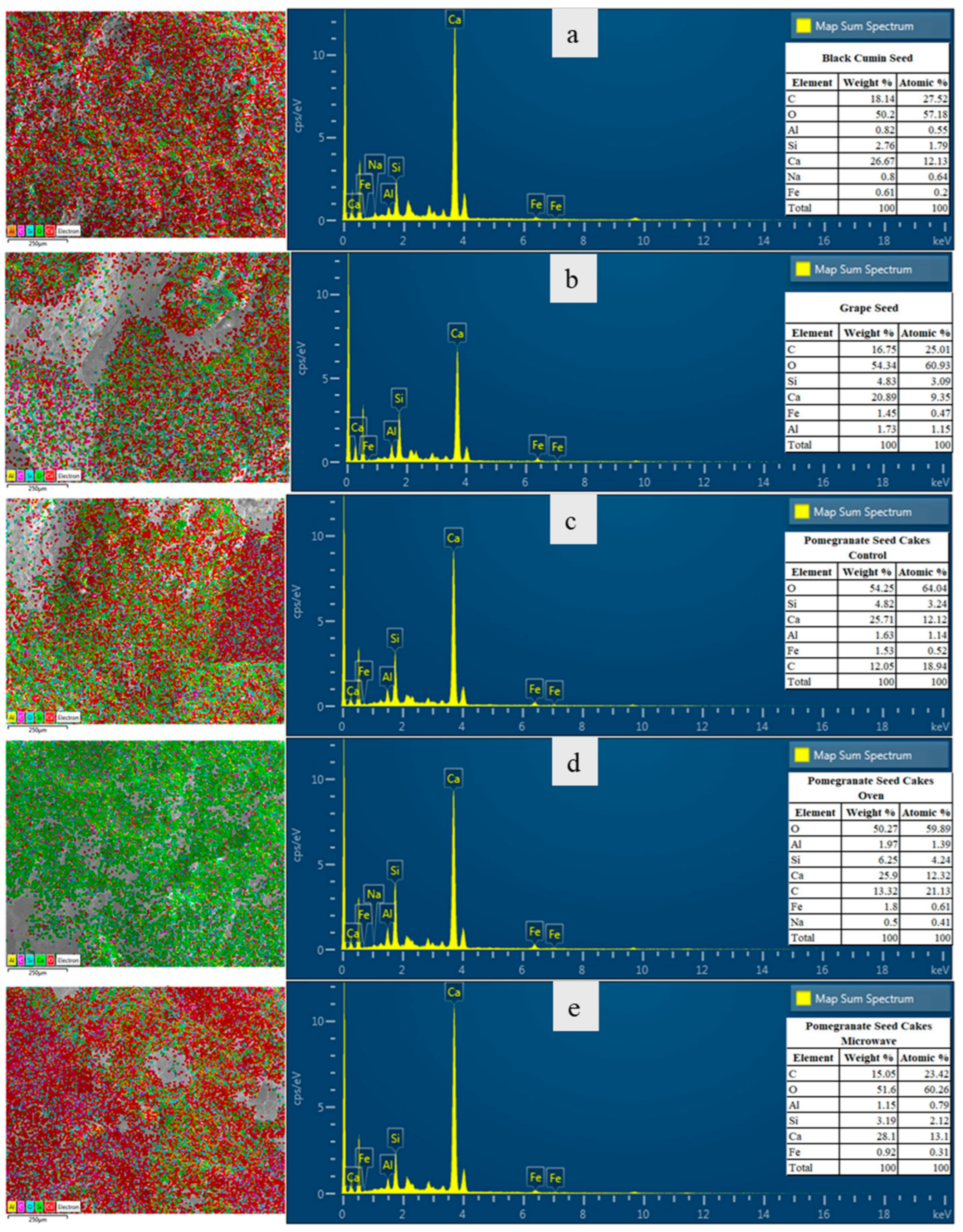
EDS analyses of concrete samples reveal the interaction between cement and oilseed meal additives in more detail, as shown in Figure 12. Ca and Si signals indicate the presence of C–S–H (calcium silicate hydrate), portlandite (Ca(OH)2), and other hydration products. These signals are dominant in all concrete samples. However, this Ca/Si ratio tends to be better balanced in PC5 and PM5 samples, thus implying a more homogeneous incorporation of the additives into the cement matrix. Furthermore, the higher concentrations of elements such as Mg and K in the PO5 sample indicate that heat treatment increases the concentration. High carbon content and irregular element distribution were observed in BC5 and G5 concrete samples, indicating poor hydration, low binding capacity, and limited interaction of the additives with the cement matrix.
EDS analyses showed local elemental composition of both raw additives and selected concrete regions. Thermally pretreated admixtures (especially PM and PO) were more responsive to cement based on their mineral composition, hence contributing to the hydration, while less reactive admixtures such as grape and black cumin had little chemical bonding capability with the cement matrix.
The baked PO sample had Mg, while the control sample did not. The increase in Mg content observed in the roasted samples can be attributed to thermally induced mass loss of organic components, moisture evaporation, and localized concentration effects. As the organic matrix decomposes during heating, inorganic mineral phases become more detectable in surface-level EDS analysis, leading to an apparent increase in Mg intensity. This mechanism is consistent with previous findings on thermally treated biomass materials.

3.3. FTIR Results

FTIR analyses were conducted on both the powdered form of the oilseed additives and concrete samples with a 5% mixture of these same oilseed additives to establish a comparison for the chemical functionalities of the additives and their interaction with the cement matrix. The samples were analyzed without drying.
The spectra for the powder samples show broad O–H stretching bands from 3300 to 3500 cm−1 in Figure 13. These bands represent moisture that is physically trapped by hydroxyl groups present in the cellulosic structure of the additives. This absorption intensity was lower in the microwave-treated PM sample but was higher in PO and PC samples, thus suggesting that heat treatments are capable of altering the surface chemistry of the additives and consequently the presence of hydroxyl groups. The C=O stretching vibrations detected in the 1700–1750 cm−1 were more intense in PO and PC samples, which implies the presence of carbonyl structures such as esters, carboxylic acids, or aldehydes in the structure of the additives. The significant weakening of this signal in the PM sample indicates that microwave treatment caused fragmentation in these groups. Aliphatic C–H stretching vibrations observed in the 2850–2950 cm−1 range were remarkably intense, especially in grape (G) and black cumin (BC) powder samples, indicating the high lipid and hydrocarbon contents of these additives. In addition, prominent peaks observed in the 1040–1100 cm−1 range were interpreted as Si–O–Si and C–O stretching vibrations, indicating the presence of natural silicate phases or polysaccharide structures.
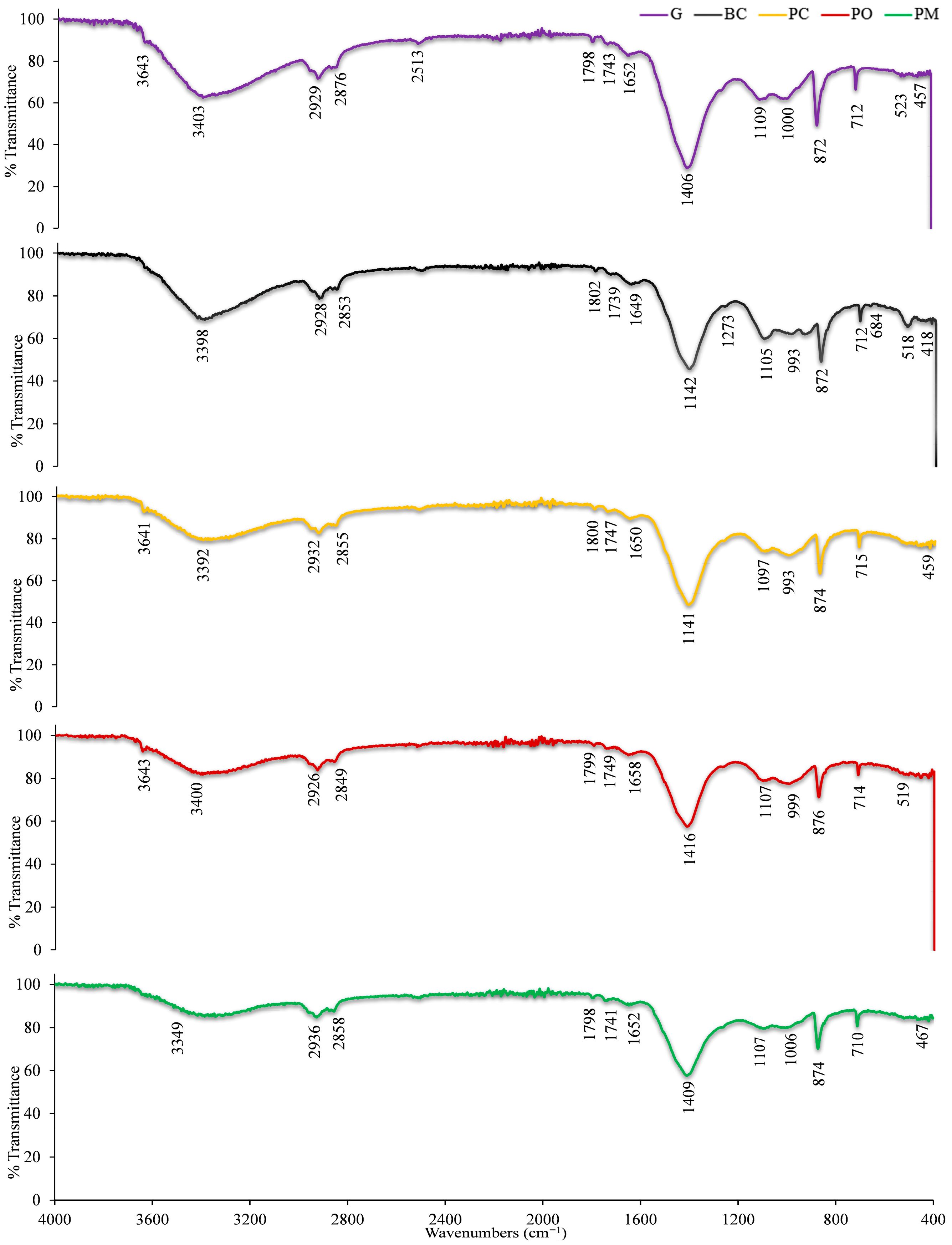
FTIR spectra of the concrete samples (Figure 14) indicate the presence of cement hydration products and the level of their chemical interaction with the admixtures. Each spectrum corresponds to concrete specimens prepared with 5% replacement of cement by oilseed cakes. Strong peaks observed in the 1040–1100 cm−1 range correspond to Ca–O–Si and Si–O–Si bonds and were particularly intense in the PM5 and PC5 samples. Compared to the untreated and oven-roasted samples, the microwave-treated additive exhibited reduced hydroxyl intensity and more distinct carbonyl rearrangements, suggesting a more stable surface structure compatible with cement hydration. This indicates that these admixtures contribute to the formation of C–S–H (calcium silicate hydrate) phases in the cement matrix and effectively establish chemical bonds with the matrix. The broad O–H bands located around 3400 cm−1 were interpreted as indicators of structural water and physical water retained in the matrix after hydration. The intensity of this band in the PM5 and PC5 samples indicates that the admixtures entered a hydration process compatible with the binder system, while the weakening of this band in the PO5 sample suggests that firing may have reduced reactivity. In some concrete samples, moderate intensity peaks were detected in the range of 870–880 cm−1. Those bands were characteristic of the beginning of carbonation processes and partial transformation of additives into carbonate structures inside the matrix. The preservation of characteristic cellulose-, hemicellulose-, and lignin-related bands in all concrete samples confirms that the additives do not undergo significant chemical reactions during hydration but act mainly as physical modifiers within the matrix.
FTIR analysis showed how the much pretreatment procedures of additives significantly affected their chemical functionality; such changes will be imposed directly on how these additives integrate into the cement matrix. Particularly the microwave-treated additives interacted more with cement and also more actively integrated into the hydration product structure. However, since the analyses were performed on undried specimens, the absorption peaks include contributions from physically retained moisture.

3.4. XRD Results

Diffraction patterns were obtained by XRD analyses from crude and heat-treated oilseed cake powders to characterize their mineralogical content before being integrated into cementitious mixtures, with scans performed in the 2θ range of 20–80° (Figure 15). The XRD spectra of the additive powders exhibited crystalline peaks primarily for calcite (CaCO3) and quartz (SiO2), which are common in plant-based materials. Since the analysis was limited to oilseed cakes prior to cement mixing, no hydration-related phases such as portlandite or C–S–H were observed. The XRD spectrum of the PM sample reveals the structural regularity and reactivity potential of the microwave-pretreated pomegranate seed additive. Prominent peaks observed around 2θ = 29.4°, 32.2°, and 47.1° indicate the presence of mineral phases such as quartz and calcite. Microwave treatment affected the crystallinity of the oilseed cakes by increasing the intensity of quartz-related peaks, suggesting some phase restructuring during thermal processing. While these changes may influence reactivity when later mixed with cement, the XRD analysis itself was limited to the raw additive powders. The PO sample reflects the mineral phase composition of the pomegranate seed additive obtained after heat treatment. Peaks in the spectrum, particularly observed around 2θ = 18.1°, 29.3°, and 50.1°, indicate the dominance of natural components such as calcite and quartz. It is observed that some organic structures decompose with heat treatment, while certain crystalline phases become more prominent. While no distinct phase formation is observed in the regions overlapping with C–S–H and portlandite, the additive has a structure prone to carbonation and may provide a physical additive that could indirectly increase matrix integrity. XRD patterns of the PC sample indicate the mineral composition of the raw pomegranate seed pulp. The quartz peak, also observed at 2θ = 26.6°, is extremely intense, indicating that this sample consists of abundant crystalline phases. No distinct structures indicate hydration products such as portlandite or C–S–H, revealing low reactivity of the additive in its raw state. It appears that if the PC additive were included in the additive system, it would have been treated for reactivity and to serve more as a filler rather than a mechanical agent.
Sample G belongs to the grape seed additive, and its spectral analysis revealed typical mineral phase peaks originating from quartz and calcite, such as 2θ = 26.6° and 29.4°. The distinct crystalline structures indicate that this additive has undergone a high-temperature or drying process and consists of relatively stable phases. While no direct signals of hydration products are observed, the hydration products’ regular structure may create a filling effect in the cement matrix. However, the scarcity of organic phases and the high level of crystallization indicate that this additive will contribute volumetrically rather than chemically to the binder system. The BC (black cumin) sample, representing the black cumin seed inclusion, and XRD analysis revealed reflections of common quartz and calcite phases in the 2θ range of 26.6–29.4°. Although not highly intense, the peaks indicate the presence of crystalline and amorphous phases in the inclusion structure. The structure indicates low chemical reactivity of the BC inclusion during the binding process in the cement matrix, but it can contribute to homogeneous distribution as well as physical integrity. The usual carbon-rich components, of the inclusion structure, though not readily detectable by XRD, indicate the inclusion’s fibrous and carbonate content.
The absence of new hydration-related crystalline phases in the XRD patterns aligns with the expected behavior of organic biomass additives, which typically participate through microstructural and physical effects rather than chemical pozzolanic reactions.

3.5. XRF Results

X-ray fluorescence (XRF) analysis was conducted to determine the inorganic oxide components of oilseed meal additives before they were incorporated into the concrete mixture. The results are presented in Table 2. Potassium oxide (K2O) and calcium oxide (CaO) were predominantly detected in all samples. K2O reached the highest value of 1.59% in the black cumin seed (BC) sample, while the highest CaO content was measured in the grape seed (G) sample at 1.52%. Sulfate (SO3) and phosphate (P2O5) contents were relatively higher, especially in pomegranate-based samples (PO and PM). XRF analysis results also show very low proportions of primary oxides with binding potential, such as SiO2, Al2O3, and Fe2O3. The effect of these additives on the concrete matrix is to alter the physical structure (porosity, water demand, microstructure, etc.) rather than to chemically participate in cement hydration reactions.

3.6. BET Results

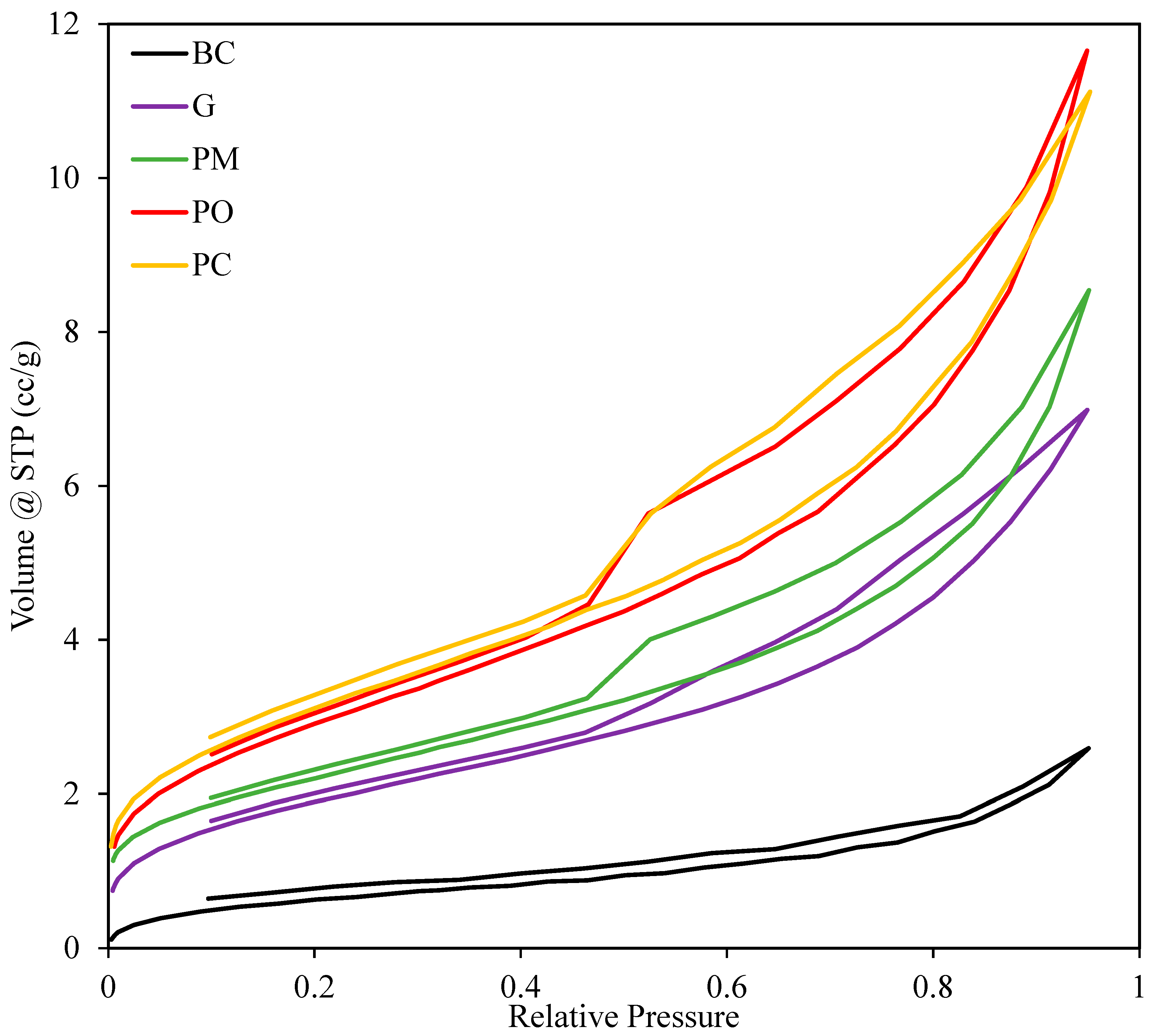
To evaluate the effects of additives on the pore structure of concrete samples, BET (Brunauer–Emmett–Teller) analysis was applied to concrete samples containing 5% additive content. The resulting isotherm curves and hysteresis behavior qualitatively reveal the total pore volume and pore typology of the additives in the concrete matrix (Figure 16). The BET isotherm curve for the concrete sample containing the BC admixture exhibits a distinct hysteresis loop between the adsorption and desorption branches, indicating that the material exhibits a typical type IV isotherm. This suggests that the admixture creates a mesoporous structure in the concrete and that multilayer adsorption and capillary condensation mechanisms are effective. A rapid increase in adsorption was observed at low relative pressures, while a sudden volume increase was observed at high pressures. These observations indicate that the black cumin (BC) admixture increases porosity in the concrete matrix and alters the pore structure.
A similar type IV isotherm and a pronounced hysteresis loop were observed in the grape seed cakes (G) additived concrete sample, suggesting that the doping resulted in a high specific surface area and enhanced pore structure. The sudden increase in the curve, particularly at high relative pressures, indicates that the pores are filled by liquefaction.
The BET curve illustrated in the pomegranate seed cakes (PC) added sample figure also demonstrates the presence of mesopores, while the similar distribution of the hysteresis curve implies that the functional micro-pores in the system are not of the same type and probably in some regions have a closed or narrow-mouthed (throated) structure. This indicates that the additive may create an irregular pore structure in the concrete matrix.
In the pomegranate seed cakes microwave (PM) added sample, it appears that the hysteresis loop becomes more pronounced and the pore structure becomes wider and more throaty. This suggests that the additive exposed to microwave treatment contributes to the formation of a more developed pore network within the matrix.
The concrete sample containing the pomegranate seed cakes oven (PO) additive as shown in Figure 16 displayed isotherm behavior that was pronounced by the existence of mesoporous characteristics. The difference between the adsorption and desorption branches indicates the presence of closed or irregular pores within the additive. This additive appears to create a more pronounced pore structure within the matrix and increase the total pore volume.
Table 3 shows that the BET analysis revealed considerable microstructural differences depending on the type of the bioadmixtures applied. The pomegranate seed meal (PO), pretreated by kiln drying, exhibited the highest specific surface area, which can be explained by the partial separation of organic components and the development of pore structure resulting from thermal treatment. In contrast, the untreated control sample (PC) had a lower surface area and a more compact and less porous structure.
The higher total pore volume observed in the microwave-treated sample is consistent with SEM observations and indicates that volumetric microwave heating induces a more fragmented and reactive microstructure.

4. Mechanical Analysis Results

4.1. Slump Results

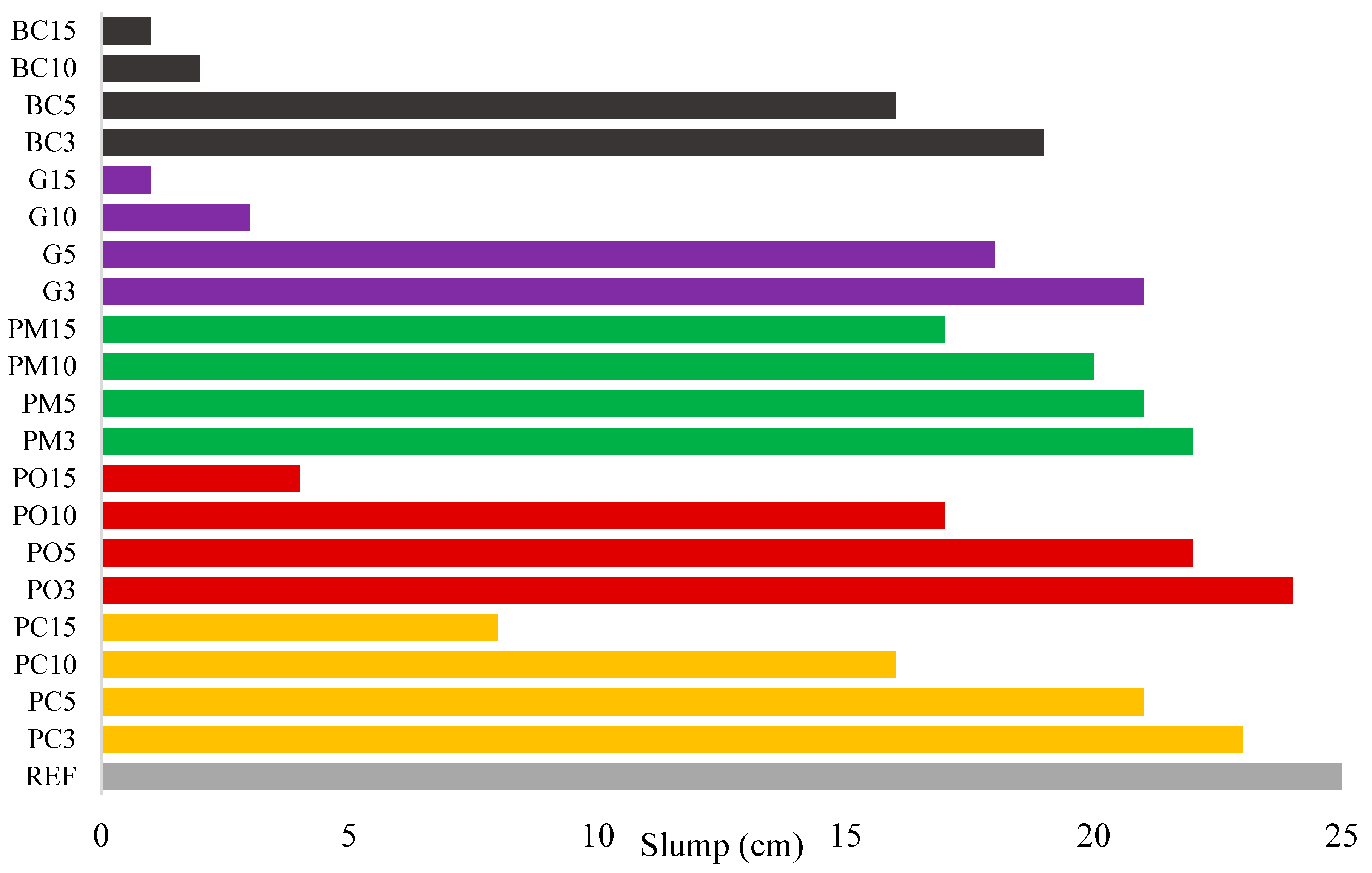
Figure 17 shows the slump results. In the control group with untreated pomegranate seed cakes, an increase in the replacement ratio led to a significant reduction in workability, and the concrete consistency was severely affected at the 15% level. A 5% replacement appeared to be optimal in terms of both workability and binder cohesion. For oven-roasted pomegranate seed cakes, slump values were relatively high at lower replacement levels. However, after 10% replacement, a rapid decline in workability was observed, with almost complete loss of consistency at 15%. Therefore, up to 5% replacement is considered acceptable. On the other hand, microwave-heated pomegranate seed cakes exhibited the most stable behavior, showing minimal impact on workability and maintaining good consistency at all replacement levels. Thus, microwave pretreatment emerged as the most effective method. Grape seed cakes significantly reduced workability even at moderate levels, with severe consistency issues observed beyond 10%.

4.2. Compressive Strength

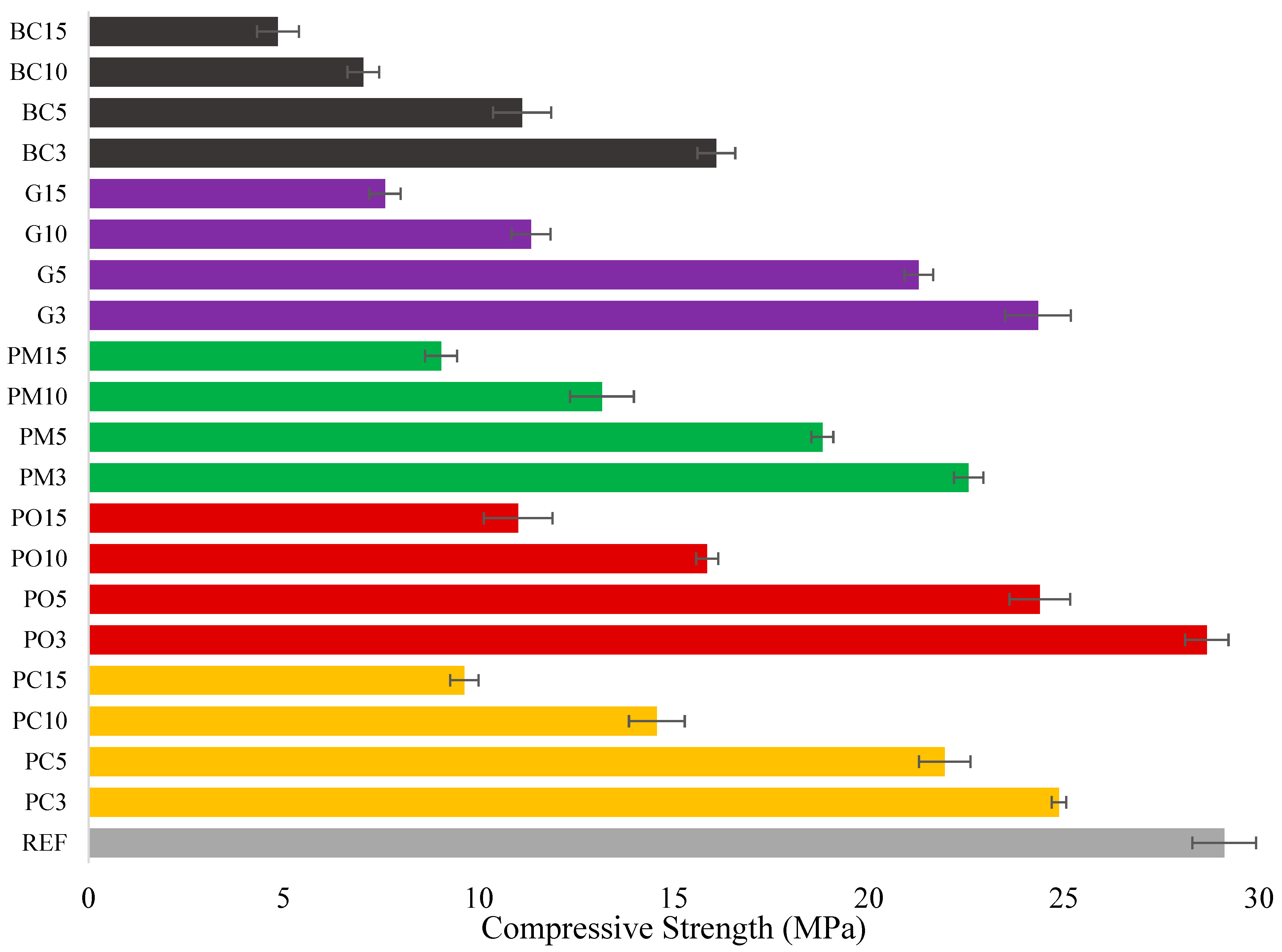
Figure 18 demonstrates the compressive strength results. Untreated pomegranate seed cake caused a gradual decline in compressive strength. Compared to the reference, strength decreased by 14.6% at 3% replacement, 24.6% at 5%, 50.0% at 10%, and 66.9% at 15%. These reductions indicate that while low-level replacement (3–5%) may be acceptable, higher levels significantly compromise compressive strength, likely due to poor matrix bonding and increased porosity. Microwave-roasted pomegranate seed cake exhibited moderate performance. Strength dropped by 22.5% at a certain condition of 3%, 35.4% at 5%, 54.8% at 10%, and 69.0% at 15%. Although the initial reduction is acceptable, higher ratios result in considerable loss in performance. Still, precision medicine (PM) performed slightly worse than the untreated form at higher dosages. Oven-roasted pomegranate seed cake showed improved results at low concentrations compared to other methods or recipes. The reduction was minimal at 3% (with a standard deviation of 1.5%) and modest at 5% (with a standard deviation of 16.2%), suggesting good compatibility in these ranges. However, strength losses increased to 45.5% at 10% and 62.2% at 15%, indicating a threshold beyond which oven treatment is insufficient to mitigate further strength degradation. Grape seed cake led to significant losses in compressive strength. Reductions were 16.4% at 3%, 26.9% at 5%, 61.0% at 10%, and 73.9% at 15%. These results show poor particle-matrix interaction and high porosity, especially at higher contents. Black cumin seed cake caused the most severe reductions in compressive strength. The declines were 44.7% at 3%, 61.8% at 5%, 75.8% at 10%, and 83.3% at 15%.

4.3. Splitting Tensile Strength

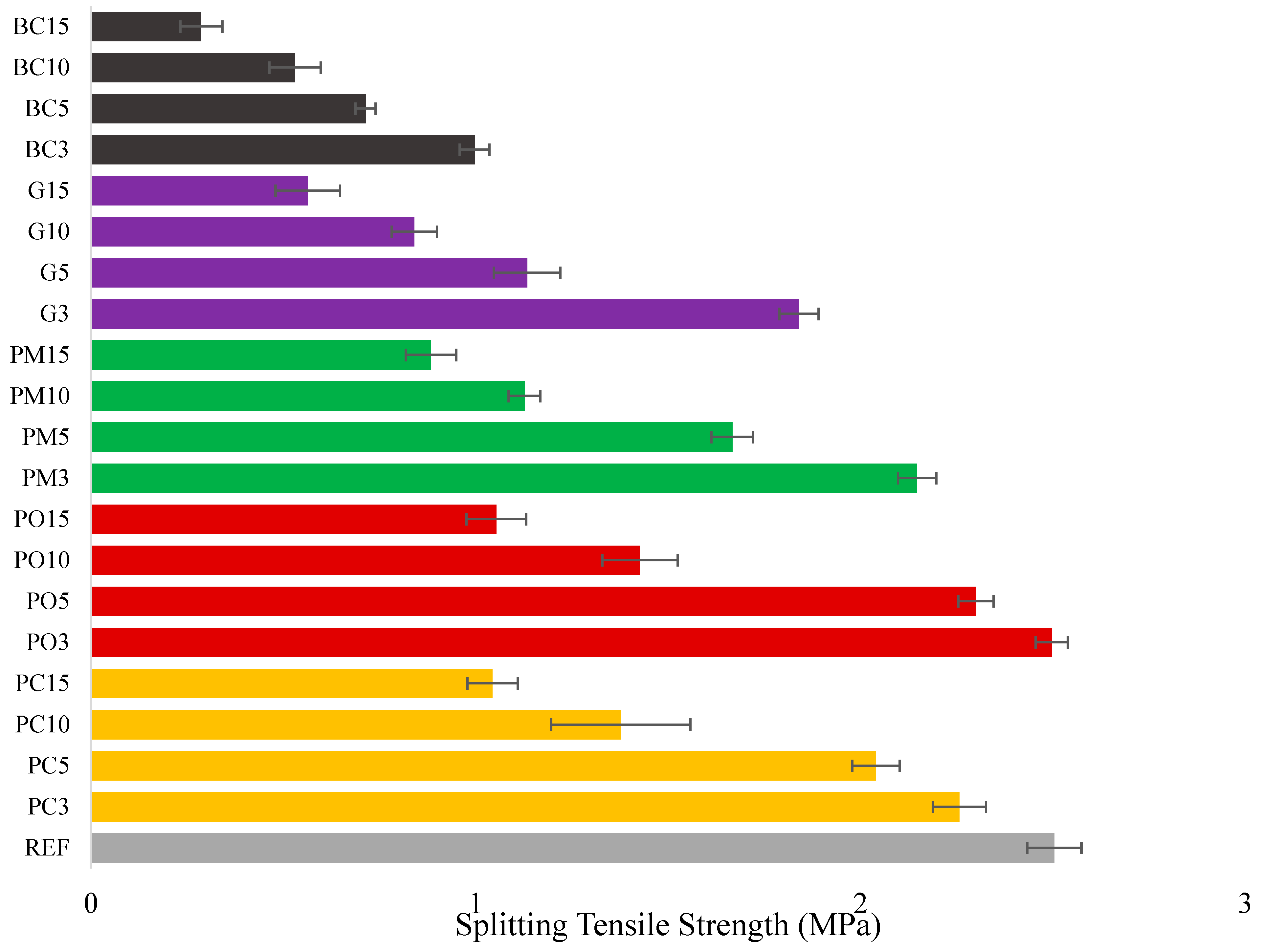
Splitting tensile strength results are depicted in Figure 19. Untreated pomegranate seed cake caused a progressive reduction in splitting tensile strength as the replacement level increased. Compared to the reference, the strength decreased by 9.9% at 3%, 18.5% at 5%, 45.0% at 10%, and 58.3% at 15%. These results reveal that higher amounts of untreated pomegranate waste negatively impact the internal cohesion of the concrete matrix. Microwave-roasted pomegranate seed cake displayed a steady but sharper decline in tensile performance across all replacement levels. Reductions were 14.2% at 3%, 33.4% at 5%, 55.0% at 10%, and 64.7% at 15%. This could be related to changes in particle morphology or interfacial transition zone behavior. Oven-roasted pomegranate seed cake exhibited more stable performance at low replacement levels. The reduction in tensile strength was minimal at 3%, corresponding to a 0.3% reduction, and moderate at 5%, corresponding to an 8.1% reduction, indicating that oven treatment improves early performance. However, strength dropped considerably at higher dosages: by 43.0% at 10% and by 57.9% at 15%. This suggests that while oven roasting enhances bonding at lower ratios, the negative effects of excessive organic content still dominate at high replacement levels. The addition of grape seed cake led to significant tensile strength loss, especially above 3 percent. While the reduction at 3% was 26.5%, the losses became severe at higher levels: 54.7% at 5%, 66.4% at 10%, and 77.5% at 15%. These results suggest weak interfacial bonding and high porosity introduced by the grape seed waste. Black cumin seed cake exhibited the worst performance in splitting tensile strength among all additives. The strength reduction reached 60.2% at 3% strain, 71.5% at 5% strain, 78.8% at 10% strain, and 88.5% at 15% strain.

4.4. Flexural Strength

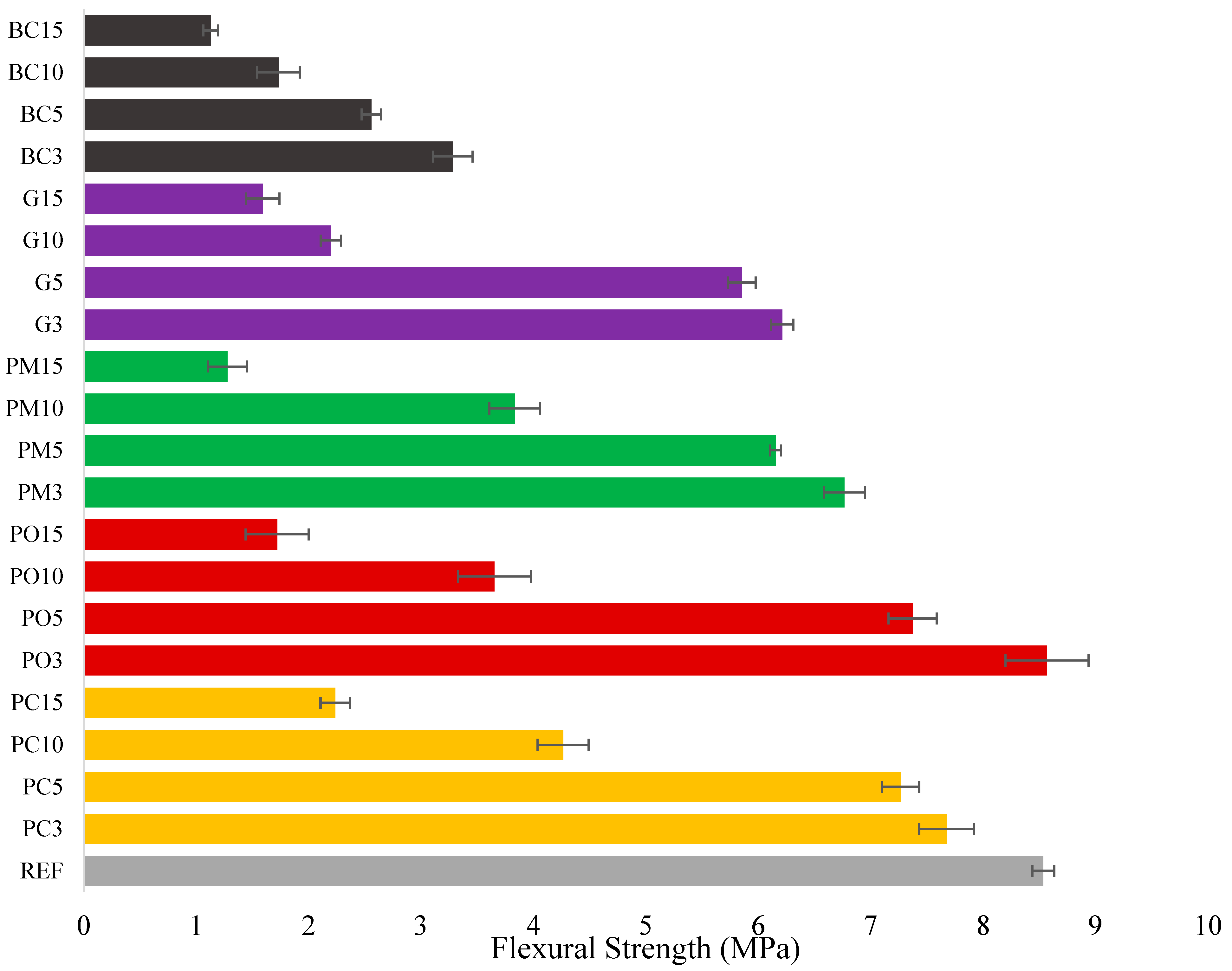
Flexural test results are depicted in Figure 20. Untreated pomegranate seed cake caused a progressive reduction in flexural strength with the increasing levels of substitution. Compared with the reference concrete, the strength decreased by 10.1% at 3% replacement, 14.9% at 5%, 50.1% at 10%, and 73.8% at 15%. Microwave-roasted pomegranate seed cake also showed declining strength with increasing dosage. The flexural strength decreased by 20.8% at 3% of material, 27.9% at 5% of material, 55.1% at 10% of material, and 85.1% at 15% replacement. Oven-roasted pomegranate seed cake provided the most favorable outcomes among all groups. Replacement at 3% resulted in the same flexural strength as the reference sample. The reductions were 13.6% at 5%, 57.2% at 10% and 79.19% at 15%. Although oven roasting slightly improved the results at low levels compared to the untreated form, the mechanical performance still dropped sharply at higher replacement ratios, limiting its use to a maximum of 5%. Grape seed cake led to a noticeable decline in flexural strength even at low replacement levels. Compared to the reference concrete, the strength decreased by 27.2% at 3% replacement levels, 31.4% at 5%, 74.3% at 10%, and 81.4% at 15%. Black cumin seed cake resulted in the most severe loss of flexural strength compared to other additives. Reductions were recorded as 61.5% at 3%, 70.1% at 5%, 79.7% at 10%, and 86.8% at 15%, compared to those of the reference.

5. Conclusions

This research examined the impacts of food-derived oilseed cakes (pomegranate, grape, and black cumin) and their thermal pretreatments (untreated, oven-roasted, and microwave-treated) as partial substitutes for cement in concrete. Based on the mechanical, microstructural, and functional analyses conducted, the following conclusions can be drawn:
  • The microwave-treated pomegranate seed cakes worked the best overall. They had stable workability, less slump loss, and better microstructural compatibility than the untreated and oven-roasted samples.
  • All organic additives made the material less strong as the substitution ratio went up, but a 3–5% replacement gave the best balance between workability, strength retention, and microstructural development.
  • Oven-roasted pomegranate seed cakes exhibited enhanced initial mechanical performance at 3% replacement, indicating that regulated thermal pretreatment improves surface morphology and diminishes harmful organic constituents.
  • The cakes made with grape seeds and black cumin seeds made the workability and mechanical properties much worse. This was mostly because they were more porous and did not mix well with the cement matrix.
  • SEM observations corroborated that additives interact predominantly via physical adhesion rather than chemical bonding, which is consistent with the FTIR and XRD findings that demonstrate the preservation of organic functional groups and the absence of new hydration phases.
  • Microwave pretreatment created smaller micropores and more broken surfaces, which helped with better dispersion and binder contact, as shown by BET and SEM results.
  • XRF results showed low levels of pozzolanic oxides. This means that the differences in performance are caused by changes in the physical microstructure, not by changes in chemical reactivity.
  • Energy analysis showed that microwave processing uses 80–85% less energy than oven roasting, making it a better choice for making bio-modifiers.
  • All of the additives increased the total pore volume and changed the way the microstructure behaved, even though the mechanical performance went down at high doses. This suggests that they could be useful in lightweight or specialized low-density concrete.
The results show that using food engineering thermal pretreatment methods in the design of cementitious materials could lead to the production of concrete that is low in energy and good for the environment.
This study represents an initial phase in evaluating the use of food-industry by-products as bio-modifiers in cementitious materials. The present work focused on early-age mechanical behavior and basic microstructural compatibility. It is acknowledged that long-term durability tests—such as water absorption, freeze–thaw resistance, sulfate attack, carbonation, and biological resistance—are essential for a full assessment and will be carried out in the next phase of our research. The current findings provide preliminary but necessary insight into the early performance of these additives and form a foundation for future durability-based studies.


Author Contributions

Conceptualization, E.M. and Y.O.Ö.; methodology, S.Y.Ö., A.B.M. and D.A.; validation, E.M., Y.O.Ö. and F.Y.; formal analysis, S.Y.Ö., A.B.M. and F.Y.; investigation, S.Y.Ö., A.B.M., D.A., E.M. and Y.O.Ö.; resources, S.Y.Ö.; data curation, E.M. and Y.O.Ö.; writing—original draft preparation, S.Y.Ö. and A.B.M.; writing—review and editing, D.A., E.M. and Y.O.Ö.; visualization, Y.O.Ö. All authors have read and agreed to the published version of the manuscript.
Funding

This study was supported by the grant of the Russian Science Foundation No. 25-79-32007. https://rscf.ru/project/25-79-32007/ (accessed on 10 December 2025).

Data Availability Statement

The original contributions presented in the study are included in the article; further inquiries can be directed to the corresponding author.

Acknowledgments

During the preparation of this work, the authors used ChatGPT 5.1 in order to improve several important aspects of writing, such as readability, grammar, spelling, and tone of the text. After using this tool, the authors reviewed and edited the content as needed and took full responsibility for the content of the publication.

Conflicts of Interest

The authors declare no conflicts of interest.

Abbreviations

The following abbreviations are used in this manuscript:
BCBlack Cumin Seed
GGrape Seed
PCPomegranate Seed Cakes “Control”
PMPomegranate Seed Cakes “Microwave”
POPomegranate Seed Cakes “Oven”

References

  1. Voukkali, I.; Papamichael, I.; Loizia, P.; Zorpas, A.A. Urbanization and solid waste production: Prospects and challenges. Environ. Sci. Pollut. Res. 2024, 31, 17678–17689. [Google Scholar] [CrossRef] [PubMed]
  2. Bollani, L.; Bonadonna, A.; Peira, G. The millennials’ concept of sustainability in the food sector. Sustainability 2019, 11, 2984. [Google Scholar] [CrossRef]
  3. Liu, Z. A review on the emerging conversion technology of cellulose, starch, lignin, protein and other organics from vegetable-fruit-based waste. Int. J. Biol. Macromol. 2023, 242, 124804. [Google Scholar] [PubMed]
  4. Zhang, M.; Wang, O.; Cai, S.; Zhao, L.; Zhao, L. Composition, functional properties, health benefits and applications of oilseed proteins: A systematic review. Food Res. Int. 2023, 171, 113061. [Google Scholar] [CrossRef]
  5. Shivamurthy, B.; Murthy, K.; Joseph, P.C.; Rishi, K.; Bhat, K.U.; Anandhan, S. Mechanical properties and sliding wear behavior of jatropha seed cake waste/epoxy composites. J. Mater. Cycles Waste Manag. 2015, 17, 144–156. [Google Scholar]
  6. Khalil, H.P.S.A.; Aprilia, N.A.S.; Bhat, A.H.; Jawaid, M.; Paridah, M.T.; Rudi, D. A Jatropha biomass as renewable materials for biocomposites and its applications. Renew. Sustain. Energy Rev. 2013, 22, 667–685. [Google Scholar] [CrossRef]
  7. Geneau-Sbartaï, C.; Leyris, J.; Silvestre, F.; Rigal, L. Sunflower cake as a natural composite: Composition and plastic properties. J. Agric. Food Chem. 2008, 56, 11198–11208. [Google Scholar] [CrossRef]
  8. Barczewski, M.; Mysiukiewicz, O.; Kloziński, A. Complex modification effect of linseed cake as an agricultural waste filler used in high density polyethylene composites. Iran. Polym. J. 2018, 27, 677–688. [Google Scholar] [CrossRef]
  9. Popović, S.; Lazić, V.; Popović, L.; Vaštag, Ž.; Peričin, D. Effect of the addition of pumpkin oil cake to gelatin to produce biodegradable composite films. Int. J. Food Sci. Technol. 2010, 45, 1184–1190. [Google Scholar] [CrossRef]
  10. Guimarães, J.L.; Trindade Cursino, A.C.; Ketzer Saul, C.; Sierrakowski, M.R.; Ramos, L.P.; Satyanarayana, K.G. Evaluation of castor oil cake starch and recovered glycerol and development of “Green” composites based on those with plant fibers. Materials 2016, 9, 76. [Google Scholar] [CrossRef]
  11. Sonebi, M.; Ammar, Y.; Diederich, P. Sustainability of cement, concrete and cement replacement materials in construction. In Sustainability of Construction Materials; Elsevier: Amsterdam, The Netherlands, 2016; pp. 371–396. [Google Scholar]
  12. Golewski, G.L. Green concrete based on quaternary binders with significant reduced of CO2 emissions. Energies 2021, 14, 4558. [Google Scholar] [CrossRef]
  13. Aprianti, E.; Shafigh, P.; Bahri, S.; Farahani, J.N. Supplementary cementitious materials origin from agricultural wastes–A review. Constr. Build. Mater. 2015, 74, 176–187. [Google Scholar]
  14. Aprianti, E. A huge number of artificial waste material can be supplementary cementitious material (SCM) for concrete production–a review part II. J. Clean. Prod. 2017, 142, 4178–4194. [Google Scholar]
  15. Chandra Paul, S.; Mbewe, P.B.; Kong, S.Y.; Šavija, B. Agricultural solid waste as source of supplementary cementitious materials in developing countries. Materials 2019, 12, 1112. [Google Scholar] [CrossRef]
  16. Nguyen, H.; Jamali Moghadam, M.; Moayedi, H. Agricultural wastes preparation, management, and applications in civil engineering: A review. J. Mater. Cycles Waste Manag. 2019, 21, 1039–1051. [Google Scholar] [CrossRef]
  17. Mohd Sufian, A.N.B.; Rahman, M.R.; Mohamad Said, K.A.B.; Bakri, M.K.B. A critical review of various types of palm oil fuel ash (POFA) utilization in enhancing concrete and mortar properties. J. Build. Pathol. Rehabil. 2025, 10, 124. [Google Scholar] [CrossRef]
  18. Zhao, J.; Sufian, M.; Abuhussain, M.A.; Althoey, F.; Deifalla, A.F. Exploring the potential of agricultural waste as an additive in ultra-high-performance concrete for sustainable construction: A comprehensive review. Rev. Adv. Mater. Sci. 2024, 63, 20230181. [Google Scholar]
  19. Fragassa, C.; Vannucchi de Camargo, F.; Santulli, C. Sustainable biocomposites: Harnessing the potential of waste seed-based fillers in eco-friendly materials. Sustainability 2024, 16, 1526. [Google Scholar]
  20. Jagadeesan, R.; Suyambulingam, I.; Somasundaram, R.; Divakaran, D.; Siengchin, S. Isolation and characterization of novel microcellulose from Sesamum indicum agro-industrial residual waste oil cake: Conversion of biowaste to wealth approach. Biomass Convers. Biorefinery 2023, 13, 4427–4441. [Google Scholar]
  21. Netinger Grubeša, I.; Šamec, D.; Juradin, S.; Hadzima-Nyarko, M. Utilizing Agro-Waste as Aggregate in Cement Composites: A Comprehensive Review of Properties, Global Trends, and Applications. Materials 2025, 18, 2195. [Google Scholar] [CrossRef]
  22. Šporin, M.; Avbelj, M.; Kovač, B.; Možina, S.S. Quality characteristics of wheat flour dough and bread containing grape pomace flour. Food Sci. Technol. Int. 2018, 24, 251–263. [Google Scholar] [CrossRef]
  23. Aĝirbaş, H.E.T.; Yavuz-Düzgün, M.; Özçelik, B. The effect of fruit seed flours on Farinograph characteristics of composite dough and shelf life of cake products. J. Food Meas. Charact. 2021, 15, 3973–3984. [Google Scholar] [CrossRef]
  24. Krawęcka, A.; Sobota, A.; Ivanišová, E.; Harangozo, Ľ.; Valková, V.; Zielińska, E.; Blicharz-Kania, A.; Zdybel, B.; Mildner-Szkudlarz, S. Effect of Black Cumin Cake Addition on the Chemical Composition, Glycemic Index, Antioxidant Activity, and Cooking Quality of Durum Wheat Pasta. Molecules 2022, 27, 6342. [Google Scholar] [CrossRef]
Figure 1. Roasting process of pomegranate seeds: (a) Oven-roasted pomegranate seeds (120 °C, 30 min); (b) Microwave-roasted pomegranate seeds (600 W, 8 min).
Jcs 09 00699 g001
Figure 2. Process of oilseed cake manufacturing.
Jcs 09 00699 g002
Figure 3. Samples of oilseed cakes.
Jcs 09 00699 g003
Figure 4. Mixing oilseed cakes with concrete mixture.
Jcs 09 00699 g004
Figure 5. SEM results of grape seed cakes: (a) ×250 SEM image; (b) ×500 SEM image; (c) ×1000 SEM image; (d) ×2500 SEM image.
Jcs 09 00699 g005
Figure 6. SEM results of black cumin seed cakes: (a) ×250 SEM image; (b) ×500 SEM image; (c) ×1000 SEM image; (d) ×2500 SEM image.
Jcs 09 00699 g006aJcs 09 00699 g006b
Figure 7. SEM results of pomegranate seed cakes “control”: (a) ×250 SEM image; (b) ×500 SEM image; (c) ×1000 SEM image; (d) ×2500 SEM image.
Jcs 09 00699 g007
Figure 8. SEM results of pomegranate seed cakes “oven”: (a) ×250 SEM image; (b) ×500 SEM image; (c) ×1000 SEM image; (d) ×2500 SEM image.
Jcs 09 00699 g008
Figure 9. SEM results of pomegranate seed cakes “microwave”: (a) ×250 SEM image; (b) ×500 SEM image; (c) ×1000 SEM image; (d) ×2500 SEM image.
Jcs 09 00699 g009aJcs 09 00699 g009b
Figure 10. SEM results of concretes: (a) Concrete with Grape Seed Cakes; (b) Concrete with Black Cumin Seed Cakes; (c) Concrete with Pomegranate Seed Cakes “Control”; (d) Concrete with Pomegranate Seed Cakes “Oven”; (e) Concrete with Pomegranate Seed Cakes “Microwave”.
Jcs 09 00699 g010aJcs 09 00699 g010b
Figure 11. EDS results of oilseed cakes: (a) black cumin seed sample; (b) grape seed sample; (c) pomegranate seed “control” sample; (d) pomegranate seed “oven” sample; (e) pomegranate seed “microwave” sample.
Jcs 09 00699 g011
Figure 12. EDS results of concrete samples with oilseed cakes: (a) black cumin seed additive sample; (b) grape seed additive sample; (c) pomegranate seed “control” additive sample; (d) pomegranate seed “oven” additive sample; (e) pomegranate seed “microwave” additive sample.
Jcs 09 00699 g012
Figure 13. FTIR spectra for the oilseed cakes.
Jcs 09 00699 g013
Figure 14. FTIR analysis of concrete samples with 5% oilseed cake replacement. G: Grape, BC: Black Cumin, PC: Pomegranate Control, PO: Oven, PM: Microwave.
Jcs 09 00699 g014
Figure 15. XRD patterns of oilseed cake powders before incorporation into cement matrix.
Jcs 09 00699 g015
Figure 16. BET results of concrete sample with oil seed cakes.
Jcs 09 00699 g016
Figure 17. Slump results.
Jcs 09 00699 g017
Figure 18. Compressive test results.
Jcs 09 00699 g018
Figure 19. Splitting tensile test results.
Jcs 09 00699 g019
Figure 20. Flexure test results.
Jcs 09 00699 g020
Table 1. Mixture design (kg/m3).
CementWaterFine AggregatesCoarse AggregatesOilseed Cakes
07203607207200
3%698.436072072021.6
5%68436072072036
10%64836072072072
15%612360720720108
Table 2. Major inorganic oxide contents determined by XRF (% by weight).
BCGPCPMPO
Element OxidMass%Quanti LimitMass%Quanti LimitMass%Quanti LimitMass%Quanti LimitMass%Quanti Limit
K2O1.590.0031.110.00320.8810.00270.9750.00271.090.0026
CaO1.110.01031.520.00830.5720.01010.6620.00810.4340.01
SO30.8340.00130.4410.00090.6110.00340.6150.00420.5890.0006
P2O50.6150.00610.2770.00660.5120.00660.4840.00690.4820.0064
SiO20.3090.00550.3690.00430.3060.00450.2720.00280.350.0063
MgO0.2870.03580.1630.03080.250.0350.2560.03550.2260.0327
Al2O30.05690.00990.06240.00770.08060.00960.08760.00990.07330.0092
Table 3. Total pore volume values of samples (cc/g).
SampleTotal Pore Volume (cc/g)
BC4.010 × 10−3
G1.081 × 10−2
PC1.720 × 10−2
PM1.321 × 10−2
PO1.803 × 10−2
Disclaimer/Publisher’s Note: The statements, opinions and data contained in all publications are solely those of the individual author(s) and contributor(s) and not of MDPI and/or the editor(s). MDPI and/or the editor(s) disclaim responsibility for any injury to people or property resulting from any ideas, methods, instructions or products referred to in the content.