
Article

Dynamic Mechanical Performance of 3D Woven Auxetic Reinforced Thermoplastic Composites

1
Department of Textile and Apparel, Technology and Management, Wilson College of Textiles, NC State University, Raleigh, NC 27606, USA
2
Department of Textile Engineering, National Center for Composite Materials, School of Engineering and Technology, National Textile University, Sheikhupura Road, Faisalabad 37610, Pakistan
3
Department of Conservation and Built Heritage, Faculty for the Built Environment, University of Malta, MSD 2080 Valetta, Malta
4
School of Fashion and Textiles, RMIT University, Brunswick 3056, Australia
*
Authors to whom correspondence should be addressed.
J. Compos. Sci. 2025, 9(12), 649; https://doi.org/10.3390/jcs9120649 (registering DOI)
Submission received: 15 September 2025 / Revised: 19 November 2025 / Accepted: 24 November 2025 / Published: 1 December 2025

Abstract

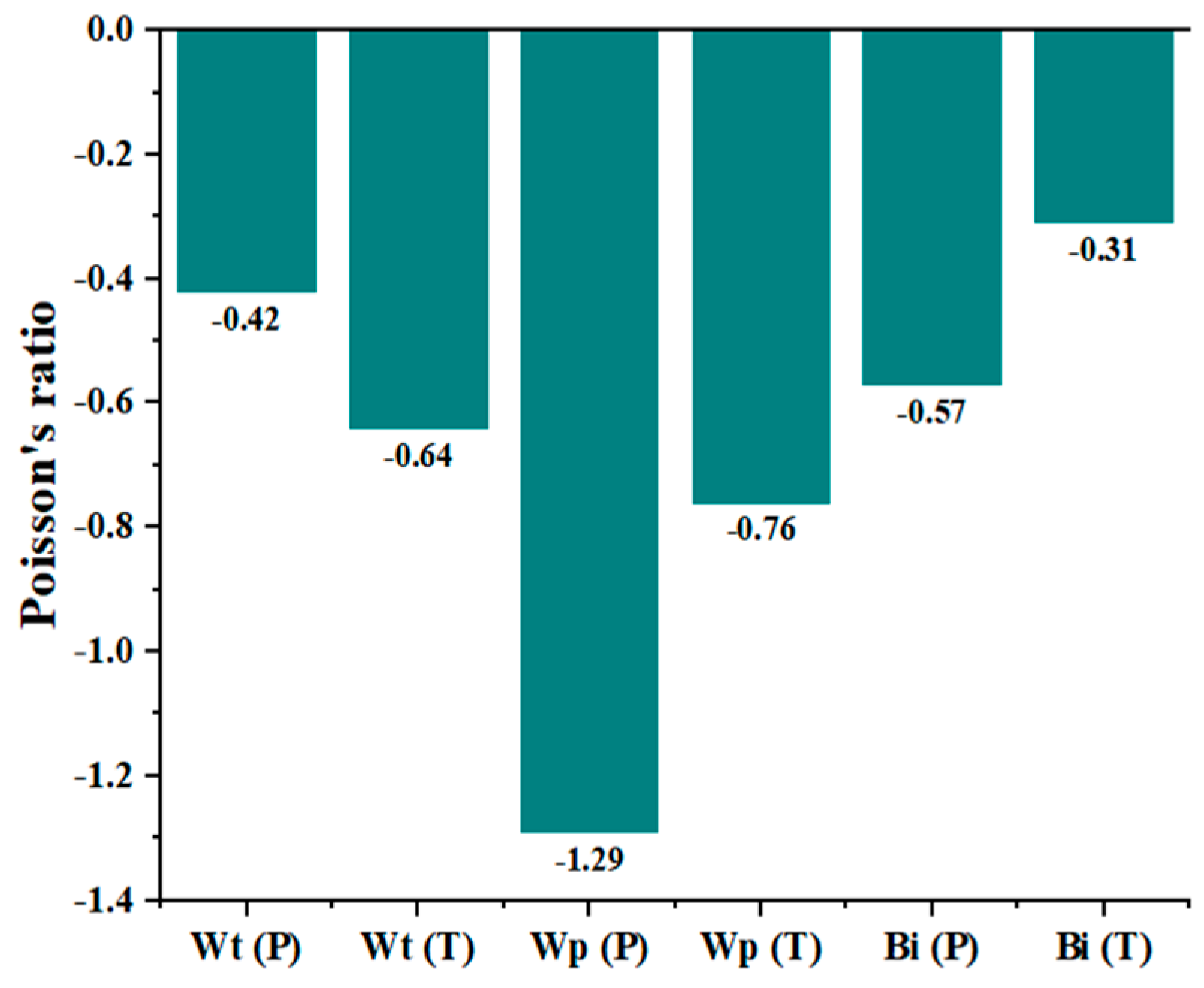
The assessment of the dynamic mechanical performance of fiber-reinforced composites has gained importance in specific high-tech applications like aerospace and automobiles. However, three dimensional (3D) auxetic reinforcements offering viable performance have remained unexplored. Hence, this study investigates the energy absorption capabilities and high strain impact behaviors of 3D woven fabric-reinforced composites. Three different types of 3D woven reinforcements i.e., warp interlock (Wp), weft interlock (Wt), and bidirectional interlock (Bi) were developed from jute yarn, and their corresponding composites were fabricated using polycarbonate (PC) and polyvinyl butyral (PVB). Out-of-plane auxeticity was measured for reinforcements while composites were analyzed under dynamic tests. Wp exhibited the highest auxeticity with a value of −1.29, Bi showed the least auxeticity with a value of −0.31, while Wt entailed an intermediate value of −0.46 owing to variable interlacement patterns. The dynamic mechanical analysis (DMA) results revealed that composite samples developed with PC resin showed a higher storage modulus with the least tan delta values less than 0.2, while PVB-based samples exhibited higher loss modulus with tan delta values of 0.6. Split Hopkinson pressure bar (SHPB) results showed that, under 2 and 4 bar pressure tests, PVB-based composites exhibited the highest maximum load while PC-based composites exhibited the least. Warp interlock-based composites with higher auxeticity showed better energy absorption when compared with the bidirectional interlock reinforcement based (with lower auxeticity) composites that exhibited lower peak load and energy dissipation.

1. Introduction

Due to their dimension stability, conformability to shapes, ability to form them in a controlled manner at very low to very high thread density, diversity of weave structure, ability to employ different high-performance tows in the same structures with as desired placement (hybridization), etc., three-dimensional (3D) woven fabrics are widely used as preforms in polymeric fiber-reinforced composites and have been classified into two major categories depending on their constructions. i.e., 3D from a stack of 2D preforms and 3D preforms with through-the-thickness woven stitches. These two kinds of woven preform structures have specific properties that make them suitable for certain applications. 3D preforms from a stack of 2D woven structures, where each 2D preform is created by the interlacement of threads or filaments in two directions i.e., where weft and warp depict the horizontal and vertically interlaced yarns, respectively. However, 3D woven fabrics with through-the-thickness woven stitches are constructed by interlacing yarns or fibers in three directions. In general, the yarns are present in three main directions, known as X (warp), Y (weft) and Z (through-the-thickness binder components). The X and Y direction yarns’ components are woven in a 2D manner; however, Z direction yarns go through the thickness, interlocking the yarns in different layers to form a 3D integrated structure [1,2,3]. Three-dimensional preforms from stacked 2D woven structures have poor delamination resistance and out-of-the-plane characteristics, as the force between the 2D layers are merely the weak interfacial force between the matrix and the fiber surface. However, the 3D woven fabrics with through-the-thickness yarns offer enhanced mechanical properties such as enhanced through-thickness strength, improved damage tolerance, superior structural integrity, near-net-shape manufacturing, better load transfer between the layers, tailored fiber orientation, delamination resistance, interlaminar shear strength, and fracture toughness, because of the integrated structure that is the result of the presence of the Z-direction yarns’ components [4,5]. Because of their improved mechanical properties, such structures are used in the aerospace [6], civil [7] and automotive industries [8,9,10].
There are two major interlocking categories of Z-yarn interlacement that are used to form 3D woven preforms based on an interlocking sequence—orthogonal and angle interlocking. Furthermore, angle interlocking is subcategorized into two types—layer-to-layer (LL) and through-thickness (TT) interlocking sequences [11]. The LL or TT interlock structures can be divided further depending on the direction of interlocking yarns. The interlocking direction could be in warp, weft, or both (bidirectional) directions. The warp interlocking fabrics consist of warp interlocked yarns in between straight weft yarns, and vice versa for weft interlock structures. However, bidirectional interlocking fabrics have a hybrid interlocking sequence with both warp and weft yarns in the alternative zones [12].
The other characteristic which has been observed in the 3D woven structures with z-interlacements is that they may exhibit negative Poisson’s ratio (NPR), entailing an auxetic behavior, i.e., the width of auxetic material increases as the length of the material is increased under tensile load. Another type of auxeticity is called out-of-plane auxeticity, where the material tends to increase its thickness upon axial elongation. In vitro characterization of out-of-plane auxeticity requires an external device for continuous monitoring of materials’ thickness during tensile elongation [13]. Several laboratory scale methods have been employed by researchers for this purpose; however, no exact international standard exists. The out-of-plane auxeticity is a crucial structural feature in high-tech applications i.e., protective gears and aerospace [14]. The thickening of these auxetic materials maintains the integrity of structure, otherwise the thinning of conventional materials could lead to early failure caused by the positive Poisson’s ratio determining crack initiation [15]. This property has been found to have several benefits, including enhanced impact strength, energy absorption capacity and mechanical strength of the composite. Hence, the concept can be further extended to the application of auxetic structures in the 3D woven composites with through-thickness stitching to enhance their mechanical properties [16].
Another independent classification of 3D woven polymeric composites deals with the matrix type, namely thermoplastic and thermoset matrix-based composites [17]. Thermoplastic composites offer better energy absorption, damping, recycling and processing characteristics as compared with thermoset composites. This makes them ideal choices for industries that are looking to minimize the waste through recycling and hence promote sustainability [18]. The use of thermoplastic matrix composites has enhanced numerous industries such as sports, automotive, and aerospace items owing to numerous advantages, including low-cost manufacturing owing to simpler tooling, fast processing, and reduced material costs [19,20]. Thermoplastic composites offer high mechanical integrities with low densities, better shock absorption, and a ductile nature, as compared with thermoset composites which are usually rather brittle and liable to fracture [21].
For certain high-tech applications, dynamic testing, like dynamic mechanical analysis (DMA) and Split Hopkinson pressure bar (SHPB) characterization, has become the primary tests that cannot be substituted by any other methods. The DMA and SHPB tests contribute greatly to the production of reliable, efficient, and durable solutions in modernized industries. Storage and loss modulus values upon elevated temperatures are achieved during DMA characterization. Such results predict behaviors of thermoplastic matrix integrity, as some end applications may require performance at higher temperatures [22]. Similarly, the SHPB test characterizing materials at elevated strain levels provides the behaviors of composites when subjected to a suddenly higher strain in real life conditions [23].
Several research works have been performed to analyze the dynamic mechanical properties of 3D woven structure-reinforced composites. Jun Ke et al. [24] examined the reinforcement architecture influence on storage modulus and damping capacity of 3D woven composites, shape memory alloy wires were employed instead of conventional yarns in different sequences to enhance the damping. They proposed that the dual cantilever test is more suitable for shape memory alloy wire 3D composites as compared with the three-point bending test. Chang et al. [25] described the DMA behavior of 3D orthogonal nylon monofilament/epoxy woven composites and presented a correlation between the dynamic modulus and damping ratio with the direction of the load and test frequency. The work also proposed the technique to overcome the strength issues of thermoset composites by introducing helical and spiral nylon fibers into the matrix. Such fibers worked to disperse the localized stresses inside the composites. The impact properties were enhanced up to 150% and 450% by increasing the number of reinforcement layers from one to three, respectively.
The work performed by Gong et al. [26] assessed the loading rate factor of two-dimensional graphene oxide in assessing the damping loss factor of carbon fiber-reinforced epoxy composites by using DMA. It was concluded that the dynamic loss factor of uniformly graphene oxide-loaded composites increased by 113% in comparison with a controlled composite. Tehseen et al. [27] analyzed the tensile strength, flexural behavior, and short beam shear properties of 3D woven fabric-reinforced auxetic composites. The fabric’s structure consisted of warp, weft and bidirectional interlock patterns. Two different thermoplastic resins were employed, including polycarbonate (PC) and polyvinyl butyral (PVB). The bidirectional fabric consisted of the highest number of crimps owing to interlocking in both directions. Hence, the auxeticity was lower, while the warp interlock fabric entailed the highest value of auxeticity. Moreover, all mechanical properties were observed to be about 40% to 45% higher for warp interlock composites developed using PC resin in comparison with others. The developed 3D composites were found to be suitable for helmets and sports applications requiring bending strength. In another study, Tehseen et al. [28] reported the effect of auxeticity of these 3D woven structure–thermoplastic composites on Charpy and low velocity impact performance. The warp interlock composite developed using PC resin showed 49% and 47% higher Charpy impact strength and force, respectively, than bidirectional interlock composites comprising PC. Moreover, the low velocity impact properties were found to be 30% higher for warp interlock composites. Results proved that these 3D interlocked structures are suitable for high tech applications due to their high-speed impact performance.
The research by Li et al. [29] was aimed at an investigation of fiber-reinforced polymeric woven composites for their dynamic mechanical behavior at high temperature. Mechanical properties, including damping coefficient, storage, and loss modulus, were studied as functions of amplitude and temperature. It was concluded that the woven composite structures exhibited improved mechanical properties against thermal vibrations. Mathematical algorithms were also developed to predict the properties of composites at different temperatures (20 °C to 160 °C). Ahmad et al. [30] analyzed and compared the dynamic mechanical behavior of flax/epoxy composites with nine different float lengths under plain weave interlaced patterns (basket, warp rib, weft rib). Results revealed that reinforcements having lower crimp and higher float offer better modulus; however, enough interlacements are also necessary to provide composites with a stable structure and shape, though the high crimp reinforcements offered better energy absorption.
Liu et al. [31] studied the dynamic mechanical characteristics of 3D woven composites with angle interlock structures. The Split Hopkinson pressure bar (SHPB) test was performed at low ambient temperatures (−40 °C, −80 °C) and room temperature (20 °C) with higher strain rates (up to 1500/s). The compressive strength of composites was found to be more dependent on temperature values. It was observed that composites entail severe brittle fractures at low temperatures as compared with room temperatures at same strain rates. Yang et al. [32] analyzed the effect of weft yarn densities and strain rates on the dynamic mechanical characteristics of 3D woven composites with orthogonal structures. The dynamic impact characterization revealed that increasing weft densities from 1.5 yarns/cm to 2.0 yarns/cm enhanced the impact strength by 24%. It was found that more localized damages are observed by reducing the weft densities, which make the composites unsuitable for aerospace and automotive applications.
Sun et al. [33] performed the simultaneous comparison of basalt fiber woven 3D from a stack of 2D and 3D orthogonal fabric-reinforced epoxy composites. Variable strain rates were tested up to 3500/s, increasing strain rates caused delamination and derbies in 3D from a stack of 2D woven composites. However, the Z-axis yarns in 3D orthogonal woven composites prevented delamination with slight derbies. Bai et al. [34] characterized the Split Hopkinson pressure bar (SHPB) using different specimen sizes of 3D interlock epoxy composites. Specimens with different sizes were designed to explore the size dependency, strain-rate dependency and orientation dependency for the compressive behavior of the composites. Increasing specimen size consisted of a greater number of repeating cells/units; hence, better mechanical behavior were noticed for large sized specimens and vice versa.
We have previously analyzed the influence of 3D woven reinforcements on the out-of-plane auxeticity [35] and have related the impact of this auxeticity on static impact (Charpy and low velocity impacts) [28] and other mechanical characteristics (short beam shear, tensile, and flexural) [27]. Although significant research has been performed to analyze the dynamic mechanical properties of 3D woven composites, there is no work available in the literature regarding the effect of 3D woven reinforcements’ auxeticity in the thermoplastic matrix-based 3D woven composites on their dynamic mechanical properties. Consequently, this work aims to develop the three variants of 3D woven fabrics, including bidirectional, weft, and warp interlocks and their corresponding thermoplastic (PC and PVB)-based composites. Two different types of dynamic mechanical properties, i.e., dynamic mechanical analysis (DMA) and Split Hopkinson pressure bar (SHPB), have been analyzed. In this regard, this research seeks to fill the above-mentioned gap by investigating the influence of 3D woven auxetic reinforcements on the dynamic mechanical properties of corresponding thermoplastic composites.

2. Materials and Methods

2.1. Materials

In this study, a singed jute yarn with a linear density of 236.2 tex was employed to produce the 3D woven structures. Jute yarn was used due to its low cost, biodegradability, and better mechanical properties. Mechanically, jute yarn offers good tensile strength and stiffness, contributing to the structural integrity of the jute fiber-reinforced composites. These properties make jute yarn an attractive choice in reinforcement development for making lightweight, durable, and sustainable composite materials in the automotive, construction, and packaging industries. The singeing process was chosen to eliminate protruding fibers (hairiness) that could potentially cause fabric manufacturing issues during weaving, such as the clinging of yarns from upper and lower sheds that leads to excessive warp breaks. Both thermoplastic matrices, polyvinyl butyral (PVB) and polycarbonate (PC), contained distinct mechanical properties depicting their end applications. Sports grade PVB (75,000 g·mol−1) was selected as one of the thermoplastic resins during the composite manufacturing stage due to its higher energy absorption, viscoelasticity and strain sensitivity. Its thermoplastic nature enables ease of processing and uniform distribution within the composite after melting. Another sports grade resin, PC (45,000 g·mol−1), being a thermoplastic resin, was used in the composite manufacturing stage to assess its influence on final composite properties with a higher modulus and strength; however, due to its higher ductile nature, PC showed a lesser elongation at break, strain sensitivity and viscoelastic behavior. Table 1 describes the mechanical properties of jute yarn (in-house characterized) and both PVB and PC (provided by supplier) resin materials.
Figure 1a,b show the singeing setup and the winding assembly for the jute yarn. The visual difference between the raw and singed jute yarns is entailed in Figure 1c,d. It can be observed that the singeing process significantly reduced the amount hairiness.

2.2. Development of 3D Woven Structures

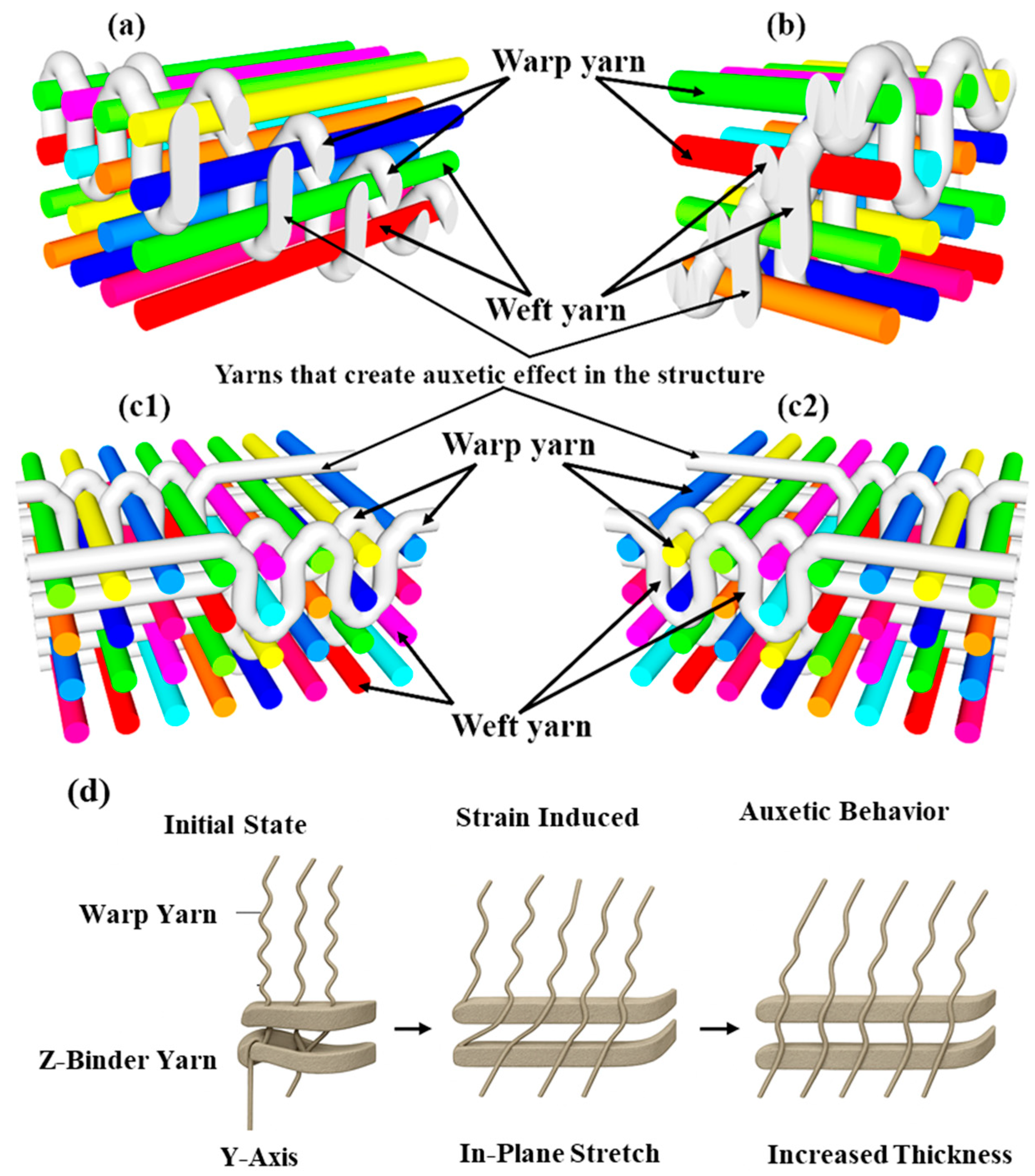
The development of three types of 3D woven fabrics, including bidirectional, weft, and warp interlock structures, was conducted using a conventional terry dobby machine. The on-loom warp and weft thread densities were kept constant for all three structures, with 36 ends/inch and 36 picks/inch. Singed jute yarn was employed for the weaving of all 3D fabrics. A set of warp yarns was responsible for joining the layers in the warp interlocking structure as entailed in Figure 2a. Similarly, Figure 2b highlights the role of weft yarns in joining layers in a weft interlocking structure. However, both warp and weft yarns were responsible in bidirectional interlocking in different zones with alternative sequences, as depicted in Figure 2(c1,c2) [27,28,35]. In Figure 2a, the warp interlock had warp yarns consisting of ground yarns (X) and interlocking yarns (Z) as well as the four layers joined together, while weft yarns (Y) were present as ground yarns in the weft direction. In Figure 2b, weft interlock had weft yarns consisting of ground yarns (Y) and interlocking yarns (Z), which were also joining four layers together. Warp yarns (X), however, were present as ground yarns in the warp direction. Furthermore, in Figure 2(c1,c2) a bidirectional interlock structure contained both warp and weft yarns as ground yarns (X and Y), and interlocking was also undertaken with both warp and weft yarns in both directions at alternate positions in the structure, which were termed as binding yarns (Z).
Table 2 highlights the construction parameters of all developed specimens. Bidirectional interlock showed the highest crimp percentage overall in both warp and weft directions, resulting in the highest areal density. The warp interlock exhibited the least value of crimp in both directions and the weft interlock showed an intermediate value of crimp in both directions. The variation in the crimp percentage in three different 3D woven structures in both the warp and weft directions can be explained with the help of the interlocking direction and on-loom tensions. In the weft interlock structure, four layers were interlocked using the weft yarns while in the warp interlock structures warp yarns were used to join four layers together whereas in bidirectional structures both warp and weft yarns were used to join four layers together. Furthermore, on the weaving machine warp yarns are under constant tension for fabric formation. The weft interlock structure showed higher crimp percentage in the weft direction as compared with the warp interlock in the weft direction because, in the weft interlock, interlocking is undertaken with the weft yarn. Additionally, weft interlock showed a higher crimp percentage in the warp direction because warp yarns are under constant tension during the weaving process and, once the it is removed from the loom, the fabric becomes relaxed in the warp direction and the crimp percentage is increased. In the bidirectional interlock, interlocking is undertaken in both the warp and weft directions, so it showed the highest percentage of crimp in both the warp and weft directions. In normal state Z interlocking, yarns are crimped in the structure and, when stretch is applied to the structure, these yarns tend to concentrate and immediately move away normal warp (X) and weft (Y) yarns from the structure, resulting in an increase in the thickness of the fabric on stretching, as shown in Figure 2d. As a result, these 3D woven structures showed out-of-plane auxeticity.

2.3. Fabrication of 3D Woven Thermoplastic Composites

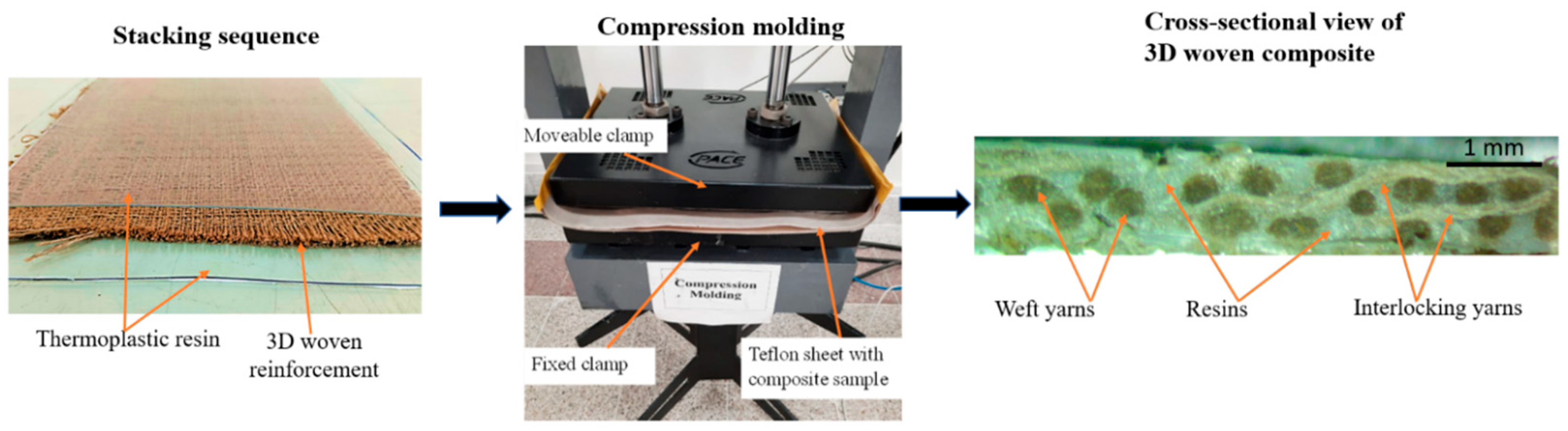
After 3D fabric formation, thermoplastic composites were developed using the three interlock woven structures (warp, weft, and bidirectional) as reinforcement, while PVB and PC were employed as thermoplastic resins. The composite fabrication process involved raising the temperature to the melting point of the respective resins, followed by the application of pressure to achieve uniform distribution and integration of resin inside the reinforcement (Figure 3) [28,29]. The processing temperature for the PVB resin was set at 170 °C. A gradual pressure increase of up to 1.5 tons was applied to maintain the structural integrity of the reinforcement throughout the fabrication process, while the processing temperature for the PC resin was set at 210 °C. Similar to the PVB composite, a gradual pressure increase of up to 1.5 tons was applied to ensure optimal reinforcement integration. The curing temperatures for PC and PVB were 210 °C and 170 °C, respectively. The compression molding machine was maintained at a curing temperature for 10 min to allow the even distribution of the thermoplastic matrix throughout the composite. Afterwards the temperature was allowed to decrease gradually, and specimens were removed from compression molding machine at 60 °C. After 10 min, we turned off the compression mold’s heating process and allowed the specimens to cool. An equal volume fraction of 27 ± 1% was maintained for all of the specimens, with a uniform plate thickness of 2.7 ± 0.1 mm.

2.4. Characterization

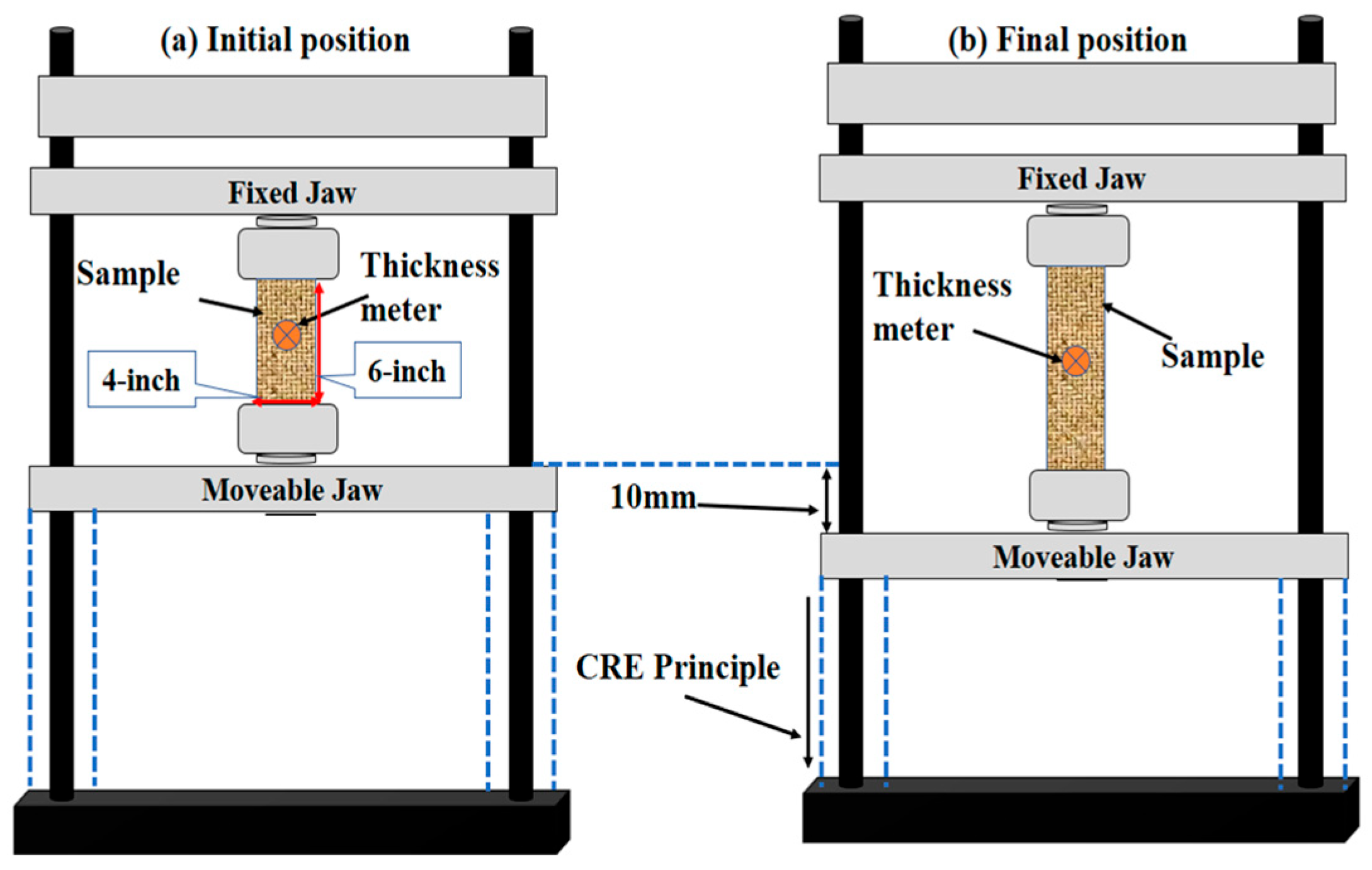
To evaluate the Poisson’s ratio of developed specimens, composites were cut into dimensions of 152.4 mm length and ×101.6 mm width. The specimen size was maintained according to the ASTM D 3034 standard test method. The instrument used for the auxeticity test was a universal tensile strength tester (AllroundLine-Z100, Zwick/Roell, Berlin, Germany) with an attached digital thickness meter. Figure 4 shows the schematic diagram of the auxeticity test of the 3D woven structures [27,28,35]. Auxeticity of the sample was measured in two steps, in the first step initial thickness was noted when there was no force applied to the sample, then, in the 2nd step, the sample was extended to 10 mm by applying tensile force and the thickness of sample was noted at same point. Auxeticity function was noticed in the z-direction interlocking yarns shown in Figure 2, per the concept employed by M. Zhang et al. [36]. Change in thickness and axial strain was calculated, and these values were put into the Equation (1) to compute the auxetic behavior of the structure in warp and weft directions.
ν = T L
According to Equation (1), the Poisson’s ratio is symbolically denoted by ν while △T and △L depict the thickness and axial strain, respectively [37]. In this work, the auxetic characteristics pertaining to the reinforcement side were analyzed, for which five cycles were carried out on each tested sample.
Dynamic mechanical analyses (DMAs) and Split Hopkinson pressure bar (SHPB) characterizations were performed to analyze the dynamic mechanical properties of the experimental 3D woven composites. The DMA was determined with a Q800 DMA TA instrument (TA Instruments, New Castle, DE, USA), following the ASTM D5023. The temperature ranged from 0 to 140 °C during characterization, and was increased with a constant rate of 2 °C/min. The sample dimensions for the DMA test were 64 × 13 mm. The Split Hopkinson pressure bar (SHPB) test was performed to check the high-strain impact strength of developed composites. The specimen for the SHPB test was in circular dimensions with a diameter of 9 mm. To assess the high-strain impact response, two different pressure levels (2 and 4 bar) were applied on each sample. Sample coding for reinforcements and composites testing is given in Table 3. Three replicates were taken for each specimen, and mean data have been presented.

3. Results and Discussion

3.1. Reinforcement Auxeticity

Auxeticity of developed 3D reinforcements was analyzed using the mathematical calculation of Poisson’s ratio (Equation (1)). Figure 5 illustrates the Poisson’s ratio of fabrics parallel to the warp and weft directions. Auxetic materials entail out-of-plane negative Poisson’s ratio, which is associated with an increase in material thickness. Such a property can work for the enhancement of the mechanical properties of developed composites. The thickening of the reinforcement instead of its becoming weak upon stretching works differently and mechanical integrity is improved. The auxeticity in both warp and weft directions was observed to be highest in the warp interlock structure because there is less crimp as well as less intersections as compared with the weft and bidirectional interlock fabrics, where the percentage of crimp is higher. Moreover, a higher amount of interlacement zones possesses high inter-yarn friction, restraining layer flow and therefore hindering the change in the preform thickness. From the interlocked structures the warp structure had the highest auxeticity with a Poisson’s ratio of −1.29. However, the bidirectional interlock structure displayed low auxeticity, with a negative Poisson’s ratio value of −0.31. Such a variation was caused by the significant number of connection points on a bidirectional structure, where both warp and weft yarns on each layer interlock each other in an interlinking manner and, therefore, making it difficult for the thickness to increase under tensile loads. However, an intermediate negative Poisson’s ratio was observed for the weft interlock structure.

3.2. Dynamic Mechanical Analysis (DMA)

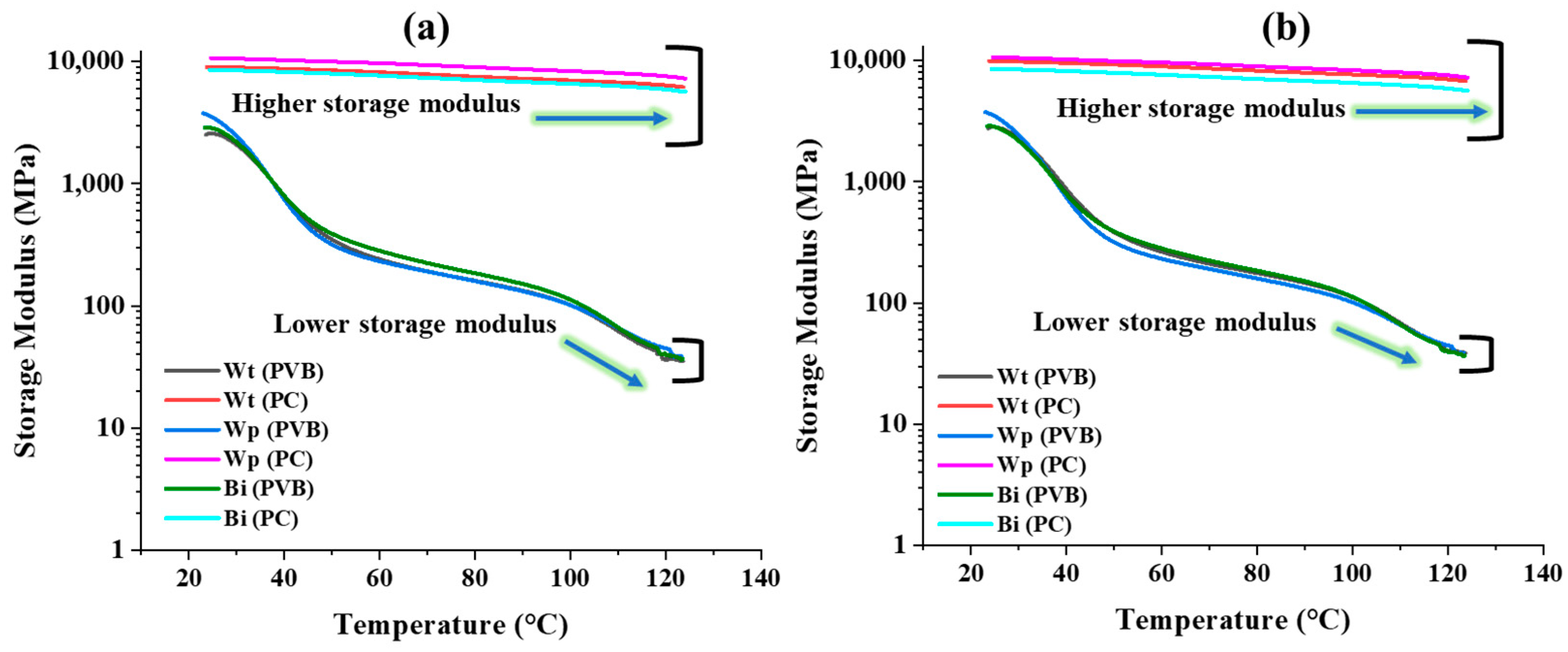
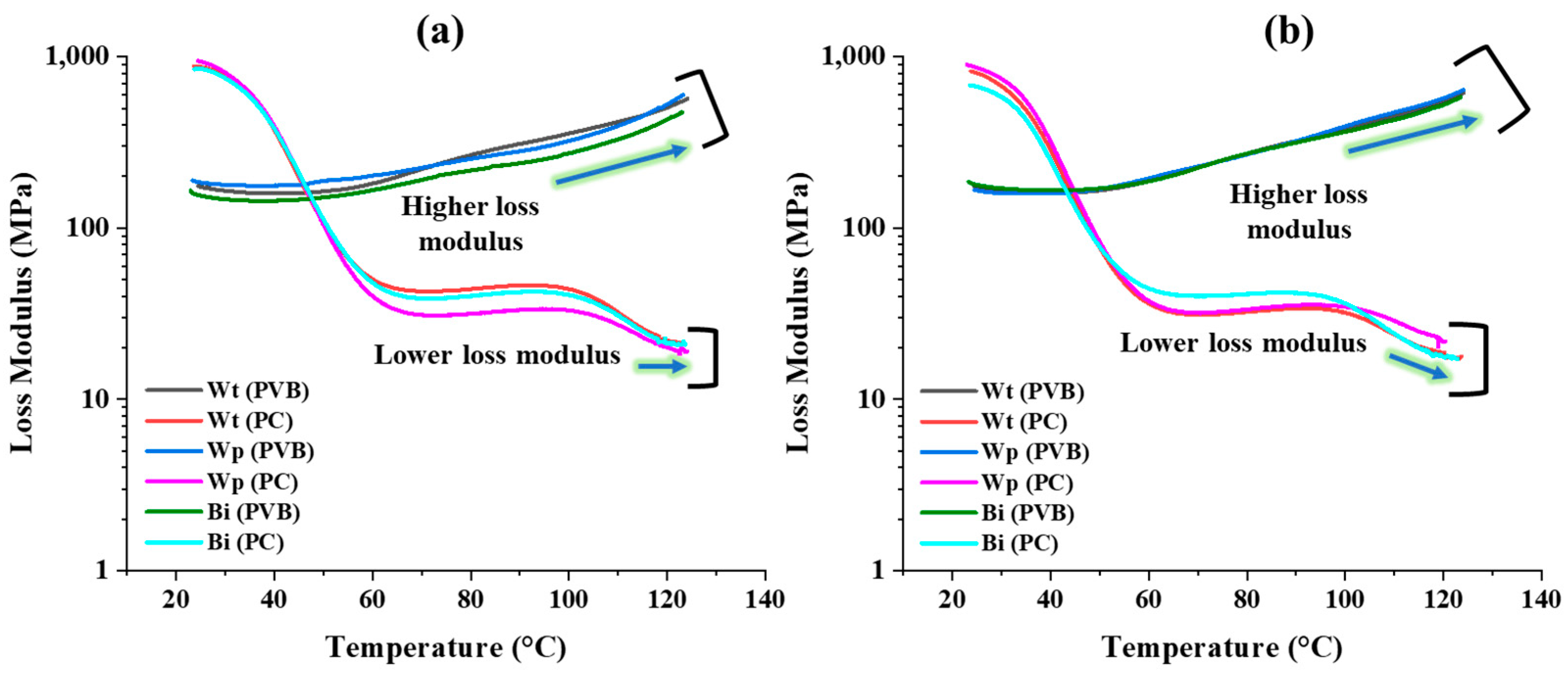
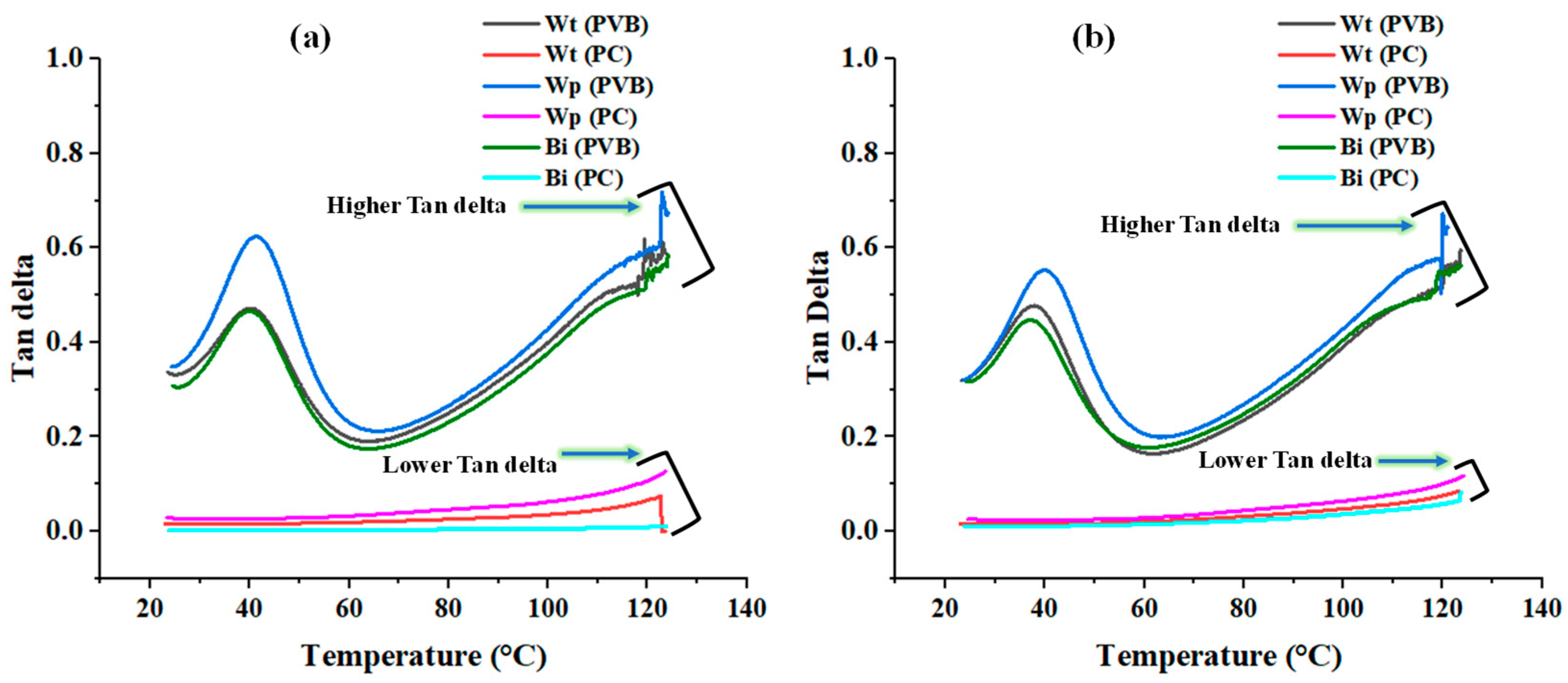
The viscoelastic properties of materials can, crucially, be studied through DMA. The elastic properties of material are obtained in terms of storage modulus, while the viscous properties are depicted by loss modulus during DMA characterization. The applied strain remains in step with the specimen during storage modulus calculation and becomes out of step at 90 degrees during loss modulus calculation. The ‘tan delta’ is a mathematical ratio of the loss modulus to the storage modulus, determining the damping capacity or energy loss and its phase angle [38]. Stiffness or storage modules, loss modulus, and loss factor or tan delta for composite samples obtained through DMA characterization are shown in Figure 6, Figure 7 and Figure 8, respectively.
Figure 6a,b highlight the storage modulus curves of composites in both the warp and weft directions. During comparative analysis of PC- and PVB-based composites, the storage modulus of the former was found to be higher than the latter at all temperatures. This could be due to the fact that PC has a well-defined linear molecular structure and is thus far more ordered than PVB, which is more branched and less crystalline, thus exhibiting less stiffness [39]. PVB typically consists of higher intermolecular forces like hydrogen bonding, leading towards higher cohesiveness, density and stiffness. Moreover, the higher glass transition temperature (Tg) of the PVB is higher than that of the PVB governing the higher storage modulus for PC composites [40].
Examining the effect of reinforcement auxeticity on storage modulus revealed that the composites with greater auxeticity warp interlock structure exhibited excellent storage modulus in both matrices. This behavior was attributed to the energy dissipation mechanism of auxetic structures, where an increase in thickness during testing enabled the structure to store more elastic energy, hence a higher storage modulus was observed. On the other hand, the bidirectional interlock structure, as much as it was auxetic, had a lower storage modulus, probably because of the specific fiber direction and disposition. These findings are useful for designing and improving thermoplastic composites and reveal the significance of woven reinforcements to enhance the auxeticity of 3D composites.
Figure 7a,b highlight the loss modulus of specimens in the warp and weft directions, respectively. Loss modulus, or damping modulus, is one of the essential dynamic mechanical characteristics defining the capacity of the material to convert mechanical energy into heat during cyclic loading. It stands for the image part of the complex modulus and defines the viscoelastic properties of materials. The relevance of the loss modulus stems from its plain link to a material’s capacity to absorb and damp mechanical vibrations where low resonance amplitudes and high impact strength are of paramount interest. In the present scientific context of the comparison between the PVB and PC composites, it is possible to give a logical explanation for the higher loss modulus in the case of the PVB-based samples. PVB is inherently more viscoelastic when compared with PC, attributed to its molecular structure and the presence of flexible side groups. This higher molecular mobility in PVB allows for greater energy dissipation during mechanical loading, leading to an elevated loss modulus [41]. Furthermore, the role of the negative Poisson’s ratio of reinforcement reveals interesting insights about final composite properties. The warp interlock structure offers a greater negative Poisson’s ratio, entailing a higher loss modulus in both matrices. This can be reasoned by considering that a higher auxetic structure can dissipate applied energy more effectively, primarily through an increase in thickness during deformation. Hence, warp interlock reinforcement offered enhanced damping characteristics and, consequently, a higher loss modulus [35]. The opposite behavior was observed for the bidirectional interlock structure owing to its increased interlocking zones.
Tan delta curves of characterized composites specimens have been presented in Figure 8. The tan delta represents the amount of mechanical energy that is converted into heat during the process of cyclic loading and, as such, is a measure of a material’s damping capacity. In engineering applications, this is preferable to having a higher tan delta because it is an indication of higher energy absorption and dissipation, and thus offers a better damping of vibration, a lower amplitude of resonance and a better ability to withstand impacts. In regard to the comparison between the PVB- and PC-based composites; the reason that the obtained tan delta of the PVB-based composite is higher can be logically deduced. It is evident that PVB has inherently higher viscoelastic properties when compared with PC due to the flexible molecular chain and the side groups. Hydrogen bonding restricts the large molecular motions, resulting in a stable and high Tg. Carbonate linkages and aromatic rings make the molecular structure of PC rigid, with less polar interactions at reinforcement zones, causing the Tg of PC to decrease.
This increased molecular mobility in PVB allows for a more effective energy dissipation during cyclic loading, leading to a higher tan delta compared with PC composites. Furthermore, the impact of reinforcement auxeticity on the tan delta of these composites reveals interesting insights. The higher auxetic warp interlock structure displayed a higher tan delta in both matrices. This can be reasoned by considering that a higher auxetic structure dissipates the applied mechanical energy by increasing in thickness during deformation, resulting in a higher tan delta due to enhanced energy absorption and dissipation. Conversely, the Bidirectional interlock structure, with lower auxeticity, showed a lower tan delta, primarily because the higher number of intersection points resisted energy dissipation, leading to a lower loss tangent. Interestingly, both directions (warp and weft) of the composites exhibited the same behavior, with no significant changes observed between the warp- and weft-wise tan delta results, reinforcing the consistency of the auxeticity impact on the damping properties across the material.
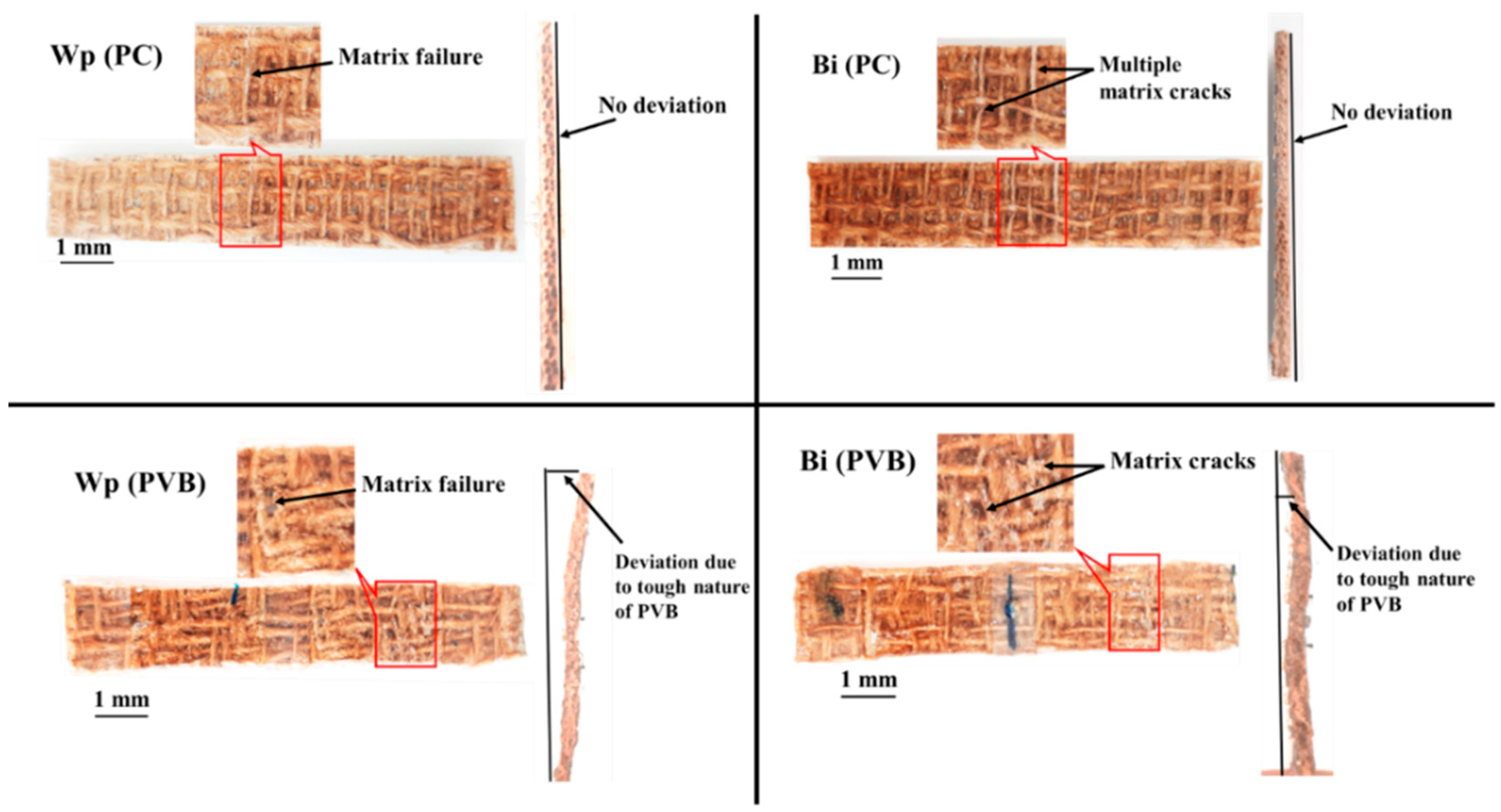
Figure 9 presents the tested samples of dynamic mechanical analysis (DMA) tests conducted using the dual cantilever bending mode. The images reveal that a crack is evident in the matrix when PC resin is employed. This occurrence can be attributed to the inherently brittle nature of PC resin, which leads to the generation of cracks during cyclic bending. The side view of both PC-based samples shows no deviation, indicating that the sample absorbs all of the energy until matrix failure occurs. Conversely, when using PVB-based samples, no clear matrix failure can be observed in the images. The cyclic load which has been applied is dissipated across the composite and this results in deformation. Thus, the obtained samples based on PVB show deviation after the test, which proves their flexible and tough characteristics. Further supporting this kind of behavior, higher tan delta values were observed for the PVB-based composites than their counter parts from the PC matrix.

3.3. Split Hopkinson Pressure Bar (SHPB)

The dynamic mechanical properties of the thermoplastic composite material at high strain rates were evaluated using the Split Hopkinson pressure bar (SHPB) test. The results show the difference in the stress–strain relation of the material with respect to the static tests [42]. When the thermoplastic composite is subjected to low strain rates, there is an indication that the stress in the material rises smoothly and almost in a linear manner with the applied strain, as would be expected with most quasi-static materials. However, when the strain rate was raised in the course of the SHPB test, there was considerable improvement in the material’s stiffness and strength, which pointed to strain rate sensitivity. This effect was due to the viscoelastic nature of the thermoplastic composites, which resulted in energy absorption at the higher strain rates [43]. The issues of strain rate sensitivity that were detected in the present study of the material properties in the SHPB test indicate that it can be used for energy absorption applications under impact and dynamic loadings. Additionally, with the help of the SHPB test data, it was possible to determine the dynamic Young’s modulus and the damping properties of the thermoplastic composite to understand its behavior in dynamic loading. These results indicate the need to apply the strain rate dependent properties in designing thermoplastic composites for high velocity impact applications [44].
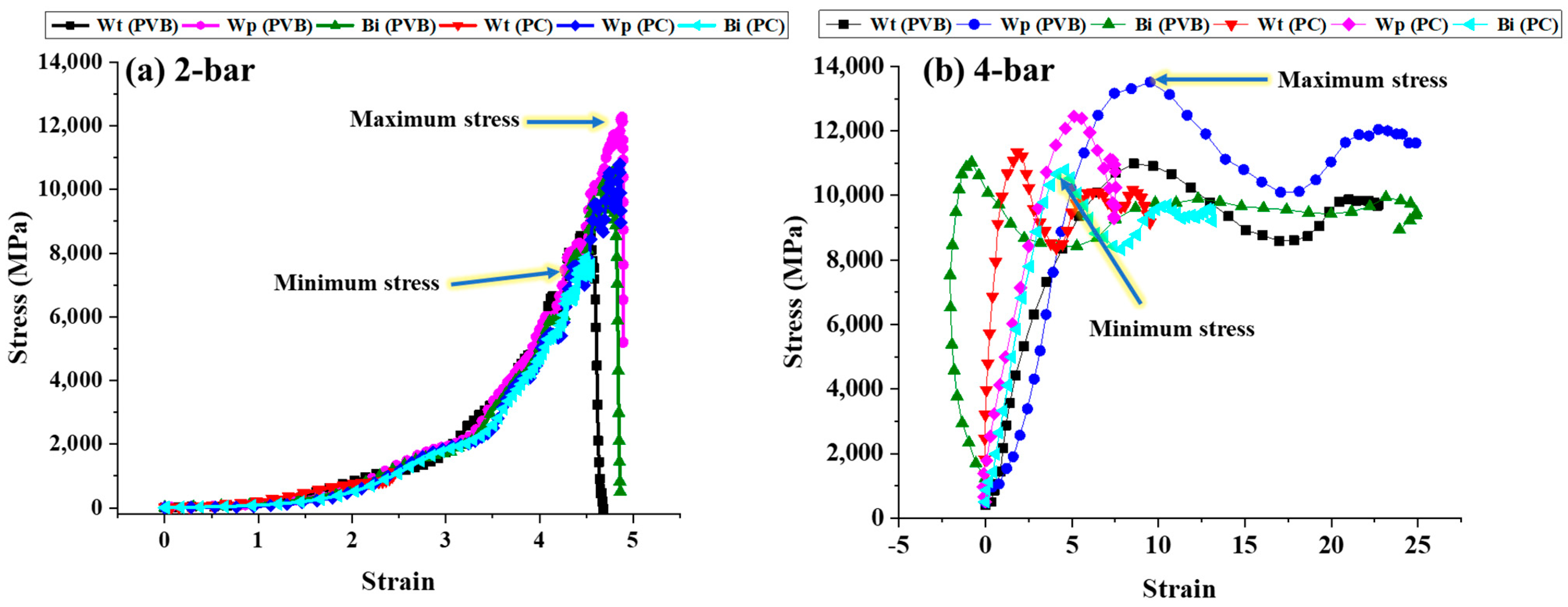
Thus, the stress–strain characteristics of PC- and PVB-based composites reinforced with three types of reinforcement structures—warp interlock (Wp), bidirectional interlock (Bi), and weft interlock (Wt)—were compared at 2 and 4 bar pressures. The objective was to investigate the mechanical performance and energy dissipation effectiveness of the composites depending on the auxeticity. Figure 10 shows the stress–strain curves of the 3D woven composites under different pressure conditions. The findings suggest differences in trends for PC- and PVB-based samples and stress the role of the reinforcement structure on the composite’s mechanical characteristics.
It can be observed from Figure 10 that the sample prepared from PVB had the maximum stress values and the sample with PC had the minimum stress values for both 2 and 4 bar pressures. This difference indicated that the composites developed using PVB have enhanced strength characteristics as compared with those developed using PC under the mentioned applied pressures. Additionally, it was ascertained that auxetic reinforcement at increased values (e.g., Wp) had a positive effect on the energy absorption characteristics of both composites from PC and PVB resins. This carries the implication that structures with higher auxetic characters have an enhanced capacity to bear load and resist the force at the point of application as well as increase the energy absorption capacity. On the other hand, the composites with lower auxetic reinforcement (e.g., Bi) had lower stress peaks in both PC and PVB resins. This was due to the lesser resistance offered by the samples to the applied force that made the stress peak lower in the bidirectional structure-based composites. Therefore, the middle level of auxeticity of the weft interlock structure (Wt) samples is seen as a possible reason for their middle mechanical parameters. Similarly, like the prior results, the stress–strain response of Wt composites exists between Wp and Bi samples; therefore, it is a result of the auxeticity of the material between Wt samples. The outcomes of the present research therefore reveal that the higher auxetic reinforcement, in combination with the PVB resin, endows the composites with the maximum force bearing capacity. However, the enhancement of auxetic reinforcement reduces the resistance offered by the gel to the forces under investigations when the rate used PC-based samples. The plots of the stress–strain relationships of the developed composites give a better understanding of their mechanics, energy dissipation characteristics, and the effects of the reinforcement architecture on auxeticity. This work will help in understanding the mechanical behavior of thermoplastic composites with varying reinforcement architectures, which can be useful in predicting and designing the material for high impact and energy management applications.
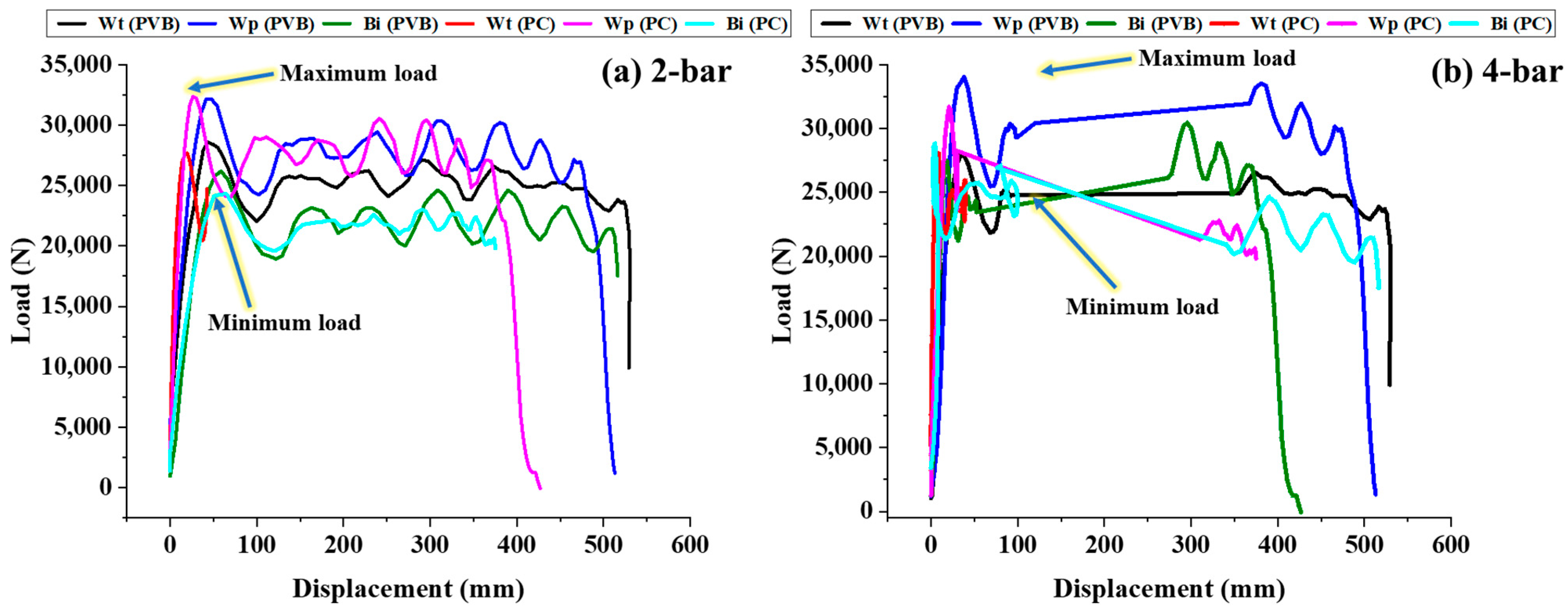
In the SHPB test the findings provided some valuable information concerning the mechanical characteristics and energy dissipation of these composites with respect to auxeticity. Notably, the load–displacement curves (Figure 11) show that the load-bearing capacities of composites based on PVB were higher than those of PC-based composites. The results show that, at the pressures of 2 and 4 bar, the maximum loads of PVB composites were higher than that of PC composites with similar reinforcement structures. The reason for this superiority of PVB over PC can be traced to the differences in the properties of the two resins. An example of an impact-resistant material is PVB, which is well known for its high level of ductility and energy absorption.
The maximum load of energy dissipation at failure for PVB is higher than that of PC due to the capacity of PVB to deform under loading. Because PC is stiffer and much more brittle than PVB, this results in lower energy absorption and load-carrying capacity. It can also be noted that PVB exhibits a good viscoelastic characteristic that enables it to dissipate energy under dynamic loads through internal damping. This viscoelasticity makes PVB-based composites able to manage energy and avoid distortion at high strain rates, as seen in the SHPB test. On the other hand, PC material has comparatively lower values of viscoelastic properties, which restricts its performance in terms of energy absorption and dissipation. Additionally, the addition of higher auxetic reinforcement structures, such as Wp with PVB, improves the energy absorption of the composites. As for energy absorption behavior, the Wp-based composites had the highest peak of load (Figure 11), thereby supporting the assertion that higher auxeticity enhances the energy absorption behavior. The greater the auxetic distortion and volume increase of auxetic structures in response to compression, the higher their capacity to dissipate energy in an impact event, which is why PVB performs better with higher auxetic reinforcement. Therefore, the curves of the load against displacement in the SHPB test reveal that the ultimate load-bearing capacity and energy absorption behavior of PVB is better than that of PC in 3D woven composites. The rationale for PVB’s superiority in this case is that the material has high ductility, viscoelastic properties, and energy absorption in comparison to the PC, thus being more suitable for application in impact protection. In addition, the engagement of PVB with higher auxetic reinforcement structures increases its energy absorption capacity, which underlines the necessity to factor in both the resin and reinforcing materials’ properties during the design of composites for impact critical applications.

3.4. Energy Absorption/Toughness Behavior

It is possible to evaluate the energy absorption behavior of the developed samples in the SHPB test depending on stress–strain and load–displacement curves obtained during the experiments. Comparing the obtained stress–strain curves (Figure 10), it can be stated that advanced auxetic reinforcement structures like warp interlock (Wp) increase the energy absorption of the composites in both PC and PVB resins. This can be attributed to the fact that higher auxetic structures are capable of doing more work and of saving more energy as the applied force is resisted and the structure is deformed. On the other hand, those with low auxetic reinforcement structures such as the bidirectional interlock (Bi), have poor energy absorption characteristics because of their poor resistance to forces applied to them and poor energy dissipation.
The load–displacement curves (Figure 11) also support energy absorption trends. The load level for all the PVB-based composites was higher compared with the PC-based composite for the two pressure levels, 2 and 4 bars, because of the higher ductility and viscoelasticity of the PVB composite samples during dynamic loading when compared with their counterpart from PC composites. Additionally, the peaks recorded in the warp interlock (Wp)-based composites are suggestive of their further capacity to bear and dissipate energy during deformation. On the other hand, the bidirectional interlock (Bi)-based composites possess comparatively smaller load peaks because these have the least ability to oppose the force applied to them due to the highest value undulation in the corresponding 3D woven structure.
Composites reinforced with 3D woven auxetic structures demonstrate superior energy absorption due to their unique mechanical behavior characterized by a negative Poisson’s ratio. Auxetic materials contract when compressed, enhancing densification and strain energy storage during impact events by increasing their thickness. The 3D woven architecture further contributes by providing through-thickness reinforcement and interlocking yarn paths, which improve load distribution and resistance to delamination. As auxeticity increases, the composite undergoes greater geometric transformation under load, leading to higher energy dissipation. This correlation is supported by Arshad & Ali [45], who showed that multilayered 3D woven auxetic fabrics outperform non-auxetic counterparts in energy absorption; Etemadi et al. [46] also reported enhanced impact resistance in 3D woven auxetic composites [46]; and Ullah et al. [35] confirmed that higher auxeticity in warp interlock structures leads to increased thickness and energy dissipation.
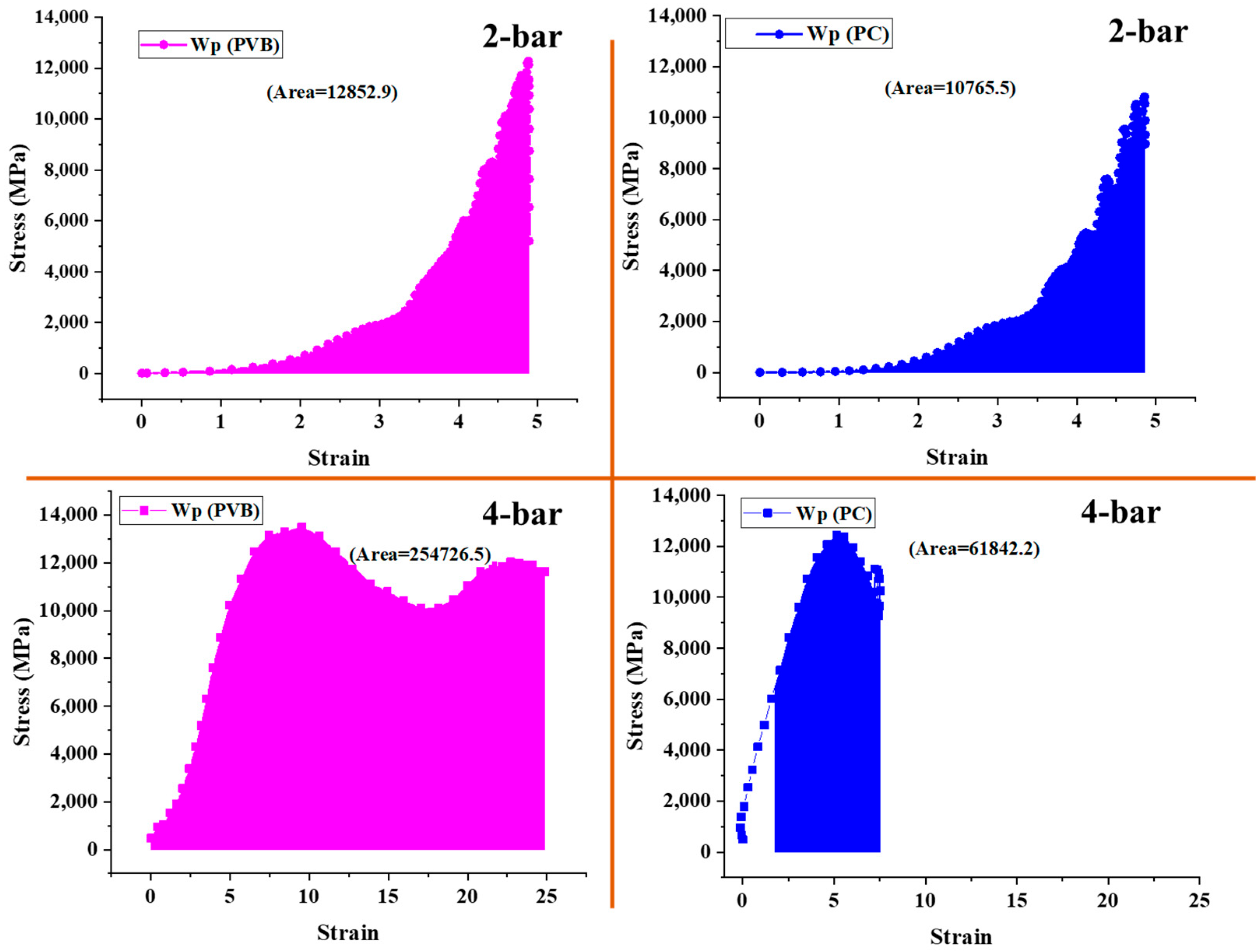
The energy absorption performance of the PC- and PVB-based samples was also assessed by the area under the stress–strain curves in Figure 12 for the higher auxetic warp interlock structure with both the PC and PVB resins at 2 and 4 pressure bars. The curves showed that samples based on PVB absorbed more energy as compared with those based on PC. This difference may be so because of the inherent characteristics of the resins that make up a specific composite material. PVB also has a more flexible character, and this enables it to distribute the energy during loading in an effective manner. On the other hand, PC has a brittle and stiff characteristic which hampers the dissipation of energy. PVB resin, on the other hand, has a more flexible molecular structure that allows it to dissipate more energy hence it can handle or absorb more force. This characteristic enables the material to deform and to dissipate energy in the process and thus obtain a higher value of the area under the stress–strain curve. On the contrary, for PC its stiffness and brittleness reduce the energy absorption capability and hence a smaller area under the curve in the stress–strain plot. Due to the fact that PC material was not able to deform as substantially as that in PVB resin, it has lesser energy absorption property. Hence, applying the findings of stress vs. strain and load vs. displacement from the SHPB test, we find that composites containing higher auxetic reinforcement structures mainly show better energy absorption characteristics when treated with PVB resin. These composites have the capability to effectively release energy in the form of heat during deformation for impact-resistant applications. Conversely, when the auxeticity of structure is low and the PC resin is used, the ability of the composite to absorb energy shows a decrease, implying that, while designing composites for specific engineering applications, the choice of the reinforcement structure and the type of resin that needs to be used should not be overlooked. The outcome of this research offers useful guidelines for designing and synthesizing high-performance composites with desired mechanical characteristics for implementation in impact-critical applications.
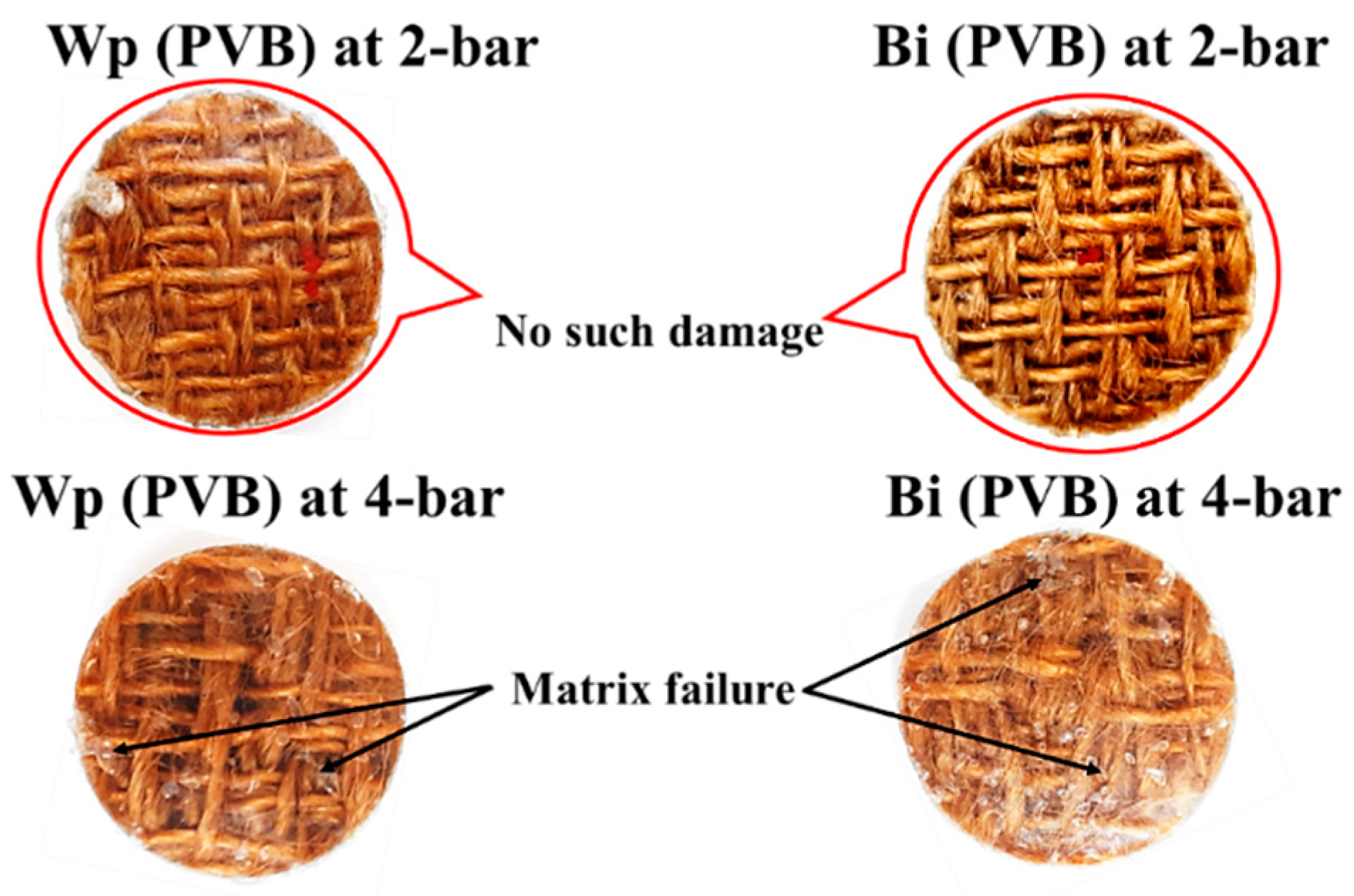
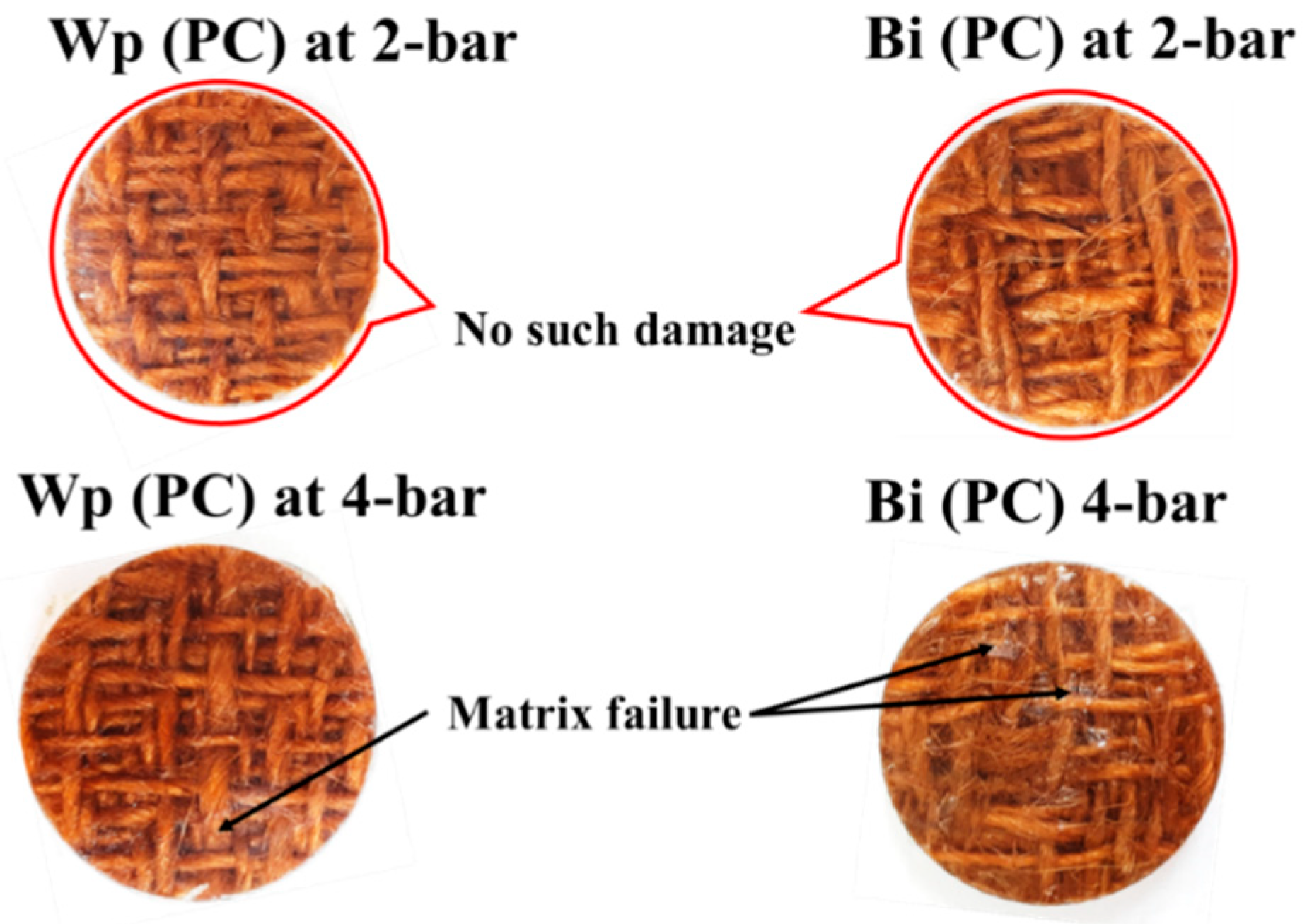
Figure 13 and Figure 14 exhibit tested specimens of the SHPB test for PVB and PC composites, respectively. The visual representations indicate that, at a pressure of 2 bars, there is no damage observed for both the reinforcement and matrix levels. However, when the pressure is increased to 4 bar, matrix failure is evident in both cases. This observation suggests that the matrix material is unable to withstand such high pressures during the 4-bar test. Nevertheless, the 3D reinforcements demonstrate remarkable resistance, displaying excellent performance in both the warp and bidirectional interlock structures.

4. Conclusions

Systematic analysis of 3D woven reinforcement composites with different levels of reinforcement auxeticity in this study has helped in understanding the mechanical response and energy dissipation of such composites. Poisson’s ratio characterization of developed structures highlighted the highest degree of auxeticity, with a value of −1.29 for warp interlock. The structure with the least auxeticity was the bidirectional interlock (Bi) structure with a value of −0.31. This evaluation of auxeticity is important as it directly links with the material’s capacity to change thickness and to store energy when subjected to dynamic loading.
The dynamic mechanical analysis (DMA) data support the SHPB results and enhance the understanding of the viscoelastic response of the composites. The PC composite samples exhibited a storage modulus approximately two times higher, reaching 10,000 MPa, due to their linear and ordered molecular chain structure. In the case of PVB samples, the loss modulus was about three times higher, with a value of 600 MPa, while the tan delta was the highest at 0.7, attributed to their more viscous nature. Thus, it is possible to conclude that the reinforcement structure and the type of resin significantly affect the mechanical characteristics and the energy absorption capacity of the composites based on the analysis of SHPB test results, reinforcement auxeticity, and DMA data. Additionally, the SHPB test indicated that the response of PC- and PVB-based composites to the impact was quite different. The load level of PVB-based samples was the highest, whereas that of PC-based samples was the lowest at both 2 and 4 bar pressures. This indicates that the PVB-based composites have better load bearing and energy absorption which is a good characteristic for endurance of impact loading. From the SHPB tests, there was also the realization of the fact that the auxeticity of the reinforcements affected the mechanical properties of the composites. The energy absorption characteristics of the composites with higher auxetic reinforcement (warp interlock) were better in both PC and PVB matrices. In contrast, the bidirectional interlock specimens had comparatively lower load peaks and energy absorption which is due to the characteristics of auxeticity of the reinforcement on the mechanical response of the material. The findings can be applied in the material selection and enhancement of the mechanical properties that would assist in the development of new and improved composite materials for use in areas that require materials with high toughness and energy absorption characteristics. The findings of the study can also help to enhance properties of composite materials in various sectors, such as automotive, aerospace, sports, and protective gear, that require high strength and energy absorption. However, the results remain limited to the employed materials; hence, future work can be carried out using different materials and incorporating long term cyclic loading characteristics.

Author Contributions

Conceptualization, M.U., T.U. and Y.N.; methodology, M.U. and T.U.; software, T.U. and A.A.; validation, M.U. and A.-F.M.S.; formal analysis, A.A.; investigation, T.U. and M.U.; resources, Y.N.; data curation, A.A. and T.U.; writing—original draft preparation, M.U. and T.U.; writing—review and editing, A.A. and A.-F.M.S.; visualization, A.A.; supervision, A.-F.M.S.; project administration, M.U.; funding acquisition, A.-F.M.S. All authors have read and agreed to the published version of the manuscript.

Funding

The authors (Muhammad Umair and Abdel-Fattah M. Seyam) are thankful to the United States Educational Foundation in Pakistan (USEFP) and the Institute of International Education (IIE), USA for funding this research under the Fulbright Postdoc Research Program.

Data Availability Statement

Data will be made available on request.

Conflicts of Interest

The authors have not declared any conflicts of interest related to this article’s research, authorship, or publication.

References

  1. Grosicki, Z.J. Watson’s Textile Design and Colour, 7th ed.; Butter Worths Group: London, UK, 1975. [Google Scholar]
  2. Nawab, Y.; Hamdani, T.; Shaker, K. Structural Textile Design: Interlacing and Interlooping; CRC Press: Boca Raton, FL, USA, 2017. [Google Scholar]
  3. Tong, L.; Mouritz, A.; Bannister, M. Chapter 2—Manufacture of 3D fibre preforms. In 3D Fibre Reinforced Polymer Composites; Elsevier Science: Oxford, UK, 2002. [Google Scholar]
  4. Chen, X. Advances in 3D Textiles; Woodhead Publishing Limited: Cambridge, UK, 2015. [Google Scholar] [CrossRef]
  5. Tong, L.; Mouritz, A.; Bannister, M. Chapter 5—3D woven composites. In 3D Fibre Reinforced Polymer Composites; Elsevier Science: Oxford, UK, 2002. [Google Scholar]
  6. Dell’ANno, G.; Partridge, I.; Cartié, D.; Hamlyn, A.; Chehura, E.; James, S.; Tatam, R. Automated manufacture of 3D reinforced aerospace composite structures. Int. J. Struct. Integr. 2012, 3, 22–40. [Google Scholar] [CrossRef]
  7. Pandey, D.N.; Kumar, A. 3d Multilayer Woven Preform for Civil Works; Kanpur, India, 2013.
  8. Dufour, C.; Pineau, P.; Wang, P.; Soulat, D.; Boussu, F. Three-dimensional textiles in the automotive industry. In Advances in 3D Textiles; Woodhead Publishing: Cambridge, UK, 2015; pp. 265–291. [Google Scholar] [CrossRef]
  9. Mallick, P.K. Thermoplastics and thermoplastic—Matrix composites for lightweight automotive structures. In Materials, Design and Manufacturing for Lightweight Vehicles; Elsevier: Amsterdam, The Netherlands, 2021; pp. 187–228. [Google Scholar]
  10. Ullah, T.; Nawab, Y.; Umair, M. 3D woven natural fiber structures. In Multiscale Textile Preforms and Structures for Natural Fiber Composites; Woodhead Publishing: Cambridge, UK, 2023; pp. 241–278. [Google Scholar] [CrossRef]
  11. Umair, M.; Nawab, Y.; Malik, M.H.; Shaker, K. Development and characterization of three-dimensional woven-shaped preforms and their associated composites. J. Reinf. Plast. Compos. 2015, 34, 2018–2028. [Google Scholar] [CrossRef]
  12. Umair, M.; Hamdani, S.T.A.; Asghar, M.A.; Hussain, T.; Karahan, M.; Nawab, Y.; Ali, M. Study of influence of interlocking patterns on the mechanical performance of 3D multilayer woven composites. J. Reinf. Plast. Compos. 2018, 37, 429–440. [Google Scholar] [CrossRef]
  13. Tahir, D.; Fatima, N.; Rehan, M.; Hu, H. Sustainable jute fiber-reinforced auxetic composites with both in-plane and out-of-plane auxetic behaviors. Polym. Compos. 2025, 46, S922–S939. [Google Scholar] [CrossRef]
  14. Alomarah, A.; Masood, S.H.; Ruan, D. Out-of-plane and in-plane compression of additively manufactured auxetic structures. Aerosp. Sci. Technol. 2020, 106, 106107. [Google Scholar] [CrossRef]
  15. Tahir, D.; Zhang, M.; Hu, H. Auxetic Materials for Personal Protection: A Review. Phys. Status Solidi B Basic Res. 2022, 259, 2200324. [Google Scholar] [CrossRef]
  16. Ahmed, H.I.; Umair, M.; Nawab, Y.; Hamdani, S.T.A. Development of 3D auxetic structures using para-aramid and ultra-high molecular weight polyethylene yarns. J. Text. Inst. 2020, 112, 1417–1427. [Google Scholar] [CrossRef]
  17. Rauf, F.; Umair, M.; Shaker, K.; Nawab, Y.; Ullah, T.; Ahmad, S. Investigation of Chemical Treatments to Enhance the Mechanical Properties of Natural Fiber Composites. Int. J. Polym. Sci. 2023, 2023, 1–13. [Google Scholar] [CrossRef]
  18. Kumbhare, K.S.; Mahesh, V.; Joladarashi, S.; Kulkarni, S.M. Comparative study on low velocity impact behavior of natural hybrid and non hybrid flexible thermoplastic based composites. J. Thermoplast. Compos. Mater. 2022, 36, 089270572211455. [Google Scholar] [CrossRef]
  19. Gay, D.; Hoa, S.V.; Tsai, S.W. Composite Materials: Design and Applications; CRC Press: Boca Raton, FL, USA, 2003. [Google Scholar]
  20. Bowen, D.H. Applications of composites: An overview. In Concise Encyclopedia of Composite Materials; Pergamon Press plc: Oxford, UK, 1989; pp. 7–15. [Google Scholar]
  21. Baillie, C. Green Composites: Polymer Composites and the Environment; Woodhead Publishing Limited: Cambridge, UK; CRC Press: Boca Raton, FL, USA, 2004. [Google Scholar] [CrossRef]
  22. Zubair, Z.; Razzaq, W.; Abbas, A.; Hussain, F.; Ghalib, E.; Ayyoob, M.; Hamdani, S.T.A. Thermal activation and dynamic mechanical characterization of glass-reinforced shape memory polymer composites for medical applications. Text. Res. J. 2025, 95, 1902–1912. [Google Scholar] [CrossRef]
  23. Huang, R.; Guan, Z.; Qin, J.; Wen, Y.; Lai, Z. Strain rate effect of concrete based on split Hopkinson pressure bar (SHPB) test. J. Build. Eng. 2024, 86, 108856. [Google Scholar] [CrossRef]
  24. Ke, J.; Chen, L.; Gao, J.; Wu, Z.-Y. Improving the dynamic stiffness and vibration characteristics of 3D orthogonal woven by implanting SMA instead of a warp yarn. Compos. Struct. 2023, 307, 116637. [Google Scholar] [CrossRef]
  25. Chang, X.; Xu, Q.; Lv, J.; Xu, L.; Zhu, Z.; Liu, S.; Liu, X.; Qin, J. Bioinspired 3D helical fibers toughened thermosetting composites. Compos. Part B Eng. 2021, 216, 108855. [Google Scholar] [CrossRef]
  26. Gong, L.; Zhang, F.; Peng, X.; Scarpa, F.; Huang, Z.; Tao, G.; Liu, H.-Y.; Zhou, H.; Zhou, H. Improving the damping properties of carbon fiber reinforced polymer composites by interfacial sliding of oriented multilayer graphene oxide. Compos. Sci. Technol. 2022, 224, 109309. [Google Scholar] [CrossRef]
  27. Ullah, T.; Hussain, M.; Ali, M.; Umair, M. Impact of auxeticity on mechanical properties of 3D woven auxetic reinforced thermoplastic composites. Polym. Compos. 2023, 44, 897–906. [Google Scholar] [CrossRef]
  28. Ullah, T.; Hussain, M.; Ali, M.; Umair, M. Impact performance of jute 3D woven auxetic reinforced thermoplastic (PC/PVB) composites. J. Reinf. Plast. Compos. 2024, 43, 628–642. [Google Scholar] [CrossRef]
  29. Li, H.; Wu, T.; Gao, Z.; Wang, X.; Ma, H.; Han, Q.; Qin, Z. An iterative method for identification of temperature and amplitude dependent material parameters of fiber-reinforced polymer composites. Int. J. Mech. Sci. 2020, 184, 105818. [Google Scholar] [CrossRef]
  30. Ahmad, F.; Yuvaraj, N.; Bajpai, P.K. Influence of reinforcement architecture on static and dynamic mechanical properties of flax/epoxy composites for structural applications. Compos. Struct. 2021, 255, 112955. [Google Scholar] [CrossRef]
  31. Liu, H.; Sun, B.; Gu, B.; Hu, M. Modeling impact compressive behaviors of 3D woven composites under low temperature and strain rate effect. Compos. Struct. 2024, 345, 118402. [Google Scholar] [CrossRef]
  32. Yang, X.; Li, D.-S.; Jia, X.-L.; Zuo, H.-M.; Jiang, L.; Lomov, S.V.; Desplentere, F. Experimental and numerical validation of high strain rate impact response and progressive damage of 3D orthogonal woven composites. Compos. Sci. Technol. 2024, 258, 110896. [Google Scholar] [CrossRef]
  33. Sun, B.; Niu, Z.; Zhu, L.; Gu, B. Mechanical Behaviors of 2D and 3D Basalt Fiber Woven Composites Under Various Strain Rates. J. Compos. Mater. 2010, 44, 1779–1795. [Google Scholar] [CrossRef]
  34. Bai, Y.; Wei, H.; Gu, J.; Zhao, Z.; Zhang, C. Size-dependent mechanical behaviors of 3D woven composite under high strain-rate compression loads. Polym. Test. 2023, 127, 108176. [Google Scholar] [CrossRef]
  35. Ullah, T.; Hussain, M.; Ali, M.; Umair, M. Auxetic behavior of 3D woven warp, weft and bi-directional interlock structures. J. Nat. Fibers 2023, 24, 2168823. [Google Scholar] [CrossRef]
  36. Zhang, M.; Yu, Y.; Li, L.; Zhou, H.; Gong, L.; Zhou, H. A molecular dynamics assisted insight on damping enhancement in carbon fiber reinforced polymer composites with oriented multilayer graphene oxide coatings. Microstructures 2024, 4, 2024051. [Google Scholar] [CrossRef]
  37. I Khan, M.; Akram, J.; Umair, M.; Hamdani, S.T.; Shaker, K.; Nawab, Y.; Zeeshan, M. Development of composites, reinforced by novel 3D woven orthogonal fabrics with enhanced auxeticity. J. Ind. Text. 2019, 49, 676–690. [Google Scholar] [CrossRef]
  38. da Silva, T.T.; da Silveira, P.H.P.M.; Figueiredo, A.B.-H.d.S.; Monteiro, S.N.; Ribeiro, M.P.; Neuba, L.d.M.; Simonassi, N.T.; Filho, F.d.C.G.; Nascimento, L.F.C. Dynamic Mechanical Analysis and Ballistic Performance of Kenaf Fiber-Reinforced Epoxy Composites. Polymers 2022, 14, 3629. [Google Scholar] [CrossRef] [PubMed]
  39. Xu, H.; Yang, J.; Zhang, X.; Li, T.; Huang, J.; Chen, M.; Dong, W. Polycarbonate blends with high environmental stress crack resistance, high strength and high toughness by introducing polyvinyl butyral at small fraction. Polymer 2022, 242, 124578. [Google Scholar] [CrossRef]
  40. Çakir, M.; Akin, E.; Renda, G. Mechanical properties of carbon-aramid hybrid fiber-reinforced epoxy/poly (vinyl butyral) composites. Polym. Compos. 2023, 44, 4826–4841. [Google Scholar] [CrossRef]
  41. Cilento, F.; Bassano, A.; Sorrentino, L.; Martone, A.; Giordano, M.; Palmieri, B. PVB Nanocomposites as Energy Directors in Ultrasonic Welding of Epoxy Composites. J. Compos. Sci. 2023, 7, 160. [Google Scholar] [CrossRef]
  42. Shaker, K.; Jabbar, A.; Karahan, M.; Karahan, N.; Nawab, Y. Study of dynamic compressive behaviour of aramid and ultrahigh molecular weight polyethylene composites using Split Hopkinson Pressure Bar. J. Compos. Mater. 2017, 51, 81–94. [Google Scholar] [CrossRef]
  43. Omar, M.F.; Akil, H.M.; Ahmad, Z.A.; Mazuki, A.; Yokoyama, T. Dynamic properties of pultruded natural fibre reinforced composites using Split Hopkinson Pressure Bar technique. Mater. Des. 2010, 31, 4209–4218. [Google Scholar] [CrossRef]
  44. Mohsin, M.A.A.; Iannucci, L.; Greenhalgh, E.S. On the dynamic tensile behaviour of thermoplastic composite carbon/polyamide 6.6 using split hopkinson pressure bar. Materials 2021, 14, 1653. [Google Scholar] [CrossRef] [PubMed]
  45. Arshad, Z.; Ali, M. 3D woven auxetic composites using on-loom shaped reinforcement. Polym. Bull. 2024, 81, 13137–13154. [Google Scholar] [CrossRef]
  46. Etemadi, E.; Zhang, M.; Gholikord, M.; Li, K.; Ho, M.M.P.; Hu, H. Quasi-static and dynamic behavior analysis of 3D CFRP woven laminated composite auxetic structures. Compos. Struct. 2024, 340, 118182. [Google Scholar] [CrossRef]
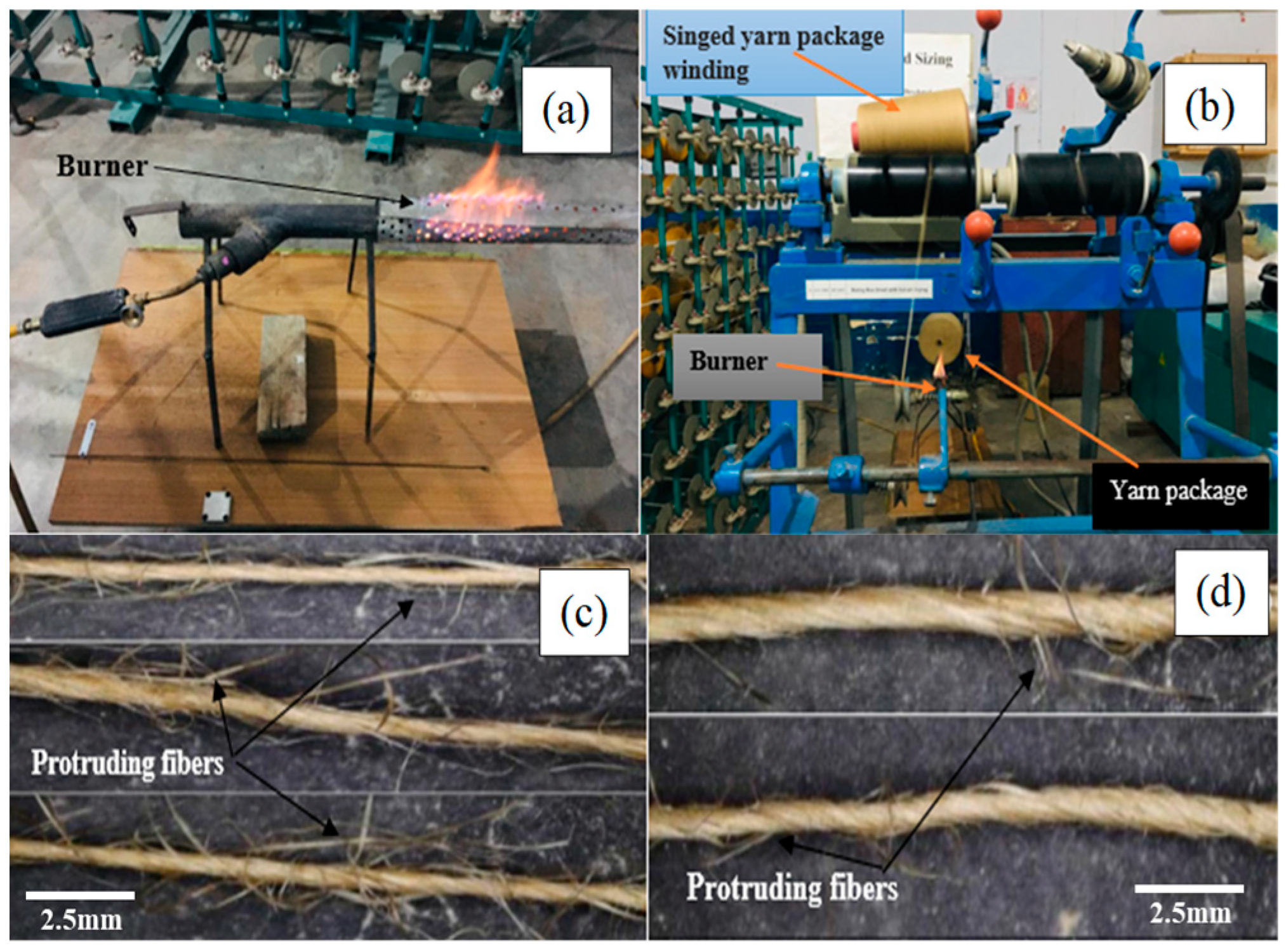
Figure 1. Yarn singeing setup (a) burner and (b) winding assembly, (c) unsinged jute yarn and (d) singed jute yarn.
Jcs 09 00649 g001
Figure 2. TexGen® cross-sections of 3D woven (a) warp, (b) weft, and (c1,c2) bidirectional interlock structures, and (d) the principle of auxeticity.
Jcs 09 00649 g002
Figure 3. Process flow for the composite fabrication.
Jcs 09 00649 g003
Figure 4. Schematic diagram of auxeticity test.
Jcs 09 00649 g004
Figure 5. Auxeticity results of 3D woven reinforcements in warp and weft directions.
Jcs 09 00649 g005
Figure 6. Storage modulus curves (logarithmic scale) of 3D woven composites. (a) Warp direction and (b) weft direction.
Jcs 09 00649 g006
Figure 7. Loss modulus versus temperature curves (logarithmic scale) of 3D woven composites. (a) Warp direction (b) weft direction.
Jcs 09 00649 g007
Figure 8. Tan delta versus temperature curves. (a) Warp direction (b) weft direction.
Jcs 09 00649 g008
Figure 9. DMA tested images of 3D woven composites.
Jcs 09 00649 g009
Figure 10. Stress versus strain curves of 3D woven composites: (a) 2 bar and (b) 4 bar.
Jcs 09 00649 g010
Figure 11. Load versus displacement curves of 3D woven composites: (a) 2 bar and (b) 4 bar.
Jcs 09 00649 g011
Figure 12. The area under the curve of the warp interlock structure with PC and PVB at 2 and 4 pressure bars.
Jcs 09 00649 g012
Figure 13. PVB based SHPB tested samples of 3D woven composites.
Jcs 09 00649 g013
Figure 14. PC-based SHPB-tested samples of 3D woven composites.
Jcs 09 00649 g014
Table 1. Mechanical properties of the material used.
Mechanical PropertiesJute YarnPCPVB
Linear density (tex)236.2--
Tenacity (cN/tex)11.45--
Elongation (%)1.30--
Density (g/cm3)1.351.201.12
Elastic modulus (GPa)-2.31.9
Yield stress (MPa)-6525
Strain to failure (%)-100150
Toughness (Mj/m3)-7020
Table 2. Construction parameters of 3D fabrics, post weaving.
Weave StructureEnds/InchPicks/InchAreal Density (g/cm2)Crimp %
WarpWeft
Warp interlock (Wp)37 ± 0136 ± 01745 ± 012.10 ± 0.011.25 ± 0.01
Weft interlock (Wt)38 ± 0137 ± 01785 ± 022.20 ± 0.021.75 ± 0.01
Bidirectional interlock (Bi)41 ± 0139 ± 01845 ± 022.40 ± 0.021.85 ± 0.02
Table 3. Specimens coding for reinforcements and composites.
3D Woven ReinforcementsSample Code3D Woven CompositesSample Code
Weft interlock (warp-wise)Wt (P)Weft interlock with PVBWt (PVB)
Weft interlock (weft-wise)Wt (T)Weft interlock with PCWt (PC)
Warp interlock (warp-wise)Wp (P)Warp interlock with PVBWp (PVB)
Warp interlock (weft-wise)Wp (T)Weft interlock with PCWp (PC)
Bidirectional interlock (warp-wise)Bi (P)Bidirectional interlock with PVBBi (PVB)
Bidirectional interlock (weft-wise)Bi (T)Bidirectional interlock with PCBi (PC)
Disclaimer/Publisher’s Note: The statements, opinions and data contained in all publications are solely those of the individual author(s) and contributor(s) and not of MDPI and/or the editor(s). MDPI and/or the editor(s) disclaim responsibility for any injury to people or property resulting from any ideas, methods, instructions or products referred to in the content.