Article

Effect of Chemical Treatment on Thermal Properties of Jute Fiber Used in Polymer Composites


1
Textile Physics Division, Bangladesh Jute Research Institute, Manik Mia Avenue, Dhaka 1207, Bangladesh
2
Department of Materials and Metallurgical Engineering, Bangladesh University of Engineering and Technology, Dhaka 1000, Bangladesh
3
Department of Engineering Materials, Universiti Teknikal Malaysia, Melaka 76100, Malaysia
4
Advanced Materials and Surface Engineering (AMSE) Research Centre, Manchester Metropolitan University, Manchester M1 5GD, UK
*
Author to whom correspondence should be addressed.
J. Compos. Sci. 2020, 4(3), 132; https://doi.org/10.3390/jcs4030132
Submission received: 21 August 2020 / Revised: 1 September 2020 / Accepted: 2 September 2020 / Published: 9 September 2020
(This article belongs to the Special Issue Feature Papers in Journal of Composites Science in 2020)

Abstract

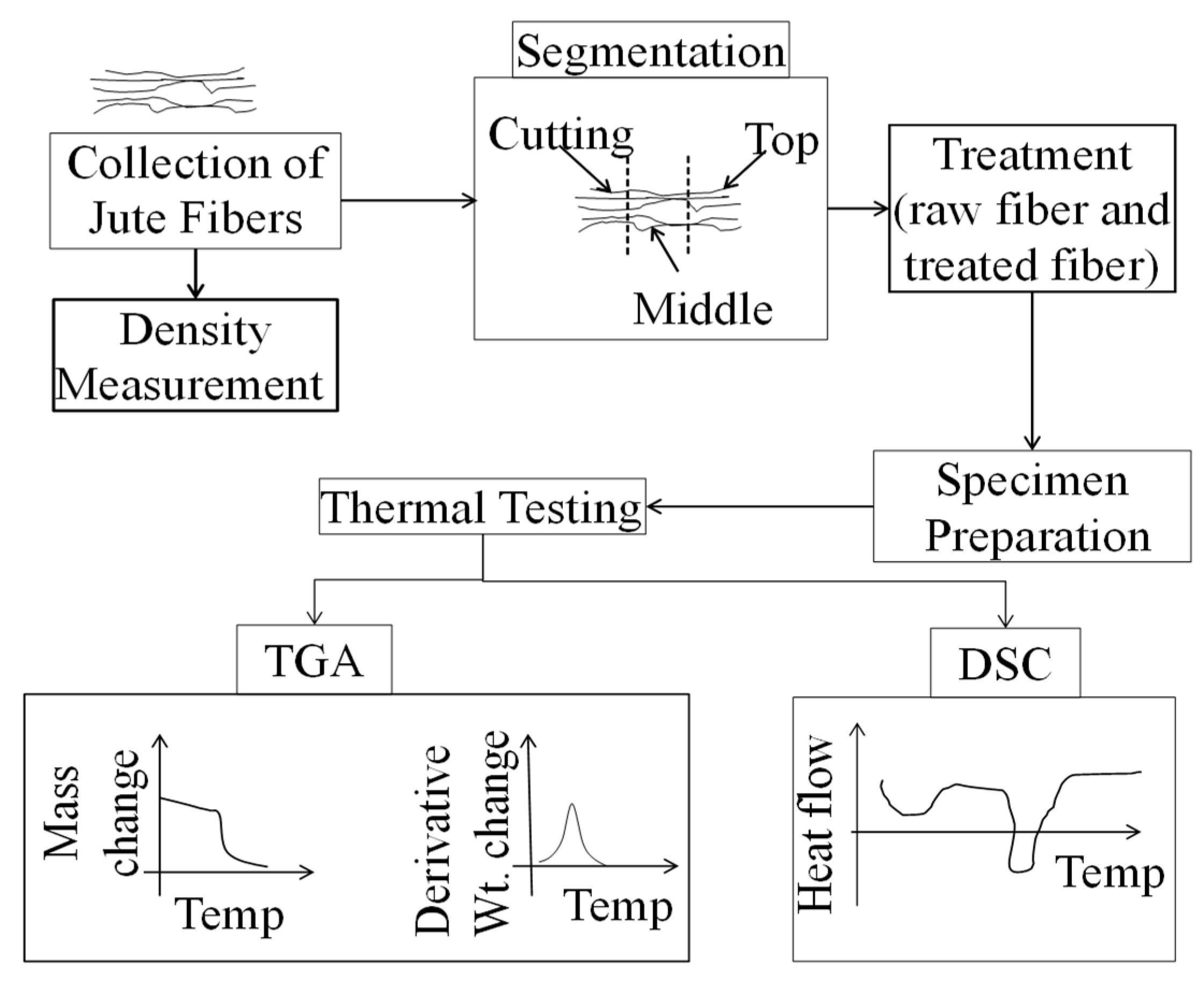
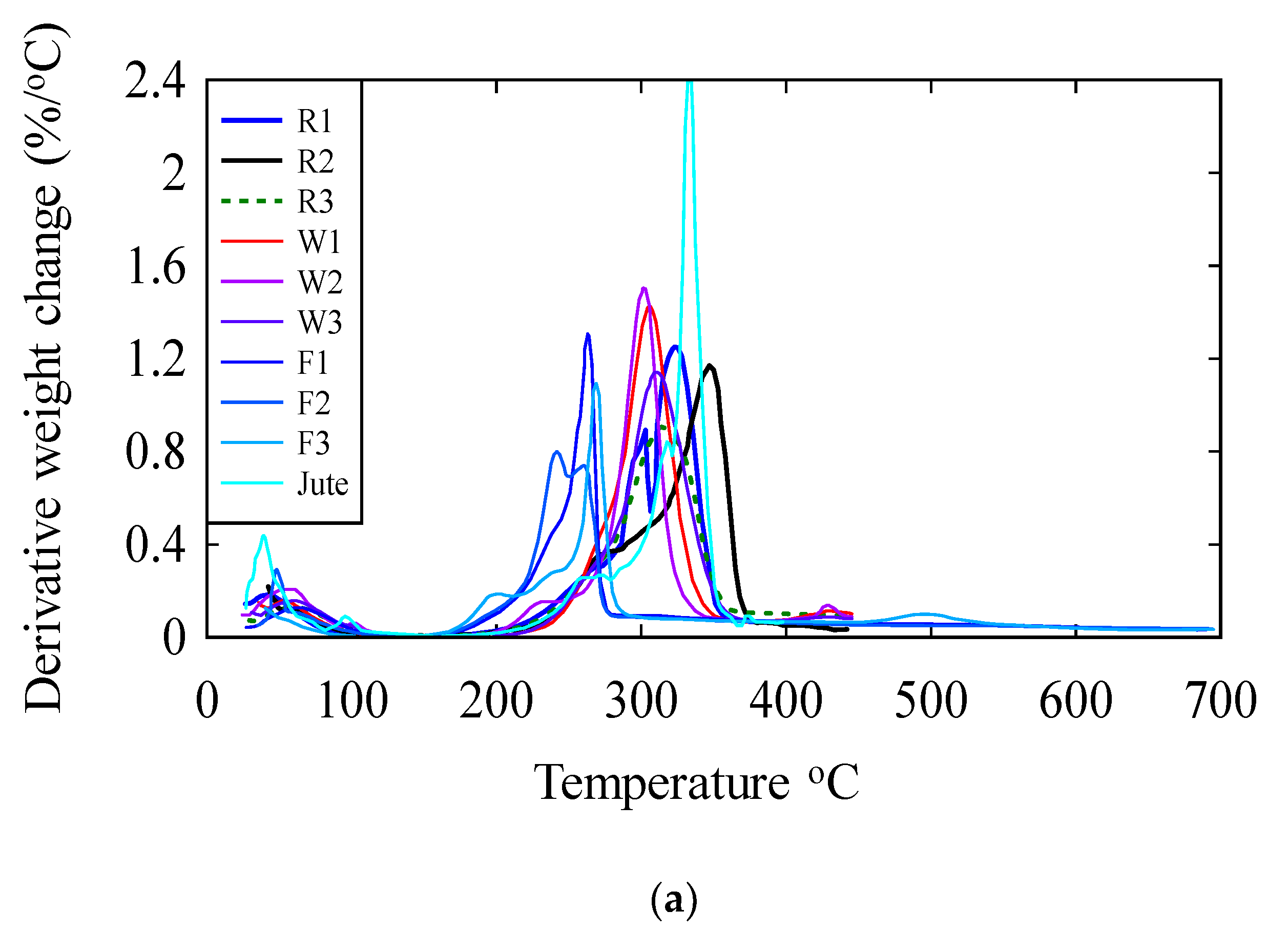
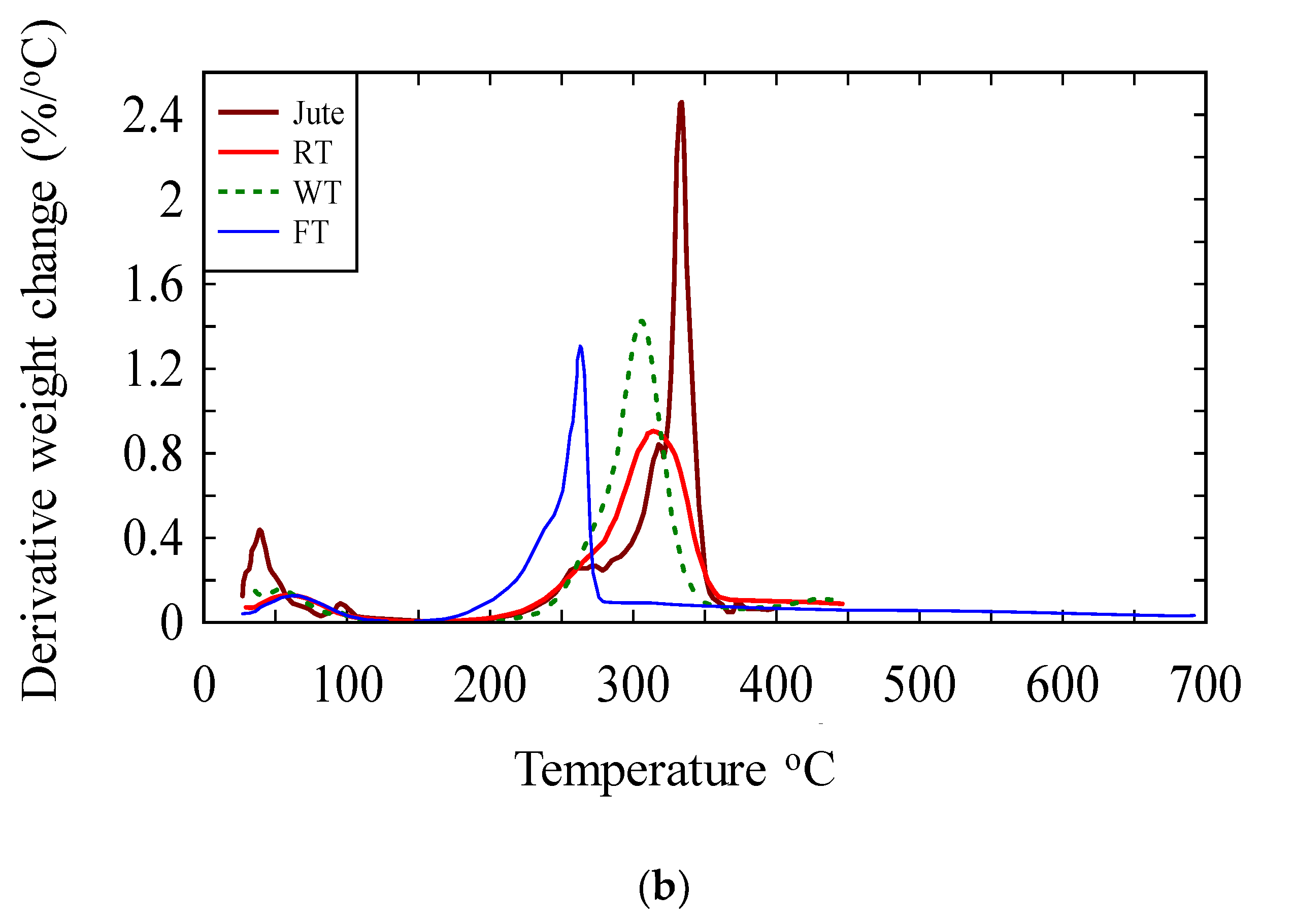
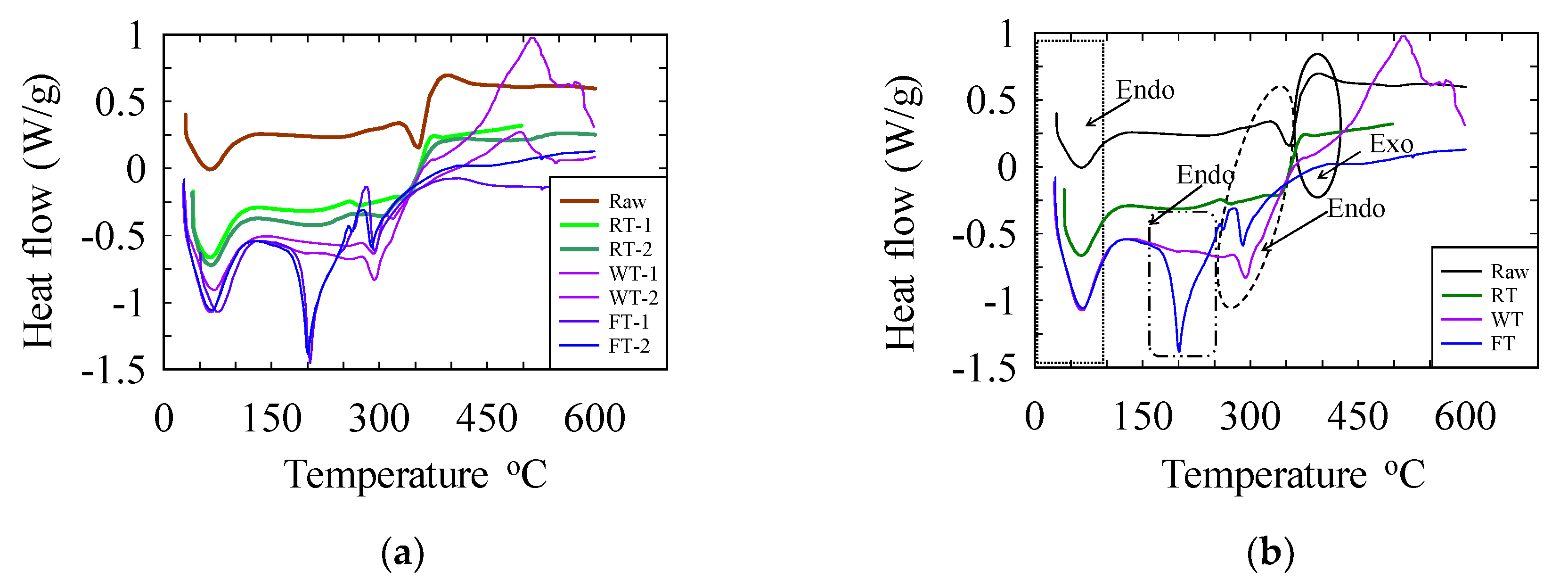
In recent years, natural fibers, such as jute has gained significant research interest in order to fabricate fiber reinforced polymer composites. Chemical treatments are generally carried out on the raw fibers for making composites with improved properties. From a composite manufacturing point of view, it is important to understand how the treatments can affect the thermal properties of the jute fiber. In the present research, the effects of rot-retardant, fire-retardant and water-retardant treatments on thermal properties of the jute fiber were investigated. Fiber samples were collected from the middle portion of whole jute fiber. Thermo-gravimetric analysis (TGA) and differential scanning calorimetric (DSC) analysis were subsequently conducted on the jute fiber for thermal characterization. The results demonstrated a lower thermal decomposition temperature in the case of fire-retardant treated jute fiber but higher residue at above 400 °C, as compared to the raw and other treated fibers. In general, it was found that chemically treated fibers absorbed less heat, in contrast to the raw jute fiber and heat flow became negative in all cases of the treated fibers. This study provides important information about the thermal properties of the treated jute fibers for manufacturing polymer-based composite materials.
Keywords: jute fiber; chemical treatment; thermal properties; DSC; TGA; composite jute fiber; chemical treatment; thermal properties; DSC; TGA; composite